kottke.org posts about books

The history of the tacoMay 17 2012

In this Smithsonian interview, University of Minnesota history professor Jeffrey Pilcher drops serious knowledge on the history of tacos. Among other bits of taco trivia, Pilcher, author of the forthcoming book Planet Taco: A Global History of Mexican Food, roughly disabuses us of the lie spread by Glen Bell (of Taco Bell) that Bell invented the hard shell.

What made the fast-food taco possible?
The fast-food taco is a product of something called the "taco shell," a tortilla that has been pre-fried into that characteristic U-shape. If you read Glen Bell's authorized biography, he says he invented the taco shell in the 1950s, and that it was his technological breakthrough. Mexicans were cooking tacos to order -- fresh -- and Glen Bell, by making then ahead, was able to serve them faster. But when I went into the U.S. patent office records, I found the original patents for making taco shells were awarded in the 1940s to Mexican restaurateurs, not to Glen Bell.

Pilcher's other books include editing The Oxford Handbook of Food History, and writing The Sausage Rebellion: Public Health, Private Enterprise, and Meat in Mexico City, 1890-1917 and Que vivan los tamales! Food and the Making of Mexican Identity. The Sausage Rebellion indeed.

100 ideas that changed graphic designMay 14 2012

From Steven Heller and Veronique Vienne, a book about 100 Ideas that Changed Graphic Design. Maria Popova has a preview at The Atlantic.

From how rub-on lettering democratized design by fueling the DIY movement and engaging people who knew nothing about typography to how the concept of the "teenager" was invented after World War II as a new market for advertisers, many of the ideas are mother-of-invention parables. Together, they converge into a cohesive meditation on the fundamental mechanism of graphic design -- to draw a narrative with a point of view, and then construct that narrative through the design process and experience.

The best rejected New Yorker coversMay 11 2012

Blown Covers is a new book that details the illustrations that never made it to the front cover of the New Yorker. At Imprint, Michael Silverberg interviews Françoise Mouly, the book's author and the New Yorker's art editor since 1993, and shares some of best rejected covers. I like this one by Christoph Niemann showing the attempted return of the Statue of Liberty to France:

Statue Return

"Think of me as your priest," she told one of them. Mouly, who cofounded the avant-garde comics anthology RAW with her husband, Art Spiegelman, asks the artists she works with -- Barry Blitt, Christoph Niemann, Ana Juan, R. Crumb -- not to hold back anything in their cover sketches. If that means the occasional pedophilia gag or Holocaust joke finds its way to her desk, she's fine with that. Tasteless humor and failed setups are an essential part of the process. "Sometimes something is too provocative or too sexist or too racist," Mouly says, "but it will inspire a line of thinking that will help develop an image that is publishable."

Information Graphics, a new book from TaschenMay 04 2012

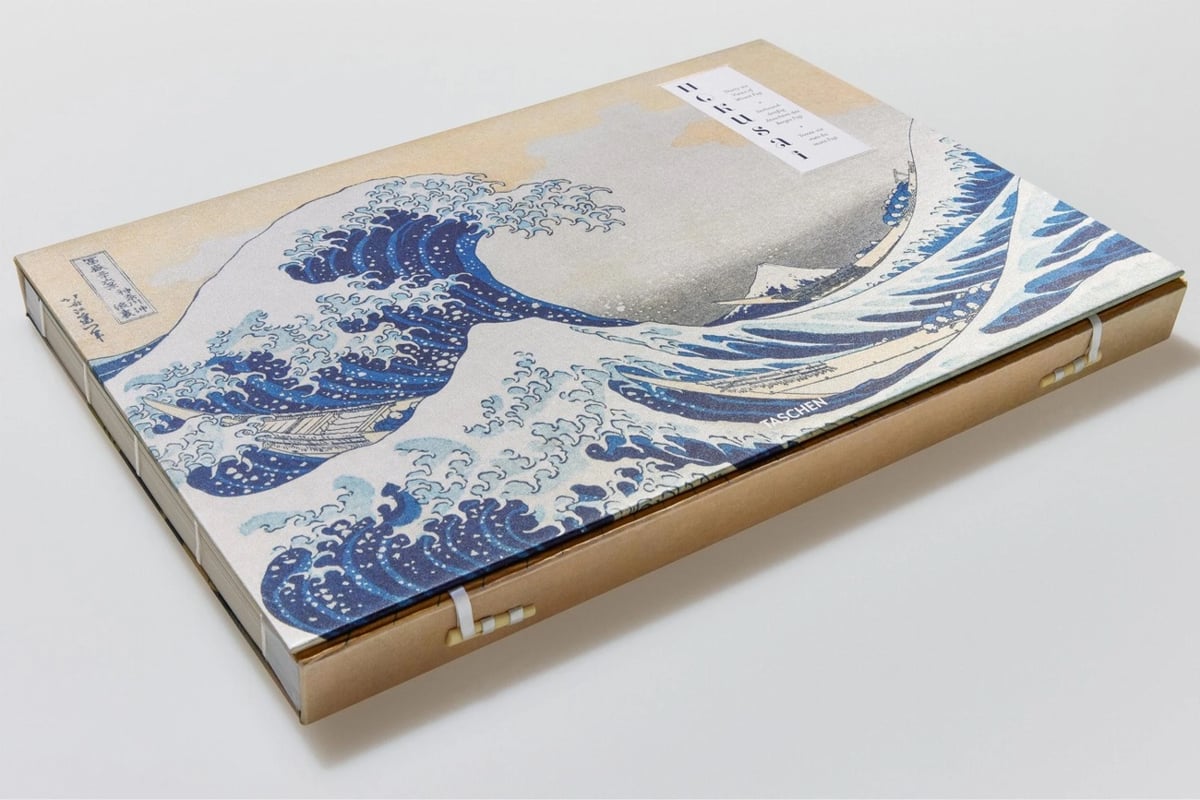
This looks like an interesting new book from Taschen, Information Graphics (buy at Amazon).

Our everyday lives are filled with a massive flow of information that we must interpret in order to understand the world we live in. Considering this complex variety of data floating around us, sometimes the best -- or even only -- way to communicate is visually. This unique book presents a fascinating historical perspective on the subject, highlighting the work of the masters of the profession who have created a number of breakthroughs that have changed the way we communicate. Information Graphics has been conceived and designed not just for designers or graphics professionals, but for anyone interested in the history and practice of communicating visually.

The in-depth introductory section, illustrated with over 60 images (each accompanied by an explanatory caption), features essays by Sandra Rendgen, Paolo Ciuccarelli, Richard Saul Wurman, and Simon Rogers; looking back all the way to primitive cave paintings as a means of communication, this introductory section gives readers an excellent overview of the subject. The second part of the book is entirely dedicated to contemporary works by the current most renowned professionals, presenting 200 graphics projects, with over 400 examples -- each with a fact sheet and an explanation of methods and objectives -- divided into chapters by the subjects Location, Time, Category, and Hierarchy.

A practical guide to graphics for scientists and engineersMay 03 2012

This looks like a potentially interesting book from Felice Frankel: Visual Strategies (at Amazon).

Visual Strategies

Any scientist or engineer who communicates research results will immediately recognize this practical handbook as an indispensable tool. The guide sets out clear strategies and offers abundant examples to assist researchers-even those with no previous design training-with creating effective visual graphics for use in multiple contexts, including journal submissions, grant proposals, conference posters, or presentations.

Visual communicator Felice Frankel and systems biologist Angela DePace, along with experts in various fields, demonstrate how small changes can vastly improve the success of a graphic image. They dissect individual graphics, show why some work while others don't, and suggest specific improvements. The book includes analyses of graphics that have appeared in such journals as Science, Nature, Annual Reviews, Cell, PNAS, and the New England Journal of Medicine, as well as an insightful personal conversation with designer Stefan Sagmeister and narratives by prominent researchers and animators.

Stephen Hawking reviews A Brief History of Time movieMay 03 2012

From twenty years ago, Stephen Hawking reviews the film version of A Brief History of Time.

I have been fortunate in the director of the film, Errol Morris. He is a man of integrity, with a feeling for the issues. It would have been all too easy to have someone who would have concentrated on the more sensational aspects of my private life, and my medical condition, and who would have treated the science in a superficial way. A friend of mine, who has had several television programmes based on his work, was envious of how the scientific ideas came through on the film.

(via @errolmorris)

New York City guidebook from 1916Apr 23 2012

Marc Cenedella found a copy of a 1916 tourist handbook for NYC on Google Books and teased out some of the more interesting bits.

For New Yorkers and visitors of this time, "Old New York" was the time of the American Revolution. The leaders and generals of that earlier time are described as real people. Even if their actions are described in the most glowing and heroic of terms, they come alive in the pages of Rider's New York as they have not yet transcended into the mythical, distant, unrelatable figures they are today.

George Washington, for example, appears time and again in this guide, not as a statue, or a bridge, or a Square, but as a person who "landed" just south of Laight Street, bid farewell to his men in an Address at Fraunces Tavern, or was greeted on kicking-out-the-British Day (Evacuation Day) at Union Square. Same history, different level of intimacy.

Robert Caro has a really long Johnson (biography)Apr 20 2012

Charles McGrath recently profiled author Robert Caro for the NY Times Magazine. Caro has been working on a multivolume biography of Lyndon Johnson since 1976...the fourth book in the series is out next month.

The idea of power, or of powerful people, seems to repel him as much as it fascinates. And yet Caro has spent virtually his whole adult life studying power and what can be done with it, first in the case of Robert Moses, the great developer and urban planner, and then in the case of Lyndon Johnson, whose biography he has been writing for close to 40 years. Caro can tell you exactly how Moses heedlessly rammed the Cross Bronx Expressway through a middle-class neighborhood, displacing thousands of families, and exactly how Johnson stole the Texas Senate election of 1948, winning by 87 spurious votes. These stories still fill him with outrage but also with something like wonder, the two emotions that sustain him in what amounts to a solitary, Dickensian occupation with long hours and few holidays.

If you're a subscriber and haven't gotten to it yet, the excerpt of Caro's book in the New Yorker is very much worth reading; it covers Johnson's activities on the day Kennedy was assassinated.

As Lyndon Johnson's car made its slow way down the canyon of buildings, what lay ahead of him on that motorcade could, in a way, have been seen by someone observing his life as a foretaste of what might lie ahead if he remained Vice-President: five years of trailing behind another man, humiliated, almost ignored, and powerless. The Vice-Presidency, "filled with trips... chauffeurs, men saluting, people clapping... in the end it is nothing," as he later put it. He had traded in the power of the Senate Majority Leader, the most powerful Majority Leader in history, for the limbo of the Vice-Presidency because he had felt that at the end might be the Presidency.

Update: Esquire also has a long profile of Caro in next month's issue. (thx, aaron)

Covering LolitaApr 19 2012

The results of a competition to design a better cover for Nabokov's Lolita are being packaged into a book due out in June.

Among the problems Nabokov's Lolita poses for the book designer, probably the thorniest is the popular misconception of the title character. She's chronically miscast as a teenage sexpot-just witness the dozens of soft-core covers over the years. "We are talking about a novel which has child rape at its core," says John Bertram, an architect and blogger who, three years ago, sponsored a Lolita cover competition asking designers to do better.

Now the contest is being turned into a book, due out in June and coedited by Yuri Leving, with essays on historical cover treatments along with new versions by 60 well-known designers, two-thirds of them women: Barbara deWilde, Jessica Helfand, Peter Mendelsund, and Jennifer Daniel, to name a few. They don't shy away from frank sexuality, but they add layers of darkness and complication. And like Jamie Keenan's cover -- a claustrophobic room that morphs into a girl in her underwear -- they provoke without asking readers to abdicate their responsibility.

Of the covers shown, Peter Mendelsund's is a favorite:

Lo Lee Ta

An American in Paris 2.0Apr 19 2012

GQ has an excerpt of Rosecrans Baldwin's new book about the eighteen months he and his wife spent in Paris.

Bruno sat under a machine shaped like a palm tree that sucked up smoke. He lit a cigarette, unpopped a shirt button nonchalantly, ordered Sancerre, and began talking over my head. After fifteen minutes, I understood that he'd worked on the infant-nutrition project for eleven months, ever since he'd joined the agency. They'd gone through four copywriters in the same amount of time; I was number five.

Bruno said, Reservoir Dogs, did I know this film?

"Bien sur," I said, adding, "Mr. Pink?"

"Okay, good," Bruno said in English. "Then, Mr. Pink... do not be this. Do not be saying in the office, 'Fuck, fuck, fuck.'"

Evidently Bruno had overheard me swearing. He wanted me to know that cursing wasn't cool in Parisian office culture. It seemed to weigh on Bruno, speaking English like that, correcting my behavior. As though envisioning trials to come.

The book is called Paris, I Love You But You're Bringing Me Down and is due out soooon.

Blurbs for saleApr 18 2012

Adam Mansbach will blurb your novel, but it's gonna cost you. Here's part of his price list:

You live in one of the following neighborhoods: Brooklyn Heights, Park Slope, Boerum Hill, Carroll Gardens, Williamsburg. (+$150)

You claim to be friends with a friend of mine, but that friend of mine hates you. (+$100)

The word after the gerund in your two-word title is a proper noun masquerading as a regular noun, i.e. "Losing Ground," a novel about a man named Peter Ground. (+$250)

Your novel is a retelling of another novel from the perspective of a minor character, a piece of furniture, or a magical being who did not appear in the original. (+$275)

I literally LOL'd (LLOL?) at the last line. (via the blurb-worthy @tadfriend)

Design is a JobApr 10 2012

Out today: Mike Monteiro's Design is a Job. The book is an important reminder that how effective you are as a designer depends on many things aside from what you can do in Photoshop or InDesign. You need to build a stable environment for yourself (and your employees) to do your best work: you need to get clients, know how to talk to them, set up a stable and sustainable business, collaborate with others, etc. etc. For a taste of what the book has to offer, A List Apart has an excerpt of the second chapter, Getting Clients.

The biggest lie in this book would be if I told you I don't worry about where the next client is coming from. I could tell you that once you build up enough of a portfolio, or garner enough experience, or achieve a certain level of notoriety in the industry, this won't be a concern anymore. I could tell you I sleep soundly, not bolting out of bed at 4 a.m. to run laps around the local high school track. I could tell you that I never worry about enough presents under the tree. I could tell you these things, but I'd be lying. And I don't want to lie to you. Getting clients is the most petrifying and scary thing I can think of in the world. I'd rather wrestle lady Bengal tigers in heat with meat strapped to my genitals than look for new clients.

If putting in the work to get the kind of work you want to do sounds too daunting, then close this book right now. Walk away. Rethink your life choices and take up a less stressful craft, like cleaning out cobra pits. Do it. No one will think less of you. Cover yourself in sackcloth and pray to your god for penance.

Go!

Kurt Vonnegut's response to book burningMar 30 2012

Kurt Vonnegut is just the bee's knees, isn't he? Here's a letter he wrote in 1973 to the head of the school board at Drake High School in North Dakota after the school burned all of its copies of Slaughterhouse-Five in the school's furnace.

If you were to bother to read my books, to behave as educated persons would, you would learn that they are not sexy, and do not argue in favor of wildness of any kind. They beg that people be kinder and more responsible than they often are. It is true that some of the characters speak coarsely. That is because people speak coarsely in real life. Especially soldiers and hardworking men speak coarsely, and even our most sheltered children know that. And we all know, too, that those words really don't damage children much. They didn't damage us when we were young. It was evil deeds and lying that hurt us.

New David Foster Wallace book: Both Flesh and NotMar 20 2012

A book containing David Foster Wallace's previously uncollected nonfiction is due out in November.

Beloved for his epic agony, brilliantly discerning eye, and hilarious and constantly self-questioning tone, David Foster Wallace was heralded by both critics and fans as the voice of a generation. BOTH FLESH AND NOT gathers 15 essays never published in book form, including "Federer Both Flesh and Not," considered by many to be his nonfiction masterpiece; "The (As it Were) Seminal Importance of Terminator 2," which deftly dissects James Cameron's blockbuster; and "Fictional Futures and the Conspicuously Young," an examination of television's effect on a new generation of writers.

There are also several books about Wallace and his writings coming out over the next few months.

A list of Ernest Hemingway's favorite booksMar 13 2012

In a 1935 piece for Esquire magazine entitled Remembering Shooting-Flying: A Key West Letter, Ernest Hemingway listed seventeen books that were among his favorites. They were so dear to him that he would rather read any of them for the first time again than have a yearly income of a million dollars. (That's about $16.5 million/year in today's dollars.) Here's the actual passage from the article:

When you have been lucky in your life you find that just about the time the best of the books run out (and I would rather read again for the first time Anna Karenina, Far Away and Long Ago, Buddenbrooks, Wuthering Heights, Madame Bovary, War and Peace, A Sportsman's Sketches, The Brothers Karamozov, Hail and Farewell, Huckleberry Finn, Winesburg, Ohio, La Reine Margot, La Maison Tellier, Le Rouge et le Noire, La Chartreuse de Parme, Dubliners, Yeats's Autobiographies and a few others than have an assured income of a million dollars a year) you have a lot of damned fine things that you can remember. Then when the time is over in which you have done the things that you can now remember, and while you are doing other things, you find you can read the books again, and, always, there are a few, a very few, good new ones. Last year there was La Condition Humaine by Andre Malraux. It was translated, I do not know how well, as Man's Fate, and sometimes it is as good as Stendhal and that is something no prose writer has been in France for over fifty years.

But this is supposed to be about shooting, not about books, although some of the best shooting I remember was in Tolstoi and I have often wondered how the snipe fly in Russia now and whether shooting pheasants is counter-revolutionary. When you have loved three things all your life, from the earliest you can remember; to fish, to shoot and, later, to read; and when, all your life, the necessity to write has been your master, you learn to remember and, when you think back, you remember more fishing and shooting and reading than anything else and that is a pleasure.

That creep can roll, man. See also Hemingway kicks a can. (via lists of note)

The 2012 Tournament of Books has startedMar 09 2012

The Tournament of Books, The Morning News' annual fiction competition, has begun. If you like books and the NCAA basketball tournament, this is pretty much your thing.

1811 Dictionary in the Vulgar TongueFeb 21 2012

From Project Gutenberg, Francis Grose's Dictionary in the Vulgar Tongue was published in 1811 and gives the reader a full account of the slang, swears, and insults used at the time.

FLOGGING CULLY. A debilitated lecher, commonly an old one.

COLD PIG. To give cold pig is a punishment inflicted on sluggards who lie too long in bed: it consists in pulling off all the bed clothes from them, and throwing cold water upon them.

TWIDDLE-DIDDLES. Testicles.

TWIDDLE POOP. An effeminate looking fellow.

ROUND ROBIN. A mode of signing remonstrances practised by sailors on board the king's ships, wherein their names are written in a circle, so that it cannot be discovered who first signed it, or was, in other words, the ringleader.

A modern copy is available on Amazon.

Martin Amis' guide to old-school video gamesFeb 17 2012

Martin Amis, one of the greatest living British novelists, published a guide to video games in 1982 called Invasion of the Space Invaders: An Addict's Guide to Battle Tactics, Big Scores and the Best Machines. It has an introduction by Steven Spielberg and Amis has barely acknowledged its existence since its publication.

It's a deeply strange artifact: an A4-sized, full color glossy affair, abundantly illustrated with captioned photographs, screen shots, and lavish illustrations of exploding space ships and lunar landscapes. It boasts a perfunctory introduction by Steven Spielberg ("read this book and learn from young Martin's horrific odyssey round the world's arcades before you too become a video-junkie"), complete with full-page portrait of the Hollywood Boy Wonder leaning awkwardly against an arcade machine like some sort of geeky, high-waisted Fonz. We're not even into the text proper, and already its cup runneth over with 100-proof WTF.

Voices of History's Last-Known SurvivorsFeb 14 2012

That's the subtitle of a book released in 2010 called The Last Leaf by Stuart Lutz. In the book are dozens of interviews with "last survivors or final eyewitness of historically important events", including the last living pitcher to give up a home run to Babe Ruth in 1927, the last man alive to work with Thomas Edison, and the last American WWI soldier.

When we read about famous historical events, we may wonder about the firsthand experiences of the people directly involved. What insights could be gained if we could talk to someone who remembered the Civil War, or the battle to win the vote for women, or Thomas Edison's struggles to create the first electric light bulb? Amazingly, many of these experiences are still preserved in living memory by the final survivors of important, world-changing events. In this unique oral history book, author and historic document specialist Stuart Lutz records the stories told to him personally by people who witnessed many of history's most famous events.

See also human wormholes and the Great Span.

How to parent like the FrenchFeb 06 2012

Adapted from her upcoming book Bringing Up Bébé: One American Mother Discovers the Wisdom of French Parenting, Pamela Druckerman shares why French parents are superior in this WSJ article.

The French, I found, seem to have a whole different framework for raising kids. When I asked French parents how they disciplined their children, it took them a few beats just to understand what I meant. "Ah, you mean how do we educate them?" they asked. "Discipline," I soon realized, is a narrow, seldom-used notion that deals with punishment. Whereas "educating" (which has nothing to do with school) is something they imagined themselves to be doing all the time.

One of the keys to this education is the simple act of learning how to wait. It is why the French babies I meet mostly sleep through the night from two or three months old. Their parents don't pick them up the second they start crying, allowing the babies to learn how to fall back asleep. It is also why French toddlers will sit happily at a restaurant. Rather than snacking all day like American children, they mostly have to wait until mealtime to eat. (French kids consistently have three meals a day and one snack around 4 p.m.)

We have a French pediatrician who advised us to do almost exactly what is in this article and we've had pretty good success with it. It's not all roses (kids are kids after all) and a lot of work, especially for the first couple of years, because you have to be consistent and steady and firm (but also flexible) and I know I haven't always done a great job, but the dividends have been totally worth it so far.

Charlotte's Web audiobook read by E.B. WhiteFeb 03 2012

Did you know that the Charlotte's Web audiobook is read by E.B. White himself? He died in 1985 and must have recorded it before then. My wife and son listened to it on a long car trip this weekend and was declared "soooo good".

1912 American Type Founders specimen bookJan 20 2012

The Internet Archive is hosting a copy of the American Specimen Book of Type Styles put out by the American Type Founders Company in 1912. It's a 1300-page book listing hundreds of typefaces and their possible use cases.

ATF Specimen

There's also a 1910 copy of what is basically the German version of the ATF book. Look at these swirls! (via @h_fj)

Malcolm Gladwell, collectedJan 05 2012

Gladwell box set

Paul Sahre and Brian Rea designed a 3-book boxed set for Malcolm Gladwell's "intellectual adventure stories".

"During our initial meeting with Malcolm, he referred to the three books as 'intellectual adventure stories,'" Sahre tells Co.Design. "Brian and I really responded to that, as it suggested a specific and interesting way to think about how the books could be designed. We wanted the books to feel like first editions of Moby-Dick or Treasure Island or The Wizard of Oz."

The tasteful gray cloth binding and foil stamping of the set and its "extremely conventional" design, as Sahre puts it ("maybe 'comfortable' would be a better way to describe it," he adds) makes me think of famous children's literature collections, like The Chronicles of Narnia. "This 'traditional/comfortable' design allowed for the drawings Brian was doing to venture off into the abstract and unconventional place they ended up," Sahre continues. "More importantly, the quiet design allowed the text and the drawings room to interact and to breathe. I hope the reader doesn't notice the design of the book at all."

The set is available on Amazon.

Maximizing shareholder value is "the dumbest idea in the world"Dec 29 2011

Steve Denning, writing in Forbes:

In today's paradoxical world of maximizing shareholder value, which Jack Welch himself has called "the dumbest idea in the world", the situation is the reverse. CEOs and their top managers have massive incentives to focus most of their attentions on the expectations market, rather than the real job of running the company producing real products and services.

Denning is summarizing the ideas contained in Roger Martin's new book, Fixing the Game: Bubbles, Crashes, and What Capitalism Can Learn from the NFL.

In Fixing the Game, Roger Martin reveals the culprit behind the sorry state of American capitalism: our deep and abiding commitment to the idea that the purpose of the firm is to maximize shareholder value. This theory has led to a massive growth in stock-based compensation for executives and, through this, to a naive and wrongheaded linking of the real market -- the business of designing, making, and selling products and services -- with the expectations market -- the business of trading stocks, options, and complex derivatives. Martin shows how this tight coupling has been engineered and lays out its results: a single-minded focus on the expectations market that will continue driving us from crisis to crisis -- unless we act now.

(thx, david)

Bruce Davidson, SubwayDec 28 2011

In an excerpt from the introduction to Subway, his collection of photographs of the NYC subway, Bruce Davidson recalls how he came to start taking photos on the subway in the 1980s.

As I went down the subway stairs, through the turnstile, and onto the darkened station platform, a sinking sense of fear gripped me. I grew alert, and looked around to see who might be standing by, waiting to attack. The subway was dangerous at any time of the day or night, and everyone who rode it knew this and was on guard at all times; a day didn't go by without the newspapers reporting yet another hideous subway crime. Passengers on the platform looked at me, with my expensive camera around my neck, in a way that made me feel like a tourist-or a deranged person.

Original NY Times review of Orwell's 1984Dec 15 2011

Published just a few days after what would become George Orwell's most well-known novel in 1949, here's what the New York Times had to say about Nineteen Eighty-Four.

In the excesses of satire one may take a certain comfort. They provide a distance from the human condition as we meet it in our daily life that preserves our habitual refuge in sloth or blindness or self-righteousness. Mr. Orwell's earlier book, Animal Farm, is such a work. Its characters are animals, and its content is therefore fabulous, and its horror, shading into comedy, remains in the generalized realm of intellect, from which our feelings need fear no onslaught. But ''Nineteen Eighty-four'' is a work of pure horror, and its horror is crushingly immediate.

A Year in ReadingDec 14 2011

The Millions presents their annual A Year in Reading for 2011, where they ask a bunch of people their favorite reads of the year.

With this in mind, for an eighth year, we asked some of our favorite writers, thinkers, and readers to look back, reflect, and share. Their charge was to name, from all the books they read this year, the one(s) that meant the most to them, regardless of publication date. Grouped together, these ruminations, cheers, squibs, and essays will be a chronicle of reading and good books from every era. We hope you find in them seeds that will help make your year in reading in 2012 a fruitful one.

Contributors include Duff McKagan, Mayim Bialik, Jennifer Egan, Colum McCann, and Rosecrans Baldwin.

Sci-fi children's booksDec 07 2011

Just in time for the holiday shopping season, a list of science fiction books for the little ones.

Very Deadly Bounty Hunter

How the potato changed the worldDec 06 2011

In recent years, authors have claimed that many seemingly boring things have changed the world but a particularly strong case can be made for the potato and Charles C. Mann makes it.

The effects of this transformation were so striking that any general history of Europe without an entry in its index for S. tuberosum should be ignored. Hunger was a familiar presence in 17th- and 18th-century Europe. Cities were provisioned reasonably well in most years, their granaries carefully monitored, but country people teetered on a precipice. France, the historian Fernand Braudel once calculated, had 40 nationwide famines between 1500 and 1800, more than one per decade. This appalling figure is an underestimate, he wrote, "because it omits the hundreds and hundreds of local famines." France was not exceptional; England had 17 national and big regional famines between 1523 and 1623. The continent simply could not reliably feed itself.

The potato changed all that. Every year, many farmers left fallow as much as half of their grain land, to rest the soil and fight weeds (which were plowed under in summer). Now smallholders could grow potatoes on the fallow land, controlling weeds by hoeing. Because potatoes were so productive, the effective result, in terms of calories, was to double Europe's food supply.

Mann talks more about the potato in his excellent 1493: Uncovering the New World Columbus Created.

Hedy Lamarr, the most beautiful inventor in the worldNov 30 2011

Richard Rhodes, author of two of my favorite books of all time (Making of the Atomic Bomb and Dark Sun), has written a book about one of the most intriguing people of the 20th century, Hedy Lamarr, big-time Hollywood bombshell and inventor of a frequency-hopping spread-spectrum communication system.

Hedwig (Hedy) Kiesler may be one of the greatest unsung heroes of twentieth century technological progress. An opportunistic Austrian immigrant driven by curiosity and a desire to make it as a Hollywood actress in the early years of World War II, Hedy worked with avant-garde composer George Antheil to create the technology that we depend upon today for cell phones and GPS: frequency hopping. Though Richard Rhodes presents details about everyone involved in the separate experiences that the two inventors drew upon to make their breakthrough in Hedy's Folly, the invention itself takes center stage, driving the remarkable story with precision. Rhodes skillfully weaves together all the disparate parts of the story, from how Hedy learned about Nazi torpedoes to why George's knowledge of player pianos was key to the invention, in order to create a highly readable genesis of the technology that influences billions of lives every day.

The first Next cookbookNov 15 2011

Now that the folks at Next Restaurant are done with their initial menu (Paris, 1906), they're giving it all away in a cookbook available exclusively for iBooks. And they're going to do the same thing for each of their menus.

Next is a restaurant like no other. Every season the menu and service explore an entirely different cuisine. Buying a ticket is the only way to get in... and the entire season sold out in a few hours. The inaugural menu took diners back to Paris: 1906, Escoffier at the Ritz for a multi-course pre fixe dinner that was described by the New York Times as "Belle Epoque dishes largely unseen on American tables for generations."

Ok, someone needs to do this: 1. Open a restaurant (in New York, say) that features old menus from Next every three months using the Next cookbooks to plan menus. 2. Call it Previous. 3. Profit!

Steve Jobs, tweakerNov 07 2011

In a review of Walter Isaacson's biography of Steve Jobs, Malcolm Gladwell says that Jobs was much more of a "tweaker" than an inventor...he took ideas from others and made them better.

Jobs's sensibility was editorial, not inventive. His gift lay in taking what was in front of him-the tablet with stylus-and ruthlessly refining it. After looking at the first commercials for the iPad, he tracked down the copywriter, James Vincent, and told him, "Your commercials suck."

"Well, what do you want?" Vincent shot back. "You've not been able to tell me what you want."

"I don't know," Jobs said. "You have to bring me something new. Nothing you've shown me is even close."

Vincent argued back and suddenly Jobs went ballistic. "He just started screaming at me," Vincent recalled. Vincent could be volatile himself, and the volleys escalated.

When Vincent shouted, "You've got to tell me what you want," Jobs shot back, "You've got to show me some stuff, and I'll know it when I see it."

Franzen's The Corrections on HBONov 03 2011

HBO is doing a show (or is it a movie?) based on Jonathan Franzen's The Corrections.

With 2 Oscar winners, Chris Cooper and Diane Wiest, already cast as the leads, this was a no-brainer, but it's now official: HBO's drama pilot The Corrections is proceeding to production.

Oliver Stone directing The Power Broker movieOct 27 2011

Oliver Stone is set to direct a movie for HBO based on Robert Caro's biography of Robert Moses, The Power Broker.

Moses, who at one time was dubbed the city's "master builder,' was among the most powerful men in 20th century urban planning and politics, having influenced New York's infrastructure as much as any other individual.

The story says it'll be a movie, but how are they going to cram the 1344 pages of The Power Broker into 120 minutes? It'll be a multi-parter, surely. (via ★al)

The Art of PixarOct 27 2011

The Art Of Pixar

You can't believe how excited my four-year-old was at the arrival of this book last night. He read it this morning as he ate his breakfast, quiet as a stone, save for the occasional "daddy, look at this!" outburst.

Classic Jane JacobsOct 25 2011

From 1958, a piece from Fortune magazine written by Jane Jacobs called Downtown is for People.

There are, certainly, ample reasons for redoing downtown--falling retail sales, tax bases in jeopardy, stagnant real-estate values, impossible traffic and parking conditions, failing mass transit, encirclement by slums. But with no intent to minimize these serious matters, it is more to the point to consider what makes a city center magnetic, what can inject the gaiety, the wonder, the cheerful hurly-burly that make people want to come into the city and to linger there. For magnetism is the crux of the problem. All downtown's values are its byproducts. To create in it an atmosphere of urbanity and exuberance is not a frivolous aim.

Jacobs' classic The Death and Life of Great American Cities came out 50 years ago.

Steve Jobs authorized bio now available on KindleOct 23 2011

My copy of Walter Isaacson's authorized biography of Steve Jobs just showed up on my Kindle and many other people are reporting the same on Twitter. The book is also available as a hardcover.

Where good fiction comes fromOct 19 2011

Using Jeffrey Eugenides's newest book, The Marriage Plot, as a jumping-off point, Evan Hughes explores how the personal relationships and jealousies amongst a cadre of writers that included Eugenides, Rick Moody, Jonathan Franzen, Mary Karr, and David Foster Wallace pushed each of them to produce their best work and plumb the lowest depths of their self-loathing.

It was another novel-in-manuscript that had propelled Franzen toward his new phase -- the thousand-plus pages of Infinite Jest. Almost all of what Franzen had read at the Limbo had been written in a kind of response to Wallace after getting an early look at his groundbreaking book. "I felt, Shit, this guy's really done it." As Franzen saw it, Wallace had managed to incorporate the kind of broad-canvas social critique that the great postmodernists did into a narrative "of deadly personal pertinence." The pages Franzen produced then, he says, "came out of trying to feel good about myself as a writer after what an achievement Infinite Jest was." His comments to Wallace weren't all sunshine, though; he also "pointed toward some plot problems." Wallace granted that the problems existed, Franzen told me, but said that he would thereafter deny ever having admitted it.

Nevertheless, Franzen knew it was "a giant book," an end point of sorts. "It was clear that it was not going to be appropriate of me to try to compete at the level of rhetoric and the level of formal invention that he had achieved." He turned instead to "a family story about a midwestern Christmas," the beginning of which he read at the Limbo. The result was The Corrections.

Food Rules (illustrated by Maira Kalman)Oct 12 2011

A version of Food Rules by Michael Pollan illustrated by Maira Kalman? Hell yeah!

Michael Pollan and Maira Kalman come together to create an enhanced Food Rules for hardcover, now beautifully illustrated and with even more food wisdom.

Michael Pollan's definitive compendium, Food Rules, is here brought to colorful life with the addition of Maira Kalman's beloved illustrations.

This brilliant pairing is rooted in Pollan's and Kalman's shared appreciation for eating's pleasures, and their understanding that eating doesn't have to be so complicated. Written with the clarity, concision, and wit that is Michael Pollan's trademark, this indispensable handbook lays out a set of straightforward, memorable rules for eating wisely. Kalman's paintings remind us that there is delight in learning to eat well.

Out soon: the Serious Eats bookOct 07 2011

Ed Levine and the crew over at Serious Eats are coming out with a book that attempts to distill the last five years of the web site into book form. Serious Eats: A Comprehensive Guide to Making and Eating Delicious Food Wherever You Are comes out in early November.

Ed Levine, whom Ruth Reichl calls the "missionary of the delicious," and his SeriousEats.com editors present their unique take on iconic foods made and served around the country. From house-cured, hand-cut corned beef sandwiches at Jake's in Milwaukee to fried-to-order doughnuts at Shipley's Do-Nuts in Houston; from fresh clam pizza at Zuppardi's Pizzeria in West Haven, Connecticut, to Green Eggs and Ham at Huckleberry Bakery and Caf'e in Los Angeles, Serious Eats is a veritable map of some of the best food they have eaten nationwide.

Covering fast food, family-run restaurants, food trucks, and four-star dining establishments, all with zero snobbery, there is plenty here for every food lover, from coast to coast and everywhere in between. Featuring 400 of the Serious Eats team's greatest food finds and 50 all-new recipes, this is your must-read manual for the pursuit of a tasty life.

You'll learn not only where to go for the best grub, but also how to make the food you crave right in your own kitchen, with original recipes including Neapolitan Pizza (and dough), the Ultimate Sliders (which were invented in Kansas), Caramel Sticky Buns, Southern Fried Chicken, the classic Reuben, and Triple-Chocolate Adult Brownies. You'll also hone your Serious Eater skills with tips that include signs of deliciousness, regional style guides (think pizza or barbecue), and Ed's hypotheses-ranging from the Cuban sandwich theory to the Pizza Cognition Theory-on what makes a perfect bite.

Frankenstein's monstrous typographyOct 07 2011

Frankenfont

From Fathom, a copy of Mary Shelley's Frankenstein constructed from found type on the web...as the book goes on, the type gets less legible.

The incomplete fonts found in the PDFs were reassembled into the text of Frankenstein based on their frequency of use. The most common characters are employed at the beginning of the book, and the text devolves into less common, more grotesque shapes and forms toward the end.

The Innovator's CookbookSep 30 2011

The Innovator's Cookbook is a collection of texts on innovation collected by Steven Johnson. The video is a pretty good introduction (and illustration) of what to expect from the book.

From bestselling author and Internet pioneer Steven Johnson, The Innovator's Cookbook (on sale October 4, 2011) is an essential book for anyone interested in innovation: the key texts on the topic from a wide range of fields as well as interviews with successful, real-world innovators, prefaced with a new essay by Johnson that draws upon his own experiences as an entrepreneur and author.

As the book business changes, so do the bookshelvesSep 09 2011

Ikea is modifying their popular Billy bookcase to hold more than just books.

TO SEE how profoundly the book business is changing, watch the shelves. Next month IKEA will introduce a new, deeper version of its ubiquitous "BILLY" bookcase. The flat-pack furniture giant is already promoting glass doors for its bookshelves. The firm reckons customers will increasingly use them for ornaments, tchotchkes and the odd coffee-table tome-anything, that is, except books that are actually read.

In the first five months of this year sales of consumer e-books in America overtook those from adult hardback books. Just a year earlier hardbacks had been worth more than three times as much as e-books, according to the Association of American Publishers. Amazon now sells more copies of e-books than paper books. The drift to digits will speed up as bookshops close. Borders, once a retail behemoth, is liquidating all of its American stores.

As the bookshelf industry scrambles to retool, a Kindle cozy industry rises. (via @austinkleon)

An Economist Gets LunchSep 07 2011

A forthcoming book from Tyler Cowen: An Economist Gets Lunch: New Rules for Everyday Foodies. No description yet, but if you're a regular reader of Marginal Revolution (the Food and Drink stuff in particular), you can probably figure out what it'll entail.

The Art of Clean UpSep 01 2011

Ursus Wehrli is coming out with a new book, The Art of Clean Up, which features pairs of photographs of different objects, in disorder and then sorted. Here's my favorite pair:

Ursus Wehrli

Ursus Wehrli

Photos from the book are disappearing from various sites around the web as takedown notices are sent out, but you can get the gist of the book by watching this video by Wehrli about how one of the photos was made:

New Hodgman book: That Is AllAug 22 2011

John Hodgman has the details and release dates for his "FINAL BOOK OF COMPLETE WORLD KNOWLEDGE", That Is All.

YOU WILL SOON start to see changes in both design and mood that will reflect the dark, apocalyptic vision of my book, which deals with the very last information you need to know before the coming global superpocalypse called RAGNAROK, plus some information on WINE and SPORTS.

That Is All is available for pre-order on the Kindle but if it's anything like Hodgman's other books, it's more fun in paper (or in audio format).

Where Children SleepAug 10 2011

Where Children Sleep is a book of photographs by James Mollison of kids and the rooms they sleep in.

Kids And Their Rooms

The caption for the photo above is: "Joey, 11, killed his first deer at the age of 7. He lives with his family in Kentucky." The diversity in living environments is amazing. (via lens)

What if the Potter books had been the Hermione books instead?Jul 20 2011

From Sady Doyle, an alternate history of the Harry Potter series if Rowling would have written the books from the perspective of Hermione Granger.

So, before she goes away for good, let us sing the praises of Hermione. A generation could not have asked for a better role model. Looking back over the series -- from Hermione Granger and the Philosopher's Stone through to Hermione Granger and the Deathly Hallows -- the startling thing about it is how original it is. It's what inspires your respect for Rowling: She could only have written the Hermione Granger by refusing to take the easy way out.

For starters, she gave us a female lead. As difficult as it is to imagine, Rowling was pressured to revise her initial drafts to make the lead wizard male. "More universal," they said. "Nobody's going to follow a female character for 4,000 pages," they said. "Girls don't buy books," they said, "and boys won't buy books about them." But Rowling proved them wrong. She was even asked to hide her own gender, and to publish her books under a pen name, so that children wouldn't run screaming at the thought of reading something by a lady. But Joanne Rowling never bowed to the forces of crass commercialism. She will forever be "Joanne Rowling," and the Hermione Granger series will always be Hermione's show.

The Star Wars blueprintsJul 08 2011

Star Wars: The Blueprints is a $500 limited edition book that contains photographs and illustrations about how the Star Wars movies wre created.

Star Wars: The Blueprints brings together, for the first time, the original blueprints created for the filming of the Star Wars Saga. Drawn from deep within the Lucasfilm Archives and combined with exhaustive and insightful commentary from best-selling author J. W. Rinzler, the collection maps in precise, vivid, and intricate detail the very genesis of the most enduring and beloved story ever to appear onscreen.

Star Wars: The Blueprints gives voice to the groundbreaking and brilliant engineers, designers, and artists that have, in film after film, created the most imaginative and iconic locales in the history of cinema. Melding science and art, these drawings giving birth to fantastic new worlds, ships, and creatures.

Most importantly, Blueprints shows how in bringing this extraordinary epic to life, the world of special effects as we know it was born. For the first time, here you will see the initial concepts behind such iconic Star Wars scenes as the Rebel blockade runner hallways, the bridge of General Grievous s flagship, the interior of the fastest hunk of junk in the Galaxy, and Jabba the Hutt's palace. Never before seen craftsmanship and artistry is evident whether floating on the Death Star, escaping on a speeder bike, or exploring the Tatooine Homestead.

And hey, Amazon's got it for only $450.

A book launch gone wrongJul 07 2011

Author Alex Shakar shares the story of the sale of his first book. It went for low-to-mid six figures to a great editor, the marketing was tight, reviews were rave, and then...well, I won't spoil it for you.

I would have felt blessed to work with any of editors I'd met that week, but Robert was my first choice, and Bill's as well. Robert, though, left nothing to chance. He was the highest bidder at auction, consenting to be turned upside-down and shaken for change. At day's end, after Bill told me the final figure on the phone, I wandered numb out of the special ed teacher's apartment and up St. Marks to the subway. I was having dinner with two of my closest friends from college, also aspiring writers, one of whom had been gifted by a grandparent a coupon good for two free entrees at a Ruth's Chris steakhouse, our plan being to split the cost of the third. I couldn't bring myself to tell them how much money I'd just made. I said it was a lot. Then I kind of laughed. Then I said it was a whole lot. There was an uncomfortable silence as we all realized I wasn't going to get more specific.

That book, The Savage Girl, is available at Amazon.

The complete Harry Potter, in comic formJul 06 2011

Epic comic version of all eight of the Happy Potter movies by Lucy Knisley.

Harry Potter comic

Knisley is also offering large format images of the comic for personal use...for a limited time only.

Best introductory booksJul 06 2011

A site that provides the best introductory books for dozens of topics. (thx, david)

Did Columbus cause The Little Ice Age?Jul 01 2011

I'm slowly working my way through Charles Mann's 1493 and there are interesting tidbits on almost every page. One of my favorite bits of the book so far is a possible explanation of the Little Ice Age that I hadn't heard before put forth by William Ruddiman.

As human communities grow, Ruddiman pointed out, they open more land for farms and cut down more trees for fuel and shelter. In Europe and Asia, forests were cut down with the ax. In the Americas before [Columbus], the primary tool was fire. For weeks on end, smoke from Indian bonfires shrouded Florida, California, and the Great Plains.

Burning like this happened all over the pre-Columbian Americas, from present-day New England to Mexico to the Amazon basin to Argentina. Then the Europeans came:

Enter now the Columbian Exchange. Eurasian bacteria, viruses, and parasites sweep through the Americas, killing huge numbers of people -- and unraveling the millenia-old network of human intervention. Flames subside to embers across the Western Hemisphere as Indian torches are stilled. In the forests, fire-hating trees like oak and hickory muscle aside fire-loving species like loblolly, longleaf, and slash pine, which are so dependent on regular burning that their cones will only open and release seed when exposed to flame. Animals that Indians had hunted, keeping their numbers down, suddenly flourish in great numbers. And so on.

The regular fires and forest regrowth resulted in less carbon dioxide in the atmosphere and the atmosphere traps less heat. It's like global warming in reverse.

New book from Michael Lewis: BoomerangJun 22 2011

Michael Lewis' next book will be out in October; the subtitle is Travels in the New Third World. It's a business book about the economic bubbles he's been writing about in Ireland, Iceland, Greece, and the US.

The tsunami of cheap credit that rolled across the planet between 2002 and 2008 was more than a simple financial phenomenon: it was temptation, offering entire societies the chance to reveal aspects of their characters they could not normally afford to indulge.

Icelanders wanted to stop fishing and become investment bankers. The Greeks wanted to turn their country into a pi~nata stuffed with cash and allow as many citizens as possible to take a whack at it. The Germans wanted to be even more German; the Irish wanted to stop being Irish.

Michael Lewis's investigation of bubbles beyond our shores is so brilliantly, sadly hilarious that it leads the American reader to a comfortable complacency: oh, those foolish foreigners. But when he turns a merciless eye on California and Washington, DC, we see that the narrative is a trap baited with humor, and we understand the reckoning that awaits the greatest and greediest of debtor nations.

No Kindle version available yet, just like last time. If you'd like to see one, click on the "I'd like to read this book on Kindle" below the cover image. (thx, brian)

Update: Just got word from Lewis' publisher that the ebook version (including Kindle) will be available the same day as the hardcover.

How books are made, circa 1947Jun 21 2011

A video from 1947 showing how books are made.

(thx, damien)

Game of Thrones food blogJun 17 2011

The Inn at the Crossroads is a blog dedicated to exploring the cuisine of George R.R. Martin's Fire and Ice book series, from which HBO's Game of Thrones is adapted.

The Queen took a flagon of sweet plum wine from a passing servant girl and filled Sansa's cup. "Drink," she commanded coldly. "Perhaps it will give you courage to deal with truth for a change."

Werner Herzog reads Go the Fuck to SleepJun 15 2011

For completenessesses's sake, here's Werner Herzog reading Go the Fuck to Sleep. The video was shot at the book's launch at the New York Public Library last night.

See also Samuel L. Jackson's reading. All we need now are readings by Walken, Pacino, Oprah, Ian McShane, Joan Cusack, Alec Baldwin, David Ogden Stiers, David Attenborough, and Yeardley Smith as Lisa Simpson. Internet, make it happen!

Go the Fuck to Sleep read by Samuel L. JacksonJun 15 2011

If you thought a children's book called Go the Fuck to Sleep couldn't get any funnier, here's the ultimate f-bomb thespian, Samuel L. Jackson, reading it.

Werner Herzog is also voicing an audiobook version of the book. (via devour)

100 greatest non-fiction booksJun 15 2011

The Guardian compiles their list of the 100 best non-fiction books ever written.

The unpleasant Roald DahlJun 07 2011

Sometimes children's author Roald Dahl was not a very nice man. This Recording explains.

His early writing in the short story form was impacted by the political situation on the world stage. He believed in a world government and he was extremely sympathetic to Hitler, Mussolini, and the entire Nazi cause. His stories were filled with caricatures of greedy Jews. One suggests "a little pawnbroker in Housditch called Meatbein who, when the wailing started, would rush downstairs to the large safe in which he kept his money, open it and wriggle inside on to the lowest shelf where he lay like a hibernating hedgehog until the all-clear had gone." In 1951 he visited Germany with Charles Marsh and luxured in Hitler's former retreat at Berchtesgaden. His dislike of Jews and especially of Zionists was egged on by Marsh's Israel hatred, later encapsulated in a revolting letter to Marsh where he mocked the head of East London's B'Nai B'rith Club.

Dahl's dark side is on display in his short story collection, Tales of the Unexpected, which I read as a teen (twice!) and loved. A more charitable take on Dahl is available at Wikipedia.

Visual exploration of Infinite JestJun 06 2011

Chris Ayers is designing posters, logos, and magazine spreads for the fictional people, places, and things in David Foster Wallace's Infinite Jest, including movie posters for Himself's films, a magazine layout for an article on Orin, and this poster for the Whataburger Southwest Junior Invitational tennis tournament:

Whataburger Invite

(via @tcarmody)

In 1493, Columbus reunited the biological family treeMay 26 2011

Tyler Cowen says that Charles Mann's 1491 (a taste of which can be read here) is "one of my favorite books ever, in any field", to which I add a hearty "me too". Mann's been hard at work at a sequel, 1493: Uncovering the New World Columbus Created, which is due out in August, just in time for some seriously awesome beach reading.

From the author of 1491 -- the best-selling study of the pre-Columbian Americas -- a deeply engaging new history that explores the most momentous biological event since the death of the dinosaurs.

More than 200 million years ago, geological forces split apart the continents. Isolated from each other, the two halves of the world developed totally different suites of plants and animals. Columbus's voyages brought them back together -- and marked the beginning of an extraordinary exchange of flora and fauna between Eurasia and the Americas. As Charles Mann shows, this global ecological tumult -- the "Columbian Exchange" -- underlies much of subsequent human history. Presenting the latest generation of research by scientists, Mann shows how the creation of this worldwide network of exchange fostered the rise of Europe, devastated imperial China, convulsed Africa, and for two centuries made Manila and Mexico City -- where Asia, Europe, and the new frontier of the Americas dynamically interacted -- the center of the world.

Naughty bedtime book hits bestseller listMay 16 2011

A book for kids called Go the Fuck to Sleep is currently #2 on the Amazon bestseller list (it's been #1 at times)...and it's not even out for another month.

Go The Fuck To Sleep

The book began as a throwaway joke on Facebook and a bootleg PDF has been circulating for a few weeks (it took about a minute to find via Google). (thx, byrne)

A budget for BabelMay 04 2011

Last night I started thinking about e-books, partly because I was frustrated that I wanted to buy some books that aren't available for Kindle. (If you're curious, the two I was pining over were John Ashbery's new translation of Rimbaud's Illuminations and Eugene Jolas's Critical Writings: 1924-1951.)

Truth be told, I probably would have talked myself out of the purchases anyways, because I haven't had any spare money for my drug of choice (books) in a while. But I was bothered because I couldn't buy them. I wanted them, and if I had enough money, I wanted them all. And if I could have them all, I'd find a way to get enough money.

So I took to Twitter with this idea, with the following results.

So, so far, we've got a few different possible models (assuming everything could be worked out on the back end with author consumption, etc., which is a pretty gigantic assumption):

  1. Every book that's ever been made digital or easily could be made digital (I'll come back to this second point later);
  2. The same thing for movies and TVs. Which might be an even bigger, more popular idea;
  3. A curated digital book club/book channel, a la Netflix, that offers you enough popular and backlist material to keep you busy;
  4. What else?

Casey Gollan also pointed me to a similar thought-experiment a couple of years ago by Kevin Kelly:

Very likely, in the near future, I won't "own" any music, or books, or movies. Instead I will have immediate access to all music, all books, all movies using an always-on service, via a subscription fee or tax. I won't buy - as in make a decision to own -- any individual music or books because I can simply request to see or hear them on demand from the stream of ALL. I may pay for them in bulk but I won't own them. The request to enjoy a work is thus separated from the more complicated choice of whether I want to "own" it. I can consume a movie, music or book without having to decide or follow up on ownership.

For many people this type of instant universal access is better than owning. No responsibility of care, backing up, sorting, cataloging, cleaning, or storage. As they gain in public accessibility, books, music and movies are headed to become social goods even though they might not be paid by taxes. It's not hard to imagine most other intangible goods becoming social goods as well. Games, education, and health info are also headed in that direction.

And Mark Sample noted that really, you already can get almost any book, movie, TV show, etc., if you're willing to put in a little work and don't mind circumventing the law.

Here's a thought: How would this change the way we read? If I haven't laid down money for a particular book, would I feel less obligated to stick it through to the end? I'd probably do a lot more dipping and diving. I'd be quicker to say, "this isn't doing it for me -- what else is on?"

And remember, a lot of the books -- cookbooks, textbooks, reference material -- would be geared for browsing, not reading straight through. We might actually find ourselves plunking down extra money for a digital app with a better UI.

Ditto, imagine the enhanced prestige of rare books that were off this universal grid, or whose three-dimensionality couldn't be reduced (without difficulty, if at all) to an e-book.

Still, I think whatever I pay for cable, internet, my cellphone's data plan, newspaper and magazine subscriptions, Dropbox backups, etc. -- I'd pay way more for the Library of Babel.

What do you think? What would you need to make this work for you?

(Comments enabled. I'll shut 'em down at the end of the week. Be nice.)

Napoleonic preproductionMay 02 2011

Stanley Kubrick's unfinished Napoleon project was supposed to be (in Kubrick's words) "the greatest film ever made." At the meticulous-yet-epic scale Kubrick imagined it -- think 30,000 real troops (from Romanian and Lithuanian Cold-War-armies) in authentic costume on location as extras for the battle scenes -- it was unfilmable.

So instead of the film, we have Kubrick's gigantic preproduction archive of notes and drawings and photographs, which (on top of the complete screenplay and drafts for the movie) is one of the largest scholarship-grade Napoleonic archives in the world.

Two years ago, Taschen put out a ten-volume de luxe edition of this material that cost $1500, which was by all accounts definitely awesome, but so expensive and unwieldy I don't think even Kubrick superfan John Gruber bought it.

Now there's a one-volume, 1100-page edition that lists at $70 but is running for $44 at Amazon. Brainiac's Josh Rothman breaks it down:

The book, in a deliberate echo of the film, is rough around the edges. Rather than providing a seamless, synthesized account of Kubrick's vision, the editor, Alison Castle, has focused on the raw materials: the photographs, clippings, letters, and notes that Kubrick kept in binders and a huge, library-style card catalog. There are interviews with Kubrick, and a complete draft of the screenplay, with many marked-up pages from earlier drafts. Here and there you'll find introductory essays by Kubrick experts, or a historian's response to Kubrick's screenplay -- but the emphasis is on the small gestures, as in the collection of underlined passages and marginal notes that Castle compiles from Kubrick's personal library of books about the emperor. A special 'key card' included with the book gives you access to a huge online library of images.

While I was wondering how/if we'd remember Kubrick differently if the Napoleon movie had come together, I came across this snappy transition from Kubrick's Wikipedia page:

After 2001, Kubrick initially attempted to make a film about the life of Napoleon Bonaparte. When financing fell through, Kubrick went looking for a project that he could film quickly on a small budget. He eventually settled on A Clockwork Orange (1971).

Why McDonald's fries taste so goodApr 25 2011

Eric Schlosser's Fast Food Nation came out ten years ago but this chapter on how much the taste and smell of food is chemically manipulated is still well worth a read.

Today's sophisticated spectrometers, gas chromatographs, and headspace-vapor analyzers provide a detailed map of a food's flavor components, detecting chemical aromas present in amounts as low as one part per billion. The human nose, however, is even more sensitive. A nose can detect aromas present in quantities of a few parts per trillion -- an amount equivalent to about 0.000000000003 percent. Complex aromas, such as those of coffee and roasted meat, are composed of volatile gases from nearly a thousand different chemicals. The smell of a strawberry arises from the interaction of about 350 chemicals that are present in minute amounts. The quality that people seek most of all in a food -- flavor -- is usually present in a quantity too infinitesimal to be measured in traditional culinary terms such as ounces or teaspoons. The chemical that provides the dominant flavor of bell pepper can be tasted in amounts as low as 0.02 parts per billion; one drop is sufficient to add flavor to five average-size swimming pools. The flavor additive usually comes next to last in a processed food's list of ingredients and often costs less than its packaging. Soft drinks contain a larger proportion of flavor additives than most products. The flavor in a twelve-ounce can of Coke costs about half a cent.

Serious Eats cookbook out soonApr 15 2011

But it's more than a cookbook...here's the description from Facebook (the "me" is Kenji Lopez-Alt, SE's resident mad scientist):

It's coming out November, has 50 recipes from me, and whole bunch of awesome recommendations for the best food around the country.

The title is Serious Eats: A Comprehensive Guide to Making and Eating Delicious Food Wherever You Are and it's available for preorder on Amazon.

A dramatic reading of Gwyneth Paltrow's cookbookApr 14 2011

As my friend Adriana said, "to explain this would be to spoil it".

(via meg)

What do people do all day?Apr 08 2011

An examination of Richard Scarry's What Do People Do All Day, one of my favorite books to read with Ollie.

However I am just as impressed but the extent in which Scarry's work has in fact not dated very much at all. While the book covers an almost bafflingly broad range of occupations and includes sections on the extraction and transformation of raw materials, there is one notable omission: large-scale manufacturing. And without industry, from a Western perspective the book seems in fact almost presciently current. Some of the jobs the author describes have evolved, very few of them have all but disappeared (you can't easily bump into a blacksmith, much less one who sells tractors); the texture of our cities has changed and those little shops have given way to larger chain stores; but by and large we still do the things that occupy Scarry's anthropomorphic menagerie: we fix the sewers and serve the meals and cut down the trees and drive the trucks and cultivate the land and so forth. It's almost as if Scarry made a conscious effort to draw only the jobs that could not be outsourced overseas, and had thus future-proofed the book for his domestic audience.

(via bobulate)

Willy Wonka, molecular gastronomistApr 08 2011

From John Lanchester's review of Nathan Myhrvold's massive cookbook, Modernist Cuisine:

Another thing they love is magic -- and recent culinary discoveries have opened up extraordinary possibilities for the chef to serve things that the customers had never thought were possible. Foods that change temperature when you eat them, a cup of tea that is cold on one side and hot on the other, an edible menu, a "Styrofoam" beaker that turns into a bowl of ramen when the server pours hot water over it, edible clay and rocks, a pocket watch that turns into mock-turtle soup, a bar of soap covered in foam that is actually a biscuit with honey bubbles, a milkshake volcano -- these are the kinds of thing with which the modernist chefs amaze their audience.

From Roald Dahl's Charlie and the Chocolate Factory:

"Marshmallow pillows are terrific," shouted Mr. Wonka as he dashed by. "They'll be all the rage when I get them into the shops! No time to go in, though! No time to go in!"

Lickable Wallpaper for Nurseries, it said on the next door.

"Lovely stuff, lickable wallpaper!" cried Mr. Wonka, rushing past. "It has pictures of fruits on it -- bananas, apples, oranges, grapes, pineapples, strawberries, and snozzberries..."

"Snozzberries?" said Mike Teevee. "Don't interrupt!" said Mr. Wonka. "The wallpaper has all these pictures of all these fruits printed on it, and when you lick the picture of the banana, it tastes of banana. When you lick a strawberry, it tastes of strawberry. And when you lick a snozzberry, it tastes just exactly like a snozzberry..."

"But what does a snozzberry taste like?"

"You're mumbling again," said Mr. Wonka. "Speak louder next time. On we go. Hurry up!"

Hot Ice Cream for Cold Days, it said on the next door.

"Extremely useful in the winter," said Mr. Wonka, rushing on. "Hot ice cream warms you up no end in freezing weather. I also make hot ice cubes for putting in hot drinks. Hot ice cubes make hot drinks hotter."

Fifty books every child should readApr 07 2011

From the UK newspaper, The Independent, a list of fifty books every eleven year old should read.

Peter Paul Rubens, the painting spyApr 04 2011

My vacation reading: Master of Shadows: The Secret Diplomatic Career of the Painter Peter Paul Rubens by Mark Lamster.

Peter Paul Rubens gives us a lot to think about in his canvasses of rushing color, action, and puckered flesh, so it's not surprising that his work as a diplomat and spy has been neglected. One of my goals in writing Master of Shadows was to fill that gap in the record. Here, after all, is an actual Old Master using actual secret codes, dodging assassination, plotting the overthrow of foreign governments, and secretly negotiating for world peace.

Certainly, a biographer could not ask for a more compelling subject. Rubens was a charismatic man of extraordinary learning, fluent in six languages, who made a fortune from his art. He never fit the paradigm of the artist as a self-destructive figure at odds with convention. More than one of his contemporaries actually thought his skill as a statesman surpassed his unmatched talent before an easel.

Art history page-turner? Yep.

The Pale King now availableApr 04 2011

Little, Brown timed the release of David Foster Wallace's posthumous novel, The Pale King, to coincide with tax day in the United States because the book revolves around activities at the IRS. But Amazon and other bookstores have already started selling the book...it's been on sale since March 22 actually. Amazon has copies of the book in stock (I ordered mine yesterday)...your local bookstore might as well.

But in a move that's either clever or stupid, the ebook version of the book isn't available for the Kindle or for iBooks until April 15. Is this a ploy to get people to buy more hardcover copies? Or just sort of a "we didn't really think about this" situation?

The 2011 Tournament of BooksMar 08 2011

This year's The Morning News Tournament of Books kicks off today with Franzen's Freedom vs. Teddy Wayne's Kapitoil. I'm glad to be spending this year's tournament on the sidelines...reading and choosing are both exhausting.

New Wallace fiction in the New YorkerMar 01 2011

The latest issue of the New Yorker has a new excerpt from David Foster Wallace's The Pale King.

Every whole person has ambitions, objectives, initiatives, goals. This one particular boy's goal was to be able to press his lips to every square inch of his own body.

His arms to the shoulders and most of his legs beneath the knee were child's play. After these areas of his body, however, the difficulty increased with the abruptness of a coastal shelf. The boy came to understand that unimaginable challenges lay ahead of him. He was six.

Except that it's not really new...Wallace did a reading of it back in 2000; the audio is available here. A comparison of the transcript of that reading and the "finished" version published in the NYer can be found here. (thx, @mattbucher)

Found: sunken Nantucket whalerFeb 11 2011

In the 1820s, two Nantucket whaling ships captained by George Pollard sank within three years of each other. The sinking of the first, The Essex, inspired Moby-Dick. Remains of the second ship, the Two Brothers, have recently been found off Hawaii, the first time artifacts from a sunken Nantucket whaler have been found.

"Nantucket whaling captains were renowned for being what was called 'fishy men,' meaning that they didn't care what was involved," said Nathaniel Philbrick, a maritime historian and author of "In the Heart of the Sea," the acclaimed account of the Essex's sinking. "They were hard-wired to bring in whales, because whales meant money."

Pollard, however, was different, "a little more contemplative," said Mr. Philbrick, despite earning his first helm -- the Essex -- at the young age of 28.

"He definitely garnered his men's respect," Mr. Philbrick said. "But he was twice unlucky."

And understandably gun-shy. According to an account by Thomas Nickerson, who had been on the Essex -- and nearly starved to death at sea after it sank, but still re-upped for another voyage with Pollard -- the captain froze on the deck of the Two Brothers after the ship began to sink, and he had to be practically dragged into a smaller whale-chasing boat.

"His reasoning powers had flown," Nickerson later wrote.

Dr. Gleason says she was impressed that Pollard even went back on a boat at all, considering, you know, the cannibalism of his first trip.

"You just imagine this man who had the courage to go back out to sea, and to have this happen?" she said. "It's incredible."

(via @juliandibbell)

Next for P.T. Anderson: Pynchon and ScientologyFeb 11 2011

Speaking of Scientology, P.T. Anderson is working on two movies: 1) a film people are calling The Master about a religious movement similar to Scientology, and 2) an adaptation of Thomas Pynchon's Inherent Vice.

Last December, this blog was the first to report that Anderson had written a treatment of Pynchon's seventh novel, and was considering doing a screenplay. Now insiders confirm to Vulture that Anderson has, in fact, obtained the blessing of Pynchon and -- in frequent consultation with the eremite novelist himself -- has not only written a first draft, but is more than halfway done with a second.

Nazi graphics standards manualFeb 07 2011

Steven Heller had heard rumors of a Nazi graphics standards manual for years and finally tracked one down.

Nazi Graphics Standards

Published in 1936, The Organizationsbuch der NSDAP (with subsequent annual editions), detailed all aspects of party bureaucracy, typeset tightly in German Blackletter. What interested me, however, were the over 70 full-page, full-color plates (on heavy paper) that provide examples of virtually every Nazi flag, insignia, patterns for official Nazi Party office signs, special armbands for the Reichsparteitag (Reichs Party Day), and Honor Badges. The book "over-explains the obvious" and leaves no Nazi Party organization question, regardless of how minute, unanswered.

More photos and a copy for sale here.

Grant Achatz's memoir out soonJan 25 2011

Life, on the Line is the forthcoming memoir of chef Grant Achatz about his early life, his training at The French Laundry under Thomas Keller, the opening of the reigning Best Restaurant in America, and his diagnosis of a life-and career-threatening illness. Somewhat unusually, the book was jointly written by Achatz and Nick Kokonas, his friend and business partner. The newly launched companion web site has more info, including excerpts.

"Chef, you have Ruth Reichl on line two," one of the reservationists whispered to me as I peeled asparagus. I walked to the host area and saw the light for line two blinking; I grabbed the handle and pushed the button.

After exchanging greetings she spoke up. I was wildly and unexpectedly nervous.

"Grant, I don't know if you know this, but every five years Gourmet does a restaurant issue where we rank the fifty best restaurants in the country." I told her I recall seeing it back in 2001, and remembered that Chez Panisse coming in at number one and the Laundry at three.

"Well, the issue will come out this October, and I wanted to call you personally and tell you that we have chosen Alinea to be on the list." She paused for dramatic effect. "At number one."

Penguin Classics ultra mega super 1.21 gigawatts box setJan 13 2011

The Penguin Classics Complete Library is a massive box set consisting of nearly every Penguin Classics book ever published and is available on Amazon for only (only!) $13,413.30.

From Edwin A. Abbott to Emile Zola, the 1,082 titles in the Penguin Classics Complete Library total nearly half a million pages--laid end to end they would hit the 52-mile mark. Approximately 700 pounds in weight, the titles would tower 828 feet if you stacked them lengthwise atop each other--almost as tall as the Empire State Building. But don't worry, a nice set of bookshelves will hold them side-by-side just fine.

If you're on the fence about purchasing this item, here's a review from someone who did:

This is an orgy for a book-lover. I have had a wonderful time from the moment I placed the order. They arrived in 25 boxes shrink-wrapped on a wooden pallet, over 750 lbs. of books. It took about twelve hours to unpack them, check them off the packing list (one for each box), and then check them off the list we downloaded from Amazon.com. They take up about 77 linear feet.

It would be fun to see HBO do something like this...a massive DVD or Blu-ray box set of all their hour-long dramas: The Sopranos, The Wire, Six Feet Under, Deadwood, Big Love, True Blood, Boardwalk Empire, Canivale, Rome, etc.

Free OEDJan 10 2011

Through Febuary 5th, you can access the Oxford English Dictionary online for free by using trynewoed/trynewoed as a login.

No "nigger" in new edition of Huck FinnJan 05 2011

A new edition of Mark Twain's Adventures of Huckleberry Finn replaces occurrences of "nigger" in the text to "slave".

The idea of a more politically correct Finn came to the 69-year-old English professor over years of teaching and outreach, during which he habitually replaced the word with "slave" when reading aloud. Gribben grew up without ever hearing the "n" word ("My mother said it's only useful to identify [those who use it as] the wrong kind of people") and became increasingly aware of its jarring effect as he moved South and started a family. "My daughter went to a magnet school and one of her best friends was an African-American girl. She loathed the book, could barely read it."

I wonder how many times that word was used in songs appearing on Billboard's Hot 100 chart last year? Or perhaps nigga != nigger.

The Artist is Present, in book formDec 30 2010

The photographs taken of everyone who sat with Marina Abramovic at her The Artist is Present show at MoMA are being compiled into a book called Portraits in the Presence of Marina Abramovic.

Just as Abramovic's piece concerned duration, the photographs give the viewer a chance to experience the performance from Abramovic's perspective. They reveal both dramatic and mundane moments, and speak to the humanity of such interactions, just as the performance itself did. The resultant photographs are mesmerizing and intense, putting a face to the world of art lovers while capturing what they shared during their contact with the artist.

A reshuffled lifeDec 13 2010

In his book Sum, David Eagleman imagines a life where like activities are grouped into chunks and then never experienced again.

In the afterlife you relive all your experiences, but this time with the events reshuffled into a new order: all the moments that share a quality are grouped together.

You spend two months driving the street in front of your house, seven months having sex. You sleep for thirty years without opening your eyes. For five months straight you flip through magazines while sitting on a toilet.

You take all your pain at once, all twenty-seven intense hours of it. Bones break, cars crash, skin is cut, babies are born. Once you make it through, it's agony-free for the rest of your afterlife.

But that doesn't mean it's always pleasant. You spend six days clipping your nails. Fifteen months looking for lost items. Eighteen months waiting in line.

This is crying out to be put on a poster or tshirt. (via bobulate)

A Year in Reading for 2010Dec 08 2010

The Millions annual Year in Reading mega-feature is back for 2010 and features contributions from Al Jaffee, Margaret Atwood, and Stephen Elliott.

For a seventh year, The Millions has reached out to some of our favorite writers, thinkers, and readers to name, from all the books they read this year, the one(s) that meant the most to them, regardless of publication date. Grouped together, these ruminations, cheers, squibs, and essays will be a chronicle of reading and good books from every era. We hope you find in them seeds that will help make your year in reading in 2011 a fruitful one.

Twenty Minutes in ManhattanDec 07 2010

Michael Sorkin's Twenty Minutes in Manhattan is an account of the author's daily walk to work from his Greenwich Village home to a Tribeca studio. From reaktionbooks:

Over the course of more than fifteen years, architect and critic Michael Sorkin has taken an almost daily twenty-minute walk from his apartment near Washington Square in New York's Greenwich Village to his architecture studio further downtown in Tribeca. This walk has afforded abundant opportunities for Sorkin to reflect on the ongoing transformation of the neighbourhoods through which he passes. Inspired by events both mundane and monumental, Twenty Minutes in Manhattan unearths a network of relationships between the physical and the social city.

Here's a chapter listing:

The Stairs
The Stoop
The Block
Washington Square
LaGuardia Place
Soho
Canal Street
Tribeca
145 Hudson Street
Alternative Routes
Espri d'Escalier

Robert Campbell, the architecture critic for the Boston Globe, says of the book:

Not since the great Jane Jacobs has there been a book this good about the day-to-day life of New York. Sorkin writes like an American Montaigne, riffing freely off his personal experience (sometimes happy, sometimes frustrating) to arrive at general insights about New York and about cities everywhere.

Sounds great!

The Antarctic dictionaryDec 06 2010

The world's most isolated continent has spawned some of the most unusual words in the English language. In the space of a mere century, a remarkable vocabulary has evolved to deal with the extraordinary environment and living organisms of the Antarctic and subantarctic.

The first entry in the dictionary is "aaaa, aaaaah, aaahh See ahhh". The entry for "ahhh" reads:

'Halt', a sledge dog command, usually softly called

The book is listed on Amazon but "temporarily out of stock".

Gotham, a history of NYCNov 23 2010

Ever since Meg brought it home one day several years ago, I've wanted to read Gotham: A History of New York City to 1898. But despite the Pulitzer, I never got around to it because the physical book weighs in at 6.1 pounds and 1424 pages. Oof. On a whim the other day, I checked to see if it was available for the Kindle and, lo, here it is. In addition to the much lighter load, the free sample is extremely generous...it's nearly 100 pages and takes you all the way up to the 1680s. Great book so far.

Tyler Cowen's book picks for 2010Nov 18 2010

Over at Marginal Revolution, Tyler Cowen picks some of his favorite books of the year. Cowen has never steered me wrong with a book recommendation (even in recommending his own books). Of the most interest to me this year are Siddhartha Mukherjee's Emperor of All Maladies: A Biography of Cancer (which I've seen rave reviews for all over the place) and Diarmaid MacCulloch's Christianity: The First Three Thousand Years.

Edward Tufte selling his multi-million dollar libraryNov 15 2010

Edward Tufte is selling about 200 rare books from his working library, which includes copies of Galileo's Sidereus Nuncius and Hypnerotomachia Poliphili. Here's the catalog at Christie's. Tufte explains why he's selling:

My library was always working library, with the rare books beside my computer as I was writing. But in the last few years, the books were viewed only when a visitor requested a look at the Galileo, Playfair, or Picasso books, or when I took a nostalgic look in the library. Furthermore, the important books in my library are the unread books. My introduction to the Christie's catalog explains exactly what I'm thinking about in doing the auction. In particular, note the second to last paragraph. And I am in excellent health, delighted with new adventures in Washington, DC and New York City, and fortunate to be a working and exhibiting artist.

He also dropped the name of his next book: Seeing Around, which will likely be about landscape architecture. (thx, brian)

Tree of Codes by Jonathan Safran FoerNov 12 2010

Jonathan Safran Foer's new book is called Tree of Codes and he constructed it by taking his favorite book, The Street of Crocodiles by Bruno Schulz, and cut out words to form a completely new story.

Tree Of Codes

It's a rare novel that's blurbed by Olafur Eliasson:

[A]n extraordinary journey that activates the layers of time and space involved in the handling of a book and its heap of words. Jonathan Safran Foer deftly deploys sculptural means to craft a truly compelling story. In our world of screens, he welds narrative, materiality, and our reading experience into a book that remembers it actually has a body.

Vanity Fair has an interview with Foer on how he came up with the book...I'm guessing it might not have a Kindle version. See also The Jefferson Bible.

The value of a Hogwarts educationNov 10 2010

Here's an interesting theory from Sam Arbesman: the wizards from the Harry Potter books aren't that bright because their education neglects the basics.

As near as I can tell, if you grow up in the magical world (as opposed to be Muggle-born, for example), you do not go to school at all until the age of eleven. In fact, it's entirely unclear to me how the children of the wizarding world learn to read and write. There is a reason Hermione seems much more intelligent than Ron Weasley. It's because Ron is very likely completely uneducated.

My take is that wizards are jocks, not nerds; Hogwarts is not so much a secondary school as a sports academy. What's odd about that is that quidditch is an extracurricular...

Web design using gridsNov 05 2010

Khoi Vinh has a new book coming out next month called Ordering Disorder: Grid Principles for Web Design.

"Ordering Disorder" is an overview of all of my thoughts on using the typographic grid in the practice of Web design. The first part of the book covers the theories behind grid design, the historical underpinnings of the grid, how they're relevant (and occasionally irrelevant) to the work of Web designers -- and a bit of my personal experience coming to grips with grids as a tool.

The second part of the book, which makes up its bulk, walks readers through the design of a full Web site from scratch, over the course of four projects.

Vinh did the art direction for the book himself, so it's bound to be purty (and grid-y). The perfect early holiday gift for the web designer in your life.

How the phone book changed the worldNov 03 2010

Greg Beato on how the seemingly humble phone book "signaled the coming shift from an industrial economy to an information-based one".

The phone itself was a pretty big deal, of course, helping intimacy transcend proximity. But phone books provided a crucial element to the system: intrusiveness. In the beginning of 1880, Shea writes, there were 30,000 telephone subscribers in the U.S. At the end of the year, that number had grown to 50,000, and because of phone books, each one of them was exposed to the others as never before. While many American cities had been compiling databases of their inhabitants well before the phone was invented, listing names, occupations, and addresses, individuals remained fairly insulated from each other. Contacting someone might require a letter of introduction, a facility for charming butlers or secretaries, a long walk.

Phone books eroded these barriers. They were the first step in our long journey toward the pandemic self-surveillance of Facebook. "Hey strangers!" anyone who appeared in their pages ordained. "Here's how to reach me whenever you feel like it, even though I have no idea who you are."

Complexity and the fall of RomeOct 28 2010

In Jospeh Tainter's The Collapse of Complex Societies, the author argues that the fall of Rome happened because "the usual method of dealing with social problems by increasing the complexity of society [became] too costly or beyond the ability of that society". Basically when Rome stopped expanding its territory, the fallback was relying solely on agriculture, a relatively low-margin affair.

The distances, now no longer adjacent to easily accessible coastline, were making the cost of conquest prohibitive. More to the point, the enemies Rome faced as it grew larger were vast empires themselves and were more than capable of defeating the Roman legions.

It was at this point that Rome had reached a turning point: no longer would conquest be a significant source of revenue for the empire, for the cost of further expansion yielded no benefits greater than incurred costs. Conjointly, garrisoning its extensive border with its professional army was becoming more burdensome, and more and more Rome came to rely on mercenary troops from Iberia and Germania.

The result of these factors meant that the Roman Empire began to experience severe fiscal problems as it tried to maintain a level of social complexity that was beyond the marginal yields of it's agricultural surplus and had been dependent upon continuous territorial expansion and conquest.

Hopefully I don't have to draw you a picture of how this relates to large bureaucratic companies.

Sterling's GoldOct 27 2010

On Mad Men this season, Roger Sterling writes a book called Sterling's Gold. And behold, that book is available for pre-order on Amazon in the real world.

Advertising pioneer and visionary Roger Sterling, Jr., served with distinction in the Navy during World War II, and joined Sterling Cooper Advertising as a junior account executive in 1947. He worked his way up to managing partner before leaving to found his own agency, Sterling Cooper Draper Pryce, in 1963.

During his long and illustrious career, Sterling has come into contact with all the luminaries and would-be luminaries of the advertising world, and he has acquired quite a reputation among his colleagues for his quips, barbs, and witticisms.

Taken as a whole, Roger Sterling's pithy comments and observations amount to a unique window on the advertising world -- a world that few among us are privileged to witness first-hand -- as well as a commentary on life in New York City in the middle of the twentieth century.

Who knows what the book will actually be, and I thought it was a hoax at first, but Grove Press is putting this thing out so who knows.

JK Rowling's plot spreadsheetOct 19 2010

JK Rowling's spreadsheet

Rowling's writing process visualized. Looks like this page is from The Order of the Phoenix. (via famulan)

And the Pursuit of HappinessOct 15 2010

Maira Kalman's lovely illustrated NY Times blog about American democracy is now available in book form.

The making of The Empire Strikes BackOct 12 2010

Vanity Fair has excerpts (photos mostly) of a new book on the making of The Empire Strikes Back.

Vader Luke Mattresses

This is right before Luke fell to his death sleep. (via df)

Infinite Jest infographicOct 08 2010

This infographic attempts to explain all the interpersonal connections in Infinite Jest. (via personal report)

The Pale King available for pre-orderOct 07 2010

David Foster Wallace's final novel, The Pale King, is now available for pre-order on Amazon.

The agents at the IRS Regional Examination Center in Peoria, IL, appear ordinary enough to newly arrived trainee David Foster Wallace. But as he immerses himself in a routine so tedious and repetitive that new employees receive boredom-survival training, he learns of the extraordinary variety of personalities drawn to this strange calling. And he has arrived at a moment when forces within the IRS are plotting to eliminate even what little humanity and dignity the work still has.

THE PALE KING remained unfinished at the time of David Foster Wallace's death, but it is a deeply intriguing and satisfying novel, hilarious and fearless and as original as anything Wallace ever undertook. It grapples directly with ultimate questions--questions of life's meaning and of the ultimate value of work and family--through characters imagined with the interior force and generosity that were Wallace's unique gifts. Along the way it suggests a new idea of heroism and commands infinite respect for a writer who dared to take on the most daunting subjects the human spirit can imagine.

Kindle users, don't forget to click on the "I'd like to read this book on Kindle" link just under the cover image. (thx, robert)

Johnson and Kelly on ideasOct 04 2010

Kevin Kelly and Steven Johnson talk about their new books, What Technology Wants (Kelly) and Where Good Ideas Come From (Johnson).

Kelly: The musician Brian Eno invented a wonderful word to describe this phenomenon: scenius. We normally think of innovators as independent geniuses, but Eno's point is that innovation comes from social scenes,from passionate and connected groups of people.

Johnson: At the end of my book, I try to look at that phenomenon systematically. I took roughly 200 crucial innovations from the post-Gutenberg era and figured out how many of them came from individual entrepreneurs or private companies and how many from collaborative networks working outside the market. It turns out that the lone genius entrepreneur has always been a rarity-there's far more innovation coming out of open, nonmarket networks than we tend to assume.

Kelly: Really, we should think of ideas as connections,in our brains and among people. Ideas aren't self-contained things; they're more like ecologies and networks. They travel in clusters.

Johnson and Kelly will be conversing with each other further at the New York Public Library in mid-October.

Mad Men reading listOct 04 2010

The NYPL blog has compiled a list of books ripped from the scenes of Mad Men.

Some of the titles are featured prominently in the series and others are mentioned in passing. Remember the book Sally read with her grandfather at bedtime? The book on Japanese culture the agency was told to read? The scandalous book the ladies passed between each other in secret? You can find all these and more!

(via mad men unbuttoned)

Potential Earth-like exoplanet discoveredSep 30 2010

A team of scientists has discovered a potentially habitable planet located about 20 light years from Earth.

The paper reports the discovery of two new planets around the nearby red dwarf star Gliese 581. This brings the total number of known planets around this star to six, the most yet discovered in a planetary system other than our own solar system. Like our solar system, the planets around Gliese 581 have nearly circular orbits.

The most interesting of the two new planets is Gliese 581g, with a mass three to four times that of the Earth and an orbital period of just under 37 days. Its mass indicates that it is probably a rocky planet with a definite surface and that it has enough gravity to hold on to an atmosphere, according to Vogt.

Gliese 581, located 20 light years away from Earth in the constellation Libra, has a somewhat checkered history of habitable-planet claims. Two previously detected planets in the system lie at the edges of the habitable zone, one on the hot side (planet c) and one on the cold side (planet d). While some astronomers still think planet d may be habitable if it has a thick atmosphere with a strong greenhouse effect to warm it up, others are skeptical. The newly discovered planet g, however, lies right in the middle of the habitable zone.

Sam Arbesman's prediction of May 2011 might have been too conservative. And 20 light years...that means we could send a signal there, and if someone of sufficient technological capability is there and listening, we could hear something back within our lifetime. Contact! (thx, jimray)

Ikea cookbookSep 27 2010

Ikea is coming out with a cookbook -- the name translates as "Homemade is Best" -- and the photography looks great.

Ikea Cookbook

Listen to ThisSep 23 2010

Speaking of Steven Johnson and new books, Alex Ross has a post about how Johnson's long zoom concept has influenced his music writing *and* has a new book of his own out soon called Listen to This (at Amazon). See how deftly I knitted that together in a Johnsonian way? Ahem. Anyway, here's what Listen to This is about:

It offers a panoramic view of the musical scene, from Bach to Björk and beyond. In the Preface, I say that the aim is to "approach music not as a self-sufficient sphere but as a way of knowing the world." I treat pop music as serious art and classical music as part of the wider culture; my hope is that the book will serve as an introduction to crucial figures and ideas in classical music, and also give an alternative perspective on modern pop.

The best part is that Ross' web site contains an extensive collection of audio, video, and images of the works mentioned in the book.

Where Good Ideas Come FromSep 23 2010

Steven Johnson's new book, Where Good Ideas Come From, comes out in a couple weeks. As in many of Johnson's previous books, place plays a starring role -- Interface Culture was set in cyberspace, Emergence talked extensively about cities, The Ghost Map's epicenter was a water pump on Broad St. in London, and Mind Wide Open mapped out our brain space. In Where Good Ideas Come From, Johnson steps back to ask: what is the relationship between place and ideas? What are the attributes common to places in which innovation happens? The trailer for the book explains further.

I've read the book and the last chapter's discussion of market/non-market environments & individual/network approaches in relation to innovation is alone worth the price of purchase, nevermind that the rest of it is interesting as well. Heck, even the appendix is fascinating; it contains a chronology of the key human inventions and innovations from 1400 to the present that is difficult to put down.

The Grand DesignSep 17 2010

Stephen Hawking's new book is out: The Grand Design, sequel to A Brief History of Time written with Leonard Mlodinow.

In The Grand Design we explain why, according to quantum theory, the cosmos does not have just a single existence, or history, but rather that every possible history of the universe exists simultaneously. We question the conventional concept of reality, posing instead a "model-dependent" theory of reality. We discuss how the laws of our particular universe are extraordinarily finely tuned so as to allow for our existence, and show why quantum theory predicts the multiverse--the idea that ours is just one of many universes that appeared spontaneously out of nothing, each with different laws of nature. And we assess M-Theory, an explanation of the laws governing the multiverse, and the only viable candidate for a complete "theory of everything."

Time and ABC News have excerpts.

Jane Austen's manuscripts onlineSep 15 2010

The Austen Fiction Manuscripts Project is scanning Jane Austen's original manuscripts and putting them online for scholars to study and for us norms to gawk at.

The Pale King gets a coverSep 15 2010

The Pale King, David Foster Wallace's posthumous novel, has got a cover and a release date: April 15, 2011.

The Pale King Cover

Set at an IRS tax-return-processing center in Illinois in the mid-1980s, The Pale King is the story of a crew of entry-level processors and their attempts to do their job in the face of soul-crushing tedium. "The Pale King may be the first novel to make accountants and IRS agents into heroes," says Bonnie Nadell, Wallace's longtime agent and literary executor. Michael Pietsch, Little, Brown's publisher and The Pale King's editor, says, "Wallace takes agonizing daily events like standing in lines, traffic jams, and horrific bus rides -- things we all hate -- and turns them into moments of laughter and understanding. Although David did not finish the novel, it is a surprisingly whole and satisfying reading experience that showcases his extraordinary imaginative talents and his mixing of comedy and deep sadness in scenes from daily life."

The cover was designed by Karen Green, Wallace's widow.

User centered everythingSep 14 2010

In an excerpt of his new book, I Live in the Future and Here's How It Works, Nick Bilton argues that the consumer is now the center of the media world.

Now, we are always in the center of the map, and it's a very powerful place to be.

Now you are the starting point. Now the digital world follows you, not the other way around.

In the political world, the rough analog to this digital media future is democracy. But as we've seen, the seeming transfer of control from lawmakers to the people is just that: seeming. To a large degree, the big media and technology companies -- particularly the de facto monopolies like the mobile carriers, cable companies, etc. -- still control the consumer experience. The future will be personalized, but don't think you'll get everything you want when you want it.

The case for meat eatingSep 10 2010

From the Guardian, a review of a book called Meat: A Benign Extravagance by Simon Fairlie. In it, Fairlie argues that meat production isn't actually that inefficient when done properly and veganism as an ethical response leaves something to be desired.

But these idiocies, Fairlie shows, are not arguments against all meat eating, but arguments against the current farming model. He demonstrates that we've been using the wrong comparison to judge the efficiency of meat production. Instead of citing a simple conversion rate of feed into meat, we should be comparing the amount of land required to grow meat with the land needed to grow plant products of the same nutritional value to humans. The results are radically different.

If pigs are fed on residues and waste, and cattle on straw, stovers and grass from fallows and rangelands -- food for which humans don't compete -- meat becomes a very efficient means of food production. Even though it is tilted by the profligate use of grain in rich countries, the global average conversion ratio of useful plant food to useful meat is not the 5:1 or 10:1 cited by almost everyone, but less than 2:1. If we stopped feeding edible grain to animals, we could still produce around half the current global meat supply with no loss to human nutrition: in fact it's a significant net gain.

Roger Ebert's cookbookSep 01 2010

Roger Ebert's eating career is over, but his career as a food writer is just taking off. His new cookbook, which comes out in three weeks, is about how to prepare just about any meal in a rice cooker.

He both writes and thinks about food in the present tense. Ask about favorite foods and he'll scribble a note: "I love spicy and Indian." An offer to bring some New Jersey peaches to his summer home here on the shore of Lake Michigan brings a sharp defense of Michigan peaches and a menu idea. "Maybe for dessert we could have a salad of local fresh fruits."

"Food for me is in the present tense," he said. "Eating for me is now only in the past tense." He says he has a "voluptuous food memory" that gets stronger all the time.

"I can remember the taste and smell of everything, even though I can no longer taste or smell," he said.

Here are the opening couple of paragraphs from the post that evolved into the cookbook:

First, get the Pot. You need the simplest rice cooker made. It comes with two speeds: Cook, and Warm. Not expensive. Now you're all set to cook meals for the rest of your life on two square feet of counter space, plus a chopping block. No, I am not putting you on the Rice Diet. Eat what you like. I am thinking of you, student in your dorm room. You, solitary writer, artist, musician, potter, plumber, builder, hermit. You, parents with kids. You, night watchman. You, obsessed computer programmer or weary web-worker. You, lovers who like to cook together but don't want to put anything in the oven. You, in the witness protection program. You, nutritional wingnut. You, in a wheelchair.

And you, serving in Iraq or Afghanistan. You, person on a small budget who wants healthy food. You, shut-in. You, recovering campaign worker. You, movie critic at Sundance. You, sex worker waiting for the phone to ring. You, factory worker sick of frozen meals. You, people in Werner Herzog's documentary about life at the South Pole. You, early riser skipping breakfast. You, teenager home alone. You, rabbi, pastor, priest,, nun, waitress, community organizer, monk, nurse, starving actor, taxi driver, long-haul driver. Yes, you, reader of the second-best best-written blog on the internet.

There's also a Q&A on the Times site with Ebert.

Designing Obama online for freeAug 31 2010

Designing Obama, a book chronicling how the visual branding of the Obama campaign came about, is available in several formats, most notably in a completely free online version. Written by the campaign's design director, the making of the book was funded through the first big Kickstarter campaign.

Modernist CuisineAug 27 2010

Microsoft billionaire Nathan Myhrvold's monster 2400-page cookbook will be out in December but you can preorder it now for only $500. That's steep but the book's got some great blurbs from the likes of McGee, Blumenthal, Adrià, and Chang. A 20-page excerpt is available if you need convincing.

Myhrvold burger

Permanent traffic jamAug 24 2010

A traffic jam in China's Heibei Province has been going on for nine days now and may last a month.

The traffic jam has sparked some entrepreneurial spirit for local residents, which has added to traffic-hostages' annoyance. One truck driver complained that vendors were selling instant noodles for "four times the original price while I wait in the congestion."

Tom Vanderbuilt, who wrote the book on traffic, notes that the jam is on its way to becoming a small settlement. (via mr)

Freakonomics trailerAug 18 2010

The movie comes out on iTunes first (Sept 3) and then in theaters a month later.

Kalle Fucking FincherAug 17 2010

I totally didn't know that David Fincher was directing an American version of The Girl with the Dragon Tattoo with Daniel Craig as Blomkvist. First the Facebook movie and now this. Fincher's career continues to develop in a curious fashion.

You Lost Me ThereAug 16 2010

Rosecrans Baldwin, one of the co-thinker-uppers of The Morning News (a favorite around these parts), has released a novel, his first. It's called You Lost Me There (Kindle). So far, it's about a scientist and an artist and this episode of Radiolab. I'm wary of novels, especially contemporary ones written by friends, but YLMT has me hooked; I'm going back to it as soon as I finish a bit more work.

Best of Kottke - Kottke reads The BibleAug 11 2010

Let's start with Gutenberg again. In 2008, Jason blogged about Stephen Fry's brilliant documentary The Machine That Made Us, about Gutenberg's career and his experiments with print. Fry even assembles a team to build a replica. The YouTube clips Jason embedded are gone, but you can still catch a short clip at the BBC. (I think Brits can still catch the whole thing on iPlayer, lucky bastards you are.)

If Gutenberg is too newfangled for you, there's also the St John's Bible, a hand-lettered illuminated manuscript that will set you back a cool $145,000 (and that's 2009 dollars.) A few months earlier, Jason assembled a catalog of some unusual Bibles, including copies in Manga and Lego.

If you actually want to read the Bible, there's the conveniently titled How to Read the Bible, by Hebrew Studies professor James Kugel, an Orthodox Jew who nonetheless dismantles most of claims of events in the Bible to be historical fact. Or if you think fresh eyes can have something more to offer than expertise, there's Blogging the Bible, by David Plotz, who writes about each book of the Old Testament having never read the book before. And if you want to close your eyes for the scary parts, here is a list of the Bible's greatest massacres.

If you don't actually want to read the Bible, at least as it is, you're in good company. Steven Johnson's Invention of Air includes a look at Thomas Jefferson, who famously crossed out references to miracles. The translators who wrote the King James Bible just made up unicorns, all on their own. And no, the Bible Code doesn't work either. It's just statistical noise.

Finally, are you into data visualization? Forget those boring "beget"s, artifact of that silly oral tradition. Have we got a family tree for you!

kottke.org

Front page
About + contact
Site archives

Subscribe

Follow kottke.org on Twitter

Follow kottke.org on Tumblr

Like kottke.org on Facebook

Subscribe to the RSS feed

Sponsored by

Ads by The Deck

Support kottke.org shop at Amazon

And more at Amazon.com

Looking for work?

More listings on the Job Board


Happy Cog Hosting