kottke.org posts about remix
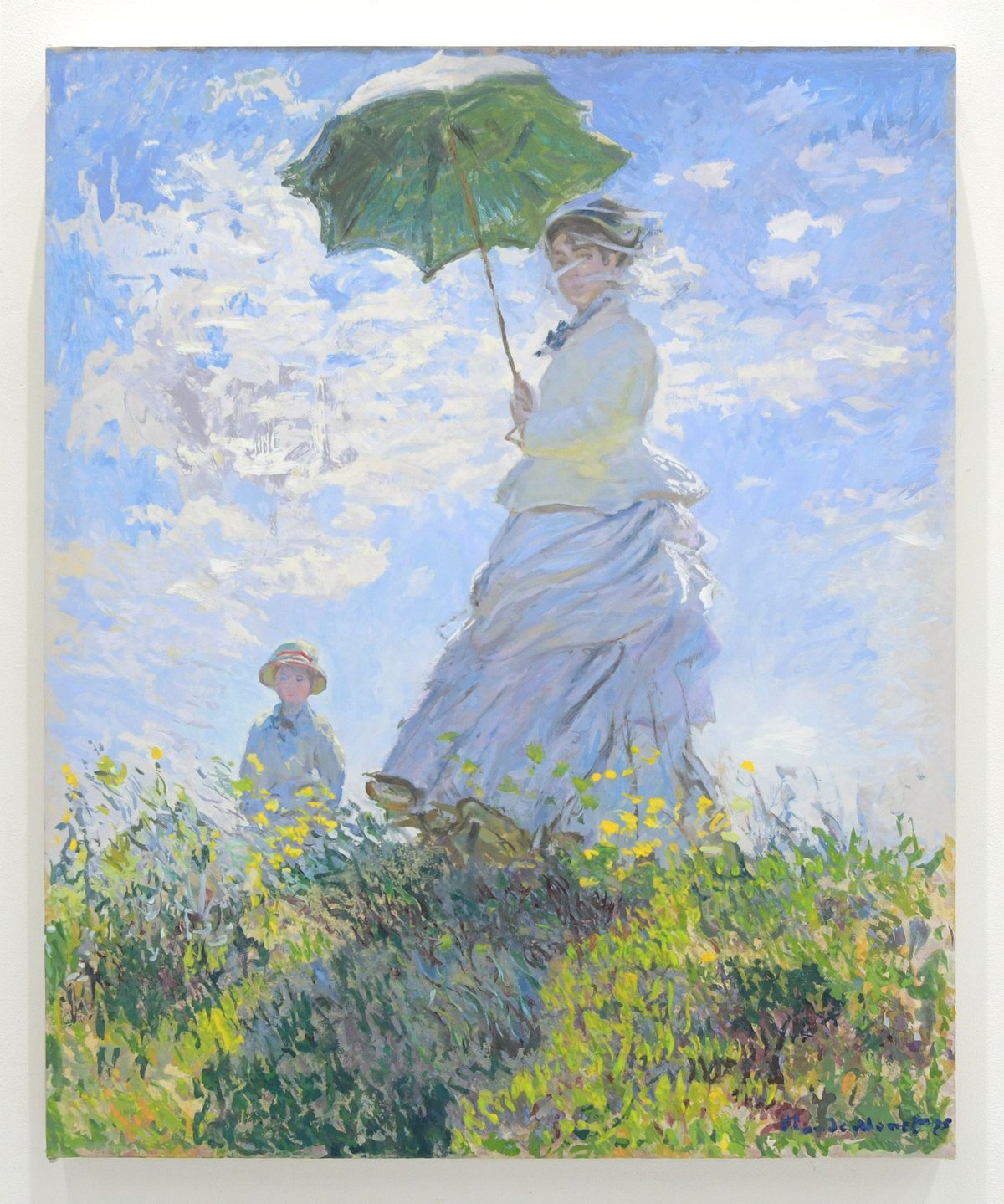
As part of his show called Hark Back to Ukiyo-e: Tracing Superflat to Japonisme’s Genesis, currently on display in LA, Takashi Murakami painted his own version of Claude Monet’s Woman with a Parasol - Madame Monet and Her Son. The painting is paired with Murakami’s copies of woodblock prints (ukiyo-e) that influenced the work of Monet and other abstract & impressionist artists.
Here Murakami pairs a copy of Monet’s portrait with twelve enlarged versions of ukiyo-e prints by Kikukawa Eizan and his teacher, Utamaro. Through these examples Murakami shapes a narrative of Monet’s encounter with bijinga. They suggest the elements that Monet absorbed in his study of prints: statuesque three-quarter figures; sensual outlines; parasols viewed from below; cloud-like masses of cherry blossoms; windswept skirts. Another selection, Utamaro’s Yamauba and Kintarō, is an example of a bijinga sub-genre in which women are shown with young children.
As noted by Greg Allen, Murakami used an unusual process for his reproductions:
Copying the originals, Murakami had his own intimate encounter with these features, recognizing in the process the meticulous care taken in pursuit of delicate effects. He interprets them in his signature style, composed of layer upon layer of silkscreened acrylic paint, applied with a special squeegee work application method and coated in a glossy finish.
For a show on Hulu called Tell Me Lies, synth-pop band Chvrches covered Such Great Heights by The Postal Service. Lovely.

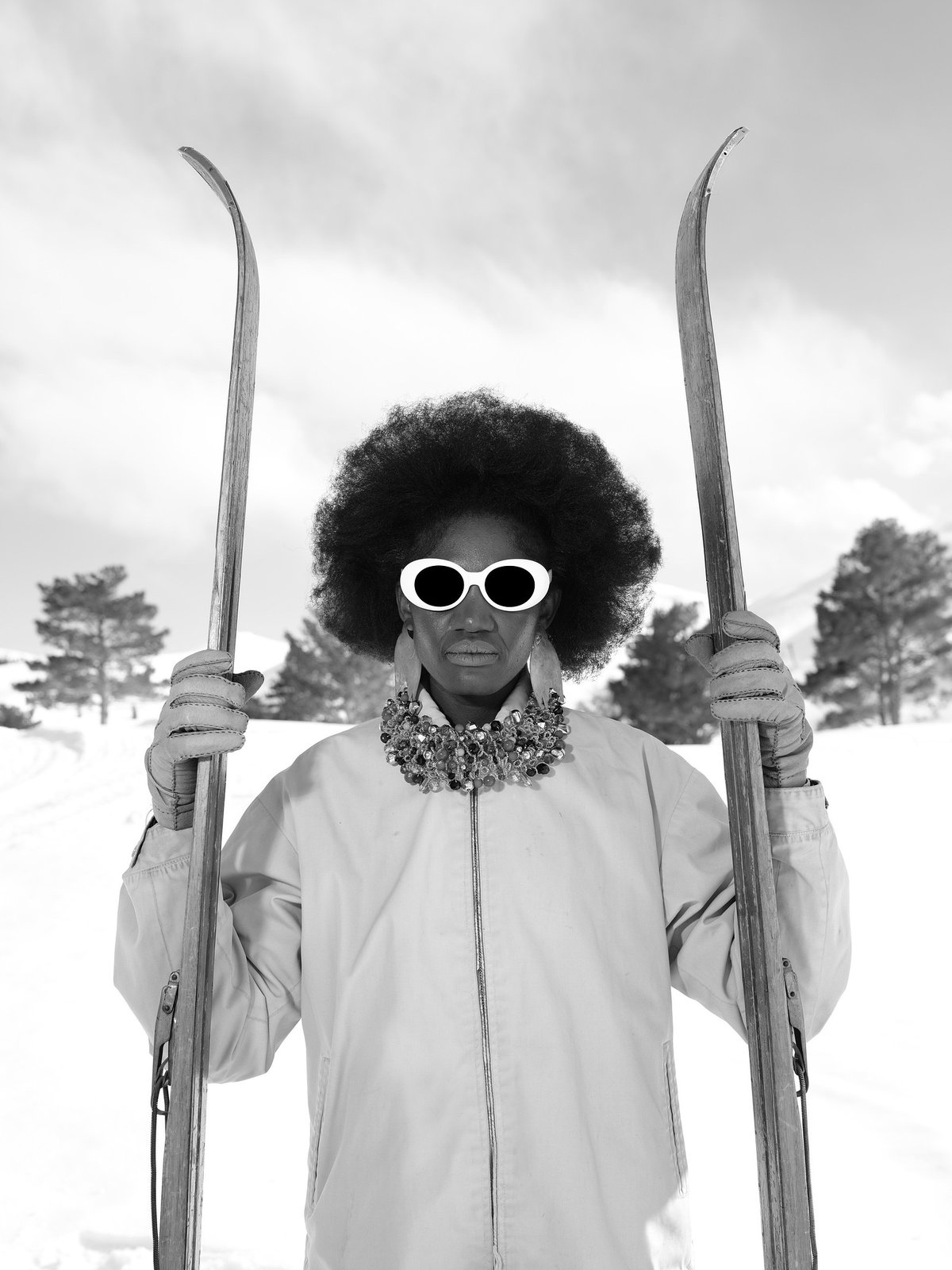
A New Winter is a project from Colombian-American photographer Sofia Jaramillo that seeks to
This project revisits the early depictions of skiing, which often portrayed Eurocentric ideals and a narrow vision of who belongs on the slopes. By reimagining the first images of skiing in the United States, A New Winter challenges the stereotypes and exclusive culture perpetuated by these initial depictions, inviting us to expand our understanding of winter sports and celebrate its evolving culture. It seeks to disrupt traditional narratives, challenge stereotypes and promote representation in winter sports by placing people of color at the center of these images.
Several of the images were featured in Outside magazine, where Jaramillo says, “I’m doing this for all the young Black and brown girls and boys out there who don’t see themselves when they walk into a ski resort.”


RiotGrlErin made some great mashups of Christmas movie posters featuring Muppets. I think my favorite is Oscar the Elf but the Die Hard one is so good too. Many more in this thread.
Watch Jonas Wolf and three friends sing a choral arrangement of the Bee Gee’s Stayin’ Alive in the style of a madrigal. Just in case (like the me of 1 minute ago) you don’t know what that is (although you will recognize it from just a few seconds of listening to the video), voila:
A madrigal is a form of secular vocal music most typical of the Renaissance (15th–16th centuries) and early Baroque (1580–1650) periods, although revisited by some later European composers. The polyphonic madrigal is unaccompanied, and the number of voices varies from two to eight, but the form usually features three to six voices, whilst the metre of the madrigal varies between two or three tercets, followed by one or two couplets.
Wolf has a few more videos of “pop songs in renaissance and baroque style” on his YouTube channel. (Note: these are not AI in case you were wondering/worried.)
For years now, the people have wanted only one thing: for Daniel Craig’s chicken-fried detective Benoit Blanc to feature in a Muppet movie (with Craig as the only human). Earlier this year, Netflix picked up the streaming rights for Sesame Street. That partnership has borne some unexpected fruit: Forks Out: A Benoit Blanc Sesame Street Mystery.
In the video, detective Beignet Blanc arrives to investigate who ate Cookie Monster’s triple berry pie.
I have arrived to this Street of Sesame on a sunny day turned cloudy. We have a culinary culprit in our oven mitts. And to solve this confectionary conundrum, we must look right in front of our googly eyes at Cookie Monster.
The whole thing is delightful. See also Nerdist’s Rainbow Connection: A Benoit Blanc Mystery.
I guess this is as good an explanation of contemporary culture as anything.
Hungover from a world that told us we could be anything, we decided to be DJs. We don’t create our own music. We curate playlists, recirculating songs that will make people think we’re cool. And we do this through the labels we wear, the books we read, the people we hang out with, and the opinions we parrot. The DJ figure, ruled by the same logic, is just another celebration of self.
(via @youtubesilike.bsky.social)
At a recent Portugal. The Man concert in NYC, Weird Al joined the band on stage for a pair of songs, including a cover of Killing In The Name, Rage Against the Machine’s anthem against police brutality and the military industrial complex. Weird Al, welcome to the resistance. (via @erikahall.bsky.social)
Two of the most famous screeches in music history are from House of Pain’s Jump Around and Cypress Hill’s Insane in the Brain — you likely heard both of them in your mind just reading the names of the songs. This short video explains where those samples came from and which one of them is a horse (and not Prince).
In just a few days (Dec 5), the entirety of Quentin Tarantino’s Kill Bill duology will be released in theaters as one four-hour-long film. Here’s the trailer:
Quentin Tarantino’s KILL BILL: THE WHOLE BLOODY AFFAIR unites Volume 1 and Volume 2 into a single, unrated epic—presented exactly as he intended, complete with a new, never-before-seen anime sequence.
And there will be an intermission. I haven’t seen KB in awhile and am looking forward to this.
Oh, and QT has a Kill Bill collab with Fortnite? Apparently in the original script, there was a scene where Yuki Yubari (Gogo Yubari’s twin sister) tries to get revenge on Kiddo, but it was cut because the director deemed it “too much to chew” for one shoot. Using Unreal Engine 5, Fortnite characters, and a motion-captured Uma Thurman, Tarantino has finally made the scene a reality. You can find it in the game or watch it on YouTube:
A Japanese experimental music group called Open Reel Ensemble plays reel-to-reel tape recorders from the 70s & 80s as musical instruments (give it a sec to get going):
Brilliant! A YouTube commenter notes: “Very cool, looks like you’re fishing for sound waves.” Here’s another video of them playing…this one’s like a reel-to-reel version of DJing with turntables:
I went looking for information about how they’re producing these sounds and found this profile of the group from 2018.
Over the years, the group has developed new techniques. As Motherboard explains, each member can now “program” sounds directly on to the recorders, creating a strange blend of digital and analog technology. With multi-track recorders, Open Reel Ensemble is able to switch individual tracks on and off, too. Sometimes they’ll record blocks of sustained noise, at various pitches, to be triggered and disabled like notes on a guitar. These allow the band to play intricate chords and melodies on stage. “We’re finding new techniques every day,” Wada said, “exploring rotation and movements, and the relationship between magnetics and sound.”
I bet they are amazing to see live.
Speaking of Daft Punk, did you know they released some new music recently? Ok well, that’s not quiiiite true, but in late September, Epic launched the Daft Punk Experience in Fortnite and IMO it’s a) extremely cool, nd b) should be considered a part of the group’s official discography.
For a taste of what it’s like, here’s the seven-minute intro to the experience:
I watched this live when it launched, on a big TV and with the sound turned up, and it was awesome. Again, no new music, but definitely a new music video experience.
During the intro, you can control your player slightly but the game mostly moves you through it. After you’re inside the pyramid though, there’s a lot to do. The main event is a concert playing some of the songs from their Alive 2007 tour; here’s what that looks like from start to finish (33 min):
You can move freely around and dance, including with other players who are in the pyramid with you. During some songs, you can bounce really high on the dance floor or fly around the room.
Off of the main pyramid are four smaller interactive rooms (in order of coolness):
- Dream Chamber Studios: You can choose from almost two dozen Daft Punk songs and mix them together, adjust tempos, etc. This room alone makes the whole experience worthwhile…it’s the easiest way to create DP remixes.
- Around the World. You and up to three other players work to recreate and then customize the iconic Around the World music video. Oh, and you’re all Lego characters.
- Daft Club: Dance to music from Random Access Memories. (You can see the full Daft Club sequence in the latter part of this video.)
- Robot Rock Arena: You and some teammates join forces to defeat robots using musical weapons.
In all, that’s six new interactive audiovisual experiences from Daft Punk, featuring 31 songs from their discography. It’s huge.
The easiest way to see/experience all of this is to play the game…the Daft Punk Experience is still playable afaik. Fortnite is a free download and the DPE is free as well. If you’re a Daft Punk fan, it’s worth checking out for sure.
This is so so cool and an arrow-splitting bullseye in the middle of my wheelhouse: a short Boards of Canada tune played on a DEC PDP-1, one of the most significant machines in the history of computing.
Here’s a description of what’s going on, courtesy of @dryad.technology on Bluesky:
The PDP-1 doesn’t have sound, but it does have front-panel light bulbs for debugging, so they rewired the light bulb lines into speakers to create 4 square wave channels.
You can read more about The PDP-1: The Machine That Started Hacker Culture:
The bottom line is that the PDP-1 was really the first computer that encouraged users to sit down and play. While IBM machines did the boring but necessary work of business behind closed doors and tended by squads of servants, DEC’s machines found their way into labs and odd corners of institutions where curious folk sat in front of their terminals, fingers poised over keyboards while a simple but powerful phrase was uttered: “I wonder what happens if…” The DEC machines were the first computers that allowed the question, which is really at the heart of the hacker culture, to be answered in real time.
And every day is a good day to listen to Boards of Canada. Oh! And if you’re anywhere near Mountain View, the Computer History Museum has regular demos of the PDP-1 and will play the song if requested!
If anyone would like to see this live, we demo the PDP-1 at the Computer History Museum in Mountain View, CA on the first and third Saturdays of the month, 2:30 and 3:15p. Just ask, and we’ll be happy to play it!
(via @k4r1m.bsky.social)
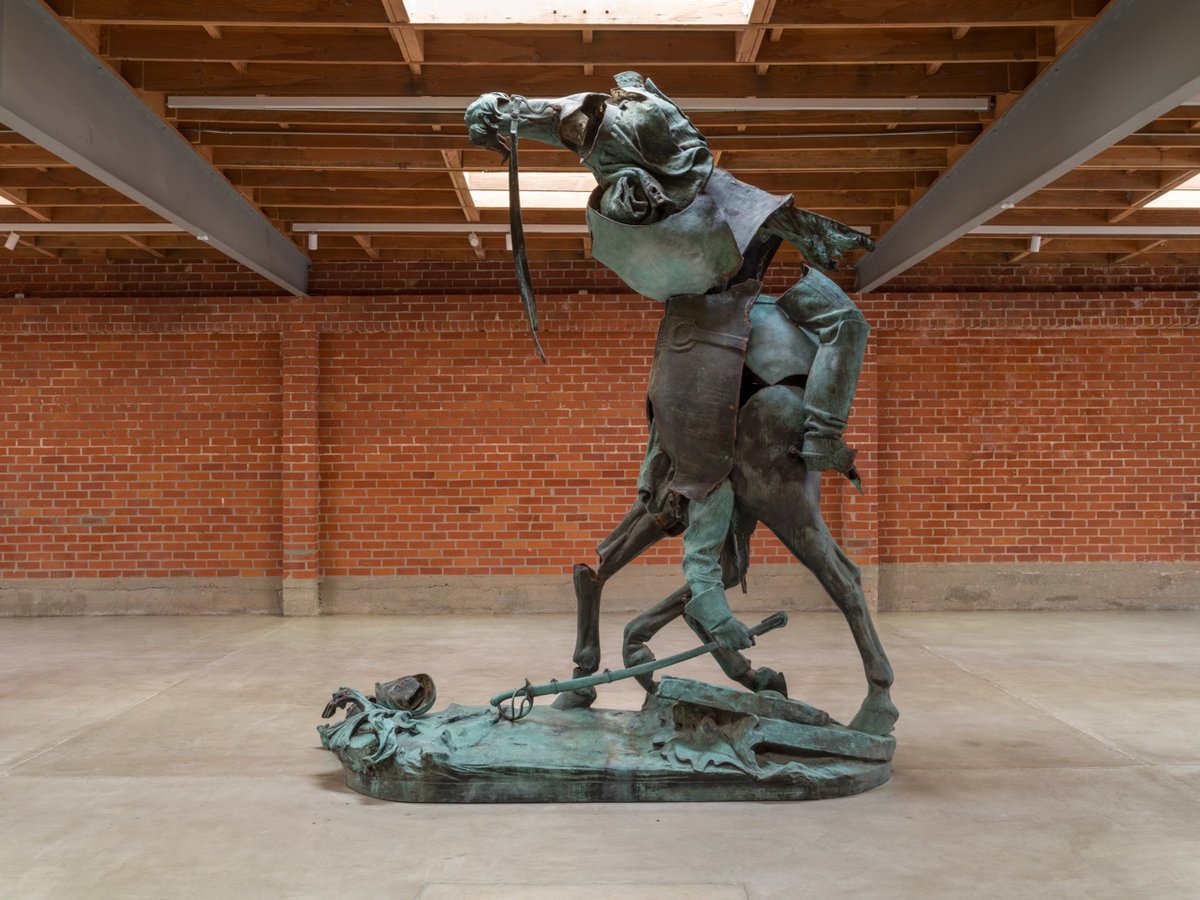

This is incredible: artist Kara Walker took a statue of Confederate general Stonewall Jackson that had stood in Charlottesville, Virginia until 2021, chopped it up, and reconstituted it into a disfigured beast. It’s part of an exhibition of several such works called Monuments, which opens at The Geffen Contemporary at MOCA in LA on October 23. From the press release:
In 2021, The Brick (then known as LAXART) acquired a decommissioned equestrian monument of “Stonewall” Jackson from the city of Charlottesville, Virginia. The monument was given to Kara Walker to create the new work Unmanned Drone (2023). The original bronze statue portrayed Jackson spurring his steed into the heat of battle. Walker dissected the statue and reshuffled the parts in a Hieronymous Bosch-like fashion. The result is still horse and rider, but instead of charging into battle, Walker’s horseman wanders in Civil War purgatory, dragging its sword over a ruined battlefield.
Here’s the statue as it looked in Charlottesville:

Walker described the intent of the work in this NY Times piece:
She likened the result to a haint — a Southern concept with roots in Gullah Geechee culture that designates a spirit that has slipped its human form and roams about making mischief and exacting vengeance. Here, what is deconstructed is not just a statue but the myth of suppressed Confederate glory that it represents. Her sculpture, she suggested, “exists as a sort of haint of itself — the imagination of the Lost Cause having to recognize itself for what it is.”
The Guardian also has a long article on the show and Walker’s piece.
In 1969, Fred Rogers appeared before the Senate to argue against cutting federal funding for public broadcasting. During his testimony, Rogers recited a song from his show, What Do You Do with the Mad That You Feel? In this short video, Jon Lefkovitz accompanies Mister Rogers’ words with some music and short scenes from movies like Moonlight, The 400 Blows, Do the Right Thing, Lady Bird, 2001, and Return of the Jedi.


Enigmatriz uses ASCII art to punch up and blow out public domain photos and illustrations — I love their style. From It’s Nice That:
Using the Image to ASCII tool available online, Enigmatriz found a new way to play with digital assets. “Everyday, I sit on my computer and browse through hundreds of images in the public domain to find things that catch my attention and feel are worth shining a new light on them,” says Enigmatriz. “When working with ASCII, what I like and find particularly interesting is the blend between hundred old paintings, photographs etc. and modern technologies.” Enigmatriz creates unique contrasts between images — historical paintings are overlaid with spatterings of text, ASCII renders are layered on top of playing cards or archival imagery.
You can find more of their work on Instagram.
Super Mario Bros. Remastered is an open source, fan-created, remastered version of the original Super Mario Bros. The trailer is above.
The game includes new levels, custom modes and characters, a custom level editor, and more. You need the SMB1 NES ROM to play it — “none of the original assets are contained in the source code, unless it was originally made by us!”
You can download versions for Windows, Linux, and MacOS…check out all the options and details on Github.
Christian Marclay debuted his 24-hour film The Clock 15 years ago. The film is made up of thousands of clips from movies and TV shows that show timepieces or otherwise make reference to the time of day. I’ve seen chunks of it in a few museums & galleries and it’s wonderful.
Using this extraordinary minute-by-minute timeline of nearly all the scenes that make up The Clock, one person is attempting to reverse engineer the entire film. It’s not The Clock, but it’s A Clock. Here are a couple of excerpts:
Says the creator:
So, when I stumbled upon this Fandom Wiki, where the mysterious user ElevenFiftyNine had seemingly started the task of listing all the movies in The Clock, I couldn’t help myself; I started remaking the whole thing from scratch.
So, since I can’t really say this is The Clock, it is my best attempt at making a Clock, by following the excellent effort by ElevenFiftyNine.
A ten-minute excerpt is free on the website but you need to join the Patreon to watch the entire work-in-progress. According to their most recent update, the film is finished but the final version isn’t online quite yet; October 15th is the release date.
BTW, here’s the creator’s definition of “finished”:
I spoke some months ago about what 100% means for this project, and it is not that it is a fully perfect copy of Marclay’s work. The information available online is incomplete, and new information might appear in the future. For now, 100% means that all available information, is in a Clock.
And incredibly, they have never actually seen The Clock in person:
Unfortunately I have never had a chance to see The Clock, as it is only visible when exhibited at a museum. This is increasingly a rare occurrence, and even then, apparently the queues when it is on show, are monstrous. Never mind that it might be anywhere in the world!
Aside from the clips, I haven’t watched any of this yet, but it is a very tempting alternative to waiting for a rare showing somewhere I happen to be.
Gabriel Bonnin, aka Singer Sound System, plays an electro-acoustic hurdy-gurdy that’s driven by an old Singer sewing machine pedal.
My instrument is an electro-acoustic hurdy-gurdy. I just removed the crank and use a Singer machine to drive it :-) It is equipped with four integrated microphones that allow me to process the sound live, especially in Ableton Live.
Some of his most popular recent covers include the Doctor Who theme1:
Ozzy Osbourne’s Crazy Train:
The X-Files theme:
And Enter Sandman by Metallica:
Oh and Daft Punk!
You can find his stuff on YouTube and Instagram.
In 1987, choir director Dennis Bell arranged a version of U2’s #1 hit I Still Haven’t Found What I’m Looking For for his choir, the New Voices of Freedom. After hearing a recording of the arrangement, U2 asked Bell & the choir to join the band for an upcoming show at Madison Square Garden in NYC. Before the show, the band and the choir rehearsed together at Greater Calvary Baptist Church in Harlem:
Here is some behind-the-scenes footage of the rehearsal (more); Bono’s arm is in a sling for some reason?
The live recording of the song from that MSG show appeared on their next album, Rattle and Hum; here’s the (music-only) video from U2’s YouTube channel:
And here’s an actual video of the MSG performance (taken from the Rattle and Hum DVD):
You can also find the MSG version of the song (and the rest of Rattle and Hum) on Spotify, Apple Music, etc.
Bell and the New Voices of Freedom recorded their own version of the song, which you can listen to on Spotify, Apple Music, etc.
P.S. That same day, the band walked around Harlem and stumbled across street musicians Satan & Adam; a clip of their song made it onto the album and DVD.
(via laura olin)
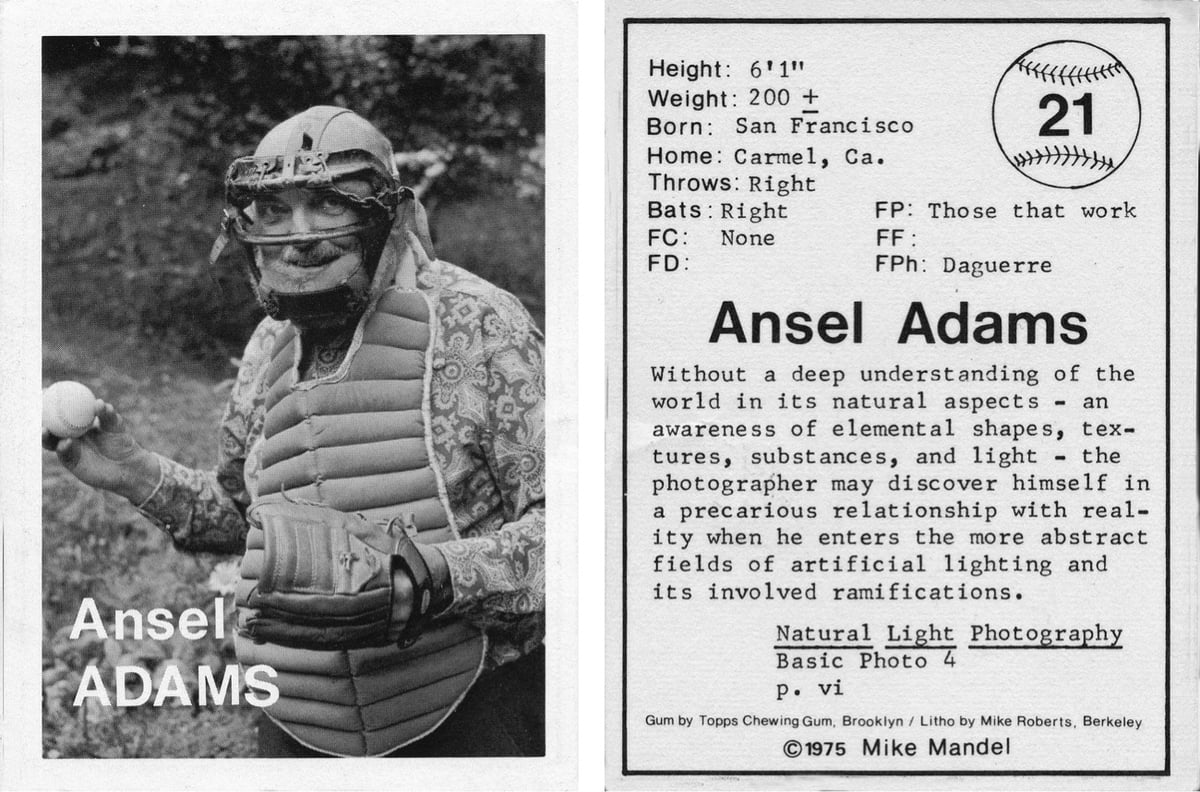
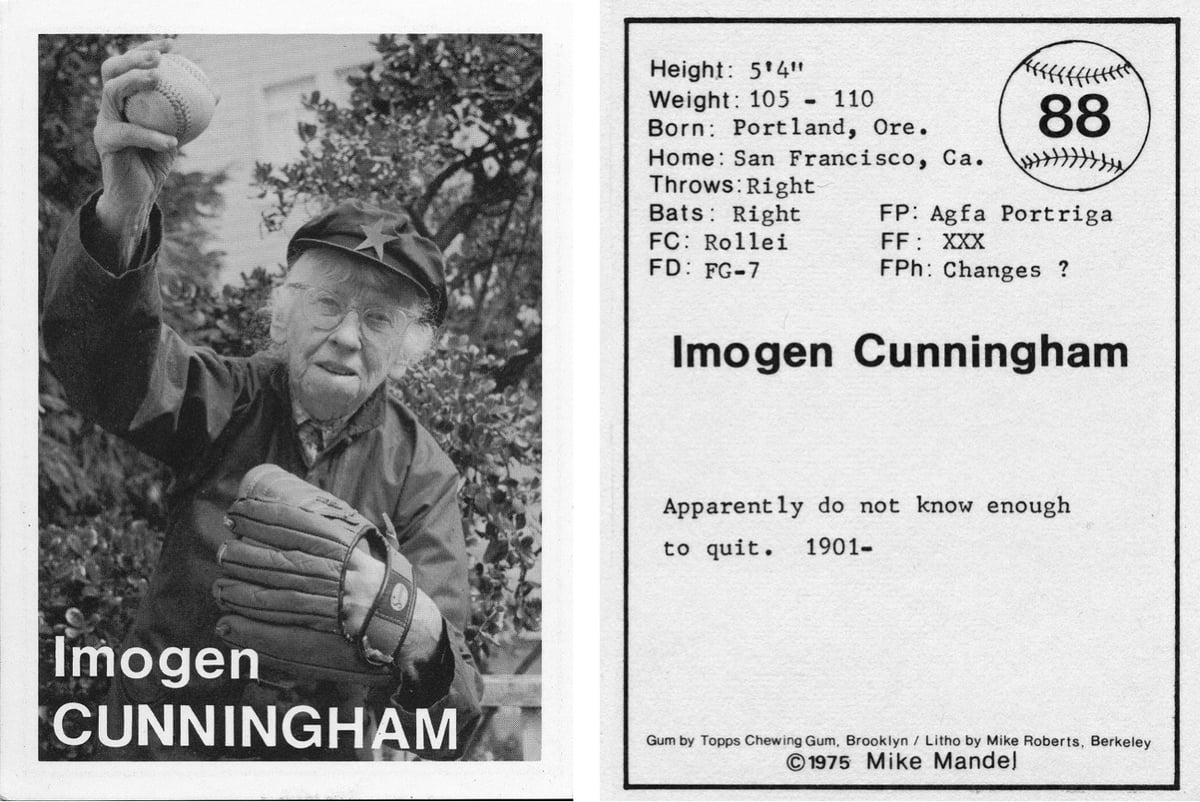
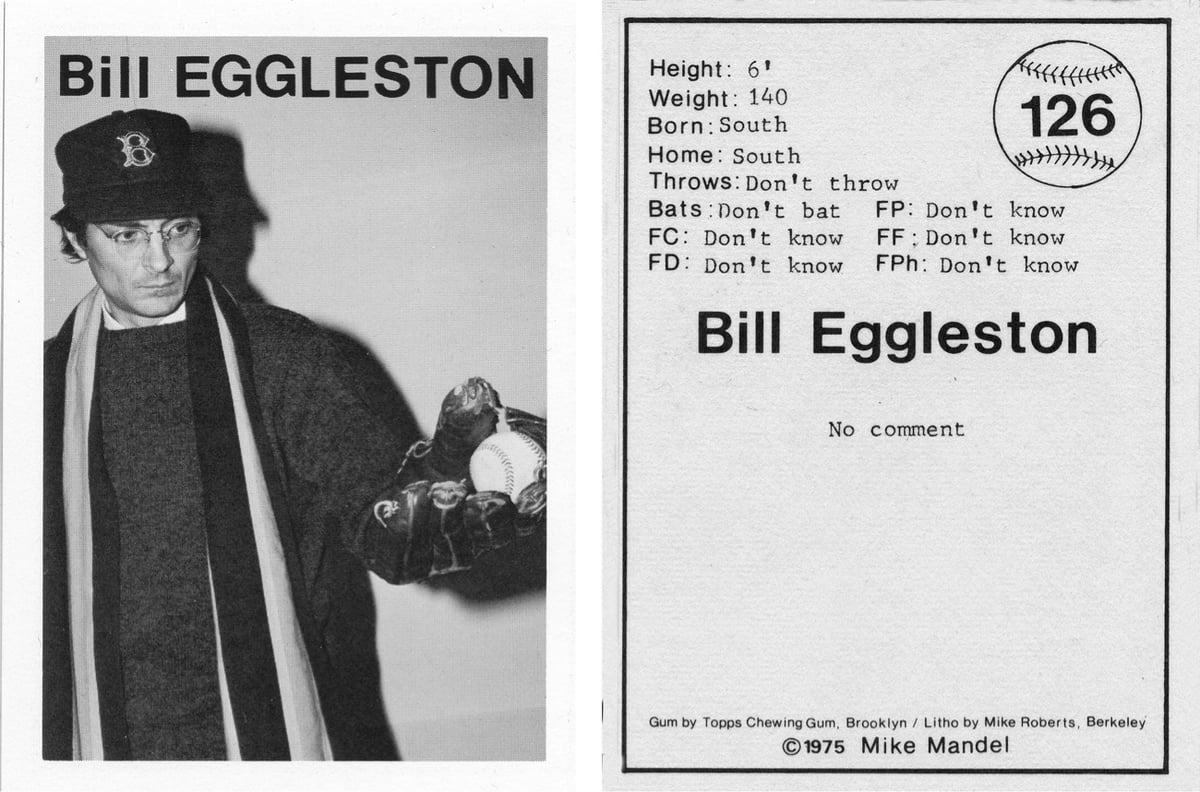
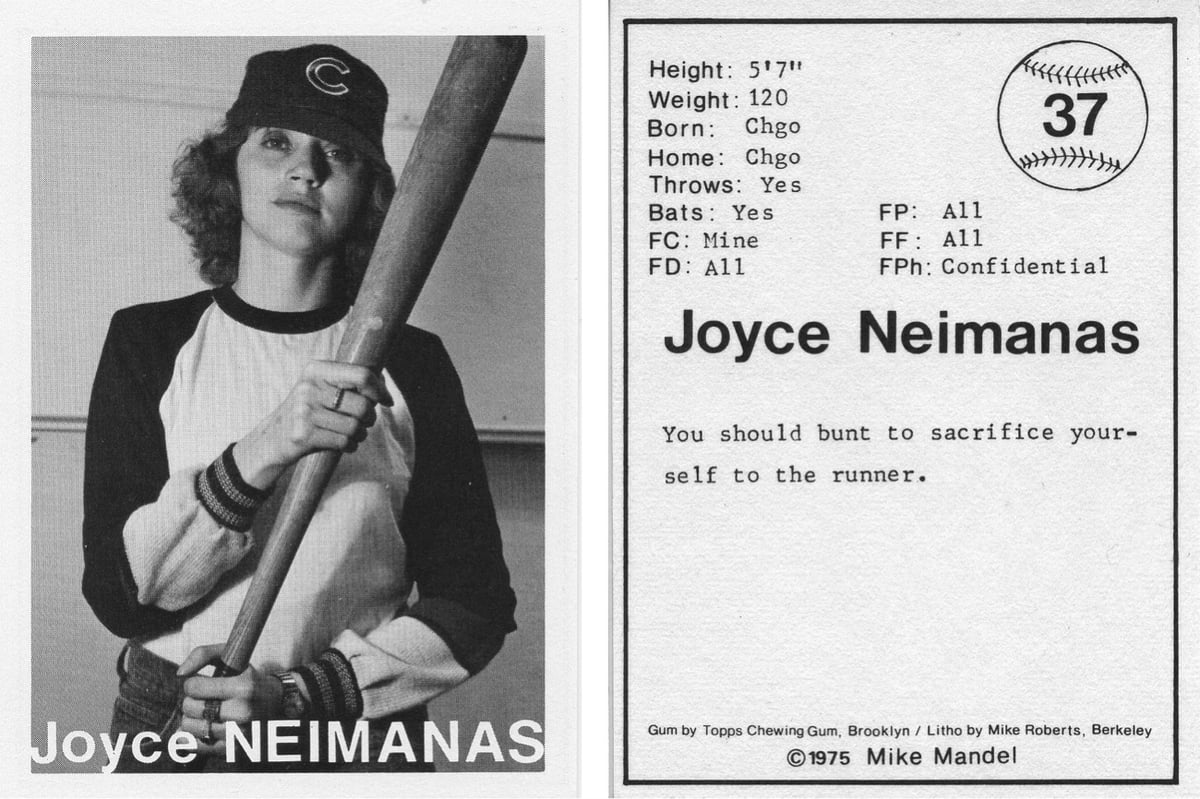
In the mid-70s, Mike Mandel traveled around the United States photographing photographers as if they were baseball players, capturing the likes of Imogen Cunningham, Ed Ruscha, William Eggleston, and Ansel Adams.
I photographed photographers as if they were baseball players and produced a set of cards that were packaged in random groups of ten, with bubble gum, so that the only way of collecting a complete set was to make a trade. I travelled around the United States visiting about 150 photographic “personalities” and had them pose for me. I carried baseball paraphernalia: caps, gloves, balls, a mask and chest protector, a bat, as well as photographic equipment, and made a 14,000 mile odyssey. Out of this experience came 134 Baseball-Photographer images. I designed a reverse side for the card which would allow for each photographer to fill in their own personal data that in a way referred to the information usually included on real baseball cards: Favorite camera, favorite developer, favorite film, height, weight, etc. I used whatever information each photographer provided me.
You can hear Mandel talking about the project in this SFMOMA video — the gum he included in the packages of cards was donated by Topps:
You can find some of the cards on eBay for around $10-50 apiece and a complete set, signed by Mandel & Imogen Cunningham, can be had for $3,650. (thx, duncan)

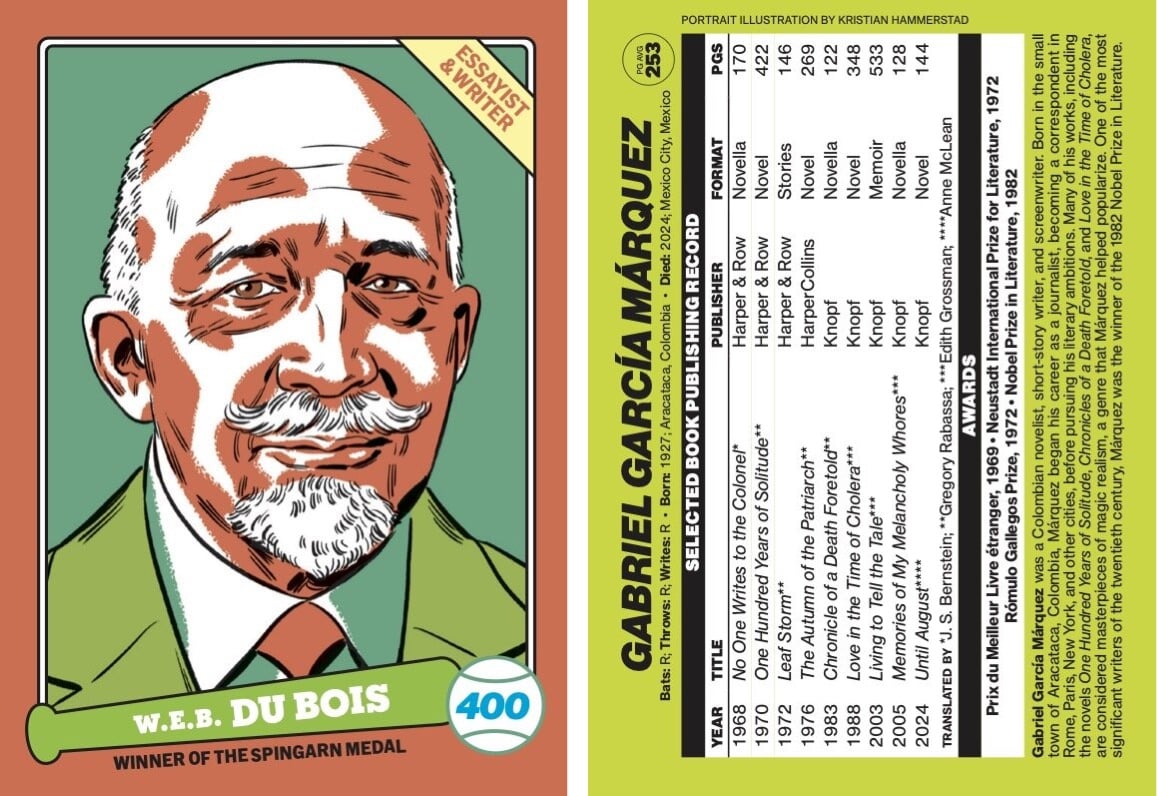

I love these author cards from McSweeney’s in the style of baseball cards.
For years you’ve seen athletes, web-slinging superheroes, orcs, and pocket monsters get the trading-card treatment, while you’ve sat in your room hoping upon hope that the heroes of magical realism or giants of New Journalism would get their own. The wait is over, friends.
They have three sets: the first set is a part of their 74th issue, series 2, and series 3. The authors featured in the sets include Octavia Butler, Judy Blume, Lauren Groff, Toni Morrison, Stephen King, George Saunders, Sarah Vowell, and Kurt Vonnegut.
Now showing at the Brooklyn Museum (through April 2026) and the ICA in Boston (until Spet 1, 2025) is Christian Marclay’s Doors. Like his masterpiece The Clock, Doors is a film montage, this time of people in movies opening and closing doors.
In Doors (2022), Marclay stitches together hundreds of short film clips featuring the opening and closing of doors. More than a decade in the making, the moving image collage draws from nearly all genres of narrative cinema ranging from French New Wave to Hollywood blockbusters. Carefully edited by Marclay, the visual narrative follows actors entering new spaces, with each door marking an editing point and transitioning between films and soundscapes. The work suggests a labyrinthine journey where protagonists get lost and found again. Marclay describes the video as sculptural – a “mental architecture that the viewer might or might not follow and get lost in.”
The film is 54 minutes long but runs in a continuous loop. These videos feature some footage from the film; this one shows five minutes and this one four minutes:
Here’s Marclay on the process of making the video:
It’s quite difficult to find scenes in cinema showing an actor entering a space and then going into another space. I needed two doors: The actor enters one space and then leaves through another door — so it’s one room to the next room to the next room to the next room, and every time a different actor in a different film. It’s a strange choreography to edit. The door has to be opened in a similar way and at the same speed to make it believable. If someone is running and then you see them peek slowly through the door on the other side, it doesn’t look realistic. I also had to match the motion of pulling or pushing the door. To make things even more complicated, that door is hinged on one side and that has to match, the hinge and the door handle. If done well, the viewer gets sucked in and fooled by these editing tricks. So you see an actor in color in the ’80s entering a black-and-white film from the ’50s, and you know it’s not the same actor, but your mind wants to believe that it is. The trick is to create a flow, an illusion of continuity.
Doors brings to mind Christopher Nolan’s Inception (“a mental architecture that the viewer might or might not follow and get lost in”) and the doorway effect (“The doorway effect or location updating effect is a replicable psychological phenomenon characterized by short-term memory loss when passing through a doorway or moving from one location to another.”)
P.S. The Clock is showing at the Neue Nationalgalerie in Berlin, starting at the end of November and running through Jan 18, 2026.
William Maranci took Nine Inch Nails’ Closer and mashed it up with Ray Parker Jr’s theme song to Ghostbusters and it’s maybe a little bit genius and a little bit cursed? Like one commenter says, it’s “the musical equivalent of cats and dogs living together”.
See also Eminem’s Lose Yourself mashed up with ELO’s Mr. Blue Sky.


Lego is coming out with a near 1:1 replica of Nintendo’s iconic Game Boy handheld video game system. It’s not playable, but you can insert & remove Lego game cartridges and use different lenticular screens to pretend. Here’s a short video showing how it “works”:
You can preorder the kit from Amazon; the price is $60, which is only $30 less than the actual Game Boy cost when it was released.1
I still have my original Game Boy from 1989 — it’s sitting on a table near where I’m typing this. I played so so much Tetris on that thing… (via moss & fog)
Last week, I linked to a video mashup by Bill McClintock of several metal songs, saying “although the video was posted a day or two before Ozzy Osbourne died, it feels like a fitting tribute to one of metal’s true pioneers”. This morning, YouTube helpfully informed me that McClintock had since done a proper tribute in the form of a compilation of every Ozzy/Sabbath-related video mashup he’d ever done.
Rest in darkness, Ozzy. 🤘
This is a great 5-minute mashup of several metal and metal-adjacent songs from artists like NIN, Metallica, Rage Against the Machine, KISS, Dio, Black Sabbath, and Soundgarden. Even if you don’t care for metal, I feel confident that you’ll enjoy this anyway — it’s a bop. Here’s the track list:
Nine Inch Nails - Terrible Lie
Rage Against the Machine - Killing in the Name
Dio - Holy Diver
Soundgarden - Outshined
Judas Priest - Hot Rockin’
KISS - All Hell’s Breakin’ Loose
Pantera - 5 Minutes Alone
Black Sabbath - Into the Void
Billy Squier - The Stroke
Judas Priest - You’ve Got Another Thing Comin’
Alice in Chains - Them Bones
Metallica - Sad But True
Although the video was posted a day or two before Ozzy Osbourne died, it feels like a fitting tribute to one of metal’s true pioneers. (via neatorama)
This video feels like a throwback to a simpler time on YouTube: 331 film clips edited together to recreate Eminem’s Lose Yourself. A particularly well-done example of a time-worn genre. I lol’d at “let it go!!”
I love me some Wallace & Gromit and so I was delighted to see that this guy made a real life version of Wallace & Gromit’s breakfast machine, complete with a spoonful of jam flying through the air perfectly meeting a piece of toast popping out of a toaster.
It starts with this crazy part here, where he falls out of bed into a pair of trousers, landing in a chair, and then his sleeves go on, and the vest. And then, probably the hardest part of all, is throwing jam — through the air — and hitting toast — in the air — perfectly. Some of these stunts are going to be the most challenging things I’ve ever attempted.
Cracking toast, Gromit! (via the kid should see this)
Do yourself a favor and watch this: Erin Morton is a junior in the BFA Musical Theatre program at the University of Cincinnati College-Conservatory of Music and she absolutely blisters the paint off of the walls with her performance of Radiohead’s Creep. Wow. I actually got some goosebumps watching this.
BTW, other contenders for best Creep cover include Prince and a 1600-person pub choir.
Older posts





Socials & More