Video compilations of several months of photos of John McCain, Barack Obama, and George W. Bush. Completely mesmerizing, especially the Bush one. See also: Noah Kalina Everyday and Paris Hilton doesn't change facial expressions on YTMND.
The Digital Journalist has launched a photo blog modeled after The Big Picture. Well done. I've followed this site on and off for years but always found it too difficult to navigate through to find the photography, which is shot by top-notch photojournalists and is amazing. Nice to see the photography put front and center. Case in point: this wonderful selection of sports photos by Walter Iooss Jr., punctuated by stories of the athletes he was photographing (Tiger Woods, Muhammad Ali, Michael Jordan, etc.). Here's Iooss' account of photographing Jordan at the 1988 dunk contest:
The problem with shooting the NBA slam-dunk contest was that you never knew how the players were going to dunk, especially Jordan. In 1997 [sic, it was actually 1987] he had twirled and dunked with his back to me. But by this time I knew him a little better. As he sat in the stands three hours before the contest, I said, "Michael, can you tell me which way you're going to go, so I can move and get your face in the picture?" He looked at me as if I were crazy but then said, "Sure. Before I go out to dunk I'll put my index finger on my knee and point which way I'm going." I said, "You're going to remember that?" And he said, "Sure." So later, when they announced his name, I looked over to him on the bench and there was his finger pointing left. I got up and moved to the right side of the basket so I could see his face. He went left every time he dunked. On his last two dunks he ran the length of the court, took off from the foul line and slammed the ball through. On the next-to-last one he landed in my lap. On the last one I set up in the same spot. He looked at me as if to say, "Go left a little, give me some room this time." And that was it, the picture was made: 1000th of a second frozen in time.
BTW, I've heard that The Big Picture has spawned a number of copycats around the web, including this one from the WSJ.
Three galleries of the best photos taken at the Olympics. Part 2 and part 3. NSFW.
Update: Caveat to the links above: all the photos above are lifted from elsewhere. You may prefer the collection at Big Picture instead. I've got mixed feelings about sites that take photos from other sites without proper attribution. On one hand, the photographers are not getting their due credit and payment for those photos but on the other, the act of collecting and curating adds something new to the work and results in something worthwhile. I wish there were a way for sites to make groups of photos like these without the hefty licensing expenses...the photographers get more of their photos out there and we get all sorts of neat views through the lenses of the photographers and talented curators. (thx, josh)
Awesome panorama of the Water Cube in Beijing from the top of the 10 meter platform. Looks way higher than on TV.
I found this New York magazine profile of fashion photographer Juergen Teller pretty fascinating. For one thing, none of Teller's photos are retouched.
But perhaps most rare for fashion photography, Teller's pictures are absolutely never retouched. "I'm interested in the person I photograph," he says. "The world is so beautiful as it is, there's so much going on which is sort of interesting. It's just so crazy, so why do I have to put some retouching on it? It's just pointless to me."
And then there's this anecdote. After a bad encounter with a subject who didn't like how old she looked in Teller's photographs, he went to see his friend Charlotte Rampling.
Despondent, Teller called his friend Rampling, who offered to cook him dinner. They talked about how it feels to be photographed, and how it feels to age. "I just thought, Fuck this, I'm going to photograph myself," he says. And then there the two of them were, in the Louis XV suite of the Hotel de Crillon, with Teller way too fat to fit into any of the Marc Jacobs samples save one terribly shiny pair of silver shorts.
"I thought, Fuck," Teller says, "I don't even fucking fit into these clothes. I'm really fucking stuck now."
So he pulled on the shorts in the bathroom. "I came out and I had my socks on and I had these shorts on and no top, and I just said, 'Ta-da!' And she said, 'Oh my God. What are we going to do?' And I said, 'Well, I don't know. But really, honestly'-and I could hardly bring it out of my mouth-I said, 'I just want to kiss you and fondle your breasts.' And she didn't say a word. She just leaned back in her armchair and went into her handbag and got a cigarillo out and lit it and the air was thick and I was mortified. And then she sort of dragged on her cigarette and said, 'Okay. Let's start. I'll tell you when to stop.'"
Here are some of the images that resulted from that shoot (NSFW).
Photos of disassembled household appliances.
this was my senior thesis project at the hartford art school this past year...i took apart used cooking/cleaning appliances, and arranged their interior parts very systematically on a white sheet of bristol board. my intention was to explore the hidden "brains" of these appliances; allowing us to view these everyday objects from a new perspective.
Photographer Miroslav Tichy
This is Miroslav Tichy, a Czech photographer:

This is one of Tichy's homemade cameras, fashioned from cardboard tubing, string, and thread spools:

Here's a photo taken with one of his homemade cameras:

Of the apparent quality of his photography Tichy says:
Photography is painting with light! The blurs, the spots, those are errors! But the errors are part of it, they give it poetry and turn it into painting. And for that you need as bad a camera as possible! If you want to be famous, you have to do whatever you're doing worse than anyone else in the whole world.
Awesome. (via this is that)
Chimping is the practice of checking your just-taken photos on your DSLR's LCD screen. (via textism)
Photographer Vincent Laforet, formerly of the NY Times, is in Beijing making photos of the Olympics. Here's a look at some of the stuff he's been shooting and the process behind getting those wonderful overhead shots of his.
Getting a photograph of Phelps from above is priceless -- so it's all worth the hassle. Here he is winning gold in the 200 meter individual medley. This was shot with a 400mm 2.8 handheld--oh yeah, hand holding a 12 pound lens ain't easy. Luckily it was strapped to me -- and I to the catwalk with oodles of safety cables. We weren't allowed to being extra CF Cards or even a paper start list, which is pretty extreme if you ask me. We were patted down before we went up by the photo escorts, and we all tried to get things in -- even our credentials were left behind. While extreme, I agree with one of the photo escorts who said that if even one sheet of paper floated harmlessly down from the catwalk. it would be game over for everyone -- no more catwalk access.
You can keep up with Laforet's Olympic output at his blog. (thx, stacy)
A collection of photos of custom and counterfeit Louis Vuitton products. Big omission: David LaChapelle's photo of an LV'd Lil' Kim. (via quips)
BLDGBLOG tells us about Library of Dust, a book of photographs of an Oregon state psychiatric institution.
Esteemed photographer David Maisel has created a somber and beautiful series of images depicting canisters containing the cremated remains of the unclaimed dead from an Oregon psychiatric hospital. Dating back as far as the nineteenth century these canisters have undergone chemical reactions causing extravagant blooms of brilliant white green and blue corrosion revealing unexpected beauty in the most unlikely of places. This stately volume is both a quietly astonishing body of fine art from a preeminent contemporary photographer and an exceptionally poignant monument to the unknown deceased.
This is a fantastic set of photos of old business signs, many of them neon. As Ben says, "is it possible to favorite every photo in a set at once?"
If you can brave the Flashcrapular flippa-dee-do-da interface, Evan Baden's Illuminati photos are worth a look. They depict people's faces bathed in the light of their computer screens, iPods, and video games. See also Phillip Toledano's Video Gamers series. Toledano is also behind the fantastic Days with My Father. (via conscientious)
Update: Also see also Dennis Chamberlin's Screen Culture photos. (thx, blaine)
Maggie collects the top ten stupidest ideas depicted on Flickr. These are pretty amazing.
I've been waiting patiently for this one. Big Picture has 27 photos of the Large Hadron Collider and they're stunning. The scale of this thing, it's overwhelming.
For his Faces of Evil project, Hans Weishäupl made composite photographs of the world's worst dictators by photographing hundreds of people in each dictator's country and stitching them together. The results are a bit disturbing, particularly when viewing very large, clear, vibrant color photos of long-dead monsters like Stalin or Hitler. (via conscientious)
If Paris is getting quiet again, it must be the end of July, a nice set of photos from Rion Nakaya.
The Natural History Museum in NYC has put a collection of historical photos online, including some fantastic images of the construction of some of their famous displays and dioramas. Pruned pulled out a few of the best for a recent post.
During the first decades of the 20th century, the AMNH posed its T. rex bones in an upright position, propped on its tail. Skeletons were broken, some bent and others removed altogether so that it looked like the "marauding predator" people thought they were. And also so that it didn't look too diminutive in the large exhibition hall. Natural history as a function of architecture: it had to reach high up to the ceiling, fill up all that space, loom large over the crowds.
In order to create art for the 10,000-year Clock chamber, Edward Burtynsky has been investigating how to make photographic prints that last a long time.
Burtynsky went on a quest for a technical solution. He thought that automobile paint, which holds up to harsh sunlight, might work if it could be run through an inkjet printer, but that didn't work out. Then he came across a process first discovered in 1855, called "carbon transfer print." It uses magenta, cyan, and yellow inks made of ground stone-the magenta stone can only be found in one mine in Germany-and the black ink is carbon.
On the stage Burtynsky showed a large carbon transfer print of one of his ultra-high resolution photographs. The color and detail were perfect. Accelerated studies show that the print could hang in someone's living room for 500 years and show no loss of quality. Kept in the Clock's mountain in archival conditions it would remain unchanged for 10,000 years.
A year after her husband died, photographer Hilla Becher was interviewed by a German magazine about her work and her husband.
SZ: Why was your husband not interested in such photos?
HB: He rejected them because he was not interested in taking them. Actually, he was never interested in photography.SZ: That is an unusual statement about a man who spent his whole life on it.
HB: Originally, Bernd did sketches. In the beginning, he sketched industrial landscapes. But he never managed to finish his work, because he was so precise. Often the object was demolished right in front of his eyes, back then heavy industry in the Siegerland was being abandoned for good. The demolishing, the decay happened faster than he could sketch it.SZ: So then he took photos?
HB: Right. He borrowed a 35mm camera and took photos, to use them for his sketches. That's how it started, photography as the means to an end.
The Bechers worked tirelessly to photograph all kinds of industrial machinery.
Photos and descriptions of some of the world's neatest ghost towns. I've seen many of these elsewhere but hadn't heard of this village in France before.
The small village of Oradour-sur-Glane, France, is the setting of unspeakable horror. During World War II, 642 residents were massacred by German soldiers as punishment for the French Resistance. The Germans had initially intended to target nearby Oradour-sur-Vayres and mistakenly invaded Oradour-sur-Glane on June 10th 1944. According to a survivor's account, the men were herded into barns where they were shot in the legs so they would die more slowly. The women and children, who had been held in a church, all perished when their attempt to escape was met by machine-gun fire. The village was razed by the Germans afterward. Its ruins still stand today as a memorial to the dead and a reminder of the events that took place.
Seed Magazine has posted Noah Kalina's photos of science labs at night. The Salk Institute is represented of course.
A collection of photos of things from around the world that cost $5.
To explore the relative value of five dollars we are collecting examples from around the world by asking people to submit photos of objects or services that cost the equivalent of $5.
(via clusterflock)
Photos of Mike Tyson's abandoned mansion. What an odd house. Half of it is bathrooms & an indoor pool and looks like it was designed by Homer Simpson.
From what I can gather from these portraits, librarians are white, bearded if male, and have glasses.
The most beautiful suicide
On May 1, 1947, Evelyn McHale leapt to her death from the observation deck of the Empire State Building. Photographer Robert Wiles took a photo of McHale a few minutes after her death.

The photo ran a couple of weeks later in Life magazine accompanied by the following caption:
On May Day, just after leaving her fiancé, 23-year-old Evelyn McHale wrote a note. 'He is much better off without me ... I wouldn't make a good wife for anybody,' ... Then she crossed it out. She went to the observation platform of the Empire State Building. Through the mist she gazed at the street, 86 floors below. Then she jumped. In her desperate determination she leaped clear of the setbacks and hit a United Nations limousine parked at the curb. Across the street photography student Robert Wiles heard an explosive crash. Just four minutes after Evelyn McHale's death Wiles got this picture of death's violence and its composure.
From McHale's NY Times obituary, Empire State Ends Life of Girl, 20:
At 10:40 A. M., Patrolman John Morrissey of Traffic C, directing traffic at Thirty-fourth Street and Fifth Avenue, noticed a swirling white scarf floating down from the upper floors of the Empire State. A moment later he heard a crash that sounded like an explosion. He saw a crowd converge in Thirty-third Street.
Two hundred feet west of Fifth Avenue, Miss McHale's body landed atop the car. The impact stove in the metal roof and shattered the car's windows. The driver was in a near-by drug store, thereby escaping death or serious injury.
On the observation deck, Detective Frank Murray of the West Thirtieth Street station, found Miss McHale's gray cloth coat, her pocketbook with several dollars and the note, and a make-up kit filled with family pictures.
The serenity of McHale's body amidst the crumpled wreckage it caused is astounding. Years later, Andy Warhol appropriated Wiles' photography for a print called Suicide (Fallen Body), but I can't find a copy of it anywhere online. Anyone?
Update: A not-so-great representation of Warhol's version of this photograph is available at Google Books. (thx, ruben)
Update: Here's a better photo of Warhol's print. (thx, lots of people)
The sales of stock photographs can tell you a surprising amount about what's going on in the world but they can't predict the future.
"We had a bad day when Dolly was cloned," says Denise Waggoner, vice president of creative research at Getty. "We hadn't been studying biotechnology, and suddenly everyone wanted a shot of 25 sheep on a seamless white background. So now we try to keep our toes dipped in the water in lots of different fields, so we can be ready."
André Zucca's color photographs of Paris during the German occupation of WWII have provoked controversy because Zucca worked for a German propaganda magazine. But Richard Brody argues that Zucca's photographs are true to the Paris of the time and don't just show the "cheerful ease" of the city's residents.
Certainly, Zucca couldn't get the whole story: he photographed Jews wearing the star but couldn't show the roundups or the deportation to Auschwitz; he could show German soldiers but couldn't show the arrest, torture, and execution of resisters. He couldn't, but nobody could; the problem wasn't that he worked for a propaganda rag: photographers who actively worked for the Resistance couldn't do it either. But what he did do was to capture the paradoxes of the Occupation, where horror and pleasure coexisted in shockingly close proximity, where the active resistance to Nazi occupation was in fact far less prevalent than the feigned daily oblivion of those who kept their heads down and tried to cope.
A photo gallery of snack foods that sound a bit naughty. Salted Nut Roll, Dutch Crunch, Double Creme Betweens, etc. (via buzzfeed)
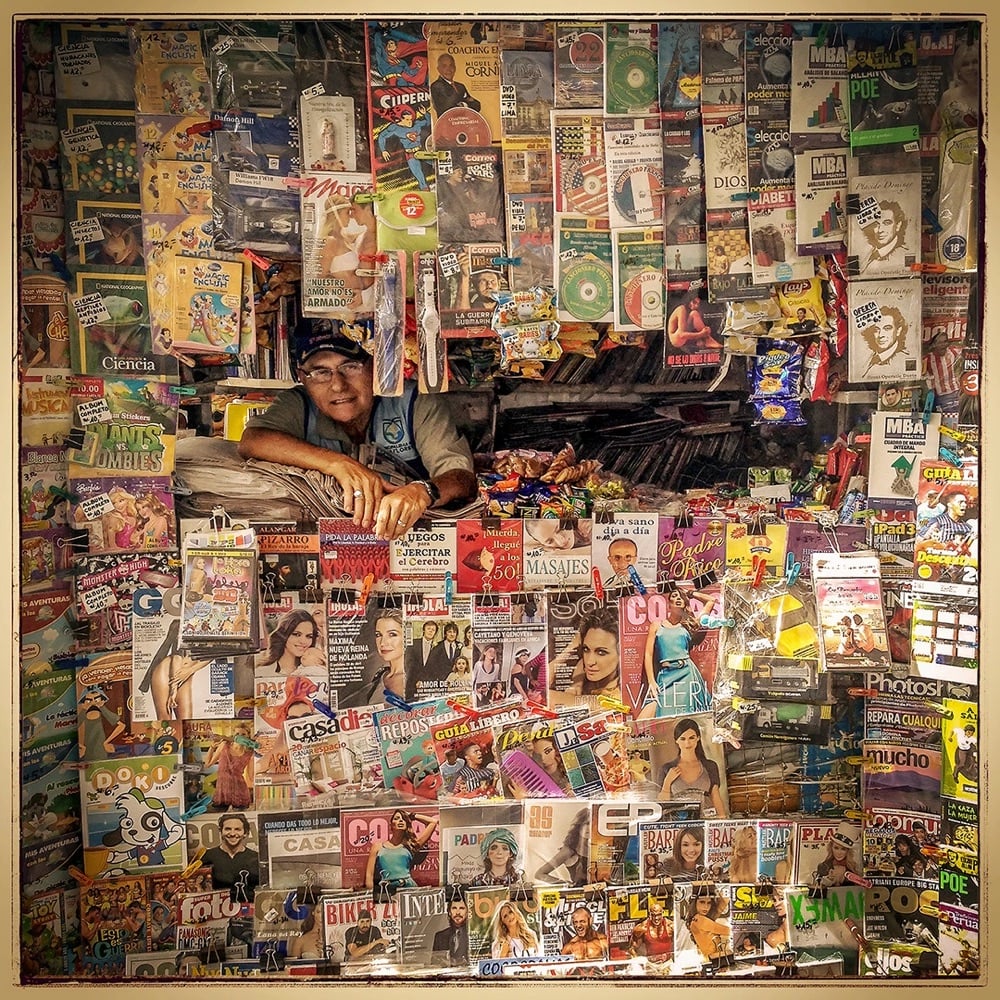
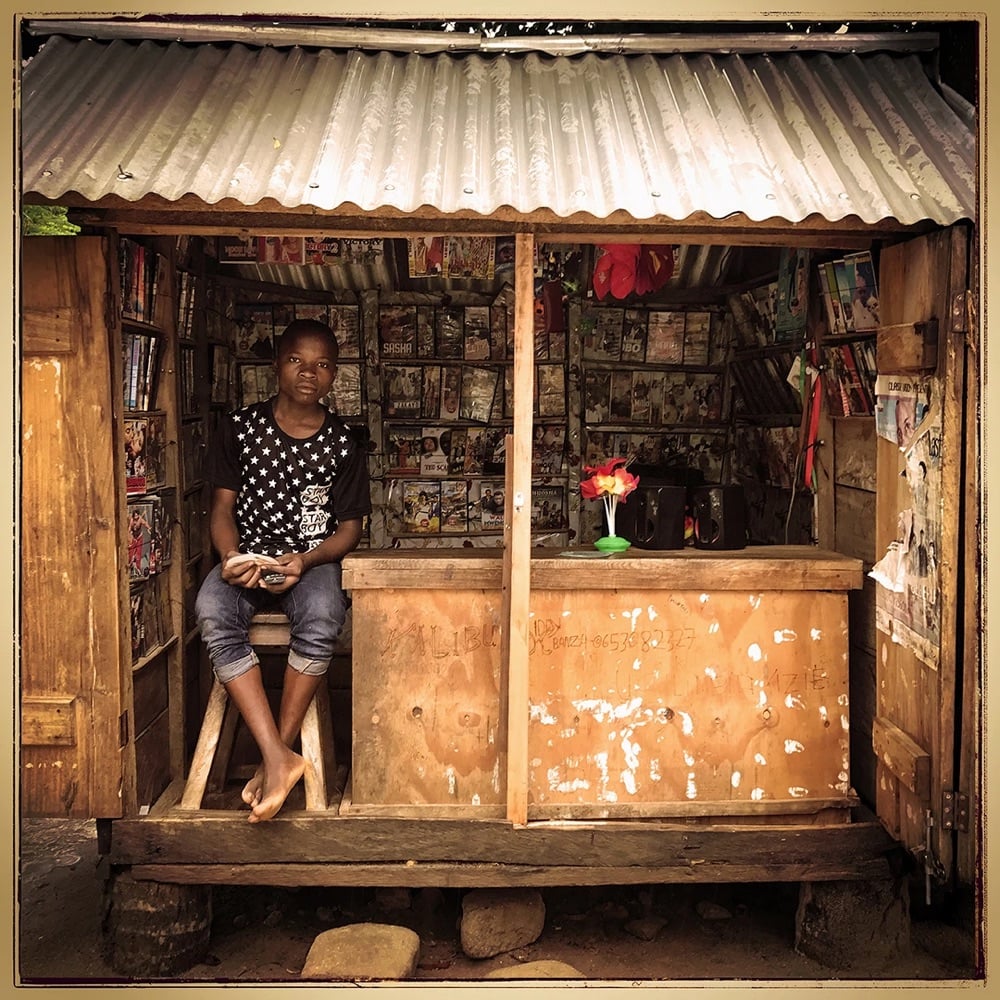
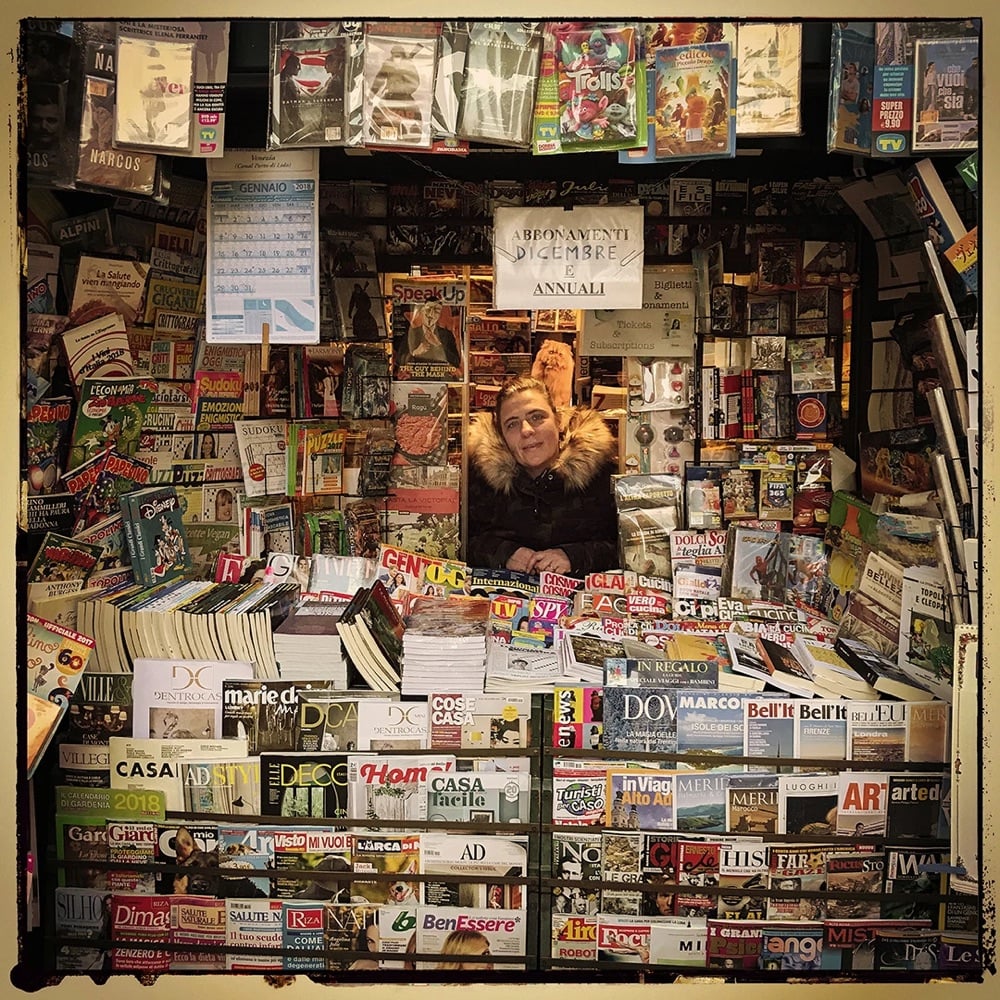
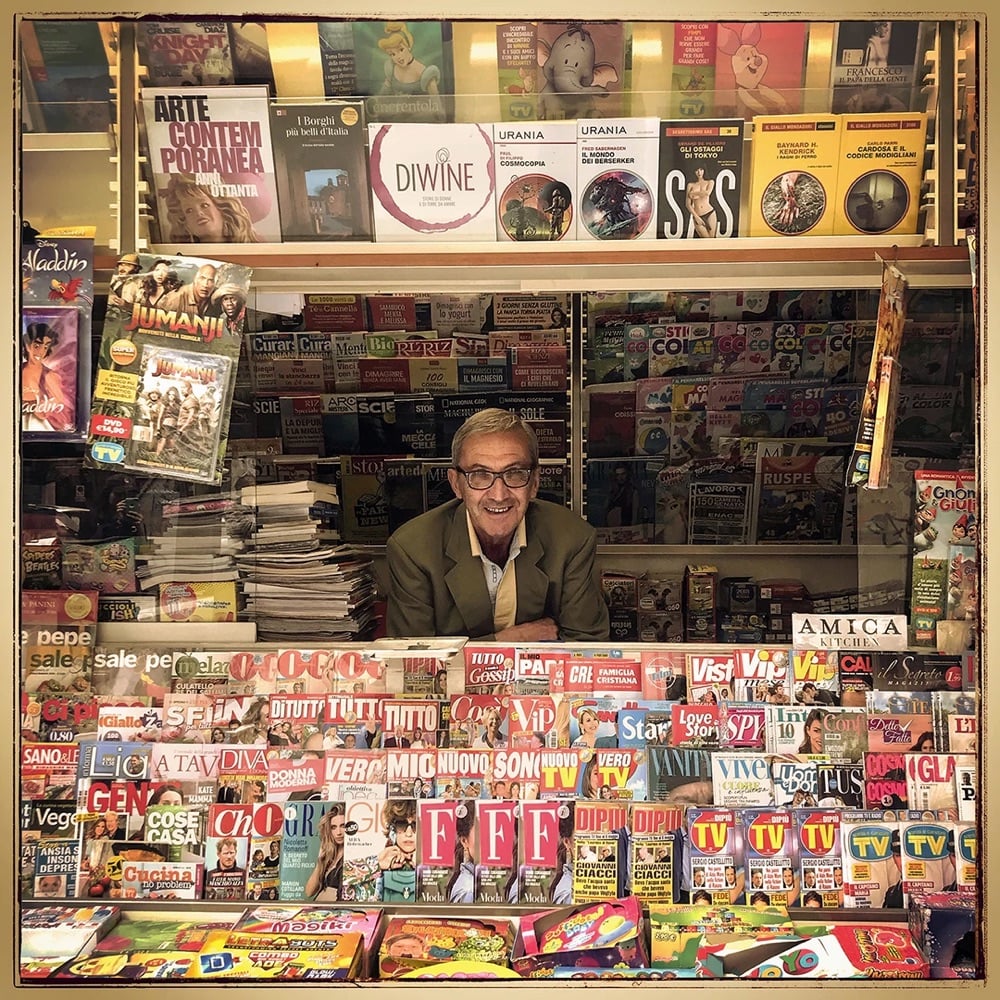
For the past two years, photographer Rachel Barrett has been documenting NYC's vanishing newsstands as the city replaces them in favor of more modern kiosks. Here's a slideshow.
Until recently, newsstand operators owned their stands and paid the city $1,000 for two-year licenses. In 2003, the city enacted Local Law 64, which required owners to give up their stands but allowed them to operate city-owned structures at no cost. In 2006, the city signed a contract with the Spanish conglomerate Cemusa to build 3,300 bus shelters, 300 newsstands and 20 public toilets.
More photos are available on Barrett's web site. One of these new stand just went up by my office and has all the personality of a block of concrete. The new stands are also super tall so that the cashier towers over the customer, creating a weird impersonal dynamic and, for those of below average height, a need to stretch to hand your money over.
Dustin Humphrey's surfing/underwater photography is difficult to explain. Pro surfers + underwater naked steampunk maybe? NSFW. (via avenues)
An amazing collection of abstract satellite photos, demonstrating the "impressionist, cubist and pointillist" side of the earth's landscape.
The images you see below were taken at the turn of the Millennium, when NASA's scientists had a brilliant idea: to scan through 400,000 images taken by the Landsat 7 satellite and display only the most the most beautiful. A handful of the best were painstakingly chosen and then displayed at the Library of Congress in 2000.
You must see these. Bonus: all the images are available in wallpaper size for your computer desktop.
You've likely seen Dennis Darzacq's photos of people who look like they're falling and about to hit the ground at a high velocity. Lens Culture has a video that shows how Darzacq makes those photos; he plays a clever mind trick on viewers that makes jumping look like falling.
Everything had been prepared in advance. Everything was ready. The models launched themselves into space. There is nothing false in these scenes. These moments really occurred. There is no fiction, no retouching or special effects. Photographed in the courtyards of buildings or in streets in the 19th arrondissement of Paris, in Nanterre and in Biarritz, these young people were just being themselves, simply performing jumps in a modern urban setting. And the photographer shot the images, intervening only to give a few guidelines as to their movements. However, at the moment of the leap, chance and gravity also intervened.
It's been awhile since I've checked in on Nick Veasey's work. Veasey takes x-ray photos of all sorts of items, from feathers to pens to underwear to people to entire buses. Well worth poking around.
Attention time merge media fans: do not miss Golan Levin's extensive collection of slit scan video projects as well as Eddie Elliott's related list. (via migurski)
The Morning News has an interview with photographer Barbara Probst. I've seen her work at the MoMA but this one is new to me and a definite favorite.
The Image Fulgurator is an ingenious device that detects the flash from nearby cameras and quickly inserts a message onto whatever is being photographed so that it shows up in any photos being taken.
It operates via a kind of reactive flash projection that enables an image to be projected on an object exactly at the moment when someone else is photographing it. The intervention is unobtrusive because it takes only a few milliseconds. Every photo another photographer takes of an object at which the Fulgurator is also aimed is affected by the manipulation. Hence visual information can be smuggled unnoticed into the images of others.
Check out the results. (thx, red)
I'm fascinated by early color photography...it takes a time we think of being in black & white and makes it accessible and modern. In the hands of Auguste and Louis Lumière, the "lowly, lumpy potato" made color photography possible in the early 1900s. The photos were called autochromes.
The Lumière brothers gathered up their potatoes and ground them into thousands of microscopic particles; they separated this powder into three batches, dying one batch red-orange, one violet and one green; the colored particles were thoroughly mixed and sifted onto a freshly varnished, clear glass plate while the lacquer remained tacky; excess potato bits were swept from the plate, which was pressed through steel rollers to flatten the colored grains, transforming each into a minuscule color filter measuring from .0006 to .0025 millimeters across. Gaps between the colored particles were filled in with carbon black, the plate was varnished again and a thin, light-sensitive emulsion of silver bromide was brushed over that. Now the plate was ready for the camera. When the shutter was opened, light filtered through the translucent potato grains, and a multicolored image was imprinted on the emulsion. After the negative plate was developed in the lab, it was washed and dried, covered with another piece of glass to protect the emulsion and bound with gummed tape. Et voilà! A color photograph unlike any seen before.
Here's a slideshow of some photos taken by this process. Here's some autochromes of Mark Twain from 1908.
More early color photography (not necessarily autochromes): Sergei Mikhailovich Prokudin-Gorskii's stunning photographs of Russia circa 1909-1915, photos of WWI, photos of WWII, and photos of America in the late 30s/early 40s (color corrected). (thx, david)
I've not been paying enough attention to Bill Cunningham's street fashion photography slideshows. Each week, Cunningham goes out on the streets of NYC to find out what people are wearing. Even better than the photos are his enthusiastic descriptions of what he's found.
This week he looks at women's handbags, which he calls "the engine carrying the fashion world". Cunningham finds that bags are growing almost "cartoonishly large" and discovers a unique glove/bag combo. Last week, he looked at the glittery belts that some men are wearing with their saggy jeans. If this was the type of fashion that filled the pages of Vogue, I would subscribe in a second. (thx, alaina)
Of all the things that Flickr has done, The Commons project might be the most significant. If, in two years, there are tens or even hundreds of thousands of old photographs previously unavailable to the general public from collections all over the world -- all tagged, geocoded, annotated, contextualized, and available to anyone with a web browser -- that would be an amazing resource for exploring our recent history.
Daniel Barron makes photographs of things that look human but aren't. Maybe. Sorta. I don't really know! Can you tell? (via that's a negative)
Here is today's dose of surreality.
The iconic photo from 1978 of Microsoft's founders and early employees has been reshot.
Present for the reunion was office manager Miriam Lubow (center of new picture), who missed the original sitting due to a snowstorm. (When Lubow, now retired, first met Gates, she couldn't believe that disheveled kid was the president.) Absent for the reshoot was Bob Wallace (top center), who died in 2002; after leaving Microsoft in 1983, he pioneered the idea of shareware.
They should submit this to Ze Frank's Youngme/Nowme.
Andy Baio interviews Alan Taylor, the fellow behind The Big Picture, the journalistic photo blog that's taken the web by storm.

Internally, externally, everywhere, people are being really thankful to me. I need to make sure (with some link-love in my upcoming blogroll) that the response gets directed to the photographers as well. I'm just a web developer with access to their photos and a blog - they're the ones out there working hard to get these amazing images. "Photographers" here is a loose term, encompassing photojournalists, stringers, amateurs, scientific imaging teams and more.
For its July 2008 issue, Vogue Italia is featuring only black models and feature articles about black women in arts and entertainment.
Having worked at one time with nearly all the models he chose for the black issue -- Iman, [Naomi] Campbell, Tyra Banks, Jourdan Dunn, [Liya] Kebede, [Alek] Wek, Pat Cleveland, Karen Alexander -- [photographer Steven] Meisel had his own feelings. "I thought, it's ridiculous, this discrimination," said Mr. Meisel, speaking by phone from his home in Los Angeles. "It's so crazy to live in such a narrow, narrow place. Age, weight, sexuality, race -- every kind of prejudice."
Here's a slideshow of some of the images from the magazine. As I've said before, Vogue Italia is doing some interesting things with the editorial nature of the magazine's photography (see State of Emergency and Super Mods Enter Rehab, both by Steven Meisel).
Three things I saw at the MoMA today
1. Perhaps the most playful art I've ever seen in a major museum is Olafur Eliasson's Ventilator, a fan hung on a long cord in the main atrium in the museum. Watching it blow around the huge room, chased by children, is hard-to-beat fun.
2. The rest of Eliasson's show on the third floor. His art seems so conceptually and constructurally simple yet, I dunno, I just wanted to hang out in the gallery all day, like I was required to remain part of the experience. Left me wishing I'd made it to London to see The Weather Project.
3. The typology photos of Bernd and Hilla Becher. Recommended if you like photography and multiples of things.
Irritated that I missed: van Gogh's Starry Night (out on loan to Yale until Sept...I've seen it 20 times at least but still like checking it out whenever I'm there), the exhibition of George Lois' Esquire covers, and lunch at Cafe 2.
I have to hold off linking to every single entry on Big Picture (best new blog of the year so far, hands down), but these photos of the flooding in Iowa are amazing. I went to college in Cedar Rapids and my mind is boggled seeing so much of downtown under so much water.
Photos of singing/talking stuffed animals, dressed and undressed.
I've always been curious about stuffed animals that sing, dance, light up, or talk back. There must be a fascinating robot underneath the fur and fluff, right? Surely the robot hiding in the bear's clothing, vestimentis ursum, is impressive. So: armed with my childish curiousity and the spurious excuse of 'product design research,' I set out to discover what, exactly, these creatures are hiding.
(thx, janelle)
The "american gothic" tag on Flickr is quite interesting; I like the ketchup and mustard one myself.
Photographer Sam Haskins, well known for doing in-camera montage, briefly describes how composite photos were made in the time before Photoshop.
Its a single exposure with the model viewed through optical glass at 45° and the fabric positioned to the side. At the time there was zero retouching after the event. Now of course I have the luxury of scanning the transparency to clean and refine the image in Photoshop - God bless its digital socks.
It's been hot in NYC for the past few days, but I don't know if it was ice-lickin' hot.
Beautiful photos of the Space Shuttle lifting off and of earth from space. Check out the cloud wake and the thunderheads.
Robert Kennedy funeral train photos
In July 1968, a train delivered the body of Robert Kennedy from NYC to Washington D.C. so that he could be buried in Arlington National Cemetery next to his brother. Photographer Paul Fusco was on that train and shot a bunch of photos of the hundreds of thousands of people that spontaneously turned up along the train route to mourn Kennedy, photos that were recently rediscovered. Fusco narrates a slideshow of the photos.

The amazing photos will be on display at Danziger Projects from June 6 - July 31...Danziger has more about the photos -- which he calls "my favorite body of work in photography" -- on his blog.
I'll let the pictures speak for themselves, but I'll also tell you the only area where Paul and I disagreed. For Paul, the event and the photographs represented the end of hope. To me they represent the indomitability of the American spirit.
Either way, the photos are powerful but also show the ordinary American-ness of that time period.
Five ways to spot a faked photo. Comparing the light reflection in the various eyes in a photograph is an especially clever technique.
Big Picture is a fantastic and dead-simple new site from boston.com. Each entry tells a story through high-quality newswire images displayed at large sizes; recent entries include a look at Saturn from the Cassini space probe and the daily lives of soldiers in Afghanistan. If you're frustrated by the tiny news imagery we get spoon-fed to us on the web, this site will be a welcome addition to your daily browse. Alan Taylor, the project's instigator, has a post on his blog about Big Picture.
The sizes of the photographs are deliberately large - taking advantage of the majority of web users who have screens capable of displaying 1024x768 or larger. The long-held tradition of keeping images online tiny and lightweight is commendable still - when designing a general purpose site. But one dedicated to quality imagery should take full advantage of the medium, and I hope I've struck a good balance with The Big Picture.
When I see quality photography consigned to the archives, or when I see bandwidth readily given up to video streams of dubious quality, or when I see photo galleries that act as ad farms, punishing viewers into a click-click-click experience just to drive page views - those times are the times I'm glad I was able to get this project off the ground (many thanks to my friends within boston.com)
Photos of pajamas as outerwear in Shanghai.
The prevalence of pyjamas, Guariglia explained to me, was due to both the extreme summer heat and the lack of plumbing. Most Shanghaians share outdoor communal toilets and thus the boundaries of what was considered one's home have expanded past people's houses to the public bathrooms. Once that relaxation of the dress code became acceptable (starting around the 1980s) the perimeter for p.j.-wear just kept expanding until many people were wearing them day in day out.
Absolutely incredible photos of a wedding and then an earthquake.
Can you imagine what it was like to have been photographing a wedding in Sichuan, China when 7.9 earthquake hit and shakes for three minutes? From what I understand, there were thirty-three missing guests in this church.
Fantastic collection of photos by James Mollison of music fans who tend to dress like their idols. A book featuring the photos is due out in October.
Over a three-year period, James Mollison attended pop concerts across Europe and the United States with a mobile photography studio, inviting fans of each music star or band to pose for a portrait on their way into the concert. The result is The Disciples, an original and highly entertaining series of fifty-seven panoramic images, each featuring eight to ten music fans mimicking the manners and dress of their particular heroes. Featuring fans of Dolly Parton, Iggy Pop, Madonna, Marilyn Manson, the Rolling Stones, Bob Dylan, Snoop Dogg, and Motorhead, among many others, The Disciples is a surprising, sharp, and hilarious take on popular culture.
(via waxy)
The NY Times' City Room blog has a short profile of photographer Nikola Tamindzic.
He uses long exposures, then shakes the camera while the shutter is still open, causing colors to blur and lights to streak. "I'm not recording what is really happening, but it's something like what the brain is seeing late at night, especially if maybe you're drunk or very excited," he said. "I like that hour between 3 and 4 in the morning when desperation sets in, when you see all the anticipation of going out starting to fade. The masks drop and everybody realizes the night is not going to be everything they were hoping for."
You may have seen Tamindzic's photos on Gawker or on his own site, Home of the Vain. Here's the photo with Huffington, Murdoch, et al. An archive of his photography is available at Ambrel.
A collection of photos of a cleaning crew washing Seattle's Space Needle with high pressure washers (scroll down a bit).
Even though the sprayers use half the flow of a garden hose, the water shoots out at 3,000 pounds per square inch -- more than enough power to send the guy behind the hose flying. "One thing we say is, it doesn't necessarily have to be fun to be fun. There are definitely times when I'm spinning in free space and I'm like, holy cow this is terrifying and I can't believe this is my job," said Matt Henry, rope technician.
The company doing the work, Karcher GmbH & Co., has done similar high-profile jobs around the world, all at no cost...their web site says that these projects are good publicity for their cleaning products. Here's a sampling of some other projects they've done, including the Statue of Liberty and Berlin's Brandenburg Gate. (via girlhacker)
Related to yesterday's post about photo retouching is this article about how challenging high definition is to makeup artists and actors alike (via house next door) .
John Toll is an Academy Award-winning cinematographer who has had limited exposure to HD photography, but who understands the impact of it on the business. "Film tends to be more kind," he said. "Now with HD, they're doing things like more filtration, or softening of the light, or degrading the image so it's not so highly defined. It's sort of what they used to do in movie star close-ups, an over-diffused style to try to make them look glamorous. Now they do it so you don't see every pore in a close-up on skin."
Also related, James Danziger weighs in on the Dove/Dangin/Leibovitz controversy the latter of whom is represented by Danziger's gallery.
Any photograph used in a magazine, a billboard, an album cover, whatever -- can only be presumed to be a photo-based illustration. The issue, which Dove's well-intentioned campaign addressed, is the effect these illustrations have on the psyche, self-esteem, and well-being of women (in particular) not to mention the unrealistic view men might have of women. It brings to mind the shock the eminent Victorian art critic John Ruskin experienced upon discovering his wife's pubic hair, after which he was unable to consummate the marriage. Divorce followed shortly.
Approaching the uncanny valley from the other direction
Fashion photo retouching (i.e. high-brow Photoshopping) gets the New Yorker treatment with this story on retoucher Pascal Dangin, one of the best in the business.
In the March issue of Vogue Dangin tweaked a hundred and forty-four images: a hundred and seven advertisements (Estée Lauder, Gucci, Dior, etc.), thirty-six fashion pictures, and the cover, featuring Drew Barrymore. To keep track of his clients, he assigns three-letter rubrics, like airport codes. Click on the current-jobs menu on his computer: AFR (Air France), AMX (American Express), BAL (Balenciaga), DSN (Disney), LUV (Louis Vuitton), TFY (Tiffany & Co.), VIC (Victoria's Secret).
The article touches too briefly on the tension between reality and what ends up in the magazines and advertisements. As Errol Morris points out on his photography blog, it is often difficult to find truth in even the most vérité of photographs. Even so, the truth seems to be completely absent from Madonna's recent photo spread in Vanity Fair that was retouched by Dangin, especially this one in which a 50-year-old Madonna looks like a recent college graduate who's never lifted a weight in her life.
The uncanny valley comes into play here, which we usually think of in terms of robots, cartoon characters, and other pseudo anthropomorphic characters attempting and failing to look sufficiently human and therefore appearing creepy and scary. With an increasing amount of photo retouching, postproduction in film, plastic surgery, and increasingly effective makeup & skin care products, we're being bombarded with a growing amount of imagery featuring people who don't appear naturally human. People who appear often in media (film & tv stars, models, cable news anchors & reporters, miscellaneous celebrities, etc.) are creeping down into the uncanny valley to meet up with characters from The Polar Express. I don't know about you but a middle-aged Madonna made to look 24 gives me the heebie-jeebies. Perhaps the familar uncanny valley graph needs revision:
Bill Henson's photos of people at the opera, including a short interview with the photographer.
What I was interested in terms of Paris Opera series was that whole strange business of finding oneself with a whole lot of other people gathered in a darkened space, such as the opera, awaiting some special event. There is something quite magical about it. I've always found that people sitting in the dark just waiting for something is the most haunting sort of experience. It seemed to me it was a common experience, a universal thing that everyone feels, really, at some point or another.
Curbed has some photos of the construction progress on the High Line. Compare and contrast with some photos I took in early 2004.
Marginal Revolution's Tyler Cowen occasionally asks his readers to suggest topics for him to write about. Stump the polymath, as it were. I posted a suggestion that I'd been wondering about recently:
Is taking a photo or video of an event for later viewing worth it, even if it means more or less missing the event in realtime? What's better, a lifetime of mediated viewing of my son's first steps or a one-time in-person viewing?
and he answered it today:
If you take photos you will remember the event more vividly, if only because you have to stop and notice it. The fact that your memories will in part be "false" or constructed is besides the point; they'll probably be false anyway. In other words, there's no such thing as the "one-time in-person viewing," it is all mediated viewing, one way or the other. Daniel Gilbert's book on memory is the key source here.
I take a lot less photos than I used to -- even though cameras are easier to use and carry around than ever -- and prefer to experience the moment rather than fiddle with the camera. But that seems to swim against tide these days...camera irises seemingly outnumber real ones at photo-worthy events and places.
A list of 21 ways to shoot better photographs. I can hear my photographer friends snickering about the cliches on the list, but if you don't know much about photography but are interested in learning, you could do worse than to explore some of these techniques.
Wonderful timelapse photos by Alexey Titarenko of "shadow" people in St. Petersburg just after the collapse of the Soviet Union. This one is stunning. (via heading east)
The Velocouture group on Flickr collects photographs of bicycle fashion fashion, on a bicycle. The best ones are of people who try to coordinate their outfits with their bikes. This gal is particularly fashionable. See also this NY Times slideshow.
James Danziger presents a short history of subway photos, starting with photos of sleeping Japanese salarymen on trains and then moving to Walker Evans, Bruce Davidson, etc. Some of my favorite subway photos are from the Moscow subway...Stalin look-a-likes, huge guitars, and many sleeping people.
Photos of a Masonic handbook from 1920 called King Solomon and His Followers -- A Valuable Aid to the Memory. The text is written in shorthand. (via clusterflock)
A collection of photos taken from space of cities at night. Beautiful. (via ben fry)
The Hubble Space Telescope was launched into space 18 years ago and to celebrate, NASA has put up a photo gallery of merging galaxies, galaxies as in love with each other as NASA is with the Hubble. Aww.
Standard Operating Procedure
To be honest, I was a little disappointed in Standard Operating Procedure...but the fault is my own, not the film's. My expectation was that the film would start with the photos of Abu Ghraib & misdeeds of the lower ranking soldiers and then move up the chain of command, both militarily and thematically speaking, to explore the issues of truth in photography and culpability. To Morris' credit, he didn't do that. It's too easy these days to attempt arguments about Iraq or the Bush Administration that connect too many dots with too little evidence...essentially propaganda that sings to the choir.
SOP has a surprisingly small depth of field; it's the story of those infamous photos, the people who took & appeared in them, and what they have to say about the photos & the actions they purport to show. And in that, the movie succeeds. Morris leaves plenty of negative space into which the audience can insert their own questions about what the photographs ultimately depict and who's responsible in the end.
Incidentally, Morris generated a bit of controversy recently when he admitted that he'd paid some of the interviewees in SOP. The criticism of this practice is that "the credibility of interviewees diminishes when money changes hands and that these people will provide the answers they think are desired rather than the truth". That is a concern but no more so than every other reason for being untruthful, including not telling the truth out of spite for lack of payment. People have so many better reasons to lie than money.
Tree People, a series of photos of the Korowai of Papua New Guinea.
BLDGBLOG has some photos of luxury hotels that were abandoned mid-building.
With images by Sabine Haubitz and Stefanie Zoche of Haubitz+Zoche, the show looks at "the concrete skeletons of five-star hotel complexes" abandoned on Egypt's Sinai Peninsula. They are resorts that never quite happened, then, with names like Sultan's Palace and the Magic Life Imperial. This makes them "monuments to failed investment."
Tree photography by Stuart Franklin. There's more photography by Franklin on his site and on Magnum's site. Franklin took the iconic photo of the man staring down the tanks in Tiananmen Square. (via snarkmarket)
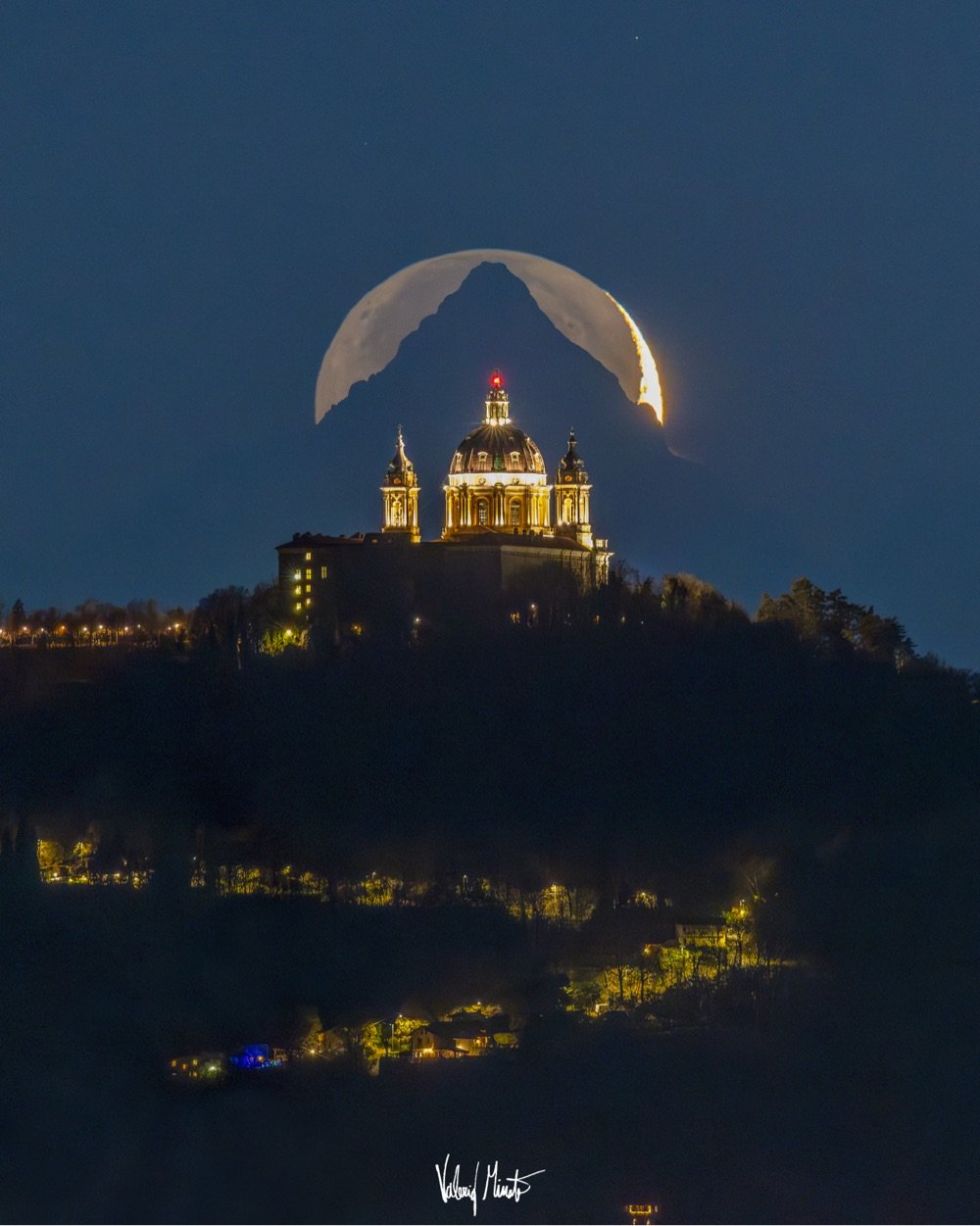
A photograph of the newest possible moon, one that's only about 15 hours old.
Finding the Moon when its slim crescent is still less than about 24 hours past the New Moon phase requires careful timing and planning, a challenging project even for experienced observers. In this sighting, only about 0.8 percent of the Moon's disk appears illuminated.
(via airbag)
A photogenic drawing** that was assumed to have been made in the late 1830s may have actually been created 40 years earlier, making it one of the oldest photographic prints in existence.
Like the lost plays of Aeschylus that were written about but did not survive themselves, no known examples of the work of Wedgwood and his circle have ever been found. But Dr. Schaaf, in looking deeper into the leaf image, realized that these legendary lost images had something else in common: their creators were all part of the close social circle of the family of Henry Bright.
"The reason that I got so excited about this was that it was the most solid, indicative collection I've seen," he said. "I'm fully prepared for 'The Leaf' to have been made by Henry Bright, or by his father, after the 1790s. But I've never seen a story that fits together so neatly."
** A photogenic drawing is a precursor to the photograph and is created by placing an object on a piece of photosensitive paper and exposing it to light.
While the preservation of food in the freezing temperatures and dry climate has been noted, bacterial decay still occurs. Besides, the World Monuments Watch describes it as one of the hundred most endangered sites in the world, and New Zealand's Antarctic Heritage Trust (AHT) has been working in the last years to preserve it from corrosion.
These structures and the supplies contained within are almost 100 years old.
Photography of Star Wars characters in contemporary urban settings. (Pardon the stupid Flash interface...click on "series" to see the photos.) (via vitamin briefcase)
Recreations of childhood photos. This pair are my favorites. (via waxy)
Manufactured Landscapes
Manufactured Landscapes opens with an eight-minute tracking shot of a gigantic factory in China, the camera moving past row after row of workers assembling widgets until you feel like the factory floor circumnavigates the globe. The point of the shot, as with Edward Burtynsky's photography, is to encourage the viewer to do some rudimentary mathematics about the scale of industry in the world:
eight minutes to move across one factory + look at all those employees + how many factories like this are there in China? = wow, that's a lot of widgets
While it's unfair to say that the movie goes downhill from there, the tracking shot packs such a punch that the rest of the film seemed lacking in comparison. It was the only shot in the film that really felt like the cinematic equivalent of Burtynsky's photography...a long photograph, if you will.
Extensive series of photographs of a pig being butchered.
The pig is Berkshire, from a small farm in upstate NY. It was slaughtered at a small family slaughterhouse nearby, on the Thursday before the class. So this pig had been dead for less than a week before being butchered.
If you want to know where your bacon or ham-related food comes from, here's your chance. (thx, derrick)
The pictures of the accused are startling in the banality of the faces. (While the spelling of many of the names -- April, Britney, Brittini, Cara, Kayla, Mercades, Stephen, Zachary bring to mind a revived Mouseketeers.) A number of the girls look surprisingly similar, but minus the prison garb, they could just as easily be reacting to a berating for poor schoolwork. The boys, who were posted as lookouts while the girls carried out the beating, look a little more ready for jail.
The pictures are fascinating in the narrow range of emotion they convey, from self-pity to sullenness, but to my mind all stop before genuine contriteness. (I'm reading this in, of course, but I have a hunch I'm right.) Yet there's an all-American look to these kids that can only remind us how narrow the line is between good and evil.
Matt Jones argues that short looping videos are the real long photographs.
A loop would be a captured action or situation rather than a narrative, where the duration of the loop is set but the loop goes on forever so you can study the layers, the detail, the figure and the ground in the same way you can a photo. A bottled system not a short story. Think about all the tiny clips you've played again and again on the internet just to see one aspect, one moment, act out -- a goal or a dramatic chipmunk. Not stories, but toy moments.
Photo series of food that takes the shape of its container. The peas are my favorite.
Update: Irving Penn did a well-known series of frozen foods in the 1970s. One of the prints was recently sold for $85,000. (thx, rob)
Awesome collection of folk graphics and photography protesting Flickr's decision to let members post short videos. But without the video, we'd miss out on stuff like this. (via waxy)
Some great photos of Americans commuting by Vincent Laforet using a tilt shift lens. (via dryden is home)
Photographer Eric Etheridge alerted me to a new series he recently started on his WordBlog called Photography: The Missing Criticism, "which aims to bring great writing on photography back into print". The series currently consists of a 1981 essay by Tod Papageorge on Walker Evans and Robert Frank and a 2002 essay by Papageorge on Robert Adams.
Great set of photographs showing how the Space Shuttle gets ready for takeoff, from the Vehicle Assembly Building all the way to the launch pad.
Errol Morris returns to his Times blog for the first time since his examination of the Roger Fenton photographs and covers re-enactments in documentary films, a technique he pioneered in the excellent The Thin Blue Line, and how it applies to truth in photography.
Critics argue that the use of re-enactments suggest a callous disregard on the part of a filmmaker for what is true. I don't agree. Some re-enactments serve the truth, others subvert it. There is no mode of expression, no technique of production that will instantly produce truth or falsehood. There is no veritas lens -- no lens that provides a "truthful" picture of events. There is cinema verite and kino pravda but no cinematic truth.
And then:
Is the problem that we have an unfettered capacity for credulity, for false belief, and hence, we feel the need to protect ourselves from ourselves? If seeing is believing, then we better be damn careful about what we show people, including ourselves -- because, regardless of what it is -- we are likely to uncritically believe it.
Based on a paper about "copy-move forgery", a couple of programmers have come up with a program that algorithmically detects whether a photograph has been photoshopped using the cloning technique. It works very well on Adnan Hajj's doctored Reuters photo of an attack on Beirut.
See also: how to detect photo forgeries.