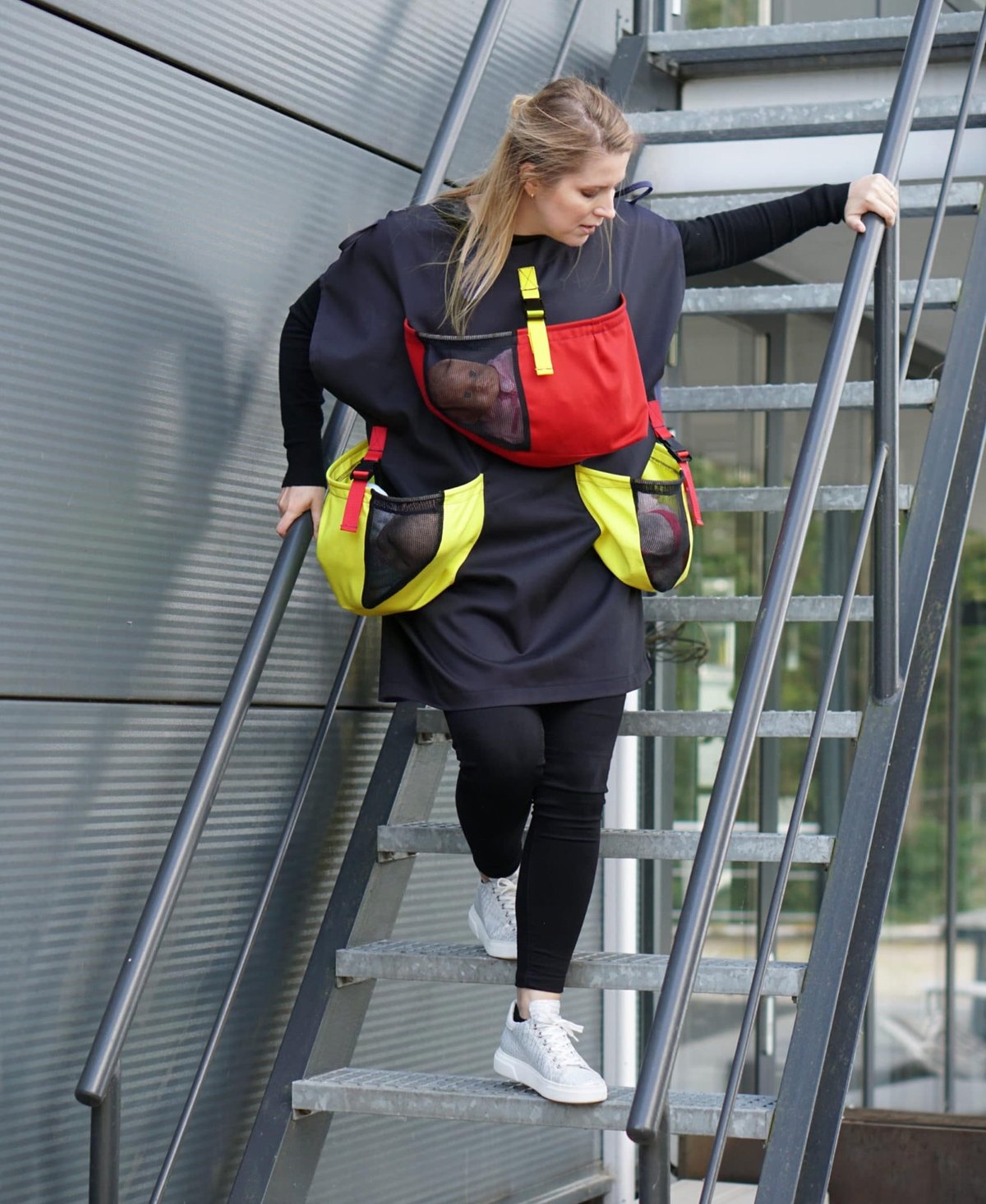
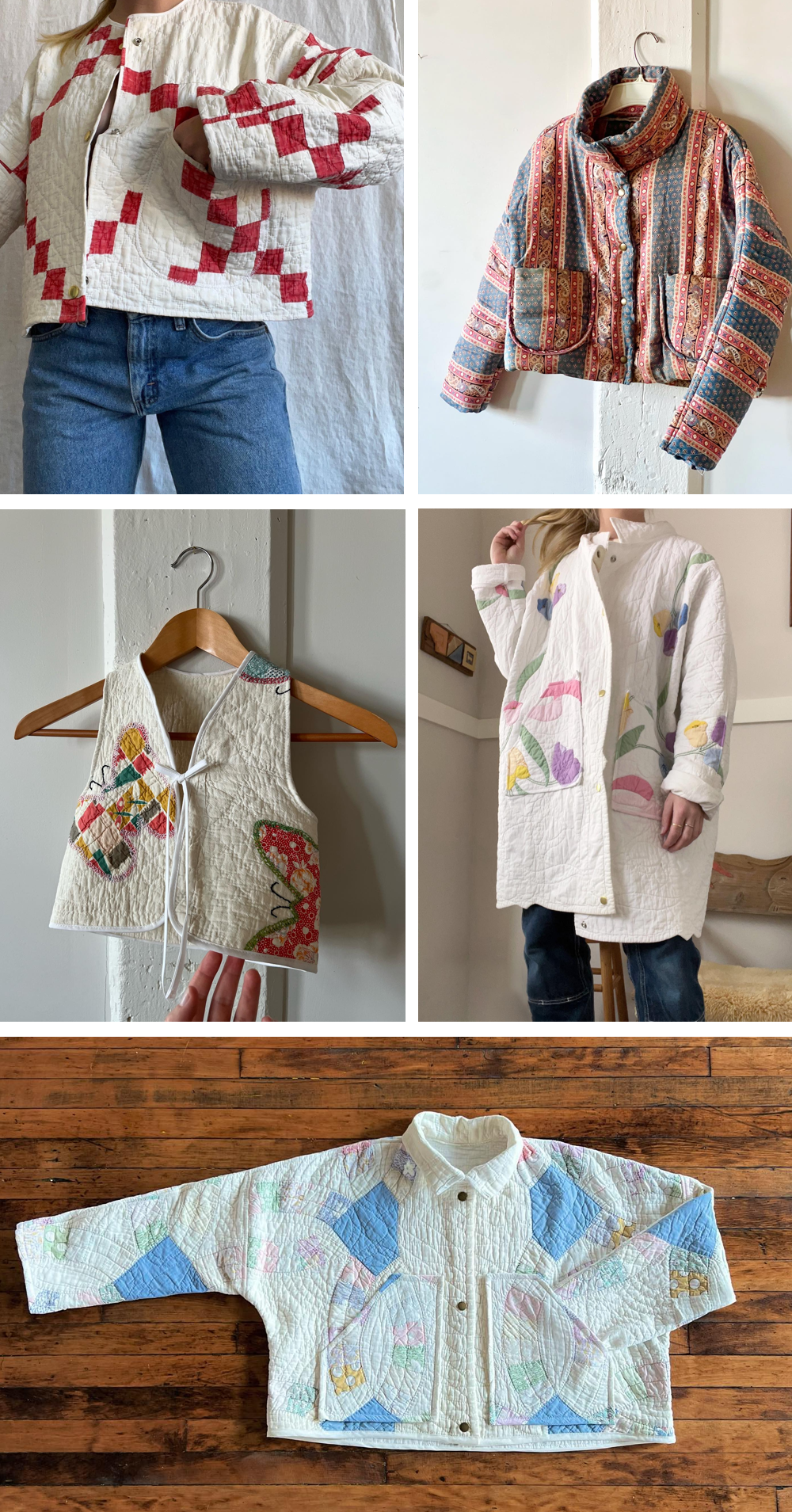
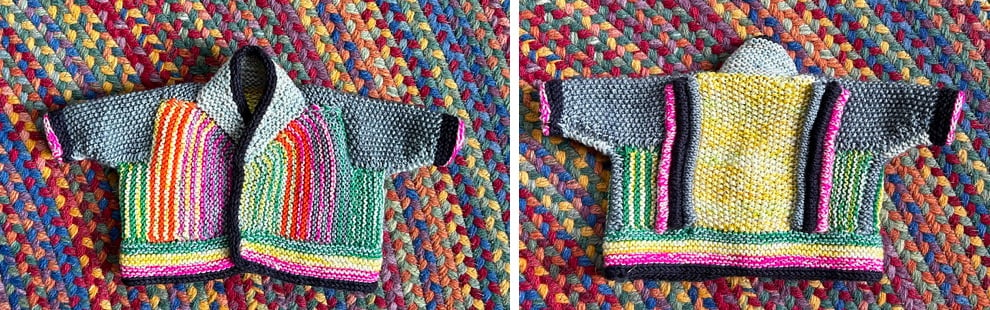
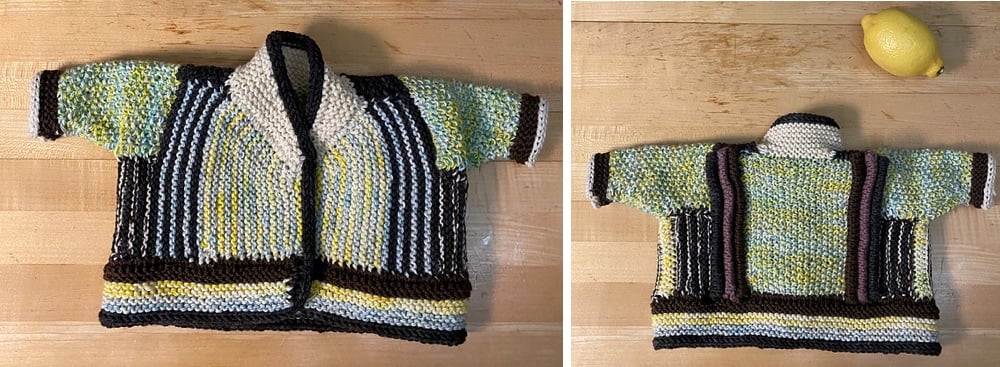
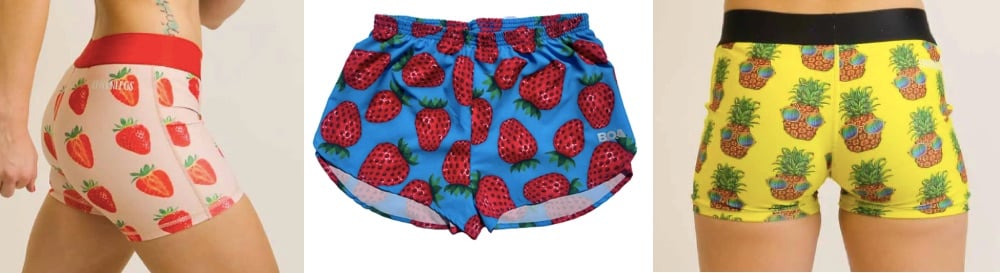
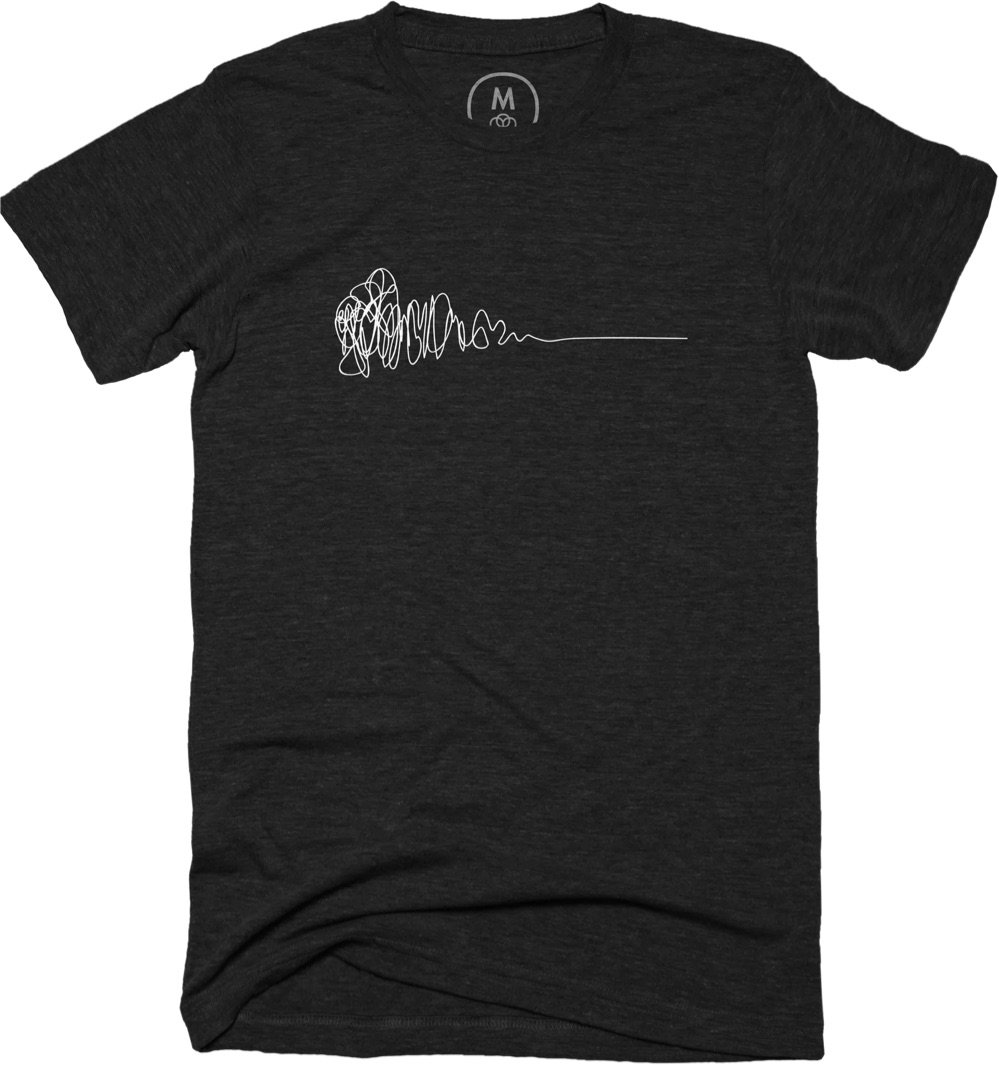
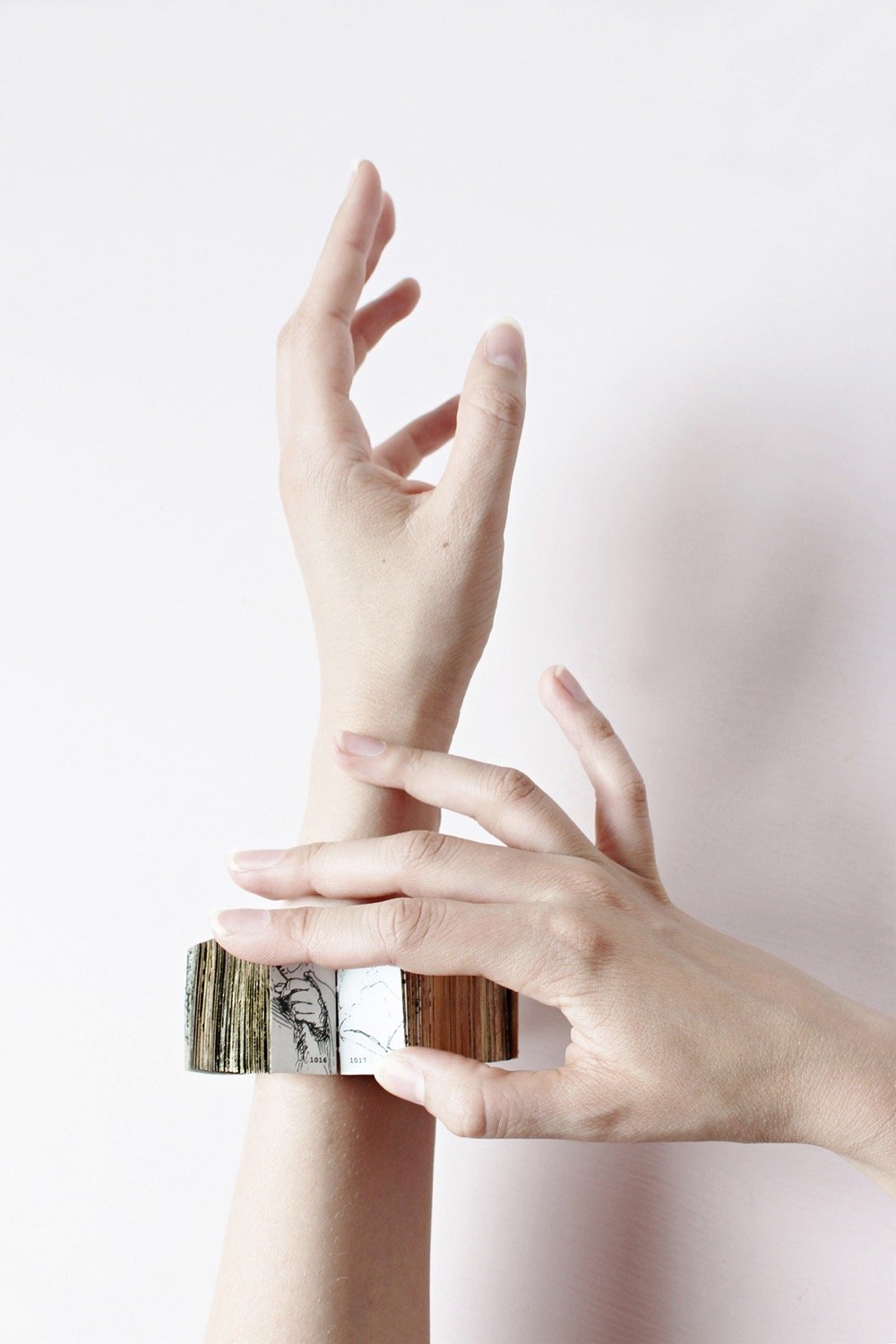
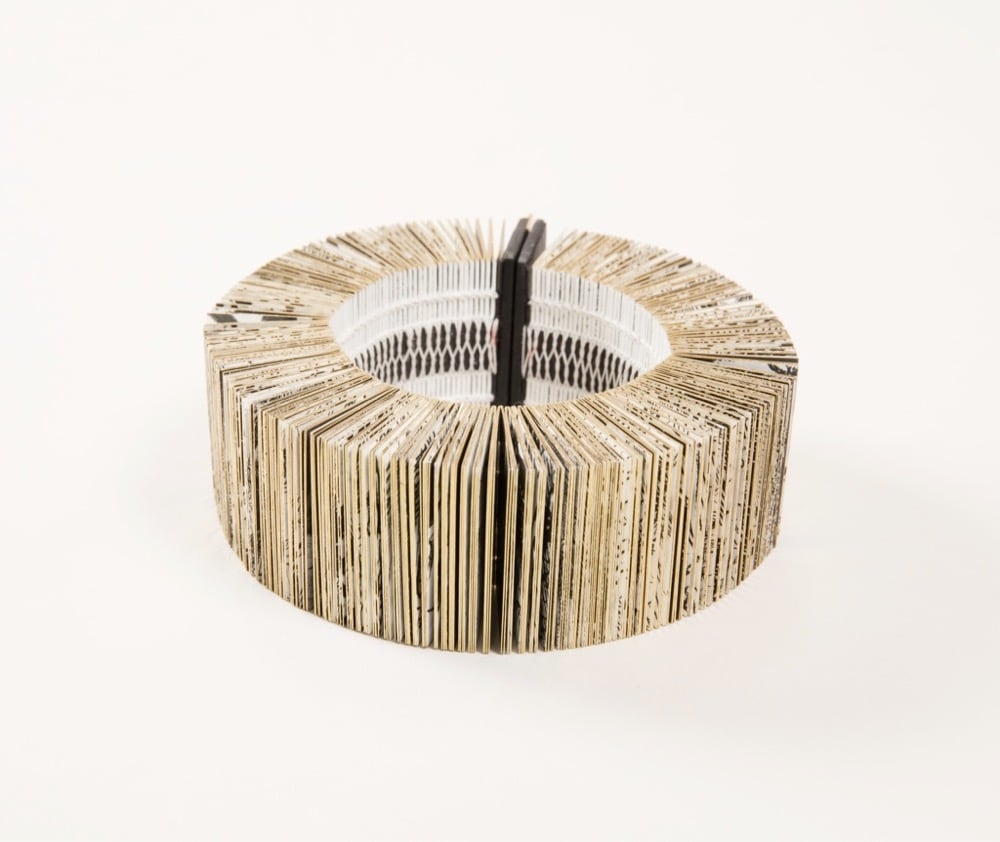
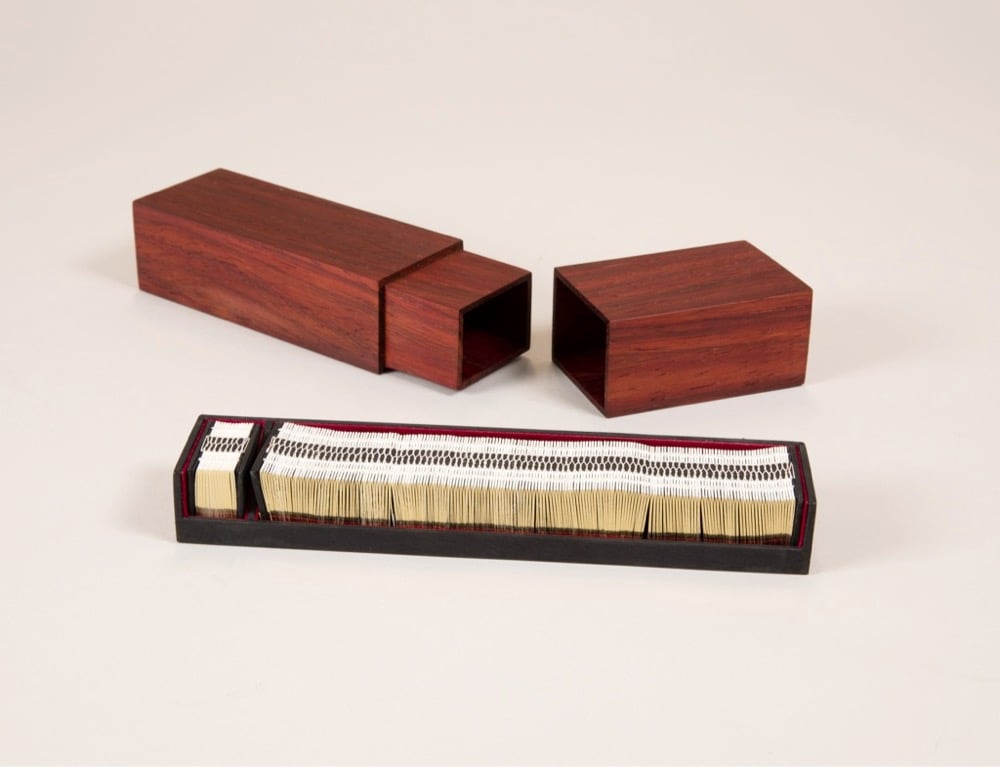
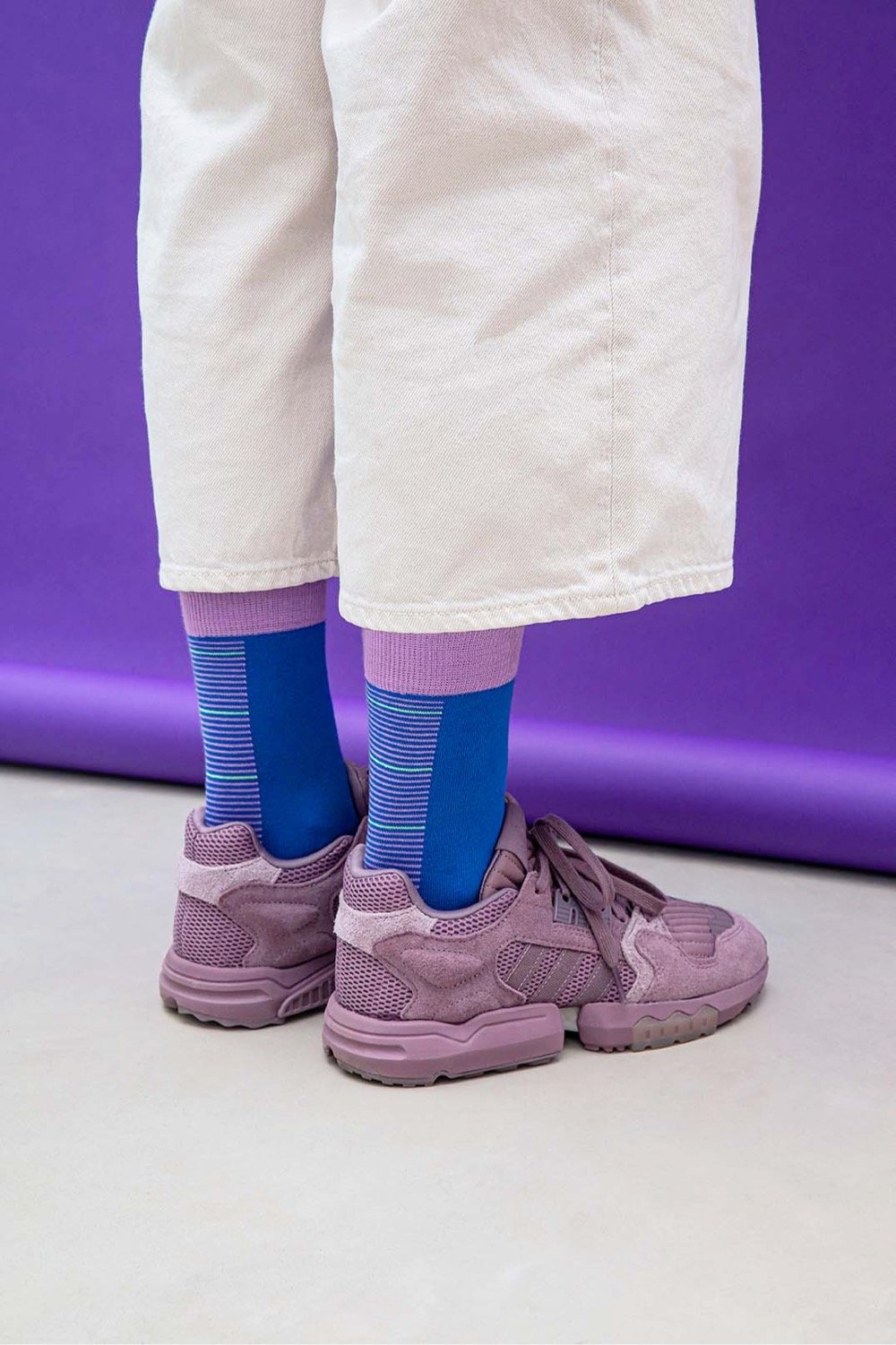
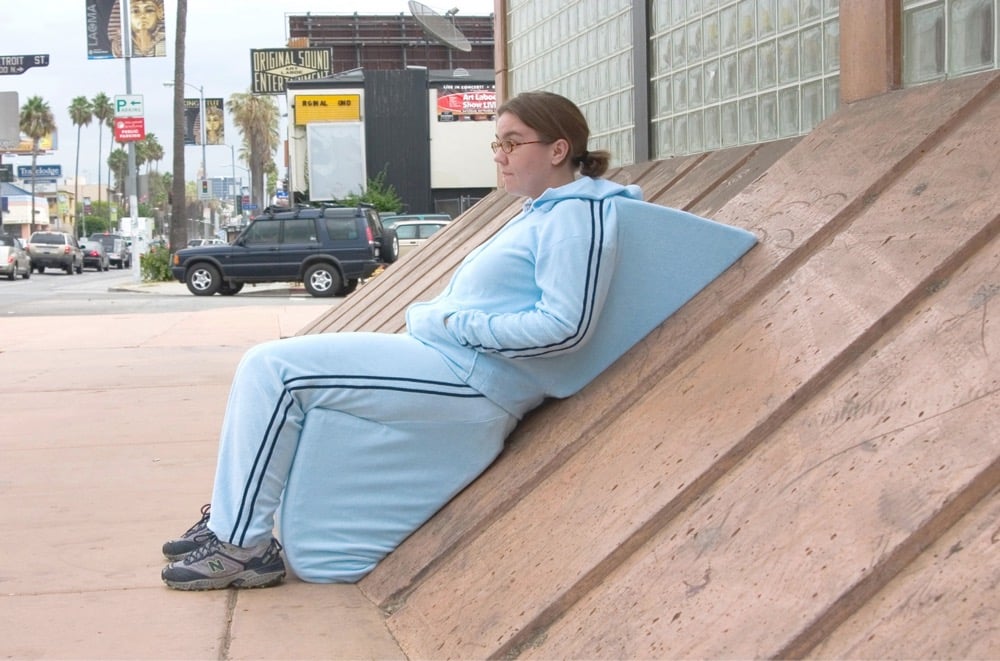
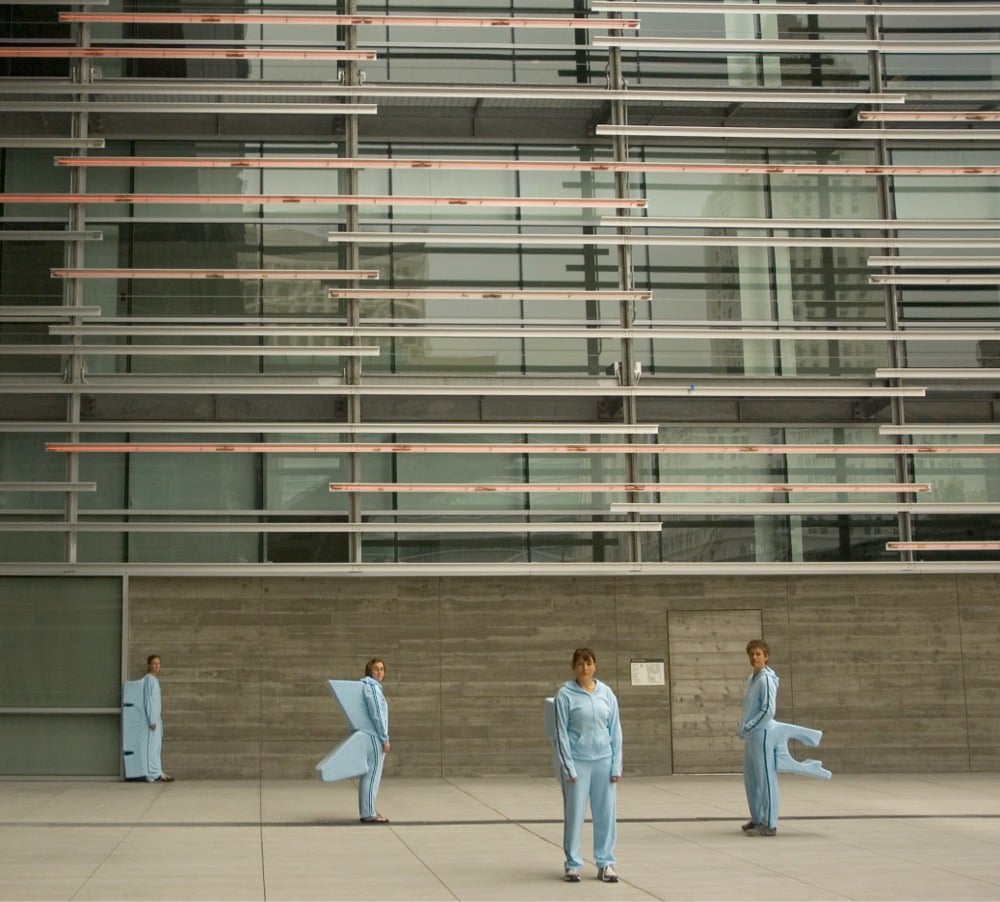
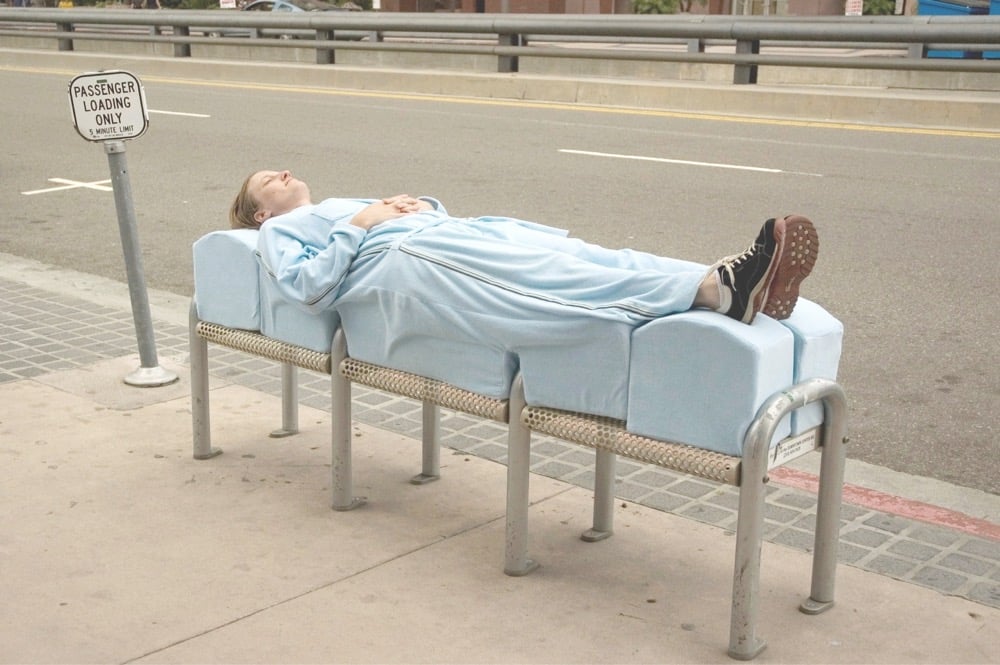
"These are primarily fashion items and art items," Harvey tells me. "I'm not trying to make products for survivalists. I would like to introduce this idea to people: that surveillance is not bulletproof. That there are ways to interact with it and there are ways to aestheticise it."
I imagine that at some point, anti-drone clothing will eject chaff as a countermeasure against incoming drone-launched missiles. (via @DavidGrann)
The only clothing I ever tried on before buying it was from Gucci. But many of the online purchases were fantastic-the patent leather trench coat from Burberry, a cropped leather jacket from Versace, a brown leather jacket from Ralph Lauren, a studded leather jacket from Cavalli, boots from Jimmy Choo, leather gloves from Ines in Amsterdam and Madova in Florence. I bought dozens of stretch jeans and leather leggings and leather pants that sculpted my lower body the way I wanted, with no room for speculation. I bought dozens of leather gloves that actually did fit like a glove. I bought dozens of boots, some with a flat or low heel that any man can wear, some with five-inch heels that only a man with real balls could wear.
Lisa in general liked the rocker look. But there were times I was too outrageous for her taste, and she began to feel like she was living with a hoarder. The kids liked the flair, maybe, but there were times they seemed embarrassed, or simply stunned. My friends, particularly those from Philadelphia, were appalled and confused and amused. With the exception of Lisa, nobody had any real idea of the extent of my addiction.
Too many of the purchases were sheer compulsiveness multiplying into more compulsion like split atoms. I bought an orange leather motorcycle jacket and matching orange leather pants from Alexander McQueen that made me look, well, very, very orange. The same went for a blue ensemble that made me look, well, very, very blue. I bought dozens upon dozens of leather jackets-bolero-style, waist-length, above the knee, below the knee-in which the gradations of difference were microscopic. I bought a pair of knee-length Stuart Weitzman boots and then two weeks later bought the exact same pair because I had forgotten I bought the first pair. I bought at least a dozen items that cost over $5,000 each but did not fit, the hazard of online purchasing, since sizing by high-end retailers is often like Pin the Tail on the Donkey. I bought items I wore once, or never wore at all, the tags still hanging from the collar. Yet I returned very little: The more the closets in the house filled, the more discerning I became, the more expensive the items, the more I got off on what I had amassed.
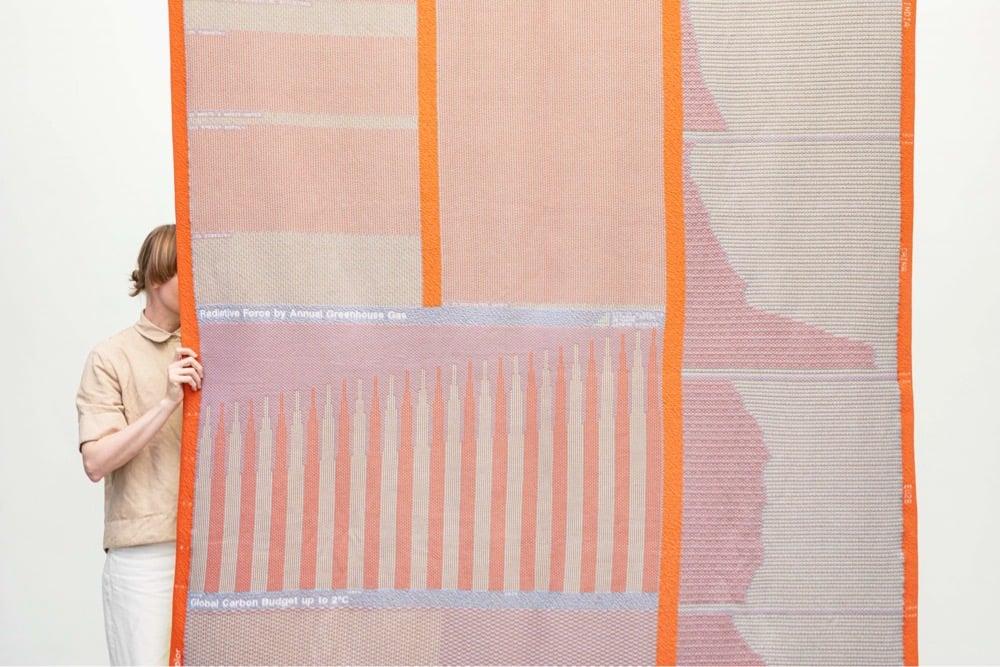
Artist Phillip Stearns makes blankets and tapestries out of glitch art. Some of the source images are taken from intentionally short-circuited digital cameras.
All items are woven in the US and cost $200 and up (plus shipping).
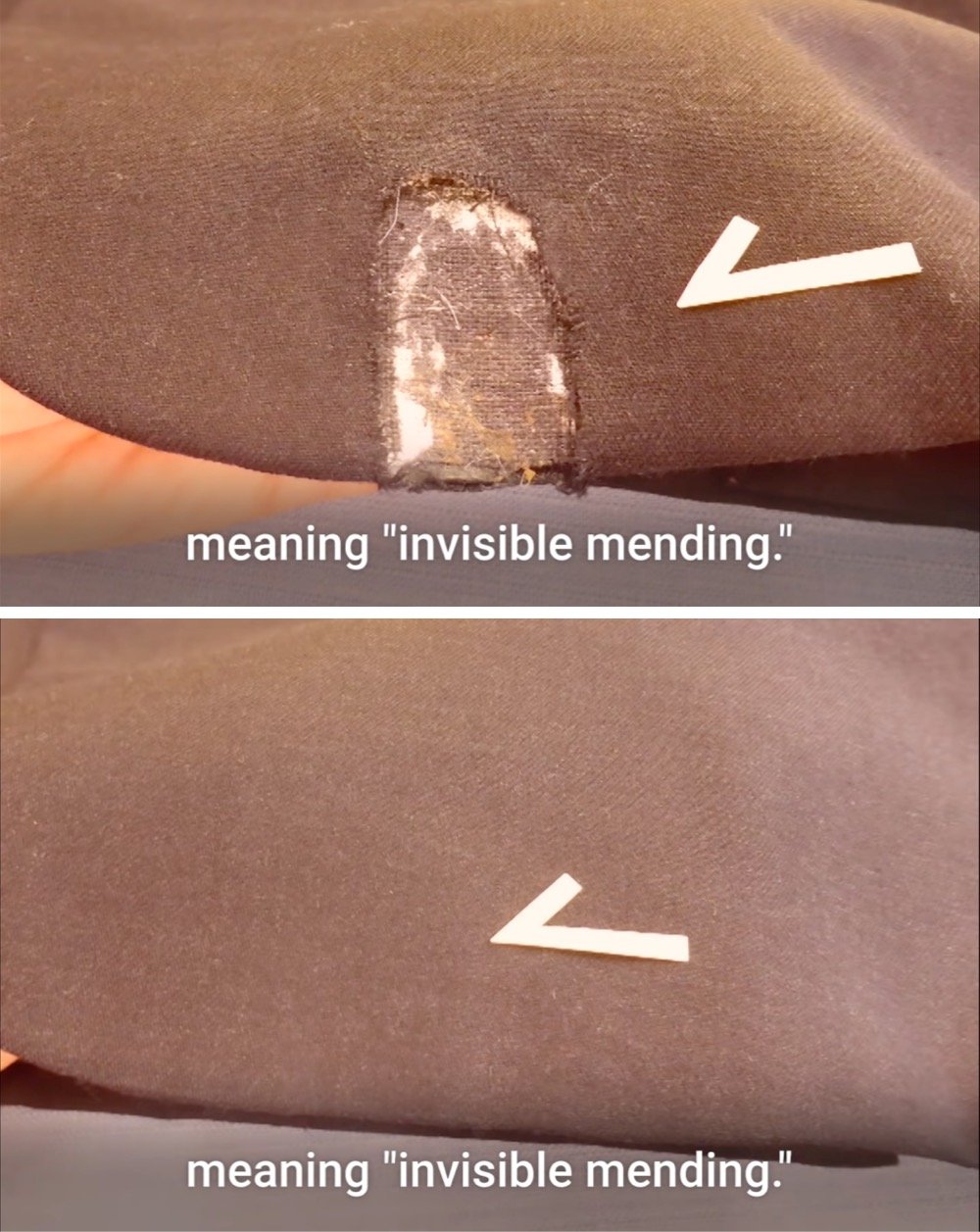
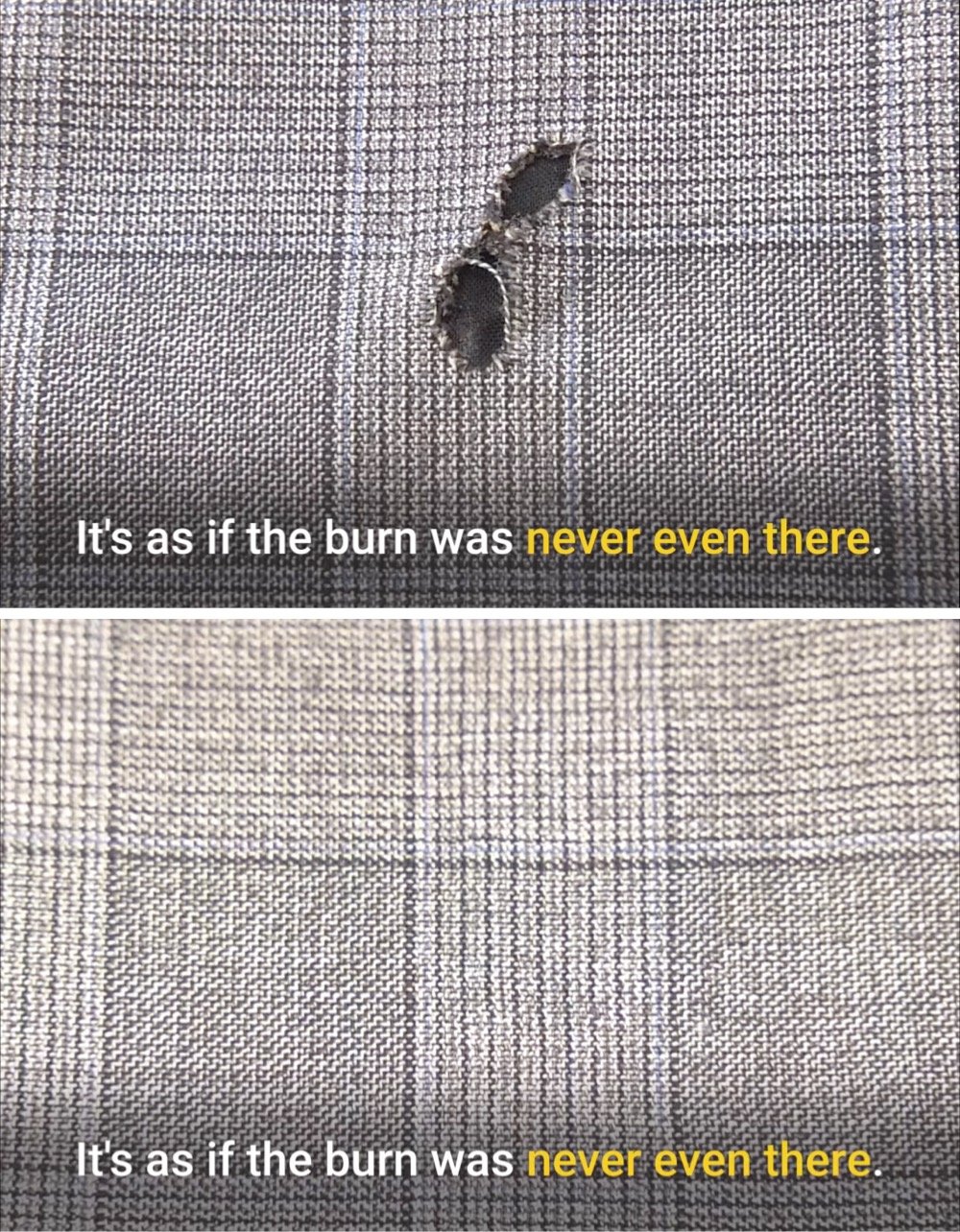
The Flint and Tinder folks are back with another Kickstarter campaign and this time they are selling a hooded sweatshirt with a ten-year warranty. It's a premuim-quality sweatshirt, made entirely in the USA, and if rips or comes apart at the seams in the next ten years, just send it to them and they will mend it and send it back.
The Flint and Tinder team overheard a conversation in a factory we were visiting. Someone was talking about using coarse thread with delicate fabric. Doing this accelerates the process of wearing holes into a garment as it goes through the dryer time and time again.
It's a common trick of the trade. It's one of several techniques companies secretly use to ensure that if you like what you've bought, you'll be forced to replace it soon.
In the manufacturing industry, this is known as "planned obsolescence."
It doesn't have to be this way though -- far from it. Eager to prove a point, send a message, and make a sweatshirt that could last a lifetime (the way your favorite sweatshirt should), we set out to make a premium piece that's so well constructed customers would rather have it mended (free of charge, of course) than replaced.
What are all those models in the J.Crew catalog doing anyway? By cleverly piecing together narratives from catalog photographs, Meghan O'Neill imagines that they are solving crimes, misbehaving on honeymoons, and such. Here's the most recent episode:
Yesterday I was pairing the socks from the clean laundry, and figured out the way I was doing it is not very efficient. I was doing a naive search -- picking one sock and "iterating" the pile in order to find its pair. This requires iterating over n/2 * n/4 = n^2/8 socks on average.
As a computer scientist I was thinking what I could do? sorting (according to size/color/...) of course came into mind to achieve O(NlogN) solution.
And everyone gets it wrong. The correct answer is actually:
1) Throw all your socks out.
2) Go to Uniqlo and buy 15 identical pairs of black socks.
3) When you want to wear socks, pick any two out of the drawer.
4) When you notice your socks are wearing out, goto step 1.
Oh Vogue, who thought a Hurricane Sandy-themed photo shoot with supermodels walking through Far Rockaway dressed in the likes of Rodarte and Marc Jacobs was a good idea?
"...we spent the night on a bridge, then went back in with the National Guard to work on patients." On Iman: Narciso Rodriguez camisole and pencil skirt. On Kloss: Diane von Furstenberg dress. Hair: Julien d'Ys for Julien d'Ys. Makeup: Stéphane Marais.
I guess they were going for inappropriate & provocative but hit inappropriate & idiotic instead? Vogue did raise a bunch of money for storm relief, but still. They should leave the provocative stuff to Vogue Italia and Steven Meisel...they're a lot better at it. (via @alexandrak)
Earlier this morning in a post about Apple manufacturing their products in the US, I wrote "look for this "made in the USA" thing to turn into a trend". Well, Made in the USA is already emerging as a trend in the media. On Tuesday, Farhad Manjoo wrote about American Giant, a company who makes the world's best hoodie entirely in the US for a decent price.
For one thing, Winthrop had figured out a way to do what most people in the apparel industry consider impossible: He's making clothes entirely in the United States, and he's doing so at costs that aren't prohibitive. American Apparel does something similar, of course, but not especially profitably, and its clothes are very low quality. Winthrop, on the other hand, has found a way to make apparel that harks back to the industry's heyday, when clothes used to be made to last. "I grew up with a sweatshirt that my father had given me from the U.S. Navy back in the '50s, and it's still in my closet," he told me. "It was this fantastic, classic American-made garment -- it looks better today than it did 35, 40 years ago, because like an old pair of denim, it has taken on a very personal quality over the years."
The Atlantic has a pair of articles in their December issue, Charles Fishman's The Insourcing Boom:
Yet this year, something curious and hopeful has begun to happen, something that cannot be explained merely by the ebbing of the Great Recession, and with it the cyclical return of recently laid-off workers. On February 10, [General Electric's Appliance Park in Louisville, KY] opened an all-new assembly line in Building 2 -- largely dormant for 14 years -- to make cutting-edge, low-energy water heaters. It was the first new assembly line at Appliance Park in 55 years -- and the water heaters it began making had previously been made for GE in a Chinese contract factory.
On March 20, just 39 days later, Appliance Park opened a second new assembly line, this one in Building 5, to make new high-tech French-door refrigerators. The top-end model can sense the size of the container you place beneath its purified-water spigot, and shuts the spigot off automatically when the container is full. These refrigerators are the latest versions of a style that for years has been made in Mexico.
Another assembly line is under construction in Building 3, to make a new stainless-steel dishwasher starting in early 2013. Building 1 is getting an assembly line to make the trendy front-loading washers and matching dryers Americans are enamored of; GE has never before made those in the United States. And Appliance Park already has new plastics-manufacturing facilities to make parts for these appliances, including simple items like the plastic-coated wire racks that go in the dishwashers.
What I saw at these Chinese sites was surprisingly different from what I'd seen on previous factory tours, reflecting the political, economic, technological, and especially social pressures that are roiling China now. In conjunction with significant changes in the American business and technological landscape that I recently saw in San Francisco, these changes portend better possibilities for American manufacturers and American job growth than at any other time since Rust Belt desolation and the hollowing-out of the American working class came to seem the grim inevitabilities of the globalized industrial age.
For the first time in memory, I've heard "product people" sound optimistic about hardware projects they want to launch and facilities they want to build not just in Asia but also in the United States. When I visited factories in the upper Midwest for magazine stories in the early 1980s, "manufacturing in America" was already becoming synonymous with "Rust Belt" and "sunset industry." Ambitious, well-educated people who had a choice were already headed for cleaner, faster-growing possibilities -- in consulting, finance, software, biotech, anything but things. At the start of the '80s, about one American worker in five had a job in the manufacturing sector. Now it's about one in 10.
Add to that all of the activity on Etsy and the many manufactured-goods projects on Kickstarter that are going "Made in the USA" (like Flint & Tinder underwear (buy now!)) and yeah, this is definitely a thing.
As noted by Fishman in his piece, one of the reasons US manufacturing is competitive again is the low price of natural gas. From a piece in SupplyChainDigest in October:
Several industries, noticeable chemicals and fertilizers, use lots of natural gas. Fracking and other unconventional techniques have already unlocked huge supplies of natural gas, which is why natural gas prices in the US are at historic lows and much lower than the rest of the world.
Right now, nat gas prices are under $3.00 per thousand cubic, down dramatically from about three times that in 2008 and even higher in 2006. Meanwhile, natural gas prices are about $10.00 right now in Europe and $15.00 in parts of Asia.
Much of the growing natural gas reserves come from the Marcellus shale formation that runs through Western New York and Pennsylvania, Southeast Ohio, and most of West Virginia. North Dakota in the upper Midwest also is developing into a major supplier of both oil and natural gas.
So basically, energy in the US is cheap right now and will likely remain cheap for years to come because hydraulic fracturing (aka fracking aka that thing that people say makes their water taste bad, among other issues) has unlocked vast and previously unavailable reserves of oil and natural gas that will take years to fully exploit. A recent report by the International Energy Agency suggests that the US is on track to become the world's biggest oil producer by 2020 (passing both Saudi Arabia and Russia) and could be "all but self-sufficient" in energy by 2030.
By about 2020, the United States will overtake Saudi Arabia as the world's largest oil producer and put North America as a whole on track to become a net exporter of oil as soon as 2030, according to a report from the International Energy Agency.
The change would dramatically alter the face of global oil markets, placing the U.S., which currently imports about 45 percent of the oil it uses and about 20 percent of its total energy needs, in a position of unexpected power. The nation likely will become "all but self-sufficient" in energy by 2030, representing "a dramatic reversal of the trend seen in most other energy-importing countries," the IEA survey says.
So yay for "Made in the USA" but all this cheap energy could wreak havoc on the environment, hinder development of greener alternatives to fossil fuels (the only way green will win is to compete on price), and "artificially" prop up a US economy that otherwise might be stagnating. (thx, @rfburton, @JordanRVance, @technorav)
There's no memory at Twitter: everything is fleeting. Though that concept may seem daunting to some (archivists, I feel your pain), it also means the content in my feed is an endless stream of new information, either comments on what is happening right now or thoughts about the future. One of the reasons I loved the Internet when I first discovered it in the mid-1990s was that it was a clean slate, a place that welcomed all regardless of your past as you wrote your new life story; where you'd only be judged on your words and your art and your photos going forward.
Schuman asked the woman how she was able to create such a dramatic change:
Actually the line that I think was the most telling but that she said like a throw-away qualifier was "I didn't know anyone in New York when I moved here..."
I think that is such a huge factor. To move to a city where you are not afraid to try something new because all the people that labeled who THEY think you are (parents, childhood friends) are not their to say "that's not you" or "you've changed". Well, maybe that person didn't change but finally became who they really are. I totally relate to this as a fellow Midwesterner even though my changes were not as quick or as dramatic.
I bet if you ask most people what keeps them from being who they really want to be (at least stylistically or maybe even more), the answer would not be money but the fear of peer pressure -- fear of embarrassing themselves in front of a group of people that they might not actually even like anyway.
For a certain type of person, changing oneself might be one of the best ways of feeling free and in control of one's own destiny. And in the social media world, Twitter feels like continually moving to NYC without knowing anyone whereas Facebook feels like you're living in your hometown and hanging with everyone you went to high school with. Twitter's we're-all-here-in-the-moment thing that Matt talks about is what makes it possible for people to continually reinvent themselves on Twitter. You don't have any of that Facebook baggage, the peer pressure from a lifetime of friends, holding you back. You are who your last dozen tweets say you are. And what a feeling of freedom that is.
Liu Xianping, has been posing for his granddaughter's female fashion store on Tmall and has become an Internet sensation. Though most of the clothes Liu has been modeling for are more of the tiny, sweet and cute teen girl style with rosy shades, laces and ribbons, the 72-year-old totally pulled things off. His signature piece so far seems to be color tights and thigh stockings. Liu's confidence in front of the camera and his long pair of skinny legs are the envy of many girls. Netizen Satsuki sighed: "He has such a good figure, especially those legs!"
I simultaneously love that he's doing this with his granddaughter and hate that women, myself included, are coveting the spindly legs of a 72 year old man. (via @mulegirl)
Gentlemen of Bacongo is a book of photography by Daniele Tamagni documenting a group of men from the Congo who dress in designer suits. Meet Le Sapeurs.
Photographer Daniele Tamagni's new book Gentlemen of Bacongo captures the fascinating subculture of the Congo in which men (and a few women) dress in designer and handmade suits and other luxury items. The movement, called Le Sape, combines French styles from their colonial roots and the individual's (often flamboyant) style. Le Sapeurs, as they're called, wear pink suits and D&G belts while living in the slums of this coastal African region.
In interviews with some notable sapeurs, Tamagni unearths the complex and varied rules and standards of Le Sape, short for Société des Ambianceurs et des Personnes Élégantes, or the Society of Tastemakers and Elegant People. Sapeur Michel comments on the strange combination of poverty and fashion, "A Congolese sapeur is a happy man even if he does not eat, because wearing proper clothes feeds the soul and gives pleasure to the body."
The Clowns were baseball's answer to the Harlem Globetrotters. Players entertained the crowd with various comedic antics, including "shadowball", where they would go through a warm-up routine with no baseball. When the team joined the Negro American League, they dropped the "Ethiopian" moniker and played straight baseball.
No. No no no. No no no no no no no no no no no no no no no no no no no no no no no no no no no no no no no no no no no no no no no no no no no no no no. NO NO NO NO! No. No no. No no no no no no. No. No no no no no no no no no no no no no no no no no no.
Some will spend $795 on Gucci backpacks or $1,090 on leopard print puffy coats from Lanvin.
Sasha Charnin Morrison, fashion director at Us Weekly, admits that some of the clothes are outrageously prices. But, she says, things like $200 Gucci sneakers make her kids happy.
"They're a walking billboard of you. They're a reflection of who you are, so if you are someone highly stylized, then you want to make sure your kids are the best-dressed kids out there," she says.
No no no no no no no no no. No. No no no no no no no no no. Fuck you.
E. Berry Wall was a dude. But not just any dude. In 1888, he was declared "King of the Dudes" in a competition against another gentleman, one Robert Hilliard.
Wall became famous after meeting Blakely Hall, a reporter hungry for good copy. Thereafter, every week or so, Hall's articles publicizing Wall's adventures in clothing appeared in newspapers across the country. Then one of Hall's competitors set up a rival, actor Robert "Bob" Hilliard, another flashy dresser. Thus began the Battle of the Dudes, in which each sought to eclipse the other in sartorial extremes. According to the Times, Wall finally won when, during the Great Blizzard of 1888, he strode into the Hoffman House bar clad in gleaming boots of black patent leather that went to his hips. (Nonetheless, some social historians claim Hilliard won with the high boots, supposedly part of his Western gambler's costume from a play in which he was then appearing).
But it was Wall who won a later sartorial marathon:
Wall won another contest in Saratoga when daredevil financier John "Bet-A-Million" Gates wagered that he could not wear 40 changes of clothes between breakfast and dinner. On the appointed day, Wall repeatedly appeared at the racetrack in one flashy ensemble after another until, exhausted but victorious, he at last entered the ballroom of the United States Hotel in faultless evening attire to wild applause.
For the most recent issue of Fast Company, Jeff Chu profiled Tadashi Yanai, the CEO of Uniqlo, one of the hottest retail companies in the world. The piece is full of interesting business & design wisdom throughout.
Yanai, though, cannot resist the American market. Around the corner from his Tokyo office, there's a large map of Manhattan. There are push pins marking Abercrombie & Fitch, American Eagle, Forever 21, Gap, Hollister, and a half-dozen other brands that could be considered immediate competitors. Significantly, there's one outlier marked: the Apple Store. When I ask Yanai about this, he replies simply, "People have only one wallet."
More notably, Apple is perhaps the best example of a company whose products have become ubiquitous without losing cachet. "Specialness is nice to have," Yanai says, "but what's more important is being made for all."
One of my favorite things about shopping at Uniqlo is how they hand you your credit card back:
All associates are trained, for instance, to return your credit card and receipt with both hands, as a sign of respect.
Fun fact about Mister Rogers' cardigan sweaters that I hadn't heard before: his mom knitted all of them by hand for him. That may be the most perfectly perfect detail about anything that I've ever heard. (via ★djacobs)
Last week, graffiti "artist" Kidult painted the word ART in pink paint all over the Marc Jacobs store in Soho. The store's staff cleaned it up, but not before snapping a photo of it and dubbing it Art by Art Jacobs. And then, in an awesome twist, Marc Jacobs put the photo on a tshirt and offered it for sale: $689 or $9 less if you want it signed by the "artist". The Observer's Foster Kamer has the story.
Jacobs, in this situation, has made one hell of a commentary about the absurd commoditization that some street art has yielded, and how easily ostensibly subversive art can actually be subverted, facile as it so often is, and it may be the best take on the matter since Exit Through The Gift Shop.
I'm going to pay for those quotation marks with lots of email and tweets, aren't I?
Update: Kidult has answered back with a tshirt of his own that pictures the "artist" tagging the store. $10.
This is one of a pair of cow shoes worn by moonshiners during Prohibition to hide their tracks from prohibition agents. From a 1922 edition of The Evening Independent:
A new method of evading prohibition agents was revealed here today by A.L. Allen, state prohibition enforcement director, who displayed what he called a "cow shoe" as the latest thing front the haunts of moonshiners.
The cow shoe is a strip of metal to which is tacked a wooden block carved to resemble the hoof of a cow, which may be strapped to the human foot. A man shod with a pair of them would leave a trail resembling that of a cow.
The shoe found was picked up near Port Tampa where a still was located some time ago. It will be sent to the prohibition department at Washington. Officers believe the inventor got his idea from a Sherlock Holmes story in which the villain shod his horse with shoes the imprint of which resembled those of a cow's hoof.
I think I saw a woman wearing a pair of these on 6th Ave last week. (via nyer photo booth)
Flint and Tinder is attempting to reintroduce American-made underwear back into US stores with a Kickstarter project. They've raised $39,000+ so far.
The factory I'm working with is family owned and operated. It's over 100 years old. Just before the recession hit, they moved into a larger facility and invested in some of the capital improvements shown in the video (solar power etc.).
At that time they had 300+ employees and were hoping to double or triple in size. When we started this project however, with the economy in free-fall, they were down to just 90.
They've agreed to learn to make this new, high-end brand of American-made underwear. Here's the fun part though: For ever 1000 pair we sell per month, 1 full-time job has to be added back to the assembly line. Hopefully, with your support, it will help them keep the doors open.
With roots in 1980s street gangs, these Polo Ralph Lauren enthusiasts have made "aspirational apparel" a lifestyle. They once had to boost their Polo from stores and fight to keep it on the streets. Today, their culture is worldwide, promulgated by hip-hop. Their hero is Ralph Lauren -- a working class New Yorker who understood that the fantastical power of style can be transformative. Dallas Penn from The Internets Celebrities, a dedicated Lo Head (and former member of the Decepts crew) with a collection of over 1000 pieces of Polo apparel takes us on a tour of this remarkable fashion subculture.
Over at Sew Weekly, Mena Trott predicts what some of the characters will be wearing in the coming season of Mad Men.
Oh, Betty. For years, she has been immaculately dressed and presented as the facade of the perfect 1950s/1960s wife. With her cinched waists and billowing skirts, she's held onto late 1950s and early 1960s fashion the longest. In season four, she's married to the anti-Don, the boring Henry Francis and is getting a little too familiar with the bottle. When you're married to Henry Francis, you just don't care any more. That should be embroidered on a pillow.
Available at Etsy, prints of Star Wars characters wearing designer clothes by John Woo (not the director). A stormtrooper wearing Thom Browne, Boba Fett wearing Supreme Visvim, and my favorite, Jango Fett wearing Comme des Garçons.
Last year, Vice travelled to Matehuala, Mexico in search of dance crews who wear extremely pointy cowboy boots called botas vaqueras exóticas.
In Matehuala, guarachero has become an unlikely style of music where a bunch of people who in theory should not get along come together and get along. It's also the music preferred by the men and boys in the long and pointed boots.
Participants in these dance contests spend the days and weeks prior choreographing intricate footwork routines and fabricating their own outfits with cheap paint and fabric. The grand prize, beyond the enthusiastic crowd's affection, is either a bottle of whiskey or a few bucks.

In a piece for Vanity Fair, Kurt Andersen argues that for the first time in recent history, American pop culture (fashion, art, music, design, entertainment) hasn't changed dramatically in the past 20 years.
Since 1992, as the technological miracles and wonders have propagated and the political economy has transformed, the world has become radically and profoundly new. (And then there's the miraculous drop in violent crime in the United States, by half.) Here is what's odd: during these same 20 years, the appearance of the world (computers, TVs, telephones, and music players aside) has changed hardly at all, less than it did during any 20-year period for at least a century. The past is a foreign country, but the recent past -- the 00s, the 90s, even a lot of the 80s -- looks almost identical to the present. This is the First Great Paradox of Contemporary Cultural History.

Think about it. Picture it. Rewind any other 20-year chunk of 20th-century time. There's no chance you would mistake a photograph or movie of Americans or an American city from 1972-giant sideburns, collars, and bell-bottoms, leisure suits and cigarettes, AMC Javelins and Matadors and Gremlins alongside Dodge Demons, Swingers, Plymouth Dusters, and Scamps-with images from 1992. Time-travel back another 20 years, before rock 'n' roll and the Pill and Vietnam, when both sexes wore hats and cars were big and bulbous with late-moderne fenders and fins-again, unmistakably different, 1952 from 1972. You can keep doing it and see that the characteristic surfaces and sounds of each historical moment are absolutely distinct from those of 20 years earlier or later: the clothes, the hair, the cars, the advertising -- all of it. It's even true of the 19th century: practically no respectable American man wore a beard before the 1850s, for instance, but beards were almost obligatory in the 1870s, and then disappeared again by 1900. The modern sensibility has been defined by brief stylistic shelf lives, our minds trained to register the recent past as old-fashioned.
I hate to shop. For the last 20 years I only shopped once every two or three years. I would go to the big and tall store and buy only what I could find in 20 minutes, tops - usually a few dozen briefs, T-shirts and sweaters. If there was time left, I would try on a jacket. Nothing needed to be perfect: just fit and be black.
Now I am buying African block-print shirts and pants in a riot of colors and patterns from an African street merchant. I visit him every few weeks to see what's new. I buy 10 or 15 at a time.
In their tandem press conferences, LeBron James and Dwyane Wade, of the Miami Heat, alternate impeccably tailored suits with cardigans over shirts and ties. They wear gingham and plaid and velvet, bow ties and sweater vests, suspenders, and thick black glasses they don't need. Their colors conflict. Their patterns clash. Clothes that once stood as an open invitation to bullies looking for something to hang on the back of a bathroom door are what James now wears to rap alongside Lil Wayne. Clothes that once signified whiteness, squareness, suburbanness, sissyness, in the minds of some NBA players no longer do.
If you happen to be someone who looks at Durant, James, or Amar'e Stoudemire's Foot Locker commercials -- in which he stalks along a perilously lit basketball court wearing a letterman's cardigan, a skinny tie, and giant black glasses (his are prescription) -- and wonders how the NBA got this way, how it turned into Happy Days, you're really wondering the same thing about the rest of mainstream black culture. When did everything turn upside down? Who relaxed the rules? Is it really safe to look like Carlton Banks?
Nike has designed a soccer shoe for Real Madrid's Cristiano Ronaldo that uses a striped pattern on one side of the shoe designed to confuse opponents as to which way Ronaldo might be moving his feet.
The cleats look remarkably different from each side of Ronaldo. From the right, they have a clean look with pinstripes. From the left, though, there are thick stripes with a red accent line. Furthermore, the asymmetrical design makes a defender's judgment that much harder, as the visual effect of Ronaldo turning his foot in one direction may not come across exactly the same as reality.
Reminds me of the dazzle camouflage used on military ships in WWI and WWII.
But man, isn't looking at the four identical bodies with different heads so uncanny? Duly noted that H&M made one of the fake bodies black. You can't say that the fictional, Photoshopped, mismatched-head future of catalog modeling isn't racially diverse.
Monsters of Grok offers "fake band t-shirts for history's greatest minds". The Tesla/Edison send-up of AC/DC is nearly genius, but I like the Machiavelli/Metallica one better for some reason.
But nowadays people just have to know the sex of a baby or young child at first glance, says Jo B. Paoletti, a historian at the University of Maryland and author of Pink and Blue: Telling the Girls From the Boys in America, to be published later this year. Thus we see, for example, a pink headband encircling the bald head of an infant girl.
Why have young children's clothing styles changed so dramatically? How did we end up with two "teams" -- boys in blue and girls in pink?
"It's really a story, what happened to neutral clothing," says Paoletti, who has explored the meaning of children's clothing for 30 years. For centuries, she says, children wore dainty white dresses up to age 6. "What was once a matter of practicality -- you dress your baby in white dresses and diapers; white cotton can be bleached-became a matter of 'Oh my God, if I dress my babies in the wrong thing, they'll grow up perverted,'" Paoletti says.
It is nearly impossible, even in NYC, to find girls clothes that are not pink unless you pay through the nose for imported European kids clothes. See also vocabulary in boys and girls toy advertising. (via megnut, who is fighting to keep our kids in gender neutral clothing)
These are the people who pay full price for the clothes that appear on the runways of Paris, NY, Milan, etc.
Christine Chiu wears most items only once. The 28-year-old, who is married to the founder of Beverly Hills Plastic Surgery, goes to events every night of the week-often making multiple wardrobe changes in a single night.
"If you're going to a gala for some kind of disease and then you go to a hip art event, you can't wear the same thing," Ms. Chiu says.
This is a hoot: in want of slacks, President Lyndon Johnson called up the Haggar clothing company and requested several pairs be made in the style of a pair he already owned. Except a little bigger in the crotch..."down where your nuts hang" as Johnson put it. Just listen:
A really lovely seven-minute documentary about Scott Schuman, aka The Sartorialist.
Watching the concentration, focus, and determination in Schuman's eyes and body as he walks around looking for photographic subjects immediately reminded me of an elite athlete; that same look was documented at length in Zidane, A 21st Century Portrait. And that's no accident...what Schuman does is an athletic pursuit as much as anything else. The way he holds his camera while walking, down by his side, slightly behind his back, hiding it from his potential subjects until he sees an opening...he's like a running back cradling a football, probing for an opening in the defensive line.
"I had so much freedom to do everything I wanted. I think I did a good job." But she added, "When everything is good, maybe I think it's the time to do something else." She expects to complete issues through March. She said she was not sure what she would do after that. "I have no plan at all," she said.
On Monday night, at a screening of the movie "Due Date," Courtney Love told a reporter from Style.com that she was trying to take better care of herself.
Shortly after 8 p.m., Ms. Love burst into the room with the Marchesa dress slung on one arm and the noted German Neo-Expressionist artist Anselm Kiefer on the other. She was entirely naked and leaning on Mr. Kiefer for support. She made one lap around the room, walking in front of a photographer, an assistant, a hairstylist and me. She pulled over her head a transparent lace dress that covered up nothing, and demanded my assistance -- "Not you," she said to Mr. Kiefer, who was bent over trying to help her -- to stuff her feet into a pair of black Givenchy heels that were zipped up the back and tied with delicate laces in the front. Then she applied a slash of red lipstick in the vicinity of her mouth.
"I really must get out of here," Mr. Kiefer said.
"Just a minute," Ms. Love said, as she pushed her feet, shoes and all, through a pair of pink knickers that she said cost $4,000. She grabbed a trench coat, walked through the hotel lobby with her breasts exposed to an assortment of prominent fashion figures, including Stefano Pilati, the Yves Saint Laurent designer, and then exited the hotel.
Like Ms. Love, this profile of her is anything but boring.
I can't figure out how old anyone is. I can't figure out how gay anyone is. On silent subway morning commutes there are no tells. The brogues, desert boots and quickstrike high-tops not only have me manic-fantasy-banging every well-dressed dude on the F BECAUSE IT IS ALL SO GODDAMN GOOD but the fact that so many are suddenly well shod plus the prevalence of hard-bottoms straight CRIPPLES my ability to tell how rich anyone is. And that is fucking my game up major. Aaaaaaaaaand everyone's watch is now the old timey Timex from J.Crew for $150 so yeah, 360 IDK. Plus, also, seriously, there must have been some clandestine colloquium workshop situation where all the dudes in all the land shucked to skivvies and got sized for their perfect pair of Uniqlo jeans and nobody said "no homo," not even one time, because, Hi, y'all all look fantastic FUCK YOU.
Huh. The word "denim" comes from "serge de Nîmes", a fabric made in Nîmes, France, and "blue jeans" comes from "Bleu de Genes", blue pants made in Genoa (aka Genes). Both cities claim to have been manufacturing denim for centuries, but there has never been much proof in the way of artifacts and such. So the recent discovery of several paintings from the mid-1600s depicting people wearing jeans is surprising. Look at this jean jacket:
The New Yorker has a trio of interesting articles in their most recent issue for the discerning web/technology lady or gentlemen. First is a lengthy profile of Mark Zuckerberg, the quite private CEO of Facebook who doesn't believe in privacy.
Zuckerberg may seem like an over-sharer in the age of over-sharing. But that's kind of the point. Zuckerberg's business model depends on our shifting notions of privacy, revelation, and sheer self-display. The more that people are willing to put online, the more money his site can make from advertisers. Happily for him, and the prospects of his eventual fortune, his business interests align perfectly with his personal philosophy. In the bio section of his page, Zuckerberg writes simply, "I'm trying to make the world a more open place."
Tavi has an eye for frumpy, "Grey Gardens"-inspired clothes and for arch accessories, and her taste in designers runs toward the cerebral. From the beginning, her blog had an element of mystery: is it for real? And how did a thirteen-year-old suburban kid develop such a singular look? Her readership quickly grew to fifty thousand daily viewers and won the ear of major designers.
And C, John Seabrook has a profile of James Dyson (sub. required), he of the unusual vacuum cleaners, unusual hand dryers, and the unusual air-circulating fan.
In the fall of 2002, the British inventor James Dyson entered the U.S. market with an upright vacuum cleaner, the Dyson DC07. Dyson was the product's designer, engineer, manufacturer, and pitchman. The price was three hundred and ninety-nine dollars. Not only did the Dyson cost much more than most machines sold at retail but it was made almost entirely out of plastic. In the most perverse design decision of all, Dyson let you see the dirt as you collected it, in a clear plastic bin in the machine's midsection.
However, the temple for waisted male self-esteem is Old Navy, where I easily slid into a size 34 pair of the brand's Dress Pant. Where no other 34s had been hospitable, Old Navy's fit snugly. The final measurement? Five inches larger than the label. You can eat all the slow-churn ice cream and brats you want, and still consider yourself slender in these.
The vanity sizing situation with women's clothes is even more variable. (via @linklog)
The Style Rookie gets ahold of a bunch of old issues of Sassy and scans in a couple dozen pages, including a fashion layout featuring Sassy intern Chloë Sevigny.
Sassy seems to be one of those rare magazines that is dearly missed but doesn't really have a modern day analogue. (See also Might and Spy.)
The websites of the top 10 luxury brands don't work that well on the iPad...most throw up a splash page prompting you to download Flash. This is what Cartier's site looks like:
If I were Anna Wintour, I would be screaming at these companies to fix these sites. They reflect poorly on an industry that's all about effortless style, appearance, confidence, and never, ever having a hair out of place (unless that's the look you're going for). This? This is like they've got no pants on -- and not in a good way. That goes double for restaurant sites.
Eddie Feibusch opened his Manhattan zipper store on December 7, 1941 and is still plying his trade there, even after most of his competition has decamped for cheaper overseas locations.
How great are zippers? Don't even get Mr. Feibusch started. They are watertight for deep-sea divers, airtight for NASA. "Nothing replaces a zipper," he said. Buttons? He made a face. "A button is unpleasant," he said.
Feibusch will even sell you a 30-foot-long zipper for $100...to wrap your hot-air balloon up. (via girlhacker)
The beauty of this photo by The Sartorialist is not in the clothes or the model but in the way that everything in shot leans down and to the right: the sidewalk sloping away toward the curb, the higher cuff on her right leg, her left foot slightly in front of her right, hips slouched so that her belt is parallel to the sidewalk, the neckline on her shirt. And then that big wave of hair thrown over the other way, balancing everything else out.
That "exalted dignity, that certain solemnity of mien," lent by an imposing beard, "regardless of passing vogues and sartorial vagaries," says Underwood, is invariably attributable to the presence of an obscure principle known as the odylic force, a mysterious product of "the hidden laws of nature." The odylic, or od, force is conveyed through the human organism by means of "nervous fluid" which invests the beard of a noble poet with noetic emanations and ensheathes it in an ectoplasmic aura.
Wikipedia gets into the 2000s roundup game with a main article and a number of topic-based summaries, including fashion, film, and sports. From the fashion page:
In hip hop, the throwback jersey and baggy pants (popular in the '90s to 2004) look was replaced with the more "grown man" look which was highly popularized by Kanye West around the year 2005.
If you say so. More interesting is the chart of the 20 highest grossing movies from the film page (the top 3 each grossed $1 billion+ worldwide):
1. The Lord of the Rings: The Return of the King
2. Pirates of the Caribbean: Dead Man's Chest
3. The Dark Knight
4. Harry Potter and the Philosopher's Stone
5. Pirates of the Caribbean: At World's End
6. Harry Potter and the Order of the Phoenix
7. Harry Potter and the Half-Blood Prince
8. The Lord of the Rings: The Two Towers
9. Shrek 2
10. Harry Potter and the Goblet of Fire
11. Spider-Man 3
12. Harry Potter and the Chamber of Secrets
13. Ice Age: Dawn of the Dinosaurs
14. The Lord of the Rings: The Fellowship of the Ring
15. Finding Nemo
16. Star Wars Episode III: Revenge of the Sith
17. Transformers: Revenge of the Fallen
18. Spider-Man
19. Shrek the Third
20. Harry Potter and the Prisoner of Azkaban
Only one movie on the list was made from an original screenplay: Finding Nemo...the rest are all sequels or adapted from books, TV shows, amusement park rides, etc. Out of the top 50, only nine are not franchise films.
The first episode of a new web series "about dressing like a grownup" called Put This On is about denim. Denim like a jean. Put This On is hosted by Jesse Thorn of The Sound of Young America and Adam Lisagor, the web's loneliest sandwich.
A video clip of what fashion designers in the 1930s predicted that people would be wearing in the year 2000. While the predictions for the women only accurately depict Lady GaGa's wardrobe, the designers of the past were slightly closer to the mark when it came to men's fashion:
"He'll be fitted with a radio, telephone, and containers for coins, keys, and candy for cuties."
By which they must have meant credit cards.
Update: FASHION magazine responded to this video. It turns out that it was eerily accurate, with designs like Alexander Wang and Marc Jacobs parading futuristic wares that are perfectly current.
Well, [Levi's] started just as a regional thing, we had the lock on the West and other brands had their own consumer segments. I believe Lee had the South sort of sewn up, and there were some other brands, I think Lee included, that were known in New York. It's funny, you could always tell where someone was from; if they said "jeans," then they were from the west, if they were from the East they called them "dungarees," you could immediately tell where someone was from.
The September Issue is the much-anticipated documentary that follows Anna Wintour and her staff at Vogue through the process of creating the magazine's September issue, AKA the world's thickest magazine issue.
An apt demonstration that an editor/curator's main job is saying no to almost everything.
And he's got several pairs of them. In this video, the noted writer shows off his suits and talks about "dressing up for the story" as a young reporter.
The recession seemed like a far-removed concept for Hermes this morning, as the luxury retailer announced it is breeding its own crocodiles to keep up with the demand for its iconic handbags.
For The Uniform Project, Sheena Matheiken is wearing the same dress every day for an entire year. Each day, she "reinvents the dress with layers, accessories and all kinds of accouterments".
How do you design a dress that can be worn all year around? The mastermind behind the uniform dress is my friend and designer, Eliza Starbuck. We took inspiration from one of my staple dresses, improving upon the shape and fit to add on some seasonal versatility. The dress is designed so it can be worn both ways, front and back, and also as an open tunic. It's made from a durable, breathable cotton, good for New York summers and good for layering in cooler seasons. With deep hidden pockets to appease my deep aversion for carrying purses.
Looking through the photos so far, you can see how versatile the dress is and how clever Matheiken is in accessorizing it. (via ben fry)
Update: Alex Martin did a similar project back in 2005 called Brown Dress.
So, here's the deal -- I made this dress and I wore it every day for a year. I made one small, personal attempt to confront consumerism by refusing to change my dress for 365 days. In this performance, I challenged myself to reject the economic system that pushes over-consumption, and the bill of goods that has been sold, especially to women, about what makes a person good, attractive and interesting. Clothes are a big part of this image, and the expectation in time, effort, and financial investment is immense.
From 1991-2002 as part of her A-Z Uniforms project, Andrea Zittel made herself a new dress and wore it for six straight months.
Because I was tired of the tyranny of constant variety, I began a six-month uniform project. Starting in 1991 I would design and make one perfect dress for each season, and would then wear that dress every day for six months. Although utilitarian in principle, I often found that there was a strong element of fantasy or emotional need invested in each season's design. The experiment as a whole worked quite well, especially since dreaming up the next season's design helped relieve any monotony that might have occurred from wearing the same dress every day.
Some of Zittel's dresses are pictured here. Has The Onion done a piece about the guy in marketing's art piece where he wears brown khakis and a blue button-down shirt everyday for 20 years? (thx, jon & amanda)
It took me at least 30 seconds of looking at these shoes to realize that the woman wasn't floating two inches off the ground and what I thought were shadows are actually heels. Even knowing the secret, the effect switches for me like a Necker cube or the spinning dancer.
Whenever you start a new project or a new job, don't tell anyone what you're working on, because it can change direction a million times and once you start telling the world about it, you get constrained by your own mouth.
but you'll have to find the others on your own. (via andrea inspired)
Update:A recent study has indicated that people who don't share their goals are more successful in achieving them.
Researchers report that when dealing with identity goals -- that is, the aspirations that define who we are -- sharing our intentions doesn't necessarily motivate achievement. On the contrary, a series of experiments shows that when others take notice of our plans, performance is compromised because we gain "a premature sense of completeness" about the goal.
Nerd Boyfriend breaks down the wardrobes of the fashionably nerdy male, including those of Peter Sellers, Alistair Hennessey (from The Life Aquatic), Buster Bluth, and Sir Edmund Hillary. (via lonelysandwich)
Kevahn, meanwhile, was arrested over and over -- always at department stores, he emphasizes, "never in no label stores," like Prada, where the staff is perhaps more sensitive to the possibility that a young black kid drifting among the merchandise might be an up-and-coming entertainer or a rich private-schooler and not necessarily a thief. And by then, he was dressing for the occasion. As helpful salesclerks retrieved sneakers from the stockroom, he whisked the ones he wanted under a couch and played a kind of shell game with display models and shoeboxes. When he was caught, he pleaded down the petit-larceny charges to disorderly conduct, until a judge finally got fed up and sent him to Rikers Island for the first time, on a ten-day sentence.
Perhaps it's easy to laugh Kevahn off as just being obsessed with fashion, but he's also gotten caught stealing iPods and using stolen credit cards.
A lot of street dudes have paved the way and paid a hefty price for all of you to even be able to rock Lo and all those other name brands as well. Other names like North Face, Benetton, Gucci, Spyder, Gortex, Louis Vutton and the list goes on - Lo-Life's did it all first. So let me school ya'll for a second. This Lo movement officially started in 1988. And even before 1988, the movement was in development. Have ya'll ever heard of Ralphies Kids or USA (United Shoplifters Association), that's the foundation right there. Those are basically the two crews that Rack-Lo united as Lo-Life's to form voltron on the Hip Hop world. And a lot of you dudes probably weren't even born then. So what the fuck are you really saying? So I'm just making it clear that if your going to rep that Lo shit and be apart of a fashion institution there's a certain way to do it. Word, it rules and laws to this shit. This aint no fly by night shit where u wake up one morning and decide to rock Lo like Kayne West did. That shit there is a fairy tale a lot of heads are living.
Kanye defended his status as a Lo Head in the song Barry Bonds from his Graduation album.
The mayor gave Sully the key to the city for landing the airplane safely into the Hudson River but surely he deserves more...like a job in the Obama administration as the Secretary of Transportation (no offense to Mr. LaHood).
Here are a pair of articles from 2002 on street fashion photographer Bill Cunningham, who currently plys his trade for the NY Times. (I love Cunningham's On the Street dispatches.) The first is Bill on Bill, where the photographer recalls how he got interested in fashion and photography.
As a kid, I photographed people at ski resorts -- you know, when you got on the snow train and went up to New Hampshire. And I did parties. I worked as a stock boy at Bonwit Teller in Boston, where my family lived, and there was a very interesting woman, an executive, at Bonwit's. She was sensitive and aware, and she said, "I see you outside at lunchtime watching people." And I said, "Oh, yeah, that's my hobby." She said, "If you think what they're wearing is wrong, why don't you redo them in your mind's eye." That was really the first professional direction I received.
He taught me how to tell a story with pictures and that it didn't always involve the best image. I'd say to him, "But isn't this a better photo?" And he'd say, "Yes, child, but this photo tells the story better." For him, it wasn't about the aesthetics of photography. It was about storytelling.
Both articles mention that Cunningham got his first street photography into the Times when he shot a photo of the famously reclusive Greta Garbo walking on Fifth Avenue. I couldn't find Cunningham's Garbo photo anywhere online so I tracked down the Times article and found only this poor scan:
Here's another shot Cunningham made that same day which didn't end up in the paper (Garbo's got her hand over her face). Interestingly, street photos of Garbo were not particularly rare. Here are a selection from the 1980s, including several that feature Garbo in similar clothing. Many of them were taken by creepy paparazzo Ted Leyson, who stalked Garbo for more than 10 years in NYC. Leyson took what is believed to be the last photo of Garbo before she died in 1990.
The number of pinstripes on a Yankees jersey varies with the size of the player...the bigger the man, the more pinstripes on the jersey. With the Yankees' recent signing of CC Sabathia, a rather large gentleman, ESPN's Paul Lukas wonders: will Sabathia have the most Yankee pinstripes in history?
You're embarking on a new field of study here, so we have to make up our own rules and standards as we go," he said. "For example, depending on how a jersey is tailored, the number of pinstripes at the top and at the bottom aren't necessarily the same. Also, the space between the pinstripes has changed a bit over the years, and the pinstripes themselves are thinner today than in the old days.
The food truck man, Mr. Samolis, said he often gives free food to inmates who are released from Rikers with no money.
"They get released at 6 in the morning with nothing but a $2 MetroCard the jail gives them," he said. "So I'll give them a coffee and an egg sandwich, on credit. I know they're never going to pay it back, but I feel bad for them."
Mary-Kate's contribution to the enterprise is a collector's knowledge. She has been buying vintage Lanvin and Givenchy, among other classic labels of the mid-20th century, for a number of years. (Unlike Ashley, Mary-Kate continues to act, having played, with a perfect semblance of haze and obfuscation, a born-again Christian drug dealer on the third season of "Weeds." This year she appeared opposite Ben Kingsley in the film "The Wackness.") Ashley is the more entrepreneurial, the one who will tell you how much she admires Steve Jobs and Bill Gates.
I put the shirt on and it fit fine. I couldn't stop smiling. The whole thing was so damned surreal. Here I am in a Paul Smith changing room trying on a shirt that features a design element stolen from my Flickr site!
"It fits perfectly," I told the salesman. "It's like I made it myself," I joked and smiled at Lance.
"You did make it yourself," the man replied, oblivious to the inside joke but wanting to play along.
Lance asked the salesman if he knew anything about the print on the shirt. He said something about hobos and the passing of knowledge or something. I was too distracted to pay attention. I said I will take it and he led us to the cashier. $235 later, I was walking out of the store with my very own personalized Paul Smith shirt.
I used to scoff at paying a premium for jeans that come with holes in them already. Then I saw just how much work goes into distressing jeans, and I realized that these people are artists. You can't just have any loose threads, you have to have the right loose threads. They can't just be faded. They have to be the right color. A lot of work goes into making these jeans look just right.
Aren't we ready for that again? For some maturity? I have to tell you, I am sick and tired of hair down to there and crotch-high hemlines. It's so obvious. For Fall I was really trying to bring back buttoned-up sexy -- think Grace Kelly. So cool, so poised. She never reveals a thing and you can't take your eyes off of her. I mean, watch "Rear Window." That's smart sexy; it's interesting sexy. And it's grown-up sexy. You want a tip on looking hot? Wear reading glasses and a fitted dress. Simple.
He's right about Grace Kelly. I watched Rear Window recently and she's something else in it.
You can tell who is destined for the tents by their appearance. It's not that fashion people dress the same or even splashily, but rather that every one of them possesses an uncanny sartorial self-awareness. You get the sense that they have arrived at their outfits and hairstyles after painstaking analysis of personal flaws and assets cross-indexed with current trends.
Two t-shirts for those afflicted with seasonal affective disorder: s.a.d. t-shirt 01 and s.a.d. t-shirt 02. Both shirts feature inks that reveal hidden elements when worn in the sun or warm weather. (Psst, Hypercolor shirts are back and, yes, I'm a bit OMGWMCC about it. What, it's not possible to buy your childhood back?) (Psst, oh my God, where's my credit card?)
Update: For whatever reason, the site featuring those tshirts has been taken down. today and tomorrow grabbed some of the pics though.
Nice profile of fashion designer Marc Jacobs, creative head of Louis Vuitton, in the New Yorker this week. Jacobs used to be a chunky unfashionable pasty-white kind of guy but has recently started dressing the part and now looks like he could model for one of LV's magazine ads.
Jacobs walked outside to the back garden, to take in the evening amid the boxwood. "I like the fact that people are sort of commenting on my appearance," he said. "I work on these things! So to have them recognized, even if sometimes I don't like the way they're recognized, I like that they are, and I feel good that I can admit that, instead of being ashamed." He paused. "I'm going to get a 'shameless' tattoo next," he said, the Eiffel Tower sparkling behind him in the night sky. "That's what I think everyone should aspire to in life: being shameless."
But perhaps most rare for fashion photography, Teller's pictures are absolutely never retouched. "I'm interested in the person I photograph," he says. "The world is so beautiful as it is, there's so much going on which is sort of interesting. It's just so crazy, so why do I have to put some retouching on it? It's just pointless to me."
And then there's this anecdote. After a bad encounter with a subject who didn't like how old she looked in Teller's photographs, he went to see his friend Charlotte Rampling.
Despondent, Teller called his friend Rampling, who offered to cook him dinner. They talked about how it feels to be photographed, and how it feels to age. "I just thought, Fuck this, I'm going to photograph myself," he says. And then there the two of them were, in the Louis XV suite of the Hotel de Crillon, with Teller way too fat to fit into any of the Marc Jacobs samples save one terribly shiny pair of silver shorts.
"I thought, Fuck," Teller says, "I don't even fucking fit into these clothes. I'm really fucking stuck now."
So he pulled on the shorts in the bathroom. "I came out and I had my socks on and I had these shorts on and no top, and I just said, 'Ta-da!' And she said, 'Oh my God. What are we going to do?' And I said, 'Well, I don't know. But really, honestly'-and I could hardly bring it out of my mouth-I said, 'I just want to kiss you and fondle your breasts.' And she didn't say a word. She just leaned back in her armchair and went into her handbag and got a cigarillo out and lit it and the air was thick and I was mortified. And then she sort of dragged on her cigarette and said, 'Okay. Let's start. I'll tell you when to stop.'"
How absolutely great, but now the August issue is out -- themed around a faux funeral photo tribute to Yves Saint Laurent -- and there's apparently not one black model to be found. This is especially ironic given the fact that Yves Saint Laurent was one of the first major designers to regularly feature black models in his runway shows. You would have thought they could have found room to at least fit Naomi Campbell in somewhere. Wouldn't she look chic in widow's weeds? This kind of tokenism ultimately seems a step backwards to me.
This old pair of LEVI'S were found in a mine in the Rand Mining District, on the Mojave Desert,. California. They are covered in candlewax from the candle's the miner was using to light the tunnel he was working in. They were found with and old paper bag with the name of a mercantile store which operated between 1895 and 1898 in the town or Randsburg. Their was also a gunny sack with the initials A.P.K. and Randsburg marked on it. A.P.K. is through to be Adam P. Kuffel who was a partner in the mercantile store.
These pants have the cloth label vice the leather label. The label (pictured) indicates that they are size W34 x L33, They are copper riveted with the rivets marked L.S. & Co. S.F. They are buckle back (pictured) with suspender buttons. Buttons are silver in color and are all marked LEVI STRAUSS & CO. S.F.CAL. Tthe pants were made with just one back pocket on the right hand side.
With 2 days to go, the current high bid stands at $7300. (via reference library)
The jeans were uncovered in an old miners cabin here in montana and have been dated between 1890 and 1901 by the rivets on the jeans. There was gold in the watch pocket of the blue jeans and has been saved in a vial, do you think we should include it in the auction? there is also the miners diaries and a couple of shaker boxes too.
The term 'hobble skirt' came into popular use in the early 1910s, when a European fashion trend started by French designer Paul Poiret introduced long skirts that were narrow at the hem, thus 'hobbling' the wearer. Some attribute one of Poiret's inspiration to Mrs. Hart Berg, the first American woman to join the Wright Brothers in air. To keep her skirts from flying out of control while airborne, she tied a rope around them below the knees (Katherine Wright, sister of the flight innovators the Wright brothers, also did the same shortly afterwards).
For a short while, the tighter the skirt, the more fashionable it was. This also brought about accessories such as the hobble garter (you can see one in tbe PBS series The Manor House) designed to limit the wearer's stride so that she would not cause the skirt to rip. This trend died shortly afterwards due to the impracticality of such a garment, particularly with the introduction of cars (the skirts making getting in and out of one a bit of an adventure).
I've not been paying enough attention to Bill Cunningham's street fashion photography slideshows. Each week, Cunningham goes out on the streets of NYC to find out what people are wearing. Even better than the photos are his enthusiastic descriptions of what he's found.
For its July 2008 issue, Vogue Italia is featuring only black models and feature articles about black women in arts and entertainment.
Having worked at one time with nearly all the models he chose for the black issue -- Iman, [Naomi] Campbell, Tyra Banks, Jourdan Dunn, [Liya] Kebede, [Alek] Wek, Pat Cleveland, Karen Alexander -- [photographer Steven] Meisel had his own feelings. "I thought, it's ridiculous, this discrimination," said Mr. Meisel, speaking by phone from his home in Los Angeles. "It's so crazy to live in such a narrow, narrow place. Age, weight, sexuality, race -- every kind of prejudice."
Bruno keeps a running tally on his blog, guynameddave.com of what he has decided to hold on to and what he is preparing to sell or donate. For instance, as of early June, he was down to five dress shirts and one necktie but uncertain about parting with one of his three pairs of jeans. "Are two pairs of jeans enough?!," he asked in a recent posting.
That's not the only dilemma faced by this new wave of goal-oriented minimalists. One of the trickier questions is what counts as an item. Bruno considers a pair of shoes to be a single entity, which seems sensible but still pretty hard-core when you're trying to jettison all but 100 personal possessions. Cait Simmons, 27, a waitress in Chicago, takes a different approach. Although she has pared down her footwear collection from 35 to 20 pairs, she says, "All my shoes count as one item."
A company called Cargo Cosmetics makes a line of makeup called blu_ray for use by people appearing on high-definition TV or film.
Developed in response to the needs of makeup artists shooting in high definition, these specialized products work for high-def and are ideal for perfecting the skin while still giving a natural look.
The prevalence of pyjamas, Guariglia explained to me, was due to both the extreme summer heat and the lack of plumbing. Most Shanghaians share outdoor communal toilets and thus the boundaries of what was considered one's home have expanded past people's houses to the public bathrooms. Once that relaxation of the dress code became acceptable (starting around the 1980s) the perimeter for p.j.-wear just kept expanding until many people were wearing them day in day out.