How to use a paper towelMay 17 2012
In the spirit of conservation, Joe Smith shows us how to use a paper towel properly.
(via df)
In the spirit of conservation, Joe Smith shows us how to use a paper towel properly.
(via df)
From former call girl blogger Belle de Jour, a guide on how to publish online and maintain your anonymity.
You will need an email address to do things like register for blog accounts, Facebook, Twitter, and more. This email will have to be something entirely separate from your "real" email addresses. There are a lot of free options out there, but be aware that sending an email from many of them also sends information in the headers that could help identify you.
When I started blogging, I set up an email address for the blog with Hotmail. Don't do this. Someone quickly pointed out the headers revealed where I worked (a very large place with lots of people and even more computers, but still more information than I was comfortable with). They suggested I use Hushmail instead, which I still use. Hushmail has a free option (though the inbox allocation is modest), strips out headers, and worked for me.
(thx, fred)
From British Council film, a short film from 1945 that shows how a bicycle is designed and manufactured.
(via stellar)
Watch as legendary animator Chuck Jones draws Bugs Bunny, one of the many characters he helped create during his long career.
It's amazing how the drawing looks nothing like a rabbit and then with a few quick strokes, he draws those cheeks and, boom, there's Bugs. You can also watch Jones draw Wile E. Coyote and the Roadrunner, Pepe le Pew, and Daffy Duck. These are fascinating. (via ★interesting)
Con man Victor Lustig shared a list of commandments written for aspiring con men. Among them:
1. Be a patient listener (it is this, not fast talking, that gets a con-man his coups).
8. Never boast. Just let your importance be quietly obvious.
Cocktail enthusiast Martin Doudoroff explains how to make an Old Fashioned without using any of the "various bad ideas" (e.g. "There is no slice of orange in an Old Fashioned") that have crept in over the years.
Sugar (and the scant water it is dissolved in) mellows the spirit of the drink. Not much is required, just a little, as the quality of today's spirits is so much higher than it typically was when the Old Fashioned was born. A little splash of simple syrup generally suffices. Gum syrup, rich simple syrup, demerara syrup, brown sugar syrup, sugar cane syrup (the variety filtered of molasses solids) all are great choices. Agave syrup or other neutral diet-sensitive sweeteners may suffice.
Honey, maple syrup, molasses or other strongly-flavored sweeteners do not belong in an Old Fashioned, which is not to say you cannot or should not create nice variations on the Old Fashioned with them.
(via ★kathryn)
If not for the photos, I would not have believed this story: a woman duct-taped a bunch of food to her body in order to attract raccoons. No, really:

Just before entering coon HQ, duct-tape your bounty of trash food all over yourself. Raccoons' propensity to enjoy garbage-can snacks, coupled with their shitty attitude and distinct facial markings, makes them the crust punks of the animal kingdom (without the heroin problem and terrible taste in music). And just like crusties, they'll approach without warning and snatch a turkey sub right out of your hands, so you can only imagine how appetizing you're going to look with two-week-old baguettes for arms.
One comestible raccoons seem to find yucky, however, is broccoli. Use their aversion to your aesthetic and protective advantage by surrounding danger zones (i.e., your junk) with appropriate amounts of the leafy green stuff.
Hey Edith, Kreayshawn is nothing...join me in waving your cane at this girl in the food suit. The kids today, really.
Physicist Jason Steffen has discovered a possible method for getting passengers onto airplanes twice as fast as the usual method.
The fastest method is one of Steffen's own design: boarding alternating rows at the same time, starting with the window seats. The secret, he says, is that it leaves passengers elbow room to stow their luggage at the same time.
Even random boarding is faster than the back-to-front boarding the airlines currently use. (via jcn)
I'd been wondering if a video like this existed, but I'd never been able to find it before. "Most of us probably take our rolls of toilet paper for granted." I like seeing how the cardboard tubes are made.
From a NY Times article on how to disappear, a quick tip on how to effectively fake a fingerprint:
Are officials troubling you for fingerprints? "There's a nongreasy glue, like a mucilage," he said, that is more or less invisible once applied. "You put it on your thumb. You roll your thumb over your heel. Now, you've got a heel print on your thumb for no one who exists."
Frank Ahearn, one of the people quoted in the article, actually runs a business that helps people disappear...or at least he used to, until he disappeared.
Watch as magician Derren Brown beats a room full of grandmasters and other top chess players even though he doesn't really play chess all that well. At the end, he explains how he did it...it's a dead simple clever method.
Before embarking on writing his new book, Steve Silberman asked a bunch of authors (like Cory Doctorow, Jonah Lehrer, and Carl Zimmer) for their best advice about writing books.
A few things became clear as soon as their replies came in. First of all, I'll have to throttle back my use of Twitter and Facebook to get this writing done (and I may never rev up my idle Quora account after all.) Secondly, scheduling intervals of regular exercise and renewal amid the hours of writing will be essential.
A video from 1947 showing how books are made.
(thx, damien)
A little late for Memorial Day but useful for the rest of the summer: how to work the little stringie thing at the top of a bag of charcoal.
I'm talking about those rugged paper bags of hardwood charcoal that are bound at the top with a zipper-like string seam that looks as if it was made to cleanly unravel. Sometimes it doesn't and then you can yank and yank to no avail. And even when it does there seems to be some magic involved, like the gods of charcoal are smiling down on you.
Service journalism at its finest...now I won't have to tug on the string like an uncomprehending chimp and then just rip the bag. Ok fine, fail to rip the bag because I'm not strong enough and go inside and get the scissors and cut it. Like a fancy gentleman.
Footage from a Ford factory of assembly line workers making Model T cars.
(via product by process)
A three-minute film on how an hourglass is made.
Each hand made hourglass comprises highly durable borosilicate glass and millions of stainless steel nanoballs, and is available in a 10 or 60 minute timer.
(via ★robinsloan)
That's the title of a talk given by Austin Kleon on how to do good creative work. Most of it is of the no-nonsense "don't worry and just work" variety of which I am a big fan.
9. Be boring. It's the only way to get work done.
As Flaubert said, "Be regular and orderly in your life, so that you may be violent and original in your work."
I'm a boring guy with a 9-5 job who lives in a quiet neighborhood with his wife and his dog.
That whole romantic image of the bohemian artist doing drugs and running around and sleeping with everyone is played out. It's for the superhuman and the people who want to die young.
The thing is: art takes a lot of energy to make. You don't have that energy if you waste it on other stuff.
(via ★bryce)
Designer Jessica Walsh shares the photo setup she uses to document her work.
I cobbled together this set up out of the desire to properly archive my design work. Next thing I knew I started getting paid for it, and it became an integral part of my work. I am simply listing my equipment and a little bit about what I know to get some designers started in figuring out the best way to shoot their own work.
You can see the gorgeous results in her portfolio.
Jason Fried reveals how he got good at making money. I am not a full-fledged member of the Church of 37signals, but one of my favorite lessons from them is that a business needs to practice how to make money in order to get good at it...it's not something that you just turn on when monetizing mode strikes.
So here's a great way to practice making money: Buy and sell the same thing over and over on Craigslist or eBay. Seriously.
Go buy something on Craigslist or eBay. Find something that's a bit of a commodity, so you know there's always plenty of supply and demand. An iPod is a good test. Buy it, and then immediately resell it. Then buy it again. Each time, try selling it for more than you paid for it. See how far you can push it. See how much profit you can make off 10 transactions.
Start tweaking the headline. Then start fiddling with the product description. Vary the photographs. Take some pictures of the thing for sale; use other photos with other items, or people, in them. Shoot really high-quality shots, and also post crappy ones from your cell-phone camera. Try every variation you can think of.
Alex Blagg, social media 2.0 ideator, shares 15 top tips for crafting the perfect Twitter bio.
5. If you go out to bars like every night of the week, you're not alcoholic. You're a Foursquare Ambassador.
6. You can add "-ista" to the end of literally any word to make yourself sound approximately 47 times more stylish and savvy. (ex. Digitalista or Barista or Unemployista)
Hermes has a handy PDF file that shows you how to tie their famous scarves into all sorts of configurations, like so:

You can even fold some of the larger scarves into handbags.
Over at Serious Eats, Kenji Lopez-Alt shows how you can cut your onion caramelization time from 45 minutes to about 15 or 20 minutes.
Before we can figure out how to improve our end results, it's important to understand exactly what's going on when an onion browns. First, the onions begin by sweating. As they slowly heat up, moisture from their interior (they are roughly 75% water by weight) begins to evaporate, forcing its way out of the onion's cells, and causing them to rupture in the process. This breakdown of the cells is what causes onions to soften during the initial stages of cooking.
Maybe it's because I have an oddly intense interest in croissants, but I found this 10-minute video about how to make them fascinating. Watch at least until the 1 kg sheet of butter is placed on the dough to be folded over several times.
Spoiler: they turn out great, which was unexpected because so often croissants are more bready and dry than flakey and moist, even in France. (thx, aaron)
Mule Design's Mike Monteiro wrote a cracking guide on how clients can give better feedback to designers.
Let the design team be the design experts. Your job is to be the business expert. Ask them how their design solutions meet your business goals. If you trust your design team, and they can explain how their recommendations map to those goals, you're fine. If you neither trust them, nor can they defend their choices it's time to get a new design team.
This should be printed out and nailed into the forehead of every designer and their clients a la Luther's Ninety-Five Theses, you know, for easy reference.
One of the biggest challenges you're going to face in your life is how to fold a fitted sheet.
That's a pretty strong statement, but that domestic sorceress does know how to fold the hell out of a fitted sheet. Magical! (thx, neven)
Using statistical analysis, University of Central Florida professor Richard Quinn determined that dozens of students had cheated on a test, told them in a lecture (video below), and over 200 students confessed after the lecture.
I don't want to have to explain to your parents why you didn't graduate, so I went to the Dean and I made a deal. The deal is you can either wait it out and hope that we don't identify you, or you can identify yourself to your lab instructor and you can complete the rest of the course and the grade you get in the course is the grade you earned in the course.
From The Atlantic, twelve timeless rules for making a good publication.
3. Don't over-edit. You will often estrange an author by too elaborate a revision, and furthermore, take away from the magazine the variety of style that keeps it fresh.
7. A sound editor never has a three-months' full supply in his cupboard. When you over-buy, you narrow your future choice.
This was a lot more boring than I expected for such a magical food...way fewer rainbows and unicorns than I would have thought. (via devour)
I could watch viscous liquids pouring all day long. (via devour)
If you've got a Mac, the "droid" sound that Android phones make -- yep, the one from the commercials -- can be produced in the following manner:
1. Open Terminal.app
2. Type say -v "Cellos" "droid" at the prompt
3. Experiment: say -v "Cellos" "droid. sucks."
4. Or say -v "Cellos" "droid want to be iphone when droid grow up"
5. And finally, say "i am trying to unlock the mysteries of the universe, like how the big bang happened and where all the lost socks go after being in the dryer that really makes me mad"
(via @mikeysan)
Over at Serious Eats, Kenji Lopez-Alt assures us that while you can't make restaurant-quality Neapolitan pizza at home, you can come damn close. Best thing is, his technique doesn't involve lining your oven with bricks and is actually as easy as making regular pizza at home.
After cooking for around a minute and a half, the bottom crust achieved the perfect degree of char-even better than what I was getting on the stone. Interestingly enough, the pan was actually cooler than the stone I was using, maxing out at around 450 degrees. So how does a 450 degree pan brown better and faster than a 550 degree stone? It's a matter of heat capacity and density.
The heat capacity of a material is directly related to the amount of energy that a given mass of material holds at a given temperature. Even though stone has almost twice the heat capacity than steel (.2 kcal/kg C vs. .1 kcal/kg C), it loses in two ways: it is far less dense than steel, and it has a much lower rate of heat conduction than steel. The pizza cooking in a skillet is not just getting energy from the pan-it's getting energy from the burner below the pan as it gets rapidly conducted through the metal.
It's a clear demonstration of how when cooking foods, what matters it the amount of energy transferred, not just the temperature you cook at. The two are often directly related, but not always.
I have said it before but will repeat: I love Kenji's nerdiness about the science combined with the ability to come up with the solution that's easiest for non-nerds to appreciate and implement. It is a rare and wonderful thing to observe.
If you are at first lonely, be patient. If you've not been alone much, or if when you were, you weren't okay with it, then just wait. You'll find it's fine to be alone once you're embracing it.
We could start with the acceptable places, the bathroom, the coffee shop, the library. Where you can stall and read the paper, where you can get your caffeine fix and sit and stay there. Where you can browse the stacks and smell the books. You're not supposed to talk much anyway so it's safe there.
From Alan Richman in GQ, some no-nonsense guidelines for ordering wine at a restaurants.
14. I don't care if the restaurant is pouring Chateau Latour into Minnie Mouse mugs, don't walk into a restaurant carrying your own wine glasses. It's more pretentious than wearing a monocle and spats.
Somehow it became NSFW day here at kottke.org. So we're rolling with it, in the hay. Here's the Tron version of the Kama Sutra. It is so very NSFW even though everyone stays fully clothed in glowing blue garments.
To keep your bubbly bubbly, serve it cold and pour it like a beer into a tilted glass.
The beer-like way of serving champagne was found to impact its concentration of dissolved CO2 significantly less. Moreover, the higher the champagne temperature is, the higher its loss of dissolved CO2 during the pouring process, which finally constitutes the first analytical proof that low temperatures prolong the drink's chill and helps it to retain its effervescence during the pouring process.
If you are filming a Girls Gone Wild video or are in the late stages of a wedding reception, pouring champagne directly into a person's mouth is also an effective bubble-preservation technique. (via @matthiasrascher)
Today in the excellent Food Lab series, Kenji Lopez-Alt reverse engineers the In-N-Out burger.
According to the In-N-Out nutrition guideline, replacing the Spread with ketchup results in a decrease of 80 calories per sandwich. I know that ketchup has about 15 calories per tablespoon, so If we estimate that an average sandwich has about 2 tablespoons of sauce on it (that's the amount that's inside a single packet), then we can calculate that the Spread has got about 55 calories per tablespoon (110 calories in two tablespoons of Spread minus 30 calories in 2 tablespoons of ketchup = 80 calories difference in the sandwich). With me so far?
It just so happens that relish has about the same caloric density as ketchup (15 calories per tablespoon), and that mayonnaise has a caloric density of 80 calories per tablespoon. Using all of this information and a bit of 7th grade algebra, I was able to quickly calculate that the composition of the Spread is roughly 62 percent mayo, and 38 percent ketchup/relish blend.
Here's the recipe to make your own at home. Pairs well with make-at-home McDonald's french fries. See also make-at-home Shake Shack burger.
A two part (one, two) series on using psychological techniques to improve your creativity.
Interviews with 22 Nobel Laureates in physiology, chemistry, medicine and physics as well as Pulitzer Prize winning writers and other artists has found a surprising similarity in their creative processes (Rothenberg, 1996).
Called 'Janusian thinking' after the many-faced Roman god Janus, it involves conceiving of multiple simultaneous opposites. Integrative ideas emerge from juxtapositions, which are usually not obvious in the final product, theory or artwork.
Physicist Niels Bohr may have used Janusian thinking to conceive the principle of complementarity in quantum theory (that light can be analysed as either a wave or a particle, but never simultaneously as both).
(via lone gunman)
Hair, makeup, and style tips from an ugly girl about "creating a human optical illusion".
(via clusterflock)
Really disturbing piece about how to make someone dependent on you...i.e. "creating a sick system". Here are the four basic rules:
1. Keep them too busy to think.
2. Keep them tired.
3. Keep them emotionally involved.
4. Reward intermittently.
Then the author provides a number of techniques you can use to achieve those goals. Like:
Keep real rewards distant. The rewards in "Things will be better when..." are usually nonrewards -- things will go back to being what they should be when the magical thing happens. Real rewards -- happiness, prosperity, career advancement, a new house, children -- are far in the distance. They look like they're on the schedule, but there's nothing in the To Do column. For example, everything will be better when we move to our own house in the country... but there's nothing in savings for the house, no plan to save, no house picked out, not even a region of the country settled upon.
Can't get enough of the Leidenfrost effect? I know! Me either! In addition to helping with nonstick cooking, the L. effect also allows you to stick your hand into an 850° pot of molten lead without injury.
Skip to 1:55 for the good stuff. Bananas! Absolutely bananas! Oh, and this also works for liquid nitrogen as well. (thx, kyle)
This blog post and accompanying videos show you how to preheat your frying pan to the precise temperature at which your food won't stick. It involves waiting until a small splash of water in the pan forms a single mercury-like ball that floats (literally!) around the pan. Too hot and the water will disperse into smaller balls; too cold and it'll just boil off instantly.
The water "hovering" over the stainless steel pan like mercury happens due to the phenomenon known as the Leidenfrost effect. You can read more about it on wikipedia, but the basic idea is this: at a certain temperature known as the Leidenfrost point (roughly around 320F for water, but varying with surface and pressure), when the water droplet hits the hot pan, the bottom part of the water vaporizes immediately on contact. The resulting gas actually suspends the water above it and creates a pocket of water vapor that slows further heat transfer between the pan and the water. Thus it evaporates more slowly than it would at lower temperatures. At the proper temperature, a similar effect happens with the food you place in the pan, preventing the food from sticking.
This is possibly the best kitchen tip I've ever heard. (thx, jim)
There are seven main features of a Malcolm Gladwell book.
5. Give things names and remember Douglas Adams' rule of capital letters. Capital letters make things important. For example, in The Tipping Point, Gladwell conjures up the following important concepts: The Law of the Few, The Stickiness Factor, and The Power of Context. In Outliers, there's The Matthew Effect and The 10,000-Hour Rule.
And totally unrelated but related, here's an awesome photo of a 14-year-old Gladwell running the 1500 meters. (thx, nick)
It involves finagling some uncooked frozen fries from a local McDonald's under the ruse of a scavenger hunt. Kenji Lopez-Alt explains.
I've been literally giddy with the quality of the fries that have been coming out of my kitchen for the last two days. My wife won't hear the end of it. Even my puppy is wondering why his owner keeps exclaiming "Holy s**t that's good!" every half hour from the kitchen. I've cooked over 43 batches of fries in the last three days, and I'm happy to report that I've finally found a way to consistently reach crisp, golden Nirvana.
Here's the full recipe/instructions. BTW, Kenji's series of posts on Serious Eats is one of the best things going on the web right now (you might remember his sous-vide in a beer cooler hack). Passionate down-to-earth writing about cooking and food backed by some serious skills and scientific knowledge...it's really fun to read.
Don't let the title of the article ("How to be a food snob") throw you off; it offers solid advice for anyone who wants to enjoy eating more.
Keep a food diary not of what you eat but what you experience. She says, "There's a pretty big difference between eating and tasting."
What she means is considering and taking note of the entire experience of tasting: The way the food feels in your mouth, what your beer smells like cold and if it's different when it's lukewarm, what you notice with the first piping-hot bite of sauce compared with the last chilled streaks you scrape up before the server takes the plate. Do you feel one sensation more than others as you chew, a citrusy tingle at first, followed by rush of sweet?
(via @tcarmody)
NATO's Michael Ruehle lays out how a non-nuclear nation might acquire a bomb or two. It ain't easy.
You will get caught, either by a US spy satellite (as in the case of North Korea), a disgruntled defector (as in the case of Iraq), or even an indigenous human rights group (as in the case of Iran). So what should you do if you get caught? First and foremost, do not overreact. Deny. Should the evidence become too powerful, then, change tack. Create a distraction. Argue that the uranium particles found in your country were purposely scattered by a hostile nation. Challenge the credibility of the information provided to the IAEA. Bring up Israel again.
A nice primer for the home cook on cooking steak with the sous vide technique.
With traditional cookery, when you are exposing your meat to temperatures much hotter than their final desired temperature (say, cooking a steak to 130°F in a 550°F skillet), timing is crucial. The center of your steak is getting hotter and hotter, and it's your job as cook to take it off the flame at precisely the moment that it reaches the desired final temperature. Miss that precise moment, and dinner is ruined.
The beauty of sous-vide cooking is that since you are cooking your steak in a 130°F water bath to begin with, there is absolutely no chance your meat will ever get above that temperature. Guests are an hour late? No problem -- leave the steaks in the water bath, and they'll be exactly the same an hour later.
The Guardian asked a bunch of writers to share their tips for writing fiction. The responses appear in two parts. Elmore Leonard:
Never use an adverb to modify the verb "said"... he admonished gravely. To use an adverb this way (or almost any way) is a mortal sin. The writer is now exposing himself in earnest, using a word that distracts and can interrupt the rhythm of the exchange. I have a character in one of my books tell how she used to write historical romances "full of rape and adverbs".
Here's Philip Pullman's response in full:
My main rule is to say no to things like this, which tempt me away from my proper work.
(via mr)
Or: how to talk someone into buying a $30,000 watch.
Flattery sells, so to further those positive emotions, he insists that sales associates compliment the customer's own watch, even if it's from a competitor.
(via lone gunman)
The NY Times' Frugal Traveler blog has a detailed post on how to go about searching for cheap flights online. Saving this mainly for my own information, for 10-15 years from now, when frequent travel becomes an option again.
A butcher's advice on choosing a knife and how to wield it. On cutting yourself:
I am an expert. I have sliced off thumb tips and fingernails. I have shaved paper-thin wafers of my knuckle and buried a breaking/cimeter knife an inch and a half into my forearm. If it weren't for the stainless steel chainmail "butcher bra" that Josh from Fleisher's bought me for Christmas last year, I might not be alive to write this essay, having perhaps bled out from one of the many horrible chest wounds averted by its Mithril magic.
I've posted about hikaru dorodango a couple times before but they're always worth another look. Dorodango start out as sloppy mud balls but through careful shaping and polishing with dirt and sand, they end up perfectly round and shiny. Here is a particularly beautiful and unusual example, made from some yellow soil in New Mexico:

That totally looks like leather! Here is a more traditional (and shiny!) example:

Both of these were made by dorodango artist Bruce Gardner. Here's some video of how the balls are made:
This video is good as well but if you want to create your own, these detailed directions will be a better guide.
And not just any soccer ball...the official match ball for the 2010 World Cup.
Here's the first part in a series of five videos from the 1960s that show how Porsches are made:
From 1970, this video shows how Eames fiberglass shell chairs were made.
Greg Allen says:
The idea of design has been so thoroughly associated with computers in my mind, I'd forgotten the essential sculptural processes it used to involve: carving, modelmaking, molding, pouring... How design and art ever stayed separate in those days, I cannot imagine.
If I ever wanted to buy anything on eBay, I would probably use this advice.
I am continually amazed at how many people incrementally bid up an item they want six days before an auction is over. It's like watching someone walk around with a switch unknown to him flipped permanently to stupid.
I tried the messy, tiring, and time-consuming kneading method and the not quite effective leave-it-damp-in-the-container method. After months of tinkering, I have discovered the best and easiest way to restore dry Play-Doh to its perfect state (besides Hasbro's former suggestion that you buy a new can). Here's what you do:
1. Break the hard Play-Doh up into pieces the size of shelled peas and put them into a one-quart Ziploc bag.
2. Sprinkle some water in, enough to get all the pieces damp but not enough to leave a lot of excess water. Seal the bag.
3. After a few minutes, smoosh all of the Play-Doh into one corner of the bag. Let it sit this way overnight.
4. Open the bag in the morning and hand the Play-Doh to a delighted toddler. It's as good as new! (And then rinse the bag for reuse.)
If you liked this, you may enjoy some of my other household hints: how to unshrink a wool sweater, how to make tator tot hotdish, how to make the world's best pancakes, and how to slow-poach eggs. Look out, Heloise!
How Aaron Swartz hires programmers.
To find out whether someone's smart, I just have a casual conversation with them. I do everything I can to take off any pressure off: I meet at a cafe, I make it clear it's not an interview, I do my best to be casual and friendly. Under no circumstances do I ask them any standard "interview questions" -- I just chat with them like I would with someone I met at a party. (If you ask people at parties to name their greatest strengths and weaknesses or to estimate the number of piano tuners in Chicago, you've got bigger problems.) I think it's pretty easy to tell whether someone's smart in casual conversation. I constantly make judgments about whether people I meet are smart, just like I constantly make judgments about whether people I see are attractive.
(via df)
A guide on how to enjoy going to the zoo. Tips include bringing no children, walking, taking your time, and going early or staying late:
Many animals are more interesting at dawn and dusk, so the earlier or later you can arrange your visit, the better. If you ever find yourself in Singapore, don't miss the famous Night Safari. You haven't lived until you've felt your way along a jungle path in utter darkness, rounding a corner and spotting a pack of hyenas in a pool of light twenty yards away, with no apparent fence between you.
(thx, roger)
The most striking feature of the H1N1 flu vaccine manufacturing process is the 1,200,000,000 chicken eggs required to make the 3 billion doses of vaccine that may be required worldwide. There are entire chicken farms in the US and around the world dedicated to producing eggs for the purpose of incubating influenza viruses for use in vaccines. No wonder it takes six months from start to finish. But we'll get to that in a minute.
The most commonly used process for manufacturing an influenza vaccine was developed in the 1940s -- one of its co-inventors was Jonas Salk, who would go on to develop the polio vaccine -- and has remained basically unchanged since then. The process is coordinated by the World Health Organization and begins with the detection of a new virus (or rather one that differs significantly from those already going around); in this instance, the Pandemic H1N1/09 virus. Once the pandemic strain has been identified and isolated, it is mixed with a standard laboratory virus through a technique called genetic reassortment, the purpose of which is to create a hybrid virus (also called the "reference virus strain") with the pandemic strain's surface antigens and the lab strain's core components (which allows the virus to grow really well in chicken eggs). Then the hybrid is tested to make sure that it grows well, is safe, and produces the proper antigen response. This takes about six to nine weeks.
[Quick definitional pause. Antigen: "An antigen is any substance that causes your immune system to produce antibodies against it. An antigen may be a foreign substance from the environment such as chemicals, bacteria, viruses, or pollen. An antigen may also be formed within the body, as with bacterial toxins or tissue cells." So, when the H1N1 vaccine gets inside your body, the pandemic strain's surface antigens will produce antibodies against it.]
At roughly the same time, a parallel effort to produce what are referred to as reference reagents is undertaken. The deliverable here is a standardized kit provided to vaccine manufacturers so that they can test how much virus they are making and how effective it is. This process serves to standardize vaccine doses across manufacturers and takes four months to complete. WHO notes that this part of the process is "often a bottleneck to the overall timeline for manufacturers to generate the vaccine".
Once the reference virus strain is produced, it is sent to pharmaceutical companies (Novartis, Sanofi Pasteur, etc.) for large-scale production of the vaccine. The companies fine-tune the virus to increase yields and produce seed virus banks that will be used in the bulk production.
And this is where the 1.2 billion chicken eggs come in. A portion of the seed virus is injected into each 9- to 12-day old fertilized egg. The virus incubates in the egg white for two to three days and is then separated from the egg.

For the shot vaccine, the virus is sterilized so that it won't make anyone sick. This is the magic part of the vaccine: it's got the pandemic virus antigens that make your body produce the antibodies to fight the virus but the virus is inactive so it won't make you ill. For the nasal spray vaccine, the virus is left alive and attenuated to survive only in the nose and not the warmer lungs; it'll infect you enough to produce antibodies but not enough to make you sick. Either way, the surface antigens are separated out and purified to produce the active ingredient in the vaccine. Each batch of antigen takes about two weeks to produce. With enough laboratory space and chicken eggs, the companies can crank out an infinite amount of purified antigens, but those resources are limited in practice.
[Side note. You may have noticed that the H1N1 vaccine has been difficult to find in some places around the US. The vaccine manufacturers have said that the Pandemic H1N1/09 virus when combined with the standard laboratory virus does not grow as fast in the eggs as they anticipated. The batches of antigens from each egg have been smaller than expected, up to five or even ten times smaller in some cases. Hence the slow rollout of the vaccine.]
The purified antigen is then tested against the aforementioned reference reagents once they are ready. The antigen is diluted to the required concentration and placed into properly labelled vials or syringes. Further testing is performed to make sure the vaccine won't make anyone ill, to confirm the correct concentration, and for general safety. At this point clinical testing in humans is required in western Europe but not in the United States. Finally, each company's vaccine has to be approved by the appropriate regulatory body in each country -- that's the FDA in the case of the US -- and then the vaccine is distributed to medical facilities around the country.
Sources and more information: WHO, WHO, WHO, WHO, CDC, Time, Washington Post, The Big Picture, Influenza Report, NPR, Wikipedia, Wikipedia, Wikipedia, Wikipedia.
Update: Included in a recent 60 Minutes segment on the H1N1 vaccine is a look at the manufacturing process. (thx, @briandigital)
In today's installment of Cooking with the Awl, Choire Sicha shows us how to make his famous Nonchalant Smoker's E-Z Pie Crust. Baking has never been less precise!
3. Put something more than a teaspoon but something less than a tablespoon of salt in the flour. That is like "three pinches." It doesn't really matter how much! Saltiness offsets sweetness! People, who are animals, like salt!
4. Put about the same amount of sugar in the flour! Give or take! IT DOESN'T MATTER.
Choire also notes at one point that the crust "should look sort of gross".
(via merlin)
If you've ever wanted to see someone shoot an anvil 200 feet into the air, you should watch this video. (And not just someone...a world champion anvil shooter.)
With gunpowder and a fuse. Just like Wile E. Coyote! (thx, rob)
With a bit of research and social engineering, an enterprising burger enthusiast has figured out the recipe for the infamous Shake Shack burger.
Exclamation point interlude: !!!!!!!!!!!!!
Upon tasting it, my immediate thoughts are mayo, ketchup, a little yellow mustard, a hint of garlic and paprika, perhaps a touch of cayenne pepper, and an elusive sour quality that I can't quite pinpoint. It's definitely not just vinegar or lemon juice, nor is does it have the cloying sweetness of relish. Pickle juice? Cornichon? Some other type of vinegar? I can't figure it out. This was going to take a little more effort.
Totally doing this for dinner one of these nights. We'll probably cheat on the ground beef...we've got some Pat LaFrieda patties stockpiled in the freezer.
Ted Kaye has compiled some advice for designing flags.
1. Keep it simple.
2. Use meaningful symbolism
3. Use 2-3 basic colors
4. No lettering or seals
5. Be distinctive or be related
In a nutshell:
The flag should be so simple that a child can draw it from memory.
The best flag in the world follows all of these rules.
One of Kurt Vonnegut's eight rules for writing short stories:
7. Write to please just one person. If you open a window and make love to the world, so to speak, your story will get pneumonia.
Ayup. See also How to Write With Style.
A quick how-to summary of the daring and thus-far successful robbery of a Stockholm cash depot by helicopter last week. Sounds like something out of a movie. From the CNN report, this is the best part:
Swedish police couldn't pursue the thieves because a bag marked "bomb" had been placed outside the police heliport, and officers had to deal with the bag before they could enter the heliport. It is unclear whether the bag contained a bomb.
Unclear? Really? I'm surprised the bag didn't say ACME on the side of it.
Hack 2 Work is a series of tips and tricks for designers from Core77. Looks good so far. Check out Liz Danzico's How to Learn About Your Clients From Their Table Manners (to be taken with a grain of salt, I'm sure):
When the food arrives, does your client salt and pepper the food before he or she tastes it? If so, this is a clear sign that your client is potentially closed-minded, not open to new ideas, or set in his or her ways. If your client first tastes the food, and then adds salt or pepper, tremendous. This suggests your client has opinions, and is not afraid to exercise them-but only after the voice of the "creator" (in this case the chef) has been fairly given a chance first.
and How to Make Your Client's Logo Bigger Without Making Their Logo Bigger from Michael Bierut:
Like all con games, this one is based on the illusion that the sucker has the advantage. In this case, it's the conviction that this kind of client always has that it's your job to do as they say. Little do they realize that your final allegiance is not to them, but to the quality of the work, something that you cannot in good conscience permit them to jeopardize with their lack of taste.
Update: James Grimmelmann shares his similar tip for lighting designers:
The lighting-designer version of this is to tell the director that yes, you can make the lights brighter, but you'll need to turn off the power for a few minutes while you change some of the wiring. Turn everything off, wait fifteen minutes while the director's eyes adjust to the dark, then turn everything back on. It sure does look brighter now, doesn't it?
Ben Leventhal on how to become a regular at a restaurant.
Restaurants may be the only place on earth where the last impression is the most important. Admit it: Your opinion can be swayed, or at least rescued, by excellent desserts. Similarly, it's true for the house, and if you make a strong exit, they'll remember you next time on the way in. So, in addition to the aforementioned good tip, this means a few things: When you sense the restaurant wants the table back, give it to them (once you're a Regular, you'll have the corner booth for as long as you need it). Thank your server by name if he or she is in earshot when you get up to leave.
As noted in the comments, it's best not to try all of these at once, but this is pretty solid advice.
A few weeks ago, I wrote the foreword for Infinite Summer, a summer-long collective read of Infinite Jest, David Foster Wallace's big-ass novel and one of my favorite books. That piece was actually my second draft. My first attempt was a list of advice on reading the novel...the submission of which prompted InfSum's dungeon master, Matthew Baldwin, to write back with a frowny face and a pointer to this piece published -- unbeknownst to me (I have the Time Machine backups to prove it!) -- the day before I submitted my draft.
Anyway, here's that first draft on how to read Infinite Jest:
1. If you haven't already, buy the book, get it from your local library, or download to your Kindle. I got my copy in 2001 at a local San Francisco bookstore; I bought it used along with a used copy of Don DeLillo's Underworld (which I started but never finished). I was upset at something that day and purchased the books as a sort of Fuck You to whatever it was that was pissing me off. "Oh yeah? Well, I'm gonna read both of these huge books. Fuck You!" Best $10.80 I ever spent.
2. Warning! This book contains several footnotes. Hundreds, in fact. They run on, at a very small point size, for almost 100 pages at the conclusion of the main text. One of the footnotes, which contains the complete filmography of a fictional filmmaker, goes for more than 8 pages and itself has 6 footnotes. Every single oh-my-God-this-thing-is-a-doorstop review of IJ since 1996 has trumpeted this fact so you're probably already up to speed re: the footnotes but I didn't want you to be caught unawares or pants down.
3. You're going to want to but don't skip the footnotes. They are important. Yes, even the filmography one.
4. Physically, Infinite Jest is a large book: 2.2 inches thick and, according to Amazon.com, has a shipping weight of 3.2 pounds. Some readers have found it useful to rip the book in half for easier reading on the subway or on the beach. If you do this, you also need to tear the footnotes from the back half and tape them to front half. This technique has the side effect of giving you the appearance of A Very Serious Reader of Infinite Jest, which will either keep onlookers' questions to a minimum or maximum, depending on the onlooker.
5. If you opt not to destroy your copy of IJ, you should use the three bookmark method. One bookmark for where you are in the main text, another for your current footnote location, and a third for page 223, which lists the years covered by the novel in chonological order, from the Year of the Whopper (which corresponds to 2002) to the Year of Glad (2010). To say that IJ skips around quite a bit chronologically is an understatement, so keeping the timeline straight is important.
6. Along with the footnotes, another thing that most reviews mention w/r/t Wallace is his use of words that appear rarely outside of dictionaries. If you get stuck, keep a dictionary handy or consult one of the following online collections: the David Foster Wallace Dictionary, Words I Learned From Reading David Foster Wallace, and the Infinite Jest Vocabulary Glossary.
7. Get a copy of Greg Carlisle's Elegant Complexity, *the* reference book for Infinite Jest. Reading EC's notes for each IJ section after you finish will greatly increase your understanding and enjoyment of the book. Here's an informative review of the guide. As a bonus: "The book is 99% spoiler-free for first-time readers of Infinite Jest."
8. Finally, you may have heard or read that Wallace committed suicide last year. He was 46 and left a wife and dogs and at least one unpublished novel and a vast literary legacy. This will be difficult, but try not to think too much about the suicide and Wallace's life-long struggle with depression while reading Infinite Jest. The book is undoubtably autobiographical in some aspects -- tennis: check; addiction: check; depression: check; grammar: check -- but a strict reading of IJ as a window into Wallace's troubled soul is a disservice to its thematic richness.
The great thing about Infinite Jest is that it begins at the end, so even though you're only a few pages in at this point, you already know how the whole thing is going to end. So get to it, it'll be easier than you think. I wish you way more than luck.
A handy flowchart: how to get your photo taken by The Sartorialist. If you're a man and you have pants: "cuff 'em, roll 'em, make 'em too short".
Frank Ahearn used to be a private investigator but now uses his PI experience to charge up to $30,000 to help people disappear.
There are three key steps to disappearing. First, destroy old information about yourself. Call your video store or electricity company and replace your old, correct phone number with a new, invented one. Introduce spelling mistakes into your utility bills. Create a PO Box for your mail. Don't use your credit cards and the like.
Then, create bogus information to fool private investigators who might be looking for you. Go to one city and apply for an apartment. Rent a car in another one.
The next, final step is the most important one. Move from point A to point B. Create a dummy company to pay your bills. Only use prepaid mobile phones and change them every month. It is nearly impossible to find out where you are unless you make a mistake.
Garra has a fun and informative series of lifestyle how-to videos for men, including how to tie a tie (6 ways), perform a bit of table magic, wear a scarf, iron a shirt in 3 minutes, and shine a pair of shoes. See also how to bull your shoes and Bowmore's other videos. (thx, youngna)
Bud Caddell summarizes how to be happy with your work in the form of a Venn diagram consisting of three main overlapping areas: What We Do Well, What We Want to Do, and What We Can Be Paid to Do. (via today and tomorrow)
This post by Greg Hatcher contains two equally interesting parts:
1. A detailed examination of the Star Trek franchise which shows that the film by JJ Abrams is merely the latest in a long series of successful reboots.
2. A list of rules to follow to successfully reboot a franchise, whether it's Star Trek or Bond or Batman.
Don't abuse the audience goodwill. Remember, you sell the audience on your story based on certain expectations. Break that unspoken contract and you're in trouble. No one bought a ticket for Spider-Man 3 thinking they were going to get a romance with musical comedy interludes, yet that's what it felt like we got.
If you're doing a new version of a beloved old property, that means you need to figure out what it was people liked and make damn sure it's in there. That doesn't mean you have to do it the same way every time, you just have to do it. James Bond movies have been retooled a number of times, but we never lose the license to kill, the exquisite stunt work, the Bond theme music, or the cool cars and hot girls. There's about a million miles of difference between Moonraker and Casino Royale, but they're both recognizably Bond movies and they were both successful, because they met the baseline audience expectation of what a James Bond movie would give them.
(via rebecca blood)
How to seduce a friend who has a boyfriend and otherwise wouldn't sleep with you.
Step Four: Remove all your clothes and break into your friend's house.
Step Five: Use the knife to cut your body in various places. Avoid the face. If possible, focus on your back. The more blood the better.
This is weird and disturbing and awesome. (via 3qd)
Rob Weir explains how to give a lecture. Solid advice that applies to conference presentations or even writing.
The most common reason for bad lecturing isn't phobia; it's that professors don't value the craft enough to hone their skills. Use such individuals as negative role models. Think of the most boring lecturer you've ever encountered. Do the opposite!
How to be a successful evil overlord and avoid all the mistakes that bad guys usually make in books, movies, and TV.
5. The artifact which is the source of my power will not be kept on the Mountain of Despair beyond the River of Fire guarded by the Dragon of Eternity. It will be in my safe-deposit box. The same applies to the object which is my one weakness.
25. No matter how well it would perform, I will never construct any sort of machinery which is completely indestructible except for one small and virtually inaccessible spot.
(via memeticians)
Did you know that you can fill a flat tire using starter fluid and a match?
I've watched this about ten times and it's still amazing. (via dunstan)
How to construct a build-as-you-grow potato bin. Start with a base and some potatoes planted within it and then just keep building up and dumping in dirt. Come harvest time, the box will be full of potatoes.
I'm told a rule of thumb for potato harvests is 10 pounds per pound of seed. I got 25 pounds for my one pound, so I guess I shouldn't be too disappointed about the results of my first year planting potatoes. Still it's nowhere near the 60 pound average that Greg Lutovsky's customer's experienced. In hindsight I think I got lazy in hilling my potato plants as they were growing. Sometimes I would let them get to be 8 or so inches tall and jungle-like before dumping more dirt in and covering the stems.
Ten steps to perform in the event that you have accidentally swallowed the Higgs boson.
7. Do you feel protons decaying? Grand Unification may be occurring near your vital organs. However, this may be caused by far less elegant X bosons -- the poor man's Higgs, as it were. We shall not deal with these "country cousins" here. Still, you must not use electroweak force in this situation. You must at least attempt to curb the force of your nuclei to delay Grand Unification. You would be wise to begin a preventive training regimen for your nuclei right away -- Fermion My Wayward Son (Bloomsbury, 1996) contains the internationally accepted techniques.
From a series of posts on how not to photograph (for serious/professional photographers, I would presume): playing possum, the zig zag, and the vacation slide show. I am glad I'm not a serious photographer. (via conscientious)
Timothy Ferris has some excerpts from a new book by Neil Strauss called Emergency: This Book Will Save Your Life. The book is an "encyclopedia for those who want to disappear or become lawsuit-proof global citizens".
I couldn't believe classes like this even existed. In the last forty-eight hours, I'd learned to hotwire a car, pick locks, conceal my identity, and escape from handcuffs, flexi-cuffs, ducttape, rope, and nearly every other type of restraint.
The course was Urban Escape and Evasion, which offered the type of instruction I'd been looking for to balance my wilderness knowledge. The objective of the class was to learn to survive in a city as a fugitive. Most of the students were soldiers and contractors who'd either been in Iraq or were about to go, and wanted to know how to safely get back to the Green Zone if trapped behind enemy lines.
Like Ferris' Four Hour Work Week, Emergency sounds both exhilarating and preposterous. I wonder if these folks might have been helped by such a book.
A Primer for Kicking Ass
Being the Result of One Man's Fed-upped-ness With 'How to Write' Books Not Actually Showing You How to Write
By James Tanner. Reprinted with permission.
0. Begin with an idea, a string of ideas.
Ex: Mario had help with his movie. He did a lot of the work himself.
1. Use them in a compound sentence:
It's obvious someone helped with the script, But...Mario did the puppet work, And...It was his shoes on the pedal.
2. Add rhythm with a dependent clause:
It's obvious someone helped with the script, but Mario did the puppet work, and it was, without question, his shoes on the pedal.
3. Elaborate using a complete sentence as interrupting modifier:
It's obvious someone helped with the script, but Mario did the puppet work — his arms are perfect for the puppets — and it was, without question, his shoes on the pedal.
4. Append an absolute construction or two:
It's obvious someone helped with the script, but Mario did the puppet work — his arms are perfect for the puppets — and it was, without question, his shoes on the pedal, the camera mounted on a tripod, mops moved out of frame.
5. Paralell-o-rize your structure (turn one noun into two):
It's obvious someone helped with the script, but Mario did the choreography and the puppet work — his arms and fingers are perfect for the puppets — and it was, without question, his shoes on the pedal, the camera mounted on a tripod, mops and buckets moved out of frame.
-
STOP HERE IF YOU ARE A MINIMALIST, WRITING COACH, OR JAMES WOOD
-
6. Adjectival phrases: lots of them. (Note: apprx. 50% will include the word 'little'):
It's obvious someone helped with the script, but Mario did the choreography and most of the puppet work — his little S-shaped arms and curved fingers are perfect for the standard big-headed political puppets — and it was, without question, his little square shoes on the pedal, the camera mounted on a tripod, mops and dull-gray janitorial buckets moved out of frame.
7. Throw in an adverb or two (never more than one third the number of adjectives):
It's obvious someone helped with the script, but Mario did the choreography and most of the puppet work personally — his little S-shaped arms and curved fingers are perfect for the standard big-headed political puppets — and it was, without question, his little square shoes on the pedal, the camera mounted on a tripod, mops and dull-gray janitorial buckets carefully moved out of frame.
8. Elaboration — mostly unnecessary. Here you'll turn nouns phrases into longer noun phrases; verbs phrases into longer verb phrases. This is largely a matter of synonyms and prepositions. Don't be afraid to be vague! Ideally, these elaborations will contribute to voice — for example, 'had a hand in' is longer than 'helped', but still kinda voice-y — but that's just gravy. The goal here is word count.
It's obvious someone else had a hand in the screenplay, but Mario did the choreography and most of the puppet-work personally — his little S-shaped arms and curved fingers are perfect for the forward curve from body to snout of a standard big-headed political puppet — and it was, without question, Mario's little square shoes on the pedal, the camera mounted on a tripod across the over lit closet, mops and dull-gray janitorial buckets carefully moved out past the frame's borders on either side of the little velvet stage.
-
STOP HERE IF YOU ARE NOT WRITING PARODY
-
9. Give it that Wallace shine. Replace common words with their oddly specific, scientific-y counterparts. (Ex: 'curved fingers' into 'falcate digits'). If you can turn a noun into a brand name, do it. (Ex: 'shoes' into 'Hush Puppies,' 'camera' into 'Bolex'). Finally, go crazy with the possessives. Who wants a tripod when they could have a 'tunnel's locked lab's tripod'? Ahem:
It's obvious someone else had a hand in the screenplay, but Mario did the choreography and most of the puppet-work personally — his little S-shaped arms and falcate digits are perfect for the forward curve from body to snout of a standard big-headed political puppet — and it was, without question, Mario's little square Hush Puppies on the H^4's operant foot-treadle, the Bolex itself mounted on one of the tunnel's locked lab's Husky-VI TL tripods across the over lit closet, mops and dull-gray janitorial buckets carefully moved out past the frame's borders on either side of the little velvet stage.
10. Practice. Take one sentence — any sentence — and Wallacize it. Turn ten boring words into a hundred good ones.
Ex: "John wanted to play ball, but he sat on the couch."
Or did John _________________________________ ?
[Ed note: I saw this on a mailing list a few weeks ago, really liked it, and asked permission to reprint it here. Thanks for sharing, James.]
How to hand print letters like an architect (with a pen). It's a little different if you're using a pencil. (via rebecca's pocket)
Tom took these rules for a gunfight and adapted some of them to other contexts.
Eating Contest:
8. If you are not chewing, you should be swallowing, communicating, and running. Yell "Fire!" Why "Fire"? Cops will come with the Fire Department, sirens often scare off the sea gulls, or at least cause then to lose concentration and will.... and who is going to summon help if you yell "Hot Dog," "Ketchup" or "Worchestire?"Bodyguard Carrying Contest:
16. Don't drop your guard.
Paul Boutin shares a number of low-tech fixes for high-tech problems.
Suppose your remote car door opener does not have the range to reach your car across the parking lot. Hold the metal key part of your key fob against your chin, then push the unlock button. The trick turns your head into an antenna, says Tim Pozar, a Silicon Valley radio engineer.
Mr. Pozar explains, "You are capacitively coupling the fob to your head. With all the fluids in your head it ends up being a nice conductor. Not a great one, but it works." Using your head can extend the key's wireless range by a few car lengths.
Regarding the solution for too much camera flash (tape a piece of paper over the flash), I've also seen people hold a spoon in front of the flash and bounce it off of the ceiling or a nearby wall.
1. Forget about knives, bats and fists. Bring a gun. Preferably, bring at least two guns. Bring all of your friends who have guns. Bring four times the ammunition you think you could ever need.
10. Someday someone may kill you with your own gun, but they should have to beat you to death with it because it is empty.
21. Be polite. Be professional. But, have a plan to kill everyone you meet if necessary, because they may want to kill you.
27. Regardless of whether justified of not, you will feel sad about killing another human being. It is better to be sad than to be room temperature.
Making cheese: how to turn five gallons of milk into six pounds of cheese.
This recipe for a basic hard cheese works for any kind of milk. I primarily use my own fresh goats' milk, but have made it quite successfully with cow's milk purchased from the grocery as well as raw cow's milk from a local farmer.
(thx, grant)
Update: No rennet? Just use lemon juice. (thx, nathan)
A short lesson in film editing in the form of a scene from the film Modern Romance, featuring Albert Brooks and Bruno Kirby. The director of the film that comes in about halfway through is real-life producer/director James L. Brooks. (thx, dave)
An oldish but still useful post on how to demo software by Joel Spolsky.
The only interesting way to design a demo is to make it a story. You have a protagonist, and the protagonist has a problem, and they use the software, and they... almost solve the problem, but not quite, and then everybody is in suspense, while you tell them some boring stuff that doesn't fit anywhere else, but they're still listening raptly because they're waiting to hear the resolution to the suspenseful story, and then (ah!) you solve the protagonists last problem, and all is well. There is a reason people have been sitting around telling stories around campfires for the last million years or so: people like stories.
As with all advice, Spolsky's rules should be tuned to your purposes but the ideas are solid for anyone who talks to groups of people. (via stamen)
There are differing views on how to revive Play-Doh that has been left out of the canister overnight. First, the DIY version:
Using a kitchen or bathroom sink, rinse the Play Doh for 10-15 seconds. Knead the dough for 30 seconds...
And then there's the corporate version:
If the PLAY-DOH compound has started to dry out or if the colors have become messy and mixed, remember: PLAY-DOH compound is inexpensive and easy to buy. Nothing beats a fresh can!
When in doubt, shop!
Good advice for Hollywood starlets, pop singers, and socialites: a video on how to get out of a car without showing your knickers. Slightly NSFW.
A nice and growing collection of "how to" illustrations. (via design observer)
A fascinating companion to the recently posted book on how to build snow shelters is this 10-minute film produced by The National Film Board of Canada, How to Build an Igloo.
This is amazing. I had no idea that the blocks were arranged in a spiral pattern. (via five whys)
Kevin Kelly reviews How To Build an Igloo (and other snow shelters).
The language on this one might offend some, but I thoroughly enjoyed this expletive-laden anti-photographer rant: Photography is for Jerkoffs. Here's how to be a photographer in seven easy steps:
1) Make sure you have a LOT OF FUCKING NATURAL LIGHT.
2) Make sure the natural light SOURCE is behind you
3) Make sure the flash on your camera is OFF. If you need a FLASH, it means you don't have enough NATURAL LIGHT. (step 1)
4) Look through the viewfinder: Make sure that everything in your shot is symmetrical. If a tiny bit of it isn't, like a bird or a queer walking down the street, that's OK because it makes the photo "cool." Go watch every Stanley Kubrick movie ever made if you don't understand this. (Study Alex's fake eyelash as the archetypal stylistic symmetry violator)
5) Take pictures of everyday shit from stupid angles but make sure it's all SYMMETRICAL and that it isn't MOVING.
6) Make sure YOU don't move or have your fat black fingers in front of the lens when you push the button. (priceless tip: push the button down halfway, wait for a clicky sound, and then push it all the way in - this is the BIG photography secret that professionals don't want you to know.)
7) Take TONS of photos of the same thing and then only use the good ones where the bird or the queer wasn't blinking.
You're done. You're a fucking photographer. See how easy that is? That's because it's for JERKOFFS.
(via avenues)
How to charge your iPod using just an onion and some Gatorade. Oh yeah? When we were kids, we ran digital clocks off of potatoes and loved it! Fear the power of the tuber!
Update: It's a myth, busted by Mythbusters no less. Like I said, tubers rule. (thx, everyone)
You may have noticed that the video of Burn-E I embedded looked a bit better than a normal YouTube video. YouTube has been quietly offering high-quality versions of some of their videos for quite some time via a "watch in high quality" link just underneath the player. It's not HD, but it's definitely an upgrade of YouTube's legendarily crappy video quality. By default all videos on YouTube and embedded on other sites load at normal quality, but there's a way to set your default viewing quality to high, link to high quality video, embed HQ video, and even save HQ videos for later viewing.
Set your default viewing quality to high:
When you're logged in, go to Account / Playback Setup / Video Playback Quality and set the option to "I have a fast connection. Always play higher-quality video when it's available."
Linking to YouTube videos in high quality:
If you need to link to a high quality video on your blog, append &fmt=18 onto the end of the YouTube URL, like so:
http://www.youtube.com/watch?v=MuqiGrWBRqE&fmt=18
Upon arriving at the YouTube page, you'll see the highest quality video that YouTube pushes out. The full technical details are available here...basically it's a mp4 encoded using H.264 with stereo AAC sound at 480x360.
Embedding high quality YouTube videos:
The &fmt=18 trick doesn't work here, but a similar trick does. For each of the URLs in the embeddable code that you get from YouTube, add &ap=%2526fmt%3D18 onto the end, like so:
<object width="425" height="344"><param name="movie" value="http://www.youtube.com/v/MuqiGrWBRqE&hl=en&fs=1 &ap=%2526fmt%3D18"></param><param name="allowFullScreen" value="true"></param><param name="allowscriptaccess" value="always"></param><embed src="http://www.youtube.com/v/MuqiGrWBRqE&hl=en&fs=1&ap=%2526fmt%3D18" type="application/x-shockwave-flash" allowscriptaccess="always" allowfullscreen="true" width="425" height="344"></embed></object>
Saving high quality YouTube videos:
When you're viewing a high quality video on YouTube, you can use the KeepVid bookmarklet to download the mp4 file for later viewing on your computer, iPod, or iPhone. I tested this with the Burn-E video and the resulting mp4 was in letterbox format (480x198, or roughly the standard 2.40:1 aspect ratio).
BTW, here's a comparison of the low and high quality for the same video.
Low quality:
High quality:
Sources: Yahoo! Tech, jimmyr.com, My Digital Life.
Update: I switched the example videos and code because YouTube took the Burn-E video down.
Update: I got an email from a YouTube engineer who tells me that format 18 isn't even the highest quality you can get. Check out Dancing Matt in format 22, aka 720p. Furthermore, some videos don't have a format 18 version (if the uploaded movie doesn't have sufficient quality, for instance). (thx, phil)
An editor from The Morning News goes to a mortuary and learns how to embalm a dead body.
"Once I worked on an old man with a really bad moustache, like the kind a teenager would grow. It was really crooked and misshapen, so I shaved it off. At the funeral his family kept coming up saying, 'Oh, where's his moustache?' Apparently, it was supposed to look that way."
The closer to its living self a body looked, the happier a family would be. And keeping families happy, I'd learn as the night went on, was the main objective of Carla's work, and a task she took very seriously.
Apparently watching every episode of Six Feet Under does not prepare you to be a funeral director.
A list of 100 skills every man should know. The annotated version of the list starts here. My dad taught me almost all of the skills you should teach your kids.
A photographer talks about how he edits his photos and collects editing approaches from other photographers as well.
You usually have a hunch, but the great thing about photography is that it's so unpredictable, so you never quite understand how and when a good photograph comes about. But when editing, I do contact sheets, then machine prints and then select from that.
And when asked what makes one image stand out more than another, is it emotional or an intellectual reaction he answers: "It must be intuitive. If it were intellectual, I'd be able to explain what happens. That's why I'm a photographer. I express myself visually, not verbally.
Two main themes emerge: 1) take some time off from your images in order to evaluate them more fairly, and 2) edit with an outside party, someone you trust to be tough but fair. (via conscientious)
A checklist for landing a 747, presumably in a emergency.
1. Get on the radio, and tell whoever's listening that you are landing a 747.
Video on how to bull your shoes (bull = put a really nice polish on them).
1000 circles! From the same series: checkmate in four moves. (via acl)
How to identify interactive or new media art.
7. Someone in your audience wearing a Crumpler bag, slinging a fancy digital SLR and/or standing with their arms folded smugly says, "Yeah..yeah, I could've done that too..c'mon dude..some Perlin Noise? And Processing/Ruby-on-Rails/AJAX/Blue LEDs/MaxMSP/An Infrared Camera/Lots of Free Time/etc.? Pfft..It's so easy..."
(via russell davies)
Roger Ebert talks about how to read a movie.
This all began for me in about 1969, when I started teaching a film class in the University of Chicago's Fine Arts program. I knew a Chicago film critic, teacher and booker named John West, who lived in a wondrous apartment filled with film prints, projectors, books, posters and stills. "You know how football coaches use a stop-action 16mm projector to study game films?" he asked me. "You can use that approach to study films. Just pause the film and think about what you see. You ought to try it with your film class."
I did. The results were beyond my imagination. I wasn't the teacher and my students weren't the audience, we were all in this together. The ground rules: Anybody could call out "stop!" and discuss what we were looking at, or whatever had just occurred to them.
This article also contains the most information-rich paragraph I've ever read online...it's like an entire film class in 12 lines. Fascinating stuff. One of the points is that, generally, the right side of the screen is more positive. In a later comment, Ebert adds:
In all the years with Siskel and on all the incarnations of the show, I always quietly made sure I was seated on the right. When Roeper came aboard, the producers insisted I "belonged" in "Gene's seat." Sentiment won over visual strategy. Did I really think it made a difference? Yes, I really did.
Also, he should do this online...post film stills and let people leave comments, discuss, etc.
I could read about con men and tricksters all day.
"I could sell shit at an anti-scat party," he says, "you have to figure out someone's wants and needs and convince them what you have will fill their emotional void." A con man is essentially a salesman -- a remarkably good one -- who excels at making people feel special and understood. A con man validates the victim's desire to believe he has an edge on other people.
It requires avid study of psychology and body language. It's an amazing paradox--a con man has incredible emotional insight, but without the burden of compassion. He must take an intense interest in other people, complete strangers, and work to understand them, yet remain detached and uninvested. That the plan is to cheat these people and ultimately confirm many of their fears cannot be of concern.
The particular fellow profiled in that piece has also written a book called How to Cheat at Everything.
A list of writing tips from Walter Benjamin.
Keep your pen aloof from inspiration, which it will then attract with magnetic power. The more circumspectly you delay writing down an idea, the more maturely developed it will be on surrendering itself. Speech conquers thought, but writing commands it.
I find that when I develop an idea for too long in my head, I forget most of it when I go to write it down. Once again proving that Walter Benjamin is a better man than I am.
How to be a good intern. This list works equally well for advice on how to be a good employee, manager, or CEO. "There are no stupid questions" is good advice no matter what. (via swissmiss)
French cookery scientist Hervé This says that the 10-minute boiled egg is the wrong way to go about cooking your eggs. Temperature and not time is the governing factor to gloriously boiled eggs.
Recall that when an egg cooks, its proteins first unwind and then link to form a rigidifying mesh. But not all its proteins solidify at the same temperature. Ovotransferrin, the first of the egg-white proteins to uncoil, begins to set at around 61 degrees Celsius, or 142°F. Ovalbumin, the most abundant egg-white protein, coagulates at 184°F. Yolk proteins generally fall in between, with most starting to solidify when they approach 158°F. Thus, cooking an egg at 158°F or so should achieve both a firmed-up yolk and still-tender whites, since at that low temperature only some of the egg-white proteins will have coagulated.
"Cooking eggs is really a question of temperature, not time," says This. To make the point, he switches on a small oven, sets the thermostat at 65°C, or 149°F, takes four eggs straight from the box, and unceremoniously places them inside. "I use an oven in the lab; it's easier. But if the oven in your kitchen is not accurate, cook eggs in plenty of water, using a good thermometer." About an hour later -- timing isn't critical, and the eggs can stay in the oven for hours or even overnight -- he retrieves the first egg and carefully shells it. "The 65-degree egg!" he announces. The egg is unlike any I've eaten. The white is as delicately set and smooth as custard, and the yolk is still orange and soft.
(via biancolo)
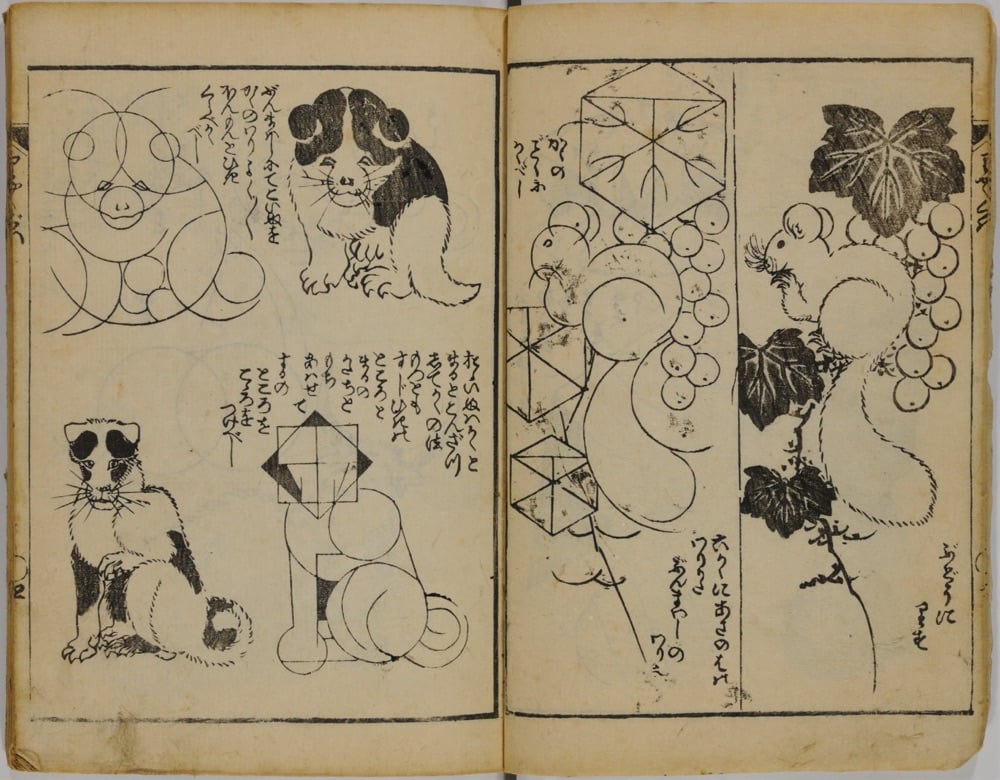
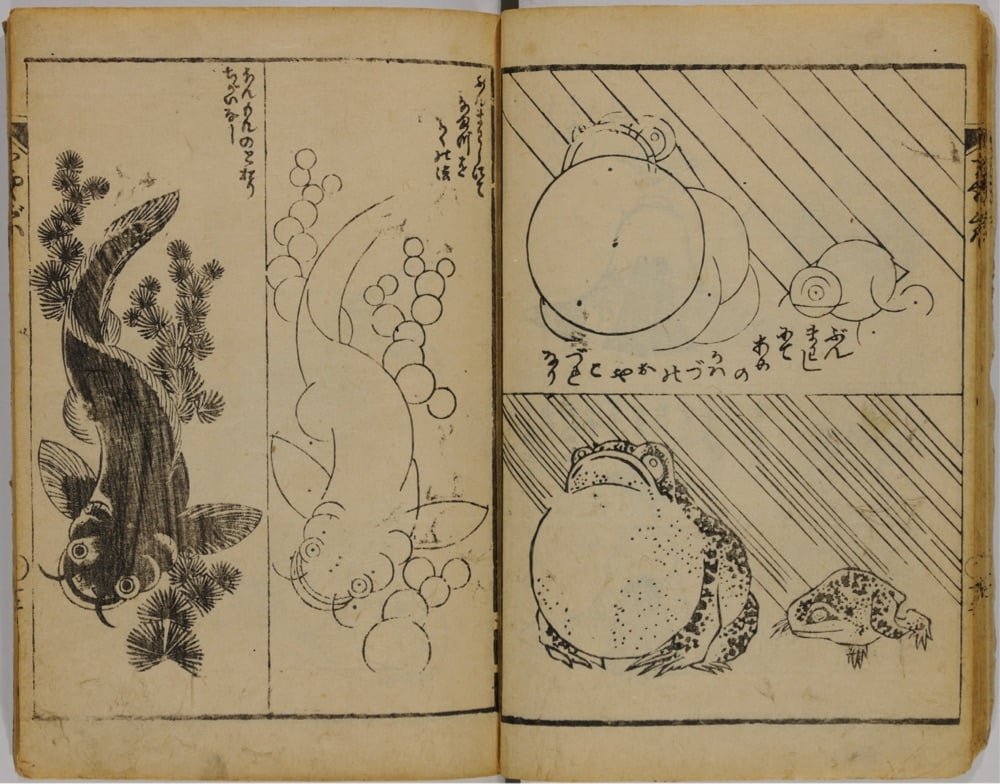
How to draw anything in one step: Draw a dog covering the thing you can't draw. The examples are hilarious. (via waxy)
How to get a free haircut on the street in San Francisco. Like crowdsourced media, it sort of works but is probably better done by people who know what they're doing.
NY Times resident crossword puzzle master Will Shortz on how to solve the NY Times crossword puzzle.
Mental flexibility is a great asset in solving crosswords. Let your mind wander. The clue "Present time" might suggest nowadays, but in a different sense it might lead to the answer yuletide. Similarly, "Life sentences" could be obit, "Inside shot" is x-ray and my all-time favorite clue, "It turns into a different story" (15 letters), results in the phrase SPIRAL STAIRCASE.
Kurt Vonnegut shares his tips on how to write with style.
5. Sound like yourself. The writing style which is most natural for you is bound to echo the speech you heard when a child. English was Conrad's third language, and much that seems piquant in his use of English was no doubt colored by his first language, which was Polish. And lucky indeed is the writer who has grown up in Ireland, for the English spoken there is so amusing and musical. I myself grew up in Indianapolis, where common speech sounds like a band saw cutting galvanized tin, and employs a vocabulary as unornamental as a monkey wrench.
(via chris glass)
You've likely seen Dennis Darzacq's photos of people who look like they're falling and about to hit the ground at a high velocity. Lens Culture has a video that shows how Darzacq makes those photos; he plays a clever mind trick on viewers that makes jumping look like falling.
Everything had been prepared in advance. Everything was ready. The models launched themselves into space. There is nothing false in these scenes. These moments really occurred. There is no fiction, no retouching or special effects. Photographed in the courtyards of buildings or in streets in the 19th arrondissement of Paris, in Nanterre and in Biarritz, these young people were just being themselves, simply performing jumps in a modern urban setting. And the photographer shot the images, intervening only to give a few guidelines as to their movements. However, at the moment of the leap, chance and gravity also intervened.
Advice on writing screenplays.
I think people see inspiration as the ignition that starts the process. In fact, real moments of inspiration often come at the last minute, when you've sweated and fretted your way through a couple of drafts. Suddenly, you start to see fresh connections, new ways of doing things. That's when you feel like you're flying. The real pleasure of any script is the detail. And a lot gets lost in the process. Put it back in at the last minute.
You know what you need? 14 pages of handwritten instructions on how to solve a Rubik's Cube.
LOLO-TOFA-BO-LOLO-FO-BATO-LOLO
Exactly.
Some survival tips for your next unplanned freefall.
Snow is good -- soft, deep, drifted snow. Snow is lovely. Remember that you are the pilot and your body is the aircraft. By tilting forward and putting your hands at your side, you can modify your pitch and make progress not just vertically but horizontally as well. As you go down 15,000 feet, you can also go sideways two-thirds of that distance -- that's two miles! Choose your landing zone. You be the boss.
If your search discloses no trees or snow, the parachutist's "five-point landing" is useful to remember even in the absence of a parachute. Meet the ground with your feet together, and fall sideways in such a way that five parts of your body successively absorb the shock, equally and in this order: feet, calf, thigh, buttock, and shoulder. 120 divided by 5 = 24. Not bad! 24 mph is only a bit faster than the speed at which experienced parachutists land. There will be some bruising and breakage but no loss of consciousness to delay your press conference. Just be sure to apportion the 120-mph blow in equal fifths. Concentrate!
Update: See also this longer article from Popular Mechanics. (thx, hugo)
Five ways to spot a faked photo. Comparing the light reflection in the various eyes in a photograph is an especially clever technique.
How to find images on the internet, an extensive list of links and resources.
Front page
About + contact
Site archives
Ads by The Deck
And more at Amazon.com
More listings on the Job Board