kottke.org posts about food
I am not what you would call a dedicated home cook. But every once in a while, I get a bee in my bonnet and make something from my small cache of recipes or from something I saw online that looked good. Some of my go-tos include:
Rigatoni With White Bolognese (PDF)
Orecchiette with Sausage and Broccoli
Pressure Cooker Mushroom Risotto
Caldo Verde (Portuguese Potato and Kale Soup With Sausage)
Smoked Haddock Chowder (April Bloomfield)
The World’s Best Pancakes
Smoky Corn Chowder
Some of these aren’t particularly easy to make, but the flavors created with the extra time are worth it.
What are some of your favorite recipes?
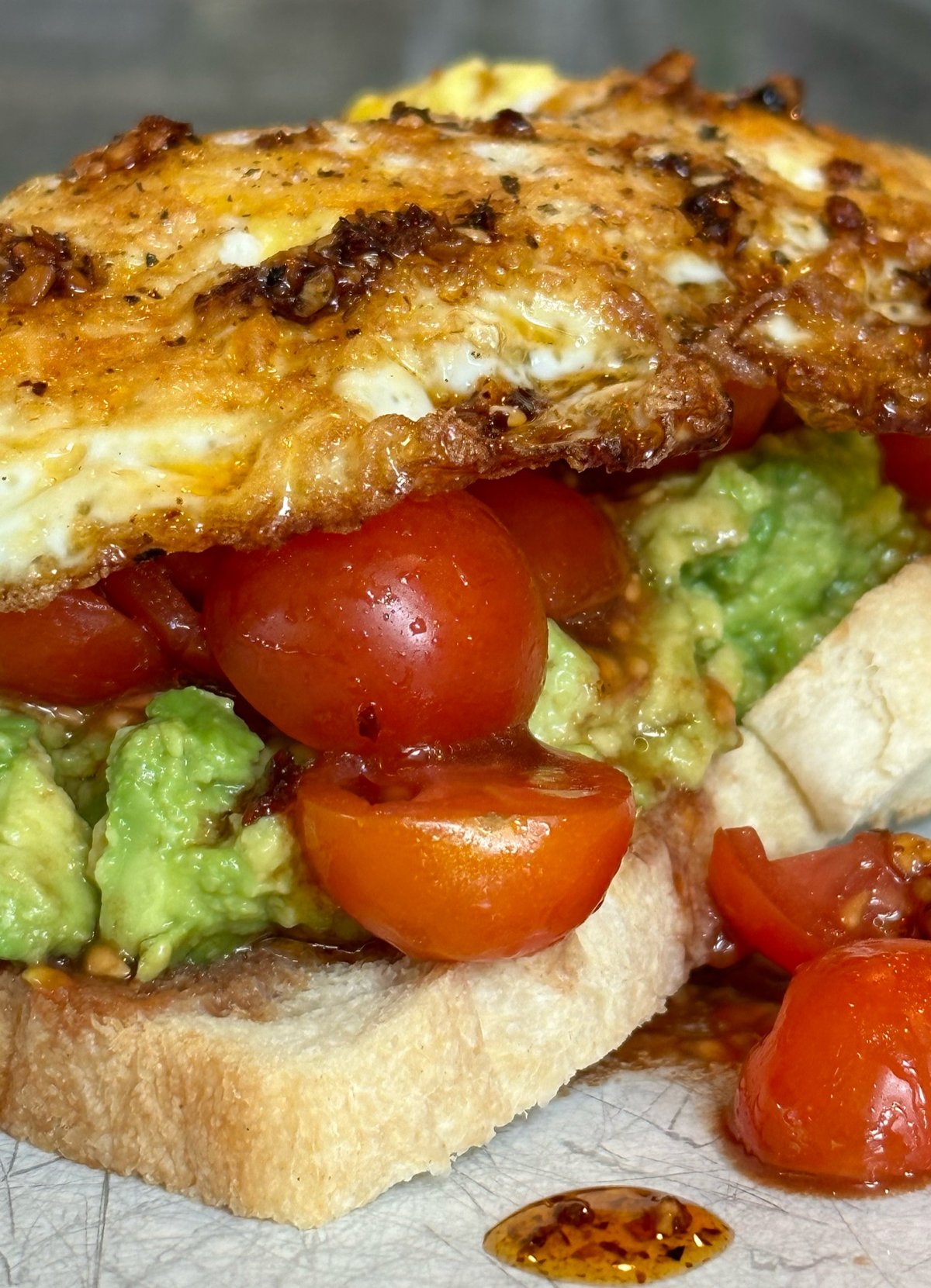
(I don’t have any good photos of any of the above recipes, so I included one of some avocado toast I made: mashed avocado with evoo, tomatoes + balsamic vinegar, fried egg (crispy w/ runny yolk), chili oil, toast, lots of salt on everything.)1
In this lovely short film, the traditional Tibetan drink butter tea (bho jha) becomes a bridge between generations, outreach across cultures, and a reminder of the value of mindfulness.
From Clarissa Wei at Eater, more about butter tea and its place in Tibetan culture:
I stayed with Goulongzhu and her family in Tibet for four days in June, and every morning, without pause, she’d serve me a creamy bowl of yak butter tea for breakfast. In the early hours, she’d make a batch of crude black pu’erh tea — a fermented dark tea from China — brewed along with a great deal of salt. Then, a fat serving of yak butter would go into a bowl along with toasted barley powder and milk curds, and she’d pour the tea in until the liquid nearly reached the rim. I’d mix it all together with my chopsticks and sip. It was creamy and substantial — overflowing with healthy fats. The highland barley gave it a nutty finish, and in those four days, yak butter tea was something I looked forward to immensely in the mornings.
In addition to his great series Subway Takes, Kareem Rahma does another series called Keep the Meter Running where he hops into NYC cabs, interviews the drivers, and asks them to take him to their favorite places.
In the run-up to the NYC mayoral election last year, Rahma jumped into a cab driven by Mouhamadou Aliy, who wanted to pick up his friend along the way to his favorite spot. That friend was now-mayor Zohran Mamdani, who tells the story of how the two of them protested & went on a hunger strike together. It’s a great conversation and video…I watched a snippet of it on Instagram (I missed it last year) and had to track down the whole thing:
I’m sorry, how can you not vote for this guy? The real deal, indeed — and voters could tell. There are so many politicians, particularly on the left, who talk a good game, push all the right buttons, and then they sputter or freeze or about-face when the rubber meets the road. It feels hollow; no wonder voters and activists find it hard to get behind the calculation of politicians who they know, deep down, are just saying certain things to get a vote. At least with Republicans, they tell you they’re going to run the country into the ground and then they go out and try to do it.
London bakery The Dusty Knuckle cleverly used a loaf of bread as a graph to illustrate the costs of running their business:
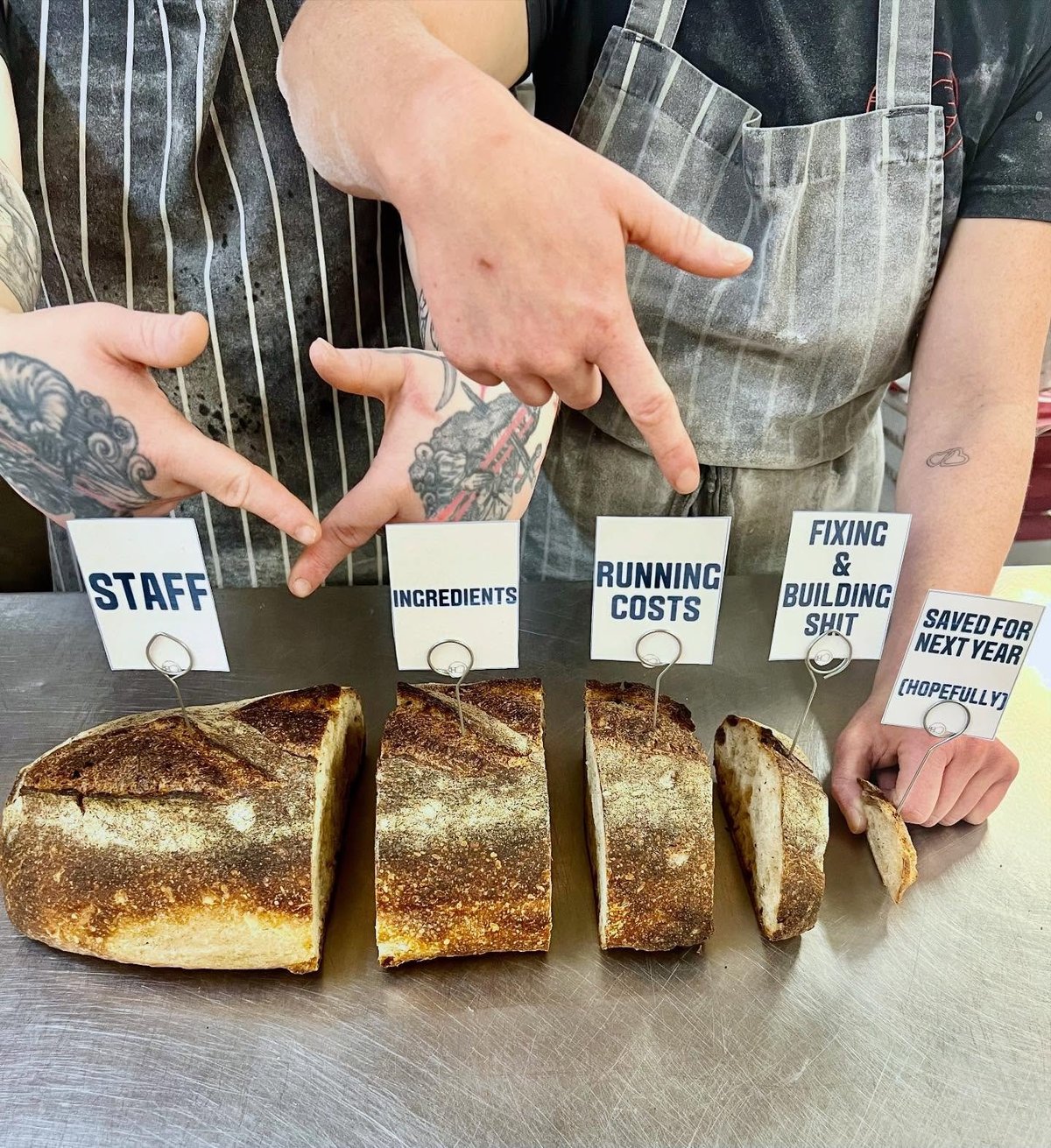
From their post:
This comes off the back of a big decision to increase our bakers’ pay ahead of the new London Living Wage coming in April 2026. That annual increase is double what everyone expected; from £13.85 to £14.80 per hour. If you want to know more about how the rate is calculated check out the work of the Living Wage Foundation @livingwagefoundation. This is fundamentally a dignity wage line that as a company we don’t feel prepared to drop beneath.
The Dusty Knuckle is a “purpose-driven” business: “we strive to use our busy operations to help at-risk youth take forward steps in their lives through on-the-job training and mentorship”. The Insta post says that “all the bread you lot ate in 2025 allowed DK to train 70 young people from the prison and care services into the workplace”. (thx, david)
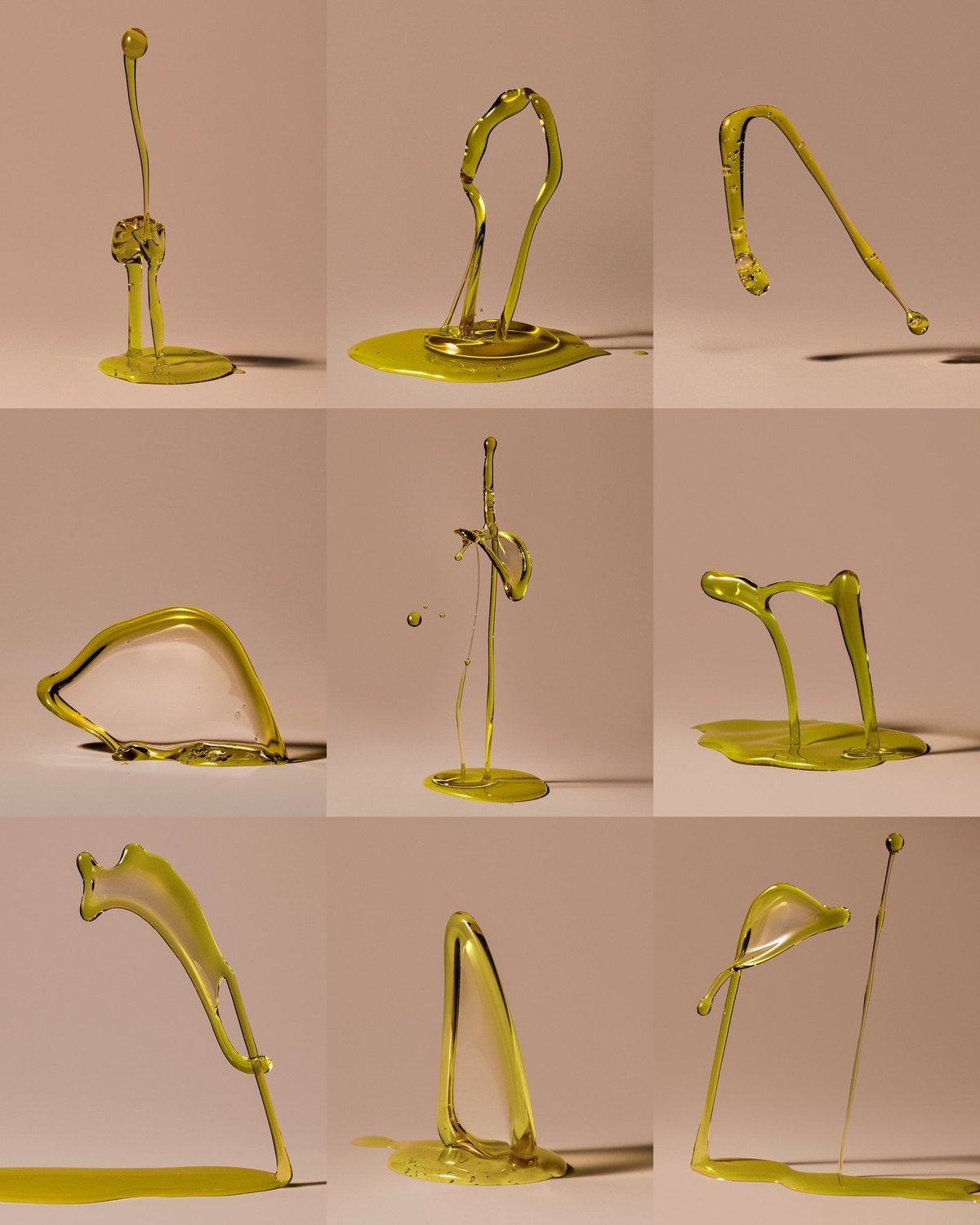
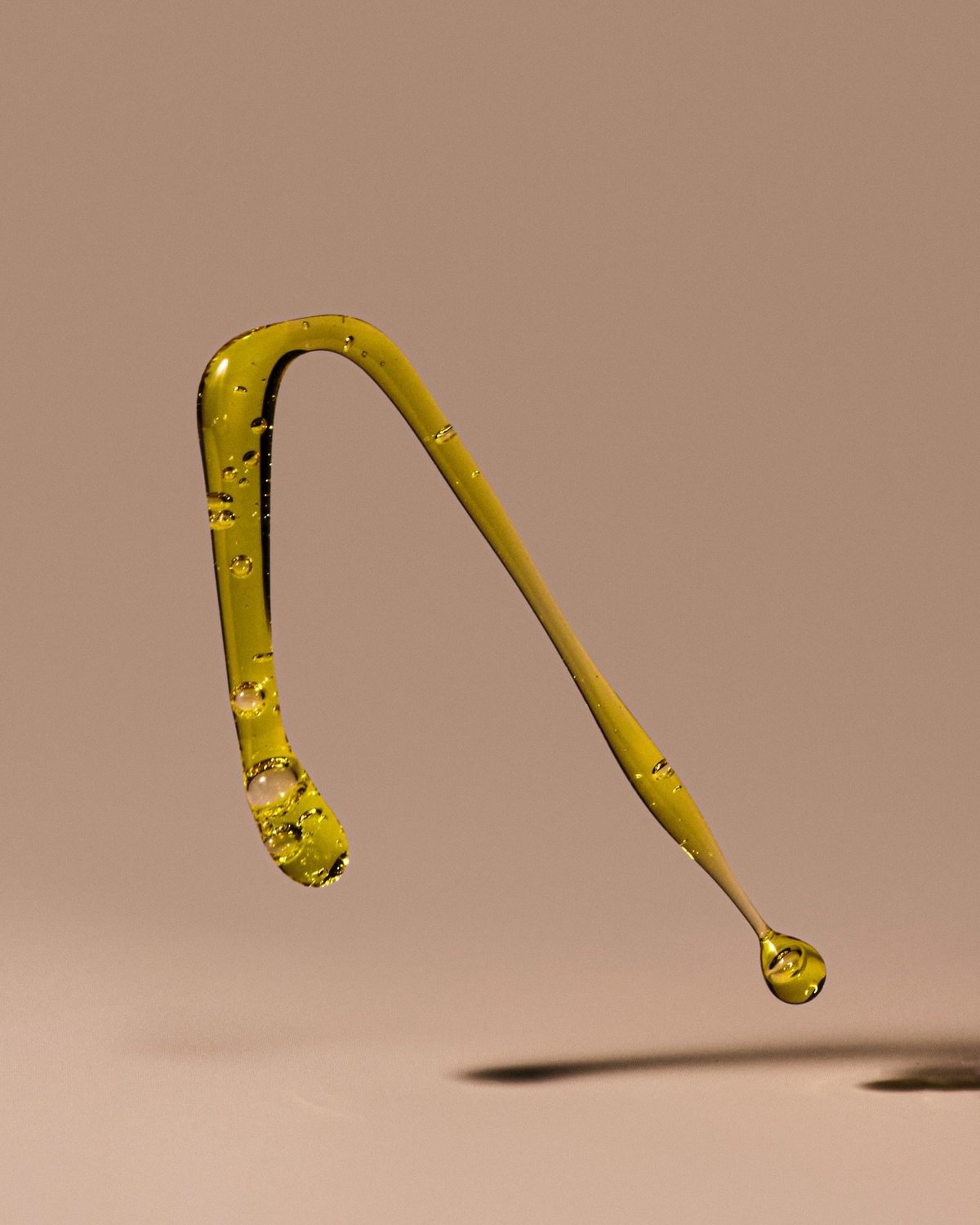
Suzanne Saroff makes unusual photographic sculptures, including these dynamic olive oil shapes.

The Anthony Bourdain Reader (Amazon) is a collection of writings from the late author, TV host, and chef, including some unpublished pieces.
The Anthony Bourdain Reader is also a showcase for new and never-before-seen material, like diary entries from Bourdain’s first trip to France as a teenager and “It’s Cruel and Unforgiving Terrain,” a piece on the New York restaurant scene, as well as unpublished short fiction like “I Quit My Job Yesterday” and chapters from No New Messages, his unfinished novel. These newly discovered pieces all contribute to give the fullest picture of the man behind the books.
Here’s a sample from his teenage diary he kept on a trip to France:

And from a review in the Guardian:
Some of the loveliest passages come when Bourdain writes with just-so tenderness and precision about his family: a journey with his brother to La Teste-de-Buch in France among whose sand dunes they holidayed as young men; the outsize pleasure he takes in his five-year-old daughter nibbling on Pecorino and an anchovy. I suspect Bourdain will be read in years to come less as a writer about food than of food work. Everywhere he lands — whether in struggling bistros, mob joints or midtown nightclubs — he warms to the subaltern caste of underpaid toilers slicing and sizzling and sweating away.
The book was edited by his longtime agent Kimberly Witherspoon and contains a foreword by Patrick Radden Keefe. Buy now at Bookshop.org or Amazon.
Reese’s Peanut Butter Cups are probably my favorite big brand candy (perhaps only bested by Reese’s Pieces), so it was a real treat (groan) to see how the company makes them cups.
But did you know Reese’s purposely over-roasts their peanuts just enough to bring out a bold nutty flavor? The extra heat is what gives their peanut butter its signature granular texture and taste fans can’t get enough of it. And funnily enough, this technique was first discovered by accident, thanks to a faulty overheating roster in HB Reese’s original factory. What could have been a ruined batch turned out to be their unmistakable flavor breakthrough they still use to this day.
Spoiler: PBCs are not made by two people bumping into each other on the street, as we were led to believe in the 80s.
Konnichiwa! I’m back from Japan and finally getting over my jetlag, which took much longer than I expected. Here’s a list of all the things I’ve been reading, watching, listening to, and experiencing over the past few months.1 Let us know what movies, books, art, TV, music, etc. you’ve been enjoying in the comments below!
Deacon King Kong by James McBride. This was my first time reading anything by McBride and maybe I have a new favorite author? I love everything about this story and the way he tells it. (A+)
The Da Vinci Code. One of my go-to comfort movies. “Scientific” art history detective story? Yes, please. (A)
One Battle After Another. Great. Especially Sean Penn. And it reminded me of a Wes Anderson movie for some reason? Like one that he would have made had he followed the Bottle Rocket path instead of the Rushmore Path. (A+)
Meredith Dairy Marinated Sheep & Goat Cheese. All cheese is delicious, but this one particularly so. (A)
Fantastic Four. It was ok? Aside from a few things, I’m having trouble getting excited about post-Infinity Saga Marvel. There was just a special alchemy about that whole arc that is proving impossible to reproduce. (B)
The Age of Innocence by Edith Wharton. Fantastic right from the first page. Sharp writing about social mores, reminded me of Middlemarch & Price and Prejudice in that respect. One of my all-time favorites, I think. (A+)
The Gilded Age (season three). Still enjoying the hell out of this show. Total suspension of disbelief is a must. (A-)
Mission: Impossible. I haven’t seen this in maybe 20 years and I guess it holds up? Not my favorite of the series though. (B+)
Tinker, Tailor, Soldier, Spy. Great spy thriller. Gary Oldman is fantastic in this. Cold War? Spies? Britain? I will pretty much watch as many of this type of movie as you can make. (A)
Leaving America. This is a 12-part podcast on the logistics, benefits, and challenges of leaving the United States. Oh, no reason. (B+)
The Fellowship of the Ring (and TT & ROTK) by J.R.R. Tolkien. It’s been a while since I’ve read The Lord of the Rings books and wow, are they long. There’s entirely too much “and they travelled from here to there” logistics that drag on over several pages and descriptions of hilltops & ancient landmarks that you only hear about once. But Andy Serkis narrating the audiobook? So good. (A-)
The Lord of the Rings trilogy. After each audiobook, I watched the extended version of the corresponding film. My general feeling after 65+ hours of audiobook and 12+ hours of movie is that the books are too long and the movies too short. An 18-hour mini-series — perhaps three seasons of six episodes each? — seems like the sweet spot. (A)
Star Trek: Strange New Worlds (season three). Maybe didn’t enjoy this quite as much as the previous two season, but I love spending time with these people and look forward to doing more of that when season four drops. (B+)
Jaws. Got to see this in the theater when they released it for the 50th anniversary. Spielberg had such a strong style right from the jump. (A-)
Paradise. Just fine. But I feel like there are better apocalyptic shows out there. (B)
Downton Abbey: The Grand Finale. It was so nice to head to the theater to nestle myself into the low-stakes world of Downton Abbey for 2 hours. (B+)
Daft Punk Fortnite. Love anything with Daft Punk. (A)
The Heaven & Earth Grocery Store by James McBride. Right after finishing Deacon King Kong, I did something I almost never do: started in on a different book from the same author. Loved this one too. (A+)
Tron: Ares. It was a loud NIN music video on a huge screen, what’s not to like? Jared Leto was fine, but there were probably better casting options here that the audience would have been more excited about. And the direction could have been stronger…Gillian Anderson and Greta Lee were both surprisingly meh. (B+)
Tron: Ares soundtrack. Better than the movie. (A-)
Total Recall. First time! Maybe a little too Verhoeven/B-movie for me. (C+)
Cars. I’ve seen this movie several times and what I noticed this time around is how incredibly expressive the cars are. You can just tell they worked very hard on that aspect of the animation. (A-)
Shopkeeping by Peter Miller. This was recommended from a couple of different vectors — pretty sure one was Robin Sloan. Lots of resonance to my work here and how I think about it (and want to think about it). (A-)
Japan. Absolutely loved it. (A+)
Iyoshi Cola. Craft colas are often disappointing, but this one was absolutely delicious. Wish I could get it in the States for less than $14 a can. (A)
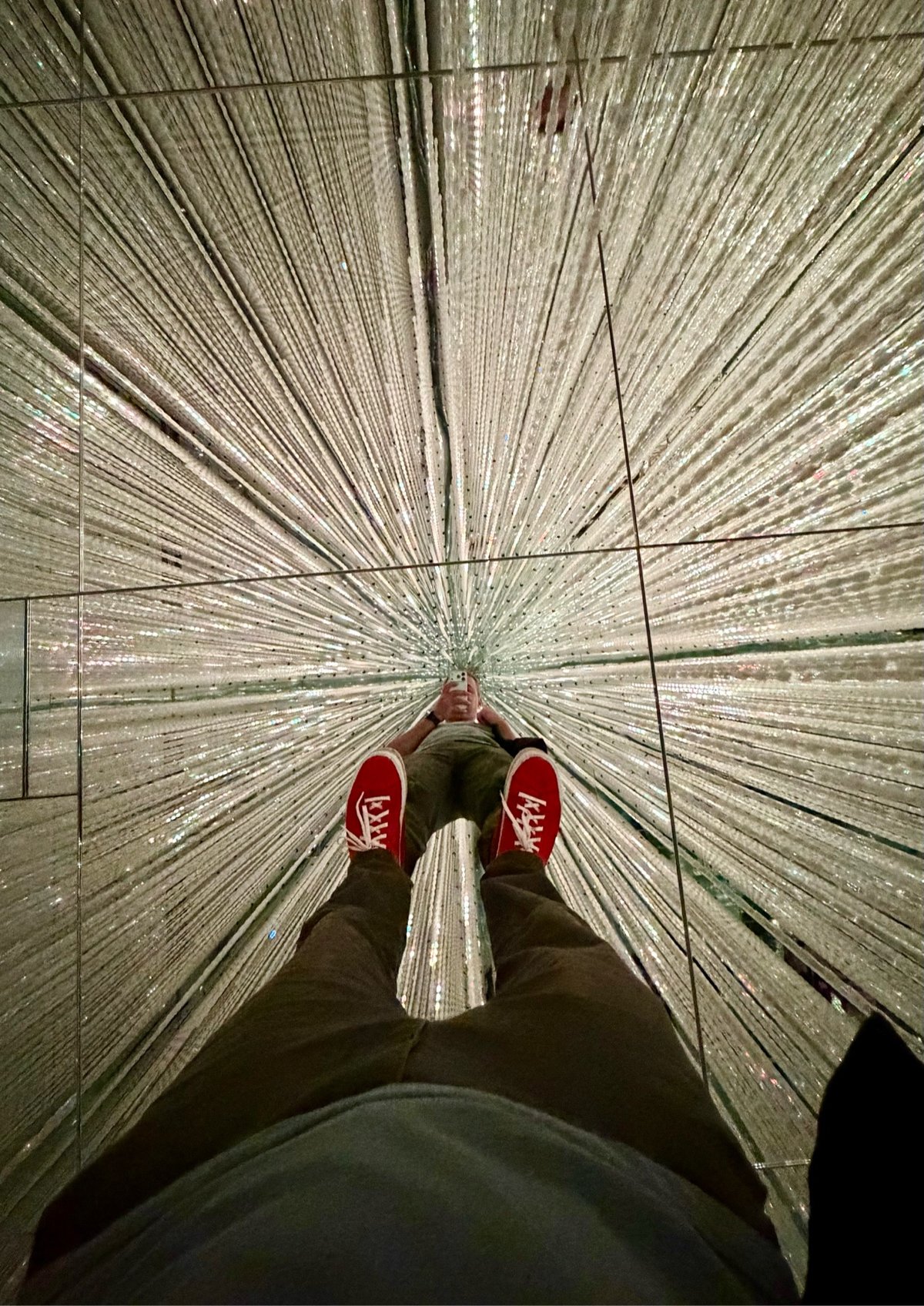
teamLab Borderless. Some of this was too “built for Instagram” but a couple of the rooms (the one where it felt like the whole room was moving & the cathedralish one with the light strings) were great. (A-)
The Sumida Hokusai Museum. Had to make the pilgrimage here. (A-)
In Praise of Shadows by Jun’ichirō Tanizaki. Read this book about Japanese aesthetics while visiting Japan — it provided an interesting context. (B+)
Hokusai at Creative Museum Tokyo. Fantastic show…there were hundreds and hundreds of prints and drawings that showed his evolution and influence. (A+)
Okunoin Cemetery. Had one of the strongest senses of place I have ever experienced. (A)
Konbini. The Japanese convenience stores really are as appealing as you’ve heard. (A-)
Awakening Your Ikigai by Ken Mogi. Perhaps a little over-simplifying when it comes to Japanese culture, but I appreciated the message of having a purpose. (B)
Sho-Chan Okonomiyaki. When I got to Hiroshima, I knew I had to try their version of okonomiyaki, so I went to Okonomimura, a multi-story building crammed with okonomiyaki restaurants. I picked one and had one of the most surprising meals of my trip. So good. (A)

Blue Planet Sky. I spent a lot of time sitting in this room by James Turrell. (A)
Kanazawa Phonograph Museum. Lovely little museum, and a good opportunity to observe how successful inventions move from technology to culture/fashion/commerce. (A)
Princess Mononoke. I saw this in the theater on my last full day in Tokyo; they recently released a 4K remaster. Absolutely breathtaking. (A+)
Butch Cassidy and the Sundance Kid. Redford and Newman are both total smokeshows in this. And I’d forgotten how goofy this movie is. (B+)
A House of Dynamite. A very tough watch, but I thought this was fantastic as a tour of some of the different kinds of people who hold the fate of every single person on the planet in their hands every damn day. They’re tired, stressed, distracted, at cross-purposes with themselves, set in their ways, more celebs than leaders, and mediocre. And none of them have ever seen Dr. Strangelove? (A)
Past installments of my media diet are available here. What good things have you watched, read, or listened to lately?
Dark chocolate is very serious business. That’s why this ad for Bournville dark chocolate, which takes aim at dark chocolate snobbery, is so funny.
This one is so intense. It comes with a list of side effects.
Mine comes with a therapist.
To the uneducated palette, this tastes like burnt tire.
This one captures bitterness, astringency, and resentfulness. The taste is so grown up.
Oh, mine’s massively grown up.
This is only available under the counter of a pet store with no address.
This sugar was used by the Aztecs as currency.
Some believe this one’s haunted.
Mine’s flammable.
Courtesy of login.jp (“archiving the Japanese experience through music”), a jazz jungle mix by Takuya Nakamura, played in a Japanese rice field to celebrate the importance of rice in Japanese culture. A trumpet makes a few appearances.
Nakamura recently played a set in an elevator as well. (A trumpet makes a few appearances.)
It’s worth exploring login.jp’s back catalog, including party mix with green onions, techno & house mix in a Japanese fish shop, and chill mix with Japanese grandpa at a stationery shop.
(via mike bates)

Artist Guy Buffet has painted a number of different variations of his depiction of how to make various drinks (martini, margarita, Manhattan) but I like this version the best. (thx, ollie)
The latest post from The Pudding starts off about as good as possible to attract the likes of me: “This is a project about onions and math.” I mean, yes. I’m in. And I enjoyed the interactive article, Dicing an Onion the Mathematically Optimal Way, but the design was absolutely delightful and onion-y:
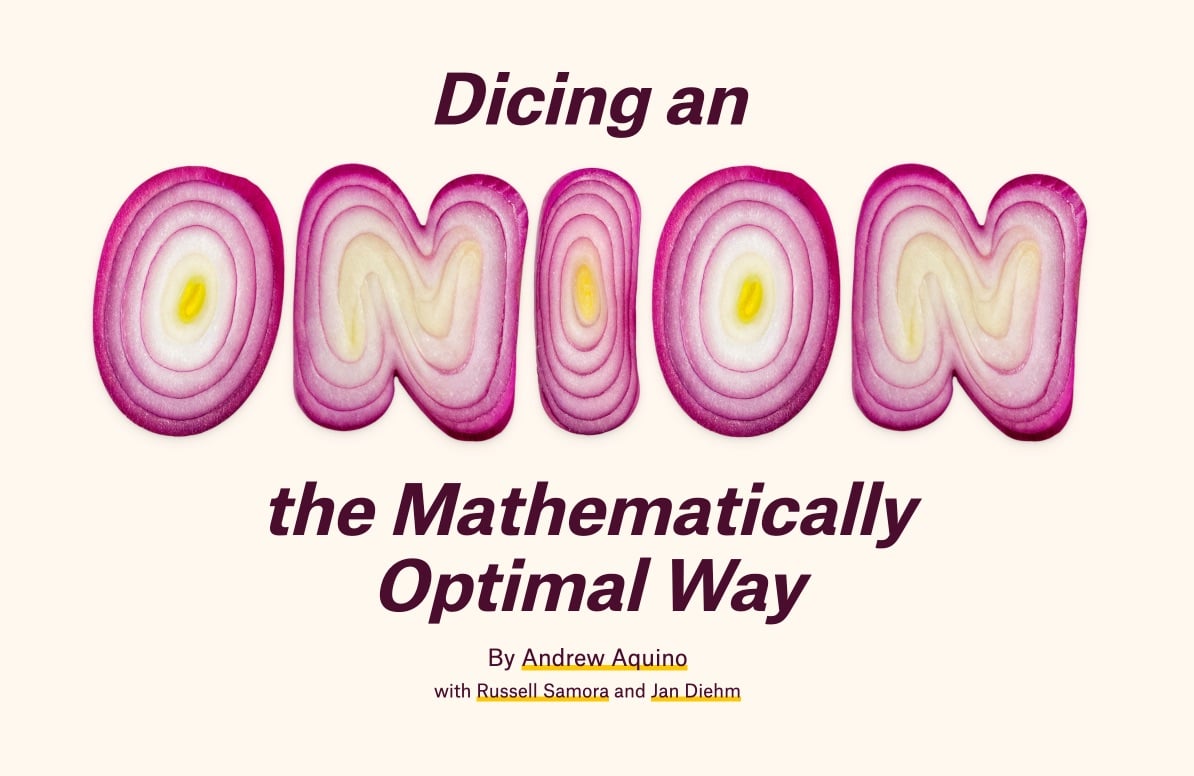


They even used an onion gradient for the border of the page. This must have been so fun to work on! Initially, I thought they’d designed the onion font, but a quick search turned up Handmadefont’s OnioType Font:

From the description, it sounds like the letterforms are made from real onions:
Each letter is lovingly crafted from a perfectly sliced red onion, where nature’s concentric rings do most of the design heavy-lifting. Vivid purples, tender whites, and sudden flashes of yellow form shapes so unexpectedly elegant, you’ll never look at a salad the same way again.
But I dunno…Photoshop might be a better guess. Still! I love this font and kudos to The Pudding for putting it to good use.
Well, it’s been awhile since I’ve done one of these but I’m gonna skip the apologies and get right into it. Here’s a list of what I’ve been reading, watching, listening to, and experiencing over the past several months. Let us know what movies, books, art, TV, music, etc. you’ve been enjoying in the comments below!

Dinosaur. It’s a huge pigeon on the High Line — what else do you need to know? (A-)
The Ministry of Time by Kaliane Bradley. Entertaining and engaging. It’ll make a good TV series. (B+)
Bill and Ted’s Excellent Adventure. I hadn’t seen this in several years but I still knew all the words. (A-)
My Brilliant Friend (season four). If there’s one thing I’ve watched in the past several years that I wish had gotten more attention from viewers, critics, and awards panels, it’s this wonderful show. (A+)
Pirates of the Caribbean: The Curse of the Black Pearl. Johnny Depp’s Jack Sparrow might be the most perfectly cast role in the history of cinema. Great story too. This movie surprised me when I saw it in the theater in 2003 and it’s still in the top tier of action/adventure movies. (A)
Andor (season one). A rewatch to prep for season two. I didn’t understand what the fuss was about this show the first time around, but this second viewing was a revelation. Andor is easily the best Star Wars thing since Empire. (A+)
Galleria Borghese. As previously discussed, the Bernini sculptures were a highlight of the summer. (A+)
Caravaggio 2025. Fantastic exhibition. (A)

The vivid blue color of the Mediterranean. (A+)
La Vita è Un Mozzico. We waited for an hour for sandwiches and it was probably worth it? (A)
Black Doves. British spy thriller? Keira Knightley? Ben Whishaw? Twist my arm. (B+)
Captain America: Brave New World. I’m sorry Sam Wilson / Anthony Mackie, there’s a “we have the Avengers at home” vibe here that’s hard to shake. (B)
Music to Refine To: A Remix Companion to Severance. I love this album; one of my favorite things of the past several months. (A+)
Mickey 17. It was fine? I was distracted while watching it in the theater, which is never a good sign. My favorite Bong Joon Ho film is still Snowpiercer. (B)

Amy Sherald: American Sublime. Absolutely fantastic. (A+)
The French Dispatch. This has quietly become a favorite of mine among Anderson’s films. (A)
The Royal Tenenbaums. However, this is still my favorite. (A+)
Paris Is Burning. Classic documentary of a bygone NYC era & a subculture that is now both flourishing and threatened. (A-)
Star Trek: Strange New Worlds (season two). I love these characters, always the sign of a good Trek. The crossover episode with Lower Decks was delightful even though I’ve not watched any of the animated series yet. The musical episode I liked less (not a showtunes guy) but I appreciated the experimentation. Bring on the Muppet episode. (A)
Severance (season two). Perhaps not as good as the first season — there was a lot in the mid-season episodes that didn’t land for me. Still, I always watched when a new episode dropped. (A-)
Army of Shadows. Part of the unplanned resistance film festival I’ve been screening for myself recently. Not quite as good as I remembered it, but it’s nice to watch something that doesn’t just lay everything out on a platter for you so you can emote properly. (A-)
Best in Show. So many lines from this that I use in my daily life. (A-)
The 99% Invisible Breakdown: The Power Broker. This is such a good series with fantastic guests about a legendary book. Who knew that Roman Mars was such a gigglepuss though? (A)
Johnny English. I didn’t find this quite as delightful as my family does. I prefer Mr. Bean. (B+)
Paddington in Peru. Not quite the magic of the first two, but entertaining. (B)
Indiana Jones and the Last Crusade. I have likely said this before, but while Raiders is likely the best Indy movie, Last Crusade is my favorite (probably due to Tom Stoppard’s heavy rewrite of the script). (A+)
Star Wars: The Return of the Jedi. It’s interesting to watch the original trilogy having seen so many subsequent movies & TV series.
Ocean’s Twelve. The dancing lasers scene is completely ridiculous. (A)
Wallace & Gromit: Vengeance Most Fowl. Well, I wasn’t expecting a critique of AI and the role of technology in society from this animated feature, but maybe I should have? (B+)
A Complete Unknown. Liked this more than I thought I would. (A-)
Pride and Prejudice by Jane Austen. Just a wonderful book — witty and fun. (A)
The Devil in the White City by Erik Larson. Fantastic book. Listen to the audiobook version if you can — Scott Brick’s narration elevates the story. (A)
A Quiet Place: Day One. I only watched this because I was on a plane. (B)
Severance (season one). After watching the second season, I rewatched season one. There was apparently much I missed the first time around. (A-)
Black Bag. Soderbergh is always worth watching, especially when he dips into Ocean’s Eleven territory — although this was more serious. (A-)
A Minecraft Movie. The first half was tolerable, enjoyable even. And then not so much. (C+)
Star Wars: Revenge of the Sith. Watched this in the theater for the 20th anniversary. There are some good bits in here, but some of the acting really stinks. Folks in the theater cheered when Anakin slaughtered the younglings, which is probably some sort of meme that I don’t want to know about. (B+)
Sinners. I loved this movie. (A+)
Thunderbolts*. Thought I would like this more than I did. (B)
Mission: Impossible – The Final Reckoning. The last scene is a masterclass in not having the faintest idea how to end a movie. (B+)
Andor (season two). Only a slight dip from season one. Overall, the series was a brilliant look at radicalization, the messiness of rebellion, and the oppressive flatness of authoritarianism. (A+)
There There by Tommy Orange. Devastating. (A-)
The Fear of Never Landing. Good album to chill out to by Marconi Union, who previously brought you the most relaxing song in the world. (A-)
Novocaine. This was bad. (D+)
Glass Onion. More Benoit Blanc mysteries please — I love watching Daniel Craig and his CSI: KFC accent chewing scenery. (A-)
The Gorge. Half of this was great and the other half was just another pseudo-horror action thing. (B-)
Martyr! by Kaveh Akbar. Marvelous. (A)
Andor: The Rogue One Arc. This fan edit of Rogue One in the style of a three-episode Andor arc is as Gilroy-esque a cut as you’re ever going to get. (A-)
Mission: Impossible – Rogue Nation. I had been kinda ambivalent about the M:I movies, but Fallout converted me, so now I’m slowly making my way back through the back catalog. (B+)
Via Carota. Best meal I’ve had in a long time. The tagliatelle was better than any pasta dish I had during my trip to Rome — it’s true, don’t @ me! And the roast chicken was perfect. (A+)
V for Vendetta. Underrated. (A-)
The Last Samurai by Helen DeWitt. I’m going to tell you the embarrassing truth: I thought this was about actual samurai and perhaps related to the Tom Cruise movie. It is very much not. I gave it a real shot but ended up abandoning it about halfway through. (C)
Spider-Man: Into the Spider-Verse. Still a marvel of animated creativity. (A)
The Phoenician Scheme. Didn’t vibe with this at all. (B-)
Downhill mountain biking. This is giving me so much life right now. (A+)
Wallace & Gromit: A Matter of Loaf and Death. Not my favorite W&G but still. (B+)
F1. Like Top Gun: Maverick crossed with Ford v Ferarri but Cruise and Bale played the aging outsider role much better than Pitt. Is Pitt even a good actor or is he just extremely charismatic? (B+)
Superman. I thought it was fine but didn’t like it as much as others seemed to. Better than anything Zach Snyder did for DC though. (B)
Shōgun. Rewatch with my son. Just an incredible show all the way around. (A+)
The Last of Us (season two). This show was always fighting an uphill battle with me — I don’t like zombie media and I dislike characters (Ellie!) who wouldn’t survive/thrive in the situations that they’re in with their personalities & characteristics. And I finally won. (C+)
The Handmaid’s Tale (season six). *sigh* No idea why I started watching (and then finished) this season; I’m a sucker for closure I guess. (C)
Nintendo Switch 2. I bought this to play Kart with my kids and also for a better Fortnite experience. So far, so good. (B+)
Mario Kart World. I haven’t played a ton of this, but it’s good so far. Free roam mode is pretty fun. I’ve gotta write up my Kart wishlist sometime…Nintendo only checked off one or two items in World. (B+)
Sargent and Paris. Caught this on the very last day of the show and hoo boy was it crowded. (A- for the show, C+ for the crowds)
Let God Sort Em Out. Need to listen to this one a few more times but I’m liking it so far. (B+)
Right now, I’m watching Star Trek: Strange New Worlds season three, listening to Deacon King Kong on audiobook (fantastic, a lock for an A+), rewatching Wandavision, and picking at Is a River Alive? by Robert Macfarlane.
Past installments of my media diet are available here. What good things have you watched, read, or listened to lately?
I am only a couple of chapters into James McBride’s Deacon King Kong (loving it!) and in the first chapter, there’s a relatively short passage about some cheese, Jesus’s Cheese, that comes into the lives of the members of the book’s community that is a first ballot Hall of Famer for the best depiction or description of a foodstuff in literature. Here it is:
The cheese was free. It came like clockwork for years, every first Saturday of the month, arriving like magic in the wee hours in Hot Sausage’s boiler room in the basement of Building 17. Ten crates of it, freshly chilled in five-pound hunks.
This wasn’t plain old housing projects “cheese food,” nor was it some smelly, curdled, reluctant Swiss cheese material snatched from a godforsaken bodega someplace, gathering mold in some dirty display case while mice gnawed at it nightly, to be sold to some sucker fresh from Santo Domingo.
This was fresh, rich, heavenly, succulent, soft, creamy, kiss-my-ass, cows-gotta-die-for-this, delightfully salty, moo-ass, good old white folks cheese.
It’s even better when narrated by Dominic Hoffman. “Moo-ass cheese” is going right into the regular rotation.
If you somehow missed Deacon King Kong — it was on every 2020 best of list — you can get it at Bookshop (paperback & ebook), Amazon (paperback & ebook), and Libro (audiobook, read by the aforementioned Dominic Hoffman, who is amazing and also narrated James).
Slice of Life (trailer) is a feature-length documentary about the American Dream through the lens of former Pizza Huts that have been transformed into everything from bars to churches to candy stores to cannabis dispensaries. A woman who runs an LGBTQ+ church out of a former Pizza Hut says:
It’s the stained-glass windows that draw people and touch people, and I think really takes it out of the realm of a Pizza Hut. It’s the power of transformation. When things continue to transform, beauty can come from it, good things can come out of it.
You can rent or buy the film from their website.
I’ve written before about how Pizza Hut was a special place to visit when I was a kid:
Pizza Hut was the #1 eating-out destination for me as a kid. My family never ate out much, so even McDonald’s, Arby’s, or Hardee’s was a treat. But Pizza Hut was a whole different deal. Did I enjoy eating salad at home? No way. But I had to have the salad bar at Pizza Hut. Did I normally eat green peppers, onions, and black olives? Nope…but I would happily chow down on a supreme pizza at Pizza Hut.
Hank Green believes how grocery stores are organized is broken. (True.) His solution is to take inspiration from libraries and organize the shelves of every grocery store in the entire world according to the Chewy Decimal System.
TIL that maybe librarians don’t like the Dewey Decimal System?
Dewey sucks so much and it’s never going away. It was designed in a 19th century white dude mindset that splits religion (200-299) into Christianity (200-289) and Other (290-299), sections books about indigenous peoples in the history section (900s) rather than the culture section (300s) as if they don’t continue to exist, and arbitrarily separates wild animals (in the 500s) from pets and working animals (600s). It’s particularly unintuitive for kids, who often are taught it before they’re taught what decimals are, and has multiple better alternatives that aren’t used because it’s financially unfeasible for large collections to be changed.
(thx, caroline)


From a 1968 book, a collection of illustrations of regional patterns & designs of the art of Ukrainian pysanky, or egg decorating. From the Center for Russian, East European, & Eurasian Studies at the University of Kansas:
Pysanky are raw eggs that are decorated using an ancient wax-resistance method. The word pysanky comes from the Ukrainian word pysaty (писати), “to write.” Pysanka is the singular and pysanky is the plural. The art of making pysanky is called pysankarstvo (писанкарство).
The designs are “written” in hot wax with a special tool called a kistka (кістка) which has a small funnel attached to hold a small amount of liquid wax. The wax protects the pores of the shell from the dye. The artist, known as a pysankarka (писанкарка) writes parts of the design, dyes the egg one color, and writes more until the end, when all the layers of wax are melted off to reveal the final design.
Pysanky are an ancient art, made in Ukraine and other Slavic countries for centuries. Though many people call them Easter eggs, pysanky were made long before Ukraine adopted Christianity. The ancient symbols were then reinterpreted through the lens of Christianity later on.
From more on the regional patterns of Ukrainian pysanky and some images of actual decorated eggs, check out this page. And for a look at how these intricate patterns are made, here’s a video:
(via present & correct)
Hey look at this, a media diet post that’s not months and months since the last one! Phew, it’s a been a long-ass six weeks since the beginning of the year, hasn’t it? Here’s a list of what I’ve been reading, watching, listening to, and experiencing to help get me through the days.
Nosferatu (2024). Not usually a fan of horror movies, but I liked this a lot. Great acting and cinematography. (A-)
Shōgun by James Clavell. This took a bit to get fully into, but I was riveted for the last 600-800 pages, even though I knew what was going to happen from having seen the TV show. So much more delicious detail in the book though. A great reading experience. (A)
September 5. Loved this. Solid journalism thriller in the vein of Spotlight, The Post, and All the President’s Men. (A)
Silo (season two). In agreement with many other viewers that the middle of the season was not all that compelling, but the final two episodes were great. (B+)
Not Like Us. For whatever reason, I ignored the Drake/Kendrick feud, so I got to this late but wow. “Hey, hey, hey, hey, run for your life…” (A)
Arca Tulum. Eating at this sort of restaurant should yield exclamations like “I’ve never tasted anything quite like this”. I thought this at least three times at Arca. But also: a pile of rocks is not the ideal plate for messy food. (A-)
Aldo’s. This is a Mexican gelato chain and they had a Biscoff-flavored gelato that was so good that I went back for it three more times. (A)
Antojitos La Chiapaneca. This is the only restaurant I ate at twice in Tulum — their al pastor tacos are so good. (A)
The Serviceberry by Robin Wall Kimmerer. A quick read but very relevant to what’s happening in the world right now. In keeping with the theme, I left the book at my hotel for someone else to read. (B+)
Janet Planet. A little too contemplative for me. (B)
Abruzzo. Mario Carbone created the menu for this Italian place at the Newark Airport. I had the penne vodka and I think it was the best thing I have ever eaten at an airport? Is it insane that I kinda want to plan a trip with an EWR connection so that I can have it again? P.S. the Tripadvisor reviewers haaaated this place. (A)
Reservation Dogs (season three). I reviewed Res Dogs in the last media diet post (“I enjoyed the first season more than the subsequent two”) but I’d like another crack at it. The last three episodes of the show were fantastic, especially the hospital breakout and Elora meeting her dad. (A+)
Flow. Reminded me strongly of Studio Ghibli’s films, but this wonderful animated movie is also uniquely its own thing. (A+)
The Bends. My usual Radiohead fare tends towards Kid A and In Rainbows, but I’ve been listening to The Bends a lot lately and appreciating the less polished rockiness of it. (A-)
Wool. Since the book (more or less) covers the events of the first two seasons of the TV series, I read half of it after season one and the other half after the latest season. And…I think the TV series is much better? (B-)
Thelma. A gem of a film, like Mission Impossible crossed with About Schmidt (or maybe The Bucket List). June Squibb is *fantastic* in the lead role. (A)
The Great British Bake Off (2024). Overall I enjoyed this season — they recruited a selection of talented bakers and the changes they’ve made (e.g. getting away from stunt bakes). But I found the semifinal and final difficult to watch because one of the contestants forgot he was supposed to be entertaining on television and totally lost his composure. (B+)
GNX. I also reviewed this in the last media diet post but I’ve continued to listen and I think GNX may have moved past DAMN. as my favorite Kendrick album? (A+)
Hundreds of Beavers. Super fun and inventive…this is like an animated movie with video game elements made with live-action actors. If you’re the sort of person who loves movies like Monty Python and the Holy Grail, you’ll probably love this movie. (B+)
Orbital by Samantha Harvey. A reviewer complained that the final third of the book took on the style of a writing exercise and I agree. (B)
Bill & Ted’s Excellent Adventure. I must have watched this 50 times on VHS as a teenager — I can still recite every line. (A)
Alligator Bites Never Heal. Love this album. (A)
The Penguin. Colin Farrell is unrecognizable (and great) as Oz, and Cristin Milioti is a chillingly fantastic Sofia Falcone. The first few episodes were really strong but I felt it slipped a bit as the season went on. (A-)
I’m also in progress on Severance season two and Kaliane Bradley’s The Ministry of Time — but more on those next time.
Past installments of my media diet are available here. What good things have you watched, read, or listened to lately?
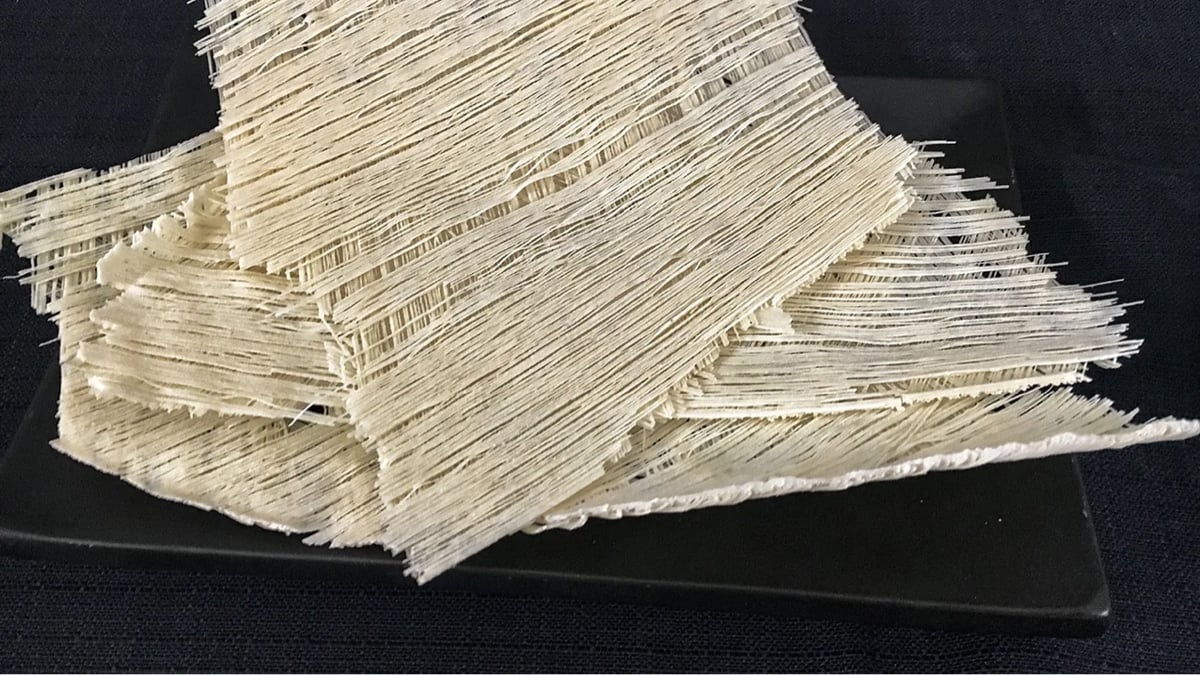
In this excerpt from Custodians of Wonder: Ancient Customs, Profound Traditions, and the Last People Keeping Them Alive, author Eliot Stein travels to a city in Sardinia to learn how to make the world’s rarest pasta, su filindeu.
As much as I would hate to see su filindeu fade away, I understand why Abraini doesn’t want to teach it to any Canadian or Greek chef who calls her out of the blue. Sure, after several years, she may succeed in passing on the skill, but as she told me, when you take something that is so intertwined with a specific place, a specific event, and a specific pastoral code, and you present it in a different context, “it’s no longer the threads of God; it’s just pulled pasta.”
Only a few people in the world know how to make this pasta properly, and they all belong to the same family.
“There are only three ingredients: semolina wheat, water and salt,” Abraini said, vigorously kneading the dough back and forth. “But since everything is done by hand, the most important ingredient is elbow grease.”
Abraini patiently explained how you work the pasta thoroughly until it reaches a consistency reminiscent of modelling clay, then divide the dough into smaller sections and continue working it into a rolled-cylindrical shape.
Then comes the hardest part, a process she calls, “understanding the dough with your hands.” When she feels that it needs to be more elastic, she dips her fingers into a bowl of salt water. When it needs more moisture, she dips them into a separate bowl of regular water. “It can take years to understand,” she beamed. “It’s like a game with your hands. But once you achieve it, then the magic happens.”
Here’s a 30-minute video on how su filindeu is prepared — there are a couple of shorter videos as well.
The team at Howtown closed out 2024 by investigating the spice level (i.e. the Scoville ratings) of the lineup of hot sauces on the popular YouTube interview series Hot Ones while also teaching us about how hot peppers evolved and how pepper spininess is measured. (Spoiler: the sauces are not as hot as advertised.)
Cheers to Adam Cole for Peter Pipering this particular passage:
By picking peppers, they could pinpoint the precise percentage of each patch that was pungent, and some patches were more pungent than others.
Perfect.
Food historian Max Miller stumbled upon the original recipe for 1980s/90s school cafeteria pizza (you know, with the iconic rectangular slices) and decided to whip up a batch (with “pourable dough”).
Tastes just like it. You can like — all of those herbs are exactly the same as they were. I think maybe it tastes a little fresher than I remember, like the flavors are a little heightened…but that’s that’s them. This is the pizza…
While the pizza was baking, Miller talked about the history of school lunches (following up on his video about school lunches during the Depression) — it’s a story that features J. Edgar Hoover and The Black Panthers.
You can find the pizza recipe on Miller’s website or in the original 1988 USDA publication Quantity Recipes for School Food Service courtesy of the Internet Archive. The pourable dough recipe is on page B-15 and the cheese pizza recipe is on D-30. (via @ernie.tedium.co)


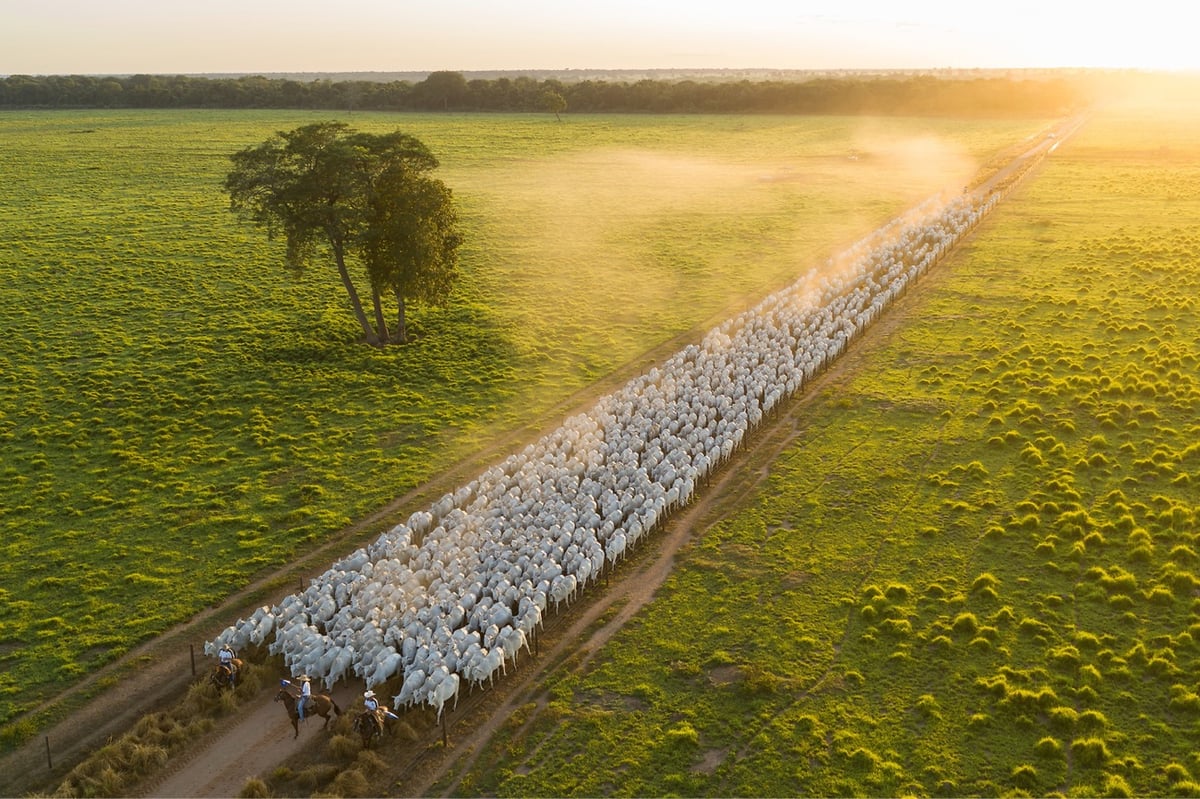
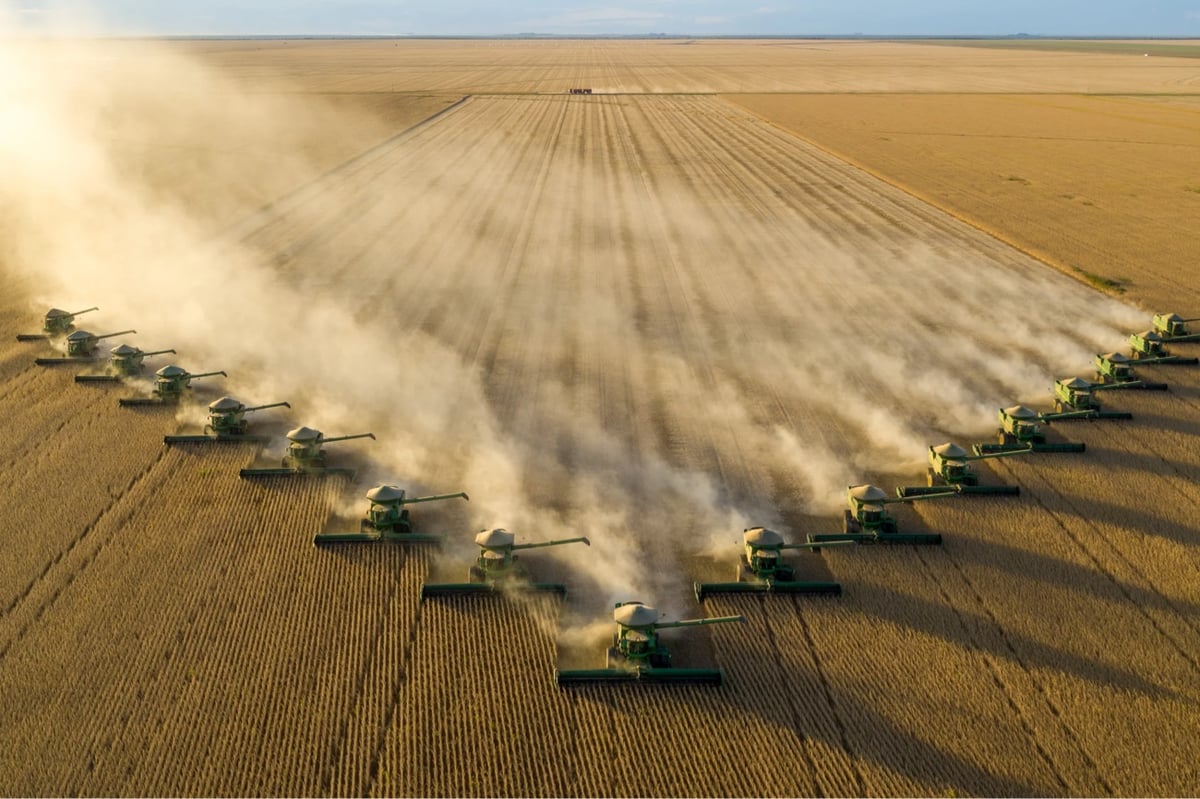
For his book Feed the Planet: A Photographic Journey to the World’s Food (Bookshop), George Steinmetz travelled the world with his drone, spending “a decade documenting food production in more than 36 countries on 6 continents, 24 US states, and 5 oceans”.
In striking aerial images, he captures the massive scale of 21st-century agriculture that has sculpted 40 percent of the Earth’s surface.
He explores the farming of staples like wheat and rice, the cultivation of vegetables and fruits, fishing and aquaculture, and meat production. He surveys traditional farming in diverse cultures, and he penetrates vast agribusinesses that fuel international trade. From Kansas wheat fields to a shrimp cocktail’s origins in India to cattle stations in Australia larger than some countries, Steinmetz tracks the foods we eat back to land and sea, field and factory. He takes us places that most of us never see, although our very lives depend on them.
You can read more (and watch a video) about the project and view a bunch of photos from the book.
Lawson’s, a convenience store in Japan, has begun selling Nomu mayo, a drinkable mayonnaise forgetting the important adage: all mayo is drinkable if you believe in yourself.
The only catch for pedantic mayonnaise lovers is that the label clarifies that Nomu mayo is a “mayonnaise-style drink” and “not mayonnaise”. Currently in a “test sale period”, it still remains to be seen if Nomu mayo actually appeals to Japanese customers, who are used to the thicker and richer taste of Japanese mayo, as opposed to more Western varieties.

Unrelated, the best idea I ever had for a reality television program was “Uh Oh, It’s Mayo!” The premise being kind of like Cake or Not Cake (though this idea is from 2008) where the host goes around offering people the opportunity to taste different food products with some of them being 100% mayonnaise. It even had a theme song, the tune of which you’ll have to imagine unless you want to text me so I can send you a voice memo of it, but the lyrics are, “What’s in the pie, I don’t know. Uh oh it’s mayo!” Call me, Bravo.
As you know, I am passionate about sweet things. All different kinds. So imagine my dismay back in 2017 when I discovered the recipe for Heath Bar Klondike had been changed to remove any trace of Heath Bar bits from the Klondike. It wasn’t just one box of Heathless wonders neither, it was box after box, which I kept buying like some kind of fool. This post has a point past petty dessert-themed grievances, I stg, bear with me. But first, look at this nonsense. (If you want the point, just skip to the last paragraph.)


2017 was a time when Google still worked so I searched to see if anyone else had noticed this change and didn’t find anything. I am not a narcissist, but I can spin a yarn, so the narrative I told myself was I was the only person in the world with the following traits: 1) cares a lot about desserts 2) likes Heath Bar Klondike Bars 3) is stubborn enough to buy a product multiple times after being so wronged and 4) is perceptive enough to notice the lack of Heath Bar bits on the Heath Bar Klondikes.
I did what was customary at the time and complained to Klondike on Twitter. Klondike put me in touch with customer service who insisted my lying eyes hadn’t seen what they saw, and the recipe hadn’t been changed at all. It clearly had because sometime in late 2018, I tried another box and the Heath Bar bits were back. Still not as prevalent as they had been, but back nonetheless.
All this to say at some point, my friend Mike, on the other side of the country, also noticed the lack of bits on his bars and mentioned something about it, which thus made me feel less crazy for noticing it. I was no longer alone.
My most recent example of this phenomenon, is Irish Spring changing the formula in 2022, which many people have mentioned online because the scent changed. I don’t care about any of that, but what does bug me is you used to be able to marry an old bar with a new bar. That is, if you put the sliver of your old bar on to the new bar, it would melt into the new bar. After the formula change this doesn’t happen anymore. You stick the old bar on the new bar and never the twain shall meet. IT DRIVES ME CRAZY.
Anyway, I was wondering if any of y’all have any bugaboos like this where you feel like you’re the only one who knows this is happening. Put it in the comments and feel less alone.
Ok, hold up. This is the only stuffing recipe you need for Thanksgiving:

Just a tablespoon of turkey per 200 meters of honey? Lolz. This is from a Thanksgiving cookbook made by a kindergarten class — the turkey recipe involves cinnamon and teriyaki sauce.
Hey what are you doing, let’s talk about cranberries! Surely you know, the cranberry is the Official Berry of my wonderful Commonwealth. The tart berry is one of only a few native North American fruits, like the pawpaw. The previous sentence has a lie because cranberries aren’t drupes, and I know that because I just learned what a drupe is. Cranberries are, in fact, epigynous or false berries, something else I just learned about and about which we’re not going to talk about anymore because this post is about making nightmares not destroying dreams, which are in fact two different actions. (Unrelated, North Carolina can’t decide on an official berry and has both an official state red berry and an official state blue berry. (You’ll never guess the official blue berry of NC.))
Massachusetts boasts 30% of global cranberry acreage, which is a lot and also a very nice and real fact. Most cranberry products come from Oceanspray, a farmer owned cooperative with 700 member owners. This is a neat and less capitalistic model than most corporate juice production, which may make Oceanspray products taste a little sweeter. You remember this TikTok which increased sales for both Oceanspray products and Fleetwood Mac.
Cranberries are grown in bogs, but since bogs can’t generally support a large person’s weight, farmers harvest cranberries by flooding the bog and corralling the cranberries together like so many tart reddish sheep. In this analogy, cranberry sauce is the wool of those tart sheep. And below here is where the nightmares start, so consider not advancing if you’re of gentle disposition.
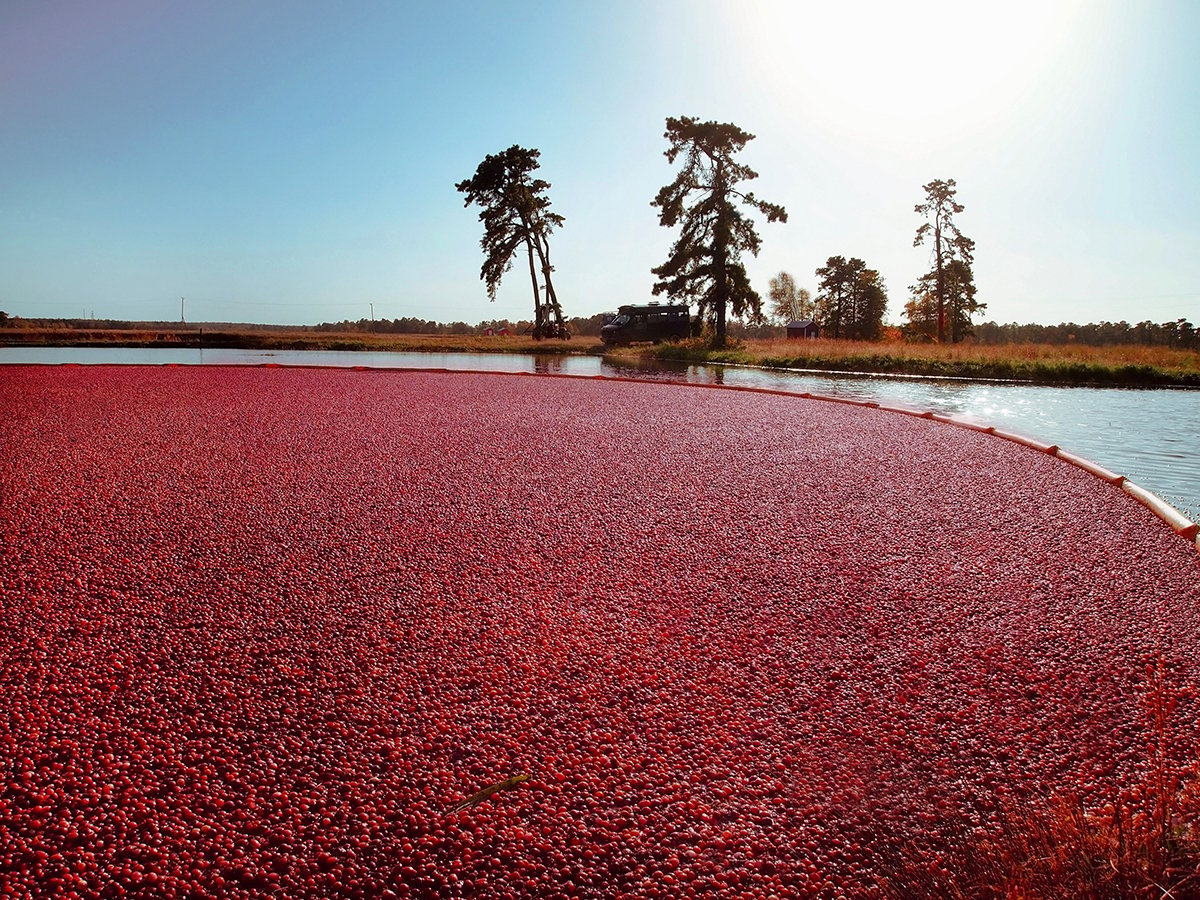
All this was needless preamble to get to what I really want to tell you about which is, according to this lost Tumblr post, if you try to get a job at a cranberry bog you might get asked how you feel about spiders and that’s a weird interview question and you might consider not telling the truth because what you want to do is wake up early and be one with the (false) berry. What you want to do is go back to your boggy roots. What you want to do is farm cranberries like a cranberry farmer. But if you do have a problem with spiders and you don’t say anything it’s going to be another problem, and buddy, it’s gonna to be a big one. You see, cranberry farms have been moving towards more organic farming methods which preclude the use of pesticides and so to keep the insect population down, the farmers encourage wolf spiders to live in the bogs. I’m sorry, I meant WOLF SPIDERS. And when they flood the bogs to harvest the cranberries, the WOLF SPIDERS, who are probably called WOLF SPIDERS because they look like little 8 legged wolves, don’t ask me, I’m not an arachnobiologist, flee the deluge for higher ground, because while they can swim like Michael Phelps, they do not prefer to. So they seek higher ground and guess what the higher ground is, Joann, it’s you. You’re the higher ground.
And so the cranberry farmers will ask you how you feel about spiders before hiring you because you might have dozens of swimming WOLF SPIDERS climbing out of the water up your waders and into your hair, but you’ve got to be fine with it because the WOLF SPIDERS are your fellow cranberry bog employees and everyone, even WOLF SPIDERS deserve a safe work environment. Wear a turtleneck or something. Maybe you’re thinking, it’s fine, WOLF SPIDERS don’t bite, and if they do, they’re not venomous, but they do bite and they are venomous, but maybe it all works out if you let them use you for higher ground.
I hope this doesn’t ruin your day, but Baker’s Chocolate wasn’t created for bakers, it’s chocolate originally produced in Dorchester, MA by John Hannon with his partner Dr. James Baker. Hannon sailed to the West Indies in 1779 and never came back, so Dr. Baker changed the name to the Baker Chocolate Company.
Additionally, German Chocolate Cake isn’t German. A homemaker from Dallas sent the Dallas Morning News a recipe for German’s Chocolate Cake made with a sweet baking chocolate invented by Samuel German in 1853. (I’m not including the name of the homemaker because she’s listed everywhere as Mrs. Husband’s Name and YOU KNOW that guy never picked up a sifter to help.) I personally don’t believe coconut or nuts belong in dessert so I don’t fw German Chocolate Cake if I can help it.
Here’s where you’re about to get really mad. Here’s where you’re about to blow a gasket. Here’s the thing what will make you absolutely furious like me. Guess which company’s sales increased 73% after the popularization of German Chocolate Cake as a thing Americans were making regularly? That’s right, it’s Baker’s Chocolate Company, Samuel German’s employer in 1853 when he invented the chocolate. (via @parsnip.bsky.social)
No one.
Absolutely no one.
Not one single person.
Jason: HEY, AARON, WHAT IF YOU MADE McRIB SAUCE ICE CREAM AT YOUR ICE CREAM SHOP?
According to Food & Wine, McDonald’s will be selling half gallon jugs of McRib sauce alongside the annual limited release of the McRib sandwich.
The sauce goes on sale November 25th at 10AM and I will surely forget to buy some then, but if I don’t, I’ll make Jason some McRib sauce ice cream in December. We’ve already made pickle and Frank’s Red Hot ice cream so why not.

People like stealing fontina fortunes worth of cheese because it’s easy to sell on the black market and is hard to track. The mascarpone market probably doesn’t even have to be super dark for creamy criminals to launder their pinched cheese through conventional cheddar channels thus allowing the roquefort rapscallions to bathe forever in ill-gotten ricotta riches. Cheese is the most stolen food in the world, so let’s read about some cheese crime, shall we? (Unrelated, cheese fire.)
England, 2024: An arrest was made recently in the case of massive cheese theft suffered by Neal’s Yard Dairy who lost 950 wheels of cheese weighing a total of 48,500 pounds.
Canada, 2024: “B.C. RCMP revealed they’d recently foiled an attempted cheese heist at a Whole Foods in North Vancouver. They’d been on patrol Sept. 29 when they found a cart full of cheese outside the grocery store. A suspect fled on foot, leaving $12,800 worth of cheese behind.”
2015, Italy: “The well-equipped gang of 11 individuals was successfully able to steal some 2,039 wheels of Parmigiano-Reggiano over the course of roughly two years.”
2015, France: “Under the cover of darkness, a gang of cheese thieves cut through a barbed-wire fence and used a crowbar to break into a Napiot dairy near the Swiss border. They made off with 100 wheels of hard, aged Comté cheese. Dairy farmers there are now considering installing security cameras.”
2017, Wisconsin (3 of them!): “Why would someone steal a truck stocked with thousands of pounds of yellow cheddar? Police and industry experts say it’s all about resale value. The cheese from Marshfield had an estimated retail value of $90,000. The other two stolen loads were worth $70,000 and $46,000 respectively.”
2013, More Wisconsin: “An Illinois man is being charged with trying to steal 42,000 pounds of Muenster cheese from a Wisconsin creamery. Last year we had news of the “mozzarella mafia,” which was smuggling American cheese into Canada and selling it for a third of the price.”
International! “CBC News has learned from numerous police sources that charges are expected soon against a few officers who are alleged to have been involved in the movement of caseloads of cheese from the U.S. to sell to Canadian pizzerias and restaurants.”
This could go on and on. By the way, did you know cheese.com has a whole list with nothin’ on it but different cheeses? You could just look at different cheeses ALL DAY!
Older posts



Socials & More