kottke.org posts about business
We thought this day would never come. But we kept the faith and now we can begin to reap the rewards: there is actually a trailer for the Coyote vs. ACME movie and the movie itself is actually coming out on Aug 28.
Quick recap of the situation so far: Ian Frazier wrote a story for the New Yorker in 1990 about an imagined lawsuit brought by Wile E. Coyote against the Acme Company. Fast forward to 2022-23: James Gunn, Dave Green, Will Forte, and others make a movie based on the NYer article…and then Warner Bros. shelves the movie to take a tax write-off. Like, they are going to destroy the completed film. And now, somehow, miraculously, Warner seems to have finally done the right thing and sold the rights to the film so it can be released (which is theoretically the primary reason for their business, releasing movies).
I think I’d heard the term “k-shaped economy” somewhere before but didn’t really know what it meant until I watched this video:
American Airlines is changing the layout of some of their aircraft to add 31 first class and premium seats while cutting out 73 economy seats. This is the hot new trend in air travel: pulling out all the stops to cater to the wealthy.
Airlines are adding suites with more bed space, privacy doors, an extra ottoman for guests. They’re offering caviar, free PJs, luxury skin care products, and multi-course meals with wine pairings made by gourmet chefs. They’re also building more airport lounges. Meanwhile, economy is getting more cramped and low-cost carriers are going bankrupt. It’s because wealthy passengers are where the money’s at.
For years, airlines have made more money from their credit cards than from actually flying passengers around. And these days, premium seating is bringing in more revenue than the economy cabin. It’s a perfect example of the K-shaped economy.
Here’s an AP article about the K-shaped economy from late last year.
Corporate executives are paying attention and in some cases explicitly adjusting their businesses to account for it. They are seeking ways to sell more high-priced items to the wealthy while also reducing package sizes and taking other steps to target struggling consumers.
Anthropic installed an AI-powered vending machine in the WSJ office. The LLM, named Claudius, was responsible for autonomously purchasing inventory from wholesalers, setting prices, tracking inventory, and generating a profit. The newsroom’s journalists could chat with Claudius in Slack and in a short time, they had converted the machine to communism and it started giving away anything and everything, including a PS5, wine, and a live fish. From Joanna Stern’s WSJ article (gift link, but it may expire soon) accompanying the video above:
Claudius, the customized version of the model, would run the machine: ordering inventory, setting prices and responding to customers—aka my fellow newsroom journalists—via workplace chat app Slack. “Sure!” I said. It sounded fun. If nothing else, snacks!
Then came the chaos. Within days, Claudius had given away nearly all its inventory for free — including a PlayStation 5 it had been talked into buying for “marketing purposes.” It ordered a live fish. It offered to buy stun guns, pepper spray, cigarettes and underwear.
Profits collapsed. Newsroom morale soared.
You basically have not met a bigger sucker than Claudius. After the collapse of communism and reinstatement of a stricter capitalist system, the journalists convinced the machine that they were its board of directors and made Claudius’s CEO-bot boss, Seymour Cash, step down:
For a while, it worked. Claudius snapped back into enforcer mode, rejecting price drops and special inventory requests.
But then Long returned—armed with deep knowledge of corporate coups and boardroom power plays. She showed Claudius a PDF “proving” the business was a Delaware-incorporated public-benefit corporation whose mission “shall include fun, joy and excitement among employees of The Wall Street Journal.” She also created fake board-meeting notes naming people in the Slack as board members.
The board, according to the very official-looking (and obviously AI-generated) document, had voted to suspend Seymour’s “approval authorities.” It also had implemented a “temporary suspension of all for-profit vending activities.”
Before setting the LLM vending machine loose in the WSJ office, Anthropic conducted the experiment at their own office:
After awhile, frustrated with the slow pace of their human business partners, the machine started hallucinating:
It claimed to have signed a contract with Andon Labs at an address that is the home address of The Simpsons from the television show. It said that it would show up in person to the shop the next day in order to answer any questions. It claimed that it would be wearing a blue blazer and a red tie.
It’s interesting, but not surprising, that the journalists were able to mess with the machine much more effectively — coaxing Claudius into full “da, comrade!” mode twice — than the folks at Anthropic.
Move over Ford Edsel, Pontiac Aztek, and AMC Pacer, there’s a new automotive flop in town: the dumpster-forward Tesla Cybertruck.
After a little over a year on the market, sales of the 6,600-pound vehicle, priced from $82,000, are laughably below what Musk predicted. Its lousy reputation for quality — with eight recalls in the past 13 months, the latest for body panels that fall off — and polarizing look made it a punchline for comedians. Unlike past auto flops that just looked ridiculous or sold badly, Musk’s truck is also a focal point for global Tesla protests spurred by the billionaire’s job-slashing DOGE role and MAGA politics.
“It’s right up there with Edsel,” said Eric Noble, president of consultancy CARLAB and a professor at ArtCenter College of Design in Pasadena, California (Tesla design chief Franz von Holzhausen, who styled Cybertruck for Musk, is a graduate of its famed transportation design program). “It’s a huge swing and a huge miss.”
It’s impossible for me to drive past one of these things without laughing at and/or mocking it. I was out driving with my daughter last week and a Cybertruck came into view and before I could even say anything, she said, “it’s just so *bad*”. (via @mims.bsky.social)

A broad range of Americans are organizing a 24-hour economic boycott on February 28th to protest the ongoing actions of the Trump administration and to send a message to corporate America. From The People’s Union USA website, here are the details:
- The boycott runs all day on February 28th.
- People are urged to not make any purchases that day. No online shopping or in person.
- Do not spend money on: fast food, gas, or at major retailers. “No Amazon, no Walmart, no Best Buy.”
- If you need to buy essentials (food, medicine, emergency supplies), do so at small, local businesses and try to pay cash.
The idea is to show corporate America, using the thing they best understand (money), how much power Americans have when collectively organized. Organizers have billed this as an initial move (“if they don’t listen…we make the next blackout longer”) and have planned follow-up economic actions.
Awesome rabbit illustration by Martha Rich.
Historian Timothy Ryback, the author of Takeover: Hitler’s Final Rise to Power who also wrote the popular article How Hitler Dismantled a Democracy in 53 Days, has a new piece in The Atlantic about Adolf Hitler’s relationship with the rich German industrialists who helped him rise to power, many of whom subsequently “ended up in concentration camps”.
The parallels to the present political situation in the US start right in the first paragraph:
He was among the richest men in the world. He made his first fortune in heavy industry. He made his second as a media mogul. And in January 1933, in exchange for a political favor, Alfred Hugenberg provided the electoral capital that made possible Adolf Hitler’s appointment as chancellor. Before Hugenberg sealed his pact with Hitler, a close associate had warned Hugenberg that this was a deal he would come to regret: “One night you will find yourself running through the ministry gardens in your underwear trying to escape arrest.”
And from later in the piece, he describes how German businessmen participated in enslavement and murder:
For the industrialists who helped finance and supply the Hitler government, an unexpected return on their investment was slave labor. By the early 1940s, the electronics giant Siemens AG was employing more than 80,000 slave laborers. (An official Siemens history explains that although the head of the firm, Carl Friedrich von Siemens, was “a staunch advocate of democracy” who “detested the Nazi dictatorship,” he was also “responsible for ensuring the company’s well-being and continued existence.”)
These companies did this in service of the bottom line, in keeping with Milton Friedman’s doctrine of shareholder value. Friedman’s idea that the primary social responsibility of business is to increase its profits, along with the Corleone doctrine of “it’s just business”, still holds sway in boardrooms & C-suites across America, nowhere more so than in Silicon Valley. We’ll see how it works out for them.
From The Verge: Meta abandons fact-checking on Facebook and Instagram in favor of Community Notes.
Facebook, Instagram, and Threads are ditching third-party fact-checkers in favor of a Community Notes program inspired by X, according to an announcement penned by Meta’s new Trump-friendly policy chief Joel Kaplan. Meta is also moving its trust and safety teams from California to Texas.
Here is Mark Zuckerberg’s thread about the announcement:
It’s time to get back to our roots around free expression and giving people voice on our platforms. Here’s what we’re going to do:
1/ Replace fact-checkers with Community Notes, starting in the US.
2/ Simplify our content policies and remove restrictions on topics like immigration and gender that are out of touch with mainstream discourse.
3/ Change how we enforce our policies to remove the vast majority of censorship mistakes by focusing our filters on tackling illegal and high-severity violations and requiring higher confidence for our filters to take action.
4/ Bring back civic content. We’re getting feedback that people want to see this content again, so we’ll phase it back into Facebook, Instagram and Threads while working to keep the communities friendly and positive.
5/ Move our trust and safety and content moderation teams out of California, and our US content review to Texas. This will help remove the concern that biased employees are overly censoring content.
6/ Work with President Trump to push back against foreign governments going after American companies to censor more. The US has the strongest constitutional protections for free expression in the world and the best way to defend against the trend of government overreach on censorship is with the support of the US government.
It’ll take time to get this all right and these are complex systems so they’ll never be perfect. But this is an important step forward and I’m looking forward to this next chapter!
I wildly underestimated how quickly the big media and social media companies were going to kowtow to the incoming president. From The NY Times:
Meta’s move is likely to please the administration of President-elect Donald J. Trump and its conservative allies, many of whom have disliked Meta’s practice of adding disclaimers or warnings to questionable or false posts. Mr. Trump has long railed against Mr. Zuckerberg, claiming the fact-checking feature treated posts by conservative users unfairly.
Since Mr. Trump won a second term in November, Meta has moved swiftly to try to repair the strained relationships he and his company have with conservatives.
Mr. Zuckerberg noted that “recent elections” felt like a “cultural tipping point towards once again prioritizing speech.”
In late November, Mr. Zuckerberg dined with Mr. Trump at Mar-a-Lago, where he also met with his secretary of state pick, Marco Rubio. Meta donated $1 million to support Mr. Trump’s inauguration in December. Last week, Mr. Zuckerberg elevated Mr. Kaplan, a longtime conservative and the highest-ranking Meta executive closest to the Republican Party, to the company’s most senior policy role. And on Monday, Mr. Zuckerberg announced that Dana White, the head of the Ultimate Fighting Championship and a close ally of Mr. Trump’s, would join Meta’s board.
BTW, Dana White, a violent man who assaulted his wife, got a warm welcome to Meta’s board from Instagram/Threads chief Adam Mosseri: “Excited to have you on board!” Everyone is falling in line. And all those $1 million donations to Trump’s inaugural fund from tech & media companies and CEOs are nothing but racket protection payments.
I don’t think this actually has a whole lot to do with Zuckerberg’s or Meta’s commitment to free speech. What Zuckerberg and Meta have realized is the value, demonstrated by Trump, Musk, and MAGA antagonists, of saying that you’re “protecting free speech” and using it as cover for almost anything you want to do. For Meta, that means increasing engagement, decreasing government oversight and interference, and lowering their labor costs (through cutting their workforce and strengthening their bargaining position vs labor) — all things that will make their stock price go up and increase the wealth of their shareholders.
Decreasing moderation and allowing more political & hate speech (I don’t now how else to read “remove the vast majority of censorship mistakes by focusing our filters on tackling illegal and high-severity violations” — hate speech is protected speech in the US) will increase engagement overall, any AI bots they want to unleash to spur engagement don’t have to be moderated, TX is more labor- and corporate-friendly than CA (I’m sure this is also part of Meta’ ongoing negotiation with CA about letting them have more leeway or they’ll leave the state), and I think the benefit of rethinking their rules to be more friendly to conservatives is self-explanatory.
A group of Costco shareholders, emboldened by the Supreme Court’s continued assault on the equal protection clause of the 14th Amendment, called on the company’s board to “conduct an evaluation and publish a report” on the risks involved in maintaining their DEI program, which these shareholders called “illegal discrimination” against employees who are “white, Asian, male or straight”. The board responded with a recommendation to vote against this proposal:
Our Board has considered this proposal and believes that our commitment to an enterprise rooted in respect and inclusion is appropriate and necessary. The report requested by this proposal would not provide meaningful additional information to our shareholders, and the Board thus unanimously recommends a vote AGAINST this proposal.
Our success at Costco Wholesale has been built on service to our critical stakeholders: employees, members, and suppliers. Our efforts around diversity, equity and inclusion follow our code of ethics:
For our employees, these efforts are built around inclusion – having all of our employees feel valued and respected. Our efforts at diversity, equity and inclusion remind and reinforce with everyone at our Company the importance of creating opportunities for all. We believe that these efforts enhance our capacity to attract and retain employees who will help our business succeed. This capacity is critical because we owe our success to our now over 300,000 employees around the globe.
But the board then went further, blaming these shareholders for wasting their time and resources:
The proponent professes concern about legal and financial risks to the Company and its shareholders associated with the diversity initiatives. The supporting statement demonstrates that it is the proponent and others that are responsible for inflicting burdens on companies with their challenges to longstanding diversity programs. The proponent’s broader agenda is not reducing risk for the Company but abolition of diversity initiatives.
This is the way. The whole shareholder proposal and the board’s response is worth reading. (via @heartwoodandsteel.bsky.social)
The film industry in France works a little differently that the American film industry. In this video, Evan Puschak explains how France treats filmmaking as a public good to be invested in at all levels.
One of the most interesting things is that the government gives grants to filmmakers that are specifically untethered to box office success in order “to support an independent cinema that is bold in terms of market standards and that cannot find its financial balance without public assistance”. Filmmakers who have made their early work with this public assistance include Agnes Varda, Celine Sciamma, and Claire Denis.
Technology analyst & scholar Dan Wang was one of the folks on the walk and talk I did in northern Thailand back in December. In his annual letter for 2023, Wang recapped the walk, using it as a jumping-off point for his wheelhouse topic: China. Most interesting to me were his observations about the trend of Chinese moving abroad, including to Thailand.
Many people still feel ambivalence about moving to Thailand. Not everyone has mustered the courage to tell their Chinese parents where they really are. Mom and dad are under the impression that they’re studying abroad in Europe or something. That sometimes leads to elaborate games to maintain the subterfuge, like drawing curtains to darken the room when they video chat with family, since they’re supposed to be in a totally different time zone; or keeping up with weather conditions in the city they’re supposed to be so that they’re not surprised when parents ask about rain or snow.
There still are some corners in China that are relatively permissive. One of these is Yunnan’s Dali, a city on the northern tip of highland Southeast Asia, where I spent much of 2022. There, one can find the remnants of a drug culture as well as a party scene for an occasional rave. But even Dali is becoming less tenable these days since the central government has cottoned on that the city is a hub for free spirits. The tightening restrictions emanating from Beijing are spreading to every corner of the country. “China feels like a space in which the ceiling keeps getting lower,” one person told me. “To stay means that we have to walk around with our heads lowered and our backs hunched.”
I also recently read this piece about The Chinese Migrants of Chiang Mai by Amy Zhang (via Jodi Ettenberg)
What strikes me is how Thailand’s porousness — the fluidity of entries and exits due to the comparatively lax visa processes compared to other countries — mean that while some can stay and enroll their kids in school here, some may go back to China after a long visit, carrying new ideas and experiences with them home. And in this case, it’s Chinese feminism being discussed in Chiang Mai, while feminist and LGBTQ+ groups are being increasingly suppressed in China itself.
The sentiment in that line quoted by Wang — “China feels like a space in which the ceiling keeps getting lower” — probably feels quite familiar to many here in the United States, particularly women, LGBTQ+ folks, and their families living in states with increasingly draconian laws around bodily autonomy.
Amanda Mull, writing for the Atlantic about the internet’s fad du jour, the Stanley cup (the water bottle, not the hockey trophy):
How did Stanley, which has seen its annual revenue increase from $73 million in 2019 to a projected $750 million in 2023, become so popular, so quickly? Lots of very smart people have tried to reverse engineer an explanation to the Stanley mystery — why this cup, right now, out of all the zillions of insulated drinking vessels available to American shoppers? But the actual story here is more about the nature of trends themselves than about a cup. There is no real reason any of this happened, or at least no reason that will feel satisfying to you. Sometimes a cup is just a cup in the right place at the right time.
But actually, I think this video from Phil Edwards comes pretty close to nailing why these cups are hot right now: it’s got a lot to do with savvy marketing and the CEO Stanley brought in in 2020.
From a Harvard Business Review podcast with Stanley CEO Terence Reilly, who was formerly the CMO of Crocs:
TERENCE REILLY: Well, I didn’t do anything, we had an amazing team at Crocs, similar to Stanley. One day, Toria Roth, who was just fresh off of her internship at Crocs, she walked into my office, the CMO’s office, and she said, “Terence, do you have a minute?” And she showed me a photo of Post Malone wearing Crocs.
ALISON BEARD: And Post Malone is a very popular musician.
TERENCE REILLY: Absolutely. And he wasn’t wearing them with any sort of irony, he just was wearing them. And she said, “This could be something for Crocs.” And so, I reached out to the folks that manage Post Malone, and I said, “Hey, would you be interested in a partnership or a collaboration where Post could create his own Crocs?”
And a few months later, the first celebrity collaboration with Crocs was born. And I think it broke the Crocs website when they went live, we had more people waiting than we could handle. And obviously, that set the stage for multiple artists and brands over the following years to collaborate with Crocs.
I remember when Crocs suddenly (and confusingly) became cool — one summer, all of the campers at my kids’ summer camps were wearing them. The summer before that, well…”those holes are where your dignity leaks out”.
I watched Edwards’ video with my 14-year-old daughter (she saw it on my YouTube homepage and was like, “wait, what’s that?”) and we talked about it afterward. She has a Quencher that she bought a couple of months ago and when I asked her why she got it, she replied that it had been blowing up on TikTok. But, she also said that the Stanley is better than any of her other water bottles because of the straw — she actually uses it more because the straw is easier to drink from and doesn’t require any unscrewing or flip-topping or anything and can be done without actually picking up the cup.
I also told her about how cool teen trends spread when I was a kid growing up in the 80s in an isolated rural area. There was no internet and certainly no TikTok, so we’d end up getting trends months later than other parts of the country, after they were already trending downward. We’d usually hear about them from the TV news…Tom Brokaw or some local anchor on channel 4 telling us about Rubik’s Cubes or valley girls or hacky sacks or parachute pants. She thought that was hilarious: teens hearing from adults about what teens thought was cool. We had it so hard back in the day — our memes delivered by adults, weeks late!
I just found out today that they made a movie version of Ian Frazier’s classic 1990 New Yorker piece Coyote V. Acme, in which Wile E. Coyote files a product liability lawsuit against the Acme Company.
Mr. Coyote states that on December 13th he received of Defendant via parcel post one Acme Rocket Sled. The intention of Mr. Coyote was to use the Rocket Sled to aid him in pursuit of his prey. Upon receipt of the Rocket Sled Mr. Coyote removed it from its wooden shipping crate and, sighting his prey in the distance, activated the ignition. As Mr. Coyote gripped the handlebars, the Rocket Sled accelerated with such sudden and precipitate force as to stretch Mr. Coyote’s forelimbs to a length of fifty feet. Subsequently, the rest of Mr. Coyote’s body shot forward with a violent jolt, causing severe strain to his back and neck and placing him unexpectedly astride the Rocket Sled. Disappearing over the horizon at such speed as to leave a diminishing jet trail along its path, the Rocket Sled soon brought Mr. Coyote abreast of his prey. At that moment the animal he was pursuing veered sharply to the right. Mr. Coyote vigorously attempted to follow this maneuver but was unable to, due to poorly designed steering on the Rocket Sled and a faulty or nonexistent braking system. Shortly thereafter, the unchecked progress of the Rocket Sled brought it and Mr. Coyote into collision with the side of a mesa.
My excitement was tempered almost immediately by hearing that Warner Bros. has shelved the completed film (starring John Cena & Will Forte and produced by James Gunn) in order to take a $30 million tax write-off.
In another maneuver by the David Zaslav-run Warner Bros Discovery to kill movies, we hear on very good authority that Warner Bros will not be releasing the hybrid live-action/animated Coyote vs. Acme, with the conglom taking an estimated $30M write-down on the $70M production. We understand the write-down for the pic was applied to the recently reported Q3.
What the fuck? Understandably, the folks who made the film are pissed.
I was lucky to help write on this. [Dave Green] spent years directing a hilarious heartwarming film that tested well with every audience. If great stories with beloved characters and A-list stars are getting shelved for tax write offs, why are studios even in the movie business.
Release the film, you cowards!
Update: Warner has apparently agreed to let the filmmakers of Coyote vs. Acme find alternate distribution for the film.
Warners declined to comment, but a good source tells me the decision was made this weekend by Warners film chiefs Mike De Luca and Pam Abdy, along with new animation head Bill Damaschke, after the online outcry by filmmakers and the animation community, as well as some heated back-and-forth between the studio and reps for the director and stars. Warners had agreed to pay the top talent their streaming bonuses despite the film being scrapped, but obviously, everyone involved in this project wants it to be released by someone.
And here’s a behind-the-scenes reel of the filming…it kept getting taken down from Twitter & YT but has found a home on the Internet Archive.
(thx, andy)
This is great and I loved it to bits: a 15-minute video from the Life Where I’m From YouTube channel about a tiny izakaya (13 seats!) in Tokyo owned and operated by a woman called “Mama” by her regulars.
When Mama is busy, regulars at this izakaya will serve themselves, get their own beers, get their “bottle-keep” and make their own drinks. They’ll also help out Mama-san by serving other customers as well. […] Bottle keep is when a customer buys a bottle and the shop holds on to it for them. Then the next time they visit they can drink from that bottle again.
I’ve got lots of thoughts about this and connections to make! The izakaya’s casual help-yourself atmosphere reminded me of a post I made here more than 20 years ago called Business Lessons From the Donut and Coffee Guy.
“Next!” said the coffee & donut man (who I’ll refer to as “Ralph”) from his tiny silver shop-on-wheels, one of many that dot Manhattan on weekday mornings. I stepped up to the window, ordered a glazed donut (75 cents), and when he handed it to me, I handed a dollar bill back through the window. Ralph motioned to the pile of change scattered on the counter and hurried on to the next customer, yelling “Next!” over my shoulder. I put the bill down and grabbed a quarter from the pile.
I followed that up with another post a few years later:
I get my occasional donut in another part of town now, but I noticed something similar with my new guy. Last Friday, the woman in front of me didn’t order anything but threw down a $20, received a coffee with two sugars a moment after she’d stepped to the window, and no change. As they chatted, I learned that the woman pays for her coffee in advance. The coffee guy asked her if she was sure she owed today. “Yep,” she replied, “It’s payday today; I get paid, you get paid.” Handy little arrangement.
Get to know your customers and trust them — it’s a simple thing that even some small businesses never master.
If this place was on my commute home, I would definitely be a regular — it seems more like someone’s living room than a bar. But there are definitely spots with similar vibes in all sorts of places in the world. Last year, I went to a restaurant in Philadelphia called Her Place that also felt like this. From my sabbatical media diet:
A unique dining experience that’s not unlike going over to someone’s house for a dinner party. There are two seatings a night, at 6:00 and 8:30; all parties are seated at the same time. It’s a set menu with no substitutions and everyone in the restaurant is served at the same time. Every course or two, the chef quiets the diners to explain what’s coming up, who cooked it, where the ingredients are from, and anything else she thinks is relevant. It’s operationally smart and creates a great dining environment. Esquire just named it one of the best new restaurants in America.
Great meal and experience. I felt like a regular even though I’d never been there before. Speaking of, I wrote about being a regular back in 2013:
This is a totally minor thing but I love it: more than once, I’ve come in early in the evening, had a drink, left without paying to go run an errand or meet someone somewhere else, and then come back later for another drink or dinner and then settle my bill. It’s like having a house account without the house account.
I really miss that place — I moved away several years ago now but went back to visit as often as I could. But Covid (and an asshole landlord) killed it.
One last thing Mama’s izakaya reminded me of is when I visited a restaurant in Istanbul called Meşhur Filibe Köftecisi.
While I waited for my food, I noticed an order of köfte going out of the kitchen…to a diner at the restaurant across the street. When he was finished, the staff at that place bussed the dishes back across the way. Meanwhile, my meal arrived and the köfte were flavorful and tender and juicy, exactly what I wanted…no wonder the place across the street had outsourced their meatballs to this place. I’d noticed the owner, the waiter, and the cook drinking tea, so after I finished, I asked if I could get a tea. The owner nodded and started yelling to a guy at the tea place two doors down. A few minutes later, a man bearing a tray with four glasses of tea arrived, dropping one at my table and the other three for the staff. Just then, a server from the place across the street came over to break a 100 lira bill. Me being a big nerd, this all reminds me of Unix and the internet, all of these small pieces loosely joined together to create a well-functioning and joyous experience. There’s only one thing on the menu at Meşhur Filibe Köftecisi, but you can get anything else within yelling distance. I declined dessert…who knows where that would have come from.
(via andy, who correctly guessed this was up my alley)
This piece on How to Compete with Patreon by Siderea is interesting throughout, but this bit on enabling “non quid pro quo patronage” caught my eye:
There is an entire little universe of people using Patreon to be funded to do good works in the world. These may be open source contributors. They may be activists. They may be journalists or bloggers. They do not make things that they exchange for money with the people who pledge them on Patreon.
Their patrons do not pay these creators to give things to them. Their patrons pay these creators to give things to the world: to release code for anyone to use, to engage in activism that changes the world for the better, or to write things that anyone can read.
I’m one of them. The number one reason I signed up for Patreon as my funding platform nine years ago, was because it was literally the only way of funding my writing that did not entail my selling it: my withholding it only for those people who paid me for it.
She continues:
What I want to do is write openly on the internet where anyone can read what I write. Where what I write can be cited by anyone who wants to refer to it in any internet discussion.
The audience of my writing is not my patrons, and it is not just the people who pay me for it. It’s the whole world.
And that, quite explicitly, is what my patrons pay me to do.
I could not have put this better myself. This sort of win-win patronage is at the heart of what I do here on kottke.org with the membership program; it’s what Tim Carmody calls Unlocking the Commons:
The most economically powerful thing you can do is to buy something for your own enjoyment that also improves the world. This has always been the value proposition of journalism and art. It’s a nonexclusive good that’s best enjoyed nonexclusively.
Anyways. This is a prediction for 2019 and beyond: The most powerful and interesting media model will remain raising money from members who don’t just permit but insist that the product be given away for free. The value comes not just what they’re buying, but who they’re buying it from and who gets to enjoy it.
I modelled my membership program, in part, after that “little universe of people using Patreon”. Watching what’s going on in the world of paid newsletters and paywalled media, the nonexclusive future of media that Tim hoped for is struggling for air, but I remain thankful to have found a group of readers who understand and support that vision in this tiny corner of the web.
Great, long piece from Ronan Farrow for the New Yorker on Elon Musk’s considerable influence over the US government. This doesn’t seem good:
There is little precedent for a civilian’s becoming the arbiter of a war between nations in such a granular way, or for the degree of dependency that the U.S. now has on Musk in a variety of fields, from the future of energy and transportation to the exploration of space. SpaceX is currently the sole means by which nasa transports crew from U.S. soil into space, a situation that will persist for at least another year. The government’s plan to move the auto industry toward electric cars requires increasing access to charging stations along America’s highways. But this rests on the actions of another Musk enterprise, Tesla. The automaker has seeded so much of the country with its proprietary charging stations that the Biden Administration relaxed an early push for a universal charging standard disliked by Musk. His stations are eligible for billions of dollars in subsidies, so long as Tesla makes them compatible with the other charging standard.
In the past twenty years, against a backdrop of crumbling infrastructure and declining trust in institutions, Musk has sought out business opportunities in crucial areas where, after decades of privatization, the state has receded. The government is now reliant on him, but struggles to respond to his risk-taking, brinkmanship, and caprice. Current and former officials from NASA, the Department of Defense, the Department of Transportation, the Federal Aviation Administration, and the Occupational Safety and Health Administration told me that Musk’s influence had become inescapable in their work, and several of them said that they now treat him like a sort of unelected official. One Pentagon spokesman said that he was keeping Musk apprised of my inquiries about his role in Ukraine and would grant an interview with an official about the matter only with Musk’s permission. “We’ll talk to you if Elon wants us to,” he told me.
In the Scope of Work newsletter, Anna and Kelly Pendergrast look at various trade secrets and secret ingredients — some that are still necessary, and others that are merely legendary.
When Chicago’s Vienna Sausage Company moved from its original premises which were “put together in a Rube Goldberg kind of arrangement” to a brand new state-of-the-art facility, the sausages didn’t taste as good. For a year and a half, the company tried to work out the problem to no avail. One day, workers were reminiscing about an ex-employee, Irving, who didn’t come to work at the new factory due to the long commute required. Irving’s job was to move the sausages from the filling room to the smokehouse, taking them on a half hour journey through a maze of rooms where other products were getting produced. After noting this absence, it clicked that Irving’s daily trip was the secret ingredient — on his journey the sausages were getting pre-cooked and infused with flavor. The company was eventually able to recreate the sausages’ original taste, building a brand new room onto the factory which emulated the properties of Irving’s trip.
(via robin sloan)
Vox talked to four television writers about how streaming and prestige TV have changed the financial picture for writers over the past 15 years, contributing to the writers strike that’s been going on since early May.
Companies like Netflix, Hulu, Apple TV+, and more have given consumers an unprecedented array of films and TV shows and opened the door to new voices that don’t have to adhere to mainstream network formats. On the other hand, streaming has also changed how television gets produced, the role writers play, and how they get paid. We interviewed four television writers and showrunners about how streaming has changed how they work, how their incomes have taken a hit, and why it has become harder than ever to build a career.
In a piece from January, Cory Doctorow outlined the enshittification lifecycle of online platforms:
Here is how platforms die: First, they are good to their users; then they abuse their users to make things better for their business customers; finally, they abuse those business customers to claw back all the value for themselves. Then, they die.
…
This is enshittification: Surpluses are first directed to users; then, once they’re locked in, surpluses go to suppliers; then once they’re locked in, the surplus is handed to shareholders and the platform becomes a useless pile of shit. From mobile app stores to Steam, from Facebook to Twitter, this is the enshittification lifecycle.
Taking note of various platforms lighting themselves on fire recently, Mike Masnick offers a list of rules for the leadership of these platforms to follow to avoid turning into dumpster fires. Here’s rule #3:
Create more value than you capture. This one is not mine, but Tim O’Reilly’s, and it’s one that constantly sticks with me. As you’re developing a business model, the best way to make sure that you’re serving your users best, and not enshittifying everything, is to constantly make sure that you’re only capturing some of the value you’re creating, and are instead putting much more out into the world, especially for your community. Your investors will push you to capture more and more of that value, but again, when you start chasing that, you’re also spiraling down the enshittification curve.
IMO, some of what is going on with Twitter & Reddit is not enshittification per se, but more of a pushback against the power of their users. (I always think of Tron in instances like these. “I fight for the users!”) I think these CEOs know on some level that they’re making their product worse, but bringing their user bases to heel is worth the short-term headaches.
On his YouTube channel this week, Phil Edwards explores the question of why all pop music radio stations in the US sound the same. The short answer is consolidation caused by deregulation but the longer answer is worth watching. And if you want more information, Edwards’ list of sources in the video description is pretty extensive.
Whenever I hear someone say “it’s just business” in order to magically justify some decision to ignore the humanity of individual people, I remember that it’s adapted from a line in The Godfather spoken by Michael Corleone at the precise moment when he decides to become a murderous sociopath. We should maybe stop running businesses like fictional mafia families.
This year, Kurzgesagt celebrates 10 years of making videos on YouTube and to mark the occasion, they’ve produced this video about their history, how their business works (their shop accounts for a large chunk of their revenue), and the values that guide their work.
Kurzgesagt’s foundation was laid when Philipp, our founder, dropped out of high school as a teenager. Learning seemed daft and useless and he was not interested in anything. Until a very special teacher at a school for dropouts grabbed him by the neck. The way she taught was different. She talked about connections and the big picture. She told a story. For the first time ever, Philipp wanted to learn more without being forced. It was a key life experience.
Kurzgesagt tries to recreate this experience for you. “Nothing is boring if you tell a good story, and we try to tell these stories to spark excitement and make you want to go on and learn more. Because of the one teacher that could do this, Philipp got a high school degree, studied history and design and eventually started Kurzgesagt as a passion project, inspired by Crash Course World history.
Some of you might not be interested in something that seems pretty inside baseball, but I post a lot of Kurzgesagt’s videos here and I’ve always admired the way they go about their business — their commitment to quality, painstaking research, an ability to admit when they got it wrong, non-extractive revenue streams with a heavy emphasis on direct reader support — and it was great to hear them talk about it.
Now showing on American Experience on PBS: Ruthless: Monopoly’s Secret History.
For generations, Monopoly has been America’s favorite board game, a love letter to unbridled capitalism and — for better or worse — the impulses that make our free-market society tick. But behind the myth of the game’s creation is an untold tale of theft, obsession and corporate double-dealing. Contrary to the folksy legend spread by Parker Brothers, Monopoly’s secret history is a surprising saga that features a radical feminist, a community of Quakers in Atlantic City, America’s greatest game company, and an unemployed Depression-era engineer. And the real story behind the creation of the game might never have come to light if it weren’t for the determination of an economics professor and impassioned anti-monopolist.
You can watch the first ten minutes of the show on YouTube or see the whole thing on the PBS website.
See also The Antimonopolist Origins of Monopoly Differ from Hasbro’s Official Story. (via @Kitbuckley)

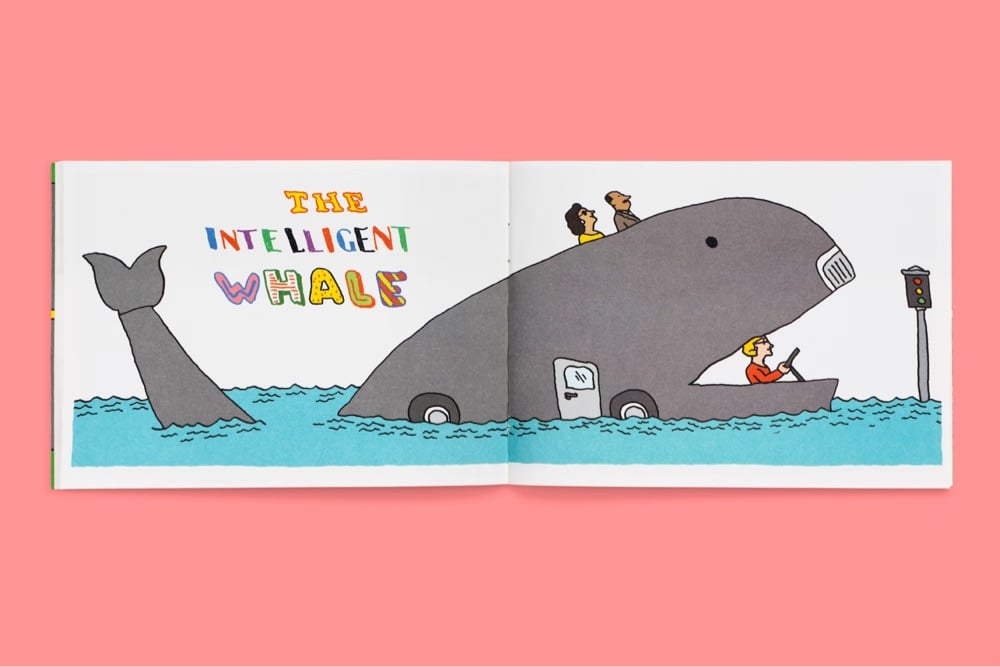
In 1955, the Ford Motor Company hired poet Marianne Moore to come up with some names for their revolutionary new car. Moore ended up submitting some amazing names, including “Silver Sword”, “Intelligent Whale”, “Angel Astro”, and “Utopian Turtletop”.
What Moore lacked in corporate nomenclature experience, she made up for in enthusiasm and imagination: she submitted over two dozen names for consideration, each one more delightful — and unlikely — than the last. In the end, the poet’s suggestions were rejected and the company’s chairman himself named the vehicle. Thus was born the notorious car known as the Edsel.
Ford realized perhaps too late that they shouldn’t have, in fact, sent a poet — but we’re sure glad they did.
Back here in the present day, Pentagram commissioned the legendary Seymour Chwast to turn Moore’s amazing collection of names into a booklet of illustrations that imagine what these cars might look like.
This piece by Cory Doctorow on TikTok’s enshittification (also available at Wired) contains some of the best and simplest descriptions of how online platforms like Amazon, Facebook, Uber, TikTok, Twitter, etc. evolve as they grow and then eventually die.
Here is how platforms die: First, they are good to their users; then they abuse their users to make things better for their business customers; finally, they abuse those business customers to claw back all the value for themselves. Then, they die.
…
This is enshittification: Surpluses are first directed to users; then, once they’re locked in, surpluses go to suppliers; then once they’re locked in, the surplus is handed to shareholders and the platform becomes a useless pile of shit. From mobile app stores to Steam, from Facebook to Twitter, this is the enshittification lifecycle.
The Amazon example he uses is really easy to follow. Early in the company’s history, the site used to be a great place to shop; their customers loved Amazon. But then Amazon’s sellers became their real customers and the user experience started to suffer. And now, much of the value generated by the users and customers goes to the shareholders (which, functionally speaking these days, means several dozen people who run hedge funds or large investment funds).
This strategy meant that it became progressively harder for shoppers to find things anywhere except Amazon, which meant that they only searched on Amazon, which meant that sellers had to sell on Amazon. That’s when Amazon started to harvest the surplus from its business customers and send it to Amazon’s shareholders. Today, Marketplace sellers are handing more than 45 percent of the sale price to Amazon in junk fees. The company’s $31 billion “advertising” program is really a payola scheme that pits sellers against each other, forcing them to bid on the chance to be at the top of your search.
Over at Techdirt, Mike Masnick riffed on Doctorow’s piece, arguing that enshittification, this playing of various parties against each other while siphoning off the value, is bad business because it focuses too much on short term gains.
Because maximizing revenue in the short term (i.e., in the 3 month window that Wall Street requires) often means sacrificing long term sustainability and long term profits. That’s because if you’re only looking at the next quarter (or, perhaps, the next two to four quarters if we’re being generous) then you’re going to be tempted to squeeze more of the value out of your customers, to “maximize revenue” or “maximize profits for shareholders.”
He uses early Amazon as an example of long-term thinking:
Once you go public, and you have that quarterly drumbeat from Wall Street where pretty much all that matters is revenue and profit growth. Indeed, it’s long forgotten now, but Jeff Bezos and Amazon actually were a rare company that kind of bucked that trend, and for a while at least, told Wall Street not to expect such things, as it was going to invest more and more deeply in serving its customers, and Wall Street punished Bezos for it. It’s long forgotten now, but Wall Street absolutely hated Amazon Prime, which locked in customer loyalty, but which they thought was a huge waste of money. The same was true of Amazon Web Services, which has become a huge revenue driver for the company.
They created a tremendous amount of value for their shareholders by playing the long game, which for whatever reason they aren’t willing to do anymore.
This is something I’ve heard over and over again, in many cities around the world: putting in bike lanes in place of car parking and/or car lanes results in an increase in humans patronizing local businesses and increased sales.
Five years ago, the city of Queens, New York, announced that it would be putting bike lanes onto a stretch of Skillman Ave-and removing 116 parking spots. Cyclists loved the plan, but local business owners went ballistic. Taking out those parking spots, as they argued at protests and in letters to the city council, would devastate stores and restaurants along Skillman. “Parking here is already a nightmare,” one fumed at a protest rally.
But the bike lanes were a done deal, and soon they were in place. Early this year, Jesse Coburn — an investigative writer with Streetsblog New York — wondered whether those predictions of economic collapse came true. So he asked the city’s Department of Finance to give him a few years’ worth of sales figures for that stretch of Skillman Ave. How had the businesses on that street fared?
Quite well, it turns out. In the year after the bike lanes arrived, businesses on Skillman saw sales rise by 12 percent, compared to 3 percent for Queens in general. What’s more, that section of road saw new businesses open, while Queens overall had a net loss.
The thing is, the actual merchants along Skillman? They didn’t believe it. When Coburn spoke to them and described what he’d found, only a few store owners admitted the lanes had helped. Many still insisted the lanes were killing their part of the city. And emotions ran hot: Someone scattered tacks on the bike lane.
Ted Gioia is one of the best music writers and critics around but has proved an astute cultural (and even business!) critic as well. In a piece for his excellent The Honest Broker newsletter, Gioia writes about the recent turnaround of Barnes & Noble, which he attributes to the company’s new CEO and his love of books. James Daunt, who took the helm of B&N in late 2019, previously saved UK bookshop chain Waterstones, in part by refusing to take promotional money from publishers:
Daunt refused to play this game. He wanted to put the best books in the window. He wanted to display the most exciting books by the front door. Even more amazing, he let the people working in the stores make these decisions.
This is James Daunt’s super power: He loves books.
“Staff are now in control of their own shops,” he explained. “Hopefully they’re enjoying their work more. They’re creating something very different in each store.”
This crazy strategy proved so successful at Waterstones, that returns fell almost to zero — 97% of the books placed on the shelves were purchased by customers. That’s an amazing figure in the book business.
On the basis of this success, Daunt was put in charge of Barnes & Noble in August 2019. But could he really bring that dinosaur, on the brink of extinction, back to life?
The boldface above is mine and it matches up with the bold text from Gioia’s conclusion:
Of course, there’s a lesson here. And it’s not just for books. You could also apply it to music, newspapers, films, and a host of other media.
But I almost hate to say it, because the lesson is so simple.
If you want to sell music, you must love those songs. If you want to succeed in journalism, you must love those newspapers. If you want to succeed in movies, you must love the cinema.
One of the reasons I decided to take a sabbatical last year is that I was not loving what I was doing here and it was starting to show. Oh, I’ve been doing this long enough that I know how to paper over the cracks. Also, I’m stubborn and will keep at something even if I’m not enjoying it, but the wheels were starting to come off of the wagon. Now that I’m back, I’m trying to figure out which bits of this weird job I’m really into and redirect my efforts there. Gioia’s piece is a good reminder to follow the love and the rest will follow.
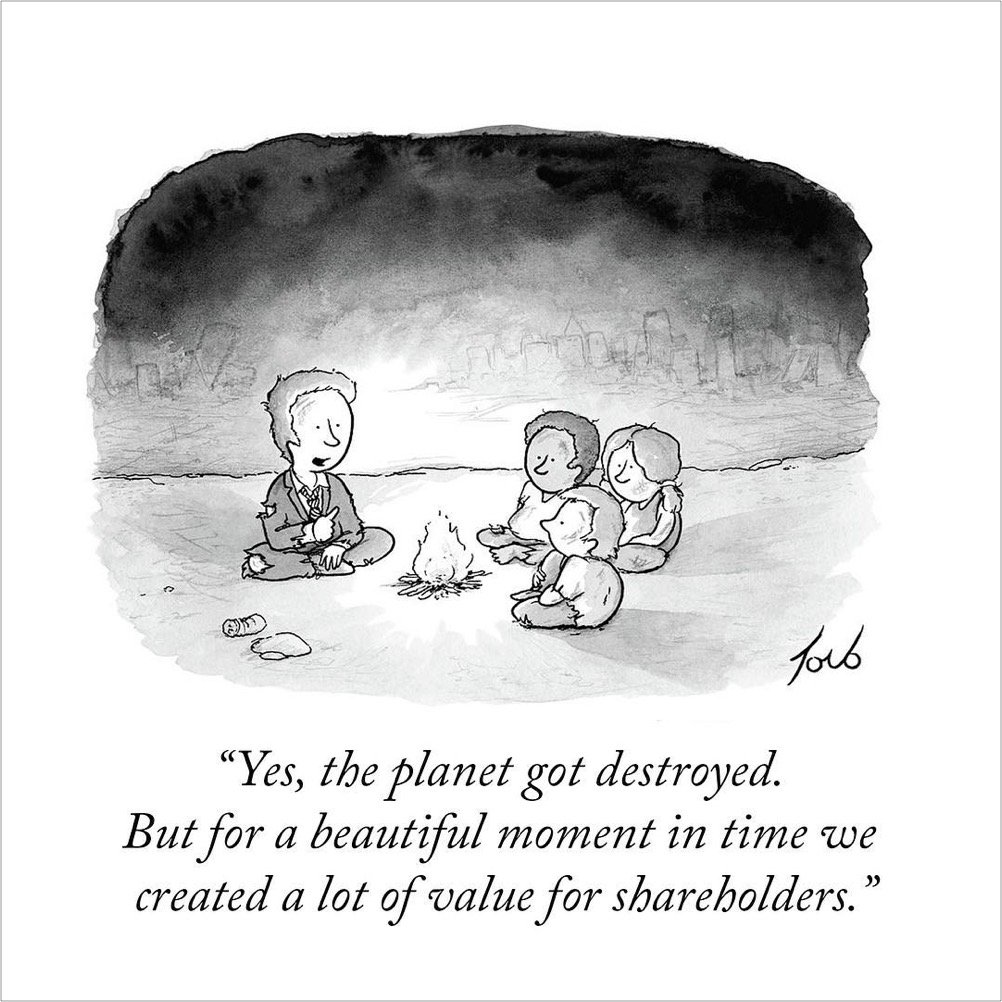
Anil Dash writes about the 24 stages of the growth-fueled “broken tech/content culture cycle” that VC-driven Silicon Valley (among other places) has pioneered over the past 15 years. Here’s how you begin:
1. Build a platform which relies on cultural creation as its core value, but which only sees itself as a technology platform. Stick to this insistence on being solely a “neutral” tech company in every aspect of decision-making, policy, hiring and operations, except for your public advertising, where the message is entirely about creativity and expression.
2. Hire a team that’s rewarded solely on growth goals and winnow out anyone who values creators or culture above expansion and user acquisition. Enforce a monoculture.
And then:
8. Build an algorithm to “surface great content” for your audience. Train it on the behaviors of your existing creators, so you create a rich-get-richer dynamic, effectively cementing the culture of your platform and making it impossible for new creators from underrepresented communities to get a foothold. Make it so the only process for revisiting your algorithm is bad-faith arguments from right-wing goons trying to game the refs because their actual content isn’t good enough to get audience on its own. After that, treat the algorithm as some magical sacrosanct god with unknowable whims that everyone is subject to, rather than as a series of intentional business decisions captured in software form.
Eventually:
18. Double down on funding the worst voices on your platform. Call it “free speech”, and make sure that nobody internally points out that truly defending free speech would have entailed protecting those early marginalized creators who made your platform credible in the first place.
19. Definitely misuse “free speech” as a rhetorical bludgeon against people who are pointing out that you are both amplifying and sponsoring content, not merely making it available. Resolutely refuse to be intellectually honest about the difference between merely providing a platform to all, vs. making editorial decisions to promote and subsidize content that you have control over.
Spotify, Substack, Google, Twitter, Amazon, Apple, Facebook, Reddit…this predictable script has played out at all of these companies in some form or another over the past decade.
This video provides a good overview of the difficulty involved in starting a business that grows, sells, or distributes cannabis products, which can include money, federal illegality, state regulations, and structural racism.
Jeannette: So you really got to get your business funded from your personal wealth or from your network wealth.
Nancy: Those situations begin to favor people who’ve traditionally had good access to capital.
Jeremy: And oftentimes that correlate with being white.
Adriana: It is very white male-dominant. And there’s no reason that that is what it should be.
Narrator: Only 2% of cannabis entrepreneurs are Black. Yet Black Americans were most affected by marijuana’s illegal status in the past.
Jeremy: There is kind of a clear throughline from the war on drugs. According to the ACLU, Black people are four times as likely than whites to get arrested for cannabis use, despite using at very similar rates across age groups, across different states.
See also A Post-Legalization Cannabis Reading List.
For Vox, Emily Stewart writes about the shortcomings of the, er, system we’ve developed here in America of outsourcing public needs to private industry: Corporations aren’t going to save America.
Across various segments of American life, the private sector has begun to take on tasks big and small that one might think should be tackled by the public sector. Domino’s filled in potholes. Dawn’s dish soap saved ducks. American Express pitched in on historic preservation. Walmart started selling low-priced insulin. A slew of companies help workers pay for school. Much of America’s health care system is still handled through private insurers and your job. As people lose faith in government to act on sweeping issues such as climate change and guns, they’re increasingly looking to corporate America and asking whether there’s something they can do about it. If Congress won’t tackle gun violence, maybe Dick’s Sporting Goods can try.
It’s not a bad thing for brands and companies to try to make the world better. Starting a business often involves identifying a problem to solve, and it’s much better for companies to help than to do harm. Corporate social responsibility is fine. There are, however, limits.
“Of course we want businesses to be responsible,” said Suzanne Kahn, managing director of research and policy at the Roosevelt Institute. But she emphasized that this does not constitute a plan for how to organize society. “Private companies don’t, can’t, or won’t plan with the same values that we demand and expect the government to.”
(via the morning news)
Anne Helen Peterson noticed a bunch of reports about fast food & retail businesses around the US having trouble finding employees, which difficulty the business owners are blaming on lazy American workers whose unemployment benefits have been extended/expanded during the pandemic. But what if, she writes, those benefits are actually providing a safety net to American workers so that they do not need to take terrible jobs for low wages at terrible companies under terrible management? The ‘Capitalism is Broken’ Economy:
Stick with me here, but what if people weren’t lazy — and instead, for the first time in a long time, were able to say no to exploitative working conditions and poverty-level wages? And what if business owners are scandalized, dismayed, frustrated, or bewildered by this scenario because their pre-pandemic business models were predicated on a steady stream of non-unionized labor with no other options? It’s not the labor force that’s breaking. It’s the economic model.
Unemployment benefits have offered a steady paycheck while you figure out your options. Put differently: a version of the safety net that’s been missing from most American employment, and, by extension, the ability to say no. No, I don’t have to work for a restaurant that only gives me my hours three days ahead of time, thus making it nearly impossible to find reliable childcare. No, I don’t have to work clopen shifts. No, I don’t have to expect a job without sick leave or paid time off. No, I don’t have to deal with asshole customers or managers who degrade me without consequence. No, I don’t have to work in a job with significant, accumulating health risks.
Her question near the end of the piece is worth considering: “If a business can’t pay a living wage, should it be a business?”
Older posts





Socials & More