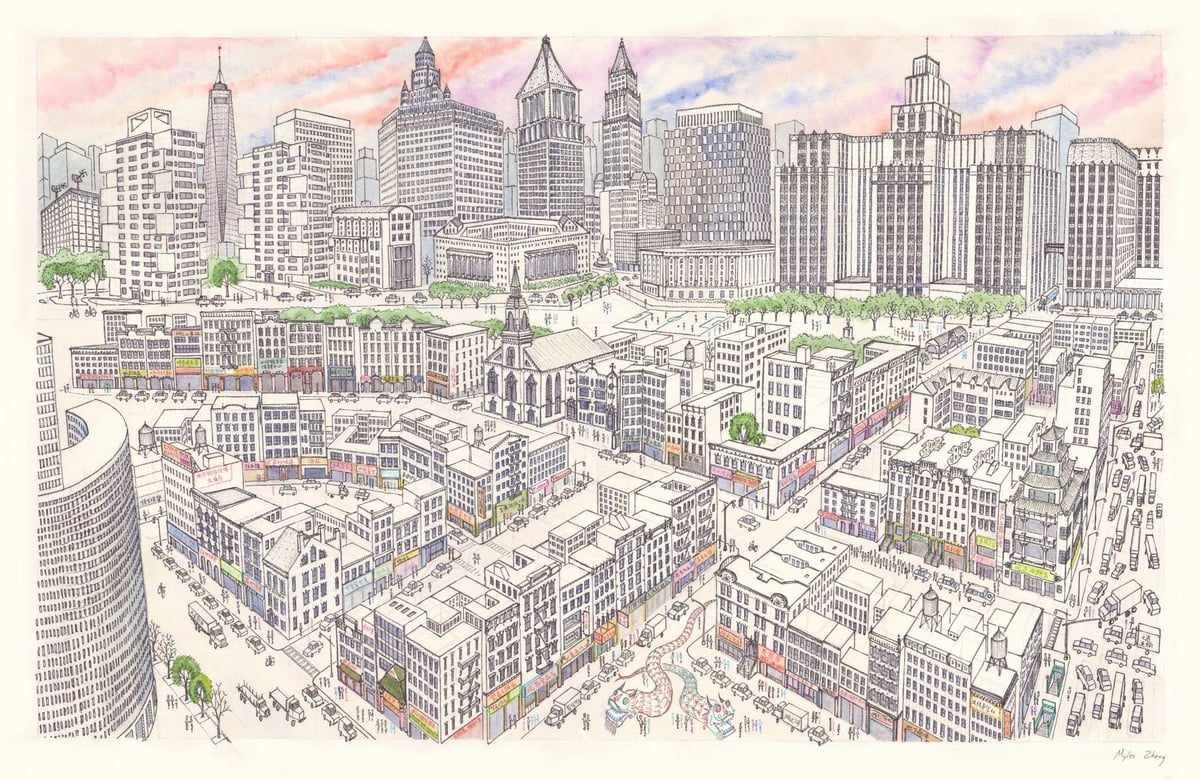
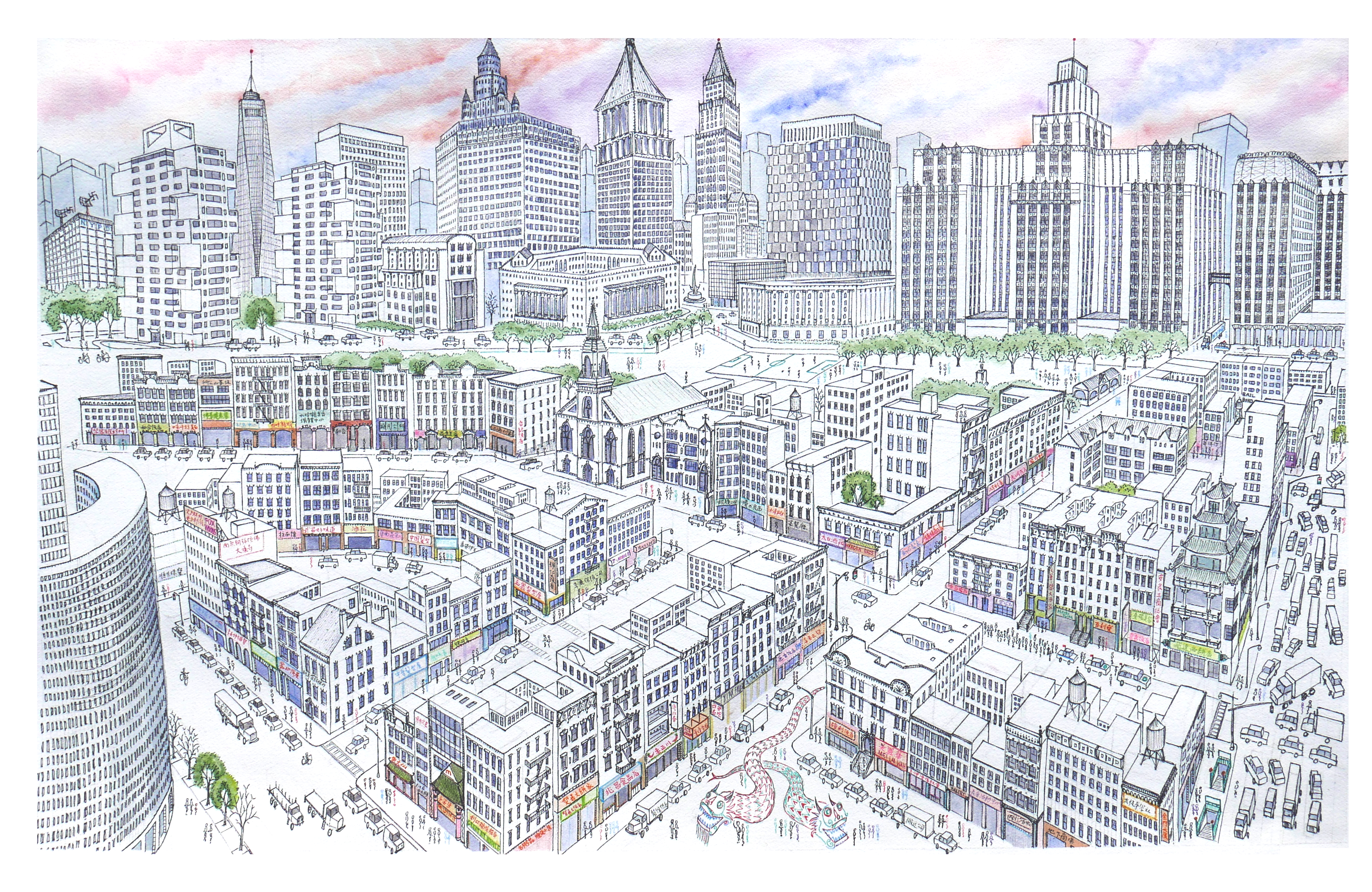
Chinatown’s tenements are in the foreground, while the skyscraper canyons of Lower Manhattan rise above. This shows the area of Chinatown bordered by Bowery, Canal Street, and Columbus Park.
It took him around 60 hours to complete; he made a time lapse video of its creation:
I’ve always been a little fascinated by the list of the largest cities throughout history, so this animated version from Ollie Bye is right up my alley. While watching, it’s interesting to think about what makes cities grow large at specific times: a mixture of economics, demography, social movements, empire/colonialism, technology, and the like.
Adam Yates travelled to Amsterdam to see how the Dutch have transformed the city and made it safer for people to get where they’re going more quickly. The phrase that grabbed me is:
Pedestrians, cyclists, and vehicles can all coexist without conflict, but only if they’re all going the same slow speed. This advances the principles of shared streets.
In simple terms, the Downs-Thomson paradox claims that traffic will increase without limit until the option of public transport (or any other form of transport) becomes faster than the equivalent trip by car. It draws the conclusion that people do not care whether they drive, walk, bike, or take the bus to any location — they just want to get from A to B in the fastest and most convenient way possible.
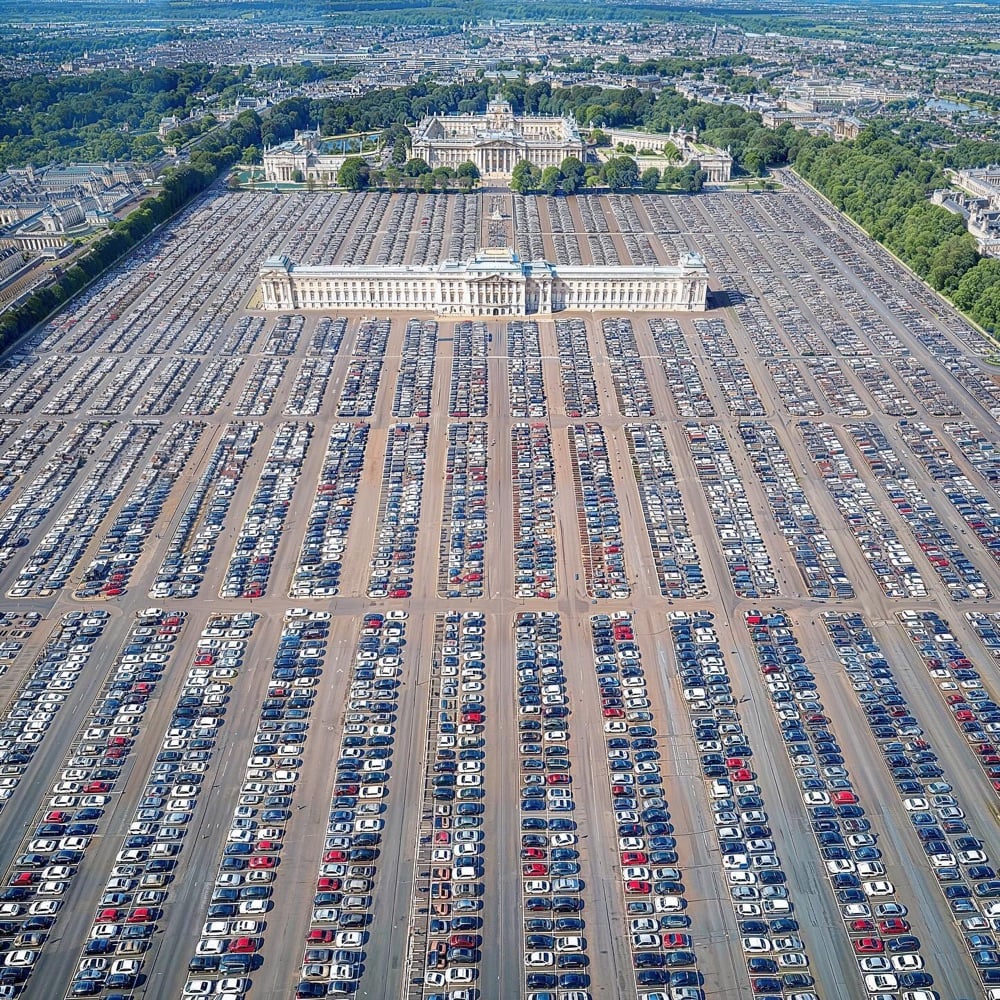
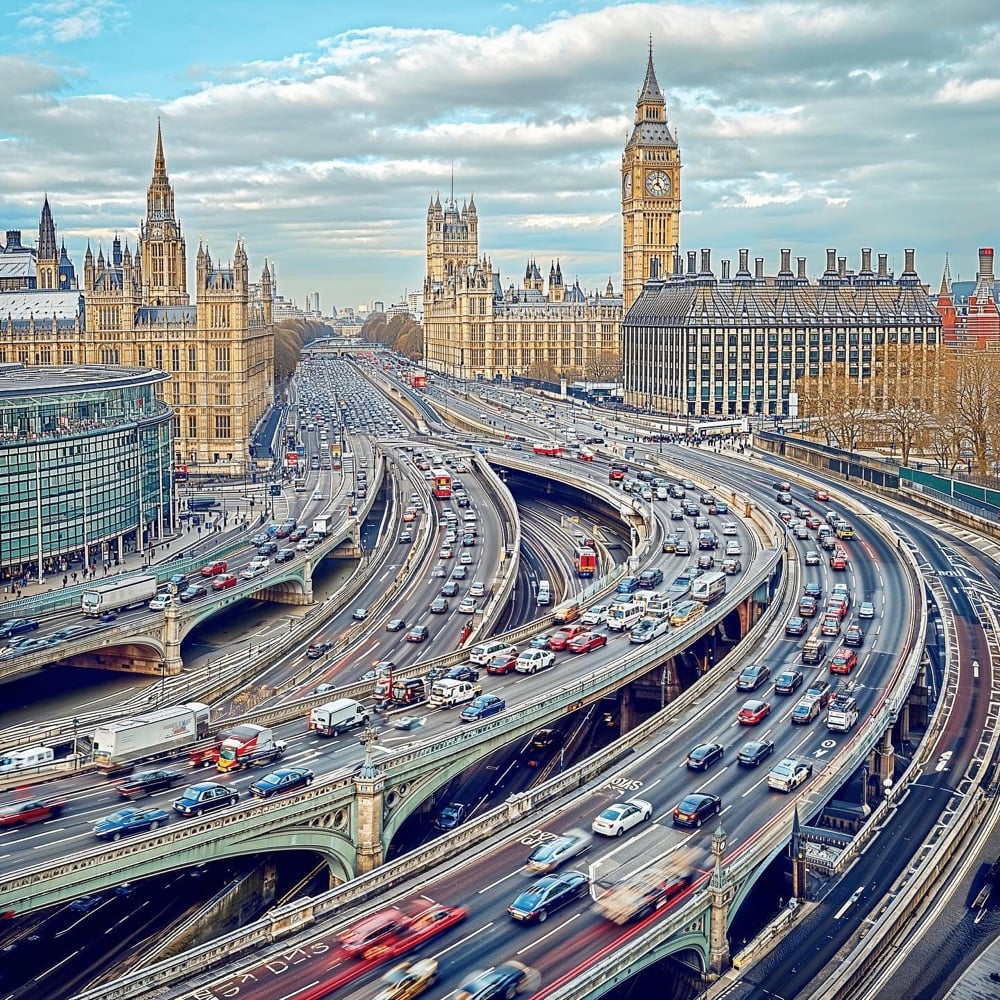
Amidst a political landscape where the ‘war on motorists’ is wielded as a populist tool, this series captures a future where this rhetoric has prevailed. The transformation of UK landmarks like Stonehenge into vast vehicular realms underscores the absurdity and danger of prioritizing short-term political gains over sustainable urban planning. These images mirror the contentious debates in the UK, challenging the narrative that prioritizes car ownership at the expense of public health and environmental sustainability.
Of course, in an America engineered by Robert Moses and his acolytes, many of those images don’t even look that far-fetched.
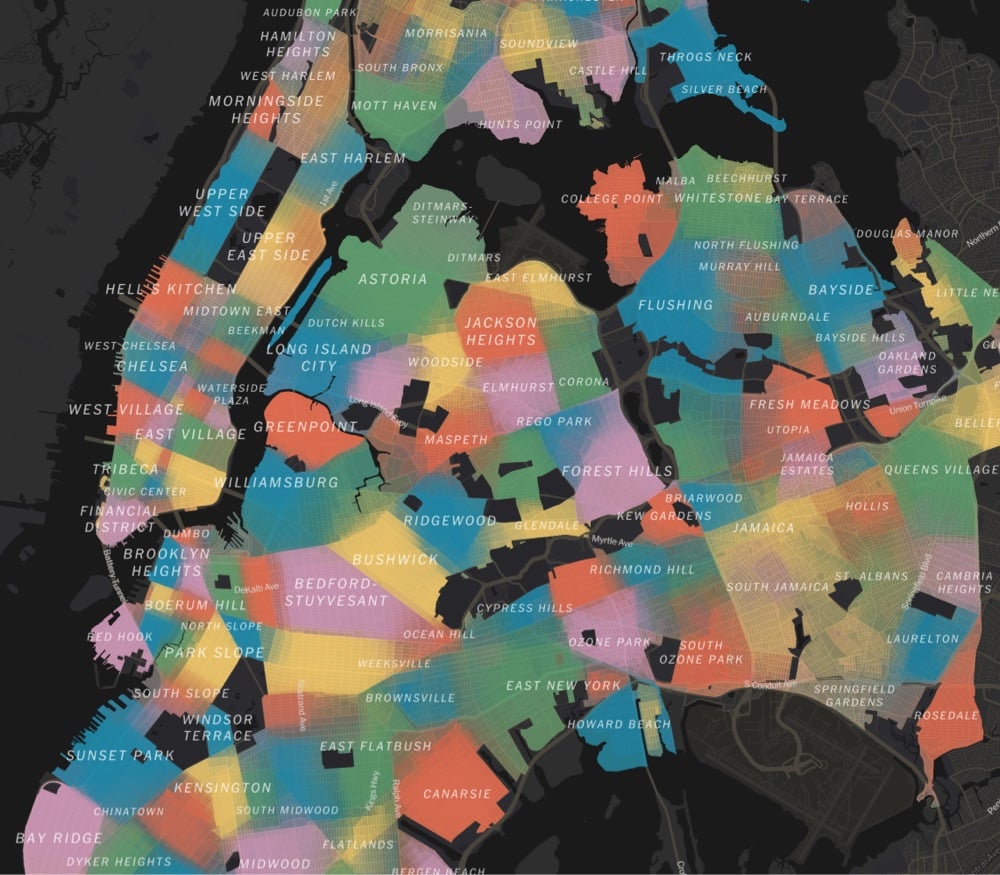
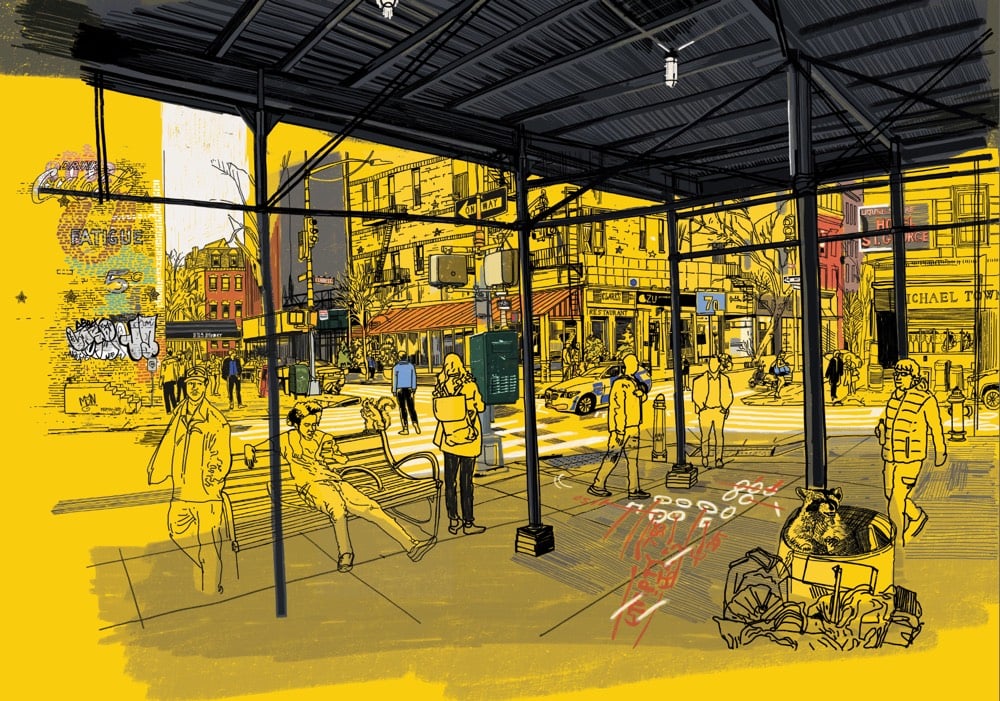
It’s a New York pastime to gripe that neighborhoods are invented and defined by real estate brokers, developers and other city gatekeepers. But the more interesting truth may be that they are also reinvented and reinforced, refracted through race and class, by us: by the air traffic controller who lives in Little Yemen, by the Manhattan community manager who’s sure his constituents live in East Harlem — and not “Upper Carnegie Hill” — and by the Brooklyn residents who decided to name a relatively flat piece of land Boerum Hill.
A name has power. It can foreshadow who will be moving in. By itself, it can conjure so much: gentrification, displacement, inequality, status. When we argue over names, or even invent new ones, we may be trying to exert some of that power — or lamenting that others have more power than we do.
We asked New Yorkers themselves to map their neighborhoods and to tell us what they call them. The result, while imperfect, is probably the most detailed map of the city’s neighborhoods ever compiled.
The article is interesting throughout:
Our map reveals two main kinds of divisions: sharp ones and fuzzy ones.
The fuzzy ones often reflect areas in transition or dispute, where there’s no consensus or where gentrification is rewriting boundaries in real time.
The sharp ones often reflect features of the landscape itself: wide avenues, highways, remnants of canals. When you cross the street, you know you’re in another neighborhood.
Next time I’m in NYC, I’m definitely going to Little Yemen for lunch.
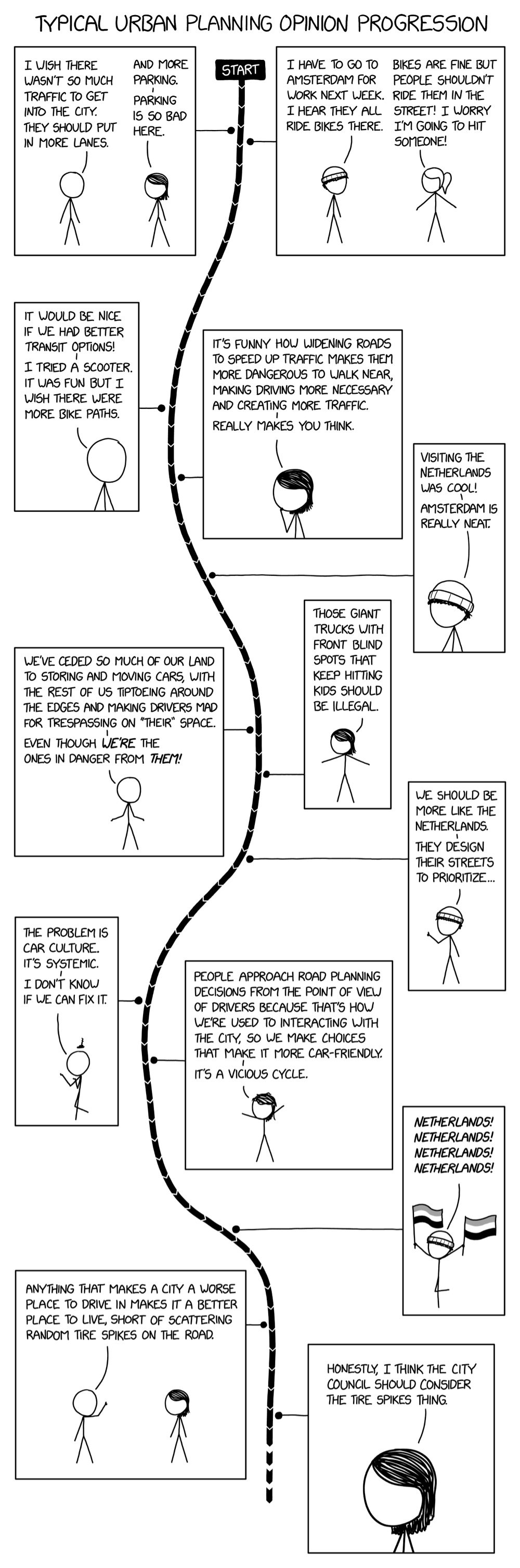
From XKCD, the progression of people’s opinions about cars & urban planning, from “I wish there wasn’t so much traffic to get into the city. They should put in more lanes.” to “Anything that makes a city a worse place to drive makes it a better place to live.” As The War on Cars said on Bluesky, “Randall Munroe, welcome to The War on Cars.”
European cities are transitioning to the use of cargo e-bikes and other micro-mobility solutions for package and other urban deliveries because they are safer, cleaner, and even faster in some cases than using vans or large trucks. The US isn’t making that same shift right now — this video from Vox explores why…and how we can move in that direction.
Fortunately, there’s a hero waiting in the wings: the e-cargo bike. Not only can these bad boys deliver packages in urban environments just as quickly (and sometimes faster) than delivery vans, they take up far less space and are much less likely to cause pedestrian deaths. Companies like Amazon, DHL, and UPS are using them in several European cities, but American cities haven’t followed suit.
In this video, we explore why that is, and lay out some of the big steps American cities would need to take to join the e-bike delivery revolution.
From Adam Kovacs’ YouTube channel Adam Something comes this brisk 10-minute video essay on why European malls are doing better than their American progenitors. I thought his third point, about poor urban planning, was particularly interesting: malls tend to fail in America because they are not integrated into the fabric of towns and cities (because very little is integrated into the fabric of cities and towns in many places these days).
Malls, hell, all commerce has to be an organic part of towns and cities. People should be able to get to them by means other than a car, and conveniently. Such integrated commercial spaces are far more resilient. If your commercial spaces aren’t resilient — if you just plop a big box outside the town — don’t be surprised when it goes bust in a few years. And then it’s bulldozed for the next thing to be put up for it to go bust the same way and then get bulldozed and then the next thing and the next and the next so on and so forth.
Five years ago, the city of Queens, New York, announced that it would be putting bike lanes onto a stretch of Skillman Ave-and removing 116 parking spots. Cyclists loved the plan, but local business owners went ballistic. Taking out those parking spots, as they argued at protests and in letters to the city council, would devastate stores and restaurants along Skillman. “Parking here is already a nightmare,” one fumed at a protest rally.
But the bike lanes were a done deal, and soon they were in place. Early this year, Jesse Coburn — an investigative writer with Streetsblog New York — wondered whether those predictions of economic collapse came true. So he asked the city’s Department of Finance to give him a few years’ worth of sales figures for that stretch of Skillman Ave. How had the businesses on that street fared?
Quite well, it turns out. In the year after the bike lanes arrived, businesses on Skillman saw sales rise by 12 percent, compared to 3 percent for Queens in general. What’s more, that section of road saw new businesses open, while Queens overall had a net loss.
The thing is, the actual merchants along Skillman? They didn’t believe it. When Coburn spoke to them and described what he’d found, only a few store owners admitted the lanes had helped. Many still insisted the lanes were killing their part of the city. And emotions ran hot: Someone scattered tacks on the bike lane.
Back in August, David Zipper wrote an interesting piece for Slate arguing that urban areas should embrace smaller personal transportation options, like the golf cart.
Learnard said that most residents still commute by car, but that the carts have replaced automobiles for many short trips to a restaurant, school, or friend’s house. “Golf carts are a quintessential part of the quality of life here,” she said. “You put the family in a golf cart and go to the park or the splash pad. Or you go out for ice cream, or with your spouse to get a cocktail.” The golf carts have proved popular with teenagers; many use them to get to and from high school. Residents frequently personalize their vehicles with souped-up radios and jerry-rigged storage. “It turns out you can do a lot with a couple milk crates and bungee cords,” Learnard said.
With palpable enthusiasm, she reeled off a list of golf carts’ advantages over cars: They provide accessibility for residents who aren’t able to drive; they enable local shops to expand parking capacity (golf cart spots are significantly smaller than those for cars); the electric models are quiet and don’t pollute. She is even convinced that they have made her town friendlier. “If you’re on your golf cart and you see your neighbor doing yardwork, you’re going to pull over and chat,” she said. “You’re never going to do that if you’re in a car.”
Bikes and ebikes share many of these advantages and infrastructure built for bikes can often be used for carts and vice versa. Zipper followed up with a recent thread on how he saw golf carts being used in The Villages, FL and Peachtree City, GA.
The weather was awful when I stopped by The Villages, a fast-growing 60+ community in central Florida, but I still saw a ton of golf carts.
Put up some plastic sheets, and you’re protected from the rain.
The Villages was designed for golf carts; they can be life savers for those otherwise unable to drive.
Many roads have separated golf cart paths, and local streets are slow (with many roundabouts) so golf carts comfortably mix with car traffic.
In this video, using before-and-after satellite imagery, Claire Weisz of WXY, an architecture and urban design firm, explains how her company helped redesign three of NYC’s unruliest intersections: Astor Place, Cooper Union, and Albee Square. Unsurprisingly, the redesigns all involved taking space away from cars and giving it to larger sidewalks and more green space, to benefit people other than drivers.
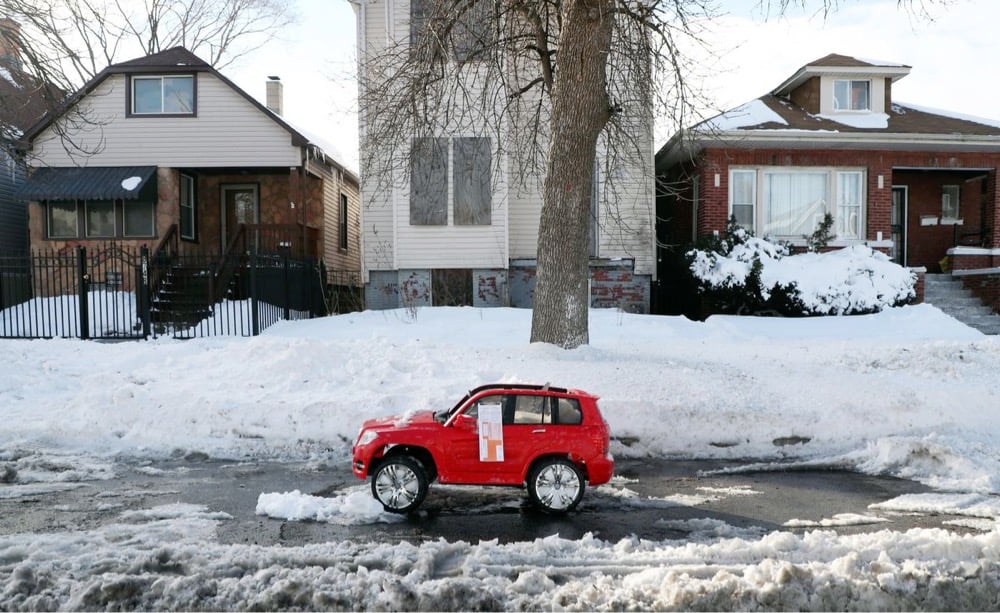
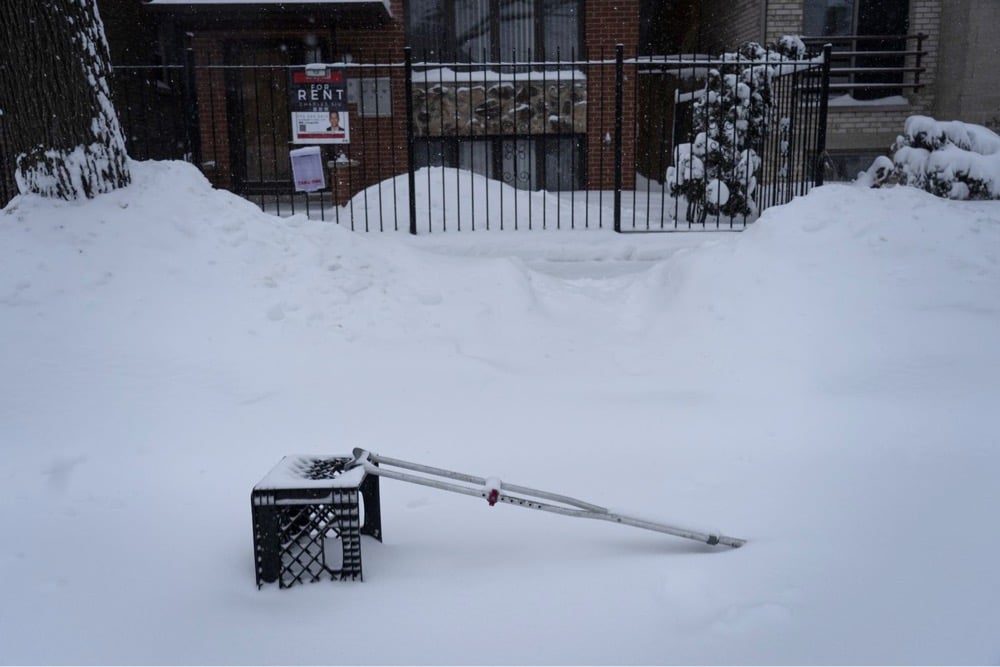
In major US metropolitan areas like Boston and Chicago that see significant winter snowfall, there’s a tradition of saving one’s shoveled-out street parking space with an object or objects that indicate to others that they should park elsewhere. After a big January storm, the Chicago Tribune posted a collection of photos of the best “parking dibs” in the city.
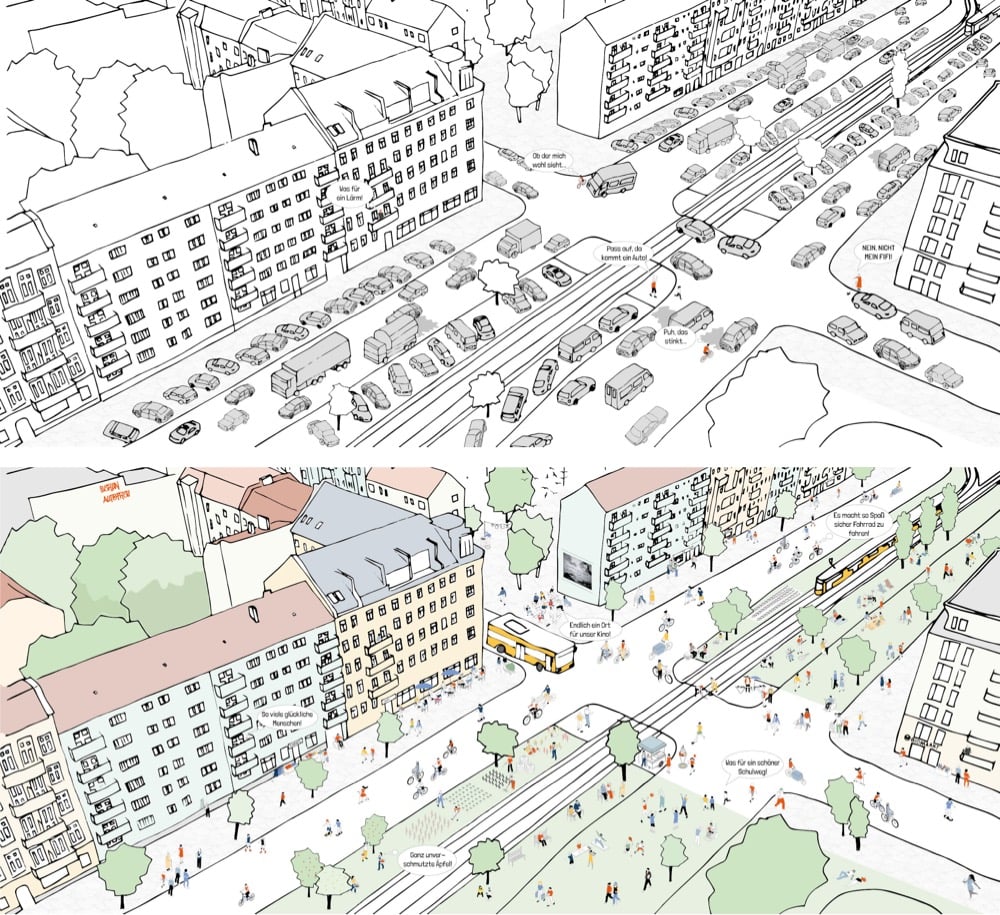
As in other cities, “car free” doesn’t literally mean that no cars could enter the area, but private car use would dramatically drop. Special permits would be given to emergency vehicles, garbage trucks, taxis, commercial and delivery vehicles (though many deliveries in Berlin already happen on cargo bikes), and residents with limited mobility who depend on cars. Others would be able to use a car, likely through a car-sharing program, up to 12 times a year to run longer errands. But most people, most of the time, would walk, bike, or take public transportation.
That sounds amazing and reasonable. There are five main goals the plan is trying to achieve for Berliners: better quality of life (walkable vibrant streets), better health (less pollution & noise), space for people (not vehicles), less climate impact, and street safety:
Berlin’s streets must become safer. There are still too many traffic deaths and injuries in Berlin. Especially the weakest must be protected: pedestrians and cyclists. Children and senior citizens in particular should be able to feel safe on Berlin’s streets; otherwise their mobility will be restricted because the risk or fear of an accident is too great.
The city is currently considering whether to turn the proposal into a law. This would be amazing to see in Berlin (and in some American cities too).
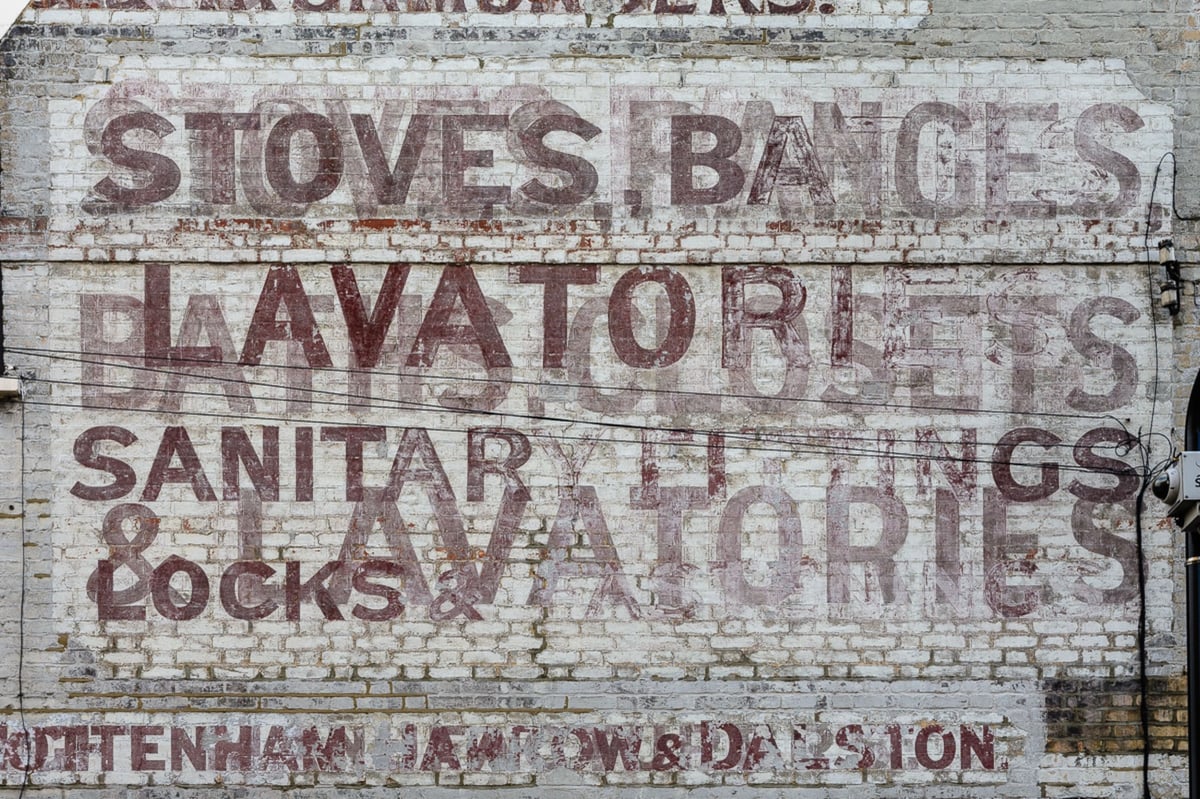
Study the buildings flanking London’s older streets closely and you’ll see one soon enough: an old painted sign that, once bright and eye-catching, is now faded into the masonry, the name of the business or product it promoted flaking and faint.
Such “ghost signs” are fixtures of older neighborhoods in many cities around the world, but the U.K. capital, which bustled with competing commercial enterprises in the 19th and early 20th centuries, is unusually well-supplied with them. Ghost signs aren’t always easy to spot, but for sharp-eyed passersby and enthusiasts of urban history, they add an extra dimension to London’s appearance, their florid Victorian or cheerful art deco script and images a spectral reminder that once, not that long ago, these were somebody else’s streets.
London’s ghost signs are merely a fraction of the signage that used to greet 19th city dwellers, an era when cheap paper and a movement towards universal literacy made cities unusually alive with letters. But they are the special project of a new book by Sam Roberts and Roy Reed. From the book’s website:
Ghost signs are fascinating pieces of urban archaeology. Imposing yet hidden in plain sight, these faded advertisements are London’s history written on to the contemporary cityscape. They reveal fascinating stories of everyday life in the capital and each sign has its own tale to tell - not just of the business it represents and the people behind it, but of its own improbably survival.
A feast of history, typography and the urban environment, Ghost Signs: A London Story showcases London’s most impressive and historically significant faded painted signs, located, photographed and presented with archival andother contextual images.
Introduced by Wayne Hemingway MBE, the opening section shares insights into topics such as production techniques, economics and preservation. The themed chapters take on subjects including building, clothing, entertaining, branding and, ultimately, burying the city.
This video highlights one of the ways in which the Netherlands makes their streets safer for pedestrians: continuous sidewalks. Instead of sidewalks ending at the curb and picking up on the other side of the street, many sidewalks in Dutch cities continue across roadways, at the same height and using different surface materials, forcing cars to slow and signaling to drivers to be alert for pedestrians.
It’s hard to describe how much nicer it is to walk in an environment like this. It feels like the people walking are in control and that drivers are a guest in their environment, not the other way around.
In The Hidden Melodies of Subways Around the World, the NY Times takes a look at an often overlooked aspect of transit design: the door closing sounds on the subway. My favorite door jingle is from the Paris Metro — I never knew where it came from:
In Paris, a simple “A” note plays as the doors shut. This is also a throwback, a sound that mimics the vibrations of a mechanical part that is no longer in use on any of the system’s trains. “But for a half century Parisians and visitors alike became used to that sound, so we decided to keep it, and recorded a synthesized version,” said Song Phanekham, a communications manager for the Paris transit system. “It’s a tribute to the heritage of the Paris Metro.”
In Tokyo, each station has its own custom jingle to signal departures. In Rio de Janeiro, the subway’s door chime pays homage to bossa nova. In Vancouver, the doors still close to a three-note sound that was recorded in the 1980s on a Yamaha DX7. (“The hallmark of any mid-80s pop song,” said Ian Fisher, manager of operations planning at British Columbia Rapid Transit Company.)
You can listen to more sounds of subway doors closing in thesethreevideos recorded by Ted Green.
Update: Composer Minoru Mukaiya has made distinct door-closing jingles for each subway station in Tokyo.
In the 1980s SUVs were a rarity. It was only in 2015 that they started outselling sedans. In 2018 they accounted for just under half of new vehicle sales, more than any other category of car. The height of American SUVs makes it harder for drivers to see pedestrians and means the hit comes higher on the body — and backed by extra mass — which makes organ damage and death two to three times more likely for adults, and four times more likely for children. More SUVs than ever are “overpowered” — that is, equipped with a high horsepower-to-weight ratio; this makes speeding more likely, which, like increased height and weight, increases the chances of pedestrians being hit and killed. More cars on the road, taller and heavier than ever before, going faster: each factor alone presents a serious problem. Together, they are a recipe for disaster.
And pedestrian deaths are also not equally distributed across population groups, both because of who owns cars but also shifts in where people are living:
Low-income pedestrians, Black and Hispanic pedestrians, elderly pedestrians, and disabled pedestrians are all disproportionately affected. Black and Hispanic men are twice as likely as white men to die while walking, and four times more likely than the average member of the population. Native American men are almost five times more likely.
The piece is interesting throughout, as is Schmitt’s book I’m sure.
This isn’t a story about Elon Musk, or Tesla, or a contrarian take about how “oil is good, actually.” I unconditionally support electric vehicles in their quest to take over the primacy of gasoline-powered vehicles in the market. But I don’t save that enthusiasm for their prospects on society broadly. From the perspective of the built environment, there is nothing functionally different between an electric vehicle and a gasoline propelled one. The relationship is the same, and it’s unequivocally destructive. Cars, however they’re powered, are environmentally cataclysmic, break the tethers of community, and force an infrastructure of dependency that is as financially ruinous to our country as it is dangerous to us as people. In order to build a more sustainable future and a better world for humanity, we need to address the root problems that have brought us to where we so perilously lie today.
Walking, cities, Paris, and YouTube are four of my favorite things, so this 5.5-hour, 12-mile video walking tour of Paris is right up my alley. Along the way, they visit the Notre Dame, the Arc de Triomphe, the market on Rue Mouffetard, the Jardins du Luxembourg, the Louvre, the Eiffel Tower, and lots more. If you turn the closed captions on, you can read about the histories of the places as the walk progresses. Hopefully this will tide me over until I can visit again. (via open culture)
The Artifact Artist is a short documentary about urban archaeologist Scott Jordan, who, over the past 50 years in NYC, has dug up all sorts of historical objects that date back decades and centuries, even all the way back to the Revolutionary War. The trailer is above and you can watch the entire short film on Vimeo.
Uprooted from the forests of Connecticut to move to New York City, 9 yr. old Scott Jordan declares “I won’t be a city kid!” 45 yrs. later Scott is an urban archeologist. An Indiana Jones in Gotham. Hand digging out centuries old privies, cisterns and landfills across the five boroughs Scott is uncovering artifacts and preserving New York City history by creating artifact art with the treasures he discovers.
Ollie Bye has created an animated time lapse of the growth of London from a small Roman town in 47 ACE to the largest city in the world (during the Victorian era) to the massive, sprawling city it is today.
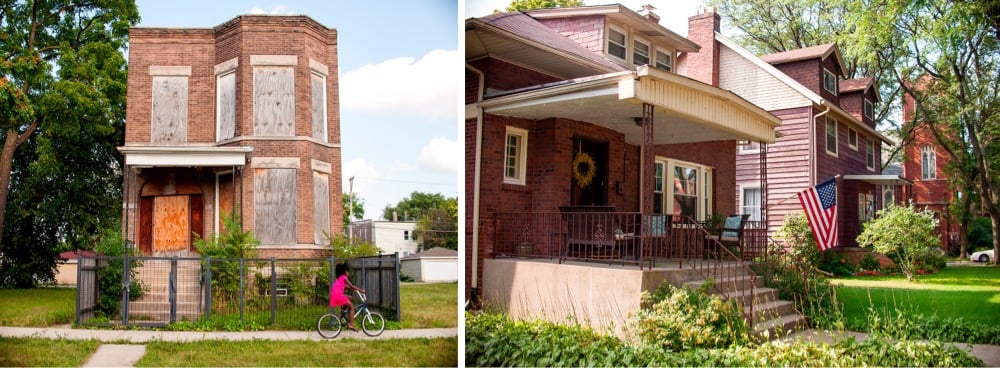
With regard to the Chicago’s street numbering system, Madison Street is the boundary between the North and South Sides of Chicago. Because of discriminatory housing policies and practices, especially during the Great Migration, Chicago is one of the most segregated cities in America. Generally speaking, a predominantly white North Side has had better access to resources and higher home values while a largely Black South Side has had lower home values and less access to resources.
The ultimate point that I was trying to get across was that Chicago’s history of segregation is still with all of us today. I wanted to prove this point for people who might not make that connection [between] the disparity that exists and the history behind it. I wanted the project to be an entree into expanding people’s minds of Chicago’s history of segregation through thinking about their own lived experience. I really appreciated being able to do that through art, through photos and portraits and video because I wasn’t blaming people who live on these different sides. I was offering them insight into the larger question of, “did you really choose this? Does our segregation reflect how we want to interact? And if it doesn’t, then you have to question why is it this way?”
There is this narrative that people think [Chicagoans] don’t interact. But we do, a lot, especially through art. That’s how we know the city is segregated. (laughing) We know that we’re disrupting this segregation when we come together. And that’s why I think art is such a beautiful common denominator.
In The 99% Invisible City: A Field Guide to Hidden World of Everyday Design, host Roman Mars and coauthor Kurt Kohlstedt zoom in on the various elements that make our cities work, exploring the origins and other fascinating stories behind everything from power grids and fire escapes to drinking fountains and street signs.
Urban historian Kenneth T. Jackson gave the book a good review in the NY Times.
A brief review cannot do justice to such a diverse and enlightening book. The authors have sections on oil derricks, cell towers, the Postal Service, water fountains, the transcontinental telegraph, cisterns, telephone poles, emergency exits, cycling lanes, archaeological sites in Britain, national roads, zero markers, the Oklahoma land rush, cemeteries, public lighting, pigeons, raccoons and half a hundred other eccentric topics.
I suspect that with Mars’ podcast pedigree, the audiobook version of this (Amazon, Libro.fm) is pretty good too.
Lol, “somehow”. How anyone manages to keep up to speed on anything but their job and family (and maybe a couple of shows) during this pandemic is a wonder.↩
As winter approaches in North America and Europe, cities should be thinking about how to encourage and enable people to spend as much time outdoors as possible to help keep everyone sane and safe from Covid-19. From a great piece in CityLab by Alexandra Lange:
Dress in layers, invest in silk and wool long underwear, get over your prejudice against parkas. Many people do this as a matter of course when gearing up for a day of skiing or a turn around the ice rink. But in cities, people dress for the destination, not the journey. “People dress saying, I’m going from my home to this business. What’s the least amount of clothing I can wear for the tolerance of walking x feet?” says Simon O’Byrne, senior vice president of community development for global design consultancy Stantec. “We have to switch that, and dress to loiter.”
O’Byrne, who is also co-chair of the WinterCity Advisory Council, adds, “Stickiness encourages people outside. Moscow does year-round farmers markets. The artists’ community has been pulverized by Covid. As much as we can, we should embrace things to help the local artists, community.” He suggests commissioning visual artists to illuminate dark spaces, via murals or light installations, and hiring musicians for distanced outdoor concerts.
Cities should also invest in places to loiter. All of those outdoor restaurants that are supporting local businesses and bringing liveliness back to the streets? In New York City, at least, they are scheduled to shut down at the end of October, while the mayor and governor bicker over indoor dining. But cities need to catch up to ski areas, which long ago figured out how to make après ski activities like outdoor bars and music venues as much of an attraction as the slopes. Wind breaks (with openings above and below for ventilation), patio heaters and sun orientation can all take outdoor dining further into 2020. WinterCity’s Four Season Patio Design Tips also include higher insulation value materials, like wood or straw bales rather than metal seating, as well as simple solutions like blankets, which offer customers the winter equivalent of being able to reposition your chair in the sun — though that works year-round.
And indeed, NYC just announced that the increased outdoor dining that the city has allowed during the pandemic will become “permanent and year-round”.
Tens of thousands of parking spaces will be permanently repurposed from free private vehicle storage for use by the city’s struggling restaurant owners as part of a revolution in public space unleashed on Friday by Mayor de Blasio.
On WNYC’s “Ask the Mayor” segment, Hizzoner revealed that restaurants would be allowed to occupy curbside spaces - which more than 10,000 are already doing — for outdoor dining, not just through the coronavirus pandemic, but all year and, apparently, forever.
It may turn out to be the single biggest conversion of public space since, well, since car drivers commandeered the curbside lane for free overnight vehicle storage in the 1950s.
But whatever measures are taken, they need to be inclusive for the diverse populations that live in cities. Here’s Lange again, who spends several paragraphs in her piece on this issue:
Snow clearance has become an ongoing political issue for winter cities, with disabled people, the elderly, and parents and caregivers arguing that sidewalks and crossings deserve the same priority as cars, lest people be essentially trapped in their homes. Many physically disabled people have already had their mobility limited during quarantine due to pre-existing health risks, the inability to avoid using elevators and the difficulty of maintaining social distancing. Temporary urban design changes also need to be inclusive.
The American system of law enforcement is so deeply embedded into our national psyche that if you find the idea of defunding or abolishing the police challenging, I don’t blame you. But imagine calling an ambulance because a loved one was having trouble breathing or was suffering a stroke and, instead of the expected trained paramedics, a man with a gun showed up. Not great, right? As Jamie Ford explains in this thread, that was not unusual in America until recently.
Until the 70s, ambulance services were generally run by local police and fire departments. There was no law requiring medical training beyond basic first-aid and in many cases the assignment of ambulance duty was used as a form of punishment.
As you can imagine, throwing people with medical emergencies into the back of a paddy wagon produced less than spectacular health outcomes. Now imagine how much worse it became when disgruntled white police officers were demoted to ambulance duty in black neighborhoods.
Emergency care was mostly a transportation industry, focused on getting patients to hospitals, and it was dominated by two groups: funeral homes and police departments. Call the local authorities for help and you’d likely get morticians in a hearse or cops in a paddy wagon. If you received any treatment en route to the hospital — and most likely you did not — it wouldn’t be very good. At best, one of the people helping may have taken a first-aid course. At worst, you’d ride alone in the back, hoping, if you were conscious, that you’d survive.
Pittsburgh’s Freedom House Ambulance Service changed all that, ushering in a new era of much improved medical care for communities around the US.
Together the two men hashed out a plan: Hallen would raise the money, Safar would contribute his medical expertise, and together they would design advanced ambulances and teach paramedics to provide care on the scene of an accident or emergency. It would be a pioneering medical effort, and Hallen, who was white, suggested another first. The Falk Fund was committed to mitigating racism, and Hallen wanted to staff the service with young black men from the Hill. He hoped that empowering individuals long deemed unemployable would be a source of pride in the black community, a symbol of equality, and a signal that bigoted notions about the black people of Pittsburgh standing in their own way were nonsense.
To help with recruitment, Hallen and Safar partnered with an organization called Freedom House Enterprises, a nonprofit dedicated to establishing and supporting black-run businesses in the city. Freedom House handled staffing for the fledgling ambulance service and recruited the first class of paramedics, including Vietnam veterans and men with criminal records.
So this is a great instance in which armed and untrained police officers have been relieved of a particular responsibility and replaced with specially trained personnel, resulting in a greatly improved outcome for members of the community. If you want other examples, just think about how odd, unhelpful, and dangerous it would be for our communities if the police showed up — armed with a loaded weapon — to collect your garbage, to put out fires, to inspect restaurants, to fix potholes, or to deliver the mail. No, we have sanitation workers, firefighters, public health inspectors, municipal maintenance workers, and postal workers to do these jobs — and they’re all trained in the ins and outs of their particular disciplines.
With these examples in mind, instead of armed personnel handling a wide variety of situations for which they are often not trained, it becomes easier to imagine traffic patrols conducting transportation safety stops, social workers responding to domestic disputes, special crisis centers assisting rape victims, mental health counselors helping people behaving erratically in public, housing guides finding homeless folks a place to stay, student safety coaches helping struggling students navigate school, unarmed personnel responding to property crime, and drug addiction counselors helping drug users stay safe. These are all areas where American communities have applied policing by default, like a flimsy bandaid. It’s ineffective, expensive, and dangerous, and communities should think seriously about supporting and funding alternatives that will be more effective, cheaper, safer, and produce better outcomes for everyone.
Estelle Caswell talks to Tony Hawk and architectural historian Iain Borden (author of
Skateboarding and the City) about some of skateboarding’s most iconic spots and how skate architecture has changed over the years, from sidewalks to empty swimming pools in the desert to home-built halfpipes to “if you can see it you can skate it” structures (curbs, handrails, hydrants) all over cities.
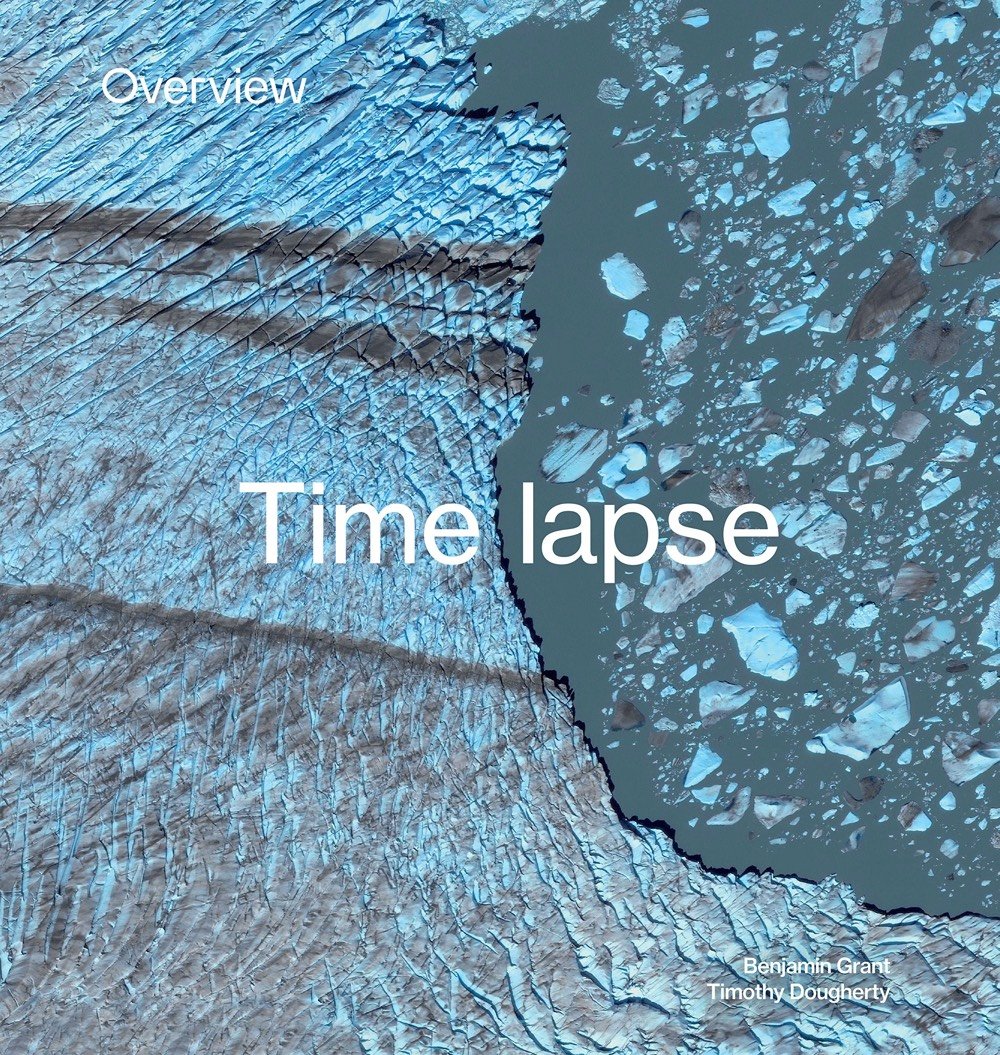
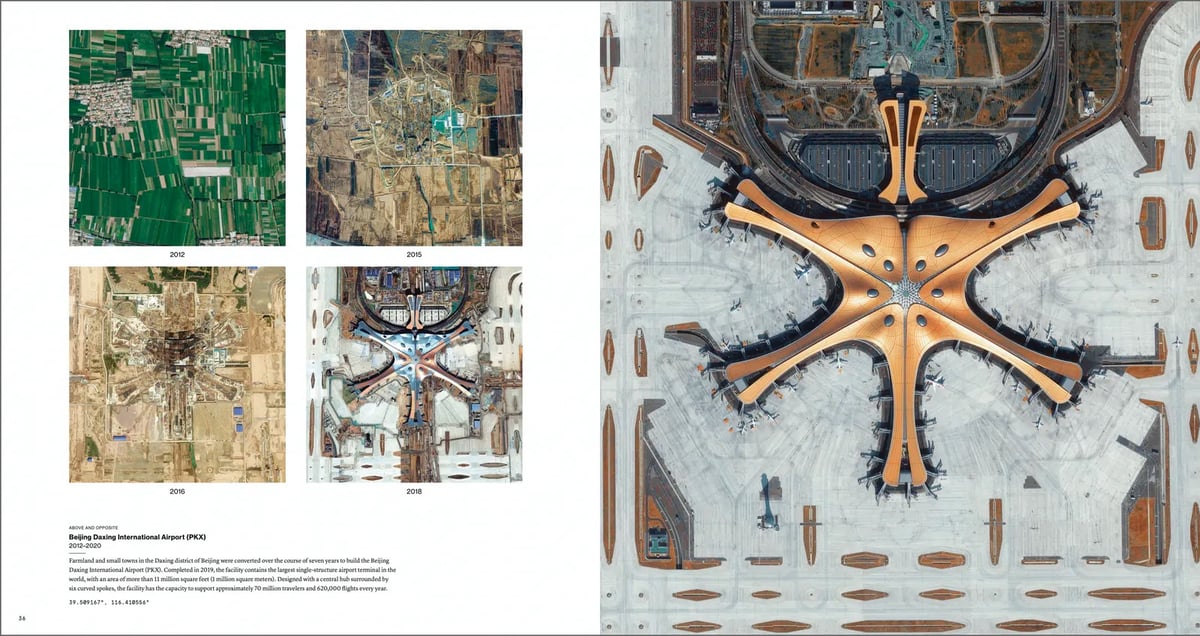
From the creators the Daily Overview website that showcases beautiful & educational satellite imagery of Earth, comes a new book about the Earth’s changing landscape. Overview Timelapse: How We Change the Earth is a book of satellite imagery that shows how landscapes change over time due to things like volcanic eruptions, climate change, population growth, and massive construction projects.
With human activity driving this transformation faster than ever, visible signs can now be seen across the planet. With more than 250 new, mesmerizing images such as sprawling cities and the patterns created by decades of deforestation, this book offers a fresh perspective of change on Earth from a larger-than-life scale.
Here’s a layout from the book that shows the construction of the Beijing Daxing International Airport over the course of several years:
In the shadow of the bridge sits a small neighborhood called the West Side, where the asthma rate is more than four times the national average, and residents report a host of other health issues. Advocates say the thousands of trucks driving overhead spew harmful diesel emissions and other particulates into their community. The pollutants hover in the air, are absorbed into buildings and houses, and find their way into the lungs of neighborhood residents, who are primarily people of color. “It’s constant asthma problems on the West Side,” says Sharon Tell, a local resident.
Buildings are never just buildings. Buildings respond to the political foundations of the institutions that fund, envision, and desire them. Buildings are physical manifestations of the ideologies they serve. Although a naively detached or romantic position may be able to render buildings as semi-autonomous artifacts capable of sheltering or enveloping space, this depoliticized attitude overlooks their historical and material relationship to regimes of violence and terror. Buildings can protect but they can also confine, instill fear, crush, oppress. Buildings can school, and foment hospitality but can imprison and torture. Buildings can be tools for ethnic segregation, cultural destruction and historical erasure. Buildings can reinforce the status quo and aide in the implementation of settler-colonial desires of expansionism. An anti-racist democratization of access is only possible through the decolonization of buildings and public spaces. Architects should be aware of the programs of the buildings they design and be held accountable for doing so.








Stay Connected