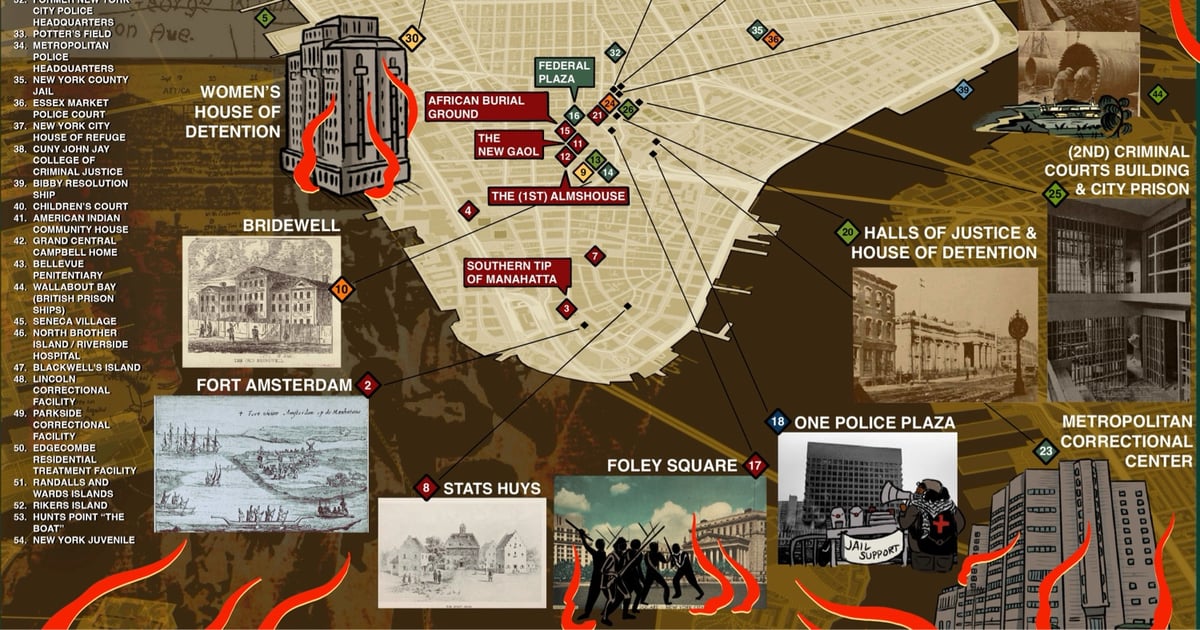
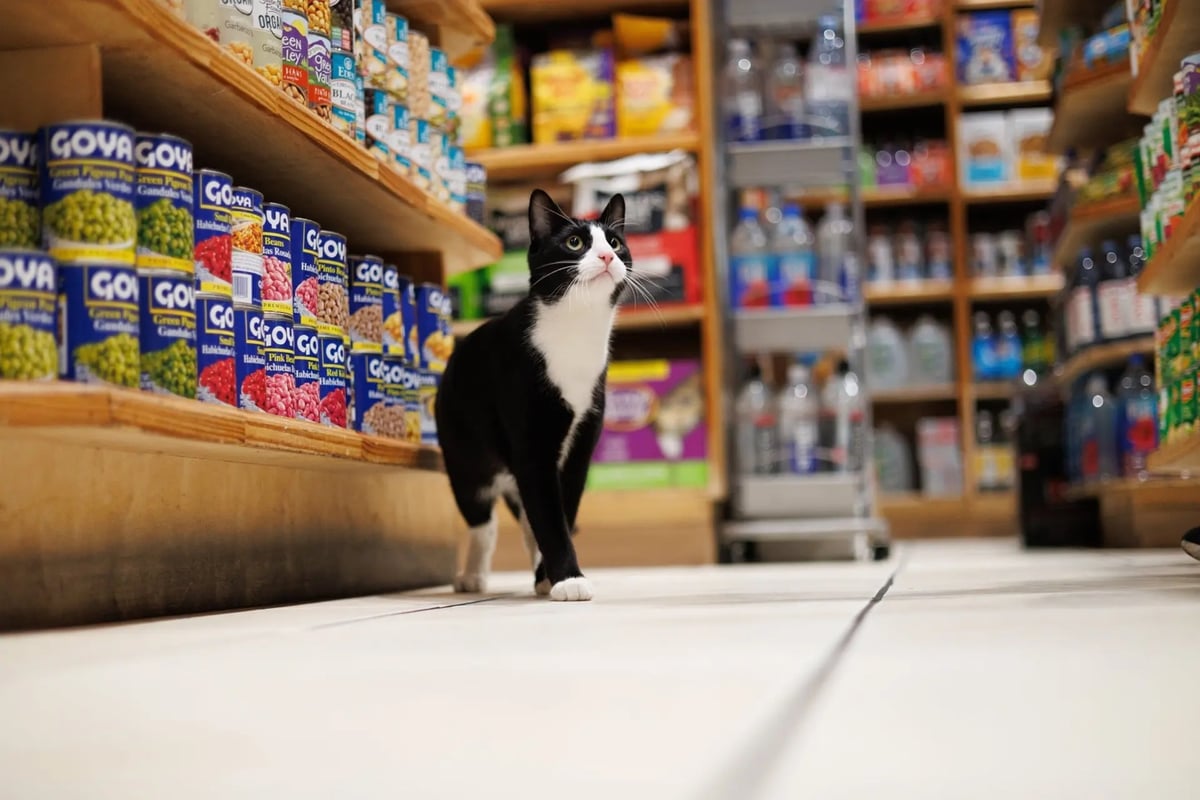
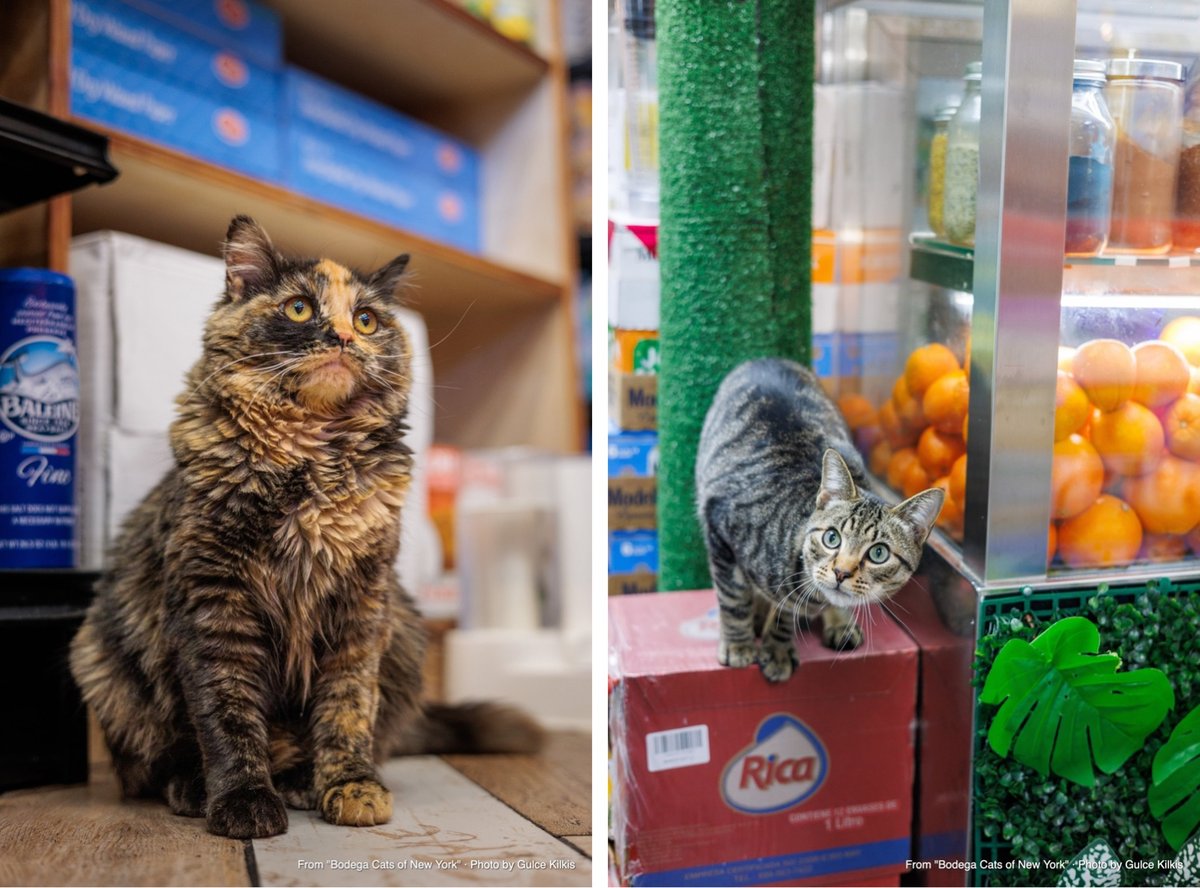
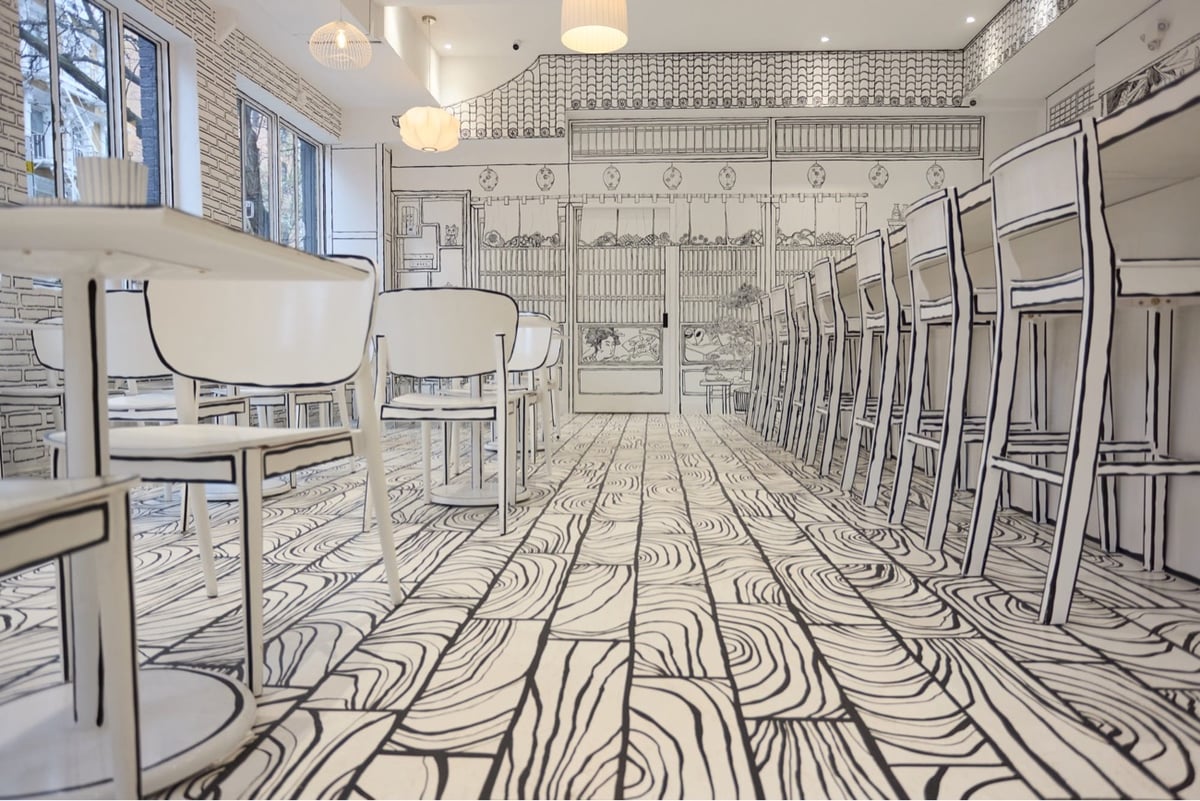
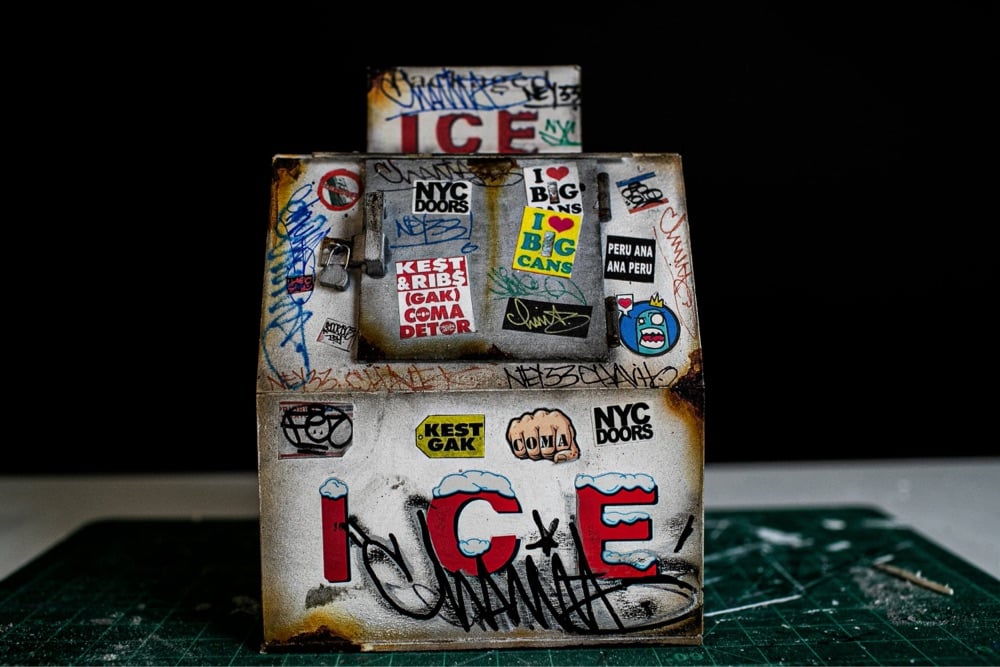
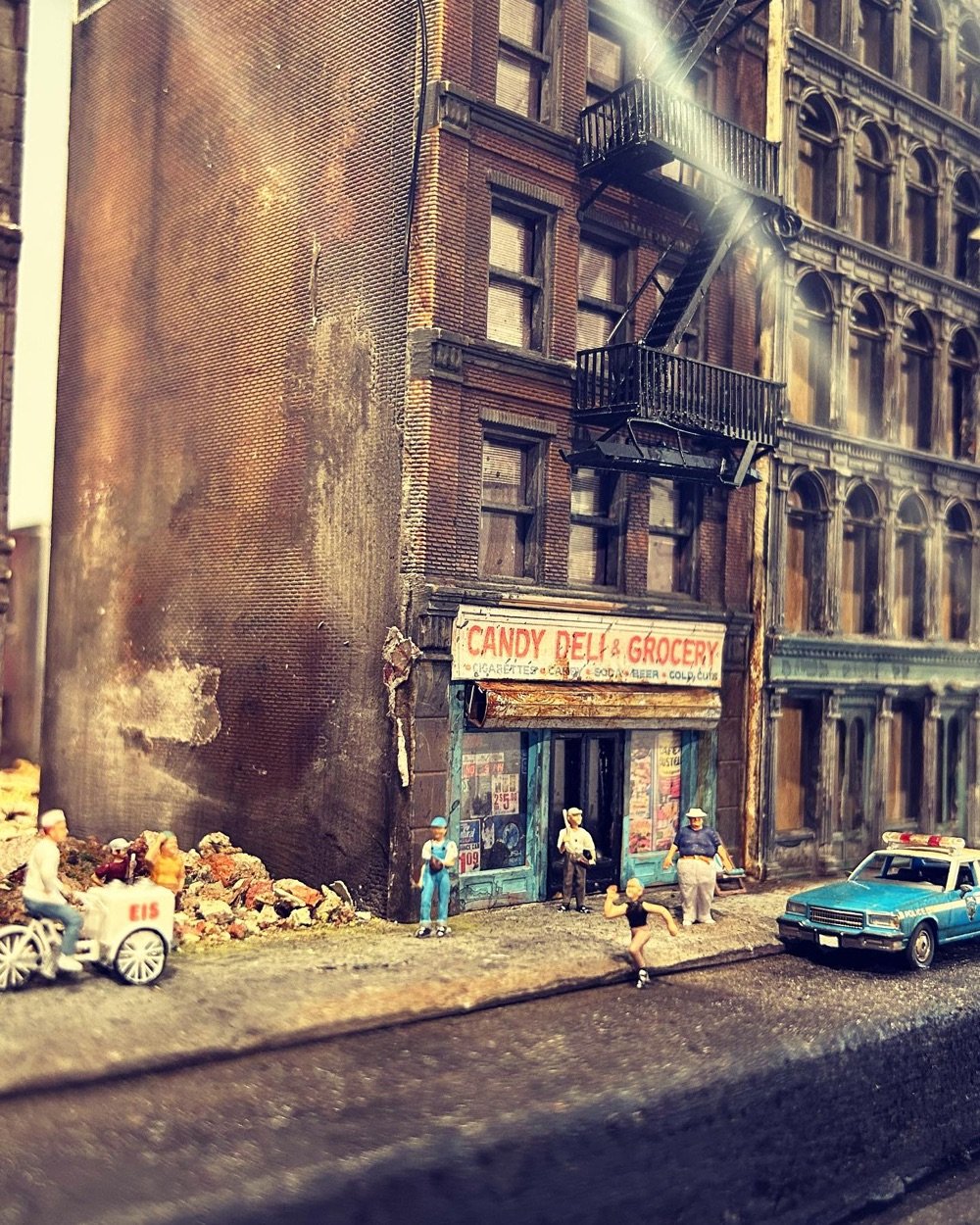
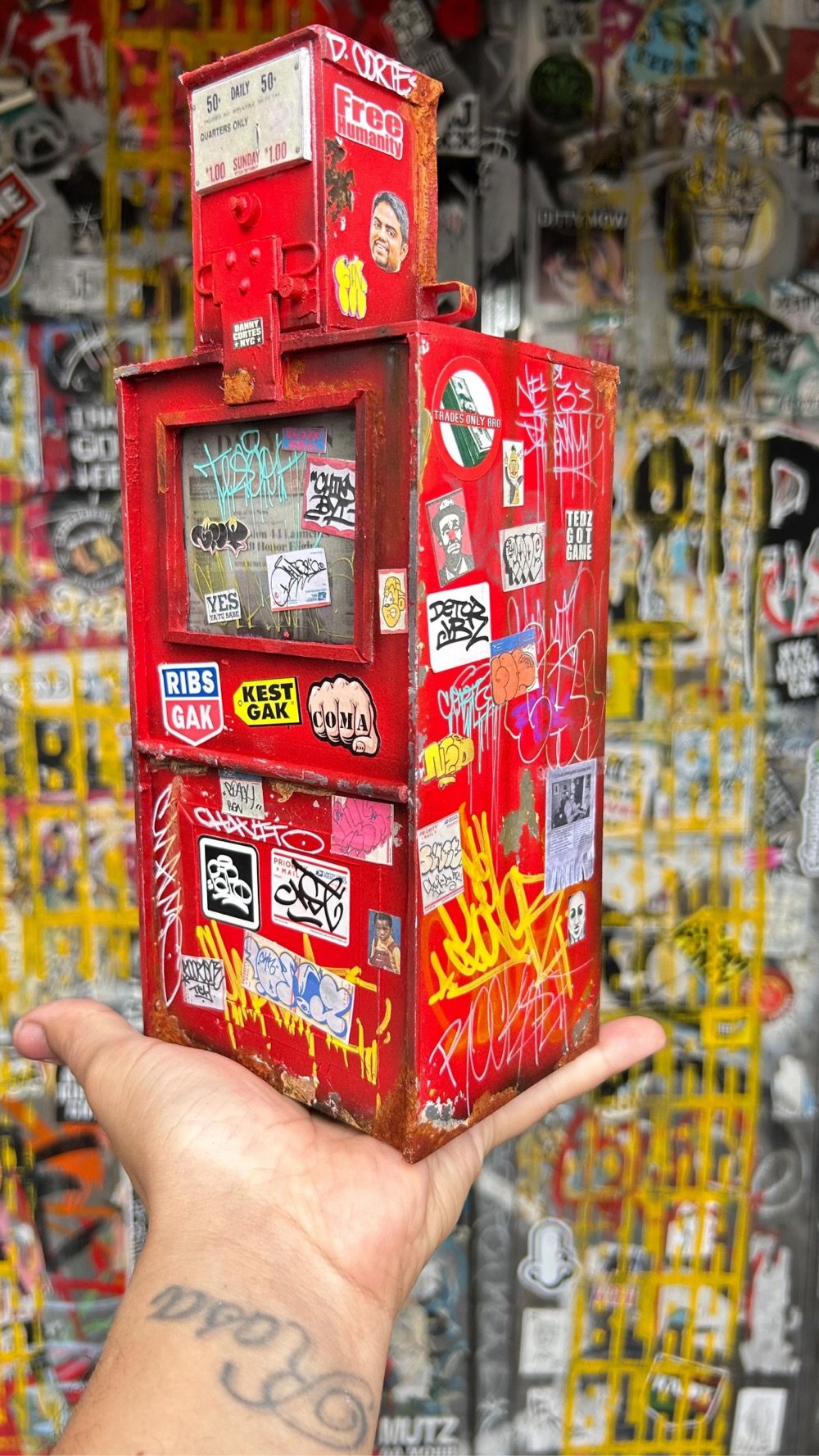
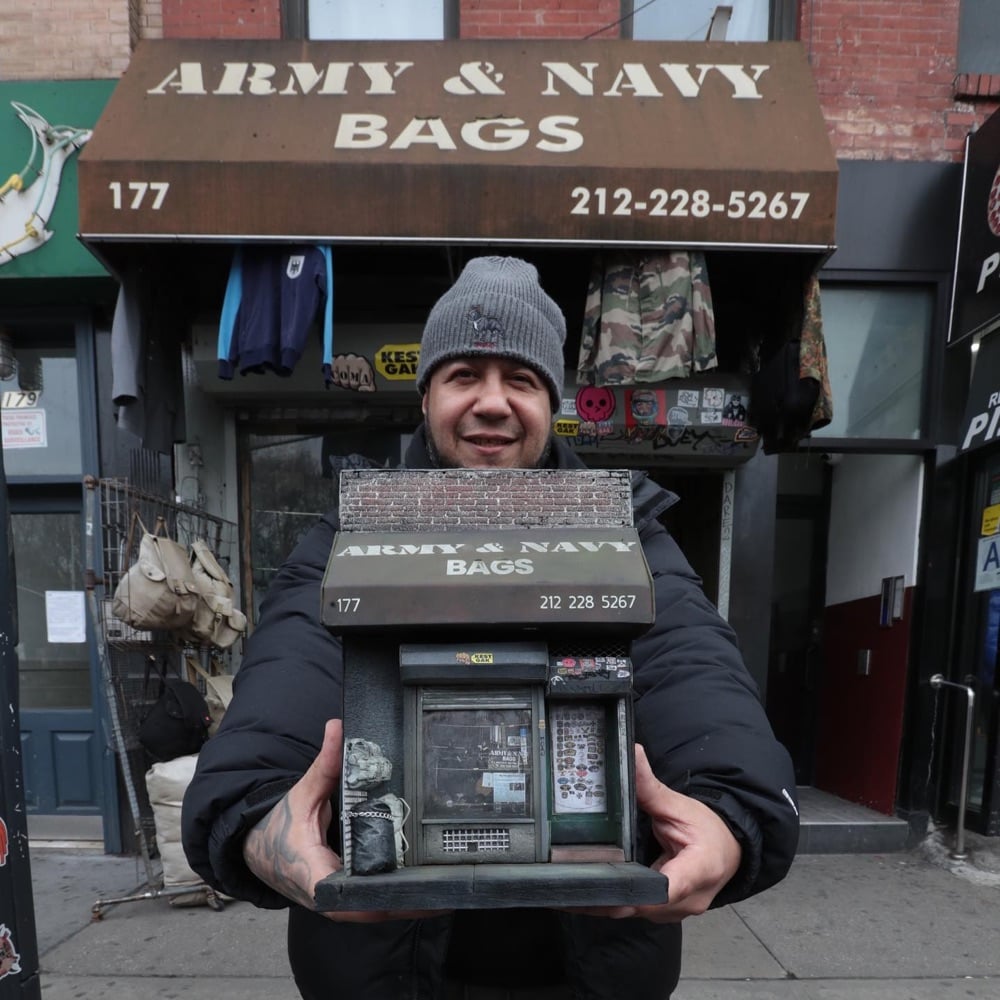
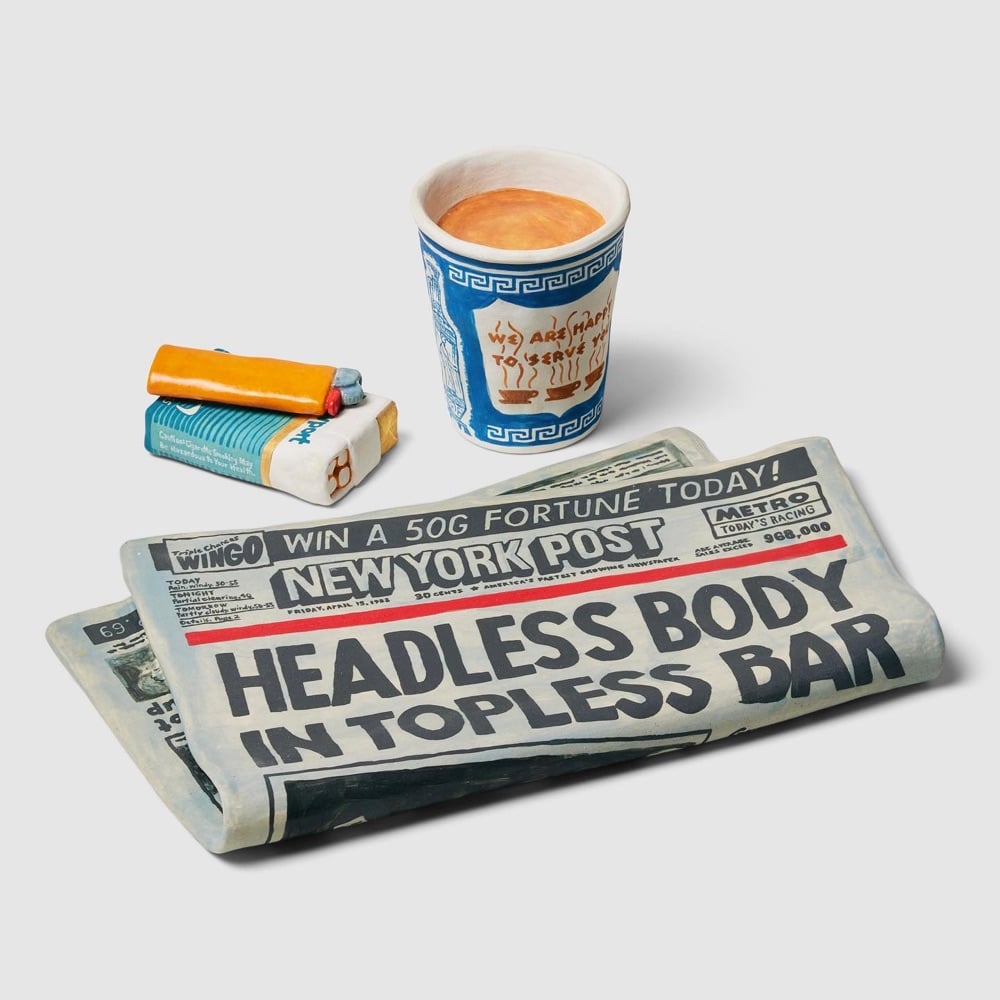
Museum is the world's smallest museum, located in a small walk-in closet-sized space in Cortlandt Alley between Franklin St & White St in NYC. Collectors Weekly talked with one of the museum's founders.
In the current season, there's a collection of toothpaste tubes from around the world. There's a collection of mutilated U.S. currencies, money that's counterfeit or real money that's been scrawled on. There's a collection from Alvin Goldstein, who was the founder and editor of Screw magazine, who shared with us personal belongings that have stayed with him throughout the narrative of his life. There's a collection of Disney-themed children's bulletproof backpacks. They're things that touch upon something that's happening in society, things that comment on where we're at and how we're thinking and what we're doing.
Jacob Riis came to NYC in 1870 at the age of 21. He had $40 in his pocket, which he quickly spent. Unemployed, he lived for a time in the city's notorious slums before working his way up the social and economic ladder to become one of New York's strongest advocates for reform. Riis also took early advantage of flash photography to steer his camera into the city's darkest corners -- tenements, dark alleys, sweatshops, opium dens, beer halls -- and emerged with photographs that helped shift public opinion on NYC's poverty and slums.
Cronuts are donuts made from croissant dough and they are all the rage here in NYC. They were invented by chef Dominique Ansel and they are only available in limited quantities at his bakery in Soho. Apparently people start lining up for them at 6am and all 200 of the world's daily supply of cronuts are gone within minutes of opening. Naturally, a black market has sprung up, with cronuts selling on Craigslist for upwards of $25/item:
Since I wont be in New York any time soon I thought I would see if I could replicate them at home, and you know what? They are pretty damn good! Now the dough I'm using isnt a proper croissant dough, its my quick dough made with just 20 minutes active work which, compared to traditional croissant dough is a snap to make.
11 Madison Park is either a very good restaurant or the absolute best restaurant in New York City. It depends on whom you ask. But don't ask me: I've only had a drink at 11 Madison Park, and that drink was a Long Island Iced Tea. It came in a highball with four perfect cubes of ice and a wedge of lemon. It cost sixteen dollars and tasted just like college.
"I haven't served one of these in six months," the bartender told me. Like his peers at the other fine New York bars and restaurants where I have lately been ordering Long Island Iced Teas, he had repeated my order back to me: "Long Island Iced Tea?" His neck muscles tightened, giving bloom to a gritted smile. That smile said: "The customer is always right." I confirmed the order, and he obligingly prepared it. Later, when we struck up a conversation, he told me the last person to order a Long Island Iced Tea at 11 Madison Park "was definitely not from New York."
True story: the guy who invented the Long Island Iced Tea is named Bob Butt.
There are a lot of outdoor movies showing in NYC this summer: here's a listing of the whats, wheres, and whens. Movies include The Goonies, Jaws, Duck Soup, Moonrise Kingdom, Grease, and Blade Runner.
A new study from the New York Department of Transportation shows that streets that safely accommodate bicycle and pedestrian travel are especially good at boosting small businesses, even in a recession.
NYC DOT found that protected bikeways had a significant positive impact on local business strength. After the construction of a protected bicycle lane on 9th Avenue, local businesses saw a 49% increase in retail sales. In comparison, local businesses throughout Manhattan only saw a 3% increase in retail sales.
And that's just one of the many tidbits from a NYC DOT report released last November (right around the time of Hurricane Sandy, which is probably why no one noticed at the time); read the whole report here:
Among them: "retail sales increased a whopping 172% after the city converted an underused parking area in Brooklyn into a pedestrian plaza", and traffic calming in the Bronx decreased speeding by ~30% and pedestrian crashes by 67%. (via @lhl)
Claim #3: The stations are too ugly for historic neighborhoods, and Citibank's sponsorship is too crassly commercial.
These are just some of the claims behind a series of lawsuits that are already in the works, brought by specific building owners who argue that docking stations don't belong next to their beautiful buildings. They're also worried that delivery truck access may be impeded by the presence of some stations. The lawsuits are being filed within the context of additional complaints that neighbors feel they weren't consulted on the location of some stations, despite the city's department of transportation having held nearly 400 meetings on station locations with community boards and other neighborhood groups. This is a classic NIMBY reaction, and by far the easiest one the city could have predicted. The idea that bike-share infrastructure is somehow uglier or more commercial than any other element of New York's streetscape is easy enough to debunk. But the truth is, one of the best things about the design of the Alta bike-share stations is how easy they are to install and, if need be, later remove. It's entirely possible that small problems with the specific locations of some stations will become apparent after the program launches, and they'll need to be moved around the corner or across the street to better serve users. This has happened here in Washington, D.C., and it'll happen for sure in New York. But that's all part of the bike-share roll-out process. If there's a legitimate problem with the location of a single station, that can actually be fixed within in a matter of hours or at worst, a day or two.
Our neighborhood newspaper went full-NIMBY about the bike-share this week and hit all the major points addressed in this article, including the ridiculous "bike racks are taking valuable parking spots" one. (via @jmseabrook)
Economically speaking, the problem is a standard one, known as the J-curve, which represents a downslope on a graph followed by a steep rise. Some sensible changes to the current food-vendor system may have long-term benefits for everyone, but the immediate impact could spell short-term losses for those who now profit from the system. A small group of New Yorkers -- particularly owners of commissaries and physical restaurants -- are highly motivated to lobby politicians not to change things. And most of the potential beneficiaries don't realize they're missing out. Many of the rest of us would love to have more varied food trucks, but we don't care enough to pressure the City Council.
4. "The Rye" (Season 7, Episode 11)
This episode's titular breadstuff-which Jerry steals from an old lady who refuses to sell it to him, even for 50 bucks-supposedly comes from Schnitzer's, a great New York bakery name if we've ever heard one. The real place was called Royale Kosher Bake Shop. Unfortunately, it's now closed. A Jenny Craig branch stands in its place at 237 W. 72nd St. Also in this episode: Kramer leads Beef-a-Reno-fueled hansom cab rides through Central Park. His skills as a tour guide are questionable, though, as his historical "facts" are impressively inaccurate. For example, Frederick Law Olmsted and Calvert Vaux-not former New York Yankee Joe Pepitone-designed the park.
Already good, Seinfeld got 100 times better when I moved to NYC and got 10 more of the jokes per episode.
Caroline Rothstein on how Kids came about and what happened to the young actors who starred in the film.
Two decades after a low-budget film turned Washington Square skaters into international celebrities, the kids from Kids struggle with lost lives, distant friendships, and the fine art of growing up.
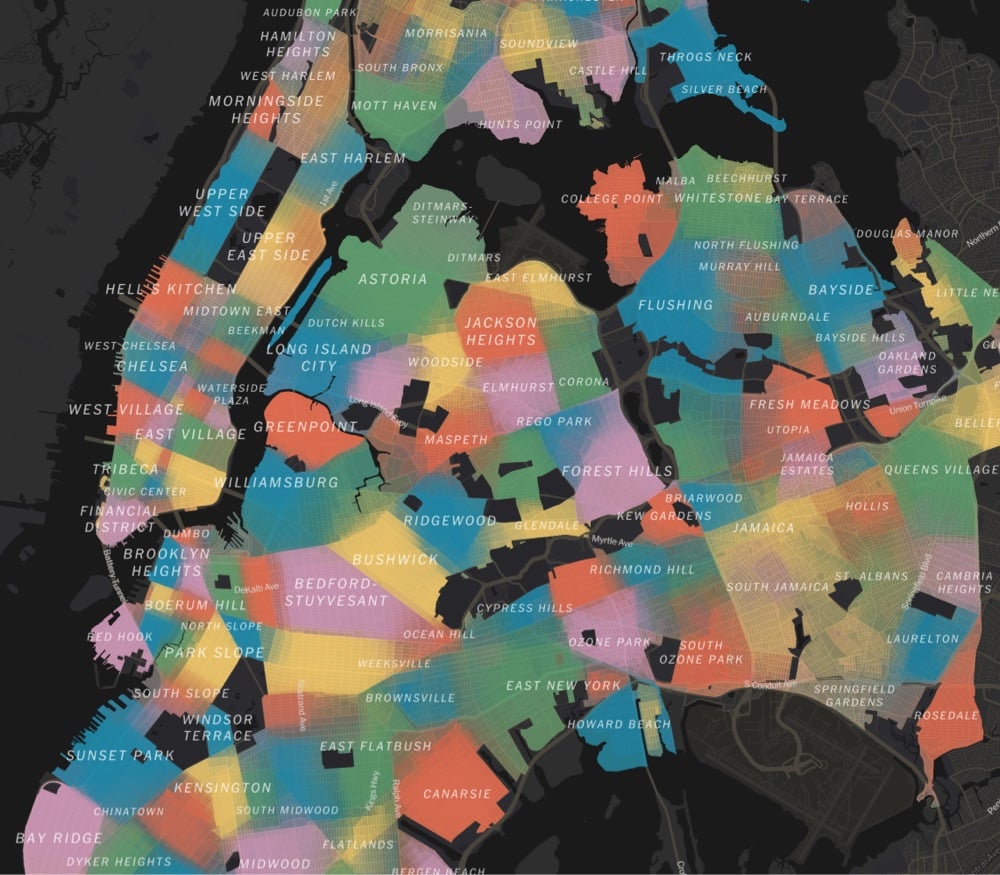
The Morning News has a collection of maps showing the neighborhoods that New Yorkers might want to move to in a variety of cities around the world. Probably lots of generalizations to argue about here...have fun!
Prenzlauer Berg = Park Slope. Among the first neighborhoods to be gentrified after the Wall fell, Prenzlauer Berg (the locals shorten it to Prenzlberg, which isn't all that much shorter, but whatever) is populated by the same desperately, tragically hip mothers and fathers as Park Slope. But American yuppies have nothing on their German counterparts, who will invade a coffee shop, block the door with strollers, and turn it into a temporary romper room.
"Starting today, if it's a rigid plastic -- any rigid plastic -- recycle it," said Mayor Bloomberg. "There is no more worrying about confusing numbers on the bottom of the container. This means that 50,000 tons of plastics that we were sending to landfills every year will now be recycled and it will save taxpayers almost $600,000 in export costs each year."
"Today's announcement represents the largest expansion of our City's recycling efforts in 25 years," said Deputy Mayor Holloway. "We were able to take this step because of the major commitment we made to recycling as part of the City's Solid Waste Management Plan in 2006 -- and this commitment continues today and will result in cost savings and 50,000 tons of plastics that we were sending to landfills every year now being recycled."
It looks like the online guidelines have been updated so you can go look at the specific dos and donts. Also mentioned in the press release is the expansion of the pickup of compostable material:
The City will also expand the organics recycling pilot under way in public schools in Brooklyn and Manhattan to residents in the Westerleigh neighborhood of Staten Island next month, to other neighborhoods this fall and to all City schools over the next two years. The food waste composting pilot cut the amount of garbage participating schools sent to landfills by up to 38 percent.
I can't wait until they offer curb-side compost pickup for everyone. (via @eqx1979)
Caught The Central Park Five on PBS last night and it's one of those films that puts you into rage-against-the-machine mode.
The Central Park Five, a new film from award-winning filmmaker Ken Burns, tells the story of the five black and Latino teenagers from Harlem who were wrongly convicted of raping a white woman in New York City's Central Park in 1989. The film chronicles The Central Park Jogger case, for the first time from the perspective of these five teenagers whose lives were upended by this miscarriage of justice.
The entire film is available to watch on the PBS web site. Tonight, there's a TimesTalk in NYC featuring Ken Burns, Sarah Burns, Times columnist Jim Dwyer, and all five of the exonerated men; the talk will be broadcast live on the web here.
Filmed at 780 fps with a Phantom Flex from the back of a moving SUV, James Nares' Street depicts people walking New York streets in super slow motion.
The film runs 60 minutes (depicting about three minutes of real time footage), Sonic Youth's Thurston Moore did the soundtrack, and it's on display at The Met until the end of May.
A long piece in this week's New Yorker by Marc Fisher about more alleged sexual abuse at The Horace Mann School, a prep school in the Bronx. Fisher's piece focuses on Robert Berman, an English teacher at the school for many years.
One group of boys stood apart; they insisted on wearing jackets and ties and shades, and they stuck to themselves, reciting poetry and often sneering at the rest of us. A few of them shaved their heads. We called them Bermanites, after their intellectual and sartorial model, an English teacher named Robert Berman: a small, thin, unsmiling man who papered over the windows of his classroom door so that no one could peek through.
Assigned to Berman for tenth-grade English, I took a seat one September morning alongside sixteen or seventeen other boys. We waited in silence as he sat at his desk, chain-smoking Benson & Hedges cigarettes and watching us from behind dark glasses. Finally, Mr. Berman stood up, took a fresh stick of chalk, climbed onto his chair, and reached above the blackboard to draw a horizontal line on the paint. "This," he said, after a theatrical pause, "is Milton." He let his hand fall a few inches, drew another line, and said, "This is Shakespeare." Another line, lower, on the blackboard: "This is Mahler." And, just below, "Here is Browning." Then he took a long drag on his cigarette, dropped the chalk onto the floor, and, using the heel of his black leather loafer, ground it into the wooden floorboards. "And this, gentlemen," he said, "is you."
The next day, I asked to be transferred. I was not alone. By the end of the week, Berman's class had shrunk by about half. The same thing happened every year; his classes often ended up as intimate gatherings of six to eight. Many students found Berman forbidding, but some of the teachers referred to him as a genius. Boys competed to learn tidbits about him. It was said, with little or no evidence, that he was an artist and a sculptor, that he knew Sanskrit, Russian, and Urdu, and that his wife and child had been killed in a horrific car crash. Though he was only in his mid-thirties, a graduate of the University of Michigan, it was rumored that he had been a paleontologist and had taught at Yale. Administrators told students and their parents that Horace Mann was incredibly lucky to have him, however odd he might be. The boys who remained in his classes were often caught up in his love of art, music, and literature, and in his belief that every moment of life should be spent reaching for the transcendence of the Elgin Marbles, of a fresco by Fra Angelico, even of an ordinary sunset. The boys absorbed the lists he made. "Take this down," he'd say. "The ten greatest racehorses of all time." Or, "This is the list of the ten greatest movies ever made-but you won't find 'Lawrence of Arabia' on it, because it's off the charts!" One day, he mounted a rearview mirror on the far wall of the classroom so that he could stare at the portrait of Milton behind his back.
It's part of an unannounced, surprise performance piece called "The Maybe" that will be taking place on random days all year. A MoMA source told us, "Museum staff doesn't know she's coming until the day of, but she's here today. She'll be there the whole day. All that's in the box is cushions and a water jug."
Clearly some crowdsourced announcement system is needed...perhaps istildaswintonsleepingatmomaornot.tumblr.com? Also, in keeping with the theme of "my kid could do that" in contemporary art, both my kids slept at MoMA in chairs with wheels on them.
Starting on April 4, Upstream Color begins its run at IFC in New York. Star/director Shane Carruth will be in attendance for post-screening Q&As for several of the shows.
Younger gamers are, in a sense, both the secret to Barcade's success and its great ongoing threat. More than players like Chien and the older pros, Barcade attracts young local patrons typical of the Brooklyn bar scene. For many of these visitors the classic arcade hits of the 1980s were released long before they were born, familiar to them primarily as cultural icons rather than living memories.
"When we opened in 2004, some of these games weren't even 20 years old," says Kermizian. "But now, eight years on, we find the ideal period of nostalgia keeps shifting on us as our customers are a little bit younger. So we've started to go with some early '90s games. You know, we've put Teenage Mutant Ninja Turtles in two of the three arcade locations and that's our number one most popular game now. People just go crazy playing that."
On a good night a single Teenage Mutant Ninja Turtles machine will see its coin tray filled. "At the end of the night we just dump a bucket of quarters out of the machine, around 50 bucks worth."
All these years on, with prices unadjusted for inflation, the aging arcade still offers a viable business. But time continues to be the greatest menace to the arcade, even in the midst of this repackaged revival. For many, this parade of curios whose bleeps and flashes provide an atmospheric link to the past long gone is little more than a hands-on exhibit, where Space Invaders' and Pac-Man's iconography is not forgotten but made fashionable. But fashions are transient. How long can the business model sustain?
File this one under crying at work: a man finds a newborn on a subway platform and he and his partner adopt him and then blub blub blub, I'm sorry I have to go there's something in both my eyes and my nose.
Three months later, Danny appeared in family court to give an account of finding the baby. Suddenly, the judge asked, "Would you be interested in adopting this baby?" The question stunned everyone in the courtroom, everyone except for Danny, who answered, simply, "Yes."
"But I know it's not that easy," he said.
"Well, it can be," assured the judge before barking off orders to commence with making him and, by extension, me, parents-to-be.
That's from a series called Darkened Skies by Thierry Cohen; he photographed various cities (NYC, Paris, Tokyo, SF) and matched them up with starry skies from more remote places like Montana, Nevada, and the Sahara. New Yorkers can see Cohen's work at the Danziger Gallery starting March 28.
1. Grand Central Terminal opened its doors at midnight on February 2, 1913.
9. To commemorate the centennial on Friday, shops and eateries will price their goods as if it were 1913. [Ed note: I doubt this applies to the Apple Store.]
39. A secret trap door in the kiosk below the clock leads to a spiral staircase down to the lower level info booth.
50. M42 connects to a secret underground platform at the Waldorf Astoria.
93. In 1978's Superman, Lex Luther's lair is located under the terminal.
The idea is that passengers rushing to catch trains they're about to miss can actually be dangerous -- to themselves, and to each other. So conductors will pull out of the station exactly one minute after their trains' posted departure times. That minute of extra time won't be enough to disconcert passengers too much when they compare it to their own watches or smartphones ... but it is enough, the thinking goes, to buy late-running train-catchers just that liiiiiitle bit of extra time that will make them calm down a bit. Fast clocks make for slower passengers.
Mr. Koch's 12-year mayoralty encompassed the fiscal austerity of the late 1970s and the racial conflicts and municipal corruption scandals of the 1980s, an era of almost continuous discord that found Mr. Koch at the vortex of a maelstrom day after day.
But out among the people or facing a news media circus in the Blue Room at City Hall, he was a feisty, slippery egoist who could not be pinned down by questioners and who could outtalk anybody in the authentic voice of New York: as opinionated as a Flatbush cabby, as loud as the scrums on 42nd Street, as pugnacious as a West Side reform Democrat mother.
"I'm the sort of person who will never get ulcers," the mayor - eyebrows devilishly up, grinning wickedly at his own wit - enlightened the reporters at his $475 rent-controlled apartment in Greenwich Village on Inauguration Day in 1978. "Why? Because I say exactly what I think. I'm the sort of person who might give other people ulcers."
Koch, New York City's dominant political figure of the 1980s and the architect of what remains its governing political coalition, stayed politically relevant through his long political twilight, courted aggressively by figures including Presidents George W. Bush and Barack Obama for his role as a proxy for pro-Israel Democrats willing, but not eager, to cross party lines.
But Koch's later years of quips, movie reviews, and presidential politics remain secondary to his central legacy, which is in New York's City Hall. Tall and gangly with a domed, bald head and a knowing smile, Koch was New York's mayor and its mascot from 1978 to 1989. Through three terms, he repeated one question like a mantra: "How'm I doing?" At first, the answer was clear to observers who had watched the city slide toward bankruptcy: exceptionally well. Koch managed New York back from the brink, drove hard bargains with municipal unions, cut jobs where he had to and reduced taxes where he could. He presided over a boom in Manhattan, and spent his new revenues on renewing the south Bronx.
But as the Koch administration moved its third term, the mayor lost his momentum. As Wall Street boomed in the 1980s, Koch took advantage of the new revenues to double New York City's budget and offer tax breaks to real estate developers. But the largesse couldn't buy him friends: he clashed with black leaders and his old allies among Manhattan's liberal democrats. New York became famous for its racial tensions and rising crime. He courted the Democratic Party bosses of Queens and the Bronx only to be tarnished by the corruption scandals that surrounded them.
Here's the trailer for Koch, a documentary on the former mayor that coincidentally opens today in limited release:
During a walk with noise historian Hillel Schwartz, Peter Andrey Smith discovers that parts of Manhattan, which many think of now as quite deafening, used to be even noisier.
"There was a constant flotilla of barges taking construction detritus away from the city, toward the Jersey shore," he said. "All of these Irish tugboat captains probably knew the service staff, and they would be signaling to them, 'Hi, I'm coming by!' But they would be signaling with these huge horns! And they would be signaling late at night, also, to their complement of workers, who were now on shore, drinking heavily in a nearby tavern: 'O.K., time to call it quits!' The number of horns recorded over the course of an evening amounted to thousands. I hesitate to call them toots. They were horn swarms."
The central attraction of the ground floor level is a huge mega-menu that lists every item from every McDonald's in the world, because this McDonald's serves ALL of them. There would probably have to be touch screen gadgets to help you navigate the menu. There would have to be whole screens just dedicated to the soda possibilities. A concierge would offer suggestions. Celebrities on the iPad menus would have their own "meals" combining favorites from home ("Manu Ginobili says 'Try the medialunas!'") with different stuff for a unique combination ONLY available at McWorld. You could get the India-specific Chicken Mexican Wrap ("A traditional Mexican soft flat bread that envelops crispy golden brown chicken encrusted with a Mexican Cajun coating, and a salad mix of iceberg lettuce, carrot, red cabbage and celery, served with eggless mayonnaise, tangy Mexican Salsa sauce and cheddar cheese." Wherever possible, the menu items' descriptions should reflect local English style). Maybe a bowl of Malaysian McDonald's Chicken Porridge or The McArabia Grilled Kofta, available in Pakistan and parts of the Middle East. You should watch this McArabia ad for the Middle Eastern-flavored remix of the "I'm Lovin' It" song if for nothing else.
And I loved his take on fast food as molecular gastronomy:
How much difference really is there between McDonald's super-processed food and molecular gastronomy? I used to know this guy who was a great chef, like his restaurant was in the Relais & Châteaux association and everything, and he'd always talk about how there were intense flavors in McDonald's food that he didn't know how to make. I've often thought that a lot of what makes crazy restaurant food taste crazy is the solemn appreciation you lend to it. If you put a Cheeto on a big white plate in a formal restaurant and serve it with chopsticks and say something like "It is a cornmeal quenelle, extruded at a high speed, and so the extrusion heats the cornmeal 'polenta' and flash-cooks it, trapping air and giving it a crispy texture with a striking lightness. It is then dusted with an 'umami powder' glutamate and evaporated-dairy-solids blend." People would go just nuts for that. I mean even a Coca-Cola is a pretty crazy taste.
I love both mass-produced processed foods and the cooking of chefs like Grant Achatz & Ferran Adrià. Why is the former so maligned while the latter gets accolades when they're the same thing? (And simultaneously not the same thing at all, but you get my gist.) Cheetos are amazing. Oscar Meyer bologna is amazing. Hot Potato Cold Potato is amazing. Quarter Pounders with Cheese are amazing. Adrià's olives are amazing. Coca-Cola is amazing. (Warhol: " A Coke is a Coke and no amount of money can get you a better Coke than the one the bum on the corner is drinking.") WD50's Everything Bagel is amazing. Cheerios are amazing. All have unique flavors that don't exist in nature -- you've got to take food apart and put it back together in a different way to find those new tastes.
In the new exhibition Our Global Kitchen: Food, Nature, Culture, the American Museum of Natural History explores the complex and intricate food system that brings what we eat from farm to fork. In sections devoted to growing, transporting, cooking, eating, tasting, and celebrating, the exhibition illuminates the myriad ways that food is produced and moved throughout the world. With opportunities to taste seasonal treats in the working kitchen, cook a virtual meal, see rare artifacts from the Museum's collection, and peek into the dining rooms of famous figures throughout history, visitors will examine the intersection of food, nature, culture, health, and history -- and consider some of the most challenging issues of our time.
The exhibition is on from November 17, 2012 to August 11, 2013.
Oh Vogue, who thought a Hurricane Sandy-themed photo shoot with supermodels walking through Far Rockaway dressed in the likes of Rodarte and Marc Jacobs was a good idea?
"...we spent the night on a bridge, then went back in with the National Guard to work on patients." On Iman: Narciso Rodriguez camisole and pencil skirt. On Kloss: Diane von Furstenberg dress. Hair: Julien d'Ys for Julien d'Ys. Makeup: Stéphane Marais.
I guess they were going for inappropriate & provocative but hit inappropriate & idiotic instead? Vogue did raise a bunch of money for storm relief, but still. They should leave the provocative stuff to Vogue Italia and Steven Meisel...they're a lot better at it. (via @alexandrak)
This is a silent film from 1926 that shows a call coming in to a Manhattan fire station, a first-person POV shot from the chief's car as he responds to a call, and then some firemen fighting a blaze consuming a storage warehouse.
The driving through the crowded streets of Manhattan starts at about 2:10 with the BAD TRAFFIC JAMS FORCE USE OF SIDEWALKS title card coming soon after at 2:51. The film is sped up but still, the chief dodges all manner of roadsters, horse-drawn wagons, trolleys, buses, automobiles, and other assorted conveyances.
Today NYC mayor Michael Bloomberg urged the President and Congress to take action on gun violence. Here are three of his six specific suggestions:
Pass the legislation of Fix Gun Checks Act that would require a criminal background check for all gun sales including all private sales and online sales
Ban deadly, military-style assault weapons and high-capacity magazines, which were previously banned under the now expired Federal assault weapons ban
With all the carnage from gun violence in our country, it's still almost impossible to believe that a mass shooting in a kindergarten class could happen. It has come to that. Not even kindergarteners learning their A,B,Cs are safe. We heard after Columbine that it was too soon to talk about gun laws. We heard it after Virginia Tech. After Tucson and Aurora and Oak Creek. And now we are hearing it again. For every day we wait, 34 more people are murdered with guns. Today, many of them were five-year olds. President Obama rightly sent his heartfelt condolences to the families in Newtown. But the country needs him to send a bill to Congress to fix this problem. Calling for 'meaningful action' is not enough. We need immediate action. We have heard all the rhetoric before. What we have not seen is leadership -- not from the White House and not from Congress. That must end today. This is a national tragedy and it demands a national response. My deepest sympathies are with the families of all those affected, and my determination to stop this madness is stronger than ever.
There's no memory at Twitter: everything is fleeting. Though that concept may seem daunting to some (archivists, I feel your pain), it also means the content in my feed is an endless stream of new information, either comments on what is happening right now or thoughts about the future. One of the reasons I loved the Internet when I first discovered it in the mid-1990s was that it was a clean slate, a place that welcomed all regardless of your past as you wrote your new life story; where you'd only be judged on your words and your art and your photos going forward.
Schuman asked the woman how she was able to create such a dramatic change:
Actually the line that I think was the most telling but that she said like a throw-away qualifier was "I didn't know anyone in New York when I moved here..."
I think that is such a huge factor. To move to a city where you are not afraid to try something new because all the people that labeled who THEY think you are (parents, childhood friends) are not their to say "that's not you" or "you've changed". Well, maybe that person didn't change but finally became who they really are. I totally relate to this as a fellow Midwesterner even though my changes were not as quick or as dramatic.
I bet if you ask most people what keeps them from being who they really want to be (at least stylistically or maybe even more), the answer would not be money but the fear of peer pressure -- fear of embarrassing themselves in front of a group of people that they might not actually even like anyway.
For a certain type of person, changing oneself might be one of the best ways of feeling free and in control of one's own destiny. And in the social media world, Twitter feels like continually moving to NYC without knowing anyone whereas Facebook feels like you're living in your hometown and hanging with everyone you went to high school with. Twitter's we're-all-here-in-the-moment thing that Matt talks about is what makes it possible for people to continually reinvent themselves on Twitter. You don't have any of that Facebook baggage, the peer pressure from a lifetime of friends, holding you back. You are who your last dozen tweets say you are. And what a feeling of freedom that is.
For early art photographers, the ultimate creativity lay not in the act of taking a photograph but in the subsequent transformation of the camera image into a hand-crafted picture.
Some dude next you on the subway falls asleep on your arm and you just go on about your business. That's about right. (via gothamist, photo by molossoidea)
The rare day occurred on Monday, near the end of a year when the city's murder rate is on target to hit its lowest point since 1960, according to New York Police Department chief spokesman Paul Browne.
Browne said it was "first time in memory" the city's police force had experienced such a peaceful day.
While crime is up 3 percent overall, including a 9 percent surge in grand larceny police attribute to a rash of smart phone thefts, murder is down 23 percent over last year, the NYPD said.
We are very proud to announce that MoMA has acquired a selection of 14 video games, the seedbed for an initial wish list of about 40 to be acquired in the near future, as well as for a new category of artworks in MoMA's collection that we hope will grow in the future. This initial group, which we will install for your delight in the Museum's Philip Johnson Galleries in March 2013, features...
The games include Tetris, Passage, The Sims, and Katamari Damacy. No Nintendo games on that list, probably due to ongoing negotiations with Nintendo.
In 2006, New York magazine published a piece by Clive Thompson about what climate change is doing to New York's weather.
Nobody really knows what'll happen more than a week in advance, of course. But if we assemble these major climatic trends, a rough snapshot of New York's future begins to emerge.
First off, El Nino will keep our winters reasonably mild and reduce hurricanes in the immediate future, possibly until as late as 2008, because El Ninos usually last for only one or two years.
Meanwhile, the AMO will remain in its warm phase, charging up storms and hurricanes off our shores, for much longer, probably another twenty years. So while El Nino may be driving a temporary reprieve in our nasty weather, once it dissipates, the long-term trend is back to tumultuous hurricane seasons.
The final ingredient in the mix is global warming. In the past century, the average temperature in New York has risen by two degrees, and the trend shows no sign of slowing down. Indeed, the computer models reviewed in the "Metropolitan East Coast Climate Assessment" -- a 50-year prediction of New York's changing climate, developed by nasa and Columbia University -- suggest that the city will continue to heat up by as much as one degree by 2010, two degrees by 2020, and accelerate on a gentle curve until we reach as much as nine degrees warmer than now in 2100. It doesn't particularly matter whether you believe the warming is man-made or a natural cycle (most, but not all, climatologists believe the former). The point is, pumping that much extra energy into the system is bound to have some effect.
The impact on our daily life, though, is the big question. A few degrees of warming won't turn New York into a Miami-class shirtsleeves town. The effect will be more subtle: Climate scientists suspect that a warmer climate will produce more weather volatility. It's not that we'll have more rain overall, more snow overall, or more storms overall. But each event will be more intense than before.
"We're more likely to get hotter heat waves," says Mark Cane, a climatologist at Columbia University. "And increased storminess" adds Cullen. Both effects are due to the additional energy that global warming pumps into the "hydrological cycle," the water and energy that circulates through the atmosphere -- and it's water that creates weather.
As they say, "nailed it". The term "global warming" continues to be a misleading when it comes to the effect of the Earth's increasing temperature on our weather; as Thompson notes, it's not that it's just gonna get a little hotter in the summer or a little less snowy in the winter, the weather's gonna get weirder. Which is a problem...it's difficult for society to measure and talk about "weird".
In their book Store Front: The Disappearing Face of New York, James and Karla Murray are documenting the changing commercial facade of NYC's streets. A recent post on their blog focuses on a strip of Bleecker St between 6th and 7th Avenues in the West Village. This is Murray's old location circa 2001, before they moved across the street into a bigger space, expanded that space, and opened an adjacent restaurant:
I moved to the West Village in 2002 and, after a few stops in other neighborhoods around the city, moved back a couple years ago. Walking around the neighborhood these days, I'm amazed at how much has changed in 10 years. Sometimes it seems as though every single store front has turned over in the interim. (via @kathrynyu)
"The man stepped toward him, caught [Trevell] Coleman's eye, and grabbed for the gun. Startled, Coleman squeezed off three shots. The man winced, but didn't make a sound." That was seventeen years ago. Trevell Coleman never knew what happened to the person he shot, but he wanted to find out. From NY Mag: The Man Who Charged Himself with Murder.
Now, the nearest Level One trauma centers for residents of lower Manhattan aren't all that close: New York Presbyterian/Weill Cornell Medical Center is on the Upper East Side at East 68th Street and St. Luke's/Roosevelt Hospital is on the Upper West Side.
Officials say there's no reason to think that, for now, trauma victims in lower Manhattan will be any worse off than those in other parts of the city. The response speed is still acceptable, they say. And if a trauma victim is in an immediately life-threatening situation, such as a traumatic cardiac arrest, ambulances bring them to the closest hospital, regardless of whether it's a trauma center.
But the fear is that there won't be enough surge capacity at other hospitals if there is a major disaster, or that overworked staff at other hospitals will grow fatigued under the load and patient care could suffer.
Well, I'm sure the free market will sort all of this out. (via @Atul_Gawande)
Publishing on kottke.org is suspended until further notice. The situation in New York and New Jersey is still dire** so posting stupid crap seems frivolous and posting about the Sandy aftermath seems exploitive. Information is not what people need right now; people need flashlights, candles, drinking water, safety, food, access to emergency medical care, a warm place to sleep, etc.
Anyway, we'll be back in a few days hopefully.
** I say "still dire" because I think the perception among people not in the NY/NJ area is one of "oh, the storm has passed, the flooding is subsiding, and everything is getting back to normal". But that's not what I'm hearing. What I'm hearing is that there are large areas that have been without power for 4-5 days, people are running out of food and gas, food and gas deliveries are not happening, etc. Things are getting worse (or certainly have the potential to get worse), not better, especially for those without the resources to care about which cool restaurants are open or how much an iPhone car service is gouging its customers or which Midtown office they're gonna work on their startup from.
Jason is still without power, but he and family are doing fine.
JFK and Newark are open, but jammed.
ConEd is saying Manhattanites without power will get it back within 3 days. Interactive map of the outages. Long Island could be longer. ConEd map here.
(Jason and family are fine, but without power, unsure of when it will come back. Aaron will be updating this throughout the day.)
Hurricane Sandy went through New York City yesterday causing massive flooding and power loss all over the city. While expectations for the storm had ranged across the spectrum, most observers seemed to be caught off guard at the amount of destruction. Here is the Kottke.org Hurricane Sandy link from yesterday and the one from the day before.
Updated Wed 12:15am ET:
22 deaths reported in New York City, 40 total in eight states combined. Several dozen more in Haiti and the Caribbean. This in the NYTimes, talks about two of NYC's fatalities.
I asked my friend Kevin for a few words on how a new New Yorker rode out the storm.
During the worst of the storm, around 9 p.m., I was huddled in my bed watching Homeland on my laptop, scanning Thought Catalog's surprisingly good Hurricane Sandy Liveblog, and checking Twitter, which was probably in the finest form I've seen it in a long time: a terrific balance of helpful updates, links, GIFs, and personal communication. Even misinformation, which spreads like wildfire via retweet, was quickly debunked, like CNN's report that the NYSE was under three feet of water. My one disappointment was Twitter's fake satirical accounts, which were mostly uninspired, with the bold exceptions of @ElBloombito and @RomneyStormTips (which was mysteriously shut down).
This might be a dark cloud for many New Yorkers still digging out. Disney has purchased Lucasfilm and plans to release a new Star Wars feature film every 2-3 years. Star Wars 7 comes out in 2015. This information is being delivered to Jason by land line telephone, like in the old days.
I've not been able to find much information about the impact the storm damage in NJ, NYC, CT, and DE will have on the election. Not on the politics of it, which have been interesting, but will people actually be able to vote? I just heard a radio report on All Things Considered that officials in NJ and CT, at least, are assessing the issue now and considering all options such as loosening absentee ballot rules, paper ballots, generators in voting locations, etc. While states have the responsibility of managing the elections, the date of the election is mandated by the Constitution as "the first Tuesday after the first Monday in November." It's unclear whether states have the power to move this date, but preventing citizens from having to vote after most of the votes in the country have been cast is the priority at this point.
Up here in Boston, things seem to be OK. My neighborhood experienced high winds and whipping rain, but fairly low damage. My street, which floods once or twice a year in heavy rain, was fine. There are reports of branches and trees downing power lines around Cambridge, Somerville, Boston, etc, but most friends that lost power got it back after a relatively short period.
New York death toll updated to 15, 10 in the city.
Mayor Bloomberg spoke earlier this morning to update the city. "This was a devastating storm. Maybe the worst that we have ever experienced." (This video seems wonky, you might have to scroll forward to get it started.)
All of the MTA tunnels under the rivers flooded, and, "There is currently no timetable" for when the subway will be up and running again.
As of last night, seven subway tunnels under the East River flooded. Metro-North Railroad lost power from 59th Street to Croton-Harmon on the Hudson Line and to New Haven on the New Haven Line. The Long Island Rail Road evacuated its West Side Yards and suffered flooding in one East River tunnel. The Hugh L. Carey Tunnel is flooded from end to end and the Queens Midtown Tunnel also took on water and was closed. Six bus garages were disabled by high water. We are assessing the extent of the damage and beginning the process of recovery. Our employees have shown remarkable dedication over the past few days, and I thank them on behalf of every New Yorker. In 108 years, our employees have never faced a challenge like the one that confronts us now. All of us at the MTA are committed to restoring the system as quickly as we can to help bring New York back to normal.
The back up generator at NYU Hospital failed last night forcing hospital staff, firefighters, and EMTs to carry patients down flights of stairs as they were evacuated to other hospitals.
Along with hundreds of thousands of New Yorkers, Gizmodo, Gawker, Daily Kos, and Buzzfeed were among many websites which went down after their data-centers in lower Manhattan lost power.
Letterman and Fallon did their shows without audiences last night.
Crazy video of a ConEd plant exploding on E14 and FDR.
Video of flooding at East 8th and Avenue C, especially spooky because the power suddenly goes out at the :40 second mark. (via Gawker)
It's about 1:30 pm here in NYC and we're starting to see the effects of Hurricane Sandy. Rivers are overflowing their banks, wind is whipping, and residents are either hunkered down or scurrying around picking up last minute supplies. I'll be updating this post when I can, here and there, during the course of the day.
Updated Mon 7:42pm ET:
Kids are way worse than the hurricane today. FEMA, NYPD, FDNY, need emergency parental evac now!
The storm's quicker-than-expected forward motion means it will make landfall about two hours sooner than previously anticipated. Landfall is now expected around 6 p.m. this evening, near or just south of Atlantic City, N.J. This doesn't change the forecast much for coastal New Jersey, but it could greatly complicate coastal flooding projections for New York Harbor.
Whoa, it looks like the situation in the Brooklyn subway is getting dire:
Not from The Onion, but this report on how Williamsburg residents are coping with the storm sure reads like it:
"I just got these kick-ass new stereo speakers and I am going to listen to those until the power runs out," Jim Butler, another Edge resident, said, tugging on the doors of the CVS that is part of the complex-it had just closed a few minutes before 5 p.m. "Then I'm going to read and look at my art books. I'll live by candlelight, get in touch with my 19th century self."
From just now on the TV: Con Ed has taken down the Bowling Green and Fulton electrical networks in lower Manhattan. Likely area hit is "east of Broadway btwn Wall St & tip of Manhattan & from Frankfort to Wall btwn William St & East river."
Water level at the Battery has hit 11.25 ft, breaking a record set in 1821.
He took a camera crew to the U.S. Weather Bureau (now the National Weather Service) office in downtown Galveston, which featured a cutting-edge WSR-57 radar console. He convinced the bureau staff to let him broadcast, live, from the office. He asked a Weather Bureau meteorologist to draw him a rough outline of the Gulf of Mexico on a transparent sheet of plastic; during the broadcast, he held that drawing over the computer's black-and-white radar display to give his audience a sense both of Carla's size and of the location of the storm's eye. As CBS plugged into the broadcast, that audience suddenly became a national one.
Tappan Zee Bridge closed as of 4pm. And all bridges/tunnels in and out of Manhattan are closing at 7pm...or so I've heard on TV/Twitter. Is that right? Has anyone seen the Batman?
Things aren't looking good on Nantucket. And probably not even close to max storm surge.
More footage of the 1938 hurricane that hit the northeastern US.
Updated Mon 3:07pm ET:
Is TV news and Twitter whipping everyone into a hurricane-like froth with its incessant coverage of Sandy? Well, E.B. White has similar complaints about radio and Hurricane Edna back in 1954.
The radio either lets Nature alone or gives her the full treatment, as it did at the approach of the hurricane called Edna. The idea, of course, is that the radio shall perform a public service by warning people of a storm that might prove fatal; and this the radio certainly does. But another effect of the radio is to work people up to an incredible state of alarm many hours in advance of the blow, while they are still fanned by the mildest zephyrs.
Via Jeff Masters, Sandy is already producing record storm surges:
The National Weather Service in Atlantic City, NJ said that isolated record storm surge flooding already occurred along portions of the New Jersey coast with this morning's 7:30 am EDT high tide cycle. As the tide goes out late this morning and this afternoon, water levels will fall, since the difference in water levels between low tide and high tide is about 5'. However, this evening, as the core of Sandy moves ashore, the storm will carry with it a gigantic bulge of water that will raise waters levels to the highest storm tides ever seen in over a century of record keeping, along much of the coastline of New Jersey and New York. The peak danger will be between 7 pm - 10 pm, when storm surge rides in on top of the high tide. The full moon is today, which means astronomical high tide will be about 5% higher than the average high tide for the month, adding another 2 - 3" to water levels.
The Holland Tunnel and the Brooklyn Battery Tunnel will be closing at 2pm today.
I don't know how much I'm going to be updating this, but here's a few things about the hurricane that's bearing down on the East Coast right now. Mostly NYC centric.
Updated Sun 11:52pm ET:
The main hall of the closed Grand Central Terminal, deserted. Even stranger, the busiest subway station in NYC (Times Square), closed and deserted.
The National Weather Service in Upton, New York mentioned today that the predicted maximum water level of 11.7 feet at The Battery in New York City, which is expected to occur at 8:13pm ET on Monday, would break the record of 10.5 feet which was set on September 15, 1960 in Hurricane Donna.
The storm's barometric pressure is going to be historically low:
Sandy should have sustained winds at hurricane force, 75 - 80 mph, at landfall. Sandy's central pressure is expected to drop from its current 953 mb to 945 - 950 mb at landfall Monday night. A pressure this low is extremely rare; according to wunderground weather historian Christopher C. Burt, the lowest pressure ever measured anywhere in the U.S. north of Cape Hatteras, NC, is 946 mb (27.94") measured at the Bellport Coast Guard Station on Long Island, NY on September 21, 1938 during the great "Long Island Express" hurricane.
Masters says that part of the NYC subway system may flood:
The full moon is on Monday, which means astronomical high tide will be about 5% higher than the average high tide for the month. This will add another 2 - 3" to water levels. Fortunately, Sandy is now predicted to make a fairly rapid approach to the coast, meaning that the peak storm surge will not affect the coast for multiple high tide cycles. Sandy's storm surge will be capable of overtopping the flood walls in Manhattan, which are only five feet above mean sea level. On August 28, 2011, Tropical Storm Irene brought a storm surge of 4.13' and a storm tide of 9.5' above MLLW to Battery Park on the south side of Manhattan. The waters poured over the flood walls into Lower Manhattan, but came 8 - 12" shy of being able to flood the New York City subway system. According to the latest storm surge forecast for NYC from NHC, Sandy's storm surge is expected to be at least a foot higher than Irene's. If the peak surge arrives near Monday evening's high tide at 9 pm EDT, a portion of New York City's subway system could flood, resulting in billions of dollars in damage. I give a 50% chance that Sandy's storm surge will end up flooding a portion of the New York City subway system.
On a warm June day in 1978, William J. LeMessurier, one of the nation's leading structural engineers, received a phone call at his headquarters, in Cambridge, Massachusetts, from an engineering student in New Jersey. The young man, whose name has been lost in the swirl of subsequent events, said that his professor had assigned him to write a paper on the Citicorp tower, the slash-topped silver skyscraper that had become, on its completion in Manhattan the year before, the seventh-tallest building in the world.
LeMessurier found the subject hard to resist, even though the call caught him in the middle of a meeting. As a structural consultant to the architect Hugh Stubbins, Jr., he had designed the twenty-five-thousand-ton steel skeleton beneath the tower's sleek aluminum skin. And, in a field where architects usually get all the credit, the engineer, then fifty-two, had won his own share of praise for the tower's technical elegance and singular grace; indeed, earlier that year he had been elected to the National Academy of Engineering, the highest honor his profession bestows. Excusing himself from the meeting, LeMessurier asked his caller how he could help.
The student wondered about the columns--there are four--that held the building up. According to his professor, LeMessurier had put them in the wrong place.
"I was very nice to this young man," LeMessurier recalls. "But I said, 'Listen, I want you to tell your teacher that he doesn't know what the hell he's talking about, because he doesn't know the problem that had to be solved.' I promised to call back after my meeting and explain the whole thing."
Those living above the 10th floor in skyscrapers may want to find shelter in lower floors. Winds increase with height in a hurricane and could be significantly stronger than on ground level. Be cautious about sleeping near a window on Monday night. Do not walk outside on Monday evening, as there could be significant amounts of airborne debris flying around. Rain totals 4-8 inches.
Not a sight you see that often: Grand Central is closed.
BREAKING NEWS! [siren] Powerful Storm Brings Down NY Times Paywall: "The Times is providing free unlimited access to storm coverage on nytimes.com and its mobile apps."
From When There's a Flood: if you're preparing your house for a flood, shut off the water, propane, and electricity.
Just checked Uber in the West Village...about 10 cars less than three minutes away. Usually a lot less inventory than that.
Was rumored that MoMA would be open tomorrow with skeleton crew but word just now from their Twitter account: closed tomorrow.
If the surge runs as high as forecast, Con Ed will shut off two electrical networks in Lower Manhattan, known as the Fulton and Beekman networks, the official said.
I looked all over the place for a map that showed which parts of the city are served by the Fulton and Beekman but couldn't find anything. I'm assuming the Fulton station is near the World Trade Center and the Beekman is on Beekman St by Pace University. So way Lower Manhattan?
Earlier:
Subway, bus and railroad services in New York and New Jersey are being shut down starting at 7pm tonight. Probably won't be back open until sometime on Wednesday.
NYC schools are closed on Monday. And probably Tuesday. And if public transit is closed on Wed, schools with probably be closed that day too.
Did tu packo el vamos bag? No forgeto el casho, los medicatioño y tamponitos.
The WSJ has a great post comparing Sandy with Irene from last year. Sandy is much more potentially damaging in almost all respects.
On Saturday, Sandy became the largest storm in recorded Atlantic basin history, with a diameter of gale force winds of over 1000 miles. Tropical storm warnings were in place Saturday simultaneously for North Carolina and Bermuda, a sign of the storm's massive geographic sweep. Those winds will follow Sandy northward, potentially encompassing more than 50 million people at once from Virginia to New England.
Joshua David Stein takes Guy Fieri deep in a biting review of the ridiculous fat-food huckster's new restaurant in Times Square.
It would be disingenuous to claim that Times Square represents anything but a regurgitation of the American dream, monetized, metastasized, made blindingly bright by light-emitting diodes and shoved back down the gullets of those souls unlucky enough to have mistakenly stumbled into the red zone, or worse, like moths to the incinerating flame, have actively sought it out. To deride Mr. Fieri for opening his restaurant there as if he'd taken a dump in the Louvre is silly. He pooped on a pile of bright shiny poop, Jeff Koonsian poop, Guy Debordian poop. But public defecation is still a crime in New York City (Health Code Section 153.09), and his offenses rest not in their location but in their very nature.
Mr. Fieri not only serves truly horrible-tasting food, an awkward origami of clashing aleatory flavors, but he serves this punishing food emulsified with a bombastic recasting of deep-fried American myth. Mr. Fieri's most egregious transgression isn't what he puts into his fellow citizens' stomachs, it's how the cynical slop interfaces with what he puts into their minds.
Okay. This is when you realize you had a picture in your mind about an isolation tank, so you're going to be simultaneously bummed out and fully relieved that the tank isn't one of them lock-down joints from "Fringe." This one basically looks like a huge bathtub, enclosed behind an upright sliding shower door that's black and features a handsome wooden handle. There is no lid. The darkness is your lid, just as it's always been. (JK JK, I don't even know what that means!) This is good, because you don't have to worry about suffocating on your own carbon dioxide because you don't experience that thing where your breath breathes back at you because you're panting and watching the intruder from inside your closet that is so very small. :(
The water-"water"-is set at exactly body temp, so don't expect that tingly sensation of sliding into a hot tub. And remember that it's saline solution, so don't get it on your face. It's not that tricky, since you'll slide in so that you're on your back. So your eyes, nose and mouth are completely exposed and floating, as well as your toes, the tops of your thighs and a half-bagel of your belly (or full bagel depending on the day).
But before the party, Robin will be interviewing a variety of people over a 24-hour period and streaming the whole thing online. I am one of the scheduled interviewees and I have no idea what we'll talk about. But because my slot is right before the party starts, after almost 20 non-stop hours of Robin interviewing people, it's possible we'll just change into our sweatpants, split a pint of Cherry Garcia, and spoon on the couch.
Beginning in October, a copy of Edvard Munch's iconic The Scream of Nature will be on display at MoMA for a six-month stint.
Of the four versions of The Scream made by Munch between 1893 and 1910, this pastel-on-board from 1895 is the only one remaining in private hands. The three other versions are in the collections of museums in Norway. The Scream is being lent by a private collector, and will be on view at MoMA through April 29, 2013.
From Harlem and upper Manhattan to Brooklyn, Queens and the Atlantic Ocean - New York city's A Line subway route covers over 30 miles, takes two hours to ride from end to end, and is the inspiration for one of jazz's best known tunes.
Here -- with archive images and vibrant present-day photographs from Melanie Burford -- New Yorker columnist Adam Gopnik takes a ride on one of today's A trains, and explores the communities living along the route.
I can't find any other information about this online or anywhere else, but tucked away in a fall arts preview in today's NY Times is the juicy news that MoMA has picked a date for their screening of Christian Marclay's 24-hour movie, The Clock. The show will open on Dec 21 and run through Jan 21. It sounds like the screening will happen in the contemporary galleries and won't show continuously except on weekends and New Year's Eve. Which is lame. Just keep the damn thing running the whole month...get Bloomberg to write a check or something.
Anyway, probably best to check this out on the early side during the holiday season because it'll turn into a shitshow later on.
MoMA Unadulterated is an unofficial audio tour of some of the works on the museums fourth floor, narrated by kids aged 3-10.
Each piece of art is analyzed by experts aged 3-10, as they share their unique, unfiltered perspective on such things as composition, the art's deeper meaning, and why some stuff's so weird looking. This is Modern Art without the pretentiousness, the pomposity, or any other big "p" words.
A lot of these sound like my internal monologue when looking at art. What's the difference between childish and childlike again?
The first known mention of the bagel dates from 1610 in the community regulations of Krakow, Poland. The world's biggest bagel factory is in Illinois. Still, no other food is so associated with New York as the "Jewish English muffin," which spread from the Lower East Side in the early 20th century. "Pizza belongs to America now," Josh Ozersky, a food writer, said, "but the bagel was always the undisputed property of New York."
When "Girls" hit this spring, I was shocked by how true the show rang to my life -- not my old life as a post-collegiate single girl but my new one, as a married, monogamous, home-owning mother. My generation of moms isn't getting shocking HPV news (we're so old we've cleared it), or having anal sex with near-strangers, or smoking crack in Bushwick. But we're masturbating excessively, cheating on good people, doing coke in newly price-inflated townhouses, and sexting compulsively -- though rarely with our partners. Our children now school-aged, our marriages entering their second decade, we are avoiding the big questions -- Should I quit my job? Have another child? Divorce? -- by behaving like a bunch of crazy twentysomething hipsters. Call us the Regressives.
Can I suggest that maybe you're just hanging out with the wrong group of people? I mean, if everyone around you is throwing back Xanax and raw-dogging it just to FEEL SOMETHING and then having unplanned kids because they're too stupid to use birth control, is it possible it's not Park Slope's fault, and rather, it might be hanging around with really immature people?
Opening on September 15 at Edward Tufte's gallery in Chelsea is All Possible Photons, an exhibit of sculptures by Tufte of Richard Feynman's subatomic particle diagrams.
Made from stainless steel and air, the artworks grow out of Richard Feynman's famous diagrams describing Nature's subatomic behavior. Feynman diagrams depict the space-time patterns of particles and waves of quantum electrodynamics. These mathematically derived and empirically verified visualizations represent the space-time paths taken by all subatomic particles in the universe.
The resulting conceptual and cognitive art is both beautiful and true. Along with their art, the stainless steel elements of All Possible Photons actually represent something: the precise activities of Nature at her highest resolution.
Sliced wrapped bread first appeared in 1930, and that became the sandwich standard right away. They had the slicing technology before then, but they didn't have the wrapping technology and the two had to go together.
Before sliced bread, the lunch literature is full of advice on social distinctions and the thickness of bread in sandwiches. You slice it very thick and you leave the crusts on if you're giving them to workers, but for ladies, it should be extremely, extremely thin. Women's magazines actually published directions on how to get your bread slices thin enough for a ladies lunch. You butter the cut side of the loaf first, and then slice as close to the butter as you possibly can.
NYC Sanitation Department employee Nelson Molina has curated a makeshift museum of trash gathered by Molina and other sanitation workers over the past 20 years.
Mr. Molina, 58, a lifelong New Yorker and a sanitation worker since 1981, began collecting pictures and trinkets along his route about 20 years ago, he said, to brighten up his corner of the garage locker room. Gradually, his colleagues on East 99th Street began to contribute, gathering up discarded gems they thought he might enjoy. As the collection grew, word spread, and workers from other boroughs started to drop off contributions from time to time. Next, building superintendents along Mr. Molina's route started putting things aside they thought he could use.
Today, he estimates he has close to 1,000 pieces in his collection, arranged with great thoughtfulness, and even humor, in an enormous open room against cream-colored brick. (He painted the walls, mixing together beige, ivory, white and every other light-colored paint he and his colleagues could find, he explained, so that the pictures would pop.)
For the next two weeks, Christian Marclay's 24-hour supercut of clocks from movies will be on display at Lincoln Center. The Clock shows Tue-Thu from 8am to 10pm and continuously over the weekend.
The Clock is a spectacular and hypnotic 24-hour work of video art by renowned artist Christian Marclay. Marclay has brought together thousands of clips from the entire history of cinema, from silent films to the present, each featuring an exact time on a clock, on a watch, or in dialogue. The resulting collage tells the accurate time at any given moment, making it both a work of art and literally a working timepiece: a cinematic memento mori.
Admission is free, the space air-conditioned, and the couches only slightly uncomfortable. Seating capacity is 96, so the venue is posting updates on Twitter about how long the line is. I popped in earlier today expecting to wait 20 minutes or more and walked right in...quicker than the Shake Shack. I think the MoMA is supposed to be showing it in the next year or two and that is sure to be a complete mob scene so this is your chance to check it out with relative ease.
Marclay had a dangerous thought: "Wow, wouldn't it be great to find clips with clocks for every minute of all twenty-four hours?" Marclay has an algorithmic mind, and, as with Sol LeWitt's work, many of his best pieces have originated with a conceit as straightfoward as a recipe. The resulting collage, he realized, would be weirdly functional; the fragments, properly synched, would tell the time as well as a Rolex. And, because he'd be poaching from a vast number of films, the result would offer an unorthodox anthology of cinema.
There were darker resonances, too. People went to the movies to lose track of time; this video would pound viewers with an awareness of how long they'd been languishing in the dark. It would evoke the laziest of modern pleasures-channel surfing-except that the time wasted would be painfully underlined.
Writing for Slate, William McGowan tells the story of the Chickens and the Bulls, an extensive and brazen extortion ring that targetting prominent homosexuals (admirals, Congressmen, entertainers, etc.) and the NYPD & FBI investigators and prosecutors who put the kibosh on the whole thing with minimal exposure to the victims.
Though now almost forgotten, the case of "the Chickens and the Bulls" as the NYPD called it (or "Operation Homex," to the FBI), still stands as the most far-flung, most organized, and most brazen example of homosexual extortion in the nation's history. And while the Stonewall riot in June 1969 is considered by many to be the pivotal moment in gay civil rights, this case represents an important crux too, marking the first time that the law enforcement establishment actually worked on behalf of victimized gay men, instead of locking them up or shrugging.
The coda of the case is surprising...one of the members of the extortion ring became one of the gay movement's most powerful leaders.
Not content to ban cigarettes, educate the public on calorie counts, and grade the city's restaurants, the Bloomberg administration wants to ban the sale of large sugary drinks.
The proposed ban would affect virtually the entire menu of popular sugary drinks found in delis, fast-food franchises and even sports arenas, from energy drinks to pre-sweetened iced teas. The sale of any cup or bottle of sweetened drink larger than 16 fluid ounces -- about the size of a medium coffee, and smaller than a common soda bottle -- would be prohibited under the first-in-the-nation plan, which could take effect as soon as next March.
The measure would not apply to diet sodas, fruit juices, dairy-based drinks like milkshakes, or alcoholic beverages; it would not extend to beverages sold in grocery or convenience stores.
For many of the guys that work here, the restaurant is like a second home -- some of them have been slinging burgers, making shakes, and waiting on customers at this location for decades. Opened in 1938, the place hasn't been altered since the early '60s, and it looks all the better for it.
Sadly, as of Saturday, Prime Burger is no more, booted out by the new ownership of their building.
Prime Burger, the 74-year-old coffee shop and restaurant, run for 36 years by the DiMiceli family, is closing. And though Michael DiMiceli spoke hopefully on Friday of finding a new space in which to reinstall Prime Burger's futuristic "Jetsons"-era d'ecor, the family has scarcely had time yet to look or to strike a deal. The small building in which Prime Burger is a tenant was sold recently, and the new owners sent the restaurant packing.
It's sad but true that plenty of New York restaurants will raise an eyebrow if you bring in the kids. But plenty won't! Consider spacious, friendly Coppelia downtown (Latin fare) or Kefi uptown (Greek) for great food that's inexpensive for a sit-down spot and has enough simpler options that there will be something for picky eaters. The next morning, take the kids to Doughnut Plant (if you're willing to sacrifice the notion of a balanced breakfast) for all sorts of flavors they'll stare at wide-eyed. PB-loving kids will love Peanut Butter and Company for lunch, where they can get their favorite sandwich in a dozen ways. Other good options include Shake Shack for burgers or Bark for hot dogs, if you're out in Park Slope.
If you need a snack uptown, the gigantic chocolate chip cookies at Levain should do the trick (take note: these are big enough to share). Kefi's a logical choice nearby for dinner, but if you find yourself downtown, consider Mario Batali's Otto, where parents will appreciate the sophistication and kids will love the huge plates of pasta. (Try to make a reservation as waits can be long, which might not be good with tired kids.)
If there was a "Jason shortlist" category, I would include Ssam Bar, Shake Shack, Gramercy Tavern, Marea, Per Se, Mendy's (chix salad sandwich), Katz's, Ma Peche, Spotted Pig, Fedora, Joseph Leonard, Parm, Despana, Xi'an Famous Foods, Colicchio and Sons, Tia Pol, The Modern Bar Room, Pastis, Patsy's, Morandi, Murray's Cheese Shop, Hill Country Chix, Grey Dog, Nice Green Bo, Peter Luger, Keen's, Artisinal, Bouchon Bakery, Burger Joint, and The Beagle. Ok, not such a short list and I'm sure I forgot some of my favorites. (via @anildash)
The New York City Department of Records has put a huge portion of the Municipal Archive's collection of photos online, more than 870,000 in all. The server is overwhelmed at times due to heavy usage, the searching/browsing interface is not what you'd call cutting edge, and many of the photos are available in thumbnail size only, but this is still an incredible resource.
Painters on the Brooklyn Bridge in 1914:
The unfinished Manhattan Bridge in 1908:
A pair of men lay dead in an elevator shaft after a failed robbery attempt:
For New Yorkers and visitors of this time, "Old New York" was the time of the American Revolution. The leaders and generals of that earlier time are described as real people. Even if their actions are described in the most glowing and heroic of terms, they come alive in the pages of Rider's New York as they have not yet transcended into the mythical, distant, unrelatable figures they are today.
George Washington, for example, appears time and again in this guide, not as a statue, or a bridge, or a Square, but as a person who "landed" just south of Laight Street, bid farewell to his men in an Address at Fraunces Tavern, or was greeted on kicking-out-the-British Day (Evacuation Day) at Union Square. Same history, different level of intimacy.
Rooftop Films is screening the first episode of Planet Earth (the Attenborough-narrated version) outside along the East River this Saturday, followed by the premiere of The Making of Planet Earth. Check here for times, location, etc.
"We've had a crush on the 'Train' for a while now," Mr. Hammond said in a phone interview on Monday. "To me, it looks very industrial and sculptural. The craftsmanship that went into these industrial engines is quite beautiful."
The sculpture, to be constructed of steel and carbon fiber, would weigh several tons. It would also occasionally spin its wheels, blow a horn and emit steam.
In a statement, Mr. Koons said, "The power and the dynamic of the 'Train' represents the ephemeral energy that runs through the city every day."
With roots in 1980s street gangs, these Polo Ralph Lauren enthusiasts have made "aspirational apparel" a lifestyle. They once had to boost their Polo from stores and fight to keep it on the streets. Today, their culture is worldwide, promulgated by hip-hop. Their hero is Ralph Lauren -- a working class New Yorker who understood that the fantastical power of style can be transformative. Dallas Penn from The Internets Celebrities, a dedicated Lo Head (and former member of the Decepts crew) with a collection of over 1000 pieces of Polo apparel takes us on a tour of this remarkable fashion subculture.
I recently spent a couple of days conducting a bike theft experiment, which I first tried with my brother Van in 2005. I locked my own bike up and then proceeded to steal it, using brazen means -- like a giant crowbar -- in audacious locations, including directly in front of a police station. I wanted to find out whether onlookers or the cops would intervene. What you see here in my film are the results.
How the burger could change lives I never divined, but on occasion it was magnificent, as beefy and flavorful as the outer quarter-inch of a Peter Luger porterhouse.
More often, though, the meat was cooked to the color of wet newsprint, inside and out, and salted so meekly that eating it was as satisfying as hearing a friend talk about a burger his cousin ate.
Even when the burgers were great, they could be great in one of two distinct ways. In the classic Shake Shack patty, a tower of ground beef is flattened against a searing griddle with a metal press and made to stay there, spitting and hissing, until one surface turns all brown and crunchy. A patty handled this way takes command of a Shackburger, standing up to its tangy sauce, its crisp lettuce, its wheels of plum tomato.
Sometimes, though, the grill cook hadn't had the energy needed for smashing and searing. Instead the patty was tall, soft and melting, so pink inside that its juices began to soak the bun at the first bite. Good as this version was, it was anomalous.
The Shack Burger is still my favorite hamburger and sitting in Madison Square Park eating one on a warm night with friends -- hell, even waiting in line for 45 minutes catching up -- is one of my favorite NYC activities.
Mobile phones are banned in NYC public schools so a company called Pure Loyalty parks trucks outside of several schools so that students can check their phones, iPods, and other devices for the duration of the school day.
Pure Loyalty LLC is the originator in electronic device storage. We put student safety first and work together with school safety to make sure that phones are checked in and out in a timely fashion for students to go straight to class and then home after school.
Each student is given a security card to ensure that their device is only returned to them!!!! If a student with a security card loses their ticket, not to worry. We have a system in place that secures their phone. Each student is given a FREE security card. Replacement cards are $1.
From the This Must Be the Place series, a lovely short film about the Prime Burger Restaurant in midtown Manhattan. The restaurant opened in 1938 and one of the servers, Artie, has been there since 1952.
For many of the guys that work here, the restaurant is like a second home -- some of them have been slinging burgers, making shakes, and waiting on customers at this location for decades. Opened in 1938, the place hasn't been altered since the early '60s, and it looks all the better for it. Here the waiters and workers of Prime Burger discuss their views on their chosen profession, and the unique nature of the place itself.
So why the need to order right? Because to keep up with the fast food chains, the DiMicelis started par-broiling their burgers. Par-broiling produces a less juicy burger. So when you order at Prime Burger specify you want your burger ($5.25 for a hamburger, $5.95 for a cheeseburger) made from scratch, and that you're willing to wait the extra few minutes.
Economist Jason Barr and his colleagues measured the bedrock depth in Manhattan and correlated it with building height. In doing so, they busted the long-held belief that there were no skyscrapers between Midtown and the Financial District because of insufficient bedrock.
What the economists found was that some of the tallest buildings of their day were built around City Hall, where the bedrock reaches its deepest point in the city, about 45 meters down, between there and Canal Street, at which point the bedrock begins to rise again toward the middle of the island. Indeed, Joseph Pullitzer built his record-setting New York World Building, a 349-foot colossus, at 99 Park Row, near the nadir, as did Frank Woolworth a decade later.
The New Groupthink has overtaken our workplaces, our schools and our religious institutions. Anyone who has ever needed noise-canceling headphones in her own office or marked an online calendar with a fake meeting in order to escape yet another real one knows what I'm talking about. Virtually all American workers now spend time on teams and some 70 percent inhabit open plan offices, in which no one has "a room of one's own." During the last decades, the average amount of space allotted to each employee shrank 300 square feet, from 500 square feet in the 1970s to 200 square feet in 2010.
The new offices of Foursquare and Buzzfeed (where I work from) are a perfect example of the New Groupthink Cain refers to....rows and rows of people sitting next to each other in open spaces. Much of this is because of NYC's insane rental market, but Fog Creek's offices are a nice counterexample:
Every developer, tester, and program manager is in a private office; all except two have direct windows to the outside (the two that don't get plenty of daylight through two glass walls).
As I went down the subway stairs, through the turnstile, and onto the darkened station platform, a sinking sense of fear gripped me. I grew alert, and looked around to see who might be standing by, waiting to attack. The subway was dangerous at any time of the day or night, and everyone who rode it knew this and was on guard at all times; a day didn't go by without the newspapers reporting yet another hideous subway crime. Passengers on the platform looked at me, with my expensive camera around my neck, in a way that made me feel like a tourist-or a deranged person.
Starting today and continuing for the next four weeks, IFC Center in NYC is showing a "comprehensive retrospective" of films (Princess Mononoke, Spirited Away, My Neighbor Totoro) made by Studio Ghibli. Most of the films are new 35mm prints and some will be screened in dubbed and subtitled Japanese versions.
During our visit, Paul Rosenblatt told us that he aims to ripen fruit in five days at 62 degrees, but, to schedule fruit readiness in accordance with supply and demand, he can push a room in four days at 64 degrees, or extend the process to seven days at 58 degrees.
"The energy coming off a box of ripening bananas could heat a small apartment," Rosenblatt explains, which means that heavy-duty refrigeration is required to keep each room temperature-controlled to within a half a degree. In the past, Banana Distributors of New York has even experimented with heating parts of the building on captured heat from the ripening process.
To add to the complexity, customers can choose from different degrees of ripeness, ranging from 1 (all green) to 7 (all yellow with brown sugar spots). Banana Distributors of New York proudly promise that they have "Every Color, Every Day," although Rosenblatt gets nervous if he has more than 2000 boxes of any particular shade.
Occupy Wall Street went up to protest at Lincoln Center last night during a performance of Philip Glass' opera Satyagraha. New Yorker music critic Alex Ross was there and captured the protest on video, which included Glass himself reading the closing lines from the opera, amplified to the crowd by the people's mic. It is an amazing scene.
When the Satyagraha listeners emerged from the Met, police directed them to leave via side exits, but protesters began encouraging them to disregard the police, walk down the steps, and listen to Glass speak. Hesitantly at first, then in a wave, they did so. The composer proceeded to recite the closing lines of Satyagraha, which come from the Bhagavad-Gita (after 3:00 in the video above): "When righteousness withers away and evil rules the land, we come into being, age after age, and take visible shape, and move, a man among men, for the protection of good, thrusting back evil and setting virtue on her seat again." True to form, he said it several times, with the "human microphone" repeating after him. Lou Reed and Laurie Anderson were in attendance, and at one point Reed helped someone crawl over the barricade that had been set up along the sidewalk.
Girl Walk // All Day is a feature-length dance music video set in NYC...the soundtrack is Girl Talk's All Day. Kickstarter is hosting a premiere for the film (+ dance party) on December 8 at the Brooklyn Masonic Temple...and it's free (you just need to RSVP). Here's the trailer:
Famed pizzeria Grimaldi's is being forced out of their space under the Brooklyn Bridge and is moving up the block...without their coveted coal oven. But now comes word that Patsy Grimaldi, former owner of Grimaldi's, is moving into the old space with a new restaurant called Juliana's. If I recall correctly, about half of the Grimaldi's menu is devoted to a telling of the Patsy's/Grimaldi's feud...looks like they're gonna need another page or two.
Over the weekend we had a chance to visit the long-abandoned Waldorf-Astoria train platform, which allowed VIPs to enter the hotel in a more private manner -- most famously it was used by Franklin D. Roosevelt, possibly to hide the fact that he was in a wheelchair suffering from polio. The mysterious track, known as Track 61, still houses the train car and private elevator, which were both large enough for FDR's armor-plated Pierce Arrow car. Legend has it that the car would drive off the train, onto the platform and straight into the elevator, which would lead to the hotel's garage.
Pairs nicely with Melissa Gould's Neu-York, "an obsessively detailed alternate-history map, imagining how Manhattan might have looked had the Nazis conquered it in World War II".
The distance between the metal bands holding the cylindrical structure together decreases from top to bottom because the pressure the water exerts increases with depth. The top band only needs to fight against the water at the very top of the tower but the bottom bands have to hold the entire volume from bursting out.
A couple years ago, I pointed to a 10-minute clip of a longer documentary called The Social Life of Small Urban Spaces. Some kind soul has put the whole thing up on YouTube:
This witty and original film is about the open spaces of cities and why some of them work for people while others don't. Beginning at New York's Seagram Plaza, one of the most used open areas in the city, the film proceeds to analyze why this space is so popular and how other urban oases, both in New York and elsewhere, measure up. Based on direct observation of what people actually do, the film presents a remarkably engaging and informative tour of the urban landscape and looks at how it can be made more hospitable to those who live in it.
This one is absolutely vital -- don't interfere with others' privacy. New York is a very crowded place. The way people deal with it is to create their own space. Thus, what outsiders often see as aloofness and isolation is, in fact, a sign of community; there is a shared ethos that everyone respects others' privacy and expects others to respect his own. This is chiefly communicated through eye contact. If you stare at someone on the subway: if you linger in looking out your window into someone else's bedroom; if you react to or interrupt a celebrity; or if you seem to be intentionally listening in to another's conversation, you are violating one of New York's most sacred unwritten rules. Keep yourself to yourself, buddy, and let others do the same.
Bill Cunningham New York, a documentary film about the unassuming king of street fashion photography, is out on DVD today.
"We all get dressed for Bill," says Vogue editor Anna Wintour. The Bill in question is 80+ New York Times photographer Bill Cunningham. For decades, this Schwinn-riding cultural anthropologist has been obsessively and inventively chronicling fashion trends he spots emerging from Manhattan sidewalks and high society charity soirees for his beloved Style section columns On The Street and Evening Hours.
Cunningham's enormous body of work is more reliable than any catwalk as an expression of time, place and individual flair. The range of people he snaps uptown fixtures like Wintour, Brooke Astor, Tom Wolfe and Annette de la Renta (who appear in the film out of their love for Bill), downtown eccentrics and everyone in between reveals a delirious and delicious romp through New York. But rarely has anyone embodied contradictions as happily and harmoniously as Bill, who lived a monk-like existence in the same Carnegie Hall studio at for fifty years, never eats in restaurants and gets around solely on bike number 29 (28 having been stolen).
The former cop sprang from his chair and rushed toward me, and before I could step back, the stocky arms of the ex-boxer were curled around my shoulders. To my left, I saw a crowd of faces; to my right, a place setting. One knife, one fork, and one dull spoon wrapped in a white cloth napkin -- not much help if he started strangling me. The arms tightened, and then the high-pitched, soft-spoken voice I recognized from the witness stand whispered, "Thank you."
My chest sank with a long exhale, and a whirlwind of high-powered suits and smiles rose from their glasses of Cabernet. They floated toward me with outstretched hands and watery eyes, the aroma of freshly baked focaccia robiolas mixing with their cologne. One floor below, diners in this Murray Hill Italian restaurant chattered away ignorant of the strange encounter at the top of the back staircase. The man hugging me was supposed to be the monster I had spent seven weeks analyzing and seven days judging. This was Kenneth Moreno, Rape Cop.
I haven't read the piece but The Awl's Choire Sicha has:
It's a fascinating read, and I mean that in a very honest sense. In large part it's about how unbelievably important jury service is in America, and about how we treat those accused of crimes. Whether you like the verdict or not, or whether you like the case presented by prosecutors or not (SIGH), this view into the thinking and process of the jurors is really valuable.
Lose yourself in Philip Glass's powerful music for the 1982 Godfrey Reggio film Koyaanisqatsi: A Life Out Of Balance, performed live by the Philharmonic and the Philip Glass Ensemble, as the landmark film is projected on a huge screen above the Avery Fisher Hall stage.
There will be two performances, Nov 2 and Nov 3 at 7:30pm at Avery Fisher Hall. There are still tons of great seats available, but get 'em while you can. Excited!
One thing you might not be familiar with is the fact that some NYC pizzerias use anthracite coal to cook their pizzas. (Then again, I know that Brooklyn-based Grimaldi's has made inroads into Texas, so maybe you do know coal-fired pizza.) Pizza geeks have long been into coal-fired pizzas. The ovens cook at a hot-enough temperature that a skilled pizzamaker can create an amazing crust that is both crisp and chewy at the same time and that is not dried out and tough. Also, the way that most of these old-school coal-oven places make the pizza, they just sort of know how to make a nice balanced pie, one that doesn't go too heavy on the sauce or pile on too much cheese.
Take five minutes to read this and you'll be talking NYC pizza like an expert.
The New Yorker took their awesome Goings On magazine section and crammed it into an iPhone (and Android) app. More details here.
In addition to collecting the magazine's listings for theatre, art, night life, classical music, dance, movies, restaurants, and more, the app has exclusive new features. More than a dozen of the magazine's artists and writers have contributed entries to the My New York section, which showcases their personal cultural enthusiasms: Alex Ross introduces readers to Max Neuhaus's Electronic Sound Installation in midtown; Susan Orlean revisits the Temple of Dendur, in the Metropolitan Museum of Art; and Roz Chast drops by the Tiny Doll House, a unique Upper West Side shop. Critics also lead readers on audio tours created specifically for the app: Peter Schjeldahl tours the Frick Collection; Paul Goldberger walks the High Line; Calvin Trillin shares his favorite downtown food; and Patricia Marx goes in search of vintage clothing.
A handful of New York Times articles from the same month describe attempts to wipe out the "flavor bug," which tastes "fishy to some palates and like cucumbers to others," and "may even have tonic properties" despite its unpalatability. City officials began their efforts by building a bypass to cut out the Kensico reservoir at Valhalla from the New York water supply system. However, as the Times laments later in the month, "that Synura taste again taints water," with a newly discovered colony in the Ashokan reservoir producing the "most pungent fish-and-cucumber flavor" yet recorded.
Dr. Munshi-South and his colleagues have been analyzing the DNA of the mice. He's been surprised to find that the populations of mice in each park are genetically distinct from the mice in others. "The amount of differences you see among populations of mice in the same borough is similar to what you'd see across the whole southeastern United States," he said.
This guy drove the entire way around Manhattan (24 miles) in just 26 minutes, averaging 56 miles/hour and topping out at 111 miles/hour.
Someone left this typically New York comment:
I am an NYC cab driver and I promise I could beat this record in my crown Victoria. Simple factors that are unaware to the civilian driver the cabby knows. This cabby knows to drive sunday night when theres no construction work being done, this cabby knows what speed to maintain to time the lights on the westside highway and this cabby knows the quickest way from the FDR to the West side highway.