kottke.org posts about working
Well, this is kinda depressing, courtesy of Jason Zweig’s father:
There are three ways to make a living:
1) Lie to people who want to be lied to, and you’ll get rich.
2) Tell the truth to those who want the truth, and you’ll make a living.
3) Tell the truth to those who want to be lied to, and you’ll go broke.
I aim for #2. But maybe society needs more of #3 and, it goes without saying, a whole lot less of #1. (via df)
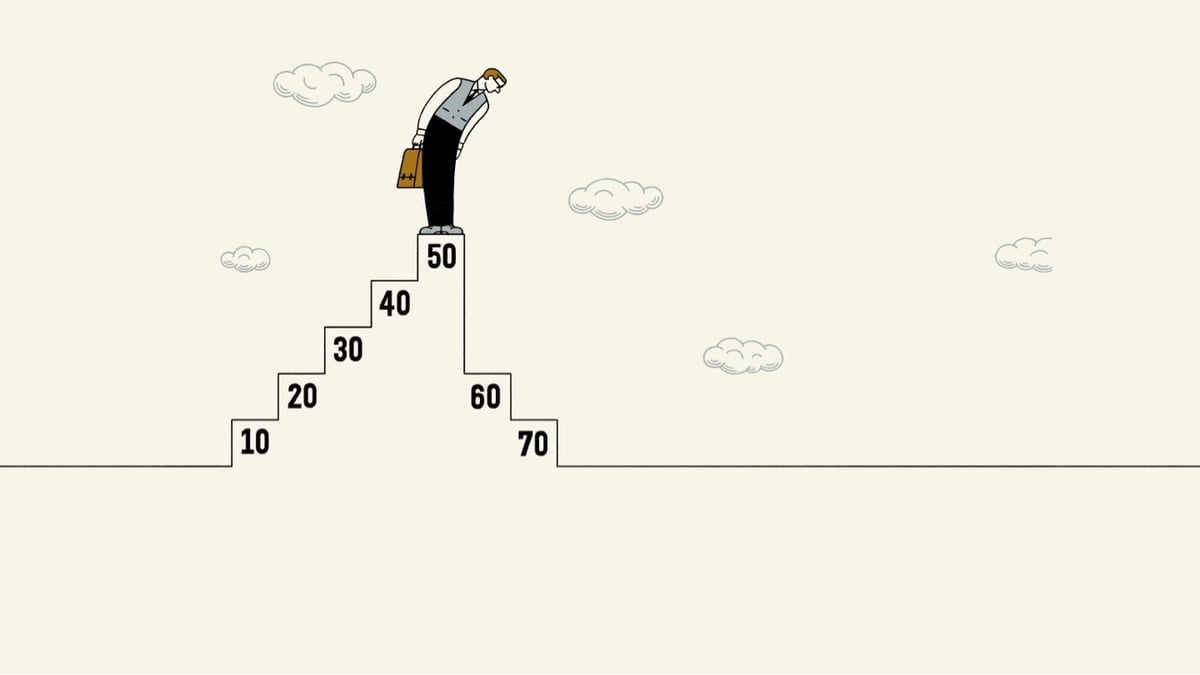
I stumbled across this July 2019 article by Arthur C. Brooks about professional decline and it gave me lots to think about: Your Professional Decline Is Coming (Much) Sooner Than You Think. One of the takeaways is that different stages of your life require different approaches; I liked this anecdote:
Recently, I asked Dominique Dawes, a former Olympic gold-medal gymnast, how normal life felt after competing and winning at the highest levels. She told me that she is happy, but that the adjustment wasn’t easy — and still isn’t, even though she won her last Olympic medal in 2000. “My Olympic self would ruin my marriage and leave my kids feeling inadequate,” she told me, because it is so demanding and hard-driving. “Living life as if every day is an Olympics only makes those around me miserable.”
I wasn’t aware of the formal concept of crystallized intelligence, but I was talking to my therapist last week about exactly this:
A potential answer lies in the work of the British psychologist Raymond Cattell, who in the early 1940s introduced the concepts of fluid and crystallized intelligence. Cattell defined fluid intelligence as the ability to reason, analyze, and solve novel problems — what we commonly think of as raw intellectual horsepower. Innovators typically have an abundance of fluid intelligence. It is highest relatively early in adulthood and diminishes starting in one’s 30s and 40s. This is why tech entrepreneurs, for instance, do so well so early, and why older people have a much harder time innovating.
Crystallized intelligence, in contrast, is the ability to use knowledge gained in the past. Think of it as possessing a vast library and understanding how to use it. It is the essence of wisdom. Because crystallized intelligence relies on an accumulating stock of knowledge, it tends to increase through one’s 40s, and does not diminish until very late in life.
Anyway, the piece is interesting throughout and one I’ll be returning to as I ponder whatever’s next for me.
P.S. I included the illustration by Luci Gutiérrez from the article because I think it perfectly captures the gist of it. That’s me on that 50 stair!
Lisa Re Dale recently retired after 20 years of federal service. She worked for the Health Care Fraud and Abuse Control Program (which she says returns 10x on its investment) and wrote about what she did at work and why it matters:
I am retiring today after 20 years of federal service working on health care fraud enforcement. I’ve personally worked on cases where patients were raped in nursing homes and others so neglected that maggots grew in their wounds. Pharmaceutical companies paying kickbacks to doctors to prescribe their drugs, fueling the opioid epidemic. Doctors falsely diagnosed patients with cancer or MS to bill for unnecessary treatment. Pediatric dentists doing medically unnecessary root canals on toddlers — without adequate anesthesia — for profit. These are 4 of the thousands of cases I’ve worked on.
And she talks more broadly about what our government does for us:
I’ve realized many Americans have no idea what the federal government does. It pays for the military to protect this nation. Keeps food and medicine safe. Ensures laws are followed and fairly prosecuted. Operates national parks. Cares for the veterans who gave everything for us. Insures the money in your bank. Keeps air travel safe. Rescues children from sex trafficking. People will realize what it does after it’s been burned to the ground.
(thx, jason)
My favorite presentation at XOXO this year was Ed Yong’s talk about the pandemic, journalism, his work over the past four years, and the personal toll that all those things took on him. I just watched the entire thing again, riveted the whole time.
Hearing how thoughtfully & compassionately he approached his work during the pandemic was really inspirational: “My pillars are empathy, curiosity, and kindness — and much else flows from that.” And his defense of journalism, especially journalism as “a caretaking profession”:
For people who feel lost and alone, we get to say through our work: you are not. For people who feel like society has abandoned them and their lives do not matter, we get to say: actually, they fucking do. We are one of the only professions that can do that through our work and that can do that at scale — a scale commensurate with many of the crises that we face.
Then, it was hard to hear about how his work “completely broke” him. To say that Yong’s experience mirrored my own is, according to the mild PTSD I’m experiencing as I consider everything he related in that video, an understatement. We covered the pandemic in different ways, but like Yong, I was completely consumed by it. I read hundreds(/thousands?) of stories, papers, and posts a week for more than a year, wrote hundreds of posts, and posted hundreds of links, trying to make sense of what was happening so that, hopefully, I could help others do the same. The sense of purpose and duty I felt to my readers — and to reality — was intense, to the point of overwhelm.
Like Yong, I eventually had to step back, taking a seven-month sabbatical in 2022. I didn’t talk about the pandemic at all in that post, but in retrospect, it was the catalyst for my break. Unlike Yong, I am back at it: hopefully more aware of my limits, running like it’s an ultramarathon rather than a sprint, trying to keep my empathy for others in the right frame so I can share their stories effectively without losing myself.1
I didn’t get a chance to meet Yong in person at XOXO, so: Ed, thank you so much for all of your marvelous work and amazing talk and for setting an example of how to do compassionate, important work without compromising your values. (And I love seeing your bird photos pop up on Bluesky.)

In 1950, master photographer Irving Penn set up a simple studio in Paris and started to photograph people of all kinds of professions, each wearing their work clothes and carrying the tools of their trade.

Working in the tradition of representing the petits métiers, Penn photographed fishmongers, firefighters, butchers, bakers, divers, baseball umpires, chefs, bike messengers, and sellers of goods of all kinds.

Penn continued photographing workers in New York and London, collecting the photos into a project called Small Trades.

Penn said of the project:
Like everyone else who has recorded the look of tradesmen and workers, the author of this book was motivated by the fact that individuality and occupational pride seem on the wane. To a degree everyone has proved right, and since these photographs were made, London chimney sweeps have all but disappeared and in New York horseshoers — hard to find in 1950 — now scarcely exist.
A possible companion to Penn’s photographs: Studs Terkel’s Working: People Talk About What They Do All Day and How They Feel About What They Do. (Fun fact: Terkel and his editor got the idea for Working from Richard Scarry’s children’s book, What Do People Do All Day?)
After four years, Roxane Gay signs off from her Work Friend column.
I am not an idealist or much of an optimist, but being your Work Friend pushed me in that direction. I want, too. I want a world where we can all live our best professional lives. I want everyone to make a living wage and have excellent health care and the means to retire at a reasonable age. I want all of us to want this very simple thing for one another.
And, frankly, a fulfilling and equitable professional life should not be the stuff of utopia. This should be our reality. It is astonishing to see how many people are so deeply unhappy at work, so trapped by circumstances beyond their control, so vulnerable to toxic workplaces and toxic cultural expectations around work. As I read your letters I mostly thought: “It shouldn’t be this way. It shouldn’t be this hard.”
We shouldn’t have to suffer or work several jobs or tolerate intolerable conditions just to eke out a living, but a great many of us do just that. We feel trapped and helpless and sometimes desperate. We tolerate the intolerable because there is no choice. We ask questions for which we already know the answers because change is terrifying and we can’t really afford to risk the loss of income when rent is due and health insurance is tied to employment and someday we will have to stop working and will still have financial obligations.
I’ve been dipping in and out of Kevin Kelly’s Excellent Advice for Living: Wisdom I Wish I’d Known Earlier for the last few months and keep coming back to one of his tidbits of advice:
Don’t be the best. Be the only.
In a short clip from a longer interview, Kelly explains what he means by this:
You want to be doing something where it’s hard to explain to your mother what it is that you do. So it’s like, “What is it? Well, it’s not quite radio. I don’t know. It’s like talking.” And so that’s where you want to be. You want to be the only. You want to — and that’s a very high bar because it requires a tremendous amount of self-knowledge and awareness to get to that point, to really understand what it is that you do better than anybody else in the world. And for most of us, it takes all our lives to figure that out.
And we also, by the way, need family, friends, colleagues, customers, clients, everyone around us to help us understand what it is that we do better than anybody else because we can’t really get there by yourself. You can’t do thinkism, you can’t figure your way there, you have to try and live it out. And that’s why most people’s remarkable lives are full of detours and dead ends and right turns because it’s a very high bar. But if you can get there — you don’t need a resume, there’s no competition. And it’s easy for you because you’re doing it. You’re not looking over your shoulder, you’re just right there. So don’t aim to be the best. Be the only.
Although it works in many situations, my interpretation of this aphorism is from the point of view of a creative person. There’s a point in your work/career/journey when you reach an escape velocity of sorts from your peers and the world around you. What you offer to others is just different enough that you become your own category of one: nothing but you will do. Not better, different. I don’t know if I’m there yet in my creative trajectory, but it’s been a worthy goal to pursue — it takes you inside yourself (in a healthy way) and away from “comparison is the thief of joy” territory.
Kelly states in the foreword of his book that much of his advice was gleaned from elsewhere so I decided to track down where this one might have come from. Legendary concert promoter Bill Graham used a similar phrase in a banner describing the Grateful Dead at a 1991 concert for the band:
They’re not the best at what they do, they’re the only ones that do what they do.
Grateful Dead: not the best, but the only. That sounds about right.
I’m feeling a little retrospective and nostalgic today, so if you’ll indulge me, I’m going to acknowledge a couple of personal milestones.
1. Today marks 19 years of me doing kottke.org as a full-time job. What. The. Actual. F? I kinda can’t believe it. Before this, the longest I’d ever stayed at a job was about two years…and the average was closer to 9-12 months. Aside from dropping out of grad school to bet my life on the World Wide Web, choosing to turn this website into my job is the best decision I’ve ever made.
Some of you may not know this, but when I went full-time, I ran a three-week “pledge drive” to fund my activities on the site. In 2005, this was an almost unheard-of thing to do — people did not send money to strangers over the internet for their personal websites. But it worked: that initial boost sustained me that first year and allowed me to build this career sharing the best of the internet with you. Those brave folks got a pretty good return on their risky investment, I’d say.
Several years ago, I circled back to the idea of a reader-funded site and since then, the membership program has completely transformed the site and my engagement with the work I do here. Incredibly, some of the folks who supported me back in 2005 are still supporting me today — a huge thank you to them and to everyone else who has supported the site along the way.
2. This is a less-obvious milestone with diffuse edges but one that came to mind this morning as I looked back at some photos from a couple of years ago. When I announced I was taking a sabbatical in May 2022, I wrote about my fiddle leaf fig and the metaphorical connection I seem to have with it:
I’d brought this glorious living thing into my house only to kill it! Not cool. With the stress of the separation, my new living situation, and not seeing my kids every day, I felt a little like I was dying too.
One day, I decided I was not going to let my fiddle leaf fig tree die…and if I could do that, I wasn’t going to fall apart either. It’s a little corny, but my mantra became “if my tree is ok, I am ok”. I learned how to water & feed it and figured out the best place to put it for the right amount of light. It stopped shedding leaves.
I went on to explain that my tree was not doing that well…and its condition was telling me that I needed a break. Well, what a difference the last two years have made. On the left is a photo I took two years ago today of my fig and on the right is from this morning:
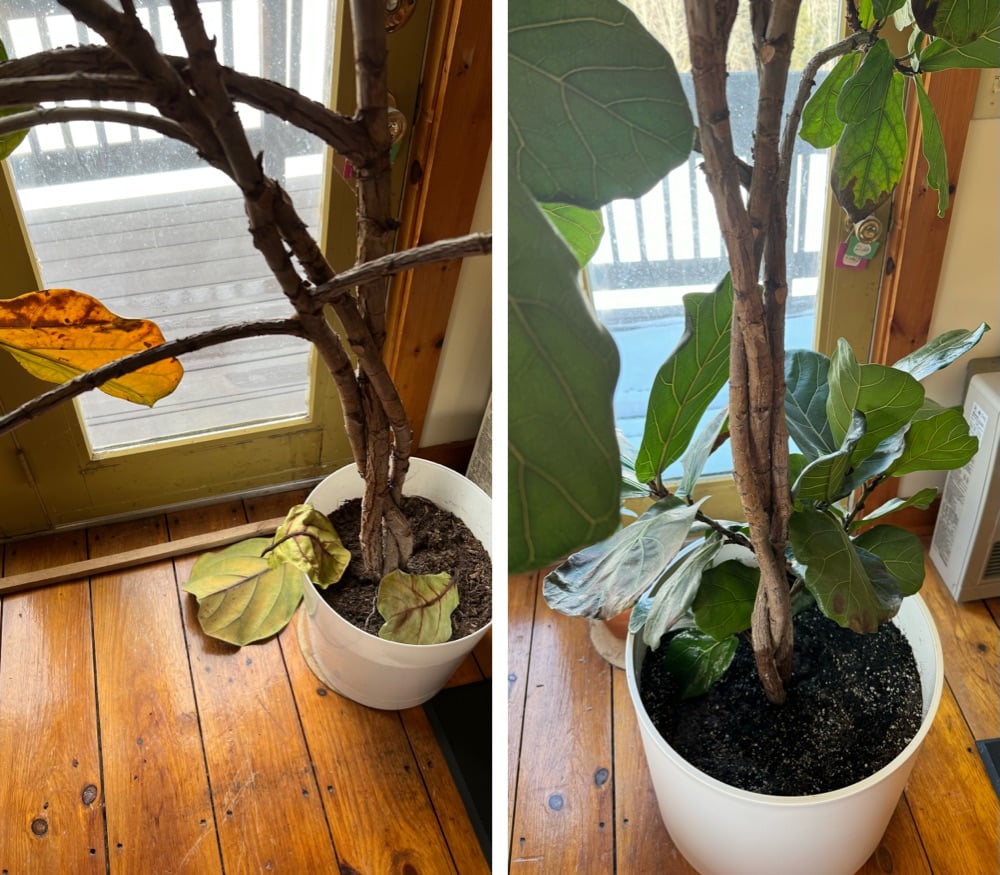
Oh, there are a couple of janky leaves in today’s photo (the product of some inattentive watering earlier this winter as I failed to adjust to the winter dryness), but the plant is happy in a bigger pot and there are several new leaves just from the past two weeks (as the amount of daylight increases). There are also two other fiddles in the house that are descended from cuttings I took from this one — they’re also thriving and both have new leaves coming in right now.
I still have not written a whole lot about what I did (or didn’t do) during the seven months I was off, but after more than a year back, it seems pretty clear that the sabbatical did what I wanted it to. I feel like I’m thriving as much as my tree is. In recent months, I’ve launched a couple of new features (including the comments, which I’ve been really pleased with) and added another voice to the site. There’s a new thing launching soon (*fingers crossed*) and I have plans for more new features, including improvements to the comments.
More importantly, the site feels vital and fun in a way that it hasn’t for quite awhile. It’s not all sunshine and lollipops (nothing is — I’m looking at you, tax season), but I’m having a blast, am engaged with the work, and am feeling pretty fulfilled lately. So another huge thanks to everyone for hanging in there while I sorted my shit out — I appreciate you.
I found myself nodding at this short essay by Mandy Brown on the tradeoffs between work, life, time, energy, responsibility, and art, particularly this bit about what happens if you can make the leap from not having enough time for the essential things in life to having more time in your life because you’re doing the essential things.
Then one day they say fuck it all. They eat leftover pasta over the sink, drop mom off at her mahjongg game, and go sit in the park to draw. They draw for hours, until the sun goes down and they’re squinting under the street lights. And, lo and behold, the next day they plow through all those lingering to-dos. They see clearly that half of them were unnecessary when before they all seemed critical. They recognize a few others as things better handed off to their peers. They suddenly find time for attending to that one project they’d been procrastinating on for weeks. They sleep better. Their skin looks great. (Okay I might be exaggerating on that last one, but only mildly.)
It turns out, not doing their art was costing them time, was draining it away, little by little, like a slow but steady leak. They had assumed, wrongly, that there wasn’t enough time in the day to do their art, because they assumed (because we’re conditioned to assume) that every thing we do costs time. But that math doesn’t take energy into account, doesn’t grok that doing things that energize you gives you time back. By doing their art, a whole lot of time suddenly returned. Their art didn’t need more time; their time needed their art.
I don’t know if this is related or what, but a few years ago I shifted my thinking around time & energy. I noticed that when I thought or said “I don’t have time for this”, what I really meant was “I don’t have the energy for this”. Obviously I have time to do all sorts of things — I spend many hours during the week in front of the TV or on my phone watching/reading garbage — but it’s actually the energy that’s the issue. (All that TV/phone time is because I don’t have the energy to do much else.)
Brown goes on to say that this has little to do with art or drawing…each person draws energy from their own particular essential activity: spending time with family, volunteering, biking, photography, lifting, cooking, going to the movies alone and eating too much popcorn and shushing people when they get too loud — what?, taking a drive, etc. A few weeks ago in a post about the flow state, I wrote about rediscovering something that I require to make more energy in my life:
While I am not feeling particularly in the groove today, over the past several weeks I’ve been in the flow state a lot, working on a couple of projects for the site. It’s been a long time since I’ve had that feeling for more than a couple of hours every few months and booooooy does it feel good. There is almost nothing that fills me with as much joy as the “effortless engagement” of being in the flow state. I’m very glad it’s back in my life — I’d been afraid it was gone forever.
I had indeed been putting off doing this kind of work because I didn’t have the time and energy, but once I was able to make space for it in my day, it became clear that it was an essential thing that I need to do so that I can create time for everything else.
What a privilege it is to have that time/energy though, particularly in the US, with our low minimum wages, poor healthcare, and lack of a social safety net. Making time for your art so you can have more energy is not actually possible when you’re working two jobs six days a week and filling the rest of your time with childcare, housework, and (hopefully) sleep while fighting upstream against sexism, racism, classism, and the like. As a nation, I think we’d all be a whole lot happier and healthier if everyone had the chance to spend time on, as Brown puts it, “some thing that when neglected siphons time and energy away but when attended to delivers it in droves”.
Eric Huang is the chef/owner/operator of Brooklyn’s lauded Pecking House fried chicken joint. In a recent Instagram post, Huang explains why tipping is a part of the experience at his restaurant.
We do NOT use a tip credit at Pecking House. If we do not take a tip credit that means we pay every employee at least $15/hour. We then pool the tips and divide them among the entire hourly staff, including all back-of-house employees. This helps to foster an equitable team culture where everyone feels they are participating in the restaurant’s success.
So far, we’ve been able to pay every front-line employee an average of an extra $7 per hour on top of their hourly wages. We’ve been managing that while collecting a tip average of 18% on a check average of $26. So even an entry-level employee at Pecking House is making $22/hour if not more.
Almost no one in New York City does this. This is pretty damn unique. And while people have been generally enthusiastic about supporting restaurants as they weather a furious storm of inflation, this is an easy way for us to take better care of our restaurant workers. Because the pandemic revealed quite painfully that we are a sizable, important and vulnerable population. And this is all perhaps even more relevant given that certain Best Restaurants have been outed about certain abhorrent business practices. Their example should be motivating us to take a look at how we can change the restaurant industry for the better.
So when you add a tip at Pecking House, you’re really helping to take care of the whole team and acknowledge their effort in creating your experience. I think we’ve all been guilty of having a great time and leaving a fat tip, but forgetting at that moment that the cook who made you that taglioni isn’t seeing an extra penny. So for those of you who have been helping us out with 18% on $26, an extra $4, know that it’s going to everyone. Except and rightfully so, the chef standing there pointing at stuff, not being terribly helpful, i.e. me.
From there, he goes on to explain why eliminating tipping doesn’t work from the standpoint of the restaurant (customers spend less), its employees (they make less than they could elsewhere), or, surprisingly, its customers (they want the illusion of control/agency). And there’s also a sort of tacit collusion that happens amongst restaurants — no one wants to eliminate this obviously unfair system because of the financial hit so none of them do. The whole thing is worth a read.
Back when I lived in NYC, a restaurant I frequented experimented for a few months with eliminating tipping. In practice, it meant that the bartenders and servers made less money and the chefs got paid more. As a regular customer who knew and liked everyone who worked there, I thought that was much more fair than front-of-the-house staff being paid more than the kitchen folks due to some antiquated racist bullshit. In the end, they had to revert to doing tips again because customers weren’t spending as much money and it eliminated the restaurant’s profit margin. Customers looked at the higher prices ($25 for the chicken instead of $21, $17 cocktails instead of $14) and ordered fewer and less-expensive items, even though they were paying exactly the same amount for them by tacking 20% onto the check at meal’s end. It’s just economic reality: lower posted prices with added fees will encourage people to spend more money because the posted price is what gets stuck in their heads.
It seems like the only way to get rid of tipping in the US is for every restaurant to do it simultaneously, either by mutual decision (ha!) or through some kind of legislation (double ha!). But because of the pandemic and the ubiquity of digital payment screens, tipping is more engrained in American commerce than ever so…??
See also The Failure of the Great Tip-Free Restaurant Experiment.
*peeks hesitantly around the corner*
Hey everyone. Tomorrow, after almost 7 months of a sabbatical break, I’m resuming regular publication of kottke.org. (Actually, I’ve been posting a bit here and there this week already — underpromise & over-deliver, etc.) I’m going to share more about what I’ve been up to (and what I’ve not been up to) in a massive forthcoming post, but for now, know that I’m happy to be back here in the saddle once again. (And that my fiddle leaf fig is doing well!)
I am, however, still dealing with some chronic pain that sometimes makes it difficult for me to work. I’m doing the things I need to do to get better & stronger, but just be aware that it might affect my output here. It’s a very frustrating situation — in many ways, I’m in the best physical shape of my life and am excited to be back here but this more-or-less constant background pain is a real source of friction as I go about my day. Just wanted to get that out there — thanks for your continued patience.
Ok, here we go!
Hello, everyone. I’m going to be taking an extended break from kottke.org, starting today. I’ve been writing here for more than 24 years, nearly half my life — I need a breather. This is something I have been thinking about and planning for years1 and I’d like to share why I’m doing it, how it’s going to work, what I hope to accomplish, and how you can help.
This is a long post and was a hard one to write — I hope you’ll give it your thoughtful attention. But first, let me introduce you to my plant.
(This is going somewhere. Trust me.)
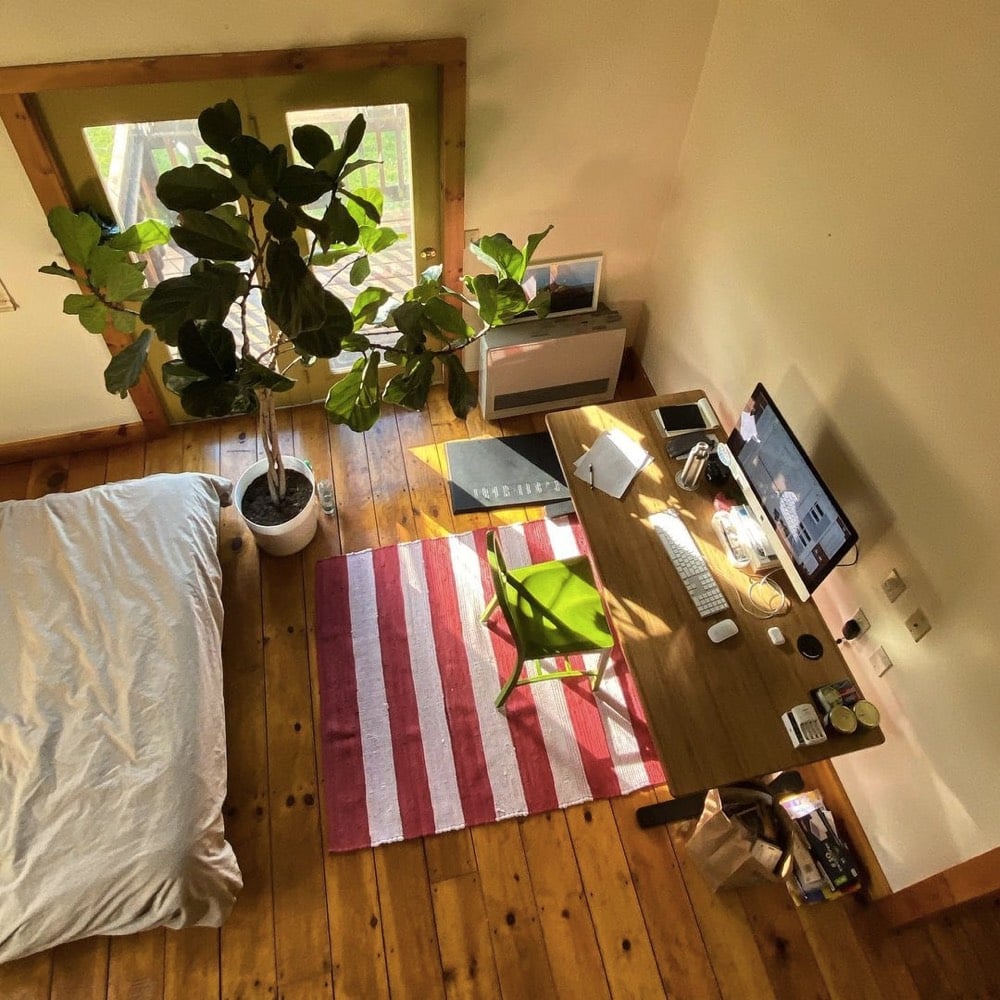
Eight years ago when I still lived in NYC, I bought a fiddle leaf fig tree from a store in the Flower District. Here it is a couple of years ago, thriving next to my desk here in Vermont:
I’d recently moved into my own apartment after separating from my wife and figured a large plant in my new place would add some liveliness to a new beginning that was feeling overwhelming, lonely, and sad. For the first couple of months, I didn’t know if my tree and I were going to make it. I’d never really had a plant before and struggled getting a handle on the watering schedule and other plant care routines. It started losing leaves. Like, an alarming number of leaves.
I’d brought this glorious living thing into my house only to kill it! Not cool. With the stress of the separation, my new living situation, and not seeing my kids every day, I felt a little like I was dying too.
One day, I decided I was not going to let my fiddle leaf fig tree die…and if I could do that, I wasn’t going to fall apart either. It’s a little corny, but my mantra became “if my tree is ok, I am ok”. I learned how to water & feed it and figured out the best place to put it for the right amount of light. It stopped shedding leaves.
The fig tree was a happy plant for several years after that. And I was ok because my plant was ok — I found new routines and rhythms in my altered life, made new traditions with my kids, got divorced, met new people, moved to a new state (w/ my family and tree), rediscovered who I was as a person, and, wonderfully and unexpectedly, forged a supportive and rewarding parenting partnership and friendship with my ex. We made it through that tough time together, that plant and me.
Recently however, my fiddle leaf fig has been struggling again. It’s been losing leaves and has become lopsided — some branches are going gangbusters while others are almost bare and the plant is listing so badly to one side that the whole thing tips over without the weight of water in the pot. This is what it’s looking like these days:
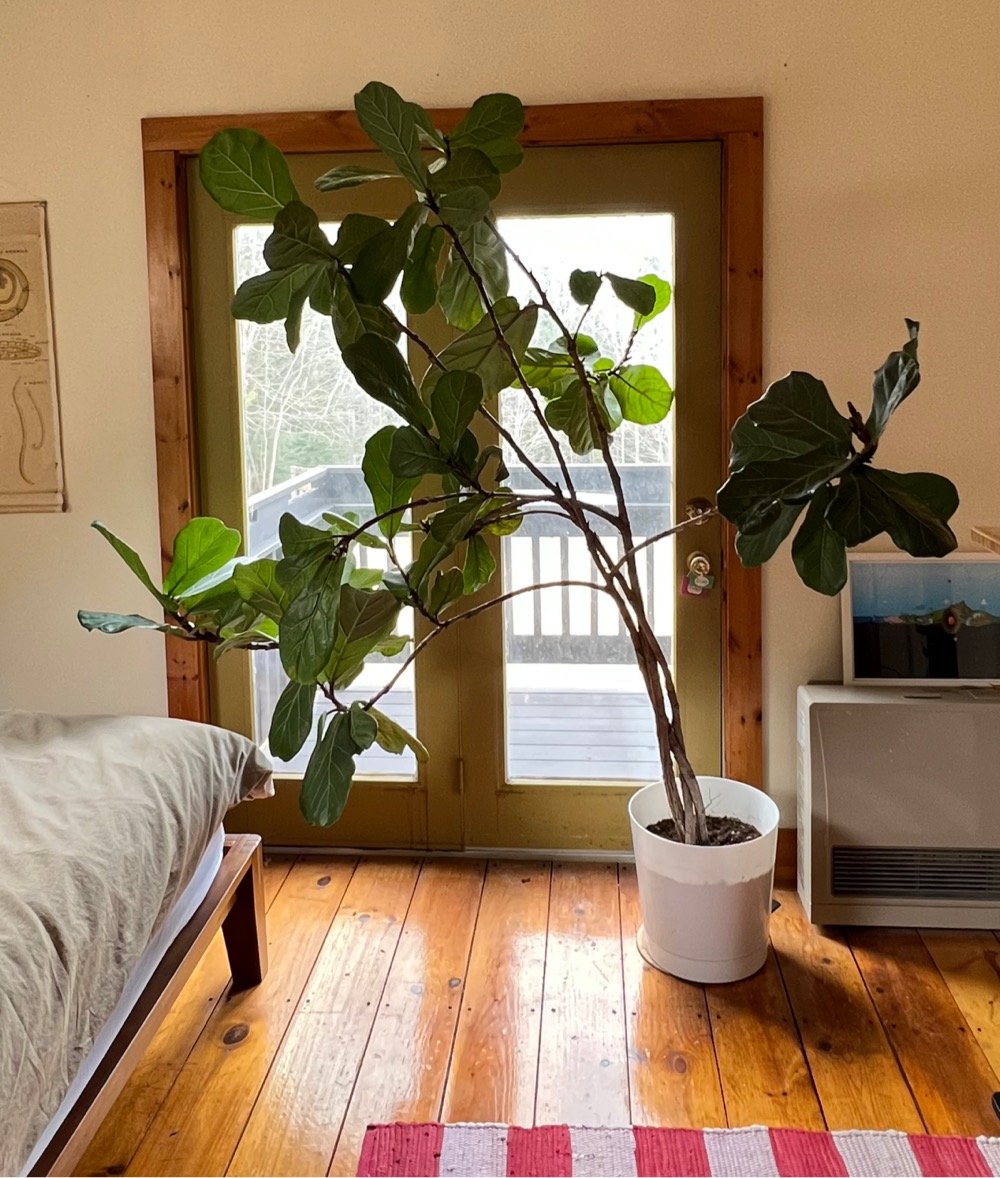
My plant is not ok. And neither am I — I feel as off-balance as my tree looks. I’m burrrrned out. I have been for a few years now. I’ve been trying to power through it, but if you’ve read anything about burnout, you know that approach doesn’t work.
I appreciate so much what I’ve built here at kottke.org — I get to read and learn about all sorts of new things every day, create new ideas and connections for people, and think in public — and I feel incredibly lucky to be able to set my own schedule, be my own boss, and provide for my family. But if you were to go back into the archive for the past several months and read the site closely, you’d see that I’ve been struggling.
Does what I do here make a difference in other people’s lives? In my life? Is this still scratching the creative itch that it used to? And if not, what needs to change? Where does kottke.org end and Jason begin? Who am I without my work? Is the validation I get from the site healthy? Is having to be active on social media healthy? Is having to read the horrible news every day healthy? What else could I be doing here? What could I be doing somewhere else? What good is a blog without a thriving community of other blogs? I’ve tried thinking about these and many other questions while continuing my work here, but I haven’t made much progress; I need time away to gain perspective.
· · ·
So. The plan, as it currently stands, is to take 5-6 months away from the site. I will not be posting anything new here. I won’t be publishing the newsletter. There won’t be a guest editor either — if someone else was publishing here, it would still be on my mind and I’m looking for total awayness here. I’m planning on setting up a system to republish some timeless posts from the archive while I’m away, but that’s not fully in place yet. If you send me email (please do!), it might take me awhile to read it and even longer to reply — I plan to ignore my inbox as much as I can get away with. I probably won’t be on Twitter but will be more active on Instagram if you want to follow me there.
The goal of my time away from the site is resting, resetting, recharging, and figuring out what to do going forward. In this NY Times feature, Alexandra Bell said this about how art is made: “I need some space to think and live and have generative conversations and do things, and then I’ll make something, but I can’t tell you what it is just yet.” That’s the sort of energy I need to tap into for a few months.
Here’s the way I’ve been thinking about it: there’s a passenger ferry that goes from Cape Cod to Nantucket and there’s a stretch of time in the middle of the journey where you can’t see the mainland behind you and can’t yet see the island ahead — you’re just out in the open water. That’s what I need, to be in that middle part — to forget about what I’ve been doing here for so many years without having to think about where I’m going in the future. I need open water and 5-6 months feels like the right amount of time to find it.
· · ·
This is probably a good time to admit that I’m a little terrified about taking this time off. There’s no real roadmap for this, no blueprint for independent creators taking sabbaticals to recharge. The US doesn’t have the social safety net necessary to enable extended breaks from work (or much of anything else, including health care) for people with Weird Internet Careers. I support a lot of individual writers, artists, YouTubers, and bloggers through Substack, Patreon, and other channels, and over the years I’ve seen some of them produce content at a furious pace to keep up their momentum, only to burn out and quit doing the projects that I, and loads of other people, loved. With so many more people pursuing independent work funded directly by readers & viewers these days, this is something all of us, creators and supporters alike, are going to have to think about.
I’ve said this many times over the past 5 years: kottke.org would not be possible today without the incredible membership support I have gotten from the people who read this site. Members have enabled this site to be free for everyone to read, enriching the open web and bucking the trend towards paywalling information online. I hope you will continue to support me in taking this necessary time off.
If, for whatever reason, you would like to pause/suspend your membership until I return, email me and I would be happy to do that for you. You’re also free of course to raise or lower your membership support here if you’d like. Regardless of what you choose to do, I hope I will see you back here in the fall.
· · ·
If you’re curious about what’s on my agenda for the next few months, so am I! I’m leaving on a long-planned family trip soon, but other than that, I do not have any set plans. Suggestions and advice are welcome! I’d like to spend some unrushed time with my kids, who too often see me when I’m stressed out about work. I want to read more books. Watch more good movies. Take more photos. Go on pointless adventures. I want to exercise a little more regularly and figure out how to eat a bit better. Maybe travel some, visit friends or the ocean or both. Bike more. Stare at the walls. I hope to get a little bored. I need to tend to my fiddle leaf fig tree — if my tree is ok, I will be too.
I’m going to miss this — and all of you — more than I probably realize right now, but I’m ready for a break. I’ll see you in a few months.
*deep breath*
Here I go!
*jumps*
· · ·
P.S. The best way to keep tabs on when the site starts up again is to subscribe to the newsletter. You can also follow @kottke on Twitter, subscribe to the RSS feed, or follow me on Instagram so you don’t miss anything.
P.P.S. Big big thanks to the many people I’ve talked to about this over the past few months and years, especially Anil, Alaina, David, Adriana, Tim, Caroline, Matt, Joanna, Meg, Aaron, Edith, Kara, Megan, Anna, Jackson, and Michelle. (Forgive me if I’ve forgotten anyone.) I value your wise counsel and your pointing me, hopefully, in the right direction.
P.P.P.S. A quick blogroll if you’re looking for sites and newsletters to keep you busy while I’m gone. In no particular order, a non-exhaustive list: The Kid Should See This, The Morning News, Waxy, Colossal, Curious About Everything, Open Culture, Drawing Links, Clive Thompson @ Medium, Cup of Jo, swissmiss, Storythings, things magazine, Present & Correct, Spoon & Tamago, Dense Discovery, Austin Kleon, NextDraft, Tressie McMillan Cottom, Poetry Is Not a Luxury, A Thing or Two, The Honest Broker, Interconnected, The Whippet, Craig Mod, Why is this interesting?, Sidebar, The Prepared, Life Is So Beautiful, Fave 5, Sentiers, The Fox Is Black, and Scrapbook Chronicles. Happy hunting!
Update: Hello, everyone. I want to thank you all so much for your emails, tweets, and DMs…yesterday was just a little overwhelming. I was apprehensive yesterday morning about publishing this post — I had no idea what the reaction was going to be — and, well, you folks turned it into a party. I’m so grateful for your support, advice, well-wishes, and understanding. I should not have doubted you — if this site is anything, it’s that way because of all of you. Thank you again for the support and I will see you in a few months. ❤
Anne Kadet interviewed some chess hustlers in Washington Square Park about their chess work in the park and what they’ve learned about life playing chess.
If you want a game, I say one game, five dollars, five minutes. So we play a five-minute game for five dollars. If you said you don’t want no clock, I might say I give you one game, $10, because without the clock, it’s longer. You’re wasting time.
Some people say $5 to the winner. That means, we play each other and whoever wins gets the $5. That’s tricky, because I don’t know how strong you are. You might beat me and I lose $5. I’ve wasted time AND I’ve lost money! So I’m one of those people who don’t say $5 to the winner.
I’ll give you a lesson, a half hour for $20. I have some children that come just to see me once a week and I give them a lesson — $20 for a half hour. And there’s a lot of NYU students that come by, we give them a discount for being students. One hour for 40 bucks.
Marcel A. offered this advice that applies to nearly any situation:
The one thing I tell my students is that when you get to a confrontation of any type, you have to remain calm. When you remain calm, you can see the board a lot clearer. You can see the person you’re playing or arguing with a lot more clearly, for who and what they are. So you don’t even have to entertain that shit. You understand?
Nathaniel W. shares what he’s learned about people:
They timid, they’re not willing to take a chance. See this? [He moves a pawn forward one space.] That means sometimes people don’t want to be hurt. They have a fear of losing.
And E.G.G.S. offers perhaps the wisest advice of all:
I’m stuck right now. I can’t give any life advice.
The whole thing is worth a read.
See also The Last Chess Shop in NYC. (via fave 5)
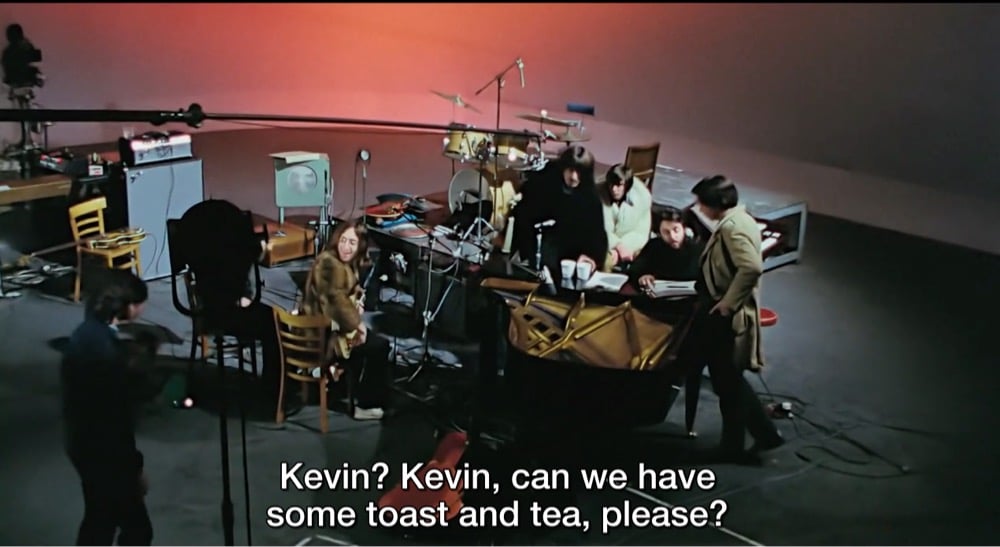
I haven’t had a chance to watch Peter Jackson’s Beatles documentary yet, but I really enjoyed reading Tom Whitwell’s 10 lessons in productivity and brainstorming from The Beatles gleaned from the series.
1. The ‘yes… and’ rule
The first rule of improvisation (and brainstorming) is “yes… and”. When someone suggests an idea, plays a note, says a line, you accept it completely, then build on it. That’s how improvisational comedy or music flows. The moment someone says ‘no’, the flow is broken. It’s part of deferring judgement, where you strictly separate idea generation from idea selection.
As they slog through Don’t Let Me Down, George breaks the spell. Instead of building and accepting he leaps to judgement, saying “I think it’s awful.” Immediately, John and Paul lay down the rules: “Well, have you got anything?” “you’ve gotta come up with something better”.
Don’t judge, build.
I worked on a secret project recently (shhh…) where I really wanted to just say no but chose to do “yes… and” instead, which led my collaborator and I to a better solution. I love the improv rule, but it’s so hard for me to follow sometimes because my job is basically saying no to things all day.
6. One conversation at a time
One of the striking thing about the sessions is how polite everyone is. Perhaps it’s editing, but nobody speaks over anyone else. Everyone has a chance to be heard, which means people spend most of the time listening, rather than talking (apart from Paul, perhaps).
This is another lesson from musical and theatrical improvisation. The difference between a creative environment and a bunch of people shouting out ideas is the listening.
You can read all ten lessons here.
For her Culture Study newsletter, Anne Helen Petersen listed a few themes she’d identified over the past year. The first one is something I’ve noticed people talking a lot about too:
1) Our society values parenting, not parents; it honors “work ethic,” not workers; we cherish children in the abstract, but not actual children themselves.
To me, these ideas are borne out in the contrasts between the rhetoric of who and what we value (Moms! Kids’ futures! ESSENTIAL WORKERS!) and actual policy and behaviors. I mean that in terms of Covid, of course, but also in terms of labor protections for workers, the safety nets we provide for parents (and single parents in particular) and general actions and policy in regards to the future of the planet. We don’t value people, just generally. We value capital.
The Christian nationalists — who, despite ostensible Democratic control of the Senate, the House, and the presidency, nonetheless command the vision and future of the country — dress up obsession with controlling women’s bodies and freedom in the wardrobe of “the rights of the fetus,” but then allow that fetus, once it turns into an actual child, to go hungry, to live in fear of violence in their schools, to go unhoused or deal with housing insecurity, to endure the effects of environmental racism, and to grow into an adult indelibly marked by all of those experiences.
Bingo. This is also true to varying degrees for education (not teachers), art (not artists), and the troops (not individual soldiers that we send to incur PTSD, injury, and death).
BTW, Petersen has a new book out with her partner Charlie Warzel called Out of Office: The Big Problem and Bigger Promise of Working from Home, which relates to another of her yearly themes: “Work is miserable on so many levels — but it’s so hard to imagine a different way forward.”
Adventurer Beau Miles has been focused recently on exploring near where he lives rather than in far-flung locales. He’s walked 56 miles to work a couple of times, adventuring and foraging along the way and recently posted a video of him commuting to work in a kayak. It took him four days. Miles explains:
I’m really fascinated by something as mundane as a commute to work. I think it can offer me a whole bunch of adventure. I’ve already walked to work — I stripped it right back and it was hard and challenging, and really insightful of me and humanity. Now to extend that idea, why don’t I try and paddle to work? I can get to work via the very water that falls on my roof. In doing so, I’m reinventing my idea of adventure. I no longer feel the need to go and paddle great distances down a continent shore, or go to the highest peaks. Your carbon footprint goes through the roof, just so you can go and find yourself, somewhere else. And so I really want to do these things in my backyard now, and why not my boyhood river that I want to reinvent with some adult ideas?
Update: Inspired by Miles’ journey, a high school senior did a kayak commute to school: The 54.5 Hour Commute.
Throughout the trip, Gralyn was offered help from friends and family — everything from transportation to Clif bars — but he accepted none of it. “That would be cheating,” Gralyn says, it would have completely changed the experience. He wanted to experience the full challenge, he wanted to be self-sufficient, and he wanted to know if it was even possible. “Water used to be so common for traveling everywhere and now we never use it. It’s the road less traveled now.”
Update: Back in 2007, Tom Chiarella walked to the mall in 2.5 days.
In the days before I left, everyone told me it was a stupid idea, pointless, fraught with risk. My brother called me an idiot. My golf partners cackled. Many people worried what would happen to me in the city. Another group of friends saw the isolation of the country as more threatening. My wife wanted to forbid it, thinking it incredibly stupid, a blatant invitation to dismemberment, a prelude to disappearance. I told her I’d be okay, that I wasn’t afraid. I was plenty brave enough to handle what came my way. “You think you’re brave,” she said. “You’ve always had a car. It’s easy to be brave when you have a car.”
(via @DavidNir)
Luke O’Neil talked to dozens of people who were able to work from home during the pandemic about not missing the commute part of working in an office. A few of the responses:
No one’s stopping anyone who works from home from going out and riding in circles on the subway for 30 minutes before they go back to their desk.
I save roughly $100 a month now. I have time in the morning to take my dog for a long walk every day. I have time in the evening to cook dinner. Commuting is psychological torture and my physical and mental health is significantly better without it.
I love to drive 30 minutes to stare at a different computer
I can’t even calculate the savings in gas, wear on my car, etc. But I can tell you that with nearly two hours back in each of my days, plus the extra 40 minutes or so of making myself presentable to be in close proximity to others, I have been able to reinvest that time in myself. I have been eating better, I have time for the gym, I have time to give my dogs the exercise they need. I know this year has been mentally taxing on so many, but I’ve found these changes work so much better for me.
Anne Helen Peterson noticed a bunch of reports about fast food & retail businesses around the US having trouble finding employees, which difficulty the business owners are blaming on lazy American workers whose unemployment benefits have been extended/expanded during the pandemic. But what if, she writes, those benefits are actually providing a safety net to American workers so that they do not need to take terrible jobs for low wages at terrible companies under terrible management? The ‘Capitalism is Broken’ Economy:
Stick with me here, but what if people weren’t lazy — and instead, for the first time in a long time, were able to say no to exploitative working conditions and poverty-level wages? And what if business owners are scandalized, dismayed, frustrated, or bewildered by this scenario because their pre-pandemic business models were predicated on a steady stream of non-unionized labor with no other options? It’s not the labor force that’s breaking. It’s the economic model.
Unemployment benefits have offered a steady paycheck while you figure out your options. Put differently: a version of the safety net that’s been missing from most American employment, and, by extension, the ability to say no. No, I don’t have to work for a restaurant that only gives me my hours three days ahead of time, thus making it nearly impossible to find reliable childcare. No, I don’t have to work clopen shifts. No, I don’t have to expect a job without sick leave or paid time off. No, I don’t have to deal with asshole customers or managers who degrade me without consequence. No, I don’t have to work in a job with significant, accumulating health risks.
Her question near the end of the piece is worth considering: “If a business can’t pay a living wage, should it be a business?”
For the New Yorker, Kyle Chayka looks at how the pandemic will change how we see our homes, workplaces, and public spaces — and the architectural shifts resulting from our new perspectives.
Unlike the airy, pristine emptiness of modernism, the space needed for quarantine is primarily defensive, with taped lines and plexiglass walls segmenting the outside world into zones of socially distanced safety. Wide-open spaces are best avoided. Barriers are our friends. Stores and offices will have to be reformatted in order to reopen, our spatial routines fundamentally changed. And, at home, we might find ourselves longing for a few more walls and dark corners.
The reimagining of our living spaces, where everyone is now eating, sleeping, working, and homeschooling, reminded me of this recent tweet:
I think we need to stop calling it ‘working from home’ and start calling it ‘living at work’
I’m also intrigued by the “6 Feet Office” concept:
The result was “the 6 Feet Office.” Carpet tiles demarcate six-foot black circles around every desk in the open floor plan. Extra chairs, positioned outside of the circles, facilitate conversation among colleagues. Conference-room chairs have been thinned out, and closed spaces must be exited clockwise, in unison, so that co-workers don’t bump into each other. “Hotdesking,” or the sharing of one desk by multiple workers, is made possible with disposable paper desk pads, on which a worker sets her laptop or keyboard and mouse when she arrives.
Cushman & Wakefield is slowly testing the 6 Feet Office design at its Amsterdam office, which used to hold two hundred and seventy-five people but now only has seventy-five at a time. As the lockdown lifts, Lokerse expects to start with twenty-five per cent of employees back at the office, but as more workers come back they’ll have staggered start times to avoid overcrowding on public transportation, and thirty-per-cent fewer desks over all. Bruce Mosler, the chairman of global brokerage at Cushman & Wakefield, noted that office spaces were already feeling too crowded before the pandemic and had started to limit crowding, a trend that is now accelerating. “We got carried away in the over-all densification process, in the effort to be as efficient as possible,” he said. “We went a bit too far. This is going to change that.”
See also Tape As Pandemic Architectural Element.
I like to listen to music while I work, but it can’t have any vocals or I get too distracted when I’m writing or reading. So I end up listening to a lot of electronic, classical, and soundtracks. During the pandemic, I’ve been sharing my daily work soundtrack in this Twitter thread with selections like the Amelie soundtrack, Burial, Tycho, Nine Inch Nails, and Philip Glass. I’m no musical expert or connoisseur, but I know what I like and what works to keep me focused.
Over the past few months, I’ve been getting a lot of good music recommendations from the Flow State newsletter, so I was happy to write a guest issue for them today recommending music from Ben Prunty.
Today we’re listening to Ben Prunty, a composer of video game soundtracks. His first release was the chiptune soundtrack for the critically acclaimed FTL: Faster Than Light, a video game released in 2012. The music is chill and retro, the perfect backdrop for gameplay that’s more about careful planning and execution than fast-twitch reflexes. Inspired by fans who listened to the FTL soundtrack while working or studying, Prunty released Color Sky a couple of years later, describing the album as an “epic journey across your own subconscious.”
You can find the links for the albums I mentioned if you click through and so many more recommendations in their back issues.
Update: Damien Joyce reminded me that I asked for recommendations for “head-down coding/designing/writing concentration music” on Twitter a few years ago and received a bunch of great responses. Joyce compiled many of the responses into a 15-hour playlist on Spotify.
Gretchen McCulloch, author of Because Internet, has developed a Weird Internet Career as an internet linguist. In the first installment in a series on such jobs, McCulloch explains what they are:
Weird Internet Careers are the kinds of jobs that are impossible to explain to your parents, people who somehow make a living from the internet, generally involving a changing mix of revenue streams. Weird Internet Career is a term I made up (it had no google results in quotes before I started using it), but once you start noticing them, you’ll see them everywhere.
Weird Internet Careers are weird because there is no one else who does exactly what they do. They’re internet because they rely on the internet as a cornerstone, such as bloggers, webcomics, youtubers, artists, podcasters, writers, developers, subject-matter experts, and other people in very specific niches. And they’re careers because they somehow manage to support themselves, often making money from some combination of ad revenue, t-shirt sales, other merch, ongoing membership/subscription (Patreon, Substack), crowdfunding (Kickstarter, Indiegogo, Ko-Fi), sponsorship deals, conventional book deals, self-published ebooks, selling online courses, selling products or apps or services, public speaking, and consulting.
I’ve had a Weird Internet Career for more than 15 years and even though it’s much more normalized now than when I started (folks generally know that people make money from being popular on YouTube or Instagram), it’s still a struggle to explain. Usually someone will ask me what I do and I tell them. Them, wide-eyed: “That’s your job?!” Then there’s a long pause and eventually their curiosity overwhelms their politeness and they tentatively say: “Can I ask…uh…how do you make money doing that?”
For awhile, in an attempt to have more symmetrical relationships with new friends — because 5 minutes of googling yields so much about who I am, leading to weird information imbalances — I would be vague about my profession, saying that I managed a website and not offering any further information. This approach often backfired because you’ve essentially given people a mystery, and mysteries must be solved. More than one person looked at me with a cocked eyebrow and asked, “Do you run a porn site? Is that why you don’t want to tell me?” *facepalm*
Remember a few years ago when the owner of a credit card payment processing company based in Seattle raised the minimum wage of his employees to $70,000/yr while taking a huge pay-cut himself and capitalists the world over, afraid of their beloved & apparently suuuuper delicate system collapsing from such madness, flipped out?1 The BBC recently checked in with Gravity Payments and its owner Dan Price to see how things were going. Pretty damn well, as it turns out:
The headcount has doubled and the value of payments that the company processes has gone from $3.8bn a year to $10.2bn.
But there are other metrics that Price is more proud of.
“Before the $70,000 minimum wage, we were having between zero and two babies born per year amongst the team,” he says.
“And since the announcement — and it’s been only about four-and-a-half years — we’ve had more than 40 babies.”
More than 10% of the company have been able to buy their own home, in one of the US’s most expensive cities for renters. Before the figure was less than 1%.
“There was a little bit of concern amongst pontificators out there that people would squander any gains that they would have. And we’ve really seen the opposite,” Price says.
The amount of money that employees are voluntarily putting into their own pension funds has more than doubled and 70% of employees say they’ve paid off debt.
When Price made the announcement about raising wages, two senior employees quit because they thought the junior employees would become lazy and the company would suffer. Spolier alert: didn’t happen.
Rosita Barlow, director of sales at Gravity, says that since salaries were raised junior colleagues have been pulling more weight.
“When money is not at the forefront of your mind when you’re doing your job, it allows you to be more passionate about what motivates you,” she says.
Senior staff have found their workload reduced. They’re under less pressure and can do things like take all of the holiday leave to which they are entitled.
The thing about the increased number of babies is astounding. Some of that has to be demographic (employees getting older and entering prime family-starting years) but having a baby in the United States is expensive and that has to factor into many people’s decision on whether to have a child, especially if it’s a second kid or if you’re a single parent.
But the most interesting observation is this one by Price equating the freedom of his employees to their capability:
“We saw, every day, the effects of giving somebody freedom,” Price says.
He thinks it is why Gravity is making more money than ever.
Raising salaries didn’t change people’s motivation — he says staff were already motivated to work hard — but it increased what he calls their capability.
Employees that worry less about debt, healthcare, or where their next meal is coming from are happier, more productive employees. Imagine that.
Update: Although what he did in raising the salaries of his company’s employees is commendable, Price himself is perhaps not the corporate role model that BBC article makes him out to be. From a 2016 piece about Price in Esquire:
In a TEDx Talk last fall, Price’s ex-wife, Kristie, claimed he once “got mad at me for ignoring him and grabbed me and shook me… He also threw me to the ground and got on top of me. He started punching me in the stomach and slapped me across the face.” (The video of the talk was never released, but Bloomberg Businessweek quoted it in a story about Price in December.) The suit brought by Lucas Price, his business partner and brother, was unrelated to Kristie’s allegations. Lucas was seeking $26 million because, essentially, Dan had been a dick in their business dealings.
The rest of the piece corroborates that Price is in fact a dick who raised his employees’ salaries partially because it was a good PR move. (via @adrianhon)
Update: Inspired by Gravity Payments, Basecamp raised their minimum starting salary to $70,000/yr in 2019.
In The Role of the Artist in the Age of Trump, playwright Lin-Manuel Miranda reflects on how truth inherent in art means that “all art is political”.
At the end of the day, our job as artists is to tell the truth as we see it. If telling the truth is an inherently political act, so be it. Times may change and politics may change, but if we do our best to tell the truth as specifically as possible, time will reveal those truths and reverberate beyond the era in which we created them. We keep revisiting Shakespeare’s Macbeth because ruthless political ambition does not belong to any particular era. We keep listening to Public Enemy because systemic racism continues to rain tragedy on communities of color. We read Orwell’s 1984 and shiver at its diagnosis of doublethink, which we see coming out of the White House at this moment.
In a 1969 piece, Kurt Vonnegut asserted that art is an early warning system for society:
I sometimes wondered what the use of any of the arts was. The best thing I could come up with was what I call the canary in the coal mine theory of the arts. This theory says that artists are useful to society because they are so sensitive. They are super-sensitive. They keel over like canaries in poison coal mines long before more robust types realize that there is any danger whatsoever.
While not specifically about art, here’s a bit of what I wrote in a January 2017 post, How to Productive in Terrible Times.
I’ve always had difficulty believing that the work I do here is in some way important to the world and since the election, that feeling has blossomed into a profound guilt-ridden anxiety monster. I mean, who in the actual fuck cares about the new Blade Runner movie or how stamps are designed (or Jesus, the blurry ham) when our government is poised for a turn towards corruption and authoritarianism?
I have come up with some reasons why my work here does matter, at least to me, but I’m not sure they’re good ones. In the meantime, I’m pressing on because my family and I rely on my efforts here and because I hope that in some small way my work, as Webb writes, “is capable of enabling righteous acts”.
(via laura olin)
From the BBC, a list of the 101 people, ideas, and things changing how we work today. I pulled out a few of things I thought were interesting.
5G — So the whole 5G thing seems like a marketing gimmick to me, but I used its inclusion on this list to finally read about why anyone should care. From this PC Magazine article:
5G brings three new aspects to the table: greater speed (to move more data), lower latency (to be more responsive), and the ability to connect a lot more devices at once (for sensors and smart devices).
Ok, I get it now. Sounds good.
Adaptability quotient (AQ) — One of the most valuable things I’ve learned in my adult life is that people have all sorts of different abilities that contribute to how “smart” they are, and most of those things have little to do with how well they did in school or what their IQ is.
The good news is that scientists agree AQ is not fixed — it can be developed. Theory U by Otto Scharmer of the Massachusetts Institute of Technology suggests three elements can help provide a framework: keeping an open mind, so you see the world with fresh eyes and remain open to possibilities; keeping an open heart, so you can try to see any situation through another person’s eyes; and keeping an open will, letting go of identity and ego to sit with the discomfort of the unknown.
The ‘FIRE’ (financial independence, retire early) movement — You obviously need a certain type of job (and likely a privileged background to obtain that job) to do this. And perhaps no children. Oh and maybe a social safety net…one significant medical issue and you can kiss your savings goodbye.
The ‘FIRE’ (financial independence, retire early) movement sees its adherents live as cheaply as possible in their 20s and 30s, squirreling enough money away to retire by middle age. These extreme savers are working longer hours to save up overtime payments while also spending less leisure time out of home to avoid costly activities.
Ghost work — Tech companies employ millions of people who are often underpaid & mistreated to do menial work.
Workers crowdsourced over the internet are paid below minimum wage to label data to train algorithms. Contractors at risk of immediate termination screen our social media feeds to keep them free of violence, hate speech and sexual exploitation. But a technology industry keen to portray itself as based on technical wizardry rather than human labour has kept its crucial contributions hidden, aided by automated workflows that treat humans as just another step in a computational pipeline.
Reverse mentoring — Mentors can and should be found anywhere, up and down the chain of wisdom and experience.
Mentoring used to mean older colleagues guiding younger workers up the career ladder. But the earliest adopters of new technologies are often young people, and so big names like Microsoft, Roche and Atkins have embraced reverse mentoring; harnessing young people to close knowledge gaps within organisations. Other benefits include promoting inclusion, increasing discussion across peer groups, and empowering future leaders.
Office farming — I am in favor of more plants in offices and more urban farms. Buildings in major cities should all have rooftop gardens.
With advances in hydroponics — growing plants in something other than soil — New York firm Kono Designs created an urban farm inside a nine-story office building in Tokyo that harvests over 280 types of vegetables, fruits, herbs and flowers. Tomato vines are suspended above conference tables, lemon and passionfruit trees are used as partitions for meeting spaces, salad leaves are grown inside seminar rooms and bean sprouts are grown under benches. With support from agricultural specialists, the employees assist in its daily upkeep that contribute to the preparation of ingredients served at its on-site cafeterias.
By some accounts, 99% of the wasabi consumed in the world is not actually wasabi — it’s horseradish + green food coloring. Real wasabi is difficult to grow:
Authentic wasabi, known as Wasabia japonica, is the most expensive crop to grow in the world. The temperamental semiaquatic herb, native to the mountain streams of central Japan, is notoriously difficult to cultivate. Once planted, it takes several years to harvest; even then, it doesn’t germinate unless conditions are perfect. Grated wasabi root loses its flavor within 15 minutes.
Profiled in the short film above, 75-year old Shigeo Iida is the 8th generation owner of a wasabi farm in Japan, where he’s been painstakingly growing the herb in a beautiful valley for decades. He loves his work, but like other aging Japanese responsible for long-lived family businesses, there’s uncertainty about the future. (via craig mod)
At SXSW, Congresswoman Alexandria Ocasio-Cortez was asked by an audience member about the economic challenge of a significant percentage of our labor force being replaced by automation. She responded, in part, by suggesting we decouple the idea of employment with being able to remain alive:
We should not be haunted by the specter of being automated out of work. We should not feel nervous about the toll booth collector not having to collect tolls anymore. We should be excited by that. But the reason we’re not excited by it is because we live in a society where if you don’t have a job, you are left to die. And that is, at its core, our problem.
Then she went on to say:
We should be excited about automation, because what it could potentially mean is more time educating ourselves, more time creating art, more time investing in and investigating the sciences, more time focused on invention, more time going to space, more time enjoying the world that we live in. Because not all creativity needs to be bonded by wage.
Her full answer, including a bit about “automated inequality”, is worth worth watching in full, starting at ~55:15:
In a 1970 article in New York magazine, the architect and futurist Buckminster Fuller wrote about the collision of technology and “this nonsense of earning a living”:
We must do away with the absolutely specious notion that everybody has to earn a living. It is a fact today that one in ten thousand of us can make a technological breakthrough capable of supporting all the rest. The youth of today are absolutely right in recognizing this nonsense of earning a living. We keep inventing jobs because of this false idea that everybody has to be employed at some kind of drudgery because, according to Malthusian-Darwinian theory, he must justify his right to exist. So we have inspectors of inspectors and people making instruments for inspectors to inspect inspectors. The true business of people should be to go back to school and think about whatever it was they were thinking about before somebody came along and told them they had to earn a living.
(thx to @claytoncubitt for the AOC-Fuller connection)
In the first couple of minutes of this video, Roald Dahl introduces us to the writing hut behind his house that he used to write all of his famed children’s books like Charlie and the Chocolate Factory and Danny the Champion of the World. Dahl describes his working routine and details how he’s designed his writing environment, his “nest”, to be as free from distraction as possible.
The Guardian used to run a series about writers’ rooms and in 2008, illustrator Quentin Blake, who worked with Dahl on many of his books, wrote a piece about Dahl’s shed.
The whole of the inside was organised as a place for writing: so the old wing-back chair had part of the back burrowed out to make it more comfortable; he had a sleeping bag that he put his legs in when it was cold and a footstool to rest them on; he had a very characteristic Roald arrangement for a writing table with a bar across the arms of the chair and a cardboard tube that altered the angle of the board on which he wrote. As he didn’t want to move from his chair everything was within reach. He wrote on yellow legal paper with his favourite kind of pencils; he started off with a handful of them ready sharpened.
I like that he tied the footrest to the chair to keep it from sliding away when he rested his feet on it.
As someone who sits down daily to write, nothing seems so luxurious to me as a separate writing hut that is off limits to everyone and everything else. George Bernard Shaw and Mark Twain both had separate houses in which to write; Shaw’s shed could even rotate to catch the light throughout the day. Someday I’ll have one of my own…
P.S. Ernest Hemingway used a standing desk, as did Winston Churchill, Charles Dickens, and Virginia Woolf, among others. I got this one a few weeks ago and am still getting used to it. (via @ftrain)
In a piece called I’m the Food Expert But My Kids Love My Husband’s Cooking, Amanda Hesser talks about food, tradition, and the differing cooking styles between her and her husband Tad. When she was younger, Hesser’s approach was to experiment relentlessly with her cooking, moving from one new dish to the next. But her husband took a different approach:
One of my other nicknames for Tad is Mr. Efficiency. He obsesses over the shortest route to a destination, orders everything in bulk, is always on time, writes thank-you notes within a day, and absolutely detests standing in line. Especially for food.
When it came to cooking, Tad was characteristically economical. Once we had our kids and our schedules went haywire, he set about mastering a handful of dishes he could pull off on a moment’s notice: fish tacos, pasta alla vodka, and Daddy’s pasta.
Mr. Efficiency…that could be totally be me. I do occasionally enjoy trying to find new stuff to cook, but their mom is way more adventurous in cooking for the kids. I always come back to my go-tos of caldo verde, taco salad, smoky corn chowder, the world’s best pancakes, burgers, and even the occasional tater tot hotdish.
But Hesser’s approach to cooking has shifted towards the familiar in recent years after noticing the downside to always pushing the boundaries:
Meanwhile, I continued to roam and experiment, rarely making the same dish twice. I enjoy the hunt for a new great recipe, the push for something better. But it comes at a cost; cooking new things is more stressful because the unknowns are many. Tad would chat with the kids while making his pasta; I would cook distracted, with my nose in a recipe. Even after focused cooking, things don’t always work out well, and no one around the table is happy. And it’s hard to expect anyone to build an emotional connection to a dish if they’re only seeing it a few times.
I am really feeling that tension between novelty and stability lately, and not just when it comes to food. Sometimes I feel like I’m two different people. The Explorer craves new experiences, finds routine boring, and wants to learn new things or he’ll feel brain-dead. The Hermit needs the stability of a comfortable routine, finds exploring exhausting, and doesn’t want to have to think about what’s next all the time. Should I go to my favorite restaurant or try a new place? Regarding travel…should I re-experience somewhere I’ve been before or head somewhere new? (For my last trip, I did both: a repeat trip to Berlin with a short stay in Istanbul after.) There are certain types of books, movies, and TV shows I like to watch — their reliability is comforting but when I do venture from those paths, the results can be very rewarding and horizon-expanding. Should I spend time with old friends or work on some new relationships?
The part of my life in which I’m feeling this most acutely is in my work. Editing kottke.org is a constant exercise in balancing the familiar with the new. My approach is: “here’s something you haven’t seen before but packaged in a familiar way” and then do that 9-to-5, day-in and day-out, 52 weeks a year. I bury you (and myself) in novelty, but in a clockwork fashion.1 I never know what I’m going to find on a particular day and you never know what you’re going to read, but by the end of the day, every single weekday, there is (I hope!) an interesting, entertaining, thought-provoking, and awe-inspiring collection of things to explore.
But even though I enjoy editing the site and learn about a lot of new things along the way, the work itself sometimes isn’t that challenging. There’s a lot of repetition, sitting in a chair, and willpower — not insignificant things when trying to accomplish something — but it increasingly feels like I’m on autopilot creatively. Has the site gotten better in the last 5 years? I think so. But have I? What creative boundaries have I pushed along the way? In what ways could kottke.org be better or different that would provide new challenges for me? Don’t worry, I’m not going anywhere anytime soon, but my desire to “roam and experiment” (as Hesser puts it) has been on the rise lately for sure.
In an epic GIF-laden thread on Twitter, author Chuck Wendig lays out “25 REASONS TO KEEP ON MAKING STUFF IN THIS TIME OF RAMPANT ASSHOLERY”.
1. Because you need to escape the fuckery, and what you make is a door. A book, a piece of art, even an excellent meal — it’s a doorway out. It’s the tunnel dug out behind the Rita Hayworth poster in your prison cell.
3. Because creation is #resistance. Making things is additive. And in a subtractive time such as this, you must balance the void with its opposite. That is an act of defiance. And we need more defiance.
9. Because it’s therapy. It’s therapy first for you, and if you share it, eventually for us, too.
20. Because when you make stuff, you improve yourself. And we need you in fighting shape. YOU MUST BE A WHETTED BLADE READY TO SLICE THROUGH SHENANIGANS, CHICANERY, AND GARBAGE.
24. Because art is beauty. Stories, poetry, craftwork, food, it’s all beautiful and this ugly world needs a dollop of beauty. There is beauty in both the act and the result of making stuff. So kick the shitstorm out of the sky with an aggressive rainbow counterattack.
See also Austin Kleon’s upcoming book Keep Going (and related talk) and How to Be Productive in Terrible Times.
In times of turmoil, it can be tough to feel like the work you do to support you and your family is also nourishing to society, if you’re doing “enough”. For artists and writers at least, Kurt Vonnegut had a compelling call to duty as messengers from the near future. As part of an address to the American Physical Society published as “Physicist, Heal Thyself” in the Chicago Tribune Magazine in 1969, the author wrote:
I sometimes wondered what the use of any of the arts was. The best thing I could come up with was what I call the canary in the coal mine theory of the arts. This theory says that artists are useful to society because they are so sensitive. They are super-sensitive. They keel over like canaries in poison coal mines long before more robust types realize that there is any danger whatsoever.
He said something similar in a 1973 interview in Playboy:
Writers are specialized cells doing whatever we do, and we’re expressions of the entire society — just as the sensory cells on the surface of your body are in the service of your body as a whole. And when a society is in great danger, we’re likely to sound the alarms. I have the canary-bird-in-the-coal-mine theory of the arts. You know, coal miners used to take birds down into the mines with them to detect gas before men got sick. The artists certainly did that in the case of Vietnam. They chirped and keeled over. But it made no difference whatsoever. Nobody important cared. But I continue to think that artists — all artists — should be treasured as alarm systems.
(via nitch)
Older posts



Socials & More