kottke.org posts about writing
The NY Times has had a difficult time covering the 2024 election in a clear, responsible manner. But I wanted to highlight this short opinion piece from the paper’s editorial board, which I’m reproducing here in its entirety:
You already know Donald Trump. He is unfit to lead. Watch him. Listen to those who know him best. He tried to subvert an election and remains a threat to democracy. He helped overturn Roe, with terrible consequences. Mr. Trump’s corruption and lawlessness go beyond elections: It’s his whole ethos. He lies without limit. If he’s re-elected, the G.O.P. won’t restrain him. Mr. Trump will use the government to go after opponents. He will pursue a cruel policy of mass deportations. He will wreak havoc on the poor, the middle class and employers. Another Trump term will damage the climate, shatter alliances and strengthen autocrats. Americans should demand better. Vote.
What makes this piece so effective is its plain language and its information density. This density is a real strength of hypertext that is often overlooked and taken for granted. Only 110 words in that paragraph but it contains 27 links to other NYT opinion pieces published over the last several months that expand on each linked statement or argument. If you were inclined to follow these links, you could spend hours reading about how unfit Trump is for office.
A simple list of headlines would have done the same basic job, but by presenting it this way, the Times editorial board is simultaneously able to deliver a strong opinion; each of those links is like a fist pounding on the desk for emphasis. Lies, threat, corruption, cruel, autocrats — bam! bam! bam! bam! bam! Here! Are! The! Fucking! Receipts!
How the links are deployed is an integral part of how the piece is read; it’s a style of writing that is native to the web, pioneered by sites like Suck in the mid-90s. It looks so simple, but IMO, this is top-notch, subtle information design.
Right from the start of her first book, Sense and Sensibility, Austen used an innovative narration technique called free indirect speech:
To understand why Austen’s narration is so distinct, the method and style of narration in which she wrote must be understood. Austen wrote in a little-known and not-often-used method of third-person narration called free indirect speech. Free Indirect Speech (FIS) is a distinct kind of third-person narration which seamlessly slips in and out of a character’s consciousness while still being presented by the third-person narrator.
In the video above, Evan Puschak explains, with examples, what free indirect speech is and why it was so revolutionary & influential when wielded by Austen.
Also, I didn’t know that Twain was such an Austen hater:
She also sparked dislike in such an extreme that Mark Twain once famously wrote that, when reading Pride & Prejudice, he wanted to dig up Austen and beat her with her own shin bone.
Team Austen over here.
I am currently reading1 Lauren Groff’s The Vaster Wilds, so I was interested to read about her writing process, which includes:
When Groff starts something new, she writes it out longhand in large spiral notebooks. After she completes a first draft, she puts it in a bankers box — and never reads it again. Then she’ll start the book over, still in longhand, working from memory. The idea is that this way, only the best, most vital bits survive.
“It’s not even the words on the page that accumulate, because I never look at them again, really, but the ideas and the characters start to take on gravity and density,” she said.
“Nothing matters except for these lightning bolts that I’ve discovered,” she continued, “the images that are happening, the sounds that are happening, that feel alive. Those are the only things that really matter from draft to draft.”
And also this:
In the afternoon, Groff deals with the business of being an author, responding to emails, doing publicity, writing blurbs. And she reads. A lot. In just the past few days, she said, she finished “Living and Dying With Marcel Proust,” completed a reread of “Moby Dick,” and started a graphic novel called “Roaming.” She estimates she reads about 300 books a year.
Groff will drop quotes into casual conversation, citing, say, Frank Lloyd Wright’s take on form and function, but she manages to do this in an entirely unaffected way, just tossing out an interesting nugget for consideration. Her editor, McGrath, said that Groff reread all of Shakespeare so she could write a version of “The Vaster Wilds” in iambic pentameter “just for fun,” as a way for her to master Elizabethan rhythms.
All of Shakespeare, just for fun. Yep.
Inspired by a reread of The Lord of the Rings, Robin Sloan has been reading The History of The Lord of the Rings, a four-volume book series that details Tolkien’s process of writing LOTR. As he read, the idea of Tolkien as Middle-earth master planner fell away and the text revealed a writer who muddles through and revises, just like the rest of us. Here’s Sloan on Tolkien’s conception of the One Ring’s backstory (“One Ring to rule them all, One Ring to find them, One Ring to bring them all and in the darkness bind them”, etc.):
In a single stroke, we get: a mythic backstory, a grand MacGuffin, a sense of language and history, the sublimely satisfying train of magic numbers - three … seven … nine … ONE! - plus something graphically weird and beautiful on the page.
It’s all just tremendous — the perfect kernel of Tolkien’s appeal.
And, guess what:
Not only was the inscription missing from the early drafts of LOTR … the whole logic of the ring was missing, too. In its place was a mess. The ring possessed by Bilbo Baggins was one of thousands the Dark Lord manufactured, all basically equivalent: they made their wearers invisible, and eventually claimed their souls. They were like cursed candies scattered by Sauron across Middle-earth.
Tolkien’s explanation of this, in his first draft, is about about as compelling as what I just wrote.
It’s fine, as far as it goes; he could have made it work, probably? Possibly? But it is not COOL in the way that the final formulation is COOL. It has none of the symmetry, the inevitability. It does only the work it has to do, and nothing else. It is not yet aesthetically irresistible.
There are several revised approaches to “what’s the deal with the ring?” presented in The History of The Lord of the Rings, and, as you read through the drafts, the material just … slowly gets better! Bit by bit, the familiar angles emerge. There seems not to have been any magic moment: no electric thought in the bathtub, circa 1931, that sent Tolkien rushing to find a pen.
It was just revision.
I find this totally inspiring.
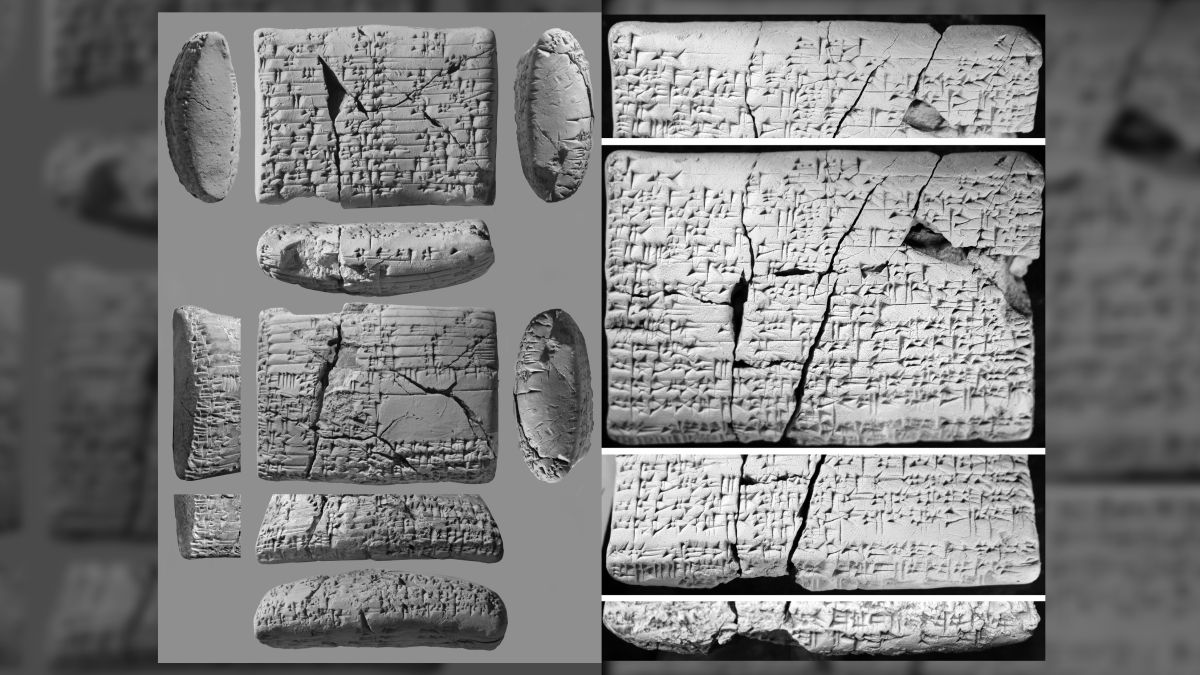
Two ancient clay tablets discovered in Iraq in the 1980s and possibly smuggled illegally to the United States during the Iran-Iraq War (!) bear cuneiform-like writing. But while one of the scripts is in Akkadian, a kind of Babylonian lingua franca that is well-known to scholars of ancient writing, the other is in Amorite, a “lost” Semitic/Canaanite language that is not well-attested elsewhere. Put the two together, and you have another Rosetta Stone for deciphering an ancient script scholars otherwise couldn’t read.
The account of the Amorite language given in the tablets is surprisingly comprehensive. “The two tablets increase our knowledge of Amorite substantially, since they contain not only new words but also complete sentences, and so exhibit much new vocabulary and grammar,” the researchers said. The writing on the tablets may have been done by an Akkadian-speaking Babylonian scribe or scribal apprentice, as an “impromptu exercise born of intellectual curiosity,” the authors added.
Yoram Cohen, a professor of Assyriology at Tel Aviv University in Israel who wasn’t involved in the research, told Live Science that the tablets seem to be a sort of “tourist guidebook” for ancient Akkadian speakers who needed to learn Amorite.
One notable passage is a list of Amorite gods that compares them with corresponding Mesopotamian gods, and another passage details welcoming phrases.
“There are phrases about setting up a common meal, about doing a sacrifice, about blessing a king,” Cohen said. “There is even what may be a love song. … It really encompasses the entire sphere of life.”
Amorite is a western Semitic language, like ancient Hebrew, but these tablets, estimated to be 4000 years old, are at least 1000 years older than any extant Hebrew writing. (The Amorites were one of the frequent enemies of the ancient Hebrews.)
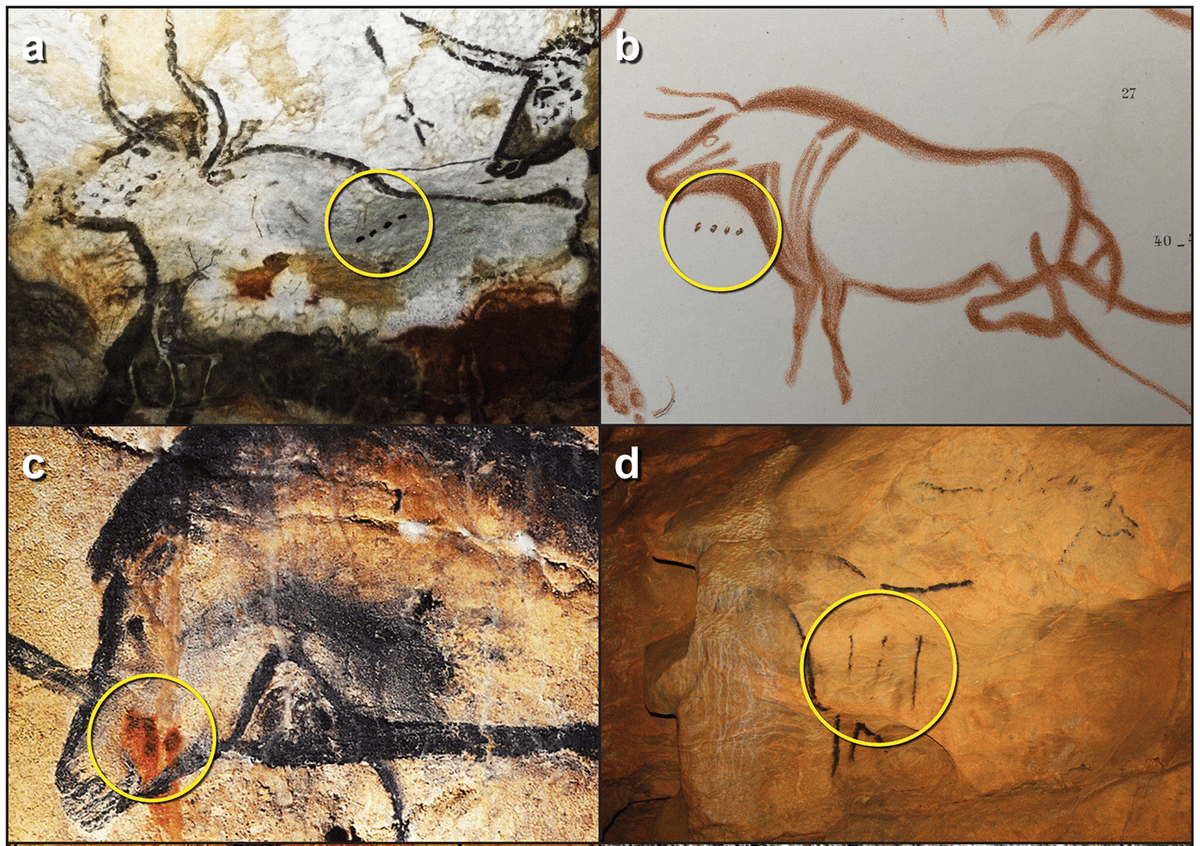
Since striking ancient cave paintings in southern Europe were first discovered more than a century ago, modern humans have tried to figure out if they have a meaning beyond being staggering works of art. Are they early animations? Examples of a primeval need to tell stories? An antique backdrop for us to project contemporary mistakes?
A new theory proposes that the repeatedly occurring nonfigurative signs (the ones that don’t look like anything concrete) are a kind of protowriting. This guess has been floated before, but this time, a number of earlier proposals are synthesized, and there’s a semantics attached: the symbols in the caves, these researchers argue, were used to mark time:
We hypothesize that the number of lines/dots, or the ordinal position of symbols, in sequences associated with depictions of prey taxa in Upper Palaeolithic art, convey information about events in those animals’ annual lives important to hunter-gatherers, expressed in lunar months RBS, i.e. anchored to the start of the bonne saison. That information is likely to reflect birthing, and possibly mating and/or migration of the animals of concern in the region in which the images are found (or originated).
A relatively simple statistical analysis shows good correlation with the number of marks and the number of lunar months between cycles of mating/birthing. In this way, early hunter/gatherers might have been able to track the availability of bird eggs, or to find new prey.
This would be a revolution in the history of recorded information:
Although a series of marks can of course be ambiguous, the Upper Palaeolithic written system was thus clear, unambiguous and permanent, and could have widespread meaning irrespective of any linguistic barriers (about which, of course, we know nothing), particularly given the fact that our database contains samples from across western—and some central—Europe. It made possible the accumulation and transmission of intelligible information over multiple generations, independent of the need to maintain parallel oral explanations (although of course we do not propose that these simply disappeared). This was clearly much more than a simple ‘tally’ of accumulated information. We believe that the numeric notational marks associated with the animals constituted a calendar, and given that it references natural behaviour in terms of seasons relative to a fixed point in time, we may refer to it as a phenological calendar, with a meteorological basis. It may be of greater significance, however, that it significantly backdates by thousands of years the permanent combination of information (in the form of numerosity/ordinality) with its subject (the animal/symbol).
But is it writing?
In our reading, the European Upper Palaeolithic system functioned to record a subject and information about the behaviour of that subject expressed in relation to natural events; it therefore expressed far more than the tablets recording numbers of commodities from Uruk-period Mesopotamia (Steinkeller 1992). In the sense of the Sumerological use of the terms, we suggest that we can accord it the function of a script. But could the information that it recorded really be intelligible without at least the underpinning nouns for the animals, the moon and its phases, and the bonne saison and its defining events, in addition to the actions of mating and birthing? We will presumably never know the specific words for these in whatever languages were spoken in Upper Palaeolithic Europe, but we can assume that our script could be communicated orally by using them. Is this, then, not the definition of writing?
We may not be convinced that the Upper Palaeolithic sequences and associated symbols can be described as written language, given that they do not represent grammatical syntax, but they certainly functioned in the same way as proto-cuneiform… We do not want to press the controversial (and in many senses, semantic) question of whether writing was a Palaeolithic invention; perhaps it is best described as a proto-writing system, an intermediary step between a simpler notation/convention and full-blown writing. Assuming we have convinced colleagues of our correct identification, there will no doubt be a lively debate about precisely what this system should be called, and we are certainly open to suggestions. For now, we restrict our terminology to proto-writing in the form of a phrenological/meteorological calendar. It implies that a form of writing existed tens of thousands of years before the earliest Sumerian writing system.
To translate this out of scholarly passive-aggressiveness: “you don’t have to call it writing if you want to be dicks about it, but we all know it’s writing, chumps.”
For 40 years, the Bulwer Lytton Fiction Contest has invited people to come up with the worst possible opening sentences to really bad novels. From the results of the 2022 contest, here’s this year’s grand prize winner:
I knew she was trouble the second she walked into my 24-hour deli, laundromat, and detective agency, and after dropping a load of unmentionables in one of the heavy-duty machines (a mistake that would soon turn deadly) she turned to me, asking for two things: find her missing husband and make her a salami on rye with spicy mustard, breaking into tears when I told her I couldn’t help — I was fresh out of salami.
I am also fond, for some reason, of this one:
Apart from his undergraduate degree in art history and several years under the tutelage of Simone d’Poisson, preeminent Monet scholar at the Louvre, truckin’ was all Billy knew.
The name of the contest is in honor of Edward Bulwer-Lytton, a British writer and politician who was active in the mid-19th century. He’s typically roasted for having the worst opening line in an actual novel: “It was a dark and stormy night.” But Bulwer-Lytton also came up with several pithy and memorable turns of phrase, like “the pen is mightier than the sword”.
I posted this earlier today to the newsletter and thought I’d publish it here too. -jason
Hey folks. I’ve been back at work on kottke.org for a couple of weeks now and just wanted to give you a little update on where I’m at. In a brief reentry post, I promised a “massive forthcoming post” about my sabbatical activities and thoughts. I had planned on having that done by now, but…………….. well, it’s not. And honestly I don’t know when it’s going to be. I’ve got the whole thing sketched out and have been working on it in dribs and drabs, but taking on such a big thing after not having written & thought in a structured way for months is proving difficult. I’ve realized that I haven’t had sufficient time to reflect on my experiences — I believe I have interesting things to say and conclusions to draw about the sabbatical, but not just yet.
The other thing is: I’m just having a really good time being back in the saddle here. I’m finding that I’d rather just work on the day-to-day site stuff, which is more variable than just the heads-down, pure writing that the big post requires. (Dirty little secret: The actual writing I do for the site is often my least favorite part of all the different things that go into running kottke.org. Newsflash: writer hates writing, details at 6pm.)
With recent posts about a Chinese painter of replica van Goghs who visits Europe to see real van Goghs, a lovely Twitter thread of big-name authors recalling low-turnout readings they’ve done, Jenny Odell’s forthcoming new book, a new USPS stamp celebrating John Lewis, a site that rates apples, an AI imagining scenes from Jodorowsky’s Tron, a list of the best books of 2022, the truffle industry being a big scam, the best photos from NASA’s Artemis I mission to the Moon, this appreciation of a tight action scene from Top Gun: Maverick, a 1-dimensional version of Super Mario Bros., “wet putty” car paint jobs, parentification, and dozens of other posts and links, I feel like I’ve gotten off to a good start and just want to keep the momentum going on that. So anyway, thank you for your continued patience as I figure out how this all works again.
Oh, and here’s a new thing: for those who have jettisoned Twitter, I’ve created a Mastodon account for kottke.org. Links to all my posts and Quick Links are now available at botsin.space/@kottke, in addition to the usual places: Twitter, RSS, Facebook, and kottke.org. Thanks for reading!
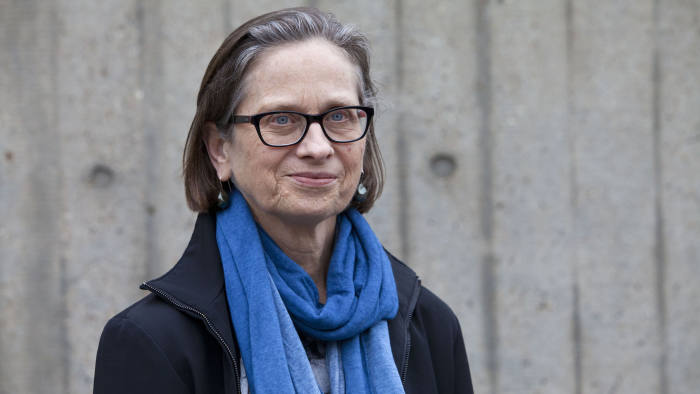
My favorite contemporary writer is probably Lydia Davis, in no small part because I don’t know if anyone takes a finer care for the language they use, as a writer and reader.
Davis also does double duty as both an original writer of fiction and essays, and a translator of other people’s writings, in multiple languages. In her new collection, Essays 2, she describes her unusual technique:
Although she learned German by immersion, Davis’s preferred method of language acquisition is quite different, and, to an outside observer, demonically challenging: She finds a book published in a language that she does not fully or even partially understand and then tries to figure out what it means.
To improve her Spanish, she digs into a copy of “Las Aventuras de Tom Sawyer.” In some cases the decryption proves easy. Words like “plan” are the same in English and Spanish. In other cases she inductively reasons the meaning of a word after noticing it in different contexts. Hoja initially stumps her when it pops up in the phrase hoja de papel — “hoja of paper.” Later in the book, it occurs in the context of a tree. Finally, Huck wraps a dry hoja around something to make a cigarette, and Davis realizes that only one meaning would work as well with paper as with a tree or a cigarette: “leaf.” Of course, it would be possible to solve the hoja enigma in two seconds by plugging the word into Google, but that would destroy the fun.
I’m (re)learning Italian right now — I sort of learned it backwards the first time, starting with Dante and Petrarch and only now learning how to ask where the bathroom is (dove el gabinetto?) and the difference between coat (cappotto) and hat (cappello). But what remains exciting are the little associations you learn, the conjunctions of phrasing, the possible substitutions of one term for another, the way a question and an answer can reflect the same structure — a map of phonemic possibilities that is also a way of seeing the world. Davis’s method might be impractical for learning a second language, but for a gifted language learner, it seems to put a premium on finding those connections. Which is, indeed, a big part of the fun.
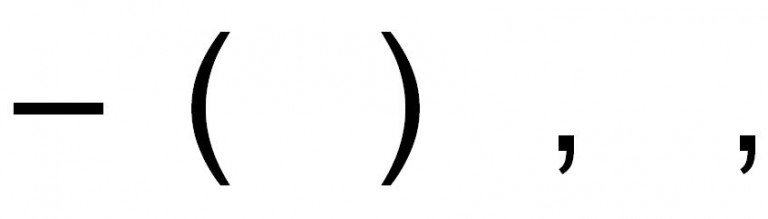
Stylistic tics are often shorthands for forms of thinking, or too often for ways of not thinking through a particular problem or set of circumstances. In “Aside Effects,” Lauren Michele Jackson looks at how the rhetorical aside, whether in commas or parentheses, gives the appearance of covering all bases while actually relegating the cases that matter to the status of a special footnote.
An article on loitering, say, will take care to mention that Black and Brown folks are often penalized by anti-loitering laws, but such an aside leaves out the fact that the Brown loiterer is not one example but the prototype. The ethics of the thing protest too much. It’s “women and people of color.” It’s “women and femmes.” Jules Gill-Peterson, in her essay on trans pessimism, asks after the misty “trans woman of color” whose life in print is only an enhancement for other things, a summoning that suppresses whatever lives happen behind the rumor. An aside to be cast aside. “The trans woman of color whose life is invoked is always putative,” Gill-Peterson writes. “She’s no fact. Who is she? How do you know her? I know why Chase Bank, or Sephora[,] pretends to know her. But you? What’s your excuse?”
The ethical aside is an interruption—the beat before everyone gets on with their lives. Journalists signal that they have done their due diligence in reaching out to all parties with the inclusion of “(X declined to comment for this article)” in reported investigations; the ethical aside, likewise, says that the author has indeed thought of and considered the conditions of those excluded by their primary interests. There’s someone else out there, it acknowledges, even as the story as written depends on their disavowed existence.
This isn’t a hard and fast rule, a proclamation that footnotes, parentheticals, and the like are inherently bad, and Jackson takes time to look through cases (including some splendid literary examples from Frederick Douglass and Vladmir Nabokov) where the aside has the opposite effect. But it does point to a very real problem not just in style but with habits of thinking. What if we valued the actually thoughtful more than the appearance of conscientiousness? I don’t know what that world would look like, but I bet it would be a more interesting one.
The Golden Age of Detective Fiction describes a period between the world wars in which a certain style of murder mystery novel took hold, led by the prolific and talented Agatha Christie. Scott Stedman explains about the rise and fall of the genre in today’s issue of Why is this interesting?
It wasn’t until Agatha Christie introduced the world to Poirot that the genre shifted into its strictest and most enduring form: the garden variety murder mystery.
“I specialize in murders of quiet, domestic interest.” —Agatha Christie.
Agatha Christie is the most popular modern writer to ever live (outmatched in sales by only Shakespeare and the Bible). Christie is unrelenting in her ability to surprise — she killed children, popularized the unreliable narrator, introduced serial killers. Still, she was a fiercely disciplined adherent to a form created by her community of fellow writers, developed in the legendary Detection Club (including Dorothy Sayers, Ronald Knox, and the remarkable GK Chesterton). In an age sandwiched between two world wars — her stories brim with pride for a stiff British moral certitude that was impervious to the most heinous acts against it.
A central feature of many of these whodunits was that the reader had access to all the same information as the detective and could, in theory, figure things out before they did. In 1929, Ronald Knox wrote down 10 rules that made this possible:
1. The criminal must be someone mentioned in the early part of the story, but must not be anyone whose thoughts the reader has been allowed to follow.
2. All supernatural or preternatural agencies are ruled out as a matter of course.
3. Not more than one secret room or passage is allowable.
4. No hitherto undiscovered poisons may be used, nor any appliance which will need a long scientific explanation at the end.
5. No racial stereotypes.1
6. No accident must ever help the detective, nor must he ever have an unaccountable intuition which proves to be right.
7. The detective must not himself commit the crime.
8. The detective must not light on any clues which are not instantly produced for the inspection of the reader.
9. The stupid friend of the detective, the Watson, must not conceal any thoughts which pass through his mind; his intelligence must be slightly, but very slightly, below that of the average reader.
10. Twin brothers, and doubles generally, must not appear unless we have been duly prepared for them.
It’s interesting to see how these rules are applied and broken in TV and films these days. I feel like “hitherto undiscovered poisons” and “appliances which will need a long scientific explanation” (not to mention the “unaccountable intuition” of characters) are now regularly deployed, which can lead to feelings of being cheating as a viewer if it’s not done well. (via why is this interesting?)
Since the 1990s, Pulitzer prizewinning novelist Cormac McCarthy has been a fixture at the Santa Fe Institute, a transdisciplinary research institute in New Mexico. During that time, he’s helped edit scientific papers for many faculty and postdocs. A pair of biologists, Van Savage & Pamela Yeh, recently condensed McCarthy’s scientific writing advice into an article for Nature.
Use minimalism to achieve clarity. While you are writing, ask yourself: is it possible to preserve my original message without that punctuation mark, that word, that sentence, that paragraph or that section? Remove extra words or commas whenever you can.
Inject questions and less-formal language to break up tone and maintain a friendly feeling. Colloquial expressions can be good for this, but they shouldn’t be too narrowly tied to a region. Similarly, use a personal tone because it can help to engage a reader. Impersonal, passive text doesn’t fool anyone into thinking you’re being objective: “Earth is the centre of this Solar System” isn’t any more objective or factual than “We are at the centre of our Solar System.”
Finally, try to write the best version of your paper: the one that you like. You can’t please an anonymous reader, but you should be able to please yourself. Your paper — you hope — is for posterity. Remember how you first read the papers that inspired you while you enjoy the process of writing your own.
Most of this is good advice for the writing in general.

Well this was fun! I’m not sure to which degree readers realize how much work goes into a week of kottke.org, and I’m sure Jason has a number of habits and a flow to things but wow! It’s an occasion to discover things hour after hour and find out what readers enjoy, but it is a lot of work. Hats off to you Jason.
I hope you enjoyed what I shared here this week. I encourage you to have a look at my newsletter Sentiers. Check out the archives and subscribe to keep up with where my curiosity takes me.
In case you missed them the first time around, and perhaps to give you a better idea of what usually draws my attention for Sentiers, here are some favorites from what I posted over the last few days, written as an homage to Tim Carmody’s style in the Kottke newsletter.
There’s a kind of superpower in walking, which is also a good way of encouraging serendipity, you might even find things like these storefronts in Tokyo. Much of my life and career was made possible by reading. I’ve never been to a desert library but I do have ghosts on my shelves. With books you can create futures by inventing utopias, and you can draw lessons from them, like cautionary tales from Frankenstein’s Monster or the many teachings of the great Ursula K. Le Guin.
(Header image, Mountain House in Mist / Shulin Architectural Design.)
Now this is a lede:
When I first read Virginia Woolf’s dictum that “A woman must have money and a room of her own if she is to write fiction,” I was homeless.
It follows through on that first punch:
I know half a dozen published authors who’ve had to rely on food stamps. The seedy poverty of the author has been a cliche for centuries. We find the figure of the poor writer already in the medieval era, in the form of poet-clerics called “goliards,” who begged and sang ribald songs in taverns as they wandered from monastery to monastery. Hundreds of years later, in the Beat Generation, the type survived with no essential change. Now a new generation of writers are confronting ever lower and less reliable payment for articles, stingier advances for books, fewer jobs, and smaller royalty checks. A host of new threats to writers’ livelihoods, from internet piracy to the slow-motion collapse of the academic job market, means ever fewer writers are making a middle-class wage.
So, full-disclosure time! I have been on food stamps, as recently as a couple of years ago. I am currently on Medicaid, and thank god for that, because the open market for health care is terrible, and Medicaid is great. (Freelancers, stop paying COBRA or Obamacare and get yourself on Medicaid if you can.)
I have been a professional writer for almost ten years and have only been employed at a full-time job with benefits for (counts fingers) let’s say three of them. The rest of the time, I’ve been on the 1099 economy, piecing together pieces of living from freelance gigs. I have been homeless, and I have lived with family who’ve been much more stable than I have been. My health has never been good, which has made it difficult for me to maintain full-time work when I’ve had it. I have been behind on my child support, but am currently (thank God) current.
I would not say I am devoted to writing, with my poverty a consequence of that devotion. This entire time, I have simply not known what else to do. I have been writing for my life.
There are a lot of us. We don’t always show it.
Most writers I know who’ve been really poor practice similar forms of self-censorship. Sometimes the reasons are obvious even to someone who’s never had money problems. One writer I know went through a patch where he had to report to a subway cleaning crew to keep getting his welfare checks. He talked about this openly to friends, but went through extreme contortions to hide it from a publisher who was considering hiring him. When I was first profiled for a women’s magazine, I had their photographer come to my apartment, only to have her look around and instantly suggest we go out to a park. After that, I had photographers meet me at a richer person’s apartment to save everyone time and embarrassment.
But often the decisions are less clear-cut. Social media, for instance, can be the ideal forum for openly discussing social class—but it’s also notoriously a place where going too far can damage your career. Most of us filter what we say. This affects how we talk about being broke. A post about student debt is safe, but one about living in your car risks losing face and professional standing. It can even come across as a passive-aggressive jab at more affluent people. One writer friend of mine commented: “On Twitter, we make jokes about being poor. We don’t talk about the fucking dread eating through us because we’ll never be stable. We don’t talk about what it means, that we’re on Twitter because we can’t afford therapy or social lives.”
I don’t know what to do about any of this. I can’t promise that I’ll be more forthcoming about this on Twitter, or here on Kottke.org, or anywhere else I write. I do know that my life is changing again, thanks in part to The Amazon Chronicles, and other opportunities coming into my life. I hope it continues to change. I hope it changes for all of us.
I can only testify, right here and now, that poverty and authorship coincide, including authorship that comes with a kind of modest fame. I can testify that there is nothing romantic about it, only the very real life of compromises that Sandra Newman documents so well in this essay. I can testify that talking about and not talking about it can both eat away at you. There is no cure; only doing better and doing worse, only new wounds and a moderate form of relief.
I disagree with Newman on one point. I think there is no real market for stories about poverty, first-person or otherwise. Not really. Maybe in fiction, maybe as a one-off. But one cannot be a writer about poverty in the same way that one can become a writer about technology; and in most cases, being a writer about technology is extremely difficult when one is poor. (You can track my poverty level through my writing subjects: when I’ve done better, I write about gadgets and the business of technology. When I’ve done worse, I write about memoir or pop culture: music, movies, television, comics, the internet. Things accessible from my memory or on my computer for free or cheap.)
People may want to read about what it’s like to be poor, but they don’t want to pay for it. Paying for things is a rich person’s privilege, and people pay for access to material wealth and things that get them closer to it. And in the free economy, people like the lingua franca of pop culture. Simple stories about heroes and villains, that when you scratch them open, tell them bigger stories about themselves and the worlds they live in.
That’s not to say that people can’t be brought to hear a different kind of story, but they do have to be brought there. How to bring them there? That’s what we’re all trying to figure out.
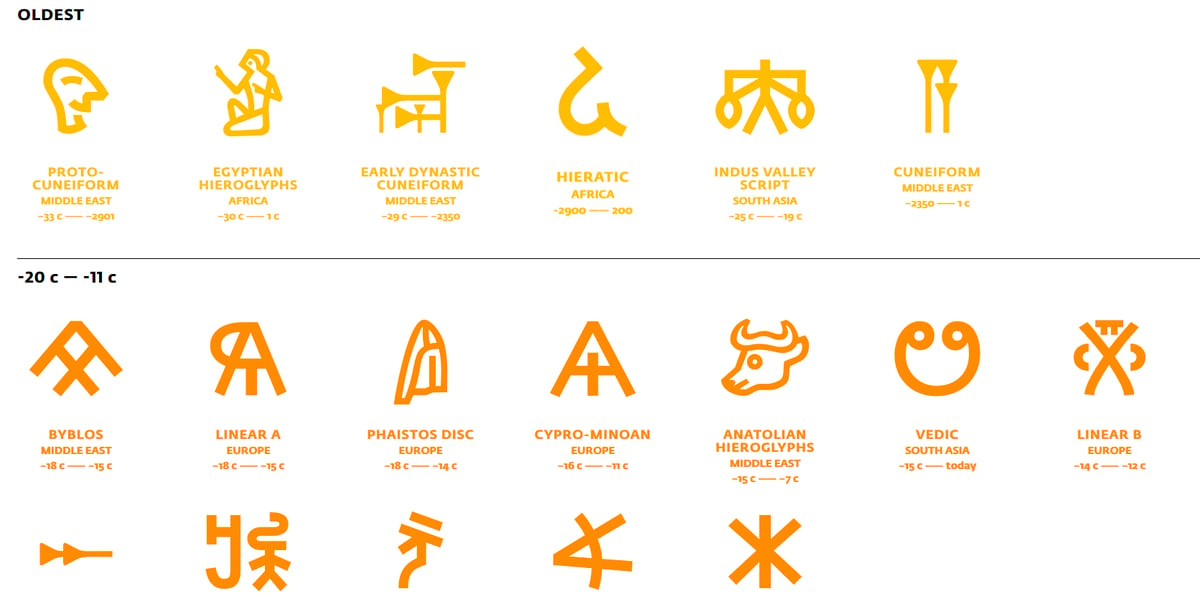
One post last week that y’all loved was The Evolution of the Alphabet. I loved it too; anything breaking down the history of writing in ways that are (get it) decipherable is just to me. But since then, even more great links on the history of writing have come in. To which I say, it is our duty, nay—our pleasure—to round those links up.
First, a riff on Jason’s post from the man himself, Talking Points Memo’s Josh Marshall. Josh, like me, is obsessed with the history of writing. He recommends two books (Empires of the Word: A Language History of the World by Nicholas Oster and The Writing Revolution: Cuneiform to the Internet by Amalia E. Gnanadesikan) and adds this reflection:
Historians of writing believe that our current alphabet originated as a sort of quick-and-dirty adaptation of Egyptian hieroglyphics into a simpler and more flexible way of writing. You take a small number of hieroglyphic characters representing specific things, decide to use them not for their meaning but for their sound and then use this as a way to encode the sound of words in almost any language. In this particular case it was to encode a Semitic language related to and ancestral to Hebrew and Phoenician. It was likely devised by soldiers of traders operating either in Egypt or between Egypt and what’s now Israel and Jordan.
This basic A B C D formulation is the foundation of the writing systems for not only all languages that use the Latin alphabet but also those which use the Greek, Cyrillic and Arabic alphabets along with numerous others. What is particularly fascinating is that most historians of writing believe that this invention - the alphabet, designed by and for sub-literate Semites living on the borderlands of Egypt about 4,000 years ago - is likely the origin point of all modern alphabets. In some cases, it’s a direct lineal descent as in Canaanite to Greek to Latin to our modern alphabet. But the creators of the alphabets that now dominate South Asia (originating 2500 to 3000 years ago) also seem to have borrowed at least the idea of the alphabet from these Semitic innovators, though others believe they are an indigenous creation.
The deep history of these letters we are now communicating through is like the DNA - or perhaps rather the record of the DNA - of human cognition and thought, processed through language and encoded into writing.
The second link comes from linguist Gretchen McCulloch. It’s The World Writing Systems, a site that doesn’t focus narrowly on our updated Latin alphabet and its antecedent forms, but on every system of writing that ever is or has been. It lets you search, browse, sort, and generally geek out to your heart’s content. It also lets you know whether the scripts are supported by Unicode (a surprising number are not), and links you to Wikipedia entries about them. So you can easily read about the Cypriot Syllabary, an Iron Age script and descendant of Linear A that was eventually replaced by the Greek alphabet.
Differences between Cypriot syllabary and Linear B
The main difference between the two lies not in the structure of the syllabary but the use of the symbols. Final consonants in the Cypriot syllabary are marked by a final, silent e. For example, final consonants, n, s and r are noted by using ne, re and se. Groups of consonants are created using extra vowels. Diphthongs such as ae, au, eu and ei are spelled out completely. In addition, nasal consonants that occur before another consonant are omitted completely.
See, you just learned something!
Now, many of the Aegean writing systems (including Linear A) are still undeciphered. For that, you want classicist Anna P. Judson’s “A very short introduction to the undeciphered Aegean writing systems” from her blog, “It’s All Greek To Me.” (Hat tip here to the polymath sportswriter Zito Madu.)
Here’s what Judson has to say about Linear A (which unlike Linear B, wasn’t used to write Greek, but a related language called Minoan):
It’s generally agreed that at least some Linear A signs, and quite plausibly the majority of them, can be ‘read’, since they are likely to have had similar sound-values to their Linear B equivalents (Linear B was adapted directly from Linear A in order to write in Greek); but it’s still not possible to identify the language involved or to understand any of its grammatical features, the meanings of most words, etc. As an example, the word AB81-02, or KU-RO if transliterated using Linear B sound-values, is one of the few words whose meaning we do know: it appears at the end of lists next to the sum of all the listed numerals, and so clearly means ‘total’. But we still don’t actually know how to pronounce this word, or what part of speech it is, and we can’t identify it with any similar words in any known languages.
The most promising set of inscriptions for analysing linguistic features is the so-called ‘libation formula’ - texts found on stone vases used in religious rituals (‘libation tables’), which are probably dedications (so probably say something like “Person X gives/dedicates/offers this object/offering to Deity Y”), and across which similar elements often recur in the same position in the text. In principle, having a ‘formula’ of this kind should let us identify grammatical elements via the slight variations between texts - e.g. if a particular variation in one word seemed to correlate with the number of dedicators listed, we might be able to infer that that was a verb with singular or plural marking. Unfortunately, there simply aren’t enough examples of these texts to establish this kind of linguistic detail - every analysis conducted so far has identified a different element as being the name of the donor, the name of the deity, the verb of offering, etc., so it’s still not possible to draw any certain conclusions from this ‘formula’.
Cretan Hieroglyphic and its variants are even less well understood than Linear A! Some of them are only attested in single inscriptions! God, writing isn’t a smooth series of adaptations leading to a clear final goal! Writing is a total mess! How did anyone ever make sense of it at all?
But they did; and that’s how and why we’re all here, communicating with each other on these alphanumeric encoding machines to this very day.
In the first couple of minutes of this video, Roald Dahl introduces us to the writing hut behind his house that he used to write all of his famed children’s books like Charlie and the Chocolate Factory and Danny the Champion of the World. Dahl describes his working routine and details how he’s designed his writing environment, his “nest”, to be as free from distraction as possible.
The Guardian used to run a series about writers’ rooms and in 2008, illustrator Quentin Blake, who worked with Dahl on many of his books, wrote a piece about Dahl’s shed.
The whole of the inside was organised as a place for writing: so the old wing-back chair had part of the back burrowed out to make it more comfortable; he had a sleeping bag that he put his legs in when it was cold and a footstool to rest them on; he had a very characteristic Roald arrangement for a writing table with a bar across the arms of the chair and a cardboard tube that altered the angle of the board on which he wrote. As he didn’t want to move from his chair everything was within reach. He wrote on yellow legal paper with his favourite kind of pencils; he started off with a handful of them ready sharpened.
I like that he tied the footrest to the chair to keep it from sliding away when he rested his feet on it.
As someone who sits down daily to write, nothing seems so luxurious to me as a separate writing hut that is off limits to everyone and everything else. George Bernard Shaw and Mark Twain both had separate houses in which to write; Shaw’s shed could even rotate to catch the light throughout the day. Someday I’ll have one of my own…
P.S. Ernest Hemingway used a standing desk, as did Winston Churchill, Charles Dickens, and Virginia Woolf, among others. I got this one a few weeks ago and am still getting used to it. (via @ftrain)
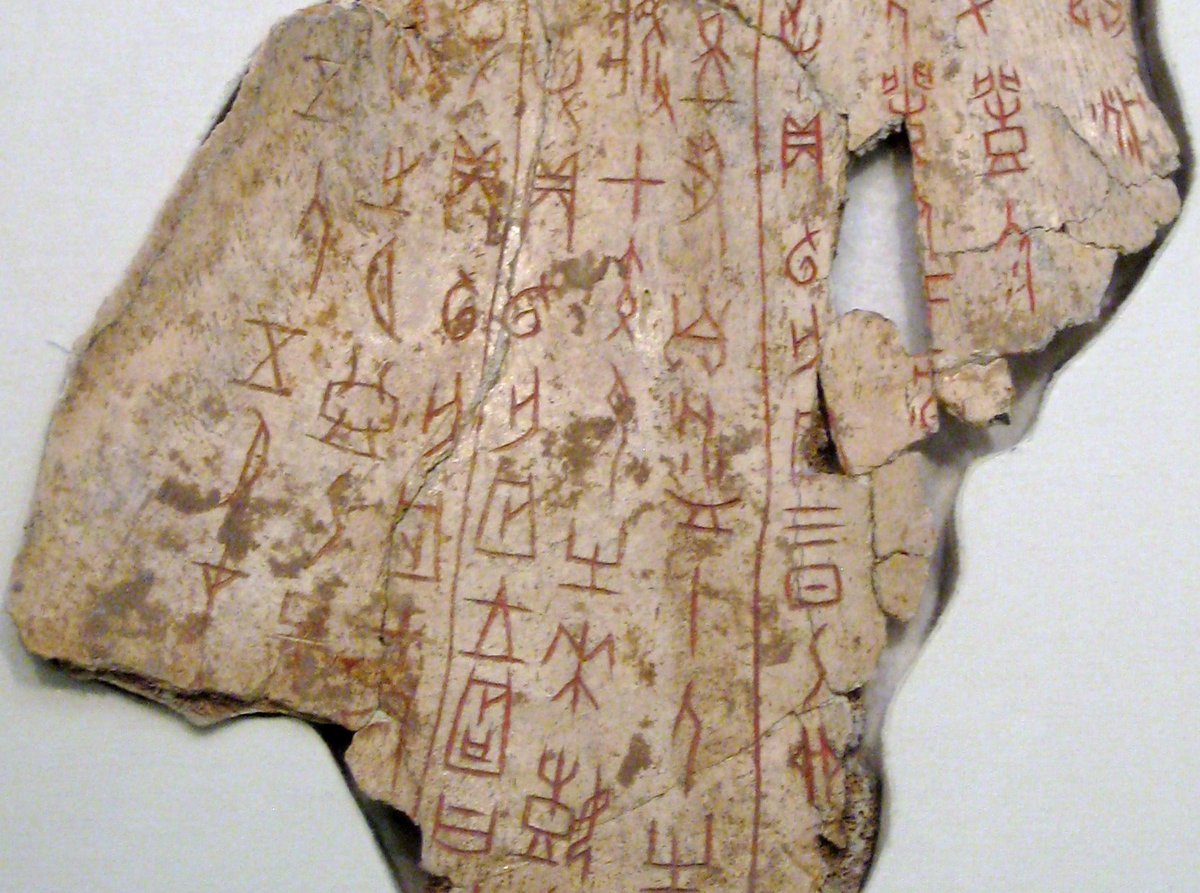
Michael Erard pokes away at the “administrative hypothesis,” the idea that ancient writing had its origin in accounting bureaucracies and existed primarily as a function of state power. There’s just as much evidence, he argues, that states and proto-states co-opted already-existing symbols used by pre-state farmers to keep tallies and mark time, and more provocatively, by priests who used writing as a script for prophecy, narrative, and magic spells.
Over and over, what we see is that writing is more like gunpowder than like a nuclear bomb. In each of the four sites of the independent invention of writing, there’s either no evidence one way or the other, or there’s evidence that a proto-writing pre-dated the administrative needs of the state. Even in Mesopotamia, a phonetic cuneiform script was used for a few hundred years for accounting before writing was used for overtly political purposes. As far as the reductive argument that accountants invented writing in Mesopotamia, it’s true that writing came from counting, but temple priests get the credit more than accountants do. ‘Priests invented writing’ is a reduction I can live with - it posits writing as a tool for contacting the supernatural realm, recording the movement of spirits, inspecting the inscrutable wishes of divinities.
It’s a complex argument, because it has at least two parts:
1) writing wasn’t invented by states (even writing for accounting purposes);
2) writing has been invented for reasons other than an accounting function.
So most of Erard’s examples are arguing against one part of the most robust version of the adminstrative hypothesis, rather than refuting it outright. This is hardly a knockout blow, but it makes for some notable asterisks. (I wish there were more here about China.)
In this 90-second video, Kurt Vonnegut provides eight guidelines for writing a good short story.
1. Use the time of a total stranger in such a way that he or she will not feel the time was wasted.
2. Give the reader at least one character he or she can root for.
3. Every character should want something, even if it is only a glass of water.
4. Every sentence must do one of two things — reveal character or advance the action.
5. Start as close to the end as possible.
6. Be a sadist. No matter how sweet and innocent your leading characters, make awful things happen to them-in order that the reader may see what they are made of.
7. Write to please just one person. If you open a window and make love to the world, so to speak, your story will get pneumonia.
8. Give your readers as much information as possible as soon as possible. To heck with suspense. Readers should have such complete understanding of what is going on, where and why, that they could finish the story themselves, should cockroaches eat the last few pages.
This appears to be a reading of the introduction to a collection of Vonnegut’s short fiction; in it, the list is referred to by the author as “Creative Writing 101”.
See also Vonnegut explaining the shapes of stories. (thx, jeannie)
In a 2013 piece, Christie Aschwanden suggested a test in the spirit of the Bechdel test for avoiding gender bias in profiles written about scientists who are women.
To pass the Finkbeiner test, the story cannot mention:
- The fact that she’s a woman
- Her husband’s job
- Her child care arrangements
- How she nurtures her underlings
- How she was taken aback by the competitiveness in her field
- How she’s such a role model for other women
- How she’s the “first woman to…”
Aschwanden named the test after her colleague Ann Finkbeiner, who wrote that she was going to write a piece about an astronomer without mentioning that she, the astronomer, was a woman.
Meanwhile I’m sick of writing about [gender bias in science]; I’m bored silly with it. So I’m going to cut to the chase, close my eyes, and pretend the problem is solved; we’ve made a great cultural leap forward and the whole issue is over with.
And I’m going to write the profile of an impressive astronomer and not once mention that she’s a woman. I’m not going to mention her husband’s job or her child care arrangements or how she nurtures her students or how she was taken aback by the competitiveness in her field. I’m not going to interview her women students and elicit raves about her as a role model. I’m going to be blindly, aggressively, egregiously ignorant of her gender.
I’m going to pretend she’s just an astronomer.
(via @john_overholt)
“Kafka Was A Terrible Boyfriend” is a sentence that is simultaneously unsurprising and revelatory. But it gives us a chance to dive into Kafka’s letters, which are, along with the stories, unfinished novels, and the conversation slips he passed back and forth at the end of his life when he could no longer speak, among his most treasured works.
This fact maybe illustrates why so many writers are bad boyfriends, girlfriends, husbands, and wives (but let’s face it, mostly bad boyfriends and husbands) — especially from the point of view of their writing to their significant others. Kafka in particular seemed incapable of thinking about his writing, on any topic, as anything but writing, in a literary sense. So his putative love letters are filled with sudden ironies and reversals, meditations on ambiguity, contingency, and the self. The dude couldn’t get out of his own head, or out of his own way.
Would it help if we write to each other only once a week? No, if my suffering could be cured by such means it would not be serious. And already I foresee that I shan’t be able to endure even the Sunday letters. And so, to compensate for Saturday’s lost opportunity, I ask you with what energy remains to me at the end of this letter: If we value our lives, let us abandon it all.
Did I think of signing myself Dein [Yours]? No, nothing could be more false. No, I am forever fettered to myself, that’s what I am, and that’s what I must try to live with.
Franz
Needless to say, I identify with him completely.
Greg Pak is one of my favorite comic book writers, an intellectual and superfan who really knows how to do world-building and get into his characters’ heads. Among other books, he wrote Planet Hulk, a huge part of the basis for Thor: Ragnarok (minus Thor) that’s also one of the best (largely) self-contained comic book stories ever.
The other day, Pak took a moment on Twitter to describe his process for writing comics. It’s really good descriptive/prescriptive advice for any kind of writing, and well worth a read:
How I write a comic book script:
1. Outline the whole thing.
2. Break the outline down into pages.
3. Write from the beginning, but if I get stuck, skip around and write the easier scenes first.
4. Go back and write the harder scenes, which are easier now that I’ve done the rest.
5. Rewrite the easier scenes now that I’ve written the harder scenes and know my story better.
6. Go through and edit everything multiple times.
7. Turn it in when I run out of time.
8. Enjoy that fourteen minutes of calm you get after turning in a script.
9. Work on revisions.
10. Figure out what it’s REALLY all about and make the subtle dialogue tweaks that bring out that deeper theme/emotional thread.
The whole thread includes lots of dynamite numbered (3A, 3B, 4A) and unnumbered supplementary notes (the work of revision is never done). This one is probably my favorite:
Two general notes to myself that always seems to work is give your characters quiet moments that dramatize character, especially early in the script/story, and give the big emotional beats time to play out. Let it breathe when it needs to breathe.
From The Guardian, a typically illuminating piece from George Saunders on how he approaches writing…and more specifically how he approached writing a novel after so many years of writing short stories. Regarding the writer/reader connection:
This is a hopeful notion, because it implies that our minds are built on common architecture — that whatever is present in me might also be present in you. “I” might be a 19th-century Russian count, “you” a part-time Walmart clerk in 2017, in Boise, Idaho, but when you start crying at the end of my (Tolstoy’s) story “Master and Man”, you have proved that we have something in common, communicable across language and miles and time, and despite the fact that one of us is dead.
Another reason you’re crying: you’ve just realised that Tolstoy thought well of you — he believed that his own notions about life here on earth would be discernible to you, and would move you.
Tolstoy imagined you generously, you rose to the occasion.
It’s a throwaway line in a longer talk and we probably shouldn’t make too much of it, but I will anyway.
In five years time Facebook “will be definitely mobile, it will be probably all video,” said Nicola Mendelsohn, who heads up Facebook’s operations in Europe, the Middle East and Africa, at a conference in London this morning. Mark Zuckerberg, Facebook’s CEO, has already noted that video will be more and more important for the platform. But Mendelsohn went further, suggesting that stats showed the written word becoming all but obsolete, replaced by moving images and speech.
“The best way to tell stories in this world, where so much information is coming at us, actually is video,” Mendelsohn said. “It conveys so much more information in a much quicker period. So actually the trend helps us to digest much more information.”
Maybe this is coming from deep within the literacy bubble, but:
Text is surprisingly resilient. It’s cheap, it’s flexible, it’s discreet. Human brains process it absurdly well considering there’s nothing really built-in for it. Plenty of people can deal with text better than they can spoken language, whether as a matter of preference or necessity. And it’s endlessly computable — you can search it, code it. You can use text to make it do other things.
In short, all of the same technological advances that enable more and more video, audio, and immersive VR entertainment also enable more and more text. We will see more of all of them as the technological bottlenecks open up.
And text itself will get weirder, its properties less distinct, as it reflects new assumptions and possibilities borrowed from other tech and media. It already has! Text can be real-time, text can be ephemeral — text has taken on almost all of the attributes we always used to distinguish speech, but it’s still remained text. It’s still visual characters registered by the eye standing in for (and shaping its own) language.
Because nothing has proved as invincible as writing and literacy. Because text is just so malleable. Because it fits into any container we put it in. Because our world is supersaturated in it, indoors and out. Because we have so much invested in it. Because nothing we have ever made has ever rewarded our universal investment in it more. Unless our civilization fundamentally collapses, we will never give up writing and reading.
We’re still not even talking to our computers as often as we’re typing on our phones. What logs the most attention-hours — i.e., how media companies make their money — is not and has never been the universe of communications.
(And my god — the very best feature Facebook Video has, what’s helping that platform eat the world — is muted autoplay video with automatic text captions. Forget literature — even the stupid viral videos people watch waiting for the train are better when they’re made with text!)
Nothing is inevitable in history, media, or culture — but literacy is the only thing that’s even close. Bet for better video, bet for better speech, bet for better things we can’t imagine — but if you bet against text, you will lose.
New Yorker staff writer Larissa MacFarquhar has written a book on people who are wholly devoted to helping others called Strangers Drowning: Grappling with Impossible Idealism, Drastic Choices, and the Overpowering Urge to Help. At least a few of the books’ subjects were first profiled in the NYer by MacFarquhar, including this amazing story of a couple who adopted 20 children and a Japanese monk confronting his culture’s suicide problem.
David Wolf of The Guardian recently wrote about MacFarquhar and her unique writing style, writing from the perspective of her subjects, like they themselves had written the piece.
MacFarquhar attributes her restlessness with form to getting “productively bored”: “For a profile, I do try to make the piece sound and feel as though it were written by the person themselves, rather than by me. What I’m trying to get at is a sense of intimacy, a sense that you are, insofar as is possible, inside the mind of the person, so that you understand why they’re in love with the ideas they fell in love with, what moves them, what drives them.”
These principles guide most of her stylistic decisions. Anything that diminishes the immediacy of the reader’s access to her subject is thrown out. “People think I’m a total freak for not using the first person,” she says. “The way I think about it is that if you’re making a conventional feature film, all it takes is for the director to walk across the camera just once and you have a completely different relationship to the whole story. For that reason, even though it sometimes means sacrificing great scenes, I take myself out.”
What point of view is that? It’s like a mix of first person and third person. Is one-third person POV a thing?
John McPhee, maybe our greatest living nonfiction writer (depending on how you feel about Joan Didion), has a lovely essay on omission in this week’s The New Yorker. Along with a tidy analysis of Hemingway’s iceberg metaphor and some great shaggy-dog stories about citrus fruits, General Eisenhower, and more, he includes an exercise he learned writing for Time that he’s adapted for his students at Princeton.
After four days of preparation and writing—after routinely staying up almost all night on the fourth night—and after tailoring your stories past the requests, demands, fine tips, and incomprehensible suggestions of the M.E. and your senior editor, you came in on Day 5 and were greeted by galleys from Makeup with notes on them that said “Green 5” or “Green 8” or “Green 15” or some such, telling you to condense the text by that number of lines or the piece would not fit in the magazine. You were supposed to use a green pencil so Makeup would know what could be put back, if it came to that. I can’t remember it coming to that…
The idea is to remove words in such a manner that no one would notice that anything has been removed. Easier with some writers than with others. It’s as if you were removing freight cars here and there in order to shorten a train—or pruning bits and pieces of a plant for reasons of aesthetics or plant pathology, not to mention size. Do not do violence to the author’s tone, manner, nature, style, thumbprint. Measure cumulatively the fragments you remove and see how many lines would be gone if the prose were reformatted. If you kill a widow, you pick up a whole line.
Greening seems like such a material thing, wholly specific to print — not just to the fact of magazine layout, but a specific kind of workflow. One’s tempted to say with digital writing, we’ve overcome those space limitations, but I’m less sure. Twitter’s the obvious example, but doing web layout, I’ve killed more than my share of lines to preserve symmetry or squeeze everything into a smaller space.
A short profile of writer/editor Roger Angell, still coming in to work most days at The New Yorker at age 93:
Angell saw Babe Ruth in his prime, but he never writes sentimentally about baseball, a sport that has inspired many sports-writers to produce reams of awful, faux-poetic prose. His habit of telling it straight is what makes his nine books hold up and keeps him relevant today. “I don’t go for nostalgia,” he says. “I try not to. It’s so easy to sentimentalize the good old days, but I don’t ever do that. I’m aware that things have changed, but I try not to go there. It’s very easy, and you get sort of a mental diabetes. All that goo. I am a foe of goo, maybe too much so.”
Angell’s extended essay “This Old Man” offers an extended dose of that lucidity.
Here in my tenth decade, I can testify that the downside of great age is the room it provides for rotten news. Living long means enough already. When Harry [Angell’s fox terrier] died, Carol and I couldn’t stop weeping; we sat in the bathroom with his retrieved body on a mat between us, the light-brown patches on his back and the near-black of his ears still darkened by the rain, and passed a Kleenex box back and forth between us. Not all the tears were for him. Two months earlier, a beautiful daughter of mine, my oldest child, had ended her life, and the oceanic force and mystery of that event had not left full space for tears. Now we could cry without reserve, weep together for Harry and Callie and ourselves. Harry cut us loose.
Anyone who’s been writing for a long time has tools they like and come to depend on; one of Angell’s is a discontinued Mead three-subject notebook:
The best notebook in the world. David Remnick and I talk about how you can’t get anything to replace the Mead notebook, which is unavailable now. They take ink perfectly. There is a great flow. All the other notebooks are coated with something so your pen slides along.
“In recent years, when he goes on reporting trips,” Angell’s interviewer notes, “he has resorted to making use of old Mead notebooks that still have blank pages.”
Three years ago, I came across a post on the Sharpie blog — I don’t know how or why I was following Sharpie’s blog, but such were the mysteries of our universe in those long-ago days — announcing a new kind of pencil: a mechanical pencil with liquid graphite ink, with leads that could not break, whose writing was initially erasable but over time (about three days) would become semi-permanent.
Sharpie eventually had to back off some of its claims for the liquid pencil — the original promo material said pencil would become permanent like a Sharpie Marker, which isn’t quite true — but they brought them to market, and sell them for about $3 apiece. (Sadly, the reviews aren’t very good.)
People love pencils. They love them. It’s partly childhood nostalgia, partly how a craftsman comes to care for her tools, and partly the tactile experience. It’s also a blend of appreciation for both their aesthetic and functional qualities, and (especially these days, but not only these days), a soupçon of the disruptive passion that comes from willfully embracing what poses as the technologically obsolete.
Over at The Atlantic, Rebecca Rosen has a story about Pencil Revolution, which she quite rightly calls “The World’s Best Website About Pencils.” She lists ten representative posts, from which I’ll select my favorite five:
I found these at Staples (in the US) a few weeks ago and bought a pack. At $10 for three dozen, it was a pretty good deal. Less than $3.50 for some quality pencils is something I’d find it difficult to pass up. But three dozen is…a commitment to make to the Pencil Gods, when the pencil might just be terrible. I mean, they are pencils. One can’t just throw them away if they turn out to be awful. Luckily, these pencils are not awful at all. Unluckily, having a Big Box means that I’ve given most of them away already.
I feel like there’s something powerful about pencils that I feel viscerally but don’t fully understand. There’s the manuscript part: as much as I love to type, there’s something super powerful in that alignment of the eye and the hand. But that’s pens and chalk and crayons and markers too, and I have completely different feelings about all of these things.
In “Why pencils?” Pencil Revolution’s founder Johnny Gamber tries to explain:
The first and best reason to use pencils is because you like them and enjoy writing/drawing with them. Because you feel better connected to the paper you’re writing on (or the wall, etc.) and the earth from which the clay, the graphite and the wood all came. Because they smell good. Because sharpening them can be a sort of meditative process. Because you can chew on them. Or for reasons we can’t explain.
The point is that it’s best to write with what we like best, no? I’ll admit to enjoying taking notes and writing papers and poems with pencils better than pens. That’s the biggest reason that I use pencils at all.
Maybe it’s that sense of work that’s best realized in sharpening: the continual, attentive maintenance to a thing that’s ultimately, necessarily, and even intentionally disposable. To adapt George Carlin’s observation, when you buy a pencil, you know it’s going to end badly. You’re buying a small tragedy. Caring for a pencil becomes like caring for a pet, or a person, in accelerated miniature, like in time-lapse photography.
Pencils are like love. Pencils are like us. They are free to love, free to squander, and free to give away.
I’m going to do something rare here at Kottke and open up the comments. I’ll close them down at the end of the day. Do you love pencils? Do you hate them? Why? What’s your favorite pencil? What’s your best pencil story? Did a pencil ever break your heart?
Letters of Note ran a 1955 letter from advertising legend David Ogilvy that details his process for writing advertising copy.
I have never written an advertisement in the office. Too many interruptions. I do all my writing at home.
Before embarking on writing his new book, Steve Silberman asked a bunch of authors (like Cory Doctorow, Jonah Lehrer, and Carl Zimmer) for their best advice about writing books.
A few things became clear as soon as their replies came in. First of all, I’ll have to throttle back my use of Twitter and Facebook to get this writing done (and I may never rev up my idle Quora account after all.) Secondly, scheduling intervals of regular exercise and renewal amid the hours of writing will be essential.
One thing I will be doing from time to time this week is pulling down random books from my shelves and writing about them, under the belief that the internet is better when not all of it comes from the internet. Here’s the second installment (you can read the first here).
One of my favorite writers, poets, and teachers is Susan Stewart. She’s just one of those people who radiates intelligence and fun.
She also helped show me that you could put both of these things into critical writing — that plain, everyday language and willfully studied, obscure language were both traps.
Here is an audio recording of her reading one of my favorite of her poems, “Apple,” which begins:
If I could come back from the dead, I would come back
for an apple, and just for the first bite, the first
break, and the cold sweet grain
against the roof of the mouth, as plain
and clear as water.
This poem also includes a Twitter-worthy quip: “If an apple’s called ‘delicious,’ it’s not.”
And here is an excerpt from one of my favorite of her books (which I’m pretty sure was originally actually her doctoral thesis), On Longing: Narratives of the Miniature, the Gigantic, the Souvenir, the Collection:
Problems of the inanimate and the animate here bring us to a consideration of the toy. The toy is the physical embodiment of the fiction: it is a device for fantasy, a point of beginning for narrative. The toy opens an interior world, lending itself to fantasy and privacy in a way that the abstract space, the playground, of social play does not. To toy with something is to manipulate it, to try it out within sets of contexts, none of which is determinative… The desire to animate the toy is the desire not simply to know everything but also to experience everything simultaneously…
Here is the dream of the impeccable robot that has haunted the West at least since the advent of the industrial revolution. The eighteenth and nineteenth centuries mark the heyday of the automaton, just as they mark the mechanization of labor: jigging Irishmen, whistling birds, clocks with bleating sheep, and growling dogs guarding baskets of fruit. The theme of death and irreversibility reappears in the ambivalent status of toys like the little guillotines that were sold in France during the time of the Revolution. In 1793 Goethe wrote to his mother in Frankfurt requesting that she buy a toy guillotine for his son, August. This was a request she refused, saying that the toy’s maker should be put in stocks.
Such automated toys find their strongest modern successors in “models” of ships, trains, airplanes, and automobiles, models of the products of mechanized labor. These toys are nostalgic in a fundamental sense, for they completely transform the mode of production of the original as they miniaturize it: they produce a representation of a product of alienated labor, a representation which itself is constructed by artisanal labor. The triumph of the model-maker is that he or she has produced the object completely by hand, from the beginning assembly to the “finishing touches.”
It’s a kind of writing that’s totally within the boundaries of the historical and theoretical conventions of the academy, but is also always rhetorically and imaginatively precise and correct, from the individual syllable to the grouped processions of images.
I can’t tell you how rare that is. Probably you know already.
Older posts

Socials & More