kottke.org posts about TV
The folks at Fred Rogers Productions have launched a YouTube channel dedicated to Mister Rogers’ Neighborhood. They plan to post compilations, clips, and full episodes, some of which haven’t been seen on PBS in years & years. One of the first complete episodes they’ve posted is the one about how crayons are made!
Other full episodes include A Visit with Officer Clemmons, The Very First Episode (from 1968), and Koko the Gorilla Meets Mister Rogers.
And there’s also this 30-minute compilation of fan-favorite factory visits.
Again, here’s the channel if you want to subscribe or explore more.

Every so often, the US Postal Service reissues old stamps. This time around, they polled the public about which past stamp they’d like to see reissued and the results were decisive: the people love Mister Rogers.
The Mister Rogers stamp, originally released in 2018, is new again in 2026!
In national Stamp Encore polling, the stamp honoring the television host beloved by generations rose to the top spot from a varied ballot of 25 previous stamp issuances. Americans were asked to celebrate 250 years of postal delivery by choosing among favorite stamps of the last few decades. By the deadline last fall, the Postal Service was flooded with nearly 600,000 total ballots.
The Mister Rogers stamps are out now — you can check out a list of the available purchases here. There’s even a set of Field Notes notebooks.


Mister Rogers is a natural fit for a postage stamp; he was a “prolific letter-writer”.
Fred Rogers had a great appreciation for communication by mail, so the popularity of his stamp in 2018 and the esteem reflected by Stamp Encore ballots seem especially fitting. A prolific letter-writer, sometimes replying to 100 letters per day, Rogers never resorted to form-letter responses. He expressed his sentiments in simple terms: “There is still a place for the written letter.”
In a book recalling mail he had received and sent, Rogers wrote, “One of the first things I do each day is to work on the letters that have arrived from the children and adults who have written to us. I care deeply about sending a personal response.” Rogers added, “It gives me a way to know my television neighbors as real people and to make a more personal connection with them. Just as our program is a ‘television visit,’ “the mail is a ‘letter visit.’ A personal note is still far more valuable than shooting off an email or text,” he said.
(thx, caroline)
Andor loves a good monologue. Among the best of them is Nemik’s Manifesto:
Remember this, Freedom is a pure idea. It occurs spontaneously and without instruction. Random acts of insurrection are occurring constantly throughout the galaxy.
And Kino Loy’s speech to his fellow prisoners on Narkina 5:
There is one way out. Right now, the building is ours. You need to run, climb, kill! You need to help each other. You see someone who’s confused, someone who is lost, you get them moving and you keep them moving until we put this place behind us.
In this just-released episode of Nerdwriter, Evan Puschak breaks down Luthen Rael’s “extraordinary” monologue about what he’s sacrificed for the cause.
Here’s the original scene and a transcript of the speech:
Calm. Kindness. Kinship. Love. I’ve given up all chance at inner peace. I’ve made my mind a sunless space. I share my dreams with ghosts. I wake up every day to an equation I wrote 15 years ago from which there’s only one conclusion, I’m damned for what I do. My anger, my ego, my unwillingness to yield, my eagerness to fight, they’ve set me on a path from which there is no escape. I yearned to be a savior against injustice without contemplating the cost and by the time I looked down there was no longer any ground beneath my feet. What is my — what is my sacrifice? I’m condemned to use the tools of my enemy to defeat them. I burn my decency for someone else’s future. I burn my life to make a sunrise that I know I’ll never see. And the ego that started this fight will never have a mirror or an audience or the light of gratitude. So what do I sacrifice? EVERYTHING!
The great thing about Luthen’s monologue, which Puschak doesn’t really get into, is that it makes the viewer rethink the entire basis of the show — and of Star Wars in general. Instead of Good Guys and Bad Guys, you’re asked to consider shades of gray. These blurred lines are hinted at before, mostly through individual character arcs (Han, Anakin, Lando, Rey, Kylo), but Luthen plainly lays out the moral complexity involved: revolutions and rebellions are led by and made up of flawed people who do harmful things for the right reasons…or at least, that’s what they tell themselves, what they need to tell themselves.
Luthen, Mon Mothma, Cassian — there’s no solution to their personal trolley problem, except that they somehow have to keep living after condemning others to suffering and death. Viewed through that lens, the rest of Star Wars reads quite differently.
The day after ending his run on The Late Show, Stephen Colbert hosted a show called Only in Monroe on a Michigan public access channel. His musical director for the show was Jack White, nestled onstage between a boombox and a reel-to-reel recorder. His guests included Byron Allen, Jeff Daniels, Steve Buscemi, and Eminem.
He told viewers during his final Late Show monologue that they might next find him in Monroe:
At the top of his final CBS monologue Thursday night, Colbert paused to mark the occasion: “Tonight is our final broadcast from the Ed Sullivan Theater.”
When the audience booed, Colbert waved them off.
“No, no, we were lucky enough to be here for the last 11 years, all right? Can’t take this for granted,” he said. “Though technically our first show in July of 2015 was from a public access station in Monroe, Michigan for an audience of 12 people. Show business being what it is these days, that’s probably where you’ll see me next.”
Colbert had hosted Only in Monroe once before, about two months out from starting at The Late Show. His special guest that night was Eminem.
Stephen Colbert? The man knows how to commit to the bit.
One of the questions on The Colbert Questionert that Stephen Colbert would administer to his celebrity guests was “What number am I thinking of?” As you can see from this compilation, his answer was often, but not always, “no”.
A few of the guests said “42” but none ever said “69”?
So anyway, the Late Show is coming to an end tonight, a casualty of CBS’s newfound fealty to the Trump regime, and Stephen Colbert finally took the questionert himself. And yes, at last, he revealed the number that he was thinking of…to Robert De Niro no less:

This scan isn’t very good (best I could find), but these are all the lightsabers used by Jedi and Sith in the various Star Wars shows and movies. I think this is from a few years ago, so I’m not sure how up to date it is.
In the SW universe, making your own saber is a Jedi and Sith rite of passage, which accounts for the diversity in design. No shortcuts allowed…Babu Frik wasn’t out there selling Ancient Laser Sword™ kits to young padawans (kyber crystal sold separately). (via dennis crowley)
PBS Kids and The Jim Henson Company have collaborated on a kids special called Wowsabout! that focuses on the experience of wonder.
Wowsabout is rooted in a rich curriculum developed by Dr. Dacher Keltner, one of the world’s foremost emotion scientists and author of “AWE: The New Science of Everyday Wonder and How It Can Transform Your Life.” The special, shot on location in breathtaking Sequoia National Park, aims to help children recognize and name the feeling of awe by experiencing moments of wonder alongside Roxy and Ronald. Through nature, music, storytelling, and friendship, children learn how awe sparks curiosity, creativity, kindness, and a desire to explore and care for the world around them. The special inspires children to notice awe in everyday moments and begin their own “Wowsabouts,” fostering connection to others and to the planet.
The full episode of Wowsabout! is available to watch on YouTube and at PBS Kids.
Dr. Keltner, one of the advisors on Pixar’s Inside Out, outlines “eight categories of experience that set the stage for awe” in his 2023 book on the topic. A summary of the “eight wonders” from a Psychology Today article:
1. Moral beauty. We can feel awe when we observe other people engage in acts of courage or kindness. Moral beauty also describes the experience of seeing someone overcome obstacles, or watching people with rare talents.
2. Collective effervescence. This occurs when a gathering of people is attending to the same thing, moving together, and converging on similar emotional experience. Think attending a concert, dancing in a crowd, or attending or playing in a basketball game.
3. Nature. When we are outside, we can find awe in the sights, sounds, and smells of nature.
4. Music. Both making music and listening to music attune us to what is happening outside of ourselves and connect us with others and a broader expanse of time and place.
5. Visual design. This includes visual art, movies, geometric patterns, even the elegance and complexity of machines.
6. Spirituality and religion. As personally defined by each of us, this might include connection with the Divine, or experiences that transcend our self or understanding.
7. Life and death. We can experience awe when we witness or are connected to birth and death.
8. Epiphany. This includes the experience of uniting facts, beliefs, values, intuitions, and images into a new system of understanding.
Reading through the list, it occurs to me that many of the things I post about on KDO touch on one of more of these elements of awe and wonder. (thx, caroline)
As I watched the teaser trailer for season three of Silo, I discovered that I am very much looking forward to this new season. July 3, 2026.
Just dropped this morning: the trailer for the final season of For All Mankind. When season four’s teaser trailer came out, I caught some flack for suggesting that “if you tilt your head and squint…you see For All Mankind as a prequel/origin story for The Expanse”. It looks like we’re heading even more in that direction in season five, which begins airing March 27.
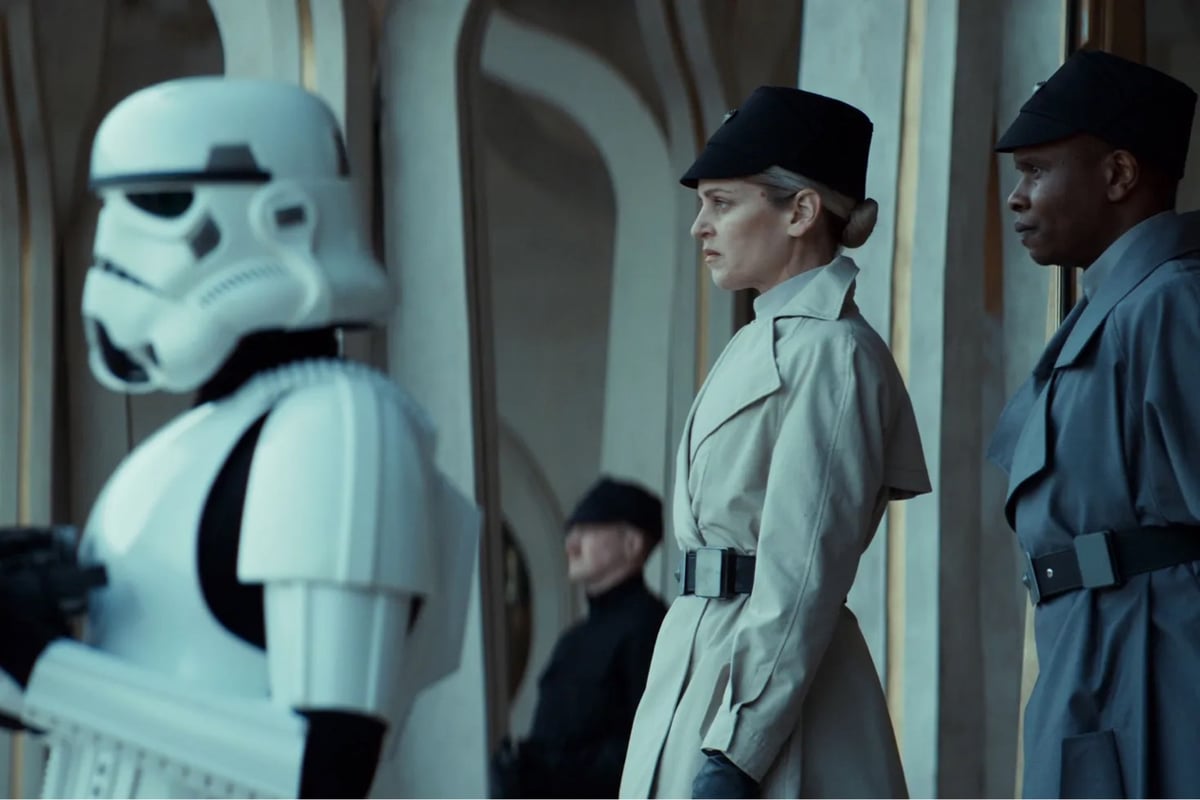
Early on in the promotional period for season two of Andor, a series explicitly about fascism that depicted a genocide, Disney asked creator Tony Gilroy not to use the words “fascism” and “genocide”. Now that promotional period has passed and he can speak freely. Here’s Gilroy’s recent interview with Hollywood Reporter. They asked him about the prescience of the show given current events, especially those in Minnesota, and his response is spot-on:
The simplest answer to the strange synchronicity of all of this is really on them, the outside forces. We were pretty much doing a story about authoritarianism and fascism, and the Empire is very clearly a great example of that. It’s a great place to deal with those issues, and as we’ve discussed many times before, we had this wide open canvas to deal with it.
So you get out your Fascism for Dummies book for the 15 things you do, and we tried to include as many of them as we could in the most artful way possible. How were we supposed to know that this clown car in Washington was going to basically use the same book that we used? So I don’t think it’s prescience so much as the sad familiarity of fascism and the karaoke menu of things that you go through to do it. You could list them from the show, or you could list them from the newspaper.
In the beginning, it was very confusing. People were like, “Oh, you’re psychic,” or, “The show is prescient.” But in the rear-view mirror, it’s really a much sadder explanation than that.
Gilroy also mentions a book that’s coming out this summer: The Art of Star Wars: Andor (Amazon). He says: “Every page has ideas that we talked about over the course of a million meetings, and it’s just so good.”
I don’t normally say this, but if you watch one thing on kottke.org today, this week, this month, make it this speech written by Shakespeare and performed by Sir Ian McKellen on The Late Show with Stephen Colbert. The segment starts at ~20:00; McKellen sets it up:
It’s all happening 400 years ago. In London, there’s a riot happening. There’s a mob out in the streets and they’re complaining about the the presence of strangers in London, by which they mean the recent immigrants who’ve arrived there. And they’re shouting the odds and complaining and saying that the immigrants should be sent back home wherever they came from. And the authorities send out this young lawyer, Thomas Moore, to put down the riot, which he does in two ways. One by saying that you can’t riot like this. It’s against the law. So, shut up, be quiet. And also, being by Shakespeare, with an appeal to their humanity.
The riot took place on May 1, 1517 and is referred to as Evil May Day:
According to the chronicler Edward Hall (c. 1498–1547), a fortnight before the riot an inflammatory xenophobic speech was made on Easter Tuesday by a preacher known as “Dr Bell” at St. Paul’s Cross at the instigation of John Lincoln, a broker. Bell accused immigrants of stealing jobs from English workers and of “eat[ing] the bread from poor fatherless children”.
The same as it ever was. The text of the play, Sir Thomas More, is available at Project Gutenberg; here are the bits that McKellan performed, after the crowd calls for the removal of the strangers (some translation help, if you need it):
Grant them removed, and grant that this your noise
Hath chid down all the majesty of England;
Imagine that you see the wretched strangers,
Their babies at their backs and their poor luggage,
Plodding to th’ ports and costs for transportation,
And that you sit as kings in your desires,
Authority quite silent by your brawl,
And you in ruff of your opinions clothed;
What had you got? I’ll tell you: you had taught
How insolence and strong hand should prevail,
How order should be quelled; and by this pattern
Not one of you should live an aged man,
For other ruffians, as their fancies wrought,
With self same hand, self reasons, and self right,
Would shark on you, and men like ravenous fishes
Would feed on one another.
You’ll put down strangers,
Kill them, cut their throats, possess their houses,
And lead the majesty of law in line,
To slip him like a hound. Say now the king
(As he is clement, if th’ offender mourn)
Should so much come to short of your great trespass
As but to banish you, whether would you go?
What country, by the nature of your error,
Should give you harbor? go you to France or Flanders,
To any German province, to Spain or Portugal,
Nay, any where that not adheres to England,—
Why, you must needs be strangers: would you be pleased
To find a nation of such barbarous temper,
That, breaking out in hideous violence,
Would not afford you an abode on earth,
Whet their detested knives against your throats,
Spurn you like dogs, and like as if that God
Owed not nor made not you, nor that the claimants
Were not all appropriate to your comforts,
But chartered unto them, what would you think
To be thus used? this is the strangers case;
And this your mountainish inhumanity.
And of course, McKellen performs this wonderfully — he originated the role and has been performing it since the 1960s. Again…I urge you to watch it.
Sesame Street has uploaded a bunch of classic episodes to YouTube that are free to watch, including the very first episode from 1969, the one where Mister Rogers visits, and the episode where Mr. Snuffulupagus is finally revealed. The most recent one was uploaded just a couple of days ago, so it appears to be an ongoing effort. (via open culture)
P.S. From Four Things About Mr. Snuffleupagus:
Snuffy was finally introduced to the main human cast mainly due to a string of high profile and sometimes graphic stories of pedophilia and sexual abuse of children that had been aired on shows such as 60 Minutes and 20/20. The writers felt that by having the adults refuse to believe Big Bird despite the fact that he was telling the truth, they were scaring children into thinking that their parents would not believe them if they had been sexually abused and that they would just be better off remaining silent.

Since we had a robust discussion last month on whether Pluribus sucks or not, I thought I’d ask: now that the season finale has aired, what did you think of the first season as a whole?
My impression of the show has improved slightly, but this feeling remains:
It was somewhere around the middle of episode two when I started asking myself if I was supposed to care about Carol and what was going to happen to her, which is never a good sign. I like plenty of shows with unlikable protagonists (like Succession & Seinfeld) but I often can’t get past stubborn & incurious ones — it just seems fake to me and breaks my willing suspension of disbelief.
I’m definitely in the minority here, but I just don’t think Carol’s character is very realistic — like, I’m not sure how that post-joining person with that personality got to where she was in the world pre-joining. That said, I find the premise of the show and the intellectual tension of the individual vs. the hive mind very interesting; I’ll give season two a shot.
Also, share links in the comments to good writeups/analyses on the finale and season.
From Mr. Bean’s official YouTube channel, the show’s hilarious Christmas episode.
While Christmas shopping, Mr Bean purchases a bulky string of tree lights before making a shambles of a department store toy section. He later manages to acquire a free turkey and Christmas tree, and attempts to conduct a Salvation Army band. Finally, during Christmas dinner, Bean has quite a surprise in store for his long-suffering girlfriend.
In 2002, Aardman Animations produced a series of short episodes called Wallace & Gromit’s Cracking Contraptions. In each episode, Wallace unveils a new invention, which Gromit then has to deal with. For the holiday season, Aardman has packaged a few of these short shorts into this compilation, Wallace & Gromit’s Cracking Christmas, free to watch on YouTube.
You can watch a longer compilation of (I believe) all of the episodes here.
Aardman even produced a new episode this year, in the form of a clothing commercial:
I hadn’t seen most of these before; I legit laughed out loud several times while watching.
See also: Nick Park demonstrates how to draw Gromit.
For years now, the people have wanted only one thing: for Daniel Craig’s chicken-fried detective Benoit Blanc to feature in a Muppet movie (with Craig as the only human). Earlier this year, Netflix picked up the streaming rights for Sesame Street. That partnership has borne some unexpected fruit: Forks Out: A Benoit Blanc Sesame Street Mystery.
In the video, detective Beignet Blanc arrives to investigate who ate Cookie Monster’s triple berry pie.
I have arrived to this Street of Sesame on a sunny day turned cloudy. We have a culinary culprit in our oven mitts. And to solve this confectionary conundrum, we must look right in front of our googly eyes at Cookie Monster.
The whole thing is delightful. See also Nerdist’s Rainbow Connection: A Benoit Blanc Mystery.
A streaming services savings tip from the Nomadico newsletter that I was not aware of:
I’m going to add Apple TV at home after watching only part of Severance on a United flight, but I’ll likely subscribe in Mexico where it’s 28% cheaper than the USA. You can play this arbitrage game with most of the streaming services — I once got HBO on sale for $5 a month. In Mexico you can get the highest tier of Netflix for the price of the middle tier stateside, a 39% monthly savings (with a better studio movie selection too). Shop around if moving around. In Turkey, for example, the highest tier of Netflix with 4K hi-def is less than US$10 per month. Try regional gift cards, signing up while in another country, or using a good VPN for the first transaction.
Anyone else tried this?
Konnichiwa! I’m back from Japan and finally getting over my jetlag, which took much longer than I expected. Here’s a list of all the things I’ve been reading, watching, listening to, and experiencing over the past few months.1 Let us know what movies, books, art, TV, music, etc. you’ve been enjoying in the comments below!
Deacon King Kong by James McBride. This was my first time reading anything by McBride and maybe I have a new favorite author? I love everything about this story and the way he tells it. (A+)
The Da Vinci Code. One of my go-to comfort movies. “Scientific” art history detective story? Yes, please. (A)
One Battle After Another. Great. Especially Sean Penn. And it reminded me of a Wes Anderson movie for some reason? Like one that he would have made had he followed the Bottle Rocket path instead of the Rushmore Path. (A+)
Meredith Dairy Marinated Sheep & Goat Cheese. All cheese is delicious, but this one particularly so. (A)
Fantastic Four. It was ok? Aside from a few things, I’m having trouble getting excited about post-Infinity Saga Marvel. There was just a special alchemy about that whole arc that is proving impossible to reproduce. (B)
The Age of Innocence by Edith Wharton. Fantastic right from the first page. Sharp writing about social mores, reminded me of Middlemarch & Price and Prejudice in that respect. One of my all-time favorites, I think. (A+)
The Gilded Age (season three). Still enjoying the hell out of this show. Total suspension of disbelief is a must. (A-)
Mission: Impossible. I haven’t seen this in maybe 20 years and I guess it holds up? Not my favorite of the series though. (B+)
Tinker, Tailor, Soldier, Spy. Great spy thriller. Gary Oldman is fantastic in this. Cold War? Spies? Britain? I will pretty much watch as many of this type of movie as you can make. (A)
Leaving America. This is a 12-part podcast on the logistics, benefits, and challenges of leaving the United States. Oh, no reason. (B+)
The Fellowship of the Ring (and TT & ROTK) by J.R.R. Tolkien. It’s been a while since I’ve read The Lord of the Rings books and wow, are they long. There’s entirely too much “and they travelled from here to there” logistics that drag on over several pages and descriptions of hilltops & ancient landmarks that you only hear about once. But Andy Serkis narrating the audiobook? So good. (A-)
The Lord of the Rings trilogy. After each audiobook, I watched the extended version of the corresponding film. My general feeling after 65+ hours of audiobook and 12+ hours of movie is that the books are too long and the movies too short. An 18-hour mini-series — perhaps three seasons of six episodes each? — seems like the sweet spot. (A)
Star Trek: Strange New Worlds (season three). Maybe didn’t enjoy this quite as much as the previous two season, but I love spending time with these people and look forward to doing more of that when season four drops. (B+)
Jaws. Got to see this in the theater when they released it for the 50th anniversary. Spielberg had such a strong style right from the jump. (A-)
Paradise. Just fine. But I feel like there are better apocalyptic shows out there. (B)
Downton Abbey: The Grand Finale. It was so nice to head to the theater to nestle myself into the low-stakes world of Downton Abbey for 2 hours. (B+)
Daft Punk Fortnite. Love anything with Daft Punk. (A)
The Heaven & Earth Grocery Store by James McBride. Right after finishing Deacon King Kong, I did something I almost never do: started in on a different book from the same author. Loved this one too. (A+)
Tron: Ares. It was a loud NIN music video on a huge screen, what’s not to like? Jared Leto was fine, but there were probably better casting options here that the audience would have been more excited about. And the direction could have been stronger…Gillian Anderson and Greta Lee were both surprisingly meh. (B+)
Tron: Ares soundtrack. Better than the movie. (A-)
Total Recall. First time! Maybe a little too Verhoeven/B-movie for me. (C+)
Cars. I’ve seen this movie several times and what I noticed this time around is how incredibly expressive the cars are. You can just tell they worked very hard on that aspect of the animation. (A-)
Shopkeeping by Peter Miller. This was recommended from a couple of different vectors — pretty sure one was Robin Sloan. Lots of resonance to my work here and how I think about it (and want to think about it). (A-)
Japan. Absolutely loved it. (A+)
Iyoshi Cola. Craft colas are often disappointing, but this one was absolutely delicious. Wish I could get it in the States for less than $14 a can. (A)
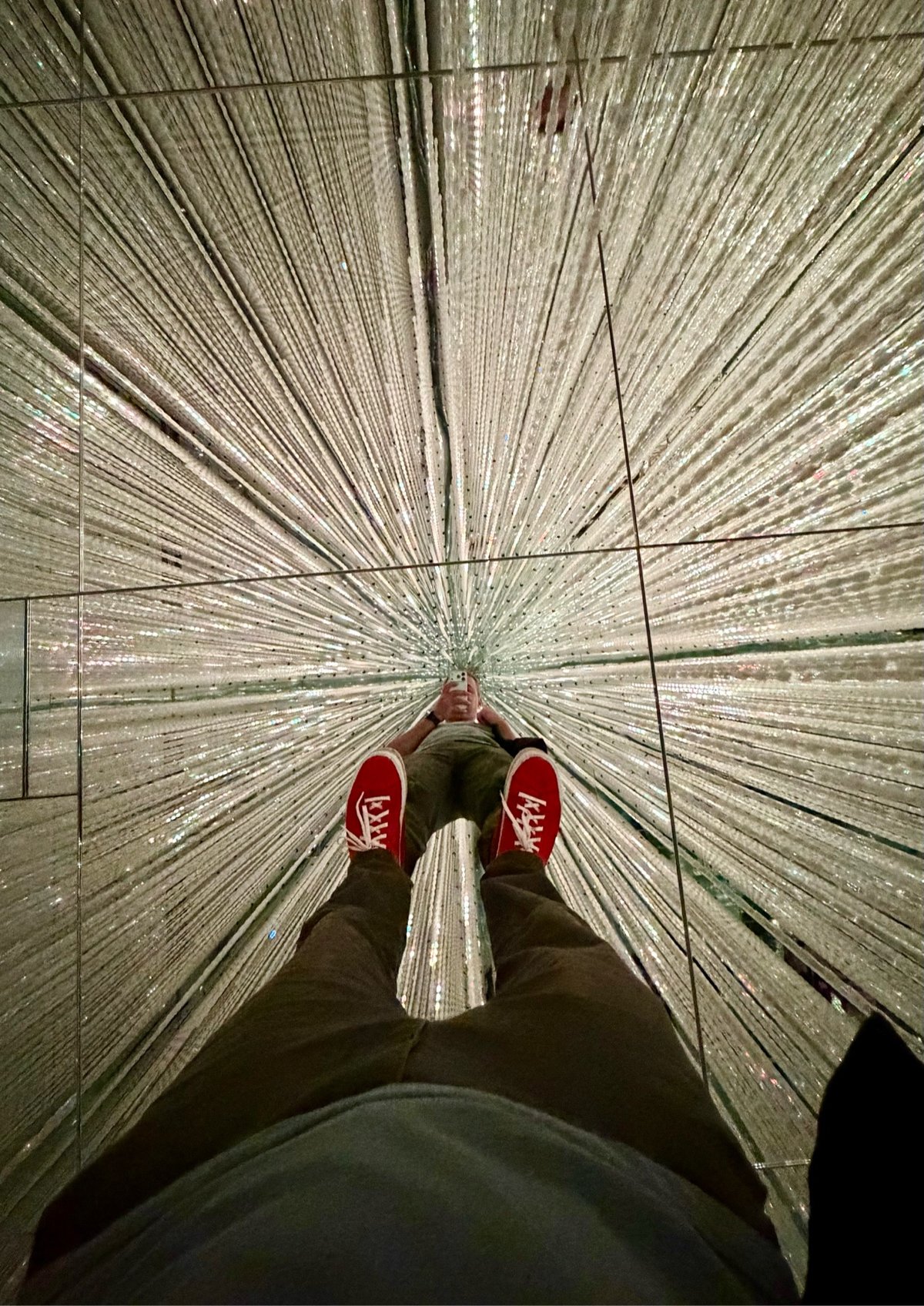
teamLab Borderless. Some of this was too “built for Instagram” but a couple of the rooms (the one where it felt like the whole room was moving & the cathedralish one with the light strings) were great. (A-)
The Sumida Hokusai Museum. Had to make the pilgrimage here. (A-)
In Praise of Shadows by Jun’ichirō Tanizaki. Read this book about Japanese aesthetics while visiting Japan — it provided an interesting context. (B+)
Hokusai at Creative Museum Tokyo. Fantastic show…there were hundreds and hundreds of prints and drawings that showed his evolution and influence. (A+)
Okunoin Cemetery. Had one of the strongest senses of place I have ever experienced. (A)
Konbini. The Japanese convenience stores really are as appealing as you’ve heard. (A-)
Awakening Your Ikigai by Ken Mogi. Perhaps a little over-simplifying when it comes to Japanese culture, but I appreciated the message of having a purpose. (B)
Sho-Chan Okonomiyaki. When I got to Hiroshima, I knew I had to try their version of okonomiyaki, so I went to Okonomimura, a multi-story building crammed with okonomiyaki restaurants. I picked one and had one of the most surprising meals of my trip. So good. (A)

Blue Planet Sky. I spent a lot of time sitting in this room by James Turrell. (A)
Kanazawa Phonograph Museum. Lovely little museum, and a good opportunity to observe how successful inventions move from technology to culture/fashion/commerce. (A)
Princess Mononoke. I saw this in the theater on my last full day in Tokyo; they recently released a 4K remaster. Absolutely breathtaking. (A+)
Butch Cassidy and the Sundance Kid. Redford and Newman are both total smokeshows in this. And I’d forgotten how goofy this movie is. (B+)
A House of Dynamite. A very tough watch, but I thought this was fantastic as a tour of some of the different kinds of people who hold the fate of every single person on the planet in their hands every damn day. They’re tired, stressed, distracted, at cross-purposes with themselves, set in their ways, more celebs than leaders, and mediocre. And none of them have ever seen Dr. Strangelove? (A)
Past installments of my media diet are available here. What good things have you watched, read, or listened to lately?
So I’ve been watching Breaking Bad creator Vince Gilligan’s Pluribus on Apple TV and this review from Inkoo Kang resonated with me (emphasis mine):
Millions of offscreen casualties aside, it’s clear that Gilligan is aiming for a lighter — and stranger — outing than his two previous series. (For all that “Pluribus” delights in eerie atmospherics, the Southwestern sunniness keeps things from getting too dark.) The uncanny scenarios he conjures are a source of humor, intrigue, and genuine unease. But the show never adds up to more than the sum of its parts. Carol makes for a maddeningly tunnel-visioned protagonist — one with a shocking lack of curiosity about the entity that’s overtaken the Earth, or even about what the infected do all day when they’re not offering to cater to her whims. Her one-note sullenness means that Seehorn, who was heartbreaking as the repressed Kim on “Saul,” is squandered as the lead of her own show. The contentment and coöperativeness of the hive mind are similarly tough to dramatize.
It was somewhere around the middle of episode two when I started asking myself if I was supposed to care about Carol and what was going to happen to her, which is never a good sign. I like plenty of shows with unlikable protagonists (like Succession & Seinfeld) but I often can’t get past stubborn & incurious ones — it just seems fake to me and breaks my willing suspension of disbelief.
The show has a 99% rating on Rotten Tomatoes. Pluribus fans, what am I missing here? The premise is good and I want to like it. Presumably many of the critics have seen the whole season and so maybe it picks up as it goes on?
Operation Space Station is a two-part PBS documentary series on the International Space Station. Here’s a very short teaser trailer:
A synopsis:
The size of a football field, the International Space Station hurtles around Earth at 17,000 mph, shielding its astronauts from the most hostile environment humans have ever endured. After 25 years of continuous human presence in space, astronauts and Mission Control insiders reveal the most terrifying moments aboard this remarkable orbiting laboratory, where a single mistake could prove fatal. From ammonia leaks, meteor strikes, and docking disasters, to spacewalk horrors, potentially lethal showers of space junk, and the moment the entire ISS backflipped out of control, follow life-or-death dramas unfolding 250 miles above our planet — and the human ingenuity and teamwork that save the day.
(via installer)
High Horse: The Black Cowboy is a three-part documentary about the culture of Black cowboys & cowgirls and their erasure from the history of the western United States.
From executive producer Jordan Peele and Monkeypaw Productions, the pop culture and historical documentary confronts and reclaims the Wild West while revealing the story of the Black cowboy — a history that has largely been untold. It rides into the forgotten corners of history, shattering myths and celebrating the Black cowboys, farmers, jockeys, musicians, and rodeo champions who built the West — and now takes back their place in the saddle, sitting high atop the horse.
High Horse: The Black Cowboy starts streaming Nov 20th on Peacock.
A two-hour version of the music played in the Wellness Center in Severance. “Please try to enjoy each listening session equally.” See also Severance: Music To Refine To.
✅ Added to my Underscore collection.
On May 22, 1981, for the finale of the show’s 12th season, Mister Rogers visited Sesame Street. With apologies to the Avengers, this has to be the greatest crossover event in history.
In the episode, Rogers agrees to judge a race between Big Bird and Mr. Snuffleupagus, a character that no one on the show but Big Bird has seen. When BB tells his friends he met Mister Rogers, they don’t believe him, including Mr. Snuffleupagus! Later, BB & MR have a conversation about what’s real and what’s make-believe. Here’s more on the episode from the Neighborhood Archive and the Muppet Wiki.
Mr. Rogers comes to visit Big Bird at his nest. Big Bird wonders if Mr. Rogers is really here, because no one believed him before. Mr. Rogers observes that sometimes it’s hard to distinguish between fantasy and reality, and suggests that they both pretend some more. Big Bird imagines a teddy bear riding a race car, and realizes that he can’t touch him — except in his imagination. Mr. Rogers, on the other hand, is real. They both share a hug.
A couple of weeks later, Big Bird visited the Neighborhood of Make-Believe on Mister Rogers’ Neighborhood. There’s no good clip of this on YT, but you can see some of the footage here and the full episode on Mister Rogers’ official site.
Big Bird didn’t visit Mr. Rogers directly (in the real world) because of the two shows’ differing views on make-believe:
Caroll Spinney agreed to appear in the episode as Big Bird after some dialogue with Fred Rogers; when Spinney originally received the script for the show he saw it required him to remove the costume and discuss the inner-workings of the Big Bird puppet. Spinney protested, as he didn’t believe in ruining the illusion of Big Bird for the children. Rogers agreed, but only under the stipulation that Big Bird’s appearance was restricted to the fantasy segments of the “Neighborhood of Make-Believe,” as he didn’t believe in perpetuating the deceitful blur of real and pretend to children that occurred when presenting the character as real in the “real world.”
While Sesame Street Unpaved mentions that Rogers understood Spinney’s concern over showing the children how Big Bird works, Spinney said at some of his book signings (promoting his autobiography, The Wisdom of Big Bird) that he and Fred Rogers argued over the phone for roughly twenty minutes over whether or not to have him tell the kids how he performs Big Bird.
And then there’s this, included here because I ran across it on YouTube: Arsenio Hall gifts Fred Rogers a very fly jacket.
Antonio Scurati’s 2018 “documentary novel” M: Son of the Century was a worldwide bestseller about the early political career of Benito Mussolini and the rise of fascism in post-WWI Italy. Director Joe Wright (Pride and Prejudice, Darkest Hour) has adapted the book into an 8-part TV series called Mussolini: Son Of The Century. Here are a pair of trailers:
One commenter on this YT video says “it’s Cabaret meets Clockwork Orange, meets Metropolis…” I stumbled across this via Carla Sinclair, who writes:
It is, unsurprisingly, violent and gritty, highlighting Benito Mussolini’s rise to power that began in the year 1919, when he founded the National Fascist Party in Italy. But it’s also beautifully shot, with military and fight scenes stunningly choreographed to electronic music by Tom Rowlands of the Chemical Brothers. At times it feels like an intense musical — without the song and dance.
If you’re in the US, you can stream Mussolini: Son Of The Century on Mubi — four of the episodes are available so far and the new ones debut on Wednesdays.
Christian Marclay debuted his 24-hour film The Clock 15 years ago. The film is made up of thousands of clips from movies and TV shows that show timepieces or otherwise make reference to the time of day. I’ve seen chunks of it in a few museums & galleries and it’s wonderful.
Using this extraordinary minute-by-minute timeline of nearly all the scenes that make up The Clock, one person is attempting to reverse engineer the entire film. It’s not The Clock, but it’s A Clock. Here are a couple of excerpts:
Says the creator:
So, when I stumbled upon this Fandom Wiki, where the mysterious user ElevenFiftyNine had seemingly started the task of listing all the movies in The Clock, I couldn’t help myself; I started remaking the whole thing from scratch.
So, since I can’t really say this is The Clock, it is my best attempt at making a Clock, by following the excellent effort by ElevenFiftyNine.
A ten-minute excerpt is free on the website but you need to join the Patreon to watch the entire work-in-progress. According to their most recent update, the film is finished but the final version isn’t online quite yet; October 15th is the release date.
BTW, here’s the creator’s definition of “finished”:
I spoke some months ago about what 100% means for this project, and it is not that it is a fully perfect copy of Marclay’s work. The information available online is incomplete, and new information might appear in the future. For now, 100% means that all available information, is in a Clock.
And incredibly, they have never actually seen The Clock in person:
Unfortunately I have never had a chance to see The Clock, as it is only visible when exhibited at a museum. This is increasingly a rare occurrence, and even then, apparently the queues when it is on show, are monstrous. Never mind that it might be anywhere in the world!
Aside from the clips, I haven’t watched any of this yet, but it is a very tempting alternative to waiting for a rare showing somewhere I happen to be.
Today I learned that the opening theme song for the original Iron Chef TV program was adapted from a song composed by Hans Zimmer, who has done scores for films like Interstellar, Dune, Blade Runner: 2049, Inception, and Dunkirk. Perhaps even weirder, the name of the theme song is “Show Me Your Firetruck”. (The song is from Zimmer’s score for the movie Backdraft.)
Well, it’s been awhile since I’ve done one of these but I’m gonna skip the apologies and get right into it. Here’s a list of what I’ve been reading, watching, listening to, and experiencing over the past several months. Let us know what movies, books, art, TV, music, etc. you’ve been enjoying in the comments below!

Dinosaur. It’s a huge pigeon on the High Line — what else do you need to know? (A-)
The Ministry of Time by Kaliane Bradley. Entertaining and engaging. It’ll make a good TV series. (B+)
Bill and Ted’s Excellent Adventure. I hadn’t seen this in several years but I still knew all the words. (A-)
My Brilliant Friend (season four). If there’s one thing I’ve watched in the past several years that I wish had gotten more attention from viewers, critics, and awards panels, it’s this wonderful show. (A+)
Pirates of the Caribbean: The Curse of the Black Pearl. Johnny Depp’s Jack Sparrow might be the most perfectly cast role in the history of cinema. Great story too. This movie surprised me when I saw it in the theater in 2003 and it’s still in the top tier of action/adventure movies. (A)
Andor (season one). A rewatch to prep for season two. I didn’t understand what the fuss was about this show the first time around, but this second viewing was a revelation. Andor is easily the best Star Wars thing since Empire. (A+)
Galleria Borghese. As previously discussed, the Bernini sculptures were a highlight of the summer. (A+)
Caravaggio 2025. Fantastic exhibition. (A)

The vivid blue color of the Mediterranean. (A+)
La Vita è Un Mozzico. We waited for an hour for sandwiches and it was probably worth it? (A)
Black Doves. British spy thriller? Keira Knightley? Ben Whishaw? Twist my arm. (B+)
Captain America: Brave New World. I’m sorry Sam Wilson / Anthony Mackie, there’s a “we have the Avengers at home” vibe here that’s hard to shake. (B)
Music to Refine To: A Remix Companion to Severance. I love this album; one of my favorite things of the past several months. (A+)
Mickey 17. It was fine? I was distracted while watching it in the theater, which is never a good sign. My favorite Bong Joon Ho film is still Snowpiercer. (B)

Amy Sherald: American Sublime. Absolutely fantastic. (A+)
The French Dispatch. This has quietly become a favorite of mine among Anderson’s films. (A)
The Royal Tenenbaums. However, this is still my favorite. (A+)
Paris Is Burning. Classic documentary of a bygone NYC era & a subculture that is now both flourishing and threatened. (A-)
Star Trek: Strange New Worlds (season two). I love these characters, always the sign of a good Trek. The crossover episode with Lower Decks was delightful even though I’ve not watched any of the animated series yet. The musical episode I liked less (not a showtunes guy) but I appreciated the experimentation. Bring on the Muppet episode. (A)
Severance (season two). Perhaps not as good as the first season — there was a lot in the mid-season episodes that didn’t land for me. Still, I always watched when a new episode dropped. (A-)
Army of Shadows. Part of the unplanned resistance film festival I’ve been screening for myself recently. Not quite as good as I remembered it, but it’s nice to watch something that doesn’t just lay everything out on a platter for you so you can emote properly. (A-)
Best in Show. So many lines from this that I use in my daily life. (A-)
The 99% Invisible Breakdown: The Power Broker. This is such a good series with fantastic guests about a legendary book. Who knew that Roman Mars was such a gigglepuss though? (A)
Johnny English. I didn’t find this quite as delightful as my family does. I prefer Mr. Bean. (B+)
Paddington in Peru. Not quite the magic of the first two, but entertaining. (B)
Indiana Jones and the Last Crusade. I have likely said this before, but while Raiders is likely the best Indy movie, Last Crusade is my favorite (probably due to Tom Stoppard’s heavy rewrite of the script). (A+)
Star Wars: The Return of the Jedi. It’s interesting to watch the original trilogy having seen so many subsequent movies & TV series.
Ocean’s Twelve. The dancing lasers scene is completely ridiculous. (A)
Wallace & Gromit: Vengeance Most Fowl. Well, I wasn’t expecting a critique of AI and the role of technology in society from this animated feature, but maybe I should have? (B+)
A Complete Unknown. Liked this more than I thought I would. (A-)
Pride and Prejudice by Jane Austen. Just a wonderful book — witty and fun. (A)
The Devil in the White City by Erik Larson. Fantastic book. Listen to the audiobook version if you can — Scott Brick’s narration elevates the story. (A)
A Quiet Place: Day One. I only watched this because I was on a plane. (B)
Severance (season one). After watching the second season, I rewatched season one. There was apparently much I missed the first time around. (A-)
Black Bag. Soderbergh is always worth watching, especially when he dips into Ocean’s Eleven territory — although this was more serious. (A-)
A Minecraft Movie. The first half was tolerable, enjoyable even. And then not so much. (C+)
Star Wars: Revenge of the Sith. Watched this in the theater for the 20th anniversary. There are some good bits in here, but some of the acting really stinks. Folks in the theater cheered when Anakin slaughtered the younglings, which is probably some sort of meme that I don’t want to know about. (B+)
Sinners. I loved this movie. (A+)
Thunderbolts*. Thought I would like this more than I did. (B)
Mission: Impossible – The Final Reckoning. The last scene is a masterclass in not having the faintest idea how to end a movie. (B+)
Andor (season two). Only a slight dip from season one. Overall, the series was a brilliant look at radicalization, the messiness of rebellion, and the oppressive flatness of authoritarianism. (A+)
There There by Tommy Orange. Devastating. (A-)
The Fear of Never Landing. Good album to chill out to by Marconi Union, who previously brought you the most relaxing song in the world. (A-)
Novocaine. This was bad. (D+)
Glass Onion. More Benoit Blanc mysteries please — I love watching Daniel Craig and his CSI: KFC accent chewing scenery. (A-)
The Gorge. Half of this was great and the other half was just another pseudo-horror action thing. (B-)
Martyr! by Kaveh Akbar. Marvelous. (A)
Andor: The Rogue One Arc. This fan edit of Rogue One in the style of a three-episode Andor arc is as Gilroy-esque a cut as you’re ever going to get. (A-)
Mission: Impossible – Rogue Nation. I had been kinda ambivalent about the M:I movies, but Fallout converted me, so now I’m slowly making my way back through the back catalog. (B+)
Via Carota. Best meal I’ve had in a long time. The tagliatelle was better than any pasta dish I had during my trip to Rome — it’s true, don’t @ me! And the roast chicken was perfect. (A+)
V for Vendetta. Underrated. (A-)
The Last Samurai by Helen DeWitt. I’m going to tell you the embarrassing truth: I thought this was about actual samurai and perhaps related to the Tom Cruise movie. It is very much not. I gave it a real shot but ended up abandoning it about halfway through. (C)
Spider-Man: Into the Spider-Verse. Still a marvel of animated creativity. (A)
The Phoenician Scheme. Didn’t vibe with this at all. (B-)
Downhill mountain biking. This is giving me so much life right now. (A+)
Wallace & Gromit: A Matter of Loaf and Death. Not my favorite W&G but still. (B+)
F1. Like Top Gun: Maverick crossed with Ford v Ferarri but Cruise and Bale played the aging outsider role much better than Pitt. Is Pitt even a good actor or is he just extremely charismatic? (B+)
Superman. I thought it was fine but didn’t like it as much as others seemed to. Better than anything Zach Snyder did for DC though. (B)
Shōgun. Rewatch with my son. Just an incredible show all the way around. (A+)
The Last of Us (season two). This show was always fighting an uphill battle with me — I don’t like zombie media and I dislike characters (Ellie!) who wouldn’t survive/thrive in the situations that they’re in with their personalities & characteristics. And I finally won. (C+)
The Handmaid’s Tale (season six). *sigh* No idea why I started watching (and then finished) this season; I’m a sucker for closure I guess. (C)
Nintendo Switch 2. I bought this to play Kart with my kids and also for a better Fortnite experience. So far, so good. (B+)
Mario Kart World. I haven’t played a ton of this, but it’s good so far. Free roam mode is pretty fun. I’ve gotta write up my Kart wishlist sometime…Nintendo only checked off one or two items in World. (B+)
Sargent and Paris. Caught this on the very last day of the show and hoo boy was it crowded. (A- for the show, C+ for the crowds)
Let God Sort Em Out. Need to listen to this one a few more times but I’m liking it so far. (B+)
Right now, I’m watching Star Trek: Strange New Worlds season three, listening to Deacon King Kong on audiobook (fantastic, a lock for an A+), rewatching Wandavision, and picking at Is a River Alive? by Robert Macfarlane.
Past installments of my media diet are available here. What good things have you watched, read, or listened to lately?

An article about The Quintessential Urban Design of ‘Sesame Street’ with a bunch of photos? This is extremely up my alley. One of the show’s big influences when it began was Jane Jacobs’ landmark book, The Death and Life of Great American Cities, which informed the set design:
“Even if you hadn’t read Jane Jacobs, that book was so huge that it was in the air,” said Benjamin Looker, who is the author of “A Nation of Neighborhoods” and an associate professor of American studies at Saint Louis University.
The show’s creators, he said, were “assimilating some of the popular notions that she put into play about the value of the sidewalk and street life.”
On Sesame Street, the stoop, the outdoor-dining space in front of Hooper’s convenience store, and Elmo’s wide-open window blur the boundaries between public and private space, fostering neighborly interactions between characters.
Street noises in the background and neighbors hollering through windows signal to viewers that this block is not a wealthy one. The streetscape, Mr. Looker said, “is an extension of people’s homes.”
A friend shared that they recently visited the Sesame Street set and that is something I would very much like to do someday.
Like many others, I became a little obsessed with Andor over the past few months. I was lukewarm on the first season when it came out, but a pre-s02 rewatch completely changed my tune — I think it’s one of the best things I’ve ever seen on television. Season 2 was almost as good and the whole thing together was really affecting, thought-provoking, and just marvelously well-done.
In this interview with conservative NY Times’ columnist Ross Douthat, series creator Tony Gilroy nails why the show was so interesting:
The five years that I have been given are extremely potent. You have the Empire really closing down, really choking, really ramping up. The emperor is building the Death Star.
They are closing out corporate planets and absorbing them into the state. They are imperialistically acquiring planets and taking what they want. The noose is tightening dramatically.
There still is a Senate. There are senators that are speaking out impotently.
The Senate has been all but completely emasculated by the time this five-year tranche is over.
And there are revolutionary groups, rebellious groups, and people who are acting rebelliously, who wouldn’t even know how to describe themselves as part of any movement. There is a completely wide spectrum of unaffiliated cells and activists that are rising independently across the galaxy.
At the same time, you have a group of more restrained politicians who are trying to make an organized coalition of a rebellion on a place called Yavin, which will end up being the true end of the true victory of the Rebel Alliance.
I wanted to do a show all about the forgotten people who make a revolution like this happen — on both sides — and I want to take equal interest and spend as much time understanding the bureaucrats and the enforcers of the rebellion. I think one of the fascinating things about fascism is that, when it’s done coming after the people whose land it wants and who it wants to oppress and whoever it wants to control, by the time it gets rid of the courts and the justice and consolidates all its power in the center, it ultimately eats its young. It ultimately consumes its own proponents.
The rest of the interview is very much worth a read as well, particularly the bits where, for example, Douthat presses Gilroy on Andor being a “left-wing show”, Gilroy says no, Douthat scoffs, and, sensing Douthat is telling on himself, Gilroy fires back, “Do you identify with the Empire? Do you identify with the Empire?” And Gilroy continues later:
You could say: Why has Hollywood for the last 100 years been progressive or been liberal? I think it’s much larger. I’ll go further and say: Why does almost all literature, why does almost all art that involves humans trend progressive?
Let’s stick with Hollywood. Making a living as an actor or as a writer or a director — without the higher degree of empathy that you have, the more aware you are of behavior and all kinds of behavior, the better you’re going to be at your job. We feed our families by being in an empathy business. It’s just baked in. You’re trying to pretend to be other people. The whole job is to pretend to be other, and what is it like to look from this? People may be less successful over time at portraying Nazis as humans, and that may be good writing or bad writing, and there may be people that have an ax to grind. But in general, empathy is how I feed my family. And the more finely tuned that is, the better I am at my job.
That is what actors do: I’m going on Broadway, I’m playing a villain for six months. I got to live in that. I’m playing the slave, I’m playing the fisherman, I’m playing the nurse, I’m the murderer — you have to get in there. You have to live lives through other people. I think that the simple act of that transformation and that process automatically gives you what I would describe as a more generous and progressive point of view. It just has to.
Like I said, well worth a read/listen. (via sippey)
Diego Luna is guest-hosting Jimmy Kimmel Live this week and for his first monologue, the Mexico native spoke about immigration and what he’s experienced and observed in the US and LA during his time here.
Diego steps in as our first guest host of the summer and talks about how much Los Angeles means to him, the very important immigration issues happening here and across the United States right now, the authoritarian policies of Donald Trump, his son being born in LA, finding community here, the importance of immigrants and the amazing things they bring to America, how unfair it is that they are living in fear, the violence and separating of families being unacceptable, and he encourages everyone to call their representatives and let them know how they feel about it, and support organizations like Public Counsel and Kids in Need of Defense.
Older posts





Socials & More