Ok, I said no more eclipse posts (maybe) and then posted like two or three more, but really this is the last one — maybe! In 1973, a group of scientists witnessed the longest ever total solar eclipse by flying in the shadow (umbra) of the moon in a Concorde prototype for 74 minutes over the Sahara desert. From the abstract of a paper in Nature about the flight:
On June 30, 1973, Concorde 001 intercepted the path of a solar eclipse over North Africa, Flying at Mach 2.05 the aircraft provided seven observers from France, Britain and the United States with 74 min of totality bounded by extended second (7 min) and third (12 min) contacts. The former permitted searches for time variations of much longer period than previously possible and the latter provided an opportunity for chromospheric observations of improved height resolution. The altitude, which varied between 16,200 and 17,700 m, freed the observations from the usual weather problems and greatly reduced atmospheric absorption and sky noise in regions of the infrared.
Mach 2.05 = 1573 mph = 2531 km/h. 17,700 m = 58,000 ft. They added portholes to the roof of the plane for better viewing and data gathering. This page on Xavier Jubier’s site contains lots of amazing details about the flight, including a map of the flight’s path compared to the umbra, photos of the retrofitted plane, and a graph of the umbra’s velocity across the surface of the Earth (which shows that for at least part of the eclipse, the Concorde was actually outrunning the moon’s shadow).
By flying inside the umbral shadow cone of the Moon at the same speed, the Concorde was going to stay in the darkness for nearly 74 minutes, the time for astronomers and physicists on board to do all the experiences they could imagine to complete during this incredible period of black Sun. They were able to achieve in one hour and fifteen minutes what would have taken decades by observing fifteen total solar eclipses from places that would have not necessarily gotten clear skies.
Hey, gang. Today is the solar eclipse, it’s supposed to be mostly sunny here in Colchester, VT, we’ve got 3 minutes and 16 seconds of totality to enjoy, and I built a solar filter for my telescope (and binoculars!), so kottke.org is going to take the day off. Edith and I will see you back here tomorrow.
In the meantime, are you doing anything for the eclipse? Anyone got any crazy camera/telescope setups? Do you think Instagram is going to crash this afternoon? Will I completely lose my mind if a cloud drifts in front of the sun today at 3:26pm ET? Is it a coincidence or a miracle that we happen to be alive during the relatively brief period of time when the moon almost exactly covers the sun, resulting in total solar eclipses? Could you imagine if the eclipse somehow doesn’t happen today??!
In 1900, celebrated magician (and astronomy enthusiast) Nevil Maskelyne travelled to North Carolina to film a solar eclipse on May 28, 1900. The Royal Astronomical Society and the British Film Institute reckon this is “the first surviving astronomical film in the world”.
In 1898 he travelled to India to photograph an eclipse. He succeeded but the film can was stolen on his return journey home.
It was not an easy feat to film. Maskelyne had to make a special telescopic adapter for his camera to capture the event. This is the only film by Maskelyne that we know to have survived.
The original film fragment held in The Royal Astronomical Society’s archive has been painstakingly scanned and restored in 4K by conservation experts at the BFI National Archive, who have reassembled and retimed the film frame by frame. The film is part of BFI Player’s recently released Victorian Film collection, viewers are now able to experience this first film of a solar eclipse since the event was originally captured over a century ago.
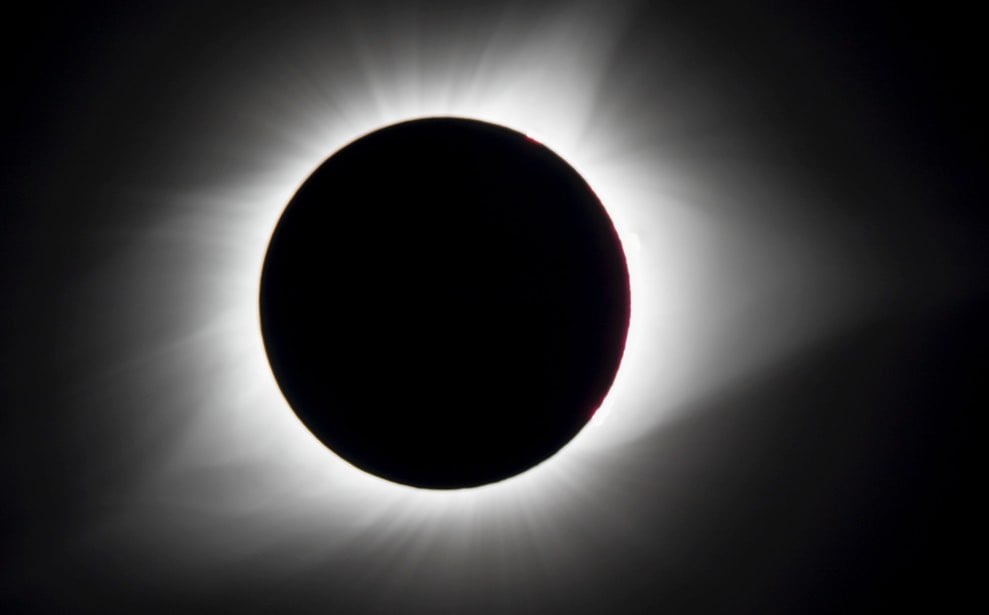
We saw the Baily’s beads and the diamond ring effect. And then…sorry, words are insufficient here. When the Moon finally slipped completely in front of the Sun and the sky went dark, I don’t even know how to describe it. The world stopped and time with it. During totality, Mouser took the photo at the top of the page. I’d seen photos like that before but had assumed that the beautifully wispy corona had been enhanced with filters in Photoshop. But no…that is actually what it looks like in the sky when viewing it with the naked eye (albeit smaller). Hands down, it was the most incredible natural event I’ve ever seen.
I’m not sure exactly what I expected, but this wasn’t it. I’d seen photos of coronas around suns, but this wasn’t that. And I’d expected that those photos, like many astronomical pictures, are long exposure, other wavelengths, and otherwise capturing things the naked eye can’t see. I thought there might be a glow of light in a circle, or nothing, or, I don’t know. What I did not expect was an unholy horror sucking the life and light and warmth out of the universe with long reaching arms, that what I’d seen in pictures was not an exaggeration but a failure to capture the extent of this thing that human eyes, and not cameras, are uniquely suited to absorb the horror of.
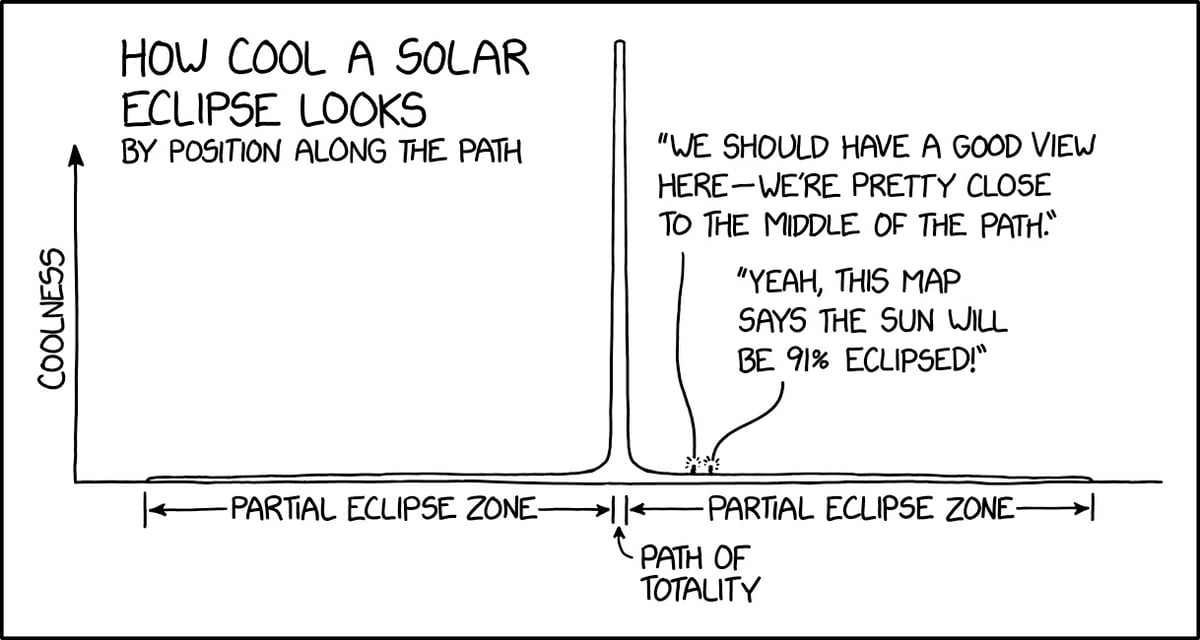
I had seen a partial eclipse in 1970. A partial eclipse is very interesting. It bears almost no relation to a total eclipse. Seeing a partial eclipse bears the same relation to seeing a total eclipse as kissing a man does to marrying him, or as flying in an airplane does to falling out of an airplane. Although the one experience precedes the other, it in no way prepares you for it.
I am so looking forward to Monday and crossing my fingers for clear skies — the path of totality goes right over my house.
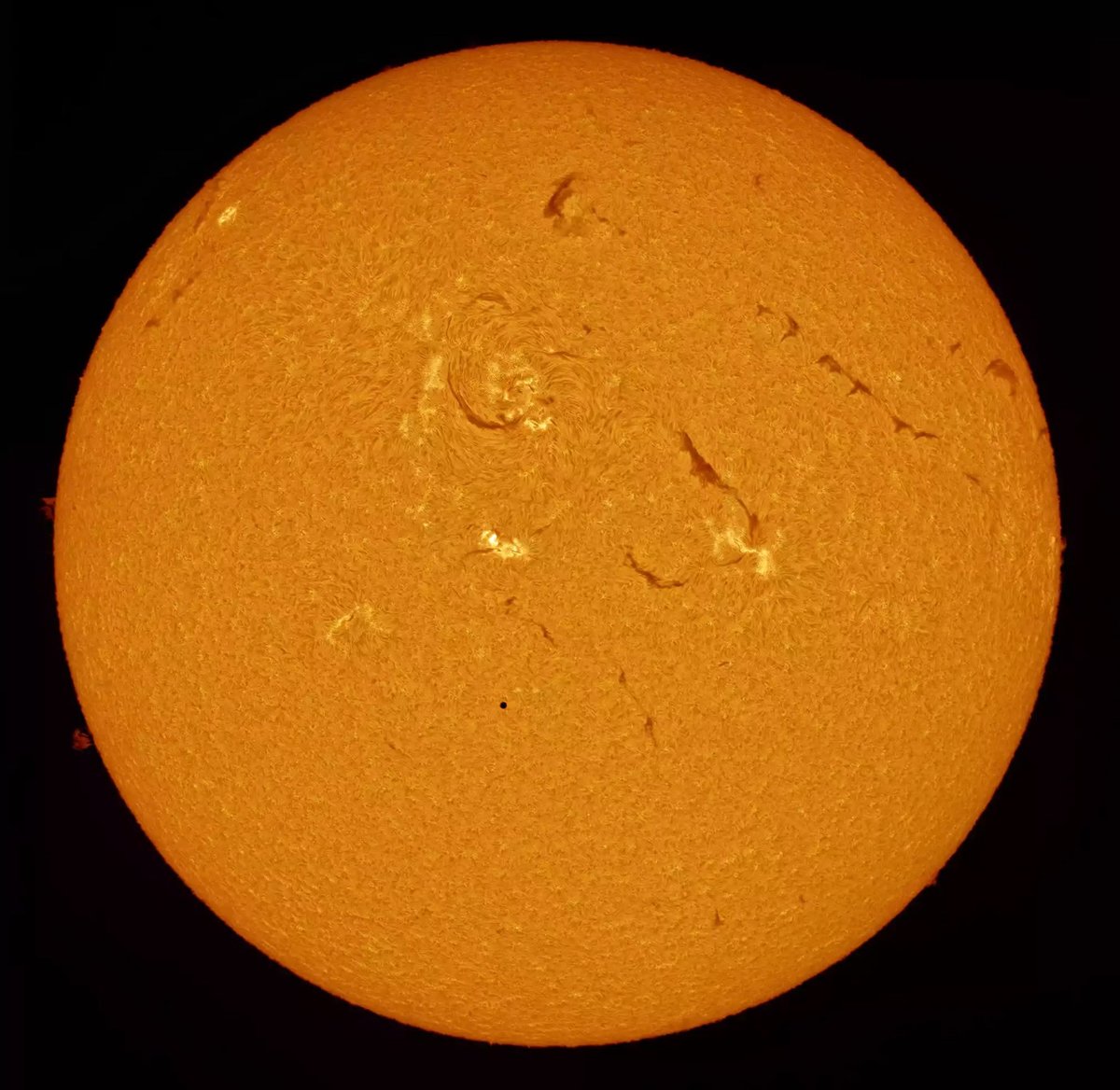
Using a custom hydrogen alpha solar telescope, Jason Kurth took a collection of high-resolution photographs of the recent annular solar eclipse and arranged them into an 8K video of the event. The level of detail here is incredible — you can see solar flares and features on the surface of the Sun pulsing and shifting as the Moon moves across it. You can see a bit of Kurth’s setup on Instagram.
Blackstar is a relaxing and meditative 45-minute video of the Sun made by Seán Doran using footage from the Solar Dynamics Observatory. Instead of the familiar yellow, Doran has chosen to outfit our star in vivid blue and black, which lends the video a sort of alien familiarity. This looks absolutely stunning in 4K.
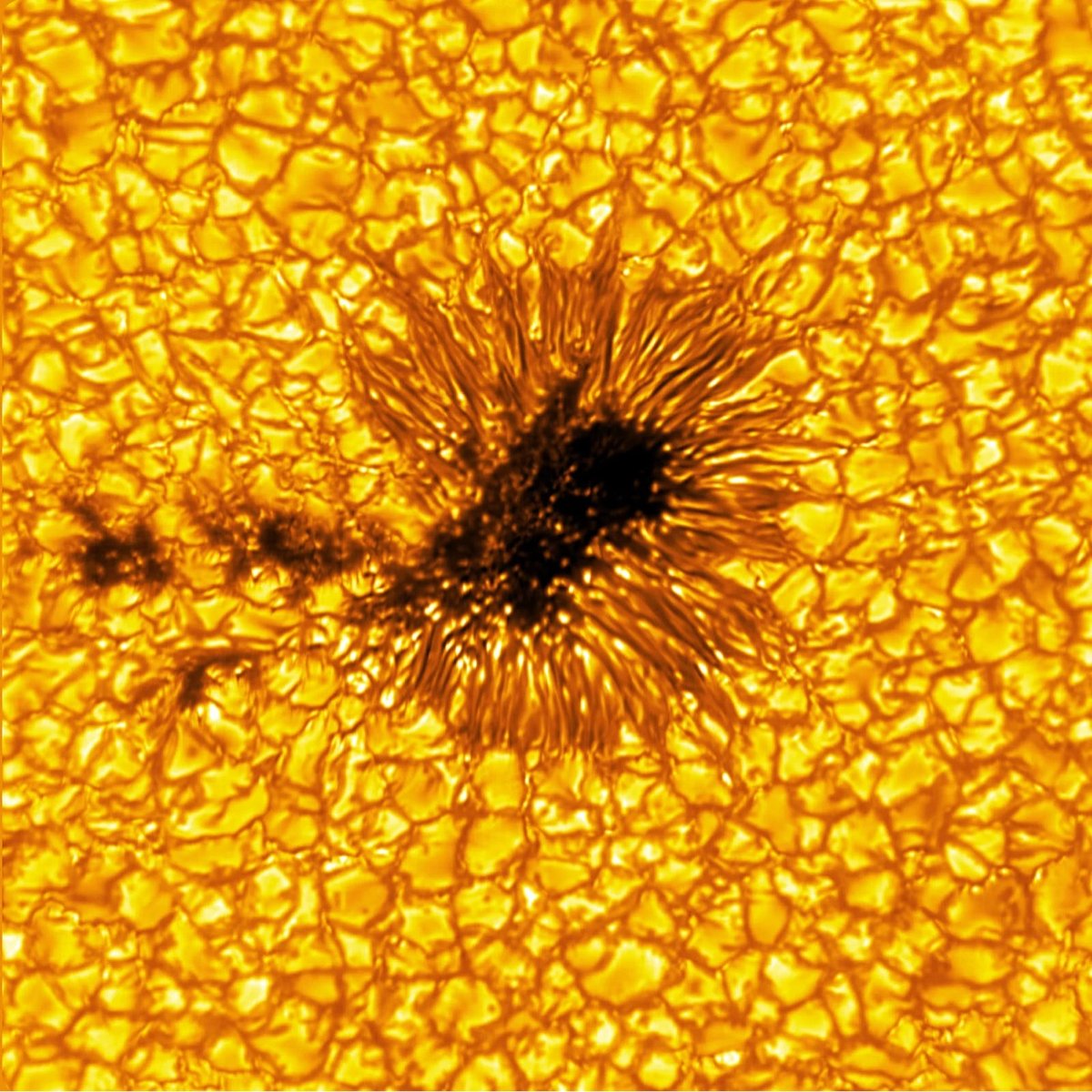
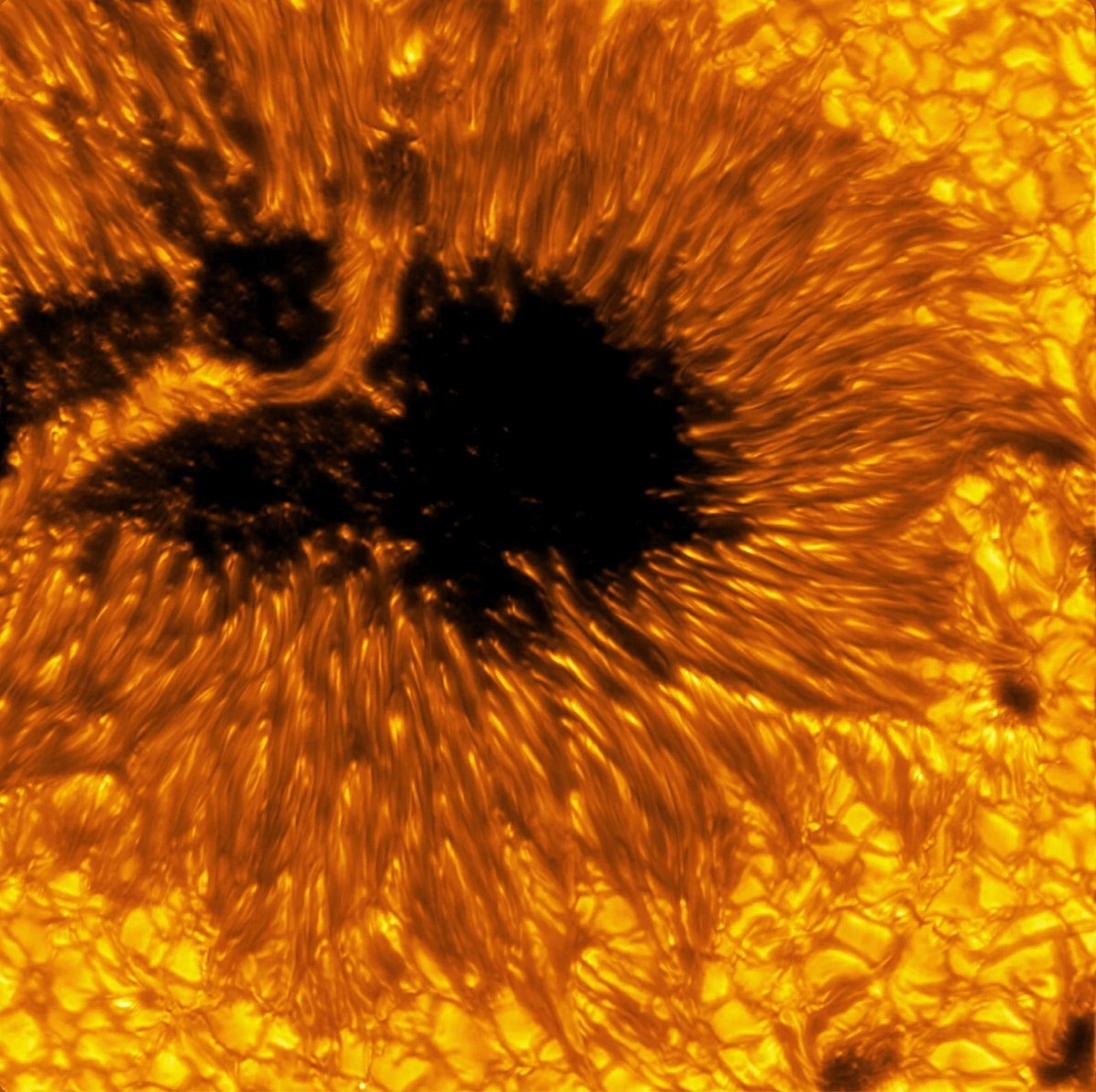
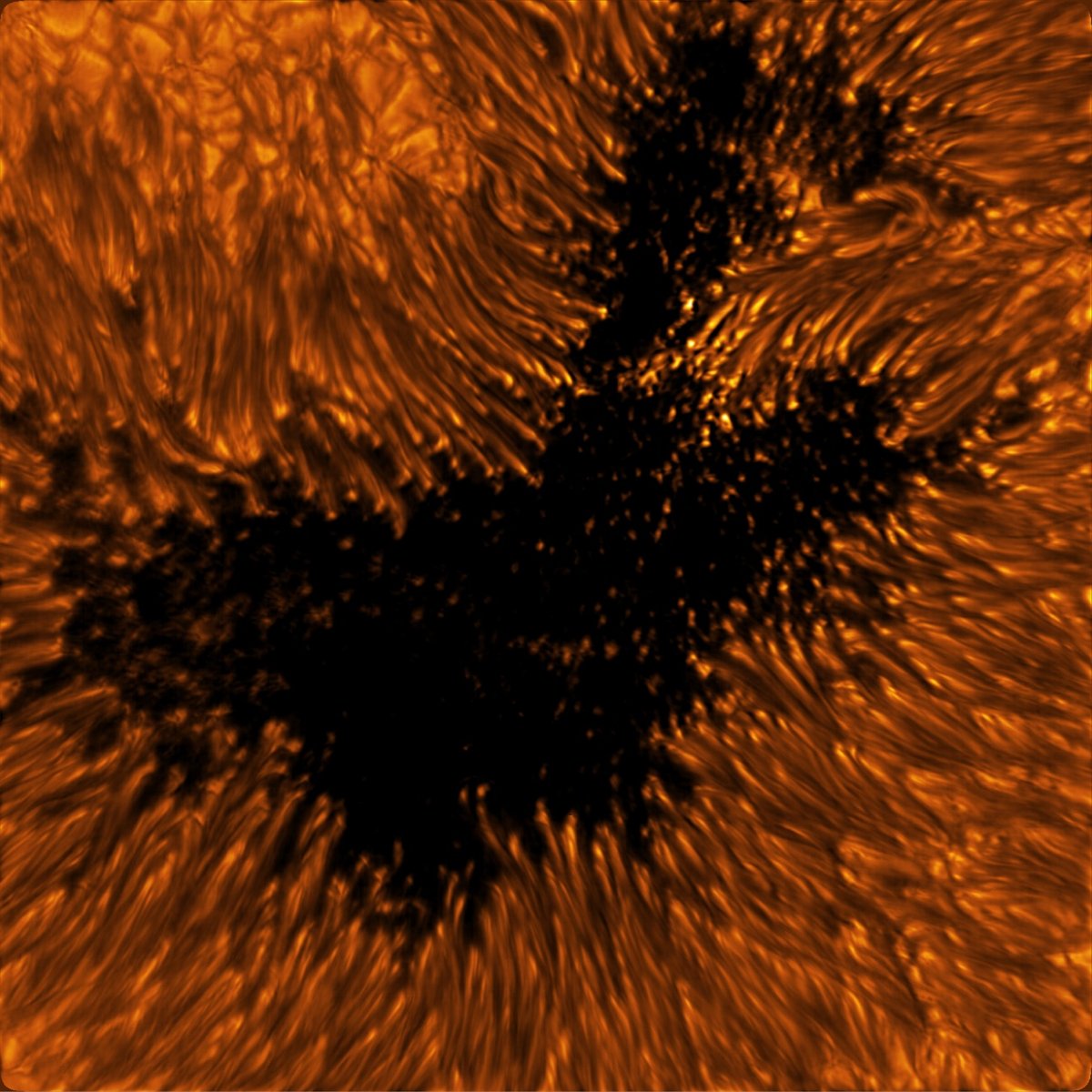
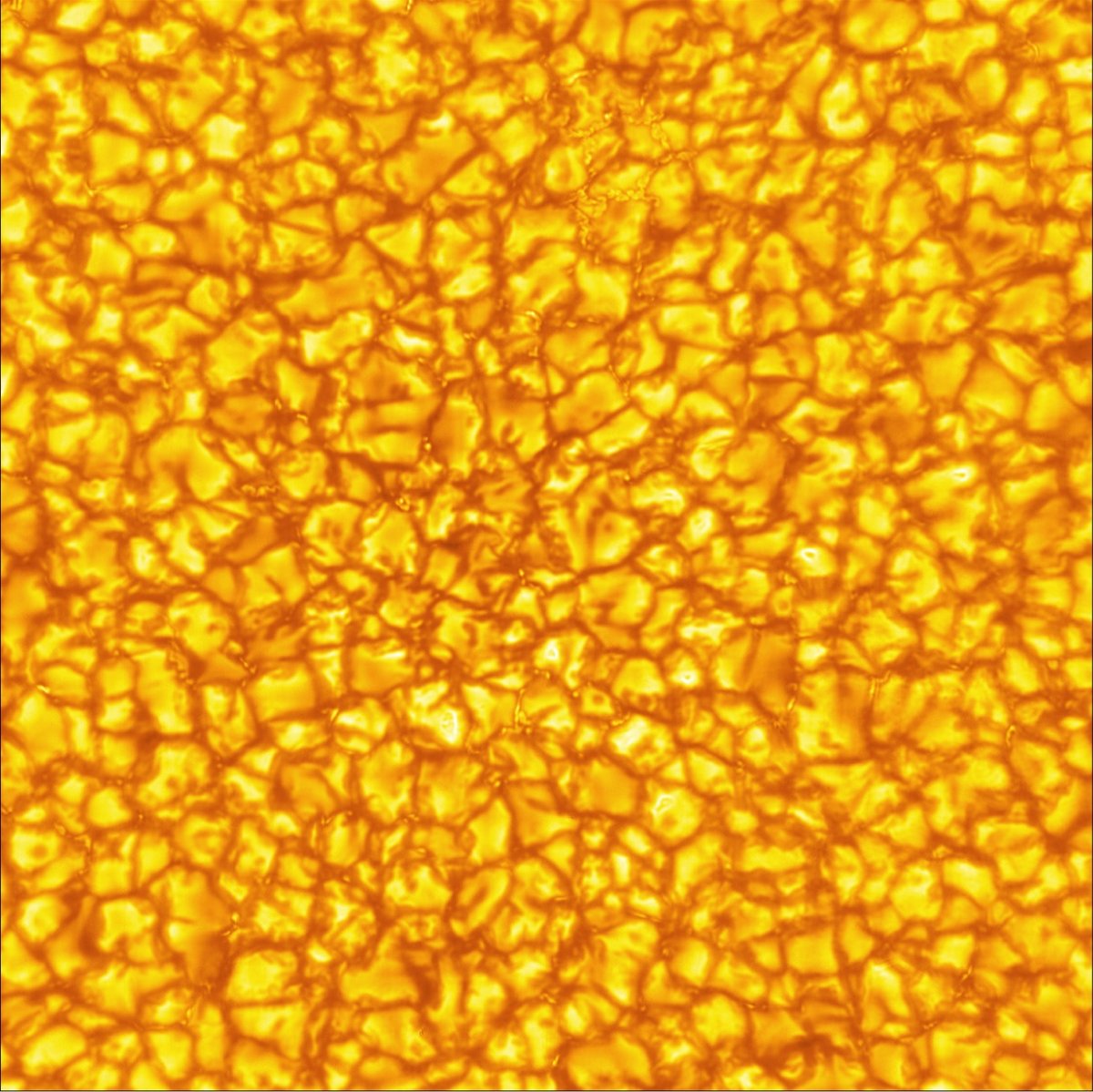
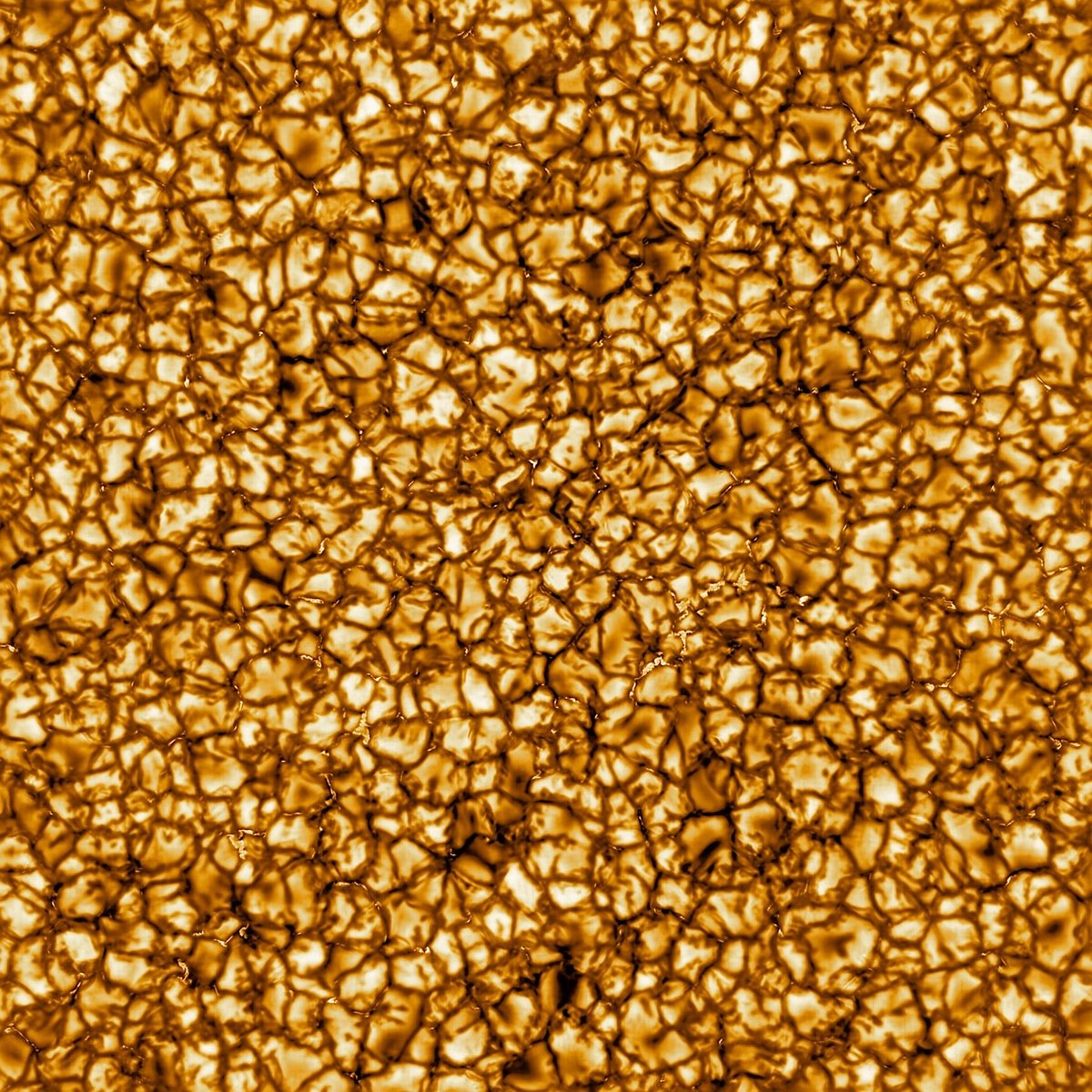
The Inouye Solar Telescope is the largest and most powerful solar telescope in the world. The telescope is still in a “learning and transitioning period” and not up to full operational speed, but scientists at the National Solar Observatory recently released a batch of images that hint at what it’s capable of. Several of the photos feature sunspots, cooler regions of the Sun with strong magnetic fields.
The sunspots pictured are dark and cool regions on the Sun’s “surface”, known as the photosphere, where strong magnetic fields persist. Sunspots vary in size, but many are often the size of Earth, if not larger. Complex sunspots or groups of sunspots can be the source of explosive events like flares and coronal mass ejections that generate solar storms. These energetic and eruptive phenomena influence the outermost atmospheric layer of the Sun, the heliosphere, with the potential to impact Earth and our critical infrastructure.
In the quiet regions of the Sun, the images show convection cells in the photosphere displaying a bright pattern of hot, upward-flowing plasma (granules) surrounded by darker lanes of cooler, down-flowing solar plasma. In the atmospheric layer above the photosphere, called the chromosphere, we see dark, elongated fibrils originating from locations of small-scale magnetic field accumulations.
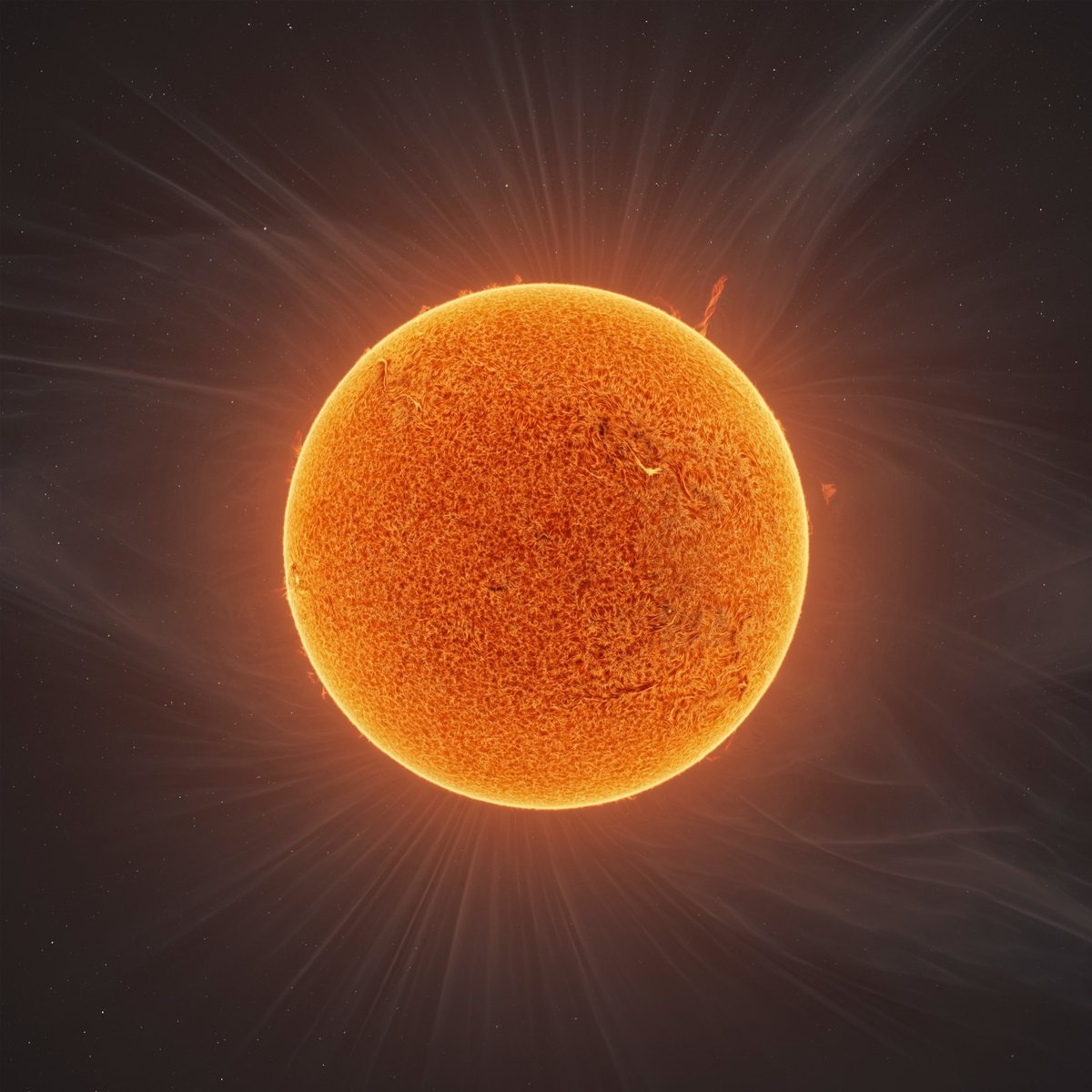
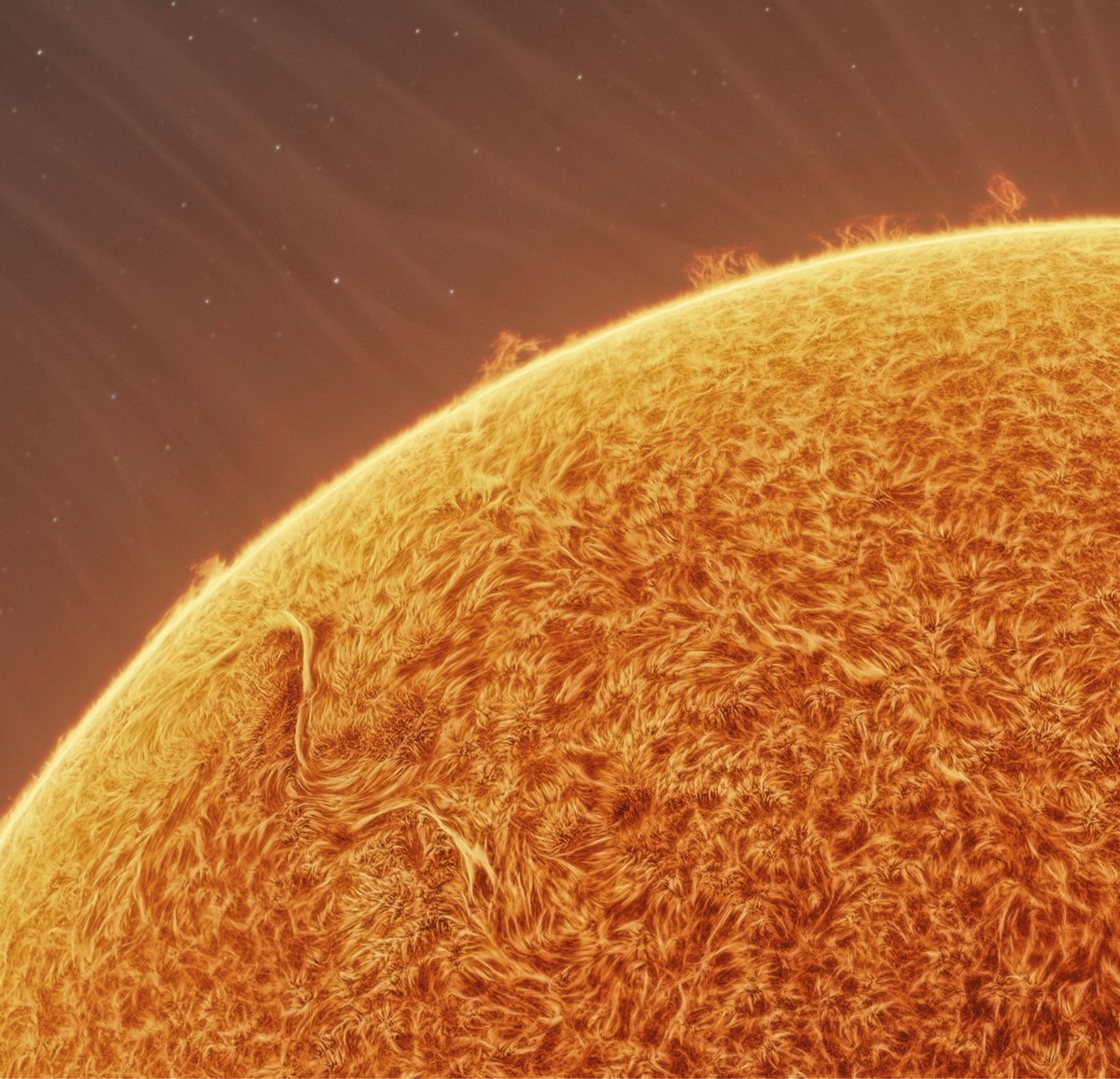
The aptly named “Fusion of Helios” is a fusion from the minds of two astrophotographers, Andrew McCarthy and Jason Guenzel. Using a custom-modified hydrogen alpha solar telescope, the combined data from over 90,000 individual images was jointly processed to reveal the layers of intricate details within the solar chromosphere. A geometrically altered image of the 2017 eclipse as an artistic element in this composition to display an otherwise invisible structure. Great care was taken to align the two atmospheric layers in a scientifically plausible way using NASA’s SOHO data as a reference.
So how do I resolve atmospheric details, like spicules, prominences, and filaments? The trick is tuning the telescope to an emission line where these objects aren’t drown out by the bright photosphere. Specifically, I’m shooting in the Hydrogen-alpha band of the visible spectrum (656.28nm). Hydrogen Alpha (HA) filters are common in astrophotography, but just adding one to your already filtered telescope will just reduce the sun’s light to a dim pink disk, and using it without the aperture filter we use to observe the details on the photosphere will blind you by not filtering enough light. If you just stack filters, you still can’t see details. So what’s the solution?
A series of precisely-manufactured filters that can be tuned to the appropriate emission line, built right into the telescope’s image train does the trick! While scopes built for this purpose do exist (look up “coronado solarmax” or “lunt solar telescope” I employ a heat-tuned hydrogen alpha filter (daystar quark) with an energy rejection filter (ERF) on a simple 5” doublet refractor. That gives me a details up close look at our sun’s atmosphere SAFELY. I’ve made a few custom modifications that have helped me produce a more seamless final image, but am not *quite* yet ready to share them, but just the ERF+Quark on a refractor will get you great views.
Photography has always been a combination of technology, artistry, and wrangling whatever light you can get to best express the feeling that you’re going for — astrophotography certainly dials that wrangling up to 11.
Prints of this image (and some digital downloads) are available in various sizes from McCarthy and Guenzel.
Sure, the James Webb Space Telescope and ok, the Hubble, but the Solar Dynamics Observatory has to be right up there for producing some of the most jaw-dropping space photography around. This 4K video from NASA’s Goddard Space Flight Center condenses 133 days of the SRO’s observations of the Sun into a soothing hour-long time lapse.
This 360° time lapse video, filmed by meteorologist Witek Kaszkin in 2015, follows the never-setting Sun in a 24-hour trip around the sky above the Arctic Circle as the icy Arctic landscape is bathed in constant summer sunlight.
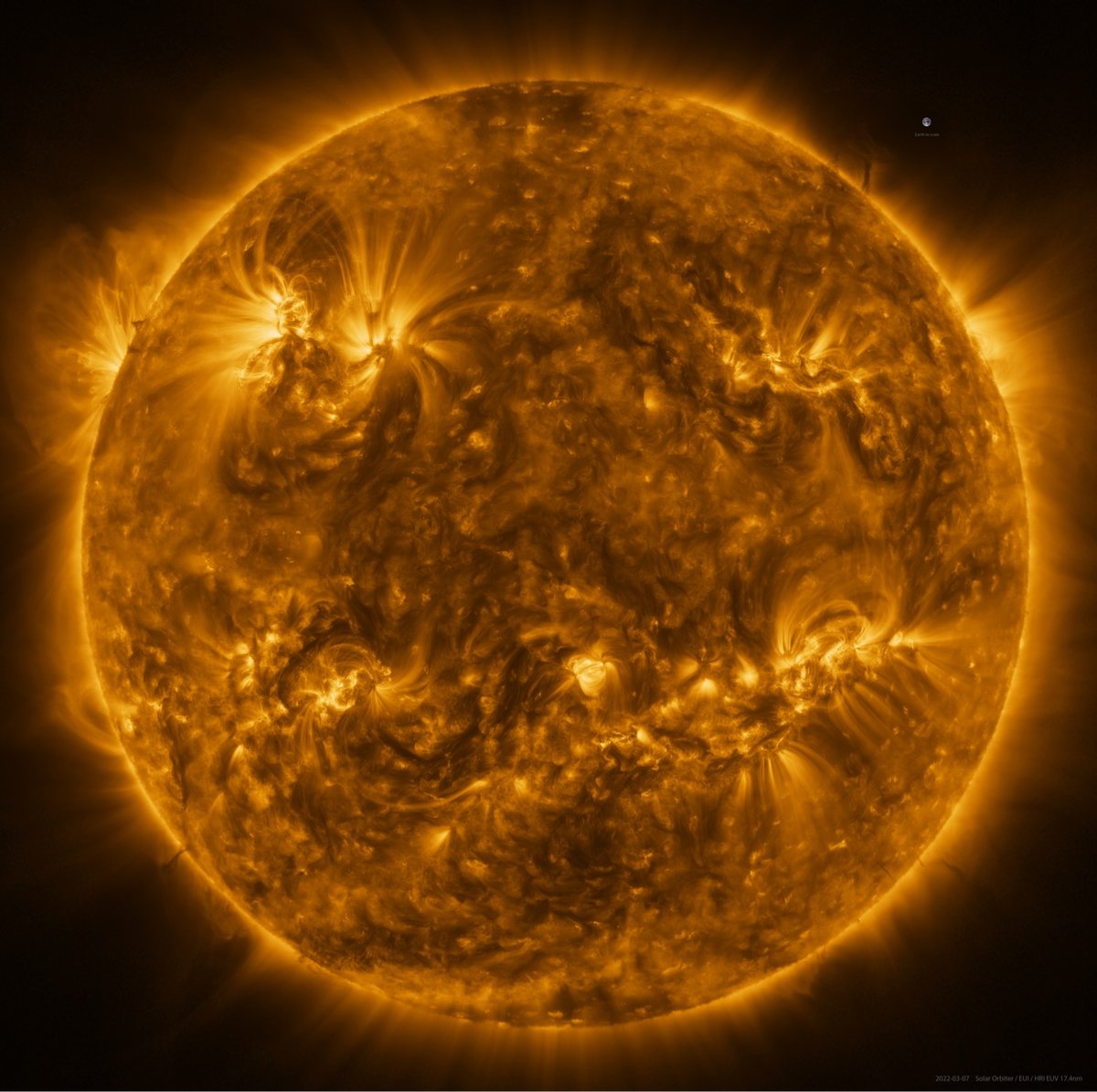
The high-resolution telescope of EUI takes pictures of such high spatial resolution that, at that close distance, a mosaic of 25 individual images is needed to cover the entire Sun. Taken one after the other, the full image was captured over a period of more than four hours because each tile takes about 10 minutes, including the time for the spacecraft to point from one segment to the next.
In total, the final image contains more than 83 million pixels in a 9148 x 9112 pixel grid. For comparison, this image has a resolution that is ten times better than what a 4K TV screen can display.
During the flyby, Parker Solar Probe passed into and out of the corona several times. This is proved what some had predicted — that the Alfvén critical surface isn’t shaped like a smooth ball. Rather, it has spikes and valleys that wrinkle the surface. Discovering where these protrusions line up with solar activity coming from the surface can help scientists learn how events on the Sun affect the atmosphere and solar wind.
Six panels of images taken from inside a coronal streamer. They appear grayish with white streaks showing particles in the solar wind.
At one point, as Parker Solar Probe dipped to just beneath 15 solar radii (around 6.5 million miles) from the Sun’s surface, it transited a feature in the corona called a pseudostreamer. Pseudostreamers are massive structures that rise above the Sun’s surface and can be seen from Earth during solar eclipses.
Passing through the pseudostreamer was like flying into the eye of a storm. Inside the pseudostreamer, the conditions quieted, particles slowed, and number of switchbacks dropped — a dramatic change from the busy barrage of particles the spacecraft usually encounters in the solar wind.
For the first time, the spacecraft found itself in a region where the magnetic fields were strong enough to dominate the movement of particles there. These conditions were the definitive proof the spacecraft had passed the Alfvén critical surface and entered the solar atmosphere where magnetic fields shape the movement of everything in the region.
The first passage through the corona, which lasted only a few hours, is one of many planned for the mission. Parker will continue to spiral closer to the Sun, eventually reaching as close as 8.86 solar radii (3.83 million miles) from the surface. Upcoming flybys, the next of which is happening in January 2022, will likely bring Parker Solar Probe through the corona again.
The video above provides a great overview of the origins, objectives, and motivations for the mission.
From September to March each year, the Sun never sets at the South Pole. This time lapse video, taken over 5 days in March, shows the sun circling the entire sky just above the horizon, getting ready to set for the first time in months. (via sentiers)
Seán Doran took 78,846 frames of data compiled by the Solar Dynamics Observatory over the course of a month and made this absolutely fantastic time lapse of the Sun slowly rotating and burning and flaring. Put this on the biggest, high-resolution screen you can and pretend you’re in the solar observation room of the Icarus II in Sunshine.
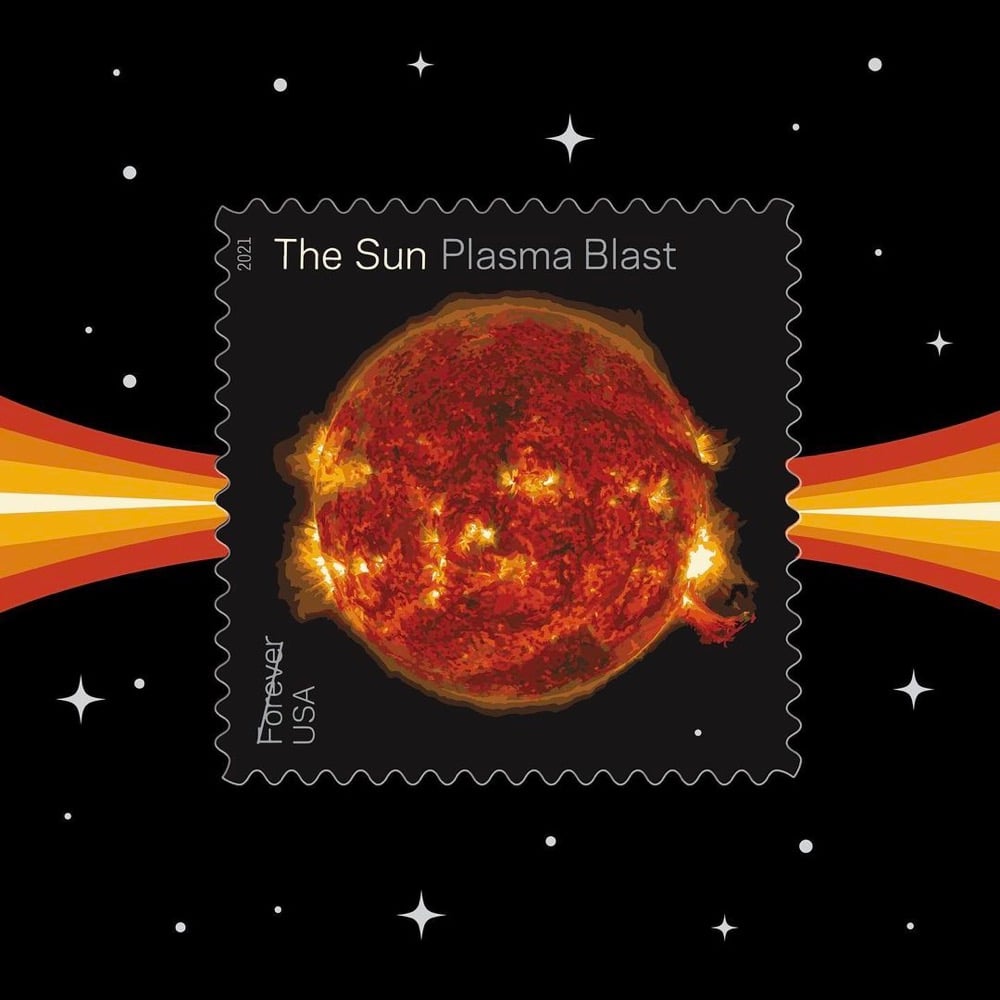
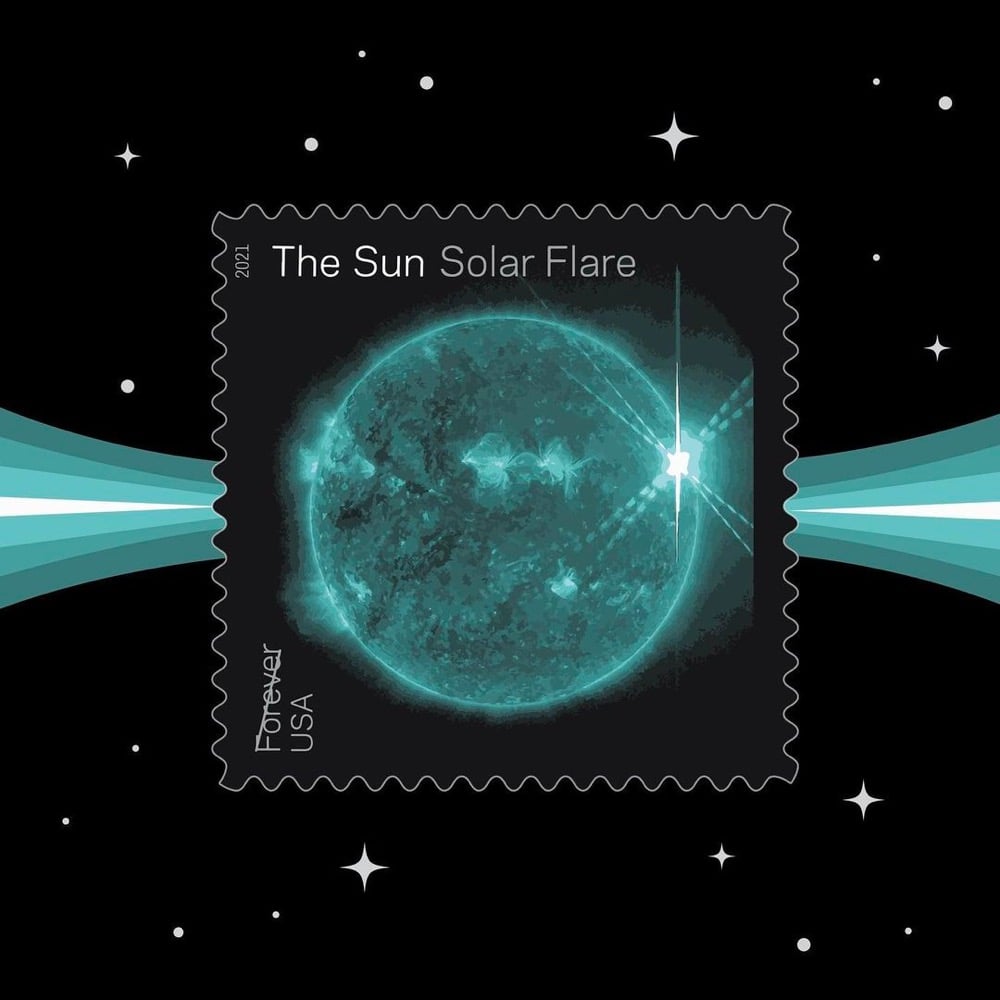
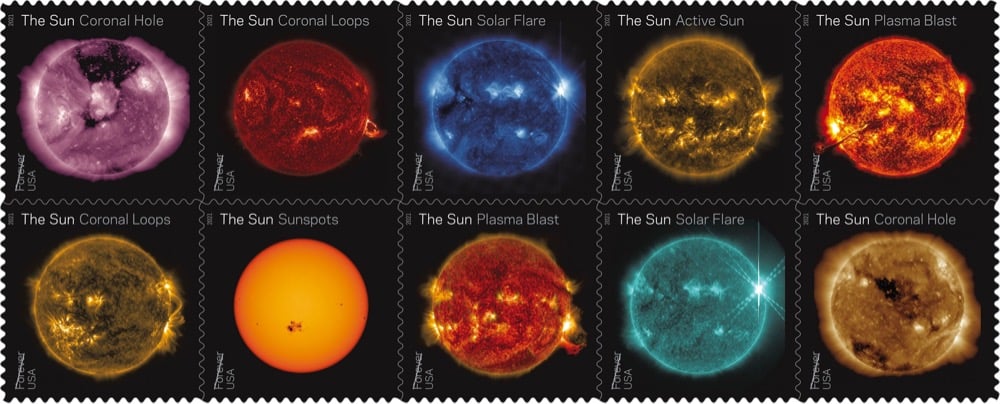
The US Postal Service has released a set of Sun Science stamps that use images from NASA’s Solar Dynamics Observatory to illustrate different solar phenomena like plasma blasts, sunspots, and solar flares.
Printed with a foil treatment that adds a glimmer to the stamps, the images on these stamps come from NASA’s Solar Dynamics Observatory, a spacecraft launched in February 2010 to keep a constant watch on the sun from geosynchronous orbit above Earth. The striking colors in these images do not represent the actual colors of the sun as perceived by human eyesight. Instead, each image is colorized by NASA according to different wavelengths that reveal or highlight specific features of the sun’s activity.
One of the stamps highlights sunspots, two feature images of coronal holes, two show coronal loops, two depict plasma blasts, one is a view of an active sun that emphasizes its magnetic fields, and two show different views of a solar flare.
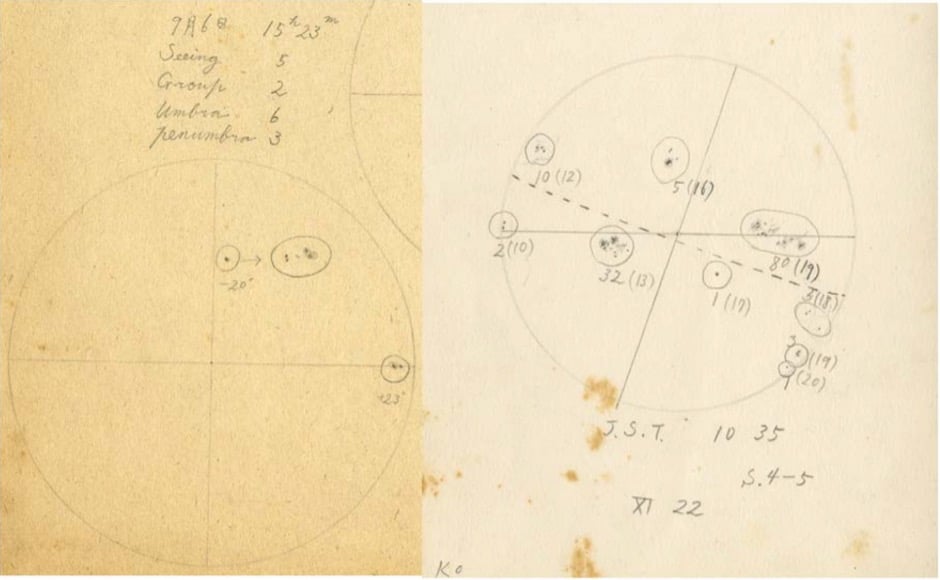
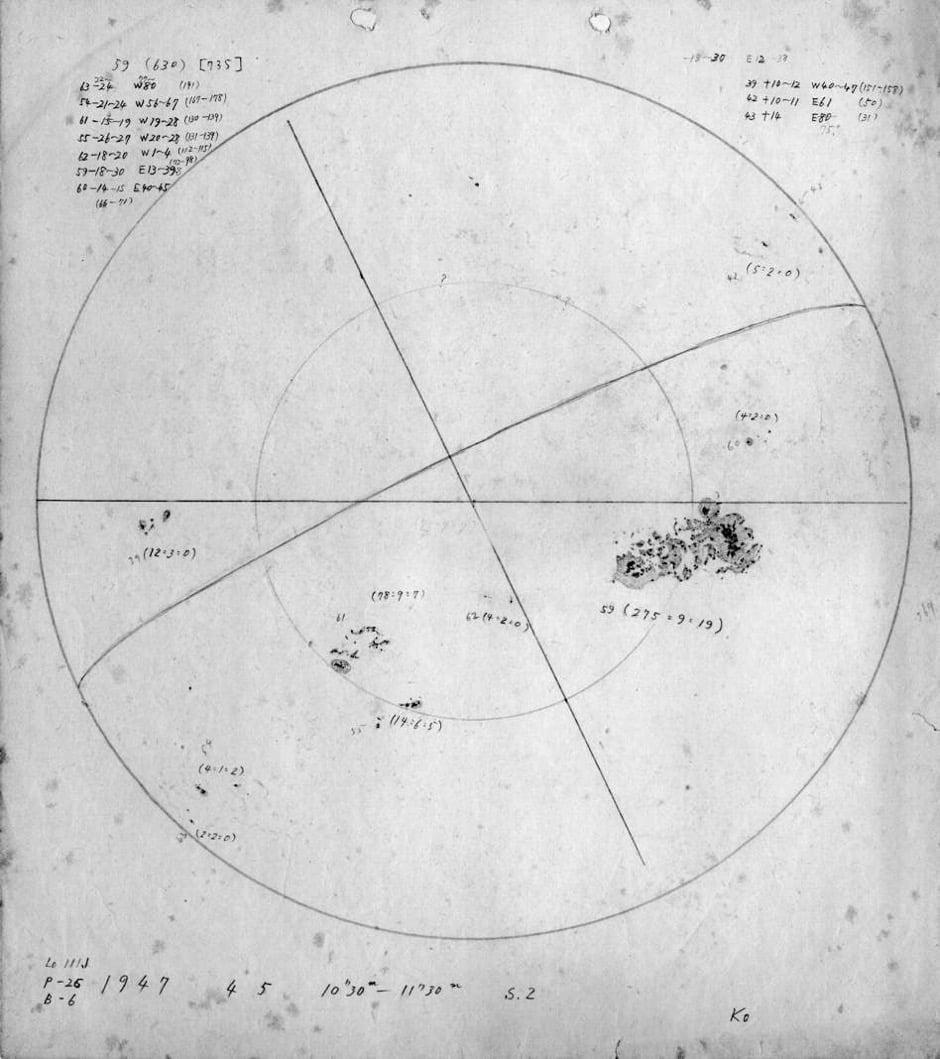
In the history of science, there are women who have made significant contributions to their field but haven’t gotten the recognition that their male peers have. The field of astronomy & astrophysics in particular has had many female pioneers — Vera Rubin, Cecilia Payne-Gaposchkin, Annie Jump Cannon, Nancy Grace Roman, Maria Mitchell, Jocelyn Bell Burnell, Henrietta Swan Leavitt, Caroline Herschel, Williamina Fleming, and many others. Add to that list Hisako Koyama, a Japanese astronomer whose detailed sketches of the Sun over a 40-year period laid the foundation for a 400-year timeline of sunspot activity, which has aided researchers in studying solar cycles and magnetic fields.
Ms. Koyama was a most unusual woman of her time. As a scientist, she bridged the amateur and professional world. She preferred “doing” activities: observing, data recording, interacting with the public, and writing. No doubt many Japanese citizens benefited from personal interaction with her. The space and geophysics community continues to benefit from her regular and precise observations of the Sun. Although we know very little of her young personal life other than she was relatively well educated and had a father who supported her desire to view the skies by providing a telescope, we can see from snippets in Japanese amateur astronomy articles that she had a passion for observing, as revealed in her 1981 article: “I simply can’t stop observing when thinking that one can never know when the nature will show us something unusual.”
Here are a few of her sunspot sketches, the top two done using her home telescope and the bottom one using the much larger telescope at the National Museum of Nature and Science (that shows the largest sunspot of the 20th century):
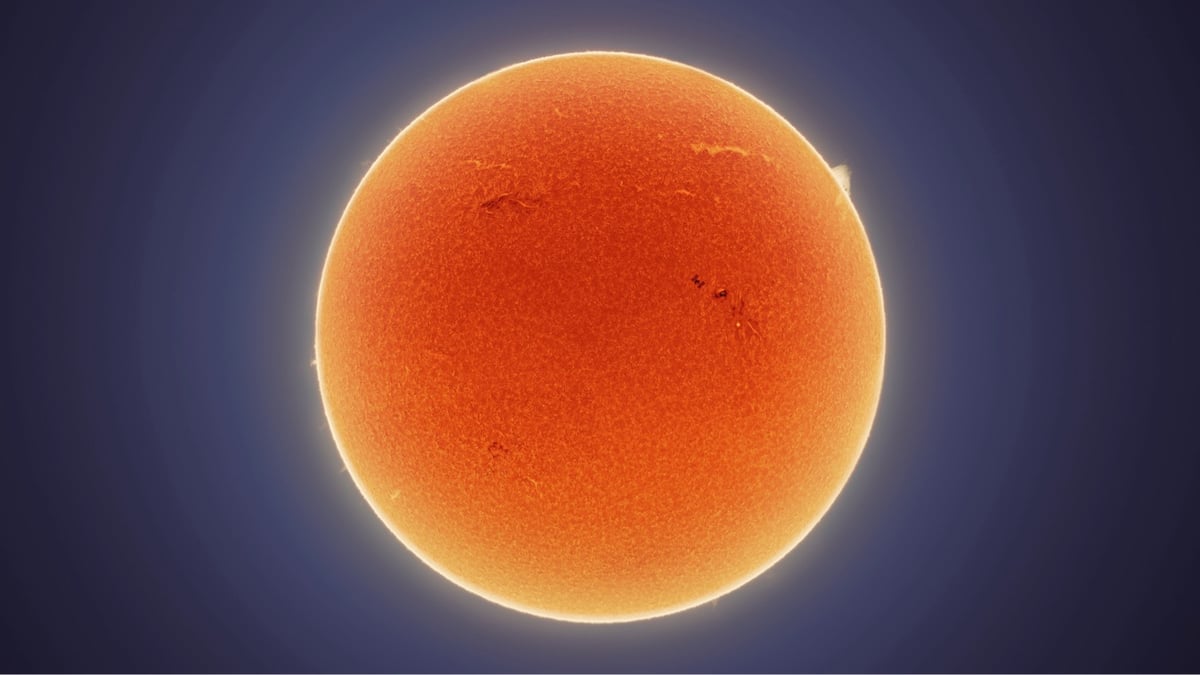
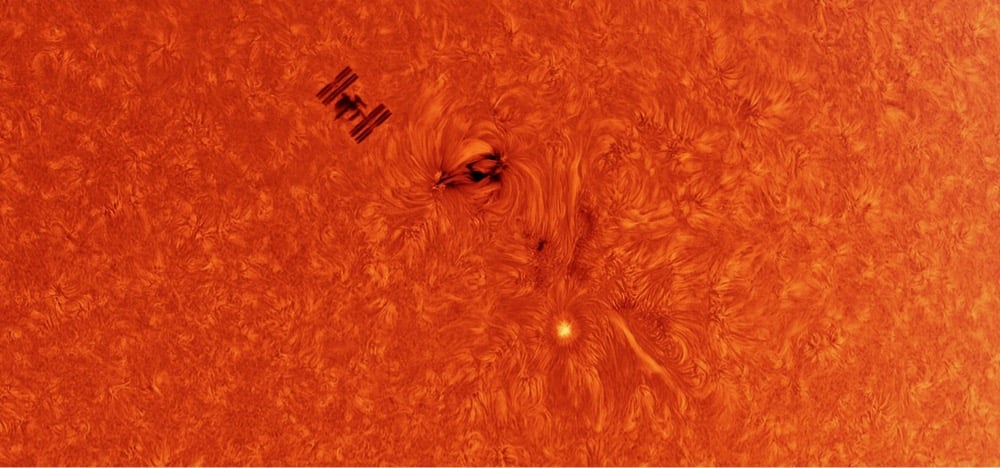
Astrophotography enthusiast Andrew McCarthy took a 140-megapixel photo of the Sun yesterday and, gosh, the Sun is just so cool to look at. I don’t know if you can see it above, but there’s a little something hidden in the photo, a transiting ISS:
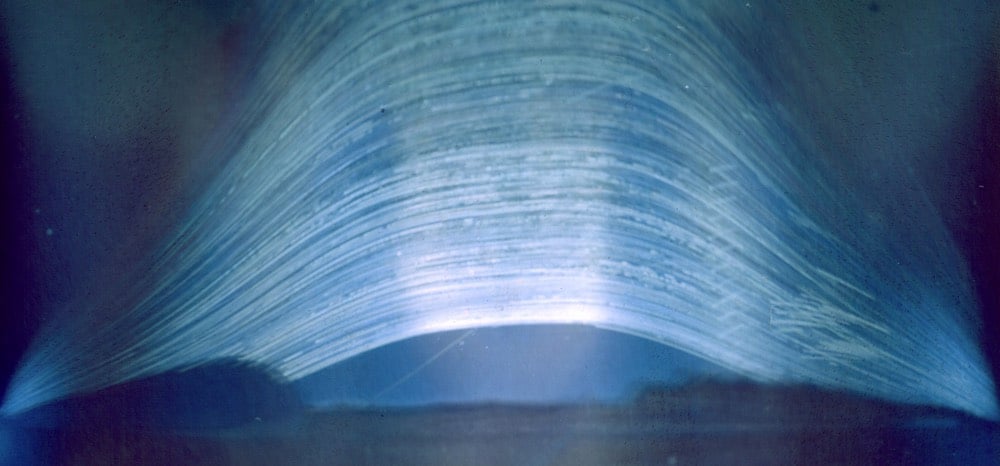
This pinhole solargraph, taken using a beer can pinhole camera over a period of eight years and one month, is thought to be the longest exposure image ever made. The photo shows the path of the Sun across the sky over that time period, almost 3000 trails in all. Regina Valkenborgh set the camera up in 2012 and then forgot about it; it was found by someone else this year. Said Valkenborgh of the project:
“It was a stroke of luck that the picture was left untouched, to be saved by David after all these years. I had tried this technique a couple of times at the Observatory before, but the photographs were often ruined by moisture and the photographic paper curled up. I hadn’t intended to capture an exposure for this length of time and to my surprise, it had survived. It could be one of, if not the, longest exposures in existence.”
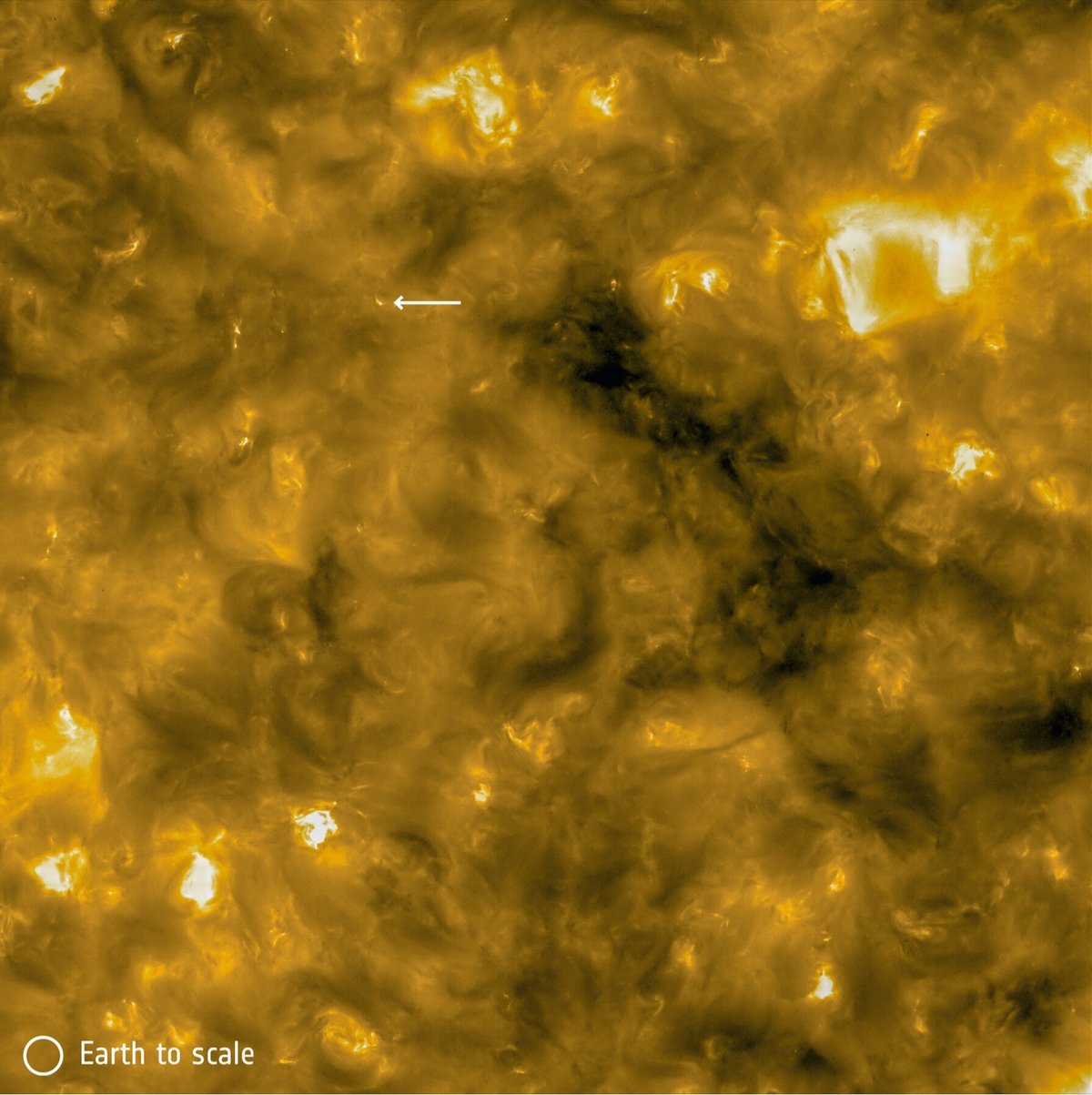
The European Space Agency’s Solar Orbiter is not even at its closest distance to the Sun and its telescope has already captured some images that reveal new information about our star, including features called “campfires” that are too small to have been captured by previous instruments. From the description of the video embedded above:
This animation shows a series of close-up views captured by the Extreme Ultraviolet Imager (EUI) at wavelengths of 17 nanometers, showing the upper atmosphere of the Sun, or corona, with a temperature of around 1 million degrees.
These images reveal a multitude of small flaring loops, erupting bright spots and dark, moving fibrils. A ubiquitous feature of the solar surface, uncovered for the first time by these images, have been called ‘campfires’. They are omnipresent miniature eruptions that could be contributing to the high temperatures of the solar corona and the origin of the solar wind.
The Solar Orbiter can also peek around the back side of the Sun for the first time:
“Right now, we are in the part of the 11-year solar cycle when the Sun is very quiet,” says Sami Solanki, the director of the Max Planck Institute for Solar System Research in Gottingen, Germany, and PHI Principal Investigator. “But because Solar Orbiter is at a different angle to the Sun than Earth, we could actually see one active region that wasn’t observable from Earth. That is a first. We have never been able to measure the magnetic field at the back of the Sun.”
As revealing as these first images are, at its closest approach later in the mission the Solar Orbiter’s resolving power will roughly double. Can’t wait to see what else it turns up.
For the past 10 years now, NASA’s Solar Dynamics Observatory (SDO) has been capturing an image of the Sun every 0.75 seconds. To celebrate, NASA created this 61-minute time lapse video of all ten years, with each second representing one day in the Sun’s life. They have helpfully highlighted some noteworthy events in the video, including solar flares and planetary transits.
12:24, June 5, 2012 — The transit of Venus across the face of the Sun. Won’t happen again until 2117.
13:50, Aug. 31, 2012 — The most iconic eruption of this solar cycle bursts from the lower left of the Sun.
43:20, July 5, 2017 — A large sunspot group spends two weeks crossing the face of the Sun.
To achieve the proposed science, this telescope required important new approaches to its construction and engineering. Built by NSF’s National Solar Observatory and managed by AURA, the Inouye Solar Telescope combines a 13-foot (4-meter) mirror — the world’s largest for a solar telescope — with unparalleled viewing conditions at the 10,000-foot Haleakala summit.
Focusing 13 kilowatts of solar power generates enormous amounts of heat — heat that must be contained or removed. A specialized cooling system provides crucial heat protection for the telescope and its optics. More than seven miles of piping distribute coolant throughout the observatory, partially chilled by ice created on site during the night.
Scientists have released a pair of mesmerizing time lapse videos as well, showing ten minutes of the roiling surface of the Sun (wide angle followed by a close-up view) in just a few seconds:
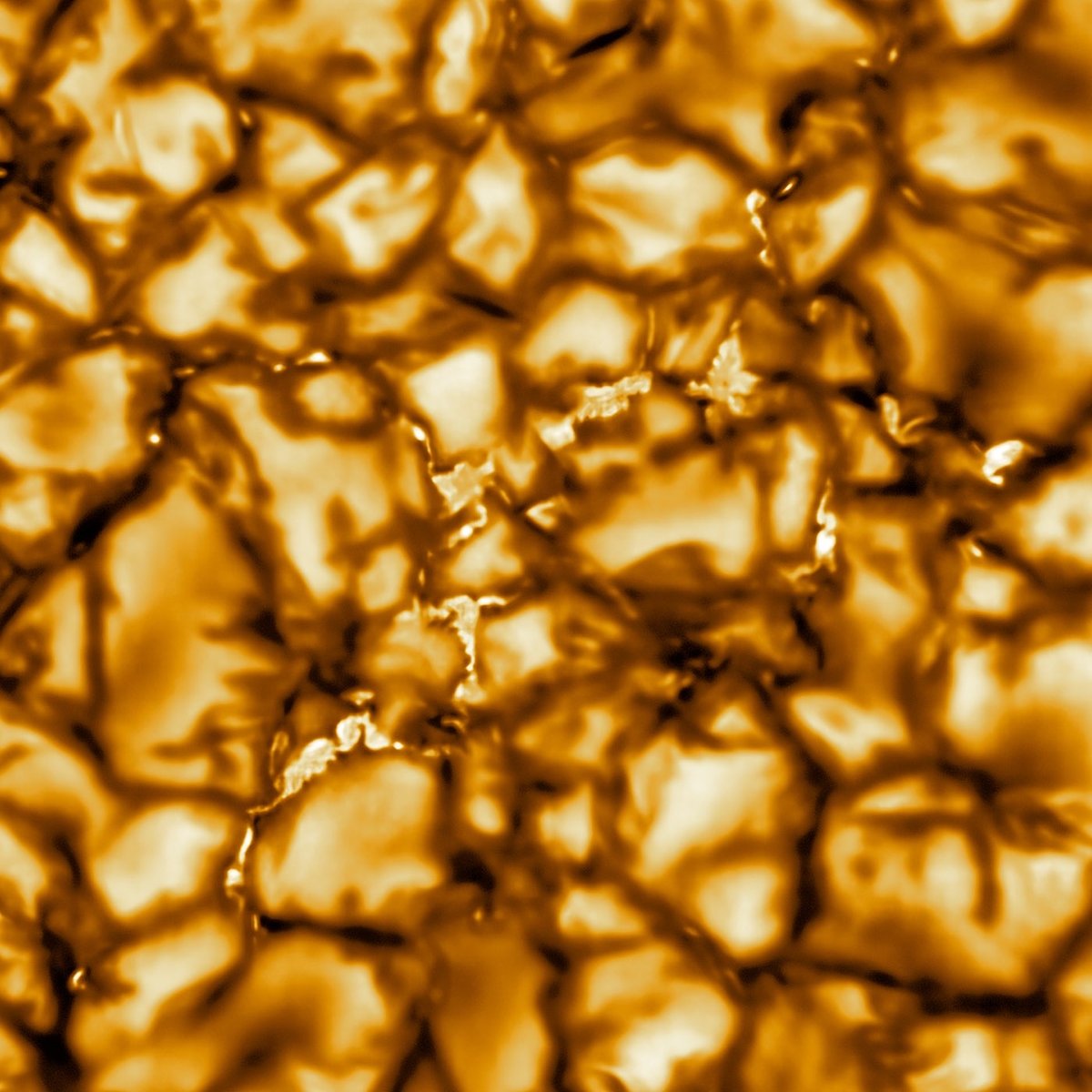
The Daniel K. Inouye Solar Telescope has produced the highest resolution observations of the Sun’s surface ever taken. In this movie, taken at a wavelength of 705nm over a period of 10 minutes, we can see features as small as 30km (18 miles) in size for the first time ever. The movie shows the turbulent, “boiling” gas that covers the entire sun. The cell-like structures — each about the size of Texas — are the signature of violent motions that transport heat from the inside of the sun to its surface. Hot solar material (plasma) rises in the bright centers of “cells,” cools off and then sinks below the surface in dark lanes in a process known as convection. In these dark lanes we can also see the tiny, bright markers of magnetic fields. Never before seen to this clarity, these bright specks are thought to channel energy up into the outer layers of the solar atmosphere called the corona. These bright spots may be at the core of why the solar corona is more than a million degrees!
Man, I hope we get some longer versions of these time lapses — I would watch the hell out of one that ran for 10 minutes. (via moss & fog)
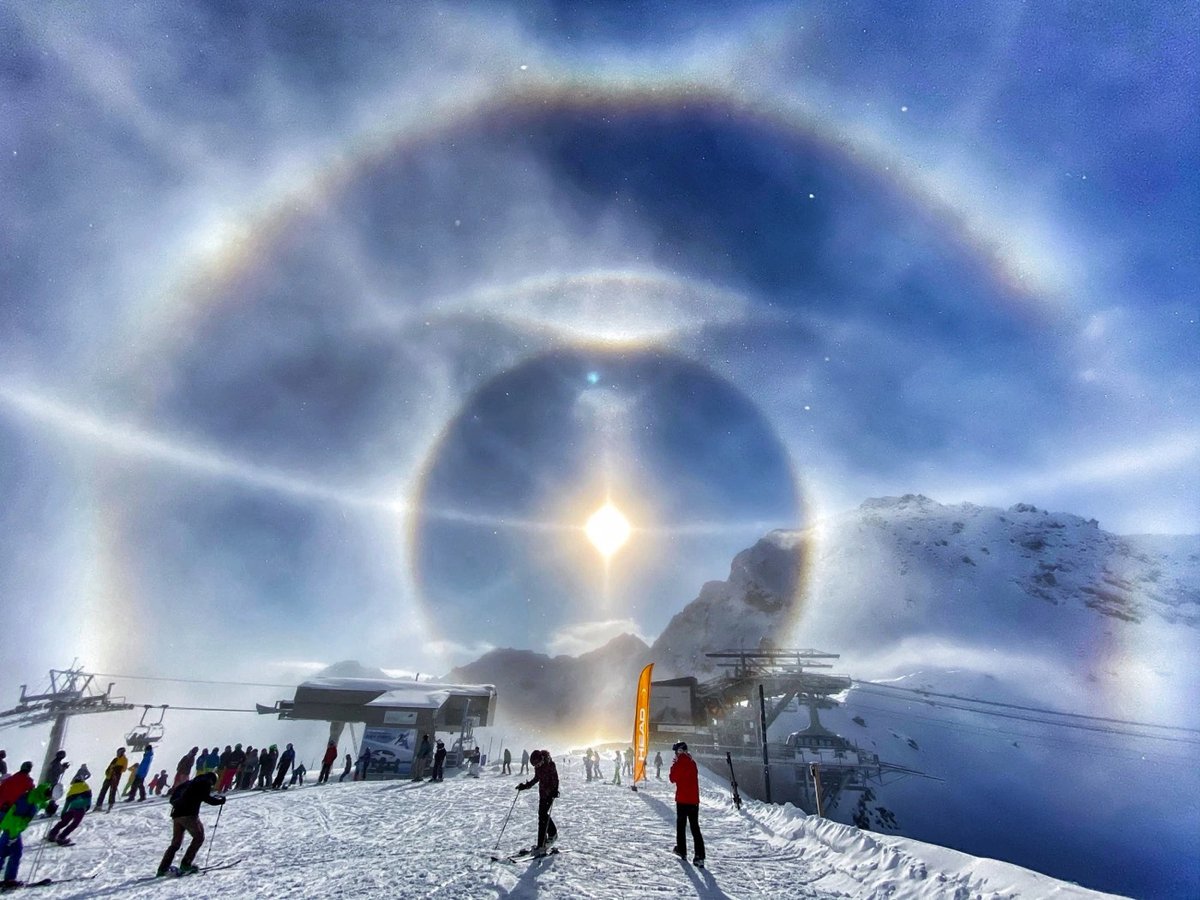
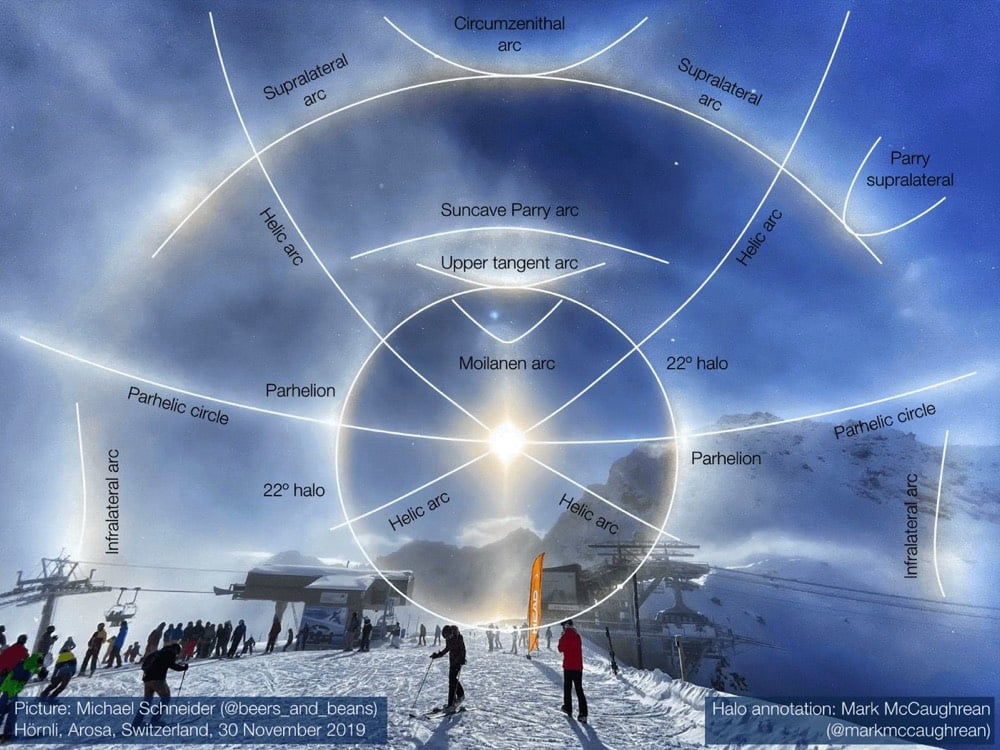
This is a photo of several ice crystal halos around the Sun taken by Michael Schneider in the Swiss Alps with an iPhone 11 Pro. It. Is. Absolutely. Stunning. I can barely write more than a few words here without stealing another peek at it. According to Schneider’s post (translated from German by Google), this display developed gradually as he waited for a friend as some icy fog and/or clouds were dissipating at the top of a Swiss ski resort and he was happy to capture it on his new phone.
Displays like this are pretty rare, but Joshua Thomas captured a similar scene in New Mexico a few years ago and Gizmodo’s Mika McKinnon explained what was going on.
Ice halos happen when tiny crystals of ice are suspended in the sky. The crystals can be high up in cirrus clouds, or closer to the ground as diamond dust or ice fog. Like raindrops scatter light into rainbows, the crystals of ice can reflect and refract light, acting as mirrors or prisms depending on the shape of the crystal and the incident angle of the light. While the lower down ice only happens in cold climates, circus clouds are so high they’re freezing cold any time, anywhere in the world, so even people in the tropics mid-summer have a chance of seeing some of these phenomena.
Explaining the optics of these phenomena involves a lot of discussing angular distances.
For a BBC series called Earth from Space, the team at Sent Into Space attached a VR camera to a balloon and sent it up to an altitude of about 20 miles — high enough to see the blackness of space and Earth’s curvature — to take a 360° video of the total solar eclipse that occurred in August 2017. The video above is a hyperlapse of the event while this one from the BBC is slower, annotated, and in full 360° VR.
Today, July 2, 2019, just after 4:30pm ET, a total solar eclipse will be visible in parts of Chile and Argentina. Because most of you, I am guessing, are not currently in those parts of Chile and Argentina, the best way to watch the eclipse is through any number of live streams, three of which I’m embedding here:
I was lucky enough to see the eclipse in 2017 and it was a life-altering experience, so I’ll be tearing myself away from the USA vs England match for a few minutes at least.
The film was taken by British magician turned pioneering filmmaker Nevil Maskelyne on an expedition by the British Astronomical Association to North Carolina on 28 May, 1900. This was Maskelyne’s second attempt to capture a solar eclipse. In 1898 he travelled to India to photograph an eclipse where succeeded but the film can was stolen on his return journey home. It was not an easy feat to film. Maskelyne had to make a special telescopic adapter for his camera to capture the event. This is the only film by Maskelyne that we know to have survived.
The Royal Astronomy Society will be showing the film tomorrow May 31 at their HQ in London as part of their celebration of the centenary of the 1919 eclipse; free tickets available here.
If you look at the orbits of the planets adjacent to the Earth’s orbit (Venus & Mars), you’ll see that Venus’s orbit is closest to our own. That is, at its closest approach, Venus gets closer to Earth than any other planet. But what about the average distance?
According to this article in Physics Today by Tom Stockman, Gabriel Monroe, and Samuel Cordner, if you run a simulation and do a proper calculation, you’ll find that Mercury, and not Venus or Mars, is Earth’s closest neighbor on average (and spends more time as Earth’s closest neighbor than any other planet):
Although it feels intuitive that the average distance between every point on two concentric ellipses would be the difference in their radii, in reality that difference determines only the average distance of the ellipses’ closest points. Indeed, when Earth and Venus are at their closest approach, their separation is roughly 0.28 AU — no other planet gets nearer to Earth. But just as often, the two planets are at their most distant, when Venus is on the side of the Sun opposite Earth, 1.72 AU away. We can improve the flawed calculation by averaging the distances of closest and farthest approach (resulting in an average distance of 1 AU between Earth and Venus), but finding the true solution requires a bit more effort.
What the calculation also shows is that Mercury is the closest planetary neighbor to every planet, on average. Also, the authors of the paper don’t explicitly mention this, but the Sun (at 1 AU) is closer on average to the Earth than even Mercury (1.04 AU).
When I spoke with Weller, I made the mistake of characterizing this notion as counterintuitive. “It’s entirely intuitive,” he responded. “Homo sapiens have been around for 200,000 years. Until the industrial revolution, we lived outside. How did we get through the Neolithic Era without sunscreen? Actually, perfectly well. What’s counterintuitive is that dermatologists run around saying, ‘Don’t go outside, you might die.’”
When you spend much of your day treating patients with terrible melanomas, it’s natural to focus on preventing them, but you need to keep the big picture in mind. Orthopedic surgeons, after all, don’t advise their patients to avoid exercise in order to reduce the risk of knee injuries.
Meanwhile, that big picture just keeps getting more interesting. Vitamin D now looks like the tip of the solar iceberg. Sunlight triggers the release of a number of other important compounds in the body, not only nitric oxide but also serotonin and endorphins. It reduces the risk of prostate, breast, colorectal, and pancreatic cancers. It improves circadian rhythms. It reduces inflammation and dampens autoimmune responses. It improves virtually every mental condition you can think of. And it’s free.
These seem like benefits everyone should be able to take advantage of. But not all people process sunlight the same way. And the current U.S. sun-exposure guidelines were written for the whitest people on earth.
Exposure and sunscreen recommendations for people with dark skin may be particularly misleading.
People of color rarely get melanoma. The rate is 26 per 100,000 in Caucasians, 5 per 100,000 in Hispanics, and 1 per 100,000 in African Americans. On the rare occasion when African Americans do get melanoma, it’s particularly lethal — but it’s mostly a kind that occurs on the palms, soles, or under the nails and is not caused by sun exposure.
At the same time, African Americans suffer high rates of diabetes, heart disease, stroke, internal cancers, and other diseases that seem to improve in the presence of sunlight, of which they may well not be getting enough. Because of their genetically higher levels of melanin, they require more sun exposure to produce compounds like vitamin D, and they are less able to store that vitamin for darker days. They have much to gain from the sun and little to fear.
I’m not sure exactly what I expected, but this wasn’t it. I’d seen photos of coronas around suns, but this wasn’t that. And I’d expected that those photos, like many astronomical pictures, are long exposure, other wavelengths, and otherwise capturing things the naked eye can’t see. I thought there might be a glow of light in a circle, or nothing, or, I don’t know. What I did not expect was an unholy horror sucking the life and light and warmth out of the universe with long reaching arms, that what I’d seen in pictures was not an exaggeration but a failure to capture the extent of this thing that human eyes, and not cameras, are uniquely suited to absorb the horror of.
I protest the idea that the sun, or the moon, or the hole in the universe where the sun was ripped away from us, was black. It was not black. It was a new color, perceivable to the human eye only in certain conditions. I’ve read the literature on color perception and color philosophy. I’ve got the ontological chops. I feel qualified to make this statement, that this thing in the sky was not black. I could understand why people would describe it as black, just as without a word for red you might describe blood as black. But it wasn’t, and so no photograph could possibly capture what it’s like, and no screen can yet display it.
Put on by the Royal Observatory Greenwich, The Astronomy Photographer of the Year is the largest competition of its kind in the world. For the 2017 awards, more than 3800 photos were entered from 91 countries. It’s astounding to me that many of these were taken with telescopes you can easily buy online (granted, for thousands of dollars) rather than with the Hubble or some building-sized scope on the top of a mountain in Chile.
The photos above were taken by Andriy Borovkov, Alexandra Hart, and Kamil Nureev.
Kurzgesagt asks and answers the question: what happens if we bring the Sun to the Earth? Since the density and makeup of the Sun varies, they go over scenarios of sampling a house-size chunk from four different spots of the Sun: the chromosphere, the photosphere, the radiative zone, and the core. The answers range from “not much” to “well, that was a terrifically bad idea”.




Stay Connected