Technology analyst & scholar Dan Wang was one of the folks on the walk and talk I did in northern Thailand back in December. In his annual letter for 2023, Wang recapped the walk, using it as a jumping-off point for his wheelhouse topic: China. Most interesting to me were his observations about the trend of Chinese moving abroad, including to Thailand.
Many people still feel ambivalence about moving to Thailand. Not everyone has mustered the courage to tell their Chinese parents where they really are. Mom and dad are under the impression that they’re studying abroad in Europe or something. That sometimes leads to elaborate games to maintain the subterfuge, like drawing curtains to darken the room when they video chat with family, since they’re supposed to be in a totally different time zone; or keeping up with weather conditions in the city they’re supposed to be so that they’re not surprised when parents ask about rain or snow.
There still are some corners in China that are relatively permissive. One of these is Yunnan’s Dali, a city on the northern tip of highland Southeast Asia, where I spent much of 2022. There, one can find the remnants of a drug culture as well as a party scene for an occasional rave. But even Dali is becoming less tenable these days since the central government has cottoned on that the city is a hub for free spirits. The tightening restrictions emanating from Beijing are spreading to every corner of the country. “China feels like a space in which the ceiling keeps getting lower,” one person told me. “To stay means that we have to walk around with our heads lowered and our backs hunched.”
What strikes me is how Thailand’s porousness — the fluidity of entries and exits due to the comparatively lax visa processes compared to other countries — mean that while some can stay and enroll their kids in school here, some may go back to China after a long visit, carrying new ideas and experiences with them home. And in this case, it’s Chinese feminism being discussed in Chiang Mai, while feminist and LGBTQ+ groups are being increasingly suppressed in China itself.
The sentiment in that line quoted by Wang — “China feels like a space in which the ceiling keeps getting lower” — probably feels quite familiar to many here in the United States, particularly women, LGBTQ+ folks, and their families living in states with increasingly draconian laws around bodily autonomy.
In the small Chinese village of Nuanquan, they make fireworks displays by throwing molten iron against the wall, which causes it to explode in a shower of sparks.
For the past 30 years, Wang De has been practicing the ancient art of Da Shuhua, a 500-year-old tradition that first began with blacksmiths in the Nuanquan village of China. Wanting a way to celebrate Chinese New Year, but without the means to afford traditional fireworks, these blacksmiths devised a new form of entertainment. By tossing molten iron against the walls, they created beautiful showers of sparks, beginning a practice that would soon become a part of their cultural heritage. Now, it’s a special part of Nuanquan’s legacy as there’s no place else on Earth to witness the fiery spectacle.
This would be something to see in person — thousands of tiny sparks flying around at great speeds is exactly the sort of thing that compressed online video doesn’t depict that well.
Coronation is a feature-length documentary film by Ai Weiwei about the lockdown in Wuhan, China, during the initial Covid-19 outbreak in early 2020. The trailer is not super compelling tbh, but it’s Ai Weiwei and the description sounds interesting:
The film showcases the incredible speed and power of China’s state machinery with its construction of massive coronavirus hospitals, deployment of roving sanitation-fogging robots, implementation of an exhaustive testing and contact-tracing protocol, and punctiliously engineered protective measures for health workers.
On the other side of the scale is the crushing bureaucracy of that same machine, its totalitarian decision-making, clear deception of ordinary citizens, the absence of civic communication, and perhaps, worst of all, a cold-eyed lack of empathy for those suffering loss and kept away from home.
Ai Weiwei paints a moving and revelatory portrait not just of China’s response to the pandemic but also of ordinary people in Wuhan, showing how they personally cope with the disaster.
For his piece The 3 Weeks That Changed Everything in The Atlantic, James Fallows talked to many scientists, health experts, and government officials about the US government’s response to the pandemic. In the article, he compares the pandemic response to how the government manages air safety and imagines what it would look like if we investigated the pandemic catastrophe like the National Transportation Safety Board investigates plane crashes.
Consider a thought experiment: What if the NTSB were brought in to look at the Trump administration’s handling of the pandemic? What would its investigation conclude? I’ll jump to the answer before laying out the background: This was a journey straight into a mountainside, with countless missed opportunities to turn away. A system was in place to save lives and contain disaster. The people in charge of the system could not be bothered to avoid the doomed course.
And he continues:
What happened once the disease began spreading in this country was a federal disaster in its own right: Katrina on a national scale, Chernobyl minus the radiation. It involved the failure to test; the failure to trace; the shortage of equipment; the dismissal of masks; the silencing or sidelining of professional scientists; the stream of conflicting, misleading, callous, and recklessly ignorant statements by those who did speak on the national government’s behalf. As late as February 26, Donald Trump notoriously said of the infection rate, “You have 15 people, and the 15 within a couple of days is going to be down close to zero.” What happened after that — when those 15 cases became 15,000, and then more than 2 million, en route to a total no one can foretell — will be a central part of the history of our times.
But he rightly pins much of the blame for the state we’re in on the Trump administration almost completely ignoring the plans put into place for a viral outbreak like this that were developed by past administrations, both Republican and Democratic alike.
In cases of disease outbreak, U.S. leadership and coordination of the international response was as well established and taken for granted as the role of air traffic controllers in directing flights through their sectors. Typically this would mean working with and through the World Health Organization — which, of course, Donald Trump has made a point of not doing. In the previous two decades of international public-health experience, starting with SARS and on through the rest of the acronym-heavy list, a standard procedure had emerged, and it had proved effective again and again. The U.S, with its combination of scientific and military-logistics might, would coordinate and support efforts by other countries. Subsequent stages would depend on the nature of the disease, but the fact that the U.S. would take the primary role was expected. When the new coronavirus threat suddenly materialized, American engagement was the signal all other participants were waiting for. But this time it did not come. It was as if air traffic controllers walked away from their stations and said, “The rest of you just work it out for yourselves.”
From the U.S. point of view, news of a virulent disease outbreak anywhere in the world is unwelcome. But in normal circumstances, its location in China would have been a plus. Whatever the ups and downs of political relations over the past two decades, Chinese and American scientists and public-health officials have worked together frequently, and positively, on health crises ranging from SARS during George W. Bush’s administration to the H1N1 and Ebola outbreaks during Barack Obama’s. As Peter Beinart extensively detailed in an Atlantic article, the U.S. helped build China’s public-health infrastructure, and China has cooperated in detecting and containing diseases within its borders and far afield. One U.S. official recalled the Predict program: “Getting Chinese agreement to American monitors throughout their territory — that was something.” But then the Trump administration zeroed out that program.
Americans, and indeed everyone in the world, should be absolutely furious about this, especially since the situation is actively getting worse after months (months!) of inactivity by the federal government.
This video from Vox is a few days old but is still a good look at why diseases like SARS and COVID-19 originate in China. It involved the designation of wild animals as “natural resources” by the Chinese government, which caused a large increase in wildlife farming, with many more and different kinds of animals being put into contact with humans and each other on a regular basis. Add illegally trafficked animals into the mix, and you’ve got the right conditions for diseases to jump from the animals to humans. Then potentially infected animals and their meat, accompanied by potentially infected humans who raised those animals and butchered that meat, are then brought to the wet markets for sale to the public.
It’s important to note, as Christopher St. Cavish says in the LA Times, “most wet markets are not wildlife markets, and confusing the two is dangerous”:
“Wet” markets are what China calls its fresh food markets, the kind you see all over the developing world and in many parts of Europe, where small stalls sell fresh vegetables and butchers sell meat, primarily pork. They are the daily market for tens of millions of Chinese who prefer to talk to the people who sell them produce, meat, seafood and tofu, and in small cities, are often the only outlet for small-scale farmers who can’t meet the supplier requirements for supermarkets.
I couldn’t find any up-to-date information on which animal is suspected of passing the coronavirus responsible for COVID-19 along to humans, but bats are a prime suspect with a possible pangolin intermediary. (via open culture)
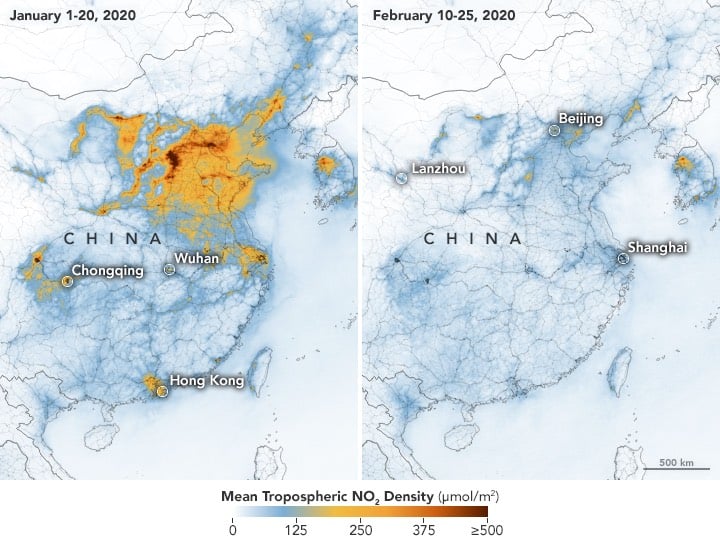
Stanford professor Marshall Burke, who does research on the social and economic impacts of environmental change, wrote a post about how the decrease in economic activity in China due to COVID-19 quarantine and other countermeasures resulted in a significant drop in air pollution, which Burke estimates will save more lives than deaths caused by COVID-19.
Putting these numbers together [see table below for details] yields some very large reductions in premature mortality. Using the He et al 2016 estimates of the impact of changes in PM on mortality, I calculate that having 2 months of 10ug/m3 reductions in PM2.5 likely has saved the lives of 4,000 kids under 5 and 73,000 adults over 70 in China. Using even more conservative estimates of 10% reduction in mortality per 10ug change, I estimate 1400 under-5 lives saved and 51700 over-70 lives saved. Even under these more conservative assumptions, the lives saved due to the pollution reductions are roughly 20x the number of lives that have been directly lost to the virus.
And his conclusion is not that viral pandemics are a net positive for the world (you will see people naively arguing this, siding a little too closely with a snapping Thanos for my comfort) but that situations like this remind us, as Burke summarized on Twitter: “the way our economies operate absent pandemics has massive hidden health costs”:
But it seems overall incorrect and foolhardy to conclude that pandemics are good for health — and again I emphasize that the effects calculated above are just the health benefits of the air pollution changes, and do not account for the many other short- or long-term negative consequences of social and economic disruption on health or other outcomes. But the calculation is perhaps a useful reminder of the often-hidden health consequences of the status quo, i.e. the substantial costs that our current way of doing things exacts on our health and livelihoods.
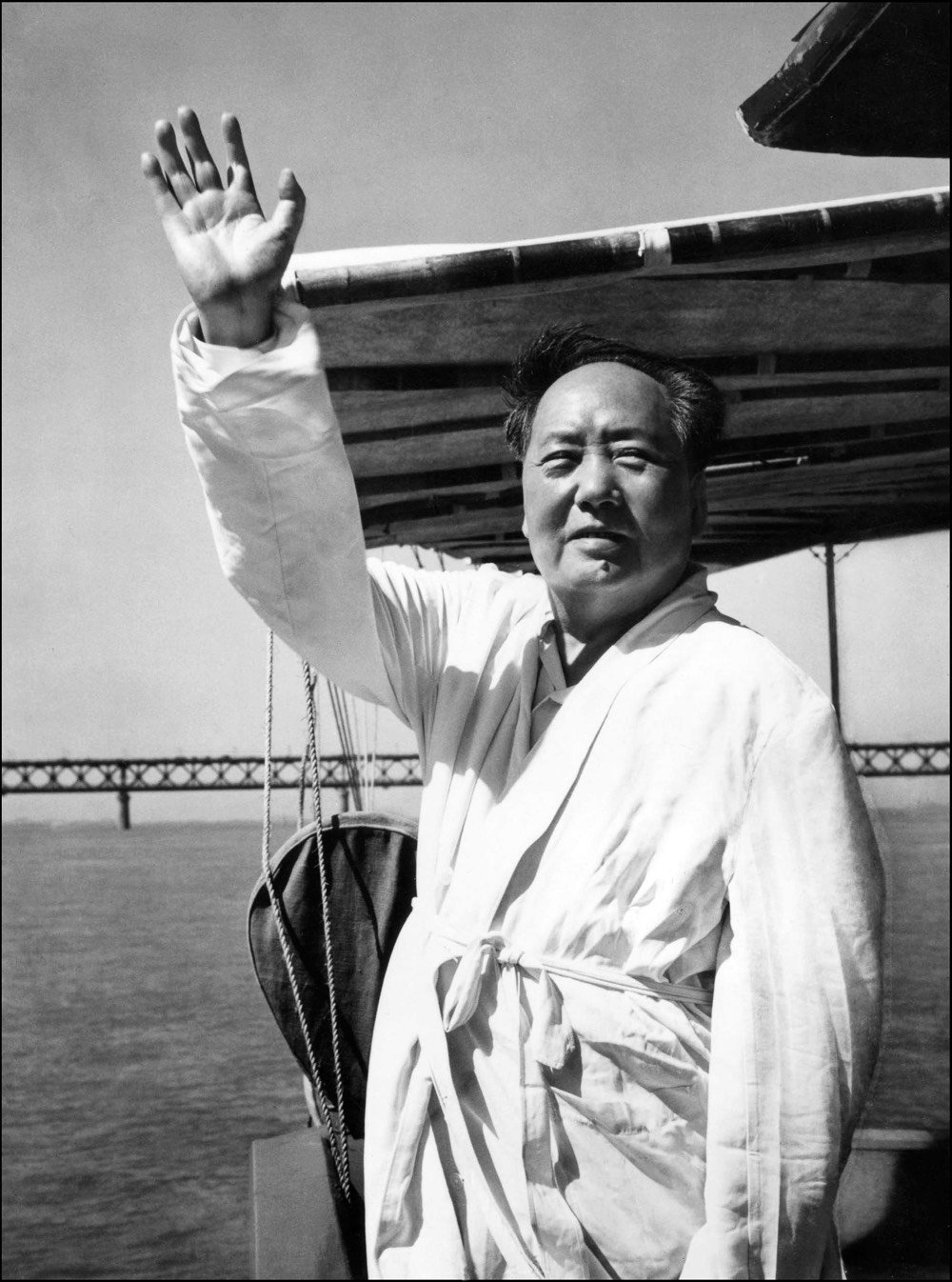
In 1966, Chinese leader Mao Zedong had a PR problem. His Great Leap Forward policy had resulted in tens of millions of deaths from famine, his health was rumored to be failing, and he was afraid, following the recent de-Stalinization of the Soviet Union, that his legacy was not secure. So he went for a swim.
Mao wanted to leave behind a powerful Communist legacy, like Marx and Lenin before him. And in order to do so, he needed to connect with the younger generation before he died. So after announcing his Great Proletarian Cultural Revolution, he swam across the Yangtze River. Mao had done the same swim 10 years earlier to prove his vitality, and he hoped it would work again.
His “Cultural Revolution” was a call to hunt down and eliminate his enemies, and reeducate China’s youth with the principles Maoism. Led by the fanatical Red Guards, the Cultural Revolution was a devastating 10-year period in Chinese history that didn’t end until Mao died in 1976.
You can read and watch more about the Cultural Revolution.
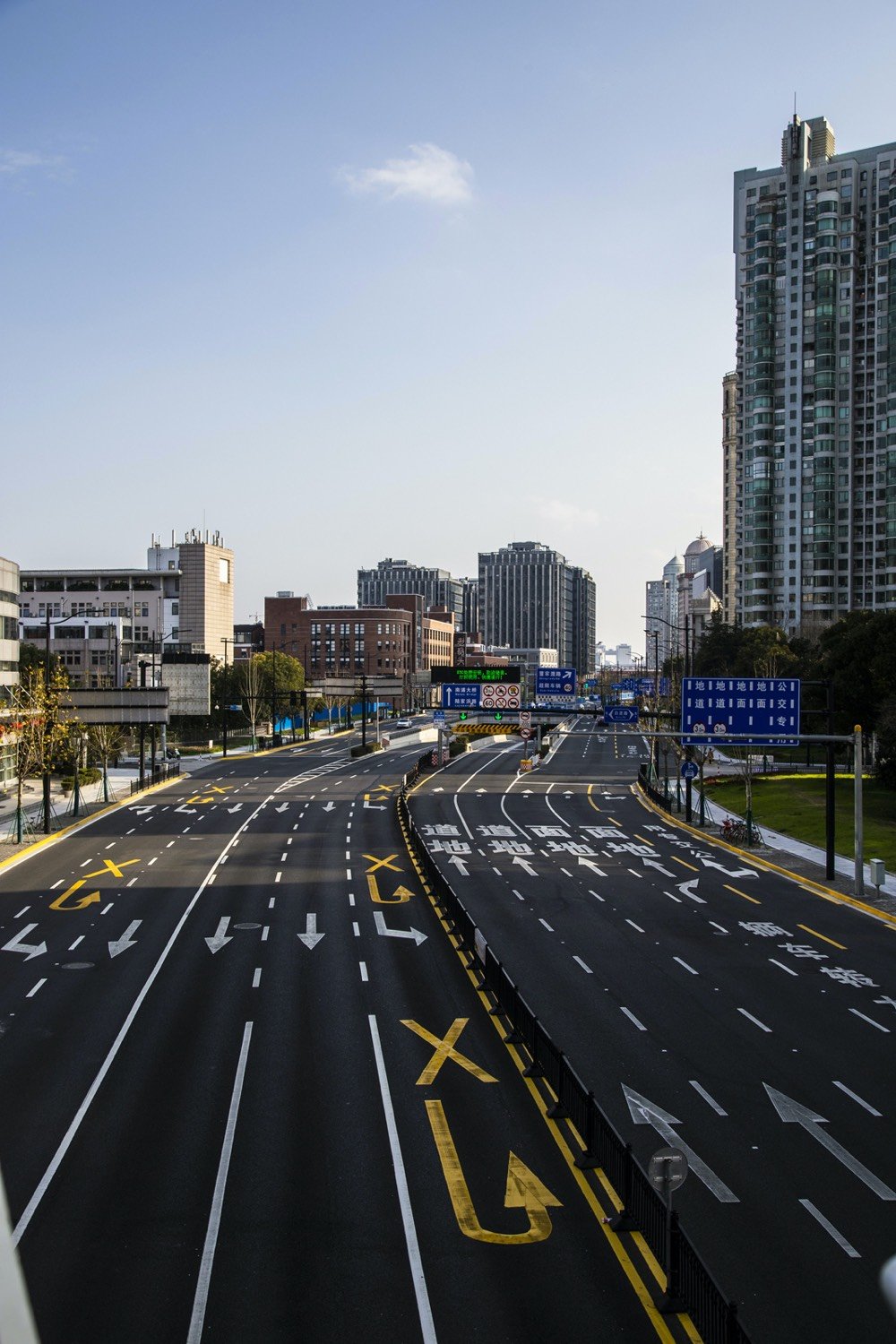
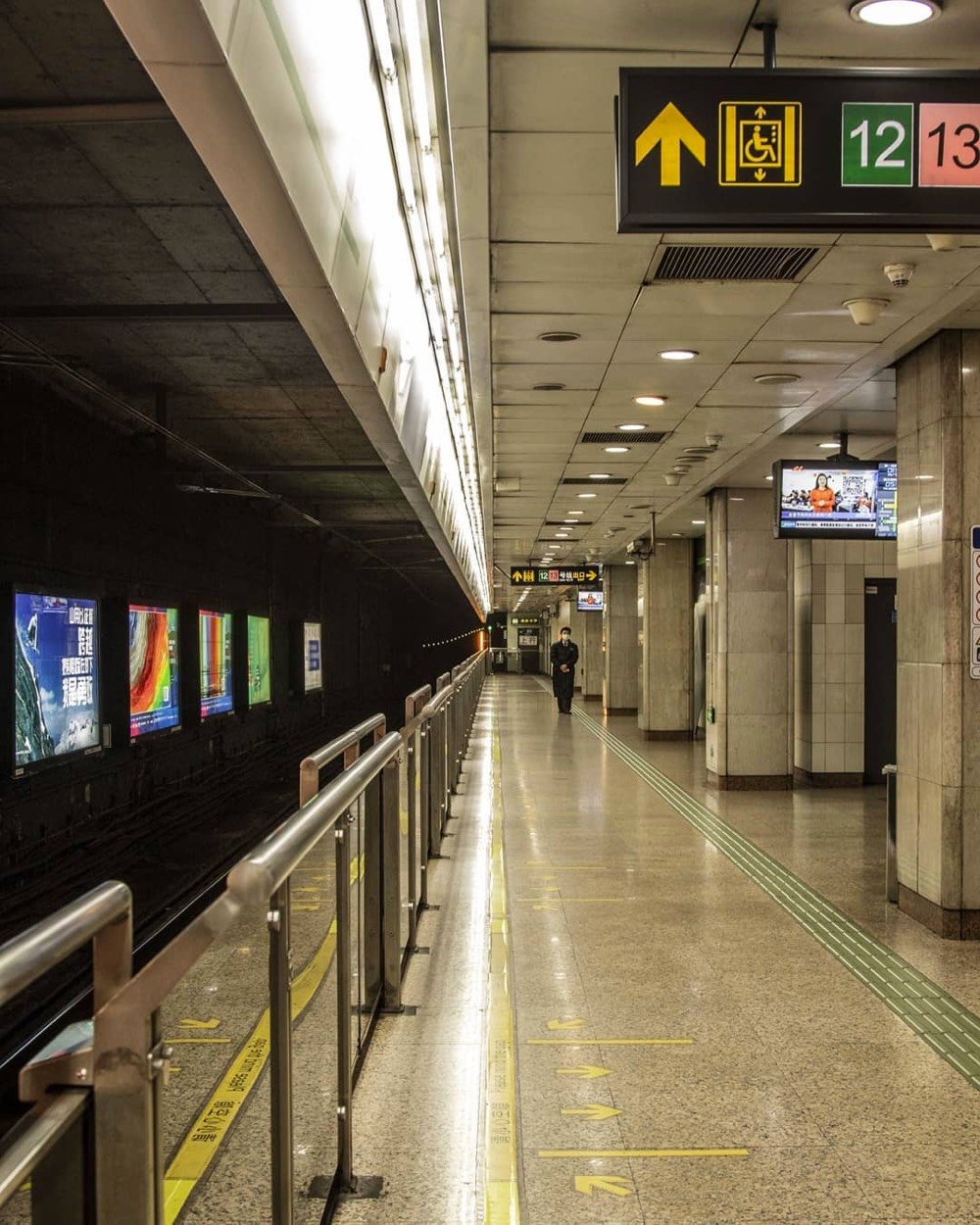
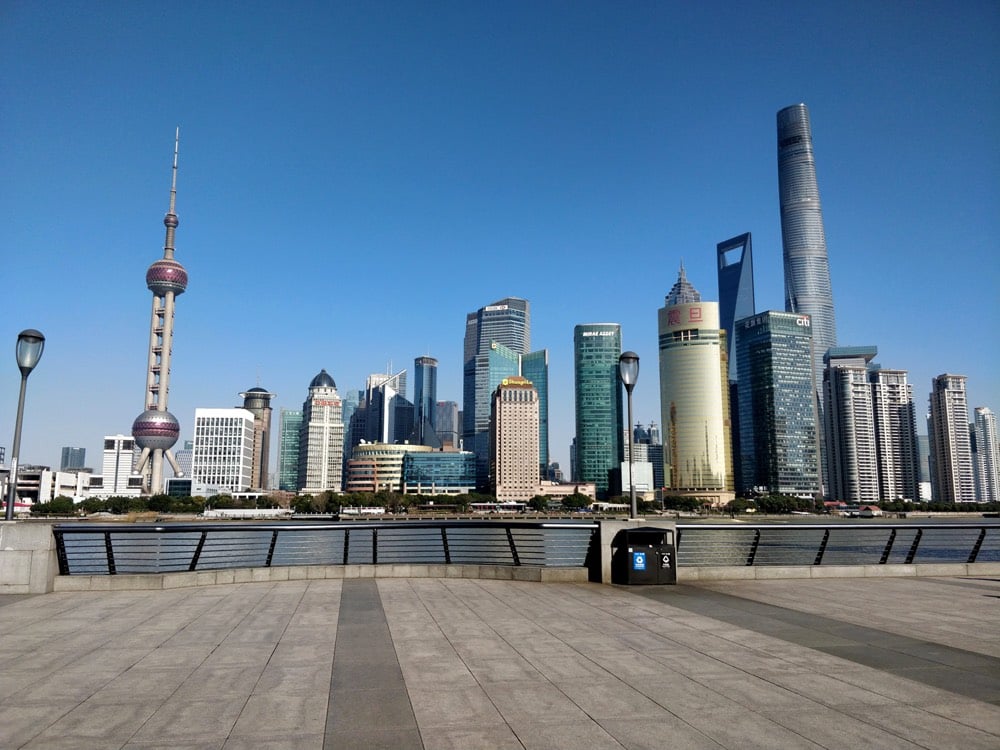
For her series One Person City, photographer nicoco has been taking photos of Shanghai that emphasize how deserted the city was due to the COVID-19 outbreak that has killed more than 1000 people in China. In an interview with Hyperallergic, the photographer said:
My objective for this series was to capture the feeling of apocalyptic emptiness. Some of the photos may look as if they were captured at strange early morning hours, but as a collection, it seeks to reinforce there were no people, anywhere.
These are Shanghai’s busiest locations that can compare to Times Square in New York City, Big Ben in London, the Bean in Chicago, or the Washington Monument in DC. They are very popular on an average day, and very, very popular during holidays as domestic tourists and residents spend time with their families and check out festive displays, shop, or just meander around.
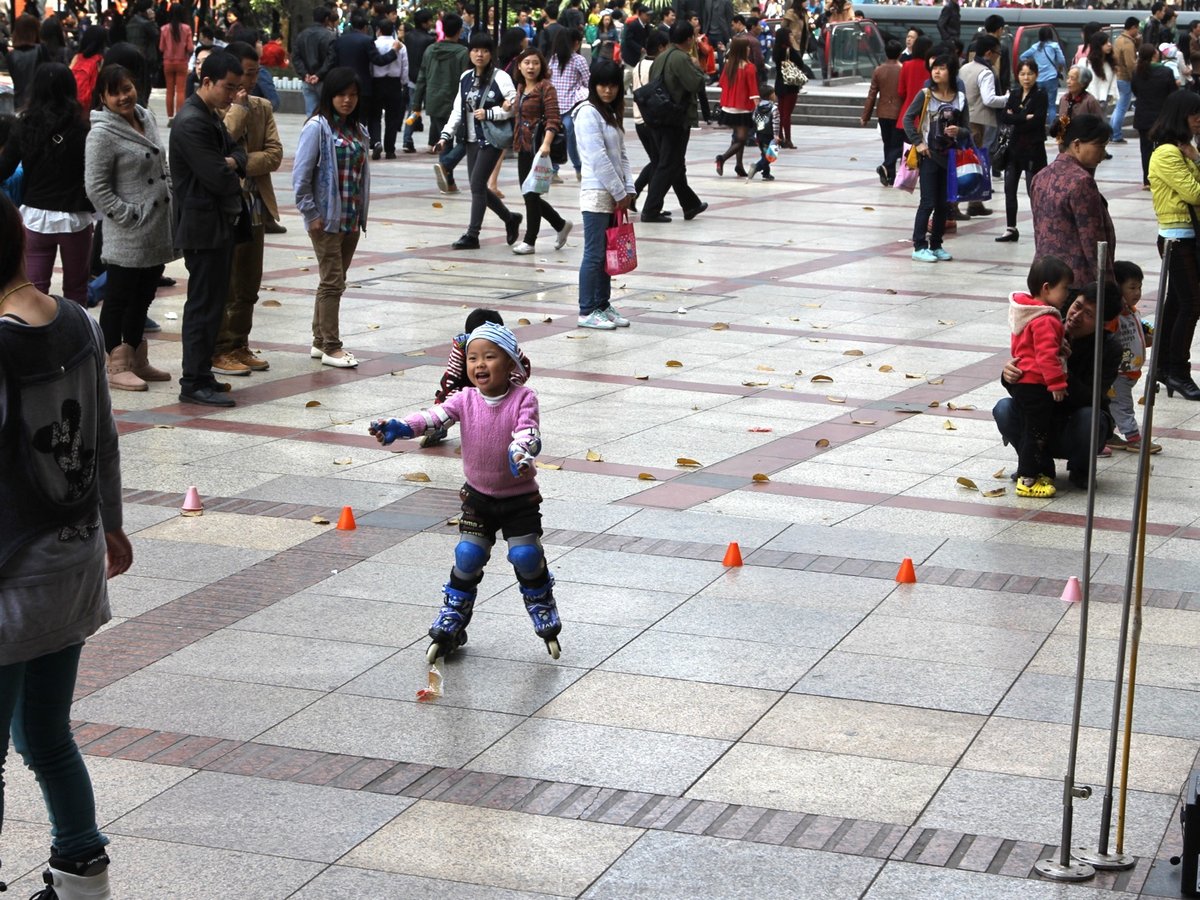
Little details of habits or unique uses of space and devices always draw my attention. These rollerbladers-in-training in Chongqing, China, spotted by Square Inch Anthro are exactly that, a day to day use of public space somewhat unique to a place.
On weekend mornings starting in late spring, this section of public square located in Chongqing’s central Shapingba district is taken over by somewhat the opposite end of the demographic spectrum: a trio of instructors and a gaggle of elementary school-aged rollerbladers-in-training. Dividing students by age and ability, instructors lay out various configurations of small orange cones and guide/coax their charges through them.
Sanjiangyuan in Qinghai is set to become China’s first national park, opening in 2020. It’s part of the Chinese government’s plan to follow the US model of national parks by replacing seven different departments with one, the National Park Administration.
Jonathan Jarvis, the Director of the United States National Park Service under President Obama, visited China to observe some of the past efforts and the new initiatives being put forth. Jarvis was interviewed by AJ Cortese at Pandaily.
Obviously China has had a high priority on economic development for a long time so it was actually refreshing to see them at least state politically, that they want conservation to be the priority. Because, frankly, if you’re going to have a real national park system it can’t just be about visitation or economical development and tourism it has to have a foundation in conservation and historical preservation as well.
We met with local mayors and provincial leaders and they clearly had gotten the message that they were now going to be evaluated in terms of their accomplishments and career status based on ecological conservation and not economic development. What’s interesting was they were asking us to help them figure out what that means because most of them had been trained professionally in economic development, which was to build something: a road, a hospital, a library or a school in these remote communities and now they were being challenged with ecological conservation at the same time as improving the lives of the local communities.
China has said politically that they want to have a complete national park system by 2030. Of course China is hosting the convention of biodiversity next year in October 2020, and I would anticipate that China will be announcing sometime in 2020, this sort of trajectory towards having a complete system with actual designation of at least the first slate, and then another slate and then another. They are trying to do what the US did over 100 years, starting in 1916, in just 10 years. This doesn’t surprise me because that’s kind of the way China does things. (Emphasis mine.)
The partnership between China and Western governments & corporations has hit a rough patch recently, namely the Hong Kong protests and how the NBA, Apple, and gaming company Blizzard have handled various responses to them on their platforms. I don’t have a lot to add on the matter, but I have read some interesting takes in the past few days that you might also want to take a look at.
I am not particularly excited to write this article. My instinct is towards free trade, my affinity for Asia generally and Greater China specifically, my welfare enhanced by staying off China’s radar. And yet, for all that the idea of being a global citizen is an alluring concept and largely my lived experience, I find in situations like this that I am undoubtedly a child of the West. I do believe in the individual, in free speech, and in democracy, no matter how poorly practiced in the United States or elsewhere. And, in situations like this weekend, when values meet money, I worry just how many companies are capable of choosing the former?
The gist of it is that 25 years ago, when the West opened trade relations with China, we expected our foundational values like freedom of speech, personal liberty, and democracy to spread to China.
Instead, the opposite is happening. China maintains strict control over what its people see on the Internet — the Great Firewall works. They ban our social networks where free speech reigns, but we accept and use their social networks, like TikTok, where content contrary to the Chinese Community Party line is suppressed.
The People’s Republic of China is the largest, most powerful and arguably most brutal totalitarian state in the world. It denies basic human rights to all of its nearly 1.4 billion citizens. There is no freedom of speech, thought, assembly, religion, movement or any semblance of political liberty in China. Under Xi Jinping, “president for life,” the Communist Party of China has built the most technologically sophisticated repression machine the world has ever seen. In Xinjiang, in Western China, the government is using technology to mount a cultural genocide against the Muslim Uighur minority that is even more total than the one it carried out in Tibet. Human rights experts say that more than a million people are being held in detention camps in Xinjiang, two million more are in forced “re-education,” and everyone else is invasively surveilled via ubiquitous cameras, artificial intelligence and other high-tech means.
We in the West should very well know what and who we are dealing with — China might be decked out in Louis Vuitton, but underneath, it is still a single-party, quasi-communist nation. Knowing the Western desperation for growth and the insatiable needs of the stock markets, China also knows it can yank anyone’s chain.
Huawei isn’t a recent problem. It was a problem a decade ago. The dynamic in this spat between the NBA and China isn’t new — China gets what China wants, not the other way around. Why are we being outraged now? The West signed up for this.
Malik quotes from Ian Bremmer’s newsletter:
in the west, the past decades have been marked by a view that china would eventually adapt to western norms, institutions, political and economic systems. but from an asian perspective, the opposite appears more likely. after all, of the last 2,000 years, china and india have led the global economy for the first 1800; europe and the united states only flipped the script for the last 200. now that’s about to change. and when it does, it’s going to happen quickly, powered by 1.4 billion increasingly urban, educated and technologically-connected chinese citizens. take the long view (and an asian perspective) and it’s a better bet that the west will adapt to the realities of chinese economic power, not the other way around.
From Kaiser Kuo, a long piece attempting to answer the question: “Why do so many people feel that the Chinese can’t possibly be OK with their government or society?”
First, I’ll look at the gap in political culture between China and the liberal Western democracies, especially the United States. I’ll argue that there is little appreciation among most WEIRD individuals — that is, Western, Educated people from Industrialized, Rich, and Developed nations — for just how highly contingent political norms they take for granted really are from an historical perspective. I’ll sketch the outlines of the major historical currents that had to converge for these ideas to emerge in the late 18th century. Then, I’ll compare this very exceptional experience with that of China, which only embraced and began to harness those engines of Western wealth and power — science, industrialization, state structures capable of total mobilization of manpower and capital — much later. And late to the game, China suffered for over a century the predations of imperial powers, most notably Japan. Hopefully, I’ll show why it was that liberalism never really took hold, why it was that Chinese intellectuals turned instead to authoritarian politics to address the urgent matters of the day, and why authoritarian habits of mind have lingered on.
Next, I’ll argue that a lot of unexamined hubris lies not only behind the belief that all people living under authoritarian political systems should be willing to make monumental sacrifices to create liberal democratic states but also behind the belief that it can work at all, given the decidedly poor record of projects for liberal democratic transformation in recent years, whether American-led or otherwise. It’s important to see what the world of recent years looks like through Beijing’s windows, and to understand the extent to which Beijing’s interpretation of that view is shared by a wide swath of China’s citizenry.
Finally, I’ll look at the role of media in shaping perspectives of China in the Western liberal democracies and in other states. A very small number of individuals — reporters for major mainstream media outlets posted to China, plus their editors — wield a tremendous amount of influence over how China is perceived by ordinary Anglophone media consumers. It’s important to know something about the optical properties of the lens through which most of us view China.
I found this via Kevin Kelly, who says: “Based on my extensive time in China I think this long article is 100% correct.”
This is the collision of two interesting “topic fields” I like to pay attention to. China in general, especially how media, social media, and commerce differ from the western models. And how the verticality of smartphones (and apps) is affecting media at large.
First, in this piece on The Next web about Chinese vertical dramas, we get a quick dive into the growing number of series built for the format. Aside from the visual shape, they are usually short episodes, fast-paced with many punchlines, and are exploring the possibilities of top to bottom transitions. You can find quite a few links and screenshot examples in the article.
Last time I guest edited here, I posted about an Ian Bogost piece on how Stories are overtaking social media, which focused in part on the vertical rectangle.
That name is vestigial now, because it’s only incidental that an iPhone or a Pixel is a telephone. Instead, it’s a frame that surrounds everything that is possible and knowable. A rectangle, as I’ve started calling it.
Back to China, this fascinating piece by Connie Chan at Andreessen Horowitz looks at the varied business models local internet companies are using, contrasting that to the mostly “one trick pony” approach of American counterparts. Chan focuses on books, podcasts, videos, and music, and although the examples are varied, they can be boiled down to a couple of main ideas; gamification of every possible aspect of the app and experience, and up-selling to VIP memberships and all kinds of merchandise.
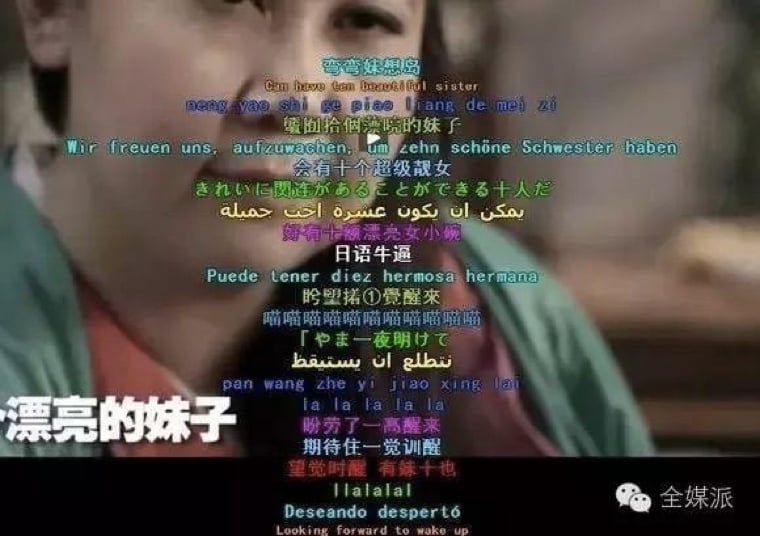
Finally on the always excellent Logic mag, Christina Xu with a look at bullet comments culture in China, “an invasive species from Japan,” which layers comments over video, each attached to a specific moment. Originally popularized on the Bilibili platform, they are now present in a number of other places and media.
They represent the essence of Chinese internet culture: fast-paced and impish, playfully collaborative, thick with rapidly evolving inside jokes and memes. They are a social feature beloved by a generation known for being antisocial. And most importantly, they allow for a type of spontaneous, cumulative, and public conversation between strangers that is increasingly rare on the Chinese internet.
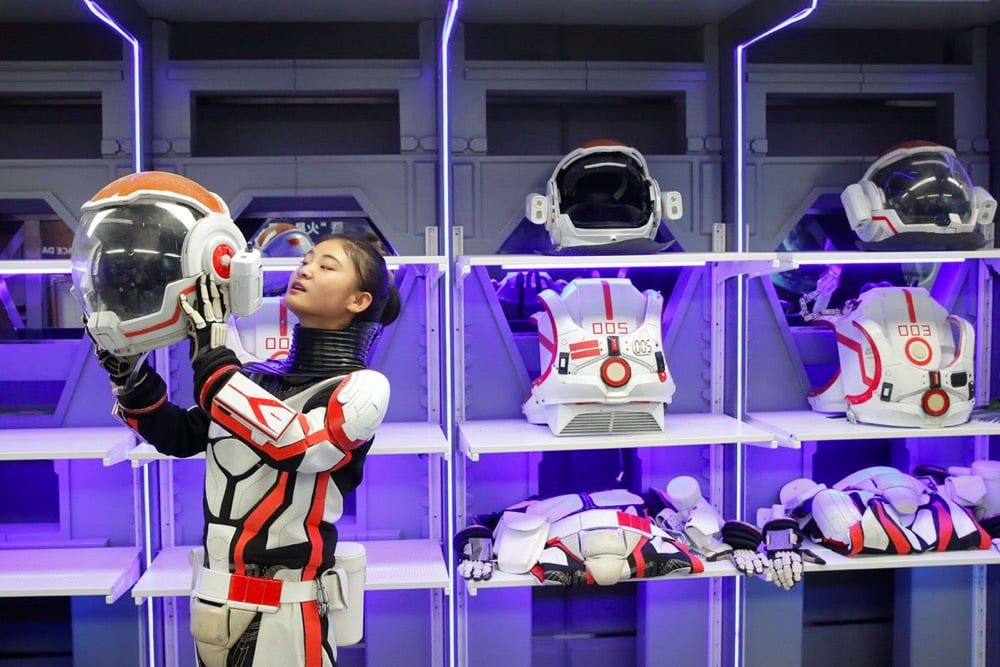
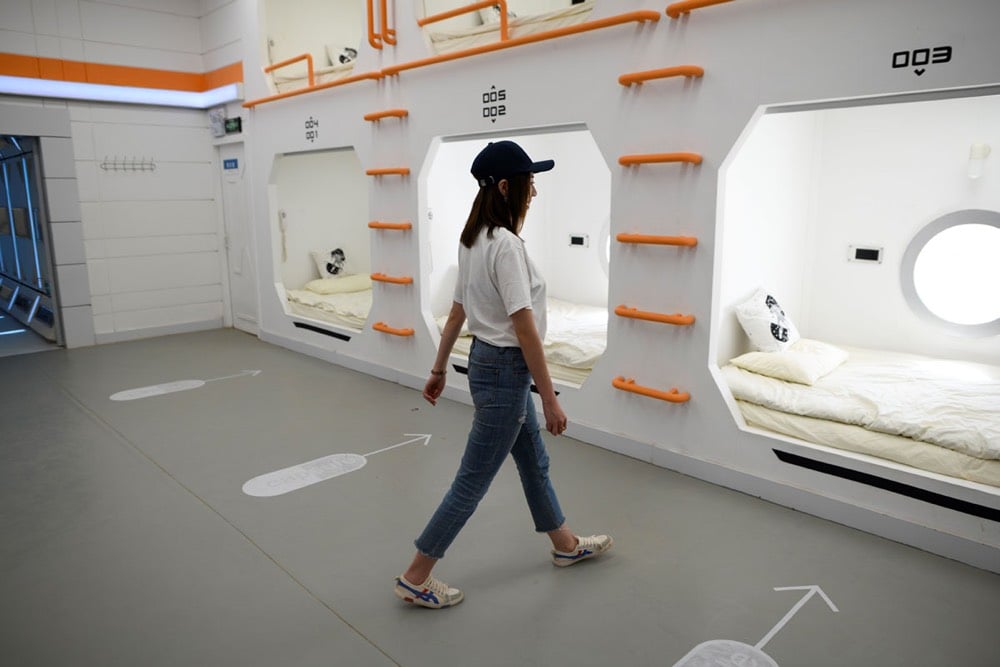
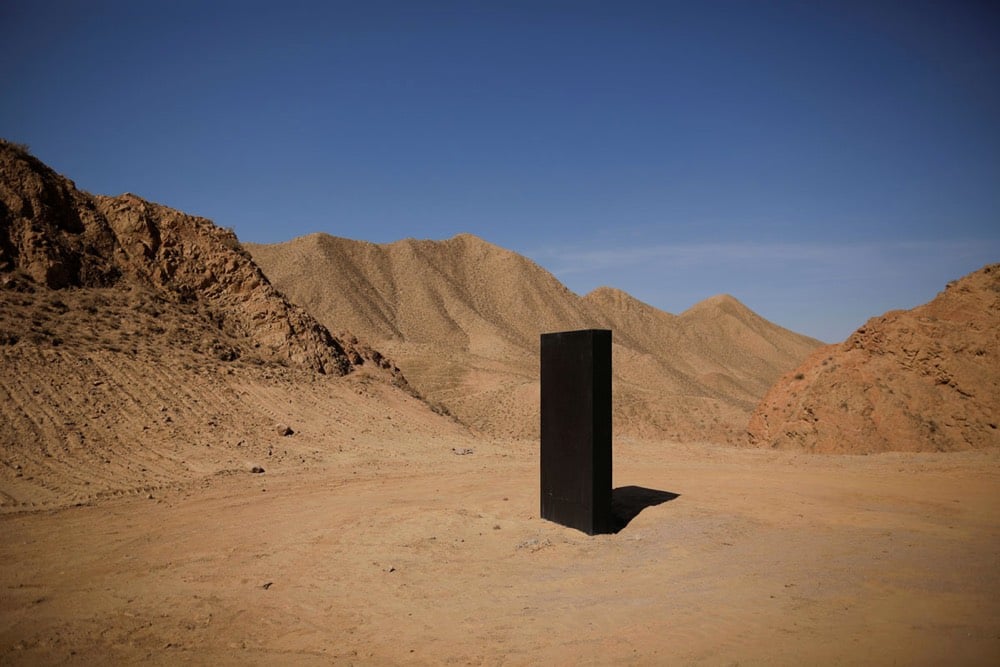
A Chinese company called C-Space has built a simulation of a Mars base in the Gobi desert. Currently used for educational purposes, the company plans to open “Mars Base 1” up for tourism to give visitors a glimpse of what living on Mars would be like.
The facility’s unveiling comes as China is making progress in its efforts to catch up to the United States and become a space power, with ambitions of sending humans to the moon someday.
The white-coloured base has a silver dome and nine modules, including living quarters, a control room, a greenhouse and an airlock.
In this lovely short film by Noah Sheldon, we meet Wo Guo Jie, a migrant worker from rural China who makes a living in Shanghai collecting styrofoam boxes and reselling them at a wholesale fish market. Even though styrofoam is a relatively light material, she packs so much of it onto her bike that the front wheel bounces off the ground as she motors slowly down the street, unable to see anything but what’s right in front of her.
My hometown is all farmland, there are no factories. During the winter there is nothing to do so people work elsewhere. Now everyone has left to go find work. No one farms anymore. It’s rare for me to get a chance to go home. Sometimes I don’t even go back once a year. When my son was younger, around 7 or 8 years old, I came home and he refused to call me ‘Mom’. He didn’t recognize me because I hadn’t been home for 3 years. I take each day as it comes. I haven’t thought too much about the future.
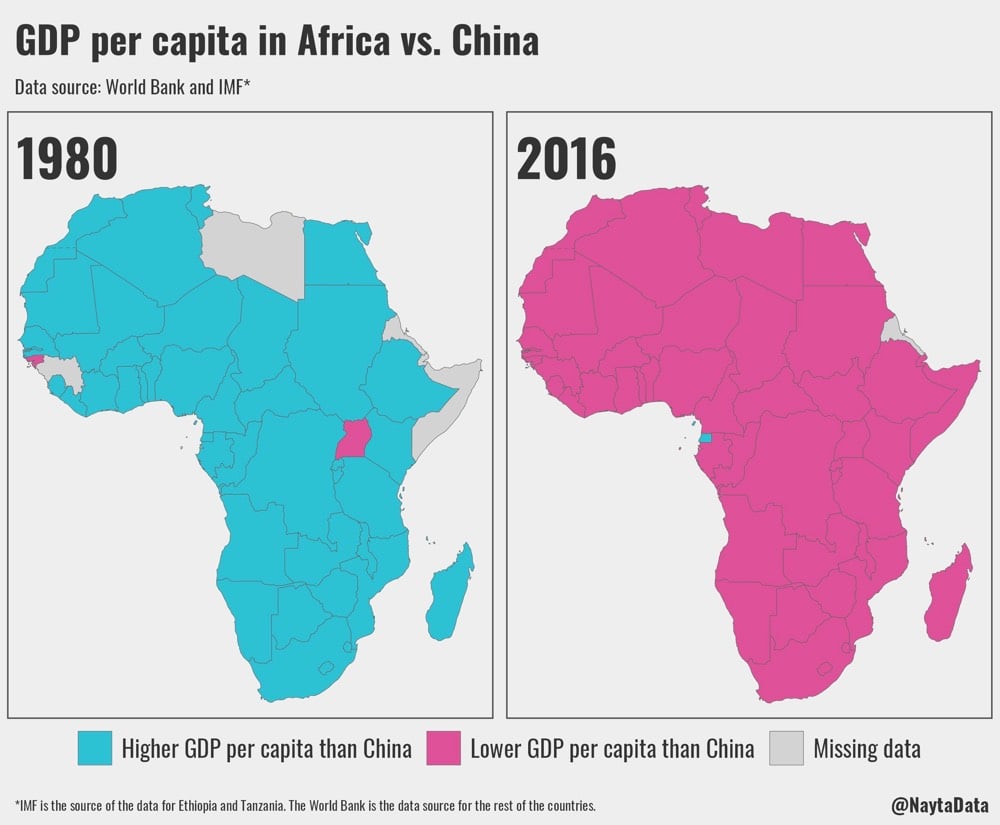
Using data from the IMF and World Bank, this map by Näytä Data shows how quickly the relative fortunes of China and African countries changed over the last few decades. For reference, in 1980, Africa had an estimated population of 480 million and China’s population was 994 million, while in 2016, Africa had 1.23 billion people and China had 1.4 billion people.
Lanzhou, a city in northwestern China, is well-known for its beef noodle soup…and the shops serving them. In order to keep those shops well-stocked with chefs who can produce perfect hand-pulled noodles at a fast pace, the Gansu Dingle Noodle School offers training to people from all walks of life in the art of noodle making. This short film by Jia Li profiles a group of students at the school as they learn their new trade.
Noodle school holds classes three times a day, seven days a week. You stand there with your classmates and pull dough, at least 100 times a day. Students aren’t given recipes; the secret to success lies in rote repetition. There are three different course lengths: 15 days, 30 days, and 40 days. Tuition includes housing and food. Most people are Chinese nationals, though Li says that in recent years an influx of foreigners have come in pursuit of the perfect noodle. The school also teaches soup basics, pickling, and beef stewing techniques.
“We’ll have over 20 different types of herbs in the broth,” he says. “And our flour is custom-made and imported in from Henan. They have different levels of elasticity depending on what we request.”
“Commodity City” is a short documentary directed by Jessica Kingdon about a huge wholesale market in China with 75,000 vendors selling everything from flowers, pens, and clocks to dolls, rope, and Santas.
Ultimately, Kingdon decided to focus on what she describes as “the quieter, more subtle moments” amidst the chaotic atmosphere of the five-mile-long consumer metropolis. Comprised of mostly static shots, her short observational documentary, Commodity City, is a mesmerizing window into the daily lives of some of the 75,000 individual vendors who exhibit more than 400,000 products at Yiwu.
“I saw directly how lives are built around market forces,” Kingdon said of her experience shooting the film. “It’s similar to most other places in the world participating in global capitalism, but in China, it’s more obvious right now.”
I know this is pretty slow in spots — It’s meditative! Why are you in such a dang hurry? — but there are great little moments sprinkled in here and there (at 7:10 for one). It also weirdly reminded me of Koyaanisqatsi.
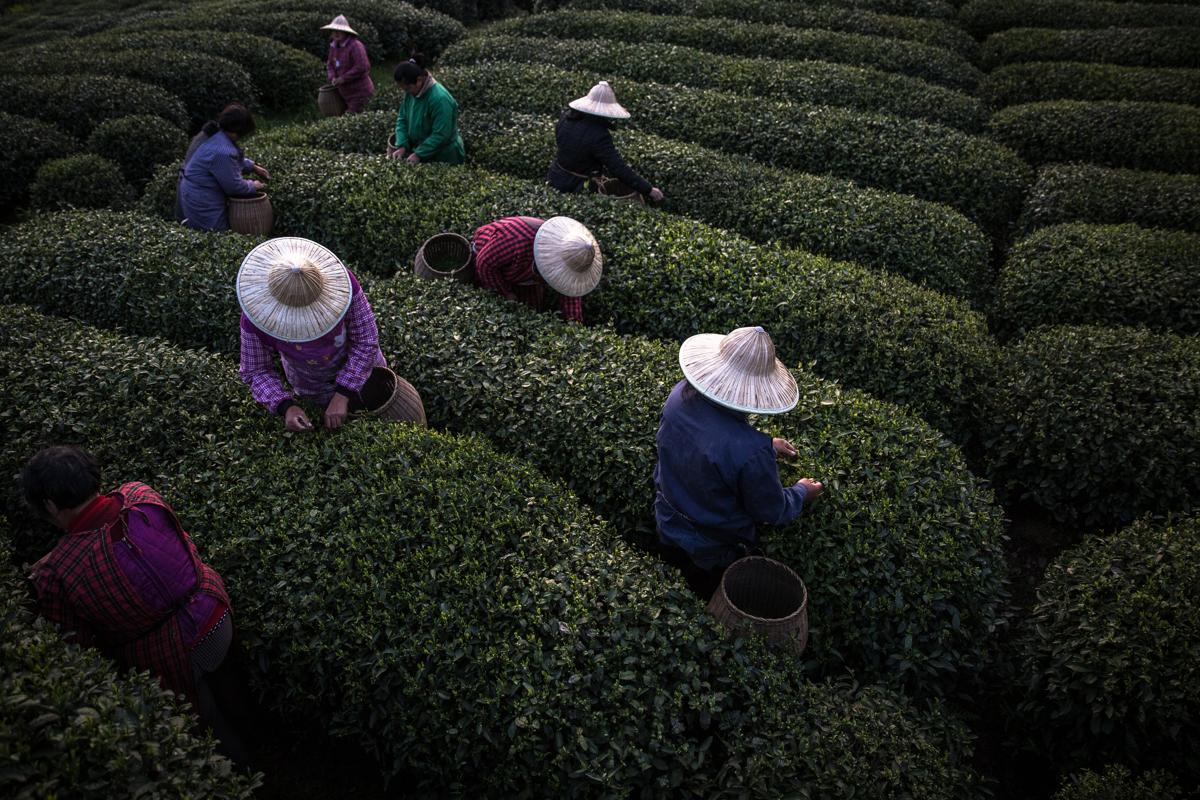
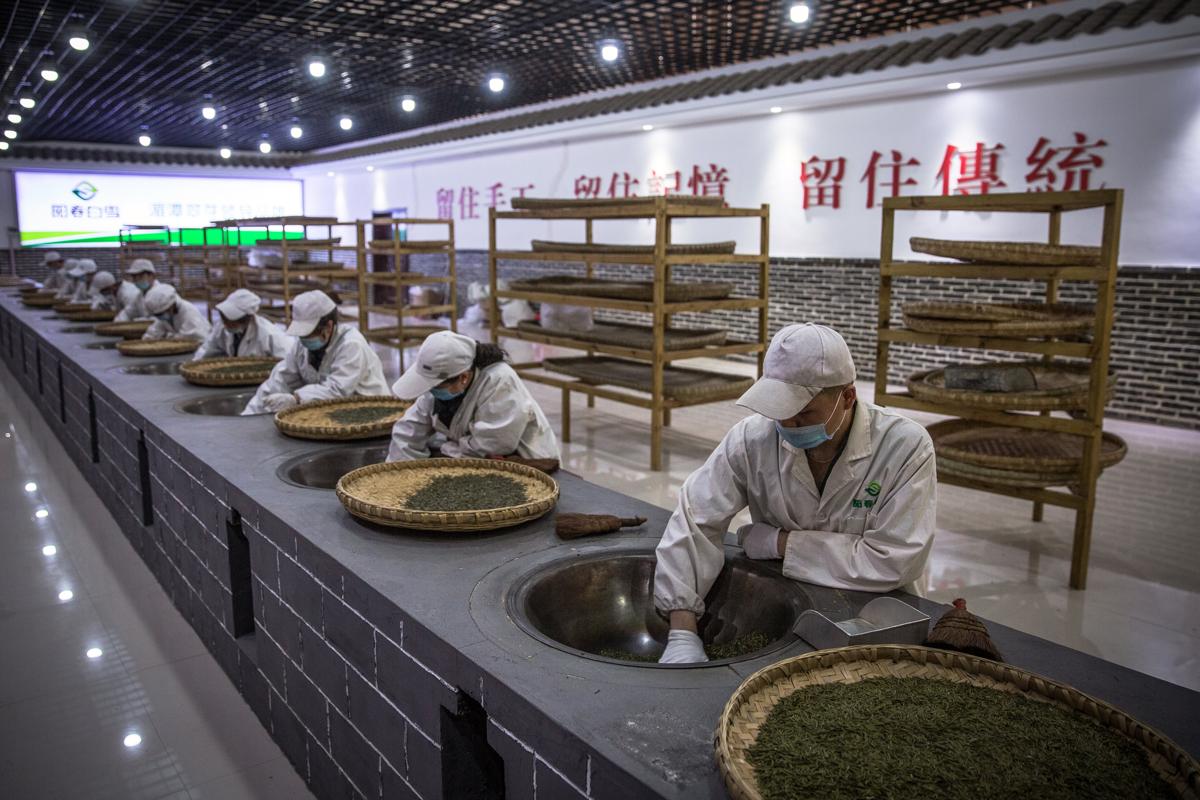
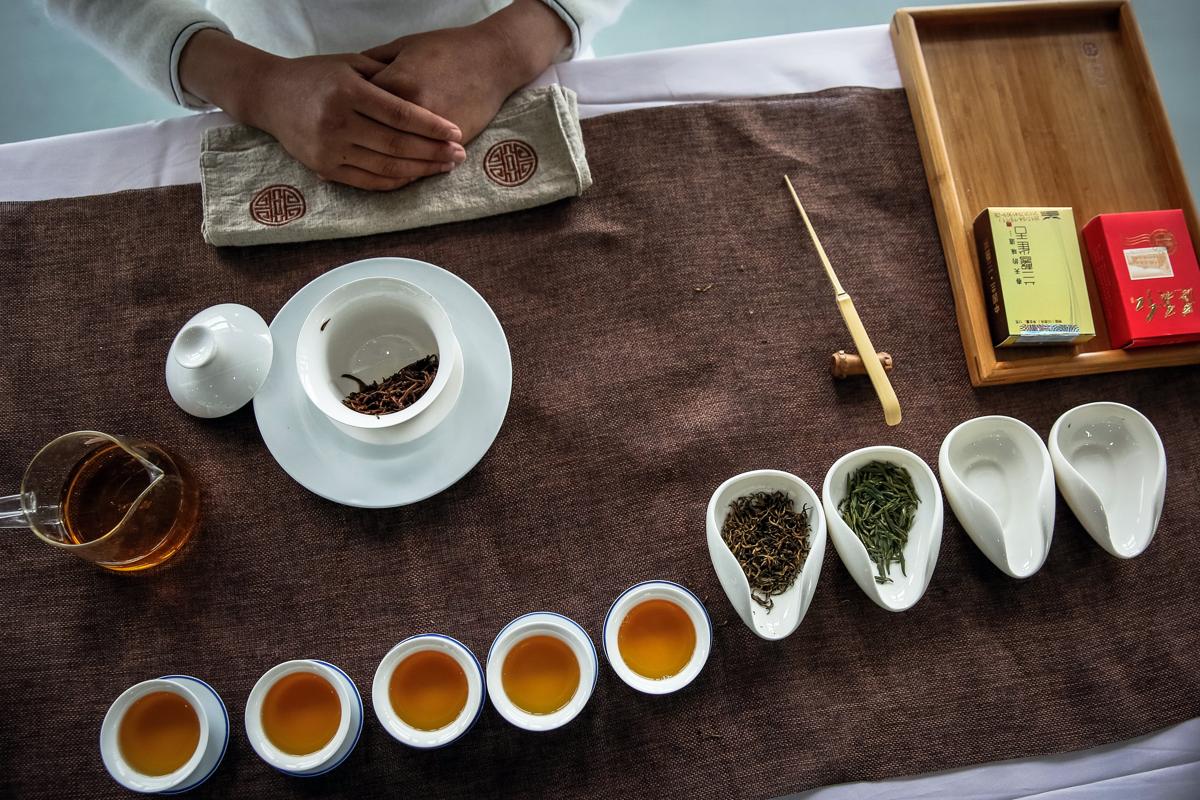
Last fall, The Big Picture did a series of photographs of tea workers in China. According to the accompanying short article, “The Chinese tea industry employs around 80 million people as farmers, pickers and sales people. Tea pickers tend to be seasonal workers who migrate from all parts of the country during harvest time. The pickers work from early morning until evening for an average wage of around 120 RMB (around 16 euros) a day.”
In 1990, China, Hong Kong, and Taiwan had only a handful of subway lines. In the early 2000s, growth in the number of cities with subways started to increase dramatically, as did the number of lines in the bigger cities like Beijing and Shanghai. As of 2020, more than 40 Chinese cities will have subway systems. Check out this time lapse map by “transit nerd” Peter Dovak (who also did these Mini Metros maps):
In this time, Beijing and Shanghai in particular have ballooned from nearly nothing into the world’s two largest, in both length and annual ridership. The timeline of their expansion alone is mesmerizing.
A Bite of China is documentary TV series on food and cooking in China. Writing for The Guardian, Oliver Thring called it “the best TV show I’ve ever seen about food” and one commenter called it “the Planet Earth of food”. While A Bite of China predates it by 3 years, Chef’s Table might be a better comparison. Here’s a trailer:
China has a large population and the richest and most varied natural landscapes in the world. Plateaus, forests, lakes and coastlines. These various geographical features and climate conditions have helped to form and preserve widely different species. No other country has so many potential food sources as China. By collecting, fetching, digging, hunting and fishing, people have acquired abundant gifts from nature. Traveling through the four seasons, we’ll discover a story about nature and the people behind delicious Chinese foods.
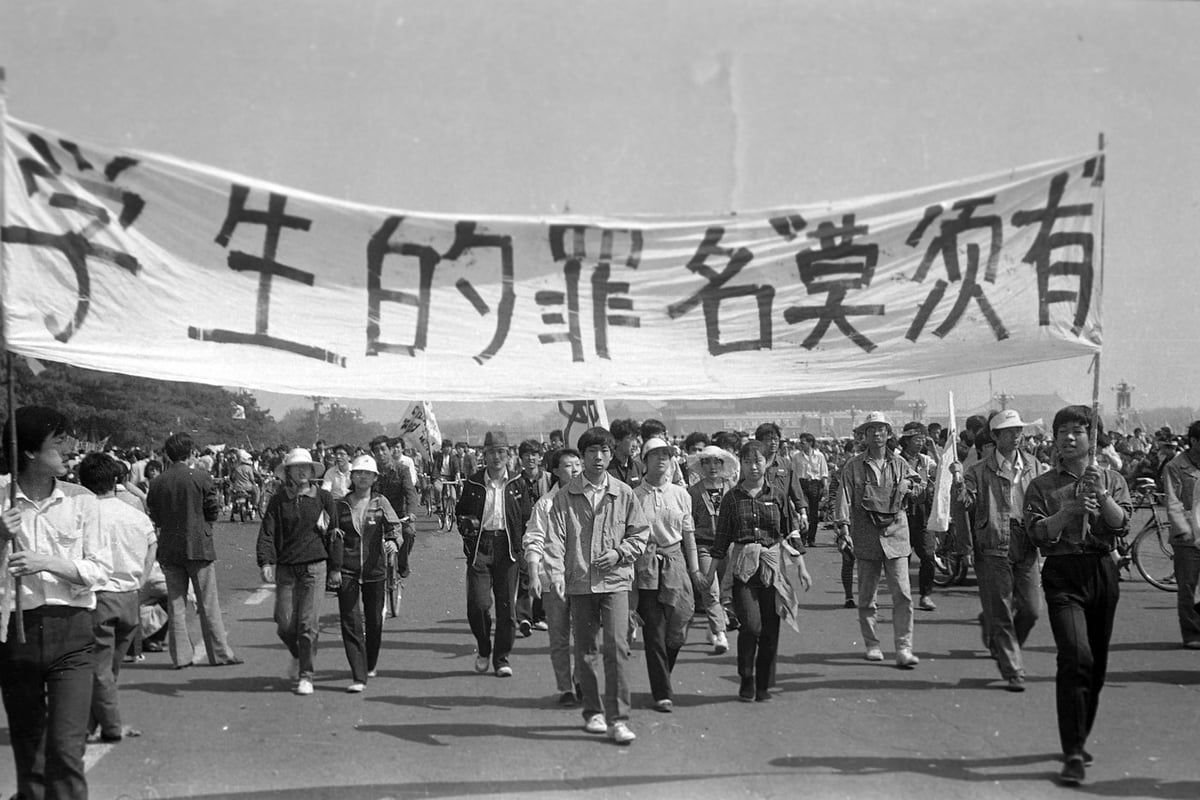
At the time of the pro-democracy Tiananmen Square protests in 1989, David Chen was a 25-year-old student. Using a camera his uncle had given him, he spent a week taking photos of the protests. Those photos have been hidden away until now: the NY Times has published a selection of them today.
Scotty Allen built a working iPhone 6S from scratch using parts bought in the electronics markets of Shenzhen, China.
I built a like-new(but really refurbished) iPhone 6S 16GB entirely from parts I bought in the public cell phone parts markets in Huaqiangbei. And it works!
I’ve been fascinated by the cell phone parts markets in Shenzhen, China for a while. I’d walked through them a bunch of times, but I still didn’t understand basic things, like how they were organized or who was buying all these parts and what they were doing with them.
So when someone mentioned they wondered if you could build a working smartphone from parts in the markets, I jumped at the chance to really dive in and understand how everything works.
It is kind of amazing that he ends up with a fully functional iPhone, complete with a box with charger, headphones, etc. The era of transistor radio kits is not quiiiite dead yet. (via bb)
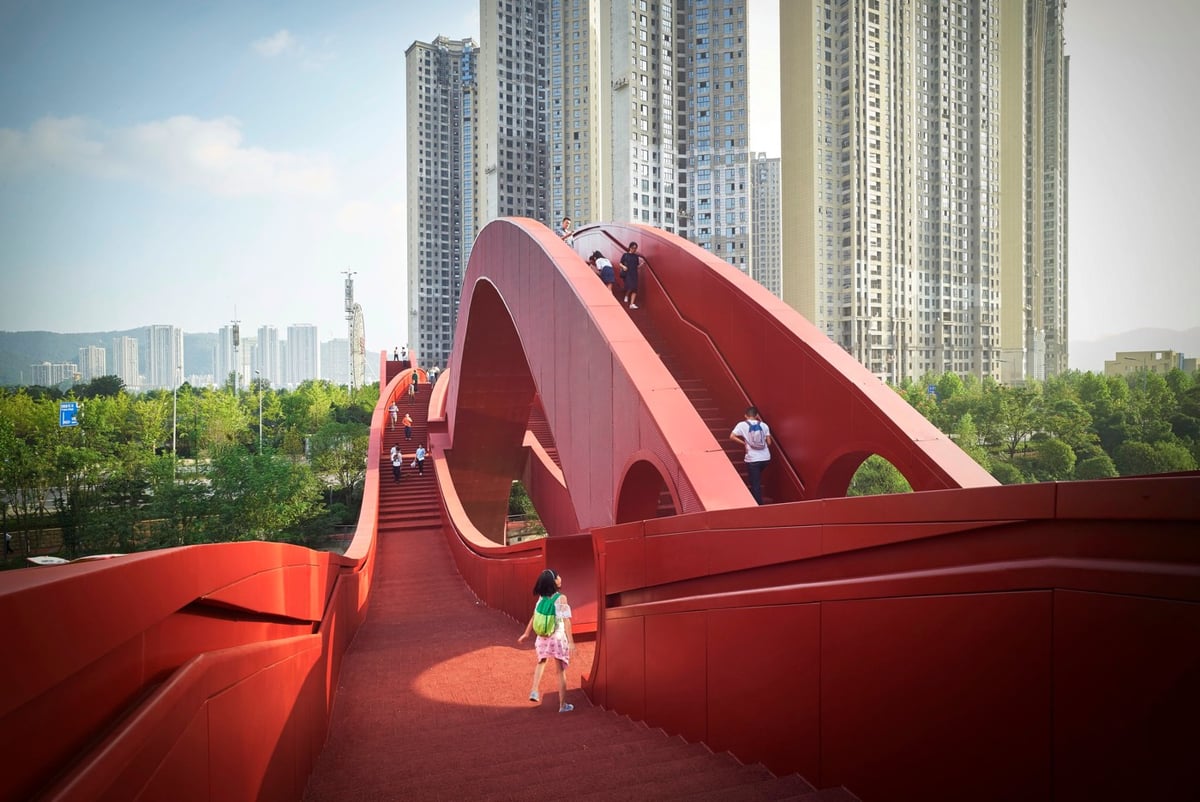
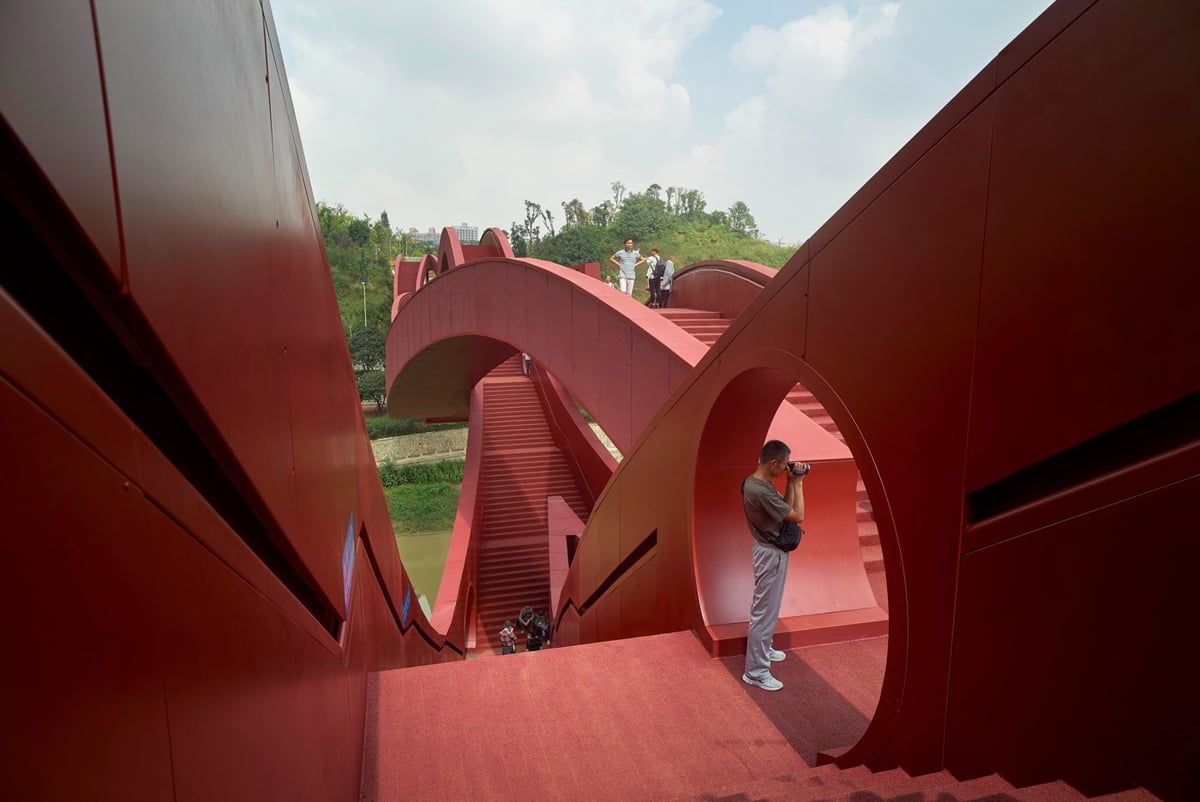
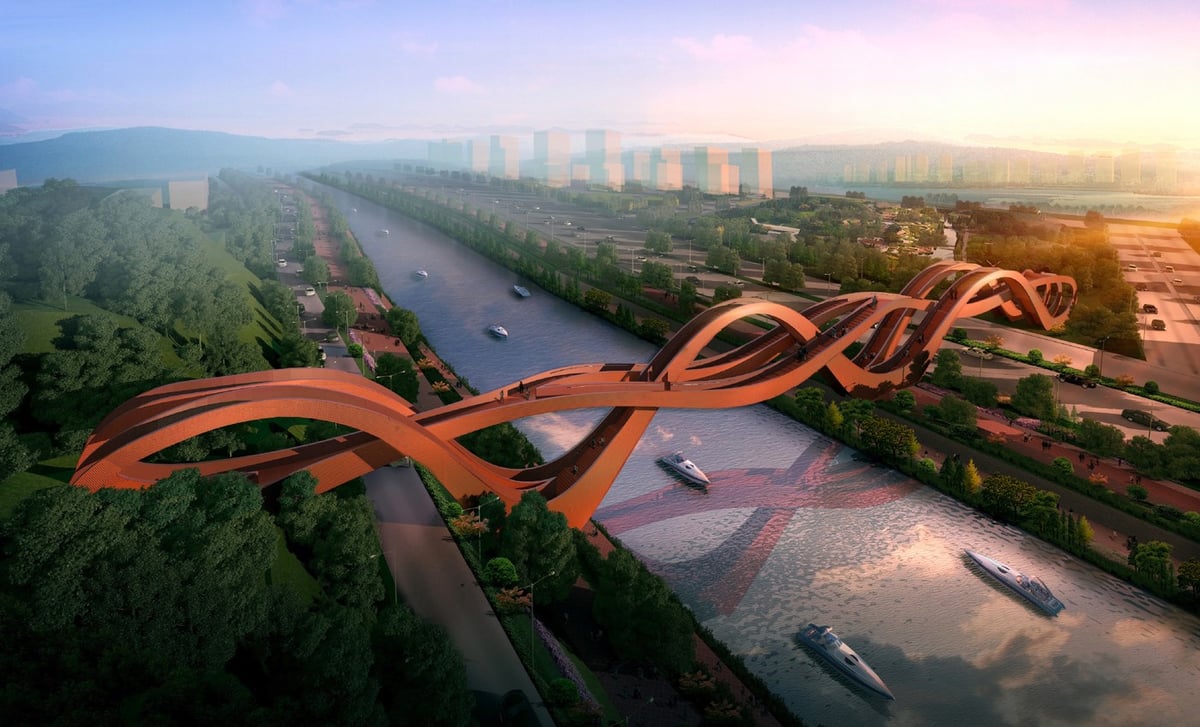
Built by NEXT architects in the Chinese city of Changsha,1the Lucky Knot bridge is a wonderfully inventive piece of architecture and engineering. It does not, however, appear very accessible to cyclists or the handicapped in the way that their Melkwegbridge project is. (via @robinsloan)
I’m guessing you’ve never heard of Changsha — I hadn’t. It’s the 36th most populous city in the world, with a greater population than any city in the US except NYC. The scale of China’s population is incredible…16 of the most populous 50 cities in the world are in China and many Americans would struggle to name more than 3 or 4 of them.↩
In the village of Nanshan in China, traditional Suomian noodles are still very much made by hand. The noodles are made and dried outside, which puts the whole process at the mercy of the weather.
The noodle maker has to add different amounts of salt and flour according to the seasons and has to be very observant about the weather when it comes to choosing the days to dry the noodles.
The video doesn’t say, but I’d be very interested to hear what the unique stretching and drying process does to the taste and texture of the noodles.
Jan Chipchase is the founder of Studio D Radiodurans, which is sort of a modern day A-Team, except with more field research and fewer guns. For example, Chipchase is the sort of person who, for vacation, does not sip pina coladas in Bali but heads for “Kyrgyzstan, Tajikistan’s GBAO region and China’s western provinces”. At the conclusion of the trip, which was actually only partially a vacation, Chipchase jotted down 61 Glimpses of the Future. A few of my favorite observations:
7. A white male travelling alone in interesting places, will always need to disprove they are a spy. Thanks Hollywood.
24. There is only one rule for driving in the GBAO: give a lift to every local that wants one, until the car is full. It’s common to travel main thoroughfares for a day and only see a couple of vehicles.
33. People wearing fake Supreme are way more interesting than those that wear the real deal.
34. An iPhone box full of fungus caterpillar in Kham Tibet sold wholesale, is worth more than a fully specced iPhone. It’s worth 10x at retail in 1st/2nd Tier China. It is a better aphrodisiac too.
38. Tibetan monks prefer iOS over Android.
53. Visitors to Tibet proper are supposed to go in a tour group and hire a local guide. With the right agent you can become a tour group of one and on arrival tell the guide you don’t need their services. It helps to look like you’re going to behave.
This is, as Tyler Cowen might say, interesting throughout. (via @themexican)
Worries over the slowing Chinese economy spilled out into the streets of Hebei province last weekend as two construction firms battled with bulldozers while competing for the same business. That is some end-times shit right there.
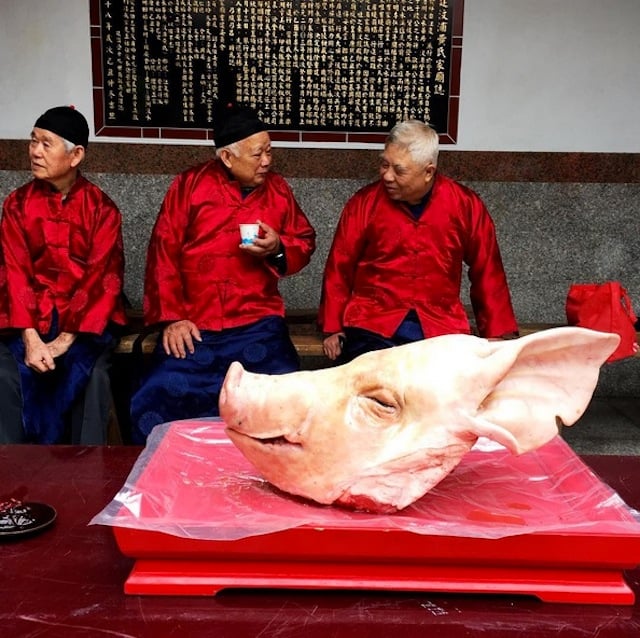
Winter solstice offering at an ancestral hall for the Huang clan, #taiwan, 22 Dec. Wonderful to see such a detailed, traditional ceremony honouring 108 ancestors from the family, with young and old male members of the clan participating — traditions long lost in other Chinese societies. Where such ceremonies in the past always had a sheep sacrificed as well, this village which is no longer as agricultural used bread made in the shape of sheep instead. (With apologies to vegetarians)









Stay Connected