Immediately after Tim Walz was announced as Kamala Harris’s VP pick, the memes started. Most zeroed in on Walz’s potent Midwestern dad energy; he’s the kind of guy who would help a neighbor fix a car, pick you up from the airport, or bring you some soup when you’re sick. For his supporters, Walz is bringing the same kind of energy and hope to the presidential race as Obama did in 2008 and Bernie Sanders did in 2016.
And so of course someone made Tim Walz Fixed Your Bicycle; it’s a collection of things Walz would do for you because he’s just that kinda guy.
Each time you refresh the page, you get a new saying; some of the other ones:
Tim Walz remembers where you parked your car.
Tim Walz has room for a little slice of pie.
Tim Walz is glad to give you a hand with your stroller down those stairs.
Honan even turned the site into a book. A few months later, folks on Twitter started sharing all the wonderful things that would happen when Obama won the Democratic nomination and I collected a bunch of those tweets into this site.
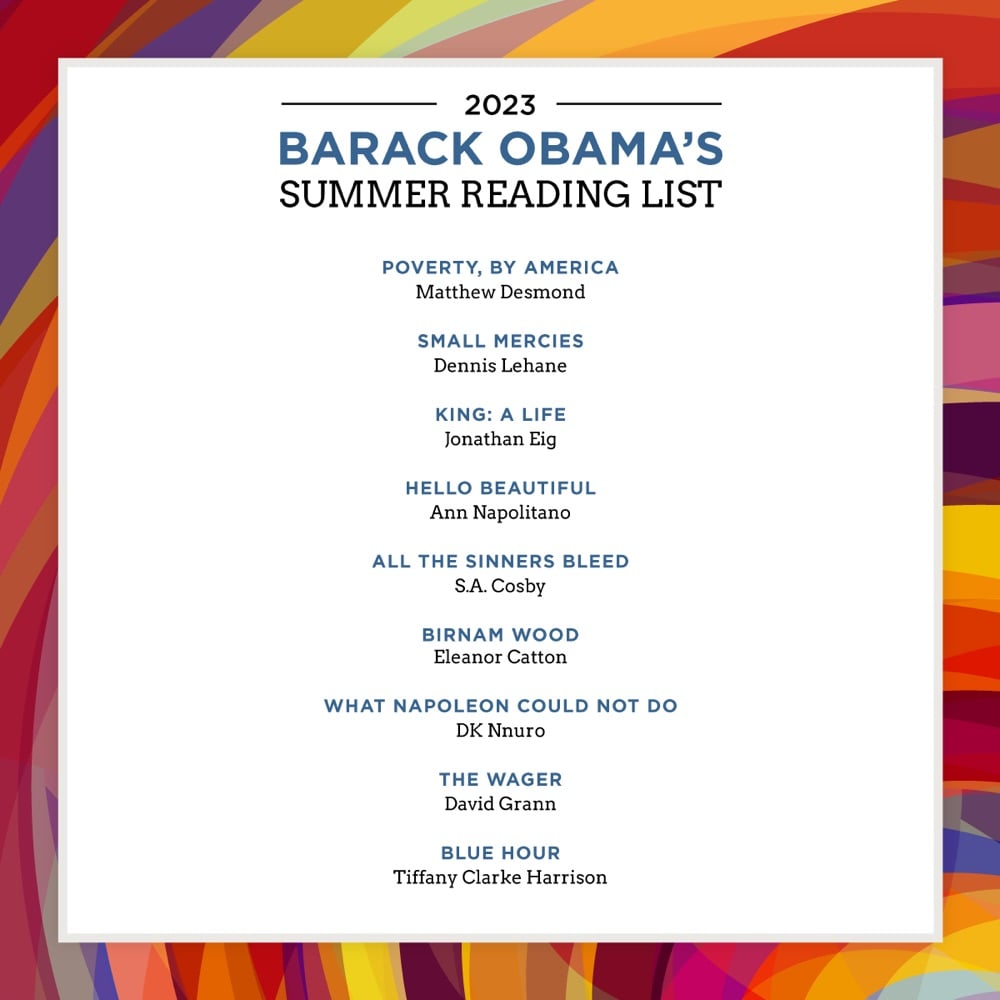
I’ve read The Wager (so good!) and have been wanting to dig into Matthew Desmond’s book but most of the rest of these are new to me.
Right now, I’m reading Hugh Howey’s Wool (after inhaling the first season of Silo) and American Prometheus (after seeing Oppenheimer last night) — I’m sensing a pattern here…
Not that there’s anything wrong with the written version, but the audiobook conveys more context and information. Much of the time, Obama writes like he talks, so listening to him read his own writing is like sitting across the dinner table from him as he tells you about how he became President. You can hear which parts of the book he really cares about and which parts are in there just to bridge gaps. He does impressions — of Desmond Tutu and his Kenyan relatives — and inflects words in other languages in the manner of Alex Trebek. He jokes around and gets serious. You can hear how frustrated he was, and continues to be, with Republican obstructionism. I’m only a few chapters in so far, but it will be interesting to hear his voice when he talks about the aspects of his Presidency that people believe didn’t live up to his lofty goals and visions. You really get the sense when listening to him that, unlike many politicians, he actually cares about helping people — or if you’re cynical, that he’s best-in-class at faking it; either way it’s fascinating to hear and make up your own mind.
You can listen to Obama read A Promised Land at Amazon or Libro.fm.
Q: You are a former president and you are unquestionably the predominant role model for a generation of Black people, both of which come with a certain amount of public scrutiny. But for one day, you get to be an anonymous, everyday American who can go anywhere you want and do anything. Describe that day.
A: You know, honestly, I’d just take a walk. Go to the grocery store. Go out to dinner with Michelle. Maybe get some ice cream. Around my second or third year in office, I’d have this recurring dream, maybe once every six months, where I’m walking down the street and head into a coffee shop or a bar or something and nobody recognizes me. It was great!
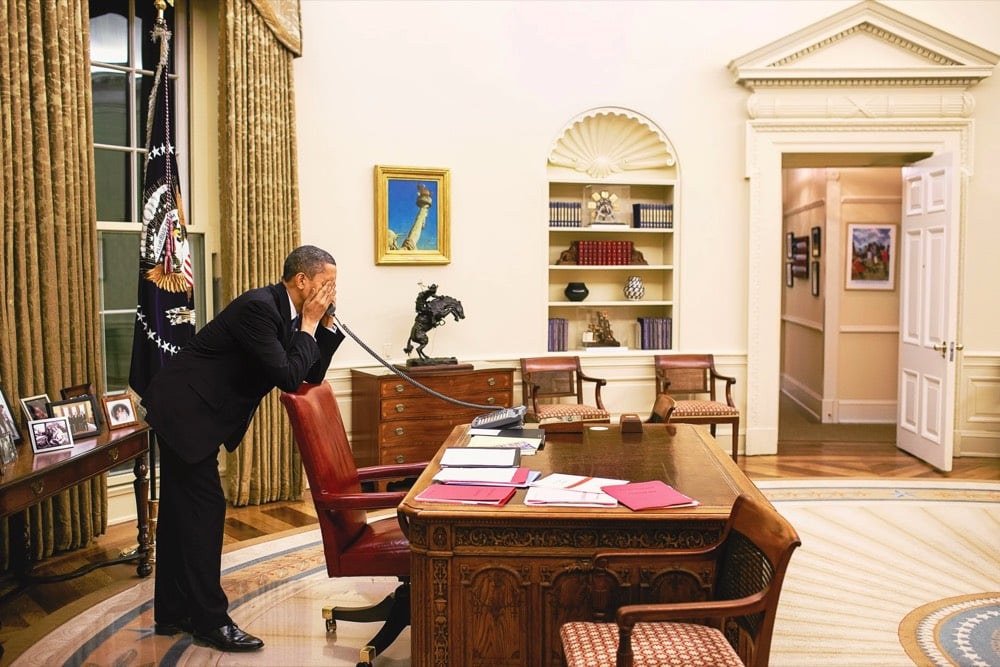
You can read the rest of his answer, including his thoughts on “the tyranny of selfie”. I watched the Pete Souza documentary The Way I See It the other day1 and the wildest scenes were the ones showing a young Obama on the Senate campaign trail just walking around with no one noticing or bothering him. He must miss those days for sure. But I bet it’s also fun to be able to get literally anyone you want on the phone in 30 seconds.
P.P.S. In their excellent 5-part series on Princess Diana, You’re Wrong About’s Michael Hobbes shared his theory that “fame is abuse” and I’ve been thinking about that in relation to every celebrity story I’ve read since.
Pro tip: in the US it’s streaming for free on Peacock, NBC’s new streaming service.↩
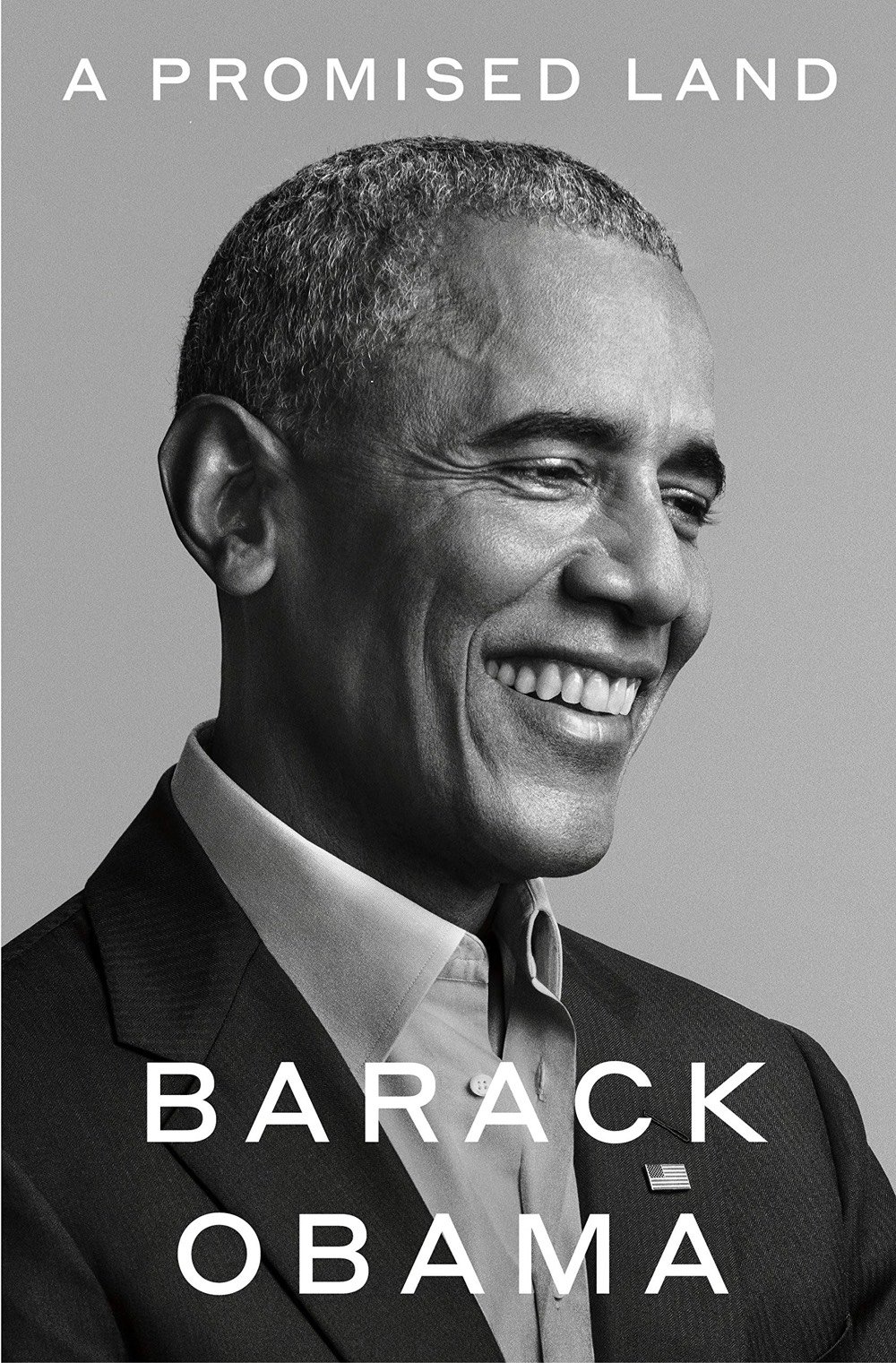
Barack Obama’s forthcoming memoir, A Promised Land, is coming out next month. The New Yorker is running an excerpt of the book, an account of his administration’s struggle to get the Affordable Care Act through Congress.
As time went on, though, it became hard to ignore some of the more troubling impulses driving the movement. As had been true at Palin rallies, reporters at Tea Party events caught attendees comparing me to animals or Hitler. Signs turned up showing me dressed like an African witch doctor with a bone through my nose. Conspiracy theories abounded: that my health-care bill would set up “death panels” to evaluate whether people deserved treatment, clearing the way for “government-encouraged euthanasia,” or that it would benefit illegal immigrants, in the service of my larger goal of flooding the country with welfare-dependent, reliably Democratic voters. The Tea Party also resurrected an old rumor from the campaign: that I was not only Muslim but had actually been born in Kenya, and was therefore constitutionally barred from serving as President. By September, the question of how much nativism and racism explained the Tea Party’s rise had become a major topic of debate on the cable shows-especially after the former President and lifelong Southerner Jimmy Carter offered up the opinion that the extreme vitriol directed toward me was at least in part spawned by racist views.
At the White House, we made a point of not commenting on any of this — and not just because Axe had reams of data telling us that white voters, including many who supported me, reacted poorly to lectures about race. As a matter of principle, I didn’t believe a President should ever publicly whine about criticism from voters — it’s what you signed up for in taking the job — and I was quick to remind both reporters and friends that my white predecessors had all endured their share of vicious personal attacks and obstructionism.
More practically, I saw no way to sort out people’s motives, especially given that racial attitudes were woven into every aspect of our nation’s history. Did that Tea Party member support “states’ rights” because he genuinely thought it was the best way to promote liberty, or because he continued to resent how federal intervention had led to desegregation and rising Black political power in the South? Did that conservative activist oppose any expansion of the social-welfare state because she believed it sapped individual initiative or because she was convinced that it would benefit only brown people who had just crossed the border? Whatever my instincts might tell me, whatever truths the history books might suggest, I knew I wasn’t going to win over any voters by labelling my opponents racist.
The harbingers of Trumpism throughout this piece are difficult to ignore.
A Promised Land is a forthcoming memoir from Barack Obama that he says is “an honest accounting of my presidency, the forces we grapple with as a nation, and how we can heal our divisions and make democracy work for everybody”. Here’s the official description of the book:
In the stirring, highly anticipated first volume of his presidential memoirs, Barack Obama tells the story of his improbable odyssey from young man searching for his identity to leader of the free world, describing in strikingly personal detail both his political education and the landmark moments of the first term of his historic presidency — a time of dramatic transformation and turmoil.
Obama takes readers on a compelling journey from his earliest political aspirations to the pivotal Iowa caucus victory that demonstrated the power of grassroots activism to the watershed night of November 4, 2008, when he was elected 44th president of the United States, becoming the first African American to hold the nation’s highest office.
Reflecting on the presidency, he offers a unique and thoughtful exploration of both the awesome reach and the limits of presidential power, as well as singular insights into the dynamics of U.S. partisan politics and international diplomacy.
First and foremost, I hoped to give an honest rendering of my time in office — not just a historical record of key events that happened on my watch and important figures with whom I interacted but also an account of some of the political, economic, and cultural crosscurrents that helped determine the challenges my administration faced and the choices my team and I made in response. Where possible, I wanted to offer readers a sense of what it’s like to be the president of the United States; I wanted to pull the curtain back a bit and remind people that, for all its power and pomp, the presidency is still just a job and our federal government is a human enterprise like any other, and the men and women who work in the White House experience the same daily mix of satisfaction, disappointment, office friction, screwups, and small triumphs as the rest of their fellow citizens. Finally, I wanted to tell a more personal story that might inspire young people considering a life of public service: how my career in politics really started with a search for a place to fit in, a way to explain the different strands of my mixed-up heritage, and how it was only by hitching my wagon to something larger than myself that I was ultimately able to locate a community and purpose for my life.
You can even listen to Obama read the excerpt in an embedded audio player.
At John Lewis’s funeral yesterday, Barack Obama delivered a eulogy for his friend and mentor, praising him for his achievements in the struggle for civil rights. He also took the opportunity to suggest what politicians might do to honor Lewis and to continue his struggle, beyond just words. From the text of his speech:
If politicians want to honor John, and I’m so grateful for the legacy of work of all the Congressional leaders who are here, but there’s a better way than a statement calling him a hero. You want to honor John? Let’s honor him by revitalizing the law that he was willing to die for. And by the way, naming it the John Lewis Voting Rights Act, that is a fine tribute. But John wouldn’t want us to stop there, trying to get back to where we already were. Once we pass the John Lewis Voting Rights Act, we should keep marching to make it even better.
By making sure every American is automatically registered to vote, including former inmates who’ve earned their second chance.
By adding polling places, and expanding early voting, and making Election Day a national holiday, so if you are someone who is working in a factory, or you are a single mom who has got to go to her job and doesn’t get time off, you can still cast your ballot.
By guaranteeing that every American citizen has equal representation in our government, including the American citizens who live in Washington, D.C. and in Puerto Rico. They are Americans.
By ending some of the partisan gerrymandering — so that all voters have the power to choose their politicians, not the other way around.
And if all this takes eliminating the filibuster — another Jim Crow relic — in order to secure the God-given rights of every American, then that’s what we should do.
“You create this world where you’re not just militarizing the police — you equip the police like soldiers, you train the police like soldiers. Why are you surprised when they act like soldiers?” Rizer, a former police officer and soldier, said. “The mission of the police is to protect and serve. But the premise of the soldier is to engage the enemy in close combat and destroy them. When you blur those lines together with statements like that … It’s an absolute breakdown of civil society.”
American police officers generally believe that carrying military equipment and wearing military gear makes them feel like they can do more, and that it makes them scarier, Rizer’s research has found. Officers even acknowledge that acting and dressing like soldiers could change how the public feels about them. But “they don’t care,” he said.
Mr. Obama ordered a review of the Pentagon program in late 2014 after the police responded to protests with armored vehicles, snipers and riot gear. The images of police officers with military gear squaring off against protesters around the country angered community activists who said law enforcement agencies were reacting disproportionately.
In addition to the prohibitions on certain military surplus gear, he added restrictions on transferring some weapons and devices, including explosives, battering rams, riot helmets and shields.
The Pentagon said 126 tracked armored vehicles, 138 grenade launchers and 1,623 bayonets had been returned since Mr. Obama prohibited their transfer.
In 2017, Donald Trump fully restored the practice of transferring military goods to police, grenade launchers and all.
A recent study show that, under the Pentagon’s 1033 program, enacted in 1997, the value of military weapons, gear and equipment transferred to local cops did not exceed $34 million annually until 2010, the second year of the Obama administration, when it nearly tripled to more than $91 million. By 2014, the year that Michael Brown was shot down — and when the full Congress, including 32 members of the Congressional Black Caucus, rejected a bill that would have shut down the 1033 program — Obama was sending three quarters of a billion dollars, more than $787 million a year, in battlefield weaponry to local police departments. In other words, President Obama oversaw a 24-fold (2,400%) increase in the militarization of local police between 2008 and 2014. Even with the scale-back announced in 2015, Obama still managed to transfer a $459 million arsenal to the cops — 14 times as much weapons of terror and death than President Bush gifted to the local police at his high point year of 2008.
As he does every so often, President Obama shared a list of the books that he’s reading this summer in this Facebook post. I am not ashamed to admit that Obama’s recs have pushed me to read quite a few books, including Pachinko and the Three-Body Problem trilogy, and not once have I been disappointed. This time around, he recommends anything and everything by Toni Morrison and a few other things.
Exhalation by Ted Chiang is a collection of short stories that will make you think, grapple with big questions, and feel more human. The best kind of science fiction.
Wolf Hall, Hilary Mantel’s epic fictionalized look at Thomas Cromwell’s rise to power, came out in 2009, but I was a little busy back then, so I missed it. Still great today.
Lab Girl by Hope Jahren is a beautifully written memoir about the life of a woman in science, a brilliant friendship, and the profundity of trees. Terrific.
I still recommend Wolf Hall (and her follow-up, Bring Up the Bodies) to almost everyone who asks me what they should read next and am looking forward to tackling Chiang’s collection soon.
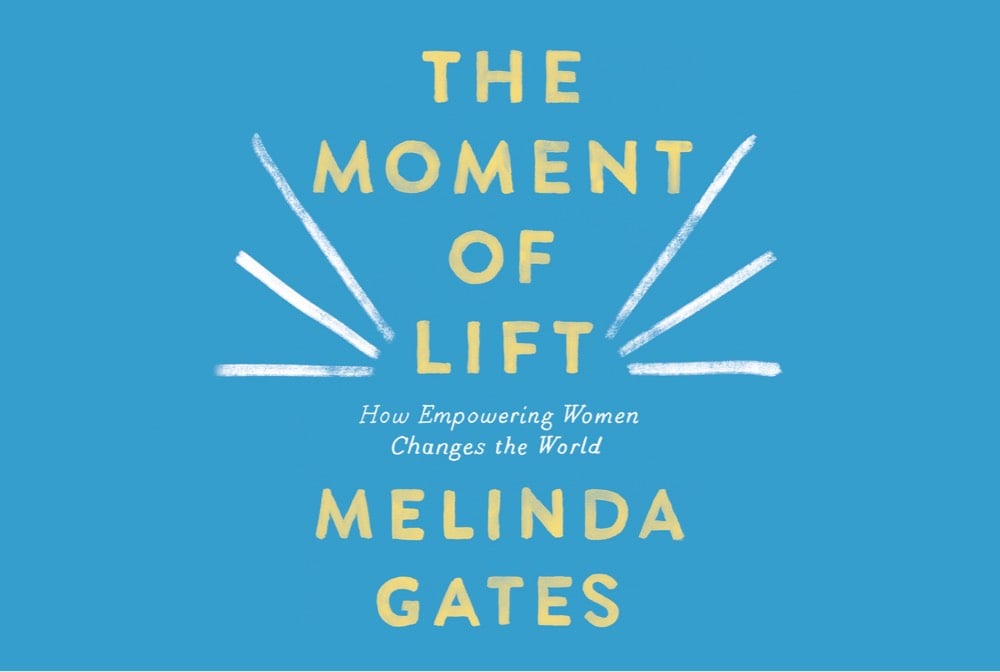
When you lift up women, you lift up everybody — families, communities, entire countries. That’s not just the right approach; it’s backed up by research and countless real-world examples. In her book, Melinda tells the stories of the inspiring people she’s met through her work all over the world, digs into the data, and powerfully illustrates issues that need our attention — from child marriage to gender inequity in the workplace. I’ve called Melinda an impatient optimist and that’s what she delivers here — the urgency to tackle these problems and the unwavering belief that solving them is indeed possible.
In my travels, I’ve learned about hundreds of millions of women who want to decide for themselves whether and when to have children, but they can’t. They have no access to contraceptives. And there are many other rights and privileges that women and girls are denied: The right to decide whether and when and whom to marry. The right to go to school. Earn an income. Work outside the home. Walk outside the home. Spend their own money. Shape their budget. Start a business. Get a loan. Own property. Divorce a husband. See a doctor. Run for office. Ride a bike. Drive a car. Go to college. Study computers. Find investors. All these rights are denied to women in some parts of the world. Sometimes these rights are denied under law, but even when they’re allowed by law, they’re still often denied by cultural bias against women.
Obama also recommends Pachinko by Min Jin Lee, a book I’ve been curious about ever since it was published. Friends have recommended it and the cover always catches my eye in the bookstore even though I’m never specifically looking for it. I don’t even know why I’ve been resisting it…just ordered it!
President Obama. That two-word phrase still fills me with so many conflicting emotions that I can’t even process it. I imagine it’s the same way for a lot of other people (on both sides of the political spectrum).↩
This year, Obama also shared his favorite movies and songs. The movie list contains some pretty interesting entries: Annihilation, The Death of Stalin, Shoplifters, Won’t You Be My Neighbor. I wonder if he sees these in the theater or via Netflix/Apple/Amazon or he just gets a ton of screeners from the studios?
And Mr. President, let me know if you ever want to contribute a guest media diet post…I will try to squeeze you into my editorial calendar.
Americanah by Chimamanda Ngozi Adichie
From one of the world’s great contemporary writers comes the story of two Nigerians making their way in the U.S. and the UK, raising universal questions of race and belonging, the overseas experience for the African diaspora, and the search for identity and a home.
With the end of summer approaching (**heavy sobbing**), Obama posted a list of books he’s personally been reading over the past few months.
Tara Westover’s Educated is a remarkable memoir of a young woman raised in a survivalist family in Idaho who strives for education while still showing great understanding and love for the world she leaves behind.
Set after WWII, Warlight by Michael Ondaatje is a meditation on the lingering effects of war on family.
With the recent passing of V.S. Naipaul, I reread A House for Mr Biswas, the Nobel Prize winner’s first great novel about growing up in Trinidad and the challenge of post-colonial identity.
An American Marriage by Tayari Jones is a moving portrayal of the effects of a wrongful conviction on a young African-American couple.
Factfulness by Hans Rosling, an outstanding international public health expert, is a hopeful book about the potential for human progress when we work off facts rather than our inherent biases.
President Obama is heading to Africa this week for the first time since he left office. In preparation, he shared a recommended summer reading list that’s heavy on African authors. Here’s the full list:
Things Fall Apart by Chinua Achebe
A true classic of world literature, this novel paints a picture of traditional society wrestling with the arrival of foreign influence, from Christian missionaries to British colonialism. A masterpiece that has inspired generations of writers in Nigeria, across Africa, and around the world.
A Grain of Wheat by Ngugi wa Thiong’o
A chronicle of the events leading up to Kenya’s independence, and a compelling story of how the transformative events of history weigh on individual lives and relationships.
Long Walk to Freedom by Nelson Mandela
Mandela’s life was one of the epic stories of the 20th century. This definitive memoir traces the arc of his life from a small village, to his years as a revolutionary, to his long imprisonment, and ultimately his ascension to unifying President, leader, and global icon. Essential reading for anyone who wants to understand history — and then go out and change it.
Americanah by Chimamanda Ngozi Adichie
From one of the world’s great contemporary writers comes the story of two Nigerians making their way in the U.S. and the UK, raising universal questions of race and belonging, the overseas experience for the African diaspora, and the search for identity and a home.
The Return by Hisham Matar
A beautifully-written memoir that skillfully balances a graceful guide through Libya’s recent history with the author’s dogged quest to find his father who disappeared in Gaddafi’s prisons.
The World As It Is by Ben Rhodes
It’s true, Ben does not have African blood running through his veins. But few others so closely see the world through my eyes like he can. Ben’s one of the few who’ve been with me since that first presidential campaign. His memoir is one of the smartest reflections I’ve seen as to how we approached foreign policy, and one of the most compelling stories I’ve seen about what it’s actually like to serve the American people for eight years in the White House.
Each of us has a deep need to forgive and to be forgiven. After much reflection on the process of forgiveness, Tutu has seen that there are four important steps to healing: Admitting the wrong and acknowledging the harm; Telling one’s story and witnessing the anguish; Asking for forgiveness and granting forgiveness; and renewing or releasing the relationship. Forgiveness is hard work. Sometimes it even feels like an impossible task. But it is only through walking this fourfold path that Tutu says we can free ourselves of the endless and unyielding cycle of pain and retribution.
Shade is a portrait in Presidential contrasts, telling the tale of the Obama and Trump administrations through a series of visual juxtapositions. Here, more than one hundred of Souza’s unforgettable images of President Obama deliver new power and meaning when framed by the tweets, news headlines, and quotes that defined the first 500 days of the Trump White House.
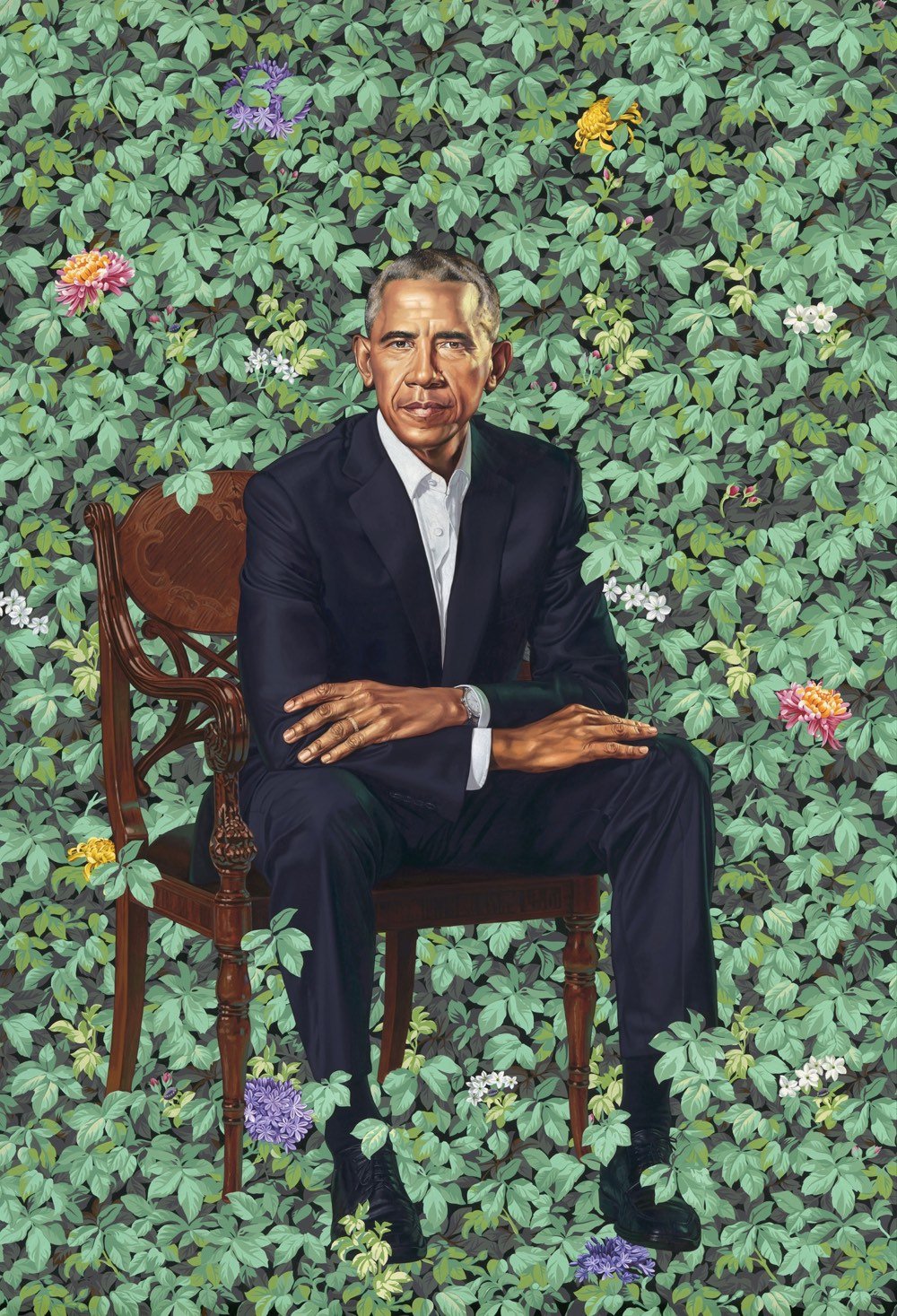
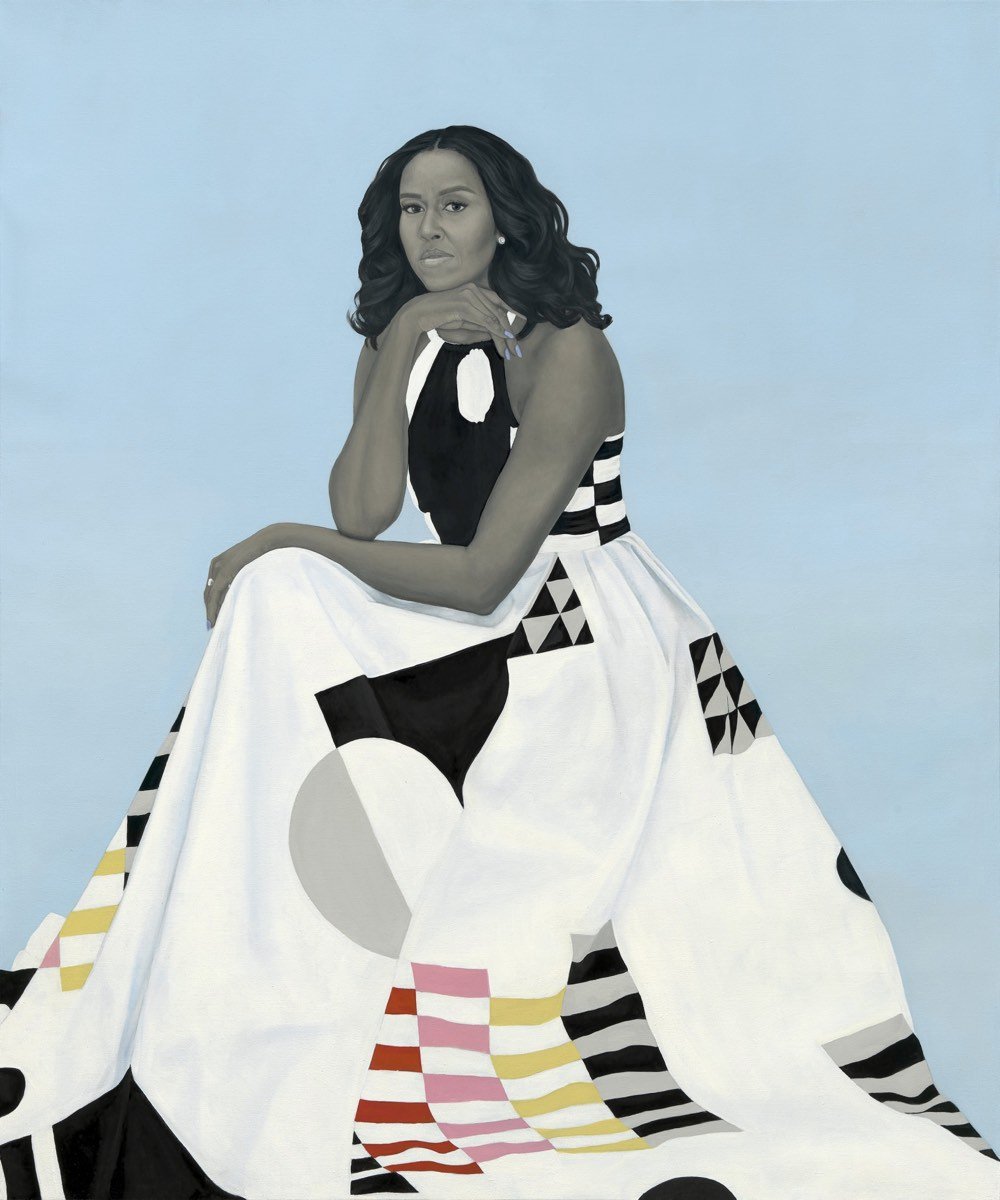
The Smithsonian’s National Portrait Gallery commissions paintings of each outgoing President and First Lady. The Obamas selected a pair of black artists, Kehinde Wiley and Amy Sherald, to paint their portraits, which were unveiled today. From Colossal:
Wiley’s depiction of President Obama features the artist’s signature style of richly-hued background patterns setting a vibrant symbolic environment for the portrait’s subject. President Obama is surrounded by a carefully selected variety of foliage: jasmine, which represents Hawaii; African blue lilies for his father’s Kenyan heritage; and Chicago’s official flower, the chrysanthemum. For Mrs. Obama’s portrait, Sherald engaged her distinctive combination of depicting skin tone in grayscale, offset by the sharply rendered full-color fabric of Mrs. Obama’s floor-length dress.
David Letterman is returning to TV with a Netflix series called My Next Guest Needs No Introduction. There will be six 60-minute shows in the series and he’ll interview only one guest per show. The guests will be George Clooney, Malala Yousafzai, Jay-Z, Tina Fey, Howard Stern and President Barack Obama. The Obama show is first up on January 12, with an additional show following each month after that.
This is a big departure from how Netflix normally releases shows. Usually they put all the episodes of a series out there at once. Is this the first instance of them releasing episodes one at a time?
For all eight years of Barack Obama’s Presidency, Pete Souza was Chief Official White House Photographer and took over 2 million photos of the President and his activities in office. Souza has collected some of those photos into a book: Obama: An Intimate Portrait, out in November.
Obama: An Intimate Portrait reproduces Souza’s most iconic photographs in exquisite detail, more than three hundred in all. Some have never been published. These photographs document the most consequential hours of the Presidency — including the historic image of President Obama and his advisors in the Situation Room during the bin Laden mission — alongside unguarded moments with the President’s family, his encounters with children, interactions with world leaders and cultural figures, and more.
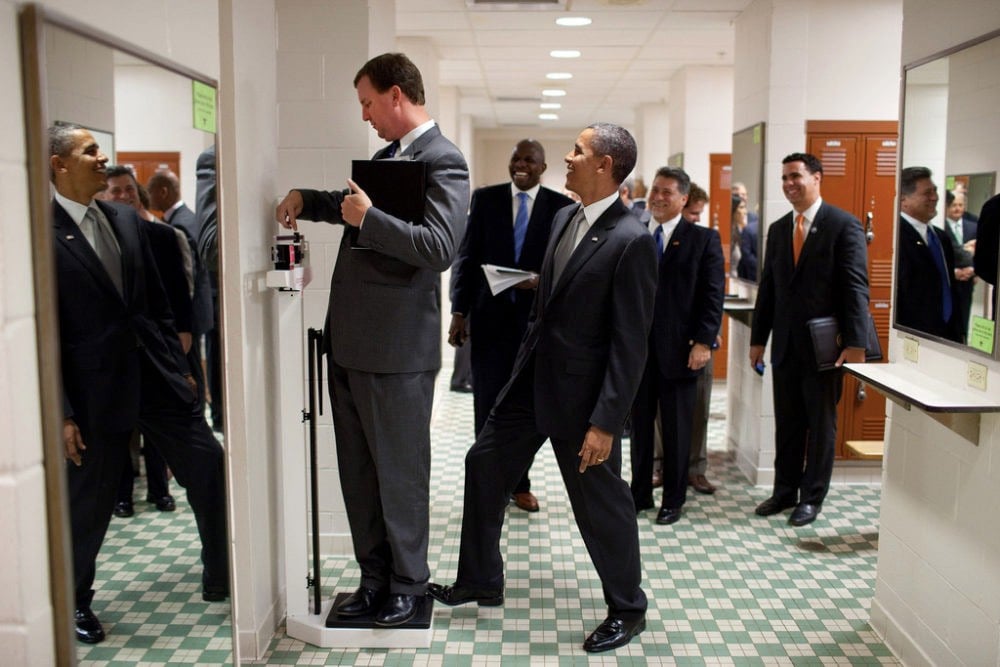
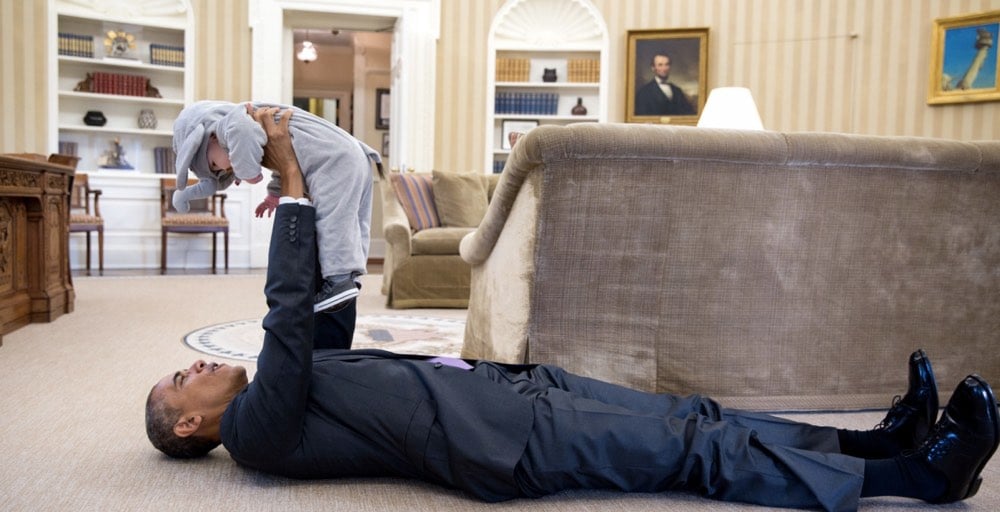
It’s impossible to pick a favorite photo of Souza’s, but these two are right near the top:
Last Friday, seven days before his departure from the White House, Mr. Obama sat down in the Oval Office and talked about the indispensable role that books have played during his presidency and throughout his life — from his peripatetic and sometimes lonely boyhood, when “these worlds that were portable” provided companionship, to his youth when they helped him to figure out who he was, what he thought and what was important.
During his eight years in the White House — in a noisy era of information overload, extreme partisanship and knee-jerk reactions — books were a sustaining source of ideas and inspiration, and gave him a renewed appreciation for the complexities and ambiguities of the human condition.
During his tenure in office, the President publicly recommended 86 different books, compiled into one list by Entertainment Weekly. Here are several of them, some of which I have also read and recommended on this very site:
Update: I’m getting some pushback on my assertion that Obama was “our most widely read US President”. Since “widely read” seems to have multiple meanings, I should have been more explicit on what I meant. I didn’t mean that he had written the most books read by the most people (that is perhaps Teddy Roosevelt) or had read the most books (George W. Bush and Roosevelt were both voracious readers, as were Jefferson, Clinton, and Lincoln). I meant that compared to previous Presidents, Obama has read books from the widest spectrum of viewpoints and authors. Among the list of 86 (which are not the books he read in office but just the ones he publicly recommended) are books on politics (of course), science, economics, sports, and medicine, some classics, children’s books, plenty of fiction, and science fiction. Most importantly, the list includes many books written by women and persons of color. Judging by this (partial) George W. Bush reading list (which includes only two books written by women (one of whom is his daughter)), outside of Clinton and perhaps Carter, I would wager very few Presidents have read many books by women and no more than a token few books by black authors.
Robert Hickey is the deputy director of The Protocol School of Washington, which provides etiquette and protocol training. In his book Honor & Respect, he covers the “correct written and oral forms of address for everyone from local officials to foreign heads of state”. For The President of the United States, the proper forms of address are:
Letter salutation: Dear Mr. President:
Complimentary close: Most respectfully,
Announced: The President of the United States
Introduction: Mr. President, may I present …
Conversation: Mr. President
“While it is common practice in the media and elsewhere to address and identify former presidents as ‘President (Name),’ this is a mistake,” said Hickey. “Serving as President of the United States does not grant one the personal rank of ‘President’ for life. The office of President is a one-person-at-a-time role that a specific individual holds and then hands off to the next person.”
“Courtesies, honors, and special forms of address are symbols of the power of the office. They belong to the office and to the citizens, not former office holders.”
Hickey recommends “The Honorable” as an official title (e.g. “The Honorable Jimmy Carter”) and “Mr./Ms.” for conversation or salutation (e.g. “Mr. Clinton”).
While Donald Trump was officially sworn in as the President on Friday, this site will continue to refer to Trump as “Trump” or “Donald Trump”1 and not as “President Trump”. Again and again, almost to a pathological degree, Trump has demonstrated, in word and deed, that he has not earned and does not deserve our respect and the title of his office. It’s a small protest by a small “media outlet”, perhaps petty, but as long as the First Amendment still applies, I will publish what I like on my own damn website.
And since I am all for the “one-person-at-a-time” rule, this site will also continue to refer to Barack Obama as “President Obama”. He’s earned it many times over.
Or even “Fuckface Von Clownstick”. We don’t stand on ceremony here. But I won’t call him just “Donald”…that would be disrespectful to greater Donalds like Sutherland, Glover, and Duck.↩
The Presidential Medal of Freedom is the Nation’s highest civilian honor, presented to individuals who have made especially meritorious contributions to the security or national interests of the United States, to world peace, or to cultural or other significant public or private endeavors.
Many of the honorees have dedicated their lives to science, technology, and social justice, including:
Margaret H. Hamilton led the team that created the on-board flight software for NASA’s Apollo command modules and lunar modules.
Rear Admiral Grace Hopper, known as “Amazing Grace” and “the first lady of software,” was at the forefront of computers and programming development from the 1940s through the 1980s.
Bill and Melinda Gates established the Bill & Melinda Gates Foundation in 2000 to help all people lead healthy, productive lives. In developing countries, the foundation focuses on improving people’s health and giving them the chance to lift themselves out of hunger and extreme poverty.
Kareem Abdul-Jabbar is the National Basketball Association’s all-time leading scorer who helped lead the Los Angeles Lakers to five championships and the Milwaukee Bucks to another.
Ellen DeGeneres is an award-winning comedian who has hosted her popular daytime talk show, The Ellen DeGeneres Show, since 2003 with her trademarked humor, humility, and optimism.
Maya Lin is an artist and designer who is known for her work in sculpture and landscape art. She designed the Vietnam Veterans Memorial in Washington D.C. and since then has pursued a celebrated career in both art and architecture.
Obama has made the most awards of the medal by any President since it was established by President Kennedy in 1963. Notable recipients though the years include Thurgood Marshall, Kennedy himself (posthumously), Cesar Chavez, Mother Teresa, Aretha Franklin, Stephen Hawking, Maya Angelou, Mies van der Rohe, Lucille Ball, Yo-Yo Ma, Julia Child, and Rosa Parks.
It is important these days to remember the good work, the good deeds, and the good fight being fought by many creative, fierce, dynamic, and rational people who need our help and attention more than ever.
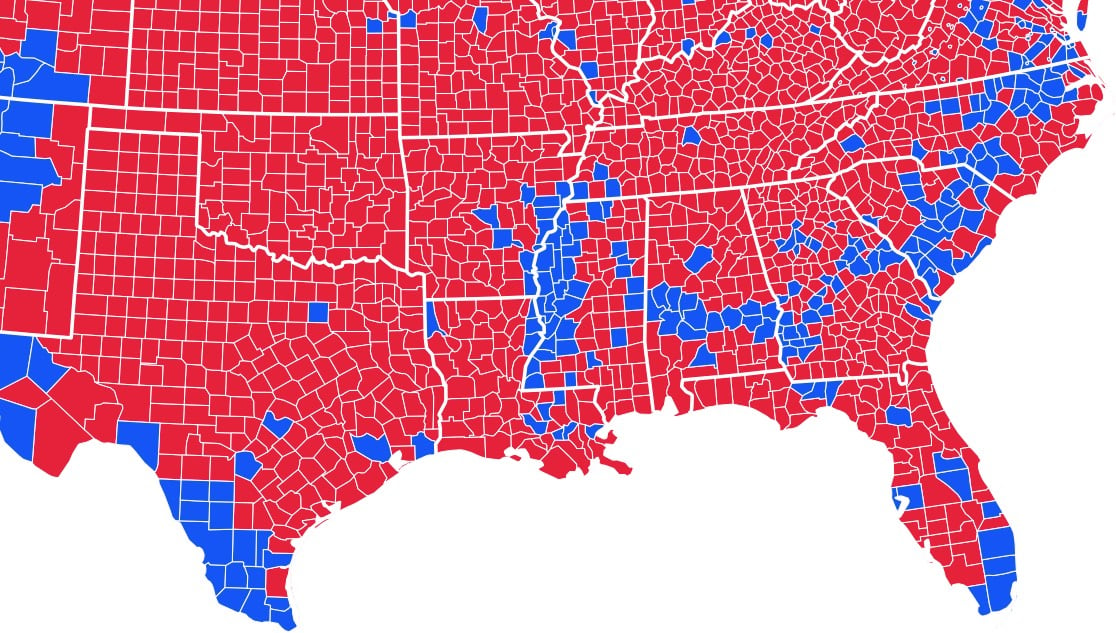
That’s a portion of the 2012 US Presidential election map of the southern states broken down by county: blue ones went Barack Obama’s way and counties in red voted for Mitt Romney.
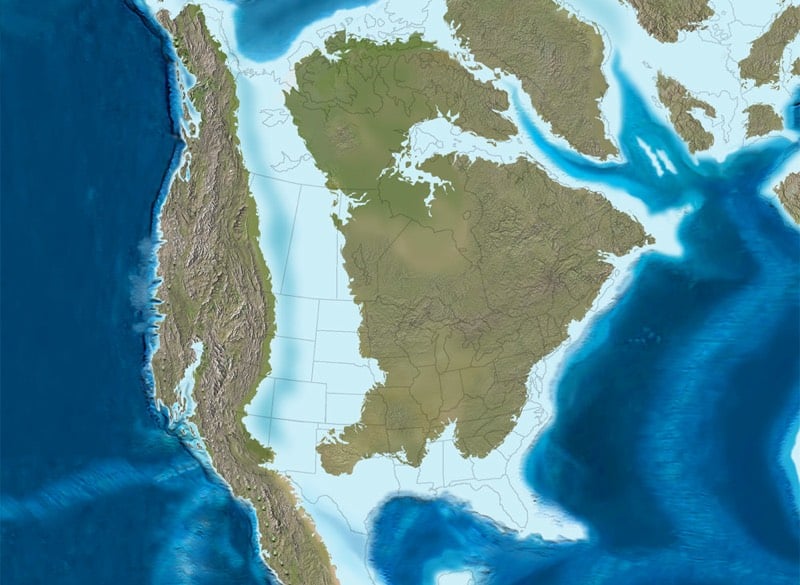
But let’s go back to the Cretaceous Period, which lasted from 145 million years ago to 65 million years ago. Back then, the coastline of what is now North America looked like this:
Along that ancient coastline of a shallow sea, plankton with carbonate skeletons lived and died in massive numbers, accumulating into large chalk formations on the bottom of the sea. When the sea level dropped and the sea drained through the porous chalk, rich bands of soil were left right along the former coastline. When that area was settled and farmed in the 19th century, that rich soil was perfect for growing cotton. And cotton production was particularly profitable, so enslaved people were heavily used in those areas.
McClain, quoting from Booker T. Washington’s autobiography, Up From Slavery, points out: “The part of the country possessing this thick, dark and naturally rich soil was, of course, the part of the South where the slaves were most profitable, and consequently they were taken there in the largest numbers.” After the Civil War, a lot of former slaves stayed on this land, and while many migrated North, their families are still there.
The counties in which slave populations were highest before the Civil War are still home to large African American populations, which tend to vote for Democratic presidential candidates, even as the whiter counties around them vote for Republicans. The voting pattern of those counties on the map follows the Cretaceous coastline of 100 million years ago — the plankton fell, the cotton grew, the enslaved people bled into that rich soil, and their descendants later helped a black man reach the White House.
As a chaser to the last post, here’s Hillary Clinton’s latest campaign commercial. This is right up there with the best political ads I’ve seen. Obama’s words are taken from his speech to the Congressional Black Caucus last month.
Our work’s not done. But if we are going to advance the cause of justice, and equality, and prosperity, and freedom, then we also have to acknowledge that even if we eliminated every restriction on voters, we would still have one of the lowest voting rates among free peoples. That’s not good, that is on us.
And I am reminded of all those folks who had to count bubbles in a bar of soap, beaten trying to register voters in Mississippi. Risked everything so that they could pull that lever. So, if I hear anybody saying their vote does not matter, that it doesn’t matter who we elect, read up on your history. It matters. We’ve got to get people to vote.
In fact, if you want to give Michelle and me a good sendoff, and that was a beautiful video, but don’t just watch us walk off into the sunset now, get people registered to vote. If you care about our legacy, realize everything we stand for is at stake, on the progress we have made is at stake in this election.
My name may not be on the ballot, but our progress is on the ballot. Tolerance is on the ballot. Democracy is on the ballot. Justice is on the ballot. Good schools are on the ballot. Ending mass incarceration, that’s on the ballot right now.
In the latest issue of The Economist, President Obama wrote a letter about the “four crucial areas of unfinished business in economic policy” that his successor will have to deal with.
Wherever I go these days, at home or abroad, people ask me the same question: what is happening in the American political system? How has a country that has benefited-perhaps more than any other-from immigration, trade and technological innovation suddenly developed a strain of anti-immigrant, anti-innovation protectionism? Why have some on the far left and even more on the far right embraced a crude populism that promises a return to a past that is not possible to restore — and that, for most Americans, never existed at all?
It’s true that a certain anxiety over the forces of globalisation, immigration, technology, even change itself, has taken hold in America. It’s not new, nor is it dissimilar to a discontent spreading throughout the world, often manifested in scepticism towards international institutions, trade agreements and immigration. It can be seen in Britain’s recent vote to leave the European Union and the rise of populist parties around the world.
Much of this discontent is driven by fears that are not fundamentally economic. The anti-immigrant, anti-Mexican, anti-Muslim and anti-refugee sentiment expressed by some Americans today echoes nativist lurches of the past — the Alien and Sedition Acts of 1798, the Know-Nothings of the mid-1800s, the anti-Asian sentiment in the late 19th and early 20th centuries, and any number of eras in which Americans were told they could restore past glory if they just got some group or idea that was threatening America under control. We overcame those fears and we will again.
Look at Obama, busting out the Know-Nothings like it ain’t nothing.
More than “hope,” Obama’s candidacy promised “one America.” It is the deep irony of his presidency, and for Obama himself probably the tragedy, that the past eight years saw the country fiercely divided against itself. The president still managed to get a ridiculous amount done, advancing an unusually progressive agenda. But however Americans end up remembering the Obama years decades from now, one thing we can say for sure is that it did not feel, at the time, like an unmitigated liberal triumph. It felt like a cold civil war.
Or a never-breaking political fever. There was the tea-party rage and Occupy Wall Street. Every other week, it seemed, a new shooting. Each movement was met by a countermovement, and yet, somehow, both the left and the right were invigorated, watched over by a president marked so deeply by temperamental centrism even his supporters called him Spock. Whether you noticed or not, our culture was shaken to its core. There was a whole new civil-rights era, both for those whose skin color and for those whose love was long met by prejudice. The first iPhone was released during the 2008 campaign. We got our news from Facebook, debated consent, and took down Bill Cosby. Elon Musk built a spaceship to Mars.
The dude got a lot done, despite a Congress that fought him tooth and nail for all eight years. Writing that just reminded me: Obama’s March nomination of Merrick Garland to the Supreme Court is still pending in the Senate. They’re holding it for a possible Trump-nominated judge.
Early in my presidency, I went to Cairo to make a speech to the Muslim world. And in the afternoon, after the speech, we took helicopters out to the pyramids. And they had emptied the pyramids for us, and we could just wander around for a couple hours [at] the pyramids and the Sphinx. And the pyramids are one of those things that live up to the hype. They’re elemental in ways that are hard to describe. And you’re going to these tombs and looking at the hieroglyphics and imagining the civilization that built these iconic images.
And I still remember it — because I hadn’t been president that long at that point — thinking to myself, There were a lot of people during the period when these pyramids were built who thought they were really important. And there was the equivalent of cable news and television and newspapers and Twitter and people anguishing over their relative popularity or position at any given time. And now it’s all just covered in dust and sand. And all that people know [today] are the pyramids.
Sometimes I carry with me that perspective, which tells me that my particular worries on any given day — how I’m doing in the polls or what somebody is saying about me … for good or for ill — isn’t particularly relevant. What is relevant is: What am I building that lasts?
I particularly enjoyed the part early on about ambition, adversity, and empathy. Oh, this short anecdote from Goodwin about LBJ is great:
L.B.J. had his amphibious car when he was president. He tricked me and took me in his car one day, and the Secret Service collaborated with him. L.B.J., behind the wheel, warned me, “Be careful, we’re going toward a lake. The brakes aren’t working.” Well, we go into the lake: the car became a boat. Then he got so mad at me because I didn’t get scared. I’d figured, He’s not going to die. And he said, “Don’t you Harvard people have enough sense to be scared?”
Has anyone in one of these interviews really pressed Obama on his drone policy? I think it’s the one big stain on his record and would love to hear his personal defense of it in length.
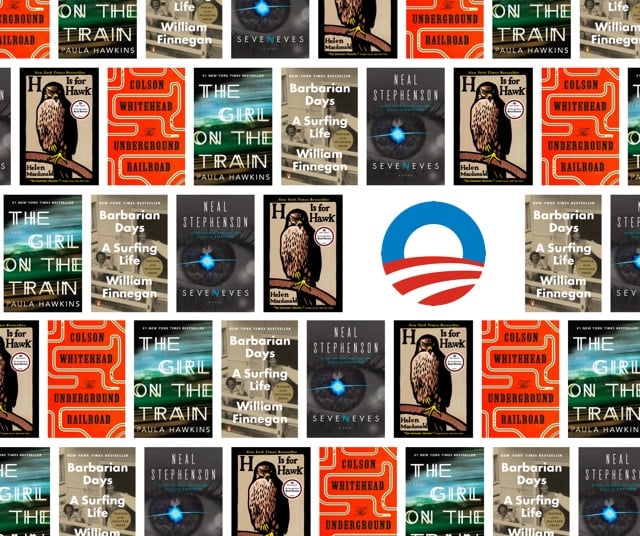
I’m currently reading Seveneves and The Underground Railroad is next. More convinced than ever that a) Barry and I would be good friends if such an opportunity arose, and b) he should be reading kottke.org if he isn’t already. He could peruse it between his fifth and sixth almonds at the end of the day. Think about it, Mr. President.
What a completely delightful video of 106-year-old Virginia McLaurin visiting the White House and meeting President and Mrs. Obama. This is the Webster’s definition of pure joy.
I don’t know much about McLaurin’s life story — she’s originally from South Carolina, first married at 14 — but when she was 10, the Civil War had ended only 55 years earlier. As a child, she likely knew and talked with people who were former slaves. And now she’s dancing with a black President in the White House. The Great Span continues to work its magic.
From the NY Times and Redglass Pictures, a video in which political advisor Mark McKinnon details how to win an election. His short answer: “successful campaigns tell a good story”. My “favorite” part is after discussing his irresponsible fear-mongering campaign for Bush in 2004, McKinnon talks about bowing out of the McCain campaign because he believed Obama was a good man and good for the country and he didn’t want to smear him. Wish he could have moved procuring a conscience up a few years. NSFW if you, like me, see George W. Bush and involuntarily start loudly swearing like a sailor.





Stay Connected