Entries for April 2021
One of the fun things about having a website that’s been running continuously for more than 23 years is that you get to watch the people you featured early in their careers grow and change and do bigger and better things. I’ve been posting filmmaker Casimir Nozkowski’s work on kottke.org since 2009 and now, his first feature-length film, The Outside Story, is set to debut at the end of this month. A short synopsis:
After locking himself out of his apartment, an introverted, heartbroken editor finds himself on an epic journey up, down and around his block with life-altering ramifications.
From the looks of the trailer (embedded above), The Outside Story has the same energy, playfulness, and keen lens into the interplay between humans & their environments as Nozkowski’s shorter work, which is not surprising given how it was filmed and where the inspiration came from. He told me, via email:
This is an indie film in the truest sense. Shot in 16 days on the streets of Brooklyn. It’s the biggest thing I’ve ever done and I’m just trying to get the word out any way I can. It’s loosely inspired by my short doc, 70 Hester Street where I examined my own building and block after years of taking it for granted.
You can watch 70 Hester Street here and The Outside Story will be available for purchase on all the usual streaming services on April 30.
An interview with Roxane Gay about art and art collecting. I love hearing curious and creative people talk about new obsessions – you tend to get a hybrid expert/beginner perspective that’s really valuable.
In 1955, epidemiologist Thomas Francis Jr. announced the results of a field trial of the polio vaccine that Jonas Salk had developed. America erupted in joy.
Now a phalanx of bulky television cameras focussed on Francis as he prepared to report on the efficacy of the vaccine. He had good news to share: to cheers from the audience, he explained that the Salk vaccine was sixty to seventy per cent effective against the most prevalent strain of poliovirus, and ninety per cent effective against the other, less common strains. All this had been shown through what was, at that time, the largest vaccine trial ever conducted.
All afternoon and evening, church bells rang out across America. People flooded into the streets, kissing and embracing; parents hugged their kids with joy and relief. Salk became an instant national hero, turning down the offer of a ticker-tape parade in New York City; President Dwight D. Eisenhower invited him to the White House and, later, asked Congress to award him a Congressional Gold Medal. That night, from the kitchen of a colleague’s house, Salk — whose name was being touted in newspapers, magazines, radio reports, and television news broadcasts around the world — gave his first network-TV interview to Edward R. Murrow, whose show “See It Now” had exposed the tactics of Senator Joseph McCarthy a year earlier. Blushing in admiration, Murrow asked the doctor, “Who owns the patent on this vaccine?” “The people,” Salk said, nobly. “There is no patent. Could you patent the sun?”
In the days that followed, schoolchildren were instructed by their teachers to write thank-you notes to Salk. Universities lined up to offer him honorary degrees. Millions of American doctors, nurses, and parents got down to the serious business of vaccinating their children against polio, using a shot they’d been anticipating for seventeen years.
But the polio vaccine rollout had its challenges, including a manufacturing negligence & oversight failure that resulted in tens of thousands of polio cases in otherwise healthy children.
In May, the polio vaccination drive was temporarily suspended. Leonard Scheele, the U.S. Surgeon General, inspected the facilities of all six vaccine companies and fired the government officials he considered to be culpable; the director of the N.I.H. and the Secretary of Health voluntarily resigned. New safety procedures were developed, including an improved means of filtering the viral mix just before the formaldehyde was added. Better tests were developed to detect live virus, and stricter record-keeping was instituted. The incident could have created a vaccine-hesitancy crisis. But, incredibly, the American public readily accepted the medical establishment’s explanation for the failure, and its pledges to right the situation. The nation’s trust in medical progress and in Dr. Salk was so resolute that, when it was announced that a new, safe polio vaccine was available, parents pushed their children back to the head of the line. It’s hard to imagine such an outcome today.
In their series of short videos called Da Vinci Reborn, Dassault Systemes used their software to virtually recreate some of Leonardo’s most intriguing inventions, like the ornithopter (a bird-like human-powered airplane) and odometer (a device that he may have used in making this overhead map). (via open culture)
Back in the early days of the pandemic when people all over the world were staying inside in an attempt to prevent the spread of Covid-19, Radiohead dug into their vault and started putting classic live concerts up on YouTube in their entirety. Over the course of a few months, they shared more than a dozen concerts, including this one from 1994 and this one from 2018.
Starting last week, the band is once again uploading some more classic concerts “from a life that we all yearn to return to”, citing the science and vaccines that are getting us closer to that. The first show they uploaded (embedded above) is their 2008 show at 93 Feet East, played before just 1500 fans. That show is a bit infamous for Thom Yorke having a tough time playing Videotape (at ~47:00), which difficulty Estelle Caswell explained in her very first episode of Earworm. Anyway, they’re uploading a new show every Friday for the next few weeks — the next show will be Coachella from April 2017 — so check it out.
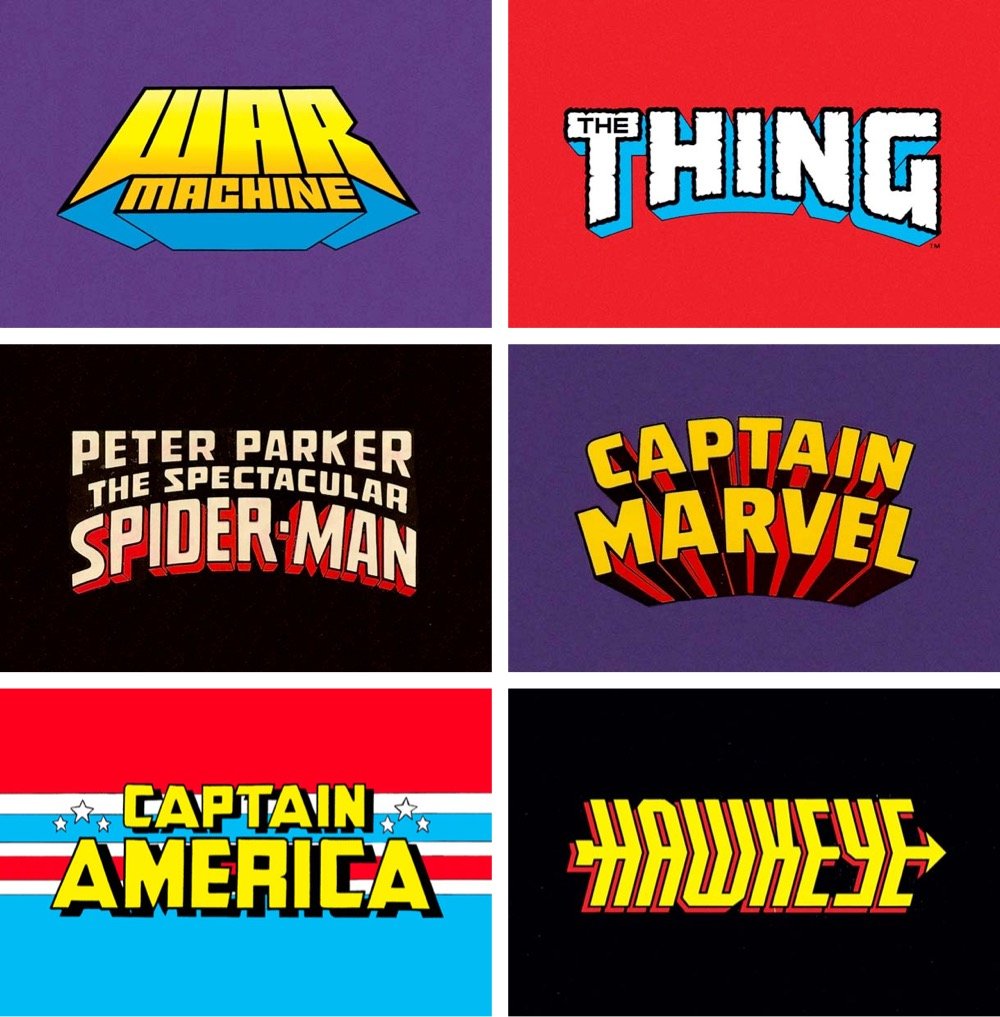
Reagan Ray has compiled a collection of hand-lettered Marvel superhero logos from before the computer animation era. (via print)
Return the National Parks to the Tribes. “All 85 million acres of national-park sites should be turned over to a consortium of federally recognized tribes in the United States.”
The Artifact Artist is a short documentary about urban archaeologist Scott Jordan, who, over the past 50 years in NYC, has dug up all sorts of historical objects that date back decades and centuries, even all the way back to the Revolutionary War. The trailer is above and you can watch the entire short film on Vimeo.
Uprooted from the forests of Connecticut to move to New York City, 9 yr. old Scott Jordan declares “I won’t be a city kid!” 45 yrs. later Scott is an urban archeologist. An Indiana Jones in Gotham. Hand digging out centuries old privies, cisterns and landfills across the five boroughs Scott is uncovering artifacts and preserving New York City history by creating artifact art with the treasures he discovers.
Maybe America Is Racist. “Of all the manufactured hypotheses that attempt to explain these racial disparities, none of them even comes close to the simplest explanation. It’s racism.”
This is a very good and bracing essay from David Roth for Defector about a certain type of knee-jerk libertarian response to the pandemic in the US.
In place of any actually ennobling liberty or more fundamental freedom, contemporary American life mostly offers choices. But since most of these are not really choices at all in any meaningful way, it might be more accurate to say that we’re offered selection. The choice between paying for health insurance and running up six figures of non-dischargeable debt because you got sick, for instance, is honestly less a choice than a hostage situation. But because the second outcome is still extremely possible even if you choose to pay for health insurance, it’s more correct to say that the choice is already made, and that the decision is more about choosing from an array of variously insufficient and predatory options the one whose name or price or risk you like most. Sometimes there isn’t even that, and the choice is a binary one between something and nothing. None of this is really what anyone would choose, but these ugly individuated choices are what we get.
And then:
The broader complacent and unreasoned acceptance that props up our otherwise untenable status quo is shot through all these facile “it’s a private matter and a personal choice” formulations; if you have accepted that mostly useless choices between dreary outcomes are all you could ever get as a citizen in the wealthiest and most powerful country on earth, then you have also accepted that these choices are actually very important, and that making them is the thing makes you free. None of these personal choices actually make anything better for the person making them. In the case of the vaccine, those choices have devastating downstream impacts for all the people who glance off the choice-maker as they carve their personal hero’s journeys through the world. None of this matters as much as the idea that the choice is theirs to make.
In the village of Al-Qaramous, Egypt, local businesses and artisans are carrying on a papyrus-making process that dates back 5000 years, updated with some modern techniques to speed up the process and improve the product.
This new video from Kurzgesagt takes a look at the possible role of nuclear energy in helping to curb the effects of our climate emergency.
Do we need nuclear energy to stop climate change? More and more voices from science, environmental activists and the press have been saying so in recent years — but this comes as a shock to those who are fighting against nuclear energy and the problems that come with it. So who is right? Well — it is complicated.
Rebecca Tuhus-Dubrow wrote about climate change activists who are embracing nuclear energy for the New Yorker back in February.
In the course of years, Hoff grew increasingly comfortable at the plant. She switched roles, working in the control room and then as a procedure writer, and got to know the workforce — mostly older, avuncular men. She began to believe that nuclear power was a safe, potent source of clean energy with numerous advantages over other sources. For instance, nuclear reactors generate huge amounts of energy on a small footprint: Diablo Canyon, which accounts for roughly nine per cent of the electricity produced in California, occupies fewer than six hundred acres. It can generate energy at all hours and, unlike solar and wind power, does not depend on particular weather conditions to operate. Hoff was especially struck by the fact that nuclear-power generation does not emit carbon dioxide or the other air pollutants associated with fossil fuels. Eventually, she began to think that fears of nuclear energy were not just misguided but dangerous. Her job no longer seemed to be in tension with her environmentalist views. Instead, it felt like an expression of her deepest values.
For more reading on the topic, check out Kurzgesagt’s list of source materials used to make their video.
Before her appearance in Star Wars, Carrie Fisher had only appeared in one film (Hal Ashby’s Shampoo) and for the role of Leia, she was going up against several other great actresses, including Karen Allen and Jodie Foster. In this footage of Fisher’s screen test from late 1975/early 1976, where she’s reading a scene with Harrison Ford about the Death Star plans, you get a tantalizing glimpse of why she ended up winning the part.
See also Mark Hamill’s screen test and several other Star Wars screen tests, including this one of Kurt Russell, who auditioned for the roles of Han and Luke.
A24 and David Lowery have adapted the Middle English poem Sir Gawain and the Green Knight for the screen. The film was scheduled to be released early last year, but the pandemic intervened; it’s now due out at the end of July.
An epic fantasy adventure based on the timeless Arthurian legend, The Green Knight tells the story of Sir Gawain (Dev Patel), King Arthur’s reckless and headstrong nephew, who embarks on a daring quest to confront the eponymous Green Knight, a gigantic emerald-skinned stranger and tester of men. Gawain contends with ghosts, giants, thieves, and schemers in what becomes a deeper journey to define his character and prove his worth in the eyes of his family and kingdom by facing the ultimate challenger. From visionary filmmaker David Lowery comes a fresh and bold spin on a classic tale from the knights of the round table.
I read this story (Simon Armitage’s translation) to my kids a year or two back and it wasn’t our absolute favorite (it paled in comparison to our previous read, Emily Wilson’s The Odyssey), so I’m curious to see how it works as a film.
Love it or hate it, we all know what Wes Anderson movies look like by now — the vibrant color palette, use of symmetry, lateral tracking shots, slow motion, etc. etc. In this video, Thomas Flight explores why Anderson uses these stylistic elements to tell affective and entertaining stories.
But what is at the core of those individual stylistic decisions? Why does Anderson choose those things? Why do all those things seem to form a very specific unified whole? And what function, if any, do they serve in telling the kinds of stories Wes wants to tell?
The sources for the video are listed in the description; one I particularly enjoyed was David Bordwell writing about planimetric composition. (via open culture)
Last month I shared a video of the Earth rising over the surface of the Moon captured by Japan’s Kaguya orbiter. It’s a good clip but quite short and over-narrated. Seán Doran took several Earthrise & Earthset sequences filmed by Kaguya, remastered & upsampled them to 4K resolution, and stitched them together into this wonderful video, set to music by Jesse Gallagher. One of the sequences, which begins around the 5-minute mark, captures a solar eclipse of the Sun by the rising Earth. I hadn’t seen this footage before and had to pick my jaw up off the floor — absolutely spectacular.
The first genetically modified mosquitos will be released in Florida this spring. “When released GM males breed with wild female mosquitoes, the resulting generation does not survive into adulthood, reducing the overall population.”
Educator and structural engineer Nehemiah Mabry sat down with Wired to talk about all the different kinds of bridges in the world (cable-stayed, suspension, arch, truss) and which types are used in which situations.
See also Fantastic 3-D Animation of How Medieval Bridges Were Built. (via the kid should see this)
A short compilation of research on how being wealthy affects people’s psychology. “To understand how money affects politics, we need to understand how money affects psychology.”
In 2018, Tim Wardle’s fantastic documentary Three Identical Strangers introduced us to a set of identical triplets who were separated at birth. The film goes deeper into the story (and into nature vs nurture) and I don’t want to spoil it too much, but after it was released, some people began to suspect that they might have identical siblings out there themselves. One of those people was Michele Mordkoff, who found she had a twin sister and got in touch with Wardle, who was there at their reunion and made this short film about it (major TIS spoilers in that first paragraph).
“She is a stranger to me, but she’s also a part of me-I mean, we shared a womb,” says Michele in the film after she meets her twin for the first time.
“I’ve been struck by how instinctive, magical, and moving genetic reunions can be,” Wardle told The Atlantic in a recent interview. “This isn’t to denigrate non-genetic/adoptive relationships, which can also be wonderful, but there’s something extraordinary and almost transcendent about observing the interaction between two people who have never met before but share the same DNA. It defies rational explanation.”
If you can’t get enough of twin reunions, here are a few more to watch.
Olga Khazan, writing for the NY Times in an essay adapted from her book Weird, tells us that if we’re not satisfied with our personalities, we can change them.
After all, the person who emerges from quarantine doesn’t have to be the same old you. Scientists say that people can change their personalities well into adulthood. And what better time for transformation than now, when no one has seen you for a year, and might have forgotten what you were like in the first place?
It was long thought that people just are a certain way, and they’ll remain that way forever. The Greek physician Hippocrates believed that people’s personalities were governed by the amounts of phlegm, blood, black bile and yellow bile that flowed through their bodies.
Modern science, of course, has long since discarded notions of bile and humors. And now, it appears the idea that our personalities are immutable is also not quite true. Researchers have found that adults can change the five traits that make up personality — extroversion, openness to experience, emotional stability, agreeableness and conscientiousness — within just a few months. Much as in Dr. Steffel’s case, the traits are connected, so changing one might lead to changes in another.
Put more succinctly: “Remember that your personality is more like a sand dune than a stone.”
On March 19, after seismic activity in the area, an eruption occurred in Fagradalsfjall, Iceland, adding a new volcano to the country’s already charismatic geology. Because the ongoing eruption is relatively small, steady, and located fairly close to Reykjavik, it’s been well-documented, both by drone and by live webcam. YouTube user stebbigu stitched footage from the live feed into a 5-minute time lapse of the formation of the volcano that covers 18 days, from the first few hours to a couple of days ago. The night views, with all that pulsing orange lava, are especially mesmerizing.
The NY Times has a profile of Dr. Katalin Kariko, who struggled for decades against a system unwilling to consider and fund her ideas about how messenger RNA could be used to instruct cells inside human bodies to “make their own medicines”. Her work has culminated in two highly effective vaccines for Covid-19 and is being extended to produce possible vaccines for HIV, the flu, tuberculosis, and malaria.
Now Katalin Kariko, 66, known to colleagues as Kati, has emerged as one of the heroes of Covid-19 vaccine development. Her work, with her close collaborator, Dr. Drew Weissman of the University of Pennsylvania, laid the foundation for the stunningly successful vaccines made by Pfizer-BioNTech and Moderna.
For her entire career, Dr. Kariko has focused on messenger RNA, or mRNA — the genetic script that carries DNA instructions to each cell’s protein-making machinery. She was convinced mRNA could be used to instruct cells to make their own medicines, including vaccines.
Stat also wrote a piece about Kariko and the development of the mRNA vaccines. It seems like Kariko will be strongly considered for a Nobel Prize in Chemistry for her achievements. The Covid vaccines will save hundreds of thousands of lives alone, and if mRNA can indeed be harnessed to protect against HIV and malaria, the effect on the world will be immense. Give Kariko all the prizes and whatever she wants to be happy in life — she’s earned it and more.
Update: From Derek Thompson at The Atlantic, How mRNA Technology Could Change the World.
But mRNA’s story likely will not end with COVID-19: Its potential stretches far beyond this pandemic. This year, a team at Yale patented a similar RNA-based technology to vaccinate against malaria, perhaps the world’s most devastating disease. Because mRNA is so easy to edit, Pfizer says that it is planning to use it against seasonal flu, which mutates constantly and kills hundreds of thousands of people around the world every year. The company that partnered with Pfizer last year, BioNTech, is developing individualized therapies that would create on-demand proteins associated with specific tumors to teach the body to fight off advanced cancer. In mouse trials, synthetic-mRNA therapies have been shown to slow and reverse the effects of multiple sclerosis. “I’m fully convinced now even more than before that mRNA can be broadly transformational,” Özlem Türeci, BioNTech’s chief medical officer, told me. “In principle, everything you can do with protein can be substituted by mRNA.”
Thandiwe Newton Revealed That Everyone Has Been Spelling Her Name Wrong For 30 Years. “from now on, Thandiwe will be going by her given name, which is pronounced ‘tan-DEE-way.’”
Marvel’s newest TV series, The Falcon and the Winter Soldier, contained a scene in the third episode that featured a tantalizingly short glimpse of erstwhile villain Zemo dancing awkwardly in a nightclub. Fans clambered for more, and so Marvel released an hour-long video of Zemo dancing, cheekily called “The Zemo Cut”. Tag yourself — I’m the clapping. (For some reason, this reminds me of Mad Men’s Ken Cosgrove dancing to Daft Punk.)
Light a virtual candle to honor the memory of someone murdered in the Holocaust. For a virtual experience, this was surprisingly moving. Did some research on my person: only 43 of 1600 people transferred to Auschwitz with her survived.
If you’ve seen Ocean’s Eleven more than once, you probably noticed that Brad Pitt’s character Rusty Ryan is eating or drinking something in almost every scene he’s in. cinemATTIC made a supercut of all of those food and beverage moments from the movie. And if you’re wondering why Rusty was always eating, according to Rolling Stone:
Pitt figured that since the Ocean gang was on such a tight schedule, his character would have to grab fast-food whenever he could. The constant snacking ended up showing Rusty’s unflappability.
Someday someone will release an action or heist movie with a relevant & entertaining 15-minute sequence where the protagonists have to find a bathroom. During a recent Avengers: Endgame viewing, my son asked, “Doesn’t anyone ever have to go to the bathroom in these movies?” Then we talked about how they hardly ever eat either, aside from the occasional shawarma. But now that I’m thinking about it, there’s quite a bit of eating and drinking in Endgame: Black Widow’s peanut butter sandwich, Hulk-delivered tacos, the diner scene, Thor’s drinking, and many more.1 Ocean’s reference or nah? (via @Remember_Sarah)
Update: These folks did a Snackalong of eating everything that Rusty ate while watching the movie.

Ikea has published a cookbook for cooking with food waste called The ScrapsBook and it’s available to download for free.
IKEA has created The ScrapsBook, in collaboration with chefs from across North America. This cookbook is dedicated to cooking with the little things we usually throw away. Or, as we like to call it, “scrapcooking.”
Scrapcooking is about finding the beautiful possibilities in that banana peel, radish top, or even the chicken bones you’re about to toss, and make the most of everything available to you. It’s little things like these that can add up to make a big difference.
It includes recipes for dishes like banana peel bacon & wild rice pancakes, corn cob soup, and bruised apple butter cake. Here’s a trailer:
The cookbook also includes tips for reducing food waste throughout the text, including regrowing scallions, bok choy, and celery from the roots on your windowsill. (via huit denim)
New vocab word: “deal friends”. Realizing I don’t have those kind of friends. I’ve learned how to figure out who just wants things from me, then I just stop engaging on that basis, and they drift off in search of others to feed on.
Terrifying short science fiction story. “What great message to another civilization can you possibly send with only 248 bits of information?”
On his YouTube channel, Ninh Ly has created almost 100 short videos that clearly and simply explain the rules of all kinds of different sports. Basketball? Explained. Cricket? Explained. (I feel like I finally understand cricket!) Snooker? Explained. Jai Alai? Explained. Curling? Explained. Quidditch?! Explained! The rules of some sports are more complex than others and the explanations move along at a pretty good clip, so decreasing the playback speed (click on the gear at the bottom of the video player) is advised.
This will be essential when the next Olympic Games roll around and everyone gets intensely interested in the rules of handball, fencing, and badminton for two weeks. (via open culture)
Newer posts
Older posts



Socials & More