kottke.org posts about Star Wars
This is cool: Evan Puschak looks at the rush of cheapo knockoff space operas that came out in the wake of Star Wars, a once-in-a-generation film that refashioned the entire movie business. Even the names are kooky: Starcrash, War of the Planets, Battle of the Stars, The Humanoid, Message From Space, Battle Beyond the Stars, The Man Who Saved the World, Star Odyssey, and The Beast in Space — although tbh, Star Wars is a goofy name as well. Some of the movies even had lightsabers and anxious robots.
Puschak highlights Star Wars’ unique combination of realistic depictions of space with special effects (a la 2001) and an adventure story with colorful characters. He quotes Julie Turnock’s book, Plastic Reality: Special Effects, Technology, and the Emergence of 1970s Blockbuster Aesthetics, in making the case that Lucas and other filmmakers of his generation were using special effects to up the sensorial ante for moviegoers — I dug the full passage out of the book’s introduction:
Certainly what was so exhilarating to many about these films was not simply the experience of a new kind of realism. Perhaps even more important was the intensified density of effects in films of the era, which many at the time understood as a thrillingly new and vividly somatic technologized experience. This book aims to recover the excitement that not just ticket-buyers but also many academics, critics, and journalists felt upon experiencing the special effects-heavy films of the 1970s, in particular Star Wars and Close Encounters, and further grant historical dimension and context to that experience. It may be surprising for many to realize that in the 1970s George Lucas and Steven Spielberg were considered among the most interesting, ambitious, and exciting filmmakers of the era, alongside more canonized American filmmakers like Stanley Kubrick, Francis Ford Coppola, Peter Bogdanovich, and Martin Scorsese. What critics praised most often about Lucas and Spielberg as filmmakers was their grasp of specifically cinematic visual dynamics that lent their films both greater visceral and sensual engagement and an extra layer of expressive and intellectual potential. While many critics have (often rightly) condemned the aggressive, pummeling blockbuster style that has arisen in the wake of the two successes of 1977, it is incumbent upon scholars to recover the creative process that made them so stimulating and exhilarating to the likes of Pauline Kael, Stanley Kauffmann, Roger Ebert, and other prominent critics of the era, as well as so popular with audiences. A renewed interest in special effects technology by influential auteurist filmmakers certainly made this historical development possible. However, even more strongly, auteurist filmmakers went to the considerable and painstaking effort to promote and develop complex special effects technology, precisely in order to realize aesthetic filmmaking goals they designed to rouse and provoke the sensorium. They called this approach variously “visual storytelling,’ “visceral engagement,’ or “graphic dynamics.”
Moreover, so-called New Hollywood filmmakers in the 1970s reinterpreted the role of cinematic aesthetics to suggest a purposeful relation between sensual and intellectual impact. In other words, filmmakers sought to stimulate the senses. This was not to numb the viewer but to activate him or her — not unlike the notion of drug-induced mind expansion. Intensified color schemes, beams of light, fast-moving objects, and quick editing first penetrate the body and then engage the mind with the films’ ideas about technology, kineticism, power structures, liberty, etc.
I am firmly in the camp of those who enjoy filmmakers that engage the senses like this — among contemporary filmmakers, Christopher Nolan and Denis Villeneuve come to mind as continuing the legacy of Lucas et al. in this way.
Somehow I’d never heard of this before: NPR produced and aired1 radio dramatizations of the films in the original Star Wars trilogy. The first program was particularly popular, garnering NPR hundreds of thousands of new listeners. The original versions are available in full on The Internet Archive:
Or get all three parts ripped from the CD.
All three programs contain elements of John Williams’ original soundtrack. Mark Hamill and Anthony Daniels reprised their movie roles for the first two radio programs2 and some other bold-faced names made appearances throughout: Billy Dee Williams as Lando Calrissian, John Lithgow as Yoda (??), Ed Begley Jr. as Boba Fett (???), David Alan Grier as a nameless X-wing fighter pilot, and Nia Vardalos.
The radio programs were based on the original film scripts with some added scenes; from Open Culture:
With science-fiction novelist Brian Daley brought on to add or restore scenes to the script of the original dialogue-light feature film, the story stretches out to thirteen episodes for a total runtime of six hours. The series thus stands as an early example of the expansion of the Star Wars universe that, in all kinds of media, has continued apace ever since.
And from Wikipedia:
Daley adapted the script partly using material from earlier drafts of Lucas’s scripts, and restored several scenes cut from the final edit of the film, as well as adding original new scenes created specially for the audio version. The narrative of the first two episodes takes place entirely before the opening scene of the 1977 film, and expands the background to events leading up to the capture of the Tantive IV spacecraft above the planet Tatooine. Episode 1, largely based on cut scenes from the original, explores the life of Luke Skywalker on Tatooine. During the story, Luke’s skyhopper (a vehicle seen in the background in Luke’s garage during the film) is damaged during a desert race; Luke sees the distant Star Destroyer battle in the sky; and he is reunited with his childhood friend, Biggs Darklighter. Episode 2, made up of material written entirely by Daley, provides backstory to Princess Leia’s acquisition of the Death Star plans from agents of the Rebel Alliance on the planet Toprawa. In scenes set on the planet Alderaan, Leia discusses the plans with her father, Prestor Organa, and determines to go in search of Obi-Wan Kenobi.
There are recut fan versions of the three programs as well, including Nigel’s Edits (Hope, Empire, Jedi); he added some of Ben Burtt’s sound effects into the mix:
These versions, boldly called The Definitive Editions (Hope, Empire, Jedi), include opening scrolls and images taken from Star Wars comic books and trading cards:
Yes, that’s a script turned into a movie turned into an audio drama turned into a, uh, quasi-cinematic Powerpoint? (via open culture)
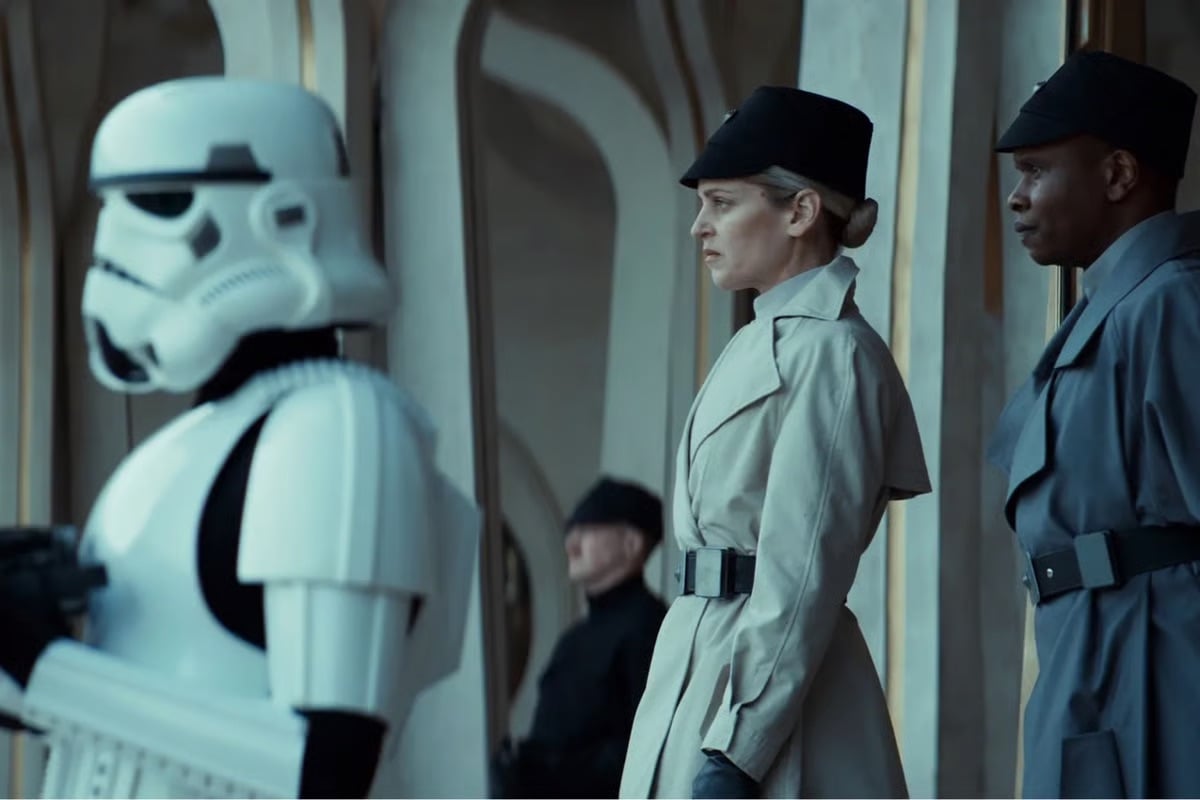
Now that Andor has been out for a while, showrunner Tony Gilroy is free to speak his mind on what the show was all about. I mean, it was pretty clear to the audience, but now he can say his piece. Andor won a Peabody Award and at the awards ceremony, Gilroy gave the following acceptance speech:
We spent six years contemplating a fascist takeover of a galaxy far, far away. Six years thinking about what happens to ordinary beings when an authoritarian, insane, unchecked regime comes into the deal, and the show is really kind of what we learned.
If you’re not willing to fight for the things that you love — your family, community, your culture, your planet, your truth, freedom — there’s an asshole ready to come in and take it away. We learned that bravery and sacrifice and resistance comes in all shapes and sizes, and we learned that courage is contagious.
There’s so much is happening, it’s a fire hose of crap that you just can’t get through. And here we are. There isn’t a new cycle that goes by right now that doesn’t contain a variety of outrages that in any other time in our history in America wouldn’t be grounds for treason.
Please do not stop. Please do not turn out the lights until we can kill this nightmare. And fuck the Empire!
Gilroy also recently appeared on Peabody’s podcast We Disrupt This Broadcast where he talks about the show’s prescience regarding the current political moment. From the transcript:
So any really specific prescient coincidence, and there probably will be some, they’re not intentional. They weren’t intentional at the time. They’re sadly what they are. And we were not looking at the newspaper when we wrote this. It doesn’t behoove me to do that. It’s incredibly, almost narcissistic how people feel that they’re always living at the edge of history in a way that’s just so unique. We feel so special.
And the sad truth is that, you know, we are just in another wheel of history. And I must admit that after 9/11 and Vietnam and Covid and Watergate and all the things I’ve grown up, I’m 68. I kind of thought, well, I’ve seen all the history I’m gonna see. I don’t feel that way anymore. I don’t feel so special anymore as a human who’s lived on the planet and lived in something called civilization. I think sadly, it’s sort of a Catherine Reel of repetitive stupidity.
See also Andor Creator Tony Gilroy Is Free to Speak About Fascism Now and An Interview With Andor’s Creator, Tony Gilroy.
The original Star Wars movie was a mashup. George Lucas and his collaborators pulled from everywhere: westerns, samurai movies, Flash Gordon, and a 1955 war film called The Dam Busters. This video shows just how closely the attack on the Death Star mirrors a scene from The Dam Busters of a group of bombers attacking a dam. The dialogue is identical in places. From the Dam Busters Wikipedia page:
Director George Lucas hired Gilbert Taylor, responsible for special effects photography on The Dam Busters, to be the director of photography for the film Star Wars. The attack on the Death Star in the climax of Star Wars is a deliberate and acknowledged homage to the climactic sequence of The Dam Busters. In the former film, rebel pilots have to fly through a trench while evading enemy fire and fire a proton torpedo at a precise distance from the target to destroy the entire base with a single explosion; if one run fails, another run must be made by a different pilot. In addition to the similarity of the scenes, some of the dialogue is nearly identical. Star Wars also ends with an Elgarian march, like The Dam Busters.
You can also watch Star Wars footage with Dam Busters audio and Dam Busters footage with Star Wars audio to see just how closely the two scenes match.
Given modern IP concerns and stakes, it’s difficult to envision this type of homage working today. Star Wars came out just 22 years after The Dam Busters, which is a beloved & acclaimed movie in Britain…it’s not obscure. Imagine a movie released in 2026 by a young Academy Award-nominated director that lifts a scene wholesale from a 2004 film like The Notebook, The Incredibles, Eternal Sunshine of the Spotless Mind, or Million Dollar Baby — it just wouldn’t happen without a lot of lawyerly conversation. I mean, maybe Lucas had those convos with The Dam Busters filmmakers… 🤷♂️
Andor loves a good monologue. Among the best of them is Nemik’s Manifesto:
Remember this, Freedom is a pure idea. It occurs spontaneously and without instruction. Random acts of insurrection are occurring constantly throughout the galaxy.
And Kino Loy’s speech to his fellow prisoners on Narkina 5:
There is one way out. Right now, the building is ours. You need to run, climb, kill! You need to help each other. You see someone who’s confused, someone who is lost, you get them moving and you keep them moving until we put this place behind us.
In this just-released episode of Nerdwriter, Evan Puschak breaks down Luthen Rael’s “extraordinary” monologue about what he’s sacrificed for the cause.
Here’s the original scene and a transcript of the speech:
Calm. Kindness. Kinship. Love. I’ve given up all chance at inner peace. I’ve made my mind a sunless space. I share my dreams with ghosts. I wake up every day to an equation I wrote 15 years ago from which there’s only one conclusion, I’m damned for what I do. My anger, my ego, my unwillingness to yield, my eagerness to fight, they’ve set me on a path from which there is no escape. I yearned to be a savior against injustice without contemplating the cost and by the time I looked down there was no longer any ground beneath my feet. What is my — what is my sacrifice? I’m condemned to use the tools of my enemy to defeat them. I burn my decency for someone else’s future. I burn my life to make a sunrise that I know I’ll never see. And the ego that started this fight will never have a mirror or an audience or the light of gratitude. So what do I sacrifice? EVERYTHING!
The great thing about Luthen’s monologue, which Puschak doesn’t really get into, is that it makes the viewer rethink the entire basis of the show — and of Star Wars in general. Instead of Good Guys and Bad Guys, you’re asked to consider shades of gray. These blurred lines are hinted at before, mostly through individual character arcs (Han, Anakin, Lando, Rey, Kylo), but Luthen plainly lays out the moral complexity involved: revolutions and rebellions are led by and made up of flawed people who do harmful things for the right reasons…or at least, that’s what they tell themselves, what they need to tell themselves.
Luthen, Mon Mothma, Cassian — there’s no solution to their personal trolley problem, except that they somehow have to keep living after condemning others to suffering and death. Viewed through that lens, the rest of Star Wars reads quite differently.

This scan isn’t very good (best I could find), but these are all the lightsabers used by Jedi and Sith in the various Star Wars shows and movies. I think this is from a few years ago, so I’m not sure how up to date it is.
In the SW universe, making your own saber is a Jedi and Sith rite of passage, which accounts for the diversity in design. No shortcuts allowed…Babu Frik wasn’t out there selling Ancient Laser Sword™ kits to young padawans (kyber crystal sold separately). (via dennis crowley)
David Kaylor is re-editing Rogue One into what he calls “The Andor Cut”; the trailer seems pretty compelling and well-done. He says this is Rogue One if it was produced after Andor:
The original version is the events of Rogue One as seen through Jyn’s perspective, and this is through Cassian’s.
The remixed Rogue One will be out on May 25, available in 4K with 5.1 surround sound. Kaylor has previously produced cuts of all three original trilogy Star Wars movies, Star Wars: Episode III - The Siege of Mandalore & Revenge of the Sith (a combo of the third prequel and part of the 7th season of Clone Wars), and Star Trek: Picard: The Last Generation (a recut of Star Trek: Picard’s 3rd season).
This edit is not to be confused with Andor: The Rogue One Arc, which recuts Rogue One into an Andor-like three-episode arc, leaning heavily on Andor’s soundtrack to set the mood.
This edit is kind of an expression of that with a movie I generally really liked - moving its energy from emulating the jaunty, swashbuckling OT, to more in line with its prequel show’s feel.
Up front, I don’t actually think this elevates or changes Rogue One in any meaningful way. The movie is still the movie, still fast paced and action oriented, particularly compared to Andor’s fiercer, slower, and paranoid ethos. But I do think the elements Andor is rooted in become far more apparent foregrounded to this soundtrack. Where the movie somewhat failed to recapture the energy and excitement of traditional Star Wars (and not for lack of Giacchino effort), the places where it takes itself seriously should now feel less dissonant in a [tonal] context that seriously considers them.
I’ve watched The Rogue One Arc and am looking forward to comparing it to The Andor Cut. And I’ve been seriously contemplating yet another rewatch of the TV series.
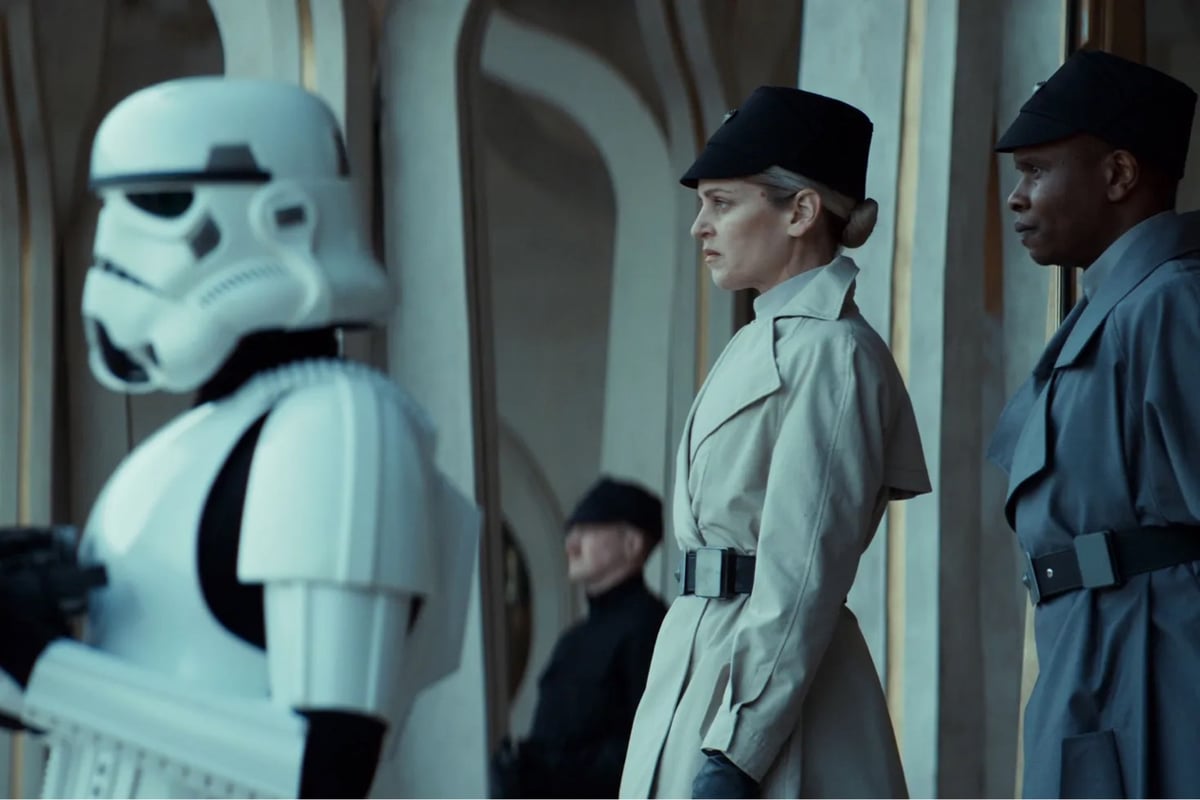
Early on in the promotional period for season two of Andor, a series explicitly about fascism that depicted a genocide, Disney asked creator Tony Gilroy not to use the words “fascism” and “genocide”. Now that promotional period has passed and he can speak freely. Here’s Gilroy’s recent interview with Hollywood Reporter. They asked him about the prescience of the show given current events, especially those in Minnesota, and his response is spot-on:
The simplest answer to the strange synchronicity of all of this is really on them, the outside forces. We were pretty much doing a story about authoritarianism and fascism, and the Empire is very clearly a great example of that. It’s a great place to deal with those issues, and as we’ve discussed many times before, we had this wide open canvas to deal with it.
So you get out your Fascism for Dummies book for the 15 things you do, and we tried to include as many of them as we could in the most artful way possible. How were we supposed to know that this clown car in Washington was going to basically use the same book that we used? So I don’t think it’s prescience so much as the sad familiarity of fascism and the karaoke menu of things that you go through to do it. You could list them from the show, or you could list them from the newspaper.
In the beginning, it was very confusing. People were like, “Oh, you’re psychic,” or, “The show is prescient.” But in the rear-view mirror, it’s really a much sadder explanation than that.
Gilroy also mentions a book that’s coming out this summer: The Art of Star Wars: Andor (Amazon). He says: “Every page has ideas that we talked about over the course of a million meetings, and it’s just so good.”
If you were one of those people who loved watching DVD extras, you’ll enjoy the hell out of ILM visual effects artist Todd Vaziri breaking down some of the special effects that he and his team have worked on, including Rogue One, The Force Awakens, and Dungeons and Dragons: Honor Among Thieves. Introducing the video on his site, Vaziri writes:
My goal was to highlight the artistic process of visual effects. Movies like the ones I highlight in the video are crafted by hundreds of artists, technicians and production folks, all working together to achieve the vision of the director. I’m so proud to have worked with such amazing crews over the years.
Many of the effects he highlights aren’t the obvious ones — monsters, digital Leia, lightsaber battles — but rather effects that you’d never notice — indeed effects that you shouldn’t notice because they are designed to be seamless. Like a “dust poof” from a slingshot shot — it registers and helps sell the scene, but you’d never think, “oh, that’s an effect”.
The whole thing is fascinating — and the rope thing is genius.
Disney dropped the trailer for The Mandalorian and Grogu today, a feature-length film that will debut in theaters in May 2026. As this Star Wars Explained breakdown, er, explains, that the trailer was going to come out earlier but:
Word on the street is that it was supposed to come out this past Friday, but Disney was and is in the middle of some hot water. Acting like cowards in the face of authoritarianism will do that, especially when one of the franchises you own {shows footage of Andor} is about the exact opposite.
Last week, Disney made the decision to pull Jimmy Kimmel Live from the schedule because of threats from the Trump regime, prompting protests. Kimmel returns to the air tomorrow night:
“Last Wednesday, we made the decision to suspend production on the show to avoid further inflaming a tense situation at an emotional moment for our country. It is a decision we made because we felt some of the comments were ill-timed and thus insensitive,” the company said in a statement. “We have spent the last days having thoughtful conversations with Jimmy, and after those conversations, we reached the decision to return the show on Tuesday.”
Lucasfilm recently released an official map of the galaxy that Star Wars takes place in. And it’s huge.

The map is slightly interactive; you can zoom and scroll it, but you can’t search or, say, click to highlight all the star systems featured in Andor. But you can do manual lookups using this massive 59-page PDF listing of Star Wars star systems.
Like many others, I became a little obsessed with Andor over the past few months. I was lukewarm on the first season when it came out, but a pre-s02 rewatch completely changed my tune — I think it’s one of the best things I’ve ever seen on television. Season 2 was almost as good and the whole thing together was really affecting, thought-provoking, and just marvelously well-done.
In this interview with conservative NY Times’ columnist Ross Douthat, series creator Tony Gilroy nails why the show was so interesting:
The five years that I have been given are extremely potent. You have the Empire really closing down, really choking, really ramping up. The emperor is building the Death Star.
They are closing out corporate planets and absorbing them into the state. They are imperialistically acquiring planets and taking what they want. The noose is tightening dramatically.
There still is a Senate. There are senators that are speaking out impotently.
The Senate has been all but completely emasculated by the time this five-year tranche is over.
And there are revolutionary groups, rebellious groups, and people who are acting rebelliously, who wouldn’t even know how to describe themselves as part of any movement. There is a completely wide spectrum of unaffiliated cells and activists that are rising independently across the galaxy.
At the same time, you have a group of more restrained politicians who are trying to make an organized coalition of a rebellion on a place called Yavin, which will end up being the true end of the true victory of the Rebel Alliance.
I wanted to do a show all about the forgotten people who make a revolution like this happen — on both sides — and I want to take equal interest and spend as much time understanding the bureaucrats and the enforcers of the rebellion. I think one of the fascinating things about fascism is that, when it’s done coming after the people whose land it wants and who it wants to oppress and whoever it wants to control, by the time it gets rid of the courts and the justice and consolidates all its power in the center, it ultimately eats its young. It ultimately consumes its own proponents.
The rest of the interview is very much worth a read as well, particularly the bits where, for example, Douthat presses Gilroy on Andor being a “left-wing show”, Gilroy says no, Douthat scoffs, and, sensing Douthat is telling on himself, Gilroy fires back, “Do you identify with the Empire? Do you identify with the Empire?” And Gilroy continues later:
You could say: Why has Hollywood for the last 100 years been progressive or been liberal? I think it’s much larger. I’ll go further and say: Why does almost all literature, why does almost all art that involves humans trend progressive?
Let’s stick with Hollywood. Making a living as an actor or as a writer or a director — without the higher degree of empathy that you have, the more aware you are of behavior and all kinds of behavior, the better you’re going to be at your job. We feed our families by being in an empathy business. It’s just baked in. You’re trying to pretend to be other people. The whole job is to pretend to be other, and what is it like to look from this? People may be less successful over time at portraying Nazis as humans, and that may be good writing or bad writing, and there may be people that have an ax to grind. But in general, empathy is how I feed my family. And the more finely tuned that is, the better I am at my job.
That is what actors do: I’m going on Broadway, I’m playing a villain for six months. I got to live in that. I’m playing the slave, I’m playing the fisherman, I’m playing the nurse, I’m the murderer — you have to get in there. You have to live lives through other people. I think that the simple act of that transformation and that process automatically gives you what I would describe as a more generous and progressive point of view. It just has to.
Like I said, well worth a read/listen. (via sippey)
Ok it’s not one hour of Zemo dancing, but I’ll take it. And the YT comments are better:
“Many Bothans died to bring us this beat.”
“Sir, we have located the Rebel bass.”
This isn’t the first time this song has appeared on Andor — it’s an “intergalactic hit” called Niamos! written for the show by composer Nicholas Britell, who lives in this galaxy and was also responsible for the Succession theme song. (via @moleitau.bsky.social)
Disney has uploaded the first three episodes of season one of Andor to YouTube:
No idea how long they will be up or if they’re visible outside of the US. I started an Andor rewatch last week and I am finding it more enjoyable and interesting than I did the first time around. The writers obviously did their research on how fascism, dictatorships, and rebellions work — in almost every scene, you observe characters reacting and interacting with the constraints of bureaucratic totalitarianism. Very interesting to watch in this political moment. (via @rebeccablood.bsky.social)
I don’t know about you, but I’m ready to watch an earnest show about an ultimately successful revolution against a fascist government. It will be interesting to see in this political climate whether Disney+ is the place to watch such a thing.
Older posts


Socials & More