To say a French word in the middle of an English sentence exactly as it would be said by a Frenchman in a French sentence is a feat demanding an acrobatic mouth; the muscles have to be suddenly adjusted to a performance of a different nature, & after it as suddenly recalled to the normal state; it is a feat that should not be attempted; the greater its success as a tour de force, the greater its failure as a step in the conversational progress; for your collocutor, aware that he could not have done it himself, has his attention distracted whether he admires or is humiliated.
I think that’s what Feynman was getting at here in his discussion with Murray Gell-Mann, although, in typical Feynman fashion, not in so many words.
Richard Feynman, Gell-Mann’s chief competitor for the title of the World’s Smartest Man but a stranger to pretension, once encountered Gell-Mann in the hall outside their offices at Caltech and asked him where he had been on a recent trip; “Moon-TRAY-ALGH!” Gell-Mann responded in a French accent so thick that he sounded as if he were strangling. Feynman — who, like Gell-Mann, was born in New York City — had no idea what he was talking about. “Don’t you think,” he asked Gell-Mann, when at length he had ascertained that Gell-Mann was saying “Montreal,” “that the purpose of language is communication?”
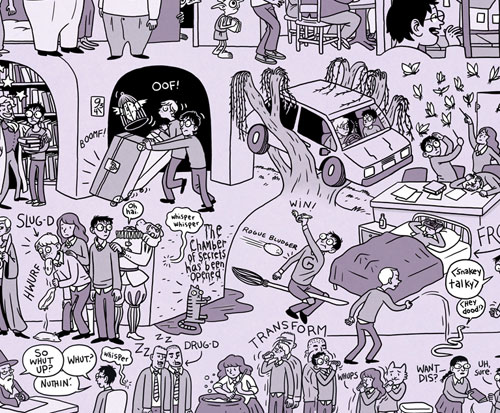
Characters’ names are often also common words. A dumbledore is a bumblebee. Snape is a ship-building term that means “to bevel the end of (a timber or plank) so that it will fit accurately upon an inclined surface.” Hagrid is the past participle of hagride, which means “to harass or torment by dread or nightmares.” Skeeter is a term for an annoying pest, and not just Rita Skeeter, blood-sucking journalist. Mundungus is “waste animal product” or “poor-quality tobacco with a foul, rancid, or putrid smell,” a good name for a sneaky thief.
“I sat till the audience started to leave and waited for the precise moment, and then jumped up and yelled, ‘I’m Joyce McKinney!’” she said, with considerable glee. “They went crazy.”
There are also reports of some reviewers receiving anonymous legal threats.
Leonardo da Vinci’s ‘The Mona Lisa’ reduced & remixed down into 140 exact circles of colour. Makes no sense close up. Makes every sense from the other side of the room.
I wasn’t going to watch all twenty-five minutes of this day-in-the-life feature about Pixar’s John Lasseter, but I got sucked in after the first two minutes for some reason and couldn’t stop. The main takeaway is that Lasseter is a relentlessly upbeat, absurdly rich, hugging, cheeseball train freak.
Watching it, I found it almost impossible to reconcile his cheeseball personality with the kind of movies that Pixar makes, except to note that the Pixar films he’s been involved with in a directorial or story capacity (Toy Storys 1-3, Cars 1-2) are the studio’s syrupiest (and Randy Newmanest). (via devour)
Wow, for the 12th anniversary of MetaFilter, Matt bought the domain of the first site MF ever linked to (cat-scan.com) and dedicated it to stories from the site’s early years. More here.
This infographic over at Information is Beautiful does a great job explaining the difference UV protections offered by sunscreens, what SPF is, when/how much to apply, etc. I had no idea about the stars or the difference between UVA and UVB.
The film, as previously reported, is an adaptation of a 2008 report on Bob Nelson, a self-styled cryogenics pioneer. Mr. Morris claims the film, not listed on IMDB, will be written by Zach Helm, writer of the aptly titled Will Ferrell vehicle Stranger Than Fiction. This American Life previously spawned the kids’-movie adaptation Unaccompanied Minors, but Mr. Morris’s pedigree — and unique interests-promise to make this a bit more highbrow, and simultaneously more intriguingly tabloid-y.
After applying many bad-clip-art tattoos on my daughter Ella, I decided to stop complaining and take matters into my own hands. I was ready to put designy, cool, typographic tattoos on my daughter, or myself for that matter. The idea for Tattly was born.
We were a bit surprised to receive a notice on Monday from Caters News, telling us they represented David Slater with respect to the syndication of those photos, and asking us to take down the photos. The notice was not a DMCA takedown notice. It doesn’t even mention copyright, though that seems like the only basis upon which they would make such a takedown request. And, to be clear, it was not in the least bit threatening. There is no legal language and no threat at all in the note.
When asked for clarification by Techdirt, a representative from Caters replied:
Michael, regardless of the issue of who does and doesn’t own the copyright — it is 100% clear that the copyright owner is not yourself. You have blatantly ‘lifted’ these photographs from somewhere — I presume the Daily Mail online. On the presumption that you do not like to encourage copyright theft (regardless of who owns it) then please remove the photographs.
Onionesque. Please someone interview the monkey about his/her views on this.
Did you know 3-D printers could make complex objects with moving parts like gears and crescent wrenches? I had no idea…this is kind of mind-blowing. The guy at the beginning likens the technology to Star Trek’s replicator.
Charlie Park takes a look at a type of chart that Edward Tufte developed for his 1983 book, The Visual Display of Quantitative Information. Unlike sparklines, another Tufte invention/coinage, slopegraphs didn’t really take off.
It’s curious that it hasn’t become more popular, as the chart type is quite elegant and aligns with all of Tufte’s best practices for data visualization, and was created by the master of information design. Why haven’t these charts (christened “slopegraphs” by Tufte about a month ago) taken off the way sparklines did? In this post, we’re going to look at slopegraphs — what they are, how they’re made, why they haven’t seen a massive uptake so far, and why I think they’re about to become much more popular in the near future.
At first, the connections were done the old-fashioned way. “By 1994, there was already kind of an established network of party-throwers and partygoers [in Detroit],” says Rob Theakston, a Detroit rave veteran. “At that point, the scene was maybe 200 kids max. Everything was very phone-based. [You’d] call the phone lines the day of to get directions, and even then, a lot of the direction lines would just give the vicinity because you would already know: ‘Oh, Harper and Van Dyke — that’s the old theater. We know where the party’s going to be.’ They wouldn’t give you the exact address for the authorities to find out.”
But by the fourth game I started to pick up tendencies in all the batters. Jason Bartlett swung at first-pitch changeups. Will Venable couldn’t hit the palm ball. In fact, most of these free-swinging Padres couldn’t hit Dock’s funky palm ball. I threw it often. But by then, also, the first acid distractions entered: the TV flickered; the cracks in the wall started to move; the hand soap started to breathe — those sorts of things. Plus I was drawn to the outdoor garden between innings. Rain was near, I sensed.
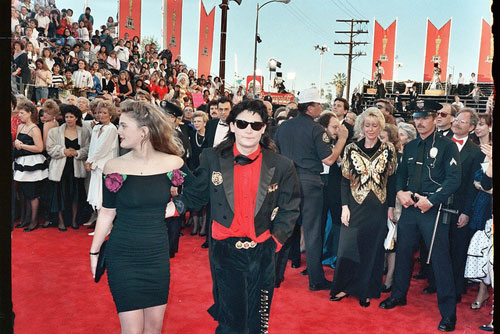
Barrymore, 14, and Feldman, 17, were dating at the time. At this point, Barrymore had been in rehab twice for drugs/alcohol and is two months away from a failed suicide attempt. Light also got photos of Lucille Ball a month before she died, Tom Cruise and Mimi Rogers, Mayim Bialik, Jodie Foster (who won the Best Actress Oscar that year for The Accused) and, my favorite for some reason, River Phoenix.
Dudley Clendinen has ALS, aka Lou Gehrig’s disease, and has a short time to live. Which is fine by him; he’s got a plan.
There is no meaningful treatment. No cure. There is one medication, Rilutek, which might make a few months’ difference. It retails for about $14,000 a year. That doesn’t seem worthwhile to me. If I let this run the whole course, with all the human, medical, technological and loving support I will start to need just months from now, it will leave me, in 5 or 8 or 12 or more years, a conscious but motionless, mute, withered, incontinent mummy of my former self. Maintained by feeding and waste tubes, breathing and suctioning machines.
No, thank you. I hate being a drag. I don’t think I’ll stick around for the back half of Lou.
I think it’s important to say that. We obsess in this country about how to eat and dress and drink, about finding a job and a mate. About having sex and children. About how to live. But we don’t talk about how to die. We act as if facing death weren’t one of life’s greatest, most absorbing thrills and challenges. Believe me, it is. This is not dull. But we have to be able to see doctors and machines, medical and insurance systems, family and friends and religions as informative - not governing - in order to be free.
And that’s the point. This is not about one particular disease or even about Death. It’s about Life, when you know there’s not much left. That is the weird blessing of Lou. There is no escape, and nothing much to do. It’s liberating.
We don’t tell many people about what we are doing. When we do some say: “Well, it must be fun trying.” Or: “Are sure you’re doing it right?” I laugh with them; after all, how many times have I said something insensitive while trying to be funny? I don’t talk about the large doses of medicine that I inject into my wife’s buttocks that cause her to inflate like a hormonal balloon. Nor do I discuss how intimacy itself has become such an awkward, uncomfortable thing that it’s scheduled on a Google Calendar named “LadyStuffings” with events that show up in pink.
After the end of the first day, I said, “There’s nothing here. Nothing’s happening.” The guards had this antiauthority mentality. They felt awkward in their uniforms. They didn’t get into the guard mentality until the prisoners started to revolt. Throughout the experiment, there was this conspiracy of denial-everyone involved was in effect denying that this was an experiment and agreeing that this is a prison run by psychologists.
There was zero time for reflection. We had to feed the prisoners three meals a day, deal with the prisoner breakdowns, deal with their parents, run a parole board. By the third day I was sleeping in my office. I had become the superintendent of the Stanford county jail. That was who I was: I’m not the researcher at all. Even my posture changes-when I walk through the prison yard, I’m walking with my hands behind my back, which I never in my life do, the way generals walk when they’re inspecting troops.
Star Wars: The Blueprints is a $500 limited edition book that contains photographs and illustrations about how the Star Wars movies wre created.
Star Wars: The Blueprints brings together, for the first time, the original blueprints created for the filming of the Star Wars Saga. Drawn from deep within the Lucasfilm Archives and combined with exhaustive and insightful commentary from best-selling author J. W. Rinzler, the collection maps in precise, vivid, and intricate detail the very genesis of the most enduring and beloved story ever to appear onscreen.
Star Wars: The Blueprints gives voice to the groundbreaking and brilliant engineers, designers, and artists that have, in film after film, created the most imaginative and iconic locales in the history of cinema. Melding science and art, these drawings giving birth to fantastic new worlds, ships, and creatures.
Most importantly, Blueprints shows how in bringing this extraordinary epic to life, the world of special effects as we know it was born. For the first time, here you will see the initial concepts behind such iconic Star Wars scenes as the Rebel blockade runner hallways, the bridge of General Grievous s flagship, the interior of the fastest hunk of junk in the Galaxy, and Jabba the Hutt’s palace. Never before seen craftsmanship and artistry is evident whether floating on the Death Star, escaping on a speeder bike, or exploring the Tatooine Homestead.
Fredo Corleone is the second oldest son of Don Vito Corleone, but is unfit to run the family business. His stupidity, lack of confidence, and otherwise child-like behavior prevent him from being taken seriously by any member of the family. Despite his attempts at success, integration into the family usually comes to no avail. He is often humored by deciding family members (Michael), and given menial business tasks (i.e. casinos, whorehouses) for the family.
Buster Bluth is the youngest son of George, Sr., and is unfit to run the family business. His stupidity, lack of confidence, and otherwise child-like behavior prevent him from being taken seriously by any member of the family. Despite his attempts at success, integration into the family business usually comes to no avail. He is often humored by deciding family members (his mother), and given menial tasks (i.e. learning cartography) to distract him.
Who knows how long this is going to be up because it doesn’t appear to be from a legit source, but Talking Funny, a one-hour HBO special featuring Ricky Gervais, Louis C.K., Chris Rock, and Jerry Seinfeld talking about comedy, is available on YouTube in four parts. Here’s part one to get you going:
Technically, in most cases, whoever makes the actual work gets the copyright. That is, if you hand your camera to a stranger to take your photo, technically that stranger holds the copyright on the photo, though no one ever enforces this.
Author Alex Shakar shares the story of the sale of his first book. It went for low-to-mid six figures to a great editor, the marketing was tight, reviews were rave, and then…well, I won’t spoil it for you.
I would have felt blessed to work with any of editors I’d met that week, but Robert was my first choice, and Bill’s as well. Robert, though, left nothing to chance. He was the highest bidder at auction, consenting to be turned upside-down and shaken for change. At day’s end, after Bill told me the final figure on the phone, I wandered numb out of the special ed teacher’s apartment and up St. Marks to the subway. I was having dinner with two of my closest friends from college, also aspiring writers, one of whom had been gifted by a grandparent a coupon good for two free entrees at a Ruth’s Chris steakhouse, our plan being to split the cost of the third. I couldn’t bring myself to tell them how much money I’d just made. I said it was a lot. Then I kind of laughed. Then I said it was a whole lot. There was an uncomfortable silence as we all realized I wasn’t going to get more specific.
From 1990, a NY Times article on a new factory built by Next, the company Steve Jobs started after he left Apple. The more you learn about Next, the more you realize just how much Next DNA there is in the current incarnation of Apple. The story of Apple’s second coming could easily be written as the triumph of Next. This section from the middle of the article articulates perfectly Apple’s current approach to manufacturing:
Indeed, critics of Mr. Jobs, who is 35 years old, say he is wasting his money by building a factory at this point. With the small number of machines he is building today, it would have been cheaper simply to contract with other companies to assemble the computers, they say.
But Dr. Piszczalski said the initial high investment in an automated factory may permit Next more control of its expenses while volumes are low.
And backers of Mr. Jobs note that he has a long-term strategy in which manufacturing makes sense. “Steve will be in business for the long pull,” said H. Ross Perot, one of Next’s investors. “He’s not in business for six months.”
Next’s products have yet to gain a significant share of the marketplace, but Mr. Jobs, who has a reputation for painstaking attention to detail and a passion for the importance of manufacturing, argues that by linking this flexible factory more closely than ever to Next’s research and development process, his company can gain a strategic advantage in the industry that will eventually pay off in larger sales.
In Mr. Jobs’s view, the factory testifies to the fact that the United States can still compete as both a low-cost and a world-class manufacturer when it sets its mind to the task.
Mr. Jobs said he modeled the factory after those of Japanese corporations like the Sony Corporation that have perfected a design-for-manufacturing strategy that transforms the factory floor into an extension of the company research and development center.
Update: Next made a documentary on how computers are made at the new factory.
That’s got to be a Hans Zimmer soundtrack, yes? (via @mgrdcm)
Forget the million monkeys at a million typewriters eventually pounding out Shakespeare. Watch out Cartier Bresson (or perhaps Jill Greenberg), they’ve moved on to photography. A crested black macaque grabbed a photographer’s camera and shot dozens of shots, including this fine self-portrait:
I think that is my new favorite photo by my new favorite photographer.
Herrera also discovered teens in the Phillippines and Mexico who think it’s “cool” to send text messages in regional endangered languages like Kapampangan and Huave. Almost as soon as text messaging exploded on the world stage as a means to reach anyone, anywhere, and anytime, young people began to find a way to scale it back, make it more exclusive and develop their own code or doublespeak to use on the widely used devices.
Early this spring, Sandberg gathered twelve female Facebook executives in a bare, white-walled conference room to review the agenda for the company’s Women’s Leadership Day, which was scheduled for the following week. Each of them was expected to lead sessions encouraging all the female executives there to step up “into leadership” roles. “What I believe, and that doesn’t mean everyone believes it, is that there are still institutional problems and we need more flexibility in all of this stuff,” Sandberg told them. “But much too much of the conversation is on blaming others, and not enough is on taking responsibility ourselves.”
Yes, she continued, we could swap anecdotes about sexist acts. But doing so diverts women from self-improvement. She opposes all forms of affirmative action for women. “If you don’t believe there is a glass ceiling, there is no need,” she told me. She doesn’t even like voluntary efforts to keep positions open for qualified women. There’s a cost, she explained, in lost time, and a cost for women, because “people will think she’s not the best person and that job was held open for a woman.”
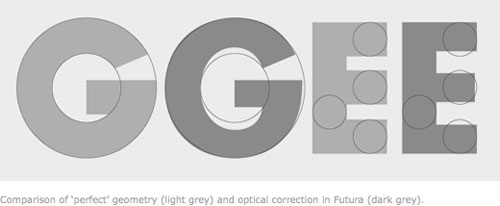
I love these two related typefaces by Klim Type Foundry: Metric and Calibre.
Metric & Calibre are a pair of typefaces that share a fundamental geometry yet differ in the finish of key letterforms. Metric is a geometric humanist, sired by West Berlin street signs. Calibre is a geometric neo-grotesque, inspired by the rationality of Aldo Novarese’s seldom seen Recta. They were conceived as a pair but function independently of each other.
The development of Metric & Calibre is based upon two ideas-1: “engineered geometry” and it’s application to street signage, 2: alternate letterforms in typefaces.
“I asked them to make me one of their products, but to make it with an error,” Hutchison explains. “I specified that this error should render the object dysfunctional. And rather than my choosing the error, I wanted the factory worker who made it to choose what error to make. Whatever this worker chose to do, I would accept and pay for.”
Hutchison received a comb without tines, the ordering of which prompted a letter from the confused factory rep:
I have read your email, which makes me confused. As you know, combs shold be fabricated correctly and customers should like to buy combs which can comb hair. However, from your words, it seems you need us to fabricate combs incorrectly and combs can not comb the hair. I can not understand this well. Pls kindly explain detailedly.
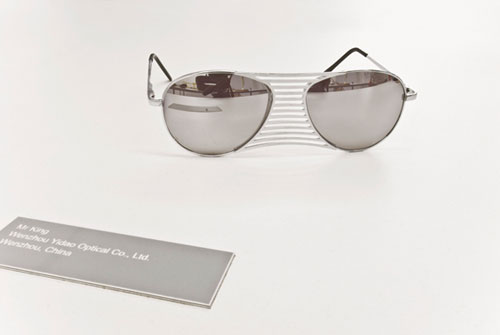
There is also a Magritte-esque pipe with no place to put tobacco, and these impractial sunglasses:
I’m slowly working my way through Charles Mann’s 1493 and there are interesting tidbits on almost every page. One of my favorite bits of the book so far is a possible explanation of the Little Ice Age that I hadn’t heard before put forth by William Ruddiman.
As human communities grow, Ruddiman pointed out, they open more land for farms and cut down more trees for fuel and shelter. In Europe and Asia, forests were cut down with the ax. In the Americas before [Columbus], the primary tool was fire. For weeks on end, smoke from Indian bonfires shrouded Florida, California, and the Great Plains.
Burning like this happened all over the pre-Columbian Americas, from present-day New England to Mexico to the Amazon basin to Argentina. Then the Europeans came:
Enter now the Columbian Exchange. Eurasian bacteria, viruses, and parasites sweep through the Americas, killing huge numbers of people — and unraveling the millenia-old network of human intervention. Flames subside to embers across the Western Hemisphere as Indian torches are stilled. In the forests, fire-hating trees like oak and hickory muscle aside fire-loving species like loblolly, longleaf, and slash pine, which are so dependent on regular burning that their cones will only open and release seed when exposed to flame. Animals that Indians had hunted, keeping their numbers down, suddenly flourish in great numbers. And so on.
The regular fires and forest regrowth resulted in less carbon dioxide in the atmosphere and the atmosphere traps less heat. It’s like global warming in reverse.
This guy drove the entire way around Manhattan (24 miles) in just 26 minutes, averaging 56 miles/hour and topping out at 111 miles/hour.
Someone left this typically New York comment:
I am an NYC cab driver and I promise I could beat this record in my crown Victoria. Simple factors that are unaware to the civilian driver the cabby knows. This cabby knows to drive sunday night when theres no construction work being done, this cabby knows what speed to maintain to time the lights on the westside highway and this cabby knows the quickest way from the FDR to the West side highway.
Note: If you are a member and tried to log in, it didn't work, and now you're stuck in a neverending login loop of death, try disabling any ad blockers or extensions. Or try logging out and then back in. Still having trouble? Email me!













Socials & More