kottke.org posts about lists
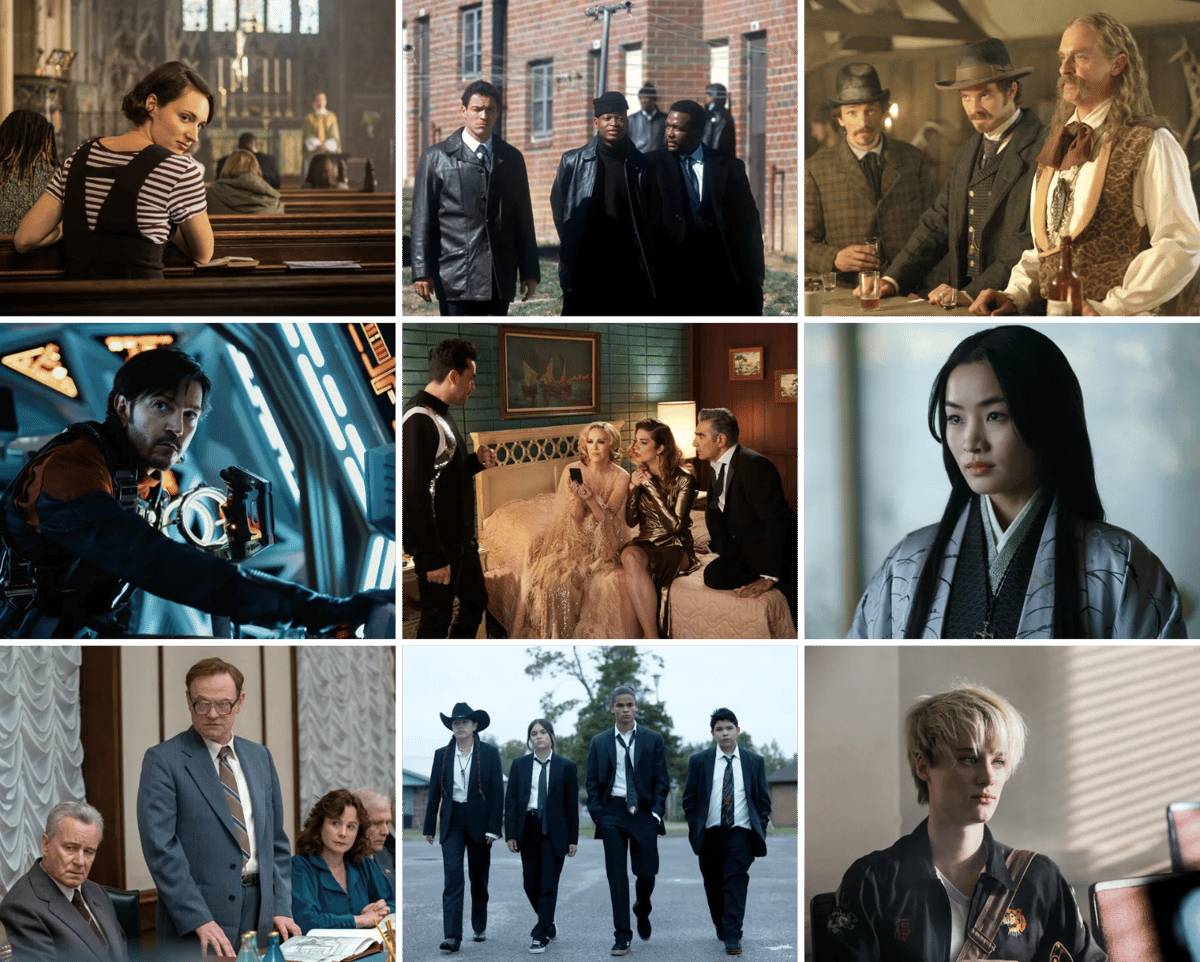
Last week, the NY Times dropped a list of The 100 Best TV Shows of the 21st Century, as picked by a panel of “more than 500 influential stars, showrunners and other notable names in the world of TV”. The rankings have already been dissected online six ways from Sunday, but the link got lost in my forest of browser tabs and so here it is, a bit late but still interesting.
Here are some of my personal favorites from the list and arrowed opinions on whether some should be higher or lower on the list: Halt and Catch Fire (↑), Reservation Dogs (↑), Shogun (↑↑↑), The Great British Bake Off, Planet Earth, Downton Abbey (↓), The Good Place (↑), Normal People, Schitt’s Creek, Andor (↑↑), Severance (↓), Band of Brothers (↑), Deadwood (↑), The Crown (↓), Chernobyl (↑), The Americans (↑), Six Feet Under (↓), Girls (↓), Arrested Development, The Office (US), 30 Rock, Game of Thrones, Fleabag (↑), Succession, Mad Men, The Wire (↑), and Breaking Bad (↓).
There are many excellent shows that didn’t make the list — the one that immediately pops into my mind is My Brilliant Friend. As for stuff that’s on there that perhaps could be replaced with something more worthy, I’ll hold my tongue. I do think the inclusion of some of the more recent shows on the list will not age well when this is looked back on in, say, 10 years.
I keep a list of things I want to do for KDO in Apple Notes, organized into four sections: small, medium, large, and longshots/obsolete. This note contains tweaks, bug fixes, code refactoring, new site features, roadmap items,1 infrastructure migrations, potential project ideas, vague prompts, and even things I don’t want to do but should maybe consider doing anyway at some point. I keep already-completed items on the list so progress can be gauged, noticed, and appreciated.
I was looking at the list today, and thought I’d share some of the items with you:
- Reposting social posts (in comment threads) for members
- Do a podcast
- Publish posts to Instagram. (How?)
- Implement site-wide search
- Make newsletter daily?
- Write a book based on kottke.org
- Sell Blue Line Air Express t-shirts
- Build a Substack competitor
- Make a gift link search engine
Some of these are partly finished or would take very little to implement if I wanted. Some will never happen. Weirdly, some of the projects and site tweaks I most want to make aren’t even on my list. They live only in my head and I mull them over in the shower or while walking until they’re “done” enough to start working on. I guess maybe ideas don’t go on the list unless they’re not that urgent or interesting.
Do you have to-do lists for your creative projects? Care to share an item or two with the group?
Wes Anderson steps into the mobile Criterion Closet to select some films that he enjoys.
One unsurprising thing about this video: Anderson says he has his own Criterion closet at home with all of the Criterion films. That’s maybe a $40-50K investment? (He probably gets them free from Criterion tho.) I wonder how many films he watches a day? Two? Three? If Soderbergh’s yearly watch/read lists are any indication, it’s probably in that ballpark.
One surprising thing about this video: I was expecting Anderson to go for Kurosawa, Tati, Truffaut, Welles, and some other of his big influences but instead selected family friendly fare suitable for a trip. The man has a wide array of influences. Here’s the full list:
The 39 Steps (Alfred Hitchcock, 1935)
The Red Shoes (Michael Powell and Emeric Pressburger, 1948)
Heaven Can Wait (Ernst Lubitsch, 1943)
Design for Living (Ernst Lubitsch, 1933)
The Lady Eve (Preston Sturges, 1941)
Stagecoach (John Ford, 1939)
Flow (Gints Zilbalodis, 2024)
Tootsie (Sydney Pollack, 1982)
Charulata (Satyajit Ray, 1964)
I love seeing Flow on there. What a great little film.
See also Wes Anderson Talks Up Some of His Favorite Movies in a Parisian Video Store and this delightful video from 20 years ago or so featuring Anderson and Jason Schwartzman picking out music & movies in a Borders:
I ran across this post on Threads the other day: “What’s the hardest record in sports history to ever break?” A sampling of the replies:
- “Bill Russell’s 11 NBA championships including 8 in a row.”
- “Lionel Messi scored 91 goals in the 2012 calendar year.”
- “Cy Young 749 complete games.”
- “Fernando Tatis (Sr) - 2 Grand Slams in the same inning. Most of the others mentioned here are highly improbable, but there’s no way anyone ever hits 3 slams in one inning.”
- “Lionel Messi’s 8 Ballon d’or”
- “Sir Donald Bradman’s batting average in Test cricket. His 99.94.”
- “Russian wrestler Aleksandr Karelin. Undefeated for 13 years. 887 wins and 2 losses, both by single point.”
Last year, The Athletic offered a list of their own, which included Wayne Gretzky’s 1,963 career assists, the furthest goal in soccer (96.01 meters), Michael Phelps’ 23 Olympic golds, and Wilt Chamberlain’s 100-point game.
Poking around the internet a bit, there’s also FloJo’s 100m record, UConn women’s basketball team’s 111 wins in a row, Cal Ripken’s consecutive game streak, and Simone Biles’ 30 world championship medals.
Any additions to the list?
Every year since 2016, Literary Hub has asked a group of book cover designers for their picks for the best book covers of the year. Using 10 years of data, here are their picks for the best covers of the last decade. I’ve included a few of my personal favorites below.
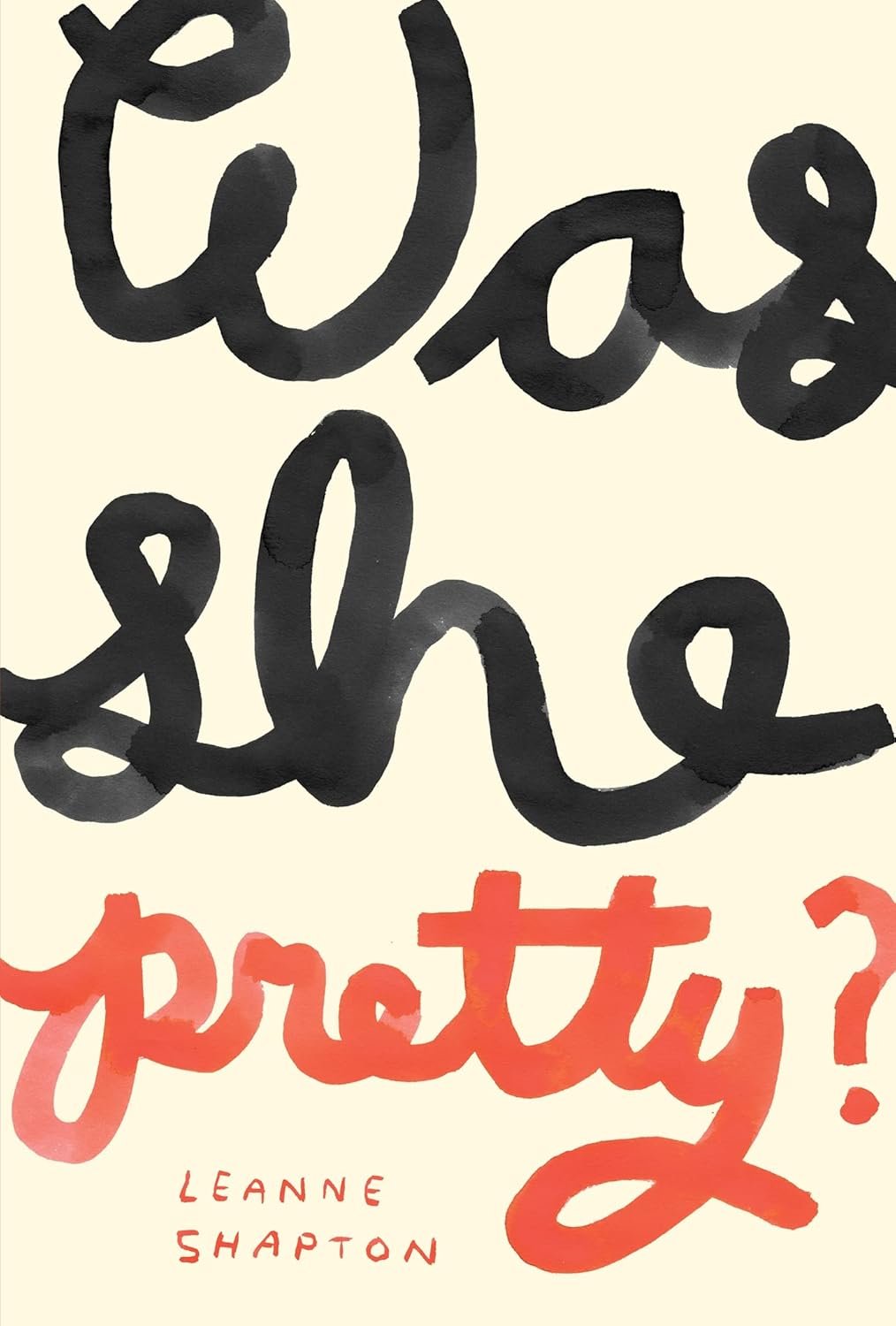



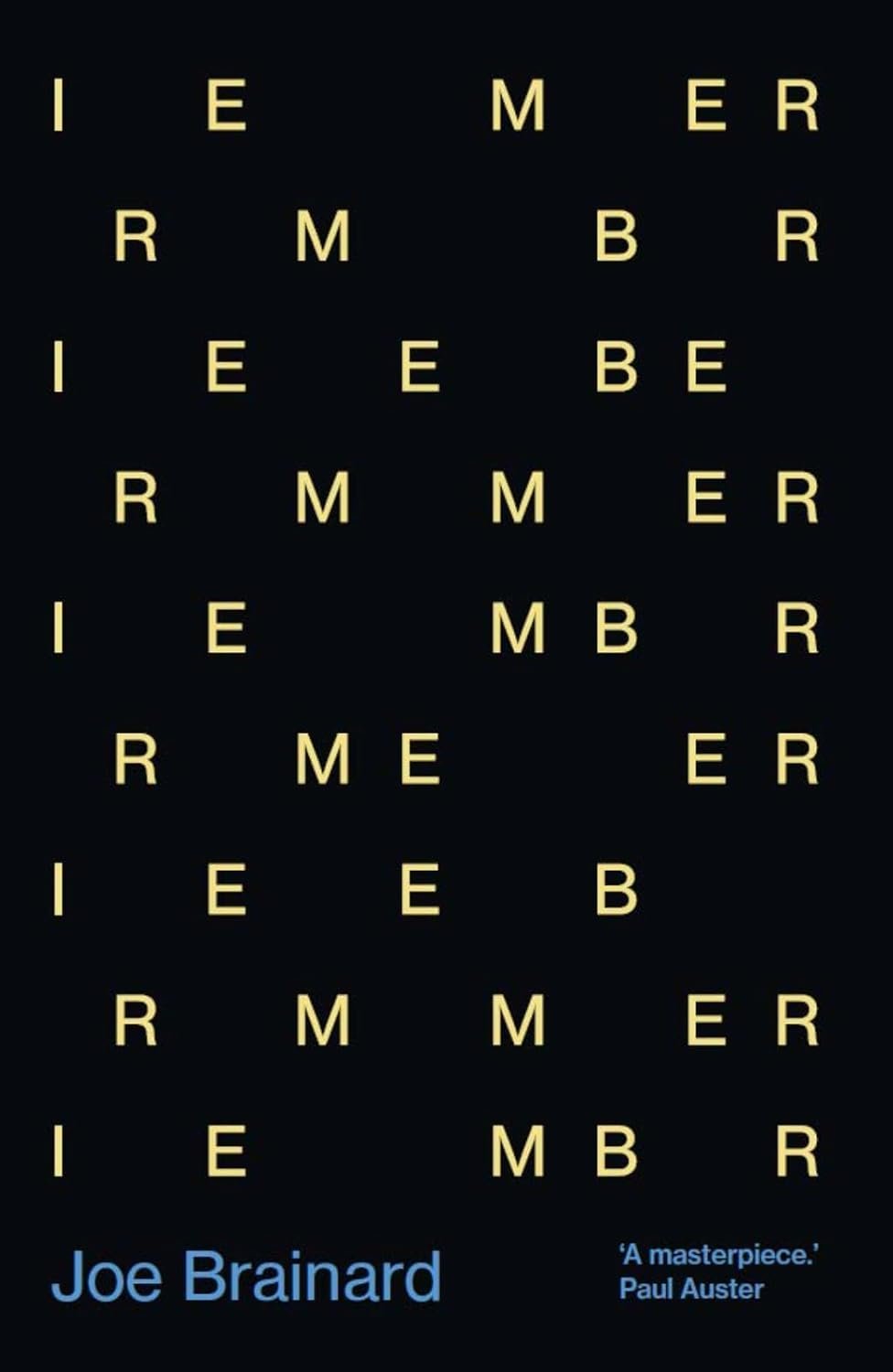

For finding a good book, there is no substitute for going into your local independent bookstore and browsing what’s on the front tables, the bestsellers shelf, and the staff picks. But bookshop.org is an amalgam of online sales some of the best indie bookstores in the country (and websites like kottke.org), so the list of their bestselling nonfiction books for 2025 is pretty darned good. Here are a few from the list that I’ve featured (or should have featured) here this year:
Bit too late to order in time for the holidays, but there are also bookshop.org digital gift cards.
One of my favorite end-of-year lists is Tom Whitwell’s annual record of 52 things he’s learned in the past year. Some favorites of mine from the 2025 installment:
4. You can unlock the wheels on a shopping cart by playing sounds on your phone. [Joseph Gabay]
5. In the UK, water companies and offshore rigs communicate by bouncing radio waves off trails created by millions of small meteorites as they burn up in the atmosphere. [Meteor Communications Ltd]
14. Nearly 0.7% of US exports, by value, are human blood or blood products. [dynomight]
16. The Ceremonial Bugle is a small plastic device that slides into a real bugle and allows a non-musician to perform at a funeral. It has a discreet switch to select ‘Taps’, ‘Last Post’ or one of ten other calls. [Simon Britton via Nicolas Collins]
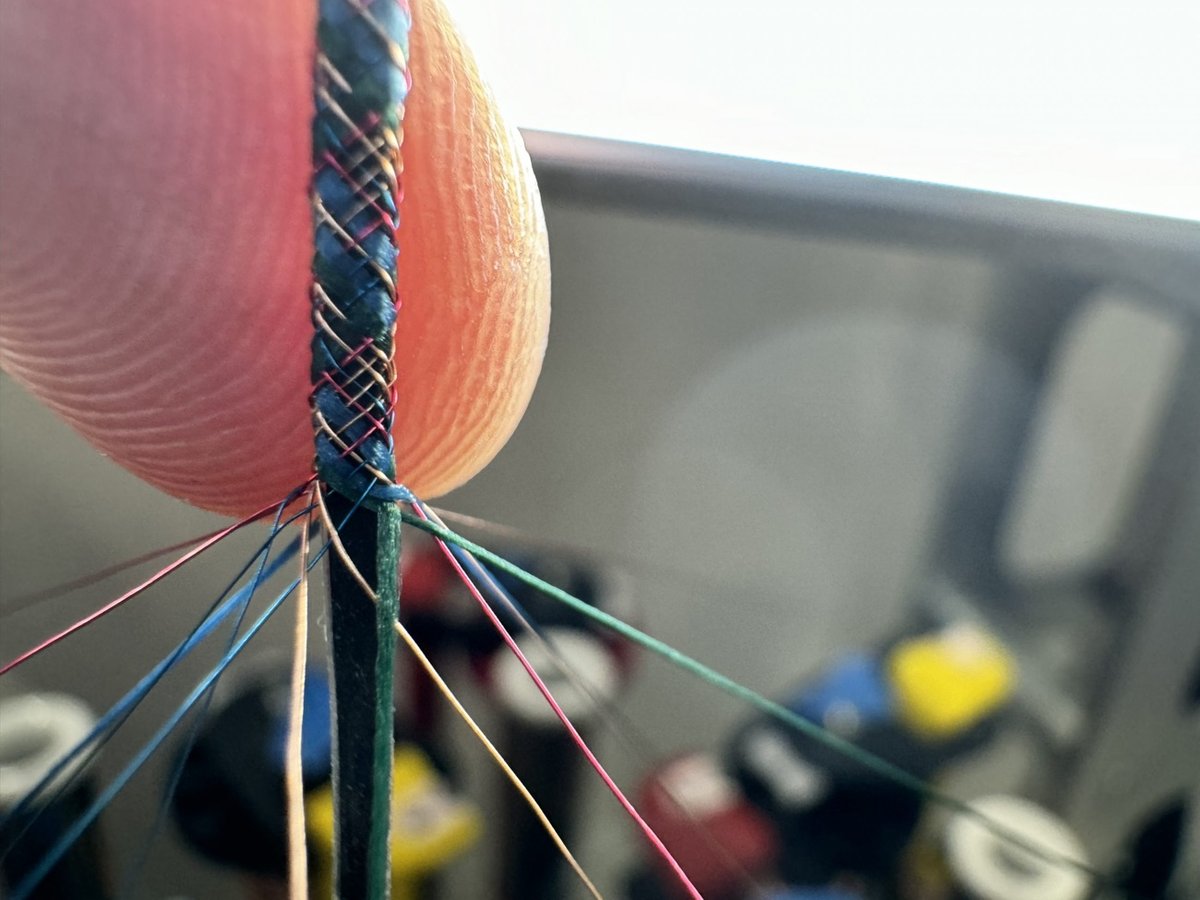
27. Researchers at MIT have developed a fibre computer that is stretchable and machine washable with 6 hours of battery life, weighing about as much as a sheet of A4 paper. [Nikhil Gupta & co]
49. Marchetti’s Constant is the idea that throughout human history, from cave dwellers to ancient Greeks to 21st century Londoners, people tend to commute for about an hour a day — 30 minutes out, 30 minutes home. So faster travel leads to longer distances, not less time. [Cesare Marchetti, plus a 2025 update]
In a 2014 preface for his 1978 book The Ohlone Way, a description of how the indigenous peoples of California’s Bay Area lived before Europeans arrived, Malcolm Margolin shared a list of what he thought constituted a healthy society:
- Sustainable relationship with the environment. In a healthy society, the present generation doesn’t strip-mine the soil, water, forest, minerals, etc., leaving the future impoverished and the beauty of the world degraded.
- Few outcasts. A healthy society will have relatively few outcasts — prisoners, homeless, unemployed, insane.
- Relative egalitarianism. The gap between those with the most wealth and power and those with the least should be moderate, and those with the least should feel protected, cared for, or rewarded in some other way.
- Widespread participation in the arts.
- Moderation or control of individual power.
- Economic security attained through networks of family, friendship, and social reciprocity rather than through the individual hoarding of goods.
- Love of place. The feeling that one lives with emotional attachment to an area that is uniquely beautiful, abundant in natural recourses, and rich in personal meaning.
- Knowing one’s place in the world. A sense, perhaps embodied in spiritual practice, that the individual is an insignificant part of a larger, more abiding universe.
- Work is done willingly, or at least with a minimum of resentment.
- Lots of laughter.
(thx, swati)
In looking over the shortlist for the Astronomy Photographer of the Year 2025 competition, I thought about how I’ve seen thousands or even tens of thousands of incredible astronomical images and yet there are always new, mind-blowing things to see. Like this 500,000-km Solar Prominence Eruption by PengFei Chou:

Or Close-up of a Comet by Gerald Rhemann and Michael Jäger:

Or Electric Threads of the Lightning Spaghetti Nebula by Shaoyu Zhang (Lightning Spaghetti Nebula!!!):

Or Dragon Tree Trails by Benjamin Barakat:

Teasingly, the official site only has a selection of the shortlisted entries but if you poke through the posts at Colossal, PetaPixel, and DIY Photography, you can find some more of them. (via colossal)
In 1966, Huey Newton & Bobby Seale formed the Black Panther Party and wrote a 10-point manifesto of what the group stood for and what they wanted. Here’s the full text of the plan.
4. We Want Decent Housing Fit For The Shelter of Human Beings.
We believe that if the White Landlords will not give decent housing to our Black community, then the housing and the land should be made into cooperatives so that our community, with government aid, can build and make decent housing for its people.
5. We Want Education for Our People That Exposes The True Nature Of This Decadent American Society. We Want Education That Teaches Us Our True History And Our Role in the Present-Day Society.
We believe in an educational system that will give to our people a knowledge of self. If a man does not have knowledge of himself and his position in society and the world then he has little chance to relate to anything else.

Online bookseller bookshop.org recently released a list of their bestselling books of the year (so far). The list is quite a bit different than what you might see from larger booksellers and looks more like what your local bookstore has on their bestseller list. The top five:
- On Tyranny by Timothy Snyder. “Today, our political order faces new threats, not unlike the totalitarianism of the twentieth century. We are no wiser than the Europeans who saw democracy yield to fascism, Nazism, or communism. Our one advantage is that we might learn from their experience.”
- Careless People by Sarah Wynn-Williams. “An explosive memoir charting one woman’s career at the heart of one of the most influential companies on the planet, Careless People gives you a front-row seat to Facebook, the decisions that have shaped world events in recent decades, and the people who made them.”
- Sunrise on the Reaping by Suzanne Collins. “As the day dawns on the fiftieth annual Hunger Games, fear grips the districts of Panem. This year, in honor of the Quarter Quell, twice as many tributes will be taken from their homes. Back in District 12, Haymitch Abernathy is trying not to think too hard about his chances.”
- Parable of the Sower by Octavia Butler. “In the ongoing contest over which dystopian classic is most applicable to our time, Octavia Butler’s ‘Parable’ books may be unmatched.”
- We Can Do Hard Things by Abby Wambach, Amanda Doyle, and Glennon Doyle. “When you travel through a new country, you need a guidebook. When you travel through love, heartbreak, joy, parenting, friendship, uncertainty, aging, grief, new beginnings — life — you need a guidebook, too. We Can Do Hard Things is the guidebook for being alive.”
Others on the list that caught my eye:
- One Day, Everyone Will Have Always Been Against This by Omar El Akkad. “From award-winning novelist and journalist Omar El Akkad comes a powerful reckoning with what it means to live in a West that betrays its fundamental values.”
- James by Percival Everett. “A brilliant, action-packed reimagining of Adventures of Huckleberry Finn, both harrowing and darkly humorous, told from the enslaved Jim’s point of view.” (So, so good.)
- Let This Radicalize You by Kelly Hayes and Mariame Kaba. “What fuels and sustains activism and organizing when it feels like our worlds are collapsing? Let This Radicalize You is a practical and imaginative resource for activists and organizers building power in an era of destabilization and catastrophe.” (Buy direct from the publisher.)
- The Artist’s Way by Julia Cameron. “A revolutionary program for personal renewal, The Artist’s Way will help get you back on track, rediscover your passions, and take the steps you need to change your life.” (I think I saw, via Insta, Doechii reading this recently.)
- Bad Company by Megan Greenwell. “A timely work of singular reportage and a damning indictment of the private equity industry told through the stories of four American workers whose lives and communities were upended by the ruinous effects of private equity takeovers.”
In 1987, Wendell Berry wrote an essay called Why I Am Not Going to Buy a Computer. In it, he outlined his standards for adopting new technology in his work.
- The new tool should be cheaper than the one it replaces.
- It should be at least as small in scale as the one it replaces.
- It should do work that is clearly and demonstrably better than the one it replaces.
- It should use less energy than the one it replaces.
- If possible, it should use some form of solar energy, such as that of the body.
- It should be repairable by a person of ordinary intelligence, provided that he or she has the necessary tools.
- It should be purchasable and repairable as near to home as possible.
- It should come from a small, privately owned shop or store that will take it back for maintenance and repair.
- It should not replace or disrupt anything good that already exists, and this includes family and community relationships.
The whole essay is worth a read, especially now as contemporary society is struggling to evaluate and find the proper balance for technologies like social media, smartphones, and LLMs. (via the honest broker)
For The Guardian, the film critic Guy Lodge has complied a list of 25 films that “shed light on the US under Trump”. From the introduction by filmmaker Alex Gibney:
This is a dire moment in the US. It’s a moment where there’s an opportunity for people with a lot of money to rip apart all of the guidelines enacted by the Roosevelt administration, way back in the day, to guard against the brutality of unfettered capitalism. Capitalists like to have all the power that they want, whenever they want it. They’re not much interested in democracy either, it turns out. Nor, apparently, the rule of law. The government is not the solution — it’s the problem. And now a vengeful president who just wanted a get-out-of-jail-free card is going to punish his enemies and show us all how to destroy the American administrative state by using the big stick of Elon Musk’s chequebook.
Here are a few of the films and their trailers — you can check out the article for the rest.
I Am Not Your Negro (Raoul Peck, 2016):
Election (Alexander Payne, 1999):
White Noise (Daniel Lombroso, 2020) {Note: this is not the DeLillo adaptation}:
American Factory (Julia Reichert and Steven Bognar, 2019):
I’m curious…what films would you add to the list?

From Choose Democracy and Build the Resistance, Boycott Central is a fledgling resource about boycotts. I found this checklist of requirements for effective boycotts really interesting & useful:
- a target (who is supposed to change behavior)
- a demand (so the target knows what they have to do to get the boycott to stop)
- boycotters (a lot of people who used to be customers refusing to be customers anymore)
- leadership/negotiation committee (people who can show the target they’re hurting their bottomline and negotiate over demands)
- a way to communicate with the boycotters (a structure and massive social reach!).
They go on to note that most of the recent boycotts, including the Feb 28th one, do not meet these criteria — but that we shouldn’t despair: “boycotts take some time to organize well”. As others have noted, the activism & organizing muscles of many Americans have atrophied in recent years, and it will take time to get ourselves into shape. Boycotts are like anything else…you need to practice in order to get better.
See also The Complete History of the Famed Delano Grape Strike. (via @prisonculture.bsky.social)
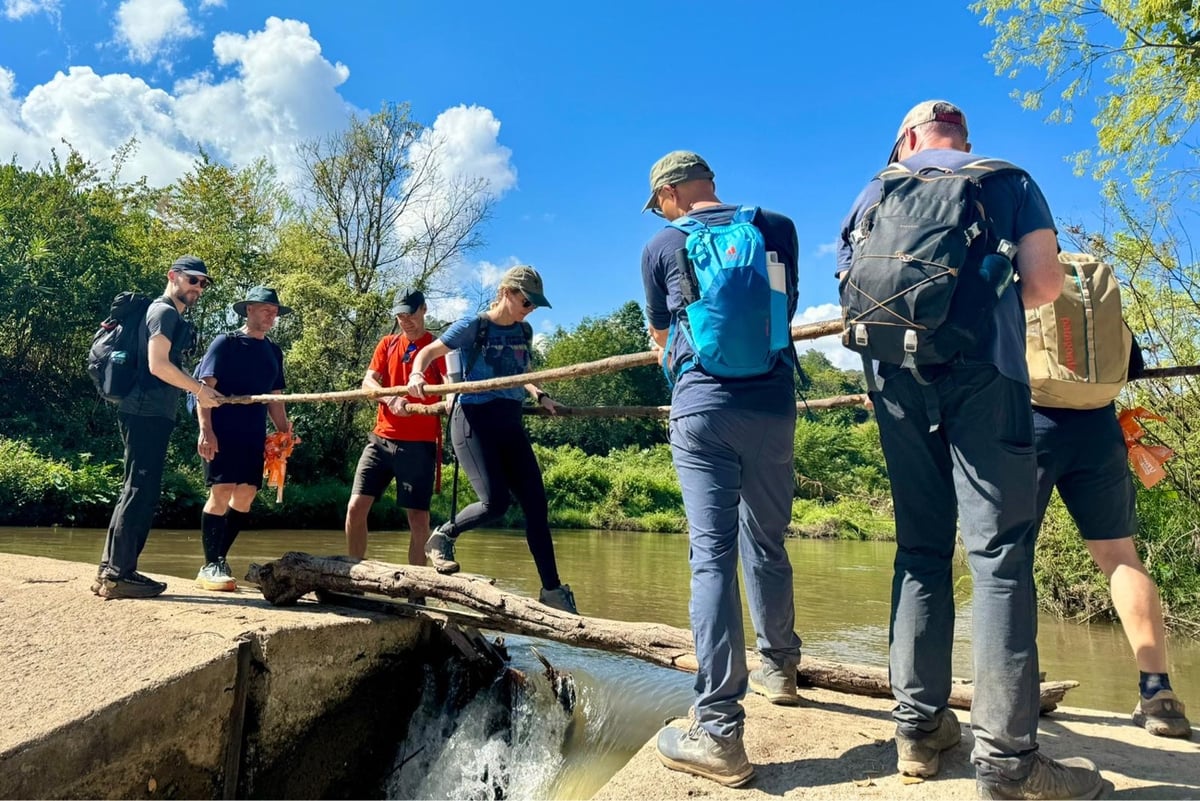
Kevin Kelly is the biggest traveller I know and he recently shared some of the advice he’s learned over his 50+ years on the road. Here are a few of my favorites:
If you hire a driver, or use a taxi, offer to pay the driver to take you to visit their mother. They will ordinarily jump at the chance.
Crash a wedding. You are not a nuisance; you are the celebrity guest!
When visiting a foreign city for the first time, take a street food tour.
Co-sign on the food tour. I’ve been doing this for the past few years and it’s such a good way to orient yourself in a new place.
The most significant criteria to use when selecting travel companions is: do they complain or not, even when complaints are justified? No complaining! Complaints are for the debriefing afterwards when travel is over.
Sketchy travel plans and travel to sketchy places are ok. Take a chance. If things fall apart, your vacation has just turned into an adventure. Perfection is for watches. Trips should be imperfect. There are no stories if nothing goes amiss.
It is always colder at night than you think it should be, especially in the tropics. Pack a layer no matter what.
I packed a warm layer for my recent trip to Mexico and was shocked that I didn’t need it for the whole 10 days I was there.
The hard-to-accept truth is that it is far better to spend more time in a few places than a little time in a bunch of places.
To book a train anywhere in the world outside your home country, your first stop should be The Man in Seat 61, a sprawling website which will conveniently help you book the train you want.
If you are starting out and have seen little of the world, you can double the time you spend traveling by heading to the places it is cheapest to travel. If you stay at the budget end, you can travel twice as long for half price.
When asking someone for a restaurant recommendation, don’t ask them where is a good place you should eat; ask them where they eat. Where did they eat the last time they ate out?
Kelly also breaks travel down into two modes: retreat or engage, which reminds me of this recent interview with Rick Steves.
In a piece called The Chilling Consequences of Going Along With Trump, Russian exile M. Gessen outlines the five different types of arguments used by people & institutions when they engage in “anticipatory obedience” (aka, obeying in advance). For example:
The second argument is the higher-purpose argument, which is a close cousin of collective hostage-taking. In 2012, during the winter when more than 150,000 Russians protested against rigged elections and Putin’s intention to assume the presidency for a third term, a popular actress, Chulpan Khamatova, broke ranks with the liberal intelligentsia and came out in support of Putin. Khamatova had co-founded an organization that helped children with cancer. She faced some criticism but said, “If it meant that another hospital was built, I would do the same thing again.” Her dignity was, after all, a small price to pay for saving children’s lives.
I suspect that some American hospital administrators who are discontinuing trans care for young people are using similar logic: To serve their patients, they must protect their federal funding — even if this means that they stop serving another group of patients.
In deciding the Oscar Best Picture winners from 1927-2023, let’s say you relied on the contemporary ratings of films on Letterboxd instead of the Academy vote totals of the time. Sometimes, you’d get the same answers but rarely. You’d get lots more foreign films from directors like Ozu, Kurosawa, Truffaut, Leone, Bergman, and Tarkovsky. You’d get Best Picture wins for The Empire Strikes Back (over Ordinary People), Do the Right Thing (over Driving Miss Daisy), and Brokeback Mountain (over Crash). And Paddington 2!
Looking at just one year, 1999 was a good one for movies but the Oscar nominees were on the safer side:
American Beauty
The Cider House Rules
The Green Mile
The Insider
The Sixth Sense
Here’s the Letterboxd list from 1999, ranked by rating (more than 1K ratings):
Fight Club
The Iron Giant
The Green Mile
Magnolia
All About My Mother
The Matrix
The Straight Story
Beau Travail
The Insider
Being John Malkovich
American Beauty and The Sixth Sense are further down the list and The Cider House Rules is nowhere to be found. Anyway, interesting to compare!
From The Atlantic Science Desk, 77 Facts That Blew Our Minds in 2024. Some that caught my eye:
5. Your body carries literal pieces of your mom — and maybe your grandmother, siblings, aunts, and uncles.
15. The weight of giant pumpkins increased 20-fold in half a century.
19. In the Middle Ages, people took their pet squirrels for walks and decked them out in flashy accessories.
31. One breadfruit tree can feed a family of four for at least 50 years.
38. Classical composers used dice to randomly compose songs.
52. Dogs may be entering a new wave of domestication.
71. The 10,000-steps-a-day goal doesn’t originate from clinical science. Instead, it comes from a 1965 marketing campaign by a Japanese company that was selling pedometers.

Tom Whitwell just sent along his annual list of the 52 things he’s learned in the past year. As usual, there’s lots of fascinating things in there…here are some of my favorites:
3. There are just 16 trademarked scents in the US, including Crayola crayons, Playdoh, an ocean-scented soft play in Indiana and a type of gun cleaner that smells of ammonium and kerosene. [Via Gabrielle E. Brill]
9. Medellin in Colombia has cut urban temperatures by 2°C in three years by planting trees. [Peter Yeung]
14. In early 1980s San Francisco, several seat-slashing gangs operated on the BART transit system, deliberately generating extra fees and overtime payments for repairs. They’d use specific cutting patterns so the repair teams would know who to pay for the favour. [Dianne de Guzman, via Russell Davies]
24. If you drop a normal hair dryer into a fish tank full of tap water, it will carry on working, gently warming up the water. (NB Please do not try this.) [JD Stillwater]
38. Between 1926 and 1934, the average life-span of a light bulb fell from 1,800 hours to 1,200 hours, because a global cartel of lightbulb manufacturers fined anyone who made a longer-lasting bulb. [Markus Krajewski]
49. To avoid radio jamming, some Russian drones in Ukraine now trail a 10km long spool of super fine fibre optic cable behind them for steering and communication. [David Hambling]
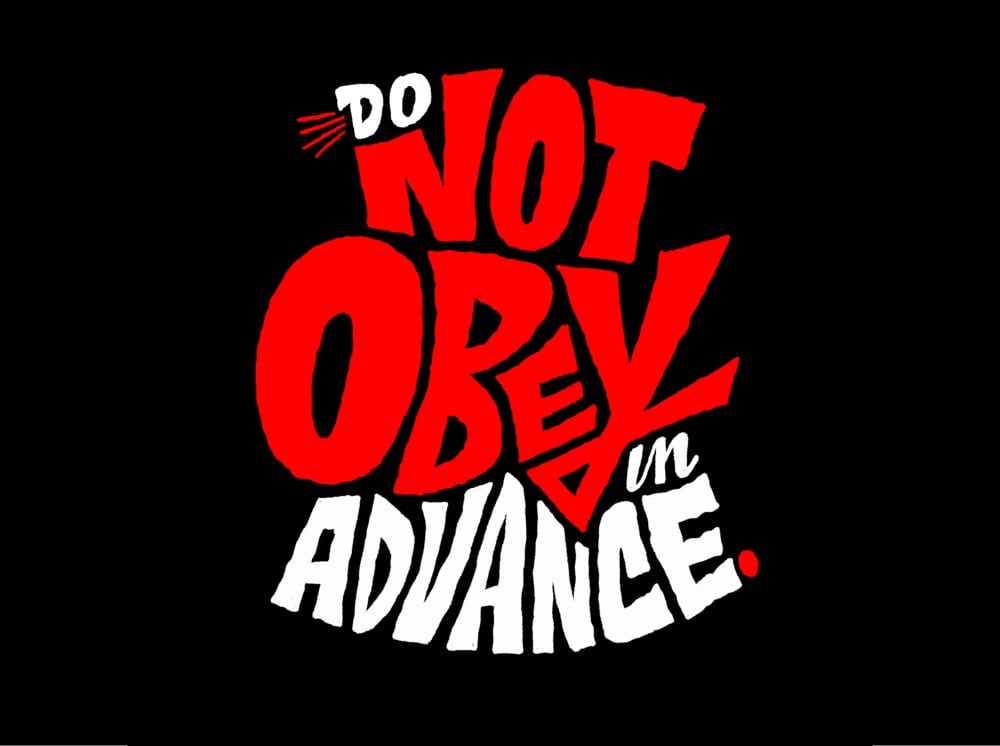
For The Observer, Carole Cadwalladr published a list of pointers on how to survive in Trumpist America, inspired by Timothy Snyder’s Fighting Authoritarianism: 20 Lessons from the 20th Century that was published in the wake of the 2016 election. Some of these are excellent:
1 When someone tells you who they are, believe them. Last week Donald Trump appointed a director of intelligence who spouts Russian propaganda, a Christian nationalist crusader as secretary of defence, and a secretary of health who is a vaccine sceptic. If Trump was seeking to destroy American democracy, the American state and American values, this is how he’d do it.
2 Journalists are first, but everyone else is next. Trump has announced multibillion-dollar lawsuits against “the enemy camp”: newspapers and publishers. His proposed FBI director is on record as wanting to prosecute certain journalists. Journalists, publishers, writers, academics are always in the first wave. Doctors, teachers, accountants will be next. Authoritarianism is as predictable as a Swiss train. It’s already later than you think.
5 You have more power than you think. We’re supposed to feel powerless. That’s the strategy. But we’re not. If you’re a US institution or organisation, form an emergency committee. Bring in experts. Learn from people who have lived under authoritarianism. Ask advice.
15 Remember. Writer Rebecca Solnit, an essential US liberal voice, emails: “If they try to normalize, let us try to denormalize. Let us hold on to facts, truths, values, norms, arrangements that are going to be under siege. Let us not forget what happened and why.”
This is a good time to revisit Snyder’s original list as well. Like Cadwalladr, I think about this one all the time:
1. Do not obey in advance. Much of the power of authoritarianism is freely given. In times like these, individuals think ahead about what a more repressive government will want, and then start to do it without being asked. You’ve already done this, haven’t you? Stop. Anticipatory obedience teaches authorities what is possible and accelerates unfreedom.
Note: Illustration by the awesome Chris Piascik.
From the staff at Rolling Stone, a list of the all-time best 100 episodes of TV. The rules: 1 episode per show, no reality (or talk shows or news or sketch comedy), and it’s mostly American shows (but, come on, no episodes of Fawlty Towers?)
I cannot help it, I love lists like these; here are a few of my favorites from the larger collection:
86. Black Mirror, “San Junipero” (Season 3, Episode 4)
83. The Fresh Prince of Bel-Air, “Papa’s Got a Brand New Excuse” (Season 4, Episode 24)
73. The Good Place, “Michael’s Gambit” (Season 1, Episode 13)
53. Six Feet Under, “Everyone’s Waiting” (Season 5, Episode 12)
50. The Last of Us, “Long Long Time” (Season 1, Episode 3)
38. The Bear, “Forks” (Season 2, Episode 7)
31. Deadwood, “Sold Under Sin” (Season 1, Episode 12)
25. Homicide: Life on the Street, “Three Men and Adena” (Season 1, Episode 6)
24. Fleabag, “Episode 1” (Season 2, Episode 1)
20. The Americans, “The Magic of David Copperfield V: The Statue of Liberty Disappears” (Season 4, Episode 8)
14. Succession, “Connor’s Wedding” (Season 4, Episode 3)
12. The Wire, “Middle Ground” (Season 3, Episode 11)
6. Mad Men, “The Suitcase” (Season 4, Episode 7)
5. Seinfeld, “The Contest” (Season 4, Episode 10)
2. The Simpsons, “Last Exit to Springfield” (Season 4, Episode 17)
So much to agree and disagree with here. Thoughts? Also: television!
Over at Politico, Anusha Mathur compiled 55 facts about Kamala Harris’s running mate, Minnesota governor Tim Walz. Here are some of my favorites:
3. Walz credits his rural upbringing for his values: “A town that small had services like that and had a public school with a government teacher that inspired me to be sitting where I’m at today. Those are real stories in small towns.”
6. Walz’s father, a school administrator, died of lung cancer when Walz was 19. Walz said this moment fueled his views on health care access: “The last week of my dad’s life cost my mom a decade of going back to work to pay off hospital debt.”
9. He still speaks Mandarin.
15. He was the faculty adviser for [Mankato West High School’s] first gay-straight alliance chapter in 1999.
24. Walz won re-election five times in southern Minnesota’s mostly rural, conservative 1st District, serving in the House for 12 years.
28. Walz once earned an “A” rating from the National Rifle Association and the group’s endorsement. In 2016, Guns & Ammo magazine included him on its list of top 20 politicians for gun owners.
29. He later denounced the NRA and supported gun-control measures, such as an assault weapons ban. During his first campaign for governor in 2018, the NRA completely downgraded his rating. “I had an A rating from the NRA. Now I get straight F’s. And I sleep just fine.”
33. Walz frequently defends his policies, such as the universal school meals bill signed into Minnesota law earlier this year, as common sense: “What a monster! Kids are eating and having full bellies so they can go learn and women are making their own healthcare decisions,” Walz said jokingly.
51. His tater tot hot dish - the unofficial dish of Minnesota - is three time champion of the Minnesota Congressional Delegation Hot Dish Off. He won in 2013, 2014 and 2016.
Ezra Klein’s interview with Walz (pre-VP pick) is well worth a listen. Here’s an exchange near the end of the interview:
Klein: If a Democrat is president in 2025 and there’s a governing trifecta, what do you think Democrats should pass first? What would make the biggest difference for people?
Walz: I think paid family and medical leave. We’re the last nation on earth basically to not do this. It is so foundational to just basic decency and financial well-being. And I think that would start to change both finances, attitude — strengthen the family.
If JD Vance is right about this: that we should make it easier for families to be together, then make sure that after your child’s born, that you can spend a little time with them. That’d be a great thing.
K: Great way of also seeing who in politics is actually pro-family and who just likes to talk about it.
W: Oh, it separates people quickly.
He also reiterated this point in the interview:
“Right now, Minnesota is showing the country you don’t win elections to bank political capital,” Walz said last year. “You win elections to burn political capital and improve lives.”
Reading that quote, I immediately thought of Lyndon Johnson and the Great Society; there’s a great podcast series about it hosted by Melody Barnes.
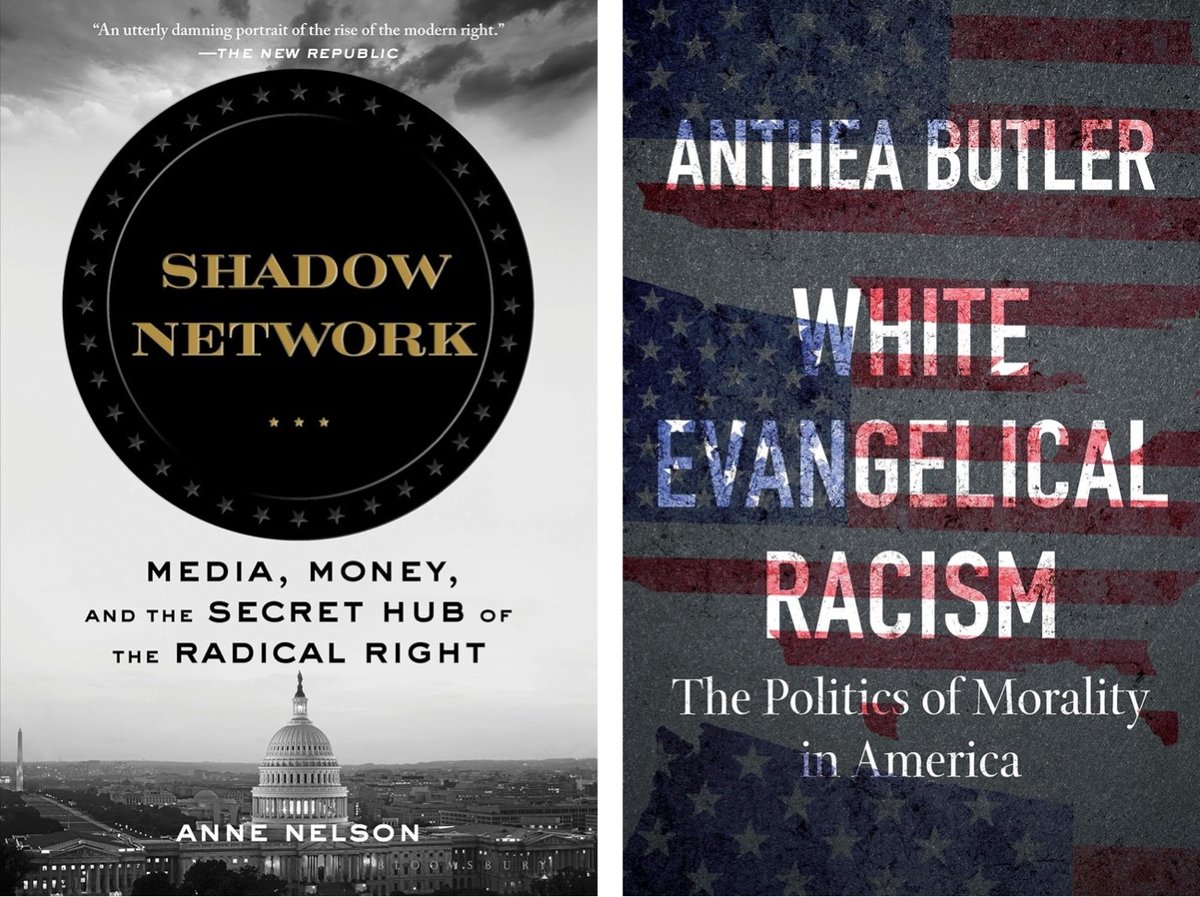
Dr. Mara Einstein is an author and media studies professor with a special interest in religion & cults and she recently shared a list of books to read and movies to watch “in order to get up to speed on Project2025 and where it came from” (specifically the evangelical aspects). Her first two book picks:
Shadow Network is the best book I’ve read that explains the Republicans’ strategy over the last 50 years. You will come to hate Paul Weyrich, and rightfully so.
Anthea Butler is the chair of religion at University of Pennsylvania. [White Evangelical Racism] ties together the connection among Rs, evangelicals and the racism it tries to hide.
And her top documentary pick:
[Bad Faith] is *the* best documentary on the topic and if you don’t do anything else, watch this. It’s free on Tubi and 99 cents on other outlets.
From Kendra Winchester at Book Riot:
Since Hillbilly Elegy came out in 2016, I’ve experienced countless people claiming to now “understand” where I come from and what Appalachian people are like. But they don’t think of my childhood watching my dad lose himself while arranging music on his piano or my grandfather tenderly nurturing plants in his ridiculously large garden. Instead, they imagine the stereotypes of J.D. Vance’s version of Appalachia, where the entire region is made up of poor rural white people consumed with violence who have no one to blame but themselves for their life circumstances.
Vance is of course the Republican VP candidate who once called Trump “America’s Hitler”, supports total abortion bans, and says he would not have certified the results of the 2020 election.
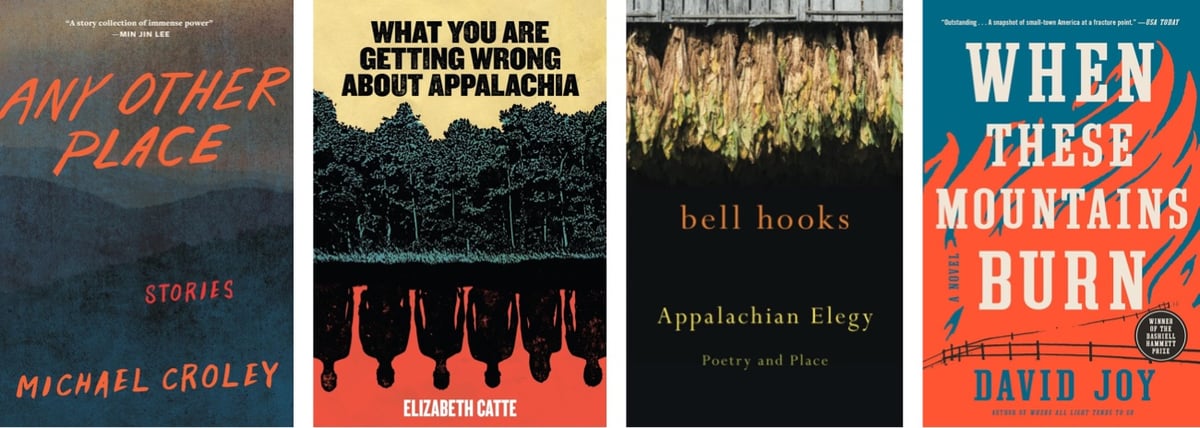
Winchester goes on to recommend fifteen books about Appalachia that will provide a clearer view of the region and the people who live there. They include:
What You Are Getting Wrong About Appalachia by Elizabeth Catte. “If you’re still wondering why Hillbilly Elegy is so problematic, I’d suggest starting with What You’re Getting Wrong About Appalachia.”
Appalachian Elegy: Poetry and Place by bell hooks. “In this poetry collection, she laments how Black Appalachians are all too often left out of narratives about Appalachia.”
Any Other Place by Michael Croley. “Croley’s perspective as a Korean American informs his writing as his stories deal with many topics around race, identity, and belonging.”
When These Mountains Burn by David Joy. “When These Mountains Burn features two men deeply impacted by the opioid crisis in Appalachia.”
See also Hillbillies Need No Elegy, an excerpt from Appalachian Reckoning: A Region Responds to Hillbilly Elegy.
From Timothy Snyder again, this time on what lessons we can draw on to prevent America’s collapse into fascism.
4. Big business should support democracy. In the Germany of the 1930s, business leaders were not necessarily enthusiastic about Hitler as a person. But they associated democracy with labor unions and wanted to break them. Seeing Hitler as an instrument of their own profit, business leaders enabled the Nazi regime. This was, in the end, very bad for business. Although the circumstances today are different, the general lesson is the same: whether they like it or not, business leaders bear responsibility for whether a republic endures or is destroyed.
I loved his succinct conclusion:
It’s simple: recalling history, we act in the present, for a future that can and will be much better.
From Dynomight, some common sense and straight-forward advice about travel. Some favorites:
1. Mindset matters more than where you go.
12. Clothes dry much faster with body heat.
22. If you spend a ton of money and stay in very expensive hotels and whatever, you can eliminate almost all of the frustration and uncertainty of travel. But it also feels like you never leave the global capitalist monoculture.
41. Many of the people who seem “best” at travel seem to be really good at having sensory experiences — at shutting down the internal dialog and letting the sights and sounds and smells wash over them. I am by nature horrendous at having sensory experiences, but if I make a conscious choice, then it’s pretty easy and often quite profound.
(via sippey)
Pete Wells wonders if the immersive experiences, theatrical spectacles, and endurance tests on The World’s 50 Best Restaurants list are even restaurants.
Gaggan, in Bangkok, was named not just the ninth-best restaurant in the world but the single best restaurant in Asia. The chef, Gaggan Anand, greets diners at his 14-seat table facing the kitchen with “Welcome to my …” completing the sentence with a term, meaning a chaotic situation, that will not be appearing in The New York Times. [The word is shitshow. Or clusterfuck. Or shitstorm. Any of which should be printed in The New York Times because it’s a fact relevant to a story. This writing around swearing has gotten as ridiculous as these restaurants. -ed]
What follows are about two dozen dishes organized in two acts (with intermission). The menu is written in emojis. Each bite is accompanied by a long story from Mr. Anand that may or may not be true. The furrowed white orb splotched with what appears to be blood, he claims, is the brain of a rat raised in a basement feedlot.
Brains are big in other restaurants on the list. Rasmus Munk, chef of the eighth-best restaurant in the world, Alchemist, in Copenhagen, pipes a mousse of lamb brains and foie gras into a bleached lamb skull, then garnishes it with ants and roasted mealworms. Another of the 50 or so courses — the restaurant calls them “impressions” — lurks inside the cavity of a realistic, life-size model of a man’s head with the top of the cranium removed.
I love going to restaurants and putting myself in their talented hands1 but just reading about some of these high-wire acts dressed up as restaurants leaves me cold. (thx, yen)
I really enjoyed this profile by William Finnegan of 75-year-old Jock Sutherland, who was one of the best surfers in the world in the late 60s and who still cherishes a good wave.
A surfer as famous as he was could have made enough money for an easy retirement, I thought, but Sutherland hadn’t cashed in. Surfing was never, to his mind, a job. Even when he was at the apex of the surfing world, he was unimpressed, stubborn. There was no pro tour in those days. “You could work for a board manufacturer, maybe have your own signature-model board,” he told me. “But that meant sell, sell, sell. That was…crass. I mean, the banality. It was antithetical to being able to enjoy being out in the water.”
Sutherland’s mom, Audrey, sounds like an amazing person:
Audrey drew up a list of things that every child should be able to do by age sixteen and stuck it on the wall. It read, in part:
- Clean a fish and dress a chicken
- Write a business letter
- Splice or put a fixture on an electric cord
- Operate a sewing machine and mend your own clothes
- Handle a boat safely and competently
- Save someone drowning using available equipment
- Read at a tenth grade level
- Listen to an adult talk with interest and empathy
- Dance with any age
This list changed with the times, adding computers and contraception, and nobody really kept score, but everybody got the idea.
Finnegan wrote Barbarian Days, a memoir of his life as a surfer — I loved it.
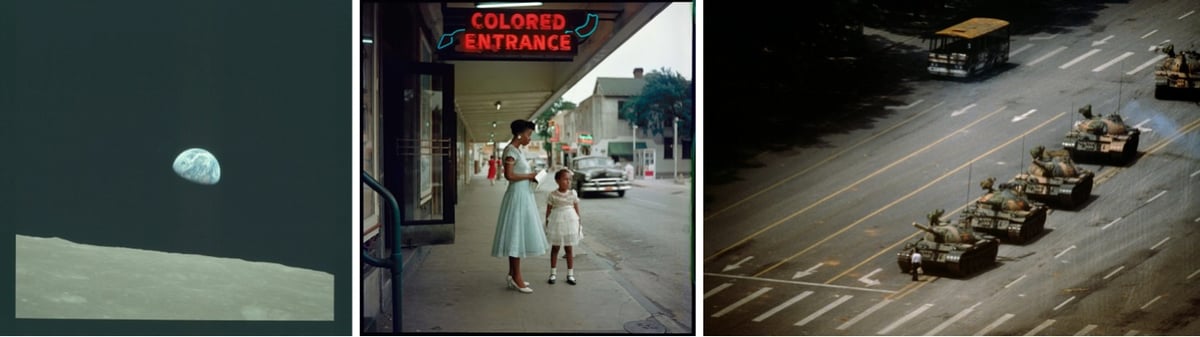
A group of photographers, editors, and curators recently convened to choose a list of “the 25 most significant photographs since 1955”. Choosing just 25 photos to represent 70 years of the richest visual era in human history is just an impossible task, so there’s bound to be some grousing about individual choices. (I love Beyoncé but really?) But the selection is fascinating, includes a few images I’d never seen before, and the accompanying discussion is worth reading.
I would love to see a process that asks for nominations across a
larger & broader range of folks and then whittle it down through ranked choice voting or pairwise ranking. Paging The Pudding…
Chosen by members of the Apple Music teams and a panel of experts (including Pharrell & Charli XCX), this is their list of the 100 Best Albums of all time (see also a text listing on Wikipedia). It’s an interesting list, worthy of argument and comparison to Rolling Stone’s list. Here’s the top 10:
1. The Miseducation of Lauryn Hill by Lauryn Hill
2. Thriller by Michael Jackson
3. Abbey Road by The Beatles
4. Purple Rain by Prince & The Revolution
5. Blonde by Frank Ocean
6. Songs in the Key of Life by Stevie Wonder
7. Good Kid, M.A.A.D City by Kendrick Lamar
8. Back to Black by Amy Winehouse
9. Nevermind by Nirvana
10. Lemonade by Beyoncé
You can stream all 100 albums on Apple Music and (unofficially, cheekily) on Spotify.
Older posts





Socials & More