


For instance, there is an engraved stone erected at the Buddhist Kan’ei-ji temple to “console the spirits of the flies, crickets, and grasshoppers that had been killed in the production of a scientific text”.

Advertise here with Carbon Ads
This site is made possible by member support. 💞
Big thanks to Arcustech for hosting the site and offering amazing tech support.
When you buy through links on kottke.org, I may earn an affiliate commission. Thanks for supporting the site!
kottke.org. home of fine hypertext products since 1998.
Beloved by 86.47% of the web.
Entries for October 2025


“The spread of dangerous infections that do not respond to antibiotics has been increasing by as much as 15 percent a year”, says the WHO. “The less people have access to quality care, the more they’re likely to suffer from drug-resistant infection.”

A House of Dynamite
From director Kathryn Bigelow comes A House of Dynamite (trailer), starring Rebecca Ferguson, Idris Elba, and Greta Lee.
When a single, unattributed missile is launched at the United States, a race begins to determine who is responsible and how to respond.
A House of Dynamite is out in theaters right now and will be on Netflix in a couple of weeks.
“The MUTE Series is a collection of one-take microfilms that report on the vagaries of human behaviour.” There are 3 rules for their films: no dialogue, no camera moves, one shot only.

A short documentary about the groundbreaking sound design of Dune: Part Two, featuring director Denis Villeneuve and sound mixers & designers from the film. I love the sound of both Dunes.
“The smartest design move isn’t chasing trends, it’s planting the tree and letting time do the work,” writes Dave Snyder. “Trees don’t pay off tomorrow. They pay off in a decade. They compound quietly, making everything around them better…”
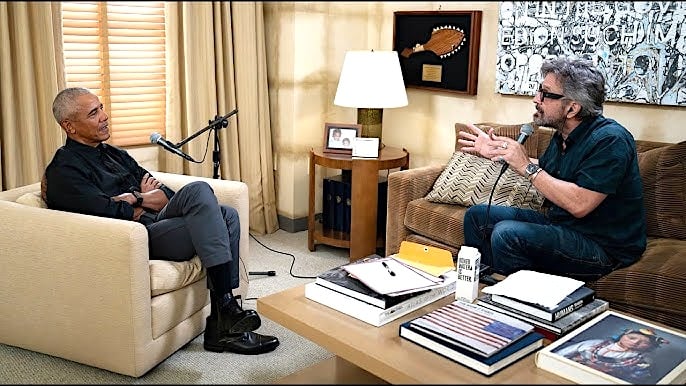
For the last-ever episode of his WTF podcast, Marc Maron interviewed Barack Obama. You can watch their hour-long conversation here.
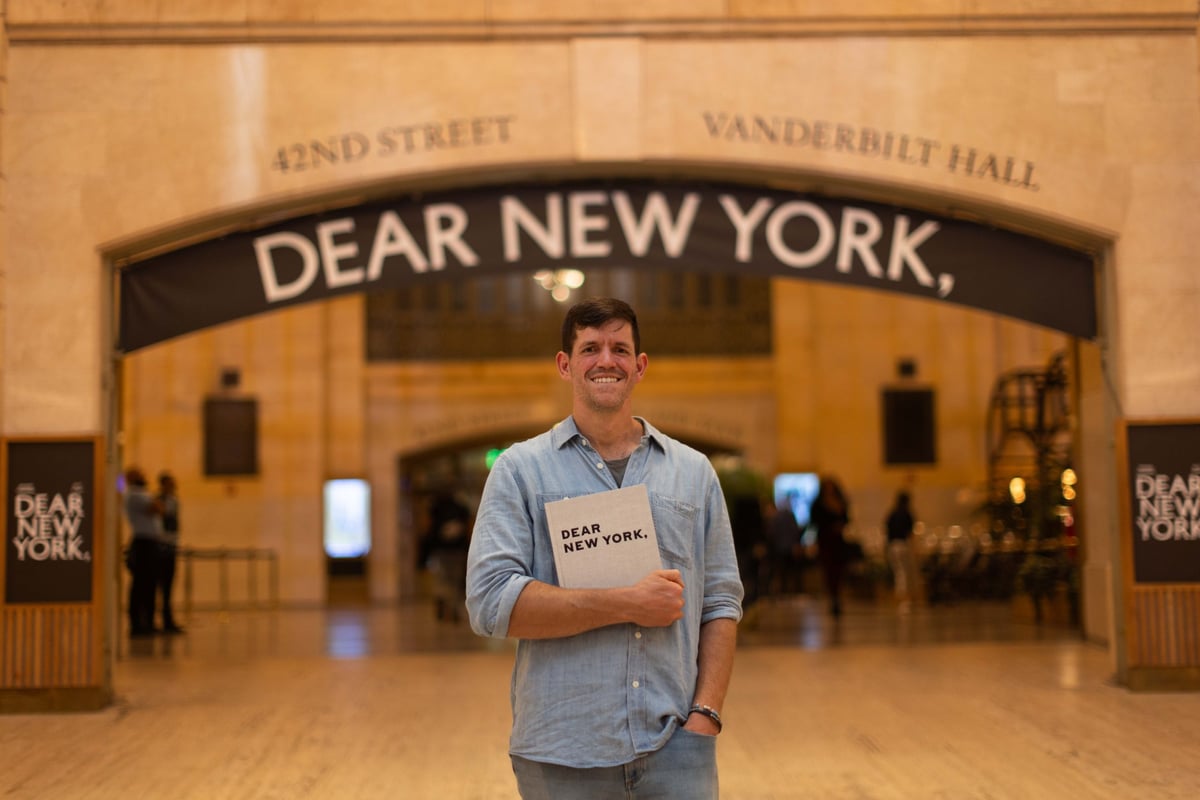
Humans of New York has taken over all of Grand Central Terminal for a huge art installation called Dear New York. “For the first time possibly ever, there is not a single ad to be seen in Grand Central Terminal.”

The Underscore Music Player
For the past several months, I’ve been using a web-based music player I built called Underscore. It’s playing music for me right now. I recently revamped & improved it and thought it was time to show it off. Here’s a screenshot:

Ok, let me explain. I listen to music all day while I’m working, favoring music without words — electronic, classical, soundtracks, ambient, nature sounds, that sort of thing. I listen to whole albums, long mixes, and playlists across several services, including Spotify, YouTube, and Soundcloud. It was becoming a pain in my ass trying to pick something to listen to while working; I’d have to scroll through playlists on all these different services and generally I’d end up listening to the same stuff over and over again, getting sick of it, getting distracted by choosing music, missing some gems buried deep in a list of saved albums, etc.
So, pair programming with Claude, I built Underscore, a “home-cooked meal” app that’s both simple and opinionated. Here’s how it works. You can add links to music from Spotify, YouTube, Soundcloud, Bandcamp, and Apple Music to it — just paste their share URLs in. Reloading the page gives you a random piece of music from your collection. You can see a list of the songs, videos, playlists, and albums in your collection and can hide them if you want. That’s it. That’s all it does.
There’s no APIs or authentication or auto-synching playlists. The music is played through embedded players and if it lands on something from Spotify, Apple Music, or Bandcamp, you’re gonna have to click the play button in the embedded player (Soundcloud and YT videos should play automatically (but don’t always for whatever reason)). When your current selection ends, the new random thing doesn’t automatically play…you need to refresh the page.
It’s not ideal, having it be a little bit manual and janky in this way. But oh boy, am I loving this thing. It took me awhile to get everything into the system, but I’ve got almost 300 resources in my collection now — probably 300-400 hours of music all told — and I listen to it all day while working. I’m listening to stuff from deep in the archives, albums and playlists I just wouldn’t have thought to play, when strapped for time in the rush to get to work. When something new comes along, like NIN’s Tron: Ares soundtrack, I add it in there. I don’t get distracted…I just get good music for flow/coding/writing all the live-long day.
The background animation was adapted and extended from one of the examples in Rick Rubin’s The Way of Code — there are a bunch of different patterns and colors that it cycles through. I’m kinda proud of the way the media embeds fade into 1-bit images so you can see the background behind them when they’re playing…dorking around with CSS & web design is still super fun.
And but so anyway, I built Underscore for myself, to scratch an itch, but recently thought that it would be relatively easy to add other users to it. So, if you’re a logged-in member of kottke.org, you can build your own collection and play it with Underscore; just head right this way. If you’re not a KDO member, you can still check it out…but the only thing it does is play my music collection (which has some good stuff in it IMO). Fair warning: aside from this post, there is no onboarding. You may be confused as to how it works. But it’s simple enough that you quickly figure it out. Due to lack of auto-shuffle, it’s not worth using if you’re adding stuff that’s under ~30 minutes in length — Underscore is for albums, long tracks, playlists, etc.1 Caveat emptor. You break it, you buy it. Etc. Etc. If you try it out, let me know what you think in the comments below. Suggestions or improvements welcome.
- Yes, I finally built my long-wanted shuffle-by-playlist/album music player. And it works with more than just Spotify or Apple Music!↩
Minute/Year is an art piece/installation where the sound occurring in a space for a single minute is recorded each day. Simultaneously, the previous day’s recording is played back. So each day’s recording features something of the previous day.

Missed this from a few days ago: the winners of the 2025 MacArthur Fellowship. “I think this year, we see empathy and deep engagement with community figures prominently in this class.”
ILM Visual Effects Artist Breaks Down Hidden VFX
If you were one of those people who loved watching DVD extras, you’ll enjoy the hell out of ILM visual effects artist Todd Vaziri breaking down some of the special effects that he and his team have worked on, including Rogue One, The Force Awakens, and Dungeons and Dragons: Honor Among Thieves. Introducing the video on his site, Vaziri writes:
My goal was to highlight the artistic process of visual effects. Movies like the ones I highlight in the video are crafted by hundreds of artists, technicians and production folks, all working together to achieve the vision of the director. I’m so proud to have worked with such amazing crews over the years.
Many of the effects he highlights aren’t the obvious ones — monsters, digital Leia, lightsaber battles — but rather effects that you’d never notice — indeed effects that you shouldn’t notice because they are designed to be seamless. Like a “dust poof” from a slingshot shot — it registers and helps sell the scene, but you’d never think, “oh, that’s an effect”.
The whole thing is fascinating — and the rope thing is genius.
An oddly fascinating video on the Barney Google comic strip, which began in 1919 and is somehow still running (it’s called Snuffy Smith now). Interesting how art forms shift through innovation and evolution with society at large.
I love the synchronized waves that these Himalayan giant honey bees use against their hornet predators.
Can You Recommend a Good Bookmark Manager?
I know I’m opening up a can of bees here, but I am in the market for a bookmark manager. I’ve got a good workflow going for potential KDO fodder, but my, um, system of Chrome bookmarks + memory + pasting links & snippets into the Notes app for other stuff (travel, bikes, design, internet, movies, etc.) is stretched past the breaking point. Here are some thoughts on what I’d like:
- I’m looking to store lightly annotated URLs. I don’t want to organize links into collections or obsessively tag things — mostly I just want to throw everything into a big bucket and use search to find stuff. (Search should include the text of the original source, not just my annotations)
- That said, if some AI thinger can organize things into buckets based on topic or, better yet, provide “more like this” for links, I would not be opposed.
- Keeping backups of URLs in case of linkrot would be a great feature to have.
- Can be cloud or self-hosted.
- Happy to pay a reasonable subscription.
- I’d like whatever I go with to be around for awhile. So probably not some hot new app that’s 3 months old (unless it’s really something special) or a Google app like NotebookLM (the streets still remember Google Reader, cut down in its prime).
- Should be able to easily add links and access my library from my phone & computer (ideally with apps instead of through a browser) and the web.
- I’m looking for a bookmark manager, not a read-it-later app (Instapaper) or a note-taking app (Obsidian) or whatever Notion is (I actually don’t know).
- An API would be nice.
Raindrop.io seems like an obvious choice; what else should I consider? Does the “throw everything in one big bucket” approach even work? What features/needs am I missing? Come on you info nerds, let me have it with both barrels. I’d love to hear your experiences and recommendations on apps that you use & love and others to steer clear of.
Venezuelan opposition leader María Corina Machado wins the Nobel Peace Prize. “When authoritarians seize power, it is crucial to recognize courageous defenders of freedom who rise and resist.”

“ShadeMap is a global simulation of mountain, building and tree shadows for any date and time. ShadeMap calculates shadow positions in realtime and displays them on a map.”

Hokusai. Thirty-Six Views of Mount Fuji.



This book, from Taschen, looks amazing. Bound in Japanese style, it’s a reproduction of Katsushika Hokusai’s Thirty-six Views of Mount Fuji, a collection of woodblock prints of which the most famous is the Great Wave.
The prints illustrate Hokusai’s own obsession with Mount Fuji as well as the flourishing domestic tourism of the late Edo period. Just as the mountain was a cherished view for travelers heading to the capital Edo (now Tokyo) along the Tōkaidō road, Mount Fuji is the infallible backdrop to each of the series’ unique scenes. Hokusai captures the distinctive landscape and provincial charm of each setting with a vivid palette and exquisite detail. Including the iconic Under the Great Wave off Kanagawa (also The Great Wave), this widely celebrated series is a treasure of international art history.
This XXL version of the book is available at Taschen ($175), Bookshop ($210), and Amazon ($158). A smaller version of the book comes out in a few months and can be pre-ordered from Taschen ($80), Bookshop ($74), and Amazon ($80).
If you google around, there are claims of people with a max vertical jump of 55+ inches, but the official record seems to be 51” by Darius Clark (he touched 12’4” w/ a standing reach of 8’1”). It’s incredible how high in the air he gets.
“It turns out playing God is neither difficult nor expensive.” That line was written about the CRISPR-Cas9 genome editing tool but I’d argue that the increasing power of individuals is the defining challenge of modernity.

The Evolution of the YouTube Progress Bar (2005-2025)
Since launching in 2005, YouTube has changed the progress/volume/tool bar on their video player several times. Here’s what it’s looked like through the years:1

I don’t remember the first two or three at all, but that 2008-2010 version is a nostalgia bomb, albeit a deceptive one. You might be fooled into remembering that it used to be very simple, but the whole progress/tool bar is cut off in the graphic above; here’s the full version.
I’d love to see versions of this for iTunes/Apple Music, Spotify, and other players.

A Data Love Letter to the NYC Subway
Giorgia Lupi and her team at Pentagram have created a data-driven animation for the MTA called A Data Love Letter to the Subway.


More from Lupi (who calls this an “absolute dream project”):
The project, “A Data Love Letter to the Subway,” visualizes each train line as a character whose unique qualities are extracted from MTA data. Data like length, location, and transfers were abstracted into train behaviors and attributes. Imaginatively animating each train line’s age, length, and path, we wrote a poetic story that explores the trains’ interwoven encounters with commuters and one another.
Our “Love Letter” draws on the elemental nature of picture books to unpack the visual system of the subway with curiosity and wonder. Drawing from the MTA’s Open Data Program, with my team we translated train data into a narrative made of attributes and behaviors, providing a rich view of the interactions, roles, differences, and the connections made and sometimes missed within the subway ecosystem.
Maps, NYC, the subway, data visualization…I am not sure how much more in my wheelhouse a thing could be.
“We’ve put together a reading list about capitalism, imperialism, policing, and the politics and strategies of anti-war resistance movements of the past and present — tools in the struggle against repression, surveillance, and state violence.”

An interview with Ann Goldstein, Elena Ferrante’s English translator. “I had never heard of Ferrante. I didn’t know anything about her. I still don’t know anything about her.”

Bird Photographer of the Year for 2025
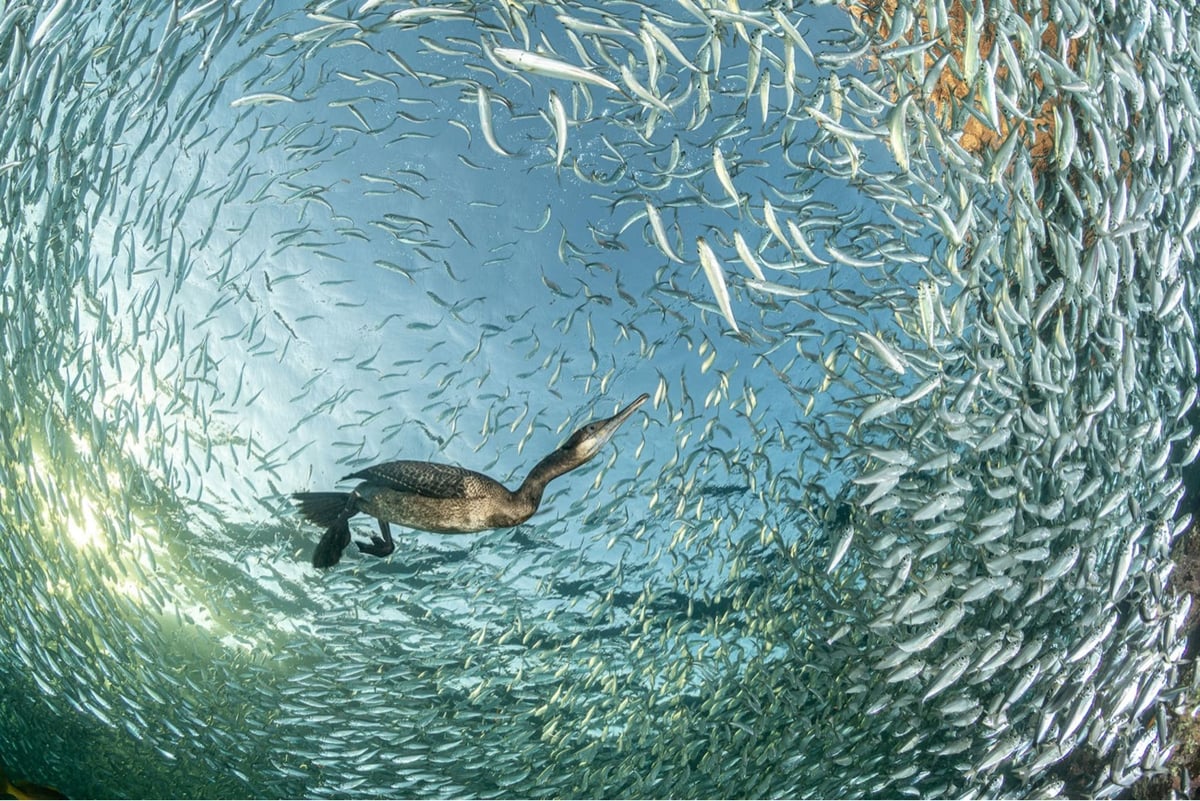
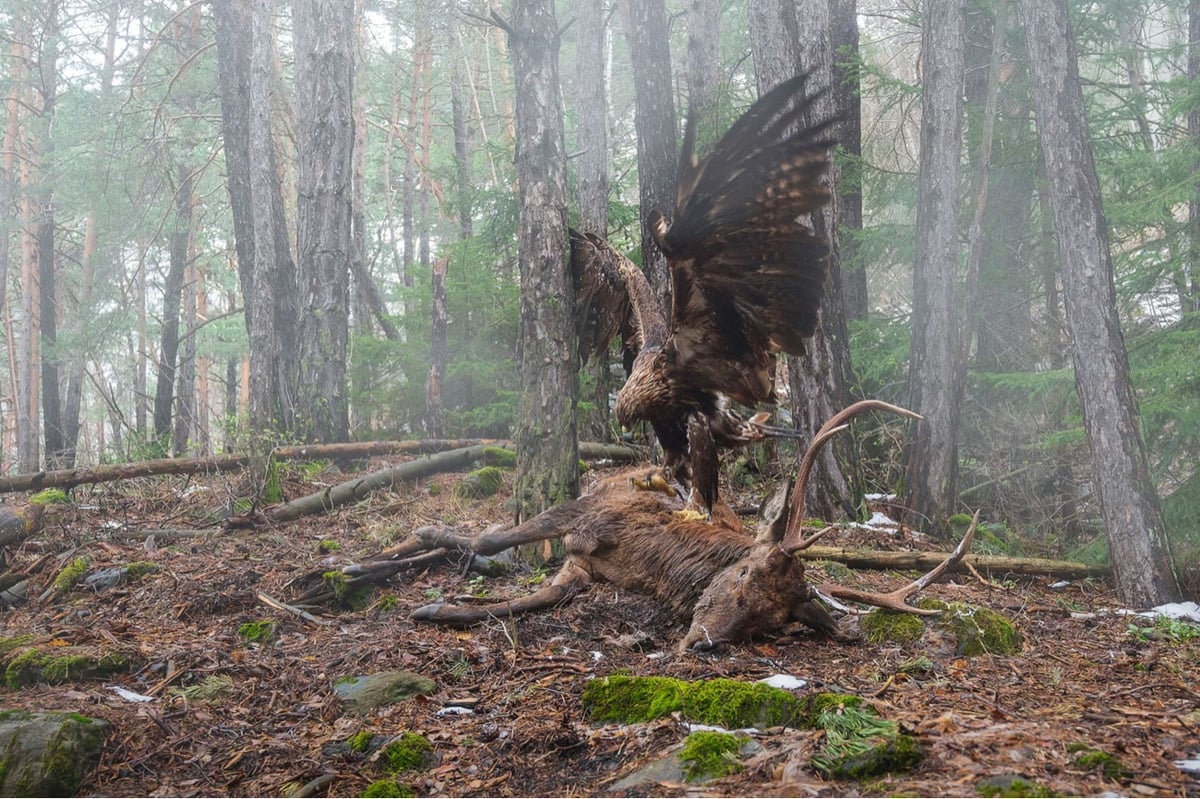
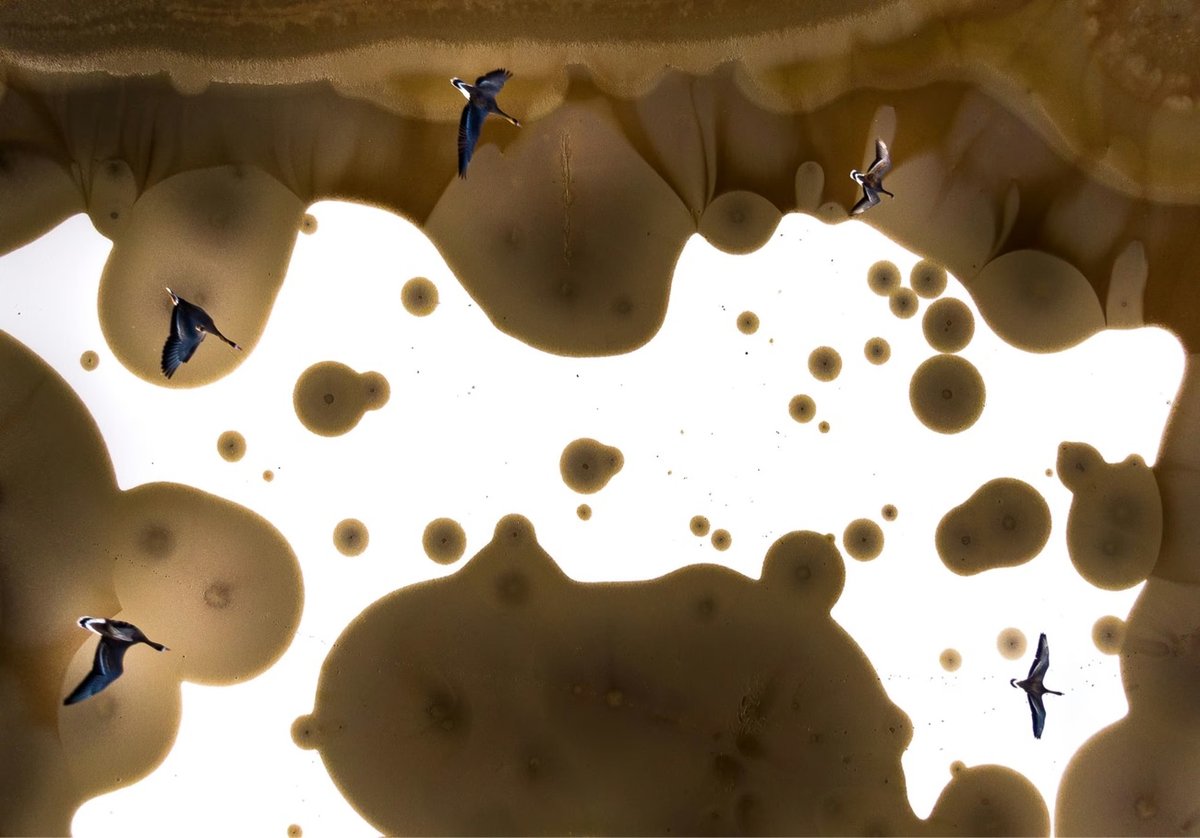

The organizers of the Bird Photographer of the Year competition received more than 33,000 images for 2025’s contest; here are the winners and runners-up. Photos above by Franco Banfi, Francesco Guffanti, Tibor Litauszki, and Andreas Hemb.
If you have no idea what you’re seeing in that third photo by Tibor Litauszki, you’re not alone — even after reading the photographer’s description (courtesy of In Focus), I can’t figure it out:
It was January and nature had created some very interesting shapes in the saline lakes near Akasztó in Hungary. I sent up my drone and was looking for the right composition when a dozen geese suddenly flew into view. I immediately started taking photos and luckily everything fell into place — the composition as well as the geese.
And eagles? Huge monsters. Dinosaurs never went extinct. (via in focus)
This is a lovely & thoughtful essay on the messiness of teaching and learning, an alchemy endangered by efficiency & automation. “What A.I. can’t do is feel the shape of silence after someone says something so honest we forget we’re here to learn.”

The Oatmeal’s take on AI art. “When I consume Al art, it also evokes a feeling…until I find out that it’s Al art. Then I feel deflated, grossed out, and maybe a little bit bored. This feeling isn’t a choice.”

The Family of Migrants is a new book & museum exhibition that tells the story of the past 120 years of human movement in photographs.

As they labor to fight off the slop bots, Wikipedia maintains a fairly extensive list of signs & tells that text was written by AI. “This list is descriptive, not prescriptive; it consists of observations, not rules.”
Muhammad al-Zaqzouq writes about using his books for cooking fuel. “Let’s use one or two for now, and when the war’s over you can replace them. The kids need food more than they need to be read to.”

Knit Hello, a Simple Typeface for Knitting
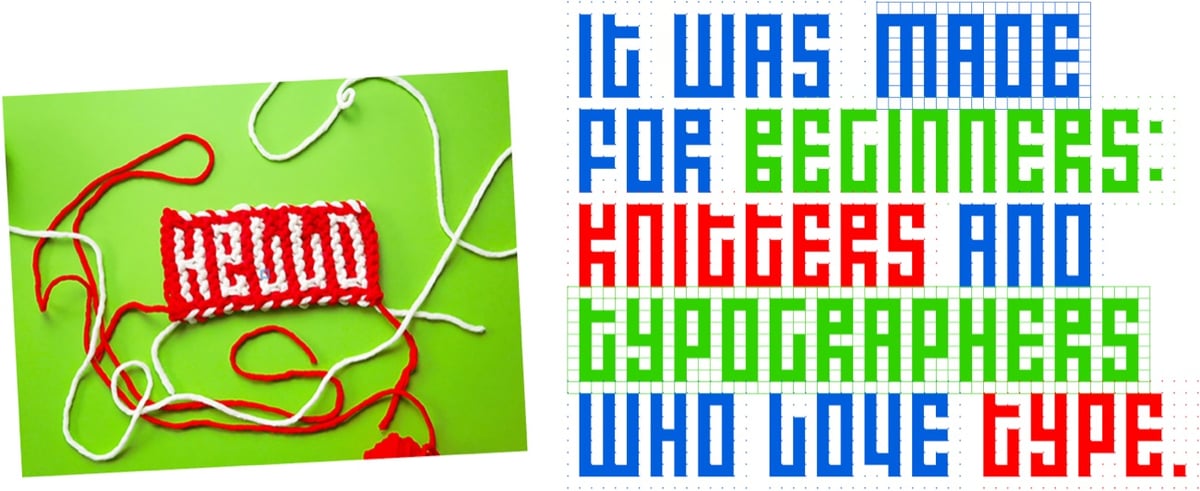


Designer Rüdiger Schlömer has created a new typeface for beginning knitters called Knit Hello.
Knit Hello is a typeface for hand knitting. It was made for beginners: knitters and typographers who love type.
You may remember Schlömer from his Futura-based Knit Grotesk. And of course, the earliest bitmap letters weren’t found on a computer screen; blocky letters have been used in cross stitch and knitting for hundreds of years. (via colossal)
A list of laws, theories, principles and patterns that software developers might find useful, including the 1% Rule and “institutions will try to preserve the problem to which they are the solution”.
The Movies That Defined Gen X. Ferris Bueller, The Breakfast Club, Do the Right Thing, Clerks, Dead Poets Society, Pulp Fiction, Before Sunrise. “Not galaxies far away, not fairy tales. Parking lots, parade floats, dead ends, second chances.”

The trailer for Downey Wrote That, a documentary about long-time SNL writer Jim Downey. “Most of what makes us laugh is something that’s true, just you’ve never heard it put that way before.”
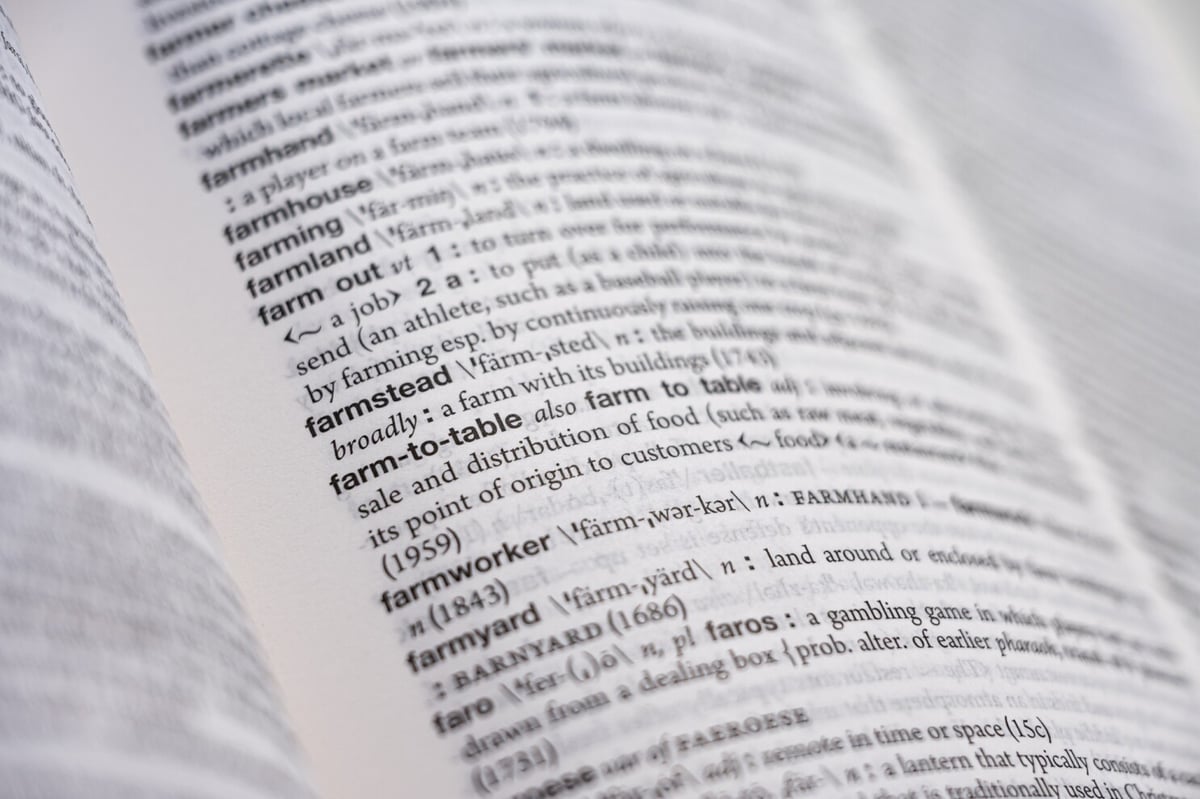
The first new edition of Merriam-Webster’s Collegiate Dictionary in 22 years contains a bunch of new words & phrases: cold brew, petrichor, doomscroll, adulting, beast mode, farm-to-table, etc.
The Onion made a movie about Jeffrey Epstein and they’re airing it for free on YouTube. Jeffrey Epstein: Bad Pedophile airs Thursday, Oct 9 at 7pm ET.
Bob Ross paintings to be auctioned to support public TV stations after federal funding cuts. What stage of anti-democratic capitalism is this? *paints huge, angry clouds*

Committing to the Bit
I thought this piece from Isaac Butler examining how Daniel Day-Lewis goes about his acting work was really interesting.
I have always been haunted in some way by Day-Lewis. He is clearly among the greatest living screen actors, with a career that includes several performances that no one else could have accomplished at his level. But from when I quit acting through to when I wrote my own book on The Method, until now, I have always wondered whether the brilliance he is capable of requires the lengths to which he drives himself. As his techniques have been adopted by a whole generation of self-serious actors both good (Christian Bale) and not (Jared Leto), I have also come to wonder if the legends are even true. It turns out that the answers to both questions are far more complicated than I thought.
As someone who used to write quite a bit about relaxed concentration, I was especially interested in this bit:
Another reason, the one I find most persuasive, is that if you are able to live as fully as possible in the imagined reality of the character, you enter a flow state where you stop thinking and start doing and being. Day-Lewis struggles most in interviews to answer questions that require what he terms “objectifying,” or thinking outside of the headspace of the character. When he is on set, he wants to never be objective, to never interrupt the process of being and doing in order to think. When asked once about specific physical gestures he made in There Will Be Blood, he replied, “my decision-making process has to happen in such a way that I’m absolutely unaware of it, otherwise I’m objectifying a situation that demands something different.” When asked about the meaning of Bill the Butcher in Gangs of New York, he said he can’t answer the question, because “there was no conscious intention to show him as one way or another.”
This state of pure being is the actor’s equivalent of when great athletes are “in the zone,” or the trance that a jazz improviser enters when they’re really cooking. The name for it is a Russian word, perezhivanie, which means experiencing.
Everything Is Becoming a Bank. “Most major corporations — from airlines to social media platforms — now aspire to become unregulated banks. Bankification today accounts for the highest profit margins in the US economy.”

“The world’s wind and solar farms have generated more electricity than coal plants for the first time this year, marking a turning point for the global power system.”

What Do You Do with the Mad That You Feel?
In 1969, Fred Rogers appeared before the Senate to argue against cutting federal funding for public broadcasting. During his testimony, Rogers recited a song from his show, What Do You Do with the Mad That You Feel? In this short video, Jon Lefkovitz accompanies Mister Rogers’ words with some music and short scenes from movies like Moonlight, The 400 Blows, Do the Right Thing, Lady Bird, 2001, and Return of the Jedi.
Qualcomm buys open-source electronics firm Arduino. “Qualcomm said Arduino ‘will retain its independent brand, tools and mission.’” I wonder how long that independence will last…

I missed that NIN’s Tron:Ares soundtrack came out a couple of weeks ago. Listening this morning to catch up!

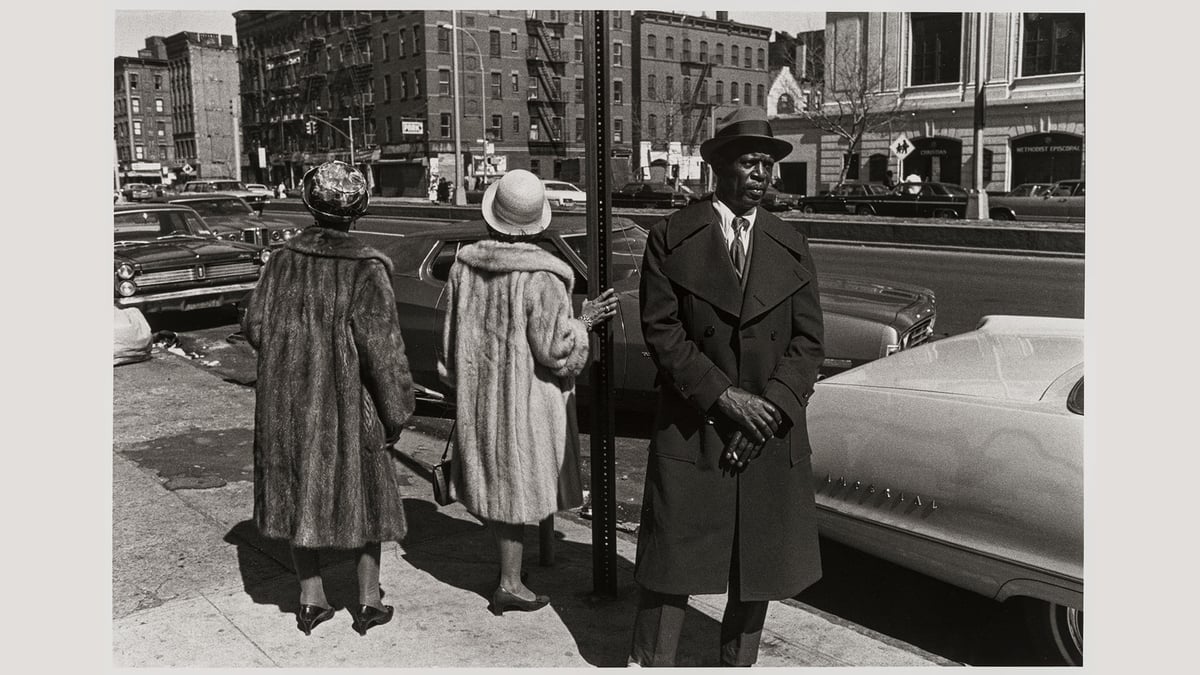
Upcoming exhibition from the MFA in Boston: “‘Faces in the Crowd: Street Photography’ explores the evolving techniques photographers have used to record the human experience as it has played out in populous urban spaces…”
The Mainstream Media Is Catastrophically Failing To Meet The Moment. “Mainstream media has become so terrified of appearing biased that they’ve abandoned their basic responsibility to clearly communicate truth to the public.”


The Taco Bell 50k Ultramarathon was run in Denver over the weekend. Competitors must eat at 9 out of 10 Taco Bells along the route. “By the 4th stop, all entrants must have consumed at least one (1) Chalupa Supreme or one Crunchwrap Supreme…”
Socials & More