


Advertise here with Carbon Ads

This site is made possible by member support. 💞

Big thanks to Arcustech for hosting the site and offering amazing tech support.

When you buy through links on kottke.org, I may earn an affiliate commission. Thanks for supporting the site!

kottke.org. home of fine hypertext products since 1998.

Beloved by 86.47% of the web.

🍔  💀  📸  😭  🕳️  🤠  🎬  🥔

Entries for October 2025

I’ve got this queued up to listen to on the Shinkansen later: Lane 8’s Fall 2025 Mixtape. Available on YouTube, Soundcloud, and Apple Music. I’ve added this to my Underscore collection too.

Reply · 2

Proof of life! I’m writing a longer post about my time in Kōyasan, but in the meantime, I made this Insta reel of some of the photos I took there.

Reply · 5

Walking the Earth

the Great Buddha and a group of adorably chapeaued schoolchildren at the Todai-ji Temple in Nara.

Hey folks. I’m going off the grid for a few days. Call it a spiritual retreat of sorts. I’ll be back soon; be well in the meantime.

The image is of the Great Buddha and a group of adorably chapeaued schoolchildren at the Todai-ji Temple in Nara.

Reply · 2

“I fell at the top of a mountain – and knew I had to haul my broken body down or die in the snow.” Holy moly, this is a harrowing tale.

Reply · 1

A Chinese naval officer who took part in D-Day wrote an 80-page diary of his time embedded with British forces. “Lam was part of a group of more than 20 Chinese naval officers sent during World War II for training in the U.K. by Chiang Kai-shek.”

Reply · 1

A riff on catfishing, “chatfishing” is using an LLM to communicate with prospective dates on the apps. Ohhhh man, this is a cringe-read.


Welcome to Union Glacier

While working as a filmmaker as part of the Scott Expedition, Temujin Doran made a beautifully shot and edited short film about a small team of people who live and work on Antarctica’s Union Glacier during the summer.

For me, this film seems a bit like an antithesis to many expedition and adventure documentaries. There is no great achievement or record broken, nor any real challenge to overcome. Instead it concerns minor details; the everyday tasks of the staff that were made more special by the environment surrounding them. And in fact, I think that’s what attracted me to make this film - the delightful trivialities of an average life, working in Antarctica.

Wes Anderson-esque. (thx, joseph)


This podcast episode looks really interesting: Tressie McMillan Cottom, Jamelle Bouie, and David French “explore how the nation’s fascination with Southern culture reveals deeper truths about race, class, belonging and the power of Trumpism”.


‘I get to do whatever I want in the moment’: why more people are going to gigs, festivals and clubs alone.

Reply · 5

Gina Trapani on how she thinks about and uses AI as a former full-time software engineer. “It’s remarkable and so very bad at the same time.”


I’m visiting Kyoto soon, so I reread Lauren Groff’s piece about The Tale of Genji: A Tale of Sex and Intrigue in Imperial Kyoto. “I believe that places, like people, hold memory, and when place memory announces itself, it does so through the body.”

Reply · 2

The Jacket Potato Jacket. “Supermarket chain Aldi has teamed up with London fashion brand Agro Studio to create a puffer coat that resembles a giant baked potato.”

Reply · 1

Bear Breaks Into California Zoo to Mingle With Other Bears. “A bear came in from the wild, introduced itself to the zoo’s bears and played with their toys, before being shown the exit.”


A Reminder that Protected Bike Lanes Can Make Streets Safer for Everyone. “A 2019 study spanning thirteen years in twelve cities found that protected bike lanes dramatically reduced fatalities for all road users on the streets that added them.”

Reply · 3

The ‘Anti-Woke’ Tax That All Americans Are Paying. “Tariffs are the most obvious example” but also food prices rising due to the immigrant crackdown, rising energy prices bc of the regime’s anti-solar bias. And the tax is flowing into corporate coffers.

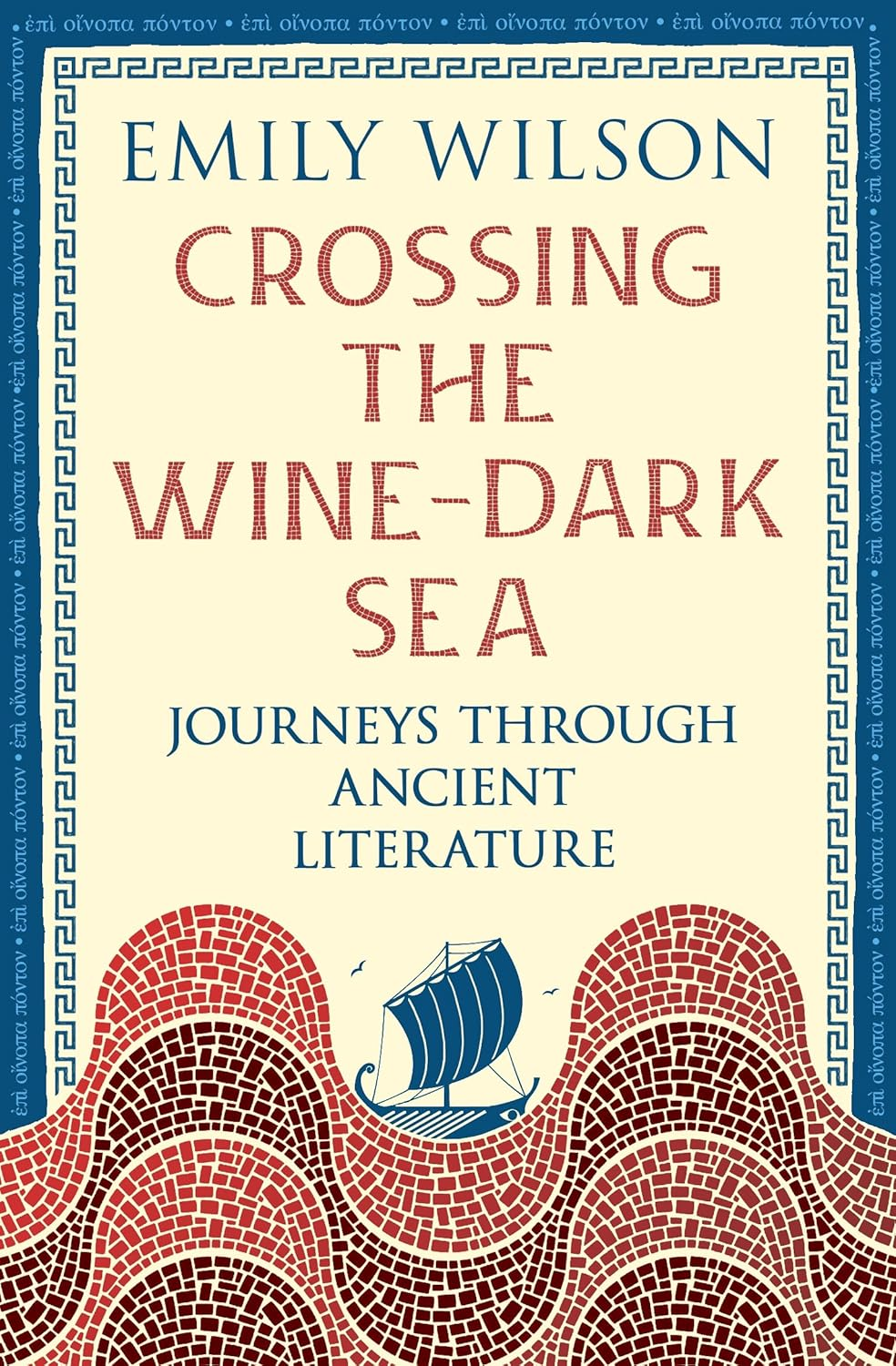
New essay collection from classicist Emily Wilson: Crossing the Wine-Dark Sea. “From Athenian comedy and Rome’s love of Greek culture to Han Kang’s novels, Cardi B’s lyrics and the discoveries she made whilst translating Homer…”
Reply · 2

Ethan Hawke Breaks Down His Career

Listening to Ethan Hawke talk about his career for 30 minutes is a treat. He starts with Explorers (which I loved as a kid) and continues with Dead Poets Society, Before Sunrise, Boyhood, and First Reformed. Good Lord Bird is on the list as well…I’m making my way through the book right now and I’ll be eager to check out the miniseries after I’m finished.

I wish they would have included Gattaca but you have to stop somewhere otherwise the dang thing’s gonna be an hour long.

Reply · 4

Hitler, Stalin, Freud, Trotsky, and Franz Joseph all lived within a radius of a few km in Vienna in 1913-14. “Stalin could have, with real probability, walked past a homeless Hitler trying to sell his mediocre watercolor paintings on the street…”
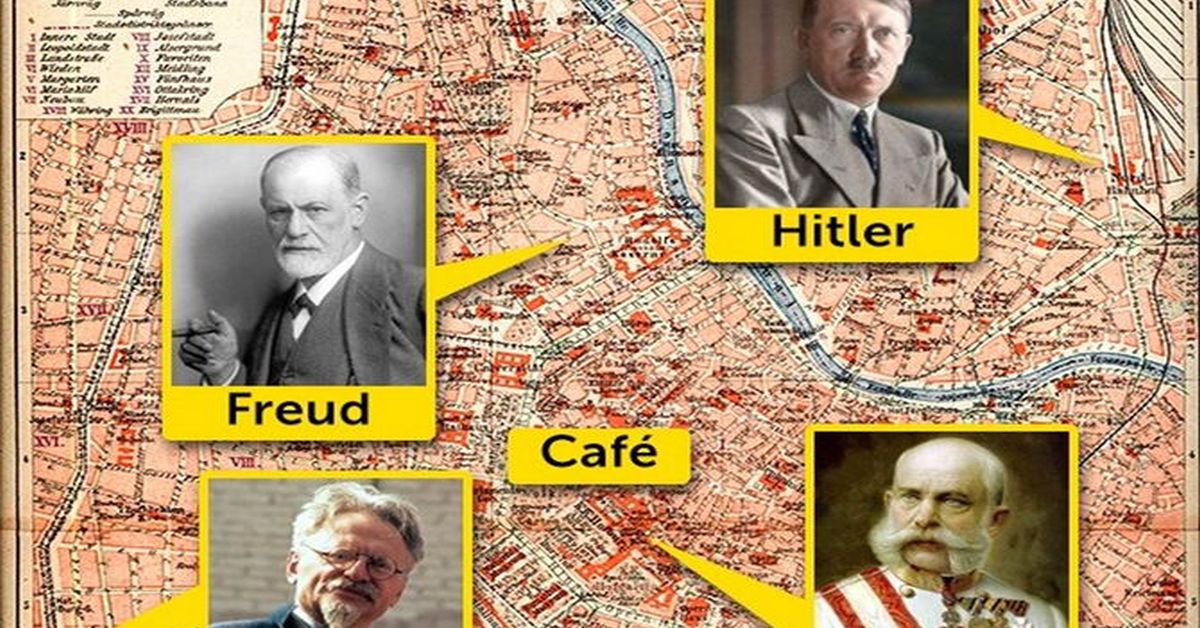
Reply · 3

The Neurodivergent Genius Who Invented Formula 1 For Marbles. “This is the story of how one creator on the autism spectrum redefined online sports through marbles, community, and viral spectacle.”

Reply · 1

Playing Boards of Canada on a DEC PDP-1 from 1959

This is so so cool and an arrow-splitting bullseye in the middle of my wheelhouse: a short Boards of Canada tune played on a DEC PDP-1, one of the most significant machines in the history of computing.

Here’s a description of what’s going on, courtesy of @dryad.technology on Bluesky:

The PDP-1 doesn’t have sound, but it does have front-panel light bulbs for debugging, so they rewired the light bulb lines into speakers to create 4 square wave channels.

You can read more about The PDP-1: The Machine That Started Hacker Culture:

The bottom line is that the PDP-1 was really the first computer that encouraged users to sit down and play. While IBM machines did the boring but necessary work of business behind closed doors and tended by squads of servants, DEC’s machines found their way into labs and odd corners of institutions where curious folk sat in front of their terminals, fingers poised over keyboards while a simple but powerful phrase was uttered: “I wonder what happens if…” The DEC machines were the first computers that allowed the question, which is really at the heart of the hacker culture, to be answered in real time.

And every day is a good day to listen to Boards of Canada. Oh! And if you’re anywhere near Mountain View, the Computer History Museum has regular demos of the PDP-1 and will play the song if requested!

If anyone would like to see this live, we demo the PDP-1 at the Computer History Museum in Mountain View, CA on the first and third Saturdays of the month, 2:30 and 3:15p. Just ask, and we’ll be happy to play it!

(via @k4r1m.bsky.social)

Reply · 4

The Sordid Mystery of a Somalian Meteorite Smuggled into China. “The journey of the ninth-largest meteorite in the world involves lies, smuggling and possibly death.”


Ira Glass’s Subway Take is genuinely shocking: “Every podcast is better at 2.0 speed!”

Reply · 24

Come See Me in the Good Light

It’s not often that a movie trailer makes you cry — but this one might.1
Come See Me in the Good Light is a documentary film about poets Andrea Gibson and Megan Falley facing a cancer diagnosis that took Gibson’s life earlier this year.

This is the beginning of a nightmare, I thought. But stay with me, y’all, because my story is one about happiness, being easier to find, once we realize we do not have forever to find it.

Falley’s letter published just after Gibson’s death will give you a sense of the spirit of the film & the two humans at the center of it:

A couple years ago, Andrea said, “Whenever I leave this world, whether it’s sixty years from now, I wouldn’t want anyone to say I lost some battle. I’ll be a winner that day.”

Whatever beast of emotion bucks or whimpers through you right now, I hope you can hold that line beside it: Andrea didn’t lose anything. If you had been here in our home during the three days of their dying — if you’d seen dozens of friends drift in to help, to say goodbye, to say thank you, to kiss their perfect face, if you’d felt the love that floored every hospice nurse — you would have agreed. Andrea won.

The film is set to premiere Nov 14 on Apple TV.

  1. A YT commenter: “I am laid low in the gentlest way and this is just the trailer”.
Reply · 4

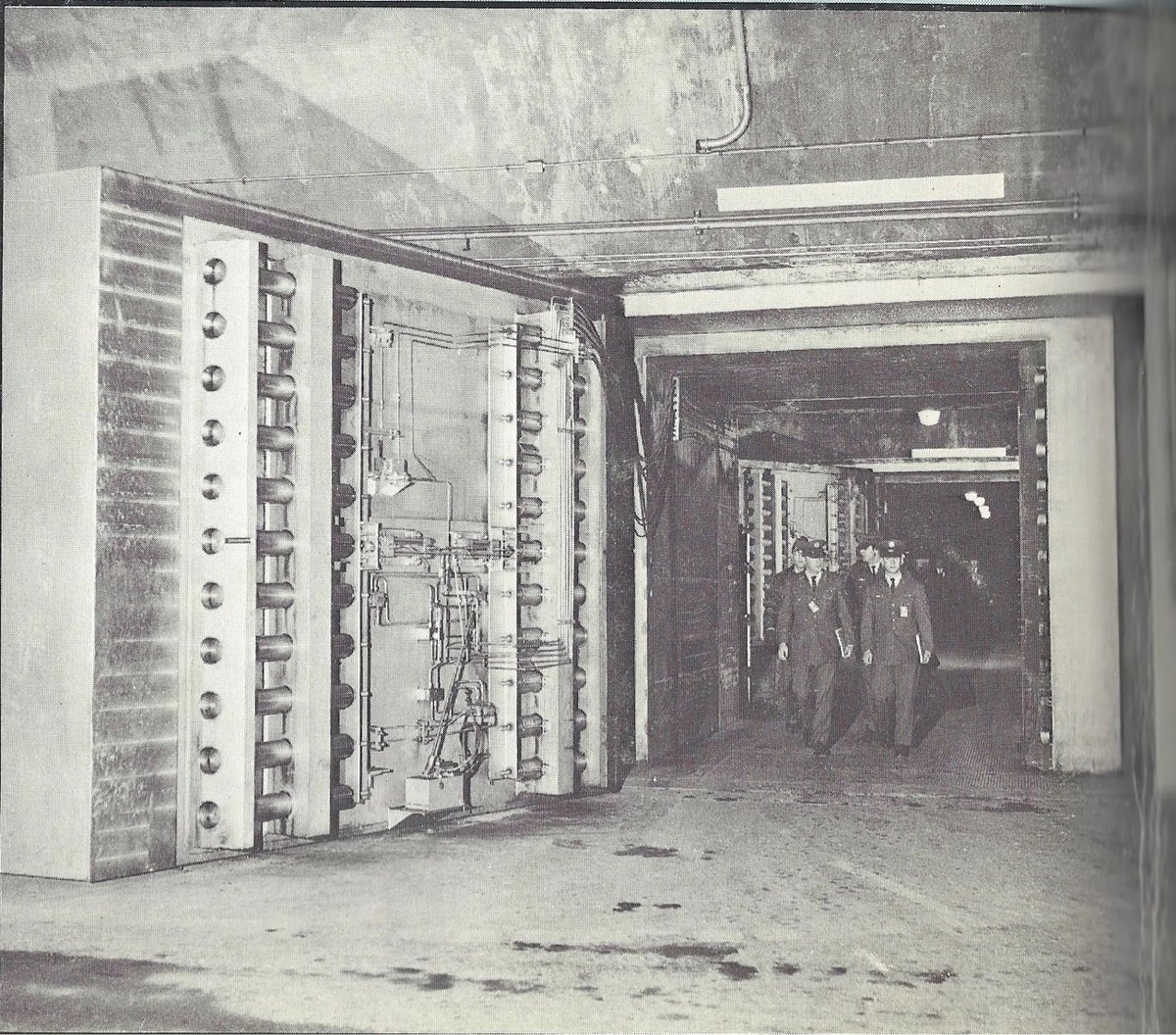
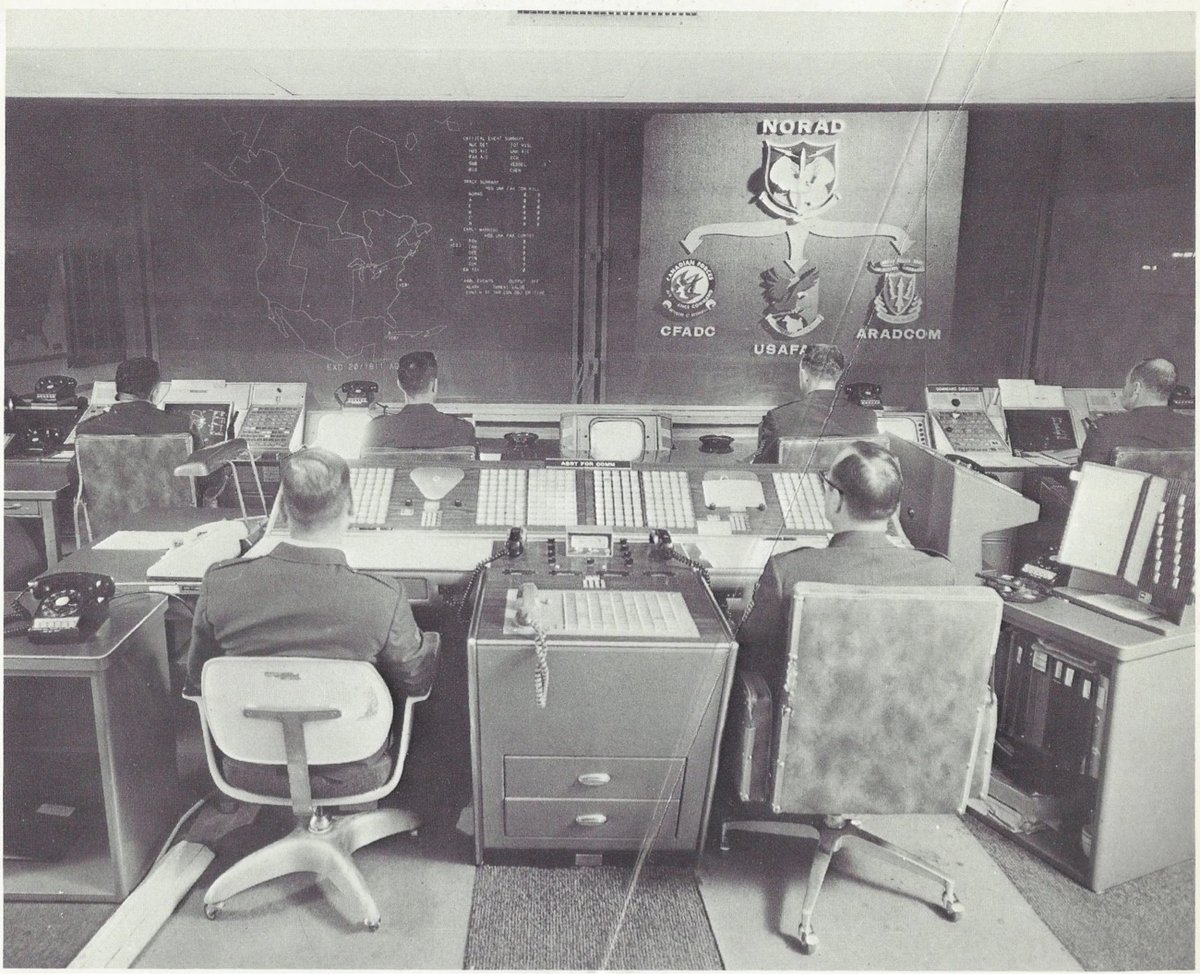
Inside NORAD’s Cheyenne Mountain Combat Center (c. 1966)
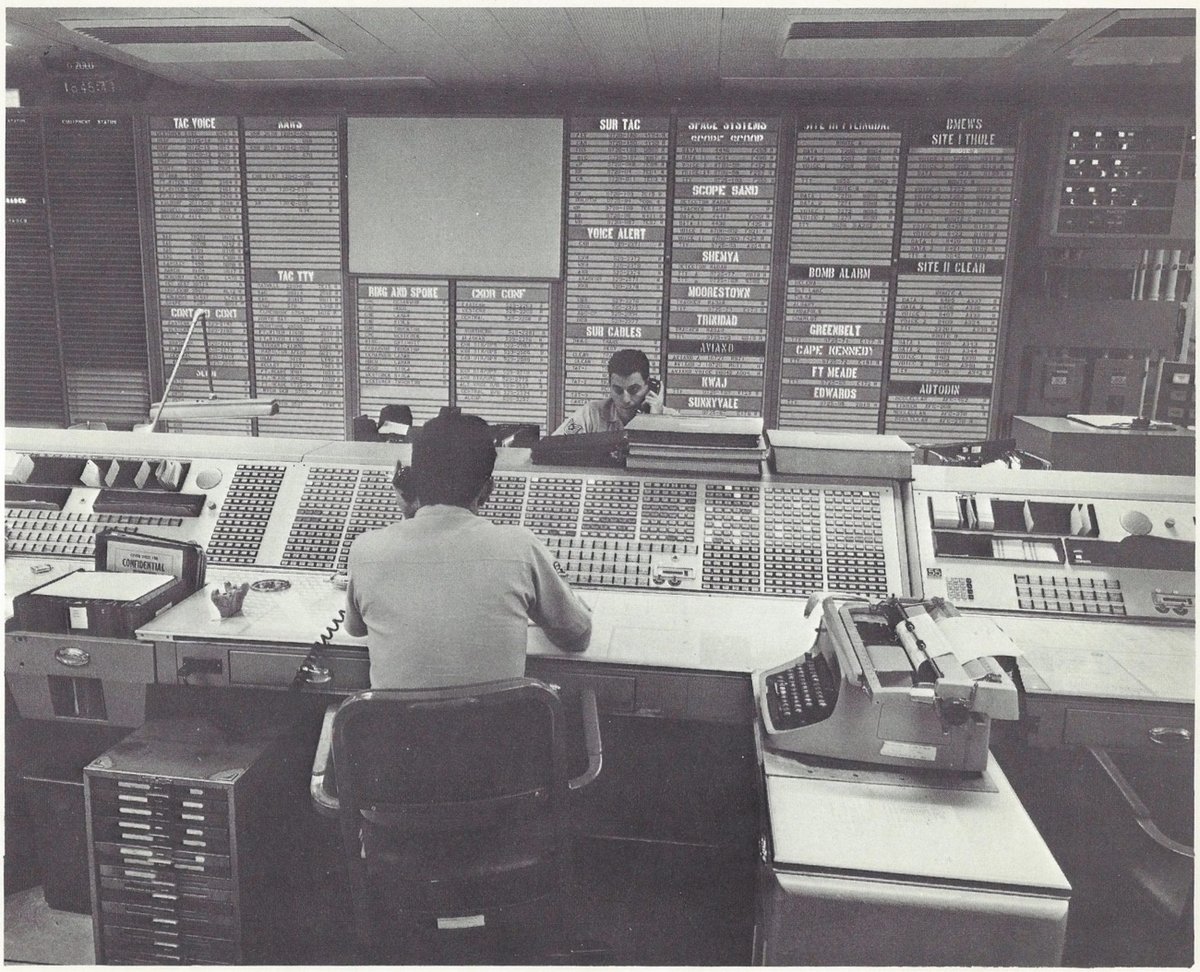
NORAD control room, with many panels, displays, and buttons

a massive door at the NORAD base in Cheyenne

NORAD control room, with many panels, displays, and buttons

Flashbak has a collection of photos that offer an inside look at NORAD’s Cheyenne Mountain Combat Center as it looked in the mid-60s.

These display screens would display signs of air attack against Canada and the United States. By pushing buttons, the NORAD battle staff members can take an electronic look at the tracks of space satellites or aircraft, which are chartered on the display by computers. This is the nerve center which would give the first warning of attack, and the command post from which NORAD battle commanders would direct the defensive air battle.

(thx, joseph)

Reply · 1

Phil Gyford, writing about when he first got online in 1995: My First Months in Cyberspace. “It was a miracle and it changed my life. All of our lives.”


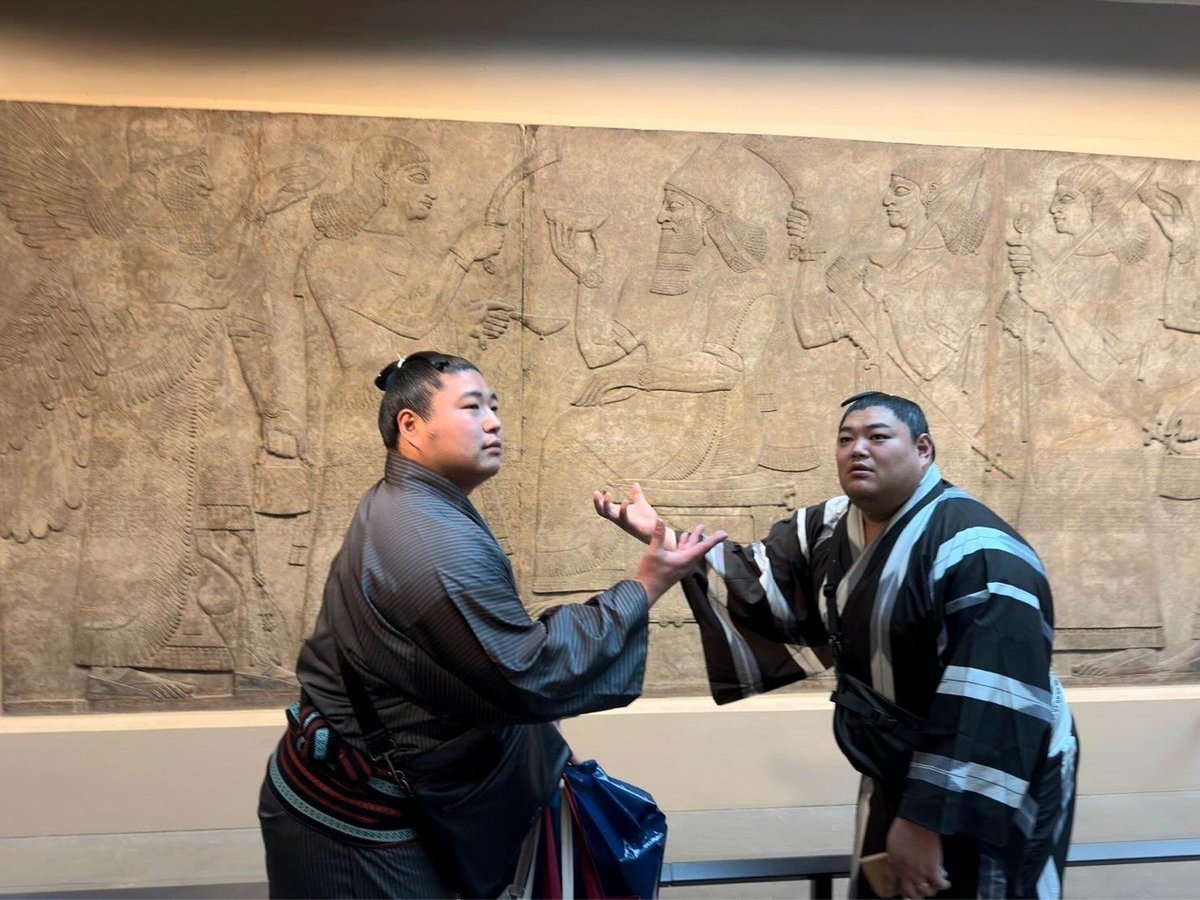
Sumo Tourists in London

group of sumo wrestlers in front of Big Ben

two sumo wrestlers posing at the British Museum

I’m totally charmed by these snaps of some of the best sumo wrestlers in the world touring London.
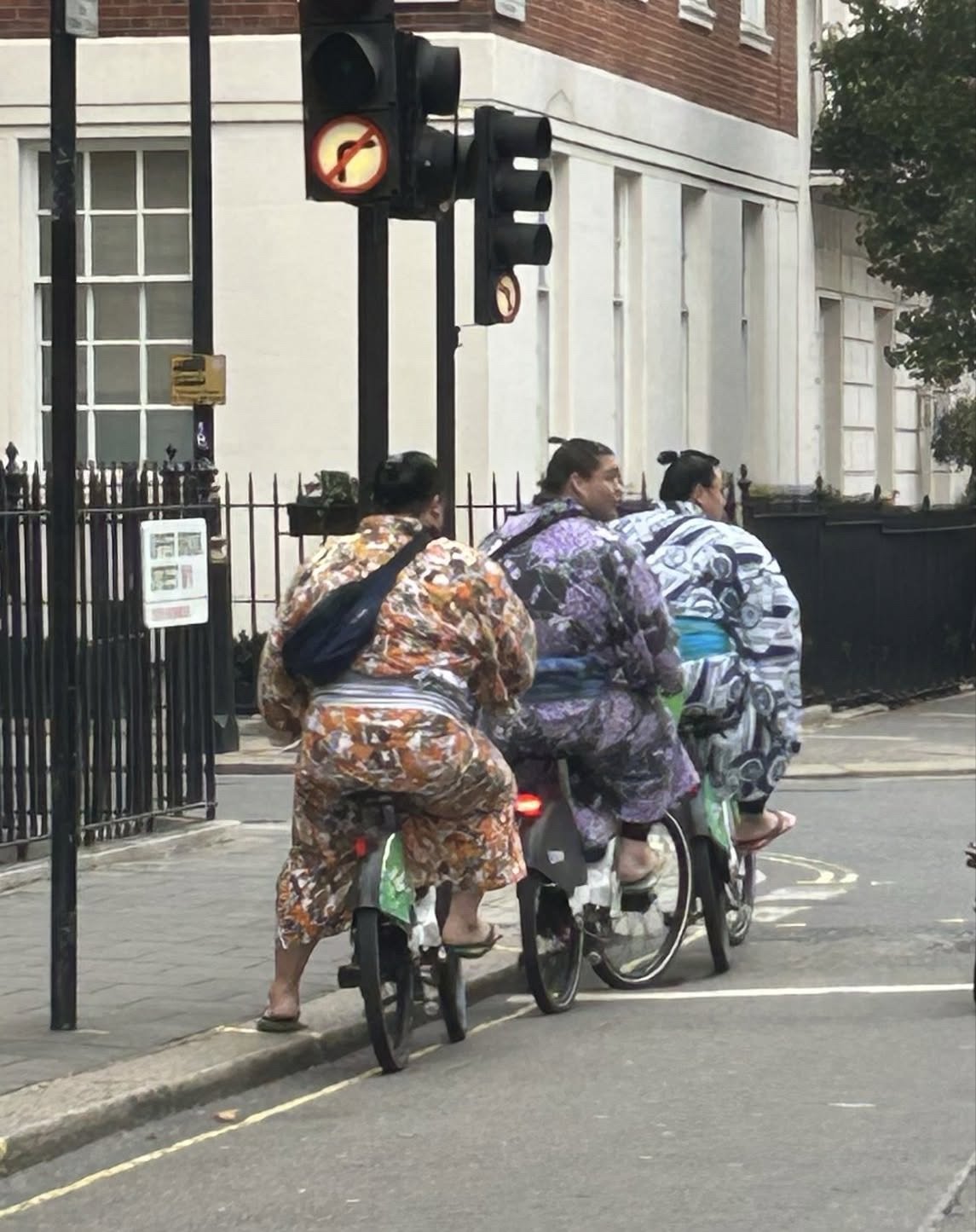

group of sumo wrestlers riding bikes in London

a sumo wrestler posing in front of Big Ben

group of sumo wrestlers doing the Beatles Abbey Road walk

The athletes were in London for a 5-day event at the Royal Albert Hall.

London’s Victorian concert venue has been utterly transformed, complete with six-tonne Japanese temple roof suspended above the ring.

It is here the wrestlers, known as rikishi, will perform their leg stomps to drive away evil spirits, and where they will clap to get the attention of the gods.

And above all this ancient ceremony, a giant, revolving LED screen which wouldn’t look out of place at an American basketball game, offering the audience all the stats and replays they could want.

Sumo may be ancient, and may have strict rules governing every aspect of a rikishi’s conduct, but it still exists in a modern world.

And that modern world is helping spread sumo far beyond Japan’s borders.

group of sumo wrestlers posing on Platform 9 3/4

two sumo wrestlers walking in London with Hello Kitty

two sumo wrestlers posing with Paddington Bear

a sumo wrestler trying to entice a squirrel

The tournament has already concluded; the winner, Hoshoryu, was given a giant bottle of soy sauce:

a sumo wrestler holding a giant bottle of soy sauce

Reply · 1

Anil Dash on The Majority AI View. “Stop being so goddamn creepy and weird about the technology! It’s just tech, everything doesn’t have to become some weird religion that you beat people over the head with, or gamble the entire stock market on.”


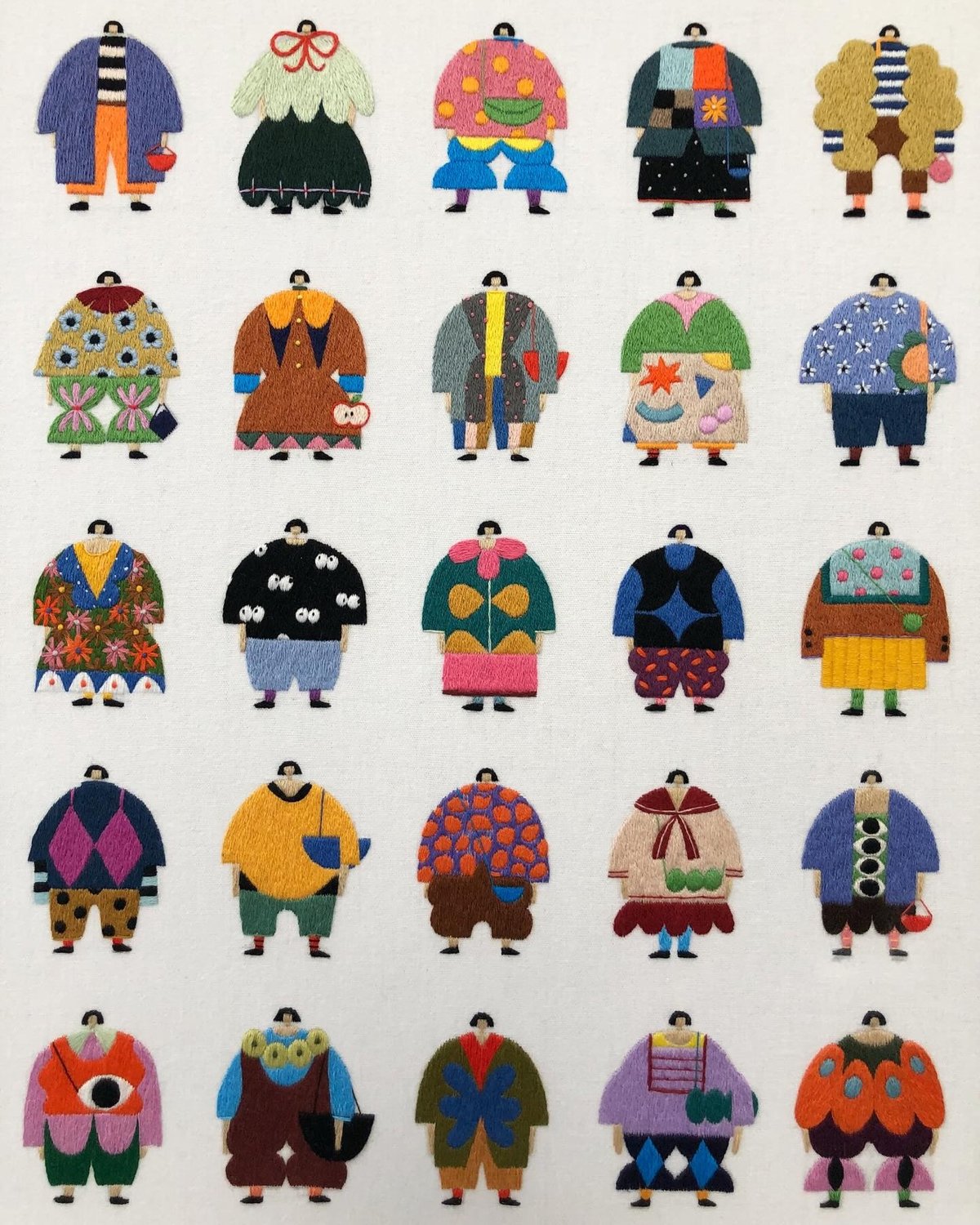
Nengiren’s Embroidered Little Woman
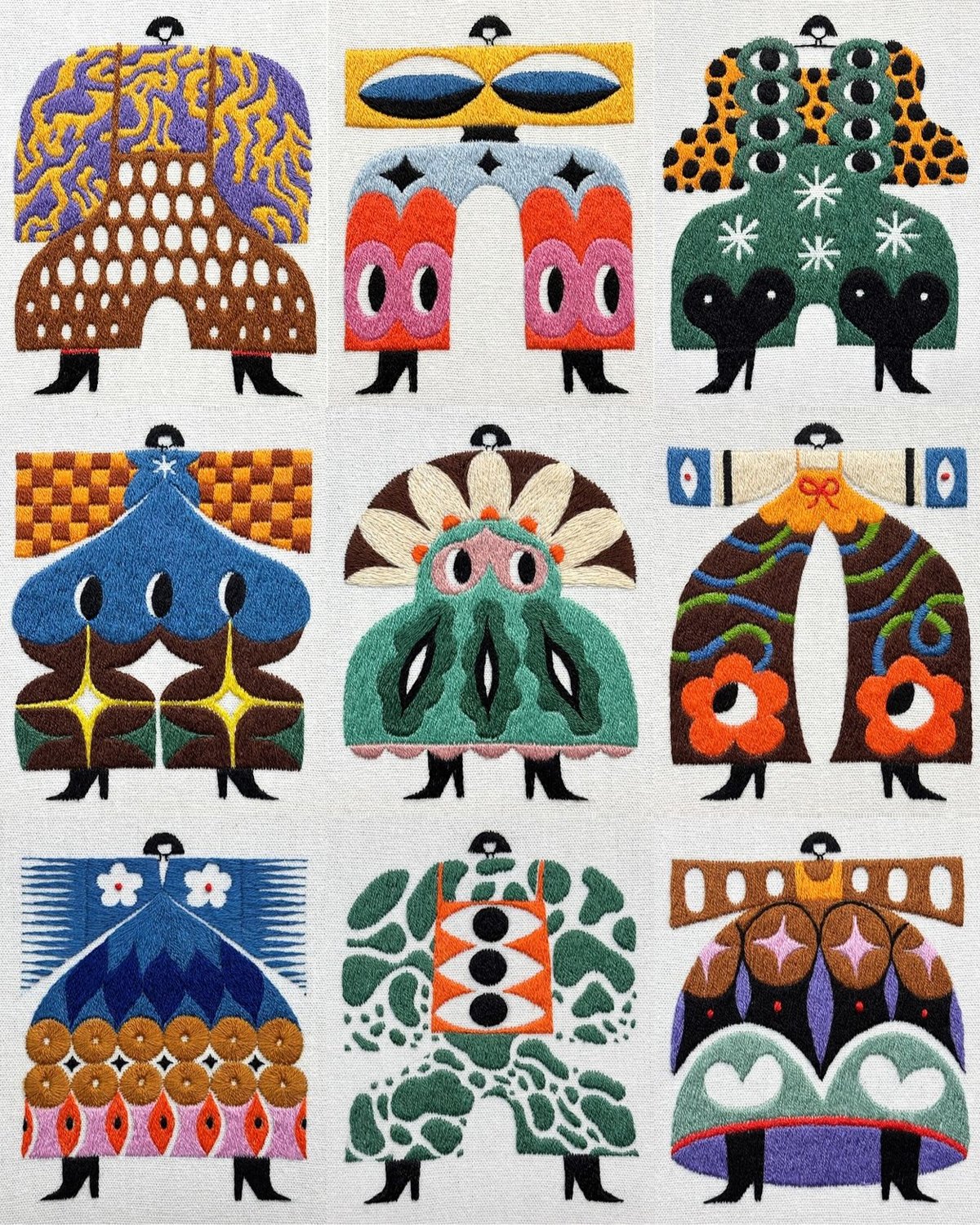
Nine embroidered figures in vibrant, uniquely patterned coats with geometric and floral motifs

Embroidered figure in green leaf-patterned outfit with orange center panel containing three black circles

Embroidered figure in blue scalloped coat with three black ovals, against orange checkered background

Grid of 25 whimsical embroidered figures with colorful patterned coats, black hair, and boots

How cool are these embroidered Nona Kecil (“little woman”) figures by Indonesian artist Irene Saputra, aka Nengiren. She explained to Colossal what the figures signify:

Nona Kecil’s evolution mirrors my own journey as an artist. Initially, she adorned simple OOTDs with muted colors and straightforward patterns. However, the turning point occurred three years ago when I embraced motherhood. Balancing time between my son and art intensified my experimentation, leading Nona Kecil to explore more expressive and elaborate outfits.

(via @antichrista)

Reply · 1

I’d never heard of this before: tearoom ambient, a style of music that arose in post-revolution Czechoslovakia, influenced by new age, ambient, and minimalism music newly imported from the west.

Reply · 4

Apple TV to air F1 races in the US for the next 5 years. This is interesting: “Select races and all practice sessions will also be available for free in the Apple TV app.”

Reply · 6

Photos of the No Kings protests & rallies that happened in big cities and small towns all across America this weekend.

Reply · 1

Kara Walker Creates Haunted Beast From Butchered Confederate Statue

a sculpture of a monstrous figure

a sculpture of a monstrous figure

This is incredible: artist Kara Walker took a statue of Confederate general Stonewall Jackson that had stood in Charlottesville, Virginia until 2021, chopped it up, and reconstituted it into a disfigured beast. It’s part of an exhibition of several such works called Monuments, which opens at The Geffen Contemporary at MOCA in LA on October 23. From the press release:

In 2021, The Brick (then known as LAXART) acquired a decommissioned equestrian monument of “Stonewall” Jackson from the city of Charlottesville, Virginia. The monument was given to Kara Walker to create the new work Unmanned Drone (2023). The original bronze statue portrayed Jackson spurring his steed into the heat of battle. Walker dissected the statue and reshuffled the parts in a Hieronymous Bosch-like fashion. The result is still horse and rider, but instead of charging into battle, Walker’s horseman wanders in Civil War purgatory, dragging its sword over a ruined battlefield.

Here’s the statue as it looked in Charlottesville:

a statue of Stonewall Jackson, astride his horse

Walker described the intent of the work in this NY Times piece:

She likened the result to a haint — a Southern concept with roots in Gullah Geechee culture that designates a spirit that has slipped its human form and roams about making mischief and exacting vengeance. Here, what is deconstructed is not just a statue but the myth of suppressed Confederate glory that it represents. Her sculpture, she suggested, “exists as a sort of haint of itself — the imagination of the Lost Cause having to recognize itself for what it is.”

The Guardian also has a long article on the show and Walker’s piece.

Reply · 5

Consumer Reports: Protein Powders and Shakes Contain High Levels of Lead. “More than two-thirds of [tested products] contain more lead in a single serving than our experts say is safe to have in a day.”

Reply · 6

More than 170 *US citizens* have been detained and held (and “dragged, tackled, beaten, tased and shot”) by immigration agents this year. “Among the citizens detained are nearly 20 children, including two with cancer.”


Every Televised and Filmed Joy Division Performance

One hour and twenty-five minutes. That’s apparently all of the footage that exists of Joy Division playing their music on TV and in concert. Open Culture’s Colin Marshall writes:

Brian Eno once said of the Velvet Underground that their first album sold only 30,000 copies, but everyone who bought one started a band. Joy Division’s debut Unknown Pleasures sold only 20,000 copies in its initial period of release, but the T‑shirt emblazoned with its cover art — an image of radio waves emanating from a pulsar taken from an astronomy encyclopedia — has long since constituted a commercial-semiotic empire unto itself. That speaks to the vast subcultural influence of the band, despite their only having been active from 1976 to 1980. When we speak of the genre of post-punk, we speak, in large part, of Joy Division and the artists they influenced.

(via open culture)

Reply · 2

John Casey, the owner of one of the last rubber stamp stores in NYC, shows how he makes stamps by hand. This short video is from a few years ago; the shop is still open.


Real Photos That Look Fake

trees, road, sky, and water all meet perfectly in the center of this impossibly geometric photo

two guys standing on a front loader raised in the air; it looks like they are giants compared to all around them

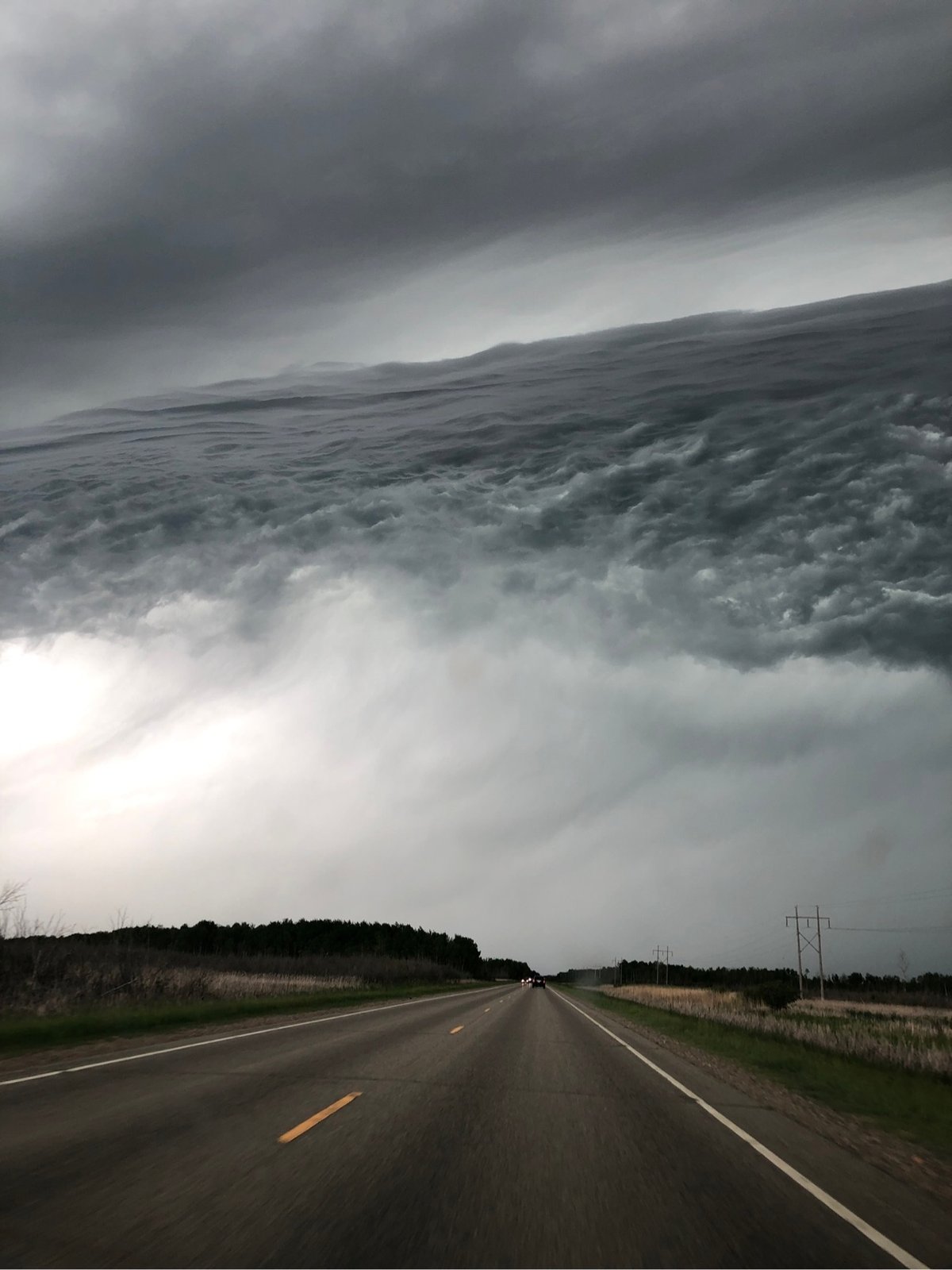
a bank of clouds over the road looks like a rising ocean tide

I’ve seen a bunch of these before, but it’s cool to scroll and get your tiny mind blown over and over again. Human cognition and perception is such a trip. (via neatorama)

Reply · 3

The Making of a Perfect Martini

Guy Buffet Martini

Artist Guy Buffet has painted a number of different variations of his depiction of how to make various drinks (martini, margarita, Manhattan) but I like this version the best. (thx, ollie)

Reply · 3

Go Computer Now! – The Story of Sphere Computers. “If things had gone a little differently for them, we might be remembering Sphere the way people have fond memories of the Commodore 64 and Apple II.” Wow, I’ve never heard of Sphere.

Reply · 6

Luis Mendo is self-publishing a book about his life as a writer/artist in Japan. “You don’t buy the book, you support the artist.” (You’ve maybe seen his work; Mendo does illustrations for Craig Mod’s books.)

Reply · 1

My first adventure of the day is going to the Shunkaen Bonsai Museum. Other Japan bonsai recs welcome!

Reply · 1

I’m hoping to post some of my photos from Japan here when I get a bit more organized, but for now, you can follow my adventures on Instagram Stories.

Reply · 2

I stopped into the MEGA Donki (Don Quijote) in Shibuya last night and it was like being inside a slot machine. They had 20 different Kit Kat flavors, including a sake flavor. Ppl had baskets overflowing with candy. It was so bonkers.


An iconic Philly skate locale, Love Park, was demolished in 2016 — but has been reconstructed in Malmö, Sweden (including street lights and trash cans).

Reply · 1

The Freedom of Enough

I just reread this 2023 post about a neighborhood Tokyo izakaya (and my related thoughts), spurred by a conversation w/ my friend Andrew about what makes for good work, a good life, and a good society. It dovetails with this podcast conversation between Rich Roll and Craig Mod, which I listened to on the plane to Japan and which tore me into about 1000 pieces. Craig talks about what it means to have “enough” and the Japanese term yoyū:

Pondering the shrinking communities and advanced decay he saw during the trip (documented in photos of shuttered main streets and nature vigorously reclaiming the landscape), Mod thought back to his childhood home: a blue-collar American town where the factories had closed, replaced by poverty, drugs and violence.

“The inspiration I’ve always drawn from Japan is that the lowest you can fall is not that low,” he says. “Whereas I grew up watching people fall really, really low — frequently, and kind of hopelessly.”

His explanation for why similar levels of economic decline produce such different outcomes hinges on the Japanese term yoyū, which conveys a sense of sufficiency: enough time, enough money, enough energy. As Mod puts it, yoyū is “the space in your heart to accept another person… another situation, another context.”

“As the economy changes in those rural areas, I think you see a kind of grace because the foundations of support are still there, right?” he continues. “They’re not losing health care. They’re not losing social infrastructure… And that gives them the yoyū to be able to accept the fact that their towns are disappearing, without degrading into substance abuse or violence or whatever. The contrast being in America, there’s none of that sort of protection enabled, so you have none of that excess space.”

As an American, it’s tough sometimes even to conceive of having that excess space (except what you’ve been able to cobble together on your own, a jury-rigged safety net one medical crisis away from collapse). I always notice its presence when I’m traveling — like, oh, this society takes care of its people. Huh.

Reply · 5

The 39 coolest neighbourhoods in the world in 2025, including Jimbōchō, Tokyo; Ménilmontant, Paris; Vallila, Helsinki; Linden, Johannesburg; and Portales, Mexico City.


POP Phone: a USB-C handset that you plug into your phone for when you’re missing the warm analog embrace of Ma Bell. The hours I spent as a youth wrapping and unwrapping that coiled phone cord around my fingers!

Reply · 5

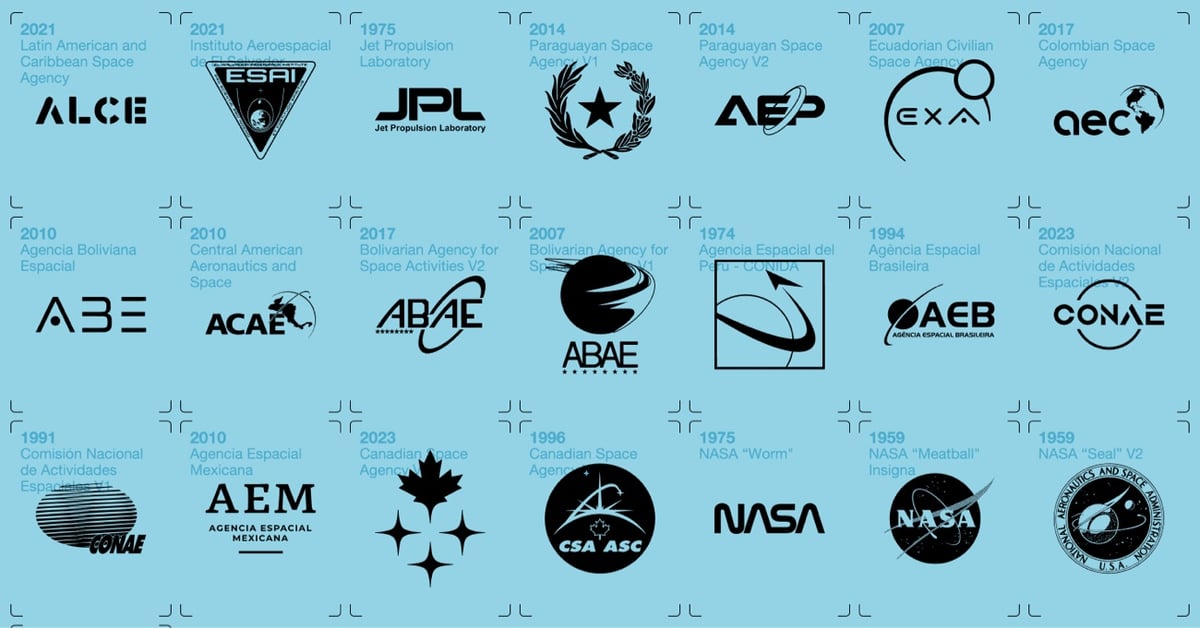
The Space Exploration Logo Archive

a number of logos of US space agencies

a number of logos of European space agencies

Good luck losing less than an hour to this: a huge archive of logos for government, non-profit, private, military, and even fictional space agencies and companies. There is also a book, but it looks like it was only available on Kickstarter — hopefully it’ll be republished? (via sidebar)

Reply · 1

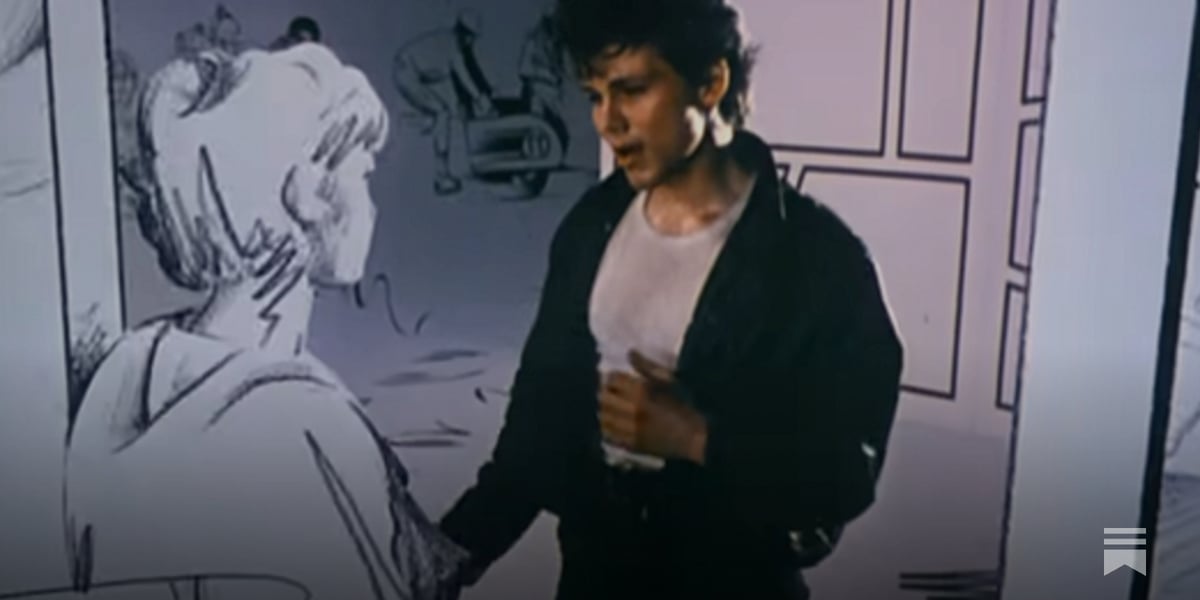
‘Take on Me’ is an ideal song for Song Exploder, because it’s so well known and beloved that it feels like a song predestined to be a massive hit, but the truth couldn’t be further from the case.”

65 Essential Children’s Books, from The Story of Ferdinand and Caps for Sale to The Snowy Day and Where the Sidewalk Ends. Oh and KDO superfave, Cars and Trucks and Things That Go.

Reply · 9

Richard Feynman: Fire Is Stored Sunshine

In 1983, the BBC aired a six-part series called Fun to Imagine with a simple premise: put physicist Richard Feynman in front of a camera and have him explain everyday things. In this clip from one of the episodes, Feynman explains in very simple terms what fire is:

So good. Watch the whole thing…it seems like you get the gist about 2 minutes in, but that’s only half the story. See also Feynman explaining rubber bands, how trains go around curves, and how magnets work.


Where’s the AI design renaissance? “My hunch: vibe coding is a lot like stock-picking — everyone’s always blabbing about their big wins. Ask what their annual rate of return is above the S&P, and it’s a quieter conversation.”


For instance, there is an engraved stone erected at the Buddhist Kan’ei-ji temple to “console the spirits of the flies, crickets, and grasshoppers that had been killed in the production of a scientific text”.

Reply · 6

Current status: looking through Atlas Obscura’s list of things to do in Tokyo.

Reply · 2

Rapper 50 Cent, adjusted for inflation, is 109 Cent.

Reply · 4

“The spread of dangerous infections that do not respond to antibiotics has been increasing by as much as 15 percent a year”, says the WHO. “The less people have access to quality care, the more they’re likely to suffer from drug-resistant infection.”


A House of Dynamite

From director Kathryn Bigelow comes A House of Dynamite (trailer), starring Rebecca Ferguson, Idris Elba, and Greta Lee.

When a single, unattributed missile is launched at the United States, a race begins to determine who is responsible and how to respond.

A House of Dynamite is out in theaters right now and will be on Netflix in a couple of weeks.

Reply · 3

The MUTE Series is a collection of one-take microfilms that report on the vagaries of human behaviour.” There are 3 rules for their films: no dialogue, no camera moves, one shot only.

Reply · 2

A short documentary about the groundbreaking sound design of Dune: Part Two, featuring director Denis Villeneuve and sound mixers & designers from the film. I love the sound of both Dunes.


“The smartest design move isn’t chasing trends, it’s planting the tree and letting time do the work,” writes Dave Snyder. “Trees don’t pay off tomorrow. They pay off in a decade. They compound quietly, making everything around them better…”


For the last-ever episode of his WTF podcast, Marc Maron interviewed Barack Obama. You can watch their hour-long conversation here.

Reply · 2

Humans of New York has taken over all of Grand Central Terminal for a huge art installation called Dear New York. “For the first time possibly ever, there is not a single ad to be seen in Grand Central Terminal.”


Diane Keaton, Oscar-Winning ‘Annie Hall’ Star, Dies at 79.

Reply · 2

The Underscore Music Player

For the past several months, I’ve been using a web-based music player I built called Underscore. It’s playing music for me right now. I recently revamped & improved it and thought it was time to show it off. Here’s a screenshot:

a screenshot of a music player with almost no interface but with a very bright patterned background

Ok, let me explain. I listen to music all day while I’m working, favoring music without words — electronic, classical, soundtracks, ambient, nature sounds, that sort of thing. I listen to whole albums, long mixes, and playlists across several services, including Spotify, YouTube, and Soundcloud. It was becoming a pain in my ass trying to pick something to listen to while working; I’d have to scroll through playlists on all these different services and generally I’d end up listening to the same stuff over and over again, getting sick of it, getting distracted by choosing music, missing some gems buried deep in a list of saved albums, etc.

So, pair programming with Claude, I built Underscore, a “home-cooked meal” app that’s both simple and opinionated. Here’s how it works. You can add links to music from Spotify, YouTube, Soundcloud, Bandcamp, and Apple Music to it — just paste their share URLs in. Reloading the page gives you a random piece of music from your collection. You can see a list of the songs, videos, playlists, and albums in your collection and can hide them if you want. That’s it. That’s all it does.

There’s no APIs or authentication or auto-synching playlists. The music is played through embedded players and if it lands on something from Spotify, Apple Music, or Bandcamp, you’re gonna have to click the play button in the embedded player (Soundcloud and YT videos should play automatically (but don’t always for whatever reason)). When your current selection ends, the new random thing doesn’t automatically play…you need to refresh the page.

It’s not ideal, having it be a little bit manual and janky in this way. But oh boy, am I loving this thing. It took me awhile to get everything into the system, but I’ve got almost 300 resources in my collection now — probably 300-400 hours of music all told — and I listen to it all day while working. I’m listening to stuff from deep in the archives, albums and playlists I just wouldn’t have thought to play, when strapped for time in the rush to get to work. When something new comes along, like NIN’s Tron: Ares soundtrack, I add it in there. I don’t get distracted…I just get good music for flow/coding/writing all the live-long day.

The background animation was adapted and extended from one of the examples in Rick Rubin’s The Way of Code — there are a bunch of different patterns and colors that it cycles through. I’m kinda proud of the way the media embeds fade into 1-bit images so you can see the background behind them when they’re playing…dorking around with CSS & web design is still super fun.

And but so anyway, I built Underscore for myself, to scratch an itch, but recently thought that it would be relatively easy to add other users to it. So, if you’re a logged-in member of kottke.org, you can build your own collection and play it with Underscore; just head right this way. If you’re not a KDO member, you can still check it out…but the only thing it does is play my music collection (which has some good stuff in it IMO). Fair warning: aside from this post, there is no onboarding. You may be confused as to how it works. But it’s simple enough that you quickly figure it out. Due to lack of auto-shuffle, it’s not worth using if you’re adding stuff that’s under ~30 minutes in length — Underscore is for albums, long tracks, playlists, etc.1 Caveat emptor. You break it, you buy it. Etc. Etc. If you try it out, let me know what you think in the comments below. Suggestions or improvements welcome.

  1. Yes, I finally built my long-wanted shuffle-by-playlist/album music player. And it works with more than just Spotify or Apple Music!
Reply · 16

Minute/Year is an art piece/installation where the sound occurring in a space for a single minute is recorded each day. Simultaneously, the previous day’s recording is played back. So each day’s recording features something of the previous day.

Reply · 1

Missed this from a few days ago: the winners of the 2025 MacArthur Fellowship. “I think this year, we see empathy and deep engagement with community figures prominently in this class.”

Reply · 3

ILM Visual Effects Artist Breaks Down Hidden VFX

If you were one of those people who loved watching DVD extras, you’ll enjoy the hell out of ILM visual effects artist Todd Vaziri breaking down some of the special effects that he and his team have worked on, including Rogue One, The Force Awakens, and Dungeons and Dragons: Honor Among Thieves. Introducing the video on his site, Vaziri writes:

My goal was to highlight the artistic process of visual effects. Movies like the ones I highlight in the video are crafted by hundreds of artists, technicians and production folks, all working together to achieve the vision of the director. I’m so proud to have worked with such amazing crews over the years.

Many of the effects he highlights aren’t the obvious ones — monsters, digital Leia, lightsaber battles — but rather effects that you’d never notice — indeed effects that you shouldn’t notice because they are designed to be seamless. Like a “dust poof” from a slingshot shot — it registers and helps sell the scene, but you’d never think, “oh, that’s an effect”.

The whole thing is fascinating — and the rope thing is genius.

Reply · 1

An oddly fascinating video on the Barney Google comic strip, which began in 1919 and is somehow still running (it’s called Snuffy Smith now). Interesting how art forms shift through innovation and evolution with society at large.

Reply · 2

I love the synchronized waves that these Himalayan giant honey bees use against their hornet predators.


Can You Recommend a Good Bookmark Manager?

I know I’m opening up a can of bees here, but I am in the market for a bookmark manager. I’ve got a good workflow going for potential KDO fodder, but my, um, system of Chrome bookmarks + memory + pasting links & snippets into the Notes app for other stuff (travel, bikes, design, internet, movies, etc.) is stretched past the breaking point. Here are some thoughts on what I’d like:

  • I’m looking to store lightly annotated URLs. I don’t want to organize links into collections or obsessively tag things — mostly I just want to throw everything into a big bucket and use search to find stuff. (Search should include the text of the original source, not just my annotations)
  • That said, if some AI thinger can organize things into buckets based on topic or, better yet, provide “more like this” for links, I would not be opposed.
  • Keeping backups of URLs in case of linkrot would be a great feature to have.
  • Can be cloud or self-hosted.
  • Happy to pay a reasonable subscription.
  • I’d like whatever I go with to be around for awhile. So probably not some hot new app that’s 3 months old (unless it’s really something special) or a Google app like NotebookLM (the streets still remember Google Reader, cut down in its prime).
  • Should be able to easily add links and access my library from my phone & computer (ideally with apps instead of through a browser) and the web.
  • I’m looking for a bookmark manager, not a read-it-later app (Instapaper) or a note-taking app (Obsidian) or whatever Notion is (I actually don’t know).
  • An API would be nice.

Raindrop.io seems like an obvious choice; what else should I consider? Does the “throw everything in one big bucket” approach even work? What features/needs am I missing? Come on you info nerds, let me have it with both barrels. I’d love to hear your experiences and recommendations on apps that you use & love and others to steer clear of.

Reply · 45

Venezuelan opposition leader María Corina Machado wins the Nobel Peace Prize. “When authoritarians seize power, it is crucial to recognize courageous defenders of freedom who rise and resist.”

Reply · 2

ShadeMap is a global simulation of mountain, building and tree shadows for any date and time. ShadeMap calculates shadow positions in realtime and displays them on a map.”

Reply · 4

Hokusai. Thirty-Six Views of Mount Fuji.

the book cover of Hokusai. Thirty-Six Views of Mount Fuji.

an interior page of Hokusai. Thirty-Six Views of Mount Fuji.

an interior page of Hokusai. Thirty-Six Views of Mount Fuji.

This book, from Taschen, looks amazing. Bound in Japanese style, it’s a reproduction of Katsushika Hokusai’s Thirty-six Views of Mount Fuji, a collection of woodblock prints of which the most famous is the Great Wave.

The prints illustrate Hokusai’s own obsession with Mount Fuji as well as the flourishing domestic tourism of the late Edo period. Just as the mountain was a cherished view for travelers heading to the capital Edo (now Tokyo) along the Tōkaidō road, Mount Fuji is the infallible backdrop to each of the series’ unique scenes. Hokusai captures the distinctive landscape and provincial charm of each setting with a vivid palette and exquisite detail. Including the iconic Under the Great Wave off Kanagawa (also The Great Wave), this widely celebrated series is a treasure of international art history.

This XXL version of the book is available at Taschen ($175), Bookshop ($210), and Amazon ($158). A smaller version of the book comes out in a few months and can be pre-ordered from Taschen ($80), Bookshop ($74), and Amazon ($80).

Reply · 2

If you google around, there are claims of people with a max vertical jump of 55+ inches, but the official record seems to be 51” by Darius Clark (he touched 12’4” w/ a standing reach of 8’1”). It’s incredible how high in the air he gets.

Reply · 1

“It turns out playing God is neither difficult nor expensive.” That line was written about the CRISPR-Cas9 genome editing tool but I’d argue that the increasing power of individuals is the defining challenge of modernity.

Reply · 2

The Evolution of the YouTube Progress Bar (2005-2025)

Since launching in 2005, YouTube has changed the progress/volume/tool bar on their video player several times. Here’s what it’s looked like through the years:1

screenshots of the YouTbe progress bar from 2005 to 2025

I don’t remember the first two or three at all, but that 2008-2010 version is a nostalgia bomb, albeit a deceptive one. You might be fooled into remembering that it used to be very simple, but the whole progress/tool bar is cut off in the graphic above; here’s the full version.

I’d love to see versions of this for iTunes/Apple Music, Spotify, and other players.

  1. I don’t know who made the original…the furthest back I could track it was about a month ago on Reddit and FB.
Reply · 2

Area Man Has Far Greater Knowledge Of Marvel Universe Than Own Family Tree.


A Data Love Letter to the NYC Subway

Giorgia Lupi and her team at Pentagram have created a data-driven animation for the MTA called A Data Love Letter to the Subway.

data visualization of where the NYC subway lines go

data visualization of how long each NYC subway line is above ground and below ground

More from Lupi (who calls this an “absolute dream project”):

The project, “A Data Love Letter to the Subway,” visualizes each train line as a character whose unique qualities are extracted from MTA data. Data like length, location, and transfers were abstracted into train behaviors and attributes. Imaginatively animating each train line’s age, length, and path, we wrote a poetic story that explores the trains’ interwoven encounters with commuters and one another.

Our “Love Letter” draws on the elemental nature of picture books to unpack the visual system of the subway with curiosity and wonder. Drawing from the MTA’s Open Data Program, with my team we translated train data into a narrative made of attributes and behaviors, providing a rich view of the interactions, roles, differences, and the connections made and sometimes missed within the subway ecosystem.

Maps, NYC, the subway, data visualization…I am not sure how much more in my wheelhouse a thing could be.

Reply · 2

“We’ve put together a reading list about capitalism, imperialism, policing, and the politics and strategies of anti-war resistance movements of the past and present — tools in the struggle against repression, surveillance, and state violence.”


An interview with Ann Goldstein, Elena Ferrante’s English translator. “I had never heard of Ferrante. I didn’t know anything about her. I still don’t know anything about her.”


Bird Photographer of the Year for 2025

a huge school of small silvery fish swirl around a diving bird

a golden eagle feeding on the carcass of a deer

drone photo of a flock of geese flying over a stark brown and white abstract landscape

the blurred shape of a swan coming in to land against an abstract background of blurred swans

The organizers of the Bird Photographer of the Year competition received more than 33,000 images for 2025’s contest; here are the winners and runners-up. Photos above by Franco Banfi, Francesco Guffanti, Tibor Litauszki, and Andreas Hemb.

If you have no idea what you’re seeing in that third photo by Tibor Litauszki, you’re not alone — even after reading the photographer’s description (courtesy of In Focus), I can’t figure it out:

It was January and nature had created some very interesting shapes in the saline lakes near Akasztó in Hungary. I sent up my drone and was looking for the right composition when a dozen geese suddenly flew into view. I immediately started taking photos and luckily everything fell into place — the composition as well as the geese.

And eagles? Huge monsters. Dinosaurs never went extinct. (via in focus)

Reply · 1

This is a lovely & thoughtful essay on the messiness of teaching and learning, an alchemy endangered by efficiency & automation. “What A.I. can’t do is feel the shape of silence after someone says something so honest we forget we’re here to learn.”

Reply · 1

A History of the Slave-Breeding Industry in the United States

American Slave Coast

The American Slave Coast: A History of the Slave-Breeding Industry (Amazon) by Ned & Constance Sublette is a book which offers an alternate view of slavery in the United States. Instead of treating slavery as a source of unpaid labor, as it is typically understood, they focus on the ownership aspect: people as property, merchandise, collateral, and capital. From a review of the book at Pacific Standard:

In fact, most American slaves were not kidnapped on another continent. Though over 12.7 million Africans were forced onto ships to the Western hemisphere, estimates only have 400,000-500,000 landing in present-day America. How then to account for the four million black slaves who were tilling fields in 1860? “The South,” the Sublettes write, “did not only produce tobacco, rice, sugar, and cotton as commodities for sale; it produced people.” Slavers called slave-breeding “natural increase,” but there was nothing natural about producing slaves; it took scientific management. Thomas Jefferson bragged to George Washington that the birth of black children was increasing Virginia’s capital stock by four percent annually.

Here is how the American slave-breeding industry worked, according to the Sublettes: Some states (most importantly Virginia) produced slaves as their main domestic crop. The price of slaves was anchored by industry in other states that consumed slaves in the production of rice and sugar, and constant territorial expansion. As long as the slave power continued to grow, breeders could literally bank on future demand and increasing prices. That made slaves not just a commodity, but the closest thing to money that white breeders had. It’s hard to quantify just how valuable people were as commodities, but the Sublettes try to convey it: By a conservative estimate, in 1860 the total value of American slaves was $4 billion, far more than the gold and silver then circulating nationally ($228.3 million, “most of it in the North,” the authors add), total currency ($435.4 million), and even the value of the South’s total farmland ($1.92 billion). Slaves were, to slavers, worth more than everything else they could imagine combined.

Just reading that turns my stomach. The Sublettes also recast the 1808 abolition of the transatlantic slave trade as trade protectionism.

Virginia slaveowners won a major victory when Thomas Jefferson’s 1808 prohibition of the African slave trade protected the domestic slave markets for slave-breeding.

I haven’t read the book, but I imagine they touched on the fact that by growing slave populations, southern states were literally manufacturing more political representation due to the Three-Fifths clause in the US Constitution. They bred more slaves to help politically safeguard the practice of slavery.

Update: Because slaves were property, Southern slave owners could mortgage them to banks and then the banks could package the mortgages into bonds and sell the bonds to anyone anywhere in the world, even where slavery was illegal.

In the 1830s, powerful Southern slaveowners wanted to import capital into their states so they could buy more slaves. They came up with a new, two-part idea: mortgaging slaves; and then turning the mortgages into bonds that could be marketed all over the world.

First, American planters organized new banks, usually in new states like Mississippi and Louisiana. Drawing up lists of slaves for collateral, the planters then mortgaged them to the banks they had created, enabling themselves to buy additional slaves to expand cotton production. To provide capital for those loans, the banks sold bonds to investors from around the globe — London, New York, Amsterdam, Paris. The bond buyers, many of whom lived in countries where slavery was illegal, didn’t own individual slaves — just bonds backed by their value. Planters’ mortgage payments paid the interest and the principle on these bond payments. Enslaved human beings had been, in modern financial lingo, “securitized.”

Slave-backed securities. My stomach is turning again. (via @daveg)

Update: Tyler Cowen read The American Slave Coast and listed a few things he learned from it.

2. President James Polk speculated in slaves, based on inside information he obtained from being President and shaping policy toward slaves and slave importation.

3. In the South there were slave “breeding farms,” where the number of women and children far outnumbered the number of men.

Update: In his book The Half Has Never Been Told: Slavery and the Making of American Capitalism (Amazon), Edward Baptist details how slavery played a central role in the making of the US economy.

As historian Edward Baptist reveals in The Half Has Never Been Told, slavery and its expansion were central to the evolution and modernization of our nation in the 18th and 19th centuries, catapulting the US into a modern, industrial and capitalist economy. In the span of a single lifetime, the South grew from a narrow coastal strip of worn-out tobacco plantations to a sub-continental cotton empire. By 1861 it had five times as many slaves as it had during the Revolution, and was producing two billion pounds of cotton a year. It was through slavery and slavery alone that the United States achieved a virtual monopoly on the production of cotton, the key raw material of the Industrial Revolution, and was transformed into a global power rivaled only by England.

(via @alexismadrigal)


The Oatmeal’s take on AI art. “When I consume Al art, it also evokes a feeling…until I find out that it’s Al art. Then I feel deflated, grossed out, and maybe a little bit bored. This feeling isn’t a choice.”


The Family of Migrants is a new book & museum exhibition that tells the story of the past 120 years of human movement in photographs.


As they labor to fight off the slop bots, Wikipedia maintains a fairly extensive list of signs & tells that text was written by AI. “This list is descriptive, not prescriptive; it consists of observations, not rules.”


Muhammad al-Zaqzouq writes about using his books for cooking fuel. “Let’s use one or two for now, and when the war’s over you can replace them. The kids need food more than they need to be read to.”


Knit Hello, a Simple Typeface for Knitting

a knitted piece next to text that says 'it was made for beginners, knitters, and typographers who love type'

a scarf with a bunch of knitted words for 'hello' in different languages

a blue patterned scarf with the repeated letter A

Designer Rüdiger Schlömer has created a new typeface for beginning knitters called Knit Hello.

Knit Hello is a typeface for hand knitting. It was made for beginners: knitters and typographers who love type.

You may remember Schlömer from his Futura-based Knit Grotesk. And of course, the earliest bitmap letters weren’t found on a computer screen; blocky letters have been used in cross stitch and knitting for hundreds of years. (via colossal)

Reply · 1

A list of laws, theories, principles and patterns that software developers might find useful, including the 1% Rule and “institutions will try to preserve the problem to which they are the solution”.


The Movies That Defined Gen X. Ferris Bueller, The Breakfast Club, Do the Right Thing, Clerks, Dead Poets Society, Pulp Fiction, Before Sunrise. “Not galaxies far away, not fairy tales. Parking lots, parade floats, dead ends, second chances.”

Reply · 1

The trailer for Downey Wrote That, a documentary about long-time SNL writer Jim Downey. “Most of what makes us laugh is something that’s true, just you’ve never heard it put that way before.”

Reply · 2

The first new edition of Merriam-Webster’s Collegiate Dictionary in 22 years contains a bunch of new words & phrases: cold brew, petrichor, doomscroll, adulting, beast mode, farm-to-table, etc.

Reply · 4

The Onion made a movie about Jeffrey Epstein and they’re airing it for free on YouTube. Jeffrey Epstein: Bad Pedophile airs Thursday, Oct 9 at 7pm ET.


Bob Ross paintings to be auctioned to support public TV stations after federal funding cuts. What stage of anti-democratic capitalism is this? *paints huge, angry clouds*


Committing to the Bit

I thought this piece from Isaac Butler examining how Daniel Day-Lewis goes about his acting work was really interesting.

I have always been haunted in some way by Day-Lewis. He is clearly among the greatest living screen actors, with a career that includes several performances that no one else could have accomplished at his level. But from when I quit acting through to when I wrote my own book on The Method, until now, I have always wondered whether the brilliance he is capable of requires the lengths to which he drives himself. As his techniques have been adopted by a whole generation of self-serious actors both good (Christian Bale) and not (Jared Leto), I have also come to wonder if the legends are even true. It turns out that the answers to both questions are far more complicated than I thought.

As someone who used to write quite a bit about relaxed concentration, I was especially interested in this bit:

Another reason, the one I find most persuasive, is that if you are able to live as fully as possible in the imagined reality of the character, you enter a flow state where you stop thinking and start doing and being. Day-Lewis struggles most in interviews to answer questions that require what he terms “objectifying,” or thinking outside of the headspace of the character. When he is on set, he wants to never be objective, to never interrupt the process of being and doing in order to think. When asked once about specific physical gestures he made in There Will Be Blood, he replied, “my decision-making process has to happen in such a way that I’m absolutely unaware of it, otherwise I’m objectifying a situation that demands something different.” When asked about the meaning of Bill the Butcher in Gangs of New York, he said he can’t answer the question, because “there was no conscious intention to show him as one way or another.”

This state of pure being is the actor’s equivalent of when great athletes are “in the zone,” or the trance that a jazz improviser enters when they’re really cooking. The name for it is a Russian word, perezhivanie, which means experiencing.


Everything Is Becoming a Bank. “Most major corporations — from airlines to social media platforms — now aspire to become unregulated banks. Bankification today accounts for the highest profit margins in the US economy.”

Reply · 3

The world’s wind and solar farms have generated more electricity than coal plants for the first time this year, marking a turning point for the global power system.”

Reply · 2

What Do You Do with the Mad That You Feel?

In 1969, Fred Rogers appeared before the Senate to argue against cutting federal funding for public broadcasting. During his testimony, Rogers recited a song from his show, What Do You Do with the Mad That You Feel? In this short video, Jon Lefkovitz accompanies Mister Rogers’ words with some music and short scenes from movies like Moonlight, The 400 Blows, Do the Right Thing, Lady Bird, 2001, and Return of the Jedi.

Reply · 2

Qualcomm buys open-source electronics firm Arduino. “Qualcomm said Arduino ‘will retain its independent brand, tools and mission.’” I wonder how long that independence will last…

Reply · 1

I missed that NIN’s Tron:Ares soundtrack came out a couple of weeks ago. Listening this morning to catch up!


Upcoming exhibition from the MFA in Boston: “‘Faces in the Crowd: Street Photography’ explores the evolving techniques photographers have used to record the human experience as it has played out in populous urban spaces…”


The Mainstream Media Is Catastrophically Failing To Meet The Moment. “Mainstream media has become so terrified of appearing biased that they’ve abandoned their basic responsibility to clearly communicate truth to the public.”

Reply · 1

The Taco Bell 50k Ultramarathon was run in Denver over the weekend. Competitors must eat at 9 out of 10 Taco Bells along the route. “By the 4th stop, all entrants must have consumed at least one (1) Chalupa Supreme or one Crunchwrap Supreme…”

Reply · 3

I missed this from a couple of months ago: Inside the World of “The Great British Bake Off”. “No show does so much to hide its true nature: namely, that it is a competition people desperately want to win.”

Reply · 2

What Makes for a Healthy Society?

In a 2014 preface for his 1978 book The Ohlone Way, a description of how the indigenous peoples of California’s Bay Area lived before Europeans arrived, Malcolm Margolin shared a list of what he thought constituted a healthy society:

  • Sustainable relationship with the environment. In a healthy society, the present generation doesn’t strip-mine the soil, water, forest, minerals, etc., leaving the future impoverished and the beauty of the world degraded.
  • Few outcasts. A healthy society will have relatively few outcasts — prisoners, homeless, unemployed, insane.
  • Relative egalitarianism. The gap between those with the most wealth and power and those with the least should be moderate, and those with the least should feel protected, cared for, or rewarded in some other way.
  • Widespread participation in the arts.
  • Moderation or control of individual power.
  • Economic security attained through networks of family, friendship, and social reciprocity rather than through the individual hoarding of goods.
  • Love of place. The feeling that one lives with emotional attachment to an area that is uniquely beautiful, abundant in natural recourses, and rich in personal meaning.
  • Knowing one’s place in the world. A sense, perhaps embodied in spiritual practice, that the individual is an insignificant part of a larger, more abiding universe.
  • Work is done willingly, or at least with a minimum of resentment.
  • Lots of laughter.

(thx, swati)


“Mary Brunkow, Fred Ramsdell, and Shimon Sakaguchi won the 2025 Nobel Prize in Physiology or Medicine for work shedding light on how the immune system spares healthy cells, creating openings for possible new autoimmune disease and cancer treatments.”

Reply · 3

Empty Nest? Or Open Door?

Last year, Gretchen Rubin wrote a widely circulated piece about trading the “empty nest” metaphor for something that “emphasizes possibility”: the open door. I somehow hadn’t read it when it came out, but being in the midst of emptying the nest/opening the door, it was unsurprisingly resonant for me to read now. Rubin writes:

I balked at empty nest’s connotations of futility or meaninglessness. No wonder so many adults, when and if they anticipate this stage of life, consider it with dread. I found myself searching for a different metaphor — one that could help me and parents like me not to languish but to see this new phase as a time of self-discovery, possibility, and growth.

For me, I’m not so sure the terms or framing matters too much. I’ve been genuinely looking forward to my kids being out in the world and the possibility more freedom & bandwidth, but I am still feeling allllll of this bewilderment and questioning:

That lack of foresight isn’t surprising. The tumult of everyday family routine can make it hard for people to step back and think about their lives. As I often remind myself, something that can be done at any time tends to be done at no time, and the demands of parenthood make it easy to delay facing what can be difficult questions. Am I living the life I want to live? Is it too late to start something new? Do I really want to be married anymore? Or simply: Now is it okay to eat meals in front of the TV?

Some people I’ve encountered whose children have left home have told me — in tones of shame, sadness, or bewilderment — that they’re reassessing long-standing habits and relationships. “I thought I had a group of friends, but I didn’t,” a woman seated next to me on an airplane last year said. Her social circle was tied to her daughter’s activities, such as soccer and violin; once her daughter graduated, those bonds dissolved. Some have reported a crisis of identity. “I keep asking myself, What am I for?” a friend said. Another warned me to resist the lure of all those hours freed up on my schedule: “I know you love to work, but be careful not to work all the time, because now you can.”

What am I for? Am I living the life I want to live?

Reply · 8

How to Write in Cuneiform, the Oldest Writing System in the World. “Cuneiform consists of three components — upright, horizontal and diagonal — made by pressing the edge of a reed stylus, or popsicle stick if you prefer, into a clay tablet.”

Reply · 2

In Praise of Comfort Films

In his latest video essay, Thomas Flight praises the comfort film and shares some examples (The Big Lebowski, Perfect Days, Mon Oncle, Kiki’s Delivery Service, Moonrise Kingdom) from a few different types.

We want high stakes to make things interesting. But if you’re constantly being bombarded by conflict in your real life or the other media you’re consuming, it might be nice to spend some time with a story that takes a step back from high-stakes conflict as the primary narrative driving force.

I don’t know about you, but I am watching, reading, and listening to a looot of comfort media lately. (And by “lately”, I mean the past 8-10 years. 🫠) I felt this bit deeply:

There’s a point at which we can become trapped in chronic nervous system distress because of the media we’re consuming. Our brains are hardwired to scan our environment for potential dangers or problems. The media you consume can then end up releasing cortisol, raising your blood pressure, elevating your heart rate, inducing stress. And when we have access to this media in our pockets all the time, it means that places in our lives that may have typically been felt as a safe haven in the past, like maybe our living room or our bedroom, are now often the places where we’re really intensely and intimately consuming some of the most distressing media that we ever consume.

What are your favorite comfort movies? Any non-obvious ones? (E.g. I watch disaster movies as comfort films. The Day After Tomorrow, 2012, The Core, Deep Impact.)

Reply · 38

Tim Berners-Lee: “I gave the world wide web away for free because I thought that it would only work if it worked for everyone. Today, I believe that to be truer than ever.”


Oh I don’t know, the appearance of two perfectly overlapping fiery rings in the sky doesn’t seem like a good omen to me, even at low frequencies.

Reply · 1

We Are Not Fascists, and If You Call Us Fascists, We Will Arrest You. “There is nothing funny about calling me or Donald Trump a fascist, and if you do, we will ship you to Guantanamo.”


Keeping Up Appearances star Patricia Routledge dies at 96. I loved that show — almost every time I’m driving and see a herd of cows in a nearby field, I shrill, “Mind the cows, Richard!”


80 of the Most Iconic Guitar Intros

Watch as Paul Davids plays 80 of rock’s most iconic guitar intros, including ones from Robert Johnson, Chuck Berry, The Kinks, Cream, Jimi Hendrix, Black Sabbath, ZZ Top, Joan Jett, AC/DC, Blur, and The White Stripes.

Reply · 4

Name A 28-Year-Old. “The data tells us that 3,880,894 children were born in the year 1997, and yet we can find no trace of them in popular culture.”

Reply · 3

I think I’m gonna read Edith Wharton’s The Age of Innocence next, inspired by Evan Puschak’s recent video. Just downloaded the free ebook from Standard Ebooks.

Reply · 4

Harvard Library’s collection of Soviet and post-Soviet lapel pins. Sputnik, Aeroflot, the 1980 Olympics, Tolstoy…collect your favorites!


Swift Justice: A Look Inside a Taliban Courtroom

Swift Justice is a short documentary that, perhaps for the first time, takes viewers inside a rural Afghan courtroom operated by the Taliban, whose arbiters decide cases using Sharia law. [Content warning: a man is visibly beaten in the courtroom to make him “speak the truth”.]

To Westerners, the term “Sharia law” may call to mind sword-wielding fanatics with Old Testament sensibilities. Traditionally, though, less than ten per cent of the Sharia—Arabic for “religious law”—relates to criminal injury like murder, rape, or theft. The rest concerns family and marital relations and prosaic matters of commercial transactions and ritual. Sharia courts have existed in Afghanistan for centuries, and during the U.S. occupation they formed one of three distinct legal systems. There were also the official courts of the U.S.-backed Afghan government that were notoriously corrupt and inefficient. Bribery was this system’s lubricant; murderers often walked free, while the innocent languished in prisons rife with torture and other abuses. And there was the tribal system, an informal and sometimes ad-hoc approach to dispute resolution based on rural Pashtun practices. Few rural Pashtuns miss the old Afghan government courts; instead, today the central tension is between tribal and religious law.


Life Is More Than an Engineering Problem, an interview with Ted Chiang from earlier this year. “I don’t believe it’s meaningful to say that something is better art absent any context of how it was created. Art is all about context.”


The 25 Most Influential Magazine Covers of All Time, including, of course, Ali on the cover of Esquire as Saint Sebastian. See also all the nominated covers.

Reply · 5

Instead of hiding rips and tears, the visible mending movement turns them into art. “Born from the Japanese art of sashiko, visible mending enables crafters to eschew fast fashion and make mistakes beautiful.”

Reply · 4

Old Masters, New Media

In a five part series called “emoji-nation”, Ukrainian Nastya Ptichek mixes the work of well-known painters with graphical elements of new media. In the second part of the series, the works of Edward Hopper are augmented with social media interface icons:

Nastya Ptichek

The first part finds emoji doppelgangers for works of fine art while the third part uses paintings as movie poster imagery for the likes of Kill Bill and Home Alone (paired with Munch’s The Scream). For part four, Ptichek places modal dialogs over art works:

Nastya Ptichek

And part five plays around with several Google interface elements:

Nastya Ptichek

Love this kind of thing. Feels like I’ve seen something like it before though. Anyone recall?


When Kittens Came to My Prison, I Had Not Petted One in 15 Years. “All those hard cases doing hard time melt like butter on a summer sidewalk when they visit the felines, feed them, watch them chase the birds and bees…”

Reply · 1

A Chronology of All 113 Prints of Hokusai’s The Great Wave

A few years ago, a researcher looked at every surviving print of Hokusai’s The Great Wave off Kanagawa that she could find (113 in all) and, using differences caused by “woodblock wear”, developed a system for determining if a particular print was made early in the life of the woodblocks used, late, or somewhere in-between.

Did you know there are 113 identified copies of Hokusai’s The Great Wave. I know the title says 111, but scientist Capucine Korenberg found another 2 after completing her research. What research was that? Finding every print of The Great Wave around the world and then sequencing them, to find out when they were created during the life cycle of the woodblocks they were printed from.

This involved painstakingly documenting visible signs of wear to the keyblock that made the Great Wave, and tracking these visible changes as the keyblock continued to be used (fun fact; scholars estimate there were likely as many as 8000 prints of The Great Wave originally in circulation).

See also The Evolution of Hokusai’s Great Wave.


Are you ok? In a recent video, Hank Green tells his brother John: I’ve Not Been Doing Well. Lots of what Green says here resonates with me.

Reply · 1

Quentin Blake: How I Draw

an illustration of washerwomen washing a group of woodcutters

Illustrator Quentin Blake, who is most widely known for his energetic drawings for Roald Dahl’s books, generously shares his drawing process on his website and also in a series of videos.

I do a freewheeling sort of drawing that looks as though it is done on the spur of the moment. However even a single drawing needs a certain amount of preparation and planning. Most of the time I need to do a rough in which I find out how people stand, what sort of expressions they have and how they fit on the page.

Here are some of the videos he’s done. Quentin Blake draws a Hornswoggler:

Ten Minutes of Illustration (in three parts for some reason):

We Live in Worrying Times:

The illustration above is from The Wild Washerwomen.

Reply · 1

The official number of exoplanets tracked by NASA has reached 6000. Astronomers have found “planets covered in lava; some with the density of Styrofoam; and others with clouds made of gemstones”.

Reply · 2

Musician Plays the Last Stradivarius Guitar in the World, the “Sabionari” Made in 1679. I had no idea Stradivari made guitars.


A company called Blackdot has built a tattooing robot. The company says the machine is less painful and the tattoos look like they are laser-printed.

Reply · 9

Have I Earned It?

Craig Mod is off on another of his long walks of Japan and is writing a pop-up newsletter (subscribe!) along the way. I am feeling this bit from his first missive recently:

To have a day like today feels a bit selfish, even more so after having met Vlad. He wonders, always wonders, if he has earned it. The time alone, the steps, the little interactions, the looking closely at the world. He takes it, he’ll take whatever he can get whenever, and try to be as grateful as possible. What else is there? Tiny men with big sticks upend sanity the world ‘round and all you can do is try to find your footing and push back.

Reply · 2

A new kind of bone glue that “mimics how oysters stick to underwater surfaces” can bond bone fragments together in 2-3 minutes, “even in blood-rich areas where most adhesives fail”.


25 years ago today, Radiohead released Kid A. This morning, I’m celebrating by, um, listening to Kid A.

Reply · 5

Scientists reflect on the life and work of [Jane Goodall], whose discoveries made them rethink what it means to be human.”

Reply · 2

Amateurs! How We Built Internet Culture and Why it Matters. “A bold, thoughtful and beautifully lyrical exploration of how amateur creativity shaped the internet.”

Reply · 1

Every Click

Korean artist group Shinseungback Kimyonghun made a video of every time they clicked their mouse. It’s mesmerizing.


The driest desert on Earth (non-polar category) is blooming in a gorgeous phenomenon called El Desierto Florido.

Reply · 1

From Haymarket Books, an Abolish the Border, Abolish the Police Reading List. “In solidarity with all those standing up for our communities against the brutality of immigrant detention and police repression, we offer an extensive reading list…”


A Loophole to Survive the End of the Universe?

The latest video from Kurzgesagt imagines a scenario in which an advanced civilization called the Noxans can potentially survive the heat death of the universe.

With five hours of the full energy emitted by the Sun, we could power present day humanity for about 10 billion years.

So the Noxans harvest the last stars and build a gigantic complex of batteries around their home star. In principle, this energy could keep them alive for a few hundred trillion years, a long time but not even close to forever.

So now the hard part of the plan begins. The Noxans need to change the nature of life itself.


Anil Dash on Mariah Carey’s unreleased “Hole-inspired grunge album” called Someone’s Ugly Daughter, recorded in the mid-90s with “an album cover featuring a dead cockroach on the front”.


Which one of these paintings of a guitar player is by Johannes Vermeer? Both? Neither? They’re hanging side-by-side in London for the next few months so you can decide for yourself.


The Age Of Innocence: Adaptation Done Right

In his latest video, Evan Puschak looks at the differences between Edith Wharton’s novel The Age of Innocence and Martin Scorsese’s 1993 film adaptation.

In every adaptation across artistic mediums, there is a loss. You lose something of the original, something vital. But hopefully you gain something too, ideally something that the new medium is uniquely good at expressing.

I’ve been thinking about the pros and cons of adaptation as I make my way through the entire Lord of the Rings trilogy on audiobook. I’ve been watching each of the movies after finishing the corresponding book, so I’m getting a really good sense how the books differ from the film adaptations. Some hardcore Tolkien fans were critical of some of Peter Jackson’s choices (leaving out Tom Bombadil for instance) but as the 20-hour+ audiobooks attest, you can’t leave everything in — and there are long sections where the books’ narrative drags like a rusty muffler.

Reply · 4

Trump Has No Mandate to Destroy America. The manifestation of a Trump mandate is understandable for the party trying to overthrow democracy, but for Democrats to go along with it is inexcusable & self-destructive.


Five More Things I Want to Tell My White Friends. “Please understand the degree to which Black and brown people (and LGBTQ+ folks) in this country are particularly scared and feel abandoned at the moment…”


Archives · September 2025