Entries for September 2013
File this under “markets in everything”: people will pay big money for US currency notes with interesting serial numbers.
In addition to the “low numbers,” which stop at 100, there are “ladders,” which have numbers in sequence, such as 12345678 or 54321098. These sell for as much as $1,300. A “radar” (selling for $20 to $40) is a palindrome, such as 35299253, and “repeaters” are notes with two blocks of the same four digits, like 41884188. Undis observes subcategories of each of these, such as “super radars” ($75 to $100) that have all internal digits the same, like 46666664.
And here I thought I was being pretty eagle-eyed by fishing a $2 bill out of the tip jar at the bagel place this morning. (via digg)
On the occasion of the latest New Yorker redesign, a worthy re-link to Michael Bierut’s appreciation of the magazine’s practice of slow design.
Publication design is a field addicted to ceaseless reinvention. Sometimes a magazine’s redesign is generated by a change in editorial direction. More often, the motivation is commercial: the publisher needs to get the attention of fickle ad agency media buyers, and a new format — usually characterized as ever more “scannable” and “reader-friendly” — is just the thing. In contrast, one senses that each of the changes in The New Yorker was arrived at almost grudgingly. Designers are used to lecturing timid clients that change requires bravery. But after a certain point — 80 years? — not changing begins to seem like the bravest thing of all.
The New Yorker’s design changes over the years have been so slight that, as Bierut notes, the latest issue looks remarkably like the first issue from 1925.
The Sweethome tested a bunch of locks, consulted with bike thieves, and sifted through other reviews and chose the best bike lock for your bike.
The consensus among those in the know was that a u-lock is best for virtually everyone, offering the highest ratio of security to portability. Unconventional devices like folding locks are intriguing, but so far none offer the security of a good u-lock. Chains sometimes offer a slight bump in security, but they often weigh twice as much and still relent to power tools. Let masochists wear belts of hardened steel; all our experts said a good u-lock is the sensible solution.
But before we talked specific lock models, they also insisted we slow down. Most people don’t know how to use their locks, they said. Most people buy big, heavy expensive u-locks and then don’t secure their bike’s frame, or don’t lock to an immobile object, or worse. Videos like this and this and this drive the point home.
Both the professional and petty thieves we talked to suggested that if a cyclist couldn’t take his bike inside, he should lock his bike in a different spot each day, making it harder to case out. And they encouraged people to ride cheaper bikes. After all, the resale value of a bike — and its expensive components — is what makes the thing worth stealing.
Lex Friedman details how to use DNS services (like AdFree Time) to route around region-specific content locks, so you can do things like watch all NFL games in HD from anywhere, change Netflix regions (for access to different content), etc.
Third-party services like AdFree Time offer up a DNS-based solution: Pay a monthly fee and use their DNS services, and the NFL’s website treats you as if you’re coming from Europe. You thus get to watch every NFL game streaming online in high definition, since the league offers that option to folks in Europe at no charge. Americans, usually, miss out. I could pay for DirecTV’s insanely overpriced Sunday Ticket, but I think it’s a ripoff when I’m only looking to watch about six to eight Eagles games that won’t show here.
This beats hate-reading the NFL TV maps every weekend.
Tim Pietrusky made an HTML/CSS version of the opening text crawl from Star Wars.
NASA created this lovely high resolution view of the Moon doing one complete rotation using footage from the Lunar Reconnaissance Orbiter.
(via @Colossal)
For the first time, researchers have put together all the climate data they have (from ice cores, coral, sediment drilling) into one chart that shows the “global temperature reconstruction for the last 11,000 years”:

The climate curve looks like a “hump”. At the beginning of the Holocene - after the end of the last Ice Age - global temperature increased, and subsequently it decreased again by 0.7 ° C over the past 5000 years. The well-known transition from the relatively warm Medieval into the “little ice age” turns out to be part of a much longer-term cooling, which ended abruptly with the rapid warming of the 20th Century. Within a hundred years, the cooling of the previous 5000 years was undone. (One result of this is, for example, that the famous iceman ‘Ötzi’, who disappeared under ice 5000 years ago, reappeared in 1991.)
What on Earth could have caused that spike over the past 250 years? A real head-scratcher, that. But also, what would have happened had the Industrial Revolution and the corresponding anthropogenic climate change been delayed a couple hundred years? The Earth might have been in the midst of a new ice age, Europe might have been too cold to support industry, and things may not have gotten going at all. Who’s gonna write the screenplay for this movie? (via @CharlesCMann)
Paul Ford says that the Citi Bike is the perfect post-apocalyptic vehicle.
Citi Bikes thus also seems particularly well-suited for a sort of Hunger Games-style future: 1) The economy crashes utterly 2) poor, hungry people compete in hyperviolent Citi Bike chariot races at Madison Square Garden, now renamed Velodrome 17.
A trundling Citi Bike would make sense in just about any post-apocalyptic or dystopian book or movie. In the post-humanity 1949 George R. Stewart classic Earth Abides, about a Berkeley student who survives a plague, the bikes would have been very practical as people rebuilt society across generations, especially after electricity stopped working. And Walter M. Miller Jr.’s legendary 1960 A Canticle for Leibowitz, about monks rebuilding the world after “the Flame Deluge,” could easily have featured monks pedaling around the empty desert after that deluge. Riding a Citi Bike (likely renamed something like “urbem vehentem”) would probably have been a tremendous, abbot-level privilege, and the repair manual would have been an illuminated manuscript. It’s gotten so that when I ride a Citi Bike I invariably end up thinking of all the buildings with their windows shattered, gray snow falling on people trudging in rags on their way to the rat market to buy a nice rat for Thanksgiving.
The universal availability of accurate synchronized time is taken for granted in most areas of the world today, but ‘twas not always so. When Big Ben was built in 1859, charts were issued to show the allowance that had to be made for the sound of the bell, traveling at ~768 mph, to reach different parts of London. This one is from 1875:
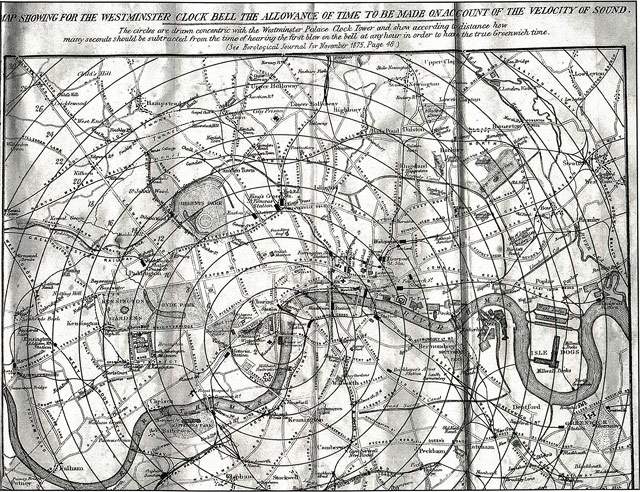
Bigger version here. The correction at Paddington Station was 6 seconds, 8 seconds in Notting Hill, and 13 seconds at the Royal Greenwich Observatory, itself the seat of a fledgling universal time standard. (via @michalmigurski)
Every few months on the web, a new candidate emerges for the Bad-Ass Hall of Fame, a collection of amazing people who lived large, walked their own path, and left their mark on history with flair. Today’s candidate is Mad Jack Churchill, a British Commando leader during World War II who died in 1996. Churchill fought in the war armed with a bow & arrows, a broadsword, and occasionally even bagpipes. Here’s a photo of him (far right) during a training exercise in Scotland, sword in hand as he storms the beach:
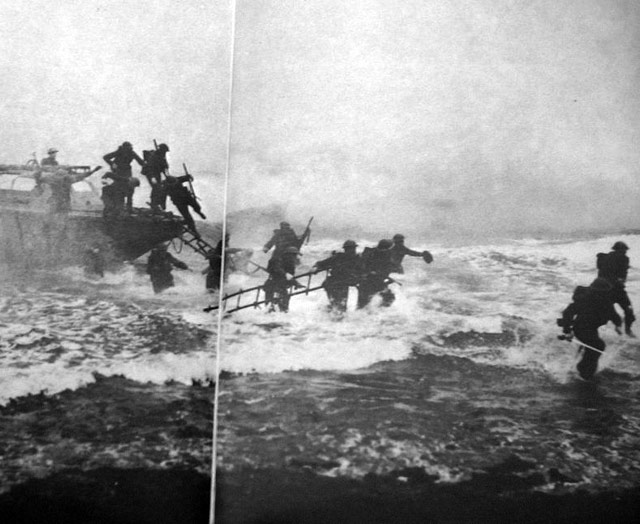
What a sight he must have been, leading charges branishing a sword and sucking on his pipes. Churchill even killed a German soldier in France with an arrow, recording the only known kill by bow in the war for the British. From a profile in WWII History magazine:
During the BEF’s fighting retreat, Churchill remained aggressive, unwilling to give up a yard of ground while extracting the maximum cost from the enemy. He was especially fond of raids and counterattacks, leading small groups of picked soldiers against the advancing Germans. He presented a strange, almost medieval figure at the head of his men, carrying not only his war bow and arrows, but his sword as well.
As befitted his love of things Scottish, Churchill carried the basket-hilted claymore (technically a claybeg, the true claymore being an enormous two-handed sword). Later on, asked by a general who awarded him a decoration why he carried a sword in action, Churchill is said to have answered: “In my opinion, sir, any officer who goes into action without his sword is improperly dressed.”
The war-diary of 4th Infantry Brigade, to which Churchill’s battalion belonged, commented on this extraordinary figure. “One of the most reassuring sights of the embarkation [from Dunkirk] was the sight of Captain Churchill passing down the beach with his bows and arrows. His high example and his great work … were a great help to the 4th Infantry Brigade.”
And this bit sounds totally made up:
Churchill himself was far in front of his troopers. Sword in hand, accompanied only by a corporal named Ruffell, he advanced into the town itself. Undiscovered by the enemy, he and Ruffell heard German soldiers digging in all around them in the gloom. The glow of a cigarette in the darkness told them the location of a German sentry post. What followed, even Churchill later admitted, was “a bit Errol Flynn-ish.”
The first German sentry post, manned by two men, was taken in silence. Churchill, his sword blade gleaming in the night, appeared like a demon from the darkness, ordered “haende hoch!” and got results. He gave one German prisoner to Ruffell, then slipped his revolver lanyard around the second sentry’s neck and led him off to make the rounds of the other guards. Each post, lulled into a sense of security by the voice of their captive comrade, surrendered to this fearsome apparition with the ferocious mustache and the naked sword.
Altogether, Churchill and Corporal Ruffell collected 42 prisoners, complete with their personal weapons and a mortar they were manning in the village. Churchill and his claymore took the surrender of ten men in a bunch around the mortar. He and his NCO then marched the whole lot back into the British lines.
As Churchill himself described the event, it all sounded rather routine: “I always bring my prisoners back with their weapons; it weighs them down. I just took their rifle bolts out and put them in a sack, which one of the prisoners carried. [They] also carried the mortar and all the bombs they could carry and also pulled a farm cart with five wounded in it….I maintain that, as long as you tell a German loudly and clearly what to do, if you are senior to him he will cry ‘jawohl’ and get on with it enthusiastically and efficiently whatever the … situation. That’s why they make such marvelous soldiers…”
Crazy! After the war, he took up boat refurbishing, river surfing, and freaking out train passengers:
In his last job he would sometimes stand up on a train journey from London to his home, open the window and hurl out his briefcase, then calmly resume his seat. Fellow passengers looked on aghast, unaware that he had flung the briefcase into his own back garden.
Rest in peace, Mad Jack. (via today i found out)
Soon, new iPhone owners will be able to use a fingerprint to access a phone or buy something on iTunes. Apple’s introduction of this fingerprint technology adds a nice layer of security and a bit of convenience for those whose fingers are too tired to type in a four-digit password. But soon, we will be interacting with a lot more devices that have no screens, and biometrics will be the logical way to secure our data. Companies have already developed ways to identify you, from your fingerprints to your heartbeat. And while these methods certainly seem more effective than simple (and often easy-to-hack) passwords, it’s a little worrisome that we’ll essentially be sharing even more personal data, right down to our person. In order to give us the promise of more security, companies will want to know even more about us. It feels like we’ve passed a point of no return. So much about us is stored in the cloud (our finances, our communication, our social lives) that we can’t turn back. The only way to protect what you’ve shared so far is to share some more. Protect your data with a password. Protect the password with some secret, personal questions. Protect all of that with your fingerprint or your heartbeat. Before long, you’ll have to give a DNA swab to access a collection photos you took yourself. It’s a trend worth watching. The last decade was about sharing. The next decade will be about protecting.
Volume 1 of The Feynman Lectures on Physics is now available in HTML form. What a fantastic resource.
Nearly fifty years have passed since Richard Feynman taught the introductory physics course at Caltech that gave rise to these three volumes, The Feynman Lectures on Physics. In those fifty years our understanding of the physical world has changed greatly, but The Feynman Lectures on Physics has endured. Feynman’s lectures are as powerful today as when first published, thanks to Feynman’s unique physics insights and pedagogy. They have been studied worldwide by novices and mature physicists alike; they have been translated into at least a dozen languages with more than 1.5 millions copies printed in the English language alone. Perhaps no other set of physics books has had such wide impact, for so long.
Aided by four experts, The Wirecutter goes long on pens and picks a few winners.
The vast majority of people don’t particularly care what they write with, but given that the difference between an awesome pen and a mediocre one is just a couple bucks, perhaps they should. A decent pen is something that just about anyone can buy and if you do a lot of handwriting, a marginally better writing experience compounded over hours of scribbling adds up to a significant improvement. And god forbid you end up not liking it, you’re down just a few dollars — it’s not the end of the world.
From this article I also learned that there are Kickstarter projects for alternate pen bodies that take popular pen cartridges.
Kevin Delaney, the head of Wayland High School’s history department, gave his 11th grade students an interesting challenge: find out everything you can about the person who owned a dusty briefcase full of papers that Delaney had found in the storage room. The man, Martin Joyce, turned out to have a life that spanned many significant events in history and his story provided the students with a personal lens into history.
Inside were the assorted papers — letters, military records, photos — left behind by a man named Martin W. Joyce, a long-since deceased West Roxbury resident who began his military career as an infantryman in World War I and ended it as commanding officer of the liberated Dachau concentration camp. Delaney could have contacted a university or a librarian and handed the trove of primary sources over to a researcher skilled in sorting through this kind of thing. Instead, he applied for a grant, and asked an archivist to come teach his students how to handle fragile historical materials. Then, for the next two years, he and his 11th grade American history students read through the documents, organized and uploaded them to the web, and wrote the biography of a man whom history nearly forgot, but who nonetheless witnessed a great deal of it.
“Joyce became the thread that went through our general studies,” Delaney says. “When we were studying World War I, we did the traditional World War I lessons and readings. And then stopped the clocks and thought, ‘What’s going on with Joyce in this period?’”
As the class repeatedly asked and answered that question, they slowly uncovered the life of a man who not only oversaw the liberated Dachau but also found himself a participant in an uncommon number of consequential events throughout Massachusetts and U.S. history. In a way Delaney couldn’t have imagined when he first popped open the suitcase that day, Joyce would turn out to be something akin to Boston’s own Forrest Gump — a perfect set of eyes through which to visit America’s past.
Fantastic, what a great story. My favorite tidbit is that after all the wars and stuff, he and his wife were on the Andrea Doria when it was struck by the Stockholm and sunk. Part of the students’ project was building a web site pertaining to Joyce’s life and includes scans of all the papers they discovered…it’s well worth looking through. (via @SlateVault)
When I was just out of college, my dad and I went to Beijing. One of my anxieties about the trip concerned my left-handedness, specifically going against the custom of not using your left hand (aka your bathroom hand) to eat. It turned out fine; the semi-expected reprimand never came.
Times have changed. Now, in Shanghai, you can go to a restaurant called Modern Toilet, which is actually one in a chain of Taiwanese stores that are toilet themed.

We are a group of “muckrakers” following our dreams. It all started when one of us was reading the manga, Dr. Slump on the toilet — and the rest is history. In the beginning, we mainly sold ice cream — a big pile of chocolate ice cream sold in containers shaped like a squat toilet. This humorous spin became a great success.
Susannah Breslin visited the Shanghai Modern Toilet and offers this report.
Upstairs, I took a seat at a table. My seat was a toilet. The table had a glass top. Under it, there was a bowl. In the bowl, there was a plastic swirly turd. The place mats were decorated with smiling turds.
(via @claytoncubitt)
Richard Swarbrick makes these great impressionist animations of sports events, mostly soccer but also cricket and basketball. Here’s one to get you started…the 5-0 drubbing FC Barcelona handed to Real Madrid during a 2010 Clasico:
It’s amazing how much Swarbrick’s illustrations communicate with so few strokes…Mourinho’s face is my favorite. Here’s the actual match for comparison purposes. And here’s Maradona’s sublime goal against England in the 1986 World Cup (original video):
You can find many other examples of Swarbrick’s work on his web site and on his YouTube channel. (via @dunstan)
The Hyperkin RetroN 5 is a retro gaming system that plays all your favorite games from NES, SNES, Super Famicom, Genesis, Mega Drive, Famicom, Game Boy, Game Boy Color, and GBA cartridges. I haven’t heard anything about this (is it any good?), but I’ve got a lot of old games I’d like to play on it, starting with NHL ‘94. Pre-order at Amazon for $99. (via @cabel)
Well, sort of. Rowling is writing a screenplay for Warner Bros. based on a Hogwart’s textbook called Fantastic Beasts and Where to Find Them.
Although it will be set in the worldwide community of witches and wizards where I was so happy for seventeen years, ‘Fantastic Beasts and Where to Find Them’ is neither a prequel nor a sequel to the Harry Potter series, but an extension of the wizarding world. The laws and customs of the hidden magical society will be familiar to anyone who has read the Harry Potter books or seen the films, but Newt’s story will start in New York, seventy years before Harry’s gets underway.
If you’ve watched a movie in the past 20 years, chances are you’ve seen the animation featuring the Pixar logo and Luxo Jr., the company’s mascot. Luxo hops in, squashes the I, and takes its place; here’s what it looks like:
According to the Pixar wiki, there have been several variations of the logo, including the one where Wall-E comes out to fix Luxo Jr’s busted lightbulb:
Others include 20th and 25th anniversary versions, a 3D version that premiered with UP, and versions from Cars 2 and Finding Nemo that incorporate story elements into the logo.
This particular logo debuted with Toy Story in 1995. For the short films Pixar produced before that, they used variations on the not-very-exciting theme of circular indent in beveled square, a shape borrowed from the look of their Image Computer:

Many of the logo animation variations, including the pre-Luxo Jr. versions, can be seen in this video:
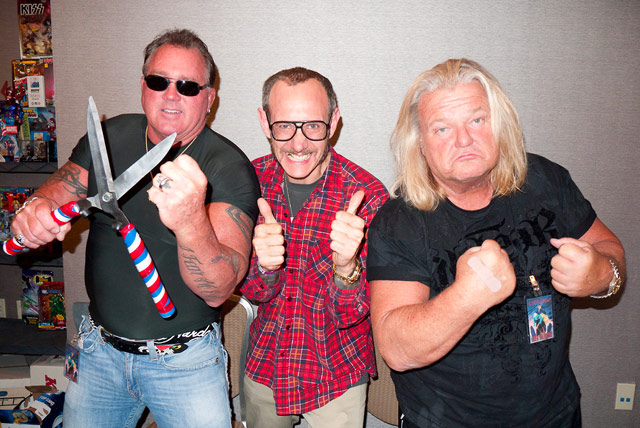
I watched a lot of pro wrestling when I was a kid and this photo of Brutus “The Barber” Beefcake, Greg “The Hammer” Valentine, and fashion photographer Terry Richardson is just too much for me. If nostalgia truly is death, someone better make some arrangements for me.
(If you’re not with me on this whole reminiscing about 1980s professional wrestlers thing, Richardson also recently took a photo of Miley Cyrus eating a salad, so you’re basically all caught up on current events and you’re welcome.)
Watch as people review video games after eating hot peppers. Here’s Erin Schmalfeld reviewing a Nintendo 3DS game after chewing and swallowing an entire habanero:
(via ★interesting)
BMX rider Tyrone Williams checks out a Citi Bike and puts it though its paces, first with a wheelie or two and eventually on a dirt track.
(via animal & @claytoncubitt)
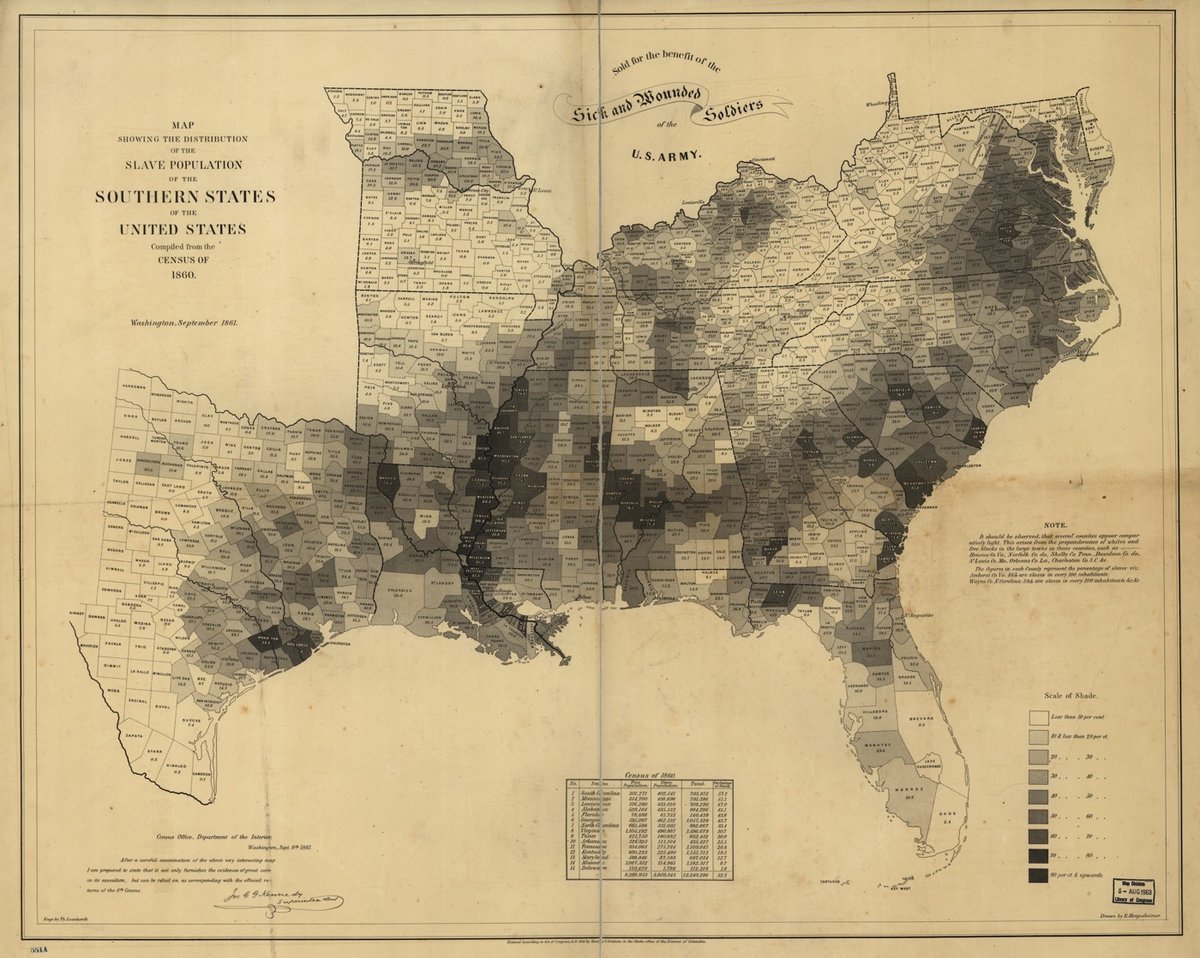
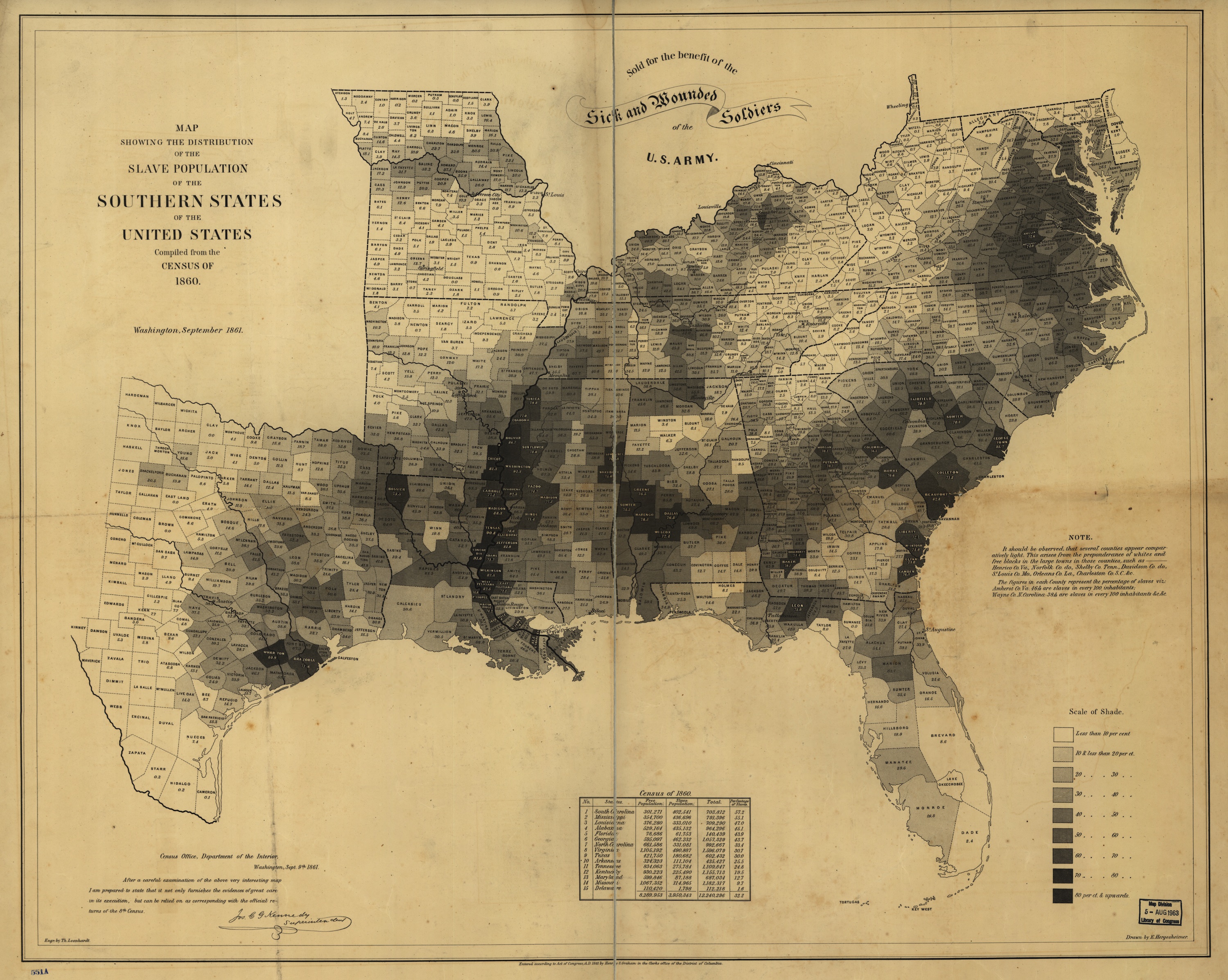
Using data from the 1860 US Census, the Department of the Interior made this map showing the percentages, by county, of the slave population of the southern states.
Though this map was simple, it showed the relationship between states’ commitment to slavery and their enthusiasm about secession, making a visual argument about Confederate motivations.
Schulten writes that President Lincoln referred to this particular map often, using it to understand how the progress of emancipation might affect Union troops on the ground. The map even appears in the familiar Francis Bicknell Carpenter portrait First Reading of the Emancipation Proclamation of President Lincoln, visible leaning against a wall in the lower right-hand corner of the room.
Here’s a larger version. The numbers in some locations are staggering and sickening — in many counties 75% of the population was enslaved and the rate is over 90% in a few places.
Paul Bogard recently published a book on darkness called The End of Night. Nicola Twilley and Geoff Manaugh interviewed Bogard about the book, the night sky, astronomy, security, cities, and prisons, among other things. The interview is interesting throughout but one of my favorite things is this illustration of the Bortle scale.

Twilley: It’s astonishing to read the description of a Bortle Class 1, where the Milky Way is actually capable of casting shadows!
Bogard: It is. There’s a statistic that I quote, which is that eight of every ten kids born in the United States today will never experience a sky dark enough to see the Milky Way. The Milky Way becomes visible at 3 or 4 on the Bortle scale. That’s not even down to a 1. One is pretty stringent. I’ve been in some really dark places that might not have qualified as a 1, just because there was a glow of a city way off in the distance, on the horizon. You can’t have any signs of artificial light to qualify as a Bortle Class 1.
A Bortle Class 1 is so dark that it’s bright. That’s the great thing-the darker it gets, if it’s clear, the brighter the night is. That’s something we never see either, because it’s so artificially bright in all the places we live. We never see the natural light of the night sky.
I can also recommend reading David Owen’s 2007 NYer piece on light pollution.

The apples that you buy at the market are all from the same species of plant, Malus domestica. Within that species, there are 7,500 different varieties (or cultivars) of apples. The list of apple cultivars includes Red Delicious, Macoun, Honeycrisp, Granny Smith, and the like. They look and taste different but are all recognizable as apples.
Brassica oleracea is a species of plant that, like the apple, has a number of different cultivars. But these cultivars differ widely from each other: cabbage, kale, broccoli, brussels sprouts, kohlrabi, collard greens, and cauliflower. Nutty that all those vegetables come from the same species of plant. (via @ajsheets)
This is a presentation and therefore missing a bunch of key context, but Michael Dearing’s The Five Cognitive Distortions of People Who Get Stuff Done is interesting reading nonetheless. The five distortions are:
1. Personal exceptionalism
2. Dichotomous thinking
3. Correct overgeneralization
4. Blank canvas thinking
5. Schumpeterianism
That last one is likely a head-scratcher to those of us without economics backgrounds; here’s what Dearing has to say about it:
Definition - sees creative destruction as natural, necessary, and as their vocation
Benefits - fearlessness, tolerance for destruction and pain
Deadly risk - heartless ambition, alienation
(via ★interesting)
Anthony Cerniello took photos of similar-looking family members at a reunion, from the youngest to the oldest, and edited them together in a video to create a nearly seamless portrait of a person aging in only a few minutes.
The effect is as if you sat a child down in front of a camera and filmed them continuously for 65 years and then compressed that down into a 5-minute time lapse. Colossal has an explanation:
Last Thanksgiving, Cerniello traveled to his friend Danielle’s family reunion and with still photographer Keith Sirchio shot portraits of her youngest cousins through to her oldest relatives with a Hasselblad medium format camera. Then began the process of scanning each photo with a drum scanner at the U.N. in New York, at which point he carefully edited the photos to select the family members that had the most similar bone structure. Next he brought on animators Nathan Meier and Edmund Earle who worked in After Effects and 3D Studio Max to morph and animate the still photos to make them lifelike as possible. Finally, Nuke (a kind of 3D visual effects software) artist George Cuddy was brought on to smooth out some small details like the eyes and hair.
Fantastic.
Old people, like those who live to be older than 30, didn’t exist in great numbers until about 30,000 years ago. Why is that? Anthropologist Rachel Caspari speculates that around that time, enough people were living long enough to function as a shared cultural hard drive for humans, a living memory bank for skills, histories, family trees, etc. that helped human groups survive longer.
Caspari says it wasn’t a biological change that allowed people to start living reliably to their 30s and beyond. (When she looked at other populations of Neanderthals and Homo sapiens that lived in the same place and time, the two different species had similar proportions of old people, suggesting the change was not genetic.) Instead, it was culture. Something about how people were living made it possible to survive into old age, maybe the way they found or stored food or built shelters, who knows. That’s all lost-pretty much all we have of them is teeth-but once humans found a way to keep old people around, everything changed.
Old people are repositories of information, Caspari says. They know about the natural world, how to handle rare disasters, how to perform complicated skills, who is related to whom, where the food and caves and enemies are. They maintain and build intricate social networks. A lot of skills that allowed humans to take over the world take a lot of time and training to master, and they wouldn’t have been perfected or passed along without old people. “They can be great teachers,” Caspari says, “and they allow for more complex societies.” Old people made humans human.
What’s so special about age 30? That’s when you’re old enough to be a grandparent. Studies of modern hunter-gatherers and historical records suggest that when older people help take care of their grandchildren, the grandchildren are more likely to survive. The evolutionary advantages of living long enough to help raise our children’s children may be what made it biologically plausible for us to live to once unthinkably old ages today.
You planning on having a kid soon? Check out Sandor Weisz’s new project, BornYet. When you register for the site, you get a subdomain (like is.rummicub.bornyet.com) that your friends can use to sign up for a birth announcement. When the time comes, it takes two seconds log into BornYet and send out an email blast with the pertinent info (like so). Pretty neat.
Speaking of inexpensive time travel, listen as David and Ben Crystal perform selections from Shakespeare in the original accent, as it would have been heard at the Globe in the early 1600s. (via @KBAndersen)
I have a soft spot for photography that reaches, seemingly impossibly, back into time…e.g. early color photography. It’s an inexpensive form of time travel. The American Revolution took place back in the days before photography and the way we remember it visually is something like this:
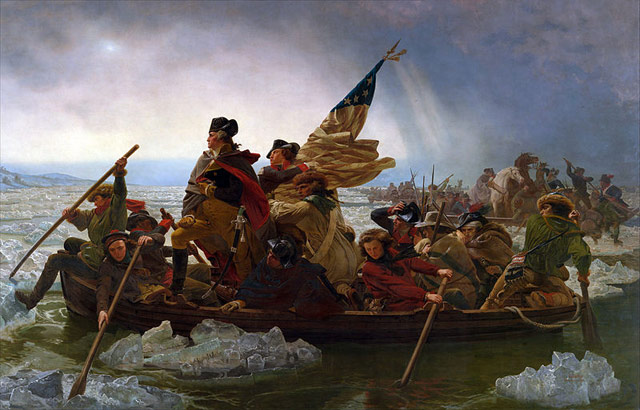
But, some Revolutionary War participants lived long enough to have their daguerreotypes taken in the 1850s and 1860s. This is a photo of Lemuel Cook, the last official surviving veteran of the Revolution1, taken sometime before his death in 1866.
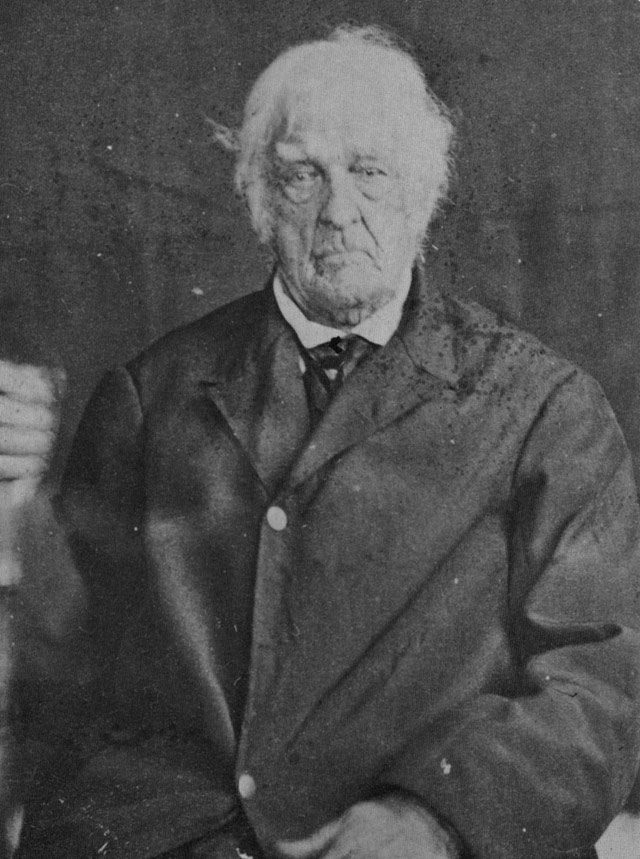
The source of many of these photos is a book published in 1864 by E.B. Hillard called The Last Men of the Revolution. The book contains six photos of surviving war vets and brief biographies of each man. (via @ftrain)
[1] Daniel Bakeman lived until 1869 but could not prove his service in the war. However, Congress passed a special act in 1867 that provided him with a war pension. Bakeman’s longevity (he lived to 109) contributed to another astounding achievement: he and his wife Susan had the longest marriage on record, 91 years. Their marriage began 3 years before the Revolution and continued until Susan’s death in 1863, right in the midst of the Civil War. Amazing. ↩
This is a bit of a mindblower…this software presented at SIGGRAPH Asia lets you pluck objects out of photos and edit them as if they were in 3D.
(via stellar)
Choire Sicha ponders.
But if New York City is better than ever — and we think it is — then why does it suck so bad?
The money, yes. And the cupcakes, and the ATMs, and all these apartments that somehow are in clock towers, which are all also just money. Among the young set, it’s newcomers’ parents paying up at our phantom tollbooth. There is now a class of New Yorkers with the luxury of not just money but also plenty of time. Once you got a crappy coffee at the deli or you didn’t get coffee. Now the city is a wonderland of delicious pour-over. Every day is choose-your-own-adventure when you’re not dying over the rent. Now there’s a substantial population who thinks New York’s a lark, or college 2.0, or an indie-lectual Rumspringa, a lazy not so Grand Tour before packing it in to get married in Dallas. Not to pick on the millennials: The olds aren’t suffering either. Now a vast number of them pretend to live in the city while gardening at their second homes, in the sweet spread from Germantown to Ghent to Kinderhook. The result: New York has fewer who’d bleed for her. Once the city was for people who craved it with the stridency of a young Madonna. The result was entertainment, friction, mayhem, disaster, creation, magic.
(via @tcarmody)
It’s NFL season again and it’s time to tune into the NFL TV maps site to find out when your favorite team isn’t on TV because the network is contractually obligated to show the pathetic Jets.
For more than a year, Julian Assange hasn’t left Ecuador’s London Embassy. But that hasn’t limited his political reach or his social life as much as you’d imagine. From Vanity Fair’s Sarah Ellison: The Man Who Came to Dinner.
Julian Assange hasn’t set foot outside Ecuador’s London embassy in more than a year-avoiding extradition to Sweden, where he faces allegations of sexual assault. But physical confinement seems only to enhance his reach. The WikiLeaks founder has video-addressed the U.N., launched a Senate campaign in absentia in his native Australia, entertained Lady Gaga, and played a key role in the case of N.S.A. leaker Edward Snowden. As several movies depict aspects of Assange’s story, Sarah Ellison focuses on the center of his web.
Animator Hayao Miyazaki is retiring from making feature length films. At a press conference in Tokyo, he discussed why.
The director spoke about how his eye sight was getting worse, making it hard for him to create his animation. He also said how each year, he is leaving his desk earlier and earlier.
A reporter noted that Miyazaki’s official retirement statement stated that he was retiring from making feature films. “As long as I can drive,” Miyazaki replied, “I will be going to the studio every day. But if there’s thing I want to do, then I will.”
This year’s The Wind Rises will be his last feature film. My Neighbor Totoro, Princess Mononoke, Spirited Away, Ponyo, and many more…that’s quite a body of work.
Edward Snowden’s leak of NSA documents keeps paying dividends. The latest report (in the Guardian, the NY Times, and Pro Publica) alleges that the NSA has cracked or circumvented many of the internet security protocols designed to keep communications private from third parties. From the Pro Publica piece:
The National Security Agency is winning its long-running secret war on encryption, using supercomputers, technical trickery, court orders and behind-the-scenes persuasion to undermine the major tools protecting the privacy of everyday communications in the Internet age, according to newly disclosed documents.
The agency has circumvented or cracked much of the encryption, or digital scrambling, that guards global commerce and banking systems, protects sensitive data like trade secrets and medical records, and automatically secures the e-mails, Web searches, Internet chats and phone calls of Americans and others around the world, the documents show.
Many users assume — or have been assured by Internet companies — that their data is safe from prying eyes, including those of the government, and the N.S.A. wants to keep it that way. The agency treats its recent successes in deciphering protected information as among its most closely guarded secrets, restricted to those cleared for a highly classified program code-named Bullrun, according to the documents, provided by Edward J. Snowden, the former N.S.A. contractor.
Cryptographer Matthew Green speculates on exactly how the NSA might have achieved these results and what the implications are.
Probably the biggest concern in all this is the evidence of collaboration between the NSA and unspecified ‘telecom providers’. We already know that the major US (and international) telecom carriers routinely assist the NSA in collecting data from fiber-optic cables. But all this data is no good if it’s encrypted.
While software compromises and weak standards can help the NSA deal with some of this, by far the easiest way to access encrypted data is to simply ask for — or steal — the keys. This goes for something as simple as cellular encryption (protected by a single key database at each carrier) all the way to SSL/TLS which is (most commonly) protected with a few relatively short RSA keys.
If you’re concerned about the privacy of your communications, security expert Bruce Schneier has some suggestions for keeping secure.
1) Hide in the network. Implement hidden services. Use Tor to anonymize yourself. Yes, the NSA targets Tor users, but it’s work for them. The less obvious you are, the safer you are.
2) Encrypt your communications. Use TLS. Use IPsec. Again, while it’s true that the NSA targets encrypted connections — and it may have explicit exploits against these protocols — you’re much better protected than if you communicate in the clear.
Matt Duron is a self-proclaimed “guy’s guy” who has a son who is “gender creative” (love that phrase) and wants to be treated like a girl.
My wife also gets a load of emails from people asking where our son’s father is, as though I couldn’t possibly be around and still allow a male son to display female behavior. To those people I say, I’m right here fathering my son. I want to love him, not change him. My son skipping and twirling in a dress isn’t a sign that a strong male figure is missing from his life, to me it’s a sign that a strong male figure is fully vested in his life and committed to protecting him and allowing him to grow into the person who he was created to be.
I may be a “guy’s guy,” but that doesn’t mean that my son has to be.
More parents like this please.
Solving the traveling salesman problem is difficult enough without having to consider the happiness of the salesman. But Tom Vanderbilt reports that’s essentially what UPS, FedEx, and the like have had to do.
People are also emotional, and it turns out an unhappy truck driver can be trouble. Modern routing models incorporate whether a truck driver is happy or not — something he may not know about himself. For example, one major trucking company that declined to be named does “predictive analysis” on when drivers are at greater risk of being involved in a crash. Not only does the company have information on how the truck is being driven — speeding, hard-braking events, rapid lane changes — but on the life of the driver. “We actually have built into the model a number of indicators that could be surrogates for dissatisfaction,” said one employee familiar with the program.
This could be a change in a driver’s take-home pay, a life event like a death in the family or divorce, or something as subtle as a driver whose morning start time has been suddenly changed. The analysis takes into account everything the company’s engineers can think of, and then teases out which factors seem correlated to accident risk. Drivers who appear to be at highest risk are flagged. Then there are programs in place to ensure the driver’s manager will talk to a flagged driver.
In other words, the traveling salesman problem grows considerably more complex when you actually have to think about the happiness of the salesman. And, not only do you have to know when he’s unhappy, you have to know if your model might make him unhappy. Warren Powell, director of the Castle Laboratory at Princeton University’s Department of Operations Research and Financial Engineering, has optimized transportation companies from Netjets to Burlington Northern. He recalls how, at Yellow Freight company, “we were doing things with drivers — they said, you just can’t do that.” There were union rules, there was industry practice. Tractors can be stored anywhere, humans like to go home at night. “I said we’re going to need a file with 2,000 rules. Trucks are simple; drivers are complicated.”
Robin Nagle, the Anthropologist in Residence for the New York City Department of Sanitation, recently wrote a book about the city’s sanitation department. Collectors Weekly has an interview with Nagle about the book and sanitation in general.
Waring also dressed the workers in white, and even his wife said, ‘What, are you crazy?’ But he wanted them to be associated with notions of hygiene. Of course, those in the medical profession wore white, and he understood, quite rightly, that it was an issue of public health and hygiene to keep the street clean. He also put them in the helmets that the police wore to signify authority, and they quickly were nicknamed the White Wings.
These men became heroes because, for the first time in anyone’s memory, they actually cleaned the city. It was a very bright day in the history of the department. Waring was only in office for three years, but after he left, nobody could use the old excuses that Tammany had used to dodge the issue of waste management. They had always said it was too crowded, with too many diverse kinds of people, and never mind that London and Paris and Philadelphia and Boston cleaned their streets. New York was different and it just couldn’t be done. Waring proved them wrong. Rates of preventable disease went down. Mortality rates went down. It also had a ripple effect across all different areas of the city.
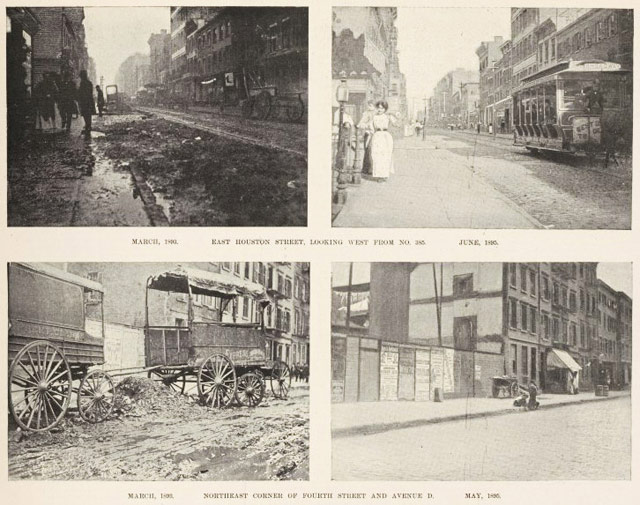
Now, NYC is not the cleanest city in the world, not by a long-shot, but it used to be so much worse. In the early 1890s, the streets were literally covered in trash because the Department of Street Cleaning (as it was known then) was so inept; look at the difference made by a 1895 reorganization of the department:
Hanna Rosin writes about Murder by Craigslist, the story of a killer who advertised for victims on Craigslist in order to steal their possessions.
Davis wasn’t the only person to answer the Craigslist ad. More than 100 people applied for the caretaker job — a fact that Jack was careful to cite in his e-mails back to the applicants. He wanted to make sure that they knew the position was highly sought-after. Jack had a specific type of candidate in mind: a middle-aged man who had never been married or was recently divorced, and who had no strong family connections. Someone who had a life he could easily walk away from. “If picked I will need you to start quickly,” he would write in his e-mails.
Jack painstakingly designed the ad to conjure a very particular male fantasy: the cowboy or rancher, out in the open country, herding cattle, mending fences, hunting game — living a dream that could transform a post-recession drifter into a timeless American icon. From the many discarded drafts of the ad that investigators later found, it was clear that Jack was searching for just the right pitch to catch a certain kind of man’s eye. He tinkered with details-the number of acres on the property, the idea of a yearly bonus and paid utilities-before settling on his final language: “hilly,” “secluded,” “job of a lifetime.” If a woman applied for the job, Jack wouldn’t bother responding. If a man applied, he would ask for the critical information right off the bat: How old are you? Do you have a criminal record? Are you married?
Jack seemed drawn to applicants who were less formal in their e-mail replies, those who betrayed excitement, and with it, vulnerability. “I was raised on a farm as a boy and have raised some of my own cattle and horses as well,” wrote one. “I’m still in good shape and not afraid of hard work! I really hope you can give me a chance. If for some reason I wouldn’t work out for you no hard feelings at all. I would stick with you until you found help. Thank you very much, George.”
This was your standard well-written crime story until about 2/3rds of the way through when Rosin highlights a societal trend that more deeply connects the victims with their killer.
I was initially drawn to the story of the Beasley murders because I thought it would illuminate the isolation and vulnerability of so many working-class men, who have been pushed by the faltering economy from one way of life — a nine-to-five job, a wife, children — into another, far more precarious one: unemployed or underemployed, single or divorced, crashing on relatives’ spare beds or in the backseats of cars. At what other moment in history would it have been plausible for a serial killer to identify middle-aged white men as his most vulnerable targets?
But what I discovered in the course of my reporting was something quite different. As traditional family structures are falling apart for working-class men, many of them are forging new kinds of relationships: two old high-school friends who chat so many times a day that they need to buy themselves walkie-talkies; a father who texts his almost-grown sons as he goes to bed at night and as he wakes up in the morning.
There’s a bit more to it than but I don’t want to spoil it for you…the entire piece is worth a read.
I loved reading CEO Jonah Peretti’s most recent memo to the team at Buzzfeed.
But there are many exciting, tempting, glamorous, lucrative opportunities that we will NOT do in the coming year and as more of these opportunities present themselves it will take discipline to stay on track. We will NOT launch a BuzzFeed TV show, radio station, cable network, or movie franchise — we’ll leave that to the legacy media and Hollywood studios. We will NOT launch a white labeled version of BuzzFeed to power other sites or a BuzzFeed social network — we’ll leave that to pure tech companies in Silicon Valley. We will NOT launch a print edition or a paywall or a paid conference business — we’ll leave that to other publications. We have a great business model that has a bright future as social and mobile continue to become the dominate form of media consumption. We will stay away from anything that requires adopting a legacy business model, even a lucrative one like cable syndication fees or prime time television ads. What seems like a lucrative opportunity today is often a distraction from building something much more exciting tomorrow. We need to stay patient and focused.
Here’s his 2012 memo. I’ve worked at a desk in the Buzzfeed office for as long as they’ve had an office (Fay Da posse represent!), and it’s been fascinating watching Jonah and his team turn a big idea and small blog into a media juggernaut.
Here’s a medley of isolated vocals from the Beatles’ Abbey Road:
Many more isolated vocal tracks are available on this subreddit. Here are the instructions for making your own isolated vocal tracks with Audacity, the same open source audio processing app that Tim used to make his slow jams. (thx, tim)
Justine Sharrock asked prisoners incarcerated at San Quentin State Prison to describe the internet. The men had just taken part in a program to help them reintegrate into society, and though they hadn’t used the internet themselves, they had more of a theoretical understanding of it. Chrisfino Kenyatta Leal entered prison in 1994:
I envisioned the web to be like this infinite space filled with information about everything under the sun.
I was confused about how you got from one piece of info to the next and I was clueless in terms of the lingo used to describe it all…
The technical aspects of it make me go, Hmmmm? I realize everything is getting faster and moving toward mobile, so I often wonder about who’s doing all this stuff and where is it all taking place?
The book trailer for Thomas Pynchon’s new novel is either brilliant or the dumbest thing ever.
Fun fact: the phrase “I don’t even” was invented to react to this video. (via @GreatDismal)
Inside the Monster is a 25-minute documentary (in French w/ English subtitles) on Teahupo’o, a Tahitian locale known for its spectacular waves.
Crazy the way those waves rise out of almost nowhere. My favorite photo of Teahupo’o is this one (view larger):
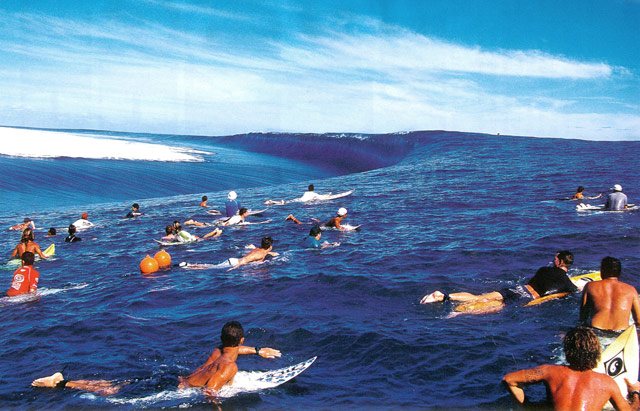
All that water hanging out 14 feet higher than it should be….it ain’t natural!
Powers of Ten is now a Foursquare venue. Go there, lay down on the grass, and upload a photo of yourself in the Powers of Ten pose.
Lie on the ground on a sunny day with one hand draped across your torso to recreate the starting point of the film Powers Of Ten by Charles and Ray Eames.
Chicagoans and visitors to Chicagoland, let’s make this a thing. (via ★interesting-links)
vintage post from Sep 2013
· gift link
This video seems like it was made specifically for kottke.org. In the first half of it, you learn how cranberries are harvested. In the second half, there’s gorgeous HD slo-mo footage of wakeskating through a cranberry bog.
And with a Tycho soundtrack no less…it’s all too perfect. (via ★interesting)
An interesting look at how news of the Declaration of Independence spread through the American colonies and around the world. Because trans-Atlantic journeys took awhile back when, the first European news of the Declaration was almost a month and a half after July 4.
News of American independence reached London the second week of August via the Mercury packet ship, which sailed with important correspondence from General William Howe to Lord George Germain, dated July 7 and 8, at Staten Island. The London Gazette, the official Crown organ, first broke the news in its Saturday, August 10 edition. A 16-word, 106-character, Twitter-esque extract from a Howe letter read: “I am informed that the Continental Congress have declared the United Colonies free and independent States.”
Later that day, the London Evening-Post included its own version of the breaking news: “Advice is received that the Congress resolved upon independence the 4th of July; and have declared war against Great Britain in form.” The same blurb appeared in the Tuesday, August 13 issue of the London Chronicle. On Wednesday, the Morning Chronicle and London Advertiser printed “Copies of the Declarations of War by the Provincials are now in Town and are said to be couched in the strongest terms.”
Another fine post by Todd Andrlik, who recently wrote about the ages of prominent Revolutionary War participants. I’m currently reading Tom Standage’s book about the history of social media and this story would fit right in.
In 1953, the BBC filmed a train trip from London to Brighton. Thirty years later in 1983, they filmed it again and then again 30 years after that, in 2013. Here are all three films synced up and played side-by-side:
1000 extra bonus points to the Beeb for the Star Guitar soundtrack.
Newer posts
Older posts








Socials & More