kottke.org posts about video
In a short film shot in 1957, Walt Disney described the multiplane camera, one of the many inventions and innovations his company had developed in order to produce more realistic and affecting animations. Instead of shooting single cels of animation on a single movable background, the multiplane camera could shoot several independently moving backgrounds, creating a sense of depth and perspective. A 1938 article in Popular Mechanics explained how the camera works.
Disney wanted to increase the eye value of the many paintings making up a picture by achieving a soft-focus effect on the backgrounds, illuminating the various levels of each scene individually, and separating” background from foreground, thus keeping background objects to their proper relative size.
His production crew labored for three years to perfect the novel picture-taking device to achieve these results. It consists of four vertical steel posts, each carrying a rack along which as many as eight carriages may be shifted both horizontally and vertically. On each carriage rides a frame containing a sheet of celluloid, on which is painted part of the action or background.
Resembling a printing press, the camera stands eleven feet tall and is six feet square. Made with almost micrometer precision, it permits the photographing of foreground and background cels accurately, even when the first is held firmly in place two feet from the lens and the lowest rests in its frame nine feet away. Where the script calls for the camera to “truck up” for a close-up, the lens actually remains stationary, while the various cels are moved upward. By this means, houses, trees, the moon, and any other background features, retain their relative sizes.
After being deployed on a short film as a test, the multiplane camera was used to film Snow White and the Seven Dwarfs, the first feature-length animated film. In the chapter on “Illusion” in his newest book Wonderland: How Play Made the Modern World, Steven Johnson writes that the use of the multiplane camera (along with other innovations in animation developed since the days of Steamboat Willie) had a profound effect on audiences.
All of these technical and procedural breakthroughs summed up to an artistic one: Snow White was the first animated film to feature both visual and emotional depth. It pulled at the heartstrings in a way that even live-action films had failed to do. This, more than anything, is why Snow White marks a milestone in the history of illusion. “No animated cartoon had ever looked like Snow White,” Disney’s biographer Neil Gabler writes, “and certainly none had packed its emotional wallop.” Before the film was shown to an audience, Disney and his team debated whether it might just be powerful enough to provoke tears — an implausible proposition given the shallow physical comedy that had governed every animated film to date. But when Snow White debuted at the Carthay Circle Theatre, near L.A.’s Hancock Park, on December 21, 1937, the celebrity audience was heard audibly sobbing during the final sequences where the dwarfs discover their poisoned princess and lay garlands of flowers on her. It was an experience that would be repeated a billion times over the decades to follow, but it happened there at the Carthay Circle first: a group of human beings gathered in a room and were moved to tears by hand-drawn static images flickering in the light.
In just nine years, Disney and his team had transformed a quaint illusion — the dancing mouse is whistling! — into an expressive form so vivid and realistic that it could bring people to tears. Disney and his team had created the ultimate illusion: fictional characters created by hand, etched onto celluloid, and projected at twenty-four frames per second, that were somehow so believably human that it was almost impossible not to feel empathy for them.
Interestingly, the multiplane camera also seems to be an instance of simultaneous invention (a concept also covered by Johnson in an earlier book, Where Good Ideas Come From). In addition to Disney’s multiplane camera, there were a few earlier earlier efforts and it’s unclear whether they were invented independently or how one inventor influenced another. But one thing is for certain: only Disney’s camera was deployed so skillfully and artfully that it changed cinema and our culture forever.1
In November, shortly after the election, Vann Newkirk wrote an article for The Atlantic called This Is Who We Are, a reflection on racism in America.
At a gas station just outside of Rockingham, serendipity found us. As we pulled up to the pump, just there in front of our car was Mr. Confederate Plate, leaning like all villains do against the side of his car. I’m not sure who recognized whom first, but I remember the shouting match, and Mr. Confederate Flag calling my father the one name he would never answer to, looking at me and saying the same, and then pantomiming that he had a gun in the car. I remember looking around at similar flags on another truck and inside the gas station, and knowing instinctively that we were not in friendly territory. I also remember my father shaking with rage and that same hot shame as my own when he climbed back in the truck.
After another cussing fit, Vann Newkirk Sr. looked at me and said the thing that’s always stuck with me since. “This is who we are,” he told me. “Don’t forget.” And we went back down the road.
The piece was adapted into the short video above. Both are worth your time.
Here’s a technique for putting a comforter inside a duvet cover that involves rolling the whole thing up “like a burrito” and then two solid pieces of matter somehow pass through each other? I dunno, that is some goddamned witchcraft that defies the laws of physics and topology and is probably related to at least one of the Millennium Prize Problems. I don’t know if it’s easier than doing it the normal way1 but it certainly is more entertaining.
See also how to fold a fitted sheet and how to fold a t-shirt in two seconds.
Using mostly old-school visual effects — like ink dispersing in an aquarium and poking holes in napkins (to represent stars) — Thomas Vanz created a pretty compelling representation of a dying star going supernova.
Novae is a movie about an astronomical event that occurs during the last evolutionary stages of a massive star’s life, whose dramatic and catastrophic death is marked by one final titanic explosion called supernova.
By only using an aquarium, ink and water, this film is also an attempt to represent the giant with the small without any computed generated imagery.
As a tribute to Kubrick or Nolan’s filmography, Novae is a cosmic poem that want to introduce the viewer to the nebulae’s infinite beauty.
Vanz documented his process in these two videos, which are almost as entertaining as the finished product.
French visual effects artist Maxime Causeret took a track from Max Cooper’s album Emergence and created these wonderful biologically inspired patterns and interactions.
Maxime also shows us a section of animated reaction-diffusion patterns, where simple chemical feedback mechanisms can yield complex flowing bands of colour — these forms of system were originally thought up by Alan Turing, and were part of the early seeds of the field of systems biology, which seeks to simulate life with computers, in order to better understand the systems producing the complexity we see in the living world. They were also the starting point of my main research area many years ago before I got lost in music! (where I began with the question of what patterns could be produced via reaction-diffusion forms of system as opposed to gene-regulatory network controlled patterning).
There’s a blue brain coral pattern at the 1:30 mark and a neuron-ish pattern at 2:30 that I wish would go on forever. Headphones recommended, psychoactive drugs optional. (via colossal)
Some interesting speculation from Evan Puschak on what Amazon is up to with Amazon Go. Basically, Puschak thinks Amazon Go is Amazon Web Services but for retail stores. In the same way that AWS provides hosting for sites like Netflix and Reddit, Amazon Go will provide patent-protected technology infrastructure for “self-shopping” supermarkets and retail stores. But it remains to be seen whether it’s more like their one-click patent, which was licensed by a few others (notably Apple) but everyone else was able to do without it.
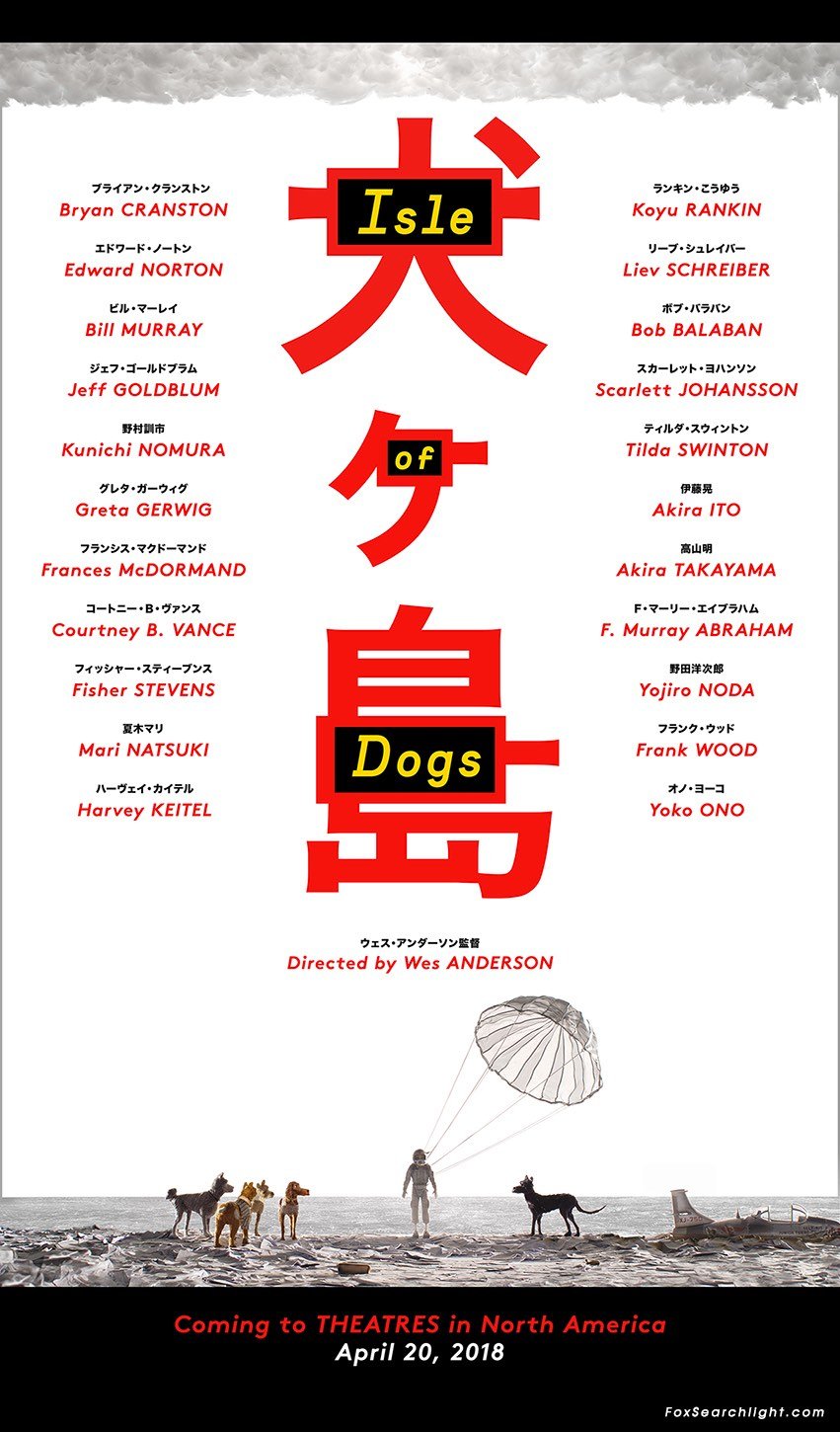
We’ve known for awhile that Wes Anderson is doing another stop-motion animated movie, but in this video, Anderson himself shares the name of the film — Isle of Dogs — and shows a very tiny clip of the character played by Edward Norton.
Also appearing in the film are Bill Murray, Tilda Swinton, Yoko Ono, Scarlett Johansson, and possibly you. Anderson is doing a fundraiser for a favorite charity and if you donate, you’re entered to win a trip to London to meet Wes, get a tour of the production, and record the voice of a character for the movie (“barking, howling & whimpering may be required”).
Update: The poster for the movie is out. WWII?
Art director Antonio Alcalá, one of four art directors employed by the USPS, talks a little bit about the history behind US postage stamps and how they are designed and produced.
You may have heard about the dumb old lady who was driving with a cup of McDonald’s coffee in her lap, spilled it, and then greedily sued McDonald’s, winning millions of dollars and setting off an epidemic of frivolous personal injury lawsuits that’s still alive and well today. Well, that’s not really what happened. Adam Conover explains what actually went down in this entertaining short video.
P.S. If you’re following along, what we have here is a video by CollegeHumor of a comedian debunking misinformation deliberately spread by a large multinational corporation (with publicly available sources!), packaged as a comedy bit but is every bit as informational as a piece in the Times or on Vox. If you’re being disingenuous, you might call this fake news. (See also Last Week Tonight, The Daily Show, The Colbert Report, etc.) (via subtraction)
Update: Hot Coffee is a feature-length documentary about the McDonald’s coffee case and tort reform in America. (via @aabhowell)
Update: Retro Report has a piece on the suit as well. (via @DavidGrann)
The words “Blade Runner sequel” have inspired equal parts excitement and dread in my heart. Some things, you just shouldn’t mess with, particularly if you’re Ridley Scott (see the Alien5 franchise). But with Ryan Gosling and Harrison Ford headlining, Denis Villeneuve directing (he did the pitch-perfect Arrival), and this teaser trailer, the scale has tipped towards excitement.
Thirty years after the events of the first film, a new blade runner, LAPD Officer K (Gosling), unearths a long-buried secret that has the potential to plunge what’s left of society into chaos. K’s discovery leads him on a quest to find Rick Deckard (Ford), a former LAPD blade runner who has been missing for 30 years.
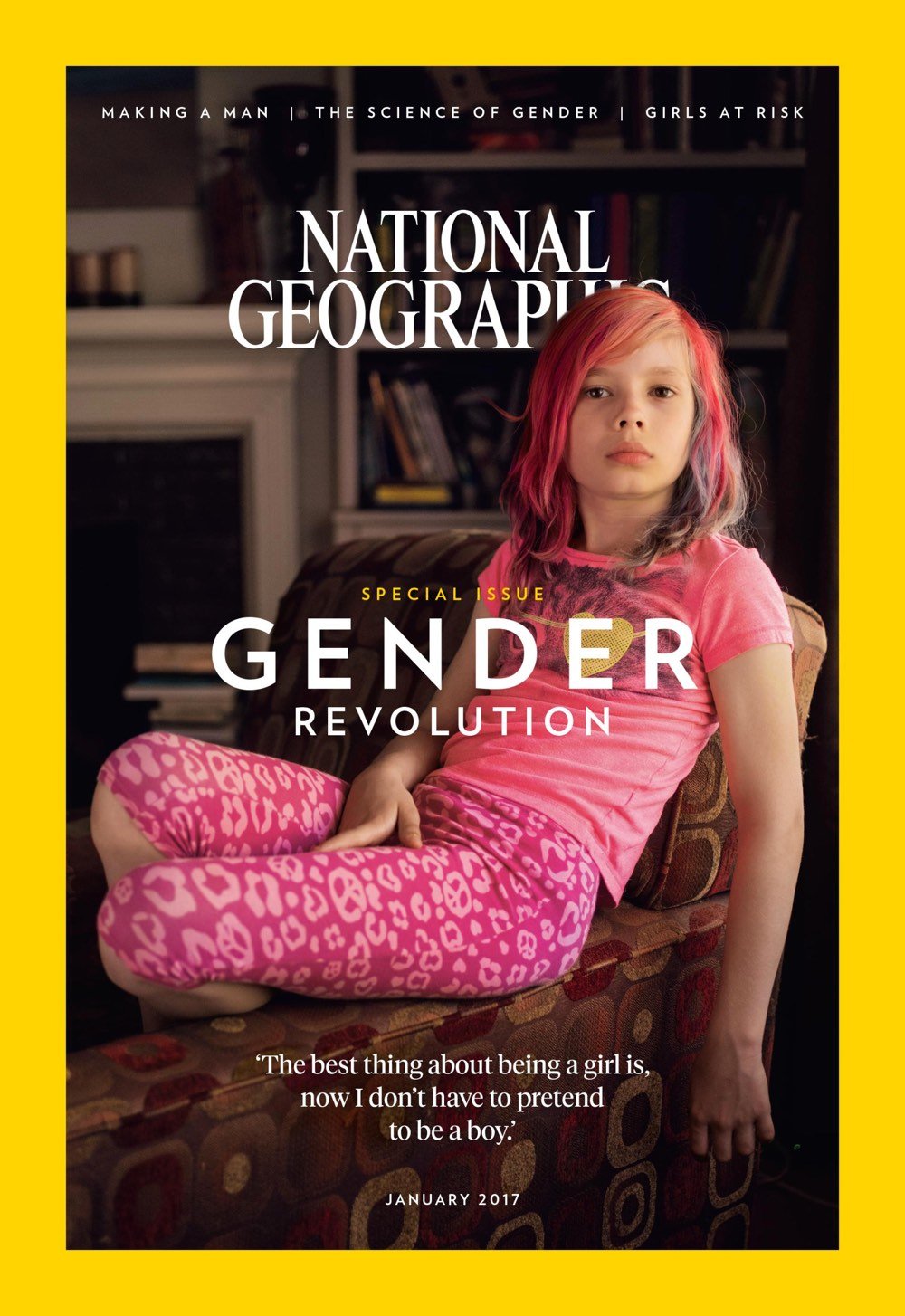
Bravo to National Geographic for putting a transgender girl on the cover of the magazine. Editor-in-chief Susan Goldberg explains why:
Today that and other beliefs about gender are shifting rapidly and radically. That’s why we’re exploring the subject this month, looking at it through the lens of science, social systems, and civilizations throughout history.
In a story from our issue, Robin Marantz Henig writes that we are surrounded by “evolving notions about what it means to be a woman or a man and the meanings of transgender, cisgender, gender nonconforming, genderqueer, agender, or any of the more than 50 terms Facebook offers users for their profiles. At the same time, scientists are uncovering new complexities in the biological understanding of sex. Many of us learned in high school biology that sex chromosomes determine a baby’s sex, full stop: XX means it’s a girl; XY means it’s a boy. But on occasion, XX and XY don’t tell the whole story.”
As part of their coverage, the magazine went out, asked kids from around the world their thoughts about being boys and girls, and came back with this video.
Watching these soap bubbles freeze in 5 °F weather is pretty much the coolest. What’s that? You want me to acknowledge that pun back there in a playfully knowing way? Ok, fine. (via @choitotheworld)
Collaborating with a number of different people from all over the place, filmmaker Oscar Boyson went out into the world and came back with this excellent 18-minute video on the future of cities. Among the cities profiles are Shenzhen, Detroit, Singapore, NYC, Copenhagen, Seoul, Lagos, and Mumbai.
What does “the future of cities” mean? To much of the developing world, it might be as simple as aspiring to having your own toilet, rather than sharing one with over 100 people. To a family in Detroit, it could mean having non-toxic drinking water. For planners and mayors, it’s about a lot of things — sustainability, economy, inclusivity, and resilience. Most of us can hope we can spend a little less time on our commutes to work and a little more time with our families. For a rich white dude up in a 50th floor penthouse, “the future of cities” might mean zipping around in a flying car while a robot jerks you off and a drone delivers your pizza. For many companies, the future of cities is simply about business and money, presented to us as buzzwords like “smart city” and “the city of tomorrow.”
A few tidbits from the video to whet your appetite:
- An estimated 70% of the world’s population will live in urban areas by 2050. (It’s currently 54%.)
- Buying a Toyota Corolla in Singapore costs $140,000.
- In 2012, 52% of the cost of US highways and roads was paid by general tax revenue rather than by drivers (through gas tax and tolls). In 1972, it was only 30%, which means car usage is much more heavily subsidized than it used to be.
- When you buy a car in Denmark, you pay a 150% tax, even if it’s electric.
- And a relevant quote from Jane Jacobs’ The Death and Life of Great American Cities: “Lowly, unpurposeful, and random as they may appear, sidewalk contacts are the small change from which a city’s wealth of public life may grow.”
And boy, listening to Janette Sadik-Khan talk about cities being for people and the importance of public transportation and then, directly after, having to listen to some dipshit from Uber was tough. (via @mathowie)
Watch as dancer Lil Buck gracefully moves through an exhibit at Foundation Louis Vuitton in Paris. Icons Of Modern Art: The Shchukin Collection, which includes work from Picasso, Matisse, Gauguin, and Monet, is on view there through Feb 20, 2017. Lil Buck is on view at YouTube indefinitely.
In the US, cars went from curvy in the 30s & 40s to boxy in the 60s and then back to curvy in the 90s. The price of oil, design imported from Europe, and fuel economy regulations all played a factor in the changes.
Update: A strong rebuttal from Jalopnik:
This Vox Video About The Evolution Of Cars Is A Complete Mess. (via @nick__vance)
This is cool and a little mesmerizing: animated US maps showing the most popular baby name in each state from 1910 to 2014 for boys and girls. There are three separate visualizations. The first just shows the most popular baby name in each state. Watch as one dominant name takes over for another in just a couple of years…the Mary to Lisa to Jennifer transition in the 60s and 70s is like watching an epidemic spread. Celebrity names pop up and disappear, like Betty (after Betty Boop and Betty Grable?) and Shirley (after Shirley Temple) in the 30s. The boy’s names change a lot less until you start getting into the Brandons, Austins, and Tylers of the 90s.
The next visualization shows the most particularly popular name for each state, e.g. Brandy was the most Louisianan name for female newborns in 1975. And the third visualization shows each name plotted in the averaged geographical location of births — so you can see, for example, the northward migration of Amanda during the 80s.
P.S. Guess what the most popular boy’s name in the state of my birth was the year I was born? And the most particularly popular boy’s name in the state I moved to just a year later? Jason. I am basic af.
Update: From Flowing Data, some graphs of the most unisex names in US history. (thx, paul)
Ice Call is a clip from a freeskiing movie called Backyards Project that features Sam Favret using the gullies, ridges, and caves of Chamonix’s Mer de Glace glacier like a natural terrain park to do some super-cool tricks and jumps. If you like skiing at all, this might make you want to head to France tout de suite.

The Equal Justice Initiative is filling jars with soil from the sites of lynchings to honor the victims and to create a memorial in Montgomery, Alabama.
Between the Civil War and World War II, thousands of African Americans were lynched in the United States. Lynchings were violent and public acts of torture that traumatized black people throughout the country and were largely tolerated by state and federal officials. EJI has documented more than 4000 racial terror lynchings in 12 Southern states between the end of Reconstruction in 1877 and 1950 — several hundred of these victims were lynched in Alabama.
Lynching profoundly impacted race relations in this country and shaped the geographic, political, social, and economic conditions of African Americans in ways that are still evident today. Terror lynchings fueled the mass migration of millions of black people from the South into urban ghettos in the North and West in the first half of the 20th century. Lynching created a fearful environment in which racial subordination and segregation were maintained with limited resistance for decades. Most critically, lynching reinforced a legacy of racial inequality that has never been adequately addressed in America.
Rob Holmes recently visited and took some photos of the jars…just row after row of them. “Stunning,” he said.
Update: See also this map of lynchings in the US.
Director Steven Soderbergh is constantly looking for new ways to give his audience information about the story and the characters. It’s what makes his work seem fresher than that of some other directors, but sometimes the risk doesn’t pay off.
FWIW, I love the Julia Roberts playing Julia Roberts bit in Ocean’s 12. It’s a lookie loo with a bundle of joy, what more do you need?! (via film school rejects)
The original Planet Earth series was released 10 years ago. In celebration, BBC asked some YouTube creators to share their favorite scenes from the show. My pick would be the shark jumping out of the water, not least because of the technique the filmmakers invented to capture the scene.
From Feminist Frequency, a quick video biography of Ada Lovelace, which talks about the importance of her contribution to computing.
A mathematical genius and pioneer of computer science, Ada Lovelace was not only the created the very first computer program in the mid-1800s but also foresaw the digital future more than a hundred years to come.
This is part of Feminist Frequency’s Ordinary Women series, which also covered women like Ida B. Wells and Emma Goldman.
808 is a feature-length documentary film on perhaps the most important musical instrument of the past 30 years, the Roland TR-808 Rhythm Composer. The soundtrack includes songs by Afrika Bambaataa, Public Enemy, and Jamie xx. The film will be available exclusively on Apple Music sometime in the next week but will likely be available elsewhere at some point after that.
See also a browser-based emulation of the 808.
Michael Shainblum makes time lapse videos of nature, landscapes, and cities, and some of them are very relaxing to watch. The resolution on these is great, so make ‘em big, sit back, and enjoy. (via bb)
If you were a religious reader of the encyclopedia and peruser of atlases like I was as a kid, you’ll love this video of interesting facts about almost 100 countries. There’s another video coming next week that’ll highlight the rest of the world’s countries…I’ll feature it here when they post it.
Update: I’ve embedded part 2 below the first video.
As part of Time magazine’s recent selection of the 100 most influential photos of all time, art historian Christine Roussel talks about the story behind the iconic Lunch Atop a Skyscraper photograph of a group of construction workers on their lunch break. Interestingly, no one knows for sure who the workers were and who actually took the photograph.
The World of Tomorrow is Bora Barroso’s tribute to some of the best post-apocalyptic movies, including Children of Men, 12 Monkeys, Mad Max: Fury Road, and The Road. Wall-E wasn’t dark enough I guess?
Sean Charmatz makes these cute little video vignettes about the secret lives of everyday things like French fries, leaves, paper, ice, mops, Post-it Notes, and the like. Think Christoph Niemann but even simpler. Basically: these videos will start making you happy in less than 10 seconds or your money back.1 (via @arainert)
This volley played during a game of ping pong sounds a lot like the first few bars of the music from Super Mario Bros. (thx, david)
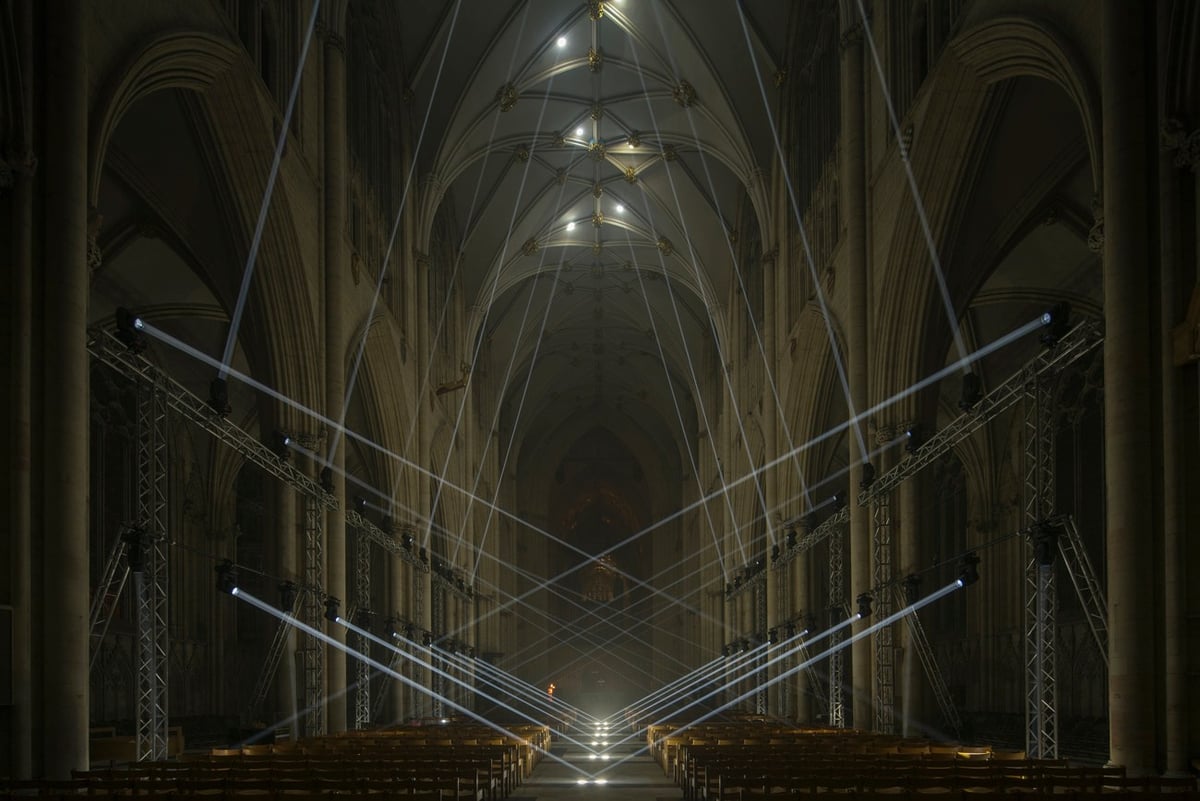
LightMasonry is a light installation by Jason Bruges Studio in York Minster, one of the largest cathedrals in Europe. The Creators Project profiled the installation recently.
LightMasonry by Jason Bruges Studio recently paid homage to the work of the highly skilled masons and carvers using beams of choreographed light.
The beams seek out and outline the vaults of the huge space using a custom system of 48 computer-controlled lights. Designer Adam Heslop, who helped visualize the performance, said it required the studio to develop a whole range of new techniques.
This would be something to see and/or rave to in person. (thx, peter)
I look forward to David Ehrlich’s video countdown of his favorite films of the year and 2016’s installment does not disappoint. Nice to see Beyonce’s Lemonade, the weirdo Swiss Army Man (which I loved, Daniel Radcliffe 4eva!), and the excellent OJ: Made in America on there. Still puzzled by Hail Caesar…I love the Coen brothers but was bored by this one. No Arrival though…this was the only movie I saw in the theater twice this year. For those looking for upcoming or recently released films to watch, Ehrlich includes Jackie, La La Land, and Scorsese’s Silence on his list.
Newer posts
Older posts





Socials & More