
Enhance your hyperspace
A bunch of clips from movies and TV that show people enhancing things on computer screens:
And a more artful collection of hyperspace scenes from movies:
Both are via Andy, Mr. Supercuts himself.

This site is made possible by member support. 💞
Big thanks to Arcustech for hosting the site and offering amazing tech support.
When you buy through links on kottke.org, I may earn an affiliate commission. Thanks for supporting the site!
kottke.org. home of fine hypertext products since 1998.
Beloved by 86.47% of the web.
A bunch of clips from movies and TV that show people enhancing things on computer screens:
And a more artful collection of hyperspace scenes from movies:
Both are via Andy, Mr. Supercuts himself.
This video of what Earth would look like with Saturnine rings is pretty ho-hum, yeah, there’s a shot from orbit of the Earth with Saturn’s rings around it, and then BAM! here’s what it would look like at night in NYC:
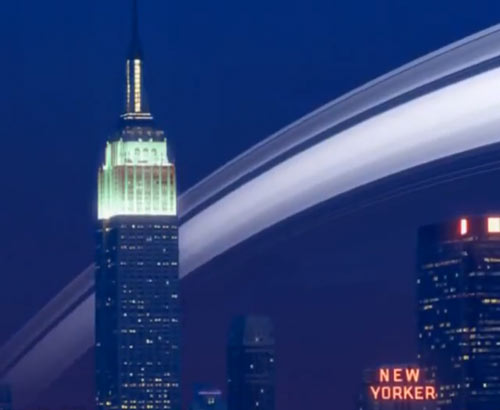
The view from Ecuador is pretty great too.
Update: Greg Allen wants an iPhone app that adds in Saturn’s rings to any shot you take with the camera.
With the combination of GPS and orientation data that’s baked in to so many digital photographs, it should be possible to create a filter — I hear the kids call them apps now — that automatically inserts properly positioned Saturn rings into any sky you want.
An augmented reality app would be nice too.
Jesus, this is nerdy (and hilarious): a Lady Gaga parody about a typeface.
(via @caterina)
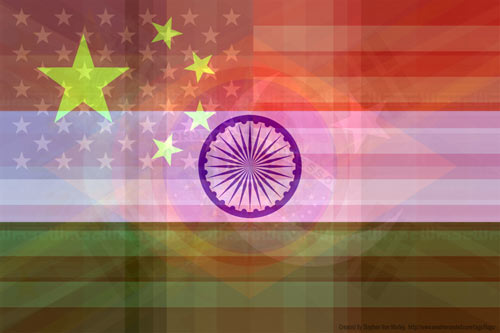
What the world needs is a great flag, a flag of pure bliss. Here’s one of the intermediate steps to the finished product; it’s an average of all the world’s countries’ flags weighted by population.
Scenes from several movies that depict New York being destroyed (Day After Tomorrow, Ghostbusters, Independence Day, etc.) accompanied by George Gershwin’s Rhapsody in Blue, which famously accompanies a similar but less violent montage at the beginning of Woody Allen’s Manhattan.
Or…
Watch New York get fucking destroyed in the movies!!!
This is amazing: a stop-motion recreation of the Neo-dodges-bullets-on-the-roof scene from The Matrix done entirely in Lego.
Map of the US Interstate system in the style of the London Tube map.
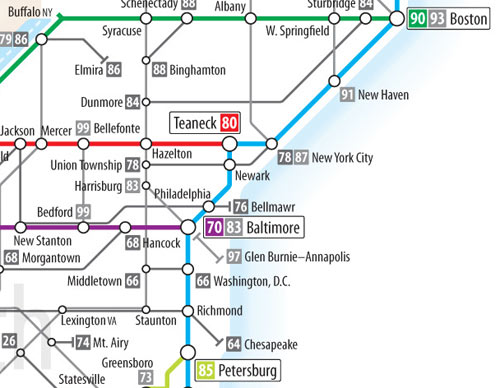
Go large for detail. (via coudal)
Somehow Ricardo Autobahn has constructed a coherent mix-video song from all sorts of movie and TV clips. It’s just flat-out awesome; watch it:
See also Christian Marclay. (via fimoculous)
Just out. Haven’t listened yet (downloading now) but if the last three are any indication, this is gonna be a great Monday for listenin’. Sample tracks:
5. Lil Wayne (feat. Babyface) vs Royksopp - Comfortable Up Here
15. Michael Jackson vs Ratatat - Billie “Wildcat” Jean
19. R. Kelly (feat. Keri Hilson) vs Sally Shapiro - Number One Christmas
31. Ghostface Killah vs Beirut - Save Me Concubine
A good example of what Robin Sloan calls the production-as-performance video.
What I love about the approach is that it’s showing us a complicated, virtuoso performance, but making it really clear and accessible at the same time. It’s entertaining, but it’s also an exercise in demystification — which of course is exactly the opposite objective of every music video, ever. Their purpose has been to mystify, to masquerade, to mythologize in real-time.
Maybe you’re tired of un-pop-music-like things being run through Auto-Tune, but I’m not quite there yet. This Auto-Tuned Carl Sagan mix is very nearly sublime.
Wow. With PhotoSketch, you just draw a sketch, label each item, like so:
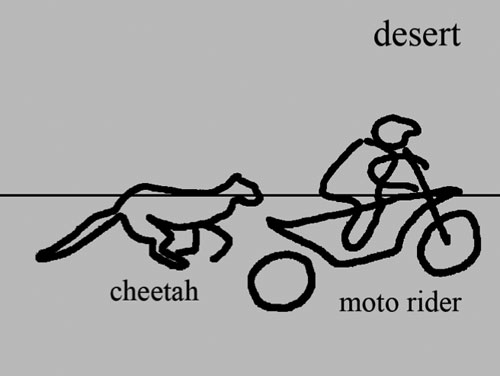
and then the system goes out, finds photos that match the sketched items and their labels, and automatically pastes it all together into one composite image:
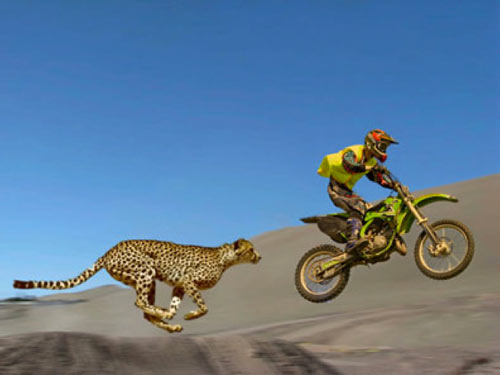
The site is down right now but the paper is available for download and this video gives you a taste of how it works:
Again, wow. (via migurski)
Update: I’ve seen many references to Photosketch saying that it has to be fake (here’s a sampling). But it’s pretty obviously real. For one thing, here’s the source code; try it out (Windows only). It was presented at SIGGRAPH Asia 2009; here’s the listing of papers presented. The authors all have web pages on university sites and have published work using similar techniques and technology (Ping Tan and Ariel Shamir for example). And is what it does really that unbelievable? At the most basic level Photosketch is just find me a man that’s sorta shaped like this, a dog that looks like this, and paste them together with a background that looks like this. That the results are so impressive (especially for a demo) is a testament to the team’s execution and attention to the small details. Even if it turns out to be an elaborate hoax, I have no doubt that someone could actually build a working version of Photosketch…I mean, look at TinEye and Photosynth.
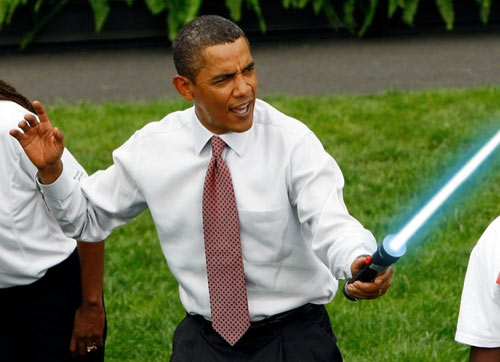
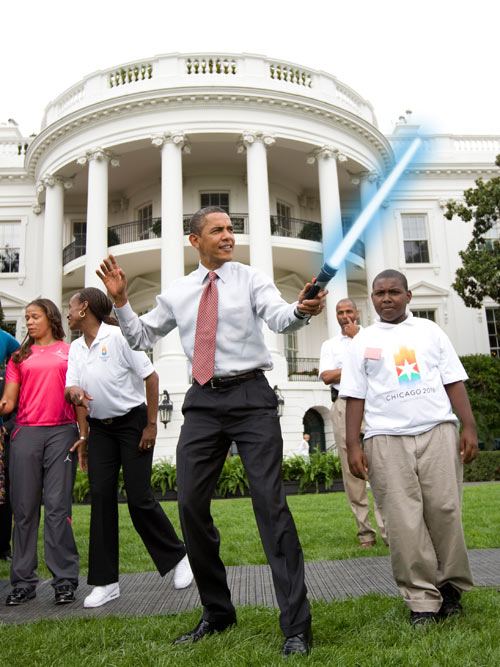
The President recently hosted a rally at The White House in support of Chicago’s bid to hold the 2016 Summer Olympics. Some members of the Olympic fencing team were there. Obama was given a plastic sword. Photos were taken. Photoshop (with an assist from me) did the rest.
Here’s our President attacking an unseen Sith Lord or perhaps someone condemned by a death panel:
And having finished them off to the delight of the assembled, a victory pose.
Update: See also the Japanese Obama action figures. (thx, myles)
It took Auto-Tune the News only eight episodes to get T-Pain on board.
I had no idea you could get celebrity voices for your GPS navigation device. There’s Mr. T (“what does he say if you need to go to the airport?”), Yoda, KITT from Knight Rider, Michael Caine, Kim Cattrall, the Star Trek computer voice, Homer Simpson, Gary Busey, and Dennis Hopper.
And then of course you’ve got the mashups like Mr. T navigates Mr. Bean, Mr. T navigates Frogger, and Mr. T navigating in Mario Kart Wii.
You may even be able to get a Bob Dylan voice soon.
Harrison Ford is concerned about his family. Like in every movie he’s ever been in. (via cyn-c)
I love JK Keller’s Tatamount project.
Photographs of mountains are computationally altered to flatten the mountain’s elevations, while an ocean horizon is altered to mimic the mountain’s original topography.
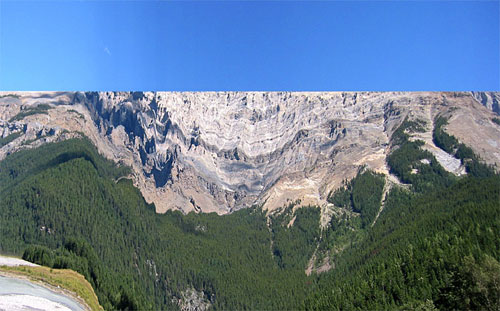
In the comments, he mentions that the effect is done with a combination of JavaScript and Photoshop…which I didn’t even know was a thing. (via today and tomorrow)
Drei Klavierstücke op. 11 is a set of pieces written for the piano by Arnold Schoenberg in 1909, some of the first western music to written in an atonal style. Cory Arcangel took a bunch of YouTube videos of cats playing the piano and fused them together into a performance of op. 11.
This project fuses a few different things I have been interested in lately, mainly “cats”, copy & paste net junk, and youtube’s tendency in the past few years to host videos that are as good and many times similar to my favorite video artworks. I think all this is somehow related.
Cory’s no-bullshit statements about his art are just as entertaining as the work itself:
So, I probably made this video the most backwards and bone headed way possible, but I am a hacker in the traditional definition of someone who glues together ugly code and not a programmer. For this project I used some programs to help me save time in finding the right cats. Anyway, first I downloaded every video of a cat playing piano I could find on Youtube. I ended up with about 170 videos…
You can catch Cory’s project in-person at Team Gallery in NYC and at Kunsthaus Graz in Austria.
They’re making a new Tron movie. And it looks like it might not suck! (via @dburka)
Update: The Tron Legacy trailer and Michael Jackson’s Beat It match up pretty well, don’t they?
Threadcakes is a contest that turns Threadless t-shirt designs into cakes. Ooh, do this one. (via waxy)
Love this: the chefs at Fancy Fast Food take fast food items and reformulate them into more delectable looking dishes. Here is just a portion of the directions for turning a White Castle meal into a tasty looking assortment of tapas.
Next, deconstruct everything and separate them into separate plates: french fries, onion rings, fried clams, beef patties, buns, cheese, bacon, and chicken. Using a paper towel, squeeze and dab each bun dry of its oil and ketchup. Then place all the buns on a baking sheet and bake them for ten minutes in a pre-heated oven at 400° F.
Meanwhile, using a food processor, blend the french fries into a pulp with a little water. Do the same with the beef (no water necessary) until it’s ground and moldable. Hand-roll the ground beef into meatballs, then pan-fry them until they start to brown.
(thx, paul)
For a student project (a fake Wes Anderson film festival), Alex Cornell and Phil Mills shot a promotional short in the style of The Royal Tenenbaums.
More information on how it was made is here. (thx, alex)
Update: Here are the rest of the materials for the film festival. This is an awesome project.
The 8-Bit Fatalities project presents the abstract killing in pixelated video games (Pac-Man eating the ghosts, Dig Dug blowing up his enemies) as realistic illustrations.
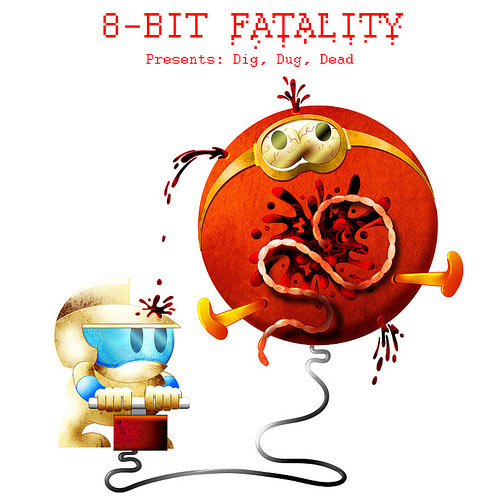
The Kirby one is the best…and most graphic. (via clusterflock)
The hamfisted Air Force One NYC photo op cost taxpayers more than $320,000. Photoshop expert Scott Kelby says that using the graphics editing program for two minutes could have saved a lot of money and trouble.
Update: The NY Daily News had the same idea. (thx, @tshane)
The voice modulation technology isn’t just for pop songs anymore. Check out Blake tries to talk to Jack about the homepage:
Babies crying in Auto-Tune is pretty hilarious: Baby T-Pain 1, Baby T-Pain 2.
But Auto-Tuning the News takes the prize.
Pay particular attention to Katie Couric at 1:20. Awesome. (thx, matt)
Update: Whoa, Martin Luther King’s I Have A Dream speech run through Auto-Tune. (thx, matthew)
Update: Winston Churchill + Auto-Tune = [you don’t need me to tell you the answer to this].
Recently a number of efforts have been made at re-imagining the packaging for movies, books, video games, and other media, mostly mashups and in the illustration style of typical of Saul Bass’ movie posters or Penguin Classics book covers. I’ve collected several examples below.
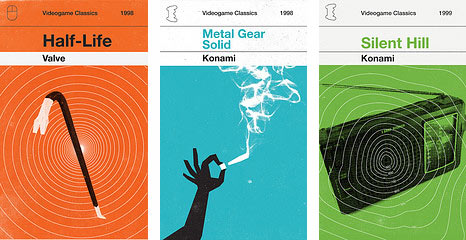
Olly Moss made Penguin-like book covers for video games like Ocarina of Time and Half-Life.
M. S. Corley made Penguin-like versions of the Harry Potter books.
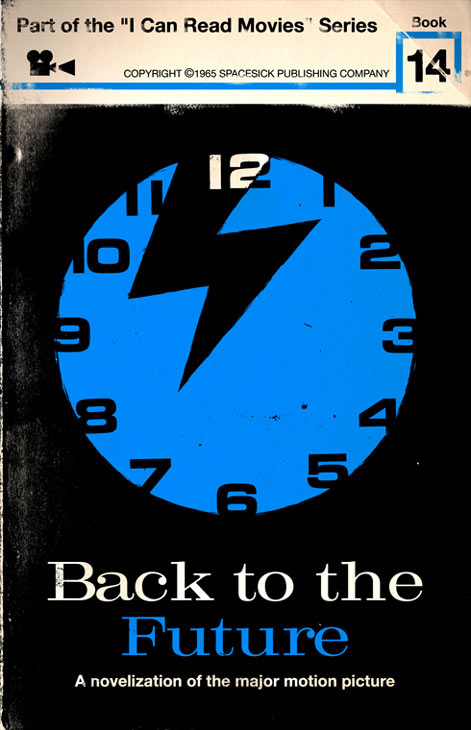
In his I Can Read Movies series, spacesick imagines Penguin-like book covers for movies like Close Encounters of the Third Kind, Sixteen Candles, and Back to the Future.
Forrest Lucero designed Penguin-like book covers for songs from The Postal Service and Daft Punk.
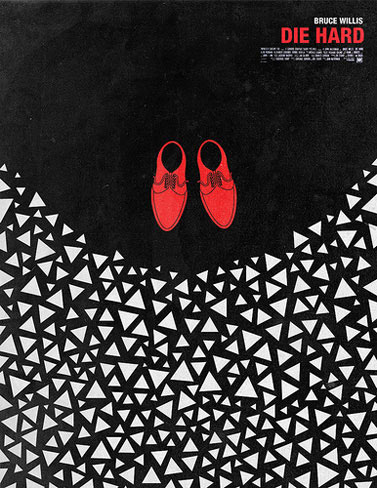
Olly Moss also did simple red/white/black posters for some of his favorite movies, including Die Hard and The Deer Hunter.
A bunch of people on Flickr imagined Nintendo DS tie-in games for movies like Andy Warhol’s Empire, Eyes Wide Shut, and 8 1/2. They also did some for TV shows, magazines, web sites, and all sorts of other media.
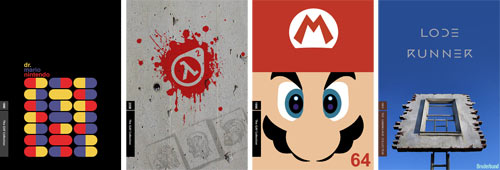
The folks on the NeoGAF message board made Criterion Collection-style box art for video games like Super Mario Galaxy, Black and White, and Super Mario 64.
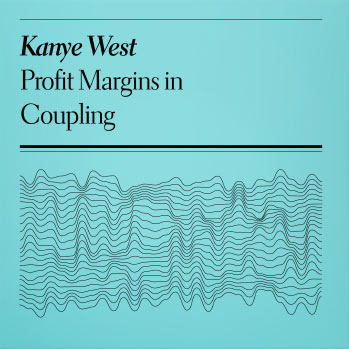
Nikolay Saveliev made simple two-color album covers for the likes of Kanye West, Jessica Simpson, and Franz Ferdinand.
Update: Modernist editions of classic album covers. (thx, zach)
Update: Logan Walters is redoing Wu-Tang Clan album covers.
Update: Classic albums reimagined as Pelican books.
Update: Simple Star Wars posters.
Update: Brandon Schaefer did some simple Blu-ray sleeve for movies, very much in the style of Olly Moss. Exergian did some posters for TV shows; the one for Weeds is particularly nice.

Update: Books as web services.
Update: Panic made some Atari 2600-themed packaging for their software. (thx, daniel)
If you don’t like this re-imagined NYC subway map, I’ll kick you in the Brooklyn. Somewhat NSFW. (via illustration art)
The intro to Diff’rent Strokes set to some disturbing music is “far more creepy than I thought it would [be]”. (via cyn-c)
Imagine Finding Me is a project by Chino Otsuka where she inserts her adult self into photos taken of her as a child. More examples at Wallpaper. See also Ze Frank’s Youngme / Nowme and those neat half-kid, half-adult photos that I can’t find a link to right now…little help? (via waxy)
Update: Age-maps! (thx, cindy)
Josh Poehlein’s Modern History project takes screen grabs from YouTube videos and assembles them into collages.
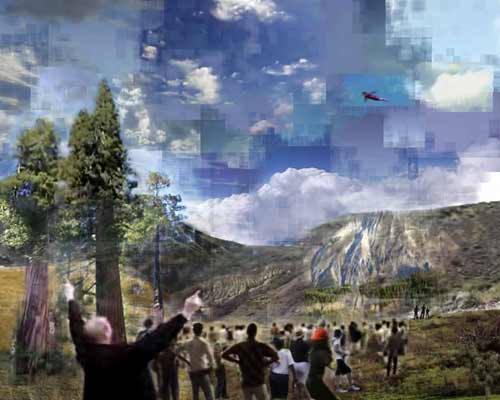
These are wonderful. And he’s giving them away.
I am offering large printable files to anyone interested at no cost. Computer files are the most easily reproducible information on the planet. In this particular case I see no reason to imbue a false sense of preciousness on the work. The information I gathered to create the collages is publicly availaibe, and the collages themselves are no different.
(via conscientious)

Socials & More