



Minimalist movie posters made out of card stock
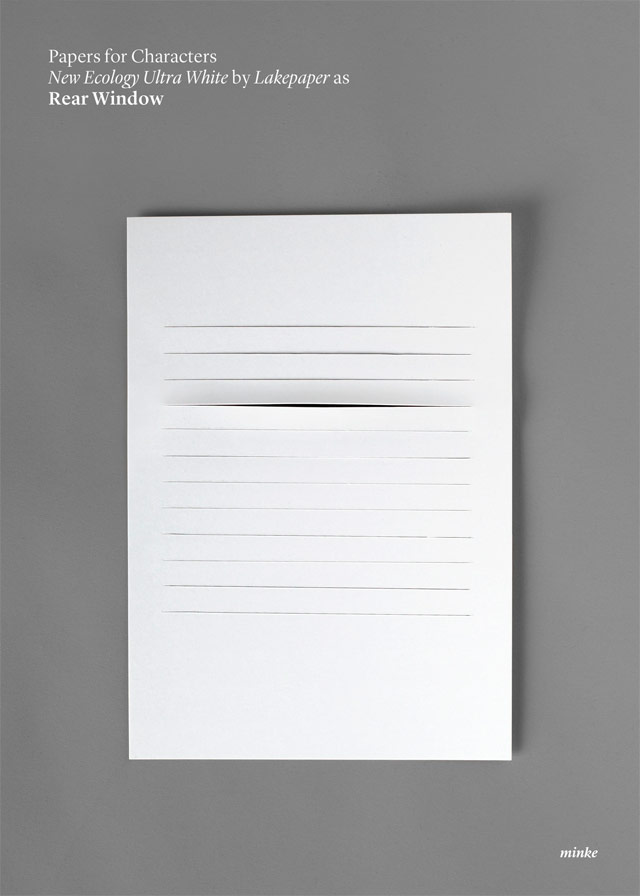
Spanish design firm Atipo made these nifty minimalist movie posters out of card stock. I really like the one for Rear Window:

This site is made possible by member support. 💞
Big thanks to Arcustech for hosting the site and offering amazing tech support.
When you buy through links on kottke.org, I may earn an affiliate commission. Thanks for supporting the site!
kottke.org. home of fine hypertext products since 1998.
Beloved by 86.47% of the web.
Spanish design firm Atipo made these nifty minimalist movie posters out of card stock. I really like the one for Rear Window:
Martin Scorsese uses silence very effectively in his films. Tony Zhou explains:
(via dot info)
If you took all the fight scenes from Quentin Tarantino’s Kill Bill movies and turned them into a Double Dragon-esque video game, this is what it would look like:
(via devour)
I missed this news a couple of months ago: Steven Spielberg is going to direct a movie version of Roald Dahl’s The BFG.
Renowned film director Steven Spielberg will direct the new adaptation with Melissa Mathison, who last worked with Spielberg on ET, writing the script. Frank Marshall will produce the film and Michael Siegel and John Madden are on board as executive producers.
I can’t find any direct evidence, but the way the news is being reported, this seems like it’ll be a live-action film and not a Tintin 3-D motion capture affair.
2014 is the first year without a Pixar film since 2005’s gap between The Incredibles and Cars. The company has two films planned for 2015 and one of them will hopefully do something about one of my long-standing pet peeves about their movies: the lack of strong women characters. Inside Out takes place inside the brain of a teenaged girl, with her emotions as the main characters.
The film’s real protagonist is Joy (voiced by an effervescent Amy Poehler), one of five emotions who steer Riley through life via a control center in her mind that’s akin to the bridge from the Starship Enterprise. Joy and her cohorts — including Fear (Bill Hader), Disgust (Mindy Kaling), Anger (Lewis Black), and Sadness (Phyllis Smith) — all work together to keep Riley emotionally balanced, and for the first 11 years of her life, the primary influencer is Joy, as evidenced by Riley’s sunny demeanor.
But as adolescence sets in, Joy finds her lead role usurped. Suddenly, Sadness wants to pipe in at inappropriate times — coaxing Riley to cry during her first day at a new school, for instance — and as the two emotions jostle for control, both of them fall into the deepest reaches of Riley’s mind and have to work their way back. Meanwhile, left to their own devices, Fear, Disgust, and Anger collude to transform Riley into a moody preteen.
Holy cow, that sounds great.
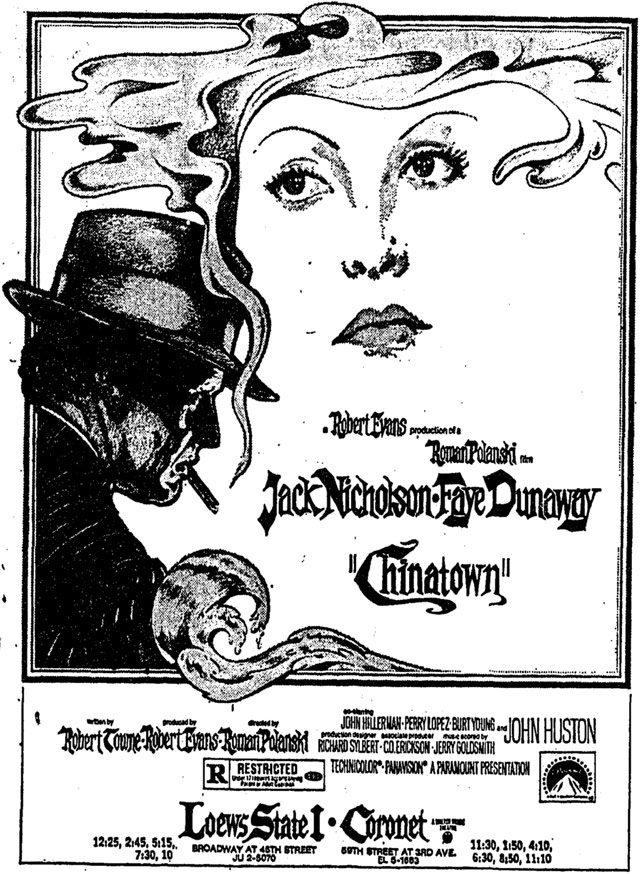
Yesterday, I did a round-up of movies, TV, and music available on this weekend in 1984. As a comparison, I thought looking at the same weekend from 1974 would be interesting. Tracking this information down was a little more difficult than with 1984, but I found most of what I needed in the June 23, 1974 edition of the NY Times.
Back in the 1970s (and probably particularly in NYC), movies stayed in theaters a lot longer than they do now. There was no home video market then…you either saw the movie in the theater or you missed it. This is a list of some of the movies available for viewing in theaters that weekend in NYC:
The Sting
The Exorcist
Parallax View
The Sugarland Express
The Conversation
Chinatown
Papillon
The Great Gatsby
The Sting, Papillon, and The Exorcist had been out since late 1973, The Great Gatsby since March, and The Sugarland Express (Spielberg’s directoral debut) and The Conversation since April. Only Parallax View and Chinatown had just opened. Interestingly, the year’s top-grossing film, Blazing Saddles, which opened in February, didn’t appear anywhere on the movie listing pages of the Times that week.
The top 10 on the Billboard chart for that week were:
Billy, Don’t Be A Hero - Bo Donaldson And The Heywoods
You Make Me Feel Brand New - The Stylistics
Sundown - Gordon Lightfoot
The Streak - Ray Stevens
Be Thankful For What You Got - William DeVaughn
Band On The Run - Paul McCartney & Wings
If You Love Me (let Me Know) - Olivia Newton-John
Dancing Machine - Jackson 5
Hollywood Swinging - Kool & The Gang
The Entertainer - Marvin Hamlisch/The Sting
And on TV that weekend, a number of classic shows, all reruns except for 60 Minutes:
Brady Bunch
Sanford and Son
Good Times
Upstairs, Downstairs
The Odd Couple
All in the Family
M*A*S*H
Mary Tyler Moore
60 Minutes
BTW, the entire copy of the Sunday Times was fascinating to page through. The ads for cigarettes, hand-held calculators, and color televisions, real estate listings, job openings, book listings, the NY Times Magazine, car ads, etc.
On this weekend 30 years ago, in the summer of 1984, you could stroll into a movie theater and choose between the following films:
Ghostbusters
Gremlins
Indiana Jones and the Temple of Doom
The Karate Kid
Star Trek III: The Search for Spock
Top Secret!
The Natural
Police Academy
Plus, Sixteen Candles and Footloose had just closed the weekend before. 1984 was generally a great year for movies. Musically, the following songs were in heavy rotation on the radio and on MTV that weekend:
The Reflex - Duran Duran
Time After Time - Cyndi Lauper
Let’s Hear It for the Boy - Deniece Williams
Dancing in the Dark - Bruce Springsteen
Self Control - Laura Branigan
The Heart of Rock & Roll - Huey Lewis
Jump - The Pointer Sisters
When Doves Cry - Prince
Eyes Without a Face - Billy Idol
Borderline - Madonna
On TV that weekend were mostly reruns and movies…networks only showed reruns in the summer back then. The shows airing included:
The Dukes of Hazzard
Fantasy Island
Webster
Dallas
Diff’rent Strokes
60 Minutes
The Tonight Show Starring Johnny Carson
Late Night with David Letterman
(via, no foolin’, the Stay Puft Marshmallow Man)
Rian Johnson, director of Brick and Looper (both of which I really enjoyed) and one of the best episodes of Breaking Bad, is rumored to be the director of the 8th and 9th episodes of Star Wars.
Johnson will take over the core film franchise, and he’ll get started quickly and this will be his preoccupation for quite awhile. Technically, he’ll write that second treatment but the intention on both sides is that he direct the two installments.
First Abrams and now this…Disney seems to be doing a much better job shepherding the Star Wars franchise than Lucas did. (via df)
NYC and the Central Park Five have agreed to a $40 million settlement that will bring a years-long civil rights lawsuit to an end.
The five men whose convictions in the brutal 1989 beating and rape of a female jogger in Central Park were later overturned have agreed to a settlement of about $40 million from New York City to resolve a bitterly fought civil rights lawsuit over their arrests and imprisonment in the sensational crime.
The agreement, reached between the city’s Law Department and the five plaintiffs, would bring to an end an extraordinary legal battle over a crime that came to symbolize a sense of lawlessness in New York, amid reports of “wilding” youths and a marauding “wolf pack” that set its sights on a 28-year-old investment banker who ran in the park many evenings after work.
Ken Burns made a documentary film about this case in 2012. Highly recommended viewing…and you can watch the whole thing on the PBS web site.
Great short film about how ILM’s groundbreaking visual effects came to be used in Jurassic Park.
When Spielberg originally conceived the movie, he was going to use stop-motion dinosaurs. ILM was tasked with providing motion blur to make them look more realistic. But in their spare time, a few engineers made a fully digital T. Rex skeleton and when the producers saw it, they flipped out and scrapped the stop-motion entirely. Fun story.
This summer in London, Secret Cinema will build a replica of the fictional Hill Valley town seen in Back to the Future:
Fabien Riggall, founder of Secret Cinema which has presented more than 40 immersive cinema screening events, said: “We shall play heavily on the innocent dream-like world of 1955 and the nostalgic pre-mobile phone world of 1985. We want the audiences to forget their current world and take an adventure.”
The recreation will include a DeLorean “time machine” to shuttle audience members between 1985 and 1955 sections of the town, and an “Enchantment Under the Sea” afterparty. Tickets cost £53.50, or about $90 US.
It’s fascinating to watch the Back to the Future movies now not for their nostalgic depiction of the 1950s or jokey guesses at life in 2015, all hoverboards and flying cars, but as a vital document of the 1980s. After all, next year, we’ll be as far removed from 1985 as the filmmakers were from 1955. The first film especially fixes that time’s preoccupations and possibilities in amber.
Yesterday I posted a video looking at the influence of Akira Kurosawa on Star Wars. Well, Michael Heilemann has posted an amazing feature-length exploration of Star Wars and the films that influenced it.
It’s not Heilemann talking about anything…it’s a sort of meta-Star Wars comprised of dozens of elements from other films that influenced Lucas in making it. For instance, here’s the opening crawl from Forbidden Planet (1956):
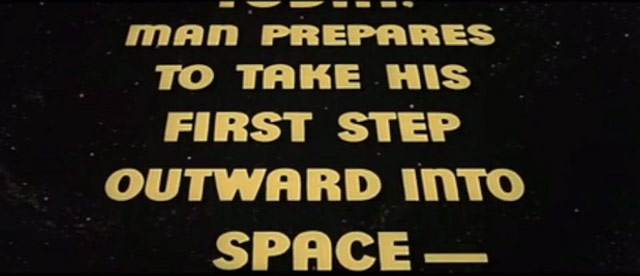
Heilemann also includes a crawl from a 1936 Flash Gordan serial. For more, check out Kitbashed, particularly the extensive ebook on Star Wars sources.
This video looks at the influence of Akira Kurosawa and his films (especially The Hidden Fortress) on George Lucas and Star Wars.
How are Samurai films and a car crash responsible for Star Wars? How did World War II affect the global film industry in the 20th century? Why are Jedi called Jedi?? Give us 8 minutes, and we’ll explain it all…
(via devour)
Using Edgar Wright as a positive example, Tony Zhou laments the lack of good visual comedy in American comedies and provides examples from Wright’s films (Hot Fuzz, Shaun of the Dead, etc.) to show how it’s done properly.
Hot Fuzz is one of my favorite comedies…the scene Zhou shows of the Andys sliding off screen and then quickly back in consistently leaves me in stitches. (via digg)
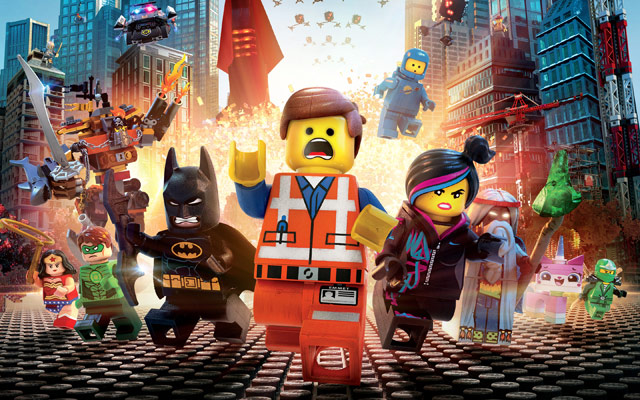
If you missed it in the theater (like us), The Lego Movie is available to buy on Amazon right now. I mean, you could wait until mid-June for the DVD/Blu-ray, but one of your kids’ friends is going to see it this way and come to school and lord it over your kid that he saw THE LEGO MOVIE AT HOME and then your kid is going to feel bad and why would you want that so you should just buck up and watch it already so your kid can have the cool cred at school for once and parlay that into greater social & academic success and then she’ll get into Harvard and have a fantastic life. What I’m saying is, watch The Lego Movie now and your child will become President basically. Why wouldn’t you want that? Are you history’s greatest monster? Ok, I’m calling child services…
The trailer for the documentary about Roger Ebert is out:
Two thumbs up, way up. (thx, david)
Can I get a McConaugheeeeey? The first trailer for Christopher Nolan’s Interstellar is out.
io9 called it “thrilling”, but I’m gonna give this one a “hmmmmm.”
The Wordless Music Orchestra will offer live accompaniment of two screenings of There Will Be Blood in NYC in September. The composer of the film’s score, Radiohead’s Jonny Greenwood, will play a musical instrument called the ondes Martenot as part of the performances.
This fall, the Wordless Music Orchestra will once again collaborate with Jonny Greenwood for the U.S. premiere of There Will Be Blood Live: a full screening and live film score to Paul Thomas Anderson’s 2007 masterpiece, which will be projected onto a massive 50’ movie screen at the historic and absurdly beautiful United Palace Theatre: the second-largest movie screen in all of New York City.
For these shows, the film’s original score — comprising music by Jonny Greenwood, Arvo Part, and Brahms — will be conducted by Ryan McAdams, and performed by 50+ members of the Wordless Music Orchestra, including Jonny Greenwood, who will play the ondes martenot part in both performances of his own film score.
Tickets on sale now. See you there? (thx, gabe)
NYCgo has an extensive list of all free movie screenings happening around NYC this summer. Most of them are outdoors. Some highlights:
June 22: Coming to America, Habana Outpost
July 9: Jurassic Park, Museum of Jewish Heritage
July 30: The Princess Bride, Riverside Park
July 31: The Hunt for Red October, flight deck of the Intrepid
August 6: The Big Lebowski, McCarren Park
August 8: Groundhog Day, Hudson River Park at Pier 46
Someone should make an iCal/Google Calendar calendar of these screenings.
Update: Tim made a calendar of all the free movie events. (thx, tim!)
Update: And here’s a Twitter account you can follow for summer movie reminders: @nycsummerfilms. (via frank)
This was one of my favorite scenes the film…Russell Crowe’s Noah telling his children the creation story, which ends up being half supernatural and half evolution.
Worth watching for the special effects alone.
How to Build a Time Machine is a documentary about two men on separate quests to build their own time machines. Here’s a teaser trailer:
Ronald Mallett’s reason for his search for a way to travel through time is quite poignant…he shared his story in a book and on an episode of This American Life back in 2007. (via ★interesting)
So, this showed up on Vimeo last night and will likely be pulled soon (so hit that “download” button while you can), but here’s the deal. In 2012, actor Topher Grace showed an edit he’d done of episodes I-III of Star Wars to a bunch of friends, trimming the 7 hours of prequels down into 85 action-packed minutes of pure story. This Vimeo edit is longer (2:45) and is “based on the structure conceived by actor Topher Grace”, which you can read about here.
Grace’s version of the film(s) centers on Anakin’s training and friendship with Obi-Wan, and his relationship with Queen Amidala (Natalie Portman). Gone are Trade Federation blockades, the Gungan city, the whole Padmé handmaiden storyline, the explanation of midichlorians, the galactic senate and the boring politics, Anakin’s origins (a backstory which never really needed to be seen in the first place), the droid army’s attack on Naboo, and Jar Jar Binks (Ahmed Best) appears only briefly for only one line of dialogue, used as a set-up to introduce us to the Queen.
(via @bursts)

Richard Evans rendered some of the best-known Studio Ghibli characters in pixel art style.
Twee out with more than 9 hours of music from Wes Anderson’s movies:
Richard Linklater (Dazed and Confused, Before Sunrise) took 12 years to make his new movie, Boyhood. The star of Boyhood, Ellar Coltrane, was seven years old when filming started, and Linklater returned to the story every year for a few days of shooting to construct a movie about a boy growing from a first-grader to an adult and his changing relationship with his parents.
This looks amazing. What an undertaking.
LOOK Effects did the visual effects for Wes Anderson’s The Grand Budapest Hotel and Darren Aronofsky’s Noah. (via @Colossal)
By Louis Paquet, the opening titles of Forrest Gump if it were directed by Wes Anderson.
(via @kyledenlinger)
It’s been suggested that perhaps Johannes Vermeer painted his exacting masterpieces with the help of mirrors and lenses. Tim Jenison learned of these suggestions and started to study the problem.
He was in no rush. His R&D period lasted five years. He went to the Rijksmuseum in Amsterdam. “Looking at their Vermeers,” he says, “I had an epiphany” — the first of several. “The photographic tone is what jumped out at me. Why was Vermeer so realistic? Because he got the values right,” meaning the color values. “Vermeer got it right in ways that the eye couldn’t see. It looked to me like Vermeer was painting in a way that was impossible. I jumped into studying art.”
A recent documentary called Tim’s Vermeer (directed by Penn & Teller’s Teller) follows Jenison’s quest to construct a contraption that allows someone to paint as Vermeer did. Here’s a trailer:
Not sure you can find the movie in theaters anymore, but it should be out on DVD/download soon.
Time Out polled more than 100 experts to find the 100 best animated movies. Here’s the top 10 (minus the top pick…you’ll have to click through for that):
10. Fantastic Mr. Fox
9. The Nightmare Before Christmas
8. Snow White and the Seven Dwarfs
7. The Iron Giant
6. Dumbo
5. The Incredibles
4. Toy Story
3. My Neighbor Totoro
2. Spirited Away
I’m delighted to see Fantastic Mr Fox on the list…it’s an underrated effort by Wes Anderson that will continue to grow in esteem as the years pass. No Wall-E in the top 10 though? I don’t know about that. It clocks in at #36, behind Chicken Run (the least of Aardman’s efforts in my mind) and Up, which is maybe my least favorite Pixar film. (via @garymross)
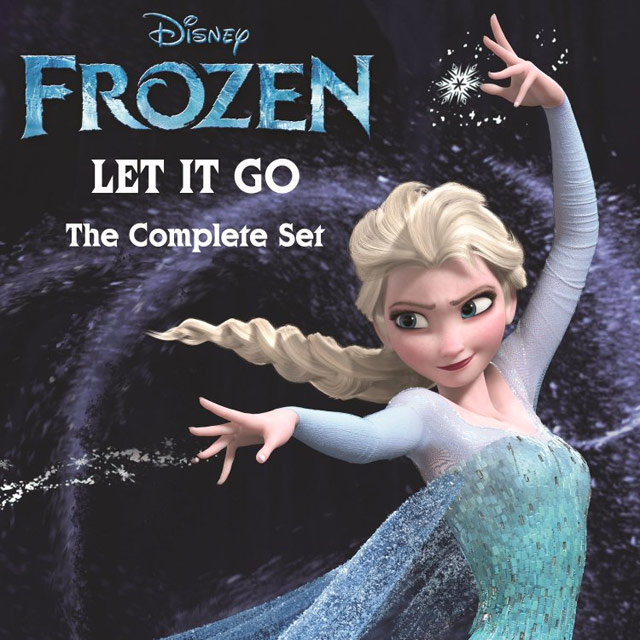
If you have children in your home, you have likely seen the movie Frozen and heard the song Let It Go like 50 billionty times. The movie did great in the US, coming in as the 19th biggest movie ever, but it’s done amazingly well overseas: #8 on the alltime list with a $1.1 billion gross.
So it’s a no-brainer for Disney to release an album with 50 different versions of Let It Go, sung in languages ranging from Arabic to Icelandic to Romanian to Vietnamese. (via @cabel)
Update: Here’s a video of the entire song sung in 25 languages:
(via @waxpancake & @Ilovetoscore)

Socials & More