



Soundtrack for The Unknown Known
Your Monday morning needs a soundtrack and Danny Elfman’s score for Errol Morris’ The Unknown Known is just the thing. Available at Amazon or on iTunes.

This site is made possible by member support. 💞
Big thanks to Arcustech for hosting the site and offering amazing tech support.
When you buy through links on kottke.org, I may earn an affiliate commission. Thanks for supporting the site!
kottke.org. home of fine hypertext products since 1998.
Beloved by 86.47% of the web.
Your Monday morning needs a soundtrack and Danny Elfman’s score for Errol Morris’ The Unknown Known is just the thing. Available at Amazon or on iTunes.
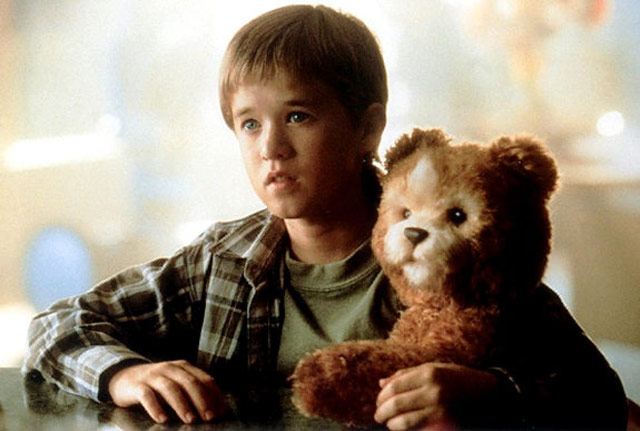
Today I learned that Hasbro released a toy based on the talking teddy bear in Kubrick/Spielberg’s A.I. W? T? F? And of course it’s super creepy:
Noel Murray has the whole story, along with an appreciation of the movie and Spielberg’s direction of it.
A.I. in particular still strikes me as a masterpiece. I thought it might be back in 2001; now I’m certain of it. But it isn’t any easier to watch in 2014 than it was before my first child was born. Like a lot of Spielberg’s films — even the earlier crowd-pleasers — A.I. is a pointed critique of human selfishness, and our tendency to assert our will and make bold, world-changing moves, with only passing regard for the long-term consequences. Spielberg carries this theme of misguided self-absorption to child-rearing, implying that parents program their kids to be cute love machines, unable to cope with the harshness of the real world. He also questions whether humankind is nothing but flesh-based technology, which emerged from the primordial ooze (represented in the opening shot of A.I. by a roiling ocean), and has been trained over millennia to respond to stimuli in socially appropriate ways. A.I. blurs the lines between human and mecha frequently, from an early shot of Monica that makes her look exactly like one of Professor Hobby’s creations, to the way Martin walks, thanks to mechanical legs.
Errol Morris’s latest documentary on Donald Rumsfeld, The Unknown Known, just came out in theaters. But it’s also available right now to rent/buy on Amazon and iTunes. Here’s a trailer if you need convincing.
From a large collection of photos shot on the set of 2001: A Space Odyssey, two of my favorites:
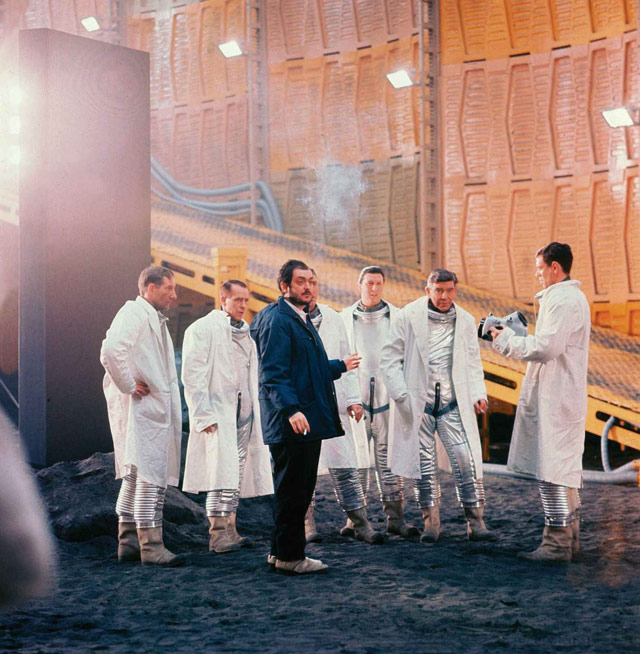
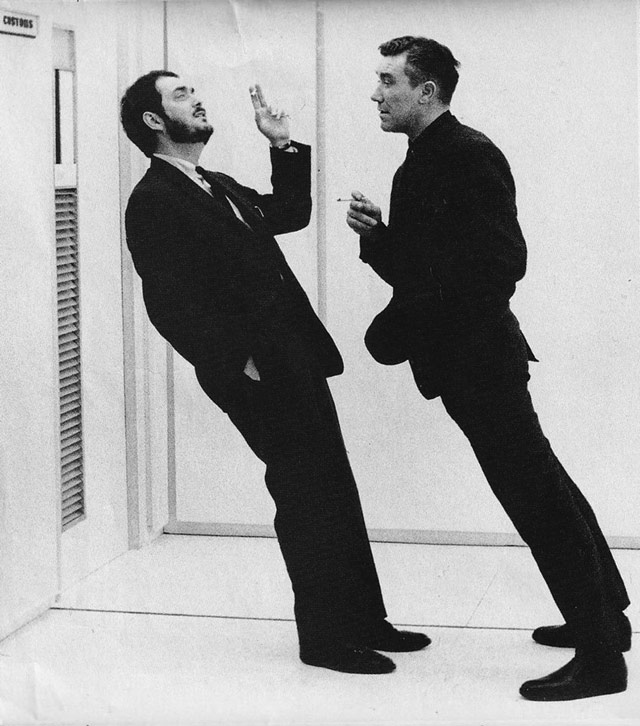
Those are a pair of smooth criminals right there.
Holy cow, Aardman is making a Shaun the Sheep Movie! Here’s a teaser trailer:
The movie will be out in March 2015 and the plot centers on the sheep going to the big city to retrieve the Farmer. As I wrote last year, Shaun the Sheep is wonderful family entertainment. I wonder how the lack of dialogue will translate to the feature length format? (thx, greg)
Filmmaker IQ has a nice exploration of the history of the movie trailer. And yes, they actually used to play at the end of (i.e. “trail”) the film.
Coming into the 1960s, a new generation of star directors began to redefine the trailer - among them was the legendary Alfred Hitchcock. Instead of showing scenes from the movie, Hitchcock, who had become quite well known to audiences from his “Alfred Hitchcock Presents” TV series, cashed in on his celebrity… taking audiences on a tour using his gallows humor style in this trailer for 1960’s Pscyho.
The reemergence of Cubism in film and commercial art in the 1960s was not lost on another emerging filmmaker - Stanley Kubrick. Having experimented with fragmented cutting styles in the trailer to 1962’s Lolita, Kubrick comes back strong in 1964’s “Dr. Strangelove” with a trailer that I consider one of the most bold and brazen pieces of movie advertising ever made.
Now showing at IFC Center in NYC: Finding Vivian Maier. Maier is the Chicago street photographer whose extensive and impressive body of work was recently discovered at an auction. John Maloof bought Maier’s work, started posting it to a blog several years ago, did a Kickstarter (one of the first I backed) to fund a documentary about Maier and her photos, and now the film is showing in theaters around the US and Canada.
A Clint Mansell soundtrack for a Darren Aronofsky film? Hell. Yes.
Mansell also did the soundtracks for Moon (my favorite of his, I think) and Requiem for a Dream. The Noah soundtrack is available for purchase on iTunes and Amazon.
Errol Morris’ documentary about Donald Rumsfeld, The Unknown Known, comes out next month. The trailer:
In the first of a four-part companion series to the movie for the NY Times, Morris explores The Certainty of Donald Rumsfeld.
When I first met Donald Rumsfeld in his offices in Washington, D.C., one of the things I said to him was that if we could provide an answer to the American public about why we went to war in Iraq, we would be rendering an important service. He agreed. Unfortunately, after having spent 33 hours over the course of a year interviewing Mr. Rumsfeld, I fear I know less about the origins of the Iraq war than when I started. A question presents itself: How could that be? How could I know less rather than more? Was he hiding something? Or was there really little more than met the eye?
The Unknown Known has been referred to as a sequel of sorts to The Fog of War, but from this it seems more like its opposite. Morris got some substantive and honest answers to important questions from McNamara, whereas it sounds like he got bupkiss from Rumsfeld.
Update: Here’s part 2.
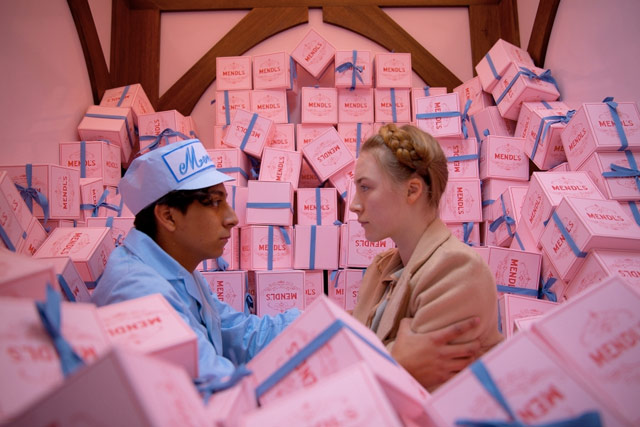
The Grand Budapest Hotel is Wes Anderson’s most design-y film, and that’s really saying something. Typography is present in almost every frame; at times, it was almost oppressive. Creative Review interviewed designer Annie Atkins, who was responsible for the film’s graphic design elements.
Oh my goodness, so many signs in the 1960s hotel lobby! I have to give credit to Liliana for this work, as she took care of nearly all of these. She had three sign-writers from Berlin painting non-stop for a week to get them all done in time for our first day of shoot, as that set was first up. Wes and Adam had seen so many examples of quite officious signage in what had been communist East Germany — don’t do this, don’t do that, do this but only like that! The signs really added to the claustrophobic feeling of that set, and Wes had asked for them all to be black with simple white hand-painted lettering — based on the style of the old sign at Yorckstrasse subway station in Berlin.
Ed Catmull has written a book about Pixar’s creative process: Creativity, Inc.
Creativity, Inc. is a book for managers who want to lead their employees to new heights, a manual for anyone who strives for originality, and the first-ever, all-access trip into the nerve center of Pixar Animation — into the meetings, postmortems, and “Braintrust” sessions where some of the most successful films in history are made. It is, at heart, a book about how to build a creative culture — but it is also, as Pixar co-founder and president Ed Catmull writes, “an expression of the ideas that I believe make the best in us possible.”
For nearly twenty years, Pixar has dominated the world of animation, producing such beloved films as the Toy Story trilogy, Monsters, Inc., Finding Nemo, The Incredibles, Up, and WALL-E, which have gone on to set box-office records and garner thirty Academy Awards. The joyousness of the storytelling, the inventive plots, the emotional authenticity: In some ways, Pixar movies are an object lesson in what creativity really is. Here, in this book, Catmull reveals the ideals and techniques that have made Pixar so widely admired — and so profitable.
Catmull was a founder of Pixar and while he never got the press Jobs and Lasseter did, he was instrumental in the company’s success and is currently president of both Disney and Pixar’s animation studios. Fast Company has an excerpt of the book.
Candor could not be more crucial to our creative process. Why? Because early on, all of our movies suck. That’s a blunt assessment, I know, but I choose that phrasing because saying it in a softer way fails to convey how bad the first versions really are. I’m not trying to be modest or self-effacing. Pixar films are not good at first, and our job is to make them so — to go, as I say, “from suck to not-suck.”
Think about how easy it would be for a movie about talking toys to feel derivative, sappy, or overtly merchandise driven. Think about how off-putting a movie about rats preparing food could be, or how risky it must’ve seemed to start WALL-E with 39 dialogue-free minutes. We dare to attempt these stories, but we don’t get them right on the first pass. This is as it should be. Creativity has to start somewhere, and we are true believers in the power of bracing, candid feedback and the iterative process — reworking, reworking, and reworking again, until a flawed story finds its through line or a hollow character finds its soul.
Oh hello Grand Budapest Hotel soundtrack on Rdio. Alexandre Desplat. It’s a goooood morning.
Also available for download on Amazon or iTunes if that’s your thing.
Last year (spoilers!), CERN confirmed the discovery of the Higgs boson. Physicist-turned-filmmaker Mark Levinson has made a film about the search for the so-called God Particle. Particle Fever follows a group of scientists through the process of discovery and the construction of the mega-machine that discovered the Higgs, the Large Hadron Collider. Here’s a trailer:
Two additional data points: the movie is holding a 95% rating on Rotten Tomatoes and legendary sound designer and editor Walter Murch edited the film. Particle Fever is showing at Film Forum in New York until March 20. (thx, james)
When Owen Suskind was three, a switch flipped within him and he went from a typical chatty rambunctious three-year-old to autistic.
I had just started a job as The Wall Street Journal’s national affairs reporter. My wife, Cornelia, a former journalist, was home with him — a new story every day, a new horror. He could barely use a sippy cup, though he’d long ago graduated to a big-boy cup. He wove about like someone walking with his eyes shut. “It doesn’t make sense,” I’d say at night. “You don’t grow backward.” Had he been injured somehow when he was out of our sight, banged his head, swallowed something poisonous? It was like searching for clues to a kidnapping.
After visits to several doctors, we first heard the word “autism.” Later, it would be fine-tuned to “regressive autism,” now affecting roughly a third of children with the disorder. Unlike the kids born with it, this group seems typical until somewhere between 18 and 36 months — then they vanish. Some never get their speech back. Families stop watching those early videos, their child waving to the camera. Too painful. That child’s gone.
But a tenuous connection remained between Owen and his pre-autistic self: Disney movies. And through them, Owen slowly learns how to communicate with the outside world again.
So we join him upstairs, all of us, on a cold and rainy Saturday afternoon in November 1994. Owen is already on the bed, oblivious to our arrival, murmuring gibberish…. “Juicervose, juicervose.” It is something we’ve been hearing for the past few weeks. Cornelia thinks maybe he wants more juice; but no, he refuses the sippy cup. “The Little Mermaid” is playing as we settle in, propping up pillows. We’ve all seen it at least a dozen times, but it’s at one of the best parts: where Ursula the sea witch, an acerbic diva, sings her song of villainy, “Poor Unfortunate Souls,” to the selfish mermaid, Ariel, setting up the part in which Ursula will turn Ariel into a human, allowing her to seek out the handsome prince, in exchange for her voice.
When the song is over, Owen lifts the remote. Hits rewind.
“Come on, Owen, just let it play!” Walt moans. But Owen goes back just 20 seconds or so, to the song’s next-to-last stanza, with Ursula shouting:
Go ahead — make your choice!
I’m a very busy woman, and I haven’t got all day.
It won’t cost much, just your voice!
He does it again. Stop. Rewind. Play. And one more time. On the fourth pass, Cornelia whispers, “It’s not ‘juice.’ ” I barely hear her. “What?” “It’s not ‘juice.’ It’s ‘just’ … ‘just your voice’!”
I grab Owen by the shoulders. “Just your voice! Is that what you’re saying?!”
He looks right at me, our first real eye contact in a year. “Juicervose! Juicervose! Juicervose!”
Walt starts to shout, “Owen’s talking again!” A mermaid lost her voice in a moment of transformation. So did this silent boy. “Juicervose! Juicervose! Juicervose!” Owen keeps saying it, watching us shout and cheer. And then we’re up, all of us, bouncing on the bed. Owen, too, singing it over and over — “Juicervose!” — as Cornelia, tears beginning to fall, whispers softly, “Thank God, he’s in there.”
This is the best thing I’ve read in a month, so so heartbreaking and amazing. Just pre-ordered the book…can’t wait to read the full version.
Denis Medri illustrates scenes from Star Wars as if Luke, Leia, Han, and the rest of the gang were teenagers in an 80s movie like Back to the Future, Karate Kid, or Breakfast Club.
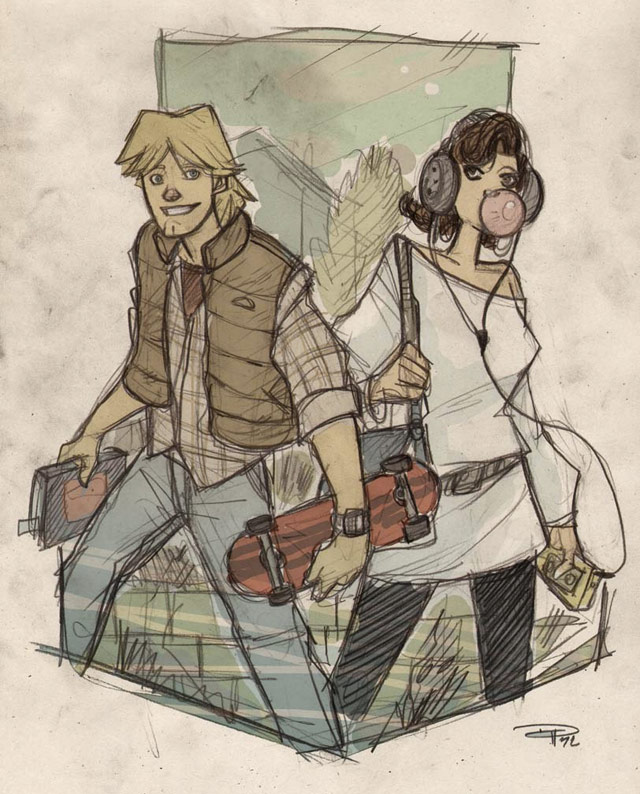
Great Scott, the Force is strong in these two.
Hold onto yer butts, you can use the computer interface from Jurassic Park right in your web browser.
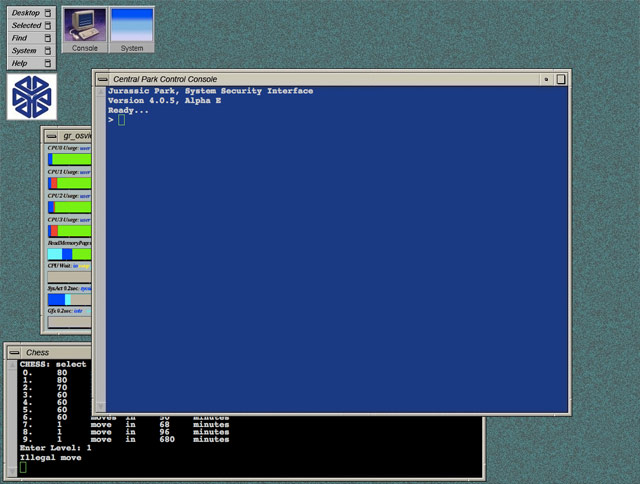
It may look a little confusing but just remember: this is a Unix system and you know this.
In his own words, Wes Anderson explains different aspects of his visual style.
Nicely edited together by Nelson Carvajal at Way Too Indie.
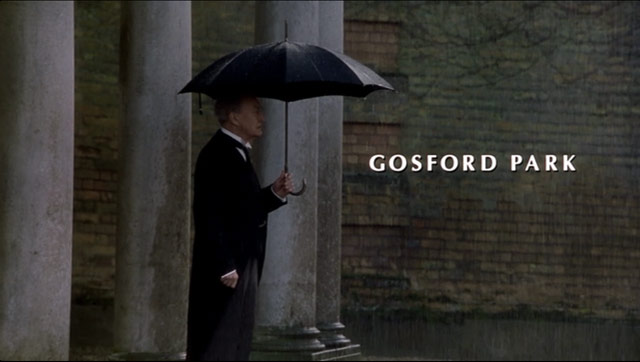
If you’re having Downton Abbey withdrawals, may I suggest Robert Altman’s Gosford Park? Written by Downton creator Julian Fellowes, it’s a proto-Downton of sorts: lots of upstairs/downstairs with a dash of mystery. And the cast! Clive Owen, Emily Watson, Stephen Fry, Kristin Scott Thomas, Michael Gambon, Derek Jacobi, Kelly Macdonald, Helen Mirren, Ryan Phillippe…and Maggie Smith plays a witty countess.
Watch it on Netflix Instant, at Amazon, or on iTunes.
My mind is so tiny these days it doesn’t take much to blow it, so grain of salt and all that. But, this theory that Andy’s mom in Toy Story is Jessie’s original owner is popping my fuse right now.
Several months ago, one of my anonymous Pixar Theory Interns (that’s a thing on a resume) came to me with a crazy proposition: Andy’s mom is Emily, Jessie’s previous owner.
I laughed. I then agreed.
Previously: a grand unified theory of Pixar.
Fine work as usual from Christian Annyas: a look at the design of the Warner Bros logo from 1923 to the present. The classic “WB” shield of my Bugs-and-Daffy-saturated youth will always be a favorite, but I do like the Saul Bass logo of the 70s and early 80s:
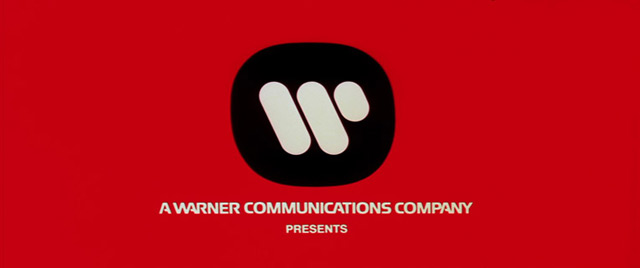
Affleck’s Argo and Soderbergh’s Magic Mike both used the Bass logo in place of the contemporary logo, which is the kind of little detail I love.
Huzzah! Long unavailable (or at least not widely available), Errol Morris’ documentary film on Stephen Hawking and his work, A Brief History of Time, is now available for rent or purchase on iTunes. Or if you can wait a little bit, there’s a Criterion Blu-ray edition coming out in mid-March. Bonus: score by Philip Glass!
This is called a billing block:
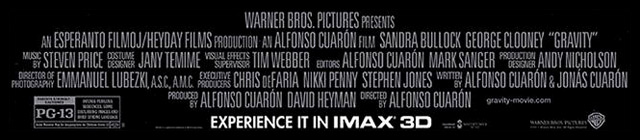
You find it at the bottom of movie posters and often at the end of movie trailers. In an Op-Art piece from last year, Ben Schott explains how the billing block is carefully constructed with information from contracts and legal agreements.
The content, order and format of the billing block are governed by two things: personal service contracts with cast and crew, and industrywide agreements with professional guilds — notably the Directors Guild of America (D.G.A.) and the Writers Guild of America (W.G.A.). Thus, while some elements of the billing block remain consistent, others depend of the type of film and on individual negotiations. That said, there has been a marked inflation in billing block credits. An “Ocean’s 11” poster from 1960 credited just three noncast individuals; the 2001 remake poster credited, coincidentally, 11.
In a lovely short film, Ilinca Calugareanu explores the world of 1980s black market VHS movies in Communist Romania and finds the woman who did all the dubbed dialogue.
All the dialogue on these movies was dubbed into Romanian in a husky, high-pitched woman’s voice. Throughout my childhood, these films provided a glimpse into the forbidden West, resplendent with blue jeans, Coke and skyscrapers. As Hollywood movies became ubiquitous through the black market, this voice became one of the most recognizable in Romania. Yet no one knew who she was.
The film is adapted from an upcoming feature-length documentary called Chuck Norris vs Communism. (via df)
Futurist Ray Kurzweil reviews Spike Jonze’s Her.
I would place some of the elements in Jonze’s depiction at around 2020, give or take a couple of years, such as the diffident and insulting videogame character he interacts with, and the pin-sized cameras that one can place like a freckle on one’s face. Other elements seem more like 2014, such as the flat-panel displays, notebooks and mobile devices.
Samantha herself I would place at 2029, when the leap to human-level AI would be reasonably believable. There are some incongruities, however. As I mentioned, a lot of the dramatic tension is provided by the fact that Theodore’s love interest does not have a body. But this is an unrealistic notion. It would be technically trivial in the future to provide her a virtual visual presence to match her virtual auditory presence, using, lens-mounted displays, for example, that display images onto Theodore’s retinas.
According to Jonze in interviews, Kurzweil’s work on the singularity was a definite influence on the movie.
A short video from Gizmodo about how Criterion restores a film for release on DVD/Blu-ray. Watch as the color, contrast, audio, and picture is corrected on Hitchcock’s Foreign Correspondent.
For his Classic Movies in Miniature Style series, Murat Palta illustrated scenes from movies using traditional Ottoman motifs. Here’s A Clockwork Orange and Kill Bill:
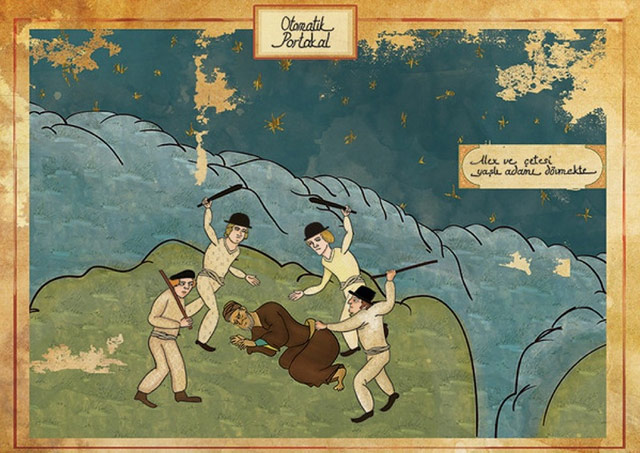
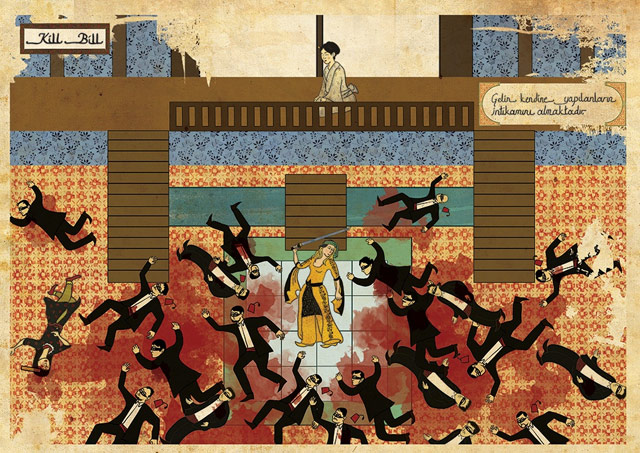
Great stuff. (via @pieratt)
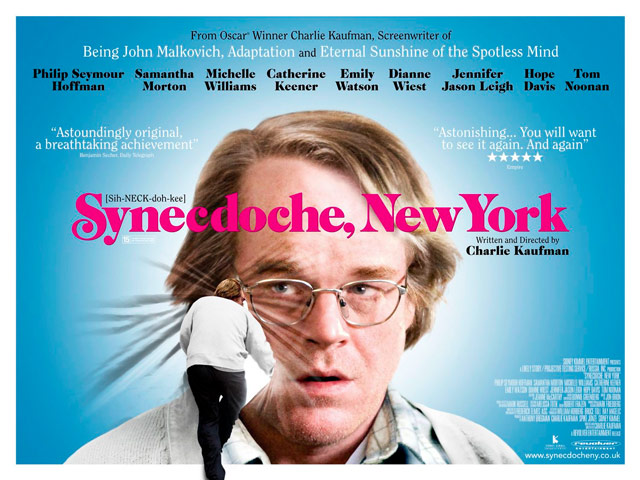
Understandably, lots of folks are wanting to wade into the late Philip Seymour Hoffman’s formidable body of work. Netflix Watch Instantly doesn’t have a whole lot of available titles and Hulu has a mere two, but Amazon has quite a few for rent or purchase. Some of my favorites: The Master, Synecdoche, New York, Almost Famous, Magnolia, and Boogie Nights. I need to find time for a Synecdoche viewing this week.
ps. The links to Amazon include my affiliates code…proceeds from purchases made through those links will be matched by me and will be donated to the Labyrinth Theater Company, which Hoffman co-founded and where he served as creative director for many years.
From a new blog, Typeset in the Future, an examination of the typography in Kubrick’s 2001: A Space Odyssey.
It’s Futura again, with an M borrowed from Gill Sans, and a W that I don’t recognize from anywhere.
From Star Wars to Life of Pi, this is a video compilation of clips from every movie that’s won the Best Visual Effects Oscar since the introduction of the award in 1977.
(via devour)
In an interview with an Australian radio station, Arcade Fire’s Win Butler said that the music on the Her movie soundtrack will see an official release in some form. Here’s what Butler said about it:
We’re just slow as a band. The music will get out there, it’s just, like, a question of if we want to sell it to people or give to people or record other songs or whatever. There are many pieces on the soundtrack that are kind of based on actual songs that we’ve never really recorded. Yeah, there’s a song called Milk and Honey and a song called Dimensions that are, like, lost great Arcade Fire songs. They are actually just things that, like, fit the world of the movie and then we kind of wrote them to the film.
That’s good news! Here’s the whole interview (they start talking about Her at 15:40):
Socials & More