Entries for July 2019
This is a fascinating & provocative article from law professor Gregory Shill: Americans Shouldn’t Have to Drive, but the Law Insists on It. The first line of the piece sets the stage: “In a country where the laws compel the use of cars, Americans are condemned to lose friends and relatives to traffic violence.”
Let’s begin at the state and local level. A key player in the story of automobile supremacy is single-family-only zoning, a shadow segregation regime that is now justifiably on the defensive for outlawing duplexes and apartments in huge swaths of the country. Through these and other land-use restrictions-laws that separate residential and commercial areas or require needlessly large yards-zoning rules scatter Americans across distances and highway-like roads that are impractical or dangerous to traverse on foot. The resulting densities are also too low to sustain high-frequency public transit.
Further entrenching automobile supremacy are laws that require landowners who build housing and office space to build housing for cars as well. In large part because of parking quotas, parking lots now cover more than a third of the land area of some U.S. cities; Houston is estimated to have 30 parking spaces for every resident. As UCLA urban planning professor Donald Shoup has written, this mismatch flows from legal mandates rather than market demand. Every employee who brings a car to the office essentially doubles the amount of space he takes up at work, and in urban areas his employer may be required by law to build him a $50,000 garage parking space.
Cars and car ownership are massively subsidized on a state, local, and federal level and our laws and regulations have built a nation where cars are mandatory and “driving is the price of first-class citizenship”.
Why are we taxing bus riders to pay rich people to buy McMansions and luxury electric SUVs?
And this speed limit thing is just eye-poppingly fucked up:
The National Transportation Safety Board has determined that speed is a top risk factor in motor vehicle crashes. Yet the most prominent way of setting and adjusting speed limits, known as the operating speed method, actually incentivizes faster driving. It calls for setting speed limits that 85 percent of drivers will obey. This method makes little provision for whether there’s a park or senior center on a street, or for people walking or biking.
As a matter of law, the operating speed method is exceptional. It enables those who violate the law-speeding motorists-to rewrite it: speed limits ratchet higher until no more than 15 percent of motorists violate them. The perverse incentives are obvious. Imagine a rule saying that, once 15 percent of Americans acquired an illegal type of machine gun, that weapon would automatically become legal.
Ok, this is one of those articles where I want to excerpt every paragraph…just go read the whole thing. (via @olgakhazan)
Update: Eric Jaffe shared some interesting bits from Shill’s recent paper, Should Law Subsidize Driving?, in a Twitter thread.
Until the 1910s, “street parking was broadly outlawed: if you owned a car in a city, you were responsible for storing it, just as you would be any other piece of movable property.”
“Tax subsidies for commuting prioritize driving. Those who walk, bike, or carpool to work, and in some cases those who take transit, pay other people to drive to work.”
Never realized (or forgot) that CAFE fuel economy rules — generally a good thing — have a loophole that “light trucks” don’t need to be as fuel efficient as cars. “Light trucks” have come to mean SUVs, which means SUVs are easier to produce. No coincidence that the share of “light trucks” has soared from 20% in 1976 to 69% of market today. The upshot, of course, is that SUVs are much worse for pedestrian safety: you’re 3.4x more likely to be killed if hit by an SUV vs. a car.
In the latest episode of Earworm, Estelle Caswell and Jacob Collier break down Stevie Wonder’s Sir Duke, in which he pays tribute to the jazz artists that inspired him, both in lyric and in the arrangement of the music. As someone who isn’t musical but has experience programming, writing, designing, and doing science, it’s fun to see a similar borrow/remix/homage process at work on a virtuoso level.
I bet this resonates with more than a few of you.
I used to think I was the strangest person in the world but then I thought there are so many people in the world, there must be someone just like me who feels bizarre and flawed in the same ways I do. I would imagine her, and imagine that she must be out there thinking of me too. Well, I hope that if you are out there and read this and know that, yes, it’s true I’m here, and I’m just as strange as you.
This quotation is often attributed to Frida Kahlo, but Quote Investigator tracked it back to a woman named Rebecca Katherine Martin.
According this video by Kurzgesagt (and their extensive list of sources), the answer to that question for now is: no, our electronic devices are not causing long- or short-term health problems in the brains or bodies of people who use them.
Electrosmog is one of those things that is a bit vague and hard to grasp. When personal health is involved, feelings clash extra hard with scientific facts and there is a lot of misinformation and exaggeration out there. On the other hand, some people are really worried and distressed by the electricity that surrounds them. And just to wave this off is not kind or helpful.
While there is still a lot of researching being done on the dangers of constant weak electromagnetic radiation, it is important to stress that so far, we have no reason to believe that our devices harm us. Other than… well… spending too much time with them.
Why is the US women’s soccer team so dominant? Because Title IX encouraged hundreds of thousands of young girls to play soccer. 700 high school girls played soccer in 1972 when Title IX passed; in 2018, that number was more than 390,000.
Japanese public broadcaster NHK has produced a four-part documentary on legendary animator Hayao Miyazaki called 10 Years with Hayao Miyazaki. The behind-the-scenes film follows Miyazaki as he made his last two films for Studio Ghibli, Ponyo and The Wind Rises. Here’s the synopsis of the first episode:
An exclusive, behind-the-scenes look at the genius of Japan’s foremost living film director, Hayao Miyazaki — creator of some of the world’s most iconic and enduring anime feature films. Miyazaki allowed a single documentary filmmaker to shadow him at work, as he dreamed up characters and plot lines for what would become his 2008 blockbuster, “Ponyo on the Cliff by the Sea.” Miyazaki explores the limits of his physical ability and imagination to conjure up memorable protagonists.
The whole show is available to watch online at NHK with English subtitles and narration.
See also Never-Ending Man: Hayao Miyazaki. (thx, yuko)
This is a short video of a set of subway stairs in Brooklyn where one of the steps is juuuust a bit taller than the rest, which makes most people trip on it.
We don’t often think about it but even the least graceful humans move in a finely calibrated way. When we’re climbing stairs, our feet don’t clear the treads by much, so that even the tiniest deviation in the height of a step can spell trouble.
I’d love to see a study of how quickly our bodies learn how high the steps are in a new flight of stairs. Like, maybe we clear the first couple of steps by an inch or two but then we’re locked in and subsequent clearances are much smaller.
Is there a word for the way people tend to speed up after they trip climbing stairs? The stumble hustle? It’s such a small & endearing little thing that most people do.
My least favorite flight of stairs in the entire NYC subway system are, I believe, at the SW corner of 14th St and 6th Ave in Manhattan. Each of the steps is a different height, making for a tricky ascent and a downright dangerous descent. I keep thinking they’re gonna get fixed, but I used them on my last visit to the city in June. At this point, they’re like an old friend who’s kind of a jerk but you’ve known him so long that whaddya gonna do? (via @fishtopher)
Update: On Twitter, André Filipe Barro shared the Brazilian phrase for speeding up after tripping up the stairs: “went on a chicken chase”. Excellent!
David Remnick recently interviewed Robert Caro and if you’ve read Caro’s book, Working, or the New Yorker article based on the book, there’s not much new here, but this exchange at the end is worth highlighting:
Remnick: We are living in a political moment, and when you watch the current President it seems that one of the saving graces is that, for all his erratic thinking, insulting thinking, his insults directed at minority groups — and, well, practically everyone — that he’s not that good at the exercise of power. He won the election, but if he had Johnsonian capacities in terms of the exercise of power, we might be even in deeper trouble than we already are.
Caro: Well, I think that that’s correct. And I think, [what] you say about Johnson, what does it mean to [be like] Johnson? You say, well, he wins election over Barry Goldwater, in 1964, by this tremendous majority. So the next morning he’s on the phone — or the morning after, he’s still hoarse the day of the election — calling the House Majority Leader and saying, “You know, the only thing that can hold this up here is the Rules Committee. Now is the moment to change the Rules Committee. Here’s how to do it.” And in the next couple of months he passes Medicare, Medicaid, Head Start, the voting-rights bill… I’m forgetting the rest of it. The most amazing — he could seize a moment because of this political genius that he has, and change, really, the face of America. It’s hard to remember a day when there wasn’t Medicare or Medicaid.
Remnick: You write in “Working” that there is evil and injustice that can be caused by political power. But there’s also great good that can come out of it. It seems to me sometimes that people have forgotten this, you write. Why have we forgotten it?
Caro: You ask very good questions. I think we’ve forgotten it because we’ve had too many Presidents who don’t use political power — you say, what are things that change people’s lives? In the last century, Social Security, Medicare-like, right now I’m working on a section that, you could say, if I wanted to call it this, is what it was like to be old and sick in America before Medicare. And as I’m doing this I’m thinking, People aren’t even going to be able to imagine this. What was it like to be old in America before Social Security? People can’t imagine it. The power of government to do good for people is immense. And I think we have forgotten that power.
Hoi Toider is a dialect spoken by long-time residents of Ocracoke, North Carolina. It sometimes sounds more Australian, Scottish, or like Elizabethan English than American English.
When older Ocracoke natives, or O’cockers as they call themselves, speak, the ‘I’ sound is an ‘oi’, so they say ‘hoi’ instead of ‘high’. That’s where the Hoi Toider name comes from: it’s based on how the O’cockers say ‘high tide’.
Then there are the phrases and vocabulary, many of which are also kept over from the original settlers. For example, when you’re on Ocracoke, someone might ‘mommuck a buck before going up the beach’, which means ‘to tease a friend before going off the island’.
“We have a lot of words that have been morphed to make our own,” said Amy Howard, another of William Howard’s descendants, who runs the Village Craftsmen, a local arts and crafts store. “[Hoi Toider] is a combination from a whole blend of cultures. A lot of the early settlers were well travelled, so they ran into lots of different types of people. For example, the word ‘pizer’ we use comes from the Italian word ‘piazza’, which means porch. So if you’re going to be sitting on your pizer, you’re sitting on your porch.”
You can hear some folks speaking Hoi Toider is these videos:
Today, July 2, 2019, just after 4:30pm ET, a total solar eclipse will be visible in parts of Chile and Argentina. Because most of you, I am guessing, are not currently in those parts of Chile and Argentina, the best way to watch the eclipse is through any number of live streams, three of which I’m embedding here:
I was lucky enough to see the eclipse in 2017 and it was a life-altering experience, so I’ll be tearing myself away from the USA vs England match for a few minutes at least.
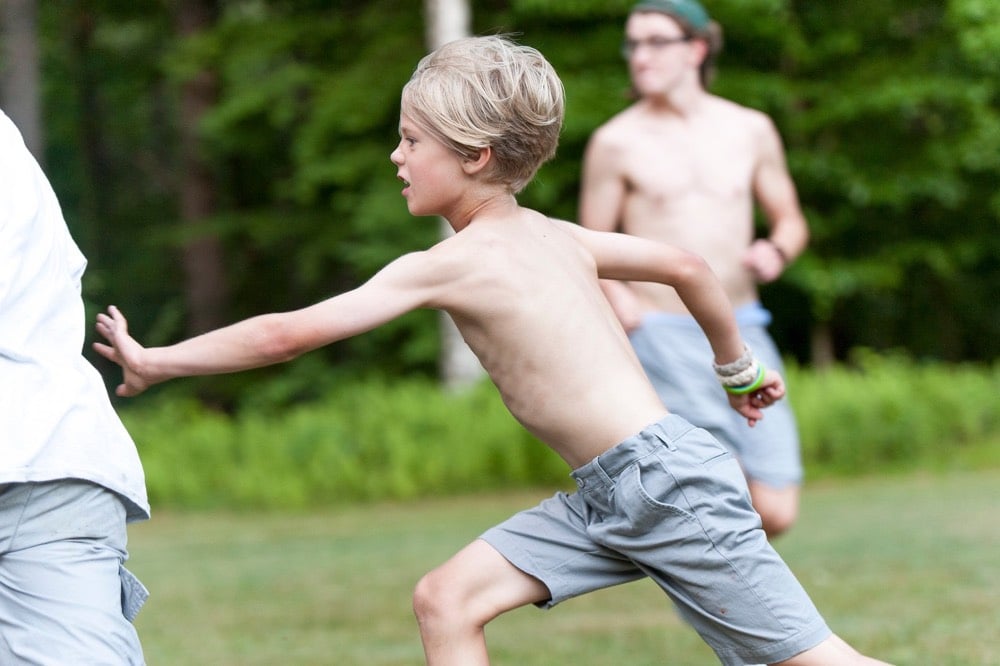
My kids are lucky enough to be at sleep-away summer camp this year. It’s their fourth year, and I was a little skeptical about this at first. Sleep-away camps weren’t really a thing in Wisconsin when I was a kid and schlepping out to the East Coast was not going to happen, financially speaking. But their mom went to camp and it had a big impact on her life and the kids wanted to go, so I went along.
I’m really glad I did. I miss them while they’re gone, but they have such an amazing time there, away from their parents, figuring out what kind of humans they are going to be. The staff at Ollie’s camp (an all-boys camp for grades 3-8 — Minna goes to an affiliated camp for girls) sent the parents a letter about some of the principles they use in supporting their campers by building “a feeling of profound belonging”. They are super thoughtful in their approach and none of it is mere lip-service. I thought a few of their principles were worth sharing with you. From a section that starts “We shape our program and culture to build belonging by…”:
…embodying our belief that there are many ways to be a man. We give boys a diverse array of role models — men and women in whom campers can see aspects of the selves they seek to develop. When the people around us model the same humility, humor, talent, and compassion that we seek to develop in ourselves, they help us to recognize the sturdy roots of those same virtues within us. In such moments, we know that we are in a place where we belong.
…focusing on what is personal, real, and lasting. Too often children learn to gauge belonging through external signals: the music they listen to, the brands they wear, the devices they own. The result can be toxic, especially for boys, who learn to measure themselves against dangerously narrow standards of masculinity. By embracing simplicity — in the uniforms we wear, the music we make, the technology we leave at home — we foster deeper connections with each other and even with ourselves.
…emphasizing honesty as the most direct path towards a life of substance and meaning. Ultimately, belonging is not an external validation, but an authentic way of being. Honesty — and its companion, vulnerability — are signs of strength and signals of openness. Honesty elevates relationships beyond the superficial, and invites us towards friendships in which we have the courage to be imperfect and the compassion to accept ourselves anyway. At camp, as in life, there is no more powerful belonging than to each other.
I don’t mind telling you that I teared up reading through these. That there are many ways to be a man, that masculinity can be toxic, that vulnerability is strength…hearing these ideas more often would have benefited an adolescent Jason, a shy and sometimes bullied small-town kid who didn’t feel like he belonged, truly belonged, anywhere until he went off to college and discovered that the world was full of weirdos just like, and also very unlike, himself. I still feel that little kid’s pain, and it makes me very happy that my kids are lucky enough to spend significant time in a place where those ideas take center stage.
Excerpts above are from Building Belonging from the staff at Camp Lanakila.
So the President F*cking Hates My Girlfriend. “Megan [Rapinoe] is at the boss level in the video game of knowing herself.” #goals
I Am An Old Soul. “I crave the simpler things: the real intimacy of chatting on AIM.”
Listen in as “Gong Master Sven” plays a gong that’s 7 feet across. (No seriously, listen…it’s wild. Headphones recommended.)
Ok, show of hands. How many of you of thought it was going to sound like that? I had no idea! He barely hits it! The whole thing sounded like a horror movie soundtrack or slowed-down pop songs. Here’s another demonstration, with some slightly harder hits:
The Memphis Gong Chamber looks like an amazing place. Watching this on YouTube, we’re missing out on a lot of the low-end sounds:
And if you were actually standing here like I am, you can feel all your internal organs being massaged by the vibrations from this. It’s really quite the experience.
This guy drags some objects over a large gong and it sounds like whale song:
Ok well, there’s a new item for the bucket list. (via @tedgioia)
Do you remember that iOS game “10000000” from several years ago? Its creator is back with “Photographs”, another hard-to-describe hybrid game that’s getting some good reviews.
The high temperature on Saturday in Guadalajara, Mexico was 86 °F. On Sunday morning, up to three feet of hail fell on the city and it looked like this:
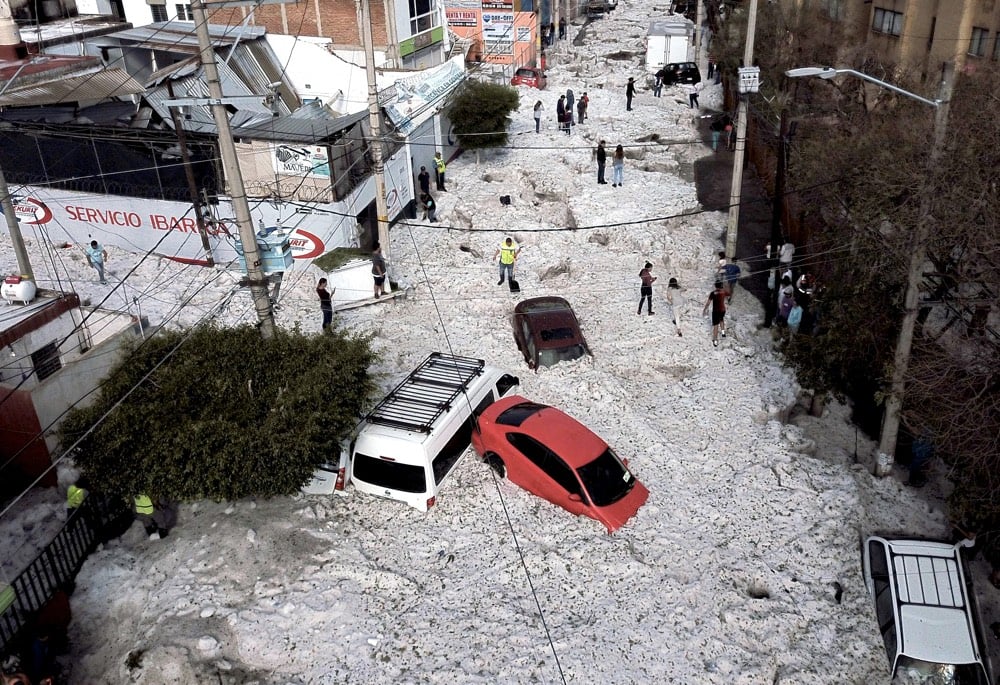
Enrique Alfaro, the governor of Jalisco, wrote on Twitter that he had never seen anything like it.
“I witnessed scenes that I had never seen before: hail more than a meter high,” he tweeted, “and then we ask ourselves if climate change exists.”
Weather is not climate, but our warmer atmosphere is going to make extreme weather events like this more likely and frequent. As the Times says with characteristic understatement:
Experts say it is not unusual to have a hailstorm at this time of year in western Mexico, but the amount of hail was extreme.
The Shawshank Redemption came out in 1994. Although crime rates had already started falling across the country, the media (with shows like COPS) and government (Joe Biden & Bill Clinton’s push for a crime bill now considered disastrous) were still pursuing and glorifying a punitive criminal justice system. But as this excellent video by Pop Culture Detective explains, Shawshank offered 90s audiences a different view of prison and the criminal justice system.
On a narrative level The Shawshank Redemption is a movie about the power of hope in the face of extraordinary hardship. But underpinning Andy Dufresne’s story we also find a blistering critique of the prison system and criminal justice policy in the United States.
In the film, the audience gets to see the system as harsh & corrupt and the prisoners as, well, people — human beings worthy of rehabilitation. In the 25 years since Shawshank debuted (and bombed) at the box office, public opinion in America has shifted away from the punitive view of the 90s to the more humanistic perspective embodied by the film.
See also Running from COPS, Sexual Assault of Men Played for Laughs, and Ava DuVernay’s 13th. (via waxy)
The showrunner for Star Trek: Picard is going to be…. Michael Chabon?! (I’d noticed on his Instagram that he was involved with the show.)
Why plants don’t die from cancer. “The Chernobyl disaster reveals the true extent of our environmental impact on the planet. Harmful as it was, the nuclear accident was far less destructive to the local ecosystem than we were.”
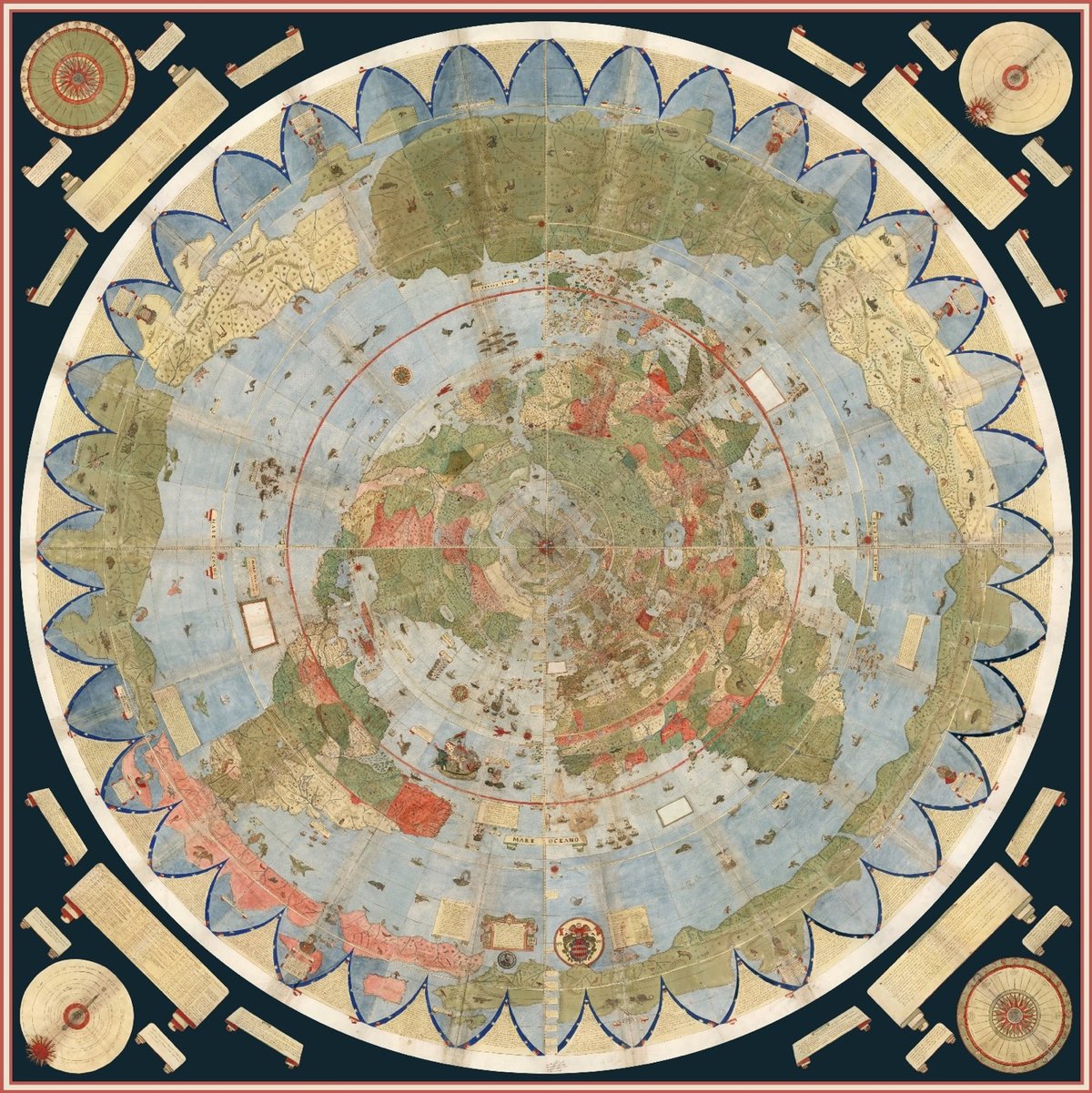
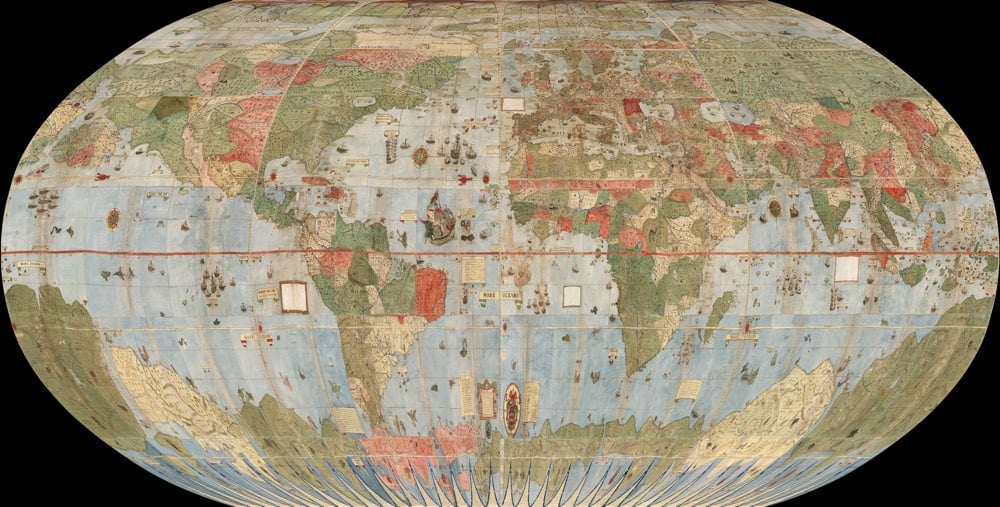
In 1587, Urbano Monte made the largest known early map of Earth. The map consists of 60 panels that were meant to be assembled into a planisphere (a circular map that rotates about a central axis) measuring 10 feet across. The David Rumsey Map Center recently acquired a manuscript of Monte’s map and digitally assembled all 60 pieces into the full map (inlined above but click through to zoom/pan).
Of great interest is the attempt Monte makes to make his map not just a geographical tool but to show climate, customs, length of day, distances within regions — in other words, to create a universal scientific planisphere. In his dedication on tavola XL he specifies how to arrange the sheets of the mappamondo and makes it explicit that the whole map was to be stuck on a wooden panel 5 and a half brachia square (3.25m) so that it could be revolved around a central pivot or pin through the north pole.
The individual map panels looked like this:
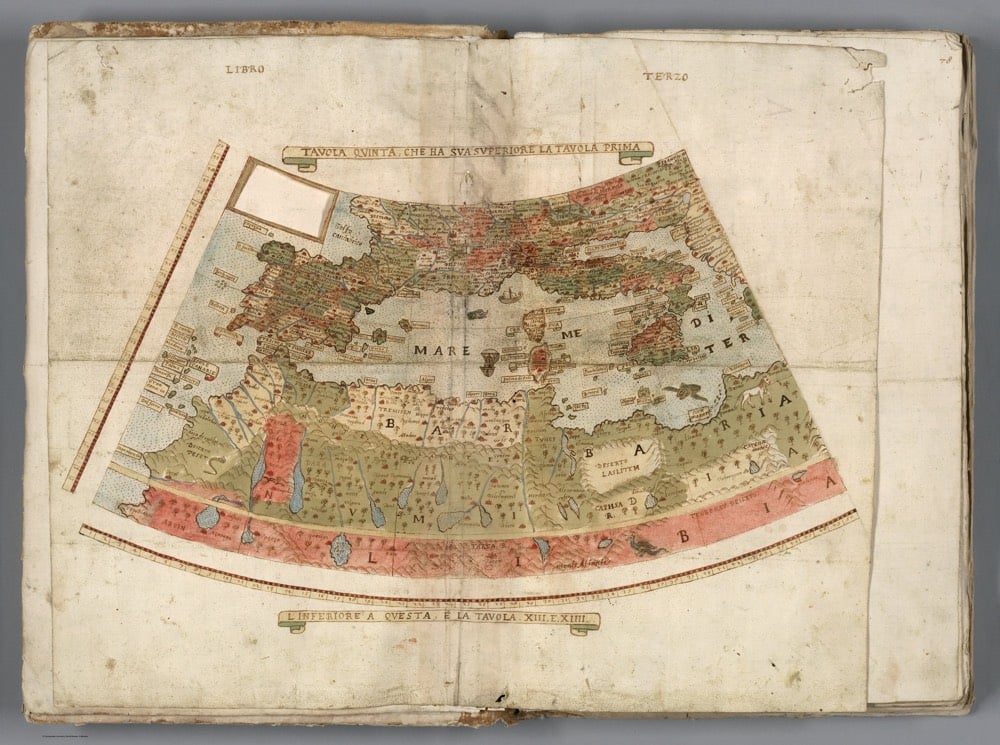
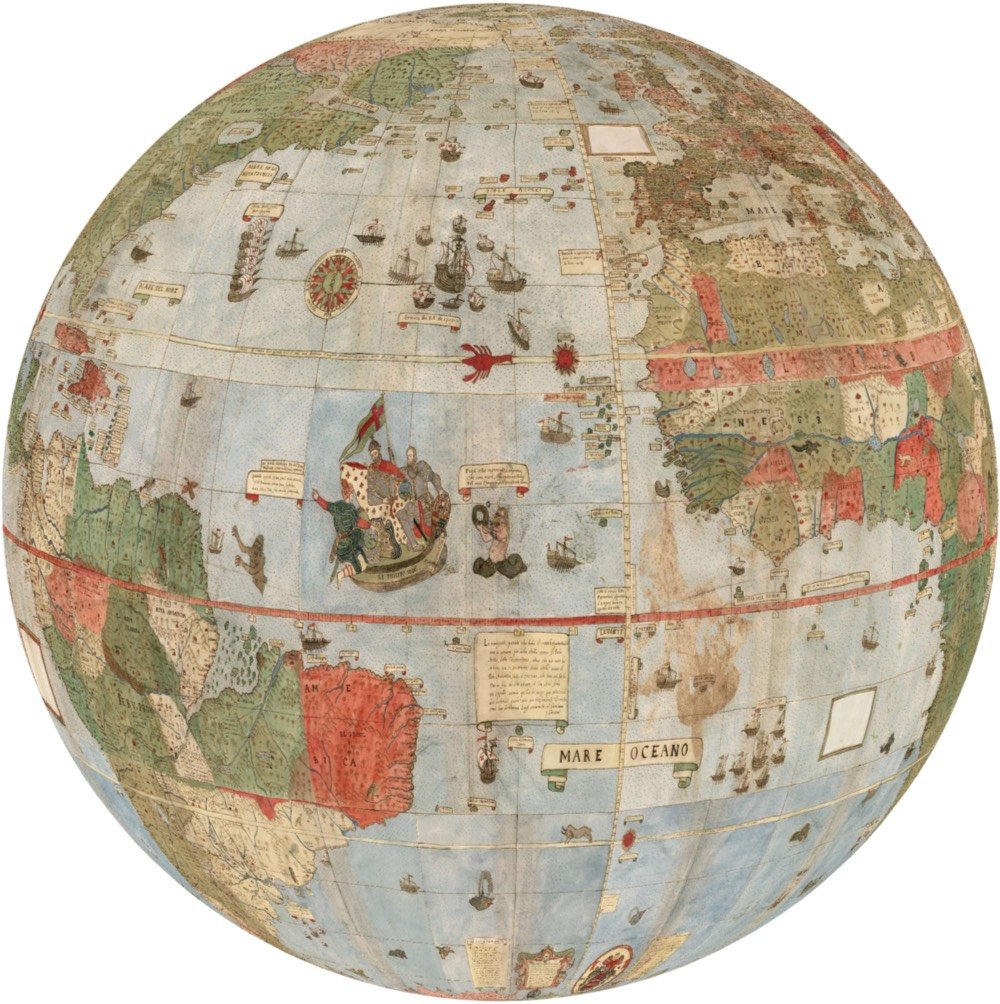
Of course, once the image is digital you can map it into all sorts of different projections like Mercator or Ortelius oval projection.
Jeremy Ashkenas even created a rotatable & zoomable globe of Monte’s map that is incredibly fun to play with.
Mark Rober built a rock skipping robot and by adjusting a bunch of different parameters, he figured out the best way to skip rocks. And no, I completely did not get out a notepad and start jotting down notes while watching this video and there’s no way I’m heading out to one of my favorite rock skipping places tomorrow morning to try out some new techniques. Nope. Not gonna happen. (thx, tom)
After the fall of the Soviet Union, Deniss Metsavas served for many years with the Estonian Defense Forces and was, at the same time, a Russian spy. In this video for The Atlantic, Metsavas describes how he was recruited by Russian intelligence using kompromat (compromising material).
For years, Metsavas navigated his disparate allegiances. He got married and started a family. But as he grew in prominence in the Estonian Defense Forces, his Russian handlers began to demand highly classified information on Estonia’s involvement with the United States and NATO, specifically with regard to weapons. Metsavas tried to extricate himself, only to find that his handlers would stop at nothing to obtain the intel-including ensnaring a family member in the increasingly dangerous situation.
Watching the video and reading the accompanying article, you get the sense that maybe the Cold War never ended…
Newer posts



Socials & More