




This site is made possible by member support. 💞
Big thanks to Arcustech for hosting the site and offering amazing tech support.
When you buy through links on kottke.org, I may earn an affiliate commission. Thanks for supporting the site!
kottke.org. home of fine hypertext products since 1998.
Beloved by 86.47% of the web.
Entries for July 2019
Character Routing Maps of Famous Films
Illustrator Andrew DeGraff makes what he calls Cinemaps, maps of movies and their plots in the style of the dotted-line wanderings of The Family Circus comic strip or Harry Potter’s Marauder’s Map. He’s done maps for Star Wars, Indiana Jones, and The Princess Bride.



My favorite DeGraff drawing is probably Back to the Future, with Hill Valley represented twice on the same page: 1955 in pink underneath 1985 in blue.

DeGraff collected these maps (and several more) into a book called Cinemaps. (via fairly interesting)
Fighting climate change may be cheaper and more beneficial than we think. “What if it’s a big hoax and we create a better world for nothing?”
When you fly, do you prefer takeoffs or landings? (I’d choose takeoffs, but I remember many more landings.)
The Highest Resolution MRI Scan of a Human Brain

A team of researchers at the Laboratory for NeuroImaging of Coma and Consciousness have done an ultra-high resolution MRI scan of a human brain. The scan took 100 hours to complete and can distinguish objects as small as 0.1 millimeters across.
“We haven’t seen an entire brain like this,” says electrical engineer Priti Balchandani of the Icahn School of Medicine at Mount Sinai in New York City, who was not involved in the study. “It’s definitely unprecedented.”
The scan shows brain structures such as the amygdala in vivid detail, a picture that might lead to a deeper understanding of how subtle changes in anatomy could relate to disorders such as post-traumatic stress disorder.
This video above shows the scanned slices of the entire brain from side to side.
A Phish skeptic goes to a Phish concert. “If the singing amounts to a violation, the jam’s sin is arguably worse: it’s just really boring, and it’s really boring for a really long time.”
The Shining Starring Jim Carrey
Taking advantage of inexpensive and easy-to-use software, deepfake artist Ctrl Shift Face has replaced Jack Nicholson’s face with Jim Carrey’s face in several scenes from The Shining. If you pay close attention it looks a little off — it’s not as good as the Bill Hader / Arnold Schwarzenegger one — but if you were unaware of Nicholson or The Shining going in, you probably wouldn’t notice.
These Shining videos are clever and fun and we’ve talked a little bit about how deepfakes might affect our society, but this Hannah Arendt quote from a 1974 interview is likely relevant:
If everybody always lies to you, the consequence is not that you believe the lies, but rather that nobody believes anything any longer. This is because lies, by their very nature, have to be changed, and a lying government has constantly to rewrite its own history. On the receiving end you get not only one lie — a lie which you could go on for the rest of your days — but you get a great number of lies, depending on how the political wind blows. And a people that no longer can believe anything cannot make up its mind. It is deprived not only of its capacity to act but also of its capacity to think and to judge. And with such a people you can then do what you please.
This is the incredible and interesting and dangerous thing about the combination of our current technology, the internet, and mass media: “a lying government” is no longer necessary — we’re doing it to ourselves and anyone with sufficient motivation will be able to take advantage of people without the capacity to think and judge.
Want to Buy a Bob Ross Painting? You Can’t. (And Here’s Why.)
During the course of his television career, Bob Ross painted more than 1000 paintings. But you never see them for sale. You can buy Bob Ross paint sets and even a waffle maker that makes waffles that look like Bob Ross — “Pour in the batter, lower the lid, and before you know it, there’s Bob Ross ready for butter and syrup.” — but good luck buying one of his actual paintings. In this charming little video from the NY Times, we learn where all of Bob Ross’s paintings are, meet the paintings’ custodians, and discover why the art isn’t for sale.
In 1994, the talk show host Phil Donahue asked Mr. Ross to “say out loud your work will never hang in a museum.”
“Well, maybe it will,” Mr. Ross replied. “But probably not the Smithsonian.”
Some of Ross’s paintings can be viewed at The Bob Ross Art Workshop & Gallery in New Smyrna Beach, Florida. Every episode of The Joy of Painting can be viewed on YouTube or sometimes streaming on Twitch. I watched on Twitch for a couple minutes just now and was tickled to catch him saying one of his signature phrases: “happy little trees”.
Reading Krazy Kat in the Public Domain
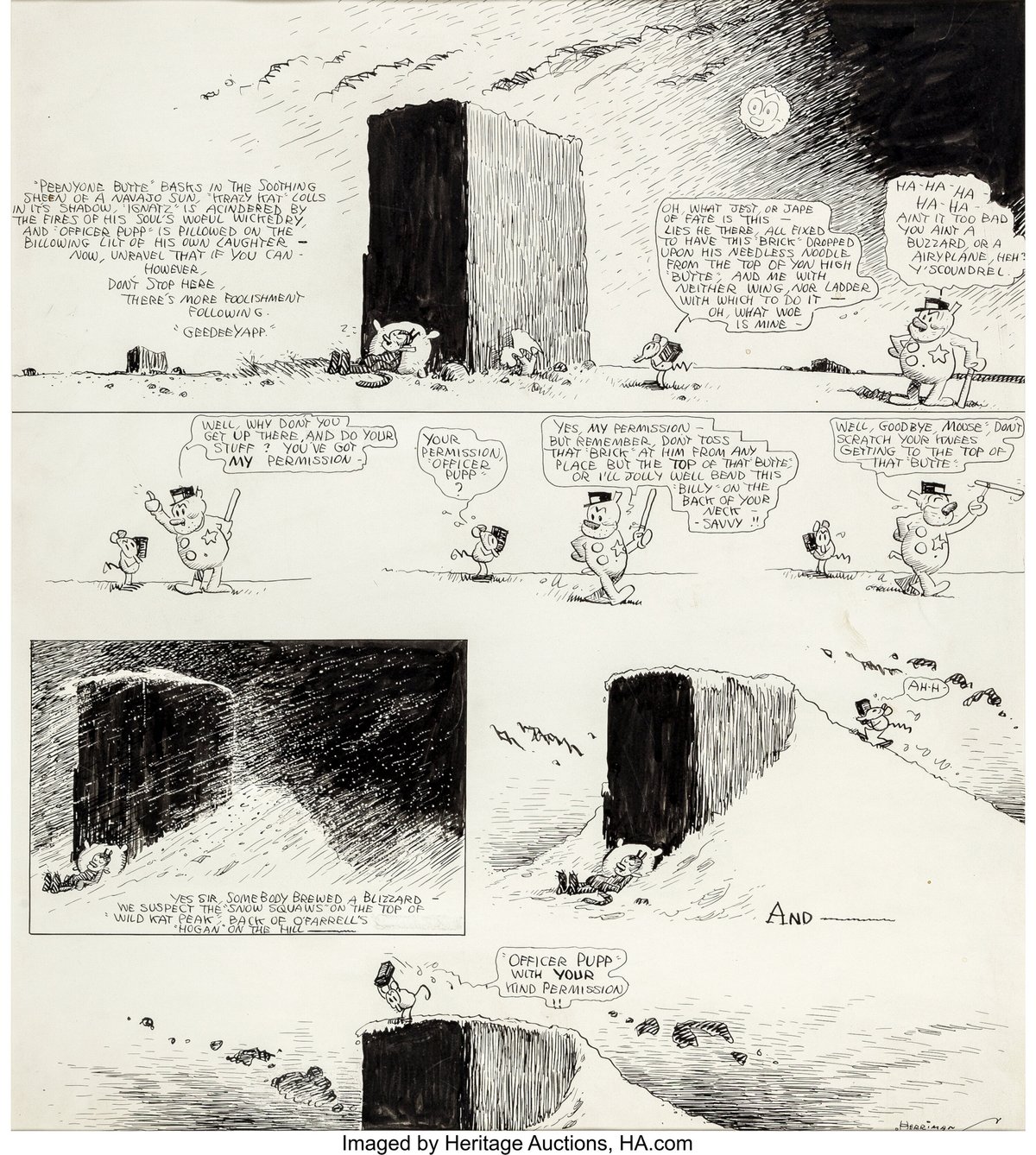
Krazy Kat is a legendary comic strip by cartoonist George Herriman. It was published from 1913 to 1944. This means that some of the earliest strips are now in the public domain; all you need is to find a decent quality image.
Enter Joel Franusic, a Krazy Kat enthusiast who wrote up some code to scan newspaper archives, confirm that the images were indeed Krazy Kat comics, and download and present the images he found. Here’s Joel:
After becoming a little obsessed with Krazy Kat, I was very disappointed to see many of the books I wanted were incredibly expensive. For example “Krazy & Ignatz: The Complete Sunday Strips 1916-1924” was selling on Amazon for nearly $600 and “Krazy & Ignatz 1922-1924: At Last My Drim Of Love Has Come True” was selling for nearly $90.
At some point, I realized that the copyright for many of the comics that I was looking for has expired and that these public domain comics were likely available in online newspaper archives.
So, driven a desire to obtain the “unobtainable” and mostly by curiosity to see if it was possible, I set out to see if I could find public domain Krazy Kat Sunday comics in online newspaper archives.
As you can see in the “Comics” section of this site, it is possible to find Krazy Kat comics in online newspaper archives and I’ve made all of the comics I could find viewable on this web page.
The most striking thing about these comics is their size: full and half pages of broadsheets. The second most striking thing, for this fan, at least, is the clear influence on Calvin and Hobbes, in style, pacing, and overall feel. It’s not the user-friendliest way to dive into a back catalog of comics, but it is a remarkable and remarkably fun project.
Only One of the World Cup-winning US Women’s National Team Is a Mom. That’s Not An Accident.

It’s pretty well-known now that the US Women’s National Team for soccer is wildly underpaid, particularly relative to their male counterparts. But those low salaries also effect who gets to play on the team and how they live their lives. In the middle of an interview with Into the Gloss, Jessica McDonald explains how she makes it work.
I’m the only mom on the national team [USWNT]. And then amongst the National Women’s Soccer League [NWSL], there are seven of us. It’s so hard, oh my God. The best way I can describe it is that it takes a lot of mental toughness. Of my career in the NWSL, I’ve only played one season where I wasn’t a mom. Trying to figure out a routine is probably the hardest thing, and because I got traded a lot, I had to find new babysitters and child care all the time. Child care in particular was very difficult, because it’s expensive and we don’t get paid much. If I put [my son] in a daycare, that’s my entire paycheck, you know?
It’s not as if this is a problem unique to championship-winning athletes, but come on. You’d like to think, in a semi-just world, the best of the best could afford day care.
Deflating the Black Director Boom of the 1990s

In the early 1990s, there was a mini-boom of films made by black filmmakers. Spike Lee and John Singleton led the way, but there was also Ernest Dickerson (who’d been Lee’s director of photography), Julie Dash, Matty Rich, Darnell Martin, and more. The New York Times talked to a good-sized group of these directors about their careers, and how each of them, separately, found themselves in “director jail,” unable to get new projects or find new collaborators. It’s a pretty riveting conversation.
Dickerson is a favorite of mine — in addition to directing Juice and working as DP during Lee’s great period, from She’s Got To Have It to Malcolm X, he’s done terrific work for television. Here’s his story:
I made a movie called “Bulletproof,” with Damon Wayans and Adam Sandler. Working on that film was the only time I ever got mad enough to punch a hole in the editing room wall. It was supposed to be a raunchy, R-rated comedy slanted more for an adult audience. But I could see we had trouble when they were giving out tickets to 15- to 16-year-old kids at the first preview. Afterward, I had to really sanitize the relationships. It meant savaging the movie.
It still opened at No. 1, but I got the worst reviews of my career. I was criticized for not having everything I was told to take out. I had several projects lined up — I had been developing “Blade,” with Wesley Snipes. The whole idea of where “Blade” went was mine. But the producers looked to “Bulletproof” and thought I had completely lost my street cred. After that, nobody would touch me. I think I’m still in jail, in a way, because I’m doing television. [Dickerson — like many of his peers, including Martin and Dash — has found work on the small screen, with credits on “The Wire” and “The Walking Dead.”] I consider myself a filmmaker who’s working in television.
A common thread through all of the stories is articulated by Ted Witcher:
White people get more bites of the apple. That’s just true. You can fail three, four times and still have a career. But if you’re black, you really can only fail once.
Favorite NYC Spots Lovingly Illustrated
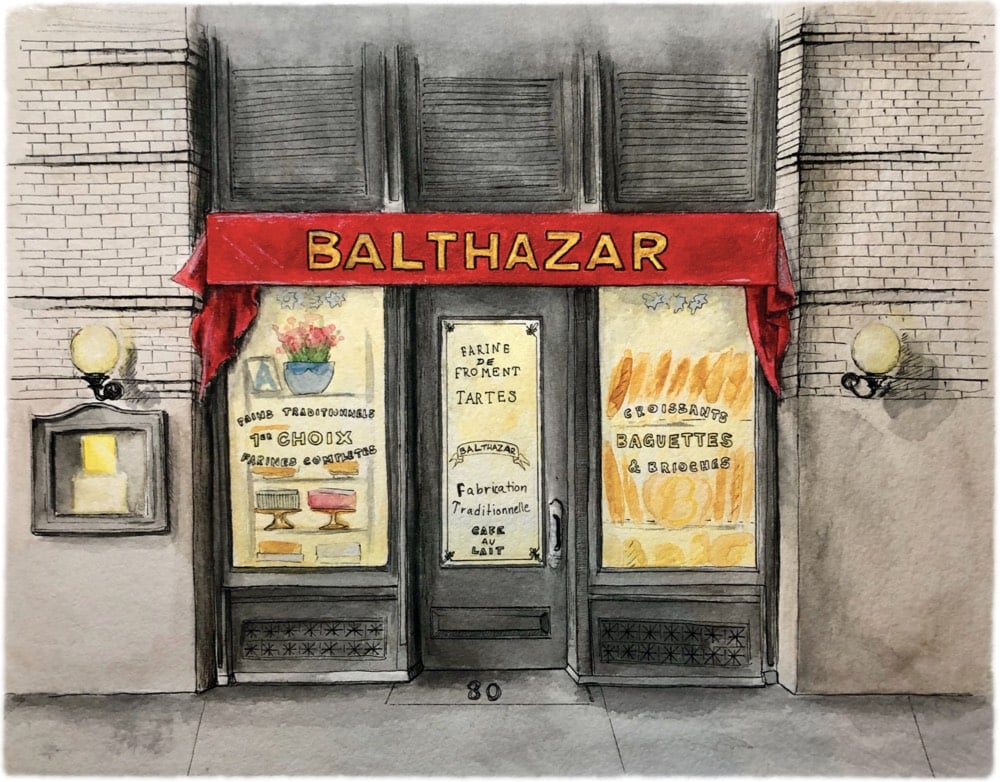

The Downtown Collective is a project by illustrator Kelli Ercolano in which she is drawing & painting all of the NYC cafes, restaurants, and bars she’s fallen in love with. You can check out more of her work and process on Instagram.
The Possible Link Between Seasonal Allergies and Anxiety & Depression
Olga Khazan on The Reason Anxious People Often Have Allergies:
“There is good circumstantial evidence that’s growing that a number of mental illnesses are associated with immune dysfunction,” says Sandro Galea, a physician and epidemiologist at the Boston University School of Public Health.
If the link is in fact real, allergies could be causing anxiety and other mood disorders in a few different ways. For one, it’s stressful to be sick, and people with allergies frequently feel like they have a bad cold. The experience of straining to breathe, or of coughing and wheezing, could simply make people feel anxious.
Then there are biological explanations. Allergies trigger the release of the stress hormone cortisol, which can interfere with a feel-good brain chemical called serotonin. It’s not clear how the cortisol does this, Nanda says; it might inhibit the production of serotonin or make it fail to bind with its receptors properly. But when something goes wrong with serotonin, the theory goes, depression or anxiety might set in.
Huh. I definitely suffer from seasonal allergies (they have thankfully slacked off for the summer) and have struggled with anxiety since I was a kid (though I’ve never been clinically diagnosed). I’ll be following this research with interest.
A Small, Simple Hive Designed for Urban Beekeeping
B-box is a beehive designed for use in close proximity to humans, like near your house or in an urban environment. It does this by separating the honey part of the hive from the area where the bees live and limiting their access to the hive through an entrance more than seven feet above the ground. Check out this video for details:
The makers of the B-box are seeking funding for the project on Indiegogo. Very tempting! (via colossal)
I love how this NYC mail carrier worked within the USPS guidelines to bring a sense of individual style to his uniform. “I started by cropping the pants as well as narrowing the legs a bit.”
Posters of STEM Role Models

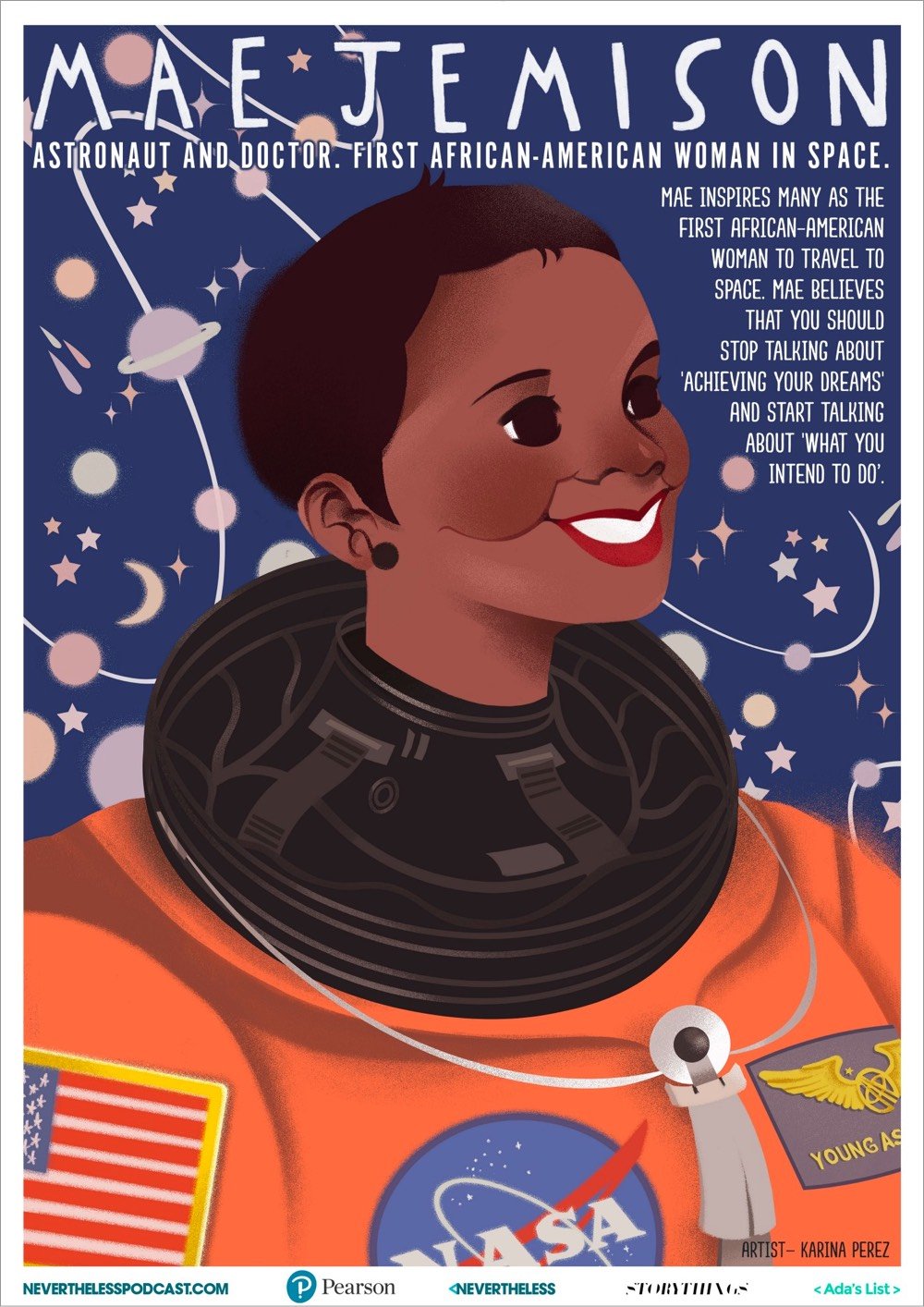
The folks behind the Nevertheless podcast commissioned a set of seven posters of STEM role models, people who have made significant contributions to science, technology, engineering, and mathematics. The posters are free to download and print out in eight different languages (including English, Spanish, and Simplified Chinese).
The North American beaver is a formidable landscape engineer. Humans may be able to work together with them to restore water systems and improve land use
Climate Stripes
Using temperature data from around the world, climate scientist Ed Hawkins has built a tool for viewing the “climate stripes” for almost any location, a data visualization that represents the change in temperature over time over the past 100+ years. For most locations, the graphs shift from blues to oranges & reds as the climate warms, neatly illustrated by the global graph:

Here’s Vermont (where I live) and Arizona:


You can see there’s more variation on the regional level than globally. Check out the graph for Mississippi:

The warming patterns for particular regions are not going to be uniform…some places are actually forecast to get cooler and wetter rather than hotter and dryer. You can create and download your own climate stripes here…perhaps you can use it to make a global warming blanket. (via riondotnu)
Eight men share stories of high school experiences where they behaved towards girls or women in ways they now regret. Honestly, I don’t know what to make of this…
An interview with Chaédria LaBouvier, the curator of the Basquiat exhibition at the Guggenheim. “I didn’t come to the Guggenheim to play small.”
The Atlas of Moons

From National Geographic comes The Atlas of Moons, an interactive reference to all of the major moons in our solar system, from the Earth’s own moon to the Galilean moons of Jupiter to Charon, which forms a binary system with Pluto.
For whatever reason, I wasn’t fully aware that some of Jupiter’s and Saturn’s major moons orbited their planets so quickly — Europa takes 3.6 days to complete an orbit, Io once every 1.8 days, and Mimas speeds around Saturn every 22.6 hours.
After 70 years in production, the last Volkswagen Beetle has rolled off the assembly line. I bet there will be a reboot in the future…there’s just too much brand equity there to squander.
The Most Influential Black Americans in History

The Undefeated has complied a list of some of the most influential black Americans — 44 African Americans Who Shook Up the World.
This is a list of The Undefeated 44, a collection of dreamers and doers, noisy geniuses and quiet innovators, record-breakers and symbols of pride and aspiration.
A dashing lawyer who redefined fearlessness and broke Jim Crow’s back. The most gravity-defying, emulated athlete the world has ever produced. A brilliant folklorist of fierce independence who was a proudly “outrageous woman.”
This is not a list of The Greatest African-Americans of All Time or The Most Influential Blacks in History. Or even The Dopest Brothers and Sisters Who Matter Most This Week. It is a list — fervently debated among our staff, chiseled and refined — of 44 blacks who shook up the world or at least their corner of it. We recognize that this is not a complete list of jaw-dropping black achievers; we know that such a list would never run out of names. Why limit ours to 44? It’s an homage to the first African-American president, whose own stunning accomplishment was something our mothers and grandfathers and great-grandmothers never thought they’d see in their lifetimes.
The list includes many household names like Muhammad Ali, Maya Angelou, and Jean-Michel Basquiat but also some lesser-celebrated people like Dr. Charles Drew:
After becoming the first African-American to get his doctorate from Columbia University in 1940, Drew was the world’s leading authority on blood transfusions and storage, just as the United States and Great Britain were becoming deeply involved in World War II. His research established protocols on how blood should be collected and refrigerated, how donors should be recruited and screened, and training methods for people who would collect and test blood.
As medical director of the American Red Cross National Blood Donor Service, Drew led the collection of tens of thousands of pints of blood for U.S. troops. Some historians say his work might have saved the world from Nazism, since battlefield blood storage and transfusions didn’t exist before he was asked to manage two of the largest blood banks during the war.
And Madam C.J. Walker:
As she traveled throughout the United States, the Caribbean and Central America, teaching her Walker System and training sales agents, she shared her personal story: her birth on the same plantation where her parents had been enslaved, her struggles as a young widow, her desperate poverty. If she could transform herself, so could they. In place of washtubs and cotton fields, Walker offered them beauty culture, education, financial freedom and confidence. “You have made it possible for a colored woman to make more money in a day selling your products than she could in a week working in white folks’ kitchens,” one agent wrote to her.
It’s Okay to Be Good and Not Great. “What’s interesting is that not always trying so damn hard to be great isn’t just the path to being happier; it’s also the path to getting better.”
The Great Wave by Katsushika Hokusai
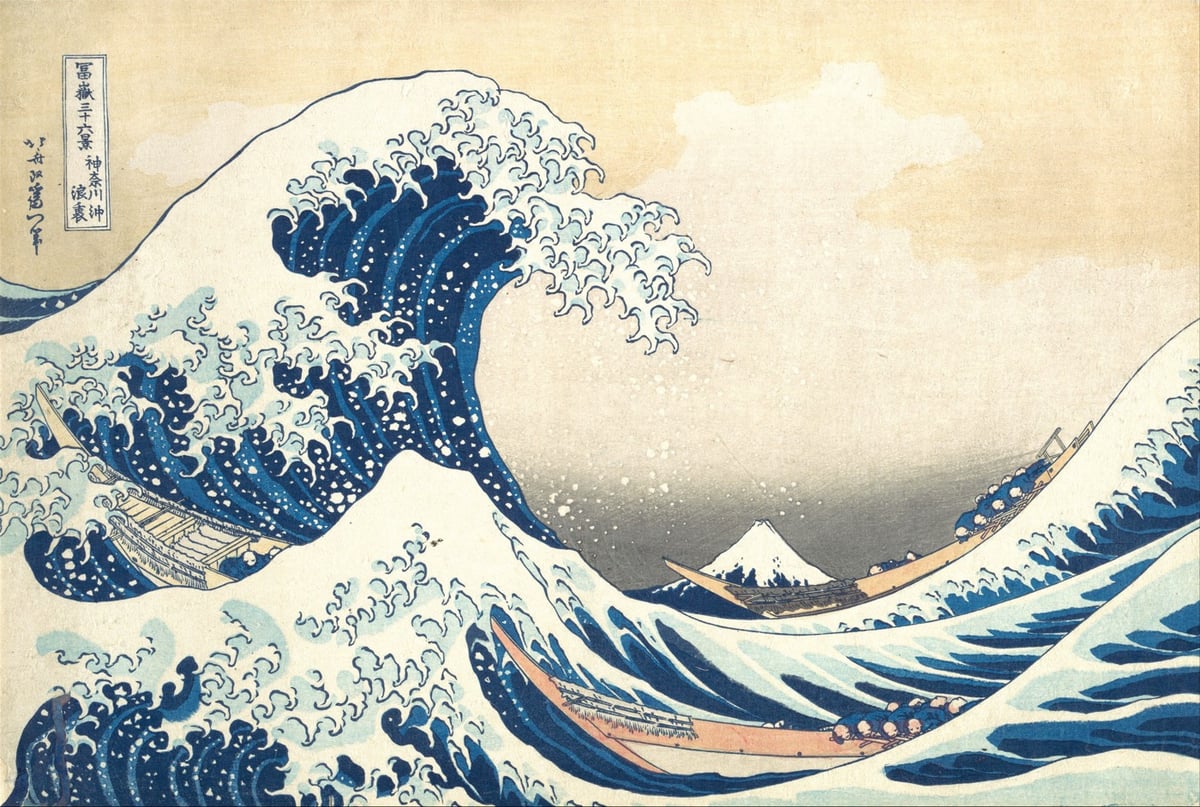
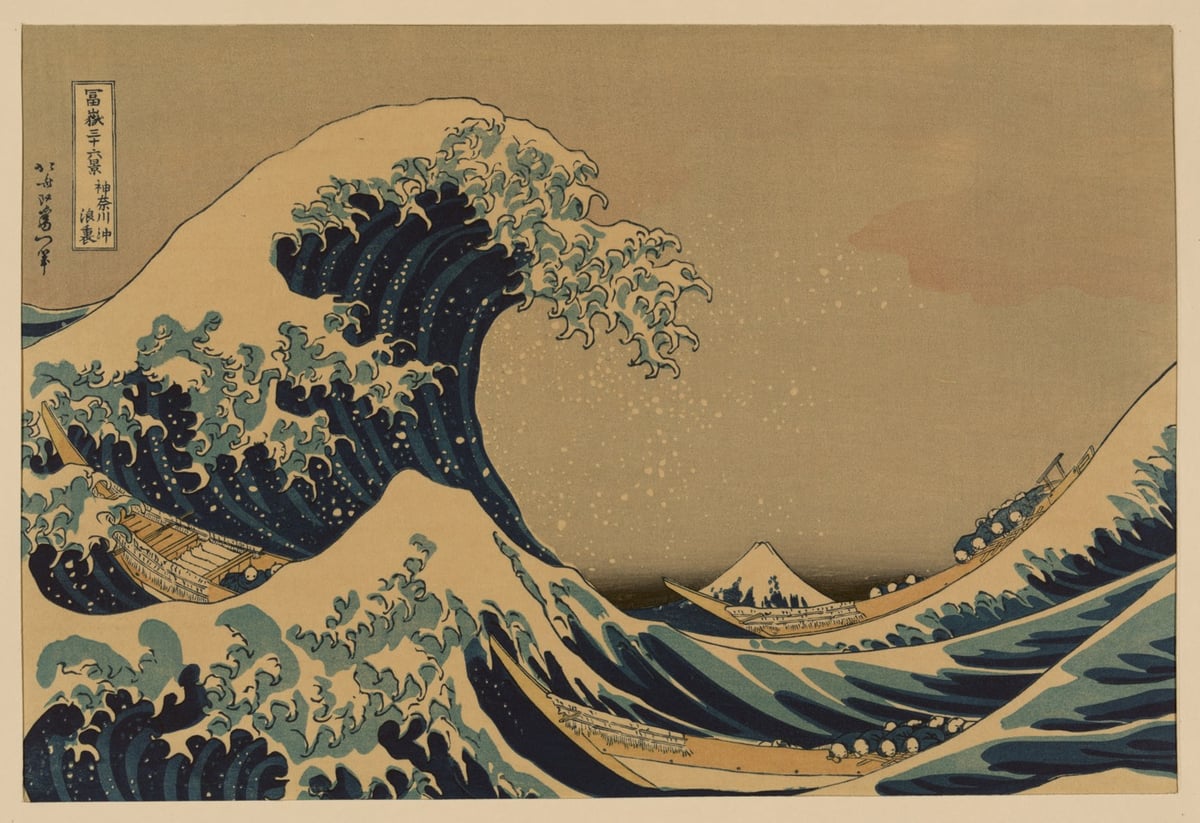
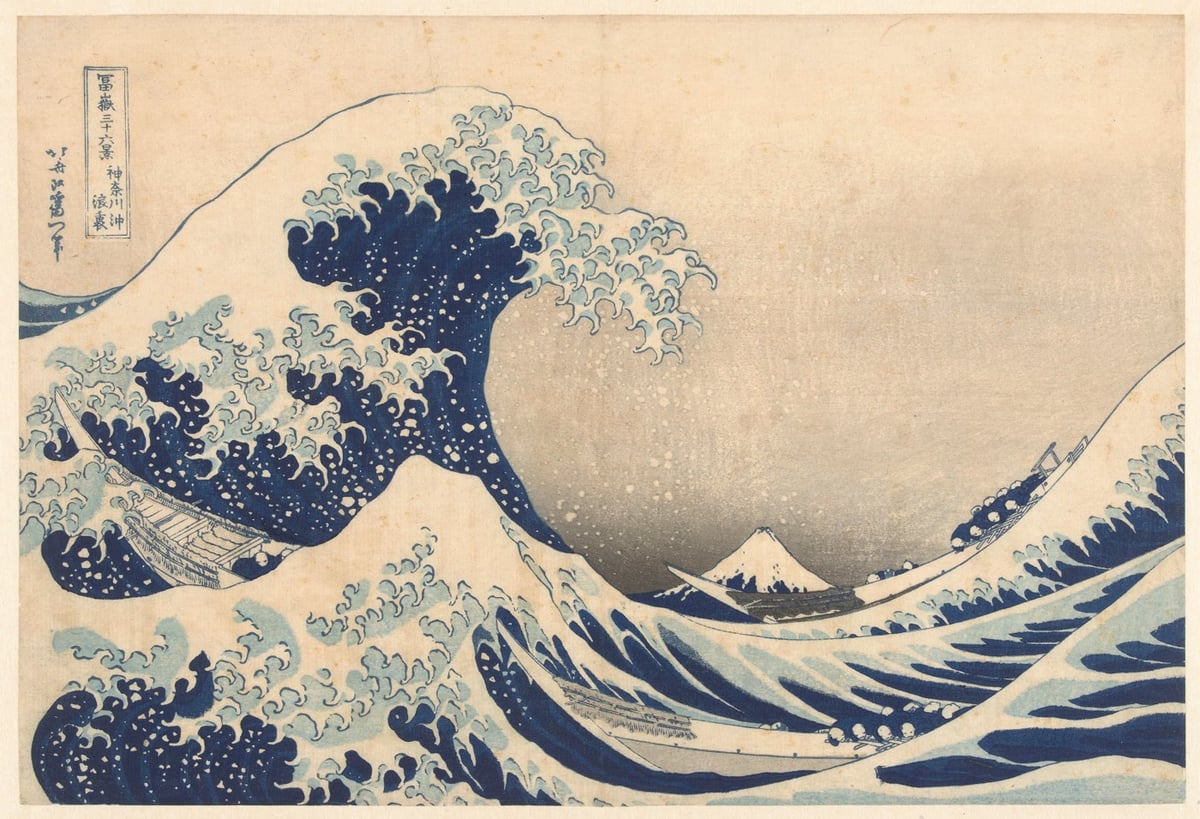
One of the world’s great art masterpieces is Katsushika Hokusai’s woodblock print Kanagawa oki nami ura, popularly known as The Great Wave. Thousands of prints were made and some of the surviving copies made their way into museums & private collections. I’ve selected three of the highest resolution prints available for free download (from top to bottom):
Metropolitan Museum of Art (10 megapixels)
Library of Congress (51 megapixels)
Rijksmuseum (22 megapixels)
You can find many other versions using the Ukiyo-e Search site.
Douglas McCarthy recently wrote about The Great Wave and the various ways that museums choose to offer digital copies on their websites.
If we consider the customer journey of acquiring a digital image of ‘The Great Wave’ from our fourteen museums, a definite trend emerges — the more open the policy of a museum is, the easier it is to obtain its pictures.
Like the other open access institutions in our sample group, The Art Institute of Chicago’s collections website makes the process incredibly simple: clicking once on the download icon triggers the download of a high-resolution image.
In contrast, undertaking the same process on the British Museum’s website entails mandatory user registration and the submission of personal data.
(via @john_overholt)
Update: A few years ago, woodblock printmaker David Bull documented the process of making prints of The Great Wave in this great series of videos. Part of his process included a fascinating investigation of previous prints and trying to determine which of the many prints might be printed by the original printer. He shares bits and pieces of that investigation in the first three videos and also the eighth & tenth videos, in which he zeroes in on two candidates for original prints (the one at the Met shown above and the British Museum print) and concludes, controversially I would think, that one (and possibly both) of these prints was made as a knock-off, a forgery. After watching Bull’s explanation, it’s not at all difficult to think that perhaps very few prints made from the original blocks by the original printer exist today. (via @gregalor)
An Oral History of the Early Trans Internet. “Driven by a need to find community and speak freely about our lives, trans folks were able to find each other online.”
Alexandria Ocasio-Cortez in Conversation with Greta Thunberg
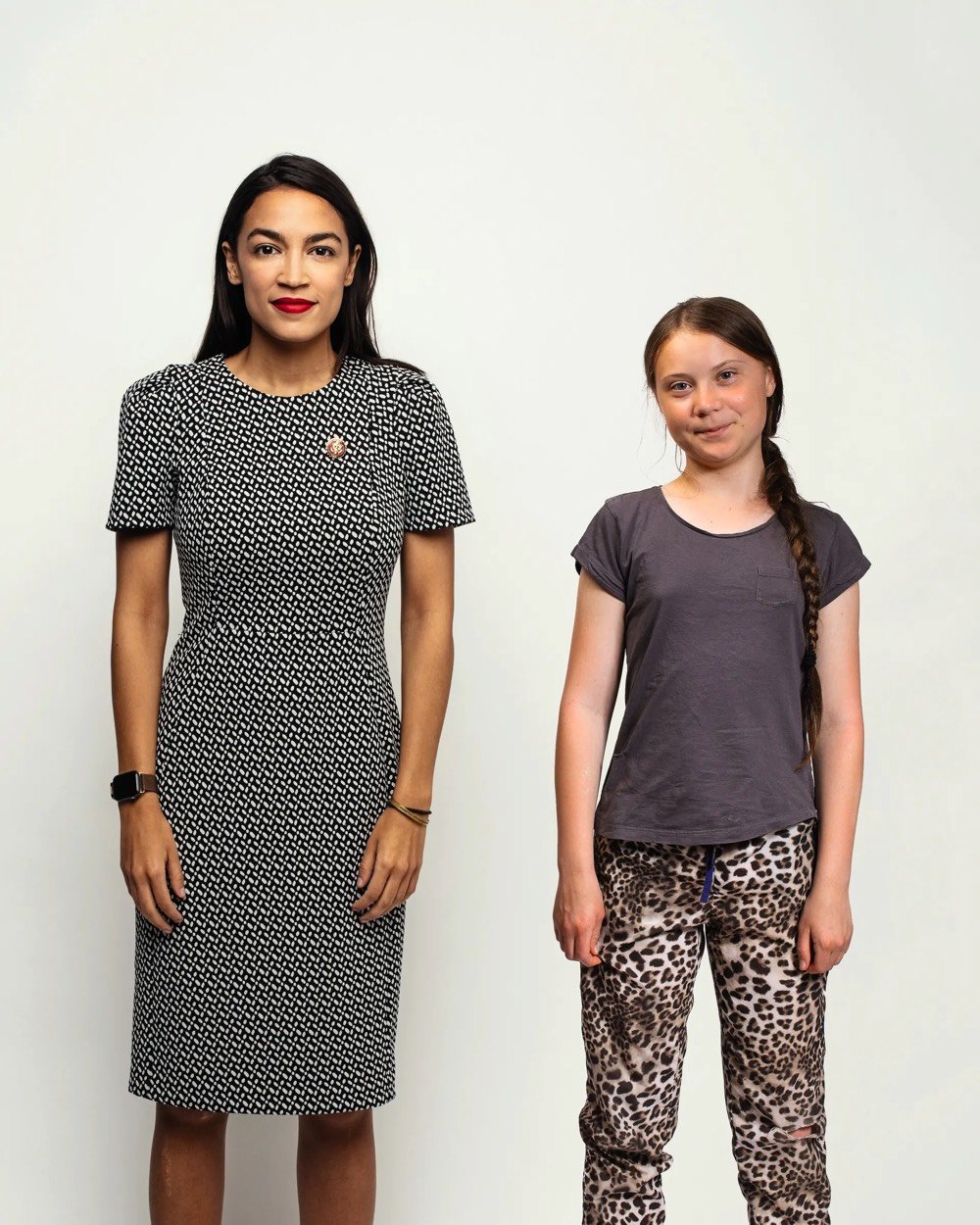
Late last month, US Congresswoman Alexandria Ocasio-Cortez and climate activist Greta Thunberg had a lengthy conversation over video chat about leadership, climate change, politics, and activism.
GT: Many people, especially in the US, see countries like Sweden or Norway or Finland as role models — we have such a clean energy sector, and so on. That may be true, but we are not role models. Sweden is one of the top 10 countries in the world when it comes to the highest ecological footprints, according to the WWF — if you count the consumer index, then we are among the worst per capita.
In Sweden, the most common argument that we shouldn’t act is that we are such a small country with only 10 million inhabitants — we should focus more on helping other countries. That is so incredibly frustrating, because why should we argue about who or what needs to change first? Why not take the leading role?
AOC: We hear the same exact argument here. And this is the United States of America! People say, “Well, we should wait for China to do something.” There’s this political culture of people trying to say America First — that the US is the best nation in the world, yet at the same time they’re saying, “Well, China’s not doing it, why should we?”
And I think it’s the same argument: are we going to choose to lead, or are we going to sit on our hands? It seems as if they take pride in leading on fracking, on being the number one in oil, in consumption, in single-use plastics. But they don’t seem to want to take pride in leading on the environment and leading for our children.
Early on in the conversation, they touched on something that’s always bothered me in news stories about or criticism of Thunberg: her age.
AOC: One of the things I’m interested in hearing from you is that often people say, “Don’t politicise young people.” It’s almost a taboo. That to have someone as young as you coming out in favour of political positions is manipulative or wrong. I find it very condescending, as though, especially in this day and age with the access to information we have, you can’t form your own opinions and advocate for yourself. I’m interested in how you approach that — if anyone brings that up with you?
GT: That happens all the time. That’s basically all I hear. The most common criticism I get is that I’m being manipulated and you shouldn’t use children in political ways, because that is abuse, and I can’t think for myself and so on. And I think that is so annoying! I’m also allowed to have a say — why shouldn’t I be able to form my own opinion and try to change people’s minds?
But I’m sure you hear that a lot, too; that you’re too young and too inexperienced. When I see all the hate you receive for that, I honestly can’t believe how you manage to stay so strong.
In disciplines as varied as academics, athletics, chess, and art, the achievements of young people are celebrated, but Thunberg expresses her ideas and opinions about how to address climate change and starts a massive movement of young people around the globe and suddenly 16 is too young to participate in our culture and political process? Bullshit.
The trailer for Honeyland, a documentary about one of Macedonia’s remaining nomadic beekeepers. “We only take half. Half for [the bees], half for us.”
Photo Requests from Solitary Confinement
Photo Requests from Solitary is a project that takes photo requests from prisoners being held in solitary confinement and invites volunteer photographers to make the images for them. For prisoners being tortured with long-term solitary stays, photos can be a lifeline to the outside world.
They spend at least 22 hours a day in a cell that measures on average of 6 x 9 feet, either in supermax prisons or in segregation units in other prisons and jails. Meals usually come through slots in the solid steel doors of their cells, as do any communications with prison staff. Exercise is usually alone, in a cage or concrete pen, for no more than one hour a day. People in solitary may be denied contact visits, telephone calls, television, reading materials, and art supplies.
The goal of PFRS is to fulfill each request to exact specifications for the person who requested it, with images that — through some combination of form, content, composition, design, and/or sheer commitment — are compelling enough that someone would want to return to them for repeated viewing. (People in solitary are sharply limited in the numbers of photographs they can have, so every image is important.)
An inmate named Sergio requested:
I would like a picture of the Mexican flag at sunrise, at the Zocalo, in the capitol of Mexico City; while the sun is rising and it hits the Mexican flag un-furled, with the Zocalo in the foreground.
And photographer Nica Ross delivered this image:

Another inmate, Dan requested:
I would like a photograph of a female in black leather pants with the same material stitches but a different color like hot pink all which that can define her figures with a setting of orange and blue in the sky posted up next to a benz (powder blue) in a park black female with hazel eyes.
A photographer named Jason Altaan submitted this:

David requested:
My photo request is simple, yet, very poignant for me. I’d very much appreciate any photos of fallen autumn leaves. I have no particular preference of area or location; just any scene focusing on the beauty of autumn leaves, (which, as you know, we do not have access to in the concrete box that is deemed as “yard” here.)
Several photographers responded, including Gerard Gaskin:

If you look at the site, there are currently many more unfilled requests than requests with submissions. Current requests include “first lady Michelle Obama planting vegetables in the White House garden”, “police being arrested by regular citizens”, “sunrise over the Sahara”, “beautiful women laughing and playing volley ball on the beach in ‘free Raul’ t-shirts”, and “wise old man with an angry expression”. Submitting a photo is easy…you can upload right from the website.
Doreen St. Félix wrote more about the project for the New Yorker.
The Korean Invention of the Printing Press, Almost 200 Years Before Gutenberg

M. Sophia Newman writing for Literary Hub: So, Gutenberg Didn’t Actually Invent the Printing Press.
It is important to recognize what this means. The innovation that Johannes Gutenberg is said to have created was small metal pieces with raised backwards letters, arranged in a frame, coated with ink, and pressed to a piece of paper, which allowed books to be printed more quickly. But Choe Yun-ui did that — and he did it 150 years before Gutenberg was even born.
This piece is also a good reminder that the spread of technology (and culture) depends on more than just how useful it is.
However, Korea’s printed books did not spread at a rapid pace, as Gutenberg’s books would 200 years later. Notably, Korea was under invasion, which hampered their ability to disseminate their innovation. In addition, Korean writing, then based closely on Chinese, used a large number of different characters, which made creating the metal pieces and assembling them into pages a slow process. Most importantly, Goryeo rulers intended most of its printing projects for the use of the nobility alone.
The image at the top of the post is of Jikji, the oldest existing book printed with movable metal type, made in 1377.
Christopher Walken Can Dance
This is an older clip so maybe you’ve seen it before, but if you need something a little bit fun & joyful today, you can’t do much better than this video of Christopher Walken dancing in dozens of his movies, edited together to C+C Music Factory’s “Gonna Make You Sweat”.
Walken is, of course, a wonderful dancer…a throwback to the “Gene Kelly, Fred Astaire, Ginger Rogers, dance on air” era of the 30s, 40s, and 50s. See also Walken dancing in Spike Jonze’s video for Fatboy Slim’s Weapon of Choice.
The Simpsons Intro Reimagined as a Russian Art Film
The Simpsons has never exactly portrayed its characters in a flattering light, but this version of the show’s title sequence reimagined as a Russian art film by Lenivko Kvadratjić is downright depressing. (via bb)
What Really Happened to Malaysia’s Missing Airplane. When William Langewiesche writes about aviation, it’s always worth a read.
The Forgotten Women Pioneers of Rock & Roll
Women in Rock & Roll’s First Wave is a project by Leah Branstetter that uncovers and highlights the women who pioneered rock & roll in the 50s.
For sixty years, conventional wisdom has told us that women generally did not perform rock and roll during the 1950s.
In every decade, you can find someone commenting on the absence of women on the charts during rock and roll’s heyday. Others note that women during that era were typically not so inclined to a wild, raucous style.
The reality is, however, that hundreds — or maybe thousands — of women and girls performed and recorded rock and roll in its early years.
And many more participated in other ways: writing songs, owning or working for record labels, working as session or touring musicians, designing stage wear, dancing, or managing talent — to give just a few examples.
Meet, for instance, Laura Lee Perkins.
Perkins cut several sides there, where she was backed by the same band that accompanied Ricky Nelson (she was thrilled that she also got to meet Nelson). The label did some publicity for her — though they appeared to have listed her under several different stage names — and apparently tried to bill her as the “female Jerry Lee Lewis” because of her skill at the piano. Perkins returned to Cleveland, where she had difficulty promoting her recordings. She recalls that being single and working as a waitress, she couldn’t muster the payola required to break through in some markets. She would play record hops where she would lip sync to her Imperial sides. Some of the other acts at the hops she played included Connie Francis, the Everly Brothers, and Fabian.
And Ruth Brown:

Brown’s success for Atlantic was such that the label has famously been called “the House that Ruth Built.” She would eventually cut more than one hundred sides for the label. Initially, Brown recorded mainly ballads and jazz standards. Her first #1 R&B hit, “Teardrops from My Eyes,” marked a firm turn in her style toward the “hot” rhythmic style for which she became famous. Hits including “5-10-15 Hours” (1952) and “Mama, He Treats Your Daughter Mean” (1953) are arguably among the first of the rock and roll era. Her first major crossover success came with “Lucky Lips” (1957), which made it to the Billboard Top 100 list. She recalls in her autobiography that the success of that song plus her involvement with rock and roll “supershows” such as Alan Freed’s was that “I sang ‘Lucky Lips’ seven times in one day. And nothing else! It was a fiasco, a rock ‘n’ roll circus, but it was a huge business.”
And absolutely do not miss this Spotify playlist compiled by Branstetter: Women in Rock & Roll’s First Wave Sampler.
Old Weather. You can help climate scientists by transcribing logbooks from whaling & military vessels that contain weather & sea ice observations from the 19th and 20th centuries.
Socials & More