



The Last Avocado
If you had access to the last ripe avocado in the world, what would you do with it?

This site is made possible by member support. 💞
Big thanks to Arcustech for hosting the site and offering amazing tech support.
When you buy through links on kottke.org, I may earn an affiliate commission. Thanks for supporting the site!
kottke.org. home of fine hypertext products since 1998.
Beloved by 86.47% of the web.
If you had access to the last ripe avocado in the world, what would you do with it?
Fossils of a previously unknown human species has been discovered in the Phillipines. “Specimens of H. luzonensis were dated to minimum ages of 50,000 and 67,000 years old…”
Brix System is a collection of scaled-up Lego versions of computers, phones, and music machines made out of wood. This is super nerdy and I am here for it.
Have you ever wondered how mapmakers made bird’s-eye-view maps before the invention of satellites or even hot air balloons? I have and was glad to find Phil Edwards’ video on the subject:
Leonardo da Vinci is justly famous for a lot of different things, but we’ve heard somewhat less about his mapmaking prowess than his painting or mechanical designs. His 1502 map of the Italian town of Imola is the oldest surviving example of an ichnographic (i.e. bird’s-eye-view) map of a place, a type of map that is ubiquitous today in the form of satellite imagery.
Most Renaissance maps are known for their fanciful inclusion of dragons, castles, and undulating mountainsides, and most of them show buildings in elevation, or the “oblique perspective.” But da Vinci’s sought to capture the proportions and relationships between land features more accurately, and he developed new technologies to do so. To make this map of Imola, he may have used the special hodometer and magnetic compass he’d already invented (he’d been fascinated by maps and optics for years). With careful measurements in hand, he drew every “street, plot of land, church, colonnade, gate and square, the whole encompassed by the moat,” writes the Renaissance historian Paul Strathern.
Here is Leonardo’s Imola map (cropped) compared with a contemporary satellite image:


As Edwards notes in the video, Leonardo’s map is not strictly an illustration or drawing of a place but more of an infographic. We take this type of map for granted now, but 500 years ago, that shift was a genuine innovation.
The Notre Dame in Paris is on fire. The spire has collapsed.
Game of Thrones made its return to HBO last night and, surprise, someone died! According to this compilation video, over 174,000 people have died on the show in seven seasons. The sheer numbers and the fact that some of the deaths have been, shall we say, a little creative (even for a fantasy show) sometimes interfered with my ability to fully suspend my disbelief when watching. Take Khal Drogo killing Viserys Targaryen by pouring molten gold on his head in the first season:
That’s a pretty outlandish death, an over-the-top display of sadism for the benefit of a TV audience. Right? Well, I’ve been reading Peter Frankopan’s The Silk Roads: A New History of the World and I’ve discovered that Game of Thrones hews close to historical precedent when it comes to inventive murder.
According to some sources, after the Roman Emperor Valerian was captured in battle in the 3rd century, he was subjected to something much worse than a simple death at the hands of the Persian Emperor, Shapur I:
The Emperor Valerian was humiliated after being taken prisoner and held in “the abject form of slavery”: used as a human footstool for the Persian ruler “by bending his back to raise the king as he was about to mount his horse,” his body was eventually flayed “and his skin, stripped from the flesh, was dyed with vermilion, and placed in the temple of the gods of the barbarians, that the remembrance of a victory so signal might be perpetuated and that this spectacle might always be exhibited for our ambassadors.” He was stuffed so all could see the folly and shame of Rome.
Around the end of the 10th century, a leader of the Rus’ was ritually executed by Pecheneg steppe nomads:
The capture of the prince was gleefully celebrated, and his skull was lined with gold and kept as a victory trophy, to be used to celebrate ceremonial toasts.
In 1182, rising tension between the Byzantine Empire and the rising Italian city-states like Venice resulted in attacks against citizens of the city-states who were living in Constantinople:
Many were killed, including the representative of the Latin church, whose head was dragged through the city’s streets behind a dog.
The Mongols, under Genghis Khan and subsequent rulers, used brutality as a tool to shock and awe local populations into peaceful submission, making examples of those who resisted their advances:
Nīshāpūr was one of the locations that suffered total devastation. Every living being — from women, children and the elderly to livestock and domestic animals — was butchered as the order was given that not even dogs or cats should be left alive. All the corpses were piled up in a series of enormous pyramids as gruesome warnings of the consequences of standing up to the Mongols.
It was a very effective technique:
In 1241, the Mongols struck into the heart of Europe, splitting their forces into two, with one spur attacking Poland and the other heading for the plains of Hungary. Panic spread through the entire continent, especially after a large army led by the King of Poland and the Duke of Silesia was destroyed, and the head of the latter paraded on the end of a lance, together with nine sacks filled with “the ears of the dead.”
When the Mongols conquered Baghdad in 1258, they moved through the city “like hungry falcons attacking a flight of doves, or like raging wolves attacking sheep,”
The city’s inhabitants were dragged through the streets and alleys, like toys, “each of them becoming a plaything.” The Caliph al-Mustaʿṣim was captured, rolled up in fabric and trampled to death by horses. It was a highly symbolic moment that showed who held real power in the world.
And finally, if there was any remaining doubt that George R.R. Martin modelled the Dothraki on the Mongols and Khal Drogo on Genghis Khan, consider the death of Inalchuq, a 13th-century Persian governor:
Stories such as that of a high-ranking official who was ordered into the presence of a newly arrived Mongol warlord and had molten gold poured into his eyes and ears became widely known — as was the fact that this murder was accompanied by the announcement that this was fitting punishment for a man “whose disgraceful behaviour, barbarous acts and previous cruelties deserved the condemnation of all.”
Perhaps Game of Thrones doesn’t seem so fantastical after all…
So, you’ve probably heard by now that we have our first ever photographs of a black hole and its event horizon. But it’s not like black holes have just been theoretical entities this entire time, awaiting photography’s blessing to finally be anointed as real. We’ve been detecting black holes for a long time now using radio telescopes and infrared cameras. It may be outside the visible spectrum, but that doesn’t mean it ain’t real, son!
The story begins in the mid-1900s when astronomers expanded their horizons beyond the very narrow range of wavelengths to which our eyes are sensitive. Very strong sources of radio waves were discovered and, when accurate positions were determined, many were found to be centered on distant galaxies. Shortly thereafter, radio antennas were linked together to greatly improve angular resolution. These new “interferometers” revealed a totally unexpected picture of the radio emission from galaxies—the radio waves did not appear to come from the galaxy itself, but from two huge “lobes” symmetrically placed about the galaxy….
Ultimately this led to the technique of Very Long Baseline Interferometry (VLBI), in which radio signals from antennas across the Earth are combined to obtain the angular resolution of a telescope the size of our planet! Radio images made from VLBI observations soon revealed that the sources at the centers of radio galaxies are “microscopic” by galaxy standards, even smaller than the distance between the sun and our nearest star.
When astronomers calculated the energy needed to power radio lobes they were astounded. It required 10 million stars to be “vaporized,” totally converting their mass to energy using Einstein’s famous equation E = mc2! Nuclear reactions, which power stars, cannot even convert 1 percent of a star’s mass to energy. So trying to explain the energy in radio lobes with nuclear power would require more than 1 billion stars, and these stars would have to live within the “microscopic” volume indicated by the VLBI observations. Because of these findings, astronomers began considering alternative energy sources: supermassive black holes.
We’ve also been tracing the orbits of planets, stars, and other objects that do give off conventional light. All this tracks back to suggest the supermassive black holes that Laplace et al first theorized about hundreds of years ago.
So, we knew what we were looking for. That’s how we were able to find it. And boom! Now we’ve got its photograph too. No more hiding from us, you goddamn light-devouring singularities. We’ve got your number.
It is what it is, right? That infinite scroll of Lawrence of Arabia desert, only instead of knives and dynamite, the rebels have laser swords and spaceships. You’ve got those knight-and-samurai motifs of journeys, honor, and an inevitable confrontation between good and evil. You’ve got Chewbacca, still the best character actor of his generation. It’s Star Wars. Even if you resist it, it’s shaped us all. It’s the closest thing to mandatory mass culture we have left. Might as well check out what you’re going to be in for.

Hernando Colón was the illegitimate son of Christopher Columbus. He was also one of the great book collectors of 16th century Europe, having traveled extensively and assembled a library of about 15,000 volumes.
What’s left of Colón’s library has been housed in Seville Cathedral since 1552. The other evidence of the library is a catalogue, with epitomes and summaries of the books in the collection. But the catalog itself, called the Libro de los Epítomes, was thought to be lost, until it was identified in an unlikely collection belonging to “Árni Magnússon, an Icelandic scholar born in 1663, who donated his books to the University of Copenhagen on his death in 1730.”
The discovery in the Arnamagnæan Collection in Copenhagen is “extraordinary”, and a window into a “lost world of 16th-century books”, said Cambridge academic Dr Edward Wilson-Lee, author of the recent biography of Colón, The Catalogue of Shipwrecked Books.
“It’s a discovery of immense importance, not only because it contains so much information about how people read 500 years ago, but also, because it contains summaries of books that no longer exist, lost in every other form than these summaries,” said Wilson-Lee. “The idea that this object which was so central to this extraordinary early 16th-century project and which one always thought of with this great sense of loss, of what could have been if this had been preserved, for it then to just show up in Copenhagen perfectly preserved, at least 350 years after its last mention in Spain …”
Another choice quote from Wilson-Lee:
After amassing his collection, Colón employed a team of writers to read every book in the library and distill each into a little summary in Libro de los Epítomes, ranging from a couple of lines long for very short texts to about 30 pages for the complete works of Plato, which Wilson-Lee dubbed the “miracle of compression”.
Because Colón collected everything he could lay his hands on, the catalogue is a real record of what people were reading 500 years ago, rather than just the classics. “The important part of Hernando’s library is it’s not just Plato and Cortez, he’s summarising everything from almanacs to news pamphlets. This is really giving us a window into the entirety of early print, much of which has gone missing, and how people read it - a world that is largely lost to us,” said Wilson-Lee.
What a wonder.
Vox recently asked a group of writers, advocates, and thinkers about ideas & practices that we accept now that will be unthinkable or barbaric to people living 50 years from now. Kathleen Frydl asserts that “the war on drugs” will be one such practice.
Today, heroin is still classified as a Schedule I, or prohibited, drug. The consequences of this fateful decision continue to haunt us. Gross failures of our criminal justice system, ranging from police corruption to excessive use of force, all achieve a scale, and foster a profound alienation, as a result of drug prohibition and the militant drug war it spawned.
Maybe in times of only modest failure, or devastation that affects only the marginalized, the tactics of deflection traditionally used to defend the drug war would be enough to sustain it. But it is untenable in the midst of the opioid crisis, the worst drug epidemic in our country’s history.
It is my belief that its staggering body count gives us little choice but face hard truths, even in the face of the deep dependence on the drug war that the US government has developed. What falls between now and that awful reckoning is nothing but denial.
Meredith Broussard believes that self-driving cars will be unthinkable 50 years from now:
The simple explanation for why this situation didn’t escalate: the unspoken social contract of the bus driver’s authority in this space. We have invested years in developing social contracts around both private and public transportation. When you get into a bus or a train, or even a car, you acknowledge that the person at the wheel is in charge. This power relationship is what allows shared transportation to flourish, and this social contract is what helps many of us in marginalized groups feel safer while riding transportation. It doesn’t feel safe to imagine riding in a shared driverless vehicle. Not just because the technology doesn’t work — but because it doesn’t feel safe to be alone in a small, enclosed space with strange men.
Cabin Porn: Inside, a follow-up to the bestselling book about tiny handmade homes. This new book focuses on the interiors of these cozy spaces.

This photograph was taken by Chris Killip in 1983 in the British coastal village of Skinningrove. According to Killip, it shows a difficult but necessary moment in a young man’s life, rebuilding his trust in the life-giving sea.
It was a fishing village and it was very difficult to gain access to photograph there. Simon’s father had drowned in an incident at sea. They had this ritual where they came out and took Simon out to sea so that he wouldn’t become fearful of it. It’s very formal. He’s dressed very formally. I was on the boat and nobody spoke.
What an intimate moment. You can read more about Killip and his process here. In this short film by Michael Almereyda, Killip talks about the time he spent photographing in Skinningrove:
Eggs are an extremely versatile food. They taste great alone, make super sauces (including the much maligned mayonnaise, which I love), and can dress up leftovers into a whole other meal — just put an egg on it.
In this video, Bon Appétit editor Amiel Stanek explores almost 60 different ways to cook an egg, from over easy to coddled to grilled to something called “blowtorched egg” (not great). Be sure to catch the Rollie egg cooker in action at ~20:50…yucko. In general, the classic cooking methods beat newer techniques in terms of taste, texture, and convenience.
See also Every Way to Cook a Chicken Breast, Kenji’s guide on making perfect hard-boiled eggs, and How to Make Perfect Soft-Scrambled Eggs.
A series of short video profiles of four magicians. “According to magicians themselves, the really big reveal is how their craft helps them to connect with other people.”
World’s biggest T. rex discovered. “Heftier than an adult elephant, the 9.8-ton animal shows that predatory dinosaurs got older and bigger than once thought.”
I really like these portraits by artist, illustrator and conceptual designer Linsey Levendall.


Like I said last week, I am a sucker for any sort of contemporary impressionism that reminds me of the likes of van Gogh, Seurat, or Monet. Maybe I’m just a rube who didn’t see enough art as a kid, but I will never not be impressed by how a thousand tiny strokes of a pen or brush magically come together to make not only a recognizable human face but can also spark a feeling in my brain. (also via colossal)
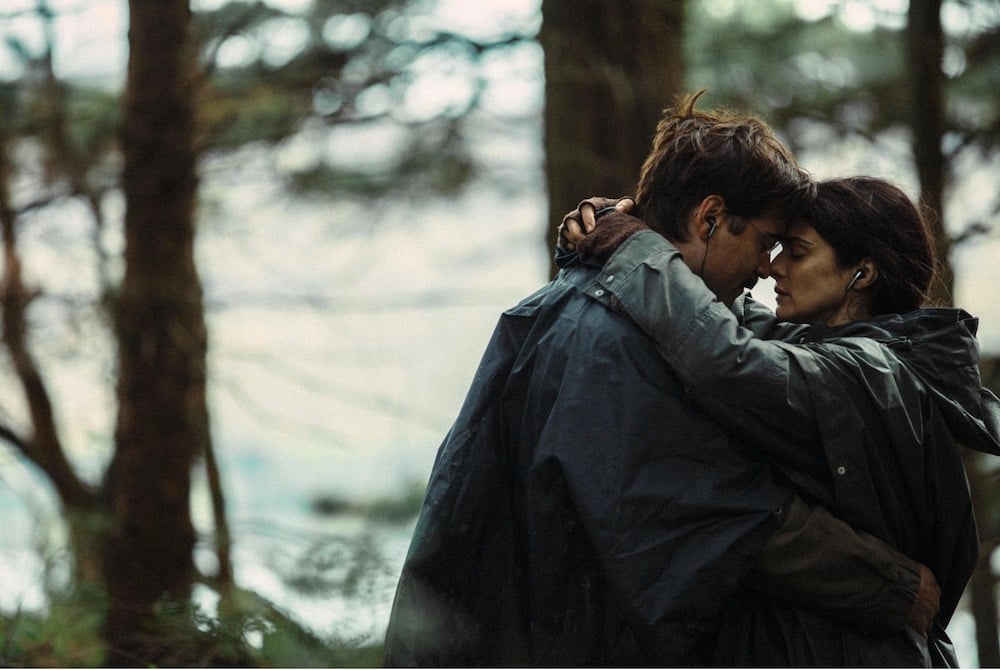
Perhaps you saw The Lobster (stunning and strange dystopian love story starring Rachel Weisz and Colin Farrell) or my recent Oscar favorite The Favourite (cheeky and wicked period drama with the powerhouse trio of Emma Stone, Rachel Weisz, and Olivia Colman) or maybe you’ve been following him since 2009’s Dogtooth. All three are examples of the relatively new “Greek Weird Wave” cinema, from the genre’s godfather himself, Yorgos Lanthimos. It’s hard to find pieces on Weird Wave written in English, but Dazed has a roundup from a few years ago: Greece may be broke, but its film scene is rich. Here’s a more current list of films via IMDB.
A more recent piece on Medium went a bit deeper into what makes a film Greek Weird Wave, stylistically speaking:
Reclusive and isolated social groups, with specific rules and a tendency for confinement are certainly the center of Lanthimos movies. He uses his actors in an innovative way, directing them to play as unrealistically as possible, in a way that reminds us of marionettes or robots who are not yet really aware of the element of speech and thought. Every frame is designed and stylized strictly, to a great extent where the camera stays motionless in space, after being set in a carefully thought-out position, where the only movement comes from the actors playing in the scene. In this unorthodox way Lanthimos is trying to introduce us to his unique utopian environments and isolated social groups.
I’m hoping The Favourite’s ten Oscar nominations were enough to get Lanthimos and Greek Weird Wave more attention so we can see more films from the genre in coming years, especially ones filmed and produced in Greece. They can use the economic boost.
Ignore the m-word and read Sally Rooney: How Should a Millennial Be?
As a portrait of young people today, Rooney’s books are remarkably precise—she captures meticulously the way a generation raised on social data thinks and talks. Rooney’s characters love to announce where they fall on the matrix of taste and social awareness. They read Patricia Lockwood and watch Greta Gerwig movies; they read Twitter for jokes. Decisions are made according to typologies. There’s built-in social meaning for any interest or opinion. “No one who likes Yeats is capable of human intimacy,” says Nick, and I was reminded of friends swiping left on Tinder, rejecting dates because their favorite movies signaled unquestionable incompatibility.
The review’s later parenthetical reference to Andrew Martin’s debut novel is noteworthy. I read Rooney’s Conversations with Friends and Martin’s Early Work in close succession last year and see similarities in perspective. I’d also include Benjamin Lytal’s A Map of Tulsa in that grouping. All are told from a fresh standpoint, with varying degrees of lush language, and romantic turmoil only bearable among a certain age group, with a healthy dose of capital-L Literary references. None are stodgy nor dated despite some social media observations.
In one of his recent media diet* posts, Jason mentioned Russian Doll.
Russian Doll. Groundhog Day adjacent. Natasha Lyonne is mesmerizing. (B+)

Natasha Lyonne is quite mesmerizing in Russian Doll, and both Greta Lee and Chloe Sevigny give layered performances around her curly bangs and gruff but sensitive delivery. But the Groundhog Day comparison sells it short.
Russian Doll is all at once a New York story, a story of rediscovery, of addiction, of healing, of trauma, and of how visually stunning a vivid palate can be on the small screen. The full season was utterly captivating on many levels, and deserves more recognition than just being good episodic television. The soundtrack is note-perfect as well, though Love’s “Alone Again Or” will forever stand in my mind as part of this scene in Bottle Rocket. (The best Wes Anderson film. Fight me.)
I lived by Lyonne’s tidbit of advice via The Cut for a couple cold weeks in March, but really it’s always applicable for introverts.
This is all to say, please watch Russian Doll if you haven’t already, and let’s discuss. Find me on Twitter.
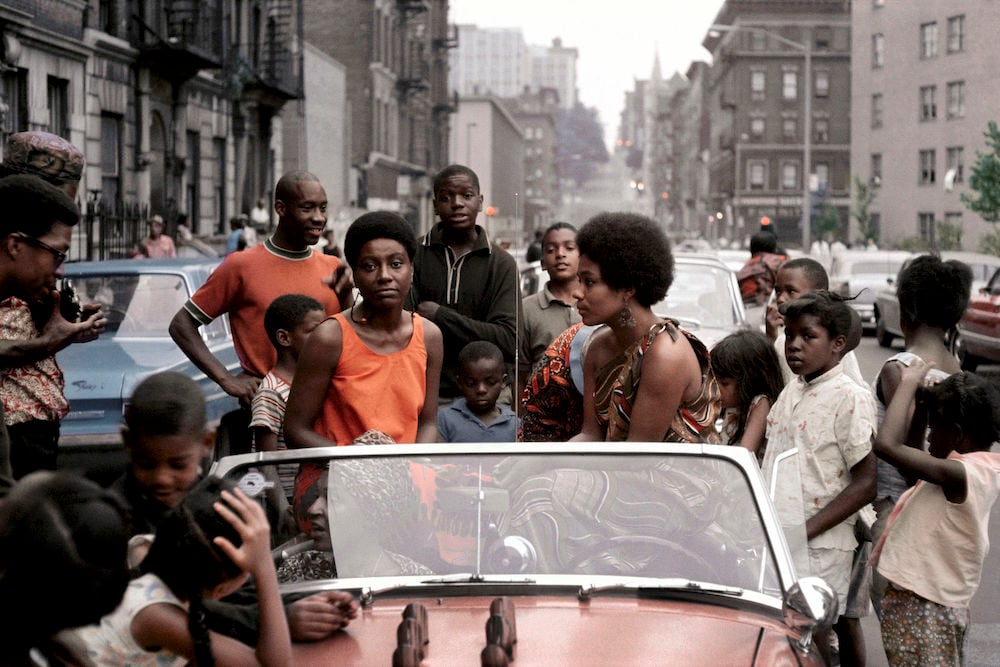
Photographer Kwame Brathwaite is best known for his images of black superstars in the 1970s (Muhammad Ali training for the Rumble in the Jungle, the Jackson 5 on their first tour in Africa, Bob Marley at home in Kingston). A new exhibition highlights earlier work from his archives and positions him as an influential figure in a burgeoning movement. The now 81-year-old has his first book coming out in May after a six decade career: Kwame Brathwaite: Black is Beautiful.

Brathwaite co-organized a fashion show in Harlem that became iconic. Naturally ‘62: The Original African Coiffure and Fashion Extravaganza Designed to Restore Our Racial Pride and Standards used the slogan “Black is Beautiful,” later to be a major part of history. His imagery and ideals elevated the slogan to part of the zeitgeist. Artsy has a beautiful slideshow of the Grandassa models and this:
The participants, known as the Grandassa models, were not professionals in the fashion world, which reinforced Brathwaite’s political and artistic vision. They were dark-skinned and their hair was unprocessed; they wore African-inspired garments full of lush colors, waxed cotton prints, and elaborate patterns.
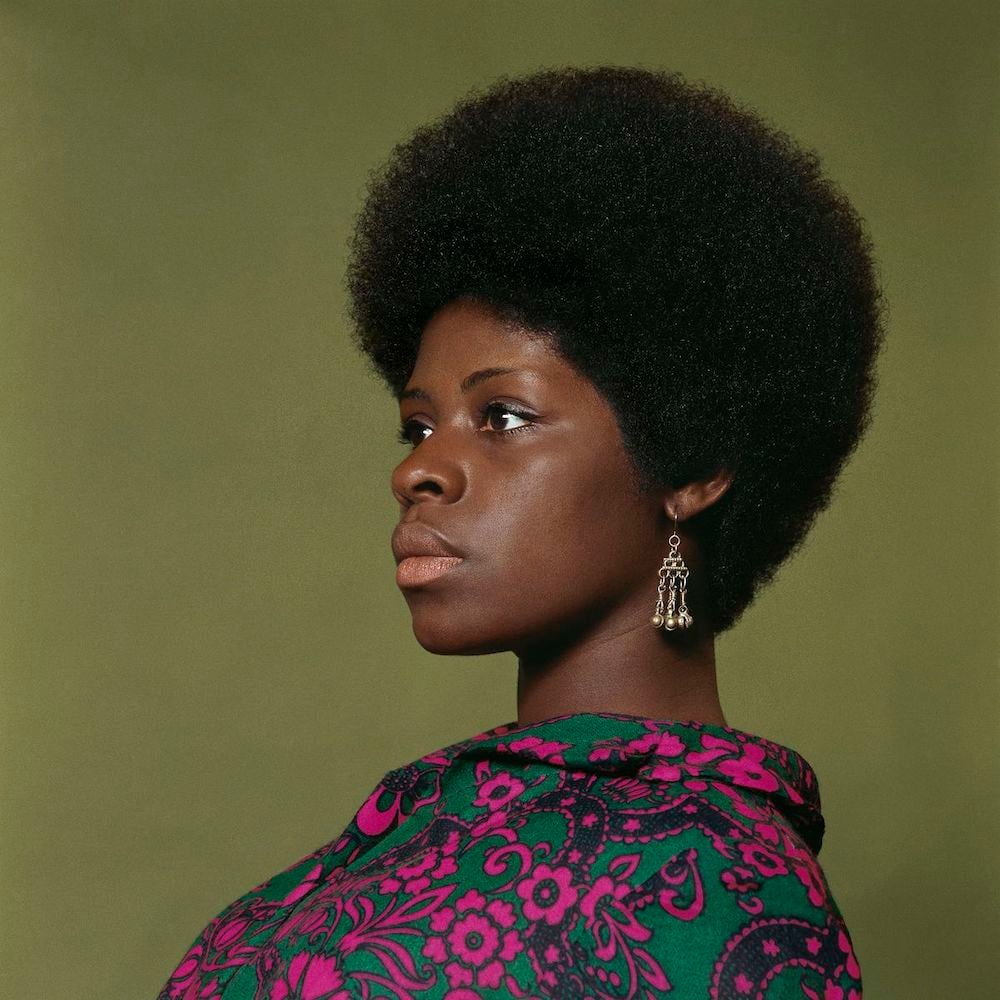
The FT has a great piece with more context on Kwame’s history and work.

Black is Beautiful: The Photography of Kwame Brathwaite opens April 11 at the Skirball Center in Los Angeles.

Eva Hagberg Fisher’s piece on the nuances of dressing for the public scrutiny of fighting sexual harassment has really stuck with me.
Over the last year and a half, I have needed a lot of outfits. I have also needed to be consistent. I have needed to be ready, at every moment, to be seen as both a poverty-stricken graduate student and a reliable adult. As an accuser, I need to be a news-team-ready correspondent and someone who certainly wasn’t doing this for the limelight. I didn’t know any of this when I started. I learned this all on the full-time job that is being an objector to sexual harassment in America.
She’d made an 11-page report about the sexual harassment she’d endured from her graduate school advisor.
But at the time, I just wanted to be credible. Strong. I didn’t want to look like what I imagined a victim looks like. I didn’t want to look so downtrodden that I would look obsessed with being a victim, as it was suggested. I didn’t want to look so feminine and girlish that I wouldn’t be taken seriously; I’d seen the way young-looking women are treated. And yet, I didn’t want to look too aggressive, too much like a “rabble-rouser” with an “agenda.” Of course I had been cautioned about that.
Her writing is clear and wise here. (If you want to read more, she released a memoir on a completely different topic this winter.)
Brooklyn Based noted recently that, in spring fashion trends, we’ve gone back to our Rosie the Riveter roots. Instead of replacing men in the workplace during wartime, the war we’re fighting is now for fair treatment, opportunities for advancement, and equal pay.
The jumpsuit that’s now so on trend should not be confused with the romper or those silky one-pieces that look fragile, dressy and flattering. These are mechanic coveralls, reminiscent of “Rosie the Riveter” and all the World War II ladies who worked in factories. Yet the origins of jumpsuits for women are strictly fashion. “Elsa Schiaparelli was the first Paris couturier to design jumpsuits; she was known for hanging with the Surrealists and designing with their inspiration,” says Lisa Santandrea, adjunct professor of Fashion History at Parsons. “The Met has a one-piece sleeveless Schiaparelli jumpsuit from 1930—but later in the 1930s, she designed a more work-a-day design with long sleeves and, importantly, pockets. Pockets mean no purses, and that’s more freedom.”
But really, it’s all about how closely aligned you are to power. If you’re part of it rather than fighting against it, you have more options. When you’ve proven yourself, you don’t have to try as hard. And age is a factor. Former White House Deputy Chief of Staff Alyssa Mastromonaco (who happens to have a new book of essays out now)
touched on this in a recent interview with ITG.
When I was an intern in ‘96, if you were a woman who wanted to be on the House floor, you had to wear a skirt and pantyhose. I really felt I had to act a very specific way. Entering the White House with Obama, he was like, ‘I don’t care what you’re wearing, you’re getting the job done.’ When we were dealing with crazy things, if I came in in corduroy pants and a puffy vest, POTUS never said a word. The more that I could actually be myself, the more successful I was, because I wasn’t putting up a façade. I think that we have come a long way, but women are still judged for what they wear. But it’s a double-edged sword—my style’s my style, and I don’t want to not have style so people don’t talk about me.
While working last year in a leadership position in an office where I was ten to fifteen years older than most of the team, I rotated between a Rachel Comey denim jumpsuit and a vintage white Gitano romper. When I joined the company, there were jokes about me as a mom figure (which mostly came from the male boss, of course). Who has time to put together an outfit when you’re busy getting stuff done and trying to assert authority? A jumpsuit is essentially a less feminine dress, just as comfortable, but with pockets. The millennial women in the office often complimented my outfits; one man remarked that I looked like a mechanic. But it’s not about the male gaze, is it?

Ok, this is pretty cool. We have the first photo of a supermassive black hole, from imagery taken two years ago of the elliptical galaxy M87 (in the constellation Virgo) by the Event Horizon Telescope project. The EHT team is a group of 200 scientist that has been working on this project for two decades. The image was created using data captured from radio telescopes from Hawaii to the South Pole and beyond using very long baseline interferometry.
The image, of a lopsided ring of light surrounding a dark circle deep in the heart of the galaxy known as Messier 87, some 55 million light-years away from here, resembled the Eye of Sauron, a reminder yet again of the power and malevolence of nature. It is a smoke ring framing a one-way portal to eternity.
Now is a good time to (re)read Jonathan Lethem’s early novel, the absurdist physics love story As She Climbed Across the Table.
Update: Vox’s Joss Fong has a good 6-minute video that explains how the photo was taken:
And this video by Veritasium is even more meaty (and this one too):
I’m such a fan of Nellie Bowles. She covers tech for the NY Times, but has essentially created a beat that is the perfect encapsulation of late-stage capitalism. She captures both internet culture and the new tech economy in a way that could read as satire but it’s all too real. Here’s a look at some of her recent pieces that stuck out in my mind.
She’s starting a series of explainers. First up: Why Is Silicon Valley So Obsessed With The Virtue of Suffering?
Stoicism has been the preferred viral philosophy “for a moment” for years now — or two decades, by one count. The topic of Stoicism usually comes up in the Valley in terms of the maintenance of the personal life. Start-ups big and small believe their mission is to make the transactions of life frictionless and pleasing. But the executives building those things are convinced that a pleasing, on-demand life will make them soft. So they attempt to bring the pain.
Ok. But then she gets right down to it:
Instead, Stoics believed that everything in the universe is already perfect and that things that seem bad or unjust are secretly good underneath. The philosophy is handy if you already believe that the rich are meant to be rich and the poor meant to be poor.
Is post-tech the new high-tech? Human Contact Is Now a Luxury Good
The rich do not live like this. The rich have grown afraid of screens. They want their children to play with blocks, and tech-free private schools are booming. Humans are more expensive, and rich people are willing and able to pay for them. Conspicuous human interaction — living without a phone for a day, quitting social networks and not answering email — has become a status symbol.
All of this has led to a curious new reality: Human contact is becoming a luxury good.
As more screens appear in the lives of the poor, screens are disappearing from the lives of the rich. The richer you are, the more you spend to be offscreen.
As much as I want to hate this, I don’t (and El Pescadero is lovely): A New Luxury Retreat Caters to Elderly Workers in Tech (Ages 30 and Up)
Their anxieties are well founded. In Silicon Valley, the hiring rate seems to slow for workers once they hit 34, according to a 2017 study by Visier, a human-resources analytics provider. The median age of a worker at Facebook, LinkedIn and SpaceX is 29, according to a recent analysis by the workplace transparency site PayScale.
At Modern Elder, several people introduced themselves by rounding up their ages — one woman said she was “soon to be 39,” another was “almost 42,” and a third was “pretty soon looking at 50.” Some said they chose to come south because they thought vacationing would be more serene without 20-somethings in the mix.
I hope we see a book from Nellie Bowles soon. Who else is helping make sense of this bizarre future we live in?

Photographer Winnie Au spoke with Buzzfeed about her ongoing Cone of Shame project, which looks to dispel the shame of the cones dogs must wear after medical procedures. Partially inspired by her late corgi Tartine, whose medical treatment would have cost tens of thousands of dollars without insurance, Winnie is using the project to fundraise for Animal Haven Shelter in New York. She’s an advocate for adopting pets.
A lot of people I know have bought their dogs verses adopting because they wanted a very specific breed, what most don’t realize there are rescues dedicated to specific breeds. So if you are obsessed with bernedoodles, you can adopt one. Of course, I love mutts too, and you can rescue an adorable mutt also. The most important thing to me is that your dog and its age, energy, and vibe fit your lifestyle.There are so many great rescues out there who can help you find the best pet for you. In America alone, there are 1.6 million dogs waiting to be rescued every year. If those dogs don’t get rescued, a lot of them end up euthanized. I just want to stress to people to adopt when you get your next pet as there are so many great dogs out there ready for a new home.

Winnie collaborated with costume designer and stylist Marie-Yan Morvan, whose work helped the project coalesce. I can’t wait to see more of this project. If you want to support the work and Animal Haven, you can buy a print or a tote via the Cone of Shame shop.


Nancy Salzman, co-founder of “sex cult” NXIVM, plead guilty to charges of digitally monitoring members to prevent them from leaking information. She’s the first to plead guilty from the leaders facing criminal charges. Founder Keith Raniere has yet to appear in court, but there have been new charges leveraged against him.
The details surrounding this organization are truly bonkers and quite disturbing. If power dynamics of cults and the psychology of self-help seekers are of interest, I highly recommend season 1 of CBC podcast Uncover, in which journalist Josh Bloch interviews his childhood friend about her escape from the leadership circle of the organization.
I was lucky enough to see Marys Seacole last week at Lincoln Center’s Claire Tow Theater and immediately regretted not seeing it sooner so I could tell everyone I know about this important show. The friend who brought me called it “woke theater,” but I’d describe it as humane activism. It whispered when it could have shouted and shouted when it could have whispered, and blew me away with its sensitivity and power when addressing race, womanhood, colonialism, and interconnection.
At least now I know about Brooklyn-based playwright Jackie Sibblies Drury so I can tell you not to miss her next production.
Do read up on the fascinating life of Jamaican nurse/businesswoman Mary Seacole, who spent significant time tending wounded soldiers during the Crimean War, but who has long been overlooked in British colonial history. And please tell me about other emerging playwrights I should know about!
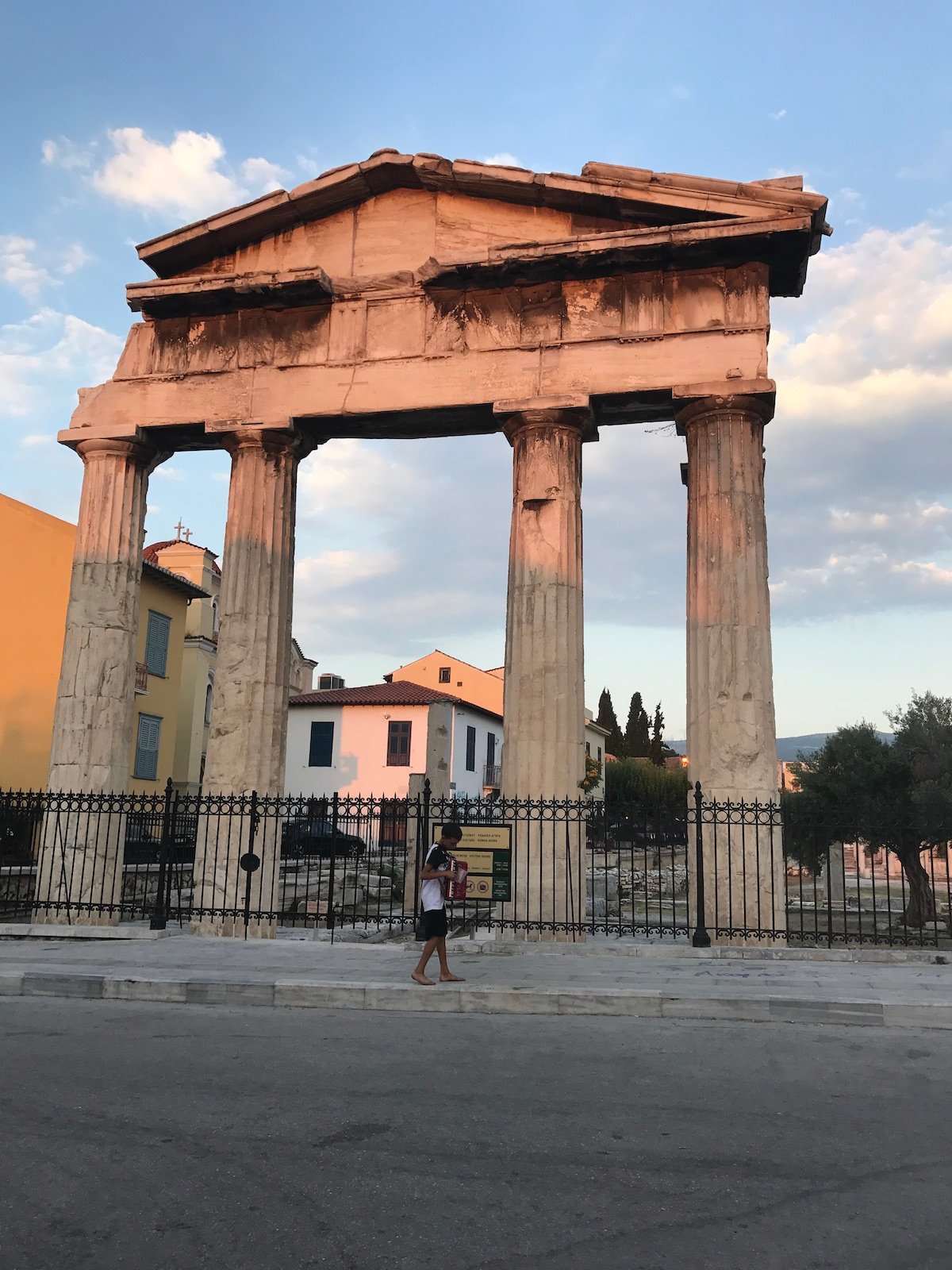
You likely know that the Greek islands are stunning and special, but you may not know that Athens is an incredible city for architecture, well worth more than a few days in between sunning yourself on beaches. Beyond the obvious ancient sites (go see a show in the Odeon of Herodes Atticus!), Athens has classic mid-century modern design, a local vernacular plus a number of important buildings from the past decade. Its cafe culture, hidden alleys, well-curated museums, walkable scale, and deep history give it a unique charm that can’t be quickly summed up. You’ll feel it immediately if you dine al fresco under the glow of the Acropolis at night.
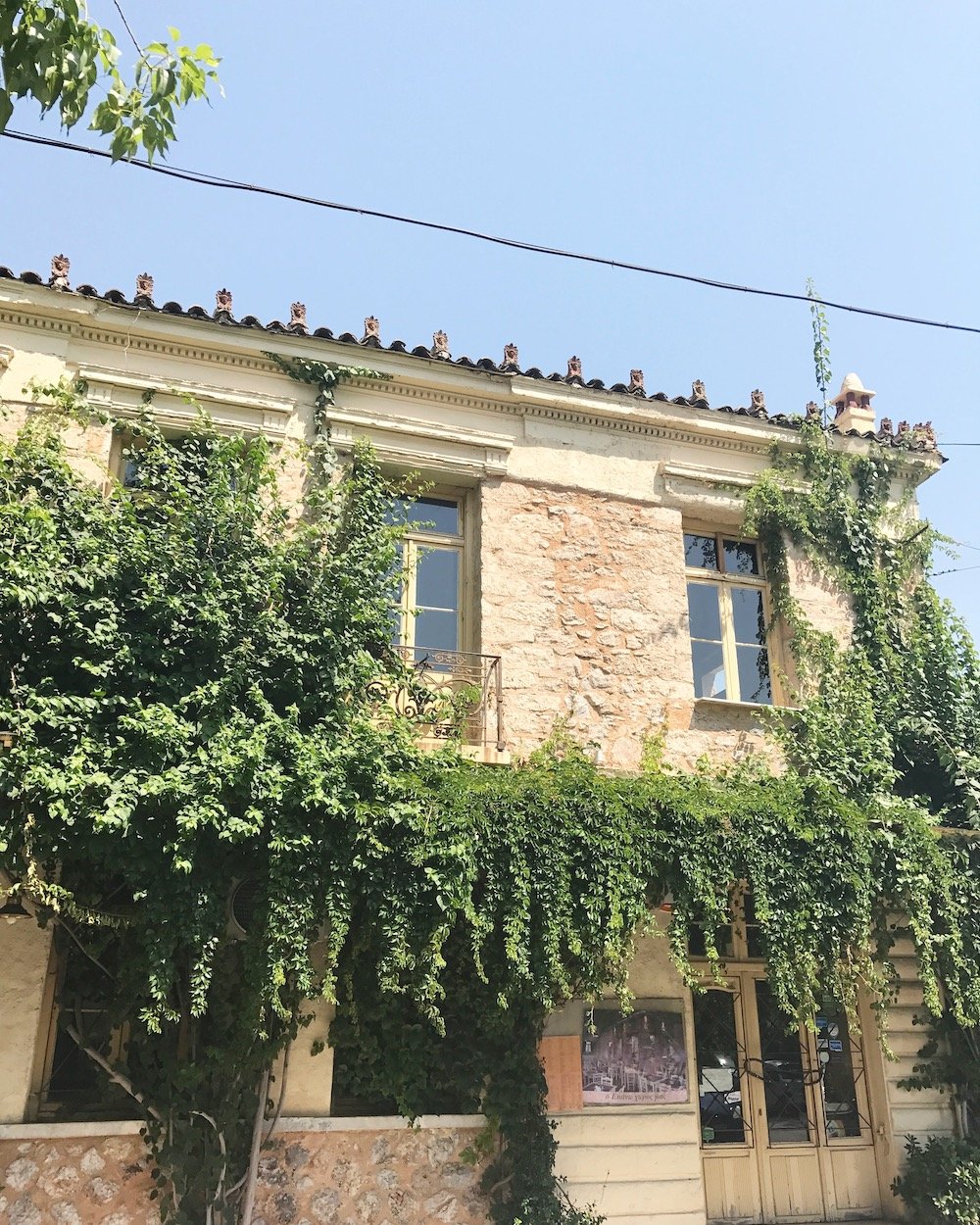
Some of Athens’ ancient sites have been recently updated with contemporary structures, such as the Acropolis Museum, other neighborhoods are worth a wander for the graffiti and shaded facades, and there is significant Bauhaus presence and influence beyond the Gropius-designed American Embassy.
May, June, and September are all prime times. I don’t recommend going in August when it is VERY hot, but if you must, you can stay cool with freddo cappuccino (strong iced coffee with cold-foamed milk), the pulpiest fresh-squeezed orange juice, and of course, frozen Greek yogurt (what Pinkberry wishes it could be) as the locals do. Local English-language publication Greece Is has lots of useful travel tips if you’re not sure where to start your planning.

In this week’s New Yorker, Rachel Aviv looks at why it’s so hard to go off psychiatric drugs, and why they may often be overprescribed. She tells the story of Laura Delano, a descendant of Franklin Delano Roosevelt from Greenwich, CT.
Laura received a bipolar diagnosis as a teen and was medicated for several conditions and a cascade of associated symptoms. She assumed her depression was due to a chemical imbalance being corrected by the cocktail of psychotropic drugs used longterm. Her decades-long cycle through different drugs, diagnoses, and symptoms show an under-discussed side of psychopharmacology.
Dorian Deshauer, a psychiatrist and historian at the University of Toronto, has written that the chemical-imbalance theory, popularized in the eighties and nineties, “created the perception that the long term, even life-long use of psychiatric drugs made sense as a logical step.” But psychiatric drugs are brought to market in clinical trials that typically last less than twelve weeks. Few studies follow patients who take the medications for more than a year. Allen Frances, an emeritus professor of psychiatry at Duke, who chaired the task force for the fourth edition of the DSM, in 1994, told me that the field has neglected questions about how to take patients off drugs—a practice known as “de-prescribing.” He said that “de-prescribing requires a great deal more skill, time, commitment, and knowledge of the patient than prescribing does.” He emphasizes what he called a “cruel paradox: there’s a large population on the severe end of the spectrum who really need the medicine” and either don’t have access to treatment or avoid it because it is stigmatized in their community. At the same time, many others are “being overprescribed and then stay on the medications for years.” There are almost no studies on how or when to go off psychiatric medications, a situation that has created what he calls a “national public-health experiment.”
Aviv makes an apt observation about our culture and willingness to confront mental health:
Overprescribing isn’t always due to negligence; it may also be that pills are the only form of help that some people are willing to accept.
But back to Laura. In 2010, after years of cycling through diagnoses (most recently borderline personality disorder), psychiatrists, pharmacologists, and prescriptions, she came across what would turn out to be a life-altering discovery in a bookstore.
On the table of new releases was “Anatomy of an Epidemic,” by Robert Whitaker, whose cover had a drawing of a person’s head labelled with the names of several medications that she’d taken. The book tries to make sense of the fact that, as psychopharmacology has become more sophisticated and accessible, the number of Americans disabled by mental illness has risen. Whitaker argues that psychiatric medications, taken in heavy doses over the course of a lifetime, may be turning some episodic disorders into chronic disabilities. (The book has been praised for presenting a hypothesis of potential importance, and criticized for overstating evidence and adopting a crusading tone.)
Not only did this alter the course of Laura’s treatment, but her life’s work as well. Last year, she helped launched the online resource the Withdrawal Project after years of both informal and formal counseling of others.
But what’s next for our brain health? Some health experts say probiotics and our microbiome should not be ignored.
Yes please! The new Sharon Van Etten record references Portishead and Pat Benatar

I’ve spent the last few years fascinated by the Chernobyl disaster. This fascination partly grew out of my interest in the Flint Water Crisis, which was directly compared to Chernobyl in a story I wrote about it. (One of the things people forget is that Chernobyl poisoned the water table for a huge region.)
“Looking Again At Chernobyl” reviews two books: Midnight In Chernobyl: The Untold Story of the World’s Greatest Nuclear Disaster, by Adam Higginbotham, and Manual For Survival: A Chernobyl Guide to the Future, by Kate Brown.
The similarities with Flint start in the opening paragraph:
Catastrophes happen when a large system gets so out of sync with its environment that a tiny tweak can crash it to the ground. It’s happened to oil rigs, spacecraft and mines. Afterward, committees blame the people who did the tweaking. But what matters is how the system became unstable and crashed, the atmosphere that caused it and the aftereffects. In these two books about the April 1986 explosion of the No. 4 reactor at the Chernobyl nuclear power plant, “Midnight in Chernobyl” focuses on the first and second, “Manual for Survival” on the third.
It’s probably fair to say that we’ve spent the last thirty years acting as if we don’t live in a post-Chernobyl world.
Robert P. Crease, the reviewer, seems most taken with Higginbotham’s book:
Adam Higginbotham’s “Midnight in Chernobyl” is a gripping, miss-your-subway-stop read. The details of the disaster pile up inexorably. They include worn control rod switches, the 2,000-ton reactor lid nicknamed Elena, a core so huge that understanding its behavior was impossible. Politicians lacked the technical knowledge to take action, while scientists who had the knowledge feared to provide it lest they lose their jobs or lives…
The explosion occurs less than 100 pages into this 366-page book (plus more than 100 pages of notes, glossary, cast of characters and explanation of radiation units). But what follows is equally gripping. Radio-controlled repair bulldozers became stuck in the rubble. Exposure to radiation made voices grow high and squeaky. A dying man whispered to his nurse to step back because he was too radioactive. A workman’s radioactive shoe was the first sign in Sweden of a nuclear accident 1,000 miles upwind. Soviet bigwigs entered the area with high-tech dosimeters they didn’t know how to turn on. Investigations blamed the accident on six tweakers, portrayed them as “hooligans” and convicted them. The United Nations Scientific Committee on the Effects of Atomic Radiation (Unscear), which is to radiation studies something like what the Intergovernmental Panel on Climate Change (I.P.C.C.) is to assessing human-induced climate effects, struggled to make sense of changing and confusing information.
Brown’s book is trying to do something very different, and Crease finds it correspondingly more complicated to evaluate:
Kate Brown’s “Manual for Survival” has a different style and emphasis. Its aim is to be an exposé of the attempts to minimize the impact of Chernobyl. The disaster was less an accident, says Brown, a historian at M.I.T., than “an exclamation point in a chain of toxic exposures that restructured the landscape, bodies and politics.” Unscear’s publications were cover-ups, and radiation-related maladies are “a dark horseman riding wild across the Chernobyl territories.” Brown undertook the book so as not to become “one of those duped comrades who found out too late that the survival manual contained a pack of lies.”
Around 2014, Brown began interviewing people in the affected areas, and sought measurements of radioactivity in such things as wool, livestock and swamps. Her stories are affecting, yet it is hard to evaluate memories and anecdotes. It is also hard to evaluate measurements. These are meaningful only within the tangled web of factors that radiation epidemiologists consider — including type and time-span of dose, pathways through the body, susceptibility of individual tissues and background radiation — as well as health issues like alcohol, obesity and stress.
Brown deserves credit, though, for wading into these murkier waters, because the murky waters is where we are. Part of reckoning with Chernobyl means admitting everything we don’t know. We don’t know the full health effects of the disaster. We don’t know how many people died. We don’t know how many lives were lost to neglect and cover-up. We don’t know how many could have been saved.
Part of what it means to actually live in a post-Chernobyl world is to accept that our most vital infrastructure is always threatened; that the threats it poses are always disproportionately affecting a society’s most vulnerable citizens; and that its threats are always downplayed by a society’s most powerful and directly responsible members, out of ignorance and fear.
That’s the lesson of Chernobyl. That’s the lesson of Flint. That’s the lesson of the future, which it never seems to hesitate to teach.
Socials & More