kottke.org posts about Game of Thrones
In a Q&A with the NY Times back in October, George R.R. Martin connected the goings-on in Westeros with the challenges raised by climate change here in the real world.
The people in Westeros are fighting their individual battles over power and status and wealth. And those are so distracting them that they’re ignoring the threat of “winter is coming,” which has the potential to destroy all of them and to destroy their world. And there is a great parallel there to, I think, what I see this planet doing here, where we’re fighting our own battles. We’re fighting over issues, important issues, mind you — foreign policy, domestic policy, civil rights, social responsibility, social justice. All of these things are important. But while we’re tearing ourselves apart over this and expending so much energy, there exists this threat of climate change, which, to my mind, is conclusively proved by most of the data and 99.9 percent of the scientific community. And it really has the potential to destroy our world. And we’re ignoring that while we worry about the next election and issues that people are concerned about, like jobs. Jobs are a very important issue, of course. All of these things are important issues. But none of them are important if, like, we’re dead and our cities are under the ocean. So really, climate change should be the number one priority for any politician who is capable of looking past the next election. But unfortunately, there are only a handful of those. We spend 10 times as much energy and thought and debate in the media discussing whether or not N.F.L. players should stand for the national anthem than this threat that’s going to destroy our world.
That message has always lurked in the background of the HBO show but seemed closer to the surface in the latest episode — mild spoilers! — which finds several factions that were formerly set against each other in various configurations all working together to defeat a much more threatening common enemy. It is quite difficult, nearly impossible even, to imagine a similar coalition of Democrats, Republicans, Democratic Socialists, Libertarians, and everyone in between allied with each other to combat climate change, but we’re going have to get there somehow. We either do it soon and get the world we want or we continue to do very little and pay a much heavier price later for a world that no one wants.
Update: See also Democratic Presidential candidate Elizabeth Warren’s recap of the first episode of the current season of Game of Thrones. Wait, what?!
And as much as Dany wants to take on her family’s enemies and take back the Iron Throne, she knows that she must first fight the army of the dead that threatens all mankind. This is a revolutionary idea, in Westeros or anywhere else. A queen who declares that she doesn’t serve the interests of the rich and powerful? A ruler who doesn’t want to control the political system but to break the system as it is known? It’s no wonder that the people she meets in Westeros are skeptical.
Game of Thrones made its return to HBO last night and, surprise, someone died! According to this compilation video, over 174,000 people have died on the show in seven seasons. The sheer numbers and the fact that some of the deaths have been, shall we say, a little creative (even for a fantasy show) sometimes interfered with my ability to fully suspend my disbelief when watching. Take Khal Drogo killing Viserys Targaryen by pouring molten gold on his head in the first season:
That’s a pretty outlandish death, an over-the-top display of sadism for the benefit of a TV audience. Right? Well, I’ve been reading Peter Frankopan’s The Silk Roads: A New History of the World and I’ve discovered that Game of Thrones hews close to historical precedent when it comes to inventive murder.
According to some sources, after the Roman Emperor Valerian was captured in battle in the 3rd century, he was subjected to something much worse than a simple death at the hands of the Persian Emperor, Shapur I:
The Emperor Valerian was humiliated after being taken prisoner and held in “the abject form of slavery”: used as a human footstool for the Persian ruler “by bending his back to raise the king as he was about to mount his horse,” his body was eventually flayed “and his skin, stripped from the flesh, was dyed with vermilion, and placed in the temple of the gods of the barbarians, that the remembrance of a victory so signal might be perpetuated and that this spectacle might always be exhibited for our ambassadors.” He was stuffed so all could see the folly and shame of Rome.
Around the end of the 10th century, a leader of the Rus’ was ritually executed by Pecheneg steppe nomads:
The capture of the prince was gleefully celebrated, and his skull was lined with gold and kept as a victory trophy, to be used to celebrate ceremonial toasts.
In 1182, rising tension between the Byzantine Empire and the rising Italian city-states like Venice resulted in attacks against citizens of the city-states who were living in Constantinople:
Many were killed, including the representative of the Latin church, whose head was dragged through the city’s streets behind a dog.
The Mongols, under Genghis Khan and subsequent rulers, used brutality as a tool to shock and awe local populations into peaceful submission, making examples of those who resisted their advances:
Nīshāpūr was one of the locations that suffered total devastation. Every living being — from women, children and the elderly to livestock and domestic animals — was butchered as the order was given that not even dogs or cats should be left alive. All the corpses were piled up in a series of enormous pyramids as gruesome warnings of the consequences of standing up to the Mongols.
It was a very effective technique:
In 1241, the Mongols struck into the heart of Europe, splitting their forces into two, with one spur attacking Poland and the other heading for the plains of Hungary. Panic spread through the entire continent, especially after a large army led by the King of Poland and the Duke of Silesia was destroyed, and the head of the latter paraded on the end of a lance, together with nine sacks filled with “the ears of the dead.”
When the Mongols conquered Baghdad in 1258, they moved through the city “like hungry falcons attacking a flight of doves, or like raging wolves attacking sheep,”
The city’s inhabitants were dragged through the streets and alleys, like toys, “each of them becoming a plaything.” The Caliph al-Mustaʿṣim was captured, rolled up in fabric and trampled to death by horses. It was a highly symbolic moment that showed who held real power in the world.
And finally, if there was any remaining doubt that George R.R. Martin modelled the Dothraki on the Mongols and Khal Drogo on Genghis Khan, consider the death of Inalchuq, a 13th-century Persian governor:
Stories such as that of a high-ranking official who was ordered into the presence of a newly arrived Mongol warlord and had molten gold poured into his eyes and ears became widely known — as was the fact that this murder was accompanied by the announcement that this was fitting punishment for a man “whose disgraceful behaviour, barbarous acts and previous cruelties deserved the condemnation of all.”
Perhaps Game of Thrones doesn’t seem so fantastical after all…
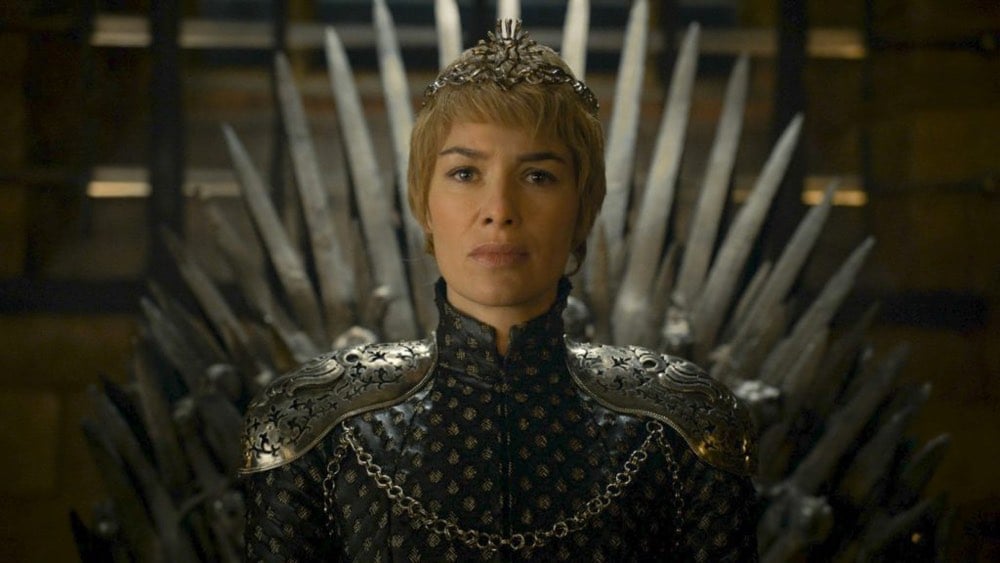
The amount of media coverage of Game of Thrones was a touch too much this summer, but this ranking of the political strategies of the main players in season seven by Zack Beauchamp was both entertaining and informative. I mean:
To understand Cersei’s success, we need to reach back to the classic work of Prussian military theorist Carl von Clausewitz.
Before looking at the list, I’d assumed Jon Snow would get lower marks (he left the North vulnerable and cratered his coalition’s chances at a truce with Cersei), but Beauchamp makes a good case here.
I’ve argued before that the best way to think about the White Walkers, from the human point of view, is as a threat akin to climate change — a massive collective threat that humans were ignoring in favor of petty internal squabbling. Jon, to his immense credit, is the only leader who recognized the enormity of the threat early enough to try to rally others to stop it. He’s kind of a Westerosi Al Gore, only he succeeded in getting to run a country.
So the best way to think about Jon’s mission is through the lens of environmental diplomacy: He needed to convince the world’s leading powers to abandon the internecine struggle over the throne and refocus on the White Walker threat. He didn’t have a ton to work with: The North is a distinctly third-tier power, weaker militarily than both the Targaryen and Lannister alliances and the country most vulnerable to the White Walkers.
Jon may have failed to rally Cersei to his cause, but he succeeded in bringing on Daenerys. And that’s by far the most important, mostly because her dragons and cache of dragonglass represent the only chance humanity has at fending off the White Walker threat. If it weren’t for Jon, humanity would be fundamentally doomed.
Oh, this is a clever bit of TV/film analysis by Evan Puschak: he reconstructs the Loot Train Battle from the most recent episode of Game of Thrones using clips from other movies and TV shows (like 300, Lord of the Rings, Stagecoach, and Apocalypse Now). In doing so, he reveals the structure that many filmed battle scenes follow, from the surprising enemy attack presaged by the distant sound of horses (as in 300) to the quiet mid-chaos reflection by a shocked commander (as in Saving Private Ryan). Everything is a Remix, right?
This reminds me of how the Rogue One production team made a full-length reel of the film for director Gareth Edwards from scenes from other movies so that the timing and pacing could be worked out.
It’s very simple to have a line [in the script] that reads “Krennic’s shuttle descends to the planet”, now that takes maybe 2-3 seconds in other films, but if you look at any other ‘Star Wars’ film you realise that takes 45 seconds or a minute of screen time. So by making the whole film that way — I used a lot of the ‘Star Wars’ films — but also hundreds of other films too, it gave us a good idea of the timing.
For example the sequence of them breaking into the vault I was ripping the big door closing in ‘Wargames’ to work out how long does a vault door take to close.
This fascinating behind-the-scenes look at the battle doesn’t allude to any such storyboarding, but as Puschak notes, battle scenes from dozens of other movies surely weren’t far off in their minds while putting this one together.
War, huh, good God, what is good for? Ratings and new HBO Now subscriptions, say it again. Finally, after six seasons of mere skirmishes, Jon Snow says “the Great War is here”. Excited for this, particularly because it appears to lack an aspect that plagued seasons in the past: Parliamentary Procedure with Daenerys Targaryen. (“Your dragon stole my goat! What shall we do about it?”) Anyway, excited for this!
Update: Another new trailer:
HBO did a beginner’s guide to Game of Thrones and got Samuel L. Jackson to narrate it.
Over in Westeros, Lord Eddard Stark, aka Ned, is asked by his friend the King, Robert Baratheon, to be the Hand of the King, aka his right hand man. Ned doesn’t wanna go, but das his boy! So he uproots his family and heads to King’s Landing. Nice family, right? Don’t get attached. I’m just saying.
Does anyone swear as delightfully well as Samuel L. Jackson?
[Spoilers!] This season, Game of Thrones is experimenting with time travel. A few years ago, Harrison Densmore created a chart showing the three kinds of time travel that happens in movies: fixed timeline (as in 12 Monkeys), dynamic timeline (as in Back to the Future), and multiverse (as in Terminator 2). So which kind of time travel is happening in Game of Thrones?
P.S. In addition to the extensive spoilers about what’s already happened on the show, the latter moments of the video also offers some fan theories about what might happen on the show in the future. If that sort of thing bothers you, maybe stop watching around the 4:05 mark.
Riffing on Ken Mondschein’s Strategies of War in Westeros, Evan Puschak explores why Westeros seems culturally and technologically stuck in the Middle Ages.
Update: Or does Game of Thrones depict the early modern period?
What Martin actually gives us is a fantasy version of what the historian Alfred Crosby called the Post-Columbian exchange: the globalizing epoch of the 16th and 17th centuries. A world where merchants trade exotic drugs and spices between continents, where professional standing armies can number in the tens or hundreds of thousands, where scholars study the stars via telescopes, and proto-corporations like the Iron Bank of Braavos and the Spicers of Qarth control global trade. It’s also a world of slavery on a gigantic scale, and huge wars that disrupt daily life to an unprecedented degree.
(via @arbesman)
If you’re going to watch the season 6 premiere of Game of Thrones tonight but you’ve forgotten what happened last season (tl;dr people died), watch this recap of last season’s action. I still can’t believe they made Marnie marry Desi after he missed their perfor oh wait that’s Girls.
I said at the end of last season that I wasn’t going to watch this show anymore but as I am a waffling coward, I of course am going to watch it. Not that I probably won’t regret it! Anyway, looks good I guess? Better than reading any of the books at any rate.
From Gawker, a quick two-minute video guide to what all of the characters in Game of Thrones are up to as season five gets underway this Sunday. Major spoilers for those who aren’t caught up through the end of season four.
In the time it’s taken George RR Martin to complete zero books in the A Song of Ice and Fire series, a group of dedicated fans has created much of the kingdom of Westeros in Minecraft. Here’s a quick video tour:
The Wall is the most visually impressive element:
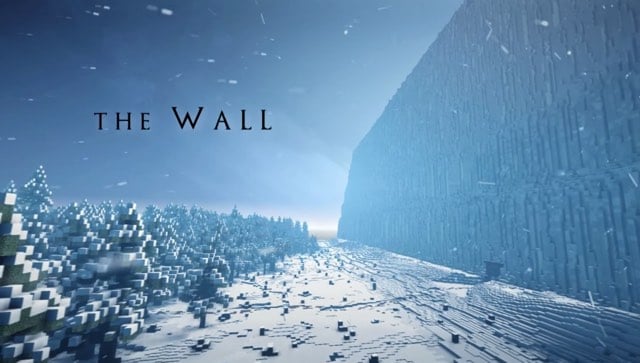
According to the FAQ, the in-game map is currently the size of Los Angeles, about 500 square miles. (via devour)
A couple episodes of Game of Thrones will be shown on IMAX screens.
An exclusive season five trailer, as well as the final two episodes of the fourth season, will get an unprecedented run Jan. 23-29 at 150 theaters in top markets across the U.S.
While the visual spectacle of the HBO hit makes it a natural for the large-screen treatment, “Thrones” will be digitally remastered to fit the Imax format.
Fans will be able to purchase tickets to the special event for an unspecified price on Imax.com in the coming weeks.
From the excellent Art of the Title, an interview with Angus Wall, the creative director responsible for the opening titles of Game of Thrones.
Basically, we had an existing map of Westeros and a xeroxed hand drawn map of Essos - both done by George R. R. Martin - and I took those into Photoshop and played with their scale until they lined up perfectly. The actual dimensions, the locations and their placement, and the different terrains are all based strictly on George R. R. Martin’s maps. It was really important that we stay as absolutely true to the books as possible because of the ardent fans out there.
Wall also works as an editor, often on David Fincher films. He won two Oscars for editing The Social Network and The Girl with the Dragon Tattoo.
If the continent of Westeros from Game of Thrones had rail service, this is what the transit map might look like. Here’s the King’s Landing transport hub:
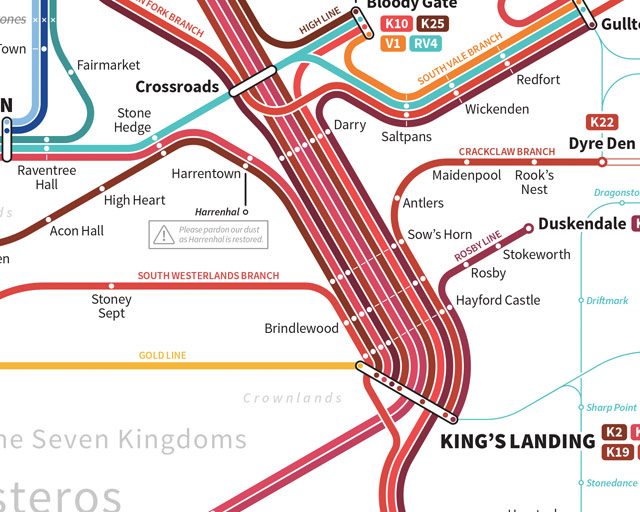
The maps are the work of designer Michael Tyznik and are available as prints: Westeros and The Known World.
If you’ve been paying attention to the promos for HBO’s Game of Thrones series, there’s been a lot of Jon Snow sitting on the Iron Throne. When the show started, Snow seemed like a relatively minor character, but his uncertain parentage hinted at possible greater things on the horizon. Here’s a video explanation of one of the more popular theories about Snow’s parents:
BTW, if you, like me, haven’t read the books and have only seen the TV show, the video doesn’t contain any outright spoilers, only enriching context. So watch away. And if you’ve read the books, you probably don’t need to watch the video because you’re probably already aware of this old theory. If you’re interested, there are more theories (and crazy spoilers) where that came from.
This is a reel from Mackevision, showing the visual effects they did for season 4 of Game of Thrones. I wasn’t expecting all the boats to be fake.
This reel does a better job than most in showing the process and how all the different elements fit together. Also interesting to see how much the digital greebles make everything seem way more realistic.
Update: And here’s another reel of VFX from season 4 by Rodeo FX.
I really liked this bit from Rolling Stone’s interview with Game of Thrones writer George R.R. Martin:
Ruling is hard. This was maybe my answer to Tolkien, whom, as much as I admire him, I do quibble with. Lord of the Rings had a very medieval philosophy: that if the king was a good man, the land would prosper. We look at real history and it’s not that simple. Tolkien can say that Aragorn became king and reigned for a hundred years, and he was wise and good. But Tolkien doesn’t ask the question: What was Aragorn’s tax policy? Did he maintain a standing army? What did he do in times of flood and famine? And what about all these orcs? By the end of the war, Sauron is gone but all of the orcs aren’t gone — they’re in the mountains. Did Aragorn pursue a policy of systematic genocide and kill them? Even the little baby orcs, in their little orc cradles?
(via mr)
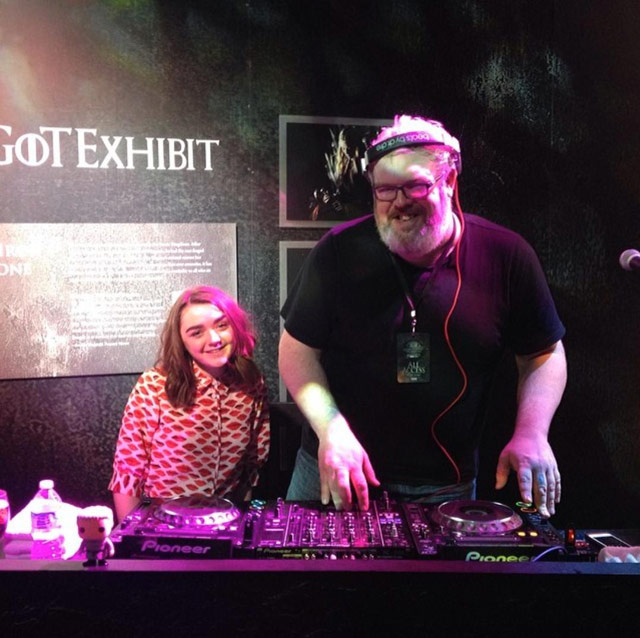
Kristian Nairn is the actor who plays Hodor on HBO’s Game of Thrones. When he’s not acting, the 6’10” Belfast resident DJs and makes music. His Soundcloud page contains a bunch of his house mixes; here’s the latest mix from three months ago:
Hodor!
[Warning: season 4 spoilers ahoy!] So, in the second episode of this season of Game of Thrones, something wonderfully unpleasant happens. If you’ve seen it, you know what I’m talking about and if you haven’t, you should really stop reading right now. I’ve been thinking about why it happened and who did it. This series of images over at Imgur presents a compelling explanation.
Lady Olenna gives sympathies to Sansa for the murder of her family. Watch carefully. Yoink! Olenna rubs Sansa’s neck, plays with her hair and finally snatches the right-most jewel on Ser Dontos’s necklace.
Interesting, right? (I mean, maybe not if you’ve read the books, but I haven’t so I have no idea who killed Joffrey in the books or if you ever even find out.) But there are two puzzling things about the Tyrell plot:
1. Why the hell was it so convoluted? Couldn’t Lady Olenna have brought the poison to the reception herself? Why use Sansa’s necklace? There’s no CSI: Westeros so no one would have ever suspected Sansa’s necklace being part of it. Unless the Tyrells tipped someone off about it after the fact. Also, for the love of the old gods and the new, Grandma, hasn’t Sansa been through enough without being framed for that little turd’s murder?
2. Why do it? Why then? Does Margaery stay Queen? She has no heir by Joffrey. Or is one of Joffrey’s little brothers in now? I suspect these questions will be answered in the next episode, but unless Margaery stays Queen, the Baratheon reign ends, and the Lannisters get bupkiss, I don’t see a compelling reason for the Tyrells to do this.
Bonus tidbit: this is the last we’ll see of Joffrey and also the last we’ll see of the actor who plays him, Jack Gleeson. Gleeson is retiring from acting, saying he “stopped enjoying it as much as I used to”. I bet the guy who played Malfoy in the Potter movies is breathing easier.
Now that I’ve caught up on True Detective, I have to agree with Emily Nussbaum’s take on the show and finale: a stylish well-acted show with a “hollow center”.
To state the obvious: while the male detectives of “True Detective” are avenging women and children, and bro-bonding over “crazy pussy,” every live woman they meet is paper-thin. Wives and sluts and daughters — none with any interior life. Instead of an ensemble, “True Detective” has just two characters, the family-man adulterer Marty, who seems like a real and flawed person (and a reasonably interesting asshole, in Harrelson’s strong performance), and Rust, who is a macho fantasy straight out of Carlos Castaneda. A sinewy weirdo with a tragic past, Rust delivers arias of philosophy, a mash-up of Nietzsche, Lovecraft, and the nihilist horror writer Thomas Ligotti. At first, this buddy pairing seems like a funky dialectic: when Rust rants, Marty rolls his eyes. But, six episodes in, I’ve come to suspect that the show is dead serious about this dude. Rust is a heretic with a heart of gold. He’s our fetish object — the cop who keeps digging when everyone ignores the truth, the action hero who rescues children in the midst of violent chaos, the outsider with painful secrets and harsh truths and nice arms. McConaughey gives an exciting performance (in Grantland, Andy Greenwald aptly called him “a rubber band wrapped tight around a razor blade”), but his rap is premium baloney. And everyone around these cops, male or female, is a dark-drama cliche, from the coked-up dealers and the sinister preachers to that curvy corpse in her antlers. “True Detective” has some tangy dialogue (“You are the Michael Jordan of being a son of a bitch”) and it can whip up an ominous atmosphere, rippling with hints of psychedelia, but these strengths finally dissipate, because it’s so solipsistically focussed on the phony duet.
I enjoyed the show and am seated in the McConaissance cheering section, but True Detective is far from TV’s best thing evar. And Nussbaum hits the nail right on the head: the lack of good women characters is to blame.
Something I’ve noticed about my favorite TV shows: they are mostly testosterone fests where the women are more interesting than the men. Mad Men is the perfect example. Game of Thrones is another. And Six Feet Under. Even in Deadwood, which I am rewatching now and is loads better than True Detective, women more than hold their own against the men. It’s fun to watch the men on these series generate bullshit, but it’s much more interesting to watch the great actresses who play these women navigate and elevate through the predictable male privilege.
Like Twitter, HBO’s Game of Thrones started out with 140 characters but now most of them are dead so I have no idea what this season is going to be about. But dragons!
I’m not sure that the bad lip reading of NFL players will ever be topped, but this dubbing of Game of Thrones with alternative dialogue is pretty great too.
(via devour)
A nascent trend on YouTube is to take contemporary dramas and imagine what their 1995-style opening credits sequences might look like. The first one appears to be this Walking Dead one, followed by Breaking Bad, which is the best of the bunch:
The Game of Thrones one is pretty great as well:
These seem to be a variation on the recut trailers meme, e.g. The Shining as a romantic comedy or Toy Story as a horror film. (via @aaroncoleman0)
Is it permissible to squee about Westeros?
Squee! I still miss Sean Bean though. I wouldn’t mind a little Six Feet Under Late Ned action. Maybe bring him back as a White Walker or something. They’re headless zombies, right? Hello?
You need predictable and changing seasons to grow grapes and the Game of Thrones world features long unpredictable seasons…so where does all that wine come from?
The seasons in George RR Martin’s medieval fantasy are a random, unpredictable mess. They could last anywhere from a few months to a decade and there’s no way to forecast them. As the story opens, the characters are near the end of a long, ten-year summer. They also worry about the coming winter, which will cause mass starvation if it also lasts years on end. This wonky climate is an irreplaceable part of Game of Thrones. Westeros would not be remotely the same without it.
But grapevines have a life cycle that depends on regular seasons. In winter, grapevines are dormant. Come spring they sprout leaves. As summer begins, they flower and tiny little grapes appear. Throughout the summer the grapes fill up with water, sugar and acid. The grapes are finally ready for picking in early autumn, then go back to sleep in winter. This cycle is why wineries can rely on a yearly grape yield. Obviously, in Westeros, something must be different about how grapes work.
(via bb)
Last week Aaron linked to Kanye Wes. Turns out there is also Arrested Westeros (Arrested Development quotes + Game of Thrones scenes):
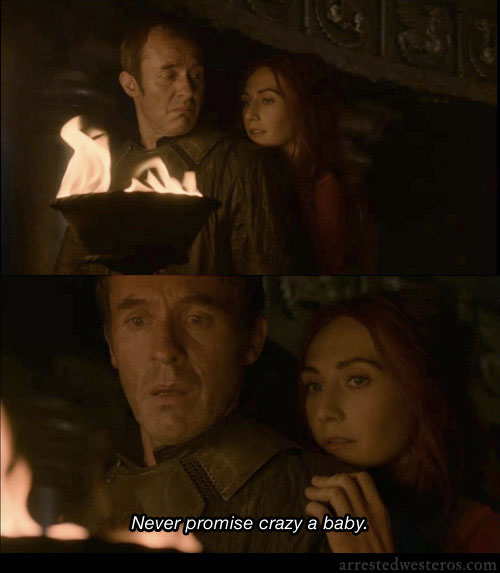
Man, I wish Kanye Westeros were better. (via @JoshMorrison)
How do you improve upon Game of Thrones? Maybe by adding lightsabers to the duel of Jamie Lannister and Ned Stark?
(via nextdraft)
George Dvorsky details five possible scientific explanations for Westeros’ seasons of unpredictable length. A “wobbly planetary tilt” is one possible reason:
In the episode “The Kingsroad,” we learn that Westeros has at least one moon. It’s very possible, therefore, that they have a very small or distant moon, that is causing a variable tilt in their planet’s rotational axis.
It’s interesting to note that, according to legend, Westeros used to have two moons, but “one wandered too close to the sun and it cracked from the heat” pouring out a thousand thousand dragons. Well, dragons aside, it’s conceivable that some kind of cataclysmic celestial event could have wiped out their second moon, which would have thrown their planet’s rotational axis out of whack.
When this came on right before the season finale of Boardwalk Empire, I shushed my talking wife so hard I nearly threw out my back.
April! April is coming!
Older posts




Socials & More