Entries for April 2019
Ethical.net has compiled a list of resources for “discovering ethical alternatives to stuff”. Their list includes web browsers like Tor and Firefox (check out the first site in the “top sites” listing in the graphic), search engines like DuckDuckGo, email services like Fastmail, a bunch of carbon-neutral web hosting options, and all kinds of other services and apps that tend to be open source, privacy friendly, not supported by advertising, and decentralized.
Trailer for season 2 of HBO’s Big Little Lies. The season 1 finale was one of the best hours of TV I’ve ever watched.
The 50 best music documentaries ever. This is a big gap in my pop culture knowledge…I’d barely heard of any of these.
For almost as long as we’ve had civilization, people have been making data visualizations.1 The availability of paper and screens has exploded their creation in the last few hundred years, but the earliest visualizations were made from physical objects. This list contains more than 300 examples of physical visualizations and related artifacts and is absolutely fascinating (the older artifacts in particular). Take these stick charts from the Marshall Islands for example:
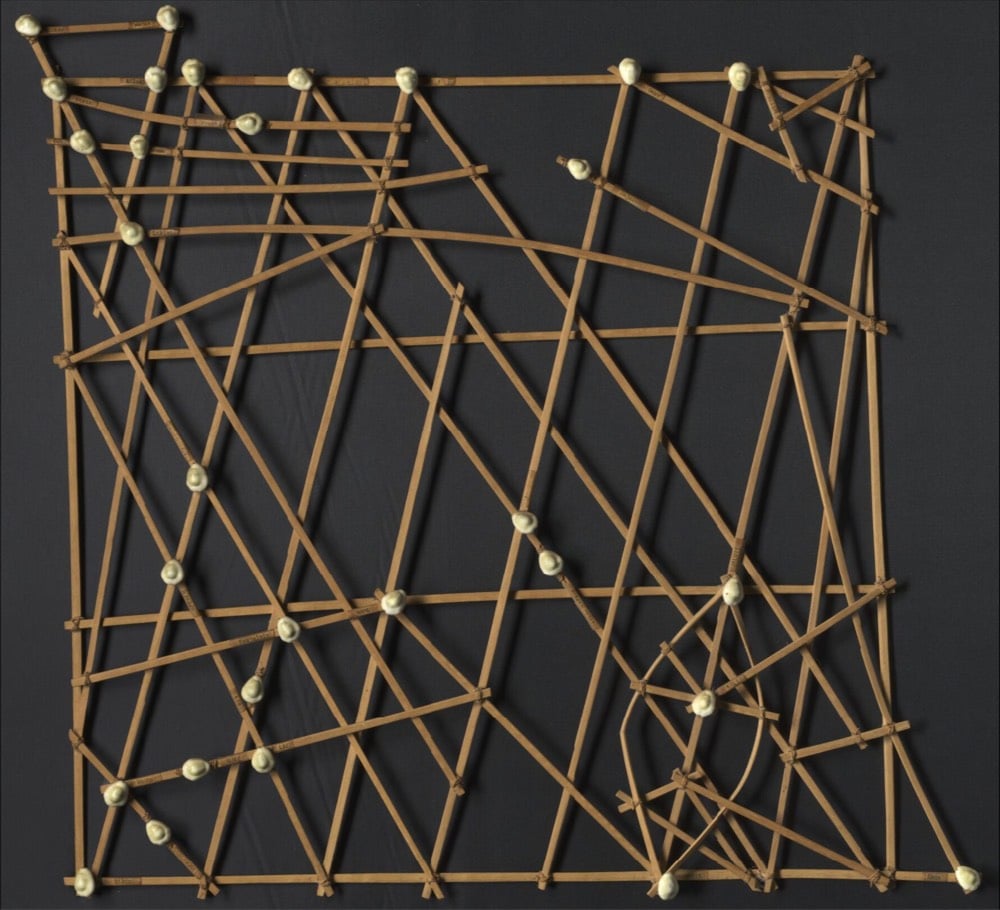
These physical visualizations show ocean swell patterns, and were built by native Micronesians from the Marshall Islands to facilitate canoe navigation. They were memorized before trips. The Western world remained unaware of the existence of these artifacts until 1862.
The photo above is a stick chart from 1974. Straight sticks represent regular currents and waves, curved sticks represent ocean swells, and seashells represent atolls and islands.
And Yakama time balls:
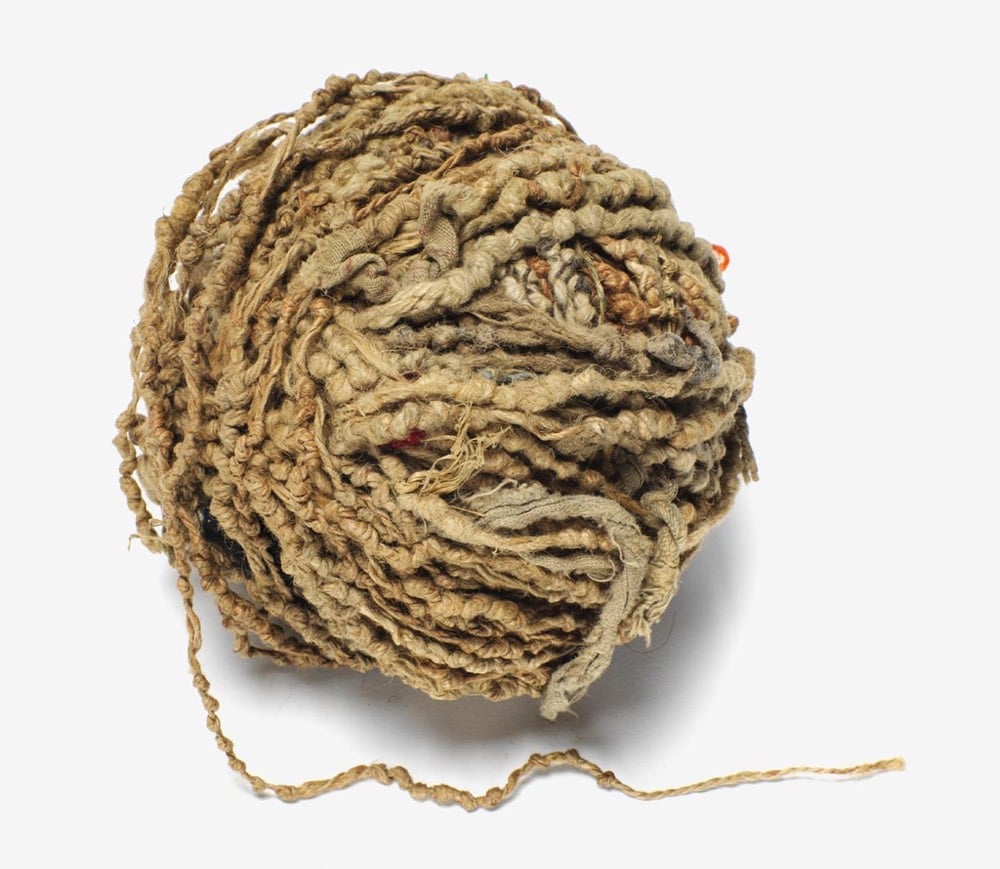
Women from the Yakama Native American tribe used strings of hemp as personal diaries. Each major event in their life was represented by a knot, a bead or a shell. This mnemonic device is called an Ititamat, or counting-the-days ball, or simply time ball.
A young woman would use a time ball to record her courtship, marriage, and other experiences using a system of knots and beads that only she could decipher. As she grew older, a woman might have several time balls with which to share her life story or keep those memories private. When she passed on, they were buried with her.
The ball of twine grew in size as time passed and as events occurred. The women would sometimes divide the twine into 25-year lengths to make it more manageable. When the women were very old, they could use the knots and beads of their time balls to recall not only what happened in their lives but when the events occurred. They could easily recount when their children were born, when they moved away, and other major experiences.
You can read more about stick maps in the Smithsonian magazine and more about time balls at the Realm of the Lone Grey Squirrel.
This short piece in the London Review of Books about pigeons is fascinating. I learned many new things about pigeons and now hold them in higher esteem than I did previously.
Pigeons are more intelligent than we give them credit for, one of the few animals — along with great apes, dolphins and elephants — able to pass the mirror self-recognition test. If you mark a pigeon’s wing and let it look in a mirror it will try to remove the mark, realising that what it sees is a reflected image of its own body. Pigeons can recognise video footage of themselves shown with a five-second delay (three-year-old children find it difficult to comprehend a two-second delay). They are able to recognise individuals from photographs, and a neuroscientist at Keio University in Japan has trained them to distinguish between the paintings of Matisse and Picasso. ‘Modesty,’ Marianne Moore wrote, ‘cannot dull the lustre of the pigeon.’
Pigeons move through a human world. They stay close to the land, often flying at street level, below the height of the rooftops. Recent studies have suggested that they navigate using human structures as well as natural ones: they follow roads and canals, and have been observed going round roundabouts before taking the appropriate exit. They can fly extremely fast — up to 110 miles per hour — and with a following wind can cover 700 miles in a single uninterrupted flight (pigeons don’t like to fly at night but can be trained to do so). There are faster birds — peregrine falcons, the pigeon’s main predator, can reach 200 miles per hour on the stoop — but none can fly horizontally, under its own power, as quickly as a pigeon.
This bit, about the role of pigeons in developing the telecommunications networks of today, is terrific:
During the 19th and early 20th centuries they became important auxiliaries to the technological networks that were springing up across the world. Reuter’s News Agency was established in 1850 with a flock of 45 pigeons, which were used to cover a gap in the telegraph network between Brussels and Aachen, giving Paul Reuter a monopoly over all telegraph traffic between Belgium and Germany. The five sons of Mayer Amschel Rothschild used pigeons to stay in touch as they travelled around Europe consolidating their father’s banking dynasty. During the Siege of Paris in 1870, pigeons were taken out of the city by balloon and returned carrying thousands of letters stored on microfilm and sewn into their tail feathers.
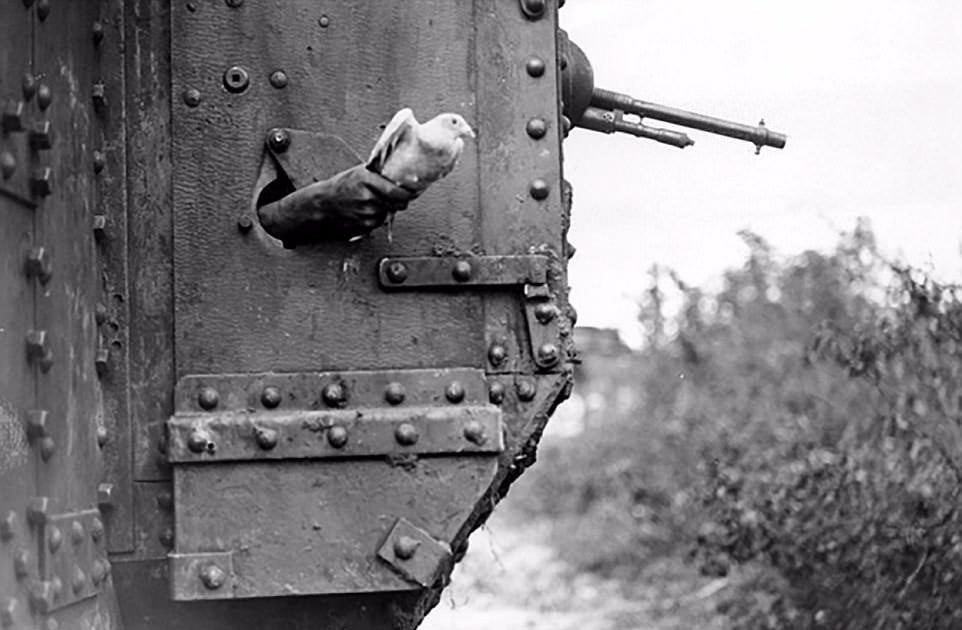
The bulk of the piece is a review of Gordon Corera’s book, Operation Columba - The Secret Pigeon Service: The Untold Story of World War II Resistance in Europe, which is about a British campaign that used carrier pigeons to gather intelligence from German occupied territories during WWII.
Between 1941 and 1944, British intelligence dropped sixteen thousand homing pigeons in an arc across Nazi-occupied Europe, from Bordeaux, France to Copenhagen, Denmark, as part of a spy operation code-named Columba. Returning to MI14, the secret government branch in charge of the “Special Pigeon Service,” the birds carried messages that offered a glimpse of life under the Germans in rural France, Holland, and Belgium. Written on tiny pieces of rice paper tucked into canisters and tied to the birds’ legs, these messages were sometimes comic, often tragic, and occasionally invaluable-reporting details of German troop movements and fortifications, new Nazi weapons, radar systems, and even the deployment of the feared V-1 and V-2 rockets used to terrorize London.
Monocle has produced a pair of videos about what Finland’s fleet of icebreakers do and what daily life is like for the crew.
In the second video, I was most interested in how life aboard icebreakers has changed now that wifi and personal TVs & DVD players are ubiquitous. Crew members are able to speak & video chat with their families daily (instead of every few weeks or months as in the past) and as a result, they feel less isolated and closer to their loved ones. But at the same time, access to the internet and TVs in each cabin results in less on-board socialization among the crew, which perhaps makes for a less tight-knit group. Extrapolating to society at large is left as an exercise to the viewer.
See also the Relaxing Sounds of an Arctic Icebreaker. (via why is this interesting?)
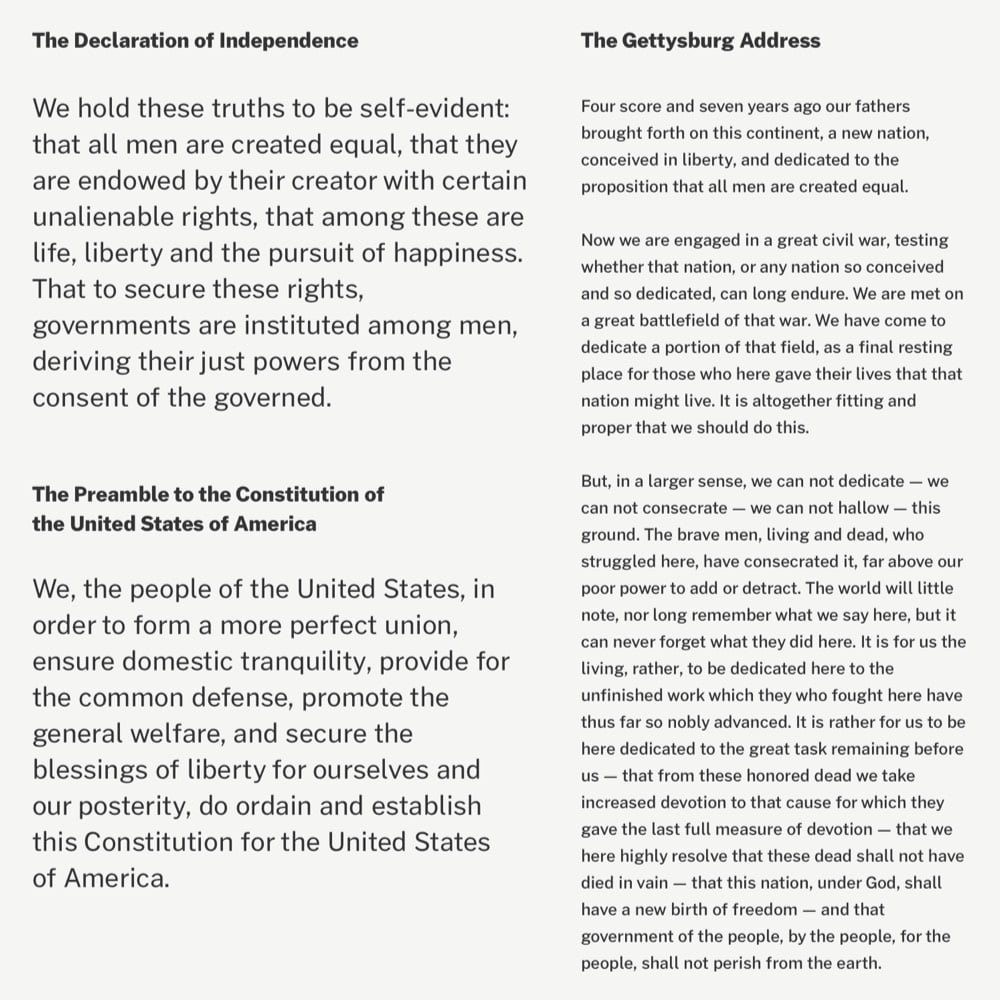
As part of their recent announcement of a new web design system for US government websites, the General Services Administration has also introduced a new typeface called Public Sans.
USWDS 2.0 adds built-in support for custom typefaces, and sometimes you need one that’s simple, neutral, and isn’t Helvetica. Public Sans is an open source, free license typeface (SIL Open Font License 1.1) designed and maintained by USWDS, adapted from Libre Franklin. Just as with our components, we intend Public Sans to be an example of how to design an accessible open source typeface with contributions and feedback from the public — to deliver a useful, neutral, sans serif and continuously improve it.
Always interesting when typefaces are described as “neutral”. I’ve never found that to be the case…
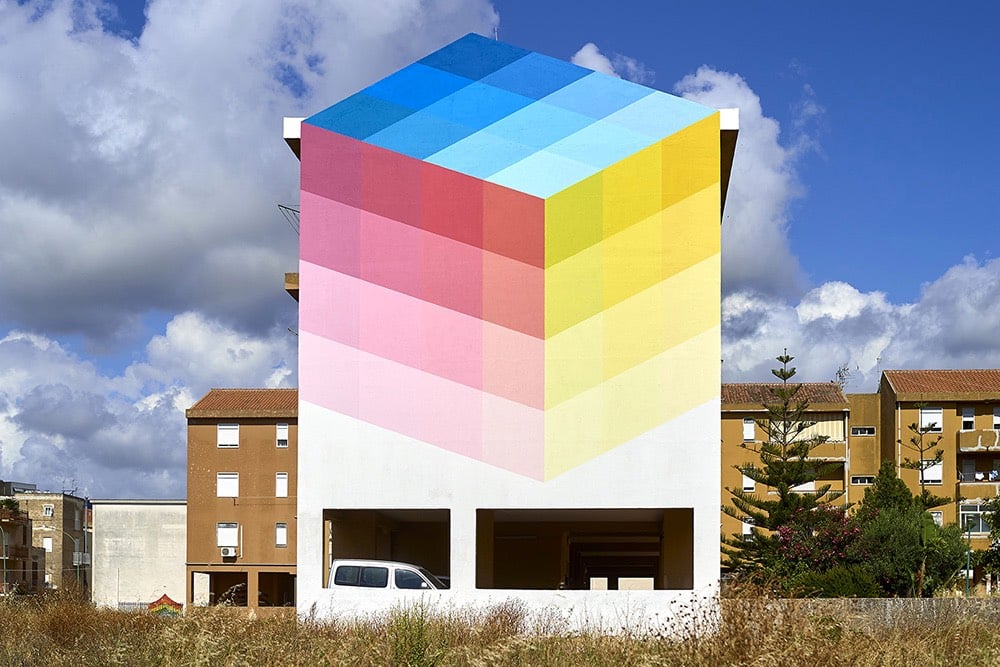
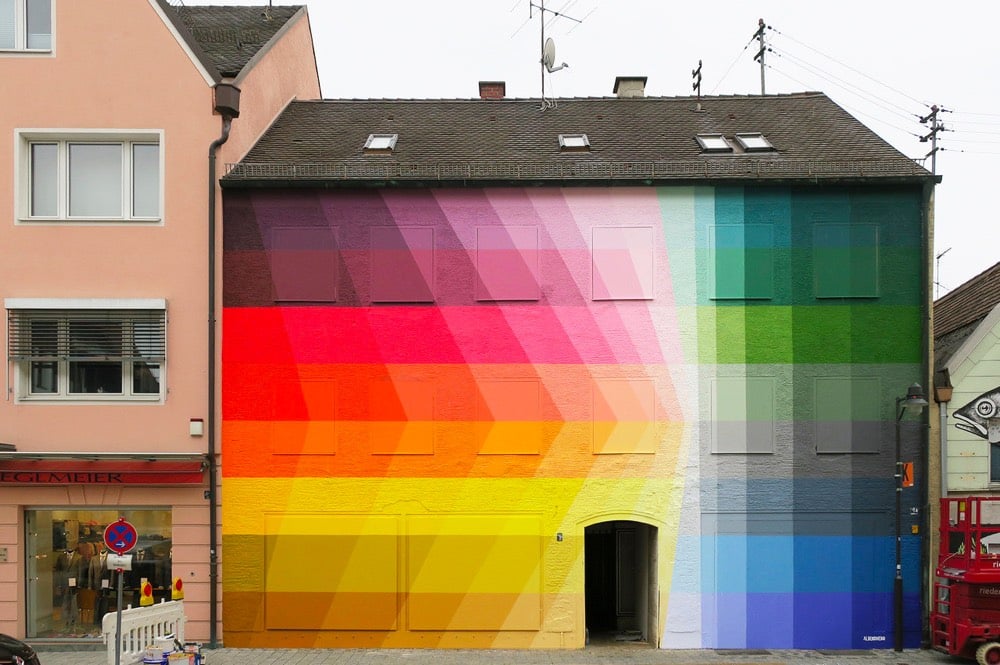
I love these colorful pixelated exteriors by Italian artist Alberonero. These are going on the mood board for my theoretical future house. You can find more of their work on Facebook, Instagram, and Tumblr. (via colossal)
Abigail Disney on What It’s Like to Grow Up With More Money Than You’ll Ever Spend. “Did Yale really say yes because I was that good, or did Yale say yes because of my last name? I’ll never know.”
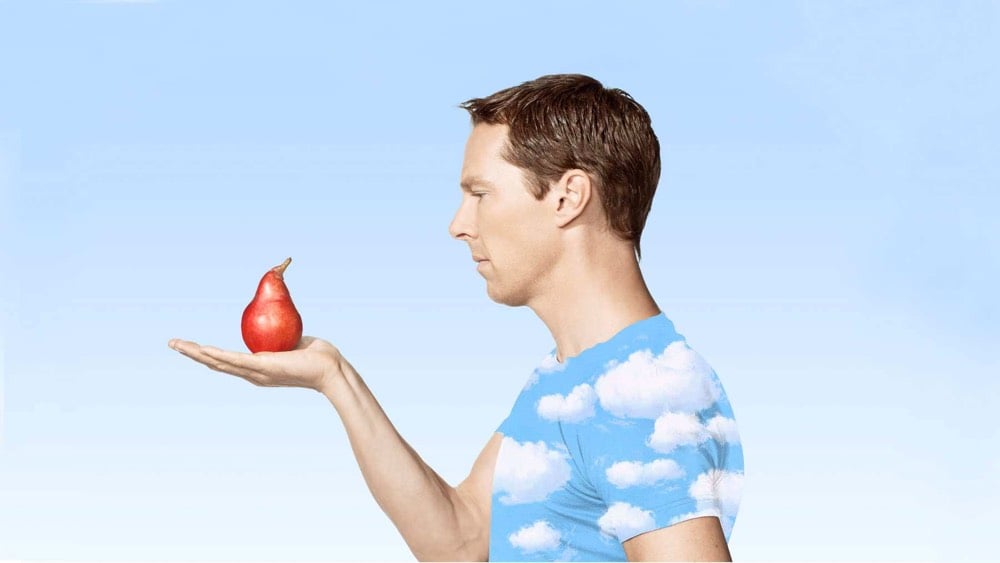
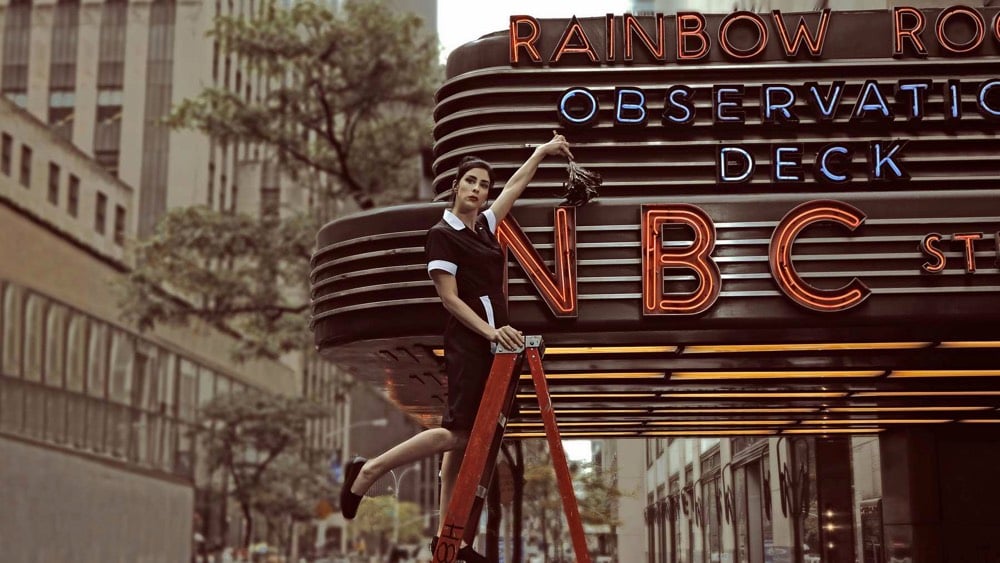
Since 1999, Mary Ellen Matthews has been the official photographer of SNL. For each show, Matthews captures a stylized portrait of the host, which is then used for “bumpers” between commercials and the live program.
“I kind of think of them as billboards. They pop off the screen,” Matthews, a self-described “one-woman circus,” told Vulture in a recent interview. “I like to make it as easy as possible for everyone. I don’t want them overthinking this part of the show. It should be super fun and super easy. It’s an open invitation to get kooky.”
I like Craig Mod’s advice to his 23-year-old self (scroll down to “Advice to a young me”). “At 23 I was obsessed with minimizing recurring costs of living. They felt like poison to me.”
Over the past three years, a number of restaurants across the geographic and economic spectrum of America have experimented with eliminating tipping. The practice is outdated, creates a difficult-to-justify wage imbalance between servers and cooks, and can result in mistreatment of staff (racism, sexual harassment) because of the fucked-up power dynamic it creates.
But as Grub Street’s Nikita Richardson writes, the no-tip test has largely failed, with many of those places going back to the old ways. This happened for three main reasons:
1. No tips meant higher prices printed on the menu, and customers stayed away from what they perceived as more expensive meals. That $12 burger became a $14.50 burger and all of a sudden, people knew what they were actually paying for their food. What’s interesting is that in another situation (say, having to pay to check a bag on a flight), people would be upset at not knowing the price up front and having a “hidden charge” added to their bill when they’re drunk and happy at the end of a meal.
2. Servers can make more at tipping restaurants. Places that went tip-free lost a bunch of their staff to places that still had tipping.
Meanwhile, by raising menu prices and thus revenues, the extra money would go toward higher wages for kitchen staff, who could start making $12 to $15 an hour at a time when the state minimum wage was $8.75.
But, it turned out, many front-of-house staffers were more concerned with making money than with maintaining the moral high ground. This February, Meyer admitted that he had lost 30 to 40 percent of his “legacy” staffers since 2015. (One Meyer employee told Grub last year that her wages dropped from $60,000 per year to $50,000 under the new policy.) While he insisted that the employees that replaced them “understand ‘Hospitality Included’ and are thrilled about it,” added employee attrition in an industry where turnover is already 1.5 times that of the private sector average has to hurt.
My regular NYC spot was one of the restaurants that experimented with eliminating tipping, and I can report that the staff was indeed quite skeptical about it and they switched back to the old method very soon. (I believe they kept the raises for the chefs though somehow.)
3. Tips make diners feel powerful. With tipping, you become the boss of your server or bartender and are responsible for a large chunk of their take-home pay.
Generally speaking, Americans hated the practice of tipping when it was first introduced in the late 19th century, perceiving it as a form of bribery for service workers who should simply do their jobs. But as we’ve adjusted to it, tipping has become undeniably intertwined with a sense of power.
Short of walking into the kitchen and telling off the chef, tipping is the easiest way to express satisfaction or dissatisfaction with a dining experience.
As a customer, I loved not tipping. I don’t feel the need to have power over the staff in a restaurant, I want cooks & chefs to get paid as well as servers, and I’ve acclimated to factoring the tip into my dining expenses. But it seems that Americans in the aggregate do care about those things, and so here we are.
And if we’re going to have tipping in restaurants, we should all know how it works.
If you can’t afford to tip 20 percent of the total amount that you spend at a restaurant, you can’t afford to eat at that restaurant.
And if your meal is bad?
You still tip. If something truly egregious happened, you ask to speak privately with a manager. If you do not want to speak privately with a manager, and would rather correct this perceived slight by tipping less or not tipping at all, you do not actually care about your perceived slight; you’re just using it as an excuse to be a dick.
In an opinion piece for the Guardian, George Monbiot argues that mass protests are “essential” to force a political response to climate change.
As the environmental crisis accelerates, and as protest movements like YouthStrike4Climate and Extinction Rebellion make it harder not to see what we face, people discover more inventive means of shutting their eyes and shedding responsibility. Underlying these excuses is a deep-rooted belief that if we really are in trouble, someone somewhere will come to our rescue: “they” won’t let it happen. But there is no they, just us.
The political class, as anyone who has followed its progress over the past three years can surely now see, is chaotic, unwilling and, in isolation, strategically incapable of addressing even short-term crises, let alone a vast existential predicament.
This paragraph neatly summarizes a bunch of important points about climate change and our current system (italics mine):
Every nonlinear transformation in history has taken people by surprise. As Alexei Yurchak explains in his book about the collapse of the Soviet Union — Everything Was Forever, Until It Was No More — systems look immutable until they suddenly disintegrate. As soon as they do, the disintegration retrospectively looks inevitable. Our system — characterised by perpetual economic growth on a planet that is not growing — will inevitably implode. The only question is whether the transformation is planned or unplanned. Our task is to ensure it is planned, and fast. We need to conceive and build a new system based on the principle that every generation, everywhere has an equal right to enjoy natural wealth.
As I wrote several years ago, “nonlinear systems, man”.
Why I Take All My First Dates to Olive Garden. “Two people eating means you get three sticks total. I like to think Olive Garden did that on purpose, so that you’re forced to break bread with your date.”
According to an expert, France doesn’t have any of the large, old trees necessary to replace the burned wooden beams in the roof of the Notre Dame.
Bertrand de Feydeau, vice-president of preservation group Fondation du Patrimoine, told France Info radio that the wooden roof that went up in flames was built with beams more than 800 years ago from primal forests.
He says the cathedral’s roof cannot be rebuilt exactly as it was before the fire because “we don’t, at the moment, have trees on our territory of the size that were cut in the 13th century.”
This reminds me of one of my favorite stories about future planning (possibly apocryphal). As told by Stewart Brand in How Buildings Learn, the story goes:
New College, Oxford, is of rather late foundation, hence the name. It was founded around the late 14th century. It has, like other colleges, a great dining hall with big oak beams across the top. These might be two feet square and forty-five feet long.
A century ago, so I am told, some busy entomologist went up into the roof of the dining hall with a penknife and poked at the beams and found that they were full of beetles. This was reported to the College Council, who met in some dismay, because they had no idea where they would get beams of that calibre nowadays.
One of the Junior Fellows stuck his neck out and suggested that there might be some oak on College lands. These colleges are endowed with pieces of land scattered across the country. So they called in the College Forester, who of course had not been near the college itself for some years, and asked about oaks. And he pulled his forelock and said, “Well sirs, we was wonderin’ when you’d be askin’.”
Upon further inquiry it was discovered that when the College was founded, a grove of oaks has been planted to replace the beams in the dining hall when they became beetly, because oak beams always become beetly in the end. This plan had been passed down from one Forester to the next for five hundred years. “You don’t cut them oaks. Them’s for the College Hall.”
Hopefully the trees needed for rebuilding Notre Dame can be sourced elsewhere. Just as important, a more modern form of future planning was recently undertaken that should help greatly with the rebuild. In 2010, two men photographed and laser-scanned every inch of the Notre Dame, creating an incredibly detailed 3-D map of the building.
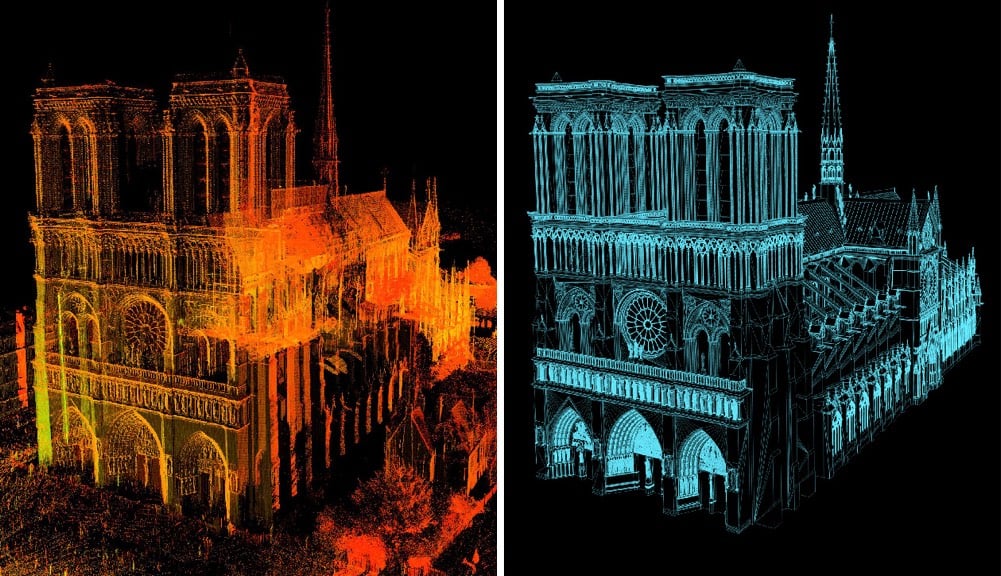
Now, with the building having sustained untold but very substantial damage, the data that Tallon and Blaer created could be an invaluable aid to whoever is charged with rebuilding the structure. Ochsendorf described the data as “essential for capturing [the structure] as built geometry.” (He added, however, that the cathedral, no matter what happens now, “is irreplaceable, of course.”)
Tallon and Blaer’s laser data consist of 1 billion data points, structured as “point clouds,” which software can render into images of the three-dimensional space. Stitch them together, inside and out, map the photographs onto the precise 3-D models, and you have a full digital re-creation of incredible detail and resolution.
“I saw this happening, and I had two thoughts,” Blaer told me of watching the cathedral engulfed in flames. “One thought was that I was kind of relieved that he didn’t actually have to see this happen. But on the other hand, he knew it so well and had so much information about how it’s constructed, he would have been so helpful in terms of rebuilding it.”
(thx, meg)
Update: According to this piece in Le Monde (as best as I can discern in Google Translate), French forests have both the quality and quantity of wood available to provide new beams for Notre Dame. (via @ramdyne)
In the aftermath of the fire that ravaged the Notre Dame Cathedral in Paris, two French billionaires stepped in to pledge €300 million for the restoration of the historic building. Carl Kinsella writes that the reaction of the rich to the Notre Dame fire teaches us a lot about the world we live in.
It would be incredibly cheap to suggest that it is in some way wrong to give money for the restoration. There is a value that transcends simple economics in restoring testaments to civilisation. Better that Notre Dame remains a symbol of European history than €300 million rests in a billionaire’s bank account.
But the immediacy and magnitude of their response tells us something very important about the society we live in.
If two men in a world of more than 7 billion people can provide €300 million to restore Notre Dame, within six hours, then there is enough money in the world to feed every mouth, shelter every family and educate every child. The failure to do so is a matter of will, and a matter of system.
The failure to do so comes from our failure to recognise the mundane emergencies that claims lives all around us every single day. Works of art and architectural history and beauty rely on the ingenuity of people, and it is people who must be protected above all else.
Executive director of the World Peace Foundation Alex de Waal says that almost all the famines that occur today are political decisions, a “matter of system” as Kinsella puts it. In the modern world, hunger, homelessness, lack of proper healthcare, and lack of access to education are all political decisions as well. The simple truth is that we can take care of everyone on Earth, but we choose not to.
Jan Chipchase’s Studio D has recently released their latest booklet, The Little Book of Fixers.
Fixers and guides are core to the way we operate — to complement the skills and address the weaknesses of international teams tasked with documenting and decoding cultures across the globe. Fixers and guides are crucial for knowing the best neighbourhood for the team to be situated, recruiting suitable participants, identifying nascent behaviours and critically discussing the trajectories that put the data into a broader societal perspective. Working with fixers enables research projects to go beyond the veneer of a culture, to truly understand the forces shaping society.
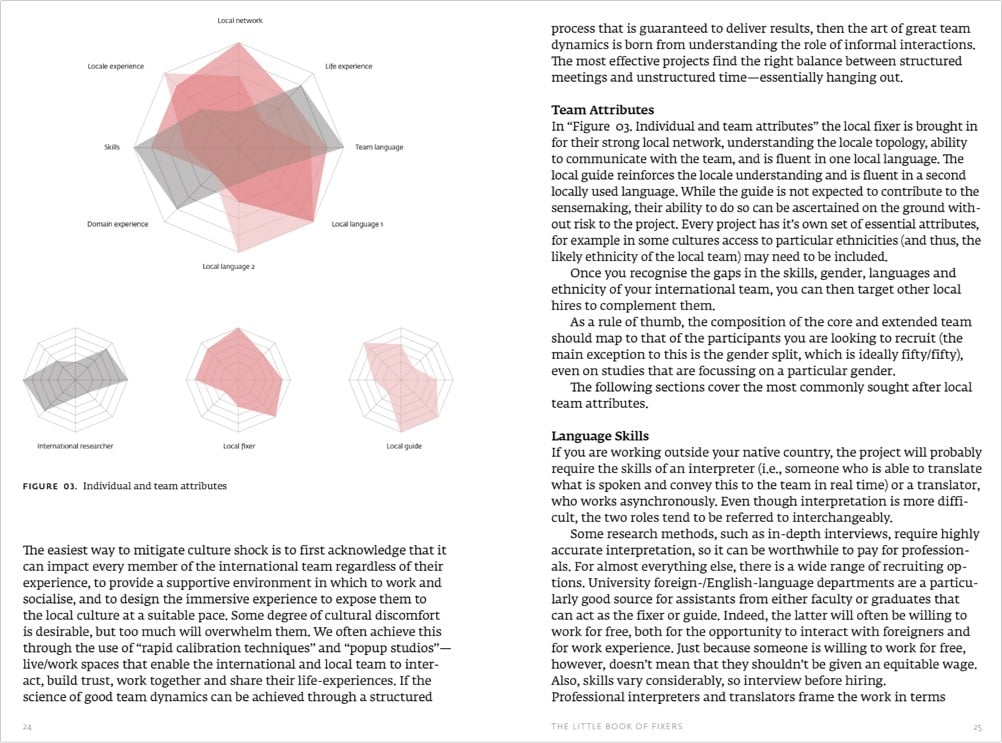
I continue to find the output of Studio D and Chipchase fascinating — see 61 Glimpses of the Future for example. Hiring fixers is not something most of us will ever need to do, but creatively and respectfully choosing guides when interacting and intersecting with cultures different from our own is always going to be relevant.
You can order The Little Book of Fixers directly from Studio D or via Amazon (which I’m assuming is written in English and not “Middle English” as Amazon says).
Nuclear physicists hypothesize that when the cores of neutron stars are subject to enough pressure, the quarks that make up the core can turn from up and down quark varieties into strange quarks. As this Kurzgesagt video explains, this strange matter is particularly stable and if it were to escape from the core of the neutron star, it would convert any ordinary matter it came into contact with to more strange matter. If you hadn’t heard about this hypothesis before, you can read up on it in their list of sources for the video.
Sarah Miller went looking for real estate in Miami, a place where the sea level could rise between one and three feet in the next 30 years. As she discovered, the real estate agents there have gotten good at deflecting buyers’ concerns about such matters.
I asked how the flooding was.
“There are pump stations everywhere, and the roads were raised,” he said. “So that’s all been fixed.”
“Fixed,” I said. “Wow. Amazing.”
I asked how the hurricanes were.
He said that because the hurricanes came from the tropics, from the south and this was the west side of Miami Beach, they were not that bad in this neighborhood. “Oh, right,” I said, as if that made any sense.
I asked him if he liked it here. “I love it,” he said. “It is one of the most thriving cities in the country, it’s growing rapidly.” He pointed to a row of buildings in a neighborhood called Edgewater that were all just three years old. “That skyline was all built in the last three years.”
Wow, I said, just in the last three years… “They’re not worried about sea level rise?”
“It’s definitely something the city is trying to combat. They are fighting it, by raising everything. But so far, it hasn’t been an issue.”
I couldn’t wait to steal this line, slightly altered. “I am afraid of dying, sure, but so far, it hasn’t been an issue.”
Later, I texted Kristina Hill, an associate professor of urban ecology at the University of California, Berkeley, whose main work is helping coastal communities adapt to climate change. I told her that a real estate agent had just told me hurricanes were weaker near Sunset Harbour, because it was in the east side of Miami, and hurricanes come from the south. She wrote back, “That’s ridiculous!”
The analysis of why Amsterdam and Miami are quite dissimilar when it comes to their respective responses to climate change is enlightening.
The Big Plan in the Netherlands depends on walls. Since Miami is built on limestone, which soaks up water like a sponge, walls are not very useful. In Miami, sea water will just go under a wall, like a salty ghost.
With a tweet at 3:20am this morning, Beyoncé announced her latest album, a 40-track live album of her acclaimed 2018 Coachella performance. You can listen to Homecoming right now on Spotify, Apple Music, Tidal, Amazon, YouTube, and Pandora.
The album is a complement to a Netflix film of the performance, also called Homecoming and also available today. Here’s the trailer for that:
After the Coachella performance last year, the NY Times’ music critic Jon Caramanica wrote:
Let’s just cut to the chase: There’s not likely to be a more meaningful, absorbing, forceful and radical performance by an American musician this year, or any year soon, than Beyoncé’s headlining set at the Coachella Valley Music and Arts Festival on Saturday night.
It was rich with history, potently political and visually grand. By turns uproarious, rowdy, and lush. A gobsmacking marvel of choreography and musical direction.
Over the past 20 years, the kind of empathy practiced by many Americans has shifted from a universal empathy — putting yourself into the shoes of someone you don’t know and might even dislike — to a more selective empathy that only works with people “on your team”.
Researchers who study empathy have noticed that it’s actually really hard to do what we were striving for in my generation: empathize with people who are different than you are, much less people you don’t like. But if researchers set up a conflict, people get into automatic empathy overdrive, with their own team. This new research has scrambled notions of how empathy works as a force in the world. For example, we often think of terrorists as shockingly blind to the suffering of innocents. But Breithaupt and other researchers think of them as classic examples of people afflicted with an “excess of empathy. They feel the suffering of their people.”
Breithaupt called his new book The Dark Sides of Empathy, because there’s a point at which empathy doesn’t even look like the kind of universal empathy I was taught in school. There is a natural way that empathy gets triggered in the brain — your pain centers light up when you see another person suffering. But out in the world it starts to look more like tribalism, a way to keep reinforcing your own point of view and blocking out any others.
Here’s the description of Breithaupt’s book:
Many consider empathy to be the basis of moral action. However, the ability to empathize with others is also a prerequisite for deliberate acts of humiliation and cruelty. In The Dark Sides of Empathy, Fritz Breithaupt contends that people often commit atrocities not out of a failure of empathy but rather as a direct consequence of over-identification and a desire to increase empathy. Even well-meaning compassion can have many unintended consequences, such as intensifying conflicts or exploiting others.
(via tmn)
Volume 2 of the Halt and Catch Fire soundtrack recently came out and I’ve been listening to it on repeat ever since @mwichary flagged it on Twitter.
Volume 1 is here.
AMC also has a bunch of playlists on Spotify with music from specific seasons and for different products & characters on the show.
The theme song, one of my favorite little pieces of music ever, is by Trentemøller and can be found here, although you may prefer Paul F. Tompkins’ version.
Milk Bar is renaming their Crack Pie. “Our mission, after all, is to spread joy and inspire celebration. The name Crack Pie falls short of this mission.”
In the first episode of season two of Earworm, Estelle Caswell explains where the “Explicit Lyrics” sticker found on many of your favorite music albums came from. The story involves heavy metal, Prince, the rise of the religious right, the Satanic panic, Tipper Gore, and lots of amazing hair.
The very public discussion around the advisory label involved the Parents Music Resource Center (PMRC), a group led by the wives of Washington politicians, and a few musicians including Frank Zappa, Dee Snider, and John Denver.
While the PMRC’s involvement was allegedly sparked by some raunchy lyrics from Prince’s 1984 album Purple Rain, the debate over rock lyrics had been infiltrating American culture and politics for a decade. The driving force behind that debate was the rise of heavy metal, a genre that saw explosive popularity with the launch of MTV in 1981, and the growing influence of the religious right, who saw rock music as a powerful threat to Christianity.
One of the main sources for the video is Eric Nuzum’s book, Parental Advisory: Music Censorship in America.
An update on how the students at LeBron James’s I Promise School are doing. The early results are encouraging. “90% met or exceeded individual growth goals in reading and math, outpacing their peers across the district.”
Photos of the aftermath of the Notre Dame Cathedral fire in Paris. Heartbreaking, but it looks like firefighters were able to salvage more than I expected.
Stories of people transformed by Fox News. “I hate what that channel and conservative talk radio did to my funny, compassionate dad. He spent the last years of his life increasingly angry, bigoted, and paranoid.”
Monotype has introduced a new version of the Helvetica typeface called Helvetica Now.
Helvetica Now is a new chapter in the story of perhaps the best-known typeface of all time. Available in three optical sizes-Micro, Text, and Display-every character in Helvetica Now has been redrawn and refit; with a variety of useful alternates added. It has everything we love about Helvetica and everything we need for typography today. This is not a revival. This is not a restoration.
This is a statement.
Typographer Erik Spiekermann says:
This is the typeface Max Miedinger and Eduard Hoffmann would have designed back in 1957 if they had known about offset printing, small screens, browsers, digital design tools and UI designers.
Newer posts
Older posts





Socials & More