Entries for April 2019
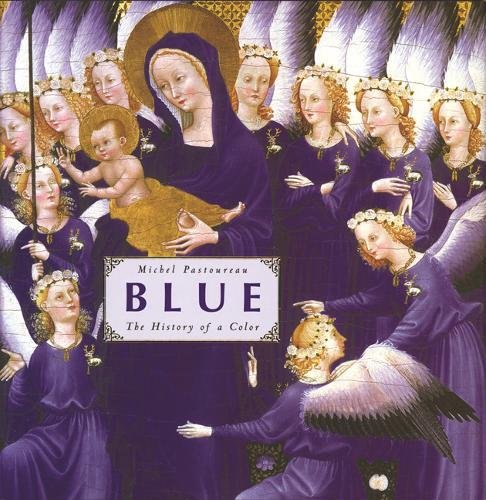
Even colors have histories, and what vibrant histories they are. French historian Michel Pasteureau’s Blue: The History of A Color (he’s also done histories of red, green, and black) is capably reviewed by Jesse Russell in the Claremont Review of Books in an essay called “The Colors of Our Dreams.” Russell offers the following luminous details.
Blue was once little-known in the Western palette. Homer’s sea was “wine dark”; blue would not be used as water’s color until the seventeenth century. It has evolved from its original association with warmth, heat, barbarism, and the creatures of the underworld, to its current association with calm, peace, and reverie. Like the unruly green, the Romans associated blue with the savage Celtae and Germani, who used the woad herb’s rich leaves for their blue pigments. These northern barbarians also painted themselves blue before war and religious rituals. The ancient Germans, according to Ovid, even dyed their whitening hair blue.
The Romans, in contrast, preferred the color red—the Latin word, “coloratus” was synonymous with that for red, ruber. The Romans and Greeks did import lapis lazuli, the exquisite blue rock, from exotic locals such as China, Iran, and Afghanistan. But neither used the barbaric blue for important figures or images, saving it for the backgrounds for white and red figures. Even the Greek words for blue, like the names of colors in the Bible, largely were meant to evoke certain states or feelings as opposed to exact visual colors. Blue, like green, was the color of death and barbarism. The nobler colors—white, red, and black—were preferred.
Blue’s fortunes changed in the Middle Ages when it became associated with both the heavens and heaven, and particularly an association with the Virgin Mary. French royalty adopted blue as their official color; and in modernity, the introduction of indigo from the Americas and the invention of Prussian blue in the early 18th century helped cement blue (along with white and red) as part of a tripartite color scheme that gave us the flags of Great Britain, the United States, and France.
And then along came Goethe:
By the mid-nineteenth century, blue became a Romantic symbol of melancholy. Among those guilty of luring the moody young to dress in blue was Wolfgang von Goethe who, in The Sorrows of Young Werther, depicted his title character in a blue coat. This, coupled with Werther’s untimely death, inspired a craze for blue coats and a mania for suicide among melancholy European youth. Werther’s blue jacket was matched by the blue flower in Novalis’s unfinished posthumous piece Heinrich von Ofterdingen, which narrates the tale of a medieval troubadour who seeks out the flower as a symbol of the authentic life of beauty and art. Young, melancholic Frenchmen were doubly encouraged in their swooning by the closeness shared by the French word for blue flower, “ancolie,” and the ending of “mélancholie.”
From Romanticism’s murky forest a host of verbal expressions bloomed, linking blue with odd, melancholic reverie. Fairy tales were known as “blue tales”; to be terribly drunk in German became known as “being blue” or “Blau sein”; and the “blue devils,” from which we get the great American expression (and musical genre) “the blues,” meant to be afflicted with a lingering sadness.

Blue has a curious oscillation between conservativism and rebellion, perhaps especially in France, but throughout the world:
The navy blazer, a sign of conservativism and preppy formality in the twentieth century, was once a mark of the avant garde Westerner, adorned in what became known as “sportswear.” Aspiring radicals wore blue jeans, made from denim dyed with indigo, but ultimately derived by Levi Strauss from the pants made from tent canvas for California prospectors. Eventually, jeans became leisurewear for Americans from the East Coast who wanted to dress like the cowboys of the increasingly tame “wild west.” As the tides of early twentieth-century fashionable rebellion swelled, blue jeans were given the stamp of haute couture in a famous 1935 edition of Vogue, and, after World War II, were a symbol of rebellion and nonconformity—especially in newly liberated Europe. But in the West, jeans eventually became blasé (but comfortable) everyday wear when everyone—even conservative squares—started wearing them. This did not stop blue jeans from becoming symbols of rebellion in Communist countries during the heady days of glasnost and perestroika, and later in the Muslim world a symbol of youthful rebellion.
Taken together, the genealogy of blue is a history of finding meaning in difference, whether it was the Germanic blue facing off against the Roman red, the vibrant blue jacket against the staid black coat, or the heavenly Marian apparition set off against the profane, multicolored world below.
(Via The Browser.)
I don’t know the author or typographer behind The Temporary State. There’s a contact address that reads “B. Tulskaya ul. 2-571, Moscow, Russia, 115191.” But Mx. Tulskaya (if that’s indeed the author) has made an outstanding pocket history of the use of italics in type, partly to defend against the fact that The Temporary State’s fonts do not use an italic typeface.
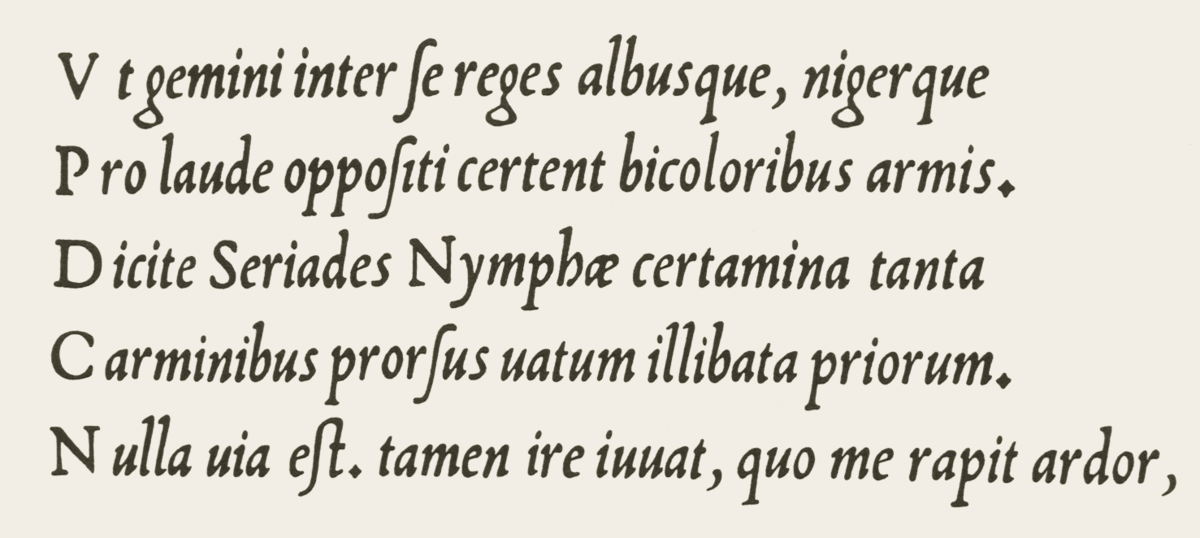
I knew, for instance, that Venetian printer Aldus Manutius is generally credited with introducing italics into European print (partly, the histories say, to imitate Latin handwriting, and partly as a space-saving device). I did not know that after other printers began to copy Manutius’s use of italics, the Venetian Senate granted Aldus exclusive right to use them.
I knew that Italian futurist poet and manifesto-writer Filippo Marinetti championed a wide range of typographic innovations; I did not know (or had forgotten) that he wished to reserve italic type for “a series of similar and swift sensations,” while bold would be used for the imitation of heavy tones, and so on. A kind of emotional functionalism in type.
It is strange, how Marinetti in his call for revolution against “the Poetry Book” doesn’t see any problem with italics. Somehow, Roman numerals are an issue, but the use of highly decorative imitation of a 16th century pretty handwriting is a futuristic expression, not part of the “typographic harmony” ensemble. It is even stranger, that he doesn’t address the application of italic itself, as his idea of highlighting the page with «3-4 colors and 20 different typefaces» is very close to how the use of italic is regulated in the Chicago Manual. The only difference is: where Marinetti suggests «20 different typefaces», Chicago suggests only one — italic. So, seemingly to achieve Marinetti’s idea all that is needed is to diversify the means of text highlighting. And it’s not like there are no alternative typographic traditions, which could be used to substitute the italic.
Much of the article is devoted to this; how you can achieve the typographic effect of italics (emphasis, foreign words, titles, etc.) without using italic type. Here the examples are legion. In German blackletter, foreign words (especially in Roman languages) would be put in Roman type, while emphasized words or phrases would be in boldface. In Cyrillic printing, especially in the Soviet period, you see “sperrsatz,” or wide spacing, to denote emphasis.
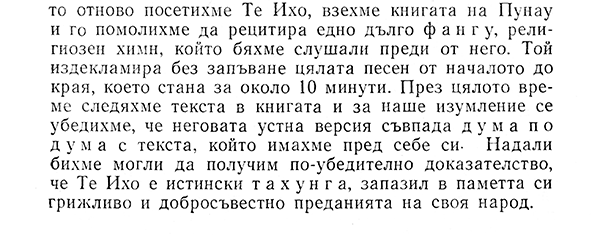
Bauhaus, following the German blackletter tradition, forsook italic typesetting altogether, opting for a combination of boldface, sperrsatz, and fonts of different sizes, all of which achieve the effect of italics without the pretense of adopting an old Latin handwriting style.
Since few social media networks support bold and italic typesetting, it’s interesting to think about the range of ways users still suggest italics or the effect of italics.
There’s pseudo-Markdown, in the form of
*italics*
or
_italics_
Of course, there’s
ALL CAPS
There are also memes and GIFs, which are a way of both drawing emphasis to text and giving it an emotional characterization that go far beyond what Marinetti could dream of with his really quite limited notion of “3 or 4 different colours and 20 different typefaces on the same page. That text itself would and could be animated, that it could be superimposed on a miniature movie that would explode into mostly-text networks, is a future Marinetti might have embraced, but one he couldn’t quite fully see.
(Via Robin Sloan)
This article reminded me of the powerful story Rebecca Solnit told at Pop-Up Magazine a couple years ago. She presented photos taken by Mark Klett and Byron Wolfe at Lake Powell over several years, along with unfolding a compelling narrative expression of climate change as told through one geological place.
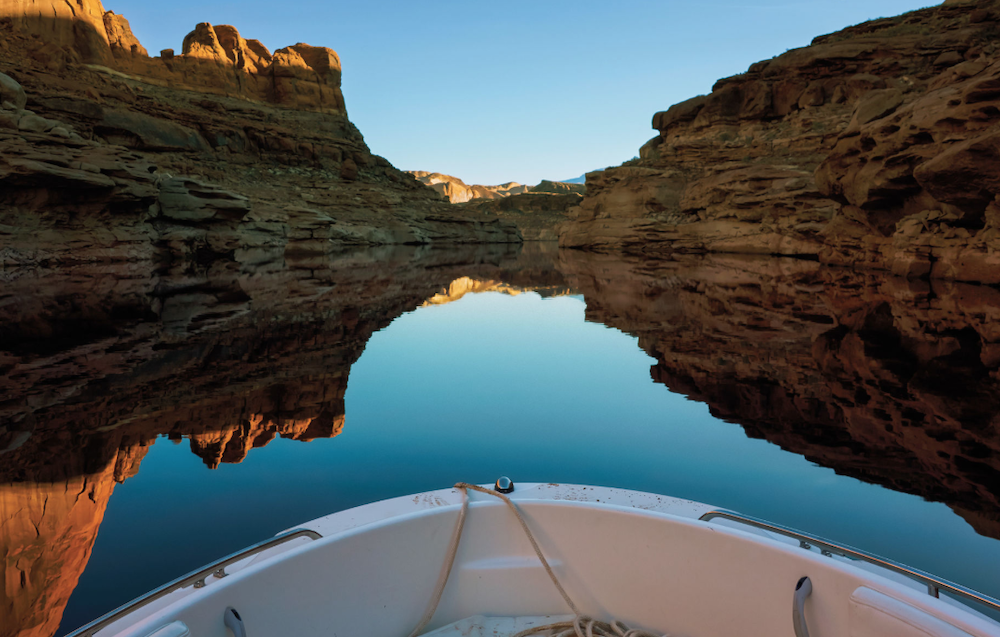
She also tells a cautionary tale of The West, in her companion piece later published in California Sunday magazine.
Glen Canyon Dam is a monument to overconfidence 710 feet high, an engineering marvel and an ecological mistake. The American West is full of these follies: decommissioned nuclear power plants surrounded by the spent radioactive waste that will remain dangerous for 100,000 years; the bomb-torn land of military testing and training sites; the Nevada Test Site itself, cratered and contaminated by the explosion of a thousand nuclear devices. Las Vegas and Phoenix, two cities that have grown furiously in recent decades, are monuments to the conviction that stable temperatures and fossil fuel and water could be counted upon to persist indefinitely.
You can regard the enormous projects of this era as a continuation of the Second World War. In the West, this kind of development resembled a war against nature, an attempt to conquer heat, dryness, remoteness, the variability of rainfall and river flow — to triumph over the way water limits growth. As the environmental writer Bill deBuys put it: “Thanks to reservoirs large and small, scores of dams including colossi like Hoover and Glen Canyon, more than 1,000 miles of aqueducts and countless pumps, siphons, tunnels and diversions, the West had been thoroughly re-rivered and re-engineered. It had acquired the plumbing system of a giant water-delivery machine. … Today the Colorado River, the most fully harnessed of the West’s great waterways, provides water to about 40 million people and irrigates nearly 5.5 million acres of farmland.” Along the way, so many parties sip and gulp from the Colorado that little water reaches Mexico.

It’s a longread so I recommend finding someone with a voice as soothing and clear as Solnit’s to read aloud to you (and then hold you when you realize what it all means).
N.B. Pop-Up’s spring tour tickets go on sale on April 9. It’s always an interesting show. Sometimes funny, sometimes sad, always poignant and well-produced. And never recorded so you must be there in person!
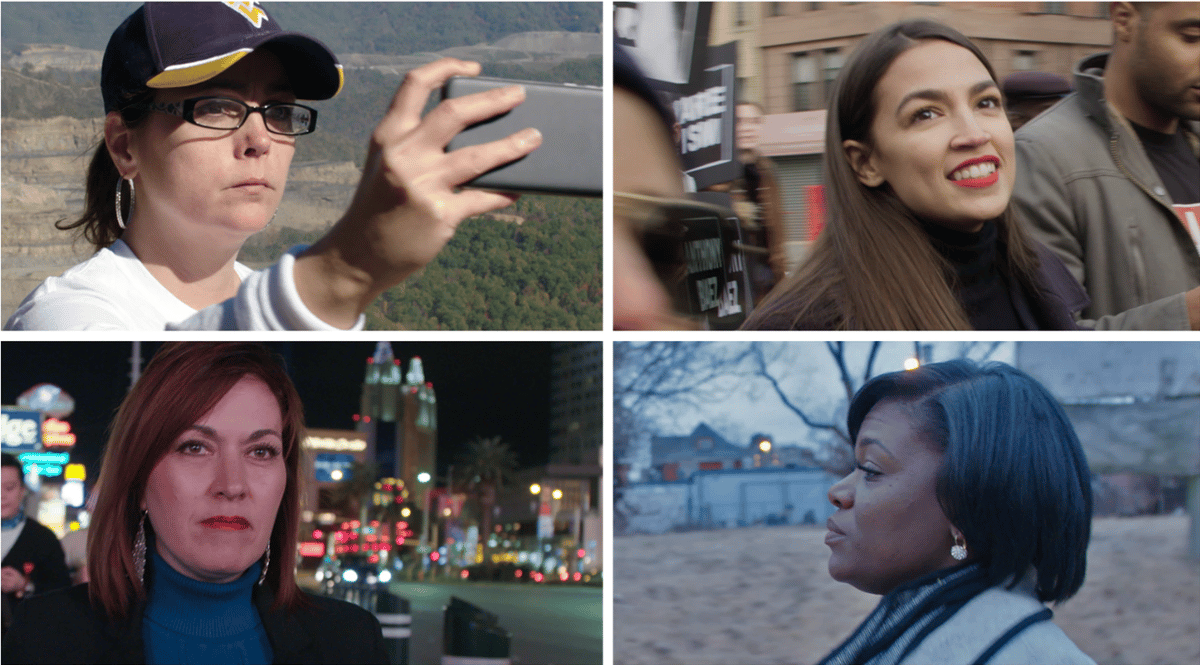
Knock Down The House follows four grassroots female candidates through their mission-driven campaigns to unseat incumbents during the 2018 midterm elections. The documentary, which won Festival Favorite at Sundance this January, will be released by Netflix on May 1. New Yorkers will be able to see it in an advance screening (including a Q&A with director Rachel Lears) at IFC Center on April 23.
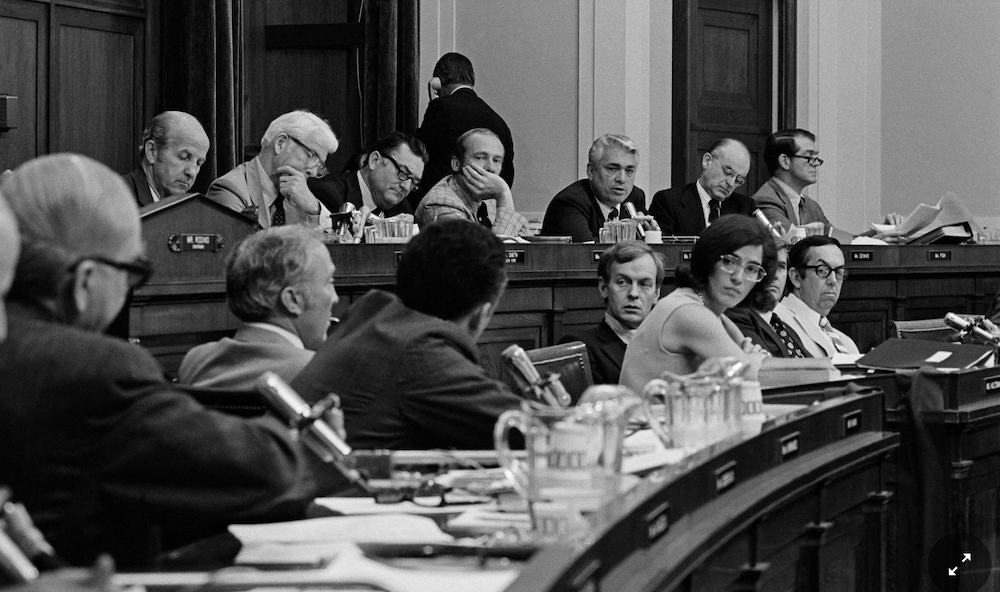
Audrey Gelman takes us into the NY Times photo archives to tell the story of the women who brought power and voice to representative democracy long before AOC was a glimmer of hope for New Yorkers.
Time and again, women candidates have been met with derision or dismissed as “long shots” — in many cases, both. Take Elizabeth Holtzman: In 1972, the then-31-year-old stunned the whole of Washington when she upset a powerful 50-year male incumbent in the Democratic primary, becoming the youngest woman ever elected to Congress. (Sound familiar?)
And, of course, you can’t talk about women in politics without talking about Shirley Chisholm, a once-in-a-generation force for change who represented her Brooklyn district from 1969 to 1983. As she put it, “My greatest political asset, which professional politicians fear, is my mouth, out of which come all kinds of things one shouldn’t always discuss for reasons of political expediency.” Despite her fearlessness — or, more aptly, because of it — opponents dismissed her, she said, as just a “little schoolteacher.” (She had been an educator before taking office.)
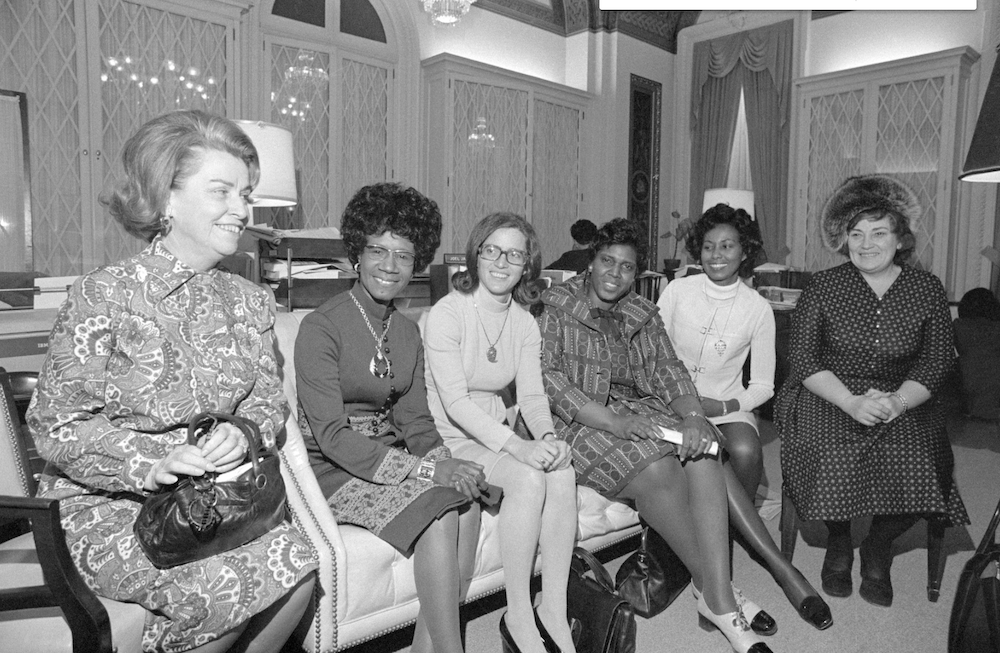
The photos alone are worth the click, but don’t miss Gelman’s sharp born-and-bred New Yorker observations.
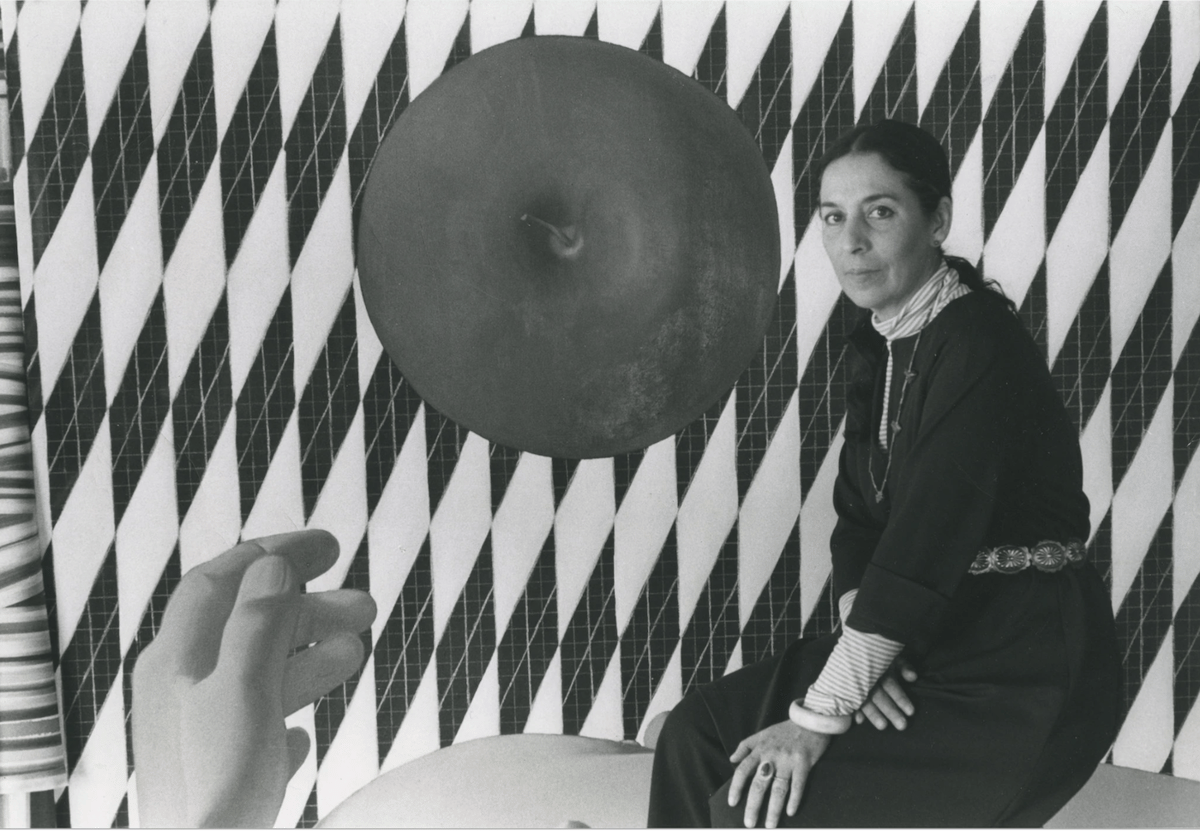
I am blown away by the story of Luchita Hurtado, an artist whose work since the 40s has remained largely out of public view. She has her first two major solo exhibitions this year (at the age of 98!): Dark Years, drawings from the 40s and 50s at Hauser & Wirth’s uptown location (closes April 6), and a seven-decade retrospective at London’s Serpentine Sackler Gallery later in May. She lived and worked in New York (where she immigrated with her family from Venezuela at the age of 8), Marin County, Mexico City, Santa Monica, and Taos, New Mexico. Her work has evolved, as you can imagine, over the decades. Her life and work have brought her in contact with Isamu Noguchi, Judy Chicago, Agnes Martin, Man Ray, Frida Kahlo. Her third husband was painter Lee Mullican. You just get the sense that she’s lived a true 20th century life, and is now getting to break out of that in a proper 21st century way.
The New York Times on Luchita Hurtado in January:
In her expansive oil paintings, ink-based drawings, fabric collages and patterned garments, Hurtado explores what she sees as the interconnectedness of all beings. Her paintings from the ’70s — sinuous bodies that morph into mountains, bare nipples that juxtapose spiky leaves, bulbous fruits that echo curving belly shapes — represent women as sacred beings, powerful subjects of their own lives. Hurtado also incorporated womb imagery into her work before the feminist art movement made popular the same subject matter in the late ’70s.

Hans Ulrich Obrist, is curating her retrospective at the Serpentine, has this to say:
“Women artists have not had the visibility they should have and we need to protest, systematically, against forgetting — through books and exhibitions,” Obrist says. The exhibition at the Serpentine will be animated by what he calls “decisive moments or epiphanies” throughout Hurtado’s life.
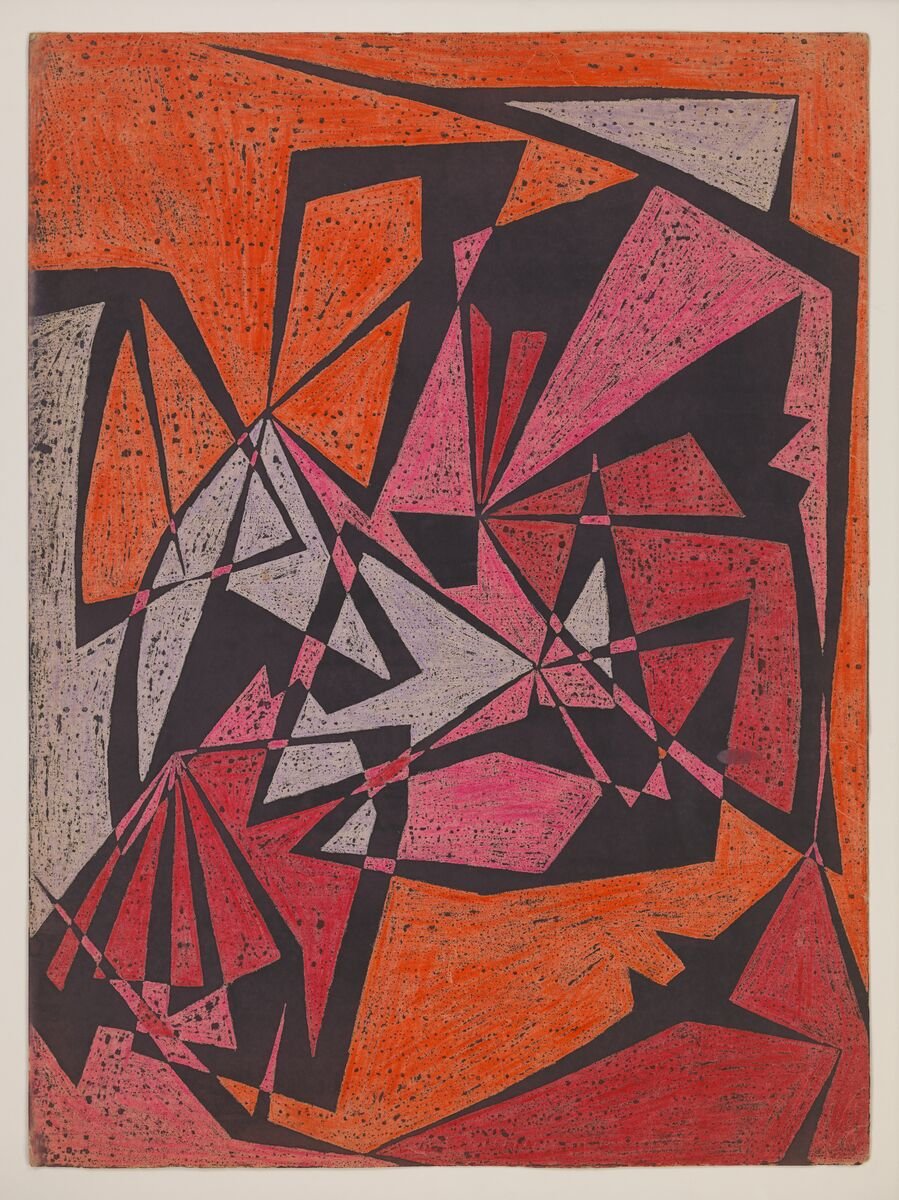
Related: You can see the stunning retrospective of Hilma af Klint, another female artist long overlooked, at the Guggenheim until April 23. I’m intrigued by HILMA inspired by the af Klint show, playing for two nights as part of the very special Works & Process series. The chamber opera stars a relative of Hilma’s as Rudolf Steiner, and his wife as Hilma herself (who produced and created the piece).
I must have been reading the wrong magazines as a teen, because I only recently found out that Tori Amos has been quite open in interviews about being into psychedelics in the 80s and 90s (and I was VERY into both Tori and magazines in the mid-90s). Most of these mentions only live on via old websites where fans painstakingly transcribed the interviews, so to preserve that fanzine quality I’ve left the typos intact. But first, a little primer on Tori, in case you weren’t an alt kid in the 90s.
The flame-haired daughter of a Methodist minister who grew up in Maryland, Tori was a piano prodigy from the age of 2 who left the church behind for music. She moved to Los Angeles in 1984 at the age of 21 and by 1986 was frontwoman to the synthpop group Y Kant Tori Read. The band was a flop by 1989, so in order to fulfill her contract with Atlantic Records she went out on her own. The resulting solo debut, Little Earthquakes, included a song honestly portraying her rape, alongside many solid, singalong-worthy tracks. She was a bit more raw, confessional, and vulnerable than the other female singer/songwriters who came up in the 90s, and thusly became a goddess among alternative rock-listening girls of my post gen-X cohort. You may just want to cue up Boys for Pele now (the third track off her 1996 album, Father Lucifer, was said to be written after an ayahuasca journey) . Ok, onto the drugs.

From a Q magazine article in 1998:
“Yeah, there was a period in the late ’80s where I was working with different shaman,” she says. “Myself and a friend Beene would take Iowaska - but it wouldn’t be in the liquid form, it would be a freeze-dried pill - and mushrooms. Some of those trips were eighteen hours long and I’ll never forget, once I ended up sitting by the bush trying to ask the flowers why they didn’t like me. It’s like, Why can’t I be your friend? I was crawling out of my skin at that time. In my twenties I was really…I was just losing my mind.”
In Esquire UK in 1999, when asked if she’d done hallucinogens lately:
Not very recently. I have Datura in my garden, but my gardener told me that some people oversteep it in water and then it’s poison and you die. I did a few 18-hour trips with a Shaman in the canyons in LA in the 80s. I’m glad I did it. And I’d do extasy journeys with women friends, Things are said that I couldn’t have heard or have said over a cup of coffee.
Q magazine, September 2001:
“It’s not like I’ve never done cocaine but, on the whole, if I can’t see dancing elephants I’m not interested,” she said.
“The drug which had a big effect on me was ayahuasca. It comes from a vine in the Amazon and you ingest it. You know that stuff they take in The Emerald Forest? It’s like that. I was hanging around with some medicine women and they suggested I try it. I was very lucid but felt like I was walking around in Fantasia, having a conversation with myself.
“It isn’t like acid. It’s more emotional, more mental. But it can grab you by the balls and just shove you up against the wall. I’ve been in a room with a woman who was literally trying to bite her own arm off. And this lasted for 15 hours. I wasn’t scared — just scared that I’d make a fool of myself. The funny thing was, I kept laughing and laughing, rather than sitting in the corner being intense. Then, every so often, I’d say, I’m in a really rough patch. And one of the medicine women would come over and reassure me that everything was going to be alright…
“I haven’t taken it in a couple of years now. You can only really do it once in a blue moon. But the wild thing is that sometimes I only have to smell something and I’m right back there again, high as a kite.”
Apparently I just needed access to UK magazines, which were certainly hard to come by in mid-90s Vermont. Also, this feels like the right place to thank Becky G. for giving me a tape in calc class (fall 1995?), titled “Becky made a tape for you / and gave you Tori Amos.” I would love to close this post with a scan of the Polaroid of me, wearing a classic Ben & Jerry’s tee, posed with Tori on her summer 1998 tour when I won tickets to a soundcheck and meet-and-greet before the show. Still likely one of the most surreal moment of my life. She told me she liked my name. Thanks to my local radio station WEQX for the tickets and the memory.

Architect, curator, surfer, knight of the French government, partner, father, son, brother, and dear friend to many, Francois Perrin died on Monday in Ventura County, close to a favorite wave. He was from Paris but had been in Los Angeles for decades so was simultaneously both French and Californian. I really have no words sufficient for this so will let Alissa Walker’s tribute on Curbed LA stand. It deserves a full read but I’ve included some excerpts and quotes below.
‘He was a center of gravity’: Architect Francois Perrin dies at 50
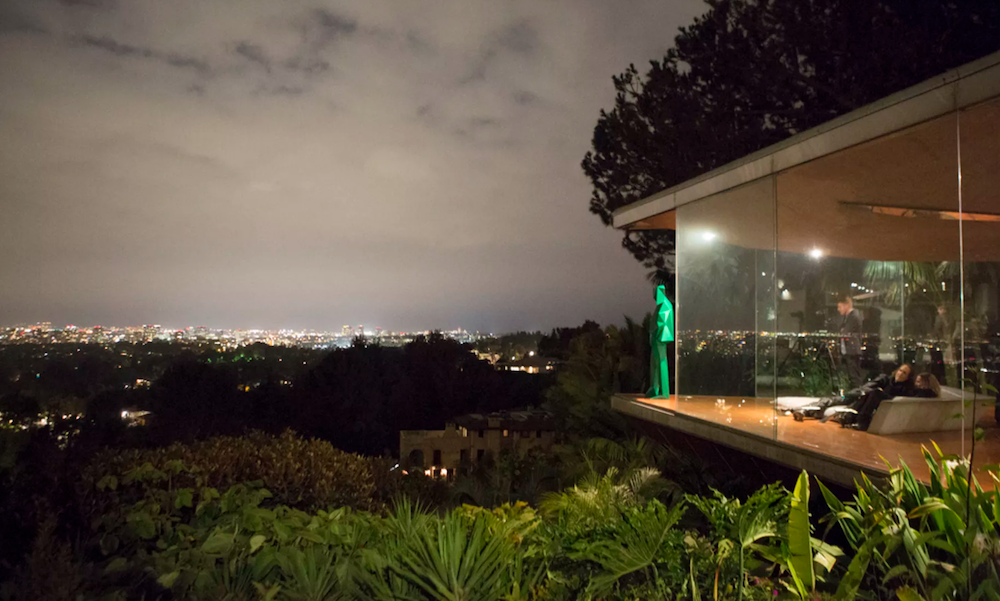
On a breezy April evening in 2013, hundreds of partygoers were shuttled up Benedict Canyon to the Sheats-Goldstein Residence. The iconic Los Angeles home designed by John Lautner was familiar to every guest, but on that night, it would appear utterly transformed.
Tucked into the house’s concrete corners were a half-dozen site-specific pieces by French artist Xavier Veilhan, one of which was a surprise musical performance with Nicolas Godin, of the French electronic band Air. Guests sipped cocktails on a deck laced with nylon cording that knit the triangular roofline to the legendary pool. In the cantilevered window of the master bedroom, a facet-cut emerald sculpture of Lautner gazed out at the city below.
It was another ambitious installation from Francois Perrin, the type that LA’s design community had come to expect from the architect and curator who defied boundaries in his field and connected artists and designers across a wide orbit.
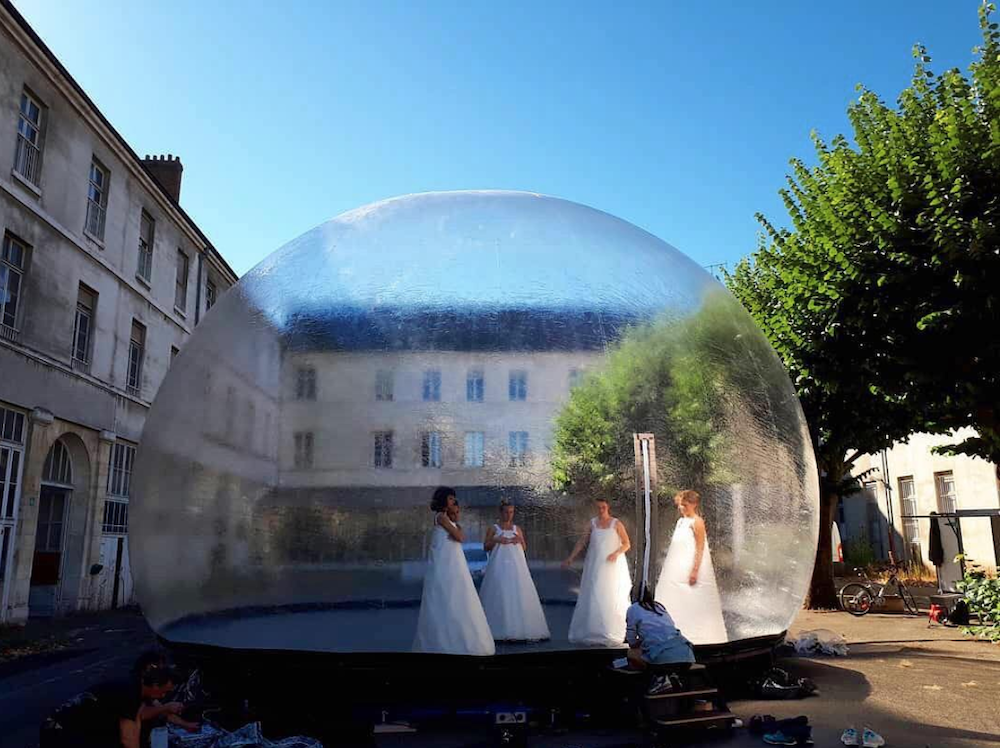
“He managed to create this really remarkable web of people and ideas and projects,” says LA architect Frank Escher. “It drew not just on his encyclopedic knowledge of recent architecture and art history, it also drew on on his ability to connect with people. That’s the thing that made him so interesting, the ease with which he built bridges and drew connections and made introductions. He was a center of gravity.”

Perrin’s concept-driven architecture made a splash, like the Skatehouse he designed for the owner of a skateboard shoe company in 2011. Although the home, which was supposed to be built in Malibu, was never realized, a full-scale model where every surface is skateable was produced, including curved ramp-like walls and a built-in headboard above the bed for grinding.
Goodbye friend. We’ll remember you, your expansive ideas, and your navy.
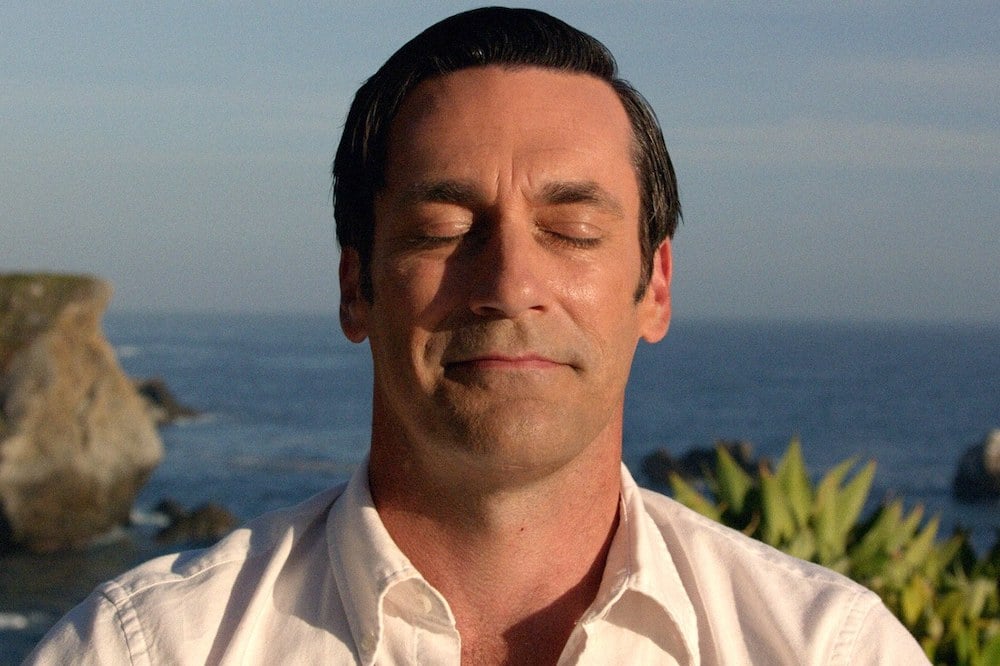
I occasionally fantasize about ditching my iPhone and all related apps for a flip phone and fewer distractions. In this dream life, I have no notifications blinking at me, I don’t care about exes liking old Instagram photos of mine after months of not talking, I have no inbox anxiety, and I never experience a phantom buzz (currently listed on WebMD as Phantom Vibration Syndrome). I sit with a contented smile cross-legged pose overlooking a cliff. I go on long walks, surrounded by exotic flora and fauna, with big, open skies overhead. Gazing at cloud formations becomes a meditation in itself.
Please consider this my formal pitch to The New Yorker: recovering tech worker of almost a decade and a half leaves the modern world behind to look at the sky, be with nature, and attend talks amongst other cloud enthusiasts. For several blissful days on a mostly-uninhabited island (unless you count the puffins) off the North Devon coast, she exists with only a notebook, disposable camera, and her conscious awareness.
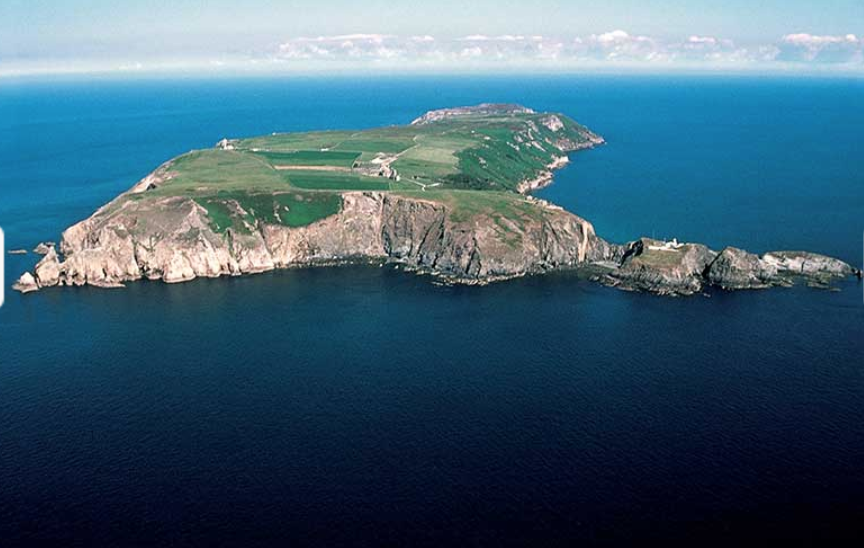
Read more about the upcoming sky gathering of the Cloud Appreciation Society on the isle of Lundy and see my earlier post on this very website from the fall. There’s a lot more cloud content on kottke.org if that’s your thing.
(First image via AMC, second via CAS)
It was a long winter in New York, my first back east in years, so many of my posts this week will likely revolve around my (indoor) media consumption.
Even if you who don’t regularly listen to podcasts, I highly recommend this episode by The Nod: Can MDMA Treat Racial Trauma?
Horizons has good resource list on therapeutic uses of psychedelics if you’re curious about current research. You can also search clinicaltrials.gov for current trials accepting new patients.
Ben Burtt was the sound designer for the original Star Wars trilogy and was responsible for coming up with many of the movies’ iconic sounds, including the lightsaber and Darth Vader’s breathing.1 In this video, Burtt talks at length about how two dozens sounds from Star Wars were developed.
The base sound for the blaster shots came from a piece of metal hitting the guy-wire of a radio tower — I have always loved the noise that high-tension cables make. And I never noticed that Vader’s use of the force was accompanied by a rumbling sound. Anyway, this is a 45-minute masterclass in scrappy sound design.
See also: how the Millennium Falcon hyperdrive malfunction noise was made, exploring the sound design of Star Wars, and This Happy Dog Sounds Like a TIE Fighter.
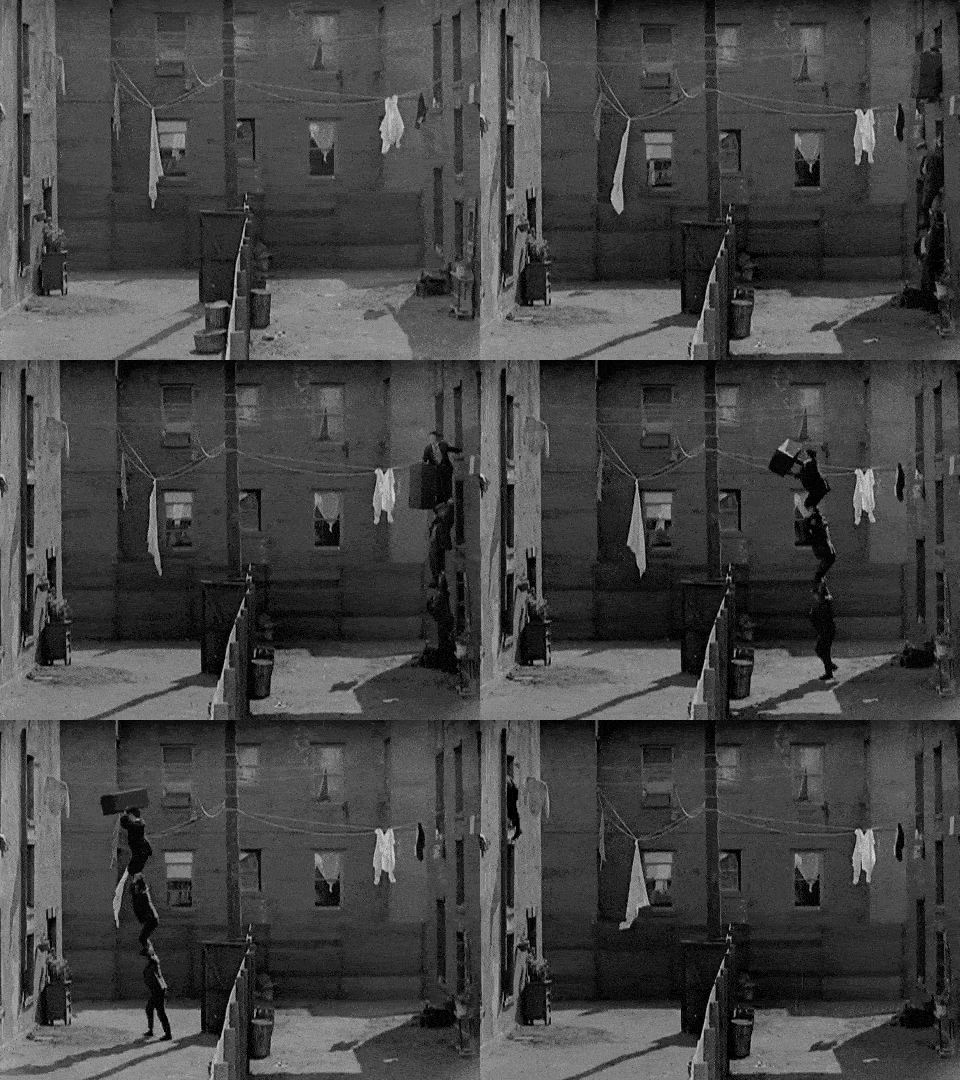
Buster Keaton: Anarchitect is a lovely piece of analysis by Will Jennings about how the legendary silent film actor used architectural space in his movies.
Keaton’s comedy derives largely from the positioning — and constant, unexpected repositioning — of his body in space, and in architectural space particularly. Unlike other slapstick performers who relished in the close-up and detailed attention to the protagonist, Keaton frequently directed the camera to film with a wide far-shot that could contain the whole of a building’s facade or urban span within the frame. Proud of always carrying out his own (often extremely dangerous) stunts, this enabled him to show the audience that his actions were performed in real-time — and real-place — rather than simply being tricks of the camera or editing process. It also allowed him to visually explore the many ways in which his body could engage with the urban form.
How to fight an outrageous medical bill. “When you challenge a medical bill, you need to find two things: the right information and the right person.”
The New Yorker asked five designers to design book covers for the Mueller Report in the event that it’s eventually published. Here are my two favorites, by Michael Bierut and Na Kim:

YouTube Executives Ignored Warnings, Letting Toxic Videos Run Rampant. “Proposals to change recommendations and curb conspiracies were sacrificed for engagement, staff say.”
Using found images as his starting point, Kai Samuels-Davis paints portraits & objects in an impressionistic way.



I am a sucker for any sort of contemporary impressionism that reminds me of the likes of van Gogh, Seurat, or Monet. I am also a sucker for observing how artists progress as they mature. Take a look at Samuels-Davis’s older work, from 2015 and before. The older stuff is good but his recent work is stronger and cleaner and more abstract without sacrificing any of the “legibility” of the figures & objects he’s representing. It does more with less. (via colossal)
How Banksy Authenticates His Work. “Like I said, it’s flipping sweet, and all executed in Banksy’s trademark tongue in cheek style. This whole authentication process would easily be my favourite artwork by Banksy.”
Whoa, this is quite the Pixar easter egg. Scroll down the thread for matching screenshots.
Working, a memoir from master interviewer and researcher Robert Caro, is coming out next week. David Marchese, no slouch himself when it comes to interviewing people, talked with Caro for the NY Times Magazine about his career, his process, and his ongoing multi-volume biography of Lyndon Johnson. Caro allows that his insatiable curiosity about getting the whole story might not necessarily be a good thing at times.
I would like to have written more books. I’d like to finish this last Johnson book. But it’s the element of time — you’re always thinking no one will know if the thing you’re working on isn’t in the book. Take the Margaret Frost thing. [The introduction of “Master of the Senate” tells the story of Margaret Frost’s humiliating and failed attempts to register to vote in Eufaula, Ala., in 1957.] You say everybody knows about blacks not being able to vote in the South, so you don’t have to go into that. But I’d remembered coming across testimony from the Civil Rights Commission and I went, This is horrible. A sense of anger boils up, and it leads you to say, “What was it like if you tried to register to vote?” Don’t just say, “It’s hard.” What was it really like? You think you understand how hard life is in the South because you’ve seen movies about it. But then you learn about a guy who wanted to vote, Margaret Frost’s husband, who sees someone drive to his house and shoot out the light on the porch. He was going to call the police but then saw it was a police car driving away from his property. It was like the Jews in Nazi Germany: There was no place for these people to turn. So, do you want to write the book without showing that? The answer is no.
Has anyone ever done an interview with an expert interviewer about the experience of interviewing another expert interviewer? I would definitely read a debrief of Marchese on how to get someone like Caro, who knows all the tricks of the trade, to actually tell you something that they don’t want you to know. I’m also thinking of Errol Morris and Seymour Hersh at the end of Wormwood and how Morris can’t quite get what he wants from Hersh.
Joining Carl’s Jr. and White Castle, Burger King is adding a tastes-like-beef veggie burger to their menu.
This week, Burger King is introducing a version of its iconic Whopper sandwich filled with a vegetarian patty from the start-up Impossible Foods.
The Impossible Whopper, as it will be known, is the biggest validation — and expansion opportunity — for a young industry that is looking to mimic and replace meat with plant-based alternatives.
The roll-out will start in the chain’s St. Louis restaurants and then proceed nationwide if all goes well. Here’s a commercial in which hardcore BK fans can’t tell the Impossible Whopper from their beloved beef version:
As an increasingly conflicted omnivore, I would be perfectly happy if all low- to mid-end burgers were replaced by veggie clones — I don’t care that the Quarter Pounder I eat once every three months is beef…I just want it to taste like a Quarter Pounder — and then high-end burgers (the ones where you can tell the difference and you eat only rarely) were made from humanely raised beef for which consumers pay an appropriate price that accurately reflects the true-cost accounting of their production. A meat burger that costs a dollar is just being paid for in other ways by someone or something else.
For his series of documentary short films, States of America, Brad Barber is profiling one person from each of the 50 US states.
In the United States, you might be born one place, go to school or work in another, then pack it up and move somewhere else for a thousand different reasons of choice or circumstance. You might have been born in another country. What is it that ties us to these places and makes us adopt them as our home? How does our state affect who we are and how we identify ourselves? What makes us from there?
For Wisconsin, Barber profiled Xong Xiong, a member of the Hmong community whose parents moved there from a refugee camp in Thailand.
Xong was born in a Hmong refugee camp in Thailand but moved to Wisconsin as a child after her family couldn’t safely return to Laos following the Vietnam War. There she grew up as part of a large influx of twice dislocated Hmong refugees who were not always welcomed with open arms in the small city of La Crosse. Despite her experiences with racism, poor integration, and detachment from her own culture, Xong is determined to help the younger generation born in America stay connected.
Xiong lives not too far from where I grew up as a kid. The subject of the Vermont short film lives pretty close to where I am now:
Here’s a trailer for the series. (thx johan)
It’s only Monday, but I’m confident this will be my favorite read of the week. Since 2012, paleontologist Robert DePalma has been excavating a site in North Dakota that he thinks is “an incredible and unprecedented discovery”. What’s potentially so special about this site? Fossils from dinosaurs and other animals from thousands of years before the asteroid impact are very hard to come by, leading some to believe that dinosaurs died out before the impact, not because of it. DePalma believes the site preserves, as if in amber, the day, the precise and exact day (and perhaps even the exact hour), that the massive asteroid believed to have caused the extinction of the dinosaurs hit the Earth 65 million years ago.
As DePalma carefully excavated the upper layers, he began uncovering an extraordinary array of fossils, exceedingly delicate but marvellously well preserved. “There’s amazing plant material in there, all interlaced and interlocked,” he recalled. “There are logjams of wood, fish pressed against cypress — tree root bundles, tree trunks smeared with amber.” Most fossils end up being squashed flat by the pressure of the overlying stone, but here everything was three-dimensional, including the fish, having been encased in sediment all at once, which acted as a support. “You see skin, you see dorsal fins literally sticking straight up in the sediments, species new to science,” he said. As he dug, the momentousness of what he had come across slowly dawned on him. If the site was what he hoped, he had made the most important paleontological discovery of the new century.
The type of evidence present at the site is almost too good to believe:
He noted that every fish he’d found in the site had died with its mouth open, which may indicate that the fish had been gasping as they suffocated in the sediment-laden water.
“Most died in a vertical position in the sediment, didn’t even tip over on their sides,” he said. “And they weren’t scavenged, because whatever would have dug them up afterward was probably gone.”
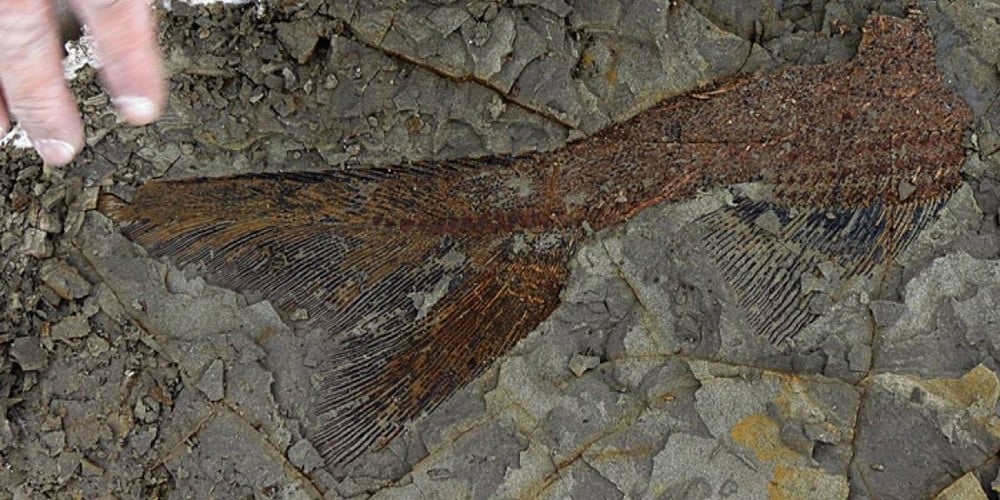
Clues from the growth stages of animals and pollen found at the site might even point to what season it was when the asteroid struck…DePalma’s current guess is in autumn. And then there’s this, about a burrow that DePalma discovered:
“Any Cretaceous mammal burrow is incredibly rare,” he said. “But this one is impossible — it’s dug right through the KT boundary.” Perhaps, he said, the mammal survived the impact and the flood, burrowed into the mud to escape the freezing darkness, then died. “It may have been born in the Cretaceous and died in the Paleocene,” he said.
A scientific paper is forthcoming this week. I couldn’t find it online, but this piece in Science says that it’s generating some discussion and controversy already.
“Outcrops like [this] are the reasons many of us are drawn to geology,” says David Kring, a geologist at the Lunar and Planetary Institute in Houston, Texas, who wasn’t a member of the research team. “Those few meters of rock record the wrath of the Chicxulub impact and the devastation it caused.” But not everyone has fully embraced the find, perhaps in part because it was first announced to the world last week in an article in The New Yorker. The paper, in the Proceedings of the National Academy of Sciences (PNAS), does not include all the scientific claims mentioned in The New Yorker story, including that numerous dinosaurs as well as fish were buried at the site.
“I hope this is all legit-I’m just not 100% convinced yet,” says Thomas Tobin, a geologist at the University of Alabama in Tuscaloosa. Tobin says the PNAS paper is densely packed with detail from paleontology, sedimentology, geochemistry, and more. “No one is an expert on all of those subjects,” he says, so it’s going to take a few months for the research community to digest the findings and evaluate whether they support such extraordinary conclusions.
I’m eager to follow the progress of this story as more of the results are released and analyzed by the scientific community.
Update: The BBC has made a documentary narrated by David Attenborough about the Tanis site and the discoveries that have been made there so far. There’s evidence that they’ve discovered fragments of the actual asteroid impactor.
The sturgeon and paddlefish in this fossil tangle are key. They have small particles stuck in their gills. These are the spherules of molten rock kicked out from the impact that then fell back across the planet. The fish would have breathed in the particles as they entered the river.
The spherules have been linked chemically and by radiometric dating to the Mexican impact location, and in two of the particles recovered from preserved tree resin there are also tiny inclusions that imply an extra-terrestrial origin.
“When we noticed there were inclusions within these little glass spherules, we chemically analysed them at the Diamond X-ray synchrotron near Oxford,” explains Prof Phil Manning, who is Mr DePalma’s PhD supervisor at Manchester.
“We were able to pull apart the chemistry and identify the composition of that material. All the evidence, all of the chemical data, from that study suggests strongly that we’re looking at a piece of the impactor; of the asteroid that ended it for the dinosaurs.”
The program will air on BBC on April 15 and sometime later this year on PBS.
John Boswell has made a 10-minute time lapse video showing the history of the universe, from its formation 13.8 billion years ago up to the present. Each second of the video represents the passing of 22 million years. But don’t blink right near the end…you might miss the tiny fraction of a second that represents the entire history of humanity.
See also: Boswell’s Timelapse of the Future, a dramatized time lapse of possible events from now until the heat death of the universe many trillion trillion trillions of years from now.
Bike Insights. “We use intuitive bike diagrams and explanations written in plain English to help guide you in the search for your perfect bike.”
I’m not sure I can bring myself to watch Free Solo (my hands are getting sweaty and I’m feeling faint just thinking about it), but watching Alex Honnold critique famous rock climbing scenes from movies like Mission Impossible II, Star Trek V, and Cliffhanger is pretty entertaining and informative.
It’s no surprise that with a few obvious caveats, Tom Cruise’s climbing scene in MI:2 gets high marks. The MI stunt work is always legit.
I’ve been keeping track of every media thing I “consume”, so here are quick reviews of some things I’ve read, seen, heard, and experienced in the past month and a half. For books, I’m currently reading Silk Roads and listening to the audiobook of Guns, Germs, and Steel, which are rhyming in interesting ways. Looking back, I haven’t listened to any significant new music in months and months. What am I missing?
Turnton kitchen scissors. Ernest Wright very kindly sent me a pair of their kitchen scissors. I’ve posted so much about their story that I can’t really be objective at this point no matter what, so I feel ok saying the craftsmanship of these scissors is flat out amazing. (A-)
Lord of the Rings: The Two Towers. Never not entertaining. (A-)
Tag. Kinda fun but the real-life story was better. (C+)
Alita: Battle Angel. The big eyes worked. (B)
Spider-Man: Into the Spider-Verse. Liked this even more the second time around and I love reading and watching all the making-of stuff. (A-)
Cold War. Along with Roma, Spider-Verse, The Favourite, and If Beale Street Could Talk, this was one of the most beautifully shot films of 2018. Every frame a painting, indeed. (B+)
The Grinch. I wasn’t expecting to sympathize so much with The Grinch here. The social safety net constructed by the upper middle class Whos totally failed the most vulnerable member of their society in a particularly heartless way. Those Whos kinda had it coming. (B)
Mortal Engines. Why was this panned so much? It wasn’t great but it was entertaining…this and Alita felt similar to me. (B)
Leaving Neverland. I wrote some thoughts about this here. (A)
Why Is This Happening? The Uninhabitable Earth with David Wallace-Wells. Fascinating and scary interview of David Wallace-Wells about his new book, The Uninhabitable Earth. Weirdly, I felt almost hopeful at the end of it though. (A)
Captain Marvel. I liked Brie Larson in this role very much. Looking forward to seeing more in Avengers: Endgame. (B+)
Crouching Tiger, Hidden Dragon. Great movie. Very few films have matched the inventiveness of its action sequences since it came out. (A)
Apollo 11. The nearest IMAX theater is more than a 3-hour drive from where I live, so I had to watch this in a tiny theater with what sounded like a single speaker located at the front of the room. This greatly diminished the intended effect of the pristine 65mm footage. (B)
Living more than a 3-hour drive from the nearest IMAX theater. (F)
The History of English Podcast. This was recommended to me by a reader because of this post. I listened to a pair of episodes about surnames: What’s In a Name? and Trade Names. Super interesting stuff. (A-)
Kohler 10282-AK-CP shower head. My shower head sucked, I replaced it with this one, and now my shower head doesn’t suck anymore. (B+)
Salt Fat Acid Heat. The Salt episode intensified my desire to go to Japan. (B+)
Aquaman. Not as good as Wonder Woman, but way better than Justice League or any of the other recent DC movies. (B)
Cooking As an Art, With Jerry Saltz. This podcast episode is pretty uneven in spots, but when Chang just lets Saltz talk, it’s a goldmine of quotable ideas. “Pleasure is an important form of knowledge.” (A-)
The Unknown Known. Late in the film, Donald Rumsfeld says to his interlocutor Errol Morris: “I think you’re probably, Errol, chasing the wrong rabbit here.” Morris got a bit unlucky here in his choice of subject — by the end of the movie, we don’t know anything more about Rumsfeld than when we started. (C+)
Chef’s Table, Enrique Olvera. Oh man, I can’t wait to go to Pujol next week. (A-)
Kindle Paperwhite. I upgraded from my old Paperwhite. I like the flat screen, that it’s lighter, and the waterproofing is going to come in handy, but the speed and screen quality are pretty much exactly the same. Are e-ink interfaces already as sharp & responsive as they are ever going to be? (A)
Bumblebee. Entertaining, but I still have a problem with the Transformers movies because the robots are so overly detailed that it’s hard to know where to look when they’re on-screen. They should be more abstract and iconic (a la Scott McCloud’s Big Triangle in Understanding Comics). (B+)
Emily Wilson on Translations and Language. Having not read multiple translations of Homer, some of this was over my head, but the rest was really interesting. (A-)
Generative.fm. Been listening to this while working more or less constantly for the past week, mostly the “Otherness” and “Meditation” tracks. (A-)
Past installments of my media diet are available here.
I’m Vaccinating My Child the Natural Way — With Measles. “That’s just one person’s opinion backed by numerous peer-reviewed scientific studies. The literature on Facebook and Reddit tells a different story.”
Newer posts





Socials & More