Entries for March 2018

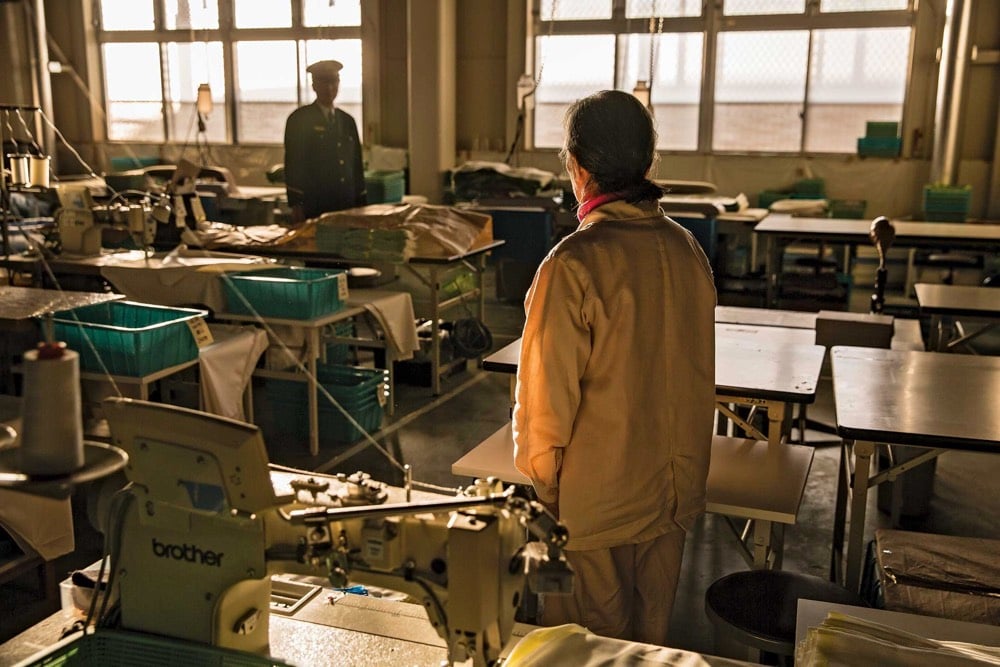
In Japan, where 27.3% of the population is 65 or older, elderly women are committing petty crimes like shoplifting in order to go to jail to find care and community that is increasingly denied them elsewhere. Japan’s jails are becoming nursing homes.
Why have so many otherwise law-abiding elderly women resorted to petty theft? Caring for Japanese seniors once fell to families and communities, but that’s changing. From 1980 to 2015, the number of seniors living alone increased more than sixfold, to almost 6 million. And a 2017 survey by Tokyo’s government found that more than half of seniors caught shoplifting live alone; 40 percent either don’t have family or rarely speak with relatives. These people often say they have no one to turn to when they need help.
Even women with a place to go describe feeling invisible. “They may have a house. They may have a family. But that doesn’t mean they have a place they feel at home,” says Yumi Muranaka, head warden of Iwakuni Women’s Prison, 30 miles outside Hiroshima. “They feel they are not understood. They feel they are only recognized as someone who gets the house chores done.”
All photos by Shiho Fukada. The first photo is of Mrs. F, aged 89, who stole “rice, strawberries, cold medicine”. She says: “I was living alone on welfare. I used to live with my daughter’s family and used all my savings taking care of an abusive and violent son-in-law.” The woman in the second photo recounts:
The first time I shoplifted was about 13 years ago. I wandered into a bookstore in town and stole a paperback novel. I was caught, taken to a police station, and questioned by the sweetest police officer. He was so kind. He listened to everything I wanted to say. I felt I was being heard for the first time in my life. In the end, he gently tapped on my shoulder and said, ‘I understand you were lonely, but don’t do this again.’
I can’t tell you how much I enjoy working in the prison factory. The other day, when I was complimented on how efficient and meticulous I was, I grasped the joy of working. I regret that I never worked. My life would have been different.
I enjoy my life in prison more. There are always people around, and I don’t feel lonely here. When I got out the second time, I promised that I wouldn’t go back. But when I was out, I couldn’t help feeling nostalgic.
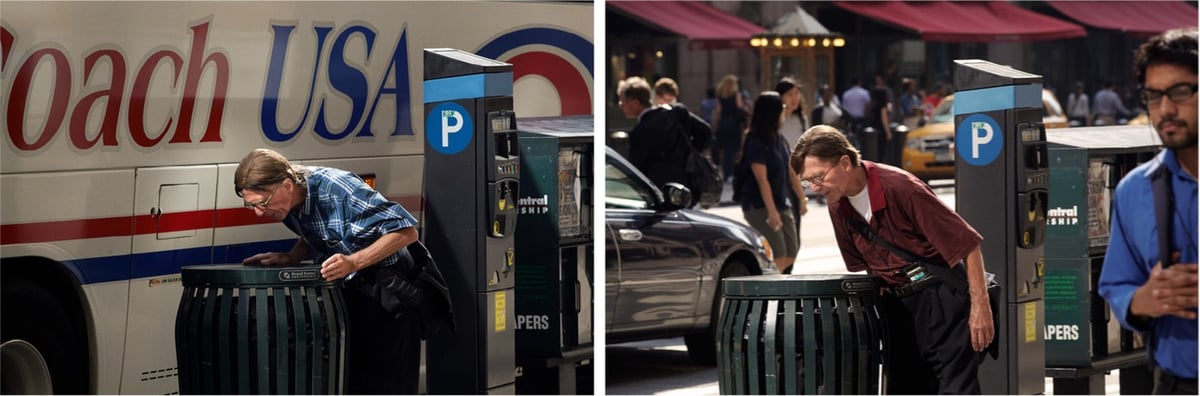
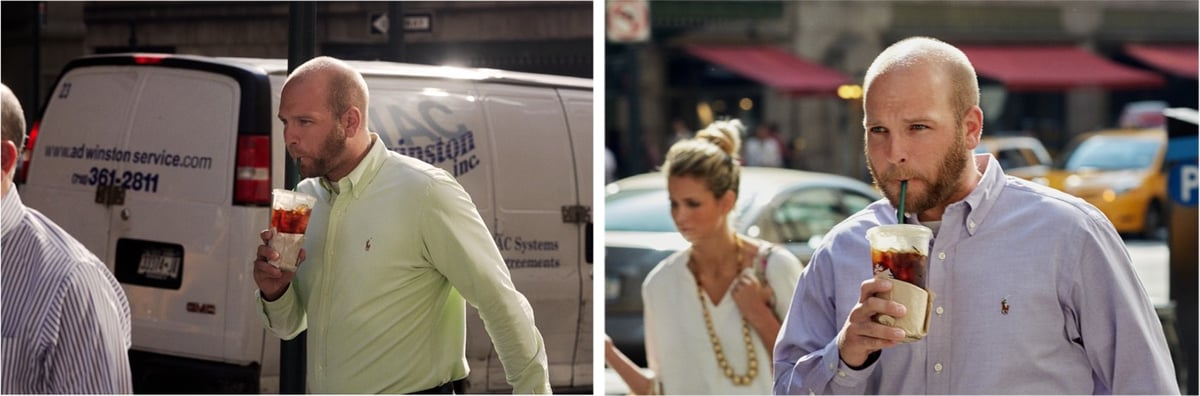
For 9 years, photographer Peter Funch stood on a street corner near Grand Central Terminal, photographing the same people over and over again on their commutes to work…often wearing the same clothes and drinking the same drink. The result is 42nd and Vanderbilt (also available as a book).
The corner of 42nd Street and Vanderbilt Avenue… what’s that? It’s a patch of nowhere that hides, like similar patches of nowhere, in all cities everywhere. It’s the space of Edward Hopper. It’s the real estate equivalent of a Styrofoam packing peanut. It’s blank, and it’s in this blankness that we circle back to Warhol and repetition and the aesthetic experience we enjoy when we look from one Marilyn to the next to see which screened face has what kind of silkscreen printing error.
Reminds me a little of several things, but mostly of Hans Eijkelboom’s People of the Twenty-First Century.
A turntable orchestra that includes several past DJ world champions recently performed Mendelssohn’s Concerto in E Minor, which was the first LP released back in 1948.
I love everything about this: the history, the music, and the aesthetic of the performers sitting on the floor with their shoes off, wearing tuxedos with optional non-fancy headwear.
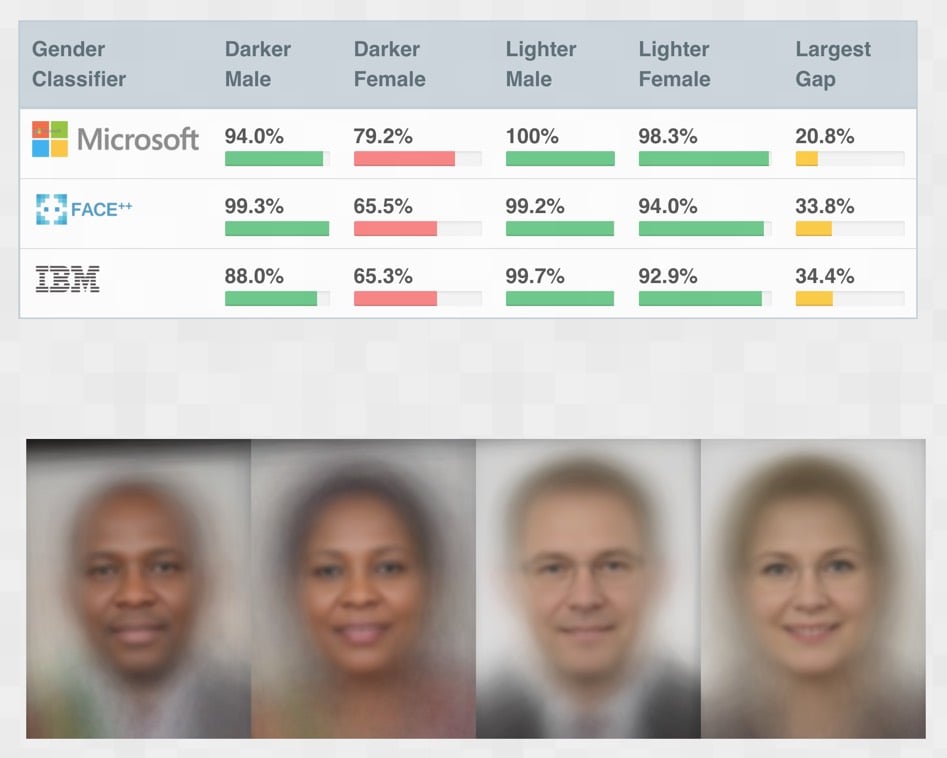
For her Gender Shades project, MIT researcher Joy Buolamwini fed over 1000 faces of different genders and skin tones into three AI-powered facial recognition systems from Microsoft, IBM, and Face++ to see how well they could recognize different kinds of faces.
The systems all performed well overall, but recognized male faces more readily than female faces and performed better on lighter skinned subjects than darker skinned subjects. For instance, 93.6% of gender misclassification errors by Microsoft’s system were of darker skinned people.
Her message near the end of the video is worth heeding:
We have entered the age of automation overconfident yet underprepared. If we fail to make ethical and inclusive artificial intelligence, we risk losing gains made in civil rights and gender equity under the guise of machine neutrality.
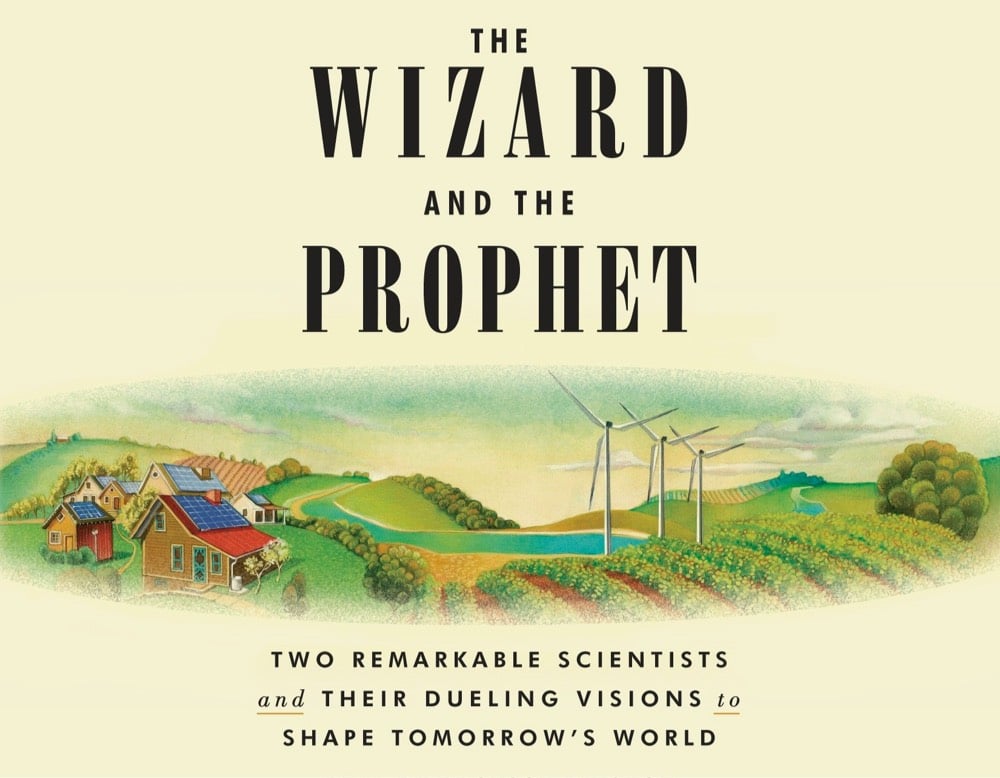
A couple of weeks ago, I finished Charles Mann’s The Wizard and the Prophet. Normally I shy away from terms like “must-read” or “important” when talking about books, but I’m making an exception for this one. The Wizard and the Prophet is an important book, and I urge you to read it. (The chapter on climate change, including its fascinating history, is alone worth the effort.)
Mann is the author of 1491 and 1493 (both excellent, particularly 1491, which is one of my favorite nonfiction books ever) and I’ve been thinking of this one as the natural third part of a trilogy — it easily could have been called 2092. The Wizard and the Prophet is about two “dueling visions” of how humanity can provide food, energy, housing, and the pursuit of happiness to an estimated population of 10 billion in 2050 and beyond. According to Mann, this struggle is exemplified by two men: William Vogt and Norman Bourlag. The book, in a nutshell:
Vogt, born in 1902, laid out the basic ideas for the modern environmental movement. In particular, he founded what the Hampshire College demographer Betsy Hartmann has called “apocalyptic environmentalism” — the belief that unless humankind drastically reduces consumption its growing numbers and appetite will overwhelm the planet’s ecosystems. In best-selling books and powerful speeches, Vogt argued that affluence is not our greatest achievement but our biggest problem. Our prosperity is temporary, he said, because it is based on taking more from Earth than it can give. If we continue, the unavoidable result will be devastation on a global scale, perhaps including our extinction. Cut back! Cut back! was his mantra. Otherwise everyone will lose!
Borlaug, born twelve years later, has become the emblem of what has been termed “techno-optimism” or “cornucopianism” — the view that science and technology, properly applied, can help us produce our way out of our predicament. Exemplifying this idea, Borlaug was the primary figure in the research that in the 1960s created the “Green Revolution,” the combination of high-yielding crop varieties and agronomic techniques that raised grain harvests around the world, helping to avert tens of millions of deaths from hunger. To Borlaug, affluence was not the problem but the solution. Only by getting richer, smarter, and more knowledgeable can humankind create the science that will resolve our environmental dilemmas. Innovate! Innovate! was Borlaug’s cry. Only in that way can everyone win!
Or put more succinctly:
Prophets look at the world as finite, and people as constrained by their environment. Wizards see possibilities as inexhaustible, and humans as wily managers of the planet. One views growth and development as the lot and blessing of our species; others regard stability and preservation as our future and our goal. Wizards regard Earth as a toolbox, its contents freely available for use; Prophets think of the natural world as embodying an overarching order that should not casually be disturbed.
To combat climate change, should we stop flying (as meteorologist Eric Holthaus has urged) & switch to renewable energy or should we capture carbon from coal plants & build nuclear power plants? GMO crops or community-based organic farming? How can 10 billion people be happy and prosperous without ruining the planet?
I came to this book with an open mind, and came away far more informed about the debate but even more unsure about the way forward. The book offers no easy answers — it’s difficult to tell where Mann himself stands on the wizard/prophet continuum (although I would suspect more wizard than prophet, which is likely my leaning as well) — but it does ask many of the right questions. Wizards can order the book from Amazon while Prophets should seek it out at their local bookstore or library.
Further reading: an interview with Mann in Grist; Can Planet Earth Feed 10 Billion People?, an Atlantic article by Mann; The Edge of the Petri Dish, a piece by Mann in The Breakthrough; State of the Species, a 2012 piece by Mann that was an early attempt at W vs P; and The Wizard and the Prophet: On Steven Pinker and Yuval Noah Harari.

For his project Cascade of Lava, photographer Michael Shainblum captured several photos of lava pouring out into the ocean in Volcanoes National Park in Hawaii. The double rainbow one is just…
Shainblum also took some photos during the solar eclipse last year.
Sorry for the delay, the Noticing newsletter just went out! Did you know that if you say “Isle of Dogs” out loud, it sounds like “I love dogs”!?
‘Isle of Dogs’ Backlash: Wes Anderson Criticized for Racial Stereotypes and ‘Marginalizing Japanese Culture’
The British Museum of Your Stuff. “A team of museum experts obtained this almost new wallet by jostling a tourist on a Nevsky Prospekt trolleybus in St. Petersburg, Russia, and relieving him of it — tough cheese on him.”
It’s relatively difficult to find decent shortlists of the most beautiful books ever made. Here’s an all-European one made by a medievalist and facsimile expert, with the Lindisfarne Gospels as number one.
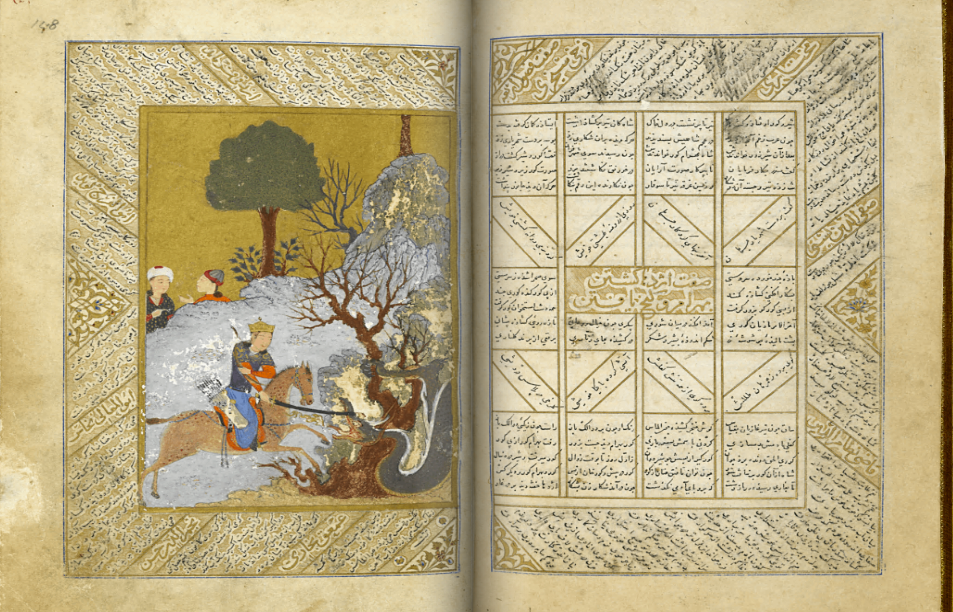
I wonder where the Miscellany of Iskander Sultan might fit in if you made the list worldwide. It’s 15th century, Persian, tiny, and gorgeous. It’s certainly one of the most beautiful books, cover to cover, I’ve ever seen. (You can peruse the pages at the British Library’s website).
Its content is also much more my speed:
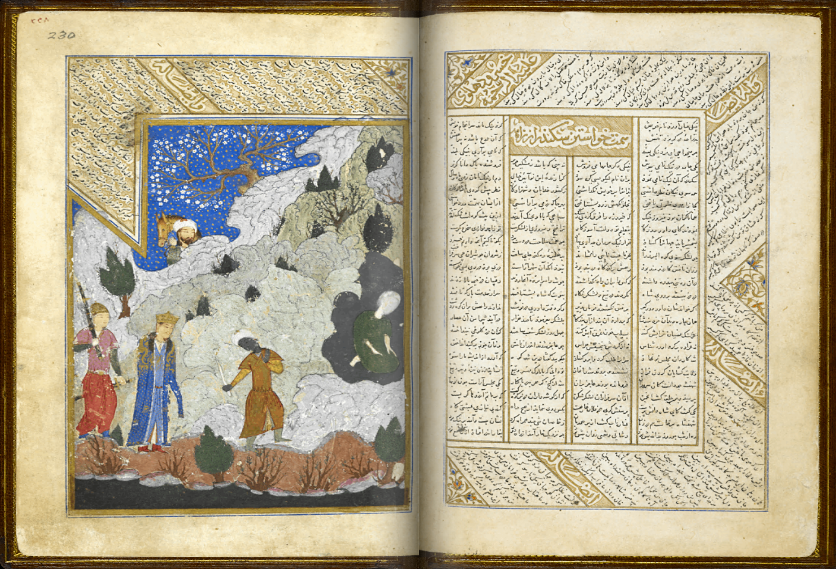
Imagine being a position to commission a magnificent one-volume selection of the reading matter you would most like to carry around on your travels - a kind of miniature personal library. With no expense spared, you could order the most skilful calligraphers in the land to write it, the best painters to illustrate it, the best illuminators to decorate it, the best binders to bind it…
[The 23 texts in the Miscellany] include a wide-ranging selection of religious, narrative and lyrical poetry; in prose, there are treatises on astronomy and astrology, geometry, medicine, farriery, alchemy, history, and Islamic law.
It’s just 5” by 7”. This was a personal book, fashioned to look like a jewel box.

It’s a Borgesian fantasia.
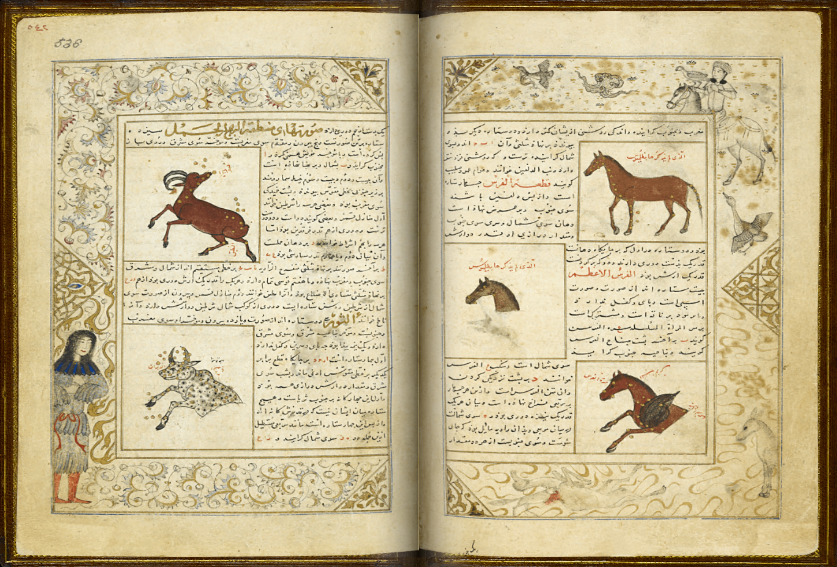
Although the paintings are marvelous, it is the formatting of the text that makes the book truly striking. The manuscript is collage-like in appearance. The text is arranged like a work of architecture, each chunk of calligraphy interlocking with another like the pieces of a puzzle box. The gathered excerpts that comprise the Miscellany are stitched together on its pages like patches on a quilt. Sections of text stack on top of one another, interlaced like fretwork. Bursts of flowers and tangles of vines fill the empty spaces between sections of writing. In one spread, a poem sits in a block at the center of each page, while another poem radiates out from it like rays of light. In another, a bright painting fills the page, while a golden block of text zigzags around its corner. The pages of this book cannot be read in the usual way. They must be navigated and explored, wandered through like labyrinths.
How exciting is that?
Dan Cohen is a history professor and administrator at Northeastern University; he was also the executive director of the Digital Public Library of America, and has been a general public smartypants in the field of digital humanities.
Dan recently wrote a blog post titled “Back to the Blog,” which muses on a microtrend I’ve seen as well. Friends and writers, not thousands or probably even hundreds, but solid dozens, returning to old-fashioned weblogging as a way to get their thoughts in order, take ownership of their intellectual property, get away from the Twitter hubbub, stick it to Facebook, or any one of a dozen other reasons to write a blog.
Now, a lot of the professional infrastructure of blogging that once was is broken. The ad networks that supported people don’t exist or don’t work the same way. The distribution, via RSS and then Google Reader, was monopolized and then fractured. Some of the blogging networks take as much of a walled-garden approach to their sites as Facebook does.
But, if you just want to blog (which is different from making a living as a blogger), it’s probably easier to start and host your own blog than it ever was. What’s holding people back, Cohen writes, isn’t really technical:
It is psychological gravity, not technical inertia, however, that is the greater force against the open web. Human beings are social animals and centralized social media like Twitter and Facebook provide a powerful sense of ambient humanity—the feeling that “others are here”—that is often missing when one writes on one’s own site. Facebook has a whole team of Ph.D.s in social psychology finding ways to increase that feeling of ambient humanity and thus increase your usage of their service.
The metaphor suggests that blogging either needs its own mechanisms of ambient humanity — which it’s had, in the form of links, trackbacks, conversations, even (gulp) comments, all of which replicated at least a fraction of the buzz that social media has — or it needs a kind of escape velocity to break that gravitational pull. Gravity or speed. Or a hybrid of both.
My friend Helen Rosner loves crispy poultry. She evangelizes dry-brined turkey and fried chicken given an extra turn under a heat lamp. Others may have been surprised when she turned her hair dryer loose on a roaster in the hopes of sucking just a little more moisture from the bird’s skin before it got properly cooked. I was not.
Hell of a lifehack, Hels.
Update: Helen has added a full write-up and recipe for hair dryer chicken (or Roast Chicken à la Dyson) at The New Yorker.
A group of high school friends has been playing an elaborate game of tag since reconnecting at a reunion almost 30 years ago. A few years ago, one of the players wrote a piece for The Guardian about the game.
Since we had busy lives and lived hundreds of miles apart, we agreed on three rules. First, we would play it only in February each year; second, you were not allowed immediately to tag back the person who had tagged you; and finally, you had to declare to the group that you were “it”.
Now we are grown men, we don’t run like Usain Bolt, so subterfuge and collusion have become our weapons. Eleven months of the year are spent planning. Collaborating with a friend is where the fun is — we can spend hours discussing approaches.
I was tagged spectacularly a few years back when a friend popped round to show me his new car. As I approached it, Sean sprang out of the boot where he’d been hiding and tagged me. He’d flown 800 miles from Seattle to San Francisco just to stop being “it” — to shrug off the “mantle of shame”, as we call it. My wife was so startled she fell and injured her knee, but she wasn’t angry; she was pleased to see Sean.
Hollywood, who knows a winning idea when they see one,1 has now based a movie on the game. Tag stars Jon Hamm, Ed Helms, Jeremy Renner, and Rashida Jones; here’s the trailer:
And if you think some of the tagging scenarios in the movie are too good to be true (a funeral, really?)…yeah, no:
Some things we did early on we wouldn’t do now — like when Mike sneaked into Brian’s house at night, crept into the bedroom and woke him up to tag him, surprising the life out of him and his girlfriend.
Perhaps one of the most unexpected tags was during Mike’s father’s funeral. During the service, he felt a hand on his shoulder and turned to find Joe mouthing, “You’re it.” Afterwards, he said his father would have approved, because he found our game hilarious.
A decades-long game of adult tag is exactly the type of thing I love reading about but would never participate in. I am a huge stick-in-the-mud, but I’ve made my peace with it.
“Search the web to plant trees…” The Ecosia search engine donates a significant portion of its profits to plant trees (23 million so far).
For the final show of The Arsenio Hall Show, Queen Latifah organized a huge amount of hip hop talent for a tribute. It’s amazing. Some more details here. The segment features Yo-Yo, MC Lyte, Naughty by Nature, A Tribe Called Quest, Fu-Schnickens, CL Smooth, Guru from Gang Starr, Das EFX, GZA and few others from Wu-Tang Clan, KRS-One, and Mad Lion, and, as mentioned previously, is amazing. (via @mattwhitlockPM)
The 100 Most Jewish Foods. Love the spinning table interface.
In this episode of the Nerdwriter, Evan Puschak imagines a film school class that studies the influences of Call Me By Your Name, which include a pair of Merchant Ivory films, A Room With a View and Maurice. One of the best love stories I’ve seen in recent years, Call Me By Your Name is one of those movies I’m waiting to watch again after some time, saving it like the last chocolate in the box.
Prompted by a question from my kids: How big is a quark? “the radius of the quark is smaller than 43 billion-billionths of a centimetre”
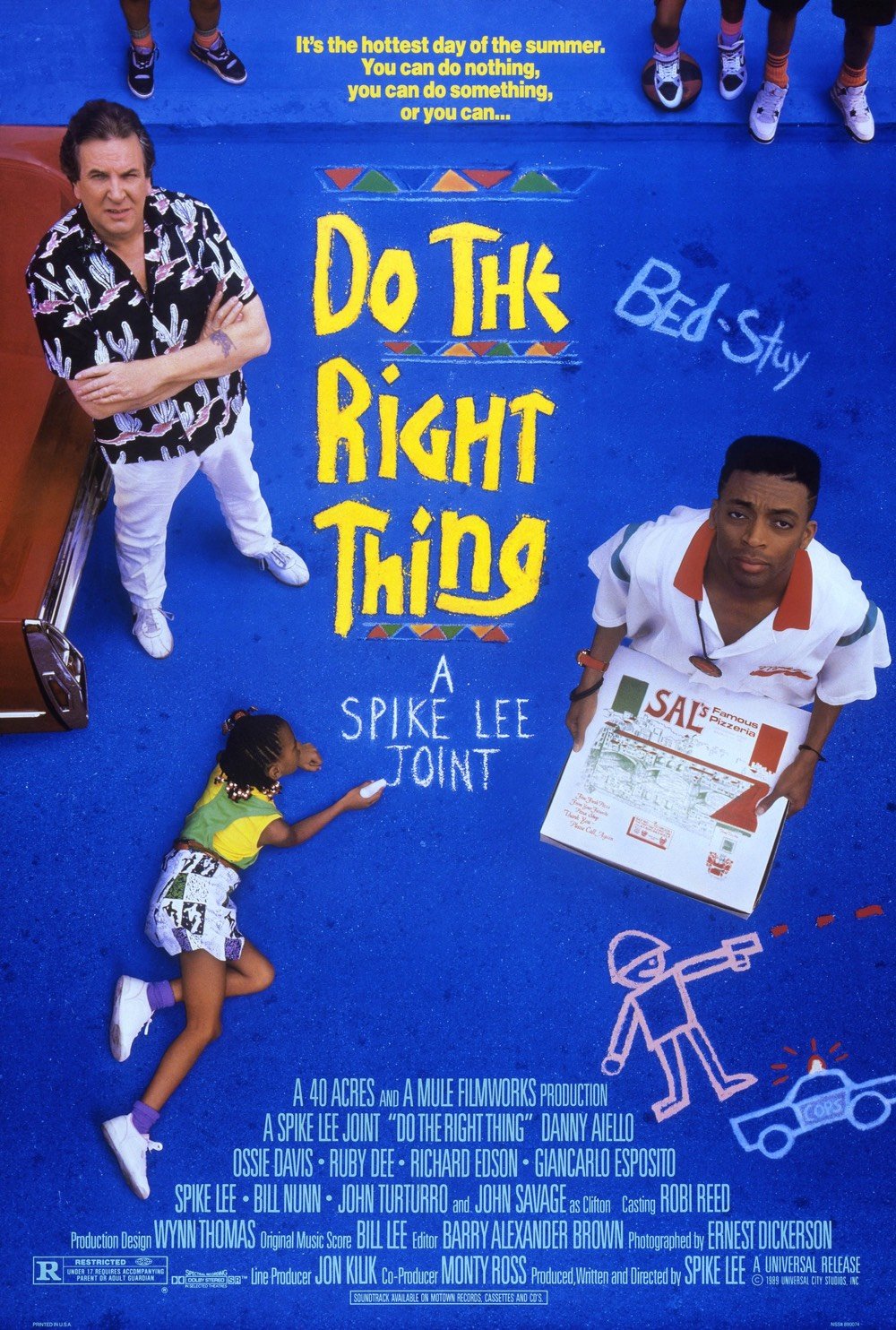
As an art director in the 80s and 90s, Tom Martin created some of that era’s most memorable movie posters. In this post, Tony Pierce writes about the creation of seven of Martin’s most iconic posters, including those for Jurassic Park, Do The Right Thing, Twins, and Schindler’s List.
On a very different Steven Spielberg film, Schindler’s List, some of the submissions that weren’t chosen as the final poster are as interesting as the one that was due to the fame of their designers.
Tony Seiniger, Anthony Goldschmidt, and Bill Gold were among the designers who took a crack at the poster. And then there was legendary designer Saul Bass.
“It was one of the high points of my career,” Martin says. “I was in a meeting at a sound studio and it was Saul Bass, Steven Spielberg, and myself, in a room, looking at Saul’s poster.”
Even though Bass was well established at that point in his career he still fought for his ideas and pitched his posters to Spielberg with as much conviction as anyone.
“There was still that competitive drive,” Martin remembers. “Saul was still competitive. He still wanted to be chosen, still… wanted that approval.”
Unfortunately for Bass, his work ultimately lost out to independent art director Georgia Young who designed the final poster.
See also this massive online collection of movie posters and this other massive online collection of movie posters.
As Isle of Dogs prepares to enter theaters,1 Honest Trailers created a bitingly truthful trailer for all of Wes Anderson’s films, in which they ding the director for symmetry, nostalgia, whimsey, whip pans, the overwhelming maleness of his ennui-suffering & disaffected protagonists, and Bill Murray on a tiny motorcycle in a profile shot. The description of his films as “meticulously crafted awkward family fables that make you kinda happy, kinda sad, and kinda unsure when you’re supposed to laugh or not” is pretty much spot-on and the reason I like them so much.
In 2012, before the release of Moonrise Kingdom, Anderson talked about his approach to movies on NPR’s Fresh Air:
I have a way of filming things and staging them and designing sets. There were times when I thought I should change my approach, but in fact, this is what I like to do. It’s sort of like my handwriting as a movie director. And somewhere along the way, I think I’ve made the decision: I’m going to write in my own handwriting. That’s just sort of my way.
And that’s why he’s “your barista’s favorite director”.
I always feel a little silly when I click through to watch videos with titles like “Plane Miraculously Flies To Safety After Sudden Engine Failure”, like I’m indulging in clickbait, a sugary online snack when I’m supposed to be consuming healthier fare. But my dad was a pilot when I was a kid, so I will watch any flying video that comes along (along with 35 minutes of “related videos” on YouTube…send help!)
But this one in particular is worth a look because all the drama lasts for less than a minute and the first person view from the camera (which is mounted on the pilot’s head) puts you right into the cockpit.1 One of the coolest things about wearable cameras like the GoPro is that ability to put the viewer into the action, to create a visceral sense of empathy with that person doing that thing. That pilot’s eyes are our eyes for those 60 seconds. You see the engine fail. Your arm reaches out to the controls and attempts to address the problem. You pull the plane up into a glide. You look around for somewhere to ditch. Ah, there. You turn the plane. You keep trying to restart the engine… I don’t know about you, but my palms were pretty sweaty by the time that video was over.
I’ve been paying way more attention to the different ways in which filmmakers use the camera to create this sort of empathy since watching Evan Puschak’s video on how David Fincher’s camera hijacks your eyes. The first-person camera view, where the camera moves as if it were swiveling around on a real person’s neck, is a particularly effective technique. Even if the scene in this video weren’t real, it would be difficult to convince your brain otherwise given your vantage point. (via digg)
Composer Max Richter released Sleep in 2015, but it only recently became available on streaming platforms: Spotify, Amazon, Apple Music, Tidal. The album is 8 hours and 24 minutes long and was designed by Richter as a sleep aid/accompaniment. The composer worked with neuroscientist David Eagleman to align the music with the brain & body’s natural sleep rhythms.
A snack-sized version of Sleep is also available: From Sleep, which clocks in at a mere hour long.
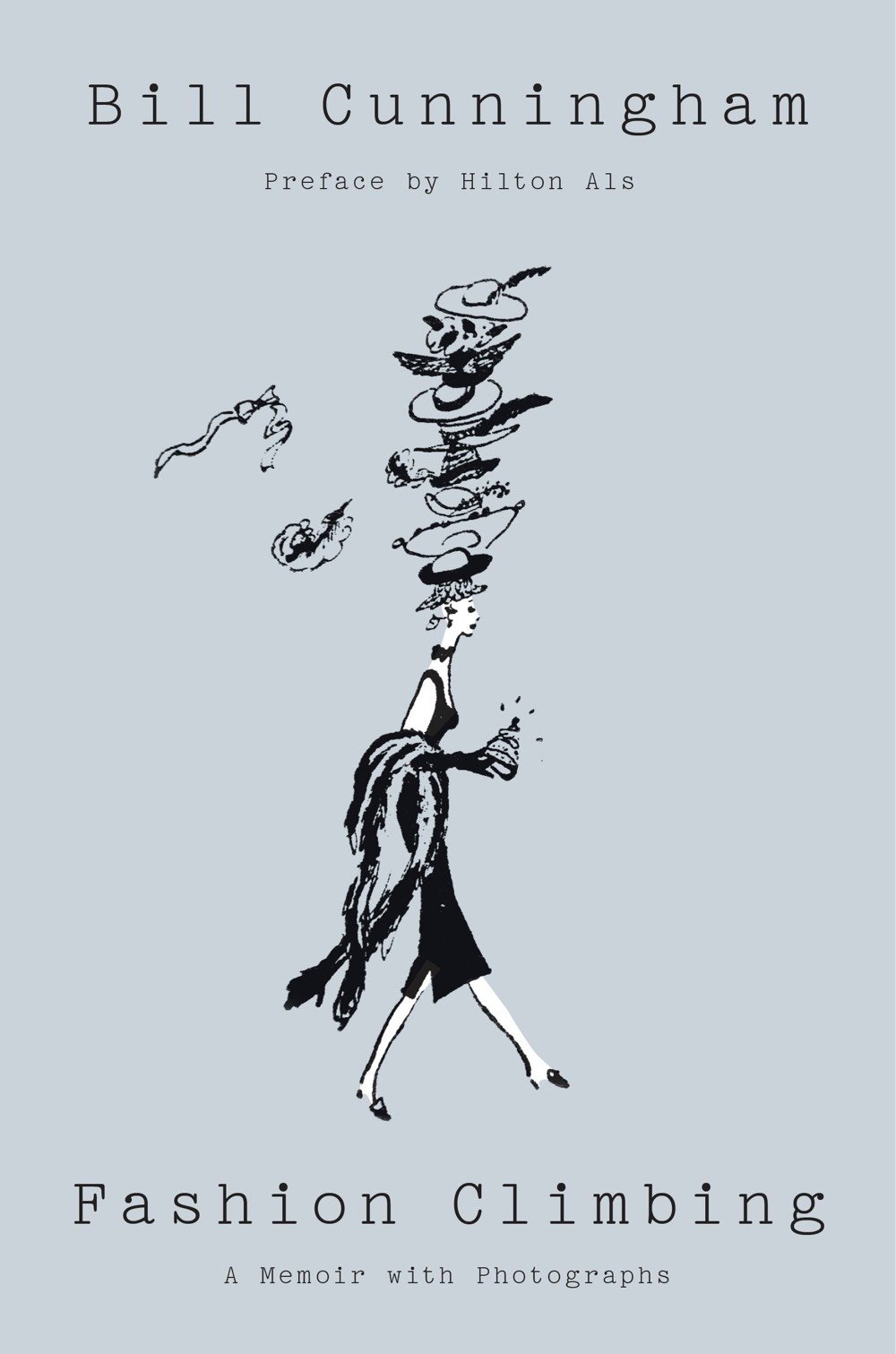
This is kind of amazing. Legendary street fashion photographer Bill Cunningham died two years ago, leaving behind a massive body of work documenting the last 40 years of the fashion world. Somewhat surprisingly, he also wrote a memoir that seemingly no one knew about. He called it Fashion Climbing (pre-order on Amazon).
Fashion Climbing is the story of a young man striving to be the person he was born to be: a true original. But although he was one of the city’s most recognized and treasured figures, Bill was also one of its most guarded. Written with his infectious joy and one-of-a-kind voice, this memoir was polished, neatly typewritten, and safely stored away in his lifetime. He held off on sharing it — and himself — until his passing. Between these covers, is an education in style, an effervescent tale of a bohemian world as it once was, and a final gift to the readers of one of New York’s great characters.
The NY Times, where Cunningham worked for decades, has more information on the book.
“There I was, 4 years old, decked out in my sister’s prettiest dress,” reads the memoir’s second sentence. “Women’s clothes were always much more stimulating to my imagination. That summer day, in 1933, as my back was pinned to the dining room wall, my eyes spattering tears all over the pink organdy full-skirted dress, my mother beat the hell out of me, and threatened every bone in my uninhibited body if I wore girls’ clothes again.”
The wonderful documentary about Cunningham is currently available on Amazon Prime. I was lucky enough to catch Cunningham at work on the streets of NYC, once at the Union Square Greenmarket and another time during Summer Streets. Watching him snap away with his camera in that blue coat of his, bicycle propped nearby, was thrilling for me, like watching a superhero dispatching bad guys on the streets of Metropolis or Gotham.1
From Anil Dash, 12 Things Everyone Should Understand About Tech.
1. Tech is not neutral. One of the most important things everybody should know about the apps and services they use is that the values of technology creators are deeply ingrained in every button, every link, and every glowing icon that we see. Choices that software developers make about design, technical architecture or business model can have profound impacts on our privacy, security and even civil rights as users. When software encourages us to take photos that are square instead of rectangular, or to put an always-on microphone in our living rooms, or to be reachable by our bosses at any moment, it changes our behaviors, and it changes our lives.
All of the changes in our lives that happen when we use new technologies do so according to the priorities and preferences of those who create those technologies.
In a recent interview at SXSW, YouTube’s CEO Susan Wojcicki said the company planned to use information from Wikipedia to counter misinformation in YouTube’s videos. In the NY Times, John Herrman wrote about the potential burden of a massive company like Google leaning so heavily on a relatively small non-profit organization like Wikipedia.
Then there’s the issue of money. As important as Wikipedia may be to some of the richest companies in the world, it is, in financial terms, comparatively minuscule, with a yearly budget of less than $100 million — a rounding error for big tech. (It should be noted that Google has made one-off contributions to Wikipedia in the past and includes the Wikimedia Foundation in a program through which it matches employee donations, which netted the foundation around $1 million last year.)
A few years ago, I wrote about financially supporting Wikipedia.
I consider it a subscription fee to an indispensable and irreplaceable resource I use dozens of times weekly while producing kottke.org. It’s a business expense, just like paying for server hosting, internet access, etc. — the decision to pay became a no-brainer for me when I thought of it that way.
I also called on other companies to support Wikipedia on a recurring basis:
Do other media companies subscribe to Wikipedia in the same fashion? How about it Gawker, NY Times, Vox, Wired, ESPN, WSJ, New York Magazine, Vice, Washington Post, The Atlantic, Buzzfeed, Huffington Post? Even $500/month is a drop in the bucket compared to your monthly animated GIF hosting bill and I know your writers use Wikipedia as much as I do. Come on, grab that company credit card and subscribe.
Wikipedia is a shared online resource that we all would sorely miss if it went away, people and companies alike. We should all pitch in and support it.
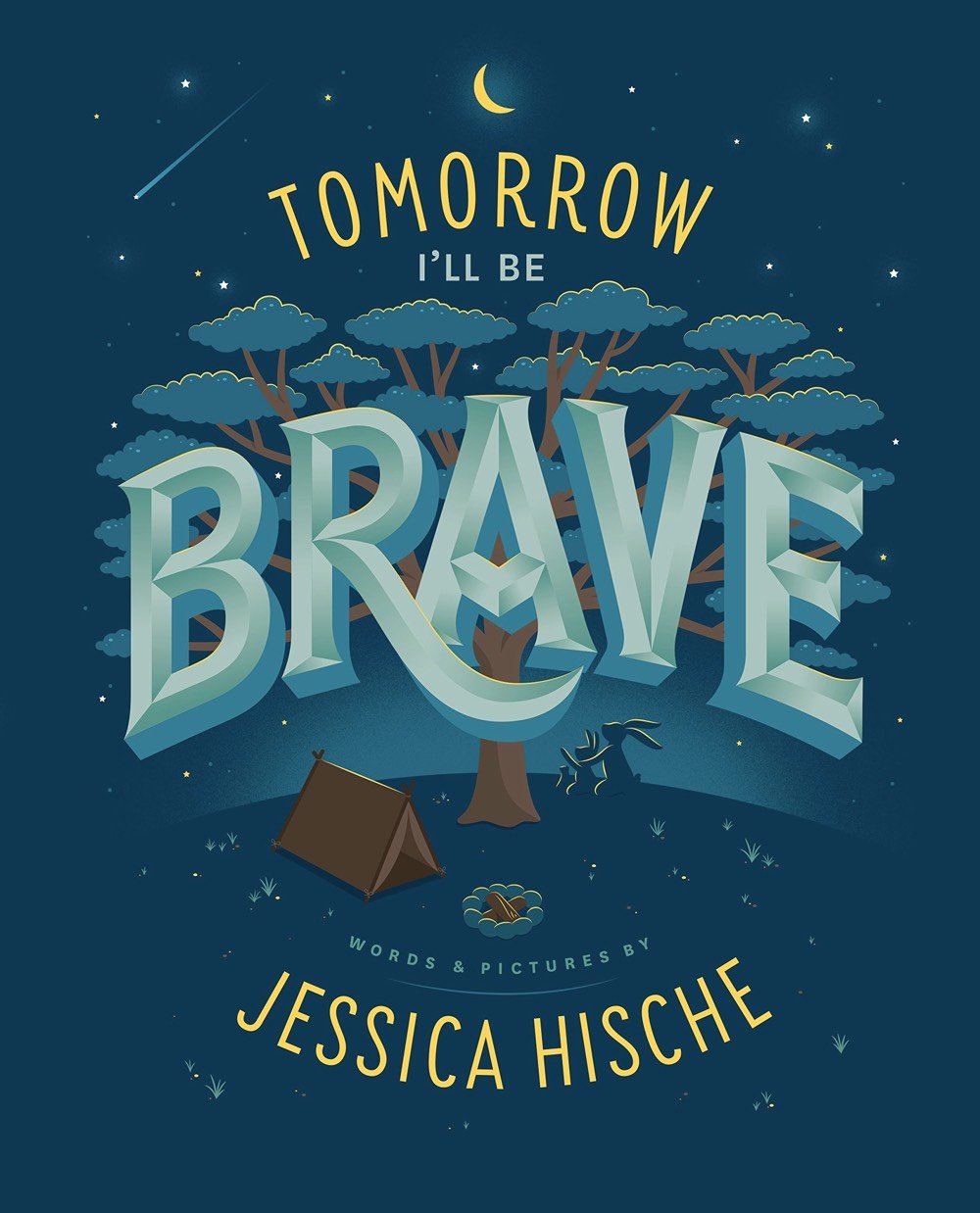
Illustrator Jessica Hische (who did the typeface for Moonrise Kingdom, among many other wonderful things) has written and illustrated a children’s book called Tomorrow I’ll Be Brave.
Lyrically written and beautifully illustrated by award-winning lettering artist Jessica Hische, this book takes readers on a fantastic journey that encourages them to be adventurous, strong, smart, curious, creative, confident, and brave — reassuring them that if they haven’t been able to be all or any of those things today, there is always tomorrow, which is full of endless opportunities.
You can see some spreads from the book on Hische’s site.
The suspected Austin bombing suspect is dead. Authorities say he acted alone but that unexploded bombs may still be out there.
Fifteen years ago, the United States invaded Iraq. In the NY Times, Sinan Antoon laments what has become of his country since then: Fifteen Years Ago, America Destroyed My Country. This is a damning final paragraph about George W. Bush and the Republican hawks who used the events of 9/11 to manufacture a war that killed hundreds of thousands of people.
No one knows for certain how many Iraqis have died as a result of the invasion 15 years ago. Some credible estimates put the number at more than one million. You can read that sentence again. The invasion of Iraq is often spoken of in the United States as a “blunder,” or even a “colossal mistake.” It was a crime. Those who perpetrated it are still at large. Some of them have even been rehabilitated thanks to the horrors of Trumpism and a mostly amnesiac citizenry. (A year ago, I watched Mr. Bush on “The Ellen DeGeneres Show,” dancing and talking about his paintings.) The pundits and “experts” who sold us the war still go on doing what they do. I never thought that Iraq could ever be worse than it was during Saddam’s reign, but that is what America’s war achieved and bequeathed to Iraqis.
Morgan Neville’s documentary about Fred Rogers will be out in theaters on June 8; the trailer above just dropped today.
Fred Rogers led a singular life. He was a puppeteer. A minister. A musician. An educator. A father, a husband, and a neighbor. Fred Rogers spent 50 years on children’s television beseeching us to love and to allow ourselves to be loved. With television as his pulpit, he helped transform the very concept of childhood. He used puppets and play to explore the most complicated issues of the day — race, disability, equality and tragedy. He spoke directly to children and they responded by forging a lifelong bond with him-by the millions. And yet today his impact is unclear. WON’T YOU BE MY NEIGHBOR? explores the question of whether or not we have lived up to Fred’s ideal. Are we all good neighbors?
You can watch a clip of the film here.
When she was 16, Charlotte Eades was diagnosed with glioblastoma, an extremely aggressive form of brain cancer. About a year after the diagnosis, she began documenting her illness and her life on her YouTube channel. After Eades died, her family made the video above, a short tribute to her life and video blog.
Newer posts
Older posts





Socials & More