



This site is made possible by member support. 💞
Big thanks to Arcustech for hosting the site and offering amazing tech support.
When you buy through links on kottke.org, I may earn an affiliate commission. Thanks for supporting the site!
kottke.org. home of fine hypertext products since 1998.
Beloved by 86.47% of the web.
Entries for October 2016
The Most Efficient Way to Destroy the Universe
Kurzgesagt shares a speculative bit of physics called vacuum decay that could very efficiently erase the entire Universe.
To understand vacuum decay, you need to consider the Higgs field that permeates our Universe. Like an electric field, the Higgs field varies in strength, based on its potential. Think of the potential as a track on which a ball is rolling. The higher it is on the track, the more energy the ball has.
The Higgs potential determines whether the Universe is in one of two states: a true vacuum, or a false vacuum. A true vacuum is the stable, lowest-energy state, like sitting still on a valley floor. A false vacuum is like being nestled in a divot in the valley wall — a little push could easily send you tumbling. A universe in a false vacuum state is called “metastable”, because it’s not actively decaying (rolling), but it’s not exactly stable either.
There are two problems with living in a metastable universe. One is that if you create a high enough energy event, you can, in theory, push a tiny region of the universe from the false vacuum into the true vacuum, creating a bubble of true vacuum that will then expand in all directions at the speed of light. Such a bubble would be lethal.
Such a process could already be underway, but don’t worry:
But even if one or multiple spheres of death have already started expanding, the Universe is so big they might not reach us for billions of years.
Football Alters the Brains of Kids as Young as 8. If you’ve got kids who play football, now’s the time to stop.
A short history of Beyonce
From Genius, a short review of Beyonce Knowles’ life and career, from an appearance on Star Search — I wonder what Skeleton Crew is up to these days? — to Lemonade, one of 2016’s few genuine bright spots. The greatest entertainer of the century so far? A friend recently went to see Beyonce and Kanye concerts about two weeks apart. I asked her who was better and she just rolled her eyes.
Kanye songs slowed down to match the tempo of the original samples
Here’s a playlist of snippets of five Kanye West songs that contain samples played at the original tempo of those samples. (A couple of the songs are his and some he was featured on or produced.) (thx, brant)
SNL’s Black Jeopardy
This SNL Black Jeopardy skit with Tom Hanks is as good as everyone says it is. And it’s not just funny either…it’s the rare SNL skit that works brilliantly as cultural commentary. Kudos to the writers on this one.
Update: Writing for Slate, Jamelle Bouie details why the Black Jeopardy sketch was so good; the title of the piece asks, “The Most Astute Analysis of American Politics in 2016?”
When Thompson reads a second clue for that category — “They out here saying that every vote counts” — Doug answers again, and again correctly: “What is, come on, they already decided who wins even ‘fore it happens.’” With each correct answer, Doug gets cheers and applause from Thompson, the black contestants, and the black audience. They all seem to understand the world in similar ways. “I really appreciate you saying that,” says Thompson after Doug praises Tyler Perry’s Madea movies, leading to an awkward moment where Hanks’ character recoils in fear as Thompson tries to shake his hand, but then relaxes and accepts the gesture.
By this point, the message is clear. On this episode of “Black Jeopardy!”, the questions are rooted in feelings of disempowerment, suspicion of authority, and working-class identity-experiences that cut across racial lines. Thompson and the guests are black, but they can appreciate the things they share with Doug, and in turn, Doug grows more and more comfortable in their presence, such that he gets a “pass” from the group after he refers to them as “you people.”
Breakfast
A quick short film about how different people in LA approach breakfast, from the woman who nibbles to the professional bodybuilder who eats 30 egg whites and a cup of grits on his off day.
Me? I almost never eat breakfast and have been unwittingly following an intermittent fasting regimen for many years.
The cutthroat world of professional mini golf
A short video look at the Master’s golf tournament. You know, the one where you get the green jacket for winning. No, not that one…the mini golf one.
True story: I have won a mini golf tournament. It was an 18-hole affair, a 4th of July tourney at a campground in northwestern Wisconsin. At 16, I was the youngest competitor in the adult competition and had never before (or since) shown any aptitude for the game of golf, mini or otherwise. Somehow I beat the defending champion on his home course by one stroke. I declined to turn pro and promptly retired from competition.
Into the Inferno, Werner Herzog’s latest volcanic documentary
Werner Herzog has directed a documentary film for Netflix on volcanoes.
Werner Herzog’s latest documentary, Into the Inferno, heads just where its title suggests: into the red-hot magma-filled craters of some of the world’s most active and astonishing volcanoes-taking the filmmaker on one of the most extreme tours of his long career. From North Korea to Ethiopia to Iceland to the Vanuatu Archipelago, humans have created narratives to make sense of volcanoes; as stated by Herzog, “volcanoes could not care less what we are doing up here.” Into the Inferno teams Herzog with esteemed volcanologist Clive Oppenheimer to offer not only an in-depth exploration of volcanoes across the globe but also an examination of the belief systems that human beings have created around the fiery phenomena.
Into the Inferno debuts on Netflix on October 28.
This Happy Dog Sounds Like a TIE Fighter
Animals make all sorts of crazy noises when they’re happy or when they laugh, like Eddie Murphy in Beverly Hills Cop. This dog, named Geraldine, sounds pretty much like a TIE Fighter from Star Wars when she gets excited. (via @jhgard)
Abnormal heartbeat EKG waves
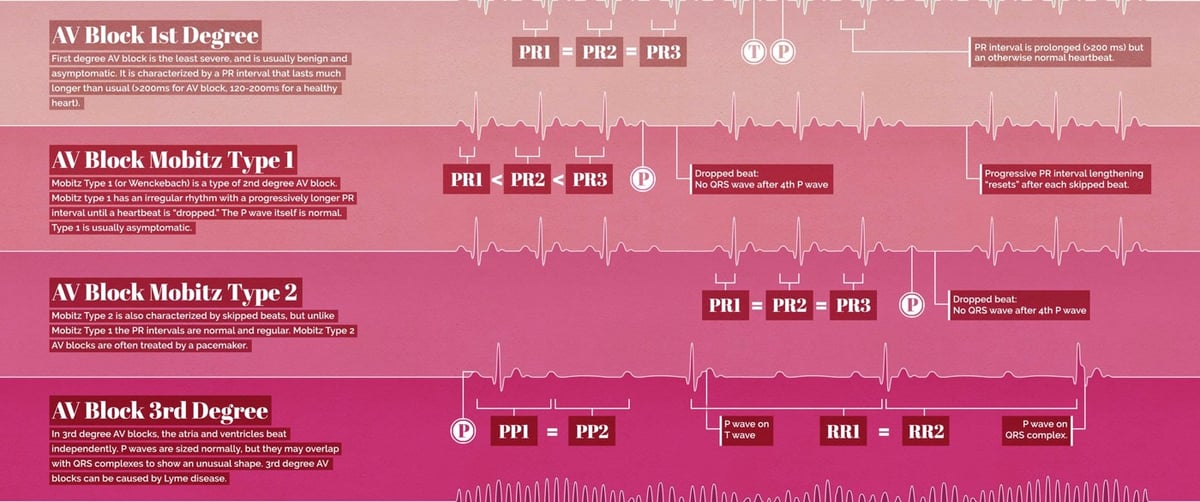
This is a lovely infographic from Eleanor Lutz of a bunch of different heartbeat EKG waves, from a normal heartbeat to a flatline to ventricular fibrillation (“must be treated immediately with CPR and defibrillation”.) Prints are available.
Isis Hair Salon
Carrie Banks has owned and operated Isis Hair Salon in LA for more than 20 years. But because of recent events in the Middle East and jokers on social media, the name has become a liability in recent years. Banks has even had difficulty finding someone to replace the sign outside the salon in the event of a name change.
How the Cretaceous Coastline of North America Affects US Presidential Elections
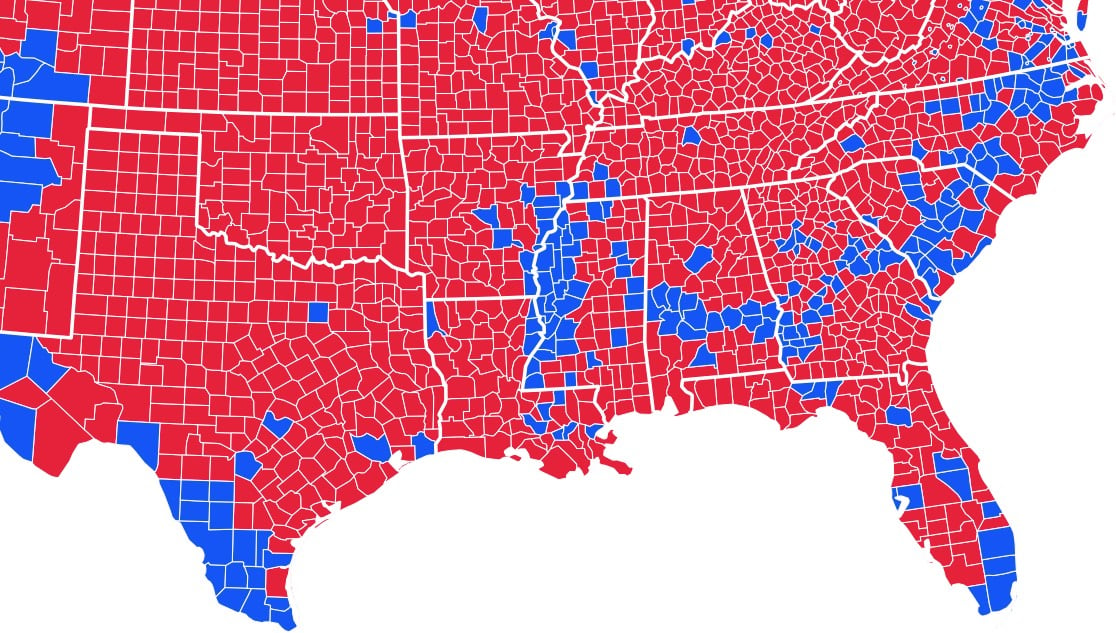
That’s a portion of the 2012 US Presidential election map of the southern states broken down by county: blue ones went Barack Obama’s way and counties in red voted for Mitt Romney.
But let’s go back to the Cretaceous Period, which lasted from 145 million years ago to 65 million years ago. Back then, the coastline of what is now North America looked like this:
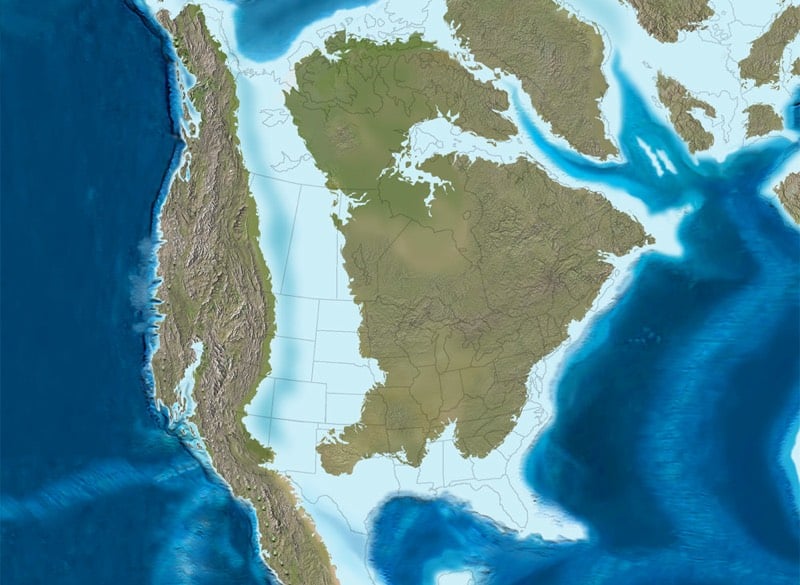
Along that ancient coastline of a shallow sea, plankton with carbonate skeletons lived and died in massive numbers, accumulating into large chalk formations on the bottom of the sea. When the sea level dropped and the sea drained through the porous chalk, rich bands of soil were left right along the former coastline. When that area was settled and farmed in the 19th century, that rich soil was perfect for growing cotton. And cotton production was particularly profitable, so enslaved people were heavily used in those areas.
McClain, quoting from Booker T. Washington’s autobiography, Up From Slavery, points out: “The part of the country possessing this thick, dark and naturally rich soil was, of course, the part of the South where the slaves were most profitable, and consequently they were taken there in the largest numbers.” After the Civil War, a lot of former slaves stayed on this land, and while many migrated North, their families are still there.
The counties in which slave populations were highest before the Civil War are still home to large African American populations, which tend to vote for Democratic presidential candidates, even as the whiter counties around them vote for Republicans. The voting pattern of those counties on the map follows the Cretaceous coastline of 100 million years ago — the plankton fell, the cotton grew, the enslaved people bled into that rich soil, and their descendants later helped a black man reach the White House.
Harry Potter and the Translator’s Nightmare
Due to its popularity, the Harry Potter series of books has been translated into dozens of different languages from around the world. Given the books’ setting in Britain, heavy use of wordplay & allusions, and all of the invented words, translating the books accurately and faithfully was difficult.
Translators weren’t given a head-start — they had to wait until the English editions came out to begin the difficult and lengthy task of adapting the books. Working day and night, translators were racing against intense deadlines. Harry Potter and the Order of the Phoenix, the longest book in the series at 870 pages for the US edition, was originally published on June 21, 2003. Its first official translation appeared in Vietnamese on July 21, 2003. Not long after, the Serbian edition was released in early September 2003.
Also not mentioned in the video is all of the foreshadowing Rowling uses in the first few books in the series that pays off in later books. Since the translators probably didn’t know the plot details of the later books, some of that foreshadowing might have been edited out, downplayed, or misinterpreted.
DNA evidence: humans are still evolving
Jerry Coyne, University of Chicago professor and author of Why Evolution is True, shares the results of a recent paper called Detection of human adaptation during the past 2000 years. In the study, DNA sequencing was used to find human genes that have changed so quickly in the past 2000 years that the authors conclude natural selection must be responsible.
Now, however, we can, by DNA sequencing, look at DNA directly, and with some fancy statistical footwork, get an idea of which genes have changed in frequency so fast that they must have been due to positive natural selection. That’s the subject of a new paper in Science by Yair Field et al. (reference and free download below). The authors conclude that several traits, including lactose tolerance, hair and eye color, and parts of the immune system, as well as height, have evolved within the last 2,000 years.
Other genes that might have changed during that period include those for infant head circumference, insulin levels, birth weight, and female hip size.
Stutterer
Stutterer by Benjamin Cleary won the 2016 Oscar for Best Live Action Short Film and is now available to view online for free courtesy of the New Yorker.
It’s a thirteen-minute movie about a young London typographer named Greenwood (Matthew Needham). Greenwood stutters, to the extent that verbal conversation is difficult. When he tries to resolve an issue with a service representative over the phone, he can’t get the words out; the operator, gruff and impatient, hangs up. (For surliness, she rivals the operator in the old Yaz song.) When a woman approaches Greenwood on the street, he uses sign language to avoid talking. But in his thoughts, which we hear, he does not stutter.
Great little film…my heart broke three separate times watching it. Here’s an alternate video if you can’t view the embed at the top of the page.
A short history of time travel and killing Baby Hitler
Phil Edwards talks to James Gleick about his new book, Time Travel: A History, and of course the subject of killing Baby Hitler comes up. Turns out, the idea of using time travel to kill Adolf Hitler was first used by writer Ralph Milne Farley in 1941, before the US ever entered World War II or before the world learned the horrifying scope of the Holocaust.
I’m currently reading Gleick’s book and the most surprising thing so far is how recently time travel was invented…it’s only about 120 years old. The idea of progress was not really evident to people before the pace of technology and the importance of history became apparent in the 19th century. Progress made time travel relevant…without it, people couldn’t imagine going back in time to see how far they’d come or forward in time to see how much they’d progress.
Scientists accidentally discover a process to turn CO2 into fuel
Scientists at Oak Ridge National Laboratory have stumbled upon a process that uses “nanospikes” to turn carbon dioxide into ethanol, a common fuel.
This process has several advantages when compared to other methods of converting CO2 into fuel. The reaction uses common materials like copper and carbon, and it converts the CO2 into ethanol, which is already widely used as a fuel.
Perhaps most importantly, it works at room temperature, which means that it can be started and stopped easily and with little energy cost. This means that this conversion process could be used as temporary energy storage during a lull in renewable energy generation, smoothing out fluctuations in a renewable energy grid.
This sounds like a big deal…is it now possible to limit the effects of climate change by sinking carbon while also placing less dependence on fossil fuels? Here’s the Oak Ridge press release. That this news is almost a week old already and we haven’t heard more about it makes me a bit skeptical as to the true importance of it. (Of course, CRISPR is potentially a massive deal and we don’t hear about it nearly enough so…)
Update: A relevant series of tweets from Eric Hittinger on “why creating ethanol from CO2 cannot solve our energy or climate problems”. Wasn’t fully awake when I posted this apparently because, yeah, duh. (via @leejlh)
Airportraits
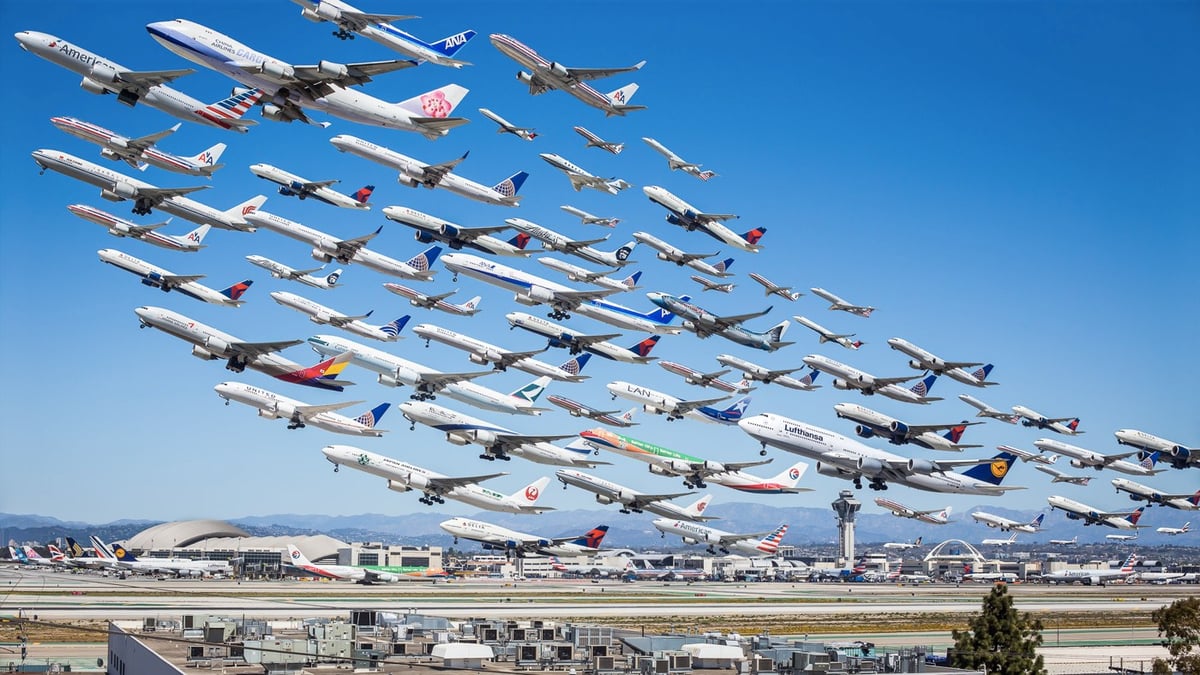
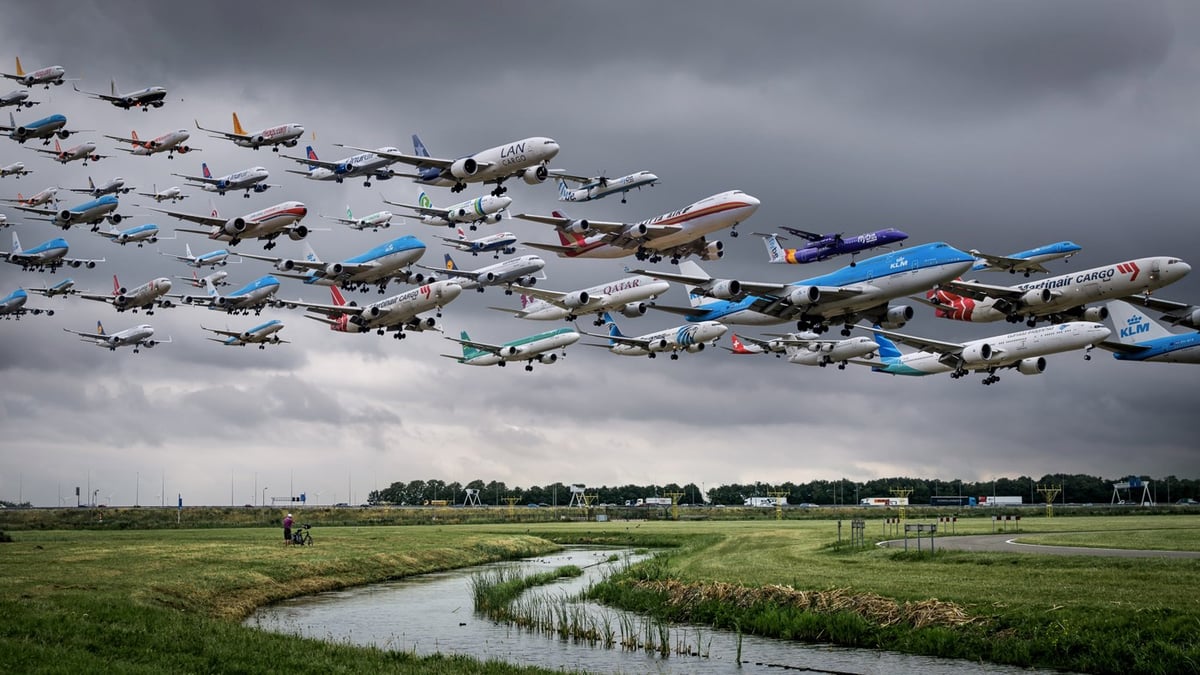
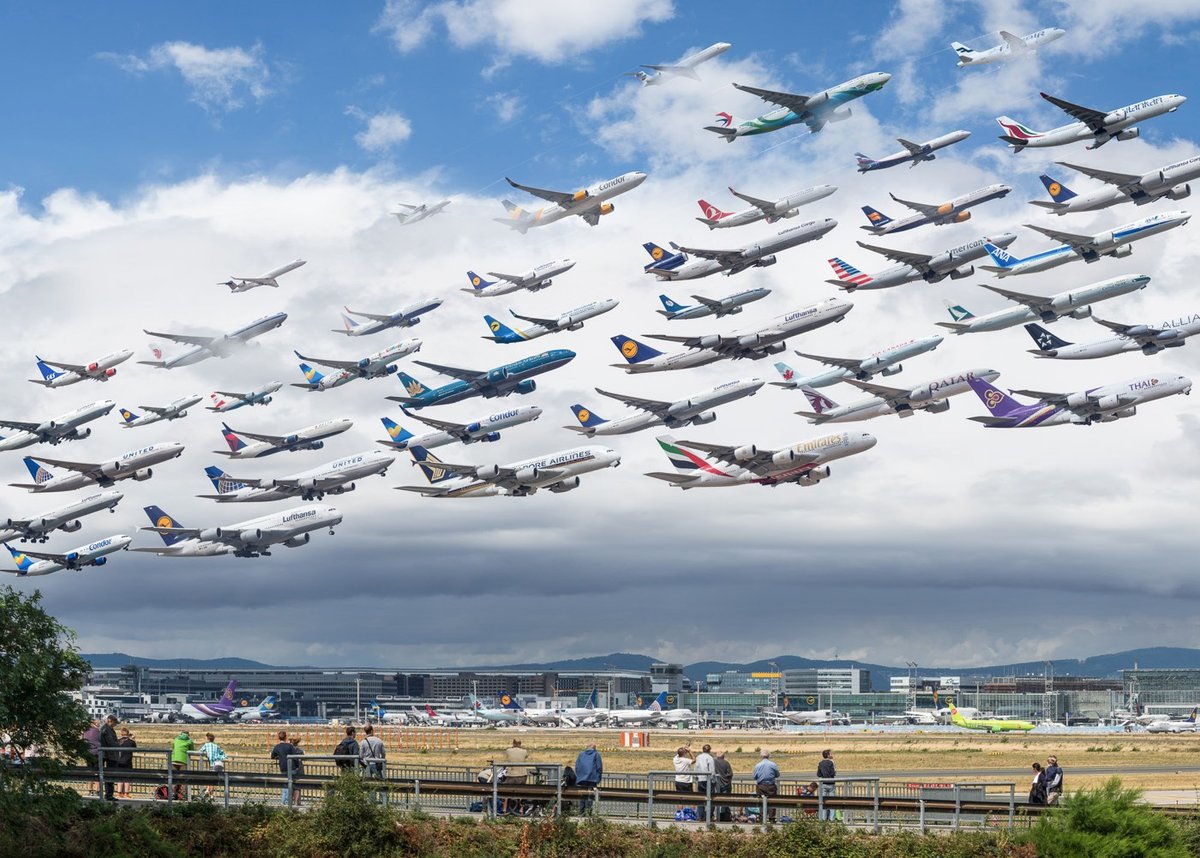
Mike Kelley has travelled to airports all over the world, photographing planes taking off and landing and then stitching them together into photos showing each airport’s traffic. (via @feltron whose book features an Airportrait on the cover)
The original Star Wars in 4K
A group of hardcore Star Wars fans are restoring the original 1977 theatrical release of the first Star Wars movie in ultra high-def 4K resolution. The video above is a trailer of sorts, but it also shows the restoration of a short scene…the increase in quality and resolution is impressive.
Simply put, we are restoring the original, theatrical version of Star Wars in 4K. Using multiple 35mm prints, scanned at 4K, cleaned at 4K, and rendered at full 4k UHD 4096x1716 resolution. To be clear, this is not simply an upscale of any other source, this is all to be done natively in 4K from 35mm sources. The only exception to this rule is when we don’t have a particular frame available, in that case either an upscale of the Silver Screen Edition, or the official Bluray will be used.
A well-designed reissue of Newton’s Principia
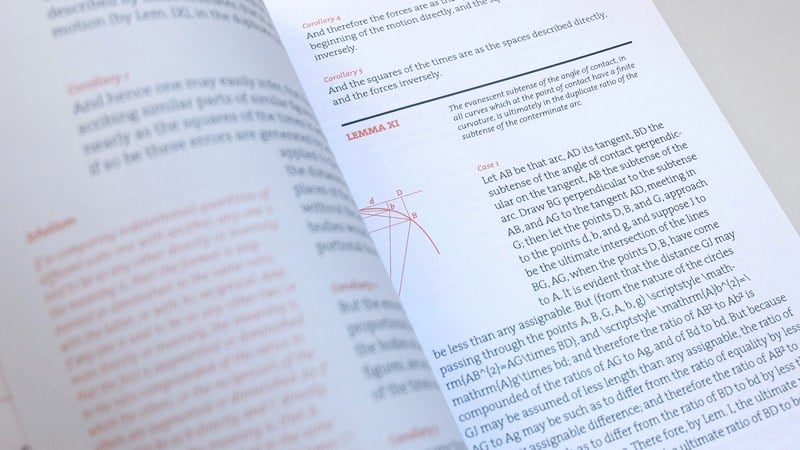
Small Spanish publisher Kronecker Wallis is doing a Kickstarter campaign to print a well-designed version of Isaac Newton’s Principia, one of the most important texts in science.
We have spent several months working on a desire. The desire to have a new edition of Isaac Newton’s Principia in our hands that is on a par with the importance of the text and of modern editorial design. To put it back on our shelves so that we can leaf through it from time to time and feel the pages beneath our fingers.
An opportunity has now arisen. Taking advantage of the fact that the original publication is to celebrate its 330th anniversary in 2017, we wish to republish it with an editorial design that pays attention to every last detail.
I am enjoying this trend of reviving old classics through the lens of modern design and packaging; see also the NYCTA Graphics Standards Manual, the NASA Graphics Standards Manual, and the Voyager Golden Record.
The Earth and I
From James Lovelock, The Earth and I is a look at our planet and the living things on it…how Earth came to be, what we understand about our planet, and how we live today. Lisa Randall, Martin Rees, Edward O. Wilson, and Eric Kandel have contributed writing to the book.
Half a house and other incremental buildings
An architecture firm called Elemental recently completed a disaster relief project in a city in Chile which was devastated by an earthquake in 2010. Rather than build typical public housing (high-rise apartments), the firm built out neighborhoods with the necessary infrastructure and populated them with half-finished houses.

The houses are simple, two-story homes, each with wall that runs down the middle, splitting the house in two. One side of the house is ready to be moved into. The other side is just a frame around empty space, waiting to be built out by the occupant.
That’s from a recent episode of 99% Invisible that covered the trend toward incremental buildings.
These half-built houses are a unique response from urban planners to the housing deficit in cities around the world. The approach has its roots in a building methodology made popular by the 1972 essay, “Housing is a Verb,” by architect John F.C. Turner. Turner made the case that housing ought not be a static unit that is packaged and handed over to people. Rather, housing should be conceived of as an ongoing project wherein residents are co-creators.
Cool idea…they’ve built How Buildings Learn into the process of home ownership.
Finalists in the 2016 Comedy Wildlife Photography Awards
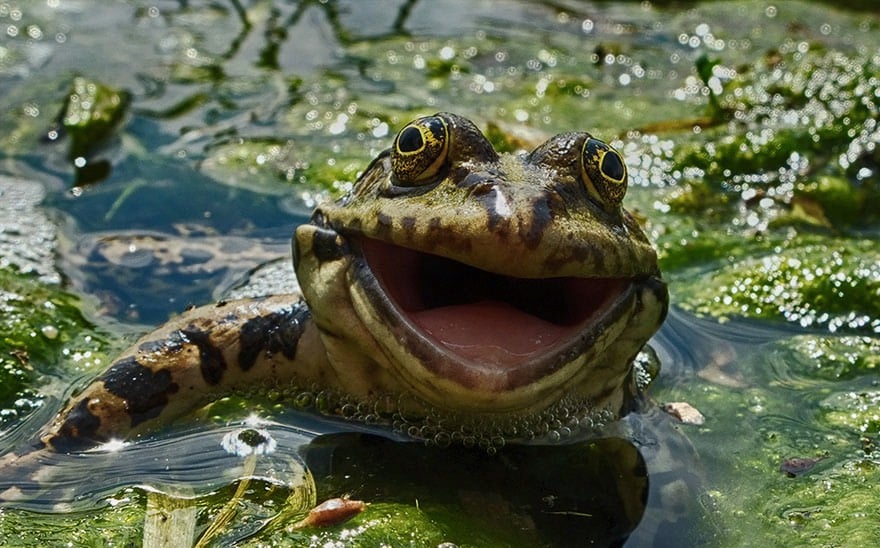
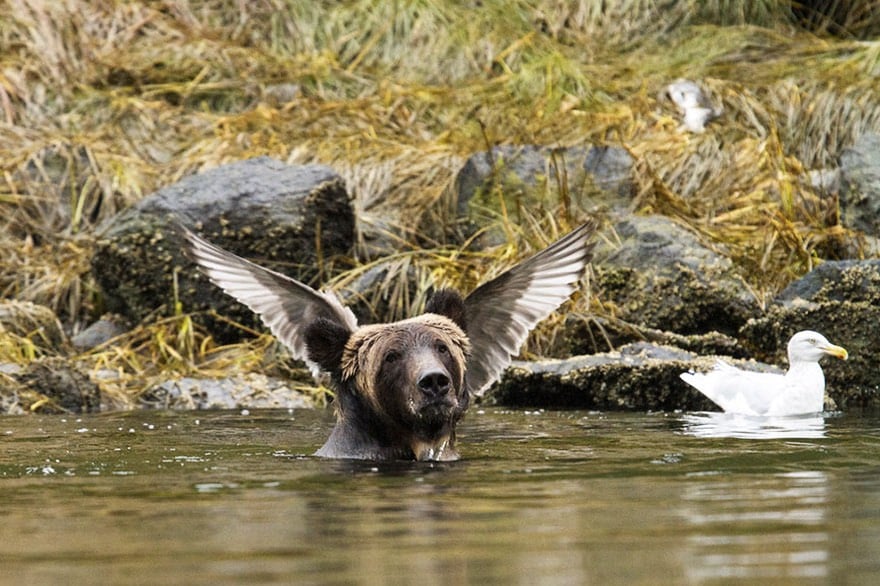

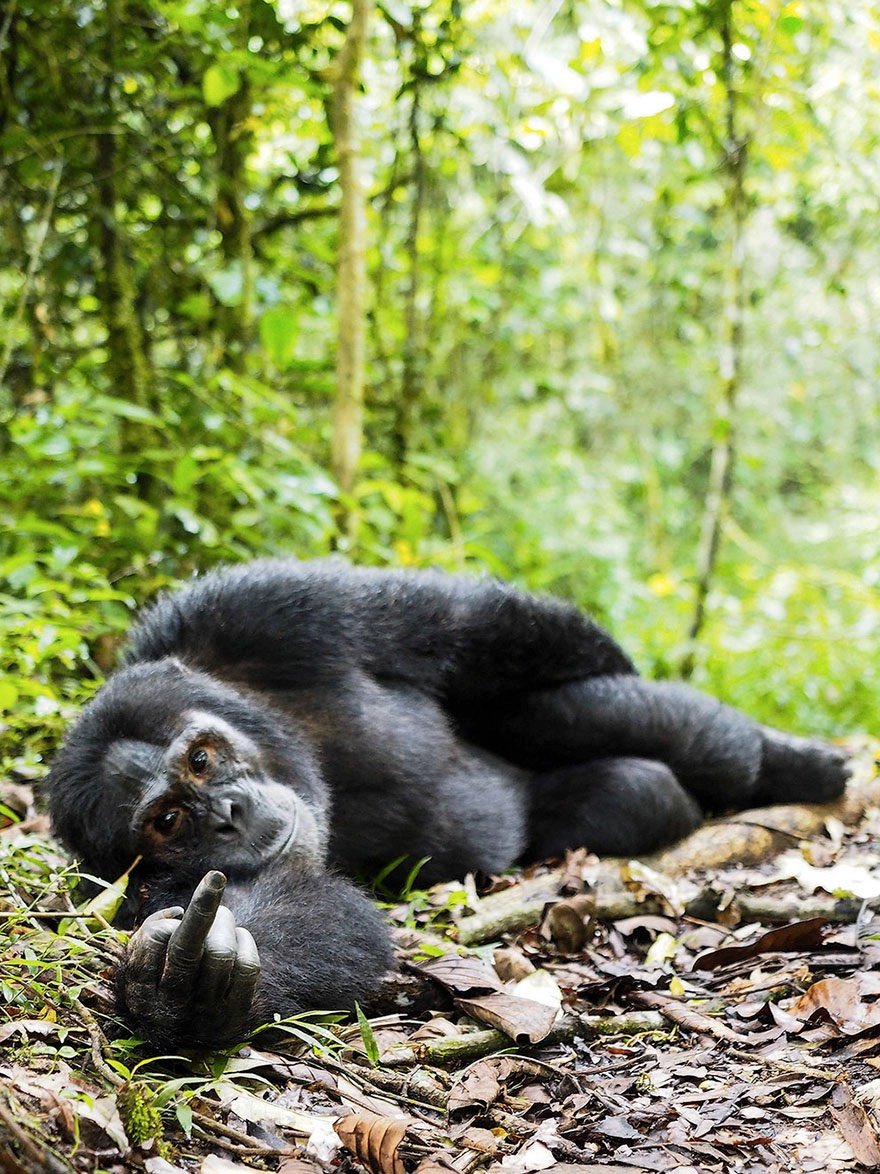
The finalists in the 2016 Comedy Wildlife Photography Awards have been announced.
The Universe has 10 times more galaxies than we thought
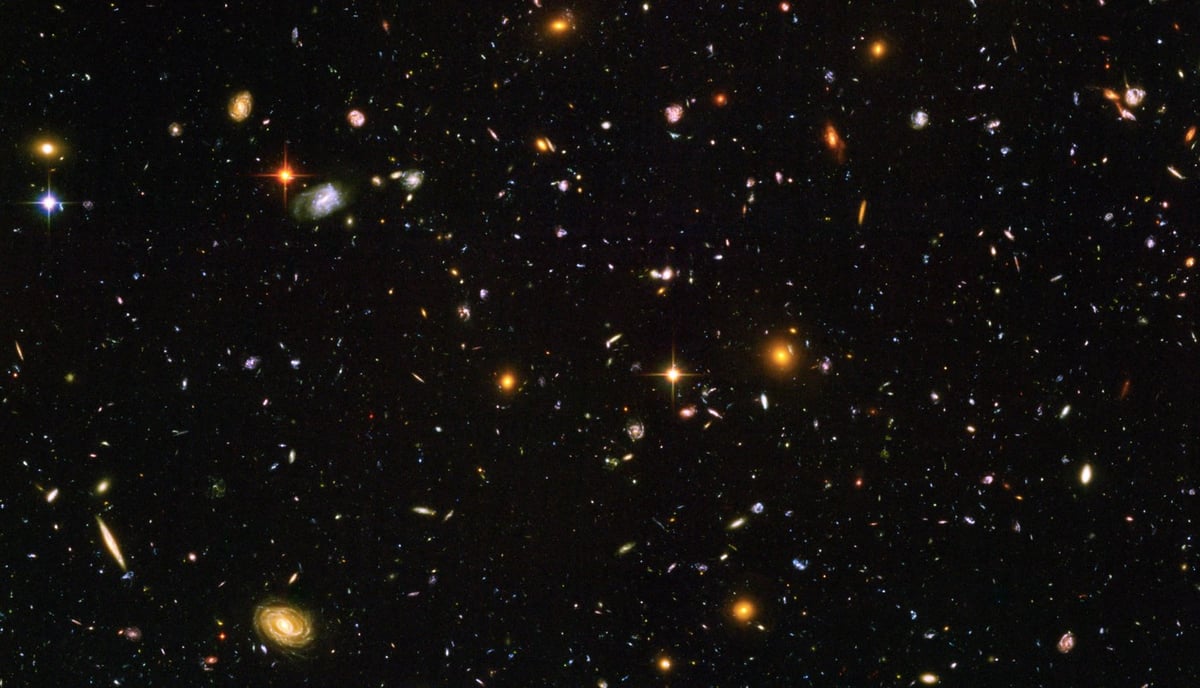
A recent paper claims that the Universe has 10 times more galaxies than we previously thought: an estimated 2 trillion galaxies covering every single patch of sky visible from the Earth. But that doesn’t mean the Universe is more massive or that it contains more stars. Phil Plait explains:
Now, let me be clear. This doesn’t meant the Universe is ten times bigger than we thought, or there are ten times as many stars. I’ll explain — I mean, duh, it’s what I do — but to cut to the chase, what they found is that there are lots of teeny, faint galaxies very far away that have gone undetected. So instead of being in a smaller number of big galaxies, stars are divvied up into a bigger number of smaller ones.
So how many stars are there in the Universe? The Milky Way contains about 400 billion stars. Some massive elliptical galaxies house more than 100 trillion stars. Estimates of the total number are rough, but it’s probably around 10^24 stars…that’s a septillion stars, a trillion trillion. It’s absurd that we’d be the only planet in the Universe with life on it.
If you could get everybody to read one book, what would it be?
Anil Dash recently asked his Twitter followers: “If you could get everybody to read one book, what would it be?” Dash followed up right away with his answer: The Power Broker by Robert Caro.1 Here are some of the other interesting responses:
Letters from A Self-Made Merchant to his Son by George Horace Lorimer.
George Horace Lorimer was an American journalist and author. He is best known as the editor of The Saturday Evening Post. His Letters From A Self-Made Merchant To His Son is a timeless collection of Gilded Age aphorisms from a rich man — a prosperous pork-packer in Chicago to his son, Pierrepont, whom he ‘affectionately’ calls ‘Piggy.’ The writing is subtle and brilliant.
A Simpler Way by Margaret Wheatley and Myron Kellner-Rogers.
Constructed around five major themes — play, organization, self, emergence, and coherence — A Simpler Way challenges the way we live and work, presenting a profound worldview. In thoughtful, creative prose, the authors help readers connect their own personal experiences to the idea that organizations are evolving systems.
Parting the Waters: America in the King Years 1954-63 by Taylor Branch.
In volume one of his America in the King Years, Pulitzer Prize winner Taylor Branch gives a masterly account of the American civil rights movement. Hailed as the most masterful story ever told of the American civil rights movement, Parting the Waters is destined to endure for generations.
Men Explain Things to Me by Rebecca Solnit.
In her comic, scathing essay, “Men Explain Things to Me,” Rebecca Solnit took on what often goes wrong in conversations between men and women. She wrote about men who wrongly assume they know things and wrongly assume women don’t, about why this arises, and how this aspect of the gender wars works, airing some of her own hilariously awful encounters.
Between the World and Me by Ta-Nehisi Coates.
In a profound work that pivots from the biggest questions about American history and ideals to the most intimate concerns of a father for his son, Ta-Nehisi Coates offers a powerful new framework for understanding our nation’s history and current crisis. Americans have built an empire on the idea of “race,” a falsehood that damages us all but falls most heavily on the bodies of black women and men-bodies exploited through slavery and segregation, and, today, threatened, locked up, and murdered out of all proportion. What is it like to inhabit a black body and find a way to live within it? And how can we all honestly reckon with this fraught history and free ourselves from its burden?
Cry the Beloved Country by Alan Paton.
Cry, the Beloved Country is the deeply moving story of the Zulu pastor Stephen Kumalo and his son, Absalom, set against the background of a land and a people riven by racial injustice. Remarkable for its lyricism, unforgettable for character and incident, Cry, the Beloved Country is a classic work of love and hope, courage and endurance, born of the dignity of man.
A People’s History of the United States by Howard Zinn.
Since its original landmark publication in 1980, A People’s History of the United States has been chronicling American history from the bottom up, throwing out the official version of history taught in schools — with its emphasis on great men in high places — to focus on the street, the home, and the workplace.
Hillbilly Elegy: A Memoir of a Family and Culture in Crisis by J.D. Vance.
Hillbilly Elegy is a passionate and personal analysis of a culture in crisis — that of white working-class Americans. The decline of this group, a demographic of our country that has been slowly disintegrating over forty years, has been reported on with growing frequency and alarm, but has never before been written about as searingly from the inside. J. D. Vance tells the true story of what a social, regional, and class decline feels like when you were born with it hung around your neck.
Kindred by Octavia Butler.
Dana, a modern black woman, is celebrating her twenty-sixth birthday with her new husband when she is snatched abruptly from her home in California and transported to the antebellum South. Rufus, the white son of a plantation owner, is drowning, and Dana has been summoned to save him. Dana is drawn back repeatedly through time to the slave quarters, and each time the stay grows longer, more arduous, and more dangerous until it is uncertain whether or not Dana’s life will end, long before it has a chance to begin.
That’s a nice little syllabus for a What Is America? class. I’m not entirely sure what my answer would be. Infinite Jest is my favorite book, but I’m wary of recommending it to people — it was an important book for me but perhaps not for others. Maybe A People’s History of the United States or Isabel Wilkerson’s amazing The Warmth of Other Suns?
I’m still working my way through the audiobook, but it’s a great choice if you want to understand how the political sausage gets made.↩
Erasing the nipple from Instagram
Note: if you’re browsing at work, there are photos below that are probably NSFW even though they are artistic and making a political point. The project itself suggests that the idea of NSFW is dumb, which makes me uncomfortable about calling it out like this, but you know, pragmatism…not everyone can afford to have a conversation with their boss about why viewing art during the workday is a good idea.
Posting photos of full frontal nudity on Instagram is against their terms of service.1 No nipples, no pubic hair and certainly no vaginas or penises. Butts are ok though because…I dunno, everyone has one? For a project entitled Busts, model and photographer Sasha Frolova took inspiration from Instagram removing one of her photos and took portraits of women and seamlessly erased their nipples.


The photo taken down from Instagram was the catalyst for this series. It was a black and white self-portrait I took exhausted in the bath after a panic attack at age 16. Releasing it was a coming to terms with the fact that I no longer feel so unstable. Because of that, having it removed was particularly violating. But more than anything though I was offended that all it takes is a pizza emoji over my discreetly revealed nipples to make the image appropriate. Is the implication then that a woman, simply in her own existence, and anatomy is inappropriate, vulgar?
If the goal of Instagram’s policy is to “protect” people from images of sexuality, Frolova’s project shows that they haven’t quite succeeded.2
Meanwhile, you can find porn of every kind on Twitter.↩
Also OK according to Instagram’s policies are photographs of male nipples, full frontal female nudity with nipples, public hair, and vaginas scratched out, female nipples behind see through clothing, and explicit illustrations of sex (for instance), all of which can be sexual in nature.↩
Obama: “progress is on the ballot”
As a chaser to the last post, here’s Hillary Clinton’s latest campaign commercial. This is right up there with the best political ads I’ve seen. Obama’s words are taken from his speech to the Congressional Black Caucus last month.
Our work’s not done. But if we are going to advance the cause of justice, and equality, and prosperity, and freedom, then we also have to acknowledge that even if we eliminated every restriction on voters, we would still have one of the lowest voting rates among free peoples. That’s not good, that is on us.
And I am reminded of all those folks who had to count bubbles in a bar of soap, beaten trying to register voters in Mississippi. Risked everything so that they could pull that lever. So, if I hear anybody saying their vote does not matter, that it doesn’t matter who we elect, read up on your history. It matters. We’ve got to get people to vote.
In fact, if you want to give Michelle and me a good sendoff, and that was a beautiful video, but don’t just watch us walk off into the sunset now, get people registered to vote. If you care about our legacy, realize everything we stand for is at stake, on the progress we have made is at stake in this election.
My name may not be on the ballot, but our progress is on the ballot. Tolerance is on the ballot. Democracy is on the ballot. Justice is on the ballot. Good schools are on the ballot. Ending mass incarceration, that’s on the ballot right now.
Trump fact-checked in the style of Ron Howard’s Arrested Development narration
I am soooo tired of this election and this stupid, lying, racist, sexist, bullying predator of a candidate and the memes but this Arrested Development-style fact-checking of Donald Trump is really pretty good and right in my wheelhouse. I am terrible at following my own advice.
Putting yourself “10 feet away” from the people in your community
Last Saturday, five teenagers from a small Vermont community were killed in their car on their way home from a concert by a driver deliberately driving on the wrong side of the freeway. As you can imagine, the death of five young people in an area with only a few thousand residents is devastating and will take years for the community to recover from.
The day after the accident, Bobby Kelly, a classmate of the victims, wrote a message in remembrance of his friends and in celebration of his community, which a local ski area posted on their Facebook page:
So today after I heard the terrible news, my family went to Mad River Glen to ride the single up and hike down. As I stood at the top I was looking down at the little strip of road you can see from the top of the mountain. I watched a handful of these cars drive by, and they were so small from my perspective. And I thought to myself, how could something smaller than a pebble take 5 beautiful lives from us? The cars looked so small and insignificant from that far away. Then I started thinking how it’s only my perspective, and if you were 10 feet from those cars, they wouldn’t seem so small.
What I’m trying to say is, the closer you are to something, the bigger it is. There are people in our community who were ‘10 feet’ from the 5 kids we lost. Then there were some looking at them from ‘the top of the mountain’. Obviously, the people closer to them will feel the most pain, and the people furthest away from them will feel the least, it’s human nature. But, after seeing all the posts and pictures in memory of them, I realize that you only have a true community when people at the top of the mountain put themselves 10 feet from the car. We are all one, and the love for each other we have at Harwood and the community in general is something incredible. We will always miss Janie, Cyrus, Eli, Mary and Liam, but we will also always love them, because through this terrible tragedy, we will all heal together.
I don’t know about you, but I had to go take a walk after reading that. I moved to this area over the summer but didn’t know any of the victims because I’m new. The Mad River Valley Community Fund has set up a special Five Families Fund to help the families of the victims through this terrible time. If you’re moved to do so, I would appreciate you making a donation.
Socials & More