For the New Yorker holiday party, Ben Greenman whipped up a music playlist containing one hit song from each year of the New Yorker’s history, from 1925 to 2010.
At the party, the mix worked like a charm. Jazz and blues greeted the early arrivals, and as the party picked up, the mood became romantic (thanks to the big-band and vocal recordings of the late thirties and forties), energetic (thanks to early rock and roll like Fats Domino and Jackie Brenston in the early fifties), funky (James Brown in 1973, Stevie Wonder in 1974), and kitschy (the eighties), after which it erupted into a bright riot of contemporary pop and hip-hop (Rihanna! Kanye! M.I.A.! Lil Jon!). It was rumored, though never proven, that party guests were leaving right around the songs that marked their birth years.
Where the hell is Hey Ya!? Oh, right. Crazy in Love.
Today’s competitors have cooked up a little something different for you today; they have suggested that we go Iron Chef style for this match. So, I have chosen a “secret ingredient” for today’s match in the form of a design element that will need to be used in each volley.
If either of the competitors wants to know the ingredient before match-time tomorrow, it’ll cost you $500…or $1200 for exclusive knowledge. Personal checks accepted.
A white bank robber in Ohio recently used a “hyper-realistic” mask manufactured by a small Van Nuys company to disguise himself as a black man, prompting police there to mistakenly arrest an African American man for the crimes.
In October, a 20-year-old Chinese man who wanted asylum in Canada used one of the same company’s masks to transform himself into an elderly white man and slip past airport security in Hong Kong.
News reports of similar exploits have increased the demand for the masks.
The Inception iPhone app takes the music from the movie and remixes it with the sounds around you (office chatter, street noise, etc.).
Inception The App transports Inception The Movie straight into your life. New dreams can be unlocked in many ways, for example by walking, being in a quiet room, while traveling or when the sun shines. You will get realtime musical experiences, featuring new and exclusive music from the Inception soundtrack composed by Hans Zimmer.
Bad: I can hear the people in the office talking, which is the precise thing I’m attempting to prevent by wearing headphones.
For a seventh year, The Millions has reached out to some of our favorite writers, thinkers, and readers to name, from all the books they read this year, the one(s) that meant the most to them, regardless of publication date. Grouped together, these ruminations, cheers, squibs, and essays will be a chronicle of reading and good books from every era. We hope you find in them seeds that will help make your year in reading in 2011 a fruitful one.
His brain is jammed with factoids: the names of songs and rock bands that lived and died before he was born, far-flung rivers and capitals, foreign sports equipment, dead astronomers, fallen monarchs, extinct cars, old movies, heroes of mythology, dusty novelists and the myriad other bevoweled wraiths that haunt the twisted minds of crossword constructors. He has learned their wily tricks and traps, like using “number” in a clue that most people would take to mean “numeral” but that really meant “more numb.”
The article includes a sped-up video of Feyer solving the notoriously difficult Saturday NY Times puzzle in under six minutes.
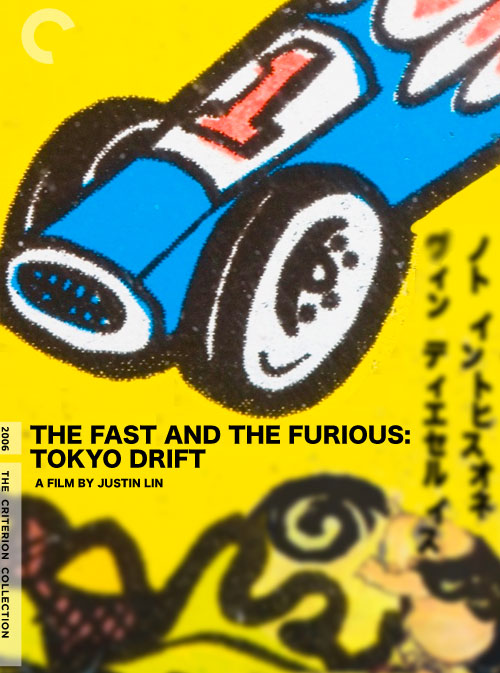
Favorite Tumblr of the week: Fake Criterions, featuring mockups of Criterion films that would never get made. For example:
Note: a surprising non-fake Criterion is Michael Bay’s Armageddon. Well, it does feature Steve Buscemi and Oscar winners Billy Bob Thornton and Ben Affleck. (thx, george)
Ellen Sirot is one of the world’s top hand models. CBS News interviewed her a couple of years ago:
Everything I do is to protect [my hands] from being in any jeopardy or any danger in any way. So for me, that means no cooking, no cleaning, no taking out the garbage, no opening cans, no opening windows, no opening doors, no gardening, no sports…
This is a really strange and fascinating video…Sirot is constantly performing with her hands but it’s also like she hasn’t got any hands, not functional ones anyway. She holds them like atrophied T. Rex arms! (via @zagata)
The merchant, Vitaly Borker, 34, who operates a Web site called decormyeyes.com, was charged with one count each of mail fraud, wire fraud, making interstate threats and cyberstalking. The mail fraud and wire fraud charges each carry a maximum sentence of 20 years in prison. The stalking and interstate threats charges carry a maximum sentence of five years.
He was arrested early Monday by agents of the United States Postal Inspection Service. In an arraignment in the late afternoon in United States District Court in Lower Manhattan, Judge Michael H. Dolinger denied Mr. Borker’s request for bail, stating that the defendant was either “verging on psychotic” or had “an explosive personality.” Mr. Borker will be detained until a preliminary hearing, scheduled for Dec. 20.
Redfield blogged a scathing attack on Saturday. Over the weekend, a few other scientists took to the Internet as well. Was this merely a case of a few isolated cranks? To find out, I reached out to a dozen experts on Monday. Almost unanimously, they think the NASA scientists have failed to make their case. “It would be really cool if such a bug existed,” said San Diego State University’s Forest Rohwer, a microbiologist who looks for new species of bacteria and viruses in coral reefs. But, he added, “none of the arguments are very convincing on their own.” That was about as positive as the critics could get. “This paper should not have been published,” said Shelley Copley of the University of Colorado.
Over the course of more than fifteen years, architect and critic Michael Sorkin has taken an almost daily twenty-minute walk from his apartment near Washington Square in New York’s Greenwich Village to his architecture studio further downtown in Tribeca. This walk has afforded abundant opportunities for Sorkin to reflect on the ongoing transformation of the neighbourhoods through which he passes. Inspired by events both mundane and monumental, Twenty Minutes in Manhattan unearths a network of relationships between the physical and the social city.
Here’s a chapter listing:
The Stairs
The Stoop
The Block
Washington Square
LaGuardia Place
Soho
Canal Street
Tribeca
145 Hudson Street
Alternative Routes
Espri d’Escalier
Robert Campbell, the architecture critic for the Boston Globe, says of the book:
Not since the great Jane Jacobs has there been a book this good about the day-to-day life of New York. Sorkin writes like an American Montaigne, riffing freely off his personal experience (sometimes happy, sometimes frustrating) to arrive at general insights about New York and about cities everywhere.
There may only be a few dozen albino redwoods in the world; they’re difficult to find so no one knows the real number. The albinos lack chlorophyll, making them unable to produce their own food, so they freeload off of a parent tree.
The world’s most isolated continent has spawned some of the most unusual words in the English language. In the space of a mere century, a remarkable vocabulary has evolved to deal with the extraordinary environment and living organisms of the Antarctic and subantarctic.
The first entry in the dictionary is “aaaa, aaaaah, aaahh See ahhh”. The entry for “ahhh” reads:
‘Halt’, a sledge dog command, usually softly called
There are an increasing number of Twitter accounts written as if The Incredible Hulk were passionate about topics other than anger and smashing. Here’s a sampling of the Twitter Hulks and their tweets.
FEMINIST HULK: “TRICK TO SMASHING GENDER BINARY: MAKE SURE IT NOT SIMPLY BREAK INTO TWO NORMATIVE PIECES. HULK CREATE GENDERQUEER DEBRIS!”
DRUNK HULK: “CAREFUL HOW NAME YOU CHILD! MONTANA LAST NAME GET HER DISNEY SHOW! MONTANA FIRST NAME GET HER PORN CAREER! MORE YOU KNOW!”
BUDDHIST HULK: “HULK SPEND DAY SMASHING BARRIERS TO AWAKENING. HULK HEART OVERFLOW WITH JOY.”
Cross-dressing Hulk: “HULK WEIGH OVER 1 TONNE. HULK KISS ANYONE HULK WANTS TO. HULK WORRIES ABOUT EDITORIAL OVERSIGHT AT MARIE CLAIRE.”
Film Crit HULK: “HULK WATCH LAURA(1944) FOR UMPTEENTH TIME THIS WEEKEND. HULK REALIZE HULK SEE LOTS OF OTTO PERMINGER IN SCORSESE.”
BARTENDER HULK: “WHY YOU THINK HULK TAKING YOUR ORDER?? IS IT CUZ HULK NOT FACING YOU? OR CUZ HULK TALKING TO SOMEONE ELSE? OR CUZ HULK MAKING OTHER DRINK??”
Lit-Crit Hulk: “HULK SMASH TREND OF HIP NOVELISTS WRITE ‘LINKED’ SHORT STORIES AND CALL IT NOVEL. YOU WANT WRITE SHORT STORIES, FINE. IT NOT A FUCKING NOVEL”
Editor Hulk: “HULK LIKE OXFORD COMMA VERY MUCH. HULK WANT TO DATE, BUT OXFORD COMMA ONLY GO OUT IN GROUPS OF THREE OR MORE.”
GRAMMAR HULK: “HULK GET INVITATION THAT SAY ‘PLEASE RSVP BY RESPONDING.’ HULK’S RAGE MITIGATED BY OPPORTUNITY TO WEAR TINY PURPLE TUXEDO PANTS!”
In the city of the distance-running legend Steve Prefontaine — Eugene is known as Tracktown, U.S.A., and is also where the sporting-goods company Nike was started — Kelly has transformed football into an aerobic sport. This style is particularly of the moment because it is apparent that football, at least in the short term, will become less violent. Kelly’s teams have found a new way to intimidate, one that does not involve high-speed collisions and head injuries. “Some people call it a no-huddle offense, but I call it a no-breathing offense,” Mark Asper, an Oregon offensive lineman, told me. “It’s still football. We hit people. But after a while, the guys on the other side of the line are so gassed that you don’t have to hit them very hard to make them fall over.”
…
In Kelly’s offense, the point of a play sometimes seems to be just to get it over with, line up and run another. The play that preceded the last touchdown was a one-yard loss — a setback in traditional offensive schemes in which down and distance are paramount. But “third and long” is not as difficult a proposition for the offense when the opposing defense can barely stand up. “Obviously, all of our plays are designed to gain yards,” Gary Campbell, Oregon’s running-backs coach, explained. “But our guys understand the cumulative effect of running them really fast.”
Lord Adair Turner, the chairman of Britain’s top financial watchdog, the Financial Services Authority, has described much of what happens on Wall Street and in other financial centers as “socially useless activity” — a comment that suggests it could be eliminated without doing any damage to the economy. In a recent article titled “What Do Banks Do?,” which appeared in a collection of essays devoted to the future of finance, Turner pointed out that although certain financial activities were genuinely valuable, others generated revenues and profits without delivering anything of real worth — payments that economists refer to as rents. “It is possible for financial activity to extract rents from the real economy rather than to deliver economic value,” Turner wrote. “Financial innovation…may in some ways and under some circumstances foster economic value creation, but that needs to be illustrated at the level of specific effects: it cannot be asserted a priori.”
Turner’s viewpoint caused consternation in the City of London, the world’s largest financial market. A clear implication of his argument is that many people in the City and on Wall Street are the financial equivalent of slumlords or toll collectors in pin-striped suits. If they retired to their beach houses en masse, the rest of the economy would be fine, or perhaps even healthier.
I particularly enjoyed the characterization of banking as a utility:
Most people on Wall Street, not surprisingly, believe that they earn their keep, but at least one influential financier vehemently disagrees: Paul Woolley, a seventy-one-year-old Englishman who has set up an institute at the London School of Economics called the Woolley Centre for the Study of Capital Market Dysfunctionality. “Why on earth should finance be the biggest and most highly paid industry when it’s just a utility, like sewage or gas?” Woolley said to me when I met with him in London. “It is like a cancer that is growing to infinite size, until it takes over the entire body.”
p.s. Thanks to Typekit, the New Yorker’s web site now uses the same familiar typefaces that you find in the magazine. Looks great.
Somehow a Norwegian television station got a bunch of 80s celebrities — people like Norm from Cheers, Tiffany, Malcolm Jamal Warner, Ricki Lake, Eddie the Eagle, Tanya Harding, Dolph Lundgren, Bananarama, Manuel from Fawlty Towers, etc. etc. — to do promotional music videos for an 80s nostalgia show and the results are nothing less than a supertrainwreck. First they did “We Are the World”:
A really nice analysis of the readability of maps from the three big online mapping companies: Google, Bing, and Yahoo. As you might expect, Google is the clear winner; they pay more attention to the little details than the other two services.
It turns out that Google uses a variety of techniques and visual tricks to help make its city labels much more readable than those of its competitors. From the use of different shadings to decluttering areas outside of major metro areas, it sure seems like Google has put a lot of thought into how it displays the labels appearing on its maps. I have no doubt that little touches like these are among the many reasons why Google remains the web’s most popular mapping site.
With the current popularity of the craft cocktail bar, massive ice cubes, and vigorous cocktail shaking techniques, comes the risk of injury.
“When they’re shaking a drink, it’s very similar to the motion of a pitcher, or a tennis serve or throwing a football,” said Lisa Raymond-Tolan, an occupational therapist in New York. “It’s the same motion, back and forth, back and forth, rotating up high. You have a heavy weight at the end of the arm, out in the air. It’s not just the shoulder. It’s the wrist as well.”
One of the bartenders at Varnish, Chris Bostick, shook his cocktails so vigorously that he ripped out the screws that had been inserted in his clavicle after a snowboarding injury. He was sidelined for weeks.
Maybe instead of Tommy John surgery, they’ll start calling it Johnny Walker surgery.
In 2057, the Sun is dying, and the Earth is freezing. So the ship Icarus 2 goes on a mission to reignite it with a massive bomb. This is the movie Sunshine, and if you get a chance to see it, watch it on a big screen. The crew themselves watch the Sun close-up, awestruck, from a view-port the exact dimensions of a movie screen, so the Sun fills your picture too and you spend half the film bathing in powerful yellow light. Like some kind of church.
Although I didn’t, Matt, appreciate the diss of Pluto. Never forget, my friend.
Parents these days go crazy worrying about their kids’ progress: Should she be reading? Should he be writing? She can’t catch a ball! The kid down the street can say her numbers up to 100 but mine only knows 1 through 14. Magical Parenthood posted an article about what a four-year-old should know and it doesn’t have anything to do with how well your kid can spell.
1. She should know that she is loved wholly and unconditionally, all of the time.
2. He should know that he is safe and he should know how to keep himself safe in public, with others, and in varied situations. He should know that he can trust his instincts about people and that he never has to do something that doesn’t feel right, no matter who is asking. He should know his personal rights and that his family will back them up.
3. She should know how to laugh, act silly, be goofy and use her imagination. She should know that it is always okay to paint the sky orange and give cats 6 legs.
This advice for parents is gold:
That being the smartest or most accomplished kid in class has never had any bearing on being the happiest. We are so caught up in trying to give our children “advantages” that we’re giving them lives as multi-tasked and stressful as ours. One of the biggest advantages we can give our children is a simple, carefree childhood.
NASA’s astrobiology announcement is that they’ve found a new kind of life that incorporates the normally toxic arsenic into its DNA.
Life like us uses a handful of basic elements in the majority of its biochemistry: carbon, hydrogen, oxygen, and nitrogen for the most part. But phosphorus is also a critical element in two major ways: it’s used as the backbone of the long, spiral-shaped DNA and RNA molecules (think of it as the winding support structure for a spiral staircase and you’ll get the picture), and it’s part of the energy transport mechanism for cells in the form of ATP (adenosine triphosphate). Without it, our cells would literally not be able to reproduce, and we’d be dead anyway if it were gone. There are many other ways phosphorus is used as well, including in cell membranes, bones, and so on. It’s a key element for all forms of life.
[…]
Amazingly, using radioisotope-tagged molecules containing arsenic, they were able to find that the microbes incorporated the arsenic into their very DNA! It’s hard to stress how shocking this is; as I understand it, saying something like that to a microbiologist without evidence would’ve had them slowly backing away from you and looking for weapons or an escape route.
I guessed wrong about what NASA was set to announce today, but the actual announcement is much more interesting than the mere discovery of extraterrestrial life. Aliens are inevitable — we’re going to find them sooner or later — but a new kind of DNA, that’s not something that happens every day. Exciting! (thx, jon)
For a piece called Metropolis II, artist Chris Burden is building a huge track and put 1200 Hot Wheels cars on it…the noise is deafening when they’re all circulating.
It includes 1,200 custom-designed cars and 18 lanes; 13 toy trains and tracks; and, dotting the landscape, buildings made of wood block, tiles, Legos and Lincoln Logs. The crew is still at work on the installation. In “Metropolis II,” by his calculation, “every hour 100,000 cars circulate through the city,” Mr. Burden said. “It has an audio quality to it. When you have 1,200 cars circulating it mimics a real freeway. It’s quite intense.”
A jury foreman in a criminal case describes his experience and what the jury ultimately decided (or actually, didn’t decide).
These are the facts we were given as a jury, facts upon which we were to decide if a boy was guilty of a crime that would put him in prison for 10 years. We were admonished to consider all of the facts but nothing outside of them. Don’t consider the sentence, or the age, or the race, or anything unrelated to what we heard while sitting in the juror box. Just focus on the facts that are presented. Yet, we were also told, time and again, that our Constitution is absolutely unwavering in its mission to protect the innocent, that no matter how clear-cut the evidence may seem, the burden of proof in criminal cases always, always, always falls on the prosecution. The boy sitting in that chair next to a pair of public defenders, possibly wearing borrowed clothes to look presentable in court, is innocent until he is proven guilty beyond a reasonable doubt.
Here’s Bill Oakley, a former writer and showrunner for The Simpsons, on how the show got made back in the show’s golden years (seasons 4-8).
Twice a year, from at least season three ‘til season eight, there’d be these story retreats where everybody would come and present their ideas for episodes. We’d get a big conference room in a hotel about a hundred yards from the office, and we’d go around and everybody would tell their ideas, one by one. It was sort of like opening Christmas presents on Christmas morning; we’d go around in a circle and everybody would have a turn or two.
It was always a huge treat to see. You had no idea what George Meyer (for instance) was going to say, and suddenly it was like this fantastic Simpsons episode pouring out of his mouth that you never dreamed of. And it was like, wow, this is where this stuff comes from.
Oakley also provided an example of a script as it went through all of its revisions on its way to the airwaves; it’s the one where Principal Skinner gets fired and Bart tries to get him his job back.
Oh, this is lovely. Someone took a high-speed camera and instead of pointing it at something fast, they put it on a fast-moving train and shot footage of the platform moving by.
Wonderful illustration of the concept of frames of reference. (via capn design)
Houston, we’ve had a problem. We’ve had a MAIN B BUS UNDERVOLT.
Wonderful stuff. The site is looking for help with getting more missions transcripts up…go here and scroll down to “Getting involved without technical knowledge”. Although I think they’d get more people involved if they didn’t just dump people into GitHub. (thx, the 50 people who sent this to me this morning)
Note: If you are a member and tried to log in, it didn't work, and now you're stuck in a neverending login loop of death, try disabling any ad blockers or extensions. Or try logging out and then back in. Still having trouble? Email me!









Socials & More