Yesterday on her Instagram story, cognitive scientist Lera Boroditsky posted a short clip of a lecture in which she posed an intriguing question: if she switched brains with LeBron James, which of them would win in a 1-on-1 game? Some relevant facts: LeBron is 6’8”, 250 pounds, a 4-time NBA champion, 19-time All-Star, 4-time league MVP, and is the all-time NBA points leader. He also possesses a singular basketball mind:
“I can usually remember plays in situations a couple of years back — quite a few years back sometimes,” James says. “I’m able to calibrate them throughout a game to the situation I’m in, to know who has it going on our team, what position to put him in.
“I’m lucky to have a photographic memory,” he will add, “and to have learned how to work with it.”
Boroditsky is 5’3”, 105 pounds, and by her own admission knows nothing about basketball and has “no hops”. So who would win? Boroditsky’s body with LeBron’s brain or LeBron’s body with Boroditsky’s brain? And why?
Ok this video from The Pudding is cool for two different reasons. First, you learn about which NBA player had the most unexpectedly great performance since 1985 (e.g. when a guy who is usually good for 6-8 pts inexplicably drops 50). But, you also get a fun little tutorial in how statistical analysis works and the importance of paying attention to the right data in order to get an answer that’s actually meaningful and relevant. How to interpret data in this way is an under-appreciated aspect in the bombardment of data and statistics we see in the media these days and teaching more people about it doesn’t have to be boring or stuffy.
Last night, in the third quarter of an eventual loss to the Oklahoma City Thunder (a team name that didn’t even exist when James made his NBA debut), LA Lakers forward LeBron James broke the once-untouchable all-time NBA scoring record, formerly 38,387 points and held by the great Kareem Abdul-Jabbar. Afterward, James had this to say about the moment:
Everything just stopped. It gave me an opportunity to embrace it and look around and seeing my family, the fans, my friends. It was pretty cool. I probably can count on my hands how many times I have cried in 20 years, either in happiness or in defeat. So that moment was one of them when I kind of teared up a little bit. It was ‘I can’t believe what’s going on’ tears.
James’ path to the all-time scoring record will look much different than his predecessor, and it’s quite obvious why: 3-pointers.
The impact of long-range shooting within the NBA has grown since the league embraced 3-pointers during the 1979-80 season. How has that affected James’ path to the top of the NBA’s scoring list? During Abdul-Jabbar’s final season in 1988-89, NBA teams averaged 6.6 3-point attempts per game. This season, James is averaging 6.7 3-point attempts on his own.
Guided by the footsteps of Jackie Robinson and Bill Russell, Abdul-Jabbar pushed forward, stretching the limits of Black athlete identity. He was, among other qualities, brash and bookish, confident and shy, awkward, aggressive, graceful - and sometimes an immense pain to deal with. He could come off as simultaneously square and the smoothest, coolest cat in the room.
In other words, he was a complete human being, not just the go-along-to-get-along, one-dimensional Black athlete much of America would have preferred him to be.
James has run with the branding concept that he is “More Than an Athlete.” Fifty-plus years ago, Abdul-Jabbar, basketball’s brightest young star, was already living that ideal.
LeBron James opened his NBA career on Oct. 29, 2003, scoring 25 points in 42 minutes in a loss to the Sacramento Kings. On the Kings’ bench sat Jabari Smith, a 6-foot-11 center in his third year who wouldn’t remove his warmups that night.
Nineteen years, two months and 18 days later, James would be reminded of that matchup by another Smith, Jabari Smith Jr., a rookie with the Houston Rockets who is Jabari Smith’s son.
“Hey, you played against my dad in your first NBA game ever,” the rookie told LeBron.
“Why you do that to me,” a chuckling James said, to which Smith responded, “You feel old, don’t you?”
James had a head start on catching Abdul-Jabbar because he was drafted out of high school, which wasn’t allowed in Abdul-Jabbar’s day. Then known as Lew Alcindor, Abdul-Jabbar first spent four years at U.C.L.A., where he was one of the most dominant college basketball players in the country.
James, at 38, is one of the oldest players in the league and in his 20th season. When Abdul-Jabbar was 38, he was in just his 17th professional season. By the time he hit his 20th year, he was no longer as dominant as he had been. James, with the good timing of being able to start this journey at 18 years old, is still proving every day just how much he has left, scoring 40 points on several nights this season and almost reaching 50 in a January game against Houston. He could be the first player to score 40,000 points.
On a personal note, I’ve never been that excited about LeBron James. I don’t hate him, but I didn’t really root for him or enjoy watching him play. Part of my aversion was no doubt due to many people trying, far too early, to place James on the GOAT throne, ahead of the player I grew up watching and rooting for, Michael Jordan. If I were in charge of drafting players for an all-time team, I’d still select Jordan first — his unique combination of drive, athleticism, and skill is still, IMO, the best in the game, ever. But with his versatility and longevity, LeBron James has more than earned the status of the NBA’s greatest player of all time.
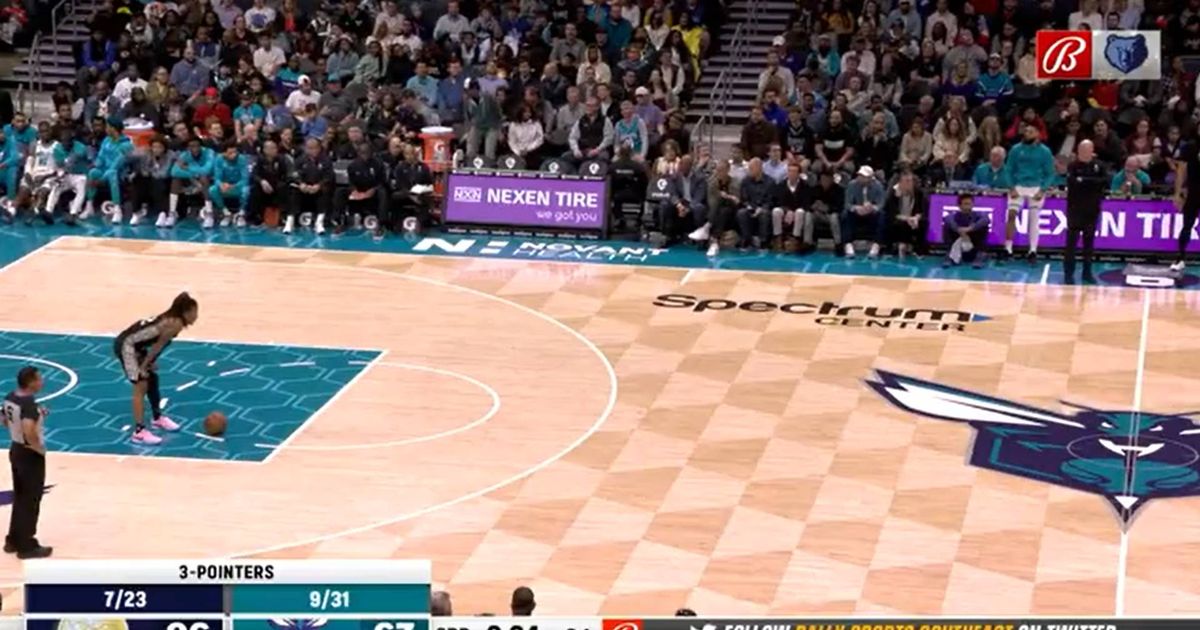
If you’ve watched a high-level basketball game in the last ten or so years (NBA, WNBA, NCAA), you’ve probably seen something a little strange. Instead of throwing the ball inbounds directly to a teammate, the inbounder will slowly roll the ball on the floor in their general direction… and then the ball handler will wait as long as possible before he picks it up and starts dribbling. Sometimes it’s just a few seconds, and sometimes it feels like an eternity. What is this, and why do they do it?
It’s called “walking the dog,” and it exploits a rule that’s as old as the shot clock itself. The shot clock (24 seconds long in the NBA) begins counting down as soon as a team takes possession of the ball after an inbounds pass. If you don’t shoot and make contact with the rim within 24 seconds, the other team takes possession of the ball.
The shot clock is designed to speed up play. Walking the dog is a loophole designed to slow it down. You use it for two reasons: to delay starting the shot clock (giving you longer to get down court and set up a play) and to run time off the game clock (giving your opponent less time to control the ball and score).
Walking the dog is very old — the 60s Celtics used to use it after the other team scored to give them more time for their legendary center Bill Russell to get down court and set up the offense. And generally, that’s been how it’s used in the modern NBA, to get more time back on the shot clock. But in recent years, more ball handlers have been walking the dog to run time — sometimes, lots of time — off the game clock. So it’s becoming more controversial.
Two years ago, Morant became a regular dog walker in his sophomore season and quickly got his team to buy in. He’s utilized the move 41 times across all quarters and has been the ball handler on 23 of those 34 plays in crunch time, wasting over three minutes of game clock. In just over half this season, Morant has wasted more time walking the dog than any team had in an entire year and holds three of the longest dog walks recorded in the NBA this season (his teammate Desmond Bane has one of the others)…
The Grizzlies don’t discuss this in practice or plan these plays in advance. Morant often motions to his inbounder to roll the ball in slowly in these situations right as they materialize, especially when leading late in a game. The guy will do anything to shave a few seconds off. He’ll leap out of the way instead of catching the ball if the inbounder throws it too hard in his direction. If Morant finds himself inbounding, he’ll play dumb and misplace the ball as the game clock keeps running.
How has Morant become so good at walking the dog? He declined to speak with ESPN for this story, but his teammates think it boils down to his speed and athleticism. Opponents are hesitant to really press him 75-plus feet from their own hoop. If they make a mistake, he could have a huge runway with a numbers advantage. Others think it’s more a combination of fatigue and a never-ending game of chicken.
How do you stop a player from walking the dog? It’s so simple that it’s stupid: send a defender to make them pick up the ball. There’s some risk on either side here: an inattentive ball handler might allow an aggressive defender to steal a rolling ball. But an overaggressive defender might accidentally foul the ball handler in the back court while trying to steal the ball. That’s exactly what happened to Ben Simmons in a recent game against Morant:
As the Grizzlies’ star guard makes his way up the court, he lets the basketball roll alongside him, slowly, slowly, slowly, an inch at a time, untouched. Morant only needs to maintain a slow walk to keep up as he scans the court, uncontested by any Nets defender.
The ball rolls another inch, another inch, another inch. Morant is almost at half court. He keeps letting the ball roll alongside him, knowing the 24-second shot clock won’t start until he touches it — burning precious game clock at the same time, almost 21 seconds now.
As he crosses half court, Morant finally picks up the ball and glances over to his bench. His defender, Ben Simmons, suddenly closes on him and lunges at the ball, looking for a steal — but he’s too late. Morant sees it coming and protects the ball. Simmons hits him in the arm. Whistle. Foul. That’s Simmons’ sixth; he’s out of the game.
Thanks in part to that play, Memphis wins by 10. Afterward, Morant explains that he was baiting Simmons, knowing he’d bite based on past experience. Clips of the play soon go viral.
Personally, I like it when clever players find ways to play games-within-a-game in sports, especially basketball. So I have no problem with walking the dog. Other people think it’s boring, unfair, or it slows down the game too much. It definitely seems like if a lot of games come to a literal standstill, then the league office might step in and make a rules change. But until then, it’s worth enjoying the players who play this game — and all of its wrinkles — the best.
The three-point shot has become the focus of the offensive strategy of every successful NBA team. But is it also making the game boring?
The math states that scoring one-third of your shots from behind the 3-point line is as good as scoring half your shots from inside the line. In other words: Shooting as many 3s as possible will likely lead to a higher score.
The league took notice, and teams and players followed suit. 3s have become so prevalent in recent years that fans are criticizing the league for being oversaturated with them. Critics worry that the game is on the verge of becoming boring because everyone is trying to do the same thing. And that’s led some to wonder if the NBA should move the 3-point line back.
Yesterday I watched a bit of the Champions League match between PSG and Borussia Dortmund, played at the Parc des Princes stadium in Paris, which has a seating capacity of almost 48,000 under normal circumstances. But for yesterday’s game, the game was played in a completely empty stadium in order to help prevent the spread of COVID-19. Without the chants, jeers, and cheers of the crowd, you can clearly hear the actual sounds of the game like the players talking to each other and the ball being kicked.
I’m not sure how much the empty stadium hampered the potential spread of the virus though — PSG fans gathered in huge numbers outside Parc des Princes to cheer on their team during the match and celebrate the win afterwards.
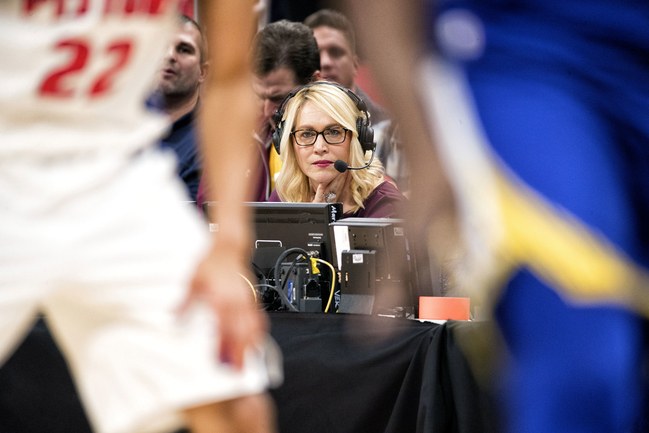
David Remnick writes what everyone knows: “the best broadcaster in the [NBA] is Doris Burke. This has been the case now for years. There is no one remotely close.”
But because this is David Remnick, he doesn’t just do the easy job of showing how Burke outshines her ESPN/ABC colleagues Jeff Van Gundy and Mark Jackson, but also provides a mini-history of women in the press box and broadcast booth. (He even includes the transition phrase, “There is a long history to all of this.”)
“The thing is that in sportswriting the breakthroughs came at least twenty years ago and more,” [Sally] Jenkins said. “But television sports has far more trip wires than sports journalism. Sports TV is still Wall Street. And there is no real change unless there is mandate from a guy on high. All the breakthroughs—and here you can name whatever women behind microphones—are decisions made by a single man at the top who wants to be Branch Rickey.”
“The reality is that I’m fifty-two years old,” Burke told Sports Illustrated last season. “And how many fifty-five to sixty-year-old women do you see in sports broadcasting? How many? I see a lot of sixty-year-old men broadcasting.” Burke is better than all of them. That might not matter.
Until recently, even the children of African immigrants who were born here found it difficult to secure legal residency, let alone citizenship. Their stateless status denied them national health care, Civil Service jobs and access to sports leagues. Antetokounmpo only gained Greek citizenship six years ago — just as he was about to go to New York for the N.B.A. draft.
“He was given Greek citizenship in order to prevent him from traveling to New York as a Nigerian,” said Nikos Odubitan, the founder of Generation 2.0, an advocacy group that helps second-generation immigrants gain legal status in Greece.
Danny Chau went to Milwaukee to speak with refugees from places like Syria and Myanmar about their lives, their struggles, and their awareness of Antetokounmpo’s story: Giannis Through the Eyes of Milwaukee Refugees.
Kasim serves as a medical interpreter at Aurora Health Care, Wisconsin’s largest home care organization. I walk past the Aurora pharmacy several times during my stay; above one of the entrance gates hand a vinyl FEAR THE DEER banner. I ask Kasim about the Bucks, about what he knows of the professional sports franchise that has brought new life to much of the city this season. For refugees like Kasim, they may as well be from another planet.
“I heard of this, but again, because of the situations, we are a bit away from the sports,” Kasim says. “We don’t have any chance. But now, I come here, I’m working at the community center, at the same time fulfilling other responsibilities, so time is pretty busy. So I don’t get the time to self-care.” Kasim, often solemn and deliberate in his speech, couldn’t help but let out a smile, having essentially wrapped the term “self-care” in sonic air quotes.
I tell him about Giannis.
He lives here in Milwaukee?
About how he’s one of the best basketball players in the world.
He’s from here or he came here with his parents?
About how, as a child, he, too, had no official claim to the home he had always known. About how he would peddle sunglasses, DVDs, and whatever else he could to make 200 or 300 euros a month for his family. And how his status as an undocumented person meant knowing that at any moment, police could ask his parents for their documentation, and that they could be sent back to Nigeria in an instant.
One of the best things about the contemporary NBA is that the league is overflowing with villains, great players that it’s easy to root against. It’s just as easy to love LeBron as to hate LeBron, to love or hate the Warriors, to love or hate James Harden or Kyrie Irving or John Wall. You could heat these guys’ guts, and love their entertainment value as heels at the same time.
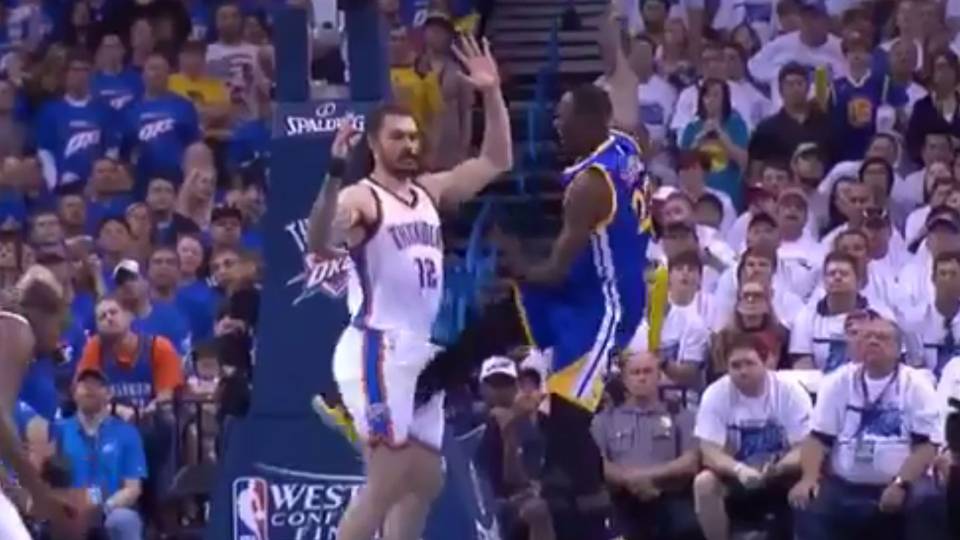
One of the very best heels is Oklahoma City center Steven Adams, the New Zealand-born, ponytail-clad, Aquaman-resembling brute who sets screens and clears the boards for Russell Westbrook and Paul George. ESPN gave Adams a mostly sympathetic profile that at the same time made it clear why someone like Draymond Green would want to kick Adams in the nuts.
There’s no “NBA’s Strongest Man” contest where players lift Jumbotrons or heave backboards onto the upper concourse, but among peers and people around the league, Adams is widely considered the NBA’s strongman, a walking concrete wall of power and physicality.
“That guy is the strongest, most physical guy in the league,” says Wizards coach Scott Brooks, who coached Adams for two seasons in OKC.
Says teammate Jerami Grant: “He is for sure, definitely the strongest guy in the NBA.”
In a league trending toward speed, spacing, shooting and slashing, Adams is the counterpoint. Old school. A “throwback,” as San Antonio Spurs coach Gregg Popovich calls him.
Adams is a bruising, physical relic of the past, a back-to-the-basket brute who will grind possessions in the post and overpower you to get there.
“That m——-f——- is strong. Like, I’m serious,” Philadelphia 76ers star Jimmy Butler said last season. “He hit me with one screen and I thought my life was over.
“He’s from Krypton or something.”
Wait: why don’t we have strongman competitions duringthe NBA All-Star weekend or something? That would be amazing! I would rather watch that than layup drills or half of the stuff they show. I want to see Marc Gasol and Boogie Cousins throwing barrels at each other.
Darius Miles was drafted 3rd overall by the LA Clippers in the 2000 NBA Draft. After 8 seasons, a major injury, and $62 million, Miles was out of the league and bankrupt. In this entertaining and affecting article for The Players’ Tribune, Miles explains how he got to the NBA and what went wrong.
It’s crazy to think about, but six years after we were at the peak with the Young Clippers, I was basically out of the league. I was 27 years old, and I had doctors telling me that my knee was too messed up to play basketball ever again.
My whole life, I used basketball as an escape. When you grow up how I grew up, I think you’re probably bound to have some kind of PTSD. I ain’t a doctor, but when you grow up running from gunshots all the time, I think there’s something inside you that never leaves. I used to feel this pressure on me — I’m talking like a physical pressure, you know? But I used to be able to go out onto a basketball court and just unleash it. You could let it all out. You could dunk the shit outta that motherfucker in front of 100 people or 20,000 people and feel good for a minute.
Basketball got taken away from me at 27, and I was lost. I was just kind of going through the motions. Then a couple years later, my momma got taken away from me, and I pretty much went insane.
Miles’ friend and former teammate Quentin Richardson edited the piece and wrote one of his own for the Tribune as well.
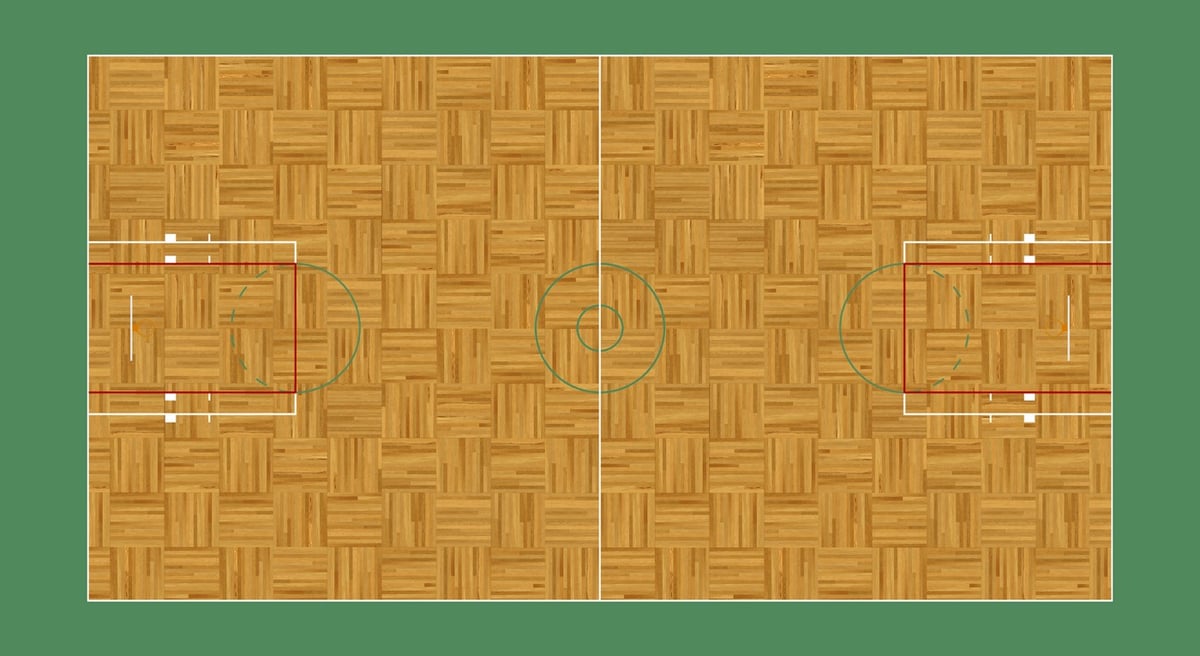
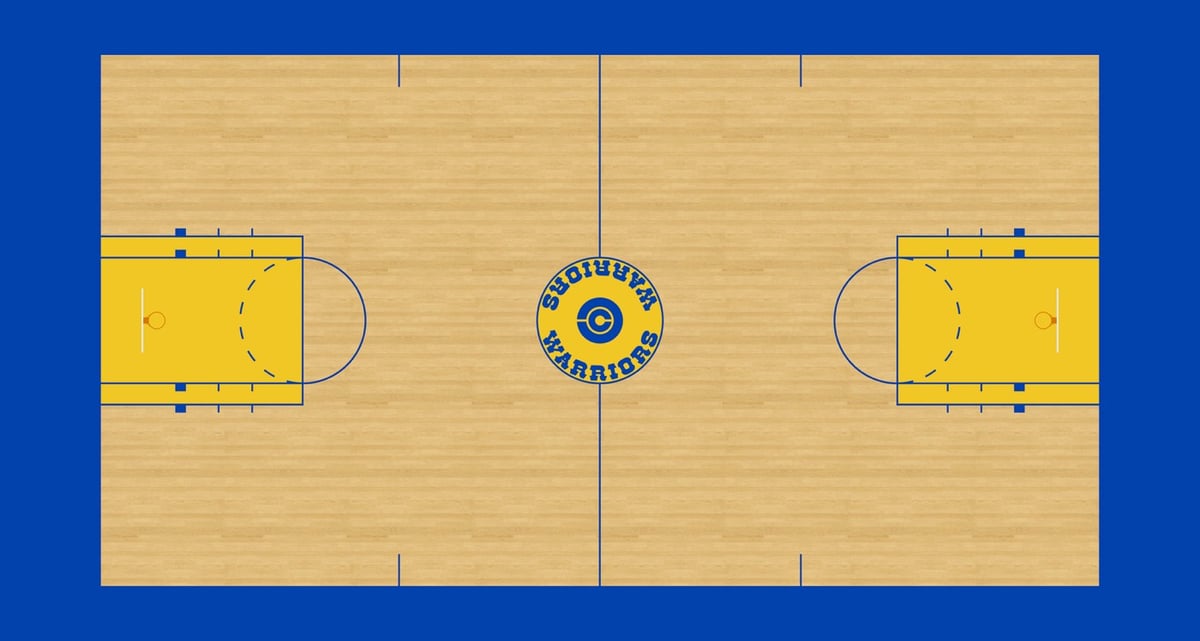
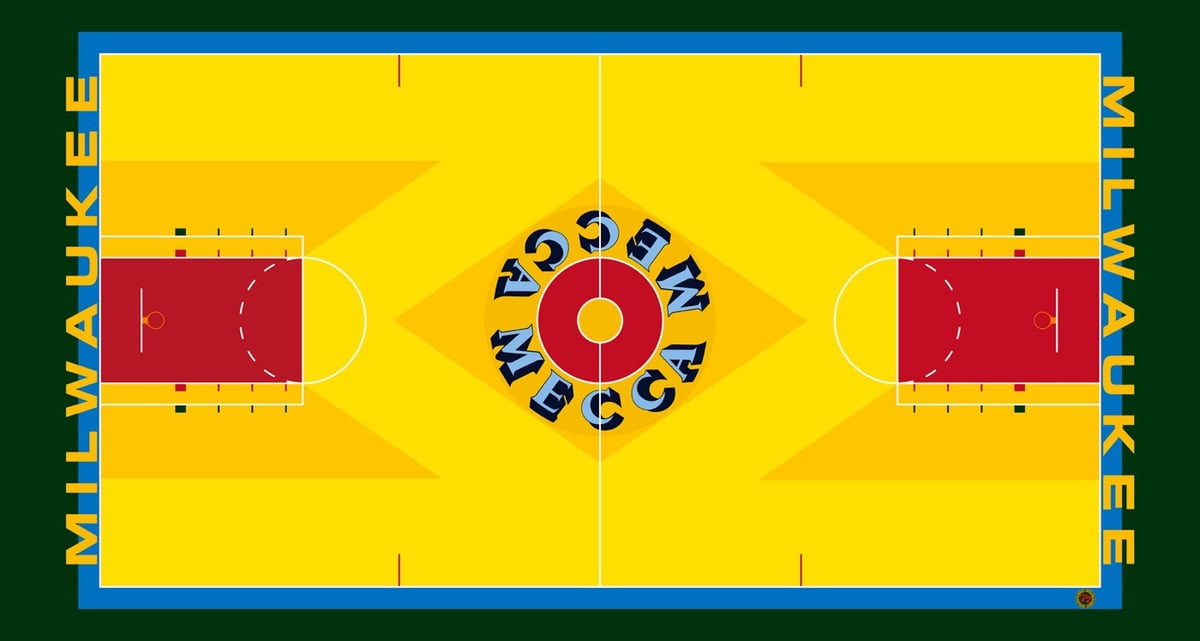
Flickr user kodrinsky has compiled a massive collection of more than 1100 illustrations of NBA courts dating back to the 50s, an online museum of basketball hardwood. The collection contains floors for every NBA team with additions documenting even small changes in arena names, team logos, free-throw lane layouts, paint schemes, sponsors, and even wood patterns.
Above are the courts for the Boston Celtics (1964-1966), the Golden State Warriors (1975-1979), the Philadelphia 76ers (1978-1979), and the Milwaukee Bucks (1977-1979).
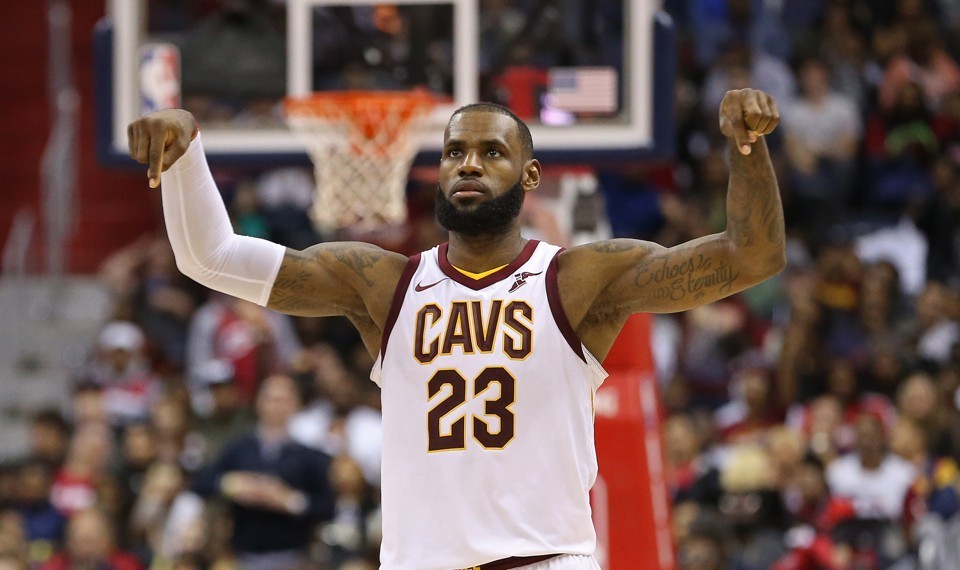
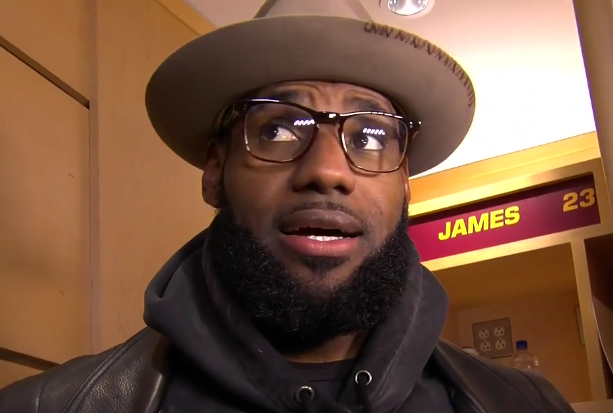
LeBron James, as a basketball player, is arguably better now than he’s ever been. More importantly, LeBron James’s beard is inarguably better now than it’s ever been.
Look at that fullness, that thickness, that beautiful roundness! That, my friend, is the beard of a man with a dietician, a dermatologist, and a barber on retainer.
It is the beard of a dad and a daddy both.
It is a beard fully realized. It is a Philly beard.
Here I need to explain. I was born in Detroit, but lived for many years in Philadelphia. The men of Philadelphia, and particularly the black men of Philadelphia, are known for their lustrous beards. Some of it is the influence of Islam; some of it may just be needing to be outdoors in cold weather. But it’s a source of civic pride and power.
This was the first video I ever saw on the Philly beard, made by the now-defunct Phillybeard.com in 2009:
The local PBS station made its own version, emphasizing some of the qualities needed for a proper Philly beard:
But overseas the moustacheless, bushy beard is not so identifiably hip-hop and has caused considerable controversy, with security officials in Europe and the Middle East mistaking the Philly for a jihadi beard. In February 2014, for instance, Lebanese police arrested Hussein Sharaffedine (aka Double A the Preacherman), 32, a Shia rapper and frontman for a local funk band. Internal Security Forces mistook him for a Salafi militant and handcuffed and detained him for 24 hours. In Europe hip-hop heads such as French rapper Medine — a Black Powerite who wears a fierce beard that he calls “the Afro beneath my jaw” — complain of police harassment. French fashion magazines joke now crudely about “hipsterrorisme.” European journalists are descending on Philadelphia to trace the roots of what they call la barbe sunnah and Salafi hipsterism.
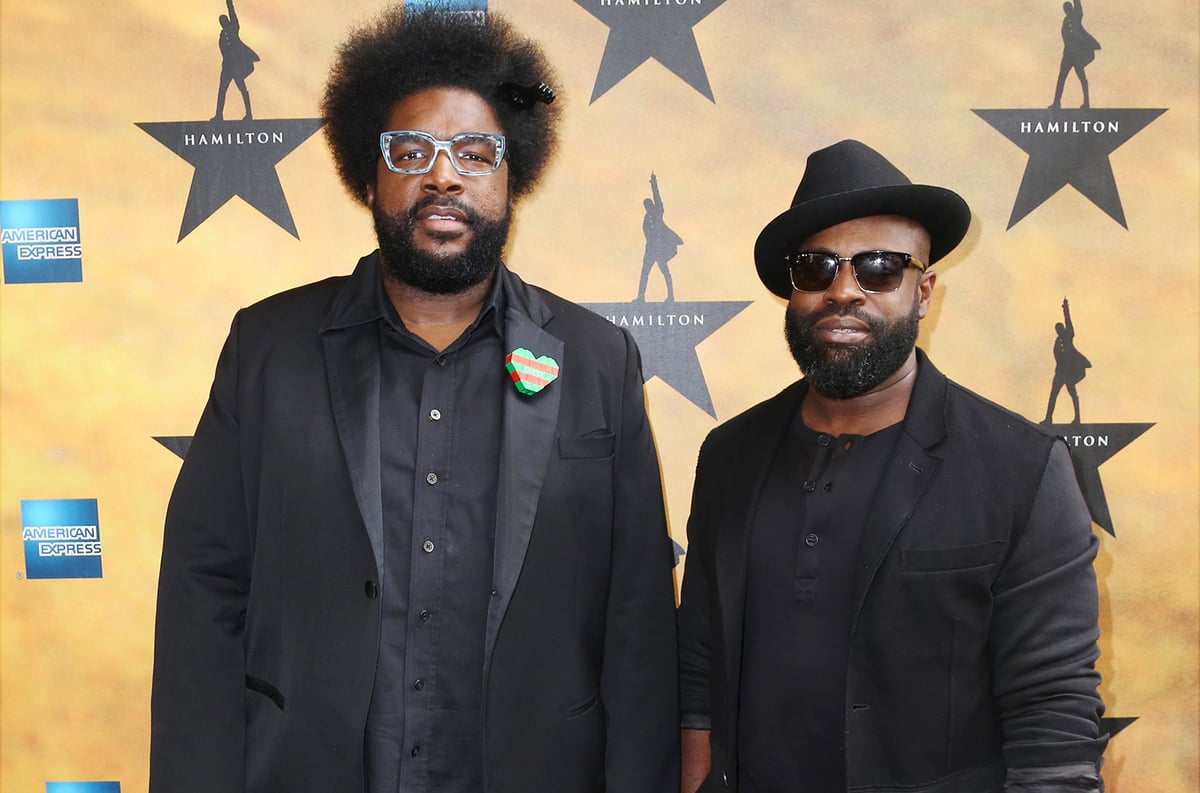
But just as not everyone who rocks a Sunnah is Sunni, it’s a mistake to conflate the moustacheless Sunnah with the Philly beard as such. For instance, check out Questlove and Black Thought, two classic examples of the Philly beard, avec une moustache:
These, I think, are the key criteria for a Philly beard:
A full beard, trimmed only at the edges of the cheek and the neck;
A trimmed moustache. The lips should be visible;
That roundness. A Sunni muslim might grow out their beard long, so it gets that verticality. The Philly beard is round — as Medine says, it is an “afro beneath the jaw”;
It has to be well-cared for. A Philly beard is not unshaven; a Philly beard is deliberate.
Even though LeBron James does not live in Philadelphia, nor has ever lived in Philadelphia, nor had anything to do with Philadelphia other than beating the Sixers and occasionally saying nice things about our rookie Ben Simmons, if I had to point to an example of a Philly beard, after the guys from The Roots? I would point to LeBron James.
This of course, leads to the obvious question: is LeBron, who has never before worn a beard quite like this, announcing without announcing, hiding in plain sight, via the medium of his face, his preferred free-agency destination in 2018?
The answer, for any fan of the Philadelphia 76ers, is clearly yes.
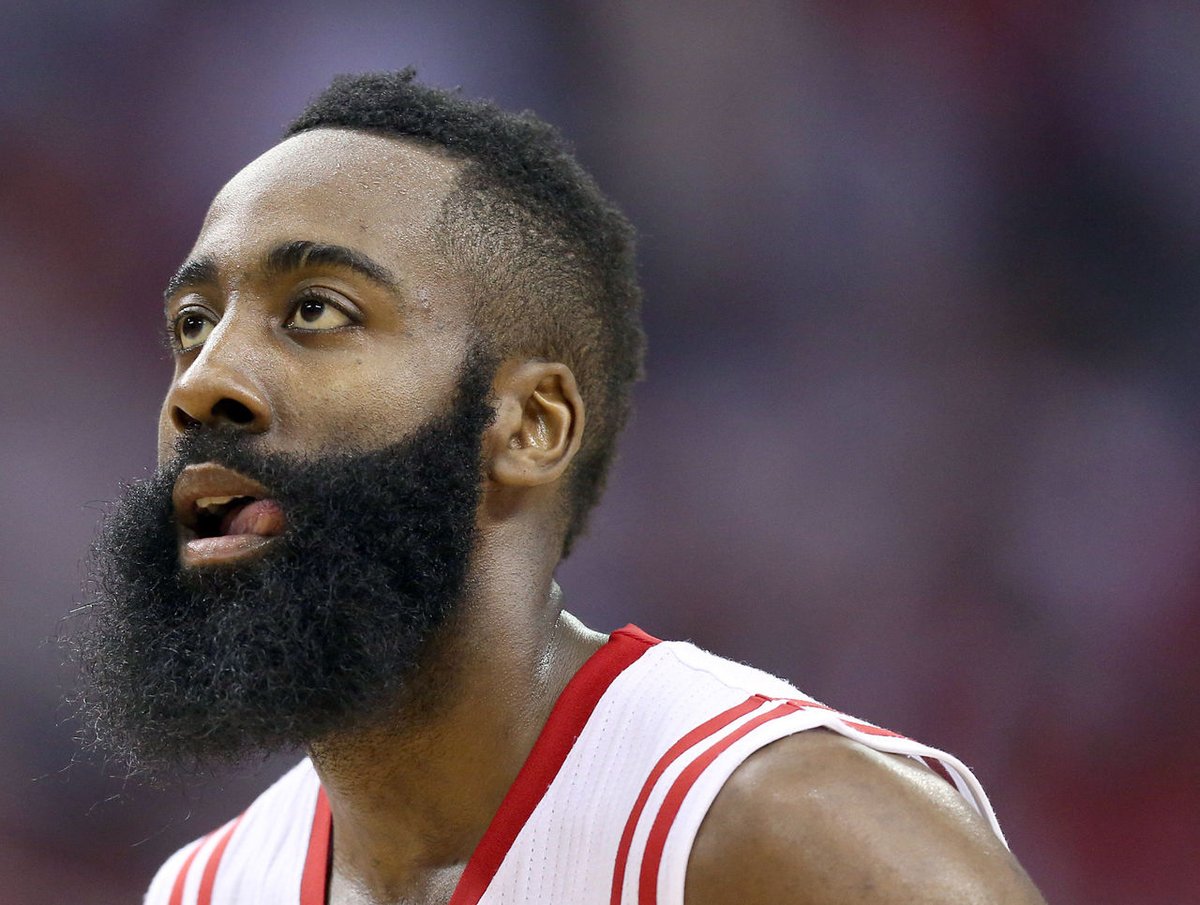
Naysayers, like my brother, would say the beard’s meaning is ambiguous. Perhaps it signals his intention to join James Harden with the Houston Rockets. But James Harden’s beard is not a Philly beard. Harden has to wear that thick moustache on top to hide his baby face. Harden’s beard is not round, but rectangular. It’s an impressive beard. But it is not the beard LeBron James is wearing. LeBron’s is a Philly beard.
Look: suppose you had to choose between playing in Los Angeles with Lonzo Ball (no beard, no hope of one), Brandon Ingram (sick, scraggly beard), Kyle Kuzma (my guy is from Flint, represent, but still), and maybe Paul George (who plays your position already) — OR you could play with Ben Simmons, Joel Embiid, Robert Covington, Markelle Fultz, Dario Saric, and MAYBE JJ Redick, for an equally storied franchise, but one that hasn’t won a title since 1983, AND you can stay in the Eastern conference and stick it to Dan Gilbert and Kyrie Irving forever — why would you not sign with the Sixers? Play in a city that would love you, love your children, is just a few hours away from home in Akron, and would love the hell out of that beard?
I think the choice is obvious. LeBron will be a Sixer in 2018. He’ll teach Simmons how to shoot, Embiid how to become indestructible, and be Magic Johnson and Dr. J rolled into one. I’ll make this promise now, with the web as my witness: I will move back to Philadelphia if this happens. And I will love every second of these young talents filling in around LeBron’s dad-game.
The NBA right now is surprisingly flush with “unicorns”: long, thin athletes like Kevin Durant, Giannis Antetokounmpo, Anthony Davis, and Kristaps Porzingis, seven-foot-tall guys who can handle the ball and shoot from range like the best guards from twenty years ago. The impossible build-your-own players from old video games are suddenly real and dunking on your head. Everyone is enamored of them.
I love them too. But before the unicorns, there were the mules. (Mulicorns?) Short, often chubby swiss-army-knife frontcourt/backcourt players who were nearly as versatile as the unicorns, but won through a combination of toughness, savvy, surprising athleticism, and unsurprisingly big butts. The mulicorns didn’t shoot as well from range (everyone shoots better now), they didn’t look as superhuman, but they were just as fun to watch. Okay. Almost as fun to watch. They got the job done. And as an amateur undersized, thoroughly chubby, surprisingly versatile power forward myself, they’ve always been my favorite guys to watch play.
Whenever I have to make a complicated moral decision, tiny specters of Boris Diaw and Draymond Green plead their cases to me from each shoulder
Charles Barkley was a mulicorn. Ricky Pierce, Fat Lever, Adrian Dantley, Wes Unseld, Larry Johnson, Super John Williams. Magic Johnson was just a few inches too tall to be a mulicorn, but he’d be a mulicorn today. The best true mulicorn in the league right now is Draymond Green, whose bizarre blend of physical traits, creative skills, photographic memory, and I-will-tear-your-house-down-to-win attitude might prove as tough to clone as a hundred Giannises.
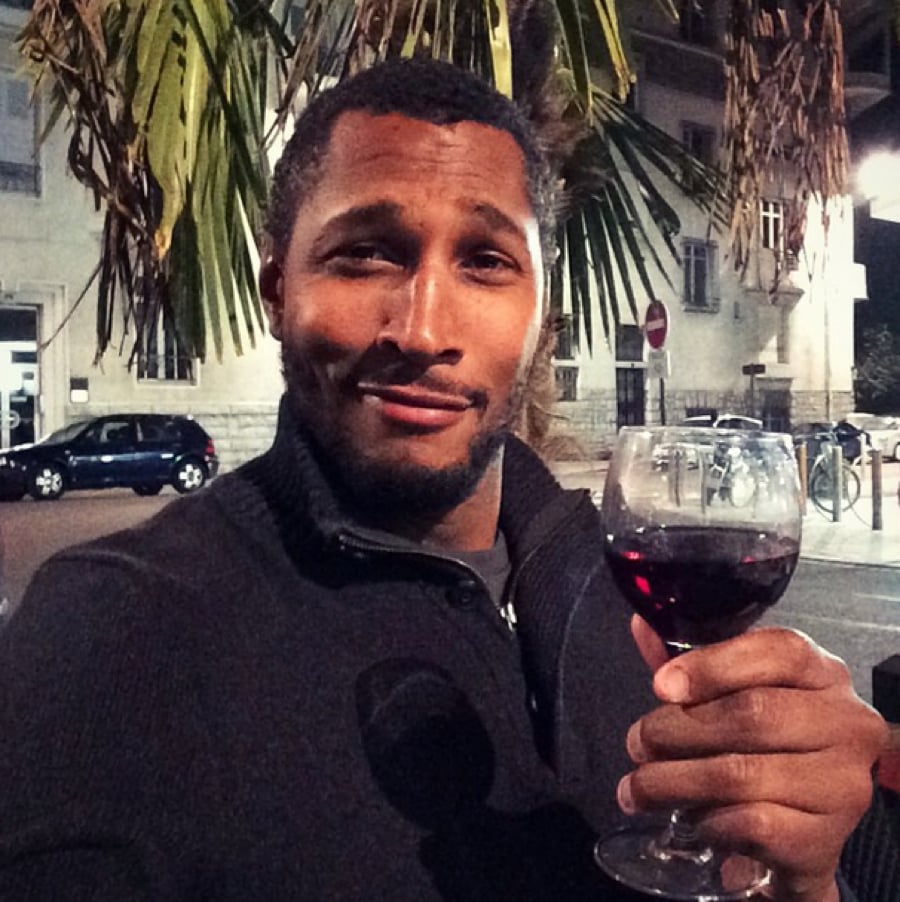
But the all-time mulicorn, and one of my favorite players ever, is the recently not-retired, just-playing-in-France, could-sign-with-a-competitive-NBA-team-at-any-time, Boris Diaw. Behold his majesty:
I asked my brother Sean, a math teacher and football and basketball coach who may be an even bigger Boris fan than I am and never, ever writes things on the internet, to tell me why he loves Boris so much.
Boris Diaw is like the bass player who always makes the song sound better. Or your buddy who the group just works better when he is there. He is the ultimate glue guy.
He also reminds me of that dude at the gym who you pick up on your team and you would win the court all day, and you couldn’t really keep track of who scored all of the points. But everyone would defend a little better, run a little harder and throw that extra pass.
“When I look at Boris Diaw, I think about Beethoven in the age of the romantics.” Bill Walton actually said this on television
He had the Sabonis thing where he passed really really well for a big guy. He also fit into my theory that every guy I liked could have played on the old Celtics team or the Bad Boys Pistons. Super smart; plays the game the “right way”; plays defense and moves the ball. A role player who understands their position on the team but can be the guy at least for moments. Tend to be really skilled and tough big guys. Guys who play the way that you hope you would play if you were 6’8”.
His teams were always better when he got there and worse when he left. He got traded for Joe Johnson, and somehow the Suns got better. That is a reoccurring story with him. His teams were always better when he got there and worse when he left. That one time he went to the Bobcats and then they were good. It was like him and Stephen Jackson and they made the playoffs.
When he went to the Spurs, it was a whole other level. Who has Tim Duncan and gets more fun to watch when they sub? He and Manu made everyone on the team play basketball. It was what people who like soccer describe, but I never really understood.
He is like the real life most interesting guy in the world.
“Boris walks into the gym one day wearing flip-flops and holding his customary cappuccino, which was a staple for him every morning,” Griffin recalled. “It was during pre-draft workouts, so he sees the Vertec [machine] and asks what it is.
“We tell him it measures your vertical leap by determining how many of the bars you can touch. He asks what’s the highest anyone has ever gone, and we tell him Amare’ [Stoudemire] cleared the entire rack.
“Boris puts down the cappuccino, takes off his flip-flops and clears the entire rack on the first try. Then he calmly puts his flip-flops back on, picks up his cappuccino and walks away, saying, ‘That was not difficult.’”
Since the late 1980s, the winning percentage of road teams has been rising in the NBA. After speaking to dozens of players, coaches, and team officials, Tom Haberstroh found a fairly accepted answer: “NBA players are sleeping more and drinking less”. Players are taking their careers more seriously and partying less on the road while transportation coordination has improved. Ubiquitous cameras and big sponsorships keep bad behavior in check. An additional factor is that with apps like Tinder and Instagram, companionship can be delivered to a player’s hotel room like Seamless or Postmates without the need to drink at the club for a few hours beforehand.
Indeed, various apps have done for sex in the NBA what Amazon has done for books. One no longer needs to leave home to find a party. The party now comes to you. And lifestyle judgments aside, the NBA road life is simply more efficient — and less taxing — when there aren’t open hours spent trolling clubs.
“It’s absolutely true that you get at least two hours more sleep getting laid on the road today versus 15 years ago,” says one former All-Star, who adds that players actually prefer Instagram to Tinder when away from home. “No schmoozing. No going out to the club. No having to get something to eat after the club but before the hotel.”
The NBA player staring at a 9:30 a.m. team breakfast in a hotel conference room the morning of the game can now log seven or eight hours of z’s and still enjoy a tryst. Thanks to direct messaging and texting, some NBA players even arrange to have keys left at the front desk so dates can be inside the room when a player arrives at the hotel.
As Haberstroh says further down in the article, “Partying is the midrange jumper of nightlife.” (via mr)
At Skeptical Sports, Benjamin Morris (who was just hired at FiveThirtyEight) has an extensive series of posts about Dennis Rodman. The conclusion he arrives at after many graphs and a dozen different posts is that Dennis Rodman was probably way better at whatever it was that Dennis Rodman did than any other NBA player was at what they did over the past 25 years.
While there may be room for reasonable disagreement about his character, his sportsmanship, or how and whether to honor his accomplishments, my research and analysis has led me to believe — beyond a reasonable doubt — that Rodman is one of the most undervalued players in NBA history.
I admit to not reading the whole series, but the ramifications of Rodman being “the best 3rd-best player” in the history of the NBA by a wide margin laid out in the finale was fascinating:
“Well, it’s not like he’s as valuable as Michael Jordan, but he’s the best 3rd-best player by a wider margin than Jordan was the best 1st-best player.”
“So you’re saying he was better than Michael Jordan.”
“No, I’m not saying that. Michael Jordan was clearly better.”
“OK, take a team with Michael Jordan and Dennis Rodman on it. Which would hurt them more, replacing Michael Jordan with the next-best primary scoring option in NBA history, or replacing Rodman with the next-best defender/rebounder in NBA history?”
“I’m not sure, but probably Rodman.”
“So you’re saying a team should dump Michael Jordan before it should dump Dennis Rodman?”
“Well, I don’t know for sure, I’m not sure exactly how valuable other defender-rebounders are, but regardless, it would be weird to base the whole argument on who happens to be the 2nd-best player. I mean, what if there were two Michael Jordan’s, would that make him the least valuable starter on an All-Time team?”
“Well OK, how common are primary scoring options that are in Jordan’s league value-wise?”
“There are none, I’m pretty sure he has the most value.”
“BALLPARK.”
“I dunno, there are probably between 0 and 2 in the league at any given time.”
“And how common are defender/rebounder/dirty workers that are in Rodman’s league value-wise?”
“There are none.”
“BALLPARK.”
“There are none. Ballpark.”
“So, basically, if a team had Michael Jordan and Dennis Rodman on it, and they could replace either with some random player ‘in the ballpark’ of the next-best player for their role, they should dump Jordan before they dump Rodman?”
“Maybe. Um. Yeah, probably.”
“And I assume that this holds for anyone other than Jordan?”
“I guess.”
“So say you’re head-to-head with me and we’re drafting NBA All-Time teams, you win the toss, you have first pick, who do you take?”
“I don’t know, good question.”
“No, it’s an easy question. The answer is: YOU TAKE RODMAN. You just said so.”
“Wait, I didn’t say that.”
“O.K., fine, I get the first pick. I’ll take Rodman… Because YOU JUST TOLD ME TO.”
“I don’t know, I’d have to think about it. It’s possible.”
“So there you go, Dennis Rodman is the single most valuable player in NBA History. There’s your argument.”
I loved watching Rodman play when he was on the Bulls. (One of my early web efforts was The Dennis Rodman Hair Page, which used JavaScript to change Rodman’s hair color.) The guy had such a weird role that he often seemed to be doing either the wrong thing or nothing. But the sheer number of rebounds and his defensive effort were hard to deny.
The discussion of Rodman’s worth reminds me a bit of Rickey Henderson, another unconventional player and a favorite of my pal David, who is always saying Henderson doesn’t get the credit he deserves as one of the best players of all time. (via @pieratt)
In talking to Bill Simmons for a Grantland NBA preview show, former NBA star Jalen Rose predicts that Michael Jordan will play one game for the Charlotte Bobcats this season.
Per Betteridge’s law of headlines, Jordan will not play in the NBA this season, but it’s an intriguing possibility. Jordan’s 50 years old but he owns the team so you never know.
Lovely piece by Joe Posnanski about Tim Duncan, who at the age of 37 and in his 16th NBA season, finds himself in the Finals again seeking his fifth NBA championship.
Duncan almost certainly would have been the first pick in the draft after his sophomore year, but he came back to Wake Forest. He would have been the first pick in the draft after his junior year, for sure — and just about everyone thought he would go out — but once more he went back to Wake Forest to complete his senior year. Odom says that they were in the car after Duncan’s junior year and heading to the airport for the Wooden Award ceremony (Duncan did not win it until his senior year). He told Duncan, “You will get a lot of questions there about why you’re coming back to Wake Forest.”
Duncan, typically, looked out the window and did not say anything.
“No, Tim, this is important,” Odom said. “Let’s pretend I’m one of those reporters? Was it a hard decision to come back to Wake Forest?”
Duncan kept looking out the window, but he said: “No. It wasn’t hard.”
Odom: “It wasn’t? You didn’t agonize over leaving millions of dollars on the table?”
Duncan said: “I didn’t agonize. I just thought, why should I try to do today what I will be better prepared to do a year from now.”
Odom looked over at the best player he would ever coach, and he wondered: “What kind of college junior thinks like that? Who has that sort of confidence, that sort of patience, that sort of inner peace? And then Duncan said the words that Odom thinks about almost every day.”
He said: “You know something coach? The NBA can do a lot for me. It really can. But there’s one thing it can’t do. The NBA can never make me 20 years old again.”
In 2003, Duncan was 27 years old and the MVP of the NBA and the Spurs won their second championship. Ten years later, at 37, his statistics (per 36 minutes) are remarkably similar:
Loyalty to my team is the real reason I didn’t come out sooner. When I signed a free-agent contract with Boston last July, I decided to commit myself to the Celtics and not let my personal life become a distraction. When I was traded to the Wizards, the political significance of coming out sunk in. I was ready to open up to the press, but I had to wait until the season was over.
A college classmate tried to persuade me to come out then and there. But I couldn’t yet. My one small gesture of solidarity was to wear jersey number 98 with the Celtics and then the Wizards. The number has great significance to the gay community. One of the most notorious antigay hate crimes occurred in 1998. Matthew Shepard, a University of Wyoming student, was kidnapped, tortured and lashed to a prairie fence. He died five days after he was finally found. That same year the Trevor Project was founded. This amazing organization provides crisis intervention and suicide prevention to kids struggling with their sexual identity. Trust me, I know that struggle. I’ve struggled with some insane logic. When I put on my jersey I was making a statement to myself, my family and my friends.
The strain of hiding my sexuality became almost unbearable in March, when the U.S. Supreme Court heard arguments for and against same-sex marriage. Less then three miles from my apartment, nine jurists argued about my happiness and my future. Here was my chance to be heard, and I couldn’t say a thing. I didn’t want to answer questions and draw attention to myself. Not while I was still playing.
Buried in this column about the 2013 NBA playoffs is an astounding statistic:
Dwight Howard missed more free throws this season (366) than Lakers teammate Steve Nash has missed in his 17-year NBA career (322). Howard: 355 for 721 this season, 49.2 percent; Nash: 3,038 for 3,360 from 1996-97 through 2012-13, 90.4 percent.
Now, Howard takes more than double (and sometimes triple) the amount of free throws than Nash does, partially because center/forwards get fouled more than point guards. But Howard also gets intentionally fouled because he’s such a bad free throw shooter whereas a reach-in foul on Nash is almost as good as a basket and so players almost never do it, unless they want to find their asses on the bench.
Michael Jordan just turned 50 and so Deadspin’s Emma Carmichael asked former Cavs guard Craig Ehlo what it was like to guard Jordan in his prime. Sometimes Jordan would tell Ehlo what he was going to do ahead of time and still score.
Usually, Ron Harper would start on him, then I would come in and go to him, and Ron would go to Scottie Pippen or something like that. I always felt very lucky that Coach Wilkens had that faith in me to guard him. Michael was very competitive when he got between the lines. He was never a bad talker or too arrogant, but it was just like what Jason [Williams] said: He’d tell you. He only did that to me one time, from what I remember. It was his 69-point game, and things were going so well for him that I guess he just went for it. We were running up the court side-by-side and he told me: “Listen man, I’m hitting everything, so I’m gonna tell you what I’m gonna do this time and see if you can stop it. You know you can’t stop it. You know you can’t stop this. You can’t guard me.
“I’m gonna catch it on the left elbow, and then I’m gonna drive to the left to the baseline, and then I’m gonna pull up and shoot my fadeaway.”
The trouble with using statistics to improve the performance of sports teams is the difficulty in choosing what stats to track. Kirk Goldsberry makes that case that we should be tracking a new statistic called the Kobe Assist, which is actually a good kind of missed shot.
Kobe was wide-open; he caught the ball and shot without hesitation. He missed, and despite the great screen by Howard and the great playmaking by Nash, this beautiful basketball sequence was seemingly fruitless. Nash would not get his assist.
However, while Nash was busy playmaking and while Kobe was busy jump shooting, Dwight Howard had taken about seven steps toward his happy place — the restricted area — fought off the gigantic DeMarcus Cousins, and gained optimal rebounding position. Kobe’s miss ricocheted upward from the rim before descending back down into the hands of Howard, who quickly put the ball in the basket; the Staples crowd went wild (in the dark). Did Kobe just miss a shot or did he just inadvertently set up Dwight Howard for an easy score? Are some of Kobe’s missed shots actually good for the Lakers? Are some of his misses kind of like assists?
This is one of the nuttiest sports things I have ever seen. Ethan Sherwood Strauss was rewatching a second round game from the 1993 NBA playoffs. Shawn Kemp’s Seattle SuperSonics vs. Hakeem Olajuwon’s Houston Rockets. Game seven. Overtime. Hakeem has the ball in the closing moments of the game. And suddenly, Strauss spies a sixth player on the court for Houston. The refs missed the extra player and so did most everyone else for the last 19 years. Take a look for yourself…the play in question starts at 16:50:
Number 22 just wanders off the bench and into the game!
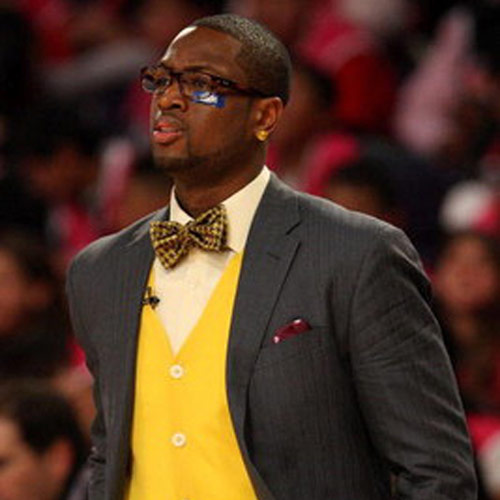
In their tandem press conferences, LeBron James and Dwyane Wade, of the Miami Heat, alternate impeccably tailored suits with cardigans over shirts and ties. They wear gingham and plaid and velvet, bow ties and sweater vests, suspenders, and thick black glasses they don’t need. Their colors conflict. Their patterns clash. Clothes that once stood as an open invitation to bullies looking for something to hang on the back of a bathroom door are what James now wears to rap alongside Lil Wayne. Clothes that once signified whiteness, squareness, suburbanness, sissyness, in the minds of some NBA players no longer do.
If you happen to be someone who looks at Durant, James, or Amar’e Stoudemire’s Foot Locker commercials — in which he stalks along a perilously lit basketball court wearing a letterman’s cardigan, a skinny tie, and giant black glasses (his are prescription) — and wonders how the NBA got this way, how it turned into Happy Days, you’re really wondering the same thing about the rest of mainstream black culture. When did everything turn upside down? Who relaxed the rules? Is it really safe to look like Carlton Banks?
The crowd, Jordan remembered, got very quiet. That was, he said later, the moment for him. The moment, he explained, was what all Phil Jackson’s Zen Buddhism stuff, as he called it, was about: how to focus and concentrate and be ready for that critical point in a game, so that when it arrived you knew exactly what you wanted to do and how to do it, as if you had already lived through it. When it happened, you were supposed to be in control, use the moment, and not panic and let the moment use you. Jackson liked the analogy of a cat waiting for a mouse, patiently biding its time, until the mouse, utterly unaware, finally came forth.
The play at that instant, Jordan said, seemed to unfold very slowly, and he saw everything with great clarity, as Jackson had wanted him to: the way the Utah defense was setting up, and what his teammates were doing. He knew exactly what he was going to do. “I never doubted myself,” Jordan said later. “I never doubted the whole game.”
When NBA history is written, my guess is that no one will be able to top what Michael Jordan accomplished on the court (Bill Russell, possibly, aside). He was a fantastic athlete and possessed the focus and discipline to make the most of his physical gifts (by which I mean he had the pathological need to completely and totally dismantle everyone else on the court: opponents, teammates, officials, etc.). Basketball is full of mostly-one-or-the-other players: Larry Bird, for example, was not particularly physically gifted but more than made up for it in discipline and Shaq is an amazing athlete but lacked a certain focus at times. Oh, you’ll say, but what about: 1. LeBron (might be more talented than Jordan but is missing the necessary clinical insanity that Jordan had) or 2. Kobe (slightly less talented and driven, but might make up for it with longevity).
But to be fair, the shot against Russell was not the final shot of Jordan’s career. After that article was written, in 1998, Jordan returned to the NBA for two lackluster seasons with the Washington Wizards. His last NBA shot was a free throw in the final two minutes of a meaningless 107-87 loss to the Philadelphia 76ers. Acting on the orders of his coach Larry Brown, Sixers guard Eric Snow fouled Jordan so that Jordan could score some points and leave the game on a high note. The Wizards fouled shortly after and Jordan left to a standing ovation. The intensity that propelled Jordan to such great heights early in his career also drove him to retire too early (twice!) and then come back after it was too late to put an odd sort of question mark on an exclamation point of a career. (via jb)
Former NBA player, shot blocker extraordinaire, and humanitarian Manute Bol died over the weekend at age 47. He died of a rare skin condition caused by a medication he took while in Africa.
“You know, a lot of people feel sorry for him, because he’s so tall and awkward,” Charles Barkley, a former 76ers teammate, once said. “But I’ll tell you this — if everyone in the world was a Manute Bol, it’s a world I’d want to live in.”
Ken Arneson emailed me to say that he heard the phrase was first used by the Sudanese immigrant basketball player Manute Bol, believed to have been a native speaker of Dinka (a very interesting and thoroughly un-Indo-Europeanlike language of the Nilo-Saharan superfamily). Says Arneson, “I first heard the phrase here in the Bay Area when Bol joined the Golden State Warriors in 1988, when several Warriors players started using the phrase.” And Ben Zimmer’s rummaging in the newspaper files down in the basement of Language Log Plaza produced a couple of early 1989 quotes that confirm this convincingly:
St. Louis Post-Dispatch, Jan. 10, 1989: When he [Manute Bol] throws a bad pass, he’ll say, “My bad” instead of “My fault,” and now all the other players say the same thing.
USA Today, Jan. 27, 1989: After making a bad pass, instead of saying “my fault,” Manute Bol says, “my bad.” Now all the other Warriors say it too.
Update: As a recent post on Language Log notes, several people picked up on this and kinda sorta got rid of the “may have” and the story became that Bol absolutely coined the phrase “my bad”. Unfortunately, the evidence doesn’t support that theory (although it doesn’t entirely disprove it either). The internet is so proficient at twisting the original meaning of things as they propagate that Telephone should really be called Internet.
Conventional wisdom seems to regard foul management as a risk vs. safety decision. You will constantly hear something like, “a big decision here, whether to risk putting Duncan back in with 4 fouls.” This is completely the wrong lens for the problem, since the “risky”* strategy is, with the caveats mentioned, all upside! Coaches dramatically underrate the “risk” of falling behind, or losing a lead, by sitting a star for too long. To make it as stark as possible, observe that the coach is voluntarily imposing the penalty that he is trying to avoid, namely his player being taken out of the game! The most egregious cases are when a player sits even though his team is significantly behind. I almost feel as though the coach prefers the certainty of losing to the “risk” of the player fouling out.
1. Teams down by 2 late are most likely to take a 2 point shot, while teams down by 3 will most often take a 3 point shot. The team’s choices make ties a likely outcome.
2. A Tie is a stable equilibrium, while other scores aren’t. If a team leads with the ball, they will be fouled, preventing the game from ending on that score. IF a team has the ball with a tie, they’ll usually be allowed to wait and take the last shot, either winning the game or leaving it as a tie.
Even the world’s best pros are so consumed with avoiding bogeys that they make putts for birdie discernibly less often than identical-length putts for par, according to a coming paper by two professors at the University of Pennsylvania’s Wharton School. After analyzing laser-precise data on more than 1.6 million Tour putts, they estimated that this preference for avoiding a negative (bogey) more than gaining an equal positive (birdie) — known in economics as loss aversion — costs the average pro about one stroke per 72-hole tournament, and the top 20 golfers about $1.2 million in prize money a year.
The lack of college experience also means that you probably have less of a chance to have a conversation with a Finals player about English lit or political science. For instance, if you’re a reporter, maybe you don’t ask for thoughts from modern players on the Gaza Strip or Abdul Nasser, or whether they read Chuck Pahlaniuk’s new book. These guys lead sheltered lives that really aren’t that interesting. Back in the seventies, you could go out to dinner with three of the Knicks — let’s say, Phil Jackson, Bill Bradley, and Walt Frazier — and actually have a fascinating night. Which three guys would you pick on the Magic or Lakers? I guess Fisher would be interesting, and I always heard Odom was surprisingly thoughtful. I can’t come up with a third. So I’d say that the effects are more in the “didn’t really have any experiences outside being a basketball player” sense.







Stay Connected