kottke.org posts about video
I’ve followed the work of world champion free diver Guillaume Néry for several years now and this video might be his best one yet. In it, he explores a bunch of different waterscapes, floating and diving and walking until you can’t tell which way is up and if he’s actually in water or in outer space.
Also of note is that the video was filmed by free diver Julie Gautier, who shot the entire thing while holding her breath, a more difficult task than Néry’s. I’d like to see the making-of video for that!
Pro tip: remind yourself to breathe while you’re watching this. I found myself unconsciously holding my breath, on and off, almost the entire time. (via swissmiss)
In this time lapse filmed by Jan van IJken, the embryo of a salamander is shown transforming into a hatched tadpole, from a single cell to a complex organism in a three-week process that’s condensed into just six minutes of video.
The first stages of embryonic development are roughly the same for all animals, including humans. In the film, we can observe a universal process which normally is invisible: the very beginning of an animal’s life. A single cell is transformed into a complete, complex living organism with a beating heart and running bloodstream.
In 1971, director Sam Weiss released this short animated parable narrated by Orson Welles.
Concentrating on an area of growing concern in our society — the indifference that makes people blind to the injustices around them — this animated parable traces how the erosion of freedom, like the pollution of natural resources, can occur so gradually that both evade the attention of a busy and preoccupied nation.
Produced back in the era of the Vietnam War and the Nixon administration, the lessons of this film still resonate today. (via open culture)
Using screenwriter Danny Rubin’s book How To Write Groundhog Day as a guide, Lessons from the Screenplay examines how the protagonist in the Bill Murray comedy classic is forced by his circumstances to undergo the hero’s journey and emerging at the end having changed. This passage from Rubin’s book sets the stage:
The conversation I was having with myself about immortality was naturally rephrased in my mind as a movie idea: “Okay, there’s this guy that lives forever…” Movie stories are by nature about change, and if I were to test the change of this character against an infinity of time, I’d want him to begin as somebody who seemed unable to change.
We’ve all seen movies where the change the protagonist undergoes does not seem earned and it makes the whole movie seem phony and hollow. One of the things that makes Groundhog Day so great is that a person who starts out genuinely horrible at the beginning transforms into a really good person by the end and the audience completely buys it. At any point along the way, the story could very easily jump off the rails of credulity, but it never does. A nearly perfect little movie.
In her series “opsec and beauty”, artist Addie Wagenknecht efficiently combines two YouTube genres into one, giving tips on cybersecurity while reviewing beauty products. In this video, Wagenknecht recommends using pass phrases instead of passwords while reviewing a Korean facial sheet mask:
I also like this one, titled “Dry shampoo review Herbal Essence and blocking Chad from calling”:
It makes your hair smell really good. It kinda makes you look like you’ve washed it. I’m going on like day 10 right now of not washing my hair but you can tell it’s transformed. I also want to talk about having secondary phone numbers because that way you can block the guy once he realizes you actually have to do things to yourself to be perfect.
Merle Hazard bills himself as “America’s foremost country singer/economist”. In this delightful performance, he sings about his daddy, who was a composer of atonal music along the same lines as Arnold Schoenberg and Alban Berg.
It is a genuinely catchy tune and the part where Alison Brown comes in atonally on the banjo killed me. This might be my new favorite country song?
In the past, Hazard has done songs about the Fiscal Cliff and Inflation or Deflation. You might remember his recent country tune about self-driving trucks. (via @tedgioia)
Purl, directed by Kristen Lester, is an animated short from Pixar about a ball of yarn that starts a new job at B.R.O. Capital and quickly feels out of place among all the men in suits. The story was inspired by Lester’s experience working in animation as the only woman at her company.
In order to do the thing that I loved, I sort of became one of the guys. And then I came to Pixar and I started to work on teams with women for the first time. And that actually made me realize how much of the female aspect of myself I had buried and left behind.
(via @cabel)
Time lapse video tours of big cities are a common sight on YouTube — see this Dubai hyperlapse or this Paris time lapse — and the technique has become an aesthetic of its own. But seeing the super-stylized & ultra-HD practice applied to a place like Pyongyang, North Korea broke my brain a little bit. The video was shot by Joerg Daiber, who writes of the experience:
Pyongyang is by far the weirdest and strangest place I have ever been to. At the same time it’s also one of the the most interesting and intriguing places and unlike anywere else I have ever been to. You go there with 100 questions and you return with 1000!
(via @kbandersen)
At the World Economic Forum held in Switzerland at the end of January, Mohammed Hassan Mohamud, a refugee in Kenya for the past 20 years, spoke about the unethical practice of keeping people in long-term refugee camps, what he calls “putting people in faraway places and pretending that they don’t exist”.
It surprises me that money and capital moves around the world in second, but it takes a refugee decades, or in the case of my mother, she never had the chance to get out, waiting for 25 years for a place to go, a place to call home.
We talk about ethical and sustainable development. We talk about how we can be ethical with robots and machines. We want to solve death. And there’s so much human suffering. We haven’t figured out life yet.
In the first couple of minutes of this video, Roald Dahl introduces us to the writing hut behind his house that he used to write all of his famed children’s books like Charlie and the Chocolate Factory and Danny the Champion of the World. Dahl describes his working routine and details how he’s designed his writing environment, his “nest”, to be as free from distraction as possible.
The Guardian used to run a series about writers’ rooms and in 2008, illustrator Quentin Blake, who worked with Dahl on many of his books, wrote a piece about Dahl’s shed.
The whole of the inside was organised as a place for writing: so the old wing-back chair had part of the back burrowed out to make it more comfortable; he had a sleeping bag that he put his legs in when it was cold and a footstool to rest them on; he had a very characteristic Roald arrangement for a writing table with a bar across the arms of the chair and a cardboard tube that altered the angle of the board on which he wrote. As he didn’t want to move from his chair everything was within reach. He wrote on yellow legal paper with his favourite kind of pencils; he started off with a handful of them ready sharpened.
I like that he tied the footrest to the chair to keep it from sliding away when he rested his feet on it.
As someone who sits down daily to write, nothing seems so luxurious to me as a separate writing hut that is off limits to everyone and everything else. George Bernard Shaw and Mark Twain both had separate houses in which to write; Shaw’s shed could even rotate to catch the light throughout the day. Someday I’ll have one of my own…
P.S. Ernest Hemingway used a standing desk, as did Winston Churchill, Charles Dickens, and Virginia Woolf, among others. I got this one a few weeks ago and am still getting used to it. (via @ftrain)
As part of their YouTube series on how the Saturday Night Live sausage is made, this short video details how the cue cards that the actors read from during the show are made and used. There’s even a tiny little bit in there about how they use whitespace (between words and lines) to make sure the cards are readable from a distance.
I am kind of amazed that the cue card process is still done by hand. I don’t want to see any hard-working staffers or interns getting fired, but it seems like a couple of fast large-format color printers capable of printing on poster stock and a block letter handwriting font could dramatically streamline the workflow, particularly when late-stage changes are needed.
In this video, Vox takes a look at how El Chapo leveraged his use of tunnels for transporting drugs into the United States and became one of the richest and most powerful drug lords of all time.
Throughout his career as a drug trafficker, tunnels have been the common theme in El Chapo’s story. When he gained control of a major drug trafficking corridor in the late 1980s, Joaquin Guzman Loera — then known as “el Rapido” — was the first to create super tunnels for transporting drugs across the border.
At the time, a crackdown by the U.S. Drug Enforcement Agency (DEA) meant Colombian cocaine was in decline and the Mexican narcotrafficker saw an opportunity. By using tunnels to facilitate fast transport, El Chapo leveraged his role as a trafficker to claim new responsibilities as a cultivator and distributor of drugs.
El Chapo is currently on trial in the US and the proceedings thus far indicate that the Trump administration’s proposed border wall likely wouldn’t stop the flow of drugs into the US from Mexico. Most of the drugs shipped by El Chapo into the US went through regular old border crossings on trucks and trains, hidden in truck panels, packed into fake plastic bananas, or surrounded by food.
At one point, testimony at the trial has shown, Mr. Guzmán sent tons of cocaine across the border in cans of jalapeños marked with the label La Comadre chiles. The cans were stacked on pallets in the backs of commercial tractor-trailers, which simply drove through official border entry points. To protect his product from being found, witnesses said, Mr. Guzmán often placed the cans filled with cocaine in the middle of the pallets, surrounded by cans with actual chiles.
The NY Times link is via Geoff Manaugh, whose take on this tunnelling I’d love to read.
These visualizations of the speed of light I posted last week somehow demonstrate both how fast light speed is and how slow it is compared the vastness of the galaxy & universe. Science fiction often bends the rules of physics as we currently understand them, with fictional spacecraft pushing beyond the speed of light. In Star Trek, the measure of a ship’s velocity is warp speed. Warp 1 is the speed of light, Warp 6 is 392 times the speed of light, etc. In this Warp Speed Comparison video, EC Henry compares the top speeds of various Star Trek vessels (the original Enterprise, Voyager, the Defiant), racing them from Earth to the edge of the solar system.
Once again, you get a real sense of how fast these ships would be if they actually existed but also of the vastness of space. It would take 10 seconds for the fastest ship to reach the edge of the solar system at maximum warp and just over 6 hours to get to the nearest star, Proxima Centauri. Wikipedia lists a few dozen stars that are within a day’s journey at full warp…a trip that takes light more than 16 years. The mighty speed of light is no match for the human imagination. (thx, jim)
We’re coming up on the 50th anniversary of the Apollo 11 mission, which means an increase in Apollo 11 media. This is a strong early entrant: “Apollo 11”, a feature-length documentary on the mission, featuring “a newly discovered trove of 65mm footage” of starting clarity.
Miller and his team collaborated with NASA and the National Archives (NARA) to locate all of the existing footage from the Apollo 11 mission. In the course of sourcing all of the known imagery, NARA staff members made a discovery that changed the course of the project — an unprocessed collection of 65mm footage, never before seen by the public. Unbeknownst to even the NARA archivists, the reels contained wide format scenes of the Saturn V launch, the inside of the Launch Control Center and post-mission activities aboard the USS Hornet aircraft carrier.
The find resulted in the project evolving from one of only filmmaking to one of also film curation and historic preservation. The resulting transfer — from which the documentary was cut — is the highest resolution, highest quality digital collection of Apollo 11 footage in existence.
The film is 100% archival footage and audio. They’ve paired the footage with selections from 11,000 hours of mission audio.
The other unexpected find was a massive cache of audio recordings — more than 11,000 hours — comprising the individual tracks from 60 members of the Mission Control team. “Apollo 11” film team members wrote code to restore the audio and make it searchable and then began the multi-year process of listening to and documenting the recordings. The effort yielded new insights into key events of the moon landing mission, as well as surprising moments of humor and camaraderie.
This. Sounds. Amazing. The film premiered at the Sundance Film Festival a few days ago and the reviews have been overwhelmingly positive. Here’s David Erhlich writing for Indiewire:
It’s rare that picture quality can inspire a physical reaction, but the opening moments of “Apollo 11,” in which a NASA camera crew roams around the base of the rocket and spies on some of the people who’ve come to gawk at it from a beach across the water, are vivid enough to melt away the screen that stands between them. The clarity takes your breath away, and it does so in the blink of an eye; your body will react to it before your brain has time to process why, after a lifetime of casual interest, you’re suddenly overcome by the sheer enormity of what it meant to leave the Earth and land somewhere else. By tricking you at a base sensory level into seeing the past as though it were the present, Miller cuts away the 50 years that have come between the two, like a heart surgeon who cuts away a dangerous clot so that the blood can flow again. Such perfect verisimilitude is impossible to fake.
And Daniel Fienberg for The Hollywood Reporter:
Much of the footage in Apollo 11 is, by virtue of both access and proper preservation, utterly breathtaking. The sense of scale, especially in the opening minutes, sets the tone as rocket is being transported to the launch pad and resembles nothing so much as a scene from Star Wars only with the weight and grandeur that come from 6.5 million pounds of machinery instead of CG. The cameraman’s astonishment is evident and it’s contagious. The same is true of long tracking shots through the firing room as the camera moves past row after row after row of computers, row after row after row of scientists and engineers whose entire professional careers have led to this moment.
There will be a theatrical release (including what sounds like an IMAX release for museums & space centers) followed by a showing on TV by CNN closer to July.
The “Tolkien: Maker of Middle-earth” exhibition at NYC’s Morgan Library & Museum is “the most extensive public display of original Tolkien material for several generations”. Running from January 25 through May 12, the exhibition includes drafts, drawings, maps, and memorabilia related to J.R.R. Tolkien’s books, including hand-drawn maps done by Tolkien of Middle-earth.
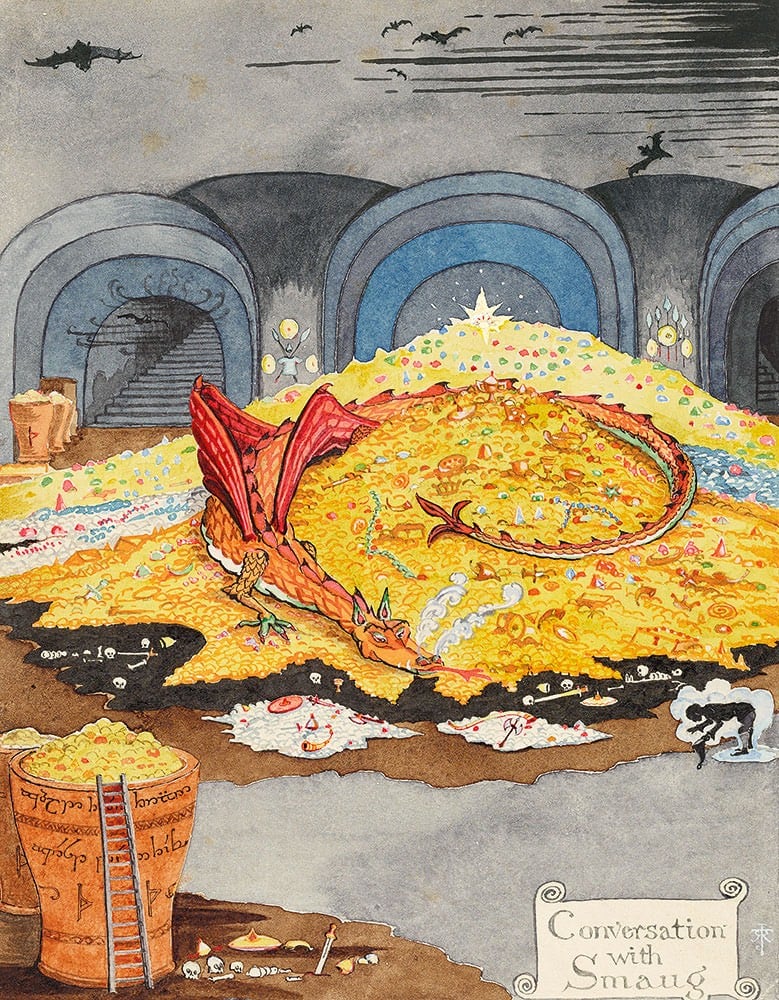
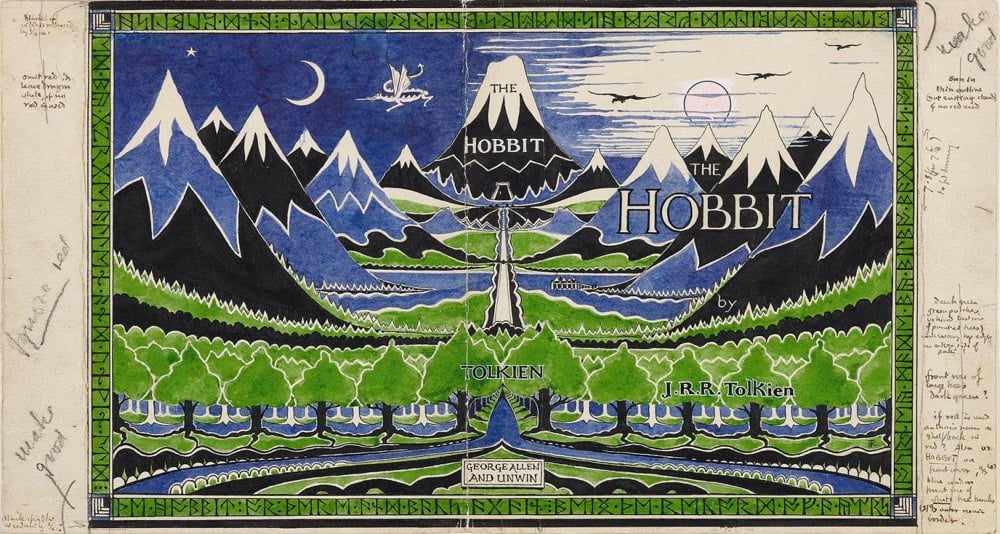
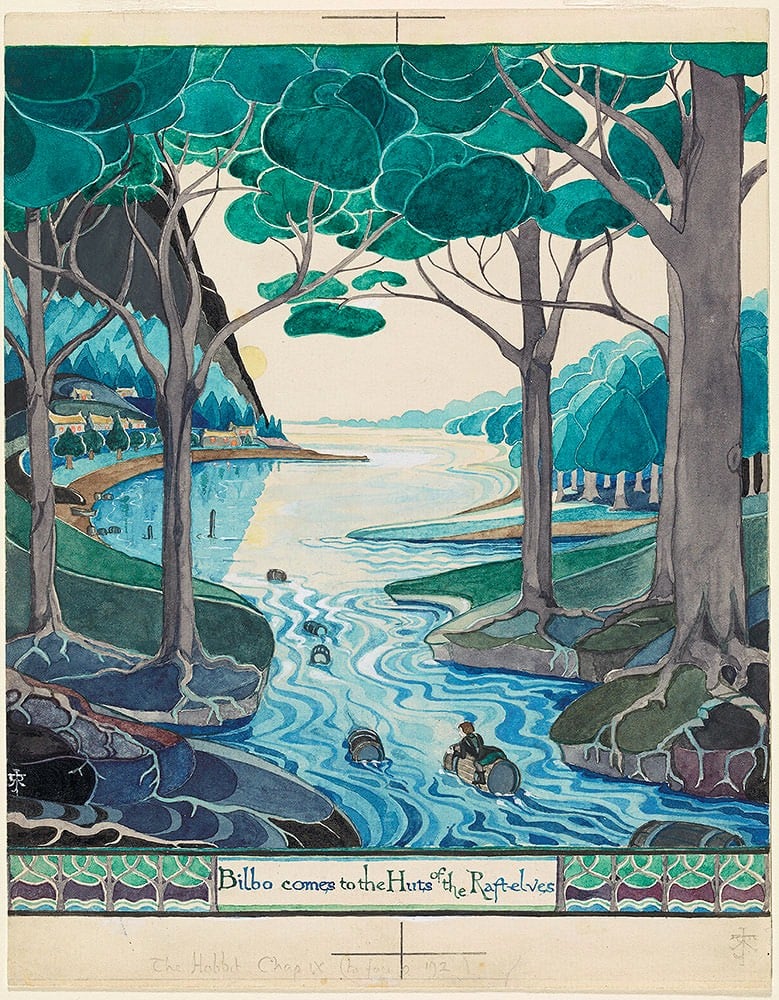
I’m totally going to this the next time I’m in NYC.
Update: Note to those who are heading to exhibition: cosplaying your favorite LoTR character at the Morgan Library is totally permissible.
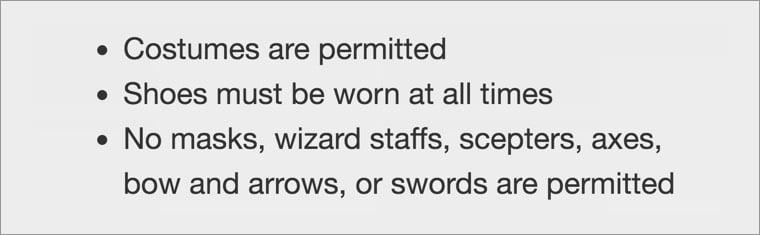
But all Gimlis, Legolases, and Gandalfs, leave your weaponry at home. (via @arbesman)
Newer posts
Older posts





Socials & More