kottke.org posts about video
Set to air on HBO starting March 3rd, Leaving Neverland is a two-part documentary film about the experiences of two men who were befriended by and allegedly sexually abused by Michael Jackson as young boys. Here’s the trailer:
Leaving Neverland is a two-part documentary exploring the separate but parallel experiences of two young boys, James Safechuck, at age ten, and Wade Robson, at age seven, both of whom were befriended by Michael Jackson. Through gut-wrenching interviews with Safechuck, now 37, and Robson, now 41, as well as their mothers, wives and siblings, the film crafts a portrait of sustained abuse, exploring the complicated feelings that led both men to confront their experiences after both had a young son of his own.
As this quick timeline of abuse allegations against Jackson notes, both Safechuck and Robson previously denied that Jackson had abused them.
Robson, by this point a choreographer for stars like Britney Spears, testified that he had spent the night at Neverland more than 20 times but that Jackson had never molested him or taken a shower with him.
James Safechuck, who had met Jackson as a young boy in the 1980s when he was cast in a Pepsi commercial, also denied publicly that he had been abused, although he was not called to testify.
David Ehrlich saw the film at Sundance and was completely convinced by the stories of the two men.
It may not be much of a secret that Michael Jackson acted inappropriately with a number of young boys, but there’s no way to prepare yourself for the sickening forensic details presented in Dan Reed’s four-hour exposé. It’s one thing to be vaguely aware of the various allegations that were made against the King of Pop; the asterisks that will always be next to the late mega-star’s name. It’s quite another to hear the horrifyingly lucid testimony that stretches across the entire duration of “Leaving Neverland,” as two of Jackson’s most repeat victims bravely lay bare how a universal icon seduced them away from their realities, splintered their families beyond all recognition, and leveraged their love for him into a disturbing litany of sexual acts.
The eloquent and straightforward “Leaving Neverland” was made for no other reason than to give shape to a nebulous cloud of rumors, many of which were floated in public before they were silenced behind settlements, and none of which a jury was able to prove beyond a reasonable doubt. In the wake of Reed’s film and the shattering interview footage that it exists to share with us, there’s no longer a reasonable doubt. There’s no longer any doubt at all. Not only do the documentary’s two main subjects perfectly corroborate their separate accounts in all of the most tragic of ways, but they do so with a degree of vulnerability that denies any room for skepticism.
Other stars who previously had private or ignored abuse allegations leveled against them — Kevin Spacey, Bill Cosby, R. Kelly, Woody Allen, Louis CK — have been judged more harshly and their accusers have taken more seriously in recent years, and it’ll be interesting to see what happens with Jackson after the documentary airs.
Inspired by a Czech project, a team at UC Davis is building an Augmented Reality Sandbox that lets you create & study different landscapes by moving real sand around in a real sandbox. Check this out — the topographic lines and colors change in realtime as you move the sand around:
As part of this project, we are primarily developing 3D visualization applications to teach earth science concepts, but we also built a hands-on exhibit combining a real sandbox, and virtual topography and water created using a closed loop of a Microsoft Kinect 3D camera, powerful simulation and visualization software, and a data projector. The resulting augmented reality (AR) sandbox allows users to create topography models by shaping real sand, which is then augmented in real time by an elevation color map, topographic contour lines, and simulated water. The system teaches geographic, geologic, and hydrologic concepts such as how to read a topography map, the meaning of contour lines, watersheds, catchment areas, levees, etc.
That video is from several years ago…here’s a more recent video showing a hybrid AR/VR sandbox setup:
The software is available to download so if you want to build your own, go for it. (via a map a day)
Street photographer Patrick Barr has been out photographing NYC since the 1990s. Barr also goes by the name of Tiger Hood (or Nappy Gilmore) and when he’s out on the street selling prints of his photographs, he passes the time playing a street golf game of his own invention.
It’s a game that requires only three items: a golf club, a newspaper-stuffed milk carton, and a crate. What was initially just a way for Barr to pass time has gained traction from major news outlets and celebrities on a global scale. However, street golf seems to overshadow his true passion… photography. Barr’s archive consists of thousands of mind blowing film photographs of NYC from the 1990’s to 2000’s. His goal was to preserve a time and place that he predicted would dissolve in the coming years. With his archive as evidence, he predicted correctly.
You can find some of Barr’s photos on Flickr and Instagram but if you want to buy a print, you’ll have to catch him on the streets of lower Manhattan.
Maybe you’ve heard the term “intersectionality” used on social media — in the context of feminism or racism — and you know in a hand-wavy sort of way what it means but don’t really know its exact definition or where it came from. Well, Kat Blaque has you covered. In this YouTube video and in this Twitter thread, she explains that intersectionality was first described by Kimberlé Crenshaw, now Professor of Law at UCLA and Columbia Law School, in a 1989 article called Demarginalizing the Intersection of Race and Sex: A Black Feminist Critique of Antidiscrimination Doctrine, Feminist Theory and Antiracist Politics.
Blaque’s summary of the paper on Twitter is crisp and concise:
To summarize what she meant when she defined intersectionality: It was about how black women were erased in conversations about discrimination because the feminist movement and the civil rights movement focused largely on its most privileged members.
So feminism, at the time (and arguably still) focused largely on white women’s experiences with sexism and the civil rights movement focused, at the time (and arguably still) focused on how black men experienced racism. So black women’s experiences had to be measured against that.
Meaning that in several legal cases, explained in the document and my video, if a black woman’s experiences with discrimination weren’t paralleled to how black men experience racism and white women experience sexism, their cases were dismissed or thrown out.
So you had cases where black women would sue a company for racial discrimination and then you’d have the judge say that it was impossible for that to be true, because they currently employed black people. The problem was, the black people were all men.
There’s obviously a lot more in Crenshaw’s paper, including this point near the end:
It is somewhat ironic that those concerned with alleviating the ills of racism and sexism should adopt such a top-down approach to discrimination. If their efforts instead began with addressing the needs and problems of those who are most disadvantaged and with restructuring and remaking the world where necessary, then others who are singularly disadvantaged would also benefit. In addition, it seems that placing those who currently are marginalized in the center is the most effective way to resist efforts to compartmentalize experiences and undermine potential collective action.
(via @john_overholt)
With the 50th anniversary of the Moon landing coming up this summer, the media is about to go into Apollo overdrive. (And I am fully here for it!) So far, there’s been First Man and this Apollo 11 documentary featuring a recently discovered trove of 65mm footage. Add to that Apollo: Missions to the Moon, a documentary series by Tom Jennings for National Geographic. Here’s the trailer:
Engadget has some info on the content of the film:
Director Tom Jennings (who previously documented the Challenger explosion and Princess Diana) is relying on a few uncommon technological tricks to enrich the experience. He’s melding NASA footage with Apollo black box recordings, for example, and is syncing 30-track audio from Mission Control. The aim is to create an “Apollo-era time machine,” Jennings said.
Add an original Hans Zimmer soundtrack into the mix and this could really be something special.
I’ve been keeping track of every media thing I “consume”, so here are quick reviews of some things I’ve read, seen, heard, and experienced since the beginning of the year. One of the reasons I like doing these posts is the great recommendations I get back from readers. Turns out some of you know me and my tastes pretty well by now. For instance, a reader emailed a rec for the amazing Apollo 13 podcast listed below. I never would have found that on my own…thanks, Jason (no relation).
Vice. Inventive filmmaking from McKay. Watching parts of this was difficult though…Cheney is a ghoul. (B+)
Bird Box. Mindless but fun. The aliens made no sense… (B)
Rainbrow. Faces weren’t designed to control games. I think I may have sprained my eyebrows? (C+)
Roma. A masterpiece from Cuarón. My pick for the best film of 2018. (A)
A Fish Called Wanda. What was the middle one again? (B+)
The Apollo 13 series on the Brady Heywood Podcast. Sean Brady is a forensic engineer and in this five-part series about the Apollo 13 mission, he does a play-by-play of what went wrong on the mission and how the NASA and the three astronauts worked together to solve it. This is five hours of storytelling stuffed full of technical details and I was completely riveted the entire time. A thrilling engineering tale. (A)
Uplift standing desk. Still getting used to it, but I like being able to alternate between sitting and standing. (B+)
Sir Gawain and the Green Knight. I read the Simon Armitage translation to the kids as our bedtime story over the course of a few weeks. The English epic was not the fan favorite that Harry Potter or the Odyssey were. (B)
The Departed. Probably not the best Scorsese film but perhaps my favorite? (A)
Desktop Tower Defense. I still love this game. (A-)
Coming of Age in the Milky Way by Timothy Ferris. A bracing history of how humans learned where and when we are in the universe. (B+)
They Shall Not Grow Old. The restoration & colorization brought World War I right into the present, but I found myself wondering if all the digital editing & sound effects crossed the line into fiction. (B+)
Shoplifters. What does “family” mean in the 21st century? Watching this made me think of this story about older Japanese women purposefully shoplifting in order to go to jail. (A)
The Lego Movie 2: The Second Part. I had no idea going in that this movie was exactly about my family: an older boy (who likes space battles) and younger girl (who likes Friends and parties) who struggle to play Legos together under constant threat of me chucking all of them into the trash if they don’t stop fighting. They nailed it, right down to the crack about Radiohead’s music being depressing…every time I play RH in the car, I hear a chorus of boos from the back seat. (A-)
The Mule. I don’t know who this movie is for or why I went to see it. (D+)
Minding the Gap. You might think this is about how skateboarding binds three friends together. And it is! But it’s also about the compounding debt of domestic violence, toxic masculinity, and economic depression in America. My sole complaint is that it could easily have been 30 minutes longer. (A)
Classic Doctor Who marathon on Twitch. Nothing makes me more nostalgic for my childhood than old episodes of Doctor Who. I may have over-indulged in this marathon. (B+)
You Were Never Really Here. Excellent direction, music, and sound design. (B+)
Widows. Fun ensemble thriller. (B+)
Burning. Engaging but the slow burn was a bit too slow. I also watched this in a terrible theater and my opinion might have been different if the quality were better. (B+)
If Beale Street Could Talk. Beautifully filmed romantic dread. I didn’t know whether to feel happy or sad at the end. (A-)
Russian Doll. Groundhog Day adjacent. Natasha Lyonne is mesmerizing. (B+)
Killing Eve. Was I supposed to hate both of the very annoying main characters? And why is everyone so incompetent at their jobs? Villanelle is so sloppy and arrogant she would never have gotten away with one murder, let alone a dozen. I don’t think this show is for me, but I can see why others like it. (B-)
The Three-Body Problem trilogy by Liu Cixin. A re-read…burned through all three books in a week, by far the most concentrated reading I’ve done in years. (A)
Crazy Rich Asians. A rewatch. I’m not suggesting this should be up for Best Picture at the Oscars or anything, but this movie deserves some end-of-the-year recognition as a romantic comedy that also did some heavy thematic lifting without being either frivolous or overbearing. The filmmakers hit it just right. (A-)
Heat. This is Allen Iverson’s favorite movie. No one chews scenery like Pacino in this movie. Wow. (B+)
Past installments of my media diet are available here.
We’re living in an age of unprecedented connectedness, but more and more people report being lonely on a regular basis. Like our affinity for sugary foods, the feeling of loneliness turns out to be another one of those things that served humans well when we lived in small hunter-gatherer groups tens of thousands of years ago but often works against us in our individualist modern world. Kurzgesagt explains:
I identified with a lot of this video. Moving to a new place where I’m having trouble fitting in and don’t know a lot of people has been difficult, especially when I’m trying to spend time with my family and maintaining a business that takes up a lot of time. I really liked the bit at the end where they recommend reaching out to someone today. I think I’ll do just that. How about you?
19-year-old bioengineering major David Aguilar, aka Hand Solo, has built himself a series of prosthetic arms out of Lego. In this short video, he shows off some of the arms, including his latest 4th generation model:
He built his first Lego prosthetic limb when he was 18. According to this Reuters article, Aguilar names his arms using the same system as Iron Man uses for his armor suits (MK-1, MK-II, etc.) and wants to build low-cost prosthetics after he graduates from college.
I love the aesthetic of Paper Mario Bros, a hand-drawn stop motion animation of World 1-1 of Super Mario Bros. The artist, @KisaragiHutae6, drew the world in their notebook and shared some behind-the-scenes techniques on Twitter…how they crumpled the paper for stomped-on Goombas, etc.
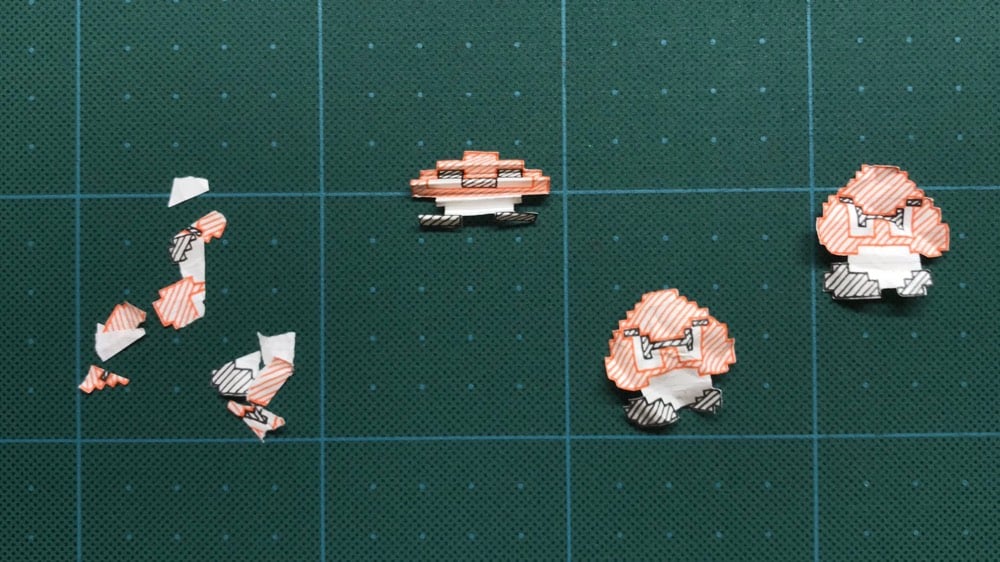
(via digg)
In 1984, Casio released their AT-552 Janus watch, which had a feature that seems years ahead of its time to these modern eyes: a calculator that worked by drawing numbers and arithmetic operators right on the screen. Check out this demo:
As the video notes, this touchscreen tech didn’t take off back in the 80s because it was quite unreliable.
The team at BBC Earth have announced that they’re working on five new nature documentary series set to air in the next few years, including Planet Earth III and One Planet: Seven Worlds, narrated by David Attenborough. Here’s a teaser trailer:
Fantastic news…Planet Earth II and Blue Planet II are two of the best documentaries I’ve seen in recent years. There’s more information about the new shows in these two BBC press release.
Perfect Planet will be a unique fusion of blue chip natural history and earth sciences explaining how the living planet operates. This five part series will show how the forces of nature — weather, ocean currents, solar energy and volcanoes — drive, shape and support Earth’s great diversity of life. It will broadcast in 2020.
Frozen Planet II will take audiences back to the wildernesses of the Arctic and Antarctica. Ten years on from the original Frozen Planet, this series tells the complete story of the entire frozen quarter of our planet that’s locked in ice and blanketed in snow. It will broadcast in 2021.
Planet Earth III will be the most ambitious natural history landmark ever undertaken by the BBC. Combining the awe and wonder of the original Planet Earth, the new science and discoveries of Blue Planet II and Planet Earth II, and the immersive character-led storytelling of Dynasties, the series will take the Planet Earth experience to new heights. It will broadcast in 2022.
One Planet: Seven Worlds, airing sometime later this year, will consist of seven episodes, one for each of the world’s seven continents.
Millions of years ago incredible forces ripped apart the Earth’s crust creating seven extraordinary continents. This series will reveal how each distinct continent has shaped the unique animal life found there.
We will discover why Australasia is full of peculiar and venomous wildlife; why North America is a land of opportunity where pioneers succeed; and what the consequences are for life racing to compete on the richest of all continents, South America.
Attenborough is narrating this series but it’s not clear whether he’ll be doing the same for Frozen Planet II or Planet Earth III. For one thing, the man is 92 years old and for another, Netflix is luring the BBC’s talent with promises of bigger budgets and wider reach.
Using recently processed data from the Galileo probe, NASA-JPL software engineer Kevin Gill created this low-altitude flyover of Europa, one of Jupiter’s moons.
The surface was imaged between 1996 & 1998 and is made up of a water-ice crust. Despite the cracks and streaks that you can see in the video, Europa actually has the smoothest surface of any object in the solar system.
These images are not super high-res because they were taken with equipment designed and built in the 80s. But we’re going to get a better look at Europa soon…both ESA’s JUICE probe and NASA’s Europa Clipper are planning on imaging the moon in the next decade.
In this video, Wired’s Robbie Gonzalez talks to world record stone skipper Kurt Steiner, who achieved 88 skips with a stone in 2013. Steiner shares some of his techniques with Gonzalez and quickly gets him throwing better.
This video might be totally uninteresting to everyone reading this, but I just had to post it. I love skipping rocks. Ever since I was a little kid, it’s been one of my favorite things to do whenever I’m at a lake or quiet river. I may or may not have a stack of stones appropriate for skipping on the shelf next to my spare change jar. My personal record is somewhere in the mid-to-upper 20s…this throw was in that ballpark. After watching Steiner throw, I’m excited to get out in the spring and try hitting the water a little closer (and harder) than I normally do.
Cignature Films is showing the first episode of Mad Men in its entirety but with all of the cigarettes replaced with kazoos. Here’s a short clip (watch the whole thing here):
Though smoking in movies was a staple element of old Hollywood, the Center for Disease Control and Prevention found that tobacco has had a resurgence in recent years on the big screen. It has been reported that 44% of adolescents who start smoking do so because of smoking images they have seen in the movies. Cignature Films wants to change this statistic for the better.
They also have plans to do the same with Fight Club, The Godfather, and Stranger Things. I’m wondering how long this is gonna stay up though…a clip or two is perhaps covered under fair use but I can’t see studios allowing entire movies and episodes to be shown without some kind of legal action. (via rob walker)
Punk music seems like one of those things that sprang, fully-formed, out of nowhere. But in this video, Trash Theory traces the roots of punk back to the birth of rock and roll, from Link Wray and The Phantom in 1958 to Louie Louie by The Kingsmen & Surfing Bird by The Trashmen to the more familiar precursors like Velvet Underground, The Stooges, and even Led Zeppelin.
Few genres have had the lasting impact of punk. 1976 is one of those seismic dividing lines in popular music. A history destroying year zero. The point after which everything changed. It was the year that The Ramones debut was released, the year that the first singles from the UK Punk scene were set loose upon a unprepared public. And while the punks wanted to remove themselves from the past, burn all that had come before, nothing happens within a vacuum. These bands didn’t appear out of nowhere with the key principles of the genre locked in place. This innovative minimalist, three-chords and the truth, turbo-powered music had to have precedent. There were other artists that lead up to this era-defining moment in music that are either forgotten, ignored or not given credit. This is how Punk became punk.
I was particularly interested to learn about Death, a Detroit band that the NY Times called “Punk Before Punk Was Punk”:
Forgotten except by the most fervent punk rock record collectors - the band’s self-released 1976 single recently traded hands for the equivalent of $800 - Death would likely have remained lost in obscurity if not for the discovery last year of a 1974 demo tape in Bobby Sr.’s attic.
Released last month by Drag City Records as “… For the Whole World to See,” Death’s newly unearthed recordings reveal a remarkable missing link between the high-energy hard rock of Detroit bands like the Stooges and MC5 from the late 1960s and early ’70s and the high-velocity assault of punk from its breakthrough years of 1976 and ‘77. Death’s songs “Politicians in My Eyes,” “Keep On Knocking” and “Freakin Out” are scorching blasts of feral ur-punk, making the brothers unwitting artistic kin to their punk-pioneer contemporaries the Ramones, in New York; Rocket From the Tombs, in Cleveland; and the Saints, in Brisbane, Australia. They also preceded Bad Brains, the most celebrated African-American punk band, by almost five years.
Jack White of the White Stripes, who was raised in Detroit, said in an e-mail message: “The first time the stereo played ‘Politicians in My Eyes,’ I couldn’t believe what I was hearing. When I was told the history of the band and what year they recorded this music, it just didn’t make sense. Ahead of punk, and ahead of their time.”
You can hear that demo tape on Spotify and elsewhere. There isn’t a playlist to accompany this video but this proto punk Spotify playlist (Apple Music verison) contains several of the songs mentioned.
(via open culture)
Newer posts
Older posts





Socials & More