



Ok you’ve done your Spotify Wrapped for 2021 but do you have the guts to do @puddingviz’s How Bad Is Your Streaming Music? “Our sophisticated A.I. judges your awful taste in music.”

Advertise here with Carbon Ads
This site is made possible by member support. 💞
Big thanks to Arcustech for hosting the site and offering amazing tech support.
When you buy through links on kottke.org, I may earn an affiliate commission. Thanks for supporting the site!
kottke.org. home of fine hypertext products since 1998.
Beloved by 86.47% of the web.
Entries for December 2021
Lydia Davis on Translation and Learning Languages

My favorite contemporary writer is probably Lydia Davis, in no small part because I don’t know if anyone takes a finer care for the language they use, as a writer and reader.
Davis also does double duty as both an original writer of fiction and essays, and a translator of other people’s writings, in multiple languages. In her new collection, Essays 2, she describes her unusual technique:
Although she learned German by immersion, Davis’s preferred method of language acquisition is quite different, and, to an outside observer, demonically challenging: She finds a book published in a language that she does not fully or even partially understand and then tries to figure out what it means.
To improve her Spanish, she digs into a copy of “Las Aventuras de Tom Sawyer.” In some cases the decryption proves easy. Words like “plan” are the same in English and Spanish. In other cases she inductively reasons the meaning of a word after noticing it in different contexts. Hoja initially stumps her when it pops up in the phrase hoja de papel — “hoja of paper.” Later in the book, it occurs in the context of a tree. Finally, Huck wraps a dry hoja around something to make a cigarette, and Davis realizes that only one meaning would work as well with paper as with a tree or a cigarette: “leaf.” Of course, it would be possible to solve the hoja enigma in two seconds by plugging the word into Google, but that would destroy the fun.
I’m (re)learning Italian right now — I sort of learned it backwards the first time, starting with Dante and Petrarch and only now learning how to ask where the bathroom is (dove el gabinetto?) and the difference between coat (cappotto) and hat (cappello). But what remains exciting are the little associations you learn, the conjunctions of phrasing, the possible substitutions of one term for another, the way a question and an answer can reflect the same structure — a map of phonemic possibilities that is also a way of seeing the world. Davis’s method might be impractical for learning a second language, but for a gifted language learner, it seems to put a premium on finding those connections. Which is, indeed, a big part of the fun.
Say Yes: Mel Brooks at 95
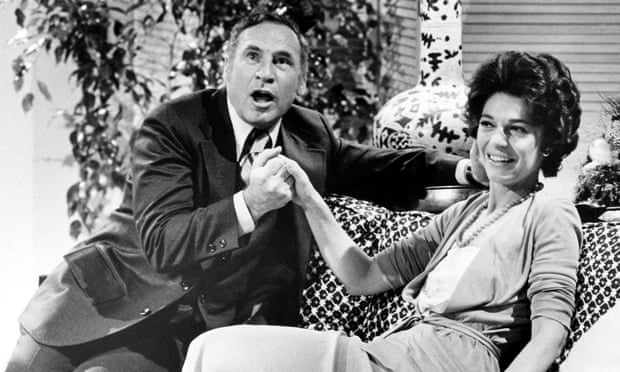
Mel Brooks was born in 1926; he will (god willing) turn 96 in June. That’s something of a non-Newtownian age — the length of his career warps our usual generational physics.
Let’s try to put it in context. Brooks was born in the same year as Queen Elizabeth (II, don’t be cheeky), Marilyn Monroe, and John Coltrane. He’s old enough to have served in World War 2 (which he did), and that he was already in his 40s when he became a filmmaker, with The Producers. People sometimes point out that Barbara Walters, Martin Luther King Jr., and Anne Frank were born in the same year, to note how exact contemporaries can belong to such widely different time periods — yet Brooks is three years older than that trio.
Brooks was somehow a contemporary to almost everybody — I was surprised recently, reading the Tom Stoppard biography, that Brooks and Stoppard spent time together in New York City the early 60s, when Stoppard was a young theater reporter and Brooks was performing with Carl Reiner. That’s a fifth of the comic DNA of Rosencrantz and Guildenstern are Dead right there. (Yet, somehow, Brooks is eleven years older than Stoppard.)
One of my favorite clips of Brooks is a 1975 appearance on Johnny Carson’s The Tonight Show where he essentially takes over the show (the YouTube video is 53 minutes long).
Brooks has a new book out, a memoir titled All About Me! My Remarkable Life In Show Business. (I have not read it, but I want to.)
He’s done a requisite (funny, thoughtful) interview with Terry Gross for Fresh Air, where he shares some homespun wisdom:
I’m so grateful to be able to eat scrambled eggs and toast for breakfast and sometimes a roast beef sandwich for dinner. I’m so happy that I still have somewhat of an appetite. I’m having trouble sleeping. That’s a problem. But otherwise things are pretty good for being 95 and I’m getting around fairly well and my basic emotional attitude is still more positive than negative. I’m still looking forward to talking to people, to meeting people, to have dinner with people.
The book, too, seems to be more positive than negative; during the interview with Gross, she tries to prod him about moments of depression he mentions in his childhood, and he basically dismisses them. Alexandra Jacobs notes that Brooks “would prefer to kvell over the talents of his frequent collaborators Madeline Kahn, Gene Wilder and Carl Reiner, than linger on, or even mention, their departures from this crazy world.” In old age as in childhood, humor can be a lifeline.
It’s also a strategy. Michael Schulman touches on this in his interview with Brooks:
You have some wonderful stories of basically getting away with stuff at the studios.
I’d learned one very simple trick: say yes. Simply say yes. Like Joseph E. Levine, on “The Producers,” said, “The curly-haired guy—he’s funny looking. Fire him.” He wanted me to fire Gene Wilder. And I said, “Yes, he’s gone. I’m firing him.” I never did. But he forgot. After the screening of “Blazing Saddles,” the head of Warner Bros. threw me into the manager’s office, gave me a legal pad and a pencil, and gave me maybe twenty notes. He would have changed “Blazing Saddles” from a daring, funny, crazy picture to a stultified, dull, dusty old Western. He said, “No farting.” I said, “It’s out”… You say yes, and you never do it.
That’s great advice for life.
It is. Don’t fight them. Don’t waste your time struggling with them and trying to make sense to them. They’ll never understand.
Writing for The Guardian, Hadley Freeman has what’s probably the most comprehensive take on Brooks’s biography, and makes the best effort (although not entirely successful) to get past Brooks’s comic defense mechanisms.
Brooks’s story begins - as it did for so many American comedians of his generation, including Reiner - in a working-class Jewish family. “People say, ‘Out of the suffering of Jews, the need to laugh is critical for the survival of the race.’ But we didn’t become comics out of misery. We became comics because there are a lot of laughs in Jewish households. There’s always some wiseguy making cracks about how fat Aunt Sadie is, and it’s a need for that joy to continue that was the engine for all of us to become comics. It was fun being a little Jewish boy in a household with three older brothers and my mother; my aunt and my grandmother living next door,” he says.
Brooks also distinguishes between Jewish humor and New York humor, telling Schulman:
Yiddish comedy, or Jewish comedy, has to do with Jewish folklore. Sholem Aleichem, that kind of stuff. The mistakenly called “Jewish comedy” of the great comics—it was really New York. It was the streets of New York: the wiseguy, the sharpness that New York gives you that you can’t get anywhere else, but you can get it on the streets of Brooklyn. Jewish comedy was softer and sweeter. New York comedy was tougher and more explosive. There’s some cruelty that you find in New York humor that you wouldn’t find in Yiddish humor. In New York, you make fun of somebody who walks funny. You never find that in Sholem Aleichem. You’d feel pity. There’s no pity in New York. There’s reality and a brushstroke of brutality in it.
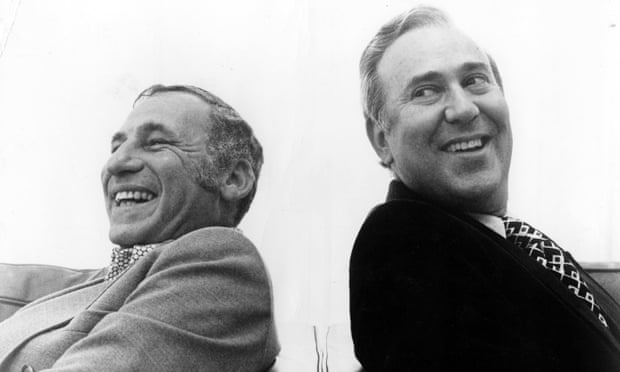
In a way, what I think Brooks is describing is the ability to blend the traditional with the contemporary. It’s a kind of Jewish humor, but it’s not old Jewish humor. This is essentially the gag behind the 2000 Year Old Man — a character who has experienced the tumults and tragedies of history, but can talk about them as if they happened to himself and his neighbors just last week:
Reiner: Did you know Jesus?
Brooks: Thin lad, right? Wore sandals? Hung around with 12 other guys? They always came into my store. Never bought anything, just asked for water.
And maybe that’s why Brooks feels both so eternal and so contemporary. It’s right there; it’s in the jokes.
The Life, Death, and Afterlife of the American Mall
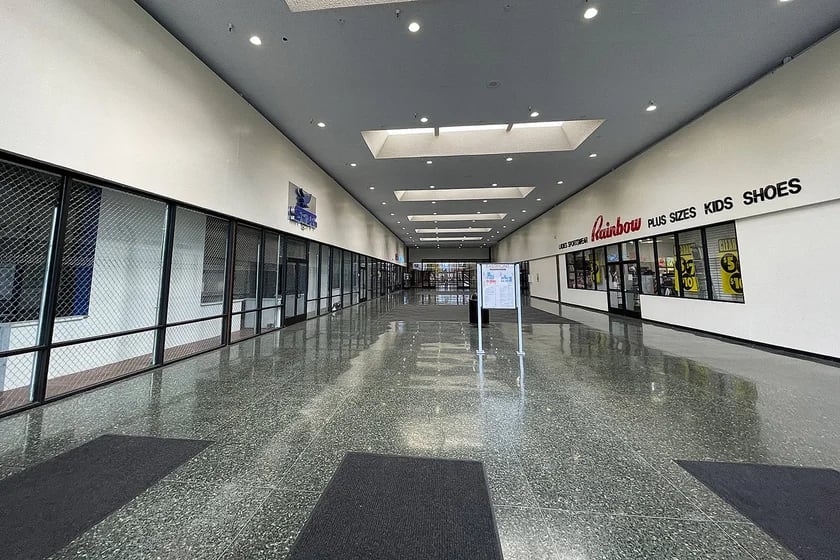
Lili Loofbourow on that great symbol of capitalism, now hollowed out by (mostly) private equity and (partly) changing consumer habits:
They aren’t easy to physically dispense with, malls.
It’s no surprise, then, that people are desperately trying to find new uses for them. The afterlife of a dead mall is interesting. Schools are moving into malls; some students are completing high school in a converted Macy’s in Vermont. A Dillard’s in Texas is now a radio station. Malls are becoming home to community colleges and libraries and offices. The Eastmont Town Center in Oakland, California, is home to a Center for Elders’ Independence, Social Security offices, and a lab.
These efforts are noble and good. They are also—and can’t help but be—anti-makeovers. Malls were made to be malls. This means every effort to repurpose a mall becomes a fascinating performance of architectural insufficiency, of a bespoke thing being wrenched into a different, and more practical, and less entertaining, function. It’s not that you can’t have schools in malls—or libraries, or social services. It’s that malls, being temples to consumerism, were tailor-made to be exactly what they were. Trying to square-peg another operation amid the former makeup counters beside onetime dressing rooms makes the result seem impoverished, weird, jangled. The erosion of detail is essential, but it makes the space grim.
Americans get nervous when symbols change. If the American grocery store was, among other things, deployed as an active rebuke of Soviet scarcity in the Cold War, the American department store was a serene display of endless availability. There were more kinds of makeup than anyone could possibly want, and they all had loyalists. Can we adapt to a new idea of the mall, the way old maritime warehouses turned into loft-living for gentrifiers? Should we? A stroll through these deserts finds dots of life poking through: mom and pop stores offering to repair watches or do your dry cleaning or your hair. I visited the Eastmont Town Center recently to see what it looked like in its new incarnation as a hub for seniors and Social Security and a “self-sufficiency center” where an anchor store used to be. A security guard stopped me at the entrance: Without an appointment and a specific destination in hand, she would not let me in. It puzzles me that the building is less accessible as the site of a library than it was as a mall, but I love the idea of a mall serving people in need. Still, the new configuration isn’t scratching the itch a mall did—at least according to other nostalgic mallgoers who have tried to haunt its halls. As one Yelp review reads: “Not enough stores, too many social services.”
“Americans get nervous when symbols change” — I’m going to be thinking about that for a while.
Something I think about a lot is if they remade Back to the Future today. Marty would travel back in time to 1992, and probably accidentally invent dubstep or something. But if he and Doc still met in the parking lot at the shopping mall, it would be a very different, much more haunted place. And the time machine wouldn’t suddenly crash into pine trees, but would appear near the mall’s peak in popularity. The scene from 1955 where Marty marvels at the officious gas station attendants would be replaced by one of Marty at the mall, amazed at the sheer number of people shopping, walking, letting themselves see and be seen at the outlet that in his time is now home to a plasma bank.
The Non-Anniversary of Pearl Harbor

So, here’s something I didn’t really fully notice until after it was over: December 7, 2021 (Tuesday) was the 80th anniversary of the attack on Pearl Harbor. Usually, whole 10x number anniversaries of major world events are done to death. The 75th anniversary of Pearl Harbor (just five years ago) certainly was, so much so that the recent Pearl Harbor-related stories of most newspapers pull up mostly stories from that date. But the 80th? Not much at all.
This is anecdotal, but, I think, indicative: in my RSS feeds, which are filtered by me but pretty comprehensive, there’s just one news story about Pearl Harbor, and it’s not really about the anniversary, but about the US military ending its efforts to fully identify the dead in the wreckage. Then there’s one (bad) op-ed from the NYT that I won’t link to, and an essay by Joyce Johnson in the New York Review of Books. That’s it. No living memory or reprise of historicization in the newspapers, no passing thoughts in the week’s political blogs. It’s like the anniversary didn’t happen.
I won’t say whether this is a good thing or a bad thing, partly because I don’t know (you can make honest cases either way!) and partly because it’s not my job, but it seems worth noting that it is a thing that’s happening. No event, no matter how global, how deadly, or how significant in subsequent world affairs is so universally relevant that every anniversary is a platform for public memory.
Pick an event: the atom bomb detonation at Hiroshima, the assassination of JFK, the moon landing, 9/11. I will bet you that however elaborate their 50th or even 75th anniversaries might be, the 80th will be correspondingly muted. There will then be a spike of interest around the 100th, and then it will fade into semi-obscurity until the 150th or 200th anniversaries roll around.
That just seems to be how time works: once an event no longer defines the living memory of a significant portion of the population, it becomes an item of historic interest, and/or an item of trivia. Some dates may live in infamy, but none of them will live forever.
Al Hirschfeld’s Drawings of Steven Sondheim’s Musicals
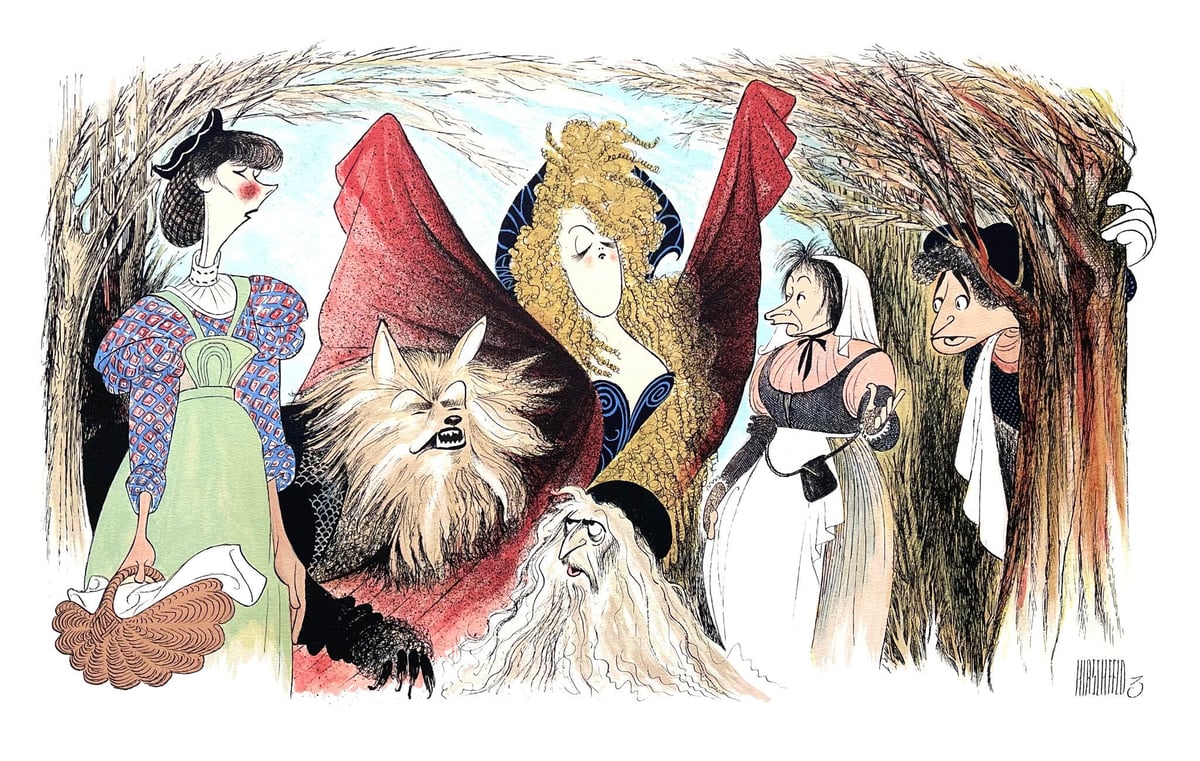
Writing for the New York Times, theater critic emeritus Ben Brantley praises caricaturist Al Hirschfeld’s depictions of the late Steven Sondheim’s work:
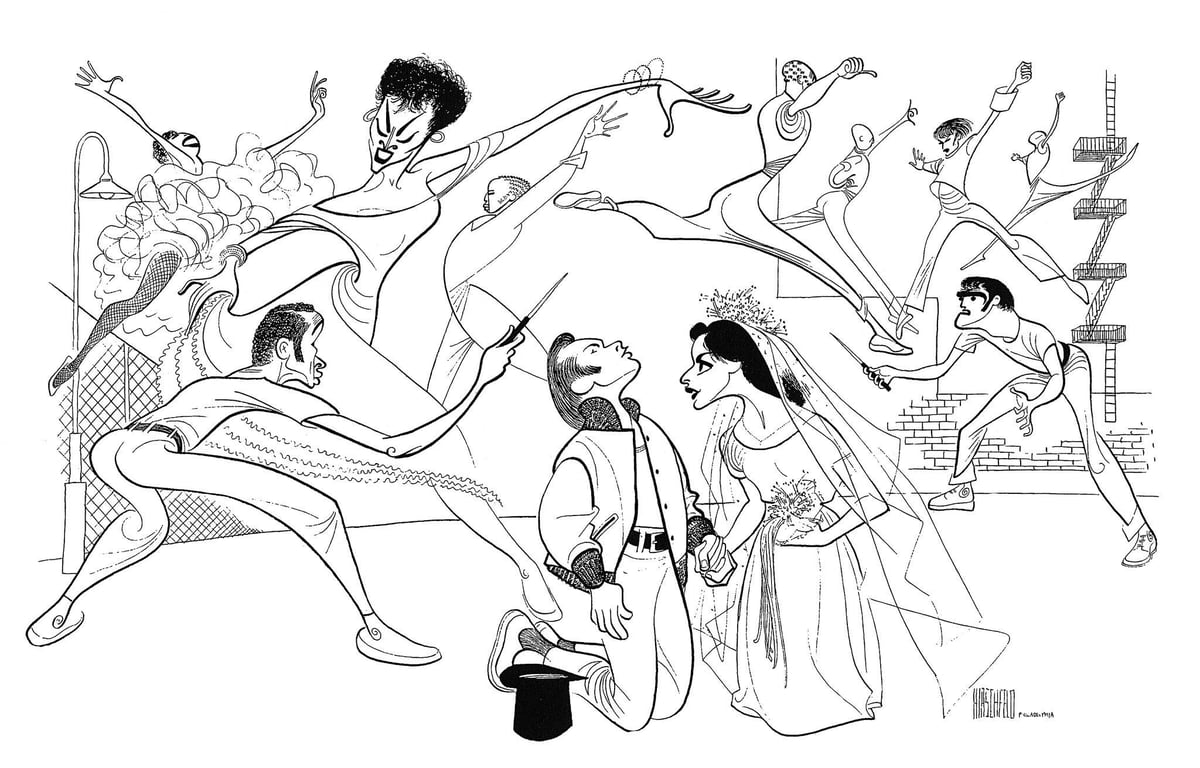
These seemingly simple pen strokes — and the ellipsis of the white space, which your own, happily collaborative mind fills in — are anything but static. They tremble with energy, tension and, above all, character, as it is conjured in real time on a stage.
Hirschfeld always said he would rather be called a “characterist” than a caricaturist. His illustrations of Sondheim, the most complex character portraitist in the Broadway songbook, make you understand why. Caricatures are a shorthand for the physical traits that make stars distinctive: Angela Lansbury’s immense Tweety Bird eyes, for example, or Bernadette Peters’s Cupid’s bow mouth.
Hirschfeld nails such elements of physiognomy. He also endows them with the exciting emotional temperature that heats up every Sondheim song. The Lansbury he draws as the corrupt mayor Cora Hoover Hooper of “Anyone Can Whistle” (1964) and as the cannibal pie-maker Mrs. Lovett in “Sweeney Todd” are recognizably the same woman.
I particularly like the great energy swirling all around the lead characters in Hirschfeld’s take on “West Side Story”:
The Second and a Half Dimension
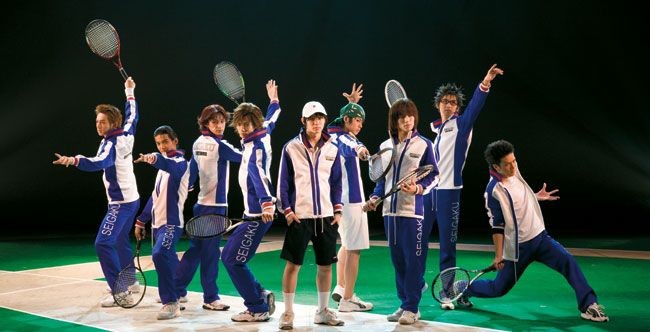
I had never heard the phrase "2.5-D fandom" before, but it's the subject of Japanese scholar Akiko Sugawa-Shimada's work:
The term 2.5-D was coined by anime fans in Japan in the 1980s to refer to animes voice actors, but in the 2000s it began to refer to some cultural practices exercised in a space between 2-D fiction and 3-D reality. Thus, the 2.5-D culture is cultural practices which produce the fictional space of contemporary popular cultural products (such as manga, anime, and videogames) along with the fans interplay between the real and fictional spaces. Its examples are: 2.5-D theaters (theatrical adaptation of anime, manga, and videogames), cosplay, contents tourism (pop-culture-induced tourism), character/voice actor concerts (ex. concerts of Love Live! and Ensemble Stars, etc.), enjoei (a cheer-a-long style of movie screening), and V-tubers (virtual YouTubers). What matters in these cultural products are active interactions between the reality of characters of anime/manga/videogames and the virtuality of the human bodies of practitioners (actors and fans). As in Henry Jenkins's 'convergence culture,' 2.5-D culture is generated across multiple transmedia platforms, cooperation of multiple media industries, and fans migratory behaviors. Fans actively migrate among the fictional, cyber, and physical worlds."
If I’ve got it, it’s a kind of cosplay slash Rocky Horror-style performance theater, but raised to the level of a pop musical industry.
The first successful manga-based musical production was The Rose of Versailles in 1974 by the Takarazuka Revue. At the time, these plays were simply known as “musicals” or “anime musicals.” Around the 1990s, a number of musicals and small stage skits produced were based on anime and manga series aimed at elementary school girls, such as Sailor Moon, Akazukin Chacha, and Hime-chan’s Ribbon, which performed moderately well, but were not popular and were known as “musicals for elementary school girls” (, joji mono). However, in 2000, Hunter x Hunter was considered revolutionary for the time because the voice cast for the original anime series had also played the characters onstage.
Having only seen YouTube clips of these plays, I guess I wonder mostly about the name: why 2.5-dimensional? Obviously these are plays that try to split the difference between an original two-dimensional work and a three-dimensional performance, and fidelity to the original is considered a primary virtue… thus keeping the performances somewhat “two-dimensional”? But I wonder if there is something more than this, something in the staging or craft of the theater that intentionally either restricts or enhances the dimensionality of the experience. At any rate, it has my attention.
A Year In Another Part of the Internet
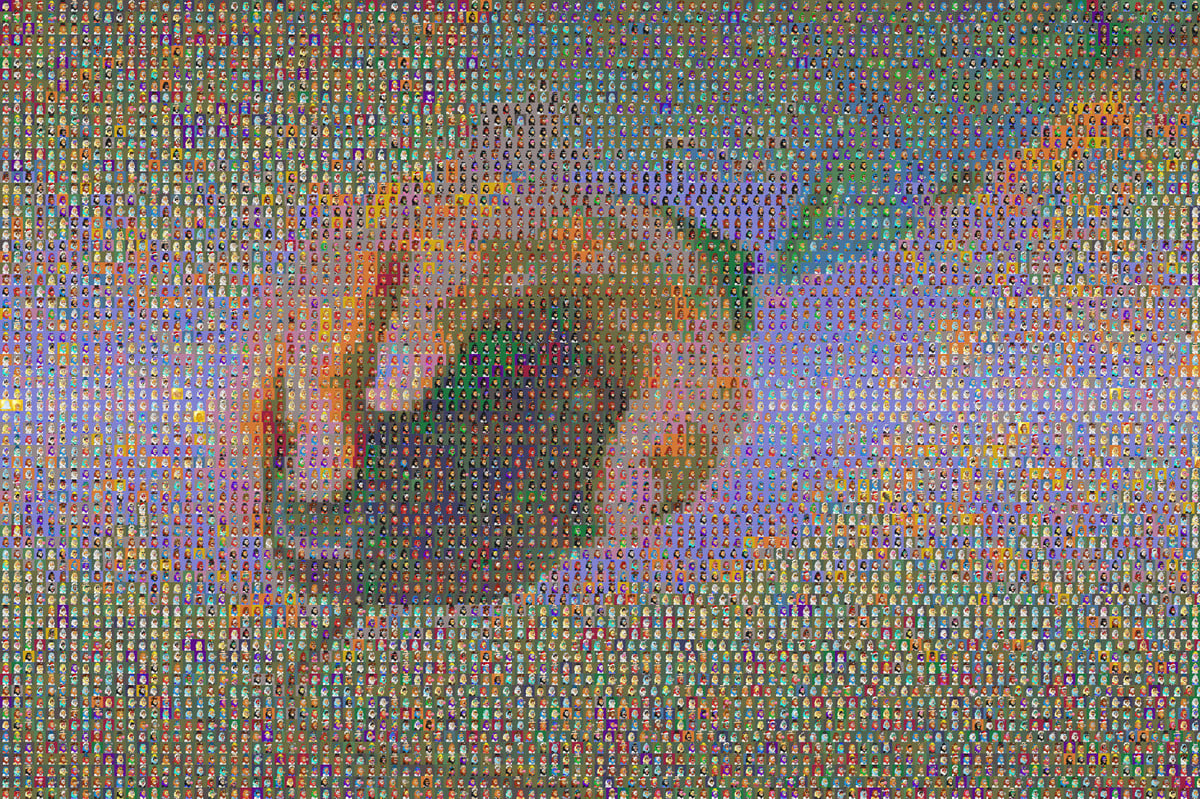
I confess I haven’t kept up with my Mastodon account in some time, but I’m happy that weird, decentralized, variation of social media is still out there, fighting the good fight and helping people connect with each other. And I was delighted to see this roundup of the year’s top Mastodon posts — like a glimpse into another internet.
For example, Guillem Leon writes:
I have encountered more image descriptions on Mastodon in 24 hours than I have in Twitter in a couple of years. Seriously. I’m not exaggerating.
As a blind person, this means a lot to me. If you read this and you describe your images, thank you so, so, so much on behalf of all of us. If you don’t, now you know you’ll be helping random Internet strangers make sense of your posts by typing in a few more words than usual.
With 607 (now 726) reblogs, this was perhaps the most-seen post on Mastodon this year.
The Worst Michelin-Starred Meal Ever
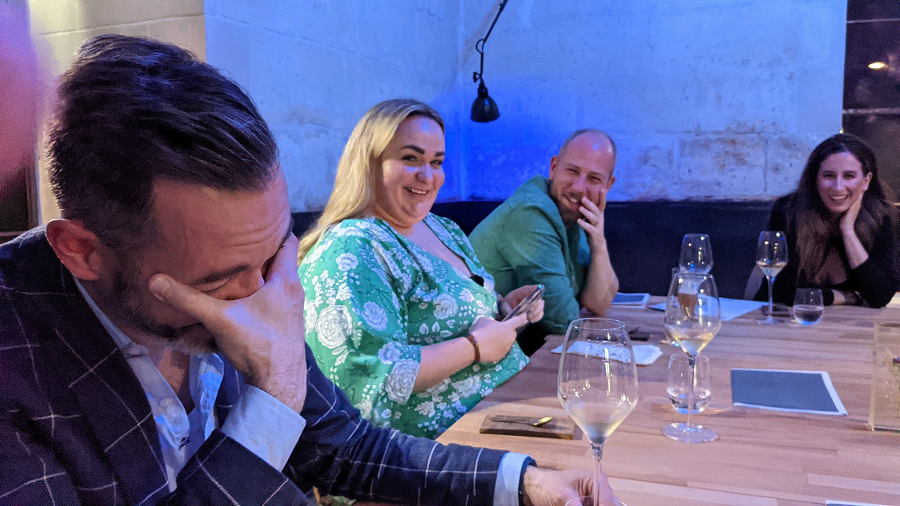
Geraldine DeRuiter, aka The Everywhereist, documents a high-concept fine-dining meal that, for reasons yet unexplained, went all kinds of wrong.
It’s as though someone had read about food and restaurants, but had never experienced either, and this was their attempt to recreate it.
What followed was a 27-course meal (note that “course” and “meal” and “27” are being used liberally here) which spanned 4.5 hours and made me feel like I was a character in a Dickensian novel. Because — I cannot impart this enough — there was nothing even close to an actual meal served. Some “courses” were slivers of edible paper. Some were shot glasses of vinegar. Everything tasted like fish, even the non-fish courses. And nearly everything, including these noodles, which was by far the most substantial dish we had, was served cold.
Even forearmed with this overall description, some of the individual moments in the meal play like (bad) theatrical surprises:
“These are made with rancid ricotta,” the server said, a tiny fried cheese ball in front of each of us.
“I’m… I’m sorry, did you say rancid? You mean… fermented? Aged?”
“No. Rancid.”
“Okay,” I said in Italian. “But I think that something might be lost in translation. Because it can’t be—”
“Rancido,” he clarified.
Another course — a citrus foam — was served in a plaster cast of the chef’s mouth. Absent utensils, we were told to lick it out of the chef’s mouth in a scene that I’m pretty sure was stolen from an eastern European horror film.
Not just bad. Memorably bad. Award-winningly bad. Which is, as DeRuiter writes, something of an achievement in itself.
Update: You can scroll down to the end of this piece to read a “Declaration by Chef Floriano Pellegrino” that responds to DeRuiter’s review.
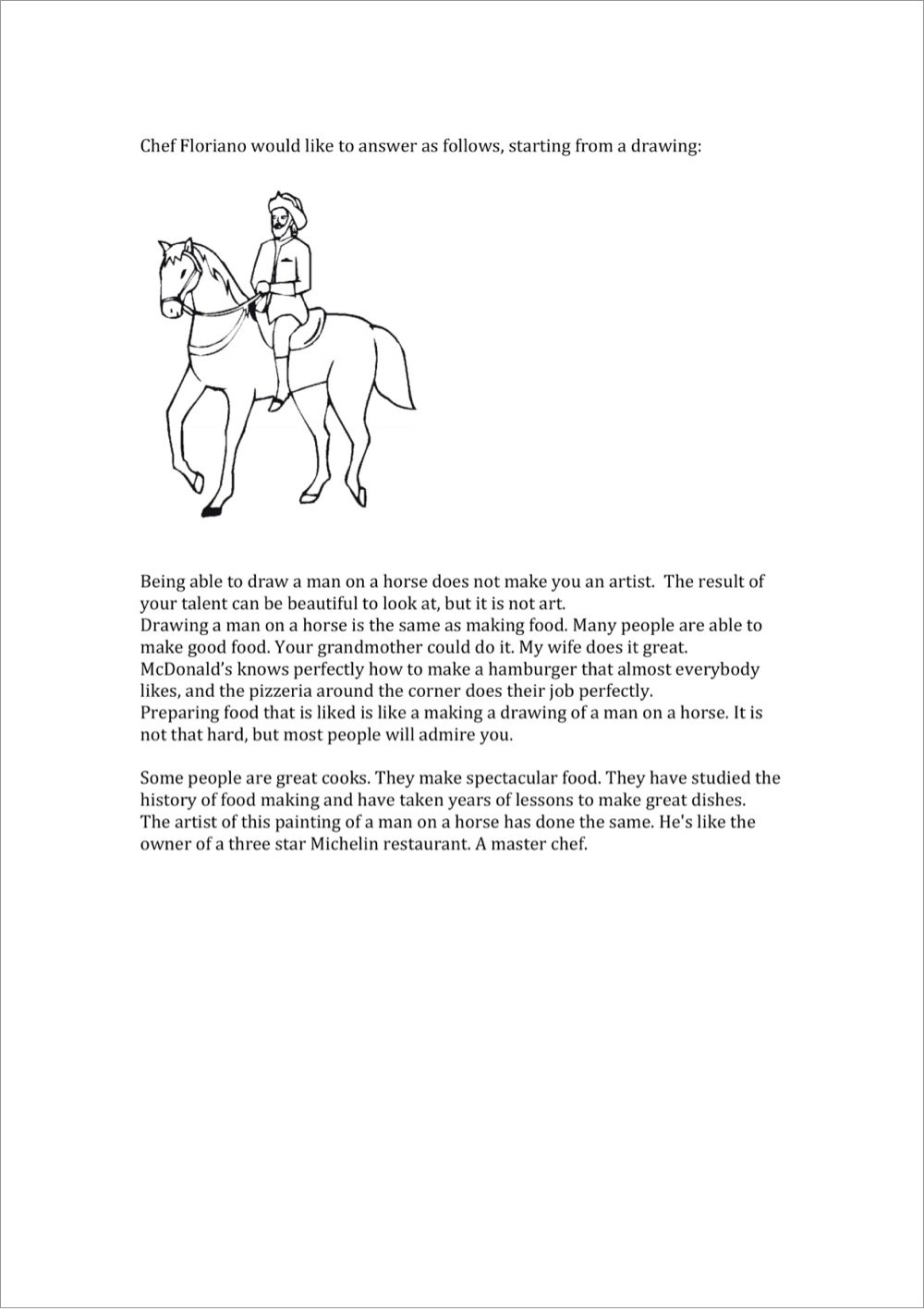
Update: DeRuiter wrote about her post going viral and the response from Pellegrino.
But a restaurant is not a museum, or an art gallery. If anything, the stakes are even higher, because you aren’t simply creating, you are creating something for someone. Every meal that comes out of the kitchen at Bros. is for a paying customer. It is for someone who has a minimum expectation of what a meal should be. A meal might be innovative, or cutting edge, or require a great deal of technical skill (and indeed, many of the dishes at Bros. were). But if it is insubstantial, or contains something that the customer is allergic to, or it simply doesn’t taste good, then what the hell does it matter if the chef thinks that he’s created art? He’s still failed at being a chef.
But beyond that, it’s a baffling sort of gatekeeping, to tell someone that the reason they didn’t enjoy a meal is that they didn’t understand art. That the reason the meal was awful was because we don’t appreciate the avant garde. It’s a sort of culinary gaslighting.
I have been lucky enough to have eaten at a few restaurants whose food & dining experience could be considered art and the one thing they all had in common was that they were able to ask tough questions of the diner and deliver some of the most surprising & delicious food I have ever tasted.
Ghost Signs of London
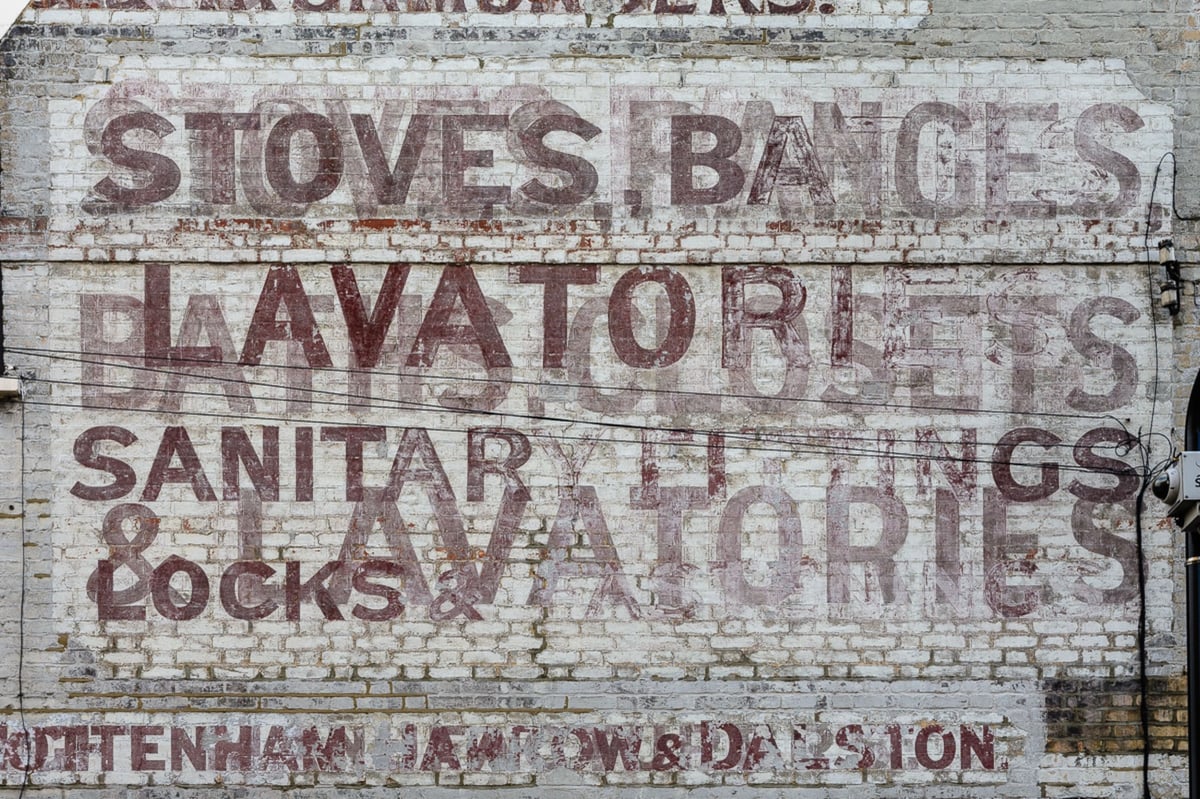
From Bloomberg’s CityLab:
Study the buildings flanking London’s older streets closely and you’ll see one soon enough: an old painted sign that, once bright and eye-catching, is now faded into the masonry, the name of the business or product it promoted flaking and faint.
Such “ghost signs” are fixtures of older neighborhoods in many cities around the world, but the U.K. capital, which bustled with competing commercial enterprises in the 19th and early 20th centuries, is unusually well-supplied with them. Ghost signs aren’t always easy to spot, but for sharp-eyed passersby and enthusiasts of urban history, they add an extra dimension to London’s appearance, their florid Victorian or cheerful art deco script and images a spectral reminder that once, not that long ago, these were somebody else’s streets.
London’s ghost signs are merely a fraction of the signage that used to greet 19th city dwellers, an era when cheap paper and a movement towards universal literacy made cities unusually alive with letters. But they are the special project of a new book by Sam Roberts and Roy Reed. From the book’s website:
Ghost signs are fascinating pieces of urban archaeology. Imposing yet hidden in plain sight, these faded advertisements are London’s history written on to the contemporary cityscape. They reveal fascinating stories of everyday life in the capital and each sign has its own tale to tell - not just of the business it represents and the people behind it, but of its own improbably survival.
A feast of history, typography and the urban environment, Ghost Signs: A London Story showcases London’s most impressive and historically significant faded painted signs, located, photographed and presented with archival andother contextual images.
Introduced by Wayne Hemingway MBE, the opening section shares insights into topics such as production techniques, economics and preservation. The themed chapters take on subjects including building, clothing, entertaining, branding and, ultimately, burying the city.
Flowers for Greg Tate

Greg Tate, the legendary music and culture critic who wrote for many years at the Village Voice, died this week. A few laudatory notes follow.
Rolling Stone, one of Tate’s post-Voice outlets, published both a notice and a quickly-written tribute by Rob Sheffield. From the first:
Tate joined the staff of The Village Voice in 1987 and quickly established himself as a challenging, encyclopedic, and brilliantly witty voice on everything from hip-hop to hardcore and free jazz. (His first cover story was on Nigerian singer King Sunny Adé.) “Being a 25-year-old music freelancer for the Voice meant your number-one goal in life — free passes to any show at any venue in the city — was answered,” Tate wrote in a 2017 remembrance of his early days there. “But it also gave you street cred you didn’t even know you had among a wide swath of characters — club bouncers, burly Latino locksmiths from the Bronx who took your check and proclaimed themselves fans of your byline, label execs, musical icons, and rising rap stars.”
And the second:
“Hip-hop is ancestor worship,” Greg Tate wrote in The Village Voice in the fall of 1988. He always chronicled music with that fiercely worshipful spirit of sacred ritual. Reading Tate was a revelation, then or now, because he was a writer who celebrated all kinds of music, from every era — an Afrofuturist rebel without a pause. That’s why the news of his death hits so hard today. To sum up his voice, you have to go back to the words he wrote about Chaka Khan back in 1992: “She is to singing what Jimi Hendrix is to guitar playing: the only wail that matters, the roar and the resonance against which all contenders are judged.”
That was Greg Tate. He was a giant of a cultural critic, hugely inspiring and influential to the heads taking music seriously, making you hear the connections between hip-hop, jazz, rock, the blues, every cry of love under the sun. He treated criticism as an art in itself, and in his hands, it was, because he knew how to do justice to the raptures of listening.
From NPR:
Greg Tate was born on Oct. 15, 1957. He spent his teenage years in Washington, D.C., where he first got interested in music. Upon moving to New York City, he co-founded the Black Rock Coalition, which existed to push back against stereotypes of Black artists. He also founded Burnt Sugar, a sprawling avant-garde orchestra that melded elements of free jazz and fusion, R&B, funk and contemporary classical music through conduction, a system of real-time arranging pioneered by improvising conductor Butch Morris. The ensemble issued its most recent recording, the EP Angels Over Oakanda, in September.
“I realized that the meaning of being Black is summed up in who comes to bury you,” wrote Greg Tate in his landmark 1991 article for the Village Voice “BLACK LIKE WHO? Love and the Enemy, “who gathers in your name after you’re gone, what they have to say about how you loved, and how you were loved in return.”
From Jon Caramanica in the New York Times:
It doesn’t matter which page you open to in his crucial 1992 anthology “Flyboy in the Buttermilk: Essays on Contemporary America” — just open it. Eruptions of style — of pure intellectual vigor and unhurried swagger — are everywhere.
Page 123, leading into a review of Public Enemy: “Granted, Charlie Parker died laughing. Choked chicken wing perched over ’50s MTV. So? No way in hell did Bird, believing there was no competition in music, will his legacy to some second-generation be-boppers to rattle over the heads of the hip-hop nation like a rusty sabre.”
Page 221, on Don DeLillo: “DeLillo’s books are inward surveys of the white supremacist soul — on the run from mounting evidence that its days are (as the latest in Black militant button-wear loves to inform us) numbered.”
“When you’re younger, it’s all about expressionism, it’s all about trying to make as much noise as possible,” Tate said in an interview with the Los Angeles Review of Books in 2018. “I was trying to literally approximate music on the page.”
In Artforum:
In 1986, Tate penned the essay “Cult-Nats Meet Freaky-Deke” for the Voice’s literary supplement. This landmark work of cultural criticism limned the artificial divide imposed by white supremacist culture between Black intellectuals, expected to be repressed cultural nationalists, and Black artists, expected to be “freaky” and unhinged purveyors of exotica. “Somewhere along the road to probable madness or a meaningful life,” wrote Tate in its opening lines, “I decided that what black culture needs is a popular poststructuralism—accessible writing bent on deconstructing the whole of black culture.” Tate would go on to provide exactly that for the next three decades and beyond, as the Voice the following year hired him as a staff writer. The paper was “the only place in journalism where you weren’t expected to specialize,” Tate wrote in these pages in 2018, “where you could go off in your own cherry-picked vernacular about whatever form of aesthetic glory or political fuckery got your typing trigger finger ready to rumble on fish wrap.” He stayed there until 2005.
From Pitchfork:
Tate’s life began in Dayton, Ohio in 1957, and his family relocated to Washington, D.C. in his early teen years. Tate remained there through his years at Howard University, but after publishing work for The Voice via Robert Christgau, he left for New York in 1982 to follow the city’s busy, up-and-coming hip-hop scene more closely. “It was like writing war dispatches right there on the ground. There was all this incendiary work coming out. It was unprecedented. It didn’t sound like anything that had come before. There was a lot to talk about,” he recalled to Pitchfork in 2018.
From Questlove:
Greg was the first person who validated the art that I loved and made it intellectually viable. I never heard anyone speak of hip-hop in those terms before him. I had never heard of Afro-futurism. I had never encountered a writer who made the case that Public Enemy was just as important as the Beatles, and who made it with such intelligence. This was during a time when my dad and I were really at odds about culture for the first time. My dad was a person who made binge record shopping (something I do to this day) an event. Music was our thing!! Now we are at odds. My dad was turning into a grumpy cynic and I didn’t like it. So there was a 10 year gap in which I had noone to bounce ideas off of like I did with my dad in the 70s. Enter Greg. To see a Black person write so eloquently about this music—hip hop, but not just hip hop—gave me confidence and clarity. It saved me. He made the music high art with pieces that were high art by themselves. I didn’t even know that he was a musician yet but I knew that his best instrument was his pen.
The New Yorker dug up Hua Hsu’s homage to Tate from 2016:
For a generation of critics, Tate’s career has served as a reminder that diversity isn’t just about a splash of color in the group photo; it’s about the different ways that people see, feel, and move within the world. These differences can be imperceptible, depending on where your eye lingers as you scan the newsroom. What made Tate’s criticism special was his ability to theorize outward from his encounters with genius and his brushes with banality—to telescope between moments of artistic inspiration and the giant structures within which those moments were produced. “Flyboy 2,” published earlier this month by Duke University Press, largely consists, like its predecessor, of critical essays, interviews, profiles, and short riffs. But, a quarter of a century on, the question animating his work has come into sharper focus. What he’s been exploring through his criticism has been something “less quantifiable,” as he puts it, than culture, identity, or consciousness. What Tate wants to understand is “the way Black people ‘think,’ mentally, emotionally, physically,” and “how those ways of thinking and being inform our artistic choices.”
Meanwhile, Crack Magazine curated a list of six seminal Tate essays (some of which are already linked above), covering everything from Bad Brains to Basquiat.
For those new to Tate’s work, it’s as good a place to start as any; for longtime fans, it’s a chance to both mourn a voice that’s been lost and celebrate one that could sing so brilliantly.
A Short History (and Future) of Choir Music in Movies
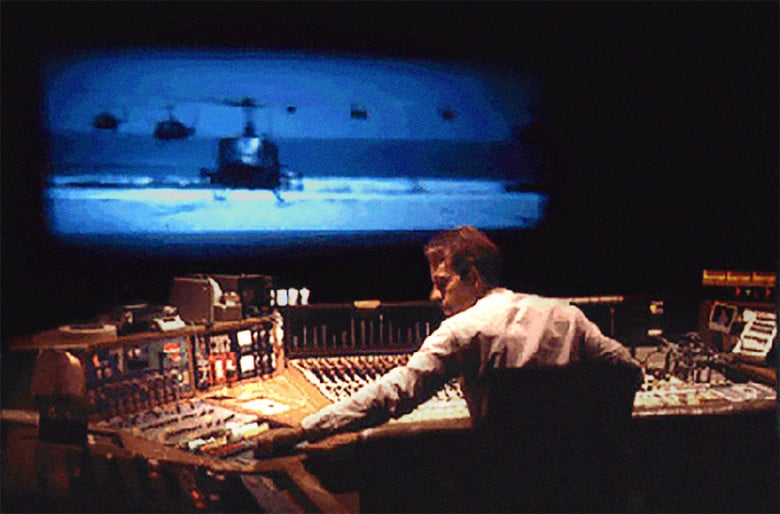
Adrian Daub has noticed something unusual about choir music in movies: usually, we can’t understand the lyrics. For some reason, it’s important to have human voices rather than an instrument or orchestra carrying the musical load, but the linguistic content, whether it’s in pseudo-Latin, a made up Tolkien language, or Sanskrit translations of Welsh, usually might as well be empty.
This dates from the 1930s, when sound in movies got sophisticated enough to handle simultaneous polyvocal sound, the era of movie musicals and Snow White and the Seven Dwarfs:
And then there was Dimitri Tiomkin’s score for Frank Capra’s Lost Horizon (1937). The film concerns the discovery of Shangri-La in the Himalayas, and when we finally get to the fabled land the soundtrack accompanies the matte-painted wonderland with a chorus singing in… well, in a language that isn’t English and doesn’t seem to be Tibetan either. And thus another Hollywood tradition was born: film choruses belting out perfectly nonsensical prose with utter conviction.
The film’s producers tried to claim that the choral music from Lost Horizon was rooted in Tibetan folk traditions, but this, Daub writes persuasively, is plainly nonsense, and nonsense about nonsense to boot. What matters isn’t the sense, but the feeling, not the authenticity, but the cinematic je-ne-sais-quoi (literally, je ne sais rien) of the music.
What’s more, music choirs (even the nonsensical, polyglot ones) have gone digital and programmable:
The EastWest Symphonic Choirs software allows you to make a virtual choir sing in just about any style imaginable. Want your ooos and aaas to sound like a whisper? More Broadway or more classical? All of that’s in the package.
But there’s more: Due to a system called WordBuilder, you can have this choir sing pretty much anything — you can type in text in English, in phonetics, or a proprietary alphabet called Votox, and the software will assemble it out of a massive databank of vowels and consonants…
All the professional singers I spoke to were keenly aware of products like EastWest Symphonic Choirs and the sample libraries — because more likely than not they’re in them. If you’re in the business of singing on film, these days you won’t always be asked to sing for an actual score, but instead you might get booked to record samples. There’s a scary possibility that these artists are slowly eroding the industry’s need for their labor — that the fruits of their one day of paid work will perform for the studios in perpetuity and with no extra residuals.
At the moment, though, singers come pretty cheap — and in many cases, even a union shop in a city like London (a favorite of movie music producers for just this reason) might insist only on a set rate without residuals. They’re even good at singing their way around nonsense:
As the soprano Catherine Bott said: “You enter a studio and you open the score and off you go. You sing what you’re told, and it’s all about versatility, just being able to adapt to the right approach, whatever that may be for that conductor or that composer.” And part of that, singers told me, was singing the words — whatever they may be. As Donald Greig pointed out to me, a lot of these singers have training in classics; they certainly know their way around a Requiem or a Stabat Mater. And yet often enough when they step into Abbey Road they’re being asked to sing perfectly nonsensical phrases in pseudo-Latin — but the studio is booked, the clock is ticking, and as Bott put it, “that’s not the time to put up your hand and, you know, correct the Latin.”
But the thing is, many of us have some experience being sung at in Latin we don’t understand — it’s the Catholic mass. And as Daub writes, the emotional content of the mass (and the accompanying tradition of Latin choral music) has never depended on its intelligibility — in fact, it’s often benefitted from the fact that few if any of the audience could understand what is being said word for word.
Whether they’re after a feeling of evil (as in The Omen), magic (Harry Potter), exotic African-ness (the misplaced Swahili of The Lion King), or familiarity (Black Widow’s callback to the theme from The Avengers), movie producers are literally counting on familiar human voices being misunderstood.
The Ethical Aside
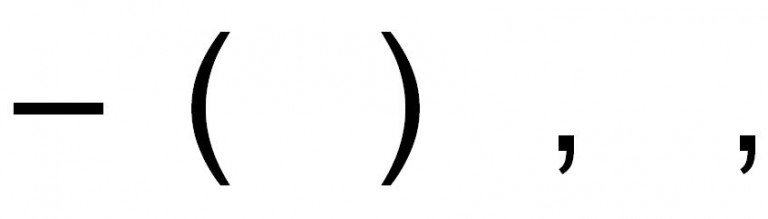
Stylistic tics are often shorthands for forms of thinking, or too often for ways of not thinking through a particular problem or set of circumstances. In “Aside Effects,” Lauren Michele Jackson looks at how the rhetorical aside, whether in commas or parentheses, gives the appearance of covering all bases while actually relegating the cases that matter to the status of a special footnote.
An article on loitering, say, will take care to mention that Black and Brown folks are often penalized by anti-loitering laws, but such an aside leaves out the fact that the Brown loiterer is not one example but the prototype. The ethics of the thing protest too much. It’s “women and people of color.” It’s “women and femmes.” Jules Gill-Peterson, in her essay on trans pessimism, asks after the misty “trans woman of color” whose life in print is only an enhancement for other things, a summoning that suppresses whatever lives happen behind the rumor. An aside to be cast aside. “The trans woman of color whose life is invoked is always putative,” Gill-Peterson writes. “She’s no fact. Who is she? How do you know her? I know why Chase Bank, or Sephora[,] pretends to know her. But you? What’s your excuse?”
The ethical aside is an interruption—the beat before everyone gets on with their lives. Journalists signal that they have done their due diligence in reaching out to all parties with the inclusion of “(X declined to comment for this article)” in reported investigations; the ethical aside, likewise, says that the author has indeed thought of and considered the conditions of those excluded by their primary interests. There’s someone else out there, it acknowledges, even as the story as written depends on their disavowed existence.
This isn’t a hard and fast rule, a proclamation that footnotes, parentheticals, and the like are inherently bad, and Jackson takes time to look through cases (including some splendid literary examples from Frederick Douglass and Vladmir Nabokov) where the aside has the opposite effect. But it does point to a very real problem not just in style but with habits of thinking. What if we valued the actually thoughtful more than the appearance of conscientiousness? I don’t know what that world would look like, but I bet it would be a more interesting one.
The Courtroom Sketch Artist

Choire Sicha’s interview with Jane Rosenberg, the courtroom sketch artist currently working on the Ghislaine Maxwell trial in New York, is delightful.
(Rosenberg has been drawing defendants since 1980.)Do you and other courtroom artists ever fight?
Oh, sure. You don’t want to hear all that.All I want to hear is that!
Oh, no, no. I’m not starting. I get along professionally with most artists. There are some who are just really a problem. It’s not normal, what I put up with from the other ones. I used to have a story every day — they cursed me out! They knocked my pastels over! They’re sly as a fox, they do it when no one’s around, but all the court officers know who they are. They’re not in this trial.Jeez. It’s much nicer among the reporters!
We compete, also! There’s issues of competition for certain clients. Some of us have our set clients, and there’s stealing going on, all kinds of backstabbing going on. It’s not all roses. I’m okay with who’s here, and we do what we have to do.
Math on Screen
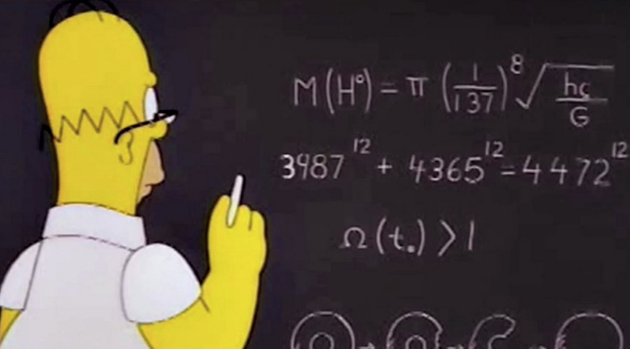
Mathematics isn’t the most obviously cinematic academic discipline out there, but it is one that the movies (and to a lesser extent television) have repeatedly tried to understand, or in some cases, used to goose up a vaguely science-y story. Unsurprisingly, mathematicians often become sticklers for detail in such high-profile depictions of what they do, and a good or bad portrayal can become famous or infamous.
My friend Jordan Ellenberg, a math professor at the University of Wisconsin-Madison, is also an expert in translating math to popular audiences, in his books and sometimes on screen. In this video, he takes a look at some popular representations of math in TV and the movies, and tries to explain what’s going on, including what the filmmakers do well or not so well.
Good Will Hunting’s use of math is famously bad, and Ellenberg unsurprisingly agrees (although, surprisingly, he had never before seen the movie or even the math scenes in question). Portrayals that get a perhaps-surprisingly high score include The Simpsons (which includes several former mathematicians among its writers) and Jurassic Park — Jeff Goldblum pulls off a passable explanation of chaos theory while also eerily accurately capturing the slightly-creepy vibe of a neurotic academic asked to describe what he studies to a layperson. “He was the one who I most felt might have spent a long time studying mathematicians and truly trying to give off a mathematician vibe,” says Ellenberg.
One thing I love is Ellenberg’s attention to how each of the on-screen mathematicians write (if they do any writing themselves at all, rather than ponder something that’s already been written by a character offscreen) — the connection between math and writing is so powerful, and math is one of the great remaining repositories of manuscript culture (even as it’s also taken on computers and machines, like everything else).
Ellenberg also adds that the most important thing a movie about mathematics can do is to convey to the audience that being a mathematician is something real, ordinary people still do, rather than being just a bunch of old dead men wearing robes.
A Short History of the Week
Years, days, seasons, even months correspond to natural divisions of time in most parts of the Earth. We split those into hours, minutes, seconds, pretty cleanly if you’re a post-Sumerian who loves the number 60. But weeks? You can talk about phases of the moon, but for the most part, weeks are our most arbitrary (and mathematically awkward) imposition on the experience of time. (Not everybody observes a seven-day week, even today.)
So how did we make the week a thing?
Although taboos and cosmologies in several different cultures attached significance to seven-day cycles much earlier, there is no clear evidence of any society using such cycles to track time in the form of a common calendar before the end of the 1st century CE. As the scholars Ilaria Bultrighini and Sacha Stern have recently documented, it was in the context of the Roman Empire that a standardised weekly calendar emerged out of a combination and conflation of Jewish Sabbath counts and Roman planetary cycles. The weekly calendar, from the moment of its effective invention, reflected a union of very different ways of counting days. This fact alone ought to discourage us from assuming that weeks have just one obvious technological application.
Along with charting the stars and setting aside time for the sacred, weeks, David Henkin argues, serve as mnemonic devices, divide work from non-work days, allow us to distinguish one cycle of days from the next, and offer a regular opportunity to take stock.
Starting around the nineteenth century, particularly in the United States, the division of time into weeks (which correspondingly creates a repeating order of days) also allowed for a new, industrial-bureaucratic conditioning to take place: we created schedules.
Increasingly and pervasively, Americans were applying the technology of the seven-day count to the project of scheduling. Some of these schedules emerged in work settings, specifically schools and housekeeping. As daily school attendance became a normative activity outside the southern US in the early 19th century, masses of schoolchildren learned early and often to expect certain regular activities (examinations, early recesses, special classes) to take place on the same day of the week. And as new norms of hygiene and respectability took hold in middle-class households, domestic manuals began prescribing weekly schedules for core housekeeping tasks: washing on Mondays, ironing on Tuesdays, baking on Wednesdays.
Offices and workplaces were soon to follow. Eventually, the week provided such a regular structure to our days and activities that when any disruption happens (be it mild and passing like a holiday, or more deeply deranging, like a pandemic), it throws us into disorientation. We made the week, but now we can’t live without it.
Why Can’t I Hear The Movie?
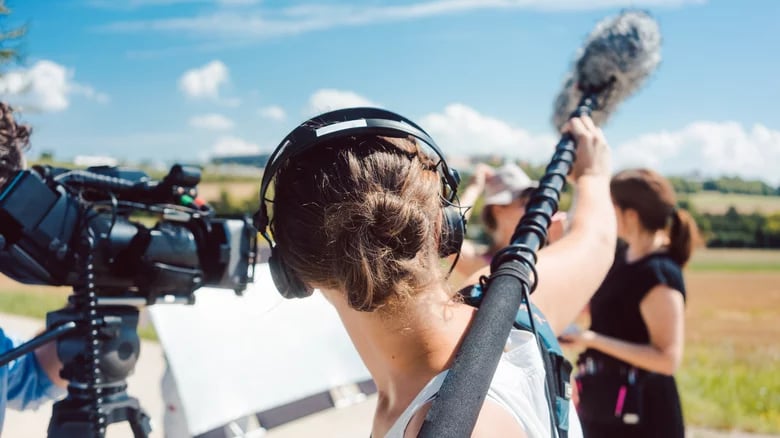
In theory, this should be a golden age for movie sound. There’s better digital recording and mixing equipment than ever, theaters are incentivized to offer a premiere experience, and home theater equipment is more expensive, elaborate, and ubiquitous.
But many viewers report that even simple intelligibility of movie sound is worse than ever. In “Here’s Why Movie Dialogue Has Gotten More Difficult To Understand (And Three Ways To Fix It)”, Slashfilm’s Ben Pearson tried to break down the various causes of the problem and propose some solutions. It’s a thorough (and quite enjoyable) read.
Some of the sound problems just have to do with plain incorrigibility of the people involved: directors (Christopher Nolan is singled out) and actors who pride themselves on arty unintelligibility. There’s also some incompetence: movie houses who’ve let go of skilled projectionists and play the movie back too low (often if someone complained it was too loud), or filmmakers who rush through a shoot or a mix counting on the fact that they’ll be able to pick up the sound later. And sure, we’re probably overromanticizing our youth, when everything was pure and clear (but really made by the same kind of hacks still in charge of the movie business).
The more interesting problems, however, really are structural. For instance, remixing a movie for streaming (when you can afford to do a proper second mix), often bumps up against not just digital compression, but the fact that competing streaming services have no single standard for sound quality and mixes:
Compression is inescapable when streaming is involved, but it turns out not all streaming platforms are created equal. Craig Mann tells me something he says “is not well-known” outside the sound community: different streamers have different specifications when it comes to their audio mixes. “Netflix has excellent specs in terms of dialogue norm and overall levels,” he reveals. “They need a particular level in order to pass quality control, and the level is essentially based on the dialogue level throughout the length of the program.”
But since there’s no industry standard in how to measure audio for streaming, other platforms base their levels on other parts of the sound mix. Case in point: Mann recently worked on Joe Carnahan’s “Boss Level,” which was originally meant to be a theatrical release. “For a variety of reasons, it ended up at Hulu, and when we got a look at that spec, they require it to be based on the overall [volume] of the film, not on the dialogue level of the film. Consequently, that’s a big action movie with shooting and cars and big music, and the result of that is that you have a much more squashed up, un-impactful mix … there are only a couple different ways of measuring these things these days, and I can only imagine that it’s somebody just not understanding the reason why it should be this and not that.”
As for downmixing the streaming service for stereo, well, as Pearson writes:
For audio mixers, the theatrical mix comes first, followed by a streaming mix. Then, a stereo mix will often be created, funneling the full scope of the sound mix through just two simple speakers in a process Donald Sylvester likens to “taking a beautiful steak and dragging it through the dirt.”
As for solving the problem of unintelligibility and bad sound experiences, it mostly boils down to having more respect for and a better understanding of sound, from preproduction to the algorithms that serve up a mix to your TV set or headset. No easy fixes, just time and craftmanship. (In other words, don’t hold your breath.)
Victorian Condoms (Possibly)
You find the strangest things in the pages of old books, and the folks at the Bodleian Archives at Oxford are no stranger to the eccentric bits of paratext one picks up here and there. But this is indeed something of a mystery:
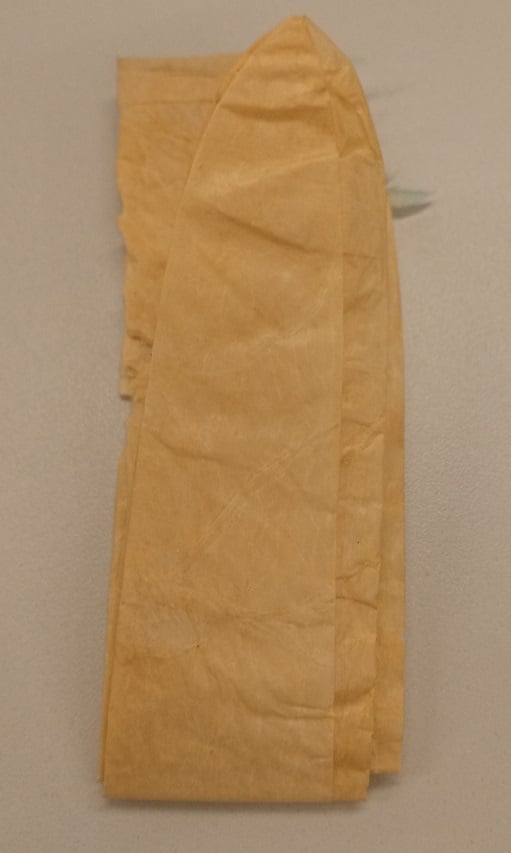
The tissue was folded in half, lengthwise. When I unfolded it, it was immediately clear: not a glove, not unless you wanted to cover only one (very long!) finger at a time.
Instead there were four, individual, 8 inch/20cm-long tubes. For each, one end has been skillfully shaped, cut and sealed into a three dimensional dome, like a fingertip on a glove. The other end of each tube is fully open, and a pale blue ribbon drawstring is neatly tucked into a narrow hem around the circumference of each opening.
The archivist’s best guess? A small pack of condoms, quite possibly made from an animal casing, which would have been soft and supple when new (now quite brittle). And to be honest, a book is a perfectly good place to keep such supplies — unlikely to get lost in laundry or wardrobe changes, the closest thing a man of that era might carry to a bag or purse.
The Logistics of the Montgomery Bus Boycott
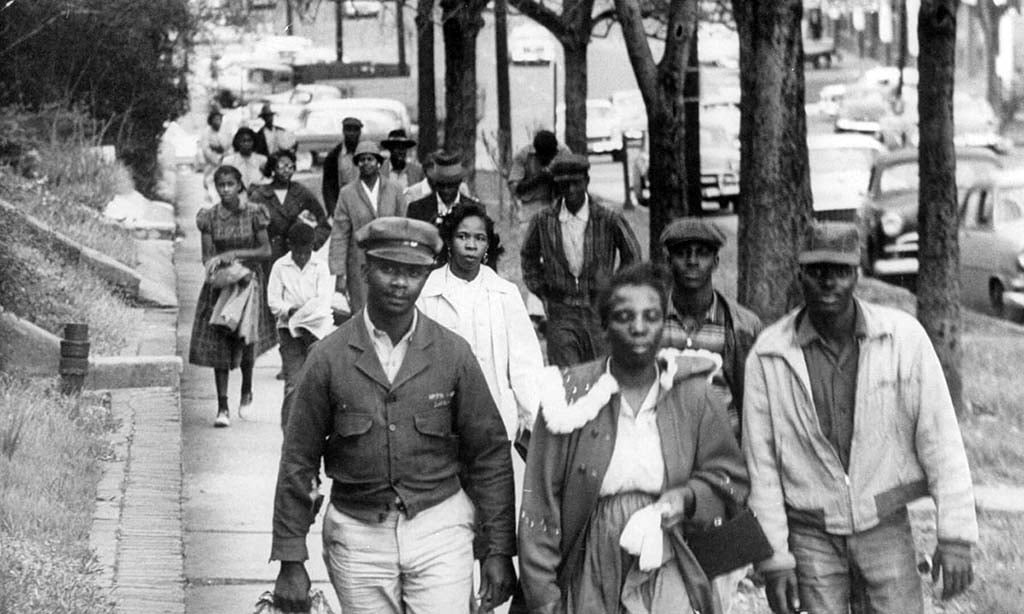
The bus boycott in Montgomery, Alabama began on Monday, December 5th, 1955 and ended on December 20, 1956 — 381 days during which a huge population had to commute to work, shop, socialize, and run errands without using the city’s public transit system. Obviously, not all of them had cars of their own or could rely solely on their feet or bicycles. They needed organized transport.
The bus boycott produced well-known heroes like Rosa Parks and Martin Luther King, Jr., and a Supreme Court decision prohibiting segregation on public transit, but it also was a product of grassroots organization, an exercise in logistical planning as well as party discipline. How did they do it?
Blogger Samantha Shain has gathered a few threads from books at her site The Data Are All Right (I found Samantha’s post via a tweet by Elizabeth Wrigley-Field.) Here are some highlights:
At least 29 women worked as regular carpool drivers or dispatchers. Ann Smith Pratt, a hairdresser, was the chief dispatcher. She worked the ham radio directing taxi drivers and the church station wagon crew to urgent pickups at 32 designated sites. (At the Dark End of the Street, p. 120, by Danielle McGuire)
[Rev. Benjamin J Simms] set up three repair shops, designated official gas stations, instituted a uniform pay scale for drivers and a system for keeping track of them, oversaw dispatchers working around the clock, and demanded meticulous record keeping. (Daybreak of Freedom, p. 13, by Stewart Burns)
Dr. King wrote about some of these logistical difficulties in the local papers; they were made even more difficult through the counter-organization of the boycott’s opponents.
The newest and most recent of the attempts to end the protest has been effected through insurance companies, which for some strange reason have cancelled the insurance policies on all but seven of the 24 church station wagons. Whether pressure has been put upon the companies to force the cancellation, no one knows, but on Saturday Spetember 8, the automobile insurance companies annoucned that they “could nott take the risk” and cancelled the policies. Thus, seventeen station wagons have been out of operation since then. Efforts are being made to find “companies which will take the risk,” so that these carriers can resume operations. (quoted in Daybreak of Freedom, p. 395.)
Ann Smith Pratt and Reverend Simms are examples of the other heroes of the Bus Boycott, the ones who never became national names but without whom it simply would have failed.
Infrastructure doesn’t just happen; it is a manifestation of how a community takes care of itself, or (too often), how it cares for some but not others. As my friend Deb Chachra persuasively writes, infrastructure is care at scale.
The Vinyl Boom

About five years ago, a funny thing happened: for birthdays and holidays, instead of LEGO sets or basketball jerseys, my son started asking me to buy him vinyl records. I happily complied: it was fun to mix new and old records together, track down semi-rare albums, and then listen to the music together, plus talk about music all the time.
It turns out my teen wasn’t an outlier: younger people are buying vinyl at a rate not seen in over a generation, not just as collectors or as an affectation, but as a first-line way to enjoy music, new and old. What’s more, the revenue from vinyl sales was a small but substantial lifeline to artists squeezed by streaming’s stingy royalty rates.
At The Hustle, Zachary Crockett does the math:
For modern-day indie artists, it’s a welcome boom. A vinyl record costs ~$7 to manufacture, and a band typically sells it directly to fans for $25, good for $18 in profit. By contrast, streaming services only pay out a fraction of a penny for each listen. A band would have to amass 450k streams on Spotify to match the profit of 100 vinyl sales.
There are also moments where the streaming and vinyl economy come together. Bandcamp has a vinyl pressing service, and some of the most popular music videos on YouTube are needle drop recordings of a fan playing a vinyl record.
There are some bottlenecks, though. First, streaming is a much bigger ocean than vinyl. Second, vinyl’s manufacturing capacity is greatly reduced from its heyday, making it more arduous and fragile to make, manufacture, and distribute a vinyl record. Finally, the environmental impacts of vinyl manufacturing aren’t great.
But the aesthetics — oh, the sweet joy of a needle on a record — the aesthetics can’t be beat.
Update: Crockett’s arithmetic above is a little hasty. For one thing, it doesn’t include shipping costs, which can either make a record much more expensive or cut into the profit margin. It’s definitely a better profit margin than streaming music royalties, but it is one where costs are at a premium.
I Was Adopted. I Know the Trauma It Can Inflict. @espiers on Justice Amy Coney Barrett’s too-casual assertion that adoption is “an accessible and desirable alternative for women who find themselves unexpectedly pregnant”.
Sounding the Sumburgh Foghorn
Built in 1905 and recently restored to working order, the Sumburgh Foghorn is perhaps the last functioning foghorn in Scotland. This two-minute film, which is simply but beautifully shot, documents the surprisingly elaborate process of sounding the horn.
Out of use since 1987, the foghorn was painstakingly restored by Brian Johnson. Shown in the video is the annual Foghorn sounding at Sumburgh Lighthouse, Shetland, Scotland. Brian starts up the 1951 Kelvin K-Series Diesel 44hp Engines. The engines power the Alley and MacLellan compressors, which in turn, power the foghorn.
Just so’s you know, the horn was originally much louder at the end, but YouTube’s audio algorithm turned the volume down. I tried several versions but it wasn’t having it.
I wish we could experience the true loudness of the horn through the video — it was so powerful that it could be heard at a range of 20 miles on foggy days. (thx, mick)
David R Chan has eaten at more than 8000 Chinese restaurants across the US. “My interest in the history of Chinese in the US led me to eat Chinese food and see what it was like to be Chinese in different parts of the country.”
The escalating costs of being single in America. “We don’t seem to like or respect single people and their choices.”
How to Build the Perfect Medieval Castle
Castles across Europe and the Middle East during the Middle Ages were all pretty different, but by looking at the trends over a period of several centuries, you can determine how to build the perfect castle.
We trace the origins of the castle in the feudal system that emerged in France c.900 CE, and look at the early motte-and-bailey castle, used by the Normans to subjugate England and Wales in the 11th century. We then look at how castle’s became stronger and more sophisticated, with the addition of stone curtain walls, massive keeps, towers (square, round and D-shaped), as well as powerful gatehouses, barbicans, machicolations and moats.
(FYI: The sponsorship in this video for a medieval role-playing game is a little annoying but easily skippable and ultimately doesn’t detract from how interesting & educational the video is.)
The Hunt for Nazi War Criminal Adolf Eichmann
This animated documentary about how Israeli Mossad agent Zvi Aharoni tracked down and captured Nazi war criminal Adolf Eichmann in Argentina 15 years after WWII ended is really fantastic.
The rare film to win festival prizes as both a documentary & as an animation, Randall Christopher’s The Driver is Red is a stunning showcase for his minimalist pen and ink art and for his grand aim to increase public awareness of WWII history (which he perceives to be rapidly fading from the consciousness of younger generations). Should he succeed in that noble aim however, the reason will be that he has taken a potentially dry historical record and transformed it into an imaginative and unabashedly cracking spy thriller.
Told through the experience of Israeli Mossad agent Zvi Aharoni, the film documents the discovery and capture of Adolf Eichmann, the senior Nazi official largely responsible for organizing and executing the Holocaust. Hidden for 15 years half a world away, and living under an assumed identity, Eichmann is tracked down by Aharoni and the agent, with a small team in tow, must design and execute a strategy for Eichmann’s capture and extradition.
You can read much more about Eichmann and his crimes, capture, trial, and death in a massive five-part series Hannah Arendt wrote for the New Yorker in 1963 (1, 2, 3, 4, 5), later collected in Eichmann in Jerusalem: A Report on the Banality of Evil. (via open culture)
Just sent out the latest issue of the @kottke newsletter. There’s been so much interesting stuff on the site lately that it was hard to keep this short. A good way to catch up on things if you’ve been busy.
This is hilarious but can we just marvel for a moment at the camera work here. There’s panning and zooming and the reindeer stayed bang in the middle of the frame the entire time. Respect.
Beneath the Bird Feeder



Last winter, Carla Rhodes captured some scenes of the animal life underneath her bird feeder. Rhodes is a wildlife conservation photographer, so the photos are good and she made certain to do the right thing with her feeder:
Ethical considerations were at the forefront of this project. This included hanging the feeder in a tree away from house windows. If not cared for properly, bird feeders can be a vector for diseases, such as salmonella. To avoid this issue I regularly raked beneath the bird feeder (and turned the soil below), rotated the feeder to different branches, occasionally allowed the feeder to be empty, and regularly disinfected the feeder with dish soap and dilute bleach solution.
(via colossal)
Square has changed its name to Block. In a few years, they can go up another dimension with Tesseract.
How Gollum’s performance was created for the LOTR movies. “That the end result is so believable, so deeply felt and human, is miraculous given the complicated, piecemeal nature of its construction.”
The US finally has a plan for providing cheap, at-home rapid tests for Covid (yay!) and it involves people finding & buying their own tests and then getting reimbursed via their health insurance (whaaat a fucking joke).
Socials & More