Entries for February 2021
This is one of those posts that’s really easy to understand — it’s the famous intro to The Simpsons recreated using stock footage, just like the title says right up there — but I’ve gotta write something here to take up a little space and time, so I end up just saying the same thing using the same words (intro, Simpsons, recreated, stock, footage) like you’re all 3 years old or something. (Why do we need more than six words to describe this?) Anyway, this video is the introduction to the American television show The Simpsons recreated using only stock video footage. Enjoy.
See also: stock footage intros to Duck Tales and Friends and the stock footage trailer for Koyaanisqatsi. (via the morning news)
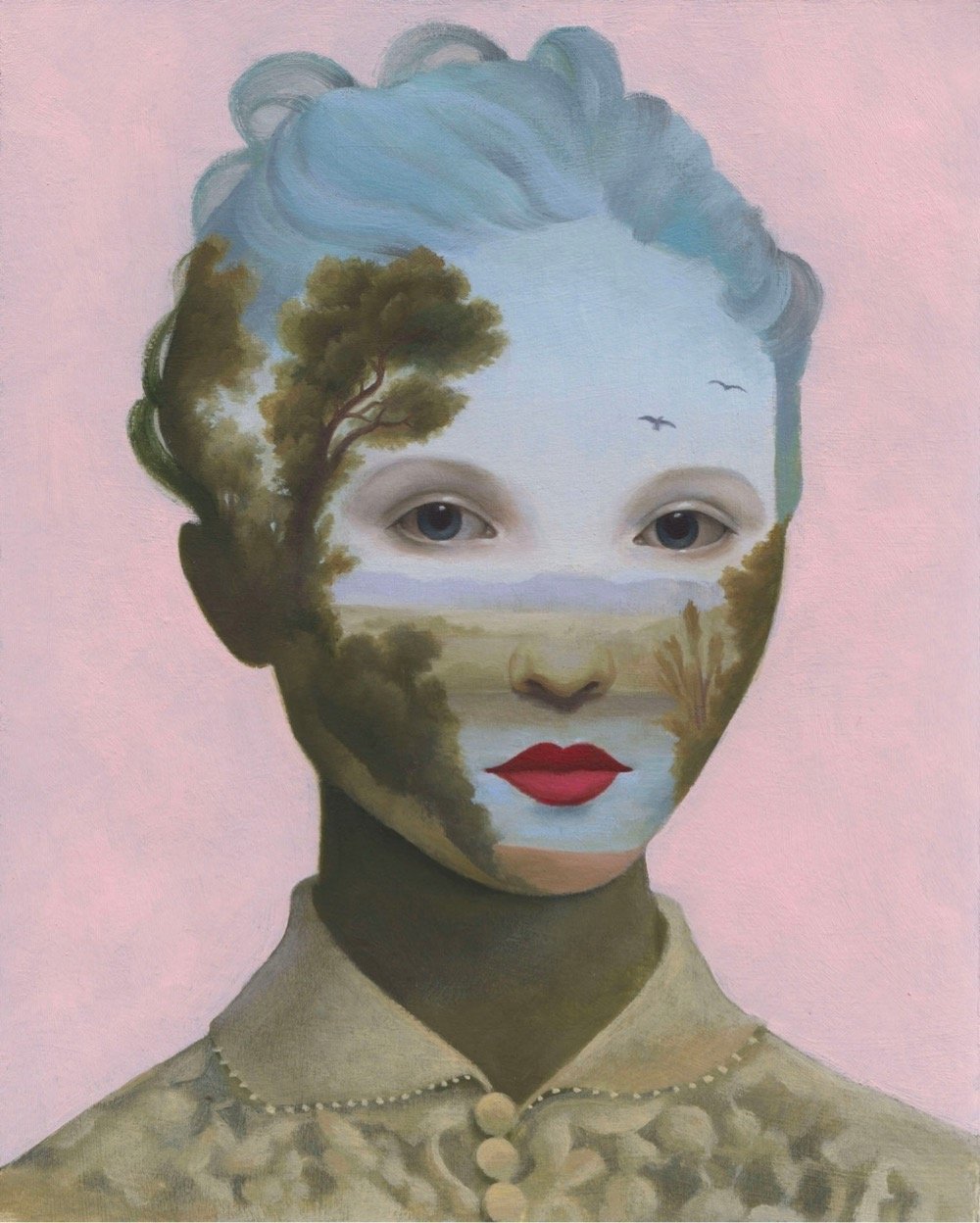
This oil painting by Aniela Sobieski is really tickling all my brain cells right now. You can check out more of her work on her website, Instagram, and Etsy. (via colossal)
After the salt harvesting video I posted this afternoon, I got on a mini-roll watching videos from Eater’s Handmade series — specifically two Korean pottery videos. In the first video, master craftsman Yu Myeong Sik from the Kwangjuyo Group demonstrates how to make incredibly beautiful and delicate handmade bowls:
While in this one, Heo Jin Kyu shows how he makes huge pots used for fermenting kimchi called onggi:
As you might expect from the finished products, there are striking differences in their respective processes, but the level of craftsmanship and respect for traditional materials & practices are very similar.
In this video, Eater visits Lake Retba in Senegal to watch how they harvest salt from the lake. As you’ll see, the process differs from harvesting sea salt. Lake Retba is so salty — Wikipedia has it listed as the world’s second most saline body of water, more than 10X saltier than the ocean — that salt crystals naturally form at the surface of the lake and then fall to the lake bed. Harvesting it then becomes a matter of collecting it from the bottom and the lake naturally replenishes the supply every 45 days or so.


As previously documented, I am a big fan of satellite images taken from a low angle. Planet Labs’ Robert Simmon wrote a post that talks about the history and uses of low-angle satellite imaging and shares many examples (like the two above of the Hoover Dam and Paris).
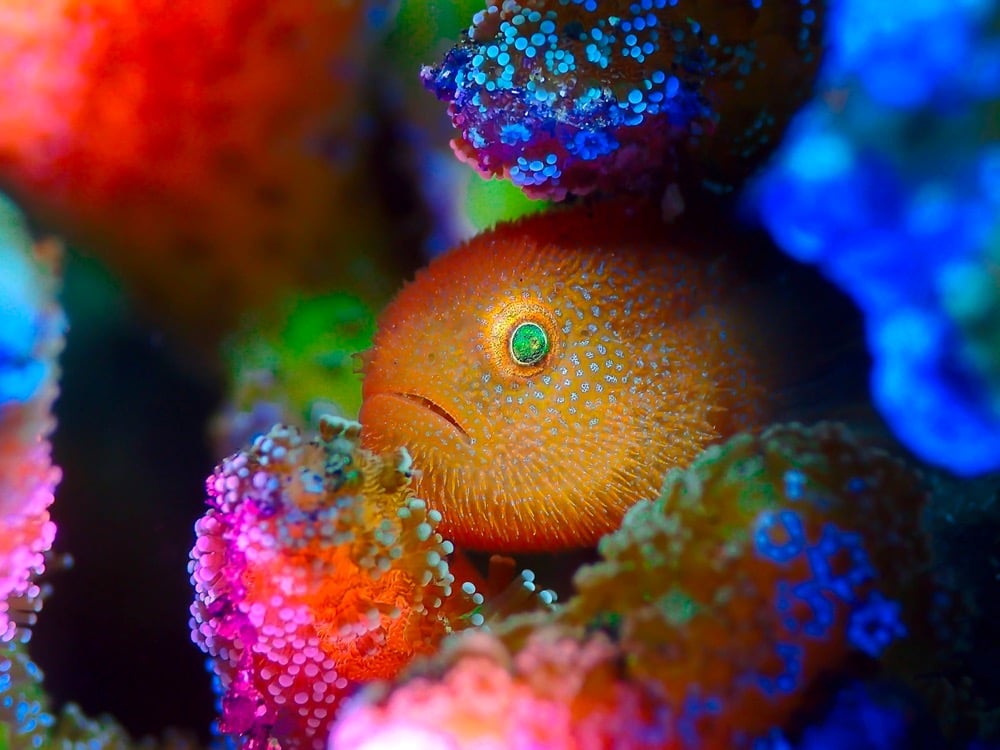
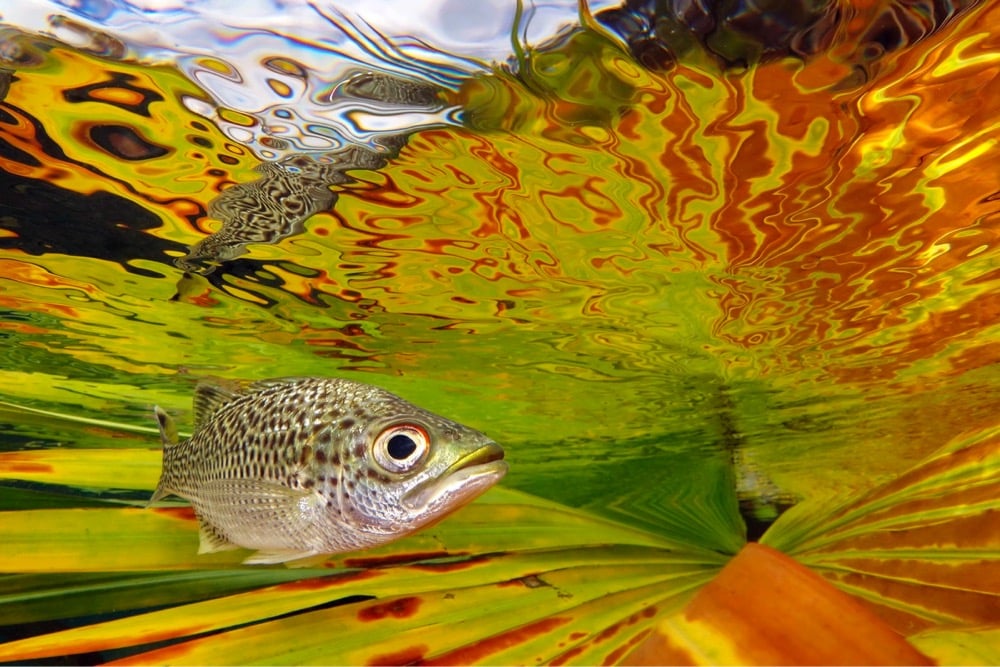

The winners of the Underwater Photographer of the Year 2021 have been announced. I picked a few of my favorites and you can see more from In Focus. Photos above from top to bottom: ManBd, Jack Berthomier, and Oleg Gaponyuk.
In a recent issue of the MachinePix newsletter, Kane Hsieh interviewed Dr. Steve Gass, the inventor of the SawStop, the table saw that automatically stops cutting when it detects human skin (therefore saving fingers and hands from being cut off). Before we get to that, you’ve probably seen the company’s hot dog demo but if you haven’t, check out these super slow-motion clips of the SawStop blades stopping in a matter of milliseconds after making contact:
The minuscule amount of damage to the hot dog is mind-blowing. Where did this demo idea come from? From the interview:
What was the first thing? It was probably a stationary blade with me just touching it with my finger. Once we started spinning the blade, I wasn’t too eager to do that test with my finger, so we just thought ‘what do we have that’s sort of finger like with similar electrical properties’ — hot dogs are similar, and I had one in the fridge, so I grabbed one and ran it into the blade. Sure enough, it worked.
There was a point where we had to know a hotdog was a good surrogate for a finger. You can imagine, we could do this demo at trade shows with a hot dog, but there’s always a smart-ass that says they don’t care about hot dogs, and wanted to see it with a finger. So before the first trade show I had to test it with my actual finger. Thankfully it worked!
And because what the saw is detecting is “the capacitance of the human body”, you have to be holding the hot dog in order for the demo to work.
The whole interview is worth a read — like this bit about why big tool companies were not interested in licensing this feature: because they aren’t liable for the injuries caused by their products:
The fundamental question came down to economics. Almost a societal economic structure question. The CPSC says table saws result in about $4B in damage annually. The market for table saws is about $200-400M. This is a product that does almost 10x in damage as the market size. There’s a disconnect — these costs are borne by individuals, the medical system, workers comp — and not paid by the power tools company. Because of that, there’s not that much incentive to improve the safety of these tools. Societally if there was an opportunity to spend $5 to save $10, we’d want to do that. But in this chain there’s a break in people that can make those changes and people that are affected, so it’s not done.
Materials engineer Nzambi Matee has started a company in her native Kenya manufacturing paving bricks made from plastic waste and sand that are cheaper, stronger, and more durable than concrete or similar bricks. For her efforts, Matee was named a Young Champion of the Earth by the United Nations.
Matee, who majored in material science and worked as an engineer in Kenya’s oil industry, was inspired to launch her business after routinely coming across plastic bags strewn along Nairobi’s streets.
In 2017, Matee quit her job as a data analyst and set up a small lab in her mother’s back yard. There, she began creating and testing pavers, which are a combination of plastic and sand. The neighbours complained about the noisy machine she was using, so Matee pleaded for one year’s grace to develop the right ratios for her paving bricks.
“I shut down my social life for a year, and put all my savings into this,” she said. “My friends were worried.”
And just FYI: not to take anything away from Matee, but the general process for making bricks out of plastic waste seems to be one that’s used widely around the world (since at least 2016). WasteAid offers step-by-step instructions for communities who want to make their own bricks from plastic waste. (via colossal)
In case you somehow haven’t seen this yet, this is a clip of a lawyer 1 who logged into a virtual Texas District Court session being conducted over Zoom with a cat filter applied. “I’m here live, I’m not a cat.” This is the perfect confluence of so many things that make The Now™ now. When the history of this time is written, a screenshot of this might well be on the cover.
Update: The New Yorker delved deep into the question of where this cat filter came from.
It was a default on Dell webcams. They even tracked down the cat.

With regard to the Chicago’s street numbering system, Madison Street is the boundary between the North and South Sides of Chicago. Because of discriminatory housing policies and practices, especially during the Great Migration, Chicago is one of the most segregated cities in America. Generally speaking, a predominantly white North Side has had better access to resources and higher home values while a largely Black South Side has had lower home values and less access to resources.
Artist Tonika Johnson’s Folded Map Project explores the differences and similarities across this boundary by comparing an addresses on the North Side with the corresponding addresses on the South Side. She does this through paired photos of the houses and the residents living at each twinned address, and video interviews with those “map twin” residents, as well as a movie, an installation, workshops, and even a stage play. The image at the top of the post is of one of the address pairs (6329 S. Paulina and 6330 N. Paulina).
Colossal recently posted an interview with Johnson about the project:
The ultimate point that I was trying to get across was that Chicago’s history of segregation is still with all of us today. I wanted to prove this point for people who might not make that connection [between] the disparity that exists and the history behind it. I wanted the project to be an entree into expanding people’s minds of Chicago’s history of segregation through thinking about their own lived experience. I really appreciated being able to do that through art, through photos and portraits and video because I wasn’t blaming people who live on these different sides. I was offering them insight into the larger question of, “did you really choose this? Does our segregation reflect how we want to interact? And if it doesn’t, then you have to question why is it this way?”
There is this narrative that people think [Chicagoans] don’t interact. But we do, a lot, especially through art. That’s how we know the city is segregated. (laughing) We know that we’re disrupting this segregation when we come together. And that’s why I think art is such a beautiful common denominator.
Pro freestyle mountain bike rider Matt Jones wants to try a new trick, something no one has ever done before. In this video, you see him go through the entire process of bringing a new idea or invention into the world:
- The idea. It’s based on a previous trick but is more difficult; standing on the shoulders of giants. He suspects it’s possible, but doesn’t know for sure. Only one way to find out…
- The prototype. Jones takes a bike frame (no wheels, pedals, etc.) to the local swimming pool to do flips with it off the diving board. The price of failure is low, so it’s easy to try out all sorts of different things. The mad inventor is gawked at by the public but presses on.
- Visualization. Now that his body knows how it feels to perform the motion in the pool, he can perform the trick in his mind over and over again, syncing brain & body. He’s starting to believe.
- Trial and error. With the basics down, it’s time to tinker with all the different variables — over and over and over and over and over and over again. An airbag breaks his falls, enabling experimentation.
- Failure. You see Jones try this trick over and over again in the video and very few of them are successful — and I bet a lot more failure happened off camera. Hundreds of tries, hundreds of fails. This is the way.
- Self-doubt. The trial & error, failure, and self-doubt stages all overlap. You can see him struggling with this on top of the tower. He still believes but this trick is dangerous. Body and mind are battling hard.
- Success. It all comes together at last.
This was one of three new tricks that Jones wanted to do last year and you can see more of his progress and process with those in these three videos. (thx, matt)
I ran across some new music the other day that I’d like to share with you. Gasper Nali hails from Malawi and plays what he calls “wonderfully catchy & danceable tunes” with his homemade one-string bass guitar (which he plays using a beer bottle) and a cow skin kickdrum.
I particularly liked this video for a song called Satana Lero Wapezeka Ndiwe Edzi,1 with a bunch of kids dancing in the background.
If you’d like to hear more from Nali and support his work, you can purchase two of his albums on Bandcamp.
In 2008, composer Joe Hisaishi conducted a 2-hour performance of music from the scores he created for Studio Ghibli’s animated films, accompanied by an orchestra, several choirs, a marching band, and scenes from the films themselves. Hisaishi and director Hayao Miyazaki have been collaborating on film scores since 1984’s Nausicaä of the Valley of the Wind. In addition to Nausicaä, the performance includes songs from Princess Mononoke, Ponyo, Kiki’s Delivery Service, Howl’s Moving Castle, Spirited Away, My Neighbor Totoro, and a few others. (via open culture)
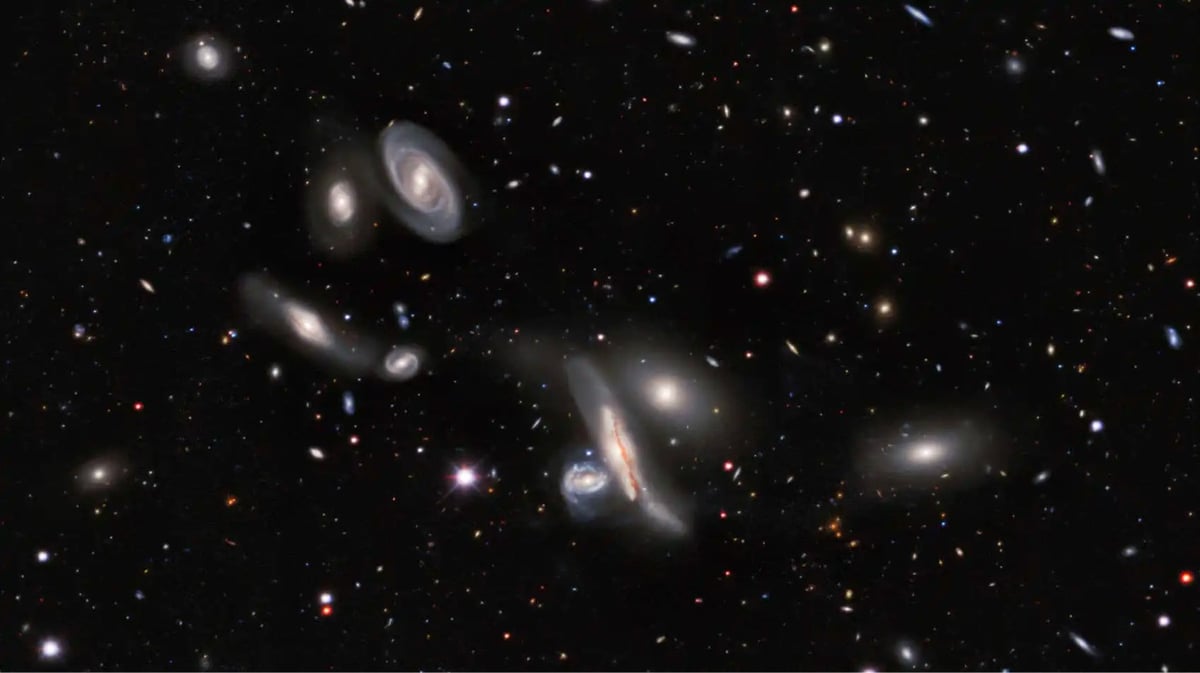
After 1405 nights of observation over 6 years, astronomers at three observatories have produced an image of the night sky that contains 10 trillion pixels of data and depicts over a billion galaxies. Bad Astronomy’s Phil Plait has the details.
It’s the result of the DESI Legacy Imagining Surveys, maps of the sky made by the three observatories (the Dark Energy Camera Legacy Survey, the Beijing-Arizona Sky Survey, and the Mayall z-band Legacy Survey, in combination with the orbiting WISE infrared observatory). They mapped the northern sky in seven colors, covering a third of the entire sky — 14,000 square degrees, or the equivalent area of 70,000 full Moons on the sky.
The ultimate goal is to better understand dark energy, the mysterious substance that’s accelerating the expansion of the Universe, by looking at the distribution of galaxies throughout the Universe. They’ll do that by picking tens of millions of the billion galaxies in the data and getting follow-up observations with the Dark Energy Spectroscopic Instrument (DESI), which will take spectra of those galaxies and find their distances.
Since we’ll know their positions on the sky, and their distances, this will make a 3D map of the Universe larger than any ever before.
The photo included at the top of the post is just a tiny tiny bit of the full image — you can pan and zoom the whole thing in this viewer. Be sure to zoom out in increments from the default view so as to fully appreciate just how absurdly large this image (and the universe) is.
Insider takes a look at how big Hollywood blockbusters (Marvel movies, in this case) are increasingly made, with an extensive digital previsualization stage that happens before any of the shooting starts. Think of it as supercharged storyboarding — the digital version of what Bong Joon-ho created for Parasite for instance. This is how digitally animated movies have been made for decades now — studios like Pixar always create roughly animated cuts of their movies before moving along to the expensive and time-consuming visual effects step. Big blockbusters like the Avengers movies are essentially animated films now, with live actors seamlessly inserted into the mix, like Bob Hoskins in Who Framed Roger Rabbit?
The “techvis” layer of the process is super interesting. Based on the previsualization, the system can output camera angles, movements, and settings that directors & camera operators can use on set to get the shots they want, speeding up production. This is the reverse of a technique that Pixar uses, in which real-world motion is captured and then programmed into virtual cameras:
To get the motion just right for the baby carriage scene in the antique store for TS4, they took an actual baby carriage, strapped a camera to it, plopped a Woody doll in it, and took it for a spin around campus. They took the video from that, motion-captured the bounce and sway of the carriage, and made it available as a setting in the software that they could apply to the virtual camera.
The flip-flop they’re doing in filmmaking right now is fascinating to watch.
The best Super Bowl halftime performance, by a comfortable margin, is Prince’s performance during Super Bowl XLI in 2007. Anil Dash has a great writeup that contextualizes the song choices and what it all meant to Prince.
Prince’s halftime show wasn’t just a fun diversion from a football game; it was a deeply personal statement on race, agency & artistry from an artist determined to cement his long-term legacy. And he did it on his own terms, as always.
Opening with the stomp-stomp-clap of Queen’s “We Will Rock You”, Prince went for crowd participation right from the start, with a nod to one of the biggest stadium anthems of all time — and notably, is one of the songs in the set that he never performed any time before or after. Indeed, though his 1992 song “3 Chains O’ Gold” was clearly a pastiche of the then-rejuvenated “Bohemian Rhapsody”, Prince had rarely, if ever, played any Queen covers at all in his thousands of live shows.
But with that arena-rock staple, Prince was signaling that he was going to win over a football crowd. He launched straight into “Let’s Go Crazy” at the top of the set. As one of the best album- and concert-opening songs of all time, this was a perfect choice. Different from any other Super Bowl performer before or since, Prince actually does a call-and-response section in the song, emphasizing that this is live, and connecting him explicitly to a timeless Black music tradition.
You can watch his entire performance here. But if you’ve seen it before and you’re strapped for time, check out the full-on mini-concert Prince performed at a Super Bowl press conference a few days before the game:
Incredible. I move that going forward all “this is more of a comment than a question” comments during conference Q&As are immediately cut off with blistering guitar riffs of Johnny B. Goode. Seconded?
Holy shit, do I miss going to the movies. Oh, and going everywhere else. Anyway, every few months for the past couple of years, I’ve shared the movies, books, music, TV, and podcasts I’ve enjoyed (or not) recently. Here’s everything I’ve “consumed” since the beginning of the year. (Don’t sweat the letter grades — they’re so subjective that I don’t even agree with them sometimes.)
Mank. Wanted to hate this, for secret reasons. Didn’t. (B+)
The Royal Tenenbaums. I have seen this movie a half dozen times and it’s still so fresh every time. (A+)
The Painter and the Thief. Best movie I’ve seen in months. (A+)
In & Of Itself. Everyone was raving about this and so I watched it and…I don’t know. It’s a magic show. I can see why people find it interesting, but watching it the night after The Painter and the Thief, it paled in comparison. (B+)
Ava. Jessica Chastain is good in this movie that is otherwise pretty bleh. (C+)
I’m Your Woman. Loved the 70s vibe of this one — not only the in-film setting but it had the feel of a movie made in the 70s as well. (B+)
Idiocracy. Fascinating documentary of the Trump presidency. (A-)
Star Wars: The Empire Strikes Back. Sure, Star Wars was the biggest movie in the world but without such a strong sequel, maybe we’re not still talking about these movies more than 40 years later. (A)
Blood Simple. First Coen brothers movie and Frances McDormand’s debut. (A-)
L.L. Bean fleece-lined hoodie. The most comfortable piece of clothing I’ve ever owned. (A+)
Wonder Woman 1984. This wasn’t nearly as bad as everyone said it was, but they should have worked a little harder on making an entertaining movie and less on hitting the audience over the head with a moral lesson. (B+)
Song Exploder (season two). The Dua Lipa and Trent Reznor episodes were the standouts here. (B+)
Ammonite. Great individual performances by Ronan and Winslet. (B+)
The Mandalorian (season two). Enjoyed this way more than season one. The final scene in the last episode… (A-)
MacBook Air M1. A couple of years ago, I bought an iPad Pro intending to use it for work on the go. For folks whose work is mostly email and web browsing, the device seems to work fine but after a solid year of trying to make it work for me, I gave up. Last month, I bought a MacBook Air M1 to replace my 6-year-old iMac, my 9-year-old Air, and the iPad. It’s a remarkable machine — lightning fast with a long-lasting battery. I’ll be much happier traveling with this, whenever it is that we get to travel again. (A)
The Crown (season four). The show has never reached the giddy heights of the first two seasons, but Gillian Anderson’s Margaret Thatcher was a fantastic addition to the show. As someone on Twitter said, Anderson played Thatcher perfectly: as a sociopath. (A-)
Sunshine. Rewatch. Afterwards, as one does, I looked the film up on Wikipedia and of course Alex Garland (Ex Machina, Devs) had written it. (A-)
Florida by Lauren Groff. Excellent and eclectic collection of short stories. (B+)
Phantom Thread. Undoubtably a masterpiece but also something that I personally find it hard to get fully into. (B+)
Emma.. Super-fun period piece starring Anya Taylor-Joy. (A-)
In Our Time, Eclipses. I love any opportunity to hear about eclipses. (A)
Hang Up and Listen: The Last Last Dance. This picks up where The Last Dance left off with the story of Michael Jordan’s second (and much less successful) comeback with the Washington Wizards. (B+)
Soul. A sequel of sorts to Inside Out. The underworld score by Trent Reznor & Atticus Ross is fantastic. (A)
Ready Player One. Almost in spite of myself, I like this movie. (B+)
The Hobbit film series. Not as good as the Lord of the Rings movies, but not as bad as commonly thought. (B)
Locked Down. This took a while to get going, but Hathaway and Ejiofor are both really good in this. I’ll tell you though, I really had to be in a certain mood to watch a movie about the first weeks of pandemic lockdown. It will be really interesting to see how much appetite people will have for pandemic-themed movies, TV, books, art, etc. (B+)
Young Frankenstein. Madeline Kahn is only in this movie for like 5 minutes but she so dominates the screen that it feels like much longer. (A-)
Batman Begins. I don’t know why Christopher Nolan wanted to direct a series of superhero movies, but I’m glad he did. (A-)
This American Life, The Empty Chair. There are so many more podcasts now than there were 10 years ago, but This American Life is still consistently among the best and they don’t get enough credit for that. (A-)
Criminal, The Editor. I will listen to anything about people who love encyclopedias. (B+)
The Midnight Sky. I feel like I’ve seen this movie — or a movie very much like it — several times before. (B)
Ocean’s 8. Good fun. And Awkwafina! (B+)
Past installments of my media diet are available here.
Next week, a documentary film directed by Sam Pollard will premiere on HBO: Black Art: In the Absence of Light.
Inspired by the late David Driskell’s landmark 1976 exhibition, “Two Centuries of Black American Art,” the documentary Black Art: In the Absence of Light offers an illuminating introduction to the work of some of the foremost Black visual artists working today.
Directed by Sam Pollard (Atlanta’s Missing and Murdered: The Lost Children) the film shines a light on the extraordinary impact of Driskell’s exhibit on generations of Black artists who have staked a claim on their rightful place within the 21st-Century art world. Interweaving insights and context from scholars and historians, along with interviews from a new generation of working African American curators and artists including Theaster Gates, Kerry James Marshall, Faith Ringgold, Amy Sherald and Carrie Mae Weems, the documentary is a look at the Contributions of Black American artists in today’s contemporary art world.
Just added this to my HBO Max queue — it looks great.
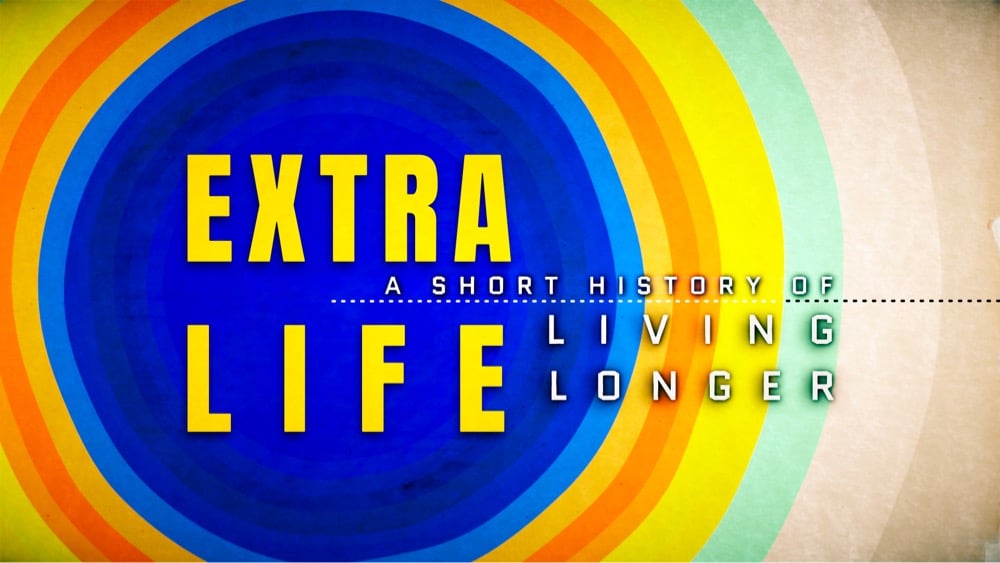
In the past 120 years, global life expectancy has risen from 32 years to 72 years, an astounding increase. In a thread announcing his new book/TV project, Steven Johnson says:
The doubling of human life expectancy is the single most important development of our era. If a newspaper came out only once a century, that extra lifespan would be the banner headline: world wars, moon landings, the Internet would all be below the fold.
Johnson will explore this century-headlining development in an upcoming PBS series (co-hosted with David Olusoga) and a book, Extra Life: A Short History of Living Longer.
A study in how meaningful change happens in society, Extra Life is an ode to the enduring power of common goals and public resources. The most fundamental progress we have experienced over the past few centuries has not come from big corporations or start-ups. It has come, instead, from activists struggling for reform; from university-based and publicly funded scientists sharing their findings open-source-style; and from nonprofit agencies spreading new innovations around the world.
In this video, three English centenarians share what it’s like to live so long, lessons they’ve learned along the way, and regrets they have. I don’t particularly have the desire for long life, but if I do end up living past my life expectancy, I hope it’s with the vitality shown by these folks.
P.S. I could have sworn that I’d linked to this video before (it’s from 2016) but I can’t find it anywhere in the archives. This is similar though: How to Age Gracefully. (via open culture)
In 1959, a group of students died while on a hiking trip in the Ural Mountains. The circumstances of the incident and the way in which they died presented a mystery that has remained unsolved in the decades since.
The Dyatlov Pass incident is an intriguing unsolved mystery from the last century. In February 1959, a group of nine experienced Russian mountaineers perished during a difficult expedition in the northern Urals. A snow avalanche hypothesis was proposed, among other theories, but was found to be inconsistent with the evidence of a lower-than-usual slope angle, scarcity of avalanche signs, uncertainties about the trigger mechanism, and abnormal injuries of the victims.
Now, researchers have come up with a plausible explanation of the accident: a low-angle avalanche enabled by unusually slippery snow and high winds. From a piece in Wired about the investigation:
The cross-country skiers had actually pitched camp on a small step in the hillside, scooping away the snow to level it out. When they cut into the snowpack, they sliced through the weak layer, essentially initiating a countdown. “When you create a cut in the slope to install the tent, it’s like when you remove a retaining wall,” says Gaume, a snow physicist at the Swiss Federal Institute of Technology. The slab of denser snow now hung precariously over the camp. “All the ingredients were there,” Gaume adds. “There was a weak layer, there was a slab, and the slope angle was locally steeper than the critical angle.”
Also from the Wired piece: the researchers were inspired by the realistic snow modeling that Disney did for Frozen. (via kottke ride home)
A short history of flight attendants. Always a tough job, but now they’re dealing with anti-mask idiots. “…you have the guy eating one sunflower seed at a time so he can keep the mask off the whole flight.”
This guide to Covid-19 variants (SARS-CoV-2 viruses that have evolved changes to meaningfully alter their behavior) by Michaeleen Doucleff and Meredith Rizzo at NPR cleverly visualizes how mutations of the virus’s spike proteins help bind it more easily to ACE2 receptors on human cells. The key to the visualization is Meredith Miotke’s illustrations of the viruses using Lego pieces to represent the virus spikes and cell receptors. The usual SARS-CoV-2 has 1x1 Lego pieces that can bind with 1x2 pieces, like so:
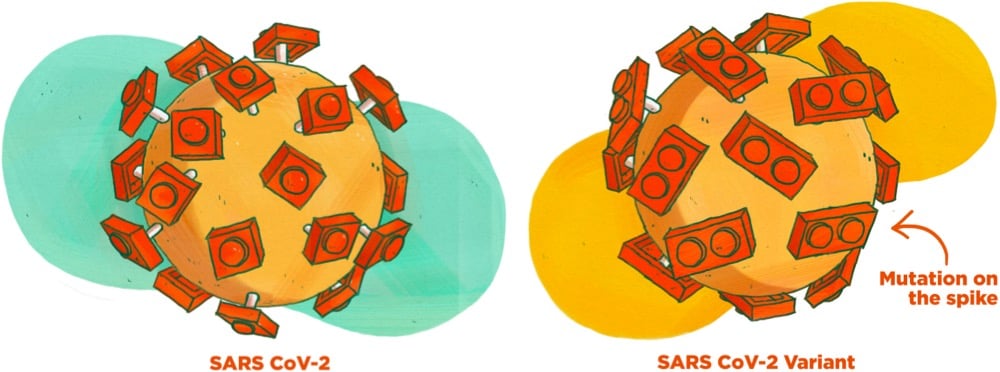
But, as everyone who has ever worked with a Lego set knows, a 1x1 piece stuck to a 1x2 piece is not super stable. So when a version of the virus with a 1x2 piece shows up, it’s able to form a better connection to the 1x2 receptor:
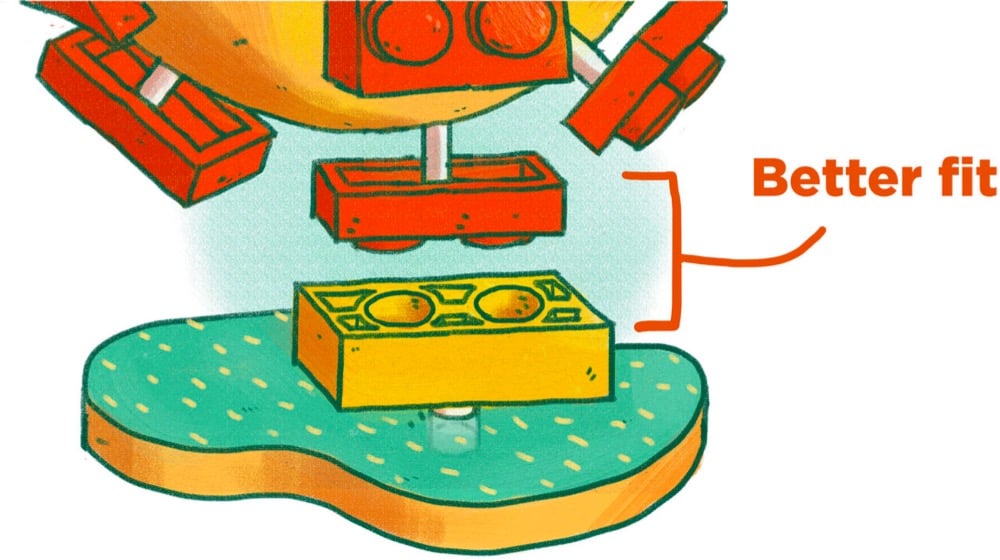
The analogy breaks down if you look too hard at it1 but for many people, it can be a quick way to get the gist of the mechanism at work here. (via @EricTopol)
Why You Should Take Any Vaccine by @zeynep. “Since the beginning of the trials, all trials, there has not been a single death or hospitalization among people vaccinated. Not one. Zero.”
XOXO has announced that there will be no festival in 2021. “It’s just not clear that it will be safe for us to gather again by September.” A bummer, but the right move.
For four years, Maxwel Hohn filmed the movements of millions of tadpoles in a small lake in British Columbia, resulting in an 8-minute short film called Tadpoles: The Big Little Migration. The underwater cinematography in this is absolutely incredible.
People don’t think of tadpoles as being photogenic, but when you take the time to look at their features, they’re actually very cute. They have a permanent smile on their face that you form an instant connection with. Witnessing their journey each day, there’s a strong emotional bond I can’t help but feel.
Hohn’s work here is proof that nature is infinitely fascinating and worthy of attention, even beyond the bounds of nature documentaries about charismatic megafauna. (via the kid should see this)
This is a fun discovery, via Laura Olin’s newsletter: a Korean acapella group called Maytree that does impressions of famous cultural jingles and sound effects. In this video, they perform a number of movie intro tunes (20th Century Fox, Paramount, etc.):
Watch until the end…the Netflix one is *kisses fingers*. Here they do the music from Super Mario Bros, including the overworld, underworld, and underwater themes:
Tetris (which gets unexpectedly dramatic):
And finally, a bunch of sounds and jingles from Microsoft Windows:
3:45 PM is CalArts student Alisha Liu’s second-year film about a lovely day in the park interrupted by an existential case of the Sunday scaries. The animation in this is lovely, particularly in the overhead sequences when things get abstract. I think this is my favorite shot:
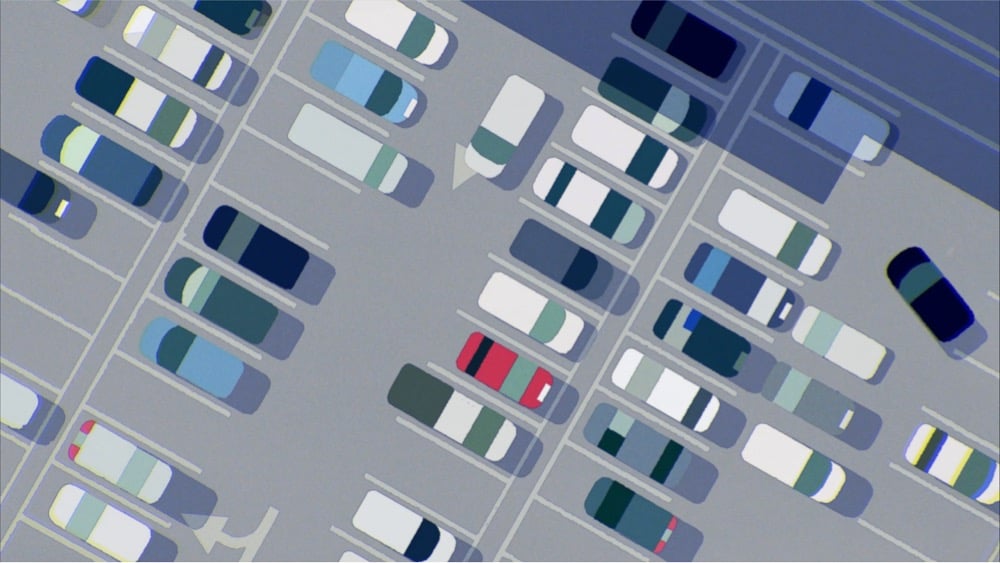
There’s just enough information here to convey to the viewer that these are cars in a parking lot — plus a little bit more, so that individual types of cars are perceptible. This is a really good implementation by Liu of the type of abstraction discussed by Scott McCloud in Understanding Comics. (via colossal)
If you’re anything like me and all you want to do today is watch some guys hand-ringing a giant bell, here you go. If we click play at the same time, we can watch it together. Ready? 3…2…1…go.
See also The Otherworldly Sounds of a Giant Gong. (via @MachinePix)
Newer posts
Older posts

Socials & More