


This site is made possible by member support. 💞
Big thanks to Arcustech for hosting the site and offering amazing tech support.
When you buy through links on kottke.org, I may earn an affiliate commission. Thanks for supporting the site!
kottke.org. home of fine hypertext products since 1998.
Beloved by 86.47% of the web.
Entries for February 2021
E.B. White on the Meaning of Democracy
In response to a request from the Writers’ War Board in the summer of 1943, in the midst of World War II, E.B. White wrote this short piece for the New Yorker.
We received a letter from the Writers’ War Board the other day asking for a statement on “The Meaning of Democracy.” It presumably is our duty to comply with such a request, and it is certainly our pleasure.
Surely the Board knows what democracy is. It is the line that forms on the right. It is the don’t in don’t shove. It is the hole in the stuffed shirt through which the sawdust slowly trickles; it is the dent in the high hat. Democracy is the recurrent suspicion that more than half of the people are right more than half of the time. It is the feeling of privacy in the voting booths, the feeling of communion in the libraries, the feeling of vitality everywhere. Democracy is a letter to the editor. Democracy is the score at the beginning of the ninth. It is an idea which hasn’t been disproved yet, a song the words of which have not gone bad. It’s the mustard on the hot dog and the cream in the rationed coffee. Democracy is a request from a War Board, in the middle of a morning in the middle of a war, wanting to know what democracy is.
My favorite line is “Democracy is the score at the beginning of the ninth.” Initially I read it as poetically referring to the first part of Beethoven’s Symphony No. 9 — which is lovely, no doubt — but upon further reflection he probably meant baseball. (via daring fireball)
Just sent out the latest issue of the @kottke newsletter in which I talk about tags. Remember tags? Still useful!
A list of the 25 greatest art heists of all time. If you’re familiar at all with the history of stolen art, the #1 and #2 heists aren’t so hard to guess.
30 Minutes of Relaxing Visuals from Studio Ghibli
This. This is the stuff. Lapping water, wind through the tall grass, patient trains, birds, rolling countryside, mountains, sleeping, castles in motion, and more calm scenes compiled from Studio Ghibli movies.
See also hundreds of Studio Ghibli backgrounds for your Zoom calls and 10 Hours of Extremely Relaxing Ocean Scenes & 40 Hours of Relaxing Planet Earth II Sounds, both from BBC Earth. (via laura olin)
The Queen’s Gambit, but for Children’s Board Games

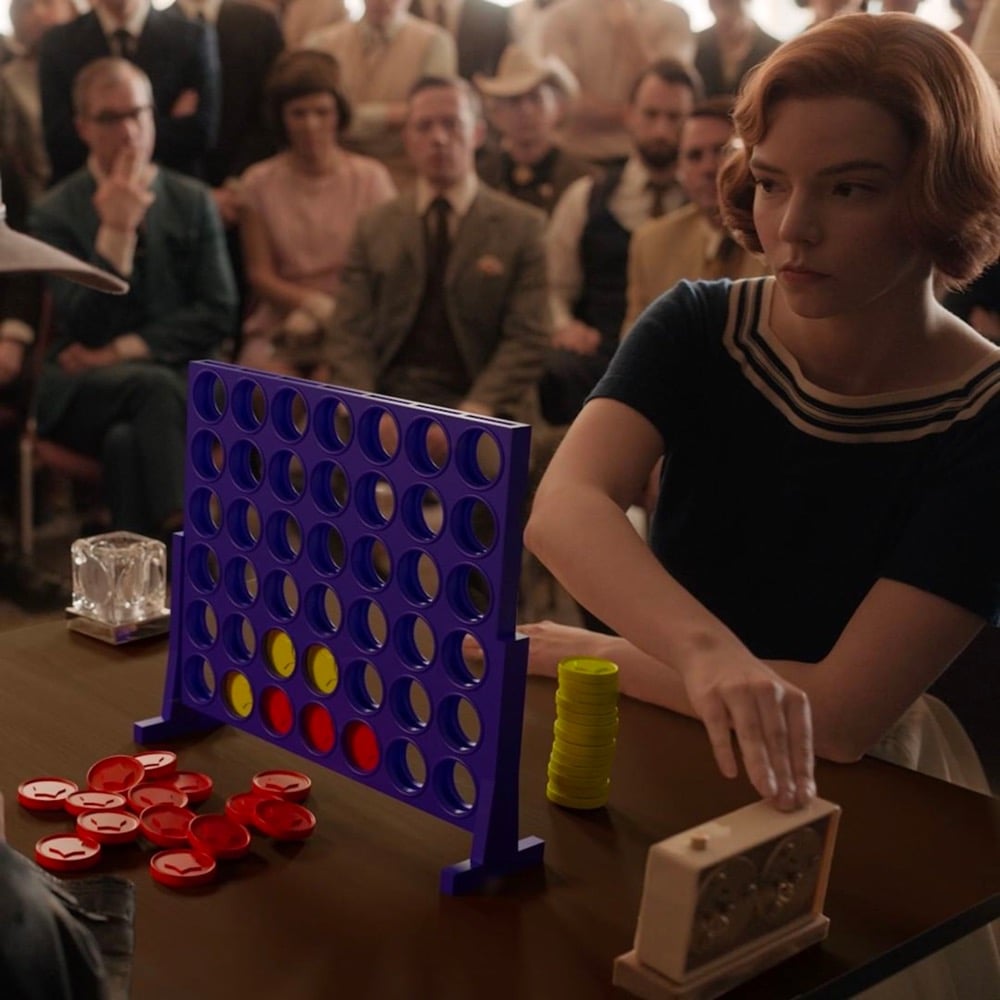

Netflix spoofed their own hit show by photoshopping Beth Harmon from The Queen’s Gambit intensely playing children’s board games like Operation, Monopoly, Connect Four, and Jenga.
Watch NASA’s Perseverance Rover Land on Mars Live
Today is the day! NASA’s latest Mars rover is scheduled to touch down on the surface of Mars at around 3:55pm EST today1 and you can follow along online. You probably know the drill by now: what you’ll be watching isn’t actually live (it’s delayed by 11 minutes & 22 seconds, the time it takes for data to reach the Earth from Mars) and there’s no video to watch…there’s just telemetry from the rover that indicates where it is and what it’s doing. But I can say having watched the Curiosity landing in 2012, it’s still super exciting and nerve-wracking.
NASA has a number of ways to watch online, including their main stream on YouTube (embedded above), en Español, the “clean feed” from mission control without commentary, and a 360-degree stream, as well as options on Twitter, Facebook, Twitch, etc. You can also watch on NASA TV or through NASA apps on your phone, tablet, or TV. The coverage starts at 2:15pm EST (find your local time) and if all goes well, things start to get exciting at about 3:38pm EST and the landing will happen around 3:55pm EST. To get ready, you can check this page for a schedule of what happens when, watch a video about what’s gonna happen, and look at this live simulated view of where the Perseverance spacecraft is now (here too). Good luck, little rover!
All times in this post (and stated by NASA in their schedules) are when we here on Earth will learn of events after the 11 minute & 22 second informational travel time from Mars is factored in. So while the Mars landing will actually occur around 3:44pm EST, we won’t know about it until 3:55pm EST.↩
The Evolution from Snurfing to Snowboarding. Sherman Poppen invented snurfing in the 60s and Jake Burton’s addition of bindings a decade later changed the game. The old snurfing/snowboarding footage in this is incredible.
A look at what caused the dangerous power shortages in Texas. “The state’s massive blackouts are the result of a failure to insure against extreme weather.”
Conservatism and Who the Law Protects
I’ve seen this quote, or ones very much like it, a few times in recent years:
Conservatism consists of exactly one proposition, to wit: There must be in-groups whom the law protects but does not bind, alongside out-groups whom the law binds but does not protect.
The original quote is from Frank Wilhoit — it’s worth reading what he wrote in full in a comment on this blog post. He begins by stating that conservatism is the only political philosophy that has ever existed and goes on to say that liberalism or progressivism isn’t the answer or counterpoint to it, anti-conservatism is.
So this tells us what anti-conservatism must be: the proposition that the law cannot protect anyone unless it binds everyone, and cannot bind anyone unless it protects everyone.
Then the appearance arises that the task is to map “liberalism”, or “progressivism”, or “socialism”, or whateverthefuckkindofstupidnoise-ism, onto the core proposition of anti-conservatism.
No, it a’n’t. The task is to throw all those things on the exact same burn pile as the collected works of all the apologists for conservatism, and start fresh. The core proposition of anti-conservatism requires no supplementation and no exegesis. It is as sufficient as it is necessary. What you see is what you get:
The law cannot protect anyone unless it binds everyone; and it cannot bind anyone unless it protects everyone.
I wonder what such a system of law and governance would even look like? (via @koush)
Let’s Clear This Up: What Does 95% Covid-19 Vaccine Efficacy Actually Mean?
In popular press and social media, there’s been a misunderstanding of what is actually meant when scientists say that the Pfizer and Moderna Covid-19 vaccines have an efficacy of 94-95%. It does not mean that 95% of vaccinated people are protected from infection — these vaccines are better than that. Dr. Piero Olliaro explains in a letter to The Lancet:
The mRNA-based Pfizer and Moderna vaccines were shown to have 94-95% efficacy in preventing symptomatic COVID-19, calculated as 100 x (1 minus the attack rate with vaccine divided by the attack rate with placebo). It means that in a population such as the one enrolled in the trials, with a cumulated COVID-19 attack rate over a period of 3 months of about 1% without a vaccine, we would expect roughly 0.05% of vaccinated people would get diseased.
Another way to put it: you’re 20 times less likely to get Covid-19 with a vaccine than without. (And again, data indicates these are safe vaccines.) Olliaro explains with some simple math:
If we vaccinated a population of 100,000 and protected 95% of them, that would leave 5000 individuals diseased over 3 months, which is almost the current overall COVID-19 case rate in the UK. Rather, a 95% vaccine efficacy means that instead of 1000 COVID-19 cases in a population of 100,000 without vaccine (from the placebo arm of the abovementioned trials, approximately 1% would be ill with COVID-19 and 99% would not) we would expect 50 cases (99.95% of the population is disease-free, at least for 3 months).
And of course if you vaccinate widely, it becomes a compounding situation because the virus just runs out of people to infect.
Dozens of Giant Movie Moons
Ariel Avissar made this 2.5-minute supercut of giant moons from movies — like E.T., The Nightmare Before Christmas, Spider-Man, The Lion King, Black Swan, Despicable Me — accompanied by Frank Sinatra’s rendition of Fly Me to the Moon.
The problem with running government like a business. “In short, the govt model is ‘We’ll take care of you at any cost’ while the corporate model is ‘We’ll take care of you as long as it doesn’t cost us too much.’”
The myth of ‘good’ and ‘bad’ Covid vaccines: Why false perceptions overlook facts, and could breed resentment.
Why Are Covid-19 Cases Declining So Quickly in the US?
Over the past week or two, I’ve read a number of articles and threads about why Covid-19 cases are falling so rapidly in the US. The explanations have all been somewhat unsatisfying to me. Cases have indeed dropped off quite quickly and it happened pretty uniformly all over the country. Look at the mini state graphs on the NY Times Covid page — they all look about the same. Hospitalizations and positivity rates have dropped too, so while the number of daily tests has fallen too, this appears to be a real drop and not just an artifact of a lack of testing. Which is great news! Imagine a February and March that looked like December — a disaster compounded.
So what’s going on here? For The Atlantic, Derek Thompson lists four reasons for the decline in cases and hospitalizations that mirror the arguments I’ve seen elsewhere: “social distancing, seasonality, seroprevalence, and shots”.
The vaccine explanation is the weakest one for me: not enough people outside of healthcare workers had gotten them early enough to start bending that curve sharply downward in early January. But as Thompson notes, it could be having more of an effect on hospitalizations because the folks getting shots (and therefore immunity against severe infection) are those most likely to end up in hospitals due to infection. And obviously, vaccines are going to become the dominant factor in falling case numbers as more and more people get jabbed.
I’m also skeptical of the seasonality argument, but (again, as Thompson notes) there’s a lot we don’t know about how temperature, sunlight, humidity, and this specific coronavirus interact. Obviously Covid-19 is a seasonal thing and that’s definitely a contributing factor here, but that sharp of a drop in early January? I don’t know if it’s the primary driver here. Also, the seasonal flu typically peaks in February in the US.
The seroprevalence argument is an interesting one. Here’s Johns Hopkins infectious disease epidemiologist David Dowdy in a great Twitter thread about the US case decline:
I think the most logical explanation is one proposed initially by @mgmgomes1 and others — namely that we are seeing the effects of population immunity with heterogeneous mixing + strong behavioral effects. Take a(n overly) simple example. Assume 60% of a population has zero respiratory contacts, while the other 40% lives life as normal. If 75% of that high-mixing group has immunity (e.g., 30% population seroprevalence), you could easily see herd effects.
Basically, a large percentage of the folks at the greatest risk of getting Covid-19 in the US (i.e. folks who aren’t able or willing to keep from seeing other people and/or take proper precautions) have gotten it, resulting in a sort of localized “herd immunity” among those folks. After the massive holiday surge in cases (more on that in a sec), this hypothesis suggests, the virus started running out of people to infect and rates dropped quickly. This is the first explanation I read that really made sense to me.
Thompson leads off his piece with the behavioral explanation: “Maybe Americans finally got the hang of this mask and social-distancing thing.” I do not buy that people who previously weren’t doing so before suddenly started wearing masks (or better masks), keeping distant, spending less time indoors with others, and staying home from work started doing so in numbers large enough to cause such a sharp downturn. But you can’t consider the decline without also looking at how cases got so high in the first place. Here’s Steven Johnson on Twitter, zooming out a few months:
[It’s] not so much that people got the hang of social distancing, but rather that the holiday season compelled people to relax social distancing for in-person family gatherings. So the current decline is mostly reversion to where we were in Oct-Nov.
Yes, this. Without these holidays, we may have seen much more of a winter plateau than a spike. So here’s what seems plausible to me. As the cold weather made the coronavirus more effective at infection, people gathered for Halloween, Thanksgiving, Hanukkah, Christmas, and New Year’s — each subsequent holiday building on the previous one — and it pushed cases much higher than they would have been without those major gatherings. After two months of massive infection rates, the virus burned itself out among the high-mixing group and everyone else retreated back into their homes and pods to hunker down, resulting in the steep decline we’re seeing.
Obviously, careful scientific study will be necessary to tease out how significant each of these (and other!) causes were to the holiday spike and subsequent decline. But for now, the way forward is continuing to social distance, wear (better) masks, limit close contacts, and get people vaccinated — before B.1.1.7 and the other variants hit.
Disney’s Recycled Footage & Animated Doppelgangers
I have been on this internet for a long damn time and somehow this has escaped my attention until just this morning: Disney reuses bits of animation in their movies and TV shows *all the time*. And blatantly so — just check out this comparison of sequences from The Jungle Book (made in 1967) and The Many Adventures of Winnie the Pooh (made in 1977):
There are many other instances of this reuse throughout Disney’s catalog of animation — The Fox and the Hound, 101 Dalmatians, Alice in Wonderland, Beauty and the Beast, Robin Hood etc.:
For animators under time constraints and on a budget, recycling footage was a sensible thing to do and probably wasn’t widely known among the viewing public until extensive at-home viewing, digital editing, and collecting sleuthing via the internet became available.
Some donation links to support the people of Myanmar in their struggle against the ongoing military coup. A friend w/ ties to the country and activists there vouched for this site.
The Perseverance Rover Lands on Mars Tomorrow
Curiosity is about to get some company. NASA’s newest rover, Perseverance, is set to land on Mars beginning tomorrow at around 3pm EST. The video above walks us through the 7-minute landing routine in which the rover ditches its spacecraft, heat shields its way through the Martian atmosphere, deploys its parachute, uses an onboard guidance system to navigate to a good landing spot, and finally is lowered down to the surface via a sky crane. The rover’s destination is Jezero Crater, site of an ancient river delta and lakebed.
Jezero Crater tells a story of the on-again, off-again nature of the wet past of Mars. More than 3.5 billion years ago, river channels spilled over the crater wall and created a lake. Scientists see evidence that water carried clay minerals from the surrounding area into the crater lake. Conceivably, microbial life could have lived in Jezero during one or more of these wet times. If so, signs of their remains might be found in lakebed or shoreline sediments. Scientists will study how the region formed and evolved, seek signs of past life, and collect samples of Mars rock and soil that might preserve these signs.
Here’s how you can watch the landing “live” tomorrow (i.e. delayed by the 11 minutes & 22 seconds it takes for signals to travel from Mars). I’ll do a separate post tomorrow w/ the proper YouTube embeds so we can all follow along together.
It’s the 20th anniversary of the All Your Base Are Belong To Us meme. Back in the day, we had to share our memes by hand.
The American Health Care System Cares Not for Your Health
So, I got a link to this video from a reader and didn’t know anything about it going in, aside from the title (“Chris Finds Out If He Has HIV”) and the reader’s comment (“American health care system”). Here’s the deal — radiologist Dr. Chris Nicholas was accidentally exposed to HIV at work and this video documents a twin journey: 1) he learns way more about HIV/AIDS than he did in medical school while trying to understand what the exposure means for his health, and b) the absolutely maddening battle that he, an actual doctor and very knowledgable & capable patient, has with the absurd “system” of American health care that works to bury people in circuitous phone calls, gotta-be-perfect paperwork, and pass-the-buck bureaucracy to avoid providing necessary medical care. The phone call with the pharmacist at the 27:05 mark would be the height of absurdist humor if it weren’t so infuriating.
If an actual health care professional had to work this hard to get what he needed, what are the chances that someone without his level of knowledge, time, and resources is going to be able to? This whole extractive, regressive system needs to fucking go. (thx, matt)
I still don’t think most ppl appreciate how miraculously good & safe the Covid-19 vaccines are. 66 cases of anaphylaxis out of 18 million US vaccinations, no deaths. Will prevent hundreds of thousands of deaths.
Good on LastPass for charging for their excellent service. The flack they’re getting for this is ridiculous – if good password management is so important to people, they can pay $3/mo. Why do we keep having this bad-faith conversation?
How to Turn Your Red State Blue
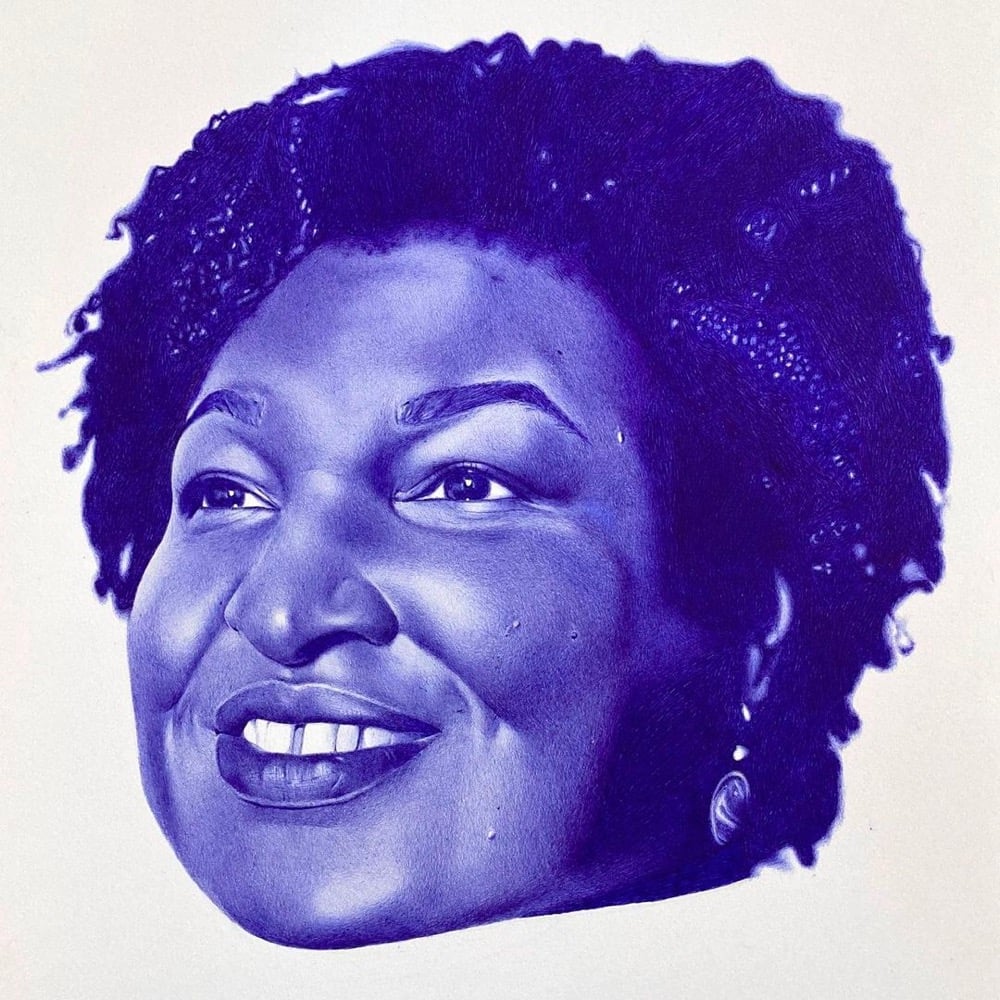
I posted this as a Quick Link earlier today but decided it needed its own post. Stacey Abrams & Lauren Groh-Wargo of Fair Fight have written an opinion piece in the NY Times about how they increased Democratic votes in Georgia over the past decade, leading to flipping both Senate seats in the 2020 election. They are sharing their approach and framework so that others can apply it in their states.
Georgians deserved better, so we devised and began executing a 10-year plan to transform Georgia into a battleground state. As the world knows, President Biden won Georgia’s 16 electoral votes in November, and the January runoff elections for two Senate seats secured full congressional control for the Democratic Party. Yet the result wasn’t a miracle or truly a surprise, at least not to us. Years of planning, testing, innovating, sustained investment and organizing yielded the record-breaking results we knew they could and should. The lessons we learned can help other states looking to chart a more competitive future for Democrats and progressives, particularly those in the Sun Belt, where demographic change will precede electoral opportunity.
We realize that many people are thinking about Stacey’s political future, but right now we intend to talk about the unglamorous, tedious, sometimes technical, often contentious work that creates a battleground state. When fully embraced, this work delivers wins — whether or not Donald Trump is on the ballot — as the growth Georgia Democrats have seen in cycle after cycle shows. Even in tough election years, we have witnessed the power of civic engagement on policy issues and increases in Democratic performance. This combination of improvements has also resulted in steady gains in local races and state legislative races, along with the continued narrowing of the statewide loss margin in election after election that finally flipped the state in 2020 and 2021.
The task is hard, the progress can feel slow, and winning sometimes means losing better. In 2012, for example, we prevented the Republicans from gaining a supermajority in the Georgia House of Representatives, which would have allowed them to pass virtually any bill they wanted. We won four seats they had drawn for themselves, and in 2014 we maintained those gains — just holding our ground was a victory.
The steps toward victory are straightforward: understand your weaknesses, organize with your allies, shore up your political infrastructure and focus on the long game. Georgia’s transformation is worth celebrating, and how it came to be is a long and complicated story, which required more than simply energizing a new coterie of voters. What Georgia Democrats and progressives accomplished here — and what is happening in Arizona and North Carolina — can be exported to the rest of the Sun Belt and the Midwest, but only if we understand how we got here.
This piece, and the plan it describes, is excellent. You can see how their potent combination of vision, planning, and methodical execution were able to yield big results over time — success is the application of patience to opportunity.
Bic ballpoint portrait of Stacey Abrams above by Claire Salvo. Prints of similar portraits of AOC, RBG, and John Lewis are available.
A history and discussion of people organizing their bookshelves by color, which people get all judgy about for some reason? I did this once and had to switch back because I could never find anything. But: “My bookshelves, my rules.”
4K Time Lapse of a Boat Navigating Dutch Canals
This is a captivating 4K time lapse video of a boat navigating the canals and waterways of the Netherlands. Infrastructure nerds will appreciate all of the bridges, locks, piers, signals, etc.
I love these sorts of transportation time lapse videos — see a Beautiful 30-day Time Lapse of a Cargo Ship’s Voyage and a Night Time Lapse of the Milky Way from an Airplane Cockpit for instance. The small map in the corner is a solid addition to the genre. (via open culture)
Cool thing from @pca2: an auto-updated YouTube playlist of videos (currently 2100+!) that are posted to @kottke. Click that “shuffle play” button, sit back, and have yourself an experience.
Last flu season in the US, 400,000 people were hospitalized and 22,000 died. This year so far: only 165 hospitalizations. Covid precautions, flu shots, and kids staying home all contributed to almost nonexistent flu season.
There’s a pink pineapple now because of Instagram. “‘Don’t Worry About a Filter,’ the Pinkglow(TM) website tells us. ‘We Grew It.’”
The Ice Bike With Circular Saw Wheels
This person had the genius idea to take the regular tires off of his bike and replace them with huge circular saw wheels so that he could ride it on the ice. The build is pretty interesting, but you can skip to 4:27 if you just want to see the bike in action, including the failed first attempt — saw blades cut ice really well!
Bonus ice content: The Wonderful Sounds of Skating on Black Ice, The World’s Largest Ice Carousel, and How to Self-Rescue If You Fall Through Thin Ice.
“Pfizer and Moderna are testing their vaccines on children 12 and older and hope to have results by the summer.” Presumably once those trials are done & approved, a large supply of vaccine will be available immediately for them.
Fried Egg Friday
Hi! This is a fried egg blog now. A couple of weeks ago, I shared how master chef Jacques Pépin fries an egg: as gently as the summer breeze on the cheek of a butterfly. That post resulted in several tweets and emails from people saying they had tried it and become instant converts. But like the old saying goes, there’s more than one way to fry an egg. A few years back, José Andrés showed Stephen Colbert how to make Spanish fried eggs:
I have to say…witnessing this technique (which is similar to those used in Asian cooking) blew my dang socks off. My favorite dinner for the past several months has been avocado toast and the key, IMO, is a crispy fried egg on top. I’ve slowly been upping the heat and amount of oil I use when frying, but Andrés has empowered me to go for broke next time with full power and deep oil. Can’t wait. (thx, @Erik_Naught_6)
Arcade Fire’s Score for ‘Her’ Finally Released

The original score for Spike Jonze’s 2013 movie Her, composed by Arcade Fire & Owen Pallett, will finally see a proper release next month. You can preorder on vinyl, cassette, or MP3. I’m assuming it will also be out on streaming services on its release date of March 19. I’ve been waiting years for this (even though it’s been available as a bootleg online this whole time).
Update: Here’s a list of several streaming/purchase options for the album.
City Guesser: try to guess the cities in which short video clips were taken. I love these types of games…I played this for way too long.
The Animation That Changed Cinema
This is a treat: a 30-minute video that celebrates the animations & animators that changed cinema, e.g. Yuri Norstein, Miyazaki, Fantasia, The Iron Giant, Persepolis, etc. — a full list of the filmography is available in the description. Absolutely stunning visuals on some of these. See also The 100 Sequences That Shaped Animation. (via open culture)
This might not mean much to most people, but there’s a new post on Snarkmarket (by @tcarmody) for the first time in 5 years. It’s about Muppet music.
Socials & More