Dave Eggers satirizes the sad state of Covid-19 testing in the United States. “Oh, we have plenty of tests. We just don’t have appointments.”

Advertise here with Carbon Ads
This site is made possible by member support. 💞
Big thanks to Arcustech for hosting the site and offering amazing tech support.
When you buy through links on kottke.org, I may earn an affiliate commission. Thanks for supporting the site!
kottke.org. home of fine hypertext products since 1998.
Beloved by 86.47% of the web.
Entries for July 2020
TIL that after the Civil War, thousands of defeated Confederates moved to Brazil, where slavery persisted until 1888. Confederate flags still proudly fly in Brazil, which is home to an annual Confederate Festival.
Radioactive, a Biopic of Marie Curie
From director Marjane Satrapi, who made the acclaimed animated film Persepolis, comes Radioactive, a film about Marie Curie, who was the first woman to win a Nobel Prize, the first person to win two Nobel Prizes, and the only person to ever win Nobel Prizes in two different scientific disciplines. Curie is played by Rosamund Pike and the film is based on a graphic novel of the same name by Lauren Redniss, a finalist for the National Book Award.
Radioactive debuts on Amazon Prime on July 24.
What Is Intelligence?
How is it that I am sitting here writing this right now and you are sitting there reading this at some later point which seems like now to you? These behaviors are the result of a series of interconnected processes that have evolved over billions of years that we collective call “intelligence”.
In this video, Kurzgesagt takes a crack at explaining the simple view of intelligence as “a mechanism to solve problems” that involves several aspects: information, memory, learning, knowledge, creativity, the use of physical tools, the ability to plan for the future, and culture. As usual, their extensive list of sources provides more details and opportunities for further exploration.
Hamilton, But Sung By The Muppets
This is a fan-made rendition of act 1 of the hit musical Hamilton sung by The Muppets.
The impressions of the Muppets aren’t bad and the “casting” is about what you’d expect:
Alexander Hamilton - Kermit the Frog
Aaron Burr - The Great Gonzo
Eliza Schuyler - Miss Piggy
Marquis de LaFozette - Fozzie Bear
George Washington - Sam the Eagle
I don’t know if listening to this all the way through is wise, but you should listen at least until Kermit/Hamilton makes his entrance at ~1:18. Oh, and skip ahead to 17:09 to hear The Swedish Chef do Samuel Seabury and to 19:01 to hear You’ll Be Back performed by Animal. (via open culture)
Nirvana Performing Smells Like Teen Spirit in a Music Store a Week Before Its Release
On September 16, 1991, about a week before the band’s breakthrough album Nevermind was released, Nirvana played a 45-minute in-store set at Beehive Records in Seattle. When I watch videos like this (here’s the Notorious BIG rapping on a street corner at 17 and a 17-year-old LL Cool J playing to a mostly empty gym1), I look at the crowd just as much or more than the performers. Do the people in that music shop audience know they’re witnessing an early performance of one of the last great consequential rock songs or do they only realize it later?
Hell, I suppose you could ask the same question of the performers: did Cobain or Biggie or LL Cool J know at the time that they were going to blow up in a matter of weeks and months? In Cobain’s case, he may have. From a biography called Heavier Than Heaven:
Two days later, Nirvana held an “in-store” at Beehive Records. DGC expected about 50 patrons, but when over 200 kids were lined up by two in the afternoon — for an event scheduled to start at seven — it began to dawn on them that perhaps the band’s popularity was greater than first thought. Kurt had decided that rather than simply sign albums and shake people’s hands — the usual business of an in-store — Nirvana would play. When he saw the line at the store that afternoon, it marked the first time he was heard to utter the words “holy shit” in response to his popularity. The band retreated to the Blue Moon Tavern and began drinking, but when they looked out the window and saw dozens of fans looking in, they felt like they were in the movie A Hard Day’s Night. When the show began, Beehive was so crowded that kids were standing on racks of albums and sawhorses had to be lined up in front of the store’s glass windows to protect them. Nirvana played a 45-minute set — performing on the store floor — until the crowd began smashing into the band like the pep rally in the “Smells Like Teen Spirit” video.
Kurt was bewildered by just how big a deal it had all become. Looking into the crowd, he saw half of the Seattle music scene and dozens of his friends. It was particularly unnerving for him to see two of his ex-girlfriends — Tobi and Tracy — there, bopping away to the songs. Even these intimates were now part of an audience he felt pressure to serve. The store was selling the first copies of Nevermind the public had a chance at, and they quickly sold out. “People were ripping posters off the wall,” remembered store manager Jamie Brown, “just so they’d have a piece of paper for Kurt to autograph.” Kurt kept shaking his head in amazement.
Kurt retreated to the parking lot for a smoke and some downtime. But there, the day became even more freakish when he saw two of his old Montesano schoolmates, Scott Cokely and Rick Miller, holding copies of “Sliver.” Though Kurt signed signed hundreds of autographs that day, none made him feel more surreal than putting his signature on a single about his grandparents for two guys from the town his grandparents lived in. They talked about their mutual friends from the harbor, but the conversation made Kurt wistful — Cokely and Miller were a reminder of a past Kurt thought he had left behind. “Do you get back to the harbor much?” Cokely asked. “Not very often,” Kurt replied. Both Cokely and Miller were confused when they looked at their singles and noticed Kurt had signed them “Kurdt.”
Kurt later cited this exchange as one of the first moments he realized he was famous. Yet rather than comfort him, this realization set off something just short of a panic. Though he had always wanted to be famous — and back when he was in school in Monte, he had promised his classmates one day he would be — the actual culmination of his dreams deeply unnerved him. Krist would recall this particular show — a free show in a record store a week before the album’s official release date — as a turning point in Kurt. “Things started to happen after that,” Krist said. “We weren’t the same old band. Kurt, he just kind of withdrew. There was a lot of personal stuff that was going on. It got complicated. It was more than we bargained for.”
And also Chance the Rapper and the Beastie Boys before they were famous.↩
How Bree Newsome Bass took down the Confederate flag from a SC state house flagpole in 2015. “She had never climbed anything more than a tree as a kid or a rope in gym class. So she took a few days off to learn from the Greenpeace activist.”
How to Find Comet NEOWISE in the Night Sky This Month
If you live in the US and Canada, you might have the opportunity to check out Comet NEOWISE over the next few weeks with a good pair of binoculars or even with the naked eye. EarthSky has the skinny.
By mid-July (around July 12-15), the comet will also become visible at dusk (just after sunset), low in the northwest horizon, for observers in the mid- and northern U.S. How can it be visible in both dawn and dusk? The answer is that the comet is now very far to the north on the sky’s dome. For those at latitudes like those in the southern U.S. (say, around 30 degrees north latitude), the comet is very nearly but not quite circumpolar, that is, it’s nearly in the sky continually, but it isn’t quite … that’s why we at southerly latitudes will have a harder time spotting it in the evening.

It appears this comet is holding up better than Comet ATLAS did earlier in the year. Here’s a beautiful time lapse of NEOWISE rising over the Adriatic Sea in the early dawn:
And a time lapse of the comet from the International Space Station (it starts rising around the 3-minute mark):
What bird are you most like? I’m a red-tailed hawk! “You understand strategy, and sometimes work with a partner, but overall most of the time you are happy to be alone.”
The Story Behind the 1968 Olympics Protest
You’ve probably seen the photograph: Tommie Smith and John Carlos each raising a black-gloved fist during the playing of the US nation anthem during the medals ceremony at the 1968 Summer Olympic Games in Mexico City. But as this video explains, their protest was a part of a larger effort to use the Olympics to highlight racial inequality in American sports and society.
After watching the video, you might be interested in reading about the aftermath of the protest. Smith and Carlos were both suspended from the US team and expelled from the Games. They were both subject to abuse from the American press and received death threats. Australian Peter Norman, who had come in second and supported the protest, was ostracized in his own country. But when Norman died in 2006, both Smith and Carlos were pallbearers at this funeral.
Nursing Home Residents Recreate Famous Album Covers During Pandemic Lockdown

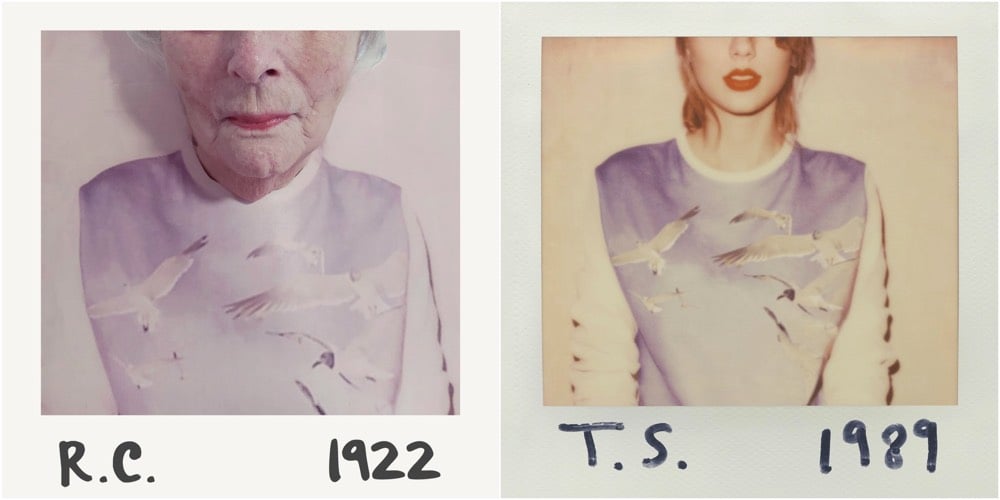
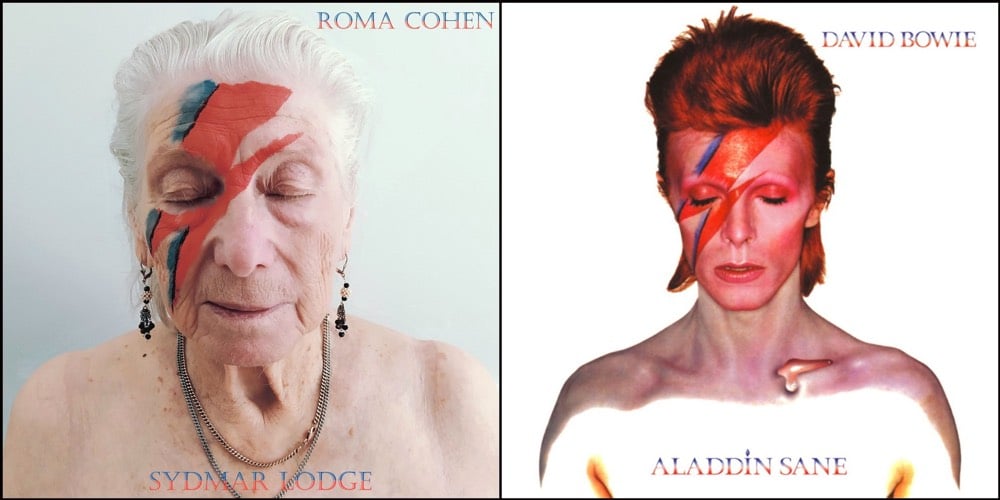
This is delightful. Over the past few months of pandemic lockdown, the residents and staff of the Sydmar Lodge Care Home in Edgware, England have passed the time by recreating famous album covers.
Our government’s inept response to the pandemic has rendered American passports worthless. “In the absence of a humane government, America is now ruled by COVID-19. Welcome to the Plague States of America.”
Turkey has revoked Hagia Sophia’s status as a museum and Turkish president Erdogan ordered it to be opened for Muslim prayers. I visited the Hagia Sophia a couple of years ago and it was the highlight of my trip.
A Moment of Reflection: On the Paradox of Individual Creative Work
After producing over 220 art history videos in 6 years, YouTube channel The Art Assignment is going to take an extended break to “reassess what educational art content should look like in 2020 and beyond”. In the video above, creator Sarah Urist Green reflects on her experience so far and what’s happening next. I’m always interested in what people have to say about their projects at inflection points like this, but I was blindsided by the almost total resonance of Green’s remarks with my own thoughts about the advantages & limitations of how I’ve chosen to work here at kottke.org. Here’s an extended quote from the transcript of the particularly resonant bit:
I don’t actually enjoy being on camera, but individual authentic voices have always been at the core of what makes YouTube great. And I’ve been glad to be able to lend my own voice in the hopes of making art and art history more accessible.
Over time I’ve learned to appreciate the specificity of my own point of view — but also its limitations. I’m a person who’s more interested in art from the 1960s than the 1560s. I have a deeper background in art from North America than South America.
Making this channel has been a hugely rewarding way to stretch beyond my formal education and natural inclinations. But any channel on YouTube, and indeed any experience, is shaped by bias and perspective — both the content itself and the way that each of us interprets and responds to it. The fact that my voice sounds grating to some and comforting to others is a reminder of that.
I’ve also learned that these biases are often reinforced by the recommendation algorithms that govern the platforms we frequent. Whether we want to or not, we citizens of the internet work in collaboration with these algorithms to curate information feeds for ourselves. And even if our feeds feel objective, they never are.
The Art Assignment isn’t, and has never been, the history of art or an introduction to the art world. It’s always been my history of art and a glimpse into my art world. I hope that’s been part of what makes it good, but it’s also part of what makes it limited, subjective, and necessarily incomplete.
The more videos we make, the more aware I am of the vast amount we haven’t covered. Trying to make content on this platform that is both educational and also clickable can be a challenging task with many pitfalls.
We’ve used what I think of as a buckshot technique — making a huge variety of kinds and formats of episodes to see what might possibly stick.
In doing so, we’ve discovered that more people click on names of art movements they’ve already heard of, artworks they’ve seen before, and already famous artists (mostly male).
More people watch when I do a hot take about those rare moments when art hits the wider news, like a Banksy stunt or a banana duct-taped to a wall.
I’ve also learned what YouTube viewers are less likely to click on, which is artists they’ve never heard of, artworks they haven’t seen before, and topics that don’t court controversy or outrage. This says something about the YouTube algorithm, but it also says something about what kinds of information we’re all drawn to online. Who wants to watch an educational video when you can watch The Try Guys eat 400 dumplings? (Seriously, I just watched it, it’s great.)
But because I know what tends to get clicked on more and watched for longer stretches, I’ve been more likely to try to serve that to you. Not all the time of course, but even when served in moderation that’s not really good for art history. It reinforces dominant narratives and offers up the same boring old menu of famous artists again and again.
However, I’ve also learned that you all are willing to dive down lesser-known and unexpected rabbit holes of research and bear with me as I simultaneously cook poorly and attempt to understand the eating and cooking lives of artists. You’ve taught me you’re willing to reconsider art and artists you didn’t think you liked, and you’ve tried approaches to art that are far outside of your comfort zones and made beautiful and vulnerable work in response. You’ve tackled really difficult questions with me and been willing to linger in grey zones and leave questions unanswered. I mean we’ve never even established a definition of art on this channel.
Because of your capacity for the abstract and lesser-known, we’ve been able to keep going all these years. And, with the incomparable backing of PBS, we’ve been able to make content not just for the most people, but for an open-minded and discerning audience like you.
I can’t adequately relate to you how unnerving it was for me to hear her say all that — change a few specific references and I very easily could have written it (but not as well). Doing kottke.org is this constant battle with myself: staying in my comfort zone vs. finding opportunities for growth, posting what I like or find interesting vs. attempting to suss out what “the reader” might want, celebrating the popular vs. highlighting the obscure, balancing the desire to define what it is I do here vs. appreciating that no one really knows (myself included), posting clickable things vs. important things I know will be unpopular, protecting myself against criticism vs. accepting it as a gift, deciding when to provoke & challenge vs. when to comfort & entertain, feeling like this is frivolous vs. knowing this site is important to me & others, being right vs. accepting I’ll make mistakes, and saying something vs. letting the content and its creators speak for themselves.
I know that all sounds super dramatic — I don’t intensely feel all of that when I’m working, but that video made me reflect on it hard. And I suspect that many people who do creative work in public struggle in similar ways. Like Green with respect to PBS, I am grateful to kottke.org’s members (“an open-minded and discerning audience” if there ever was one) for their support of my work and trust in the limited & imperfect human who does it.
ISO Isolation
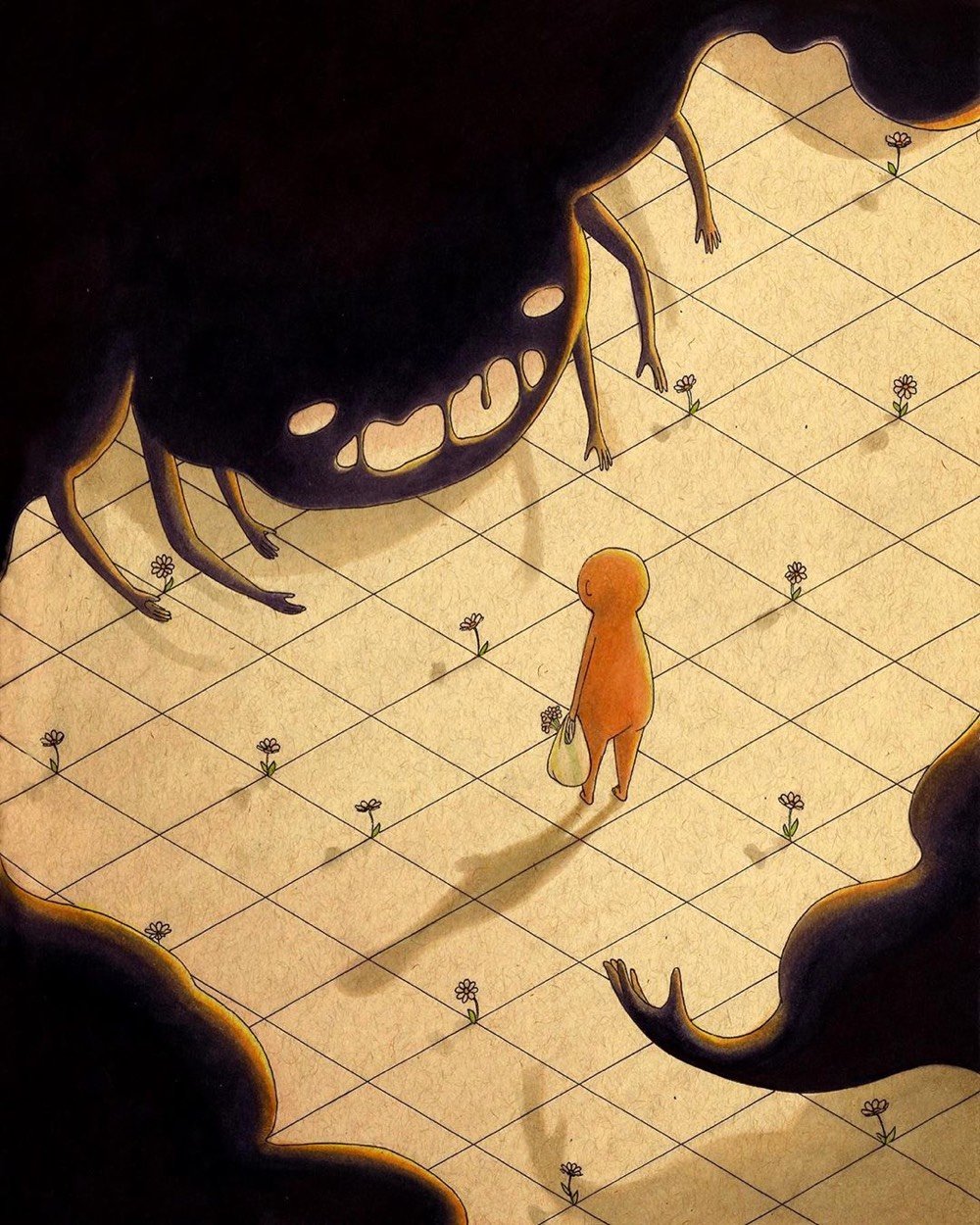


Felicia Chiao’s illustrations depicting isolation, dissociation, and loneliness have taken on an added resonance during the pandemic. In a caption for one of her illustrations, she explains where the drawings come from:
I dissociate a lot. I like to think of my brain as a series of rooms. On good days I’m up front engaging with the world, and on bad days I’m waaay in the back. I can still kind of see and hear what’s going on outside but it’s far away and I don’t feel a part of it. It’s not unpleasant but time moves weird and I feel everything and nothing. A lot of you are connecting with my work because you’re literally stuck inside and probably a little depressed too so…Welcome to my rooms! Please take your shoes off and be nice.
Prints (and more) of Chiao’s work are available. (via colossal)
The Confederacy Was an Antidemocratic, Centralized State. “The actual Confederate States of America was a repressive state devoted to white supremacy.”
Feeling Loved From a Distance
This is a great interview with Jia Tolentino in Interview magazine. Take for instance her answer to the question “What has this pandemic confirmed or reinforced about your view of society?”:
That capitalist individualism has turned into a death cult; that the internet is a weak substitute for physical presence; that this country criminally undervalues its most important people and its most important forms of labor; that we’re incentivized through online mechanisms to value the representation of something (like justice) over the thing itself; that most of us hold more unknown potential, more negative capability, than we’re accustomed to accessing; that the material conditions of life in America are constructed and maintained by those best set up to exploit them; and that the way we live is not inevitable at all.
From later in the interview:1
I think the American obsession with symbolic freedom has to be traded for a desire for actual freedom: the freedom to get sick without knowing it could bankrupt you, the freedom for your peers to live life without fearing they’ll be killed by police. The dream of collective well-being has to outweigh, day-to-day, the dream of individual success.
And I’m struggling with quarantine in this way as well:
In quarantine I’ve been aware of the intellectual stagnation that comes when you stop physically seeking out and experiencing new things. There’s a loss that comes from not meeting strangers, not doing things just for the hell of doing them, not having everyday avenues of discovery and surprise.
Ok, one more thing and then I’ll just let you read the rest of it in peace:
People ought to seek out the genuine pleasure of decentering themselves, and read fiction and history alongside these popular anti-racist manuals, and not feel like they need to calibrate their precise degree of guilt and goodness all the time.
“The genuine pleasure of decentering themselves”. Yep.
Sleeping Giants has pushed big advertisers to drop their support of racist & sexist media brands. While that was going on, co-founder Nandini Jammi says: “my white male co-founder gaslighted me out of the movement we built together”.
America Is Refusing to Learn How to Fight the Coronavirus. Instead, we have “a pattern of failure following failure, with each successive failure normalized by the last”.
The Sculptor Tasked with Completing Gaudí’s Sagrada Família
In this meditative short film, Etsuro Sotoo talks about what made him want to spend 41 years working as a sculptor in an attempt to finish Antoni Gaudí’s Sagrada Família basilica in Barcelona. From a website dedicated to Sotoo:
In 1978 Etsuro Sotoo arrived in Barcelona. He had just graduated in Fine Arts, he had just one year of experience as an Art teacher. When impressed by the unfinished temple: “It was the most fabulous pile of stones I had ever seen” …He asked for a job as a stonecutter. He wanted to continue the Nativity façade (the only façade that, thanks to his work, would be declared by Unesco World Heritage). He did a test and they gave him the position. Since then, he has completed what Gaudí did not even have time to think about. When he finished with the gaps, he started with the architect’s notes. When the tracks are over, it’s up to him to make decisions.
According to the video, Sotoo even converted to Catholicism as a way for him “to know Gaudí”. (via craig mod)
The 2020 Audubon Photography Award Winners

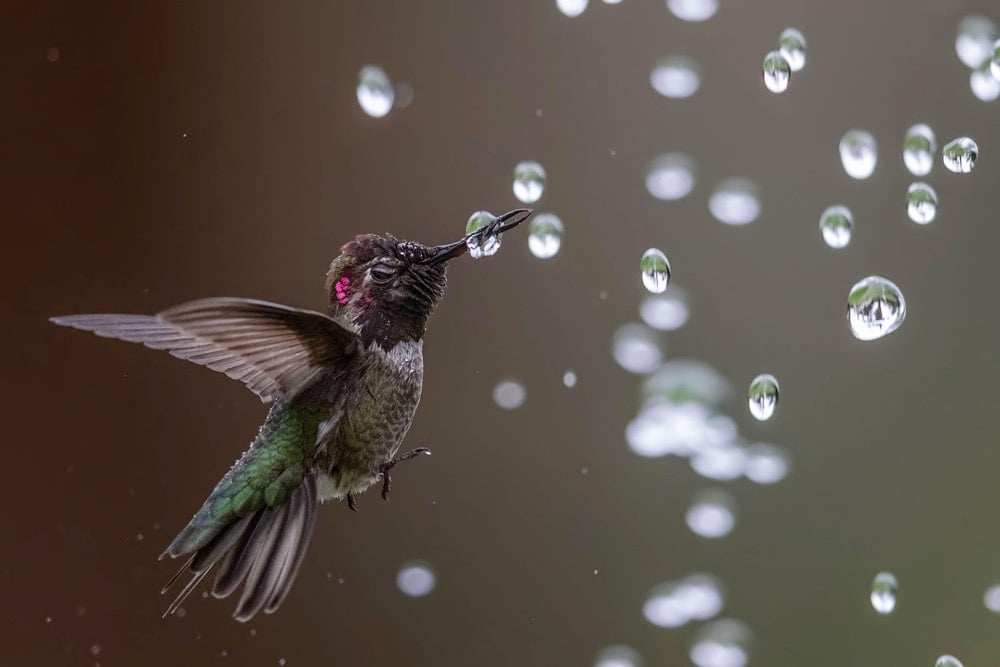
From more than 6000 submissions, the National Audubon Society has selected the winners of The 2020 Audubon Photography Awards, featuring some of the best bird photography of the year. The top photo, of a cormorant diving for dinner, is by Joanna Lentini and the second photo, of a thirsty hummingbird, was taken by Bibek Ghosh.
Update: They’ve released the top 100 images form the competition; so much good stuff in there.
After early success, Israel is facing a resurgence of Covid-19 cases. This bit seems relevant to the reopening schools debate: “Schools — not restaurants or gyms — turned out to be the country’s worst mega-infectors.”
Cities should greatly reduce the number of cars allowed and give the reclaimed space back to the people. Here’s what that could look like in NYC.
PRINT magazine revisits a 1968 piece called The Black Experience in Graphic Design and interviews Black creatives about what’s changed. “It is hard to believe that this article was written in 1968. More than 50 years later, very little has changed.”
The New Normal
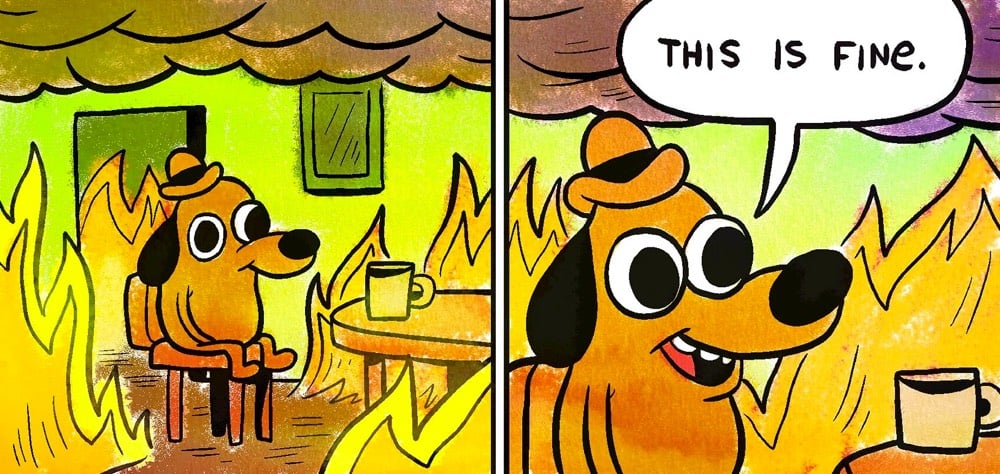
For Vox, David Roberts writes about how “shifting baselines” affect our thinking and how easily overwhelmingly large issues like climate change or a pandemic can become normalized.
Maybe climate chaos, a rising chorus of alarm signals from around the world, will simply become our new normal. Hell, maybe income inequality, political dysfunction, and successive waves of a deadly virus will become our new normal. Maybe we’ll just get used to [waves hands] all this.
Humans often don’t remember what we’ve lost or demand that it be restored. Rather, we adjust to what we’ve got.
The concept of shifting baselines was introduced in a 1995 paper by Daniel Pauly. Roberts explains:
So what are shifting baselines? Consider a species of fish that is fished to extinction in a region over, say, 100 years. A given generation of fishers becomes conscious of the fish at a particular level of abundance. When those fishers retire, the level is lower. To the generation that enters after them, that diminished level is the new normal, the new baseline. They rarely know the baseline used by the previous generation; it holds little emotional salience relative to their personal experience.
And so it goes, each new generation shifting the baseline downward. By the end, the fishers are operating in a radically degraded ecosystem, but it does not seem that way to them, because their baselines were set at an already low level.
Over time, the fish goes extinct — an enormous, tragic loss — but no fisher experiences the full transition from abundance to desolation. No generation experiences the totality of the loss. It is doled out in portions, over time, no portion quite large enough to spur preventative action. By the time the fish go extinct, the fishers barely notice, because they no longer valued the fish anyway.
And it’s not just groups of people that do this over generations:
It turns out that, over the course of their lives, individuals do just what generations do — periodically reset and readjust to new baselines.
“There is a tremendous amount of research showing that we tend to adapt to circumstances if they are constant over time, even if they are gradually worsening,” says George Loewenstein, a professor of economics and psychology at Carnegie Mellon. He cites the London Blitz (during World War II, when bombs were falling on London for months on end) and the intifada (the Palestinian terror campaign in Israel), during which people slowly adjusted to unthinkable circumstances.
“Fear tends to diminish over time when a risk remains constant,” he says, “You can only respond for so long. After a while, it recedes to the background, seemingly no matter how bad it is.”
Ok, I’ll let you just read the rest of it, but it’s not difficult to see how shifting baselines apply to all sorts of challenges facing the world today. I mean the lines “You can only respond for so long. After a while, it recedes to the background, seemingly no matter how bad it is.” seem like they were written specifically about the pandemic.
Acceptable Risk
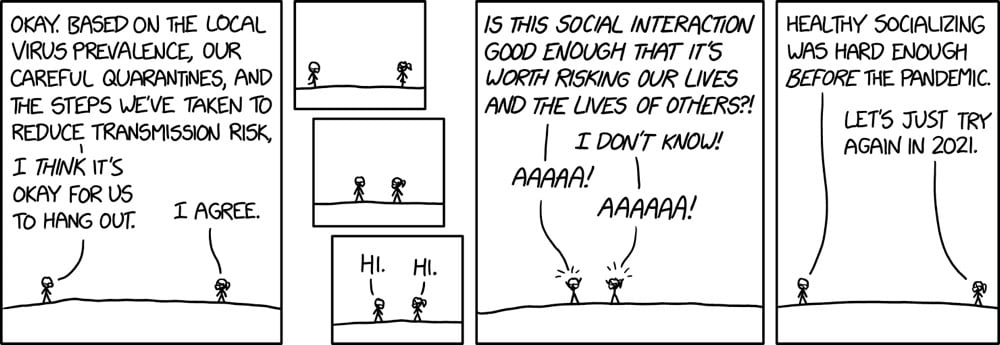
Some Americans obviously aren’t troubling themselves with this but many of us are constantly running risk calculations in our heads for every little thing we do and don’t do during the course of the week during the pandemic.
Is it ok to visit the grocery store more than once this week? Can my kid have a playdate with her friend? Has her friend’s family been careful about seeing other people and how do I even ask them about it without sounding judgmental? Should I order that thing online or go to the store for it? Is it safe to take a roadtrip to a neighboring state? (Where the hell are we supposed to stop to use the bathroom?) Can I get a haircut? Do I need to order that thing online or do I just want it? Should schools reopen in the fall? And if they do, should I send my kids? Is eating at a restaurant safe for the staff? Can a friend come over for dinner? Can my son safely play in a baseball league? Will there be too many people not wearing masks in the store that I need to visit to get this one thing? Should I keep going to my favorite coffee shop when the barista just can’t seem to keep his mask up over his nose?
It goes on and on and on and IT’S EXHAUSTING. Comic from XKCD.
A History of Policing in America
This video provides a quick overview of the history of policing in America through the lens of race, from the slave patrols in the South to the violent and discriminatory policing of Black migrants in the North in the midst the Great Migration. At its conclusion, historian Khalil Gibran Muhammad, author of The Condemnation of Blackness, asks a very direct question:
And so the question that has to be asked in the wake of George Floyd — and I think this question is being asked and answered by more white people than I’ve seen in my lifetime is — do white people in America still want the police to protect their interests over the rights and dignity and lives of Black and, in too many cases, brown, Indigenous, and Asian populations in this country?
This video is a snippet from an hour-long podcast episode of NPR’s Throughline called American Police (transcript here). (via @GeeDee215)
“There’s overwhelming evidence that the criminal justice system is racist. Here’s the proof.” A massive review of studies of racial bias in policing, our legal system, etc.
A Time Lapse World Map of Every Covid-19 Death
From January to the end of June, over 500,000 people died of confirmed cases of Covid-19. In order to demonstrate the magnitude of the pandemic, James Beckwith made a time lapse map of each Covid-19 death.
Each country is represented by a tone and an expanding blip on the map when a death from Covid-19 is recorded. Each day is 4 seconds long, and at the top of the screen is the date and a counter showing the total numbers of deaths. Every country that has had a fatality is included.
As was the case with the pandemic, the video starts slow but soon enough the individual sounds and blips build to a crescendo, a cacophony of death. The only way this could be made more ominous & upsetting is by including the first song off of Cliff Martinez’s Contagion soundtrack as a backing track. As Beckwith notes in the description: “It is likely a sequel will need to be made.” (via open culture)
Nerissa Zhang, who is a Black woman, sent her startup’s pitch deck to several VCs who publicly stated wanting to invest in Black-owned startups. She got 0 responses – until she sent the same messages from her co-founder husband’s email.
The Ideology of American Policing
For What the police really believe, Vox’s Zack Beauchamp interviewed several former police officers and policing experts to find out how police think of themselves, their jobs, and the communities they are supposed to be protecting and serving.
Police officers across America have adopted a set of beliefs about their work and its role in our society. The tenets of police ideology are not codified or written down, but are nonetheless widely shared in departments around the country.
The ideology holds that the world is a profoundly dangerous place: Officers are conditioned to see themselves as constantly in danger and that the only way to guarantee survival is to dominate the citizens they’re supposed to protect. The police believe they’re alone in this fight; police ideology holds that officers are under siege by criminals and are not understood or respected by the broader citizenry. These beliefs, combined with widely held racial stereotypes, push officers toward violent and racist behavior during intense and stressful street interactions.
American Fascism: It Has Happened Here. As Langston Hughes once said, “In America, Negroes do not have to be told what fascism is in action. We know.”
New Cartoons from The Far Side’s Gary Larson
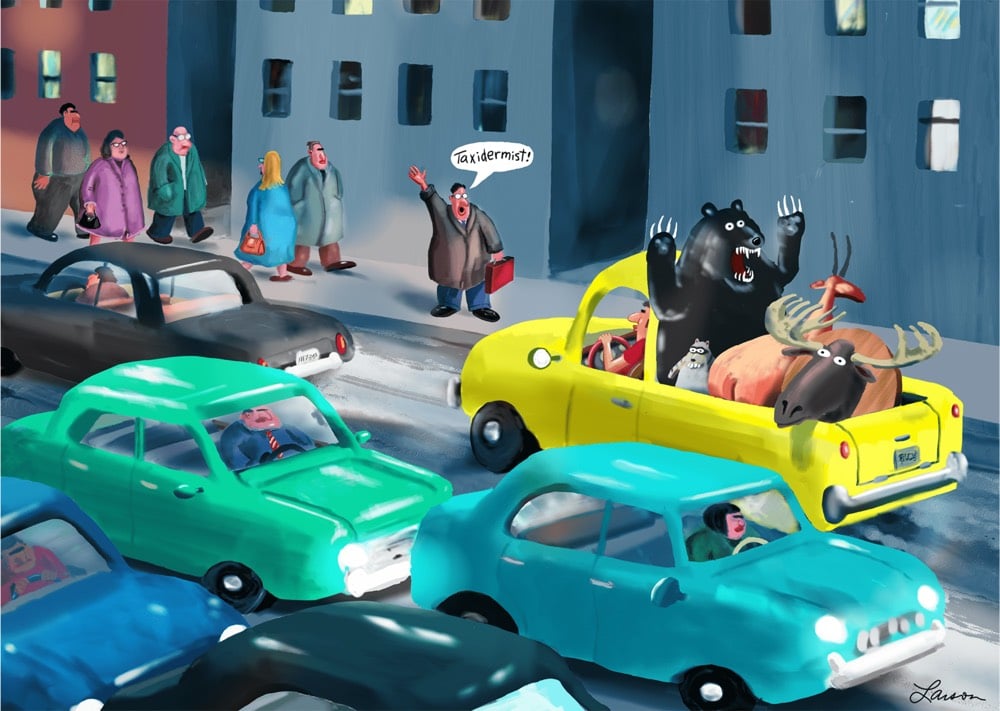
In 1995, after his massively popular single-panel cartoon The Far Side had run daily in newspapers for 15 years, cartoonist Gary Larson retired at the top of his game and scarcely a peep has been heard from him since. Until recently. Back in September, Larson launched a website for The Far Side with a daily archival cartoon. But then yesterday, Larson revealed that he’s been working on some new stuff with “a digital tablet” (likely an iPad).
The “New Stuff” that you’ll see here is the result of my journey into the world of digital art. Believe me, this has been a bit of a learning curve for me. I hail from a world of pen and ink, and suddenly I was feeling like I was sitting at the controls of a 747. (True, I don’t get out much.) But as overwhelmed as I was, there was still something familiar there — a sense of adventure. That had always been at the core of what I enjoyed most when I was drawing The Far Side, that sense of exploring, reaching for something, taking some risks, sometimes hitting a home run and sometimes coming up with “Cow tools.” (Let’s not get into that.) But as a jazz teacher once said to me about improvisation, “You want to try and take people somewhere where they might not have been before.” I think that my approach to cartooning was similar — I’m just not sure if even I knew where I was going. But I was having fun.
There are only three new pieces so far, but I’d guess more are on the way. The new stuff is more painterly and definitely has that drawn-in-Procreate feel to it, but the Larson’s trademark humor is very much in evidence.
The Indigenous Peruvian Trap Music of Renata Flores
Quechua is an indigenous language family spoken by millions of people in the Andean region of South America, primarily in Peru, Ecuador, and Bolivia. It was the main language of the Inca empire and today is the most widely spoken pre-Columbian language in the Americas. In her music, Peruvian singer/songwriter Renata Flores combines modern forms like hip hop, electronic, and trap music with native instruments and vocals sung in Quechua. Here’s the video for one of her most popular songs, Tijeras:
Flores also does covers of pop songs (Billie Eilish’s Bad Guy, Fallin’ by Alicia Keys) and she first captured people’s online attention with a Quechua cover of Michael Jackson’s The Way You Make Me Feel performed when she was 14 years old:
Rosa Chávez Yacila wrote an article for Vice about Flores and her music last year. Her use of Quechua in pop music brought the language out of private spaces into the public.
It’s very common for many Quechua speakers to not teach their children or grandchildren the language because they consider this knowledge as a burden. To explain the shortage of active bilingualism in Peru, the linguist Virginia Zavala uses the concept of “linguistic ideologies,” which are the ideas that people have about languages. For example: French is the language of love; German sounds rough; Italian, Portuguese, and Spanish are similar.
Quechua, similarly to other indigenous languages, is associated with poverty, rural life, and illiteracy. These ideas have been shaped by history and society to the point that people hold on to these beliefs as if they were universal truths. And these “truths” are deeply embedded in their conscious thought process. Value hierarchies also exist with languages. Some are “worth” more than others.
The end result is that many native Quechua speakers believe that using Quechua in public is unnecessary after learning Spanish. Either by shyness or shame, they reserve their maternal tongue for private spaces and intimate conversations.
Listen to Tom Hanks, people! “Wear a mask, social distance, wash your hands. That alone means you are contributing to the betterment of your house, your work, your town, your society as a whole. And it’s such a small thing.”
“The United States has formally notified the United Nations that it is withdrawing from the World Health Organization.” Seems about right – the US government doesn’t care about the health of its citizens.
Japanese Aquariums’ Flowchart of Penguin Relationships

A pair of aquariums in Japan have published flowcharts that track the relationships of their penguins.
Penguins, the way they waddle around and protect their eggs, are often thought of as cute, cuddly and romantic. But those who observe them for extended periods know they have a dark side. Two aquariums in Japan, Kyoto Aquarium and Sumida Aquarium, keep obsessive tabs on their penguins and maintain an updated flowchart that visualizes all their penguin drama.
As Kyoto-based researcher Oliver Jia points out, penguin drama can include serious crushes and heartbreaks but also adultery and egg-stealing. And these Japanese aquariums have it all charted in a flowchart that can be studied for hours.
(via @pomeranian99)
Black Death, COVID, and Why We Keep Telling the Myth of a Renaissance Golden Age and Bad Middle Ages. “The Renaissance was not a golden age to actually live in, even if it was a golden age in terms of what it left behind.”
Behind the Scenes with Danny MacAskill
Trials rider Danny MacAskill (one of our favorite athletes around these parts) has recently started sharing some behind-the-scenes looks at some of the coolest tricks he’s done for his videos. The video above shows him trying to barrel roll his bike with a trailer attached, which he likens to “doing a rally [race] with a caravan on the back”. What’s fascinating is that it takes him forever to get the maneuver down, but once he does, he’s able to do it over and over again — “gradually, then suddenly” in action. You can see the finished product in his Danny Daycare video.
Two more behind-the-scenes videos he’s done so far: the backwards roll and the log slide (which also takes him forever to do but he’s then able to repeat three more times in a row).
Socials & More