Entries for June 2019
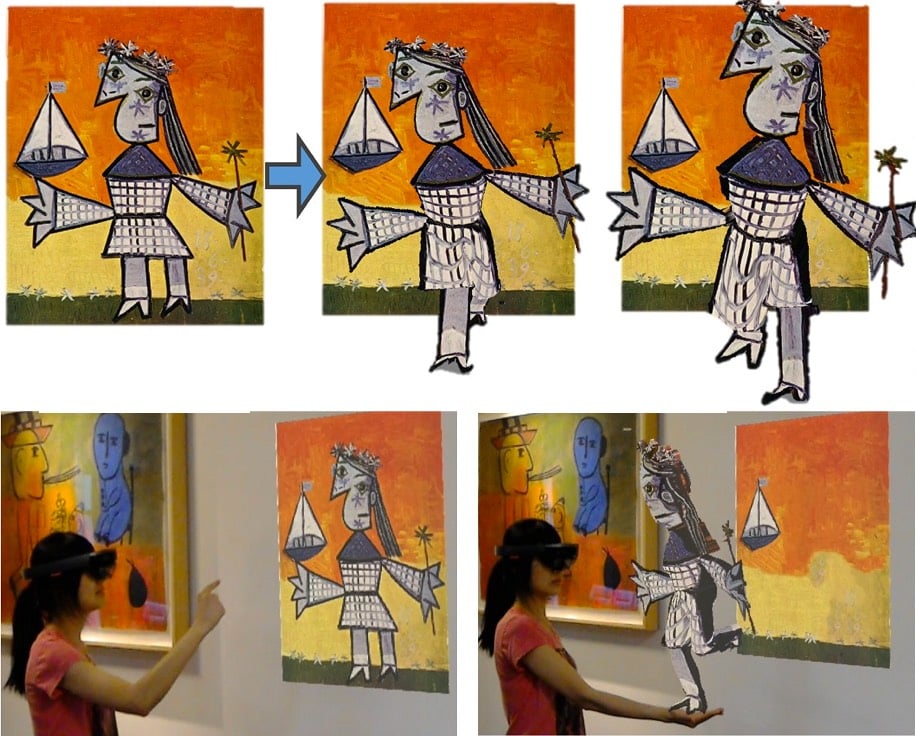
Researchers at the University of Washington and Facebook have developed an algorithm that can “wake up” people depicted in still images (photos, drawings, paintings) and create 3D characters than can “walk out” of their images. Check out some examples and their methods here (full paper):
The AR implementation of their technique is especially impressive…a figure in a Picasso painting just comes alive and starts running around the room. (thx nick, who accurately notes the Young Sherlock Holmes vibe)
The Cut asked 100 people what drugs they have done and this is what they said.
Lots of alcohol, weed, mushrooms, and molly. And one guy who smoked Altoids?
Christopher Nolan will be out with his latest film next year, Tenet. To celebrate, IndieWire has collected a list of 30 films that Nolan has mentioned in the past as having an impact on his filmmaking. The title of that post calls these his “favorite” movies, but it’s perhaps more fair to call it his list of blockbuster influences, films that are grand in scale, personal in nature, and a little cerebral…with some quirky oddballs thrown in for good measure. Here’s a selection:
2001: A Space Odyssey
Blade Runner
Alien
For All Mankind
Koyaanisqatsi
Star Wars
Street of Crocodiles
The Tree Of Life
How people live affects their skeletons. For instance, heavy phone & laptop users are more likely to have a spike-like growth at the base of their skulls.
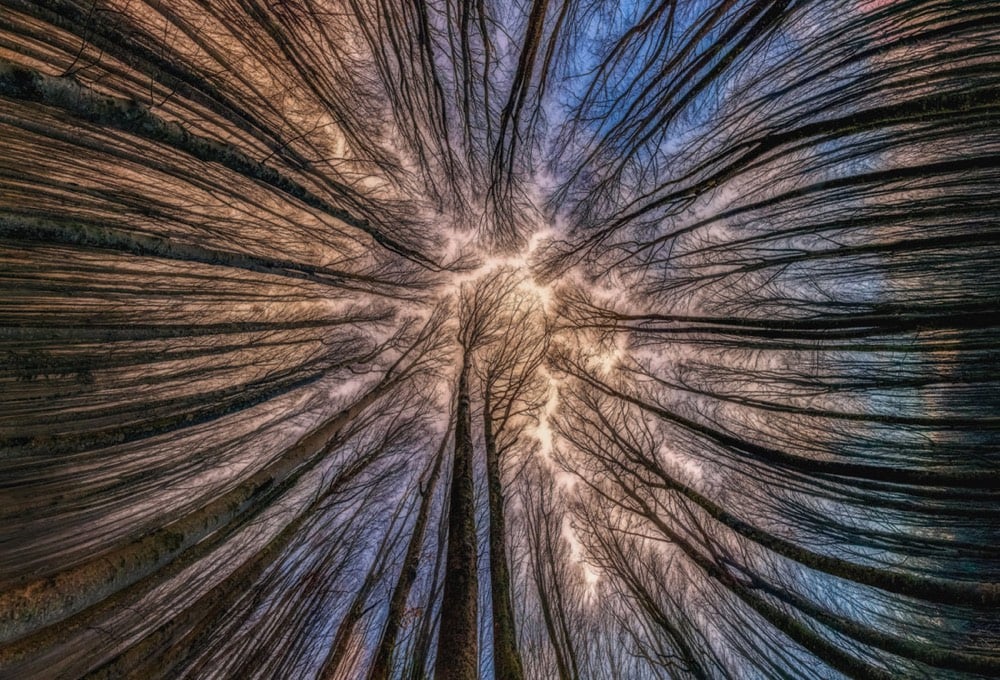

Amongst much fine work on his website and Instagram, Manuelo Bececco’s photos of forest canopies are my favorites. And did you notice the crown shyness in the first photo?
Crown shyness, a phenomenon where the leaves and branches of individual trees don’t touch those of other trees, forming gaps in the canopy.
(via moss and fog)
To celebrate their 100th episode, The Allusionist podcast shared 100 Things We’ve Learned About Language from The Allusionist (transcript). Here are a few of my favorites from the list:
3. ‘Girl’ could originally be used to refer to a child of any gender — it didn’t specifically denote a female child until the late 14th century.
12. The best thing I’ve learned from the Allusionist is that the dictionary is a record and not a rule book! And language is too dynamic and complex for there to be a right and a wrong.
14. Dictionaries: can’t trust them, they’ve got deliberately fake words, or mountweazels, as copyright traps.
20. A few more quick eponyms: the saxophone is named after its inventor Adolphe Sax. He also invented the saxhorn, saxotromba, and saxtuba which didn’t all catch on.
27. Words like laser, scuba, taser — and the care in ‘care package’, those are all acronyms. [Whoa, I did not know about CARE package! -j]
45. I looked up the step in stepchild or stepparent and found it meant ‘grief’. I know some of you use different terms; since the episode, I’ve been borrowing ‘bonus’.
54. My favourite portmanteau discovery: ‘Velcro’ is a portmanteau — of velour and crochet.
56. Also very literal: ‘log in’, after the log on a knotted rope that would be thrown overboard from a ship to measure its speed — calculated by the length of rope unspooled over a particular time — and that would be logged in the log book.
100. ‘Arseropes’. What a wonderful word for the human intestines! Why don’t we use it still? [From John Wycliffe’s translation of the Bible -j]
(via recs)
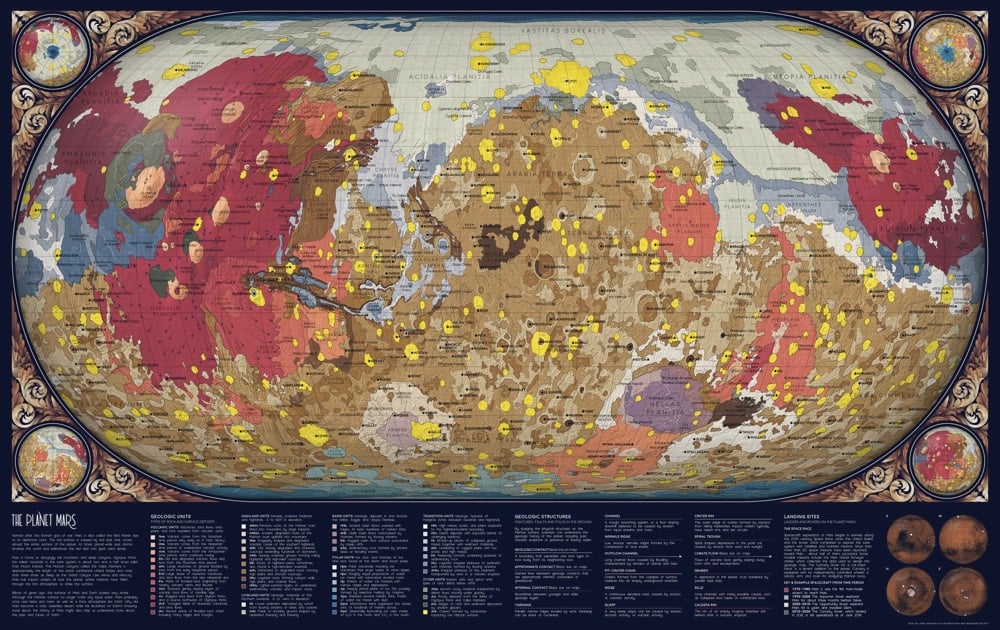
Remember how last week I told you about Eleanor Lutz’s An Atlas of Space?
Over the past year and a half I’ve been working on a collection of ten maps on planets, moons, and outer space. To name a few, I’ve made an animated map of the seasons on Earth, a map of Mars geology, and a map of everything in the solar system bigger than 10km.
Well, she’s posted her first two projects: An Orbit Map of the Solar System (a map of more than 18,000 asteroid orbits in the solar system) and A Topographic Map of Mercury.
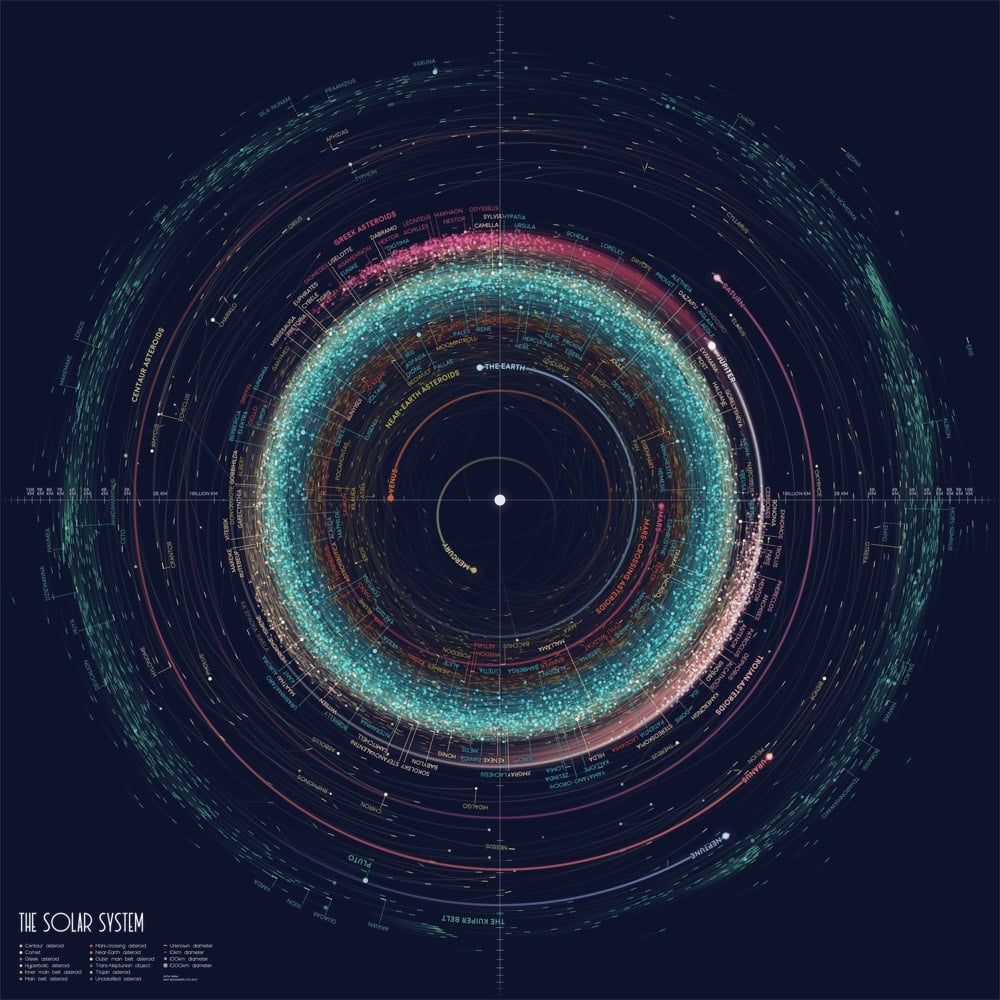
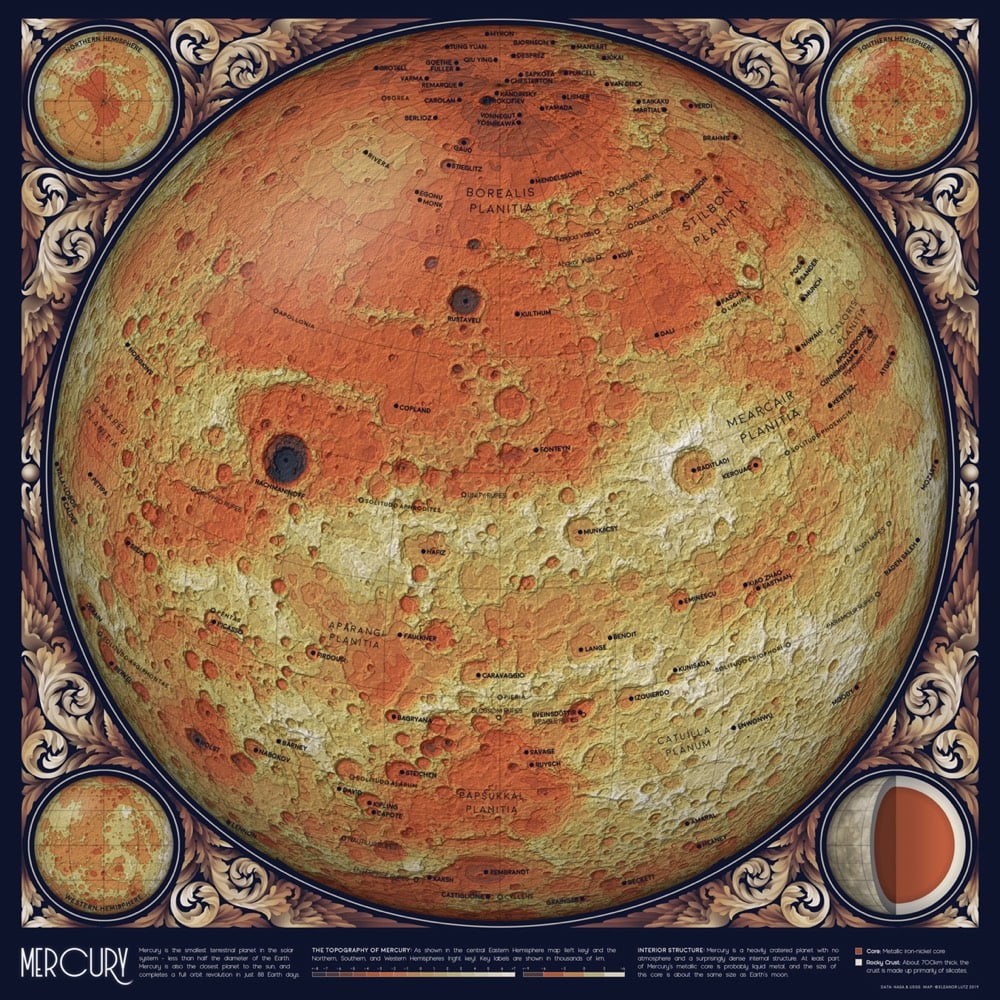
As promised, Lutz has posted the source code for each project to her GitHub account: Mercury topography, asteroid orbits. What a great resource for aspiring data visualization designers. Stay tuned to her site, Twitter, or Tumblr for upcoming installments of the atlas.
Update: Lutz’s third map in the series is out: The Geology of Mars. And here’s the link to the code and how-to on Github.
Update: Lutz’s fourth map has been released: an animated map of the Earth cycling through all four seasons. Link to the code on GitHub.
Also, she’s made high-res wallpapers available for download in a number of different aspect ratios…check out the links at the bottom of the post.
Update: Today’s installment of the atlas presents a view from our solar system: The Western Constellations (source code on Github).
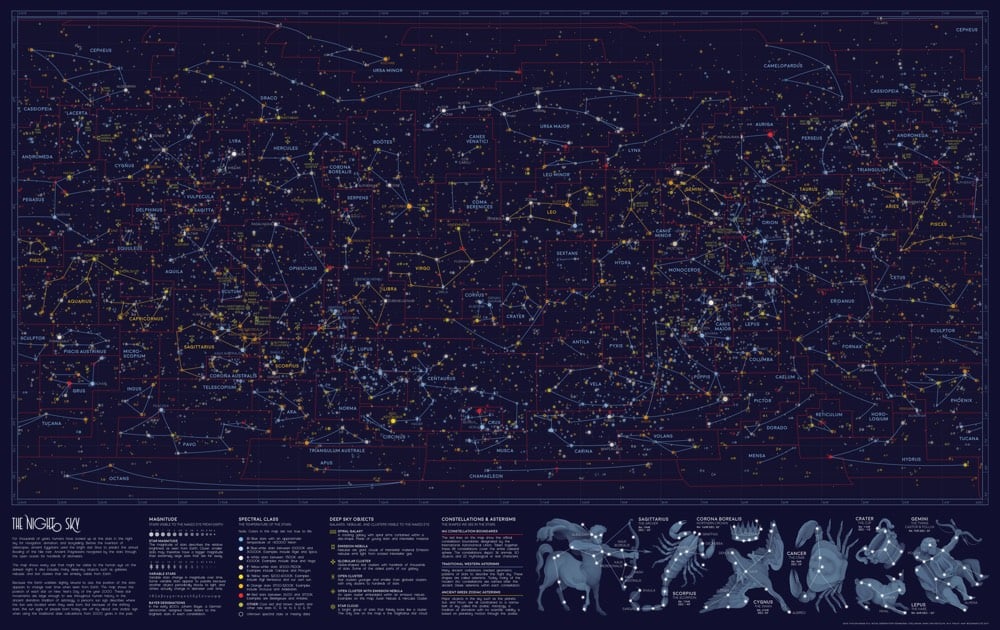
This week’s map shows every single star visible from Earth, on the darkest night with the clearest sky. The map also includes all of the brightest galaxies, nebulae, and star clusters from W.H. Finlay’s Concise Catalog of Deep-sky Objects. I illustrated the familiar Western star patterns — or asterisms — in blue and gold, as well as the scientific constellation boundaries in red.
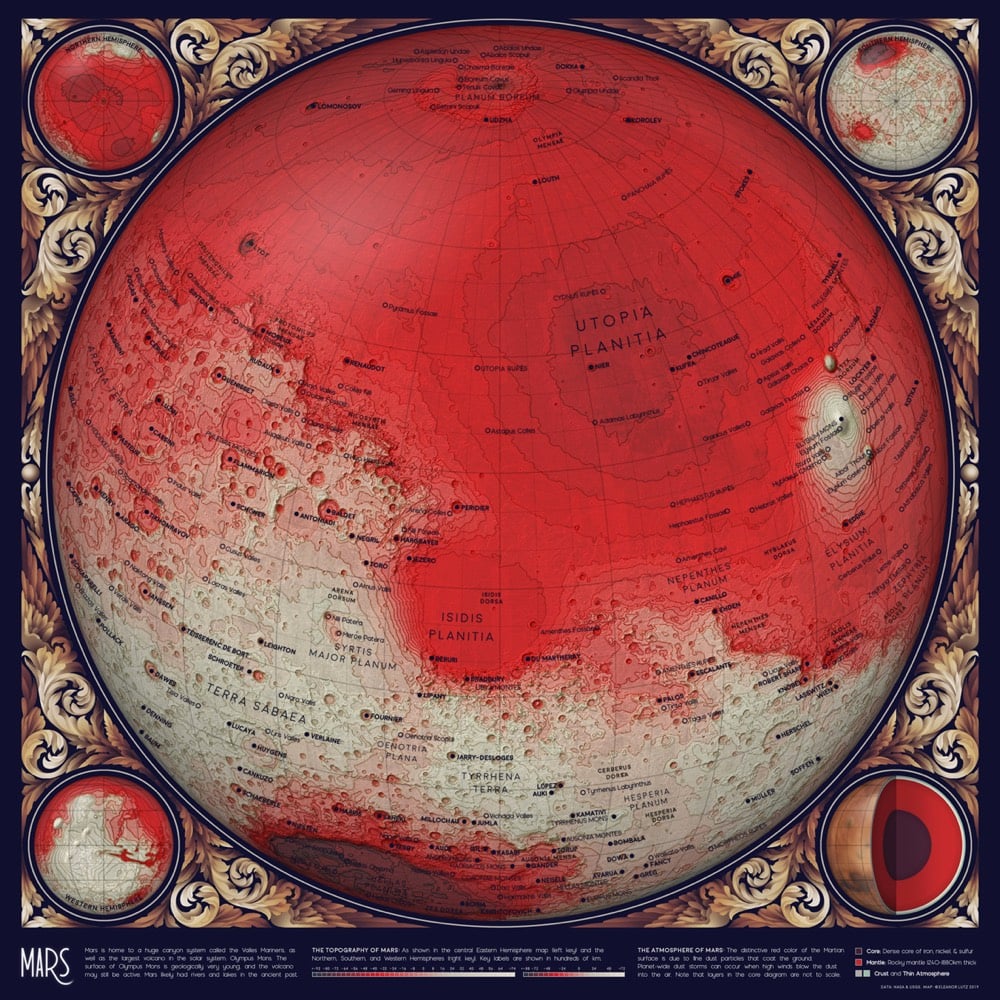
Update: Holy moly, I think Lutz’s Topographic Map of Mars might be her most beautiful one yet.
Update: I couldn’t keep up with all of Lutz’s additions to her atlas. You can check out all of the installments in the archive, including the last part (for now), The Geology of the Moon.
That’s My Jazz is a short documentary by Ben Proudfoot about world class pastry chef Milton Abel II, who reminisces about his father, Milton Abel Sr., a world class Kansas City jazz musician. The film is a tender and moving rumination on their relationship and the balance between achieving greatness in the world and being present in the lives of your loved ones.
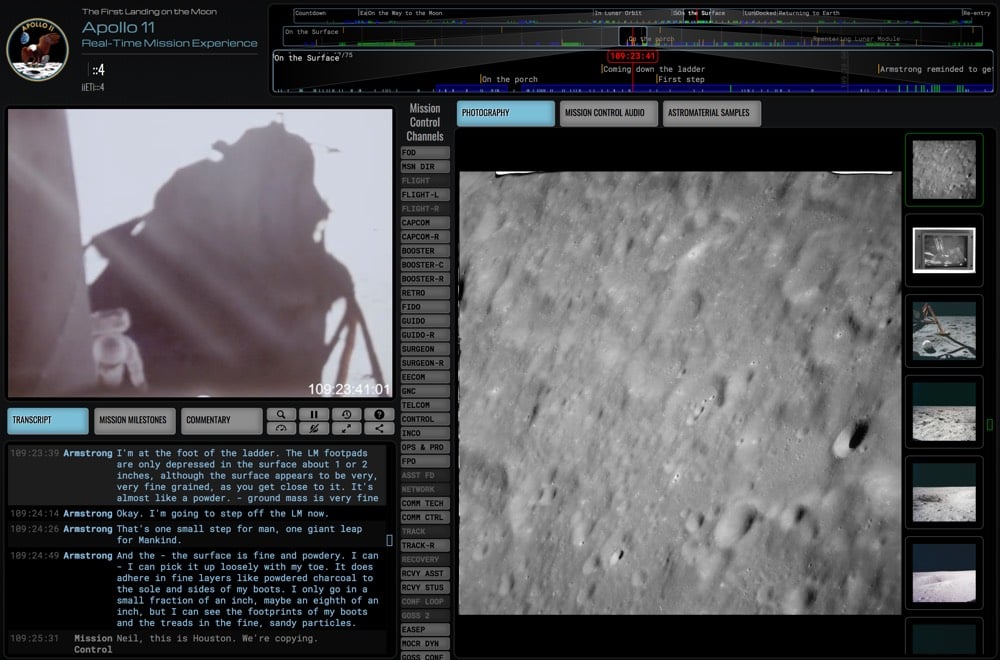
Well, this is just flat-out fantastic. Ben Feist and a team of collaborators have built Apollo 11 In Real Time, an interactive presentation of the first mission to land on the Moon as it happened.
This website replays the Apollo 11 mission as it happened, 50 years ago. It consists entirely of historical material, all timed to Ground Elapsed Time — the master mission clock. Footage of Mission Control, film shot by the astronauts, and television broadcasts transmitted from space and the surface of the Moon, have been painstakingly placed to the very moments they were shot during the mission, as has every photograph taken, and every word spoken.
You can tune in in real time beginning July 16th, watch/experience it right now from 1 minute before launch, or you can skip around the timeline to just watch the moments you want. As someone who has been hosting an Apollo 11 in real time thing for the past 9 years, this site makes me both ridiculously happy and a little bit jealous.
I’ve only ever seen footage of the first moonwalk in grainy videos as broadcast on TV, but this site shows it in the original resolution and it’s a revelation. Here’s the moonwalk, beginning with some footage of the folks in Mission Control nervously fidgeting with their hands (skip to 5:18:00 if the video doesn’t start there):
The rest of the video for the entire mission can be found here…what a trove. This whole thing is marvelous…I can’t wait to tune in when July 16th rolls around.
It started in mid-April, barely 3 and 1/2 months into the year. To hit expectant readers before Memorial Day with suggestions for beach reads, summer reads, roadtrip reads, and just plain read reads, publications started rounding up the best books released in 2019:
Best books of 2019 so far (The Guardian)
The Best Books of 2019 (So Far) (Vulture)
The Best Books of 2019 (So Far) (Real Simple)
The Best Books of 2019 (So Far) (Glamour)
The Best Books of 2019 to Add to Your Reading List (Marie Claire)
The Best Books of 2019 (So Far) (Esquire)
I love that almost everyone uses the same title — it’s economical and the “(So Far)” is a wink that, yes, it’s a more than a little absurd to be talking about the best books of the year in freaking April. Of course, I couldn’t resist using it too.
But never mind the meta crap, what books are actually on these lists? Here are some that caught my eye or featured on one or more of these lists.
Normal People by Sally Rooney. This one is going to be on all the year-end lists, so it’s almost required reading at this point.
The Porpoise by Mark Haddon. “This contemporary story mirrors the ancient legend of Antiochus, whose love for the daughter of his dead wife was discovered by the adventurer Appolinus of Tyre. The tale appeared in many forms through the ages; Apollinus becoming the swashbuckling Pericles in Shakespeare’s eponymous play.”
Gingerbread by Helen Oyeyemi. “Influenced by the mysterious place gingerbread holds in classic children’s stories — equal parts wholesome and uncanny; from the tantalizing witch’s house in Hansel and Gretel to the man-shaped confection who one day decides to run as fast as he can — beloved novelist Helen Oyeyemi invites readers into a delightful tale of a surprising family legacy, in which the inheritance is a recipe.”
A Thousand Ships by Natalie Haynes. A retelling of the Trojan War from the perspective of the women in the story. In the same vein as Circe and Emily Wilson’s The Odyssey, both of which I loved.
Invisible Women by Caroline Criado Perez. I wrote about Cirado Perez’s book back in February. “In her new book, Invisible Women: Data Bias in a World Designed for Men, Caroline Criado Perez argues that the data that scientists, economists, public policy makers, and healthcare providers rely on is skewed, unfairly and dangerously, towards men.”
Daisy Jones & The Six by Taylor Jenkins Reid. “A gripping novel about the whirlwind rise of an iconic 1970s rock group and their beautiful lead singer, revealing the mystery behind their infamous breakup.”
Winners Take All by Anand Giridharadas. “Giridharadas asks hard questions: Why, for example, should our gravest problems be solved by the unelected upper crust instead of the public institutions it erodes by lobbying and dodging taxes?”
The History of the Bible by John Barton. “In our culture, the Bible is monolithic: It is a collection of books that has been unchanged and unchallenged since the earliest days of the Christian church. The idea of the Bible as “Holy Scripture,” a non-negotiable authority straight from God, has prevailed in Western society for some time. And while it provides a firm foundation for centuries of Christian teaching, it denies the depth, variety, and richness of this fascinating text.”
The Collected Schizophrenias by Esmé Weijun Wang. “Opening with the journey toward her diagnosis of schizoaffective disorder, Wang discusses the medical community’s own disagreement about labels and procedures for diagnosing those with mental illness, and then follows an arc that examines the manifestations of schizophrenia in her life.”
You Know You Want This by Kristen Roupenian. A collection of stories from the author that broke the internet with Cat Person. Included in the collection is The Good Guy, also very much worth a read.
Save Me the Plums by Ruth Reichl. Reichl’s memoir about her time at Gourmet magazine. “This is the story of a former Berkeley hippie entering the corporate world and worrying about losing her soul. It is the story of the moment restaurants became an important part of popular culture, a time when the rise of the farm-to-table movement changed, forever, the way we eat.”
Update: Here are a few more lists I’ve run across, along with the books recommended therein.
Best books of the year so far (Amazon)
5 good books I read this spring (Austin Kleon)
Most Popular Books Published In 2019 (Goodreads)
Best Books of 2019 So Far (Book Riot)
The 10 best books of 2019…so far (Entertainment Weekly)
Exhalation by Ted Chiang. “His new collection of nine stories — theming free will and choice, virtual reality and regret — is so provocative, imaginative, and soulful that it makes Black Mirror look drab and dull by comparison.”
Internment by Samira Ahmed. “This book inspires me to be more active in my engagement with the struggle for equality. Change can happen. In that respect, despite its horrifying moments, Internment is a hopeful dystopia. Layla, in defiance of being imprisoned in the first internment camp for Muslim Americans and living under dehumanizing conditions, maintains enough hope and resolution to protest.”
How to Do Nothing by Jenny Odell. “Nothing is harder to do these days than nothing. But in a world where our value is determined by our 24/7 data productivity… doing nothing may be our most important form of resistance. So argues artist and critic Jenny Odell in this field guide to doing nothing (at least as capitalism defines it). Odell sees our attention as the most precious-and overdrawn-resource we have. Once we can start paying a new kind of attention, she writes, we can undertake bolder forms of political action, reimagine humankind’s role in the environment, and arrive at more meaningful understandings of happiness and progress.”
Update: Book Marks compiled their own meta-list: The Best Reviewed Books of 2019 (So Far). The runner-up to Normal People on the list is Marlon James’ Black Leopard Red Wolf.
Drawing from African history and mythology and his own rich imagination, Marlon James has written a novel unlike anything that’s come before it: a saga of breathtaking adventure that’s also an ambitious, involving read. Defying categorization and full of unforgettable characters, Black Leopard, Red Wolf is both surprising and profound as it explores the fundamentals of truth, the limits of power, and our need to understand them both.
An interview with the costume designer from Fleabag. “Fleabag is slightly French, so there’s the idea that the French are quite chic and actually Fleabag is quite chic in her own way.”
This is gold — a perfect 30 seconds of entertainment. I have watched this at least 10 times and Pee-Wee rolling around on the ground at the end cracks me up every time.
See also The “Welcome to Jurassic Park” Scene But With The Dinosaurs Digitally Removed and Jurassic Park but with the Dinosaurs from the 90s TV Show Dinosaurs.
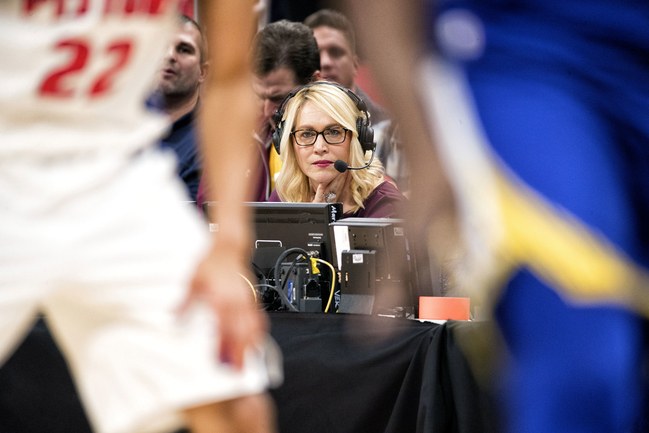
David Remnick writes what everyone knows: “the best broadcaster in the [NBA] is Doris Burke. This has been the case now for years. There is no one remotely close.”
But because this is David Remnick, he doesn’t just do the easy job of showing how Burke outshines her ESPN/ABC colleagues Jeff Van Gundy and Mark Jackson, but also provides a mini-history of women in the press box and broadcast booth. (He even includes the transition phrase, “There is a long history to all of this.”)
“The thing is that in sportswriting the breakthroughs came at least twenty years ago and more,” [Sally] Jenkins said. “But television sports has far more trip wires than sports journalism. Sports TV is still Wall Street. And there is no real change unless there is mandate from a guy on high. All the breakthroughs—and here you can name whatever women behind microphones—are decisions made by a single man at the top who wants to be Branch Rickey.”
“The reality is that I’m fifty-two years old,” Burke told Sports Illustrated last season. “And how many fifty-five to sixty-year-old women do you see in sports broadcasting? How many? I see a lot of sixty-year-old men broadcasting.” Burke is better than all of them. That might not matter.
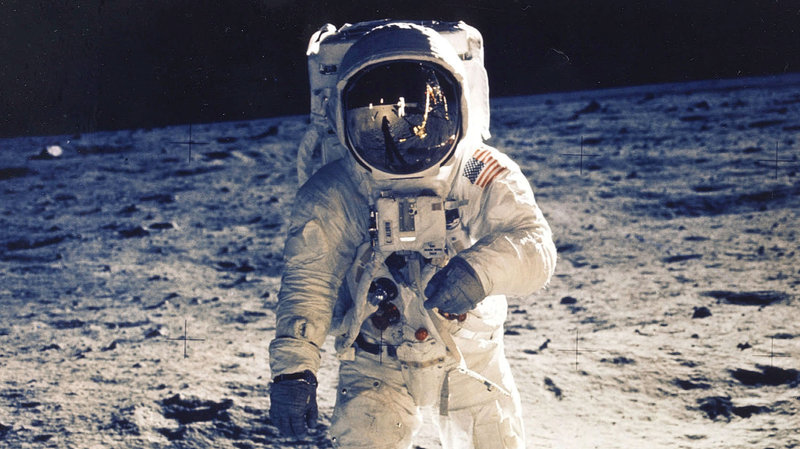
Charles Fishman has a new book, One Giant Leap, all about NASA’s Apollo program to land an astronaut on the moon. He talks about it on Fresh Air with Dave Davies.
On what computers were like in the early ’60s and how far they had to come to go to space
It’s hard to appreciate now, but in 1961, 1962, 1963, computers had the opposite reputation of the reputation they have now. Most computers couldn’t go more than a few hours without breaking down. Even on John Glenn’s famous orbital flight — the first U.S. orbital flight — the computers in mission control stopped working for three minutes [out] of four hours. Well, that’s only three minutes [out] of four hours, but that was the most important computer in the world during that four hours and they couldn’t keep it going during the entire orbital mission of John Glenn.
So they needed computers that were small, lightweight, fast and absolutely reliable, and the computers that were available then — even the compact computers — were the size of two or three refrigerators next to each other, and so this was a huge technology development undertaking of Apollo.
On the seamstresses who wove the computer memory by hand
There was no computer memory of the sort that we think of now on computer chips. The memory was literally woven … onto modules and the only way to get the wires exactly right was to have people using needles, and instead of thread wire, weave the computer program. …
The Apollo computers had a total of 73 [kilobytes] of memory. If you get an email with the morning headlines from your local newspaper, it takes up more space than 73 [kilobytes]. … They hired seamstresses. … Every wire had to be right. Because if you got [it] wrong, the computer program didn’t work. They hired women, and it took eight weeks to manufacture the memory for a single Apollo flight computer, and that eight weeks of manufacturing was literally sitting at sophisticated looms weaving wires, one wire at a time.
One anecdote that was new to me describes Armstrong and Aldrin test-burning moon dust, to make sure it wouldn’t ignite when repressurized.
Armstrong and Aldrin actually had been instructed to do a little experiment. They had a little bag of lunar dirt and they put it on the engine cover of the ascent engine, which was in the middle of the lunar module cabin. And then they slowly pressurized the cabin to make sure it wouldn’t catch fire and it didn’t. …
The smell turns out to be the smell of fireplace ashes, or as Buzz Aldrin put it, the smell of the air after a fireworks show. This was one of the small but sort of delightful surprises about flying to the moon.
In Flag Code, Karen Good Marable shares her experience of the American flag growing up and in the wake of the 2016 election. This paragraph in particular resonated with me unexpectedly:
Perhaps it was in this moment I happened upon the house, unremarkable but for a small American flag jutting out of its frame like a rhinoceros horn. I hesitated at the sight of the banner so close to my home and was suddenly wary. Weary. I saw the flag and without thinking thought it code: Patriot. MAGA. Make everything white again. Even with all I know about the history of Black people in this country, I’ve never been afraid of the flag. On this day, however, I felt how I feel when I see the Confederate flag: Unsafe. My breath shallowed. When did this happen? When did the sight of an American flag flying from a private residence become something that gave me pause? Perhaps it was the untrusted whiteness of my new neighborhood. Perhaps my reaction was a kind of PTSD, a result of that summer’s back-to-back televised police killings of unarmed Black men or the murders at Mother Emanuel the year before. Perhaps it was the ridiculous victory of Trump. I saw the flag and remembered what I had been warned time and again about “progressive” Atlanta: Drive thirty minutes outside of the perimeter in any direction and it’s a whole different story.
While I share little of Marable’s life experience, I realized while reading her piece that I’ve developed a similar unsafe feeling about the flag. It’s not a voluntary thing — it’s something that has built up over two+ years of seeing American flags in photos of MAGA rallies & white nationalist marches but not so much at Black Lives Matter marches or pro-choice rallies. I’m sure you’ve also noticed the correlation between seeing an American flag emoji in someone’s Twitter bio next to the MAGA hashtag and the tendency of that person to act like a misogynist asshole. While it’s hardly a new thing, the aggressive, intolerant, nationalistic right has been particularly effective in visibly wrapping themselves in the flag lately. It’s great branding for them, but it’s not doing the flag any favors.
What if All I Want is A Mediocre Life? “What if all the striving for excellence leaves me sad, worn out, depleted. Drained of joy. Am I simply not enough?” I have been feeling this lately.


As a long-time fan of BERG’s Here & There projection map of Manhattan (and Inception), these bendy photos of European cityscapes by Lestnica are right up my alley (which is now above my head har har). See also Aydın Büyüktaş’s Flatland photos. (via colossal)
Trailer for Doctor Sleep, a sequel to The Shining. It stars Ewan McGregor as Danny Torrance decades after the events at the Overlook Hotel.
The National Sound Library of Mexico says they have found the only known audio recording of Frida Kahlo’s voice. Take a listen:
The library have unearthed what they believe could be the first known voice recording of Kahlo, taken from a pilot episode of 1955 radio show El Bachiller, which aired after her death in 1954.
The episode featured a profile of Kahlo’s artist husband Diego Rivera. In it, she reads from her essay Portrait of Diego, which was taken from the catalogue of a 1949 exhibition at the Palace of Fine Arts, celebrating 50 years of Rivera’s work.
“He is a gigantic, immense child, with a friendly face and a sad gaze,” she says, as translated by Agence France-Presse. (A different English translation of the text can be found on Google Arts & Culture.)
Film footage of Kahlo is difficult to come by as well; I could only find these two clips:
The first video is in color and shows Kahlo and husband Diego Rivera in her house in Mexico City. The second shows Kahlo painting, drawing, and socializing with the likes of Leon Trotsky. At ~0:56, she walks quickly and confidently down the stairs of a ship, which is a bit surprising given what I’ve read about her health problems.
Update: According to this article (and its translation by Google), the voice on the recording isn’t Kahlo but belongs instead to actress Amparo Garrido:
Yes, I recognize myself. For me it was a big surprise because so many years had passed that I really did not even remember. […] When listening to this audio I remembered some things and I got excited because I did recognize myself.
(via @p_tricio)
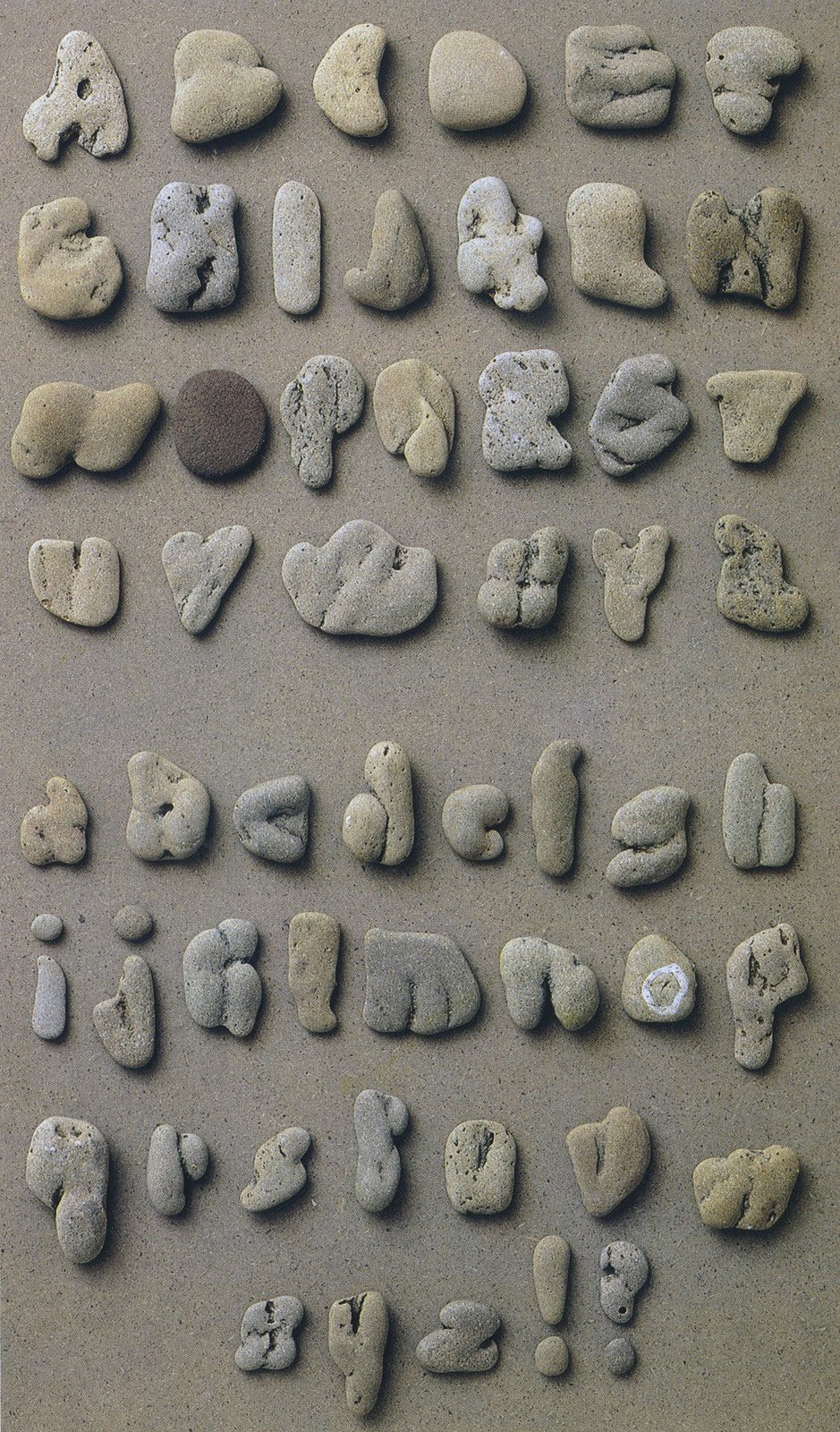
This is one of several alphabets assembled by Belgian type designer Clotilde Olyff from stones collected at the beach.
Here are a few more examples, some of which were featured in this book called 3D Typography:
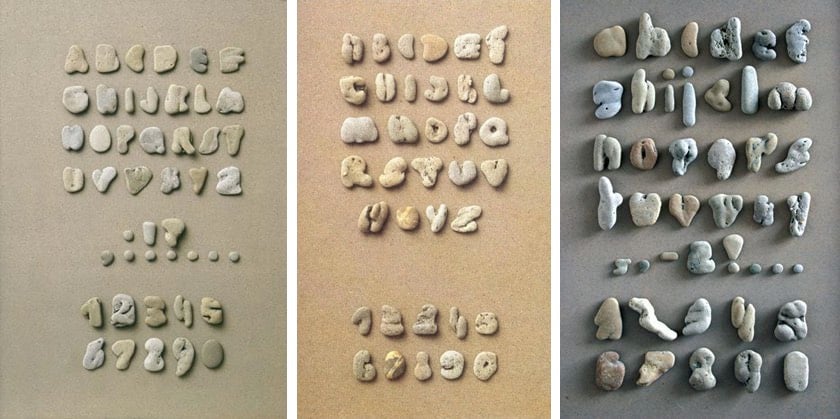
Well, I guess I have a new beachcombing activity for when I get tired of skipping rocks.
Here is a video of Donald Trump, Vladimir Putin, Barack Obama, Kim Jong Un, and other world leaders lip-syncing along to John Lennon’s Imagine:
Of course this isn’t real. The video was done by a company called Canny AI, which offers services like “replace the dialogue in any footage” and “lip-sync your dubbed content in any language”. That’s cool and all — picture episodes of Game of Thrones or Fleabag where the actors automagically lip-sync along to dubbed French or Chinese — but this technique can also be used to easily create what are referred to as deepfakes, videos made using AI techniques in which people convincingly say and do things they actually did not do or say. Like this video of Mark Zuckerberg finally telling the truth about Facebook. Or this seriously weird Steve Buscemi / Jennifer Lawrence mashup:
Or Bill Hader’s face morphing into Arnold Schwarzenegger’s face every time he impersonates him:
What should we do about these kinds of videos? Social media sites have been removing some videos intended to mislead or confuse people, but notably Facebook has refused to take the Zuckerberg video down (as well as a slowed-down video of Nancy Pelosi in which she appears drunk). Congress is moving ahead with a hearing on deepfakes and the introduction of a related bill:
The draft bill, a product of several months of discussion with computer scientists, disinformation experts, and human rights advocates, will include three provisions. The first would require companies and researchers who create tools that can be used to make deepfakes to automatically add watermarks to forged creations.
The second would require social-media companies to build better manipulation detection directly into their platforms. Finally, the third provision would create sanctions, like fines or even jail time, to punish offenders for creating malicious deepfakes that harm individuals or threaten national security. In particular, it would attempt to introduce a new mechanism for legal recourse if people’s reputations are damaged by synthetic media.
I’m hopeful this bill will crack down on the malicious use of deepfakes and other manipulated videos but leave ample room for delightful art and culture hacking like the Hader/Schwarzenegger thing or one of my all-time favorite videos, a slowed-down Jeff Goldblum extolling the virtues of the internet in an Apple ad:
“Internet? I’d say internet!”
Update: Here’s another Bill Hader deepfake, with his impressions of Tom Cruise and Seth Rogen augmented by his face being replaced by theirs.
20 Things I’ve Learned from TV. “12. Medieval peasants had perfect teeth.”
When I saw this photo of Dolly Parton & Keanu Reeves after it went viral earlier this year, I noticed something interesting about it. Can you see it?
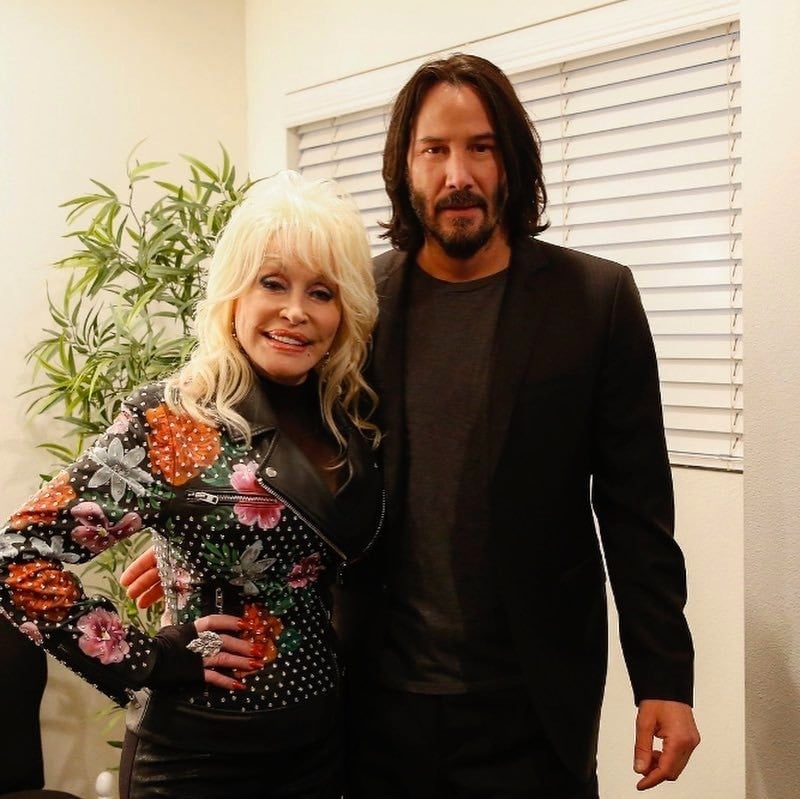
Reeves has his arm around Parton but his hand is open and he is not grabbing or holding her body in any way. He is being warm but respectful. I’ve been thinking about that gesture ever since and was happy to run across this Twitter post by Madsthetic that shows Reeves using the same open-hand gesture with other women. For example:
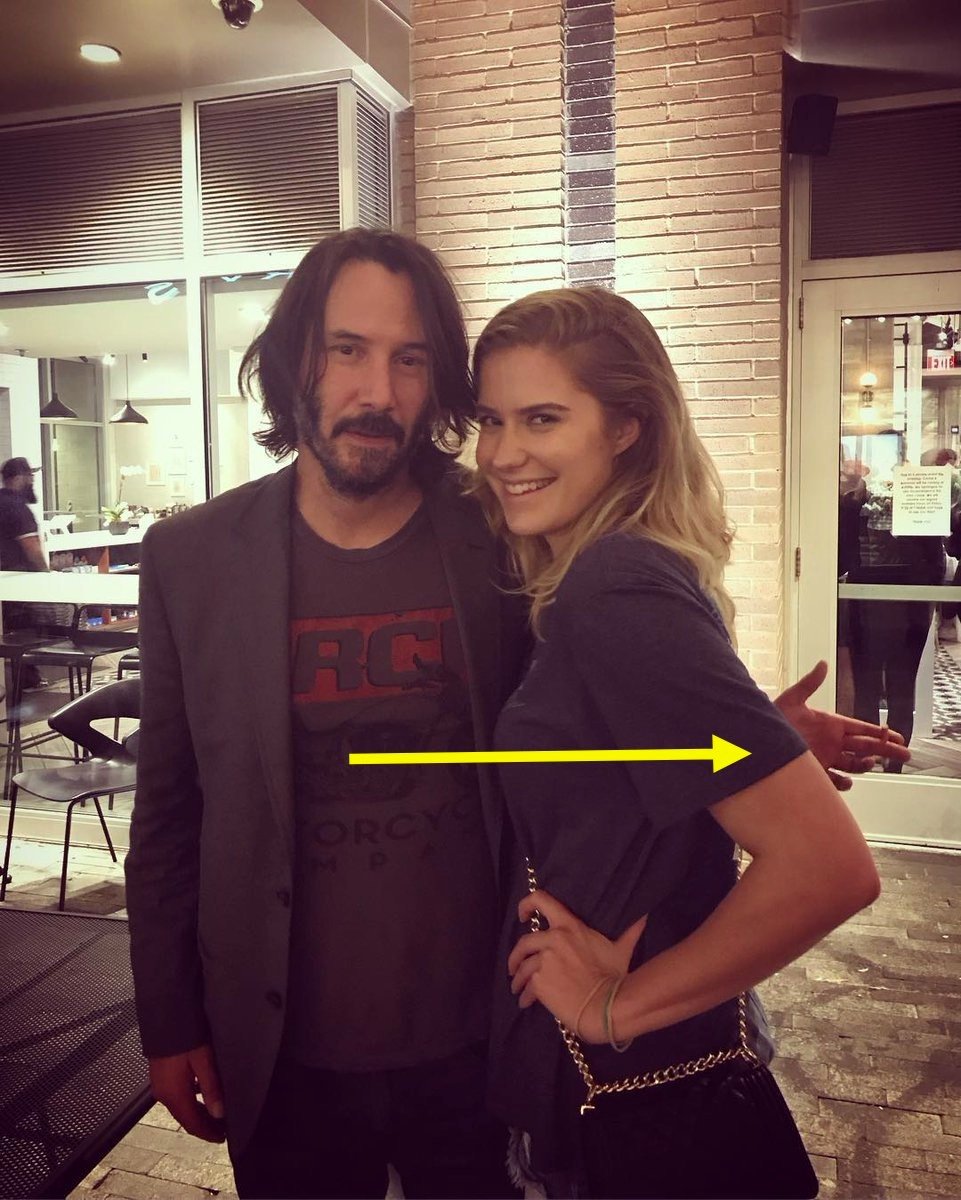
Reeves’ move is referred to as “manner hands” in South Korea:
In the West, people are generally mocked online for doing awkward hover hands, but the Korean press seems to applaud the “manner hand” as it’s seen as respectful. Women, it seems, appreciate the “nice guy” gesture, while men probably don’t give it much thought.
Compare with, for instance, the way current Presidential candidate Joe Biden touches women.
See also Keanu Reeves Is Too Good for This World and Keanu Reeves Is a Really Nice Guy. (I had a conversation with a former Hollywood personal assistant once and she told me that there were only two nice men in Hollywood: Tom Hanks and Keanu Reeves.)
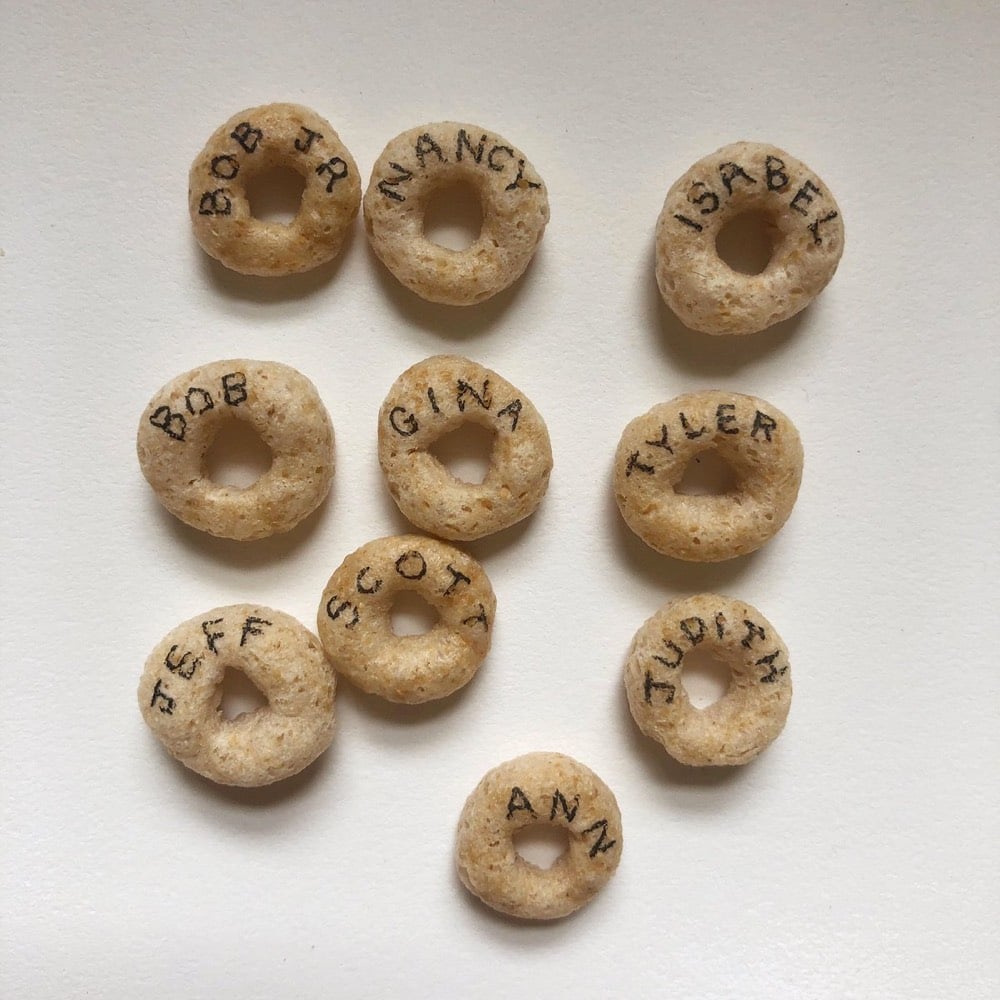
Brian McMullen is giving names to all of the 3,501 Cheerios in his cereal box and is taking name suggestions on Twitter. (via sam potts)
If you didn’t have the opportunity yesterday to watch Jon Stewart’s scathing and powerful opening statement before a House subcommittee about providing health benefits for surviving 9/11 first responders, you really should; it’s quite something:
As I sit here today, I can’t help but think what an incredible metaphor this room is for the entire process that getting healthcare and benefits for 9/11 first responders has come to. Behind me, a filled room of 9/11 first responders and in front of me a nearly empty Congress.
Shameful. It’s an embarrassment to the country and it is a stain on this institution. You should be ashamed of yourselves, for those that aren’t here, but you won’t be. Because accountability doesn’t appear to be something that occurs in this chamber.
On Twitter, archivist Jason Scott shared a cache of over 2300 photos taken by a worker at Ground Zero during the cleanup process in September & October 2001. These photos provide a unique and documentary view of the work being done there, work on behalf of Americans everywhere that this worker, and many others, paid for with his life. Scott:
So, it would probably be useful to interview the worker who took all these photos, who walked around the grounds, who captured these unique images of Ground Zero from all over the space, showing the effort being done to clear the wreckage.
Except we can’t.
He’s dead.


The parallels of all this to HBO’s Chernobyl miniseries is left as an exercise to the reader.
Update: The House subcommittee approved extending the compensation fund for 9/11 first responders until 2090. The bill is expected to pass a full House vote but the Senate is anyone (but Mitch McConnell’s) guess.
Update: For his efforts, one of the first responders gifted Stewart a firefighter’s jacket that belonged to a good friend of his, now deceased:
This fits into the burgeoning category of “this is cool but I wish it weren’t necessary”: the Columbia Journalism Review has appointed public editors for a group of four news organizations because they won’t do it themselves.
Public editors and ombudsmen have historically stood as critical advocates for consumers of news, identifying blind spots the outlets can’t see themselves and operating as collectors of critical opinion when decisions go awry. The flameout of public editors in the US, which reached a point of despair in 2017, when The New York Times sent its last public editor packing, is the most visible sign of the growing distance between news organizations and the people they serve. As attacks on the media have increased under the presidency of Donald Trump, the response of newsrooms has, more often than not, been to form a defensive huddle.
That stance is particularly dangerous now, as the nation braces for another presidential election, one that is almost certain to be more partisan, more vicious, and more focused on the perceived failings of the press than any other in the history of the country. It’s a bad time for newsrooms to retreat from their readers.
And what great choices for editors: Gabriel Snyder (NY Times), Ana Marie Cox (Washington Post), Maria Bustillos (MSNBC), and Emily Tamkin (CNN). Here’s CJR editor-in-chief Kyle Pope answering some questions about the project. And here’s Tamkin’s first piece, on CNN’s practice of regularly interviewing people without expertise or responsibility.
Guilfoyle has not worked as an economist. She has not crafted foreign or immigration policy. She is not an expert on Central America. What possible value, I wondered, were CNN’s viewers getting from watching Guilfoyle speak about this subject? If Cuomo wanted Trump talking points, couldn’t he have just played a clip of Trump himself? If Cuomo wanted someone behind Trump’s immigration policy to explain it, shouldn’t he have brought in a member of the administration?
But again, it’s a bummer that a small organization like CJR has to foot the bill for this on behalf of these media organizations’ readers and, you know, democracy.
Emily Lakdawalla of the Planetary Society filed a report on humanity’s current roster of spacecraft currently exploring the solar system (and beyond).
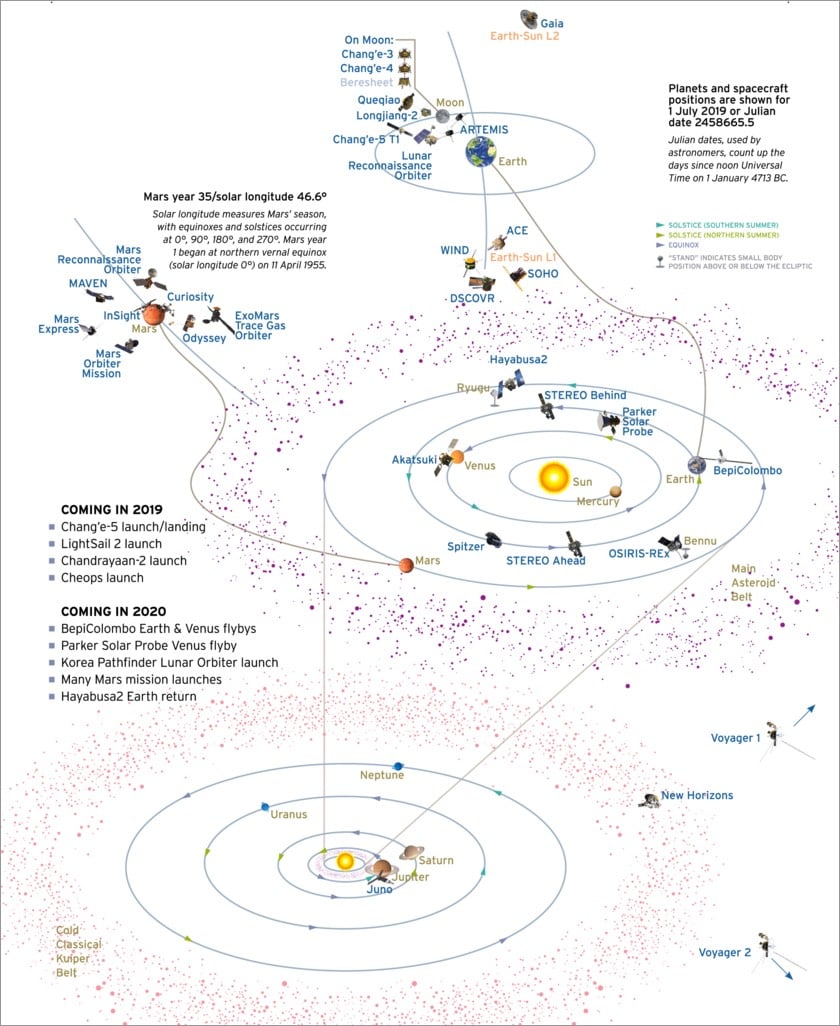
Chang’e-4 and Yutu-2 are now past their prime mission and are in their extended mission phases. Their companion SmallSat, Longjiang-2, will crash into the Moon on 31 July to bring its mission to an intentional end. Parker Solar Probe is near aphelion as of 1 July and will reach its third death-defying solar perihelion on 1 September. BepiColombo completed its near-Earth commissioning phase on 5 April and is now settling into its long-cruise phase. Earlier this year, the ESA-JAXA Mercury mission was racing ahead of Earth on an inside track, but its elliptical orbit has now taken it farther from the Sun than Earth, allowing Earth to catch up. It will return to Earth’s neighborhood in April 2020 for a flyby.
I counted roughly 30 different probes and rovers in operation, most of them gathered around the Moon and Mars. Sure, where’s my jetpack and flying car and all that, but the fact that humanity has more than two dozen robots currently exploring the solar system seems pretty futuristic to me.
Wikipedia also has a page listing currently active probes and of course there’s the lovely & informative spaceprob.es as well.
Hubert Horan’s broadside of Uber for American Affairs starts out like this and doesn’t let up:
Since it began operations in 2010, Uber has grown to the point where it now collects over $45 billion in gross passenger revenue, and it has seized a major share of the urban car service market. But the widespread belief that it is a highly innovative and successful company has no basis in economic reality.
An examination of Uber’s economics suggests that it has no hope of ever earning sustainable urban car service profits in competitive markets. Its costs are simply much higher than the market is willing to pay, as its nine years of massive losses indicate. Uber not only lacks powerful competitive advantages, but it is actually less efficient than the competitors it has been driving out of business.
This is one of those articles where I want to excerpt the entire thing; it’s just so jammed packed with goodies about a company that represents everything I hate about “tech” and Silicon Valley.
In reality, Uber’s platform does not include any technological breakthroughs, and Uber has done nothing to “disrupt” the economics of providing urban car services. What Uber has disrupted is the idea that competitive consumer and capital markets will maximize overall economic welfare by rewarding companies with superior efficiency. Its multibillion dollar subsidies completely distorted marketplace price and service signals, leading to a massive misallocation of resources. Uber’s most important innovation has been to produce staggering levels of private wealth without creating any sustainable benefits for consumers, workers, the cities they serve, or anyone else.
A later section is titled “Uber’s Narratives Directly Copied Libertarian Propaganda”.
In the early 1990s, a coordinated campaign advocating taxi deregulation was conducted by a variety of pro-corporate/libertarian think tanks that all received funding from Charles and David Koch. This campaign pursued the same deregulation that Uber’s investors needed, and used classic political propaganda techniques. It emphasized emotive themes designed to engage tribal loyalties and convert complex issues into black-and-white moral battles where compromise was impossible. There was an emphasis on simple, attractive conclusions designed to obscure the actual objectives of the campaigners, and their lack of sound supporting evidence.
This campaign’s narratives, repeated across dozens of publications, included framing taxi deregulation as a heroic battle for progress, innovation, and economic freedom. Its main claims were that thousands of struggling entrepreneurial drivers had been blocked from job opportunities by the “cab cartel” and the corrupt regulators beholden to them, and that consumers would enjoy the same benefits that airline deregulation had produced. In a word, consumers were promised a free lunch. Taxi deregulation would lead to lower fares, solve the problems of long waits, provide much greater service (especially in neighborhoods where service was poor), and increase jobs and wages for drivers. Of course, no data or analysis of actual taxi economics showing how these wondrous benefits could be produced was included.
Horan reserves a healthy chunk of his criticism for the media, whose unwillingness to critically cover the company — “the press refuses to reconsider its narrative valorizing Uber as a heroic innovator that has created huge benefits for consumers and cities” — has provided a playbook for future investors to exploit for years to come. Blech. What a shitshow.
Newer posts
Older posts

Socials & More