Entries for September 2018
Stan & Ollie is an upcoming film about the legendary comedy duo of Stanley Laurel and Oliver Hardy in the twilight of their career, starring Steve Coogan as Laurel and John C. Reilly as Hardy. I would not necessarily have picked those two actors — I’m not sure who I would have picked instead…perhaps the latter day Stan and Ollie (Tucci & Platt) — but damned if they don’t fill out those roles well.
I’m excited for this one. As kids, we didn’t watch a lot of TV aside from Sesame Street and Mister Rogers, but we did watch all sorts of stuff from the black & white era that my dad was into: Abbott & Costello, Flash Gordon, The Lone Ranger, Buster Keaton, The Three Stooges, Charlie Chaplin, Harold Lloyd. But my favorite was always Laurel and Hardy. I don’t remember laughing harder at anything as a kid than The Music Box:
“Commodity City” is a short documentary directed by Jessica Kingdon about a huge wholesale market in China with 75,000 vendors selling everything from flowers, pens, and clocks to dolls, rope, and Santas.
Ultimately, Kingdon decided to focus on what she describes as “the quieter, more subtle moments” amidst the chaotic atmosphere of the five-mile-long consumer metropolis. Comprised of mostly static shots, her short observational documentary, Commodity City, is a mesmerizing window into the daily lives of some of the 75,000 individual vendors who exhibit more than 400,000 products at Yiwu.
“I saw directly how lives are built around market forces,” Kingdon said of her experience shooting the film. “It’s similar to most other places in the world participating in global capitalism, but in China, it’s more obvious right now.”
I know this is pretty slow in spots — It’s meditative! Why are you in such a dang hurry? — but there are great little moments sprinkled in here and there (at 7:10 for one). It also weirdly reminded me of Koyaanisqatsi.
I loved this imaginative and clever piece by Geoff Manaugh called How Will Police Solve Murders on Mars? about how a future human settlement on Mars would handle matters of law and order. For one things, crimes might be more difficult to investigate.
Consider the basic science of crime-scene analysis. In the dry, freezer-like air and extreme solar exposure of Mars, DNA will age differently than it does on Earth. Blood from blunt-trauma and stab wounds will produce dramatically new spatter patterns in the planet’s low gravity. Electrostatic charge will give a new kind of evidentiary value to dust found clinging to the exteriors of space suits and nearby surfaces. Even radiocarbon dating will be different on Mars, Darwent reminded me, due to the planet’s atmospheric chemistry, making it difficult to date older crime scenes.
The Martian environment itself is also already so lethal that even a violent murder could be disguised as a natural act. Darwent suggested that a would-be murderer on the Red Planet could use the environment’s ambient lethality to her advantage. A fatal poisoning could be staged to seem as if the victim simply died of exposure to abrasive chemicals, known as perchlorates, in the Martian rocks. A weak seal on a space suit, or an oxygen meter that appears to have failed but was actually tampered with, could really be a clever homicide hiding in plain sight.
At a broader level, what sort of political system develops because of the Martian environment might shape how law enforcement happens.
In the precarious Martian environment, where so much depends on the efficient, seamless operation of life-support systems, sabotage becomes an existential threat. A saboteur might tamper with the oxygen generators or fatally disable a settlement’s most crucial airlock. When human life is so thoroughly entwined with its technical environment, we should not consider these sorts of acts mere petty crimes, he explained to me. In a literal sense, they would be crimes against humanity-even, on a large enough scale, attempted genocide.
“I think the fact that tyranny is easier in space is a foregone conclusion,” he explained to me, precisely because there is nowhere to escape without risking instant death from extreme cold or asphyxiation. In other words, the constant presence of nearly instant environmental lethality will encourage systems of strong social control with little tolerance for error. Orders and procedures will need to be followed exactly as designed, because the consequences of a single misstep could be catastrophic.
A few paragraphs after this, the terrifyingly wonderful phrase “politically motivated depressurization” is used. I don’t think we’re super close to the colonization of Mars, but Manaugh says, better to think about it now before we “unwittingly construct an interplanetary dystopia run by cops who shoot first and ask questions later”.
A brief history of numeric keypads. Or: Why do telephones and calculators use different layouts for their keypads?
In a book called Atlas of the World with Geophysical Boundaries, scientist Athelstan Spilhaus published a series of world maps that emphasized the Earth’s oceans over the continents. The maps turn our familiar continental view of the world inside out. Check out this rendering of one of Spilhaus’ maps by Le Cartographe:
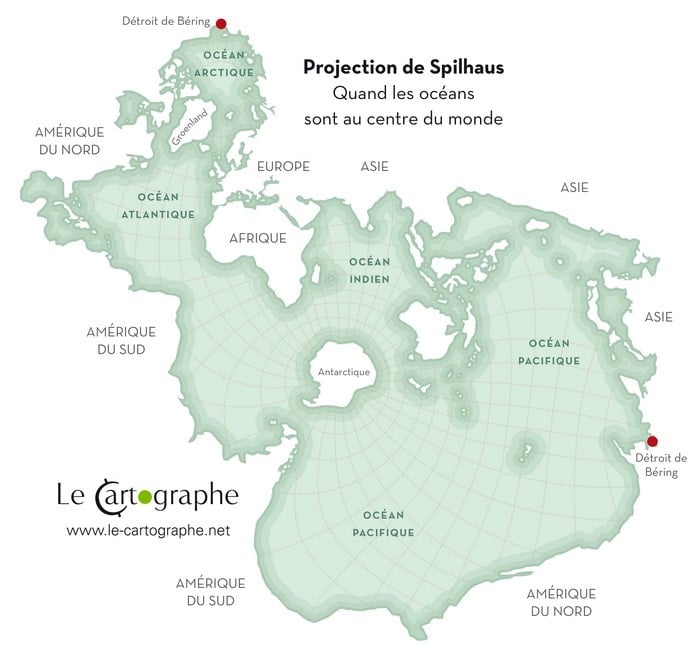
Takes a second to get your bearings on that, right? One big ocean with Antarctica in the middle, surrounded by the stretched-out landmasses of Asia and the Americas. Jason Davies recreated some of the other Spilhaus maps and so did Mike Bostock.
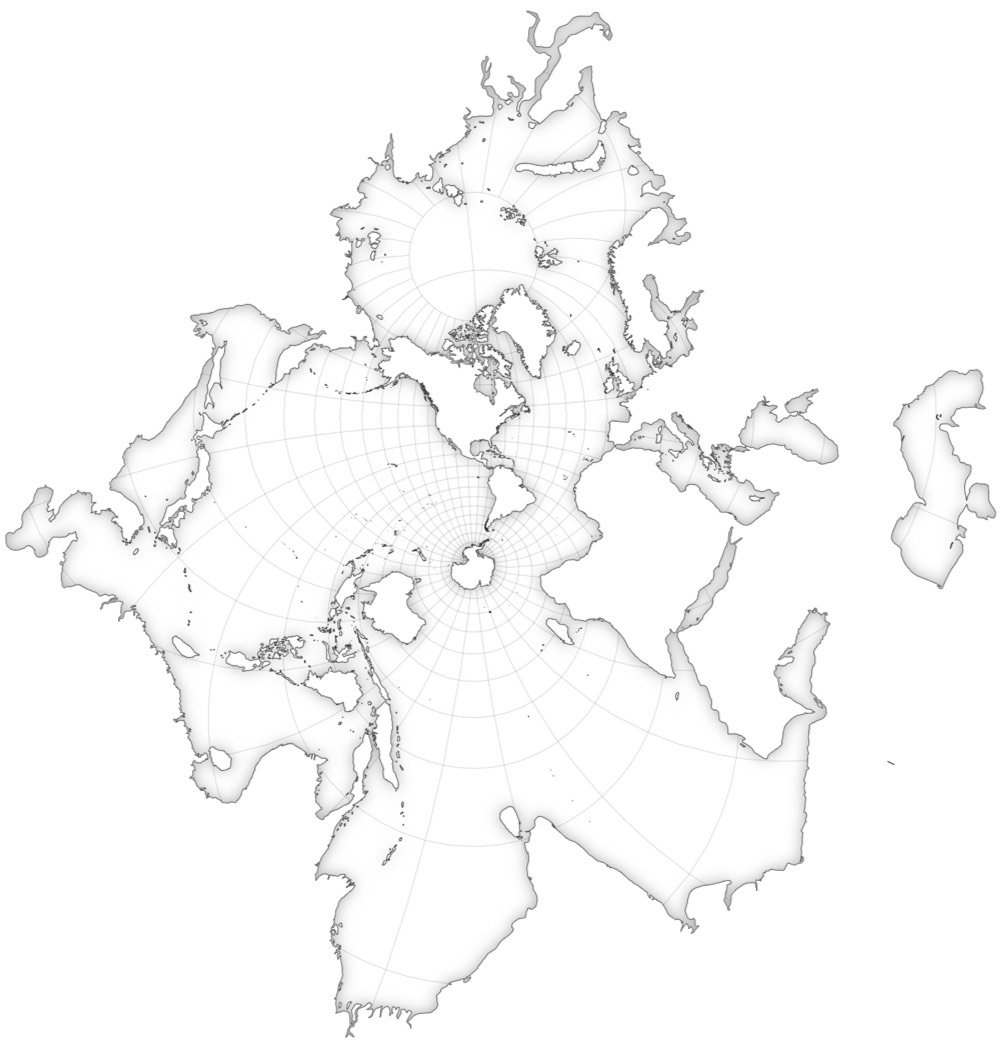
You can see a bunch of Spilhaus’ other shoreline maps by flipping through the pages of his book on Google Books.
I seem to have a bunch of links to Kickstarter campaigns up in browser tabs right now so instead of dripping them out over the next few days as Quick Links, I thought I’d do a mini roundup here.
Stardust Explores Earth’s Wonders: Geology & Evolution. The latest in the Stardust series of books authored by 12-year-old Bailey Harris and her father, Douglas. Harris got the idea for the first book watching Cosmos: A Spacetime Odyssey and she was off to the races. Both of her previous books have been enjoyed in our household.
Alexander von Humboldt - Illustrating Nature. This is a reissue of a book from a previous successful campaign. I have a couple of Kronecker Wallis’ beautifully designed books about science, including this one — they do good work.
I Am a Rebel Girl: A Journal to Start Revolutions. We’re massive fans of the Rebel Girls books and podcast in our house, so this is a no-brainer.
DRYP - an app that keeps your plants alive & happy. DRYP is an iOS app that “tells you when to water your plants AND helps you cure them when they’re sick”. Yes, please.
4-Mation: The Interactive 3D Zoetrope. A little tough to explain…watch the first few seconds of the video to get it.
THE SONGULARITY. From Botnik Studios, this is “an impending full-length pop album co-created by humans and machines” with lyrics generated by a predictive text program seeded with “Scottish folk ballads, Amazon reviews, Carrie Underwood, The Elements Of Style and more”.
Our President Was Called Barack. This children’s book about Barack Obama was funded on Kickstarter in 2017 and they still have a few copies left for sale.
What’s My Name? is an upcoming HBO documentary about Muhammad Ali. This is a teaser trailer so there’s not much to go on but LeBron James and Maverick Carter are executive producing and the director is Antoine Fuqua, who directed Training Day in 2001. What’s My Name? will air in two parts in early 2019.
vintage post from Sep 2018
· gift link
Frustrated that the US Treasury Department is walking back plans to replace Andrew Jackson on the front of the $20 bill with Harriet Tubman, Dano Wall created a 3D-printed stamp that can be used to transform Jacksons into Tubmans on the twenties in your pocketbook.
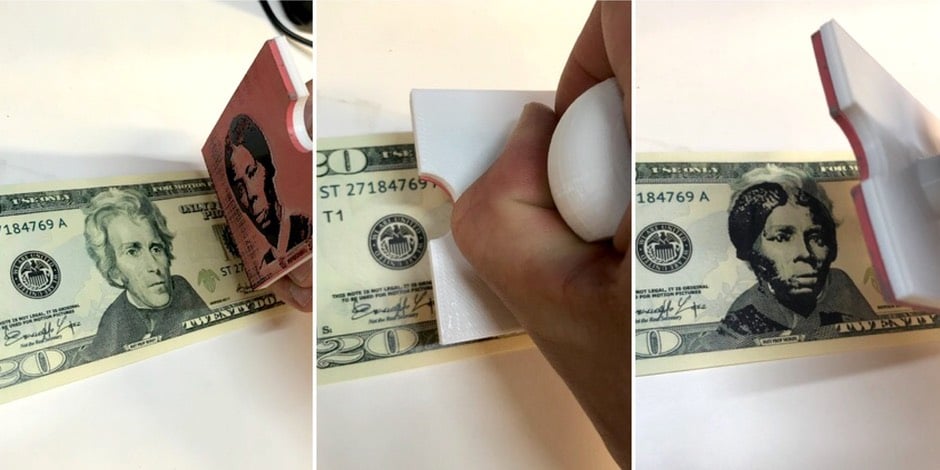
Here’s a video of the stamp in action. Wall told The Awesome Foundation a little bit about the genesis of the project:
I was inspired by the news that Harriet Tubman would replace Andrew Jackson on the $20 bill, and subsequently saddened by the news that the Trump administration was walking back that plan. So I created a stamp to convert Jacksons into Tubmans myself. I have been stamping $20 bills and entering them into circulation for the last year, and gifting stamps to friends to do the same.
If you have access to a 3D printer (perhaps at your local library or you can also use a online 3D printing service), you can download the print files at Thingiverse and make your own stamp for use at home.
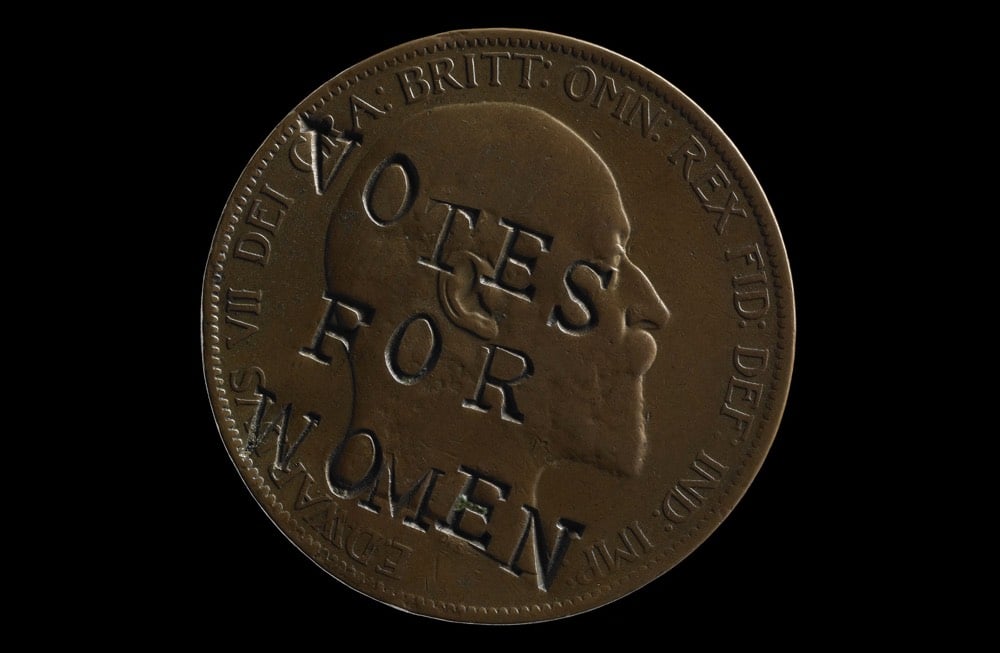
Wall also posted a link to some neat prior art: suffragettes in Britain modifying coins with a “VOTES FOR WOMEN” slogan in the early 20th century.
Update: Several men on Twitter are helpfully pointing out that, in their inexpert legal opinion, defacing bills in this way is illegal. Here’s what the law says (emphasis mine):
Defacement of currency is a violation of Title 18, Section 333 of the United States Code. Under this provision, currency defacement is generally defined as follows: Whoever mutilates, cuts, disfigures, perforates, unites or cements together, or does any other thing to any bank bill, draft, note, or other evidence of debt issued by any national banking association, Federal Reserve Bank, or Federal Reserve System, with intent to render such item(s) unfit to be reissued, shall be fined under this title or imprisoned not more than six months, or both.
The “with intent” bit is important, I think. The FAQ for a similar project has a good summary of the issues involved.
But we are putting political messages on the bills, not commercial advertisements. Because we all want these bills to stay in circulation and we’re stamping to send a message about an issue that’s important to us, it’s legal!
I’m not a lawyer, but as long as your intent isn’t to render these bills “unfit to be reissued”, you’re in the clear. Besides, if civil disobedience doesn’t stray into the gray areas of the law, is it really disobedience? (via @patrick_reames)
Update: Adafruit did an extensive investigation into the legality of this project. Their conclusion? “The production of the instructional video and the stamping of currency are both well within the law.”
Artist Alexa Meade paints right on the bodies and clothes of living models to create the illusion that they’re in 2D paintings. It’s not body art…it’s like living trompe-l’œil in reverse.

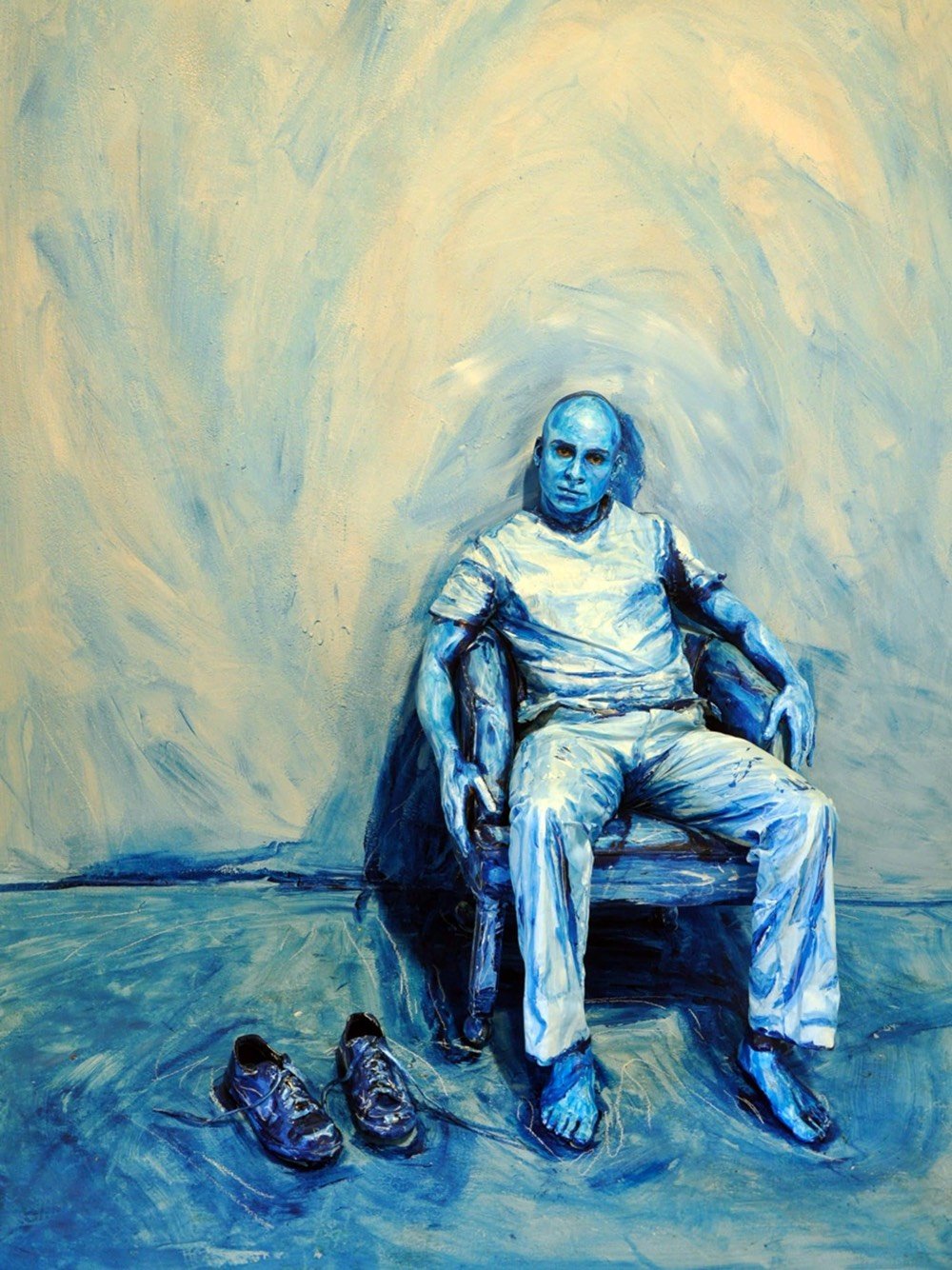

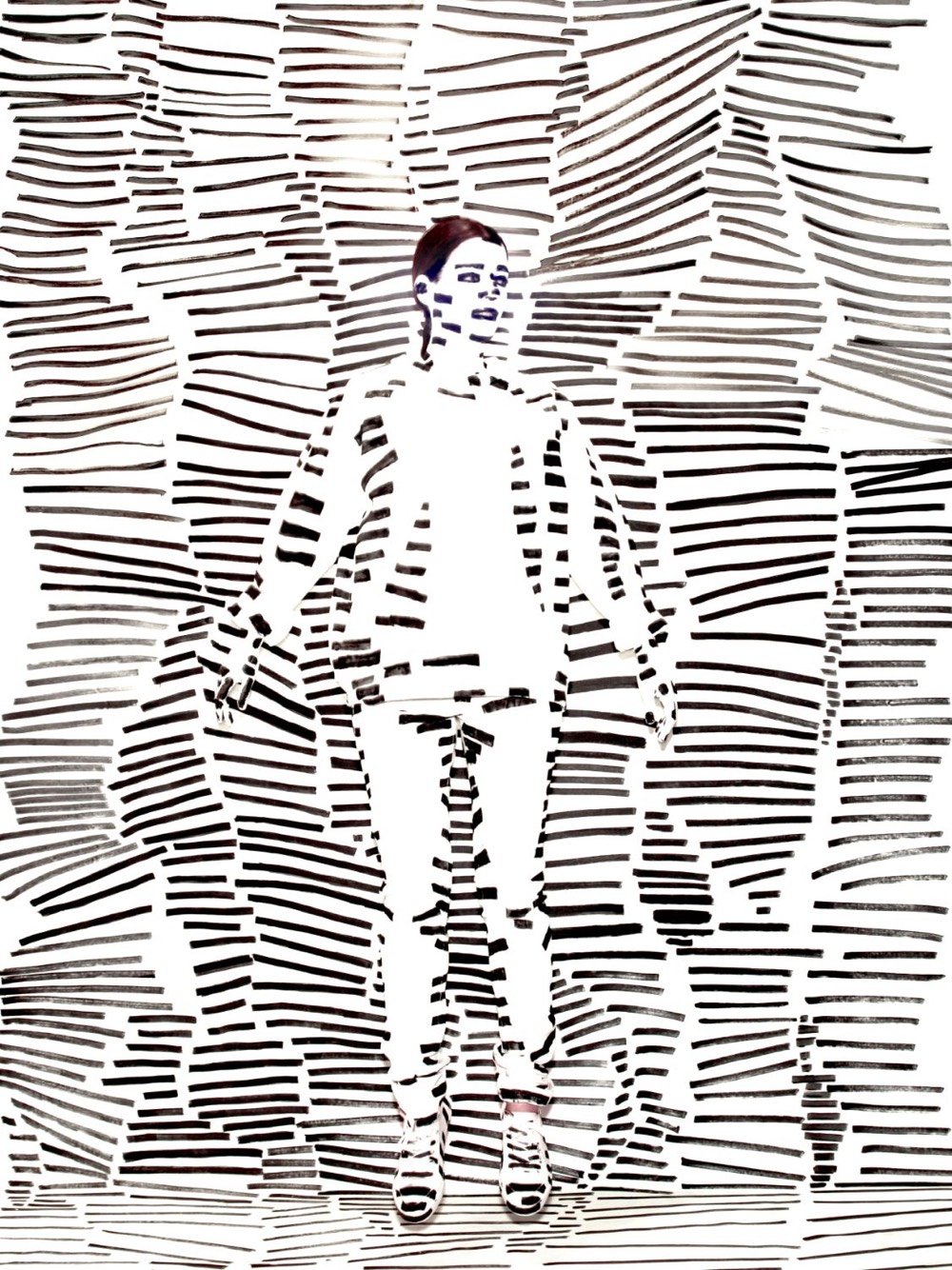
Yeah, those are all actual people painted and posed in front of painted backdrops. Here’s Meade posing with one of her models:
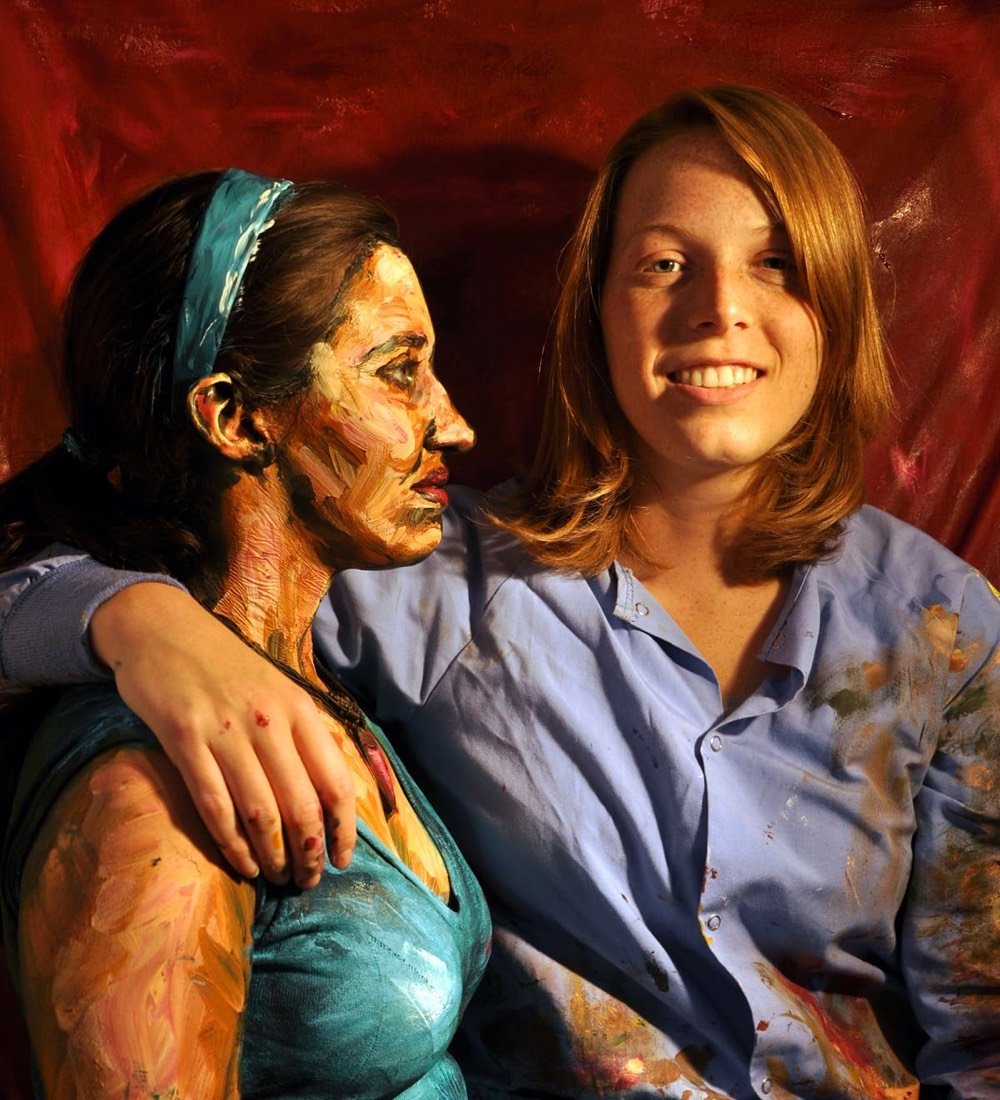
Meade did a TED talk about her work and also recently collaborated with Ariana Grande for her God is a woman video.
I first featured Meade’s work more than 8 years ago, so I figured it was time for a revisit. You can keep up with her stuff on Instagram or her website.
Last night, Twitter gave its users the option to switch back to a purely chronological timeline.
Meanwhile, today we updated the “Show the best Tweets first” setting. When off, you’ll only see Tweets from people you follow in reverse chronological order. Previously when turned off, you’d also see “In case you missed it” and recommended Tweets from people you don’t follow.
That’s good! Most users probably benefit from the algorithmic timeline, but not everyone wants to use the service that way (I certainly don’t).
Whenever Twitter changes their mind like this, it always reminds me of a missed opportunity by the company to give people more ways to discover new things on Twitter while keeping the service simple. They’ve tried the Discover feature, sticking likes from friends in the timeline, “in case you missed it”, recommended followers, Moments, Trends, etc. etc. And despite these things being at least somewhat interesting some of the time, many people freak out because they don’t have any control over whether this stuff pops up in their timelines.
What Twitter should do instead1 is use the same simple mechanism people already use to control their timelines: following and unfollowing. Instead of adding tabs to the interface or throwing random stuff into everyone’s timeline for the greater good, those things should be accounts you can follow. Call them Smart Accounts because they would be based on each user’s particular activity. Then users would be able to have a fully chronological timeline but also see tweets from their Smart Accounts according to their particular preferences.
Here’s an example. Seeing likes from people you follow is fun and interesting…the serendipity and relevance factors are high.1 The “Likes from Friends” Smart Account would post tweets that your friends have liked recently and you could set how many you wanted to see each day.
More examples:
- In Case You Missed It. Just like the current feature, except you can follow/unfollow and control the frequency.
- Trends. An account that posts tweets related to trending stories…or maybe it just alerts you that “Mario Kart” is trending. You can see global trends, location-based, or tailored just for you.
- Threads. See X number of the most popular threads posted in my extended network each day.
- Who to Follow. Every day (or X number of times/day), this account would suggest an account to follow.
- Moments. I never ever go to the Moments tab but I would definitely follow an account that periodically tweeted out the five best Moments from my extended network each day.
- Promoted Tweets. This is a Smart Account everyone would have to follow. But maybe you could pay a subscription fee to be able to unfollow?
I would pretty much follow all of those accounts in some way…and they’re just the tip of the iceberg. Twitter has all kinds of interest data that you could slice up in interesting ways and feed back into the system. A “Longreads” account that tweets out a long magazine or newspaper article that’s bubbling up in your network each day before your commute home? A “Book Stack” account that recommends books that people in your network have tweeted about recently. A “Smart Smart Accounts” account that recommends new Smart Accounts to follow (*Inception Horn*). A “Random Follow” account that automagically follows a different recommended account each day…then unfollows them and follows a new account the next day. Likes from My Friends’ Friends. Trending Videos. Meme Factory. Check Out My Soundcloud. So many possibilities.
Twitter wouldn’t want these accounts to get lost in the shuffle — they need to keep that engagement high — so maybe they’d have special status in the app somewhere: a tab that replaces Moments and they’re listed first on the Following page? Perhaps a few Smart Accounts are turned on by default when you make a new account. Maybe users could pin the tweets from select Smart Accounts to the tops of their timelines (much like Twitter was forcing on people with the algorithmic timeline).
But the point of all this is that Twitter would have a way to deliver new & engaging features powered by their algorithmic special sauce to their users in a very familiar and simple way without always mucking up people’s expectations: by simply clicking the follow button.
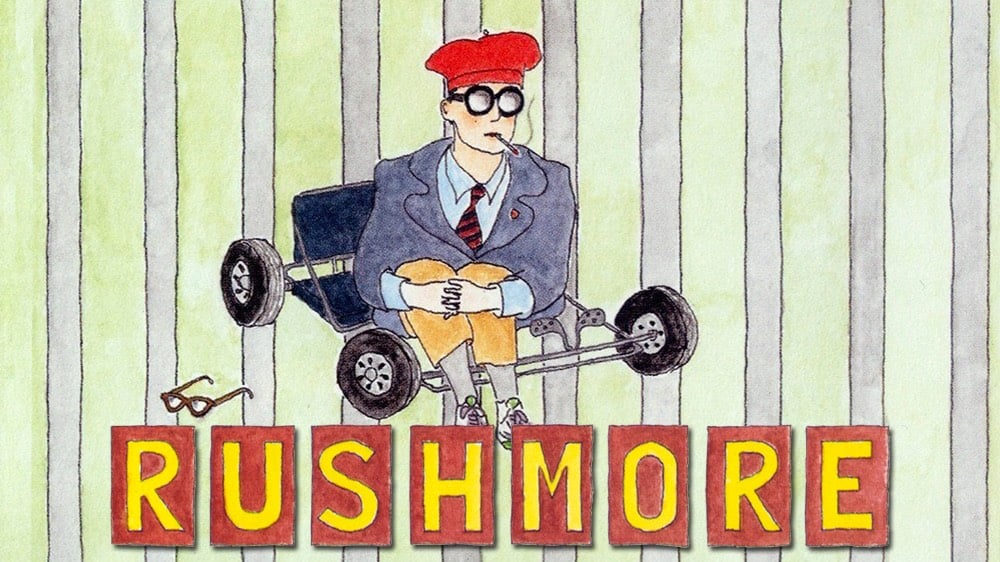
For NME, Sophie Charara ranks Wes Anderson’s nine feature films in order of greatness. Her top 3 picks are correct, I think, but I’d shift the order a little. Here’s my list, which is a tiny bit objective but mostly really really subjective.
1. Rushmore
2. The Royal Tenenbaums
3. The Grand Budapest Hotel
4. Fantastic Mr Fox
5. The Life Aquatic with Steve Zissou
6. Isle of Dogs
7. Bottle Rocket
8. Moonrise Kingdom
9. The Darjeeling Limited
Honestly, 4-8 could have gone in any order for me and The Darjeeling Limited is not that far off.
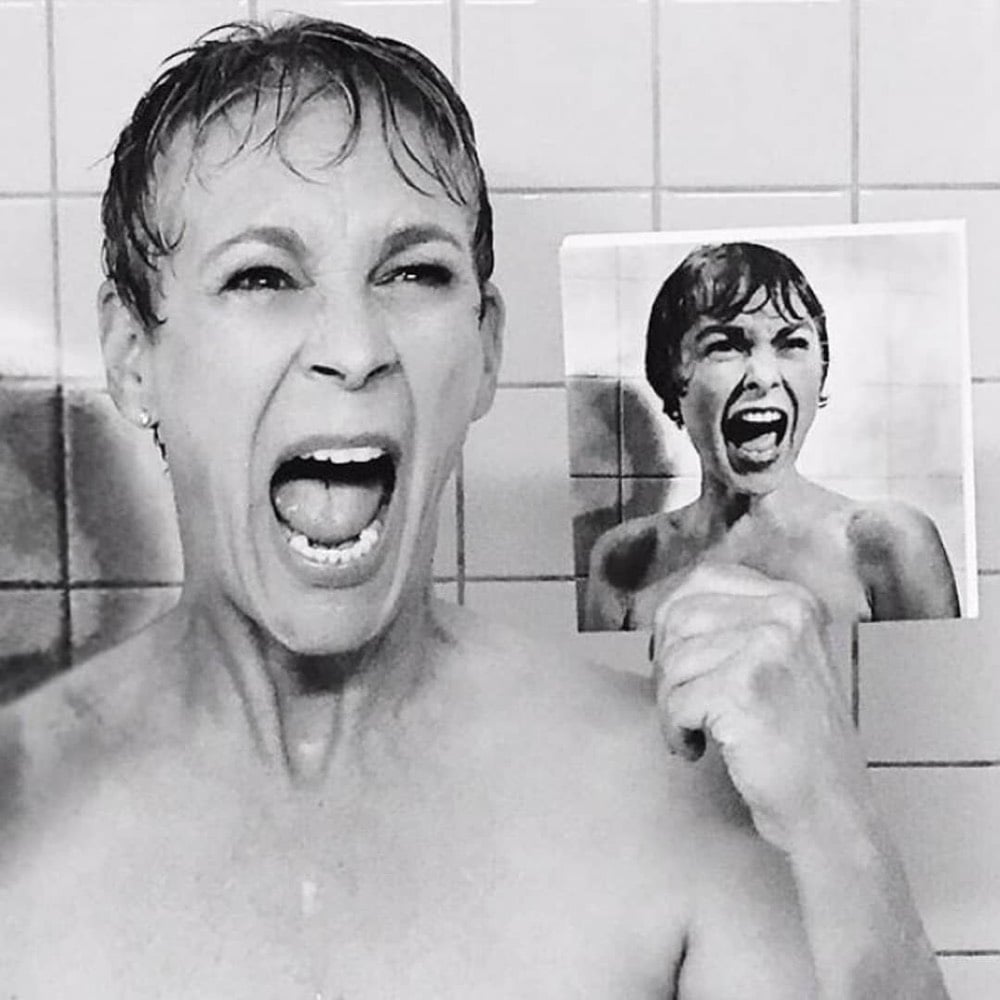
For an episode of a TV show called Scream Queens, Jamie Lee Curtis recreated the shower scene from Psycho performed by her mother, Janet Leigh, with a shot-for-shot homage. Even though they had limited time to shoot, Curtis and the crew took the recreation very seriously.
Falchuk began contemplating having Munsch in the shower as an homage to Curtis’ mother. “I thought, ‘Can I do this? Do I need to ask her?’ I didn’t want to offend her but at the same time this would be so awesome,” remembers Falchuk. “So then I wrote it and then got a text from her very quickly after she read the script. Her text was, ‘We need to do this shot-for-shot.’ Then, typical Jamie Lee, she started sending me all the websites and Tumblrs that have each shot laid out and storyboarded.”
What a photo! Curtis’ scene is not quite shot-for-shot, but you can see a screencapped video of it on YouTube and compare to the original.
After consulting dozens of authors, critics, and voracious readers, Vulture has come up with A Premature Attempt at the 21st Century Canon, aka a list of the 100 most important books of the 21st century (so far).
Any project like this is arbitrary, and ours is no exception. But the time frame is not quite as random as it may seem. The aughts and teens represent a fairly coherent cultural period, stretching from the eerie decadence of pre-9/11 America to the presidency of Donald Trump. This mini-era packed in the political, social, and cultural shifts of the average century, while following the arc of an epic narrative (perhaps a tragedy, though we pray for a happier sequel).
The top vote-getter is somewhat surprising: The Last Samurai by Helen DeWitt. Also represented high on the list are The Argonauts by Maggie Nelson, Elena Ferrante’s The Neapolitan Novels, and Leaving the Atocha Station by Ben Lerner. I spotted a bunch of my other favorites on the list as well: Wolf Hall by Hilary Mantel, My Struggle: A Man in Love by Karl Ove Knausgaard, and The Harry Potter books. You can imagine the rest of the list as well: Roth, Franzen, Jesmyn Ward, Didion, Atwood, Marlon James, etc.
Would love to see a similar non-fiction list. Off the top of my head: The Warmth of Other Suns, 1491, Sapiens, The Emperor of All Maladies, The Immortal Life Of Henrietta Lacks, The Black Swan, The Sixth Extinction, The Devil in the White City, Between the World and Me, and Moneyball would all deserve consideration.
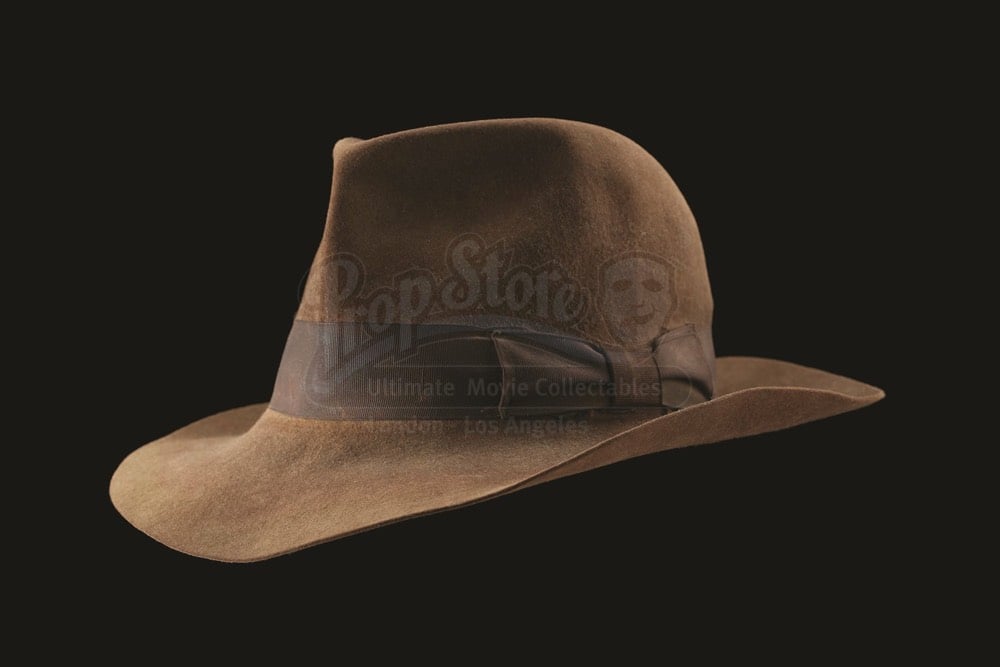
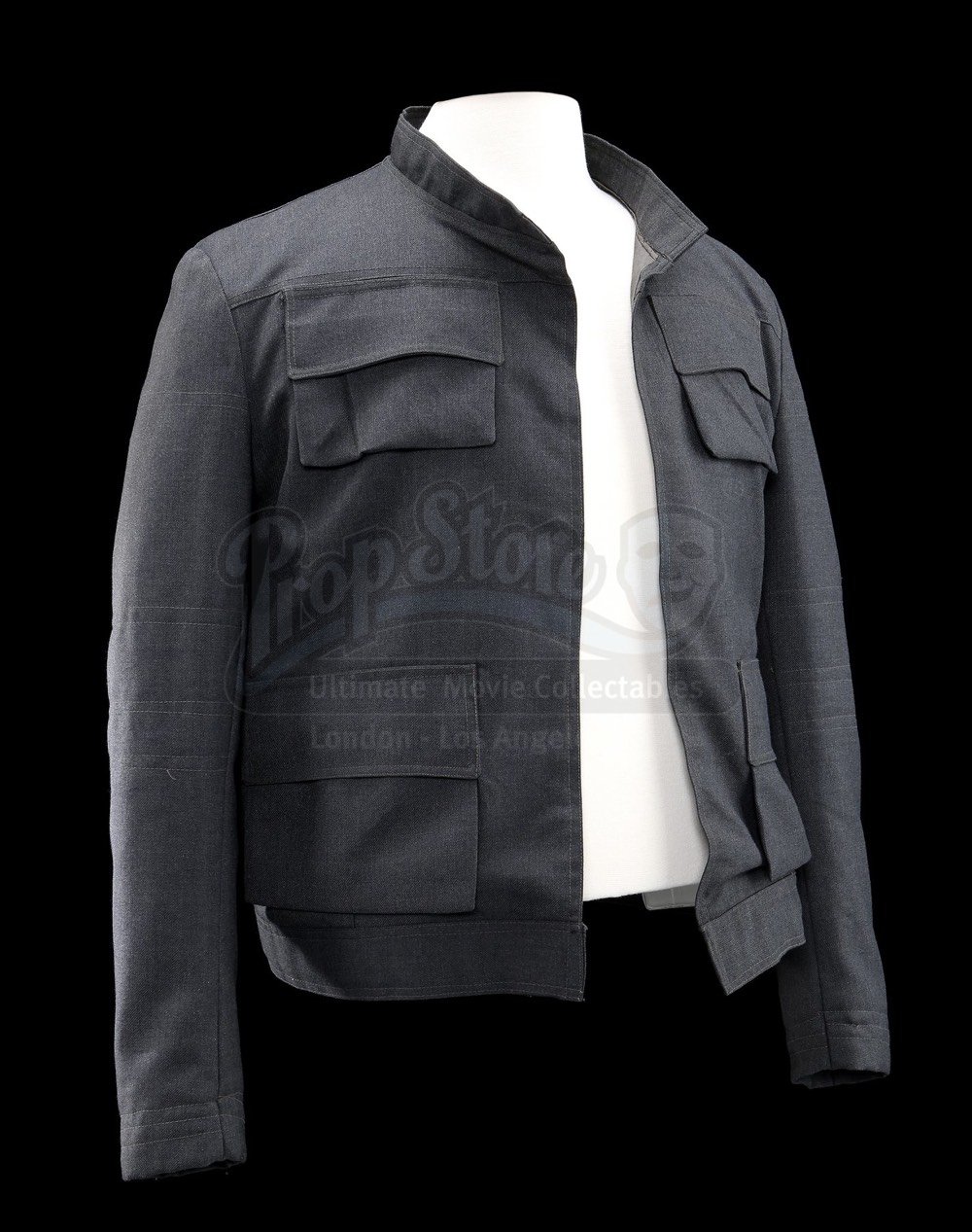
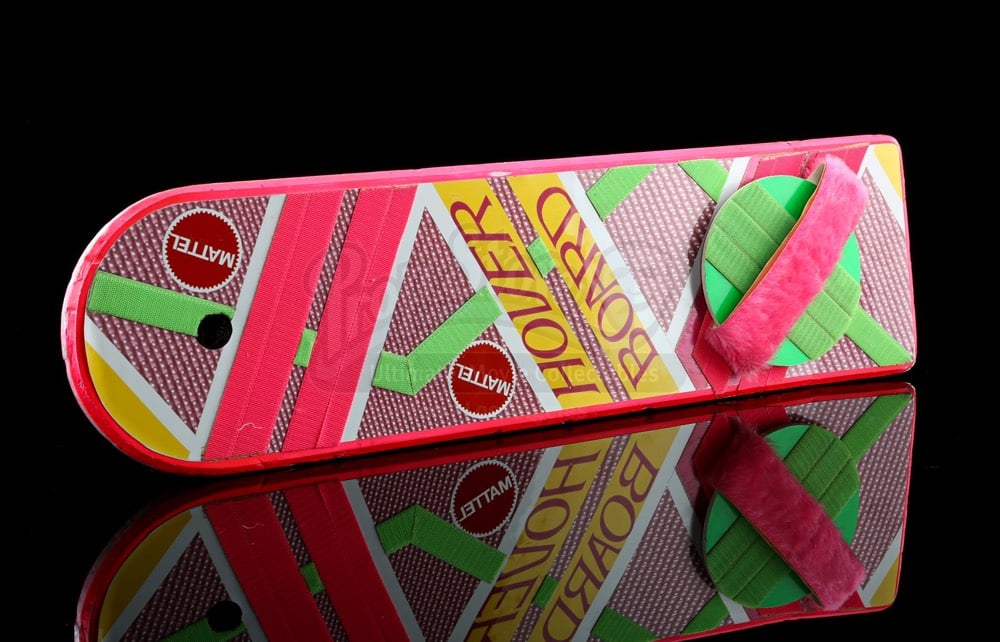
A huge cache of rare Hollywood memorabilia is up for sale at a London auction on September 20. The catalog includes over 600 items from movies like Back to the Future, Blade Runner, Batman, Blues Brothers, Die Hard, Goonies, Harry Potter, Indiana Jones, James Bond, Lord of the Rings, Star Trek, Star Wars, Superman, Terminator, Willy Wonka and the Chocolate Factory, and X-Men.
Among the most valuable and unique items are the iconic Indiana Jones hat worn by Harrison Ford in Raiders of the Lost Ark (estimate £200,000-£300,000):
They’re also selling Indy’s bullwhip from Temple of Doom (estimate £50,000-£70,000).
The most expensive item is Han Solo’s jacket from Empire Strikes Back (£500,000-£1,000,000):
Pairs nicely with this stormtrooper helmet from the first film (estimate £40,000-£60,000):

Marty McFly’s hoverboard from Back to the Future II (estimate £30,000-£50,000):
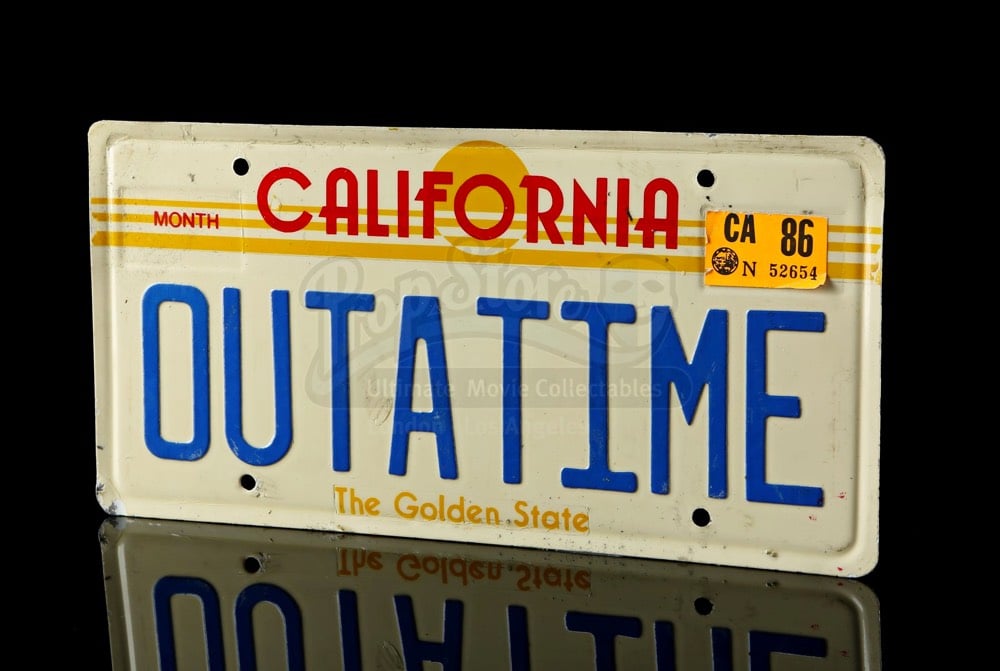
They’re also offering the DeLorean’s OUTATIME license plate from the first film (estimate £10,000-£15,000):
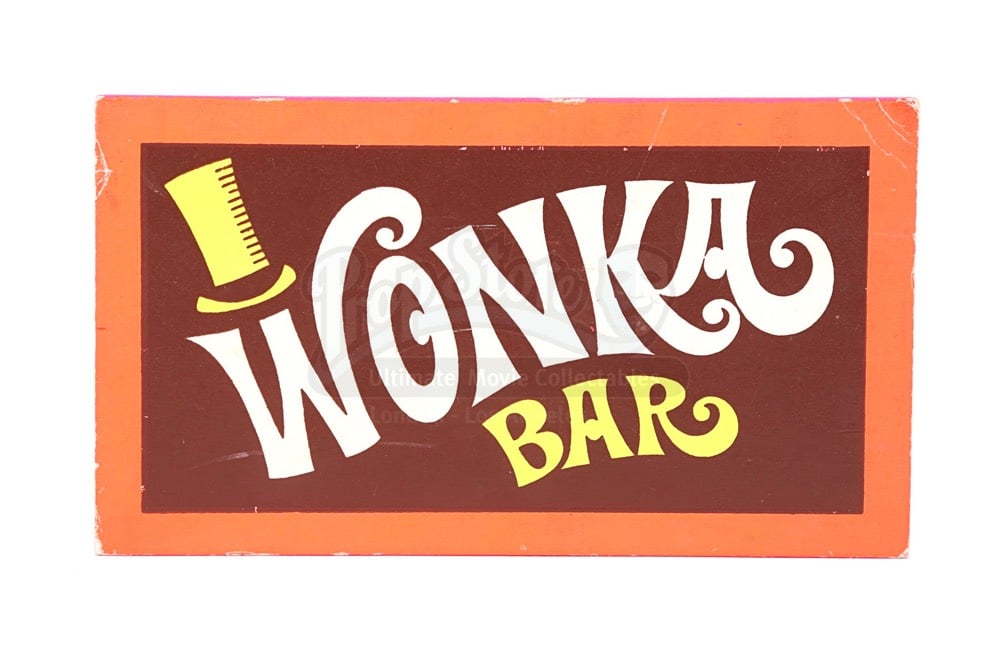
A Wonka Bar from Willy Wonka and the Chocolate Factory (estimate £8,000-£10,000), a rare item because most props from the film were “destroyed at its Bavarian film studio to allow production to wrap quickly, making way for the immediate filming of Cabaret”:
Captain Picard’s uniform from the first two seasons of Star Trek: The Next Generation (£10,000-£15,000):

And a bunch of other stuff, including John McClane’s radio from Die Hard, Edward Scissorhands’ costume, Mikey’s doubloon from The Goonies, a T-800 exoskeleton from Terminator 2, Tom Hanks’ helmet from Saving Private Ryan, a THX 138 license plate from American Graffiti, and a full-size drivable replica of the DeLorean from Back to the Future.
If you want to bid on any of this stuff, either in person, via the phone, or online, check out the info page on how to register.
This video explores how humans could begin to colonize the Moon today, using currently available technology.
We actually do have the technology and current estimates from NASA and the private sector say it could be done for $20-40 billion spread out over about a decade. The price is comparable to the International Space Station or the budget surplus of Germany in 2017.
That’s also only 12-25% of the net worth of Jeff Bezos. I don’t know whether that’s more an illustration of the relative affordability of building a Moon base or of Bezos’ wealth, but either way it’s a little bit crazy that the world’s richest man can easily afford to fund the building of a Moon base and somehow it’s not happening (or even close to happening).
Michael Moore made a documentary called Fahrenheit 11/9?! (It’s about the causes and aftermath of Trump’s election, out on Sept 21.)
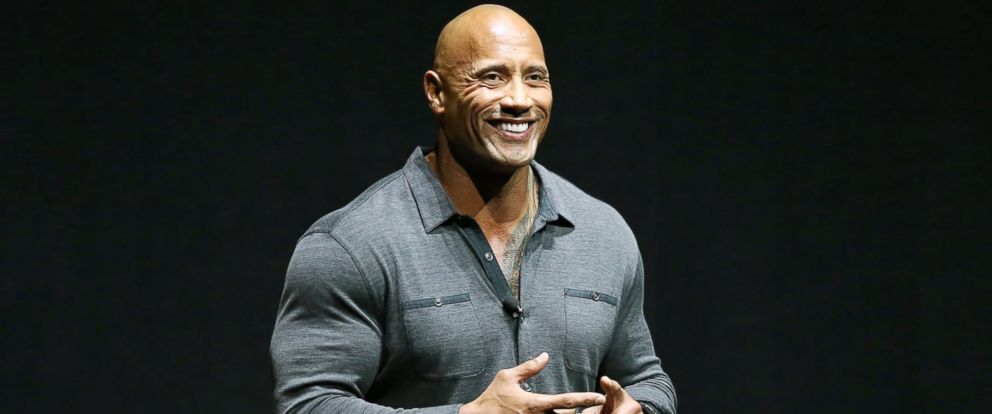
My friend, the novelist/fabulist/media inventor Robin Sloan, has a charming new short story that imagines how Dwayne “The Rock” Johnson will become President, first by playing the role in an imaginary movie. Along the way, there are some poignant thoughts about the nature of our political imaginations, the role of new media like Instagram in shaping public perception, and the ways leadership can, spell-like, be brought into being.
Here is the meager gift tucked into the disaster that is Donald Trump: now, anyone can be elected president, so anyone will be elected president. We might never have another lawyer in that office again. Donald Trump broke the seal, but Dwayne Johnson will fulfill the prophecy.
Can you imagine him on the debate stage? The way he’ll look alongside his opponents in the primary? A line of normal, rumpled humans, and then this towering figure. A political revolution: his suit will fit.
If he runs, he will win, and he will run, so the question isn’t, will Dwayne Johnson be president; rather, it’s: what kind of president will Dwayne Johnson be?
“Give me the place to stand, and I shall move the earth,” said Archimedes, maybe. With this book, we’ll set our feet and push.
The story and its narrator are so cynical and idealistic at once that it’s hard to characterize. Wasn’t the Emma Lazarus poem “The New Colossus” a self-invention of sorts? the story’s narrator asks. Couldn’t a new myth, a new colossus, reanimate that central idea, that openness to all peoples and possibilities, again?
The fact that on the one hand, America is “a nation of Presidents,” creating its own institutions, rules, and leaders, and a nation that could swoon for The Scorpion King because his Instagram videos are just so damned good, just illustrates one of hundreds of central contradictions about this place.
Are those contradictions hindrances to us? Do they fuel us? Or are they just unavoidable, constituent elements to the place and its peoples?
I don’t know. But I’m glad this story is poking those contradictions with a stick.
At The Atlantic, Yoni Applebaum argues that a decline in democracy isn’t just about voter disenfranchisement, gerrymandering, and radical inequality, but also the decline of smaller civic institutions. The 19th century saw a boom in democratic governance of public/private associations, not just local and federal government:
By the latter half of the 19th century, more and more of these associations mirrored the federal government in form: Local chapters elected representatives to state-level gatherings, which sent delegates to national assemblies. “Associations are created, extended, and worked in the United States more quickly and effectively than in any other country,” marveled the British statesman James Bryce in 1888. These groups had their own systems of checks and balances. Executive officers were accountable to legislative assemblies; independent judiciaries ensured that both complied with the rules. One typical 19th-century legal guide, published by the Knights of Pythias, a fraternal order, compiled 2,827 binding precedents for use in its tribunals.
The model proved remarkably adaptable. In business, shareholders elected boards of directors in accordance with corporate charters, while trade associations bound together independent firms. Labor unions chartered locals that elected officers and dispatched delegates to national gatherings. From churches to mutual insurers to fraternities to volunteer fire companies, America’s civic institutions were run not by aristocratic elites who inherited their offices, nor by centrally appointed administrators, but by democratically elected representatives…
This nation of presidents—and judges, representatives, and recording secretaries—obsessed over rules and procedures. Offices turned over at the end of fixed terms; new organizations were constantly formed. Ordinary Americans could expect to find themselves suddenly asked to join a committee or chair a meeting. In 1876, an army engineer named Henry Robert published his Pocket Manual of Rules of Order for Deliberative Assemblies, and it improbably became a best seller; within four decades, more than 500,000 copies were in print. It was, a Boston newspaper declared, “as indispensable as was the Catechism in more ecclesiastical times.”
We were, as the University of Georgia’s Walter Hill said in 1892, “a nation of Presidents.” And the decline of those traditions, those rituals of democracy, tracks a corresponding decline in respect for and interest in political democracy. That, at least, is Applebaum’s take.
I’m less sure. I think the history and sociology of these voluntary associations is fascinating, and deserves to be part of what we talk about when we talk about democracy writ large. But I think (and I would guess this would probably be taken as a friendly amendment) we also have to think about the transformations in other institutions we know are connected to democracy, like the media, public schools, and public institutions like libraries. Places that don’t necessarily have elected officers, but likewise help preserve certain rituals of democracy that we all have to learn in order to interact in a democratic society. How we read, how we think, how we share space — all of this matters, the anthropology as much as the law.
In other words, there’s a formal and informal side to democracy, and neither one of them is necessarily more important than the other. Not to mention that elections and officers are features of only a certain kind of democracy, and there are other, more radical forms of democracy that are available to us — all of which were experimented with in the 18th and 19th centuries too, by anarchists, socialists, and other people who didn’t take the US’s electoral model has having definitively solved the question of what a democratic society might look like.
The broader truth I take from this is that, to borrow from Aristotle, we are what we do repeatedly. If we’re not a nation of Presidents any more, it means we’ve become a different kind of democracy, not necessarily an un-democracy. And that’s significant. We’ve mutated into something else: a different kind of mass democracy, linked together by a different set of institutions with a different set of principles, leading to a different set of possibilities.
I’ve often said that every two-dimensional map is a lie; a perfect map would be able to show a city in three dimensions. (Or four, to show how they’ve changed over time.)
Height tells you so much; the steepness of streets, where water tends to flood, even often class distinctions, at least traditional ones. Try walking around San Francisco sometime, or Gloucester, Massachusetts, following a map that tells you take a left turn, straight uphill. Better still, try this in a wheelchair.
Toby Eglesfield, a graphic designer working in New Zealand, took this challenge seriously. After some aborted attempts with arrows, he settled on a trimetric projection (it’s like isometric, but slightly different), with different colored wedges to indicate the relative steepness of a street. Here’s the basic idea:

And here’s the completed product:

Created for the disAbilities Resource Centre in Queenstown, the map includes marks for accessible toilets, car parks, etc. I’d love to see a version for Manhattan, San Francisco — anywhere, really, but especially older cities with varied topography.
Each year to promote wildlife conservation, the folks behind The Comedy Wildlife Photography Awards select the funniest photos of animals doing goofy things from hundreds of entries from around the world. The Guardian has a selection of photos from 2018’s finalists.

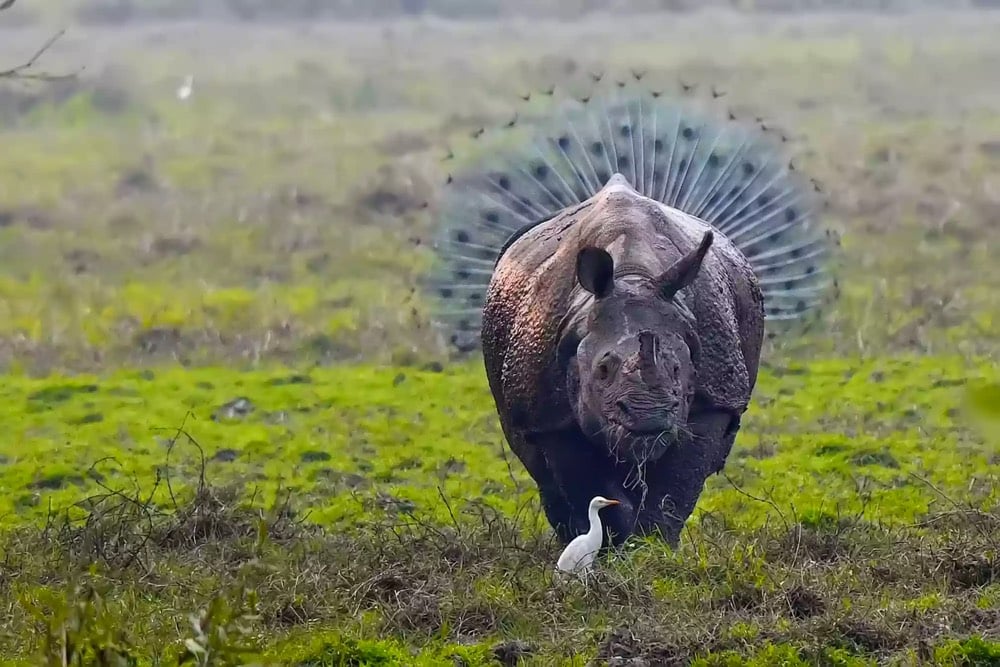
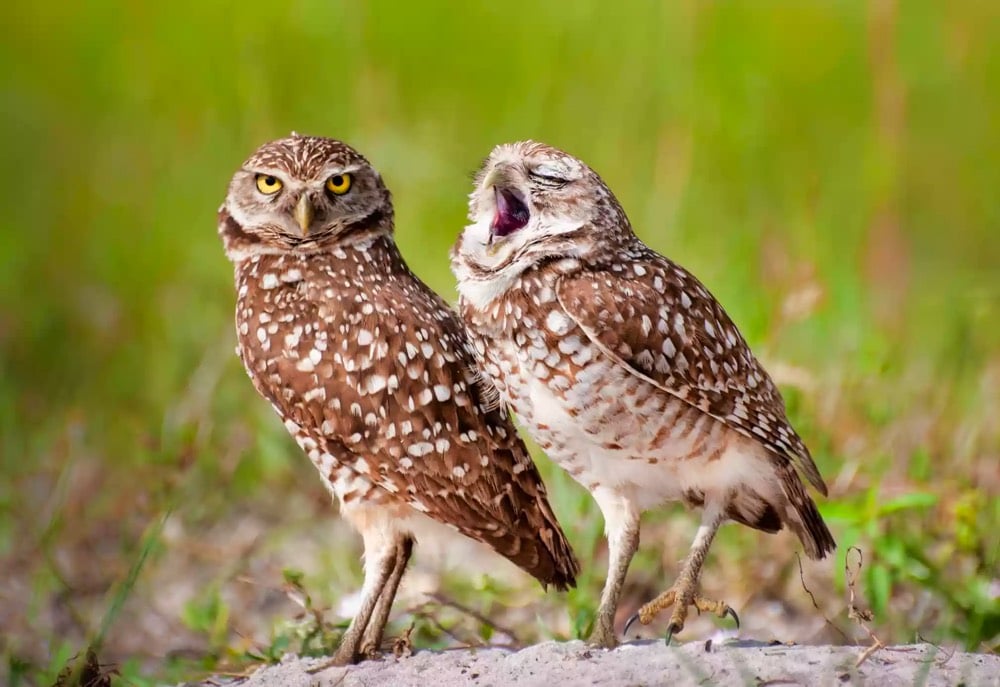
The galleries of finalists & winners from past years is also worth looking through. So many good ones in there, but this particularly caught my attention:
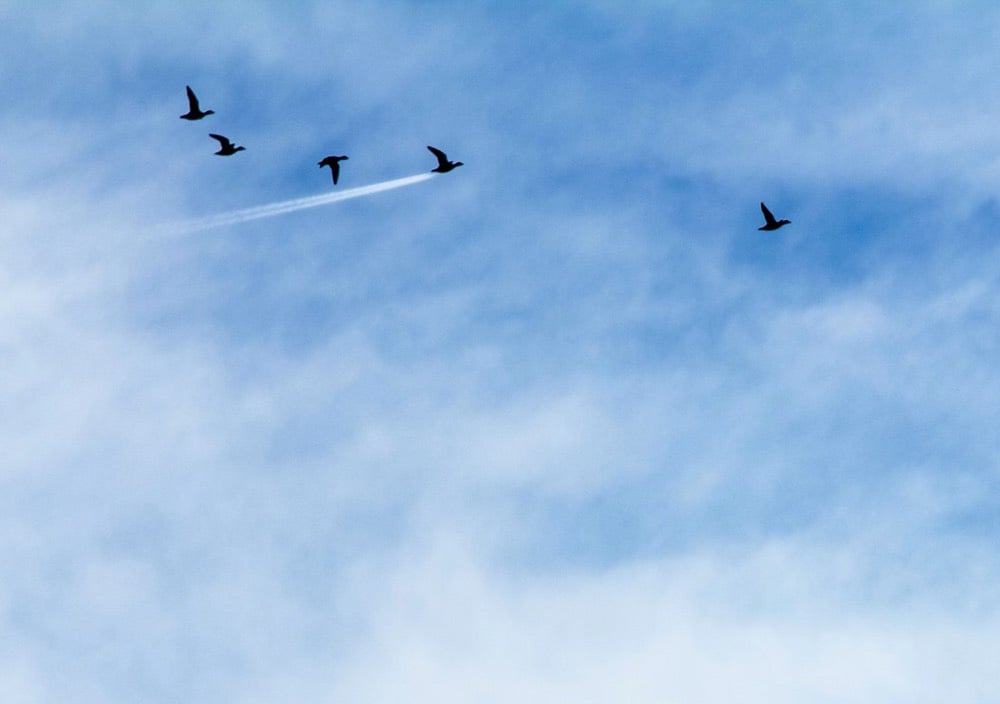
Update: There’s a book featuring photos from the contest.
Earlier this summer, Theo Jansen released an improved iteration of his strandbeests, wind-powered machines that walk along the beach. The newest version doesn’t have any joints, so it doesn’t need lubrication or protection from the sand to keep it from moving. As a result, it zips along at a pretty good clip down the beach. I first ran across Jansen’s work at a conference more than a decade ago.
It’s hard to know where to begin in talking about what’s so cool about Jansen’s beach animals. They’re evolved for one thing; he worked out the optimal 11-piece leg using evolutionary algorithms on a computer but now prefers to race his animals on the beach and “breed” the most successful ones together, taking the best bits from each to make their offspring better. His animals have legs, muscles (pneumatic pistons within the plastic tubing), stomachs (plastic bottles for storing air), and nerves (collections of on/off values that work pretty much like logic gates).
The kids have one of these built-your-own mini-strandbeests and it’s really neat to see how it all works up close.
Cookies shaped like Christmas trees are made by pressing a tree-shaped cookie cutter into dough. But how are cookie cutters made? Like this:
I love how the machine’s little hands come together like in a Little League huddle just before the team takes the field. Aaaaaand, BREAK! Let’s get out there and make some cookies! (via colossal)
To mark the 25th anniversary of its airing, the very first episode of Late Night With Conan O’Brien has been made available online in its entirety. His guests that evening were John Goodman, Drew Barrymore, and Tony Randall.
O’Brien says this initial video will be joined by a “complete online archive of Conan’s 25 years in late night” in January 2019. (via anil dash)
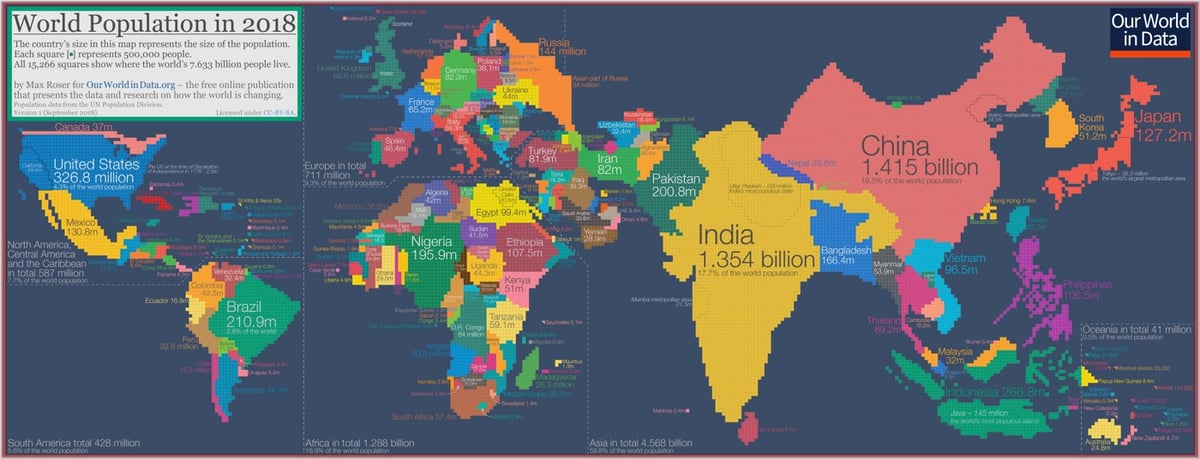
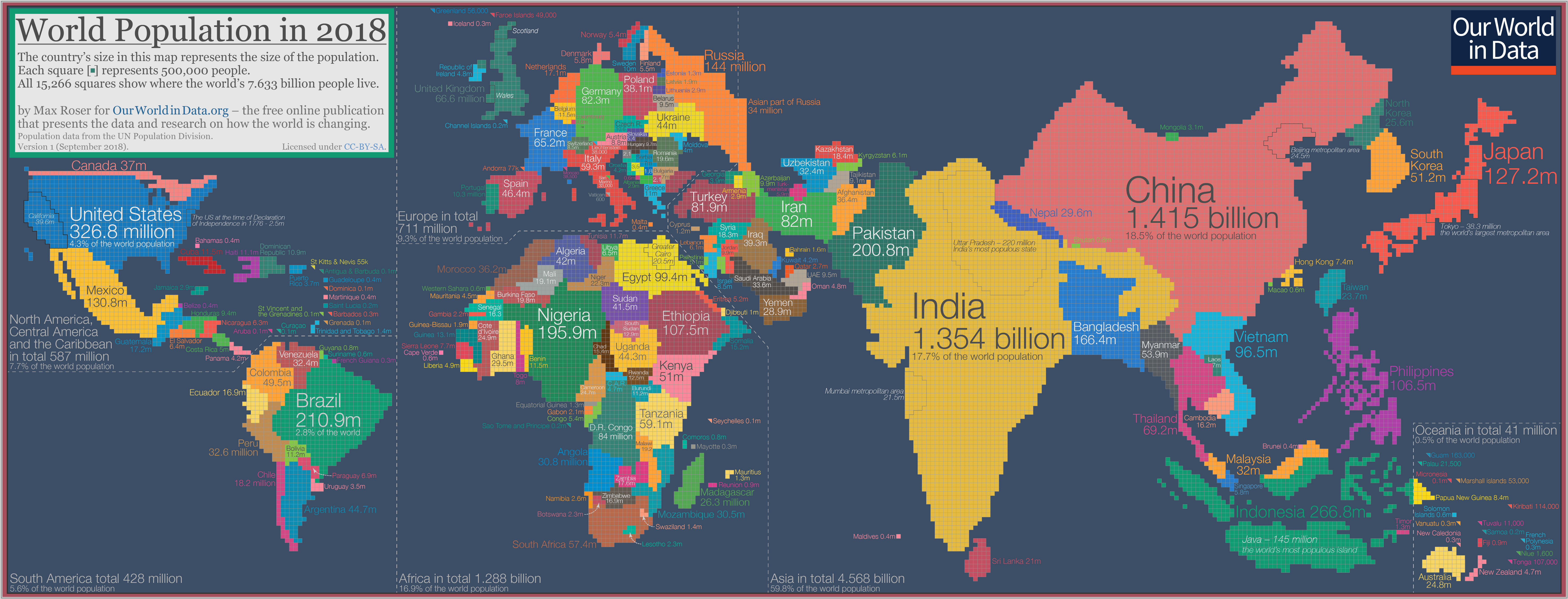
Max Roser has constructed a cartogram of the world where the size of the countries are determined by their populations (big version of the image here). He refers to it as “the map we need if we want to think about how global living conditions are changing”.
The cartogram is made up of squares, each of which represents half a million people of a country’s population. The 11.5 million Belgians are represented by 23 squares; the 49.5 million Colombians are represented by 99 squares; the 1.415 billion people in China are represented by 2830 squares; and this year’s entire world population of 7.633 billion people is represented by the total sum of 15,266 squares.
As the size of the population rather than the size of the territory is shown in this map you can see some big differences when you compare it to the standard geographical map we’re most familiar with. Small countries with a high population density increase in size in this cartogram relative to the world maps we are used to — look at Bangladesh, Taiwan, or the Netherlands. Large countries with a small population shrink in size — talking about you Canada, Mongolia, Australia, and Russia.
Some observations (Roser has many more if you click through):
1. Look at how teeny Russia is. (So is Canada.)
2. Seriously, Bangladesh, Pakistan, Nigeria, Indonesia, and Brazil all have larger populations than Russia. Japan, Ethiopia, and Mexico are very close.
3. 60% of the world’s population lives in Asia.
4. 5 times as many people live in Madagascar as do Ireland. The populations of Ireland + the Scandinavian countries = the population of Peru.
5. Europe is tiny. Guns, Germs, and Steel, yo.
6. India and China. Damn.
I would love to see an animated version of this cartogram from like 1950 to 2100 (like this one of the US).
Update: Jakub Nowosad built an animated map of the world’s population changes from 1800-2100 and documented the steps so you can make your own variation.
Where did the word “OK” come from and how did it become so popular?
Young Boston intellectuals in the early 1800s used a humorous code of abbreviated phrases, like “KC,” or “knuff ced”; “KY,” “know yuse”; and “OW,” “oll wright.” And while most of them eventually fell out of fashion, one abbreviation persisted: “OK,” or “oll korrect.”
OK started off as the LOL of its time. Then Martin Van Buren’s presidential campaign popularized it and its brevity proved useful for sending telegraph messages. You can read more about the history of the word in Allan Metcalf’s book, OK: The Improbable Story of America’s Greatest Word.
Newer posts
Older posts



Socials & More