


What I Learned from Watching My iPad’s Slow Death by @jwherrman. My son is working with this exact iPad right now and is wrestling with some of these same issues.

Advertise here with Carbon Ads
This site is made possible by member support. 💞
Big thanks to Arcustech for hosting the site and offering amazing tech support.
When you buy through links on kottke.org, I may earn an affiliate commission. Thanks for supporting the site!
kottke.org. home of fine hypertext products since 1998.
Beloved by 86.47% of the web.
Entries for February 2018
The 10 shared mobility principles for livable cities
A slew of transportation companies, including Uber, Lyft, Zipcar, Didi, and Citymapper recently signed the Shared Mobility Principles for Livable Cities, which are:
1. We plan our cities and their mobility together.
2. We prioritize people over vehicles.
3. We support the shared and efficient use of vehicles, lanes, curbs, and land.
4. We engage with stakeholders.
5. We promote equity.
6. We lead the transition towards a zero-emission future and renewable energy.
7. We support fair user fees across all modes.
8. We aim for public benefits via open data.
9. We work towards integration and seamless connectivity.
10. We support that autonomous vehicles in dense urban areas should be operated only in shared fleets.
This all sounds good, but there’s not a lot of emphasis on public transportation, aside from this (and a couple of other mentions):
The mobility of people and not vehicles shall be in the center of transportation planning and decision-making. Cities shall prioritize walking, cycling, public transport and other efficient shared mobility, as well as their interconnectivity. Cities shall discourage the use of cars, single-passenger taxis, and other oversized vehicles transporting one person.
I remain skeptical that Uber’s ultimate goal isn’t to replace any and every public transportation system it can.
Watch the Falcon Heavy launch live at 2:20pm ET today
SpaceX is scheduled to launch their massive new rocket for the first time today. You can catch a live stream of the launch here:
When Falcon Heavy lifts off, it will be the most powerful operational rocket in the world by a factor of two. With the ability to lift into orbit nearly 64 metric tons (141,000 lb) — a mass greater than a 737 jetliner loaded with passengers, crew, luggage and fuel — Falcon Heavy can lift more than twice the payload of the next closest operational vehicle, the Delta IV Heavy, at one-third the cost. Falcon Heavy draws upon the proven heritage and reliability of Falcon 9.
As part of the launch, the three engine cores will land back on Earth, as they have been doing for years now with their other rockets. You can watch an animation of how they hope the launch will go:
The payload for this rocket test is SpaceX CEO Elon Musk’s red Tesla Roadster. No, really. If all goes as planned, the Roadster and its passenger (a dummy wearing a SpaceX suit) will be put into an orbit around the Sun somewhere in the vicinity of Mars, driving around the solar system for a billion years. SpaceX isn’t saying exactly where the Roadster might end up, but engineer Max Fagin has a guess about its eventual orbit:
You can read more about the launch from Phil Plait and on PBS NewsHour.
Update: The new time for the launch is 2:20pm ET. The launch window lasts until 4pm ET.
Evidence of advanced Mayan civilization found hidden in Guatemalan jungle
Using LIDAR, a team of researchers in Guatemala has been able to peer underneath the dense jungle to see what the landscape looked like in the time of the Mayans, a civilization which reached its peak between 250-900 A.D. — an x-ray of the forest, if you will. The results are astonishing…they reveal a civilization much larger and more sophisticated than previously thought.

The results suggest that Central America supported an advanced civilization that was, at its peak some 1,200 years ago, more comparable to sophisticated cultures such as ancient Greece or China than to the scattered and sparsely populated city states that ground-based research had long suggested.
In addition to hundreds of previously unknown structures, the LiDAR images show raised highways connecting urban centers and quarries. Complex irrigation and terracing systems supported intensive agriculture capable of feeding masses of workers who dramatically reshaped the landscape.
The potential of LIDAR as a cultural and geological time machine is just starting to be realized. You might remember these LIDAR images of the geology of forested areas in Washington State.
Update: Another team, working in Mexico, recently used LIDAR to uncover a city built by the Purépecha civilization that had as many buildings as modern-day Manhattan.
Flyover video of Jupiter’s Europa
NASA engineer Kevin Gill stitched together images from two 1998 observations of Europa by the Galileo spacecraft to create this super smooth flyover video of the icy Jovian moon. The details:
Processed using low resolution color images (IR, Green, Violet) from March 29 1998 overlaying higher resolution unfiltered images taken September 26 1998. Map projected to Mercator, scale is approximately 225.7 meters per pixel, representing a span of about 1,500 kilometers.
How Martin Luther King Jr. really felt about advertising
The worst commercial aired during last night’s handegg match was this Dodge Ram ad featuring a snippet of a speech by Martin Luther King Jr. King, of course, was an outspoken critic of capitalism. In fact, later in the very same speech, he railed against this type of advertising. Here’s the audio of that part of his speech overlaid on the Dodge Ram commercial:
Now the presence of this instinct explains why we are so often taken by advertisers. You know, those gentlemen of massive verbal persuasion. And they have a way of saying things to you that kind of gets you into buying. In order to be a man of distinction, you must drink this whiskey. In order to make your neighbors envious, you must drive this type of car. In order to be lovely to love you must wear this kind of lipstick or this kind of perfume. And you know, before you know it, you’re just buying that stuff. That’s the way the advertisers do it…
It often causes us to live above our means. It’s nothing but the drum major instinct. Do you ever see people buy cars that they can’t even begin to buy in terms of their income? You’ve seen people riding around in Cadillacs and Chryslers who don’t earn enough to have a good T-Model Ford. But it feeds a repressed ego.
You can listen to King’s speech in its entirety here:
(thx, hyder)
Every commercial during the Super Bowl last night was an advertisement for Tide
The “It’s a Tide ad” commercials that aired during the Super Bowl is the best ad campaign I’ve seen in forever. With the lovable David Harbour winking at the camera, they effectively turned every commercial into a Tide ad, just like they said they would.
It’s not necessarily that you were looking at everyone’s clothes and wondering if they’d been washed with Tide, but you were constantly on the lookout for Harbour, wondering when he was going to pop out with a knowing smirk and say, “gotcha, it’s a Tide ad”. Even during the trailer for Solo, you weren’t entirely sure it wasn’t some cross-promotional thing that ended with Harbour picking a piece of lint off of Lando’s impeccably laundered outfit, looking straight into the camera, and saying, with a tilt of his head, “Tide ad” while Chewy softly bawls offscreen.
I kinda hate myself for loving these ads, but dammit they’re super clever. They used the energy of their opponents against them, like in ju-jitsu. Even the third-quarter ad for another laundry detergent (whose brand name I can’t even remember) seemed like a Tide ad. (Is life a Tide ad? ARRRHGHGGhh)
Solo, A Star Wars Story
Someday, I will see the trailer for a new Star Wars movie and not get completely gooey inside. Today is not that day. Here’s the briefer “TV spot” (don’t call it a trailer!) that aired during the Super Bowl last night.
I think my insides and outsides briefly switched places when they showed Donald Glover as Lando.
Update: Demi Adejuyigbe made this fake Donald Glover / Childish Gambino song about Lando and it’s too good.
Update: The Solo trailer with a soundtrack of the Beastie Boys’ Sabotage is an improvement on the actual trailer:
Which is not surprising…adding Sabotage to any fast-paced video sequence improves it.
Update: New longer trailer. Still cautiously optimistic!
This Is Why Uma Thurman Is Angry. Uma Thurman on what Harvey Weinstein (attacked her) and Quentin Tarantino (almost killed her filming Kill Bill) did to her.
Ask Dr. Time: Explaining Mathematics

Today’s question is surprisingly tricky, as even the letter writer acknowledges:
My question is one I’m fumbling to articulate. I’m a math teacher and writer. (I’m a writer in the sense that I write, not in the sense that I get published or paid for writing.) I write a lot about teaching, but I’ve also been trying to get a handle on how I can write about math.
Here’s the question: is it possible to write about math in a deep and accessible way?
This is a question that sends me off on a lot of different questions. What does it mean to understand math? What does it mean to understand a metaphor? Are there are great literary works that are also mathematical?
Ultimately, though, I don’t know how to think about this yet. I’m hoping to eventually figure this out by learning math and writing about it…but that’s slow, so maybe Dr. Time can offer advice?
The obvious answer to this question is yes, of course it’s possible to write about math in a deep and accessible way. Bertrand Russell won a Nobel Prize in Literature. Godel, Escher, Bach is a 777-page doorstop that’s also a beloved bestseller. If you’re looking to satisfy an existence requirement, that book has your back. I’ll even stipulate that for every intellectual subject, not just mathematics, there exists a work that satisfies this deep-but-accessible requirement. It’s just like how there’s always a bigger prime number. It’s out there; we just have to find it.
On the other hand, math seems hard. And I think it seems hard for Reasons. Here’s a big one: mathematicians and popularizers of mathematics are perhaps understandably obsessed with understanding mathematics as such. The want to explain the totality of mathematics, or the essence, rather than finer problems like distinguishing between totalities and essences.
If you look at the other sciences, they don’t do this. It’s only very rarely that you get a Newton, Darwin, or Einstein who sets out to grab his or her entire subject with both hands and rethink our fundamental understanding of its foundations. Imagine a biologist who wants to explain life, in its essence and totality, at the micro and macro level. They’d be understandably stumped. Even physicists, when they want to explain something big and weird to the public, stick to things like a subatomic particle they’re hoping to discover or the behavior of one of Saturn’s moons. They don’t try to explain physics. They explain a problem in physics.
When mathematicians do that, they’re usually pretty successful. The Konigsberg Bridge Problem is charming as hell. Russell’s and Godel’s paradoxes have whole books written about them, but can also be told in the form of jokes. Even Fourier Transforms can be broken down and made beautiful with a little bit of technical help.
So I think the key, in part, is to resist that mathematicians’ tendency to abstract away individual problems into general solutions or categories of solutions or entire subfields, and spend some time with the specific problems that mathematicians are or have been interested in. But it also helps a lot if, in that specific problem, you get that mathematical move of discarding whatever doesn’t matter to the structure of the problem. After all, that’s a big part of what you’re trying to teach: how to think like a mathematician. You just to have to unlearn what a mathematician already assumes first.
Digital Dating and the Content Commitment
Call it a 21st century problem. If you’re dating someone, or interested in dating someone, and you follow that person on social media, how far and how deep into their content well do you have to go to signal your affection?
“Many millennial and Gen Z men aren’t outwardly affectionate, so we’re forced to discern the interest level and emotion behind a like or a view,” said Kristin in Los Angeles. “If I’m dating or interested in a guy, I pay close attention to their views of my Instagram Story to gauge their interest.”
“A guy I’m casually seeing right now doesn’t use social media and rarely texts, and it’s entirely thrown off my game,” she added. “It’s like, how do I know if you like me? It’s some Black Mirror millennial courting bullshit.”
It’s complicated, because the gaps in different people’s typical behavior is so different. If both partners are equally invested in social media, they can establish a certain baseline of behavior. Then you can account for deviations. But I’m not sure whether flirting/courtship levels of faving are sustainable or even desirable.
I guess with this as in all things, it’s probably best to talk it out. If you’re taking a holiday from Instagram so you can focus on work for a week, tell your partner. Else he or she might take it as an insult. If you’ve done something that looks like flirting with another person, get ahead of that. Because your partner is watching. I’m more interested in the nuances and conversations that result than the hard-and-fast rules, but it’s definitely A Thing worth some attention.
I’m the Wife of a Former N.F.L. Player. Football Destroyed His Mind.
Wired’s (Slightly Belabored) Guide to Star Wars
Suppose you were an alien, from a galaxy long ago and far away, who otherwise completely resembled a modern human, and you arrived on Earth with the mission of completely understanding its major forms of entertainment, but in a hurry. Plot summaries and casting and merchandising are equally important. Like, you don’t know anything, but you only really have time to skim.
You, my extraterrestrial friend, are the perfect reader of The Wired Guide to Star Wars. It’s not bad, per se. It’s just unclear to me who it’s for.
My favorite bits come at the beginning and the end, when there’s almost room for some critical analysis. First, on the genesis of the story and the weird bits of genre fiction that cling to it like iron filings to a magnet:
Lucas kept the swords, the magic, and the knights [of mythic hero stories]. Then—and this was, perhaps, his greatest innovation—Lucas kept everything else, too. Wizards, dragons, princesses, horses, cars, motorcycles, airplanes, ships, ray guns, teddy bears, his family dog, pirates, car chases, Nazis, gangsters, samurai, dogfights, gunfights, swordfights, fist fights, gladiators, spies, castles, and robots. In space, traveling at hyperspeed.
And last, on the curious persistence of that overpacked universe, knitted together from so many fictions that it somehow became real:
The particular strength of the Star Wars shared universe—as opposed to, say, the Marvel shared universes, the DC Comics-based shared universe at Warner Brothers (Superman, Wonder Woman, Batman, etc.), or the ones that other brands have tried to spin up—is its depth. Possibly because of the nostalgia Lucas built into his very first movie for the days before the dark times of the Empire, the Star Wars universe feels like it exists even when you’re not looking at it. In the language of psychology, Star Wars is a paracosm, a complete world populated with autonomous characters. That’s why it’s possible for young-adult books about teenagers training to be Rebel pilots to coexist with half-billion-dollar movies about Rey and Kylo Ren, comic books about Darth Vader, augmented-reality apps that let you insert Stormtroopers into Instagrams, and Barbie-like fashion-play dolls of Jyn Erso, the hero of the Disney-era prequel Rogue One.
That paracosm is so vivid, so enduring, that Kennedy and Lucasfilm can continue to pursue an aggressive release schedule, one movie a year, for … well, forever, actually.
It’s almost a better thought exercise: instead of imagining what comes next in the Star Wars universe, try to imagine what earthly force could stop it.
A time lapse video where you can actually see the Crab Nebula expanding
The Crab Nebula is the result of a supernova that happened 6,500 light years away from Earth. From our perspective, the supernova happened almost 1000 years ago, in July, 1054. Using a home-built telescope, amateur astronomer Detlef Hartmann took a photos of the Crab Nebula over a ten-year period and assembled them into a time lapse video of the nebula’s expansion. Even after a millennia and across all that distance, the expansion of the nebula is clearly visible. And why not, those gases are moving at a clip of 1400 kilometers per second (more than 3 million miles per hour or 0.5% the speed of light).
As Phil Plait notes, we’re used to seeing things in our solar system move in the skies, but far-away bodies? That’s just weeeeeird.
Sure, the Moon moves in the sky, and the planets around the Sun, but deep sky objects — stars, nebulae, galaxies — are so distant that any physical motion at all is incredibly difficult to detect. They may as well be frozen in time. Being able to see it… that’s astonishing.
Hartmann’s is not the first Crab Nebula animation; I also found animations using images from 2002 & 2012, 1973 & 2001, 1999 & 2012, and 1950 & 2000. Someone with an interest in astronomy and photo/video editing should put all these views together into one 68-year time lapse of the nebula’s expansion.
Supercut of cliched Instagram travel photos
Now that leisure travel is widely accesible, the internet connects everyone, and most people have connected cameras on them 24/7, one of the side effects is that everyone’s vacation snaps look pretty much the same. Oliver KMIA collected hundreds of travel photos from Instagram, grouped them together by subject — passport shot, Mona Lisa, side mirror selfie, Leaning Tower, ramen bowl — and assembled them into this two-minute video of our collective homogenized travel experience. And it’s not just travel…vast swaths of Instagram are just variations on a theme:
Of course, my Instagram feed has no such cliches… *ahem*. (via @choitotheworld)
Update: In his book How Proust Can Change Your Life, Alain De Botton talks about the difficulty with cliches.
We may ask why Proust objected to phrases that had been used too often. After all, doesn’t the moon shine discreetly? Don’t sunsets look as if they were on fire? Aren’t clichés just good ideas that have been proved rightly popular?
The problem with clichés is not that they contain false ideas, but rather that they are superficial articulations of very good ones. The sun is often on fire at sunset and the moon discreet, but if we keep saying this every time we encounter a sun or moon, we will end up believing that this is the last rather than the first word to be said on the subject. Clichés are detrimental insofar as they inspire us to believe that they adequately describe a situation while merely grazing its surface. And if this matters, it is because the way we speak is ultimately linked to the way we feel, because how we describe the world must at some level reflect how we first experience it.
In other words, taking a photo of a friend holding up the Leaning Tower of Pisa or jumping in the middle of the road in Utah are really good ideas — that’s why lots of people do it — but each successive photo of the same thing doesn’t tell us anything new about those places, experiences, or people. (via mark larson)
Cool custom Lego sets



Chris McVeigh sells custom Lego sets of items like old computers, desks, video game consoles, and bonsai trees. Oh, and he does the insides of the computers too; here’s the innards of the Macintosh:
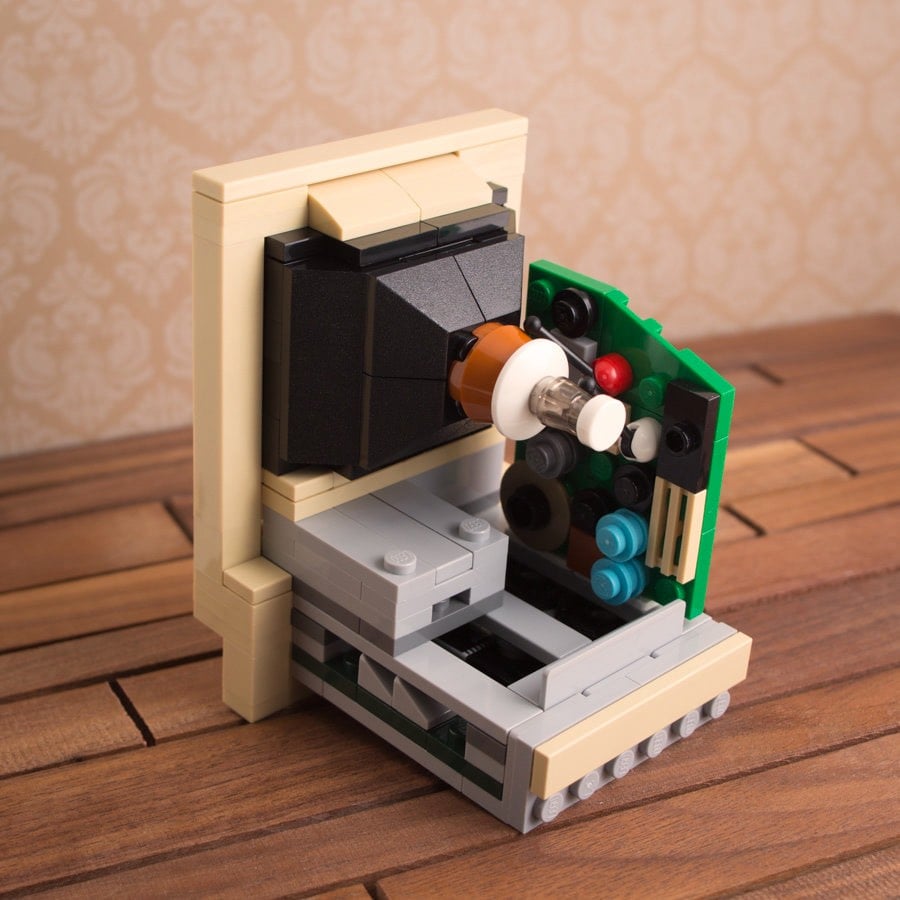
See also my favorite custom Lego set, Stephen Hawking.
Conflicted about the NFL’s politics but still want to watch the Super Bowl? Purchase karma offsets in the form of charitable donations.
This video about how speedrunners gradually improved their times on Super Mario Bros level 4-2 through persistant innovation was way more interesting than I expected. Humans are relentlessly inventive.
Photos from the Curiosity rover’s 2000 days on Mars
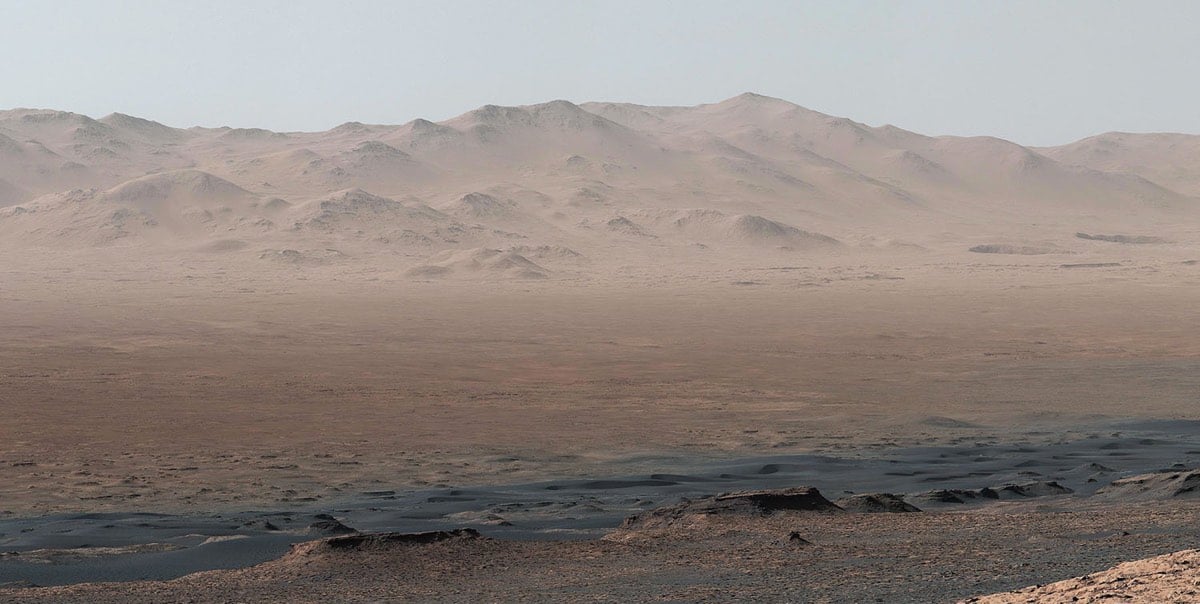
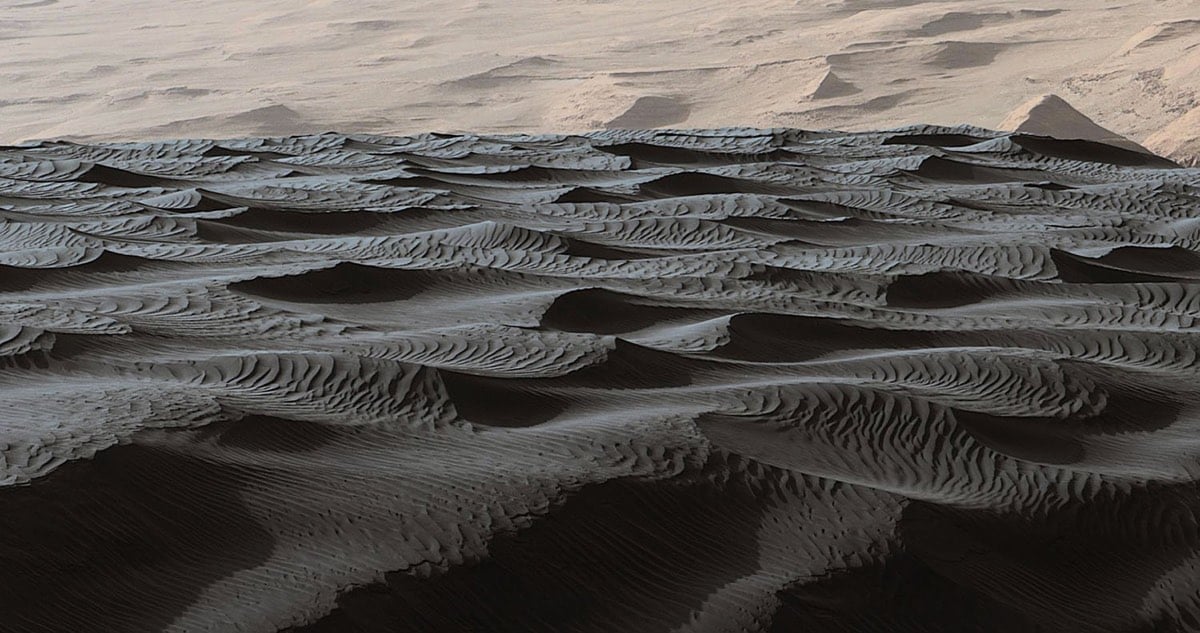
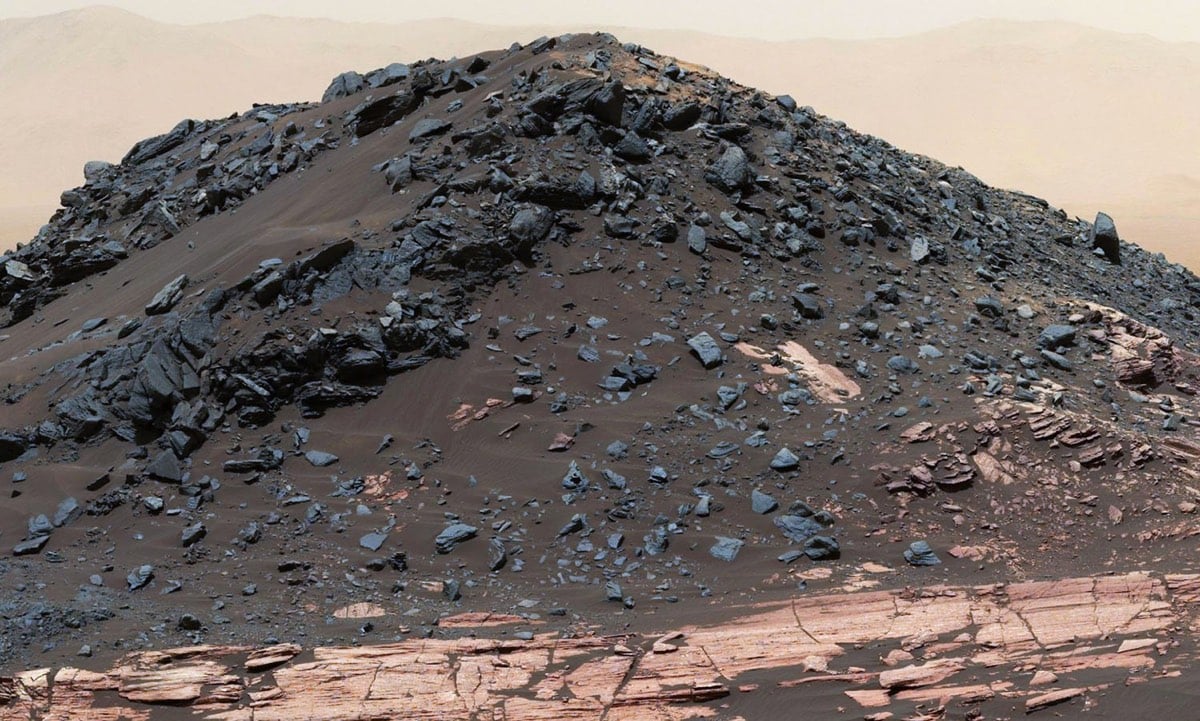
NASA’s Curiosity rover has been on Mars for more than 2000 days now, and it has sent back over 460,000 images of the planet. Looking at them, it still boggles the mind that we can see the surface of another planet with such clarity, like we’re looking out the window at our front yard. Alan Taylor has collected a bunch of Curiosity’s photos from its mission, many of which look like holiday snapshots from the rover’s trip to the American Southwest.
A powerful video of every concussion in the NFL this year
Data artist Josh Begley edited together a 5m30s video of every concussion suffered in an NFL game this year. I was barely able to get through this…I had to pause a couple of times. From an article about the video at The Intercept:
The NFL has done a masterful job at mainstreaming the violence of the game, so that fans and spectators don’t feel too bad about what’s actually happening out there. No single word has protected the NFL from the true costs of this violence more than “concussion.” That word puts a protective barrier between us and what’s really going on out on the field.
It’s not a headache. It’s not “getting your bell rung.” You don’t have a bell. It’s a traumatic brain injury. Every single concussion is a new traumatic brain injury. In addition to the torn ACLs and MCLs, in addition to all of the horrible broken bones, the NFL diagnosed at least 281 traumatic brain injuries this season. And no document has ever quite displayed the horror of it all like “Concussion Protocol,” a film by Josh Begley and Field of Vision.
The backwards slow-mo technique is a bit off-putting at first, but as Greg Dorsainville noted in the video’s thread:
If it was in forwards it would be like any big hits package you see in an espn highlight show where we celebrate the football and hit and not mourn the result of the moment: a human in pain, disorientation, and slowly killing themselves.
Having big second thoughts on watching the Super Bowl this weekend, karma offsets or no. (via @harmancipants)
Wired is putting up a paywall around their content. Would have loved to see them try an “unlocking the commons” approach like The Guardian, Wait But Why, or @kottke instead
What Time Isn’t the Super Bowl?

This year’s Super Bowl between the Philadelphia Eagles and the New England Patriots will not take place before Sunday, February 4th at 6:30 pm ET or after ~10:15 pm ET that same day. So, if you’d like to not watch the Super Bowl or Justin Timberlake’s halftime musical performance live from Minneapolis, Minnesota, just don’t turn on NBC or the NBC Sports Live stream between 6:30 and 10:15 that evening.
(Superb Owl photo by Brad Wilson.)
Socials & More