




This site is made possible by member support. 💞
Big thanks to Arcustech for hosting the site and offering amazing tech support.
When you buy through links on kottke.org, I may earn an affiliate commission. Thanks for supporting the site!
kottke.org. home of fine hypertext products since 1998.
Beloved by 86.47% of the web.
Entries for December 2017
This is an incredibly satisfying video
A wheel comes off of a car during a race and behaves in an amazingly tidy way until…well, I won’t spoil it for you but watch until the wheel stops. The polar opposite of this video of the most unsatisfying things in the world.
How to make your own “John McClane crawling through an air duct” Die Hard Christmas tree ornament
Life Advice from Teen Experts
The California Sunday Magazine gathered some advice from teens on topics like how to get people to care about something, how to cook with a blowtorch, and how to throw a good dance party. Here are excerpts from two of my favorites. How to meet new people:
If you’re trying to get into a new community, just fake it till you make it. Don’t have a mind-set of, Oh, I’m the new guy. No one’s going to want to be my friend. Fake a fun mind-set until you can be that fun, cool person without a second thought.
And how to organize a political rally (in one week):
I had to do most of the logistical planning during school. A lot of the people who were emailing me to help were from organizations, and they could only talk during their lunch breaks. Which would be right around 11:30, during math class. So I would be like, “Hey, can I go to the bathroom?” Then I’m in a bathroom stall on the phone — “Yeah, so can you bring, like, six cases of water and, like, two cases of granola bars?” At the end of the day, I would go home and do my homework, and the next morning, I would wake up and have a phone call at 7 before class.
The Dodge of the Art
For his work Nowhere and Everywhere at the Same Time, William Forsythe sets in motion hundreds of pendulums in a room and invites people to walk among them, attempting to avoid collisions.
Suspended from automated grids, more than 400 pendulums are activated to initiate a sweeping 15 part counterpoint of tempi, spacial juxtaposition and gradients of centrifugal force which offers the spectator a constantly morphing labyrinth of significant complexity. The spectators are free to attempt a navigation this statistically unpredictable environment, but are requested to avoid coming in contact with any of the swinging pendulums. This task, which automatically initiates and alerts the spectators innate predictive faculties, produces a lively choreography of manifold and intricate avoidance strategies.
When I read the preview for the video at The Kid Should See This, I was expecting heavy brass pendulums cutting large swaths through the room, not unlike the first challenge in Indiana Jones and the Last Crusade where “only the penitent man will pass”. That would have been fun but perhaps too dangerous and not art.
How Prince makes consent sexy. “Prince doesn’t just want you; he wants your wants. And your wants come first.”
A Bite of China
A Bite of China is documentary TV series on food and cooking in China. Writing for The Guardian, Oliver Thring called it “the best TV show I’ve ever seen about food” and one commenter called it “the Planet Earth of food”. While A Bite of China predates it by 3 years, Chef’s Table might be a better comparison. Here’s a trailer:
China has a large population and the richest and most varied natural landscapes in the world. Plateaus, forests, lakes and coastlines. These various geographical features and climate conditions have helped to form and preserve widely different species. No other country has so many potential food sources as China. By collecting, fetching, digging, hunting and fishing, people have acquired abundant gifts from nature. Traveling through the four seasons, we’ll discover a story about nature and the people behind delicious Chinese foods.
The first season is available on Amazon Prime (with English subtitles) but you can also find it on YouTube at varying levels of quality with and without subtitles and dubbed in English. (thx, seamus)
The 2017 Hubble Space Telescope Advent Calendar

From Alan Taylor at In Focus, the 10th anniversary installment of the Hubble Space Telescope Advent Calendar. One image taken by the Hubble for each day in December leading up to Dec 25th. Here’s Taylor’s caption for the image above:
A Caterpillar in the Carina Nebula. Scattered across the enormous Carina nebula are numerous dense clumps of cosmic gas and dust called Bok globules, including this one, which resembles a huge glowing caterpillar. First described by by astronomer Bart Bok, the globules are relatively small, dark, and cold regions made up of molecular hydrogen, carbon oxides, helium, and dust. The glowing edge of the caterpillar indicates that it is being photoionized by the hottest stars in the surrounding cluster. It has been hypothesized that stars may form inside these dusty cocoons.
The trailer for Spielberg’s Ready Player One
The first full-length trailer for Steven Spielberg’s adaptation of Ready Player One is out. I enjoyed the book, but the teaser trailer was awful. This trailer’s much better and it’ll be interesting to see late Spielberg’s remix of early Spielberg in action.
A Moment of Silence, Please
This morning, my friend Anil Dash tweeted this question out to his followers (here’s my incomplete answer):
Who is a person (not counting family) that opened doors for you in your career when they didn’t have to? Anytime is a good time to show gratitude!
Yesterday, I finished this podcast episode about Mister Rogers and they talked about when he made public appearances, either as an entertainer or a minister, he would often begin by asking the audience for a moment of silence to think about “the people who have helped you become who you are, those who cared about you and wanted what was best for you in life”. He even did it at the Emmys when accepting a Lifetime Achievement Award:
I’ve been thinking about Fred Rogers a lot lately…how much I miss him, how much I learned from him, and how much the world could benefit from his perspective and example right now. After this week/month/year, I think we could all use some of Mister Rogers’ radically compassionate humanism. So, if you wish, take a moment right now in silence to think about those who have cared about you and helped you become the person that you are.
Have a good weekend. I’ll see you back here next week.
When you’ve been in therapy so long that all that’s left is for your therapist to teach you Scrabble
The neon glow of Tokyo modified car culture
New Zealand drift racer Mike Whiddett recently travelled to Japan to explore Tokyo’s “extraordinary after-dark modified auto scene”. He found people making California-style lowriders, Dekotora (my favorite, if only for the sheer spectacle), illegally modified cars, and a man who says with a straight face that “driving an unmodified Lamborghini is boring”.
What’s interesting is that more than one of these guys in the video repeated some variation of “I don’t care what anyone thinks about me”. I….don’t believe you? If there’s one thing most humans care deeply about, it’s what other people think about them, particularly when you’re driving million-dollar, pulsing-neon supercars around the world’s most populous city.
Area man uses telephone to fight back against sleazy debt collectors
When Andrew Therrien told off a sleazy debt collector for calling about a debt he didn’t owe, the collector called back to threaten violence to Therrien and his wife. Therrien got mad and reached for the most potent weapon in his arsenal: the telephone. Over the course of the next two years, he charmed and bullied his way into the debt collection world in order to learn how it worked and how to take it down.
When the scammers started to hound Therrien, he hounded them right back. Obsessed with payback, he spent hundreds of hours investigating the dirty side of debt. By day he was still promoting ice cream brands and hiring models for liquor store tastings. But in his spare time, he was living out a revenge fantasy. He befriended loan sharks and blackmailed crooked collectors, getting them to divulge their suppliers, and then their suppliers above them. In method, Therrien was like a prosecutor flipping gangster underlings to get to lieutenants and then the boss. In spirit, he was a bit like Liam Neeson’s vigilante character in the movie Taken — using unflagging aggression to obtain scraps of information and reverse-engineer a criminal syndicate. Therrien didn’t punch anyone in the head, of course. He was simply unstoppable over the phone.
Great story…read the whole thing. This is perhaps not your takeaway from it, but reading this, I wonder how much different my life would be if I knew how to talk on the telephone 1/10th as effectively as someone like Therrien.
Leadership & business lessons gleaned from running an “open-source soccer” club
My pal Dennis Crowley, co-founder of Foursquare, has somehow found the time to also co-found a NPSL soccer club in Kingston, NY called Kingston Stockade FC. The club is only two years old, but they won their division this year, energized a community around the team, and have nearly reached the financial break-even point for 2017…you can read all about it in Crowley’s recap of how the team did in 2017. (And you can read his past writing about building the club from scratch.)
According to another club owner, year two was supposed to be more difficult than the first year…but that was not Crowley’s experience:
About a year ago, I remember talking to another owner of another club and he said something along the lines of “I know you had a great first season, but the second season is the hardest” — e.g. the novelty will wear off, the crowds will thin, etc. I remember being scared shitless by this piece of advice but our club experienced quite the opposite. Our overall attendance numbers were up (despite us having one fewer match on the schedule) and our biggest crowds were considerably larger than last year’s bigger crowds (and we hit our goal of 1000+ fans/game… twice!)
That stuck with me as I read the rest of the piece (which is written in plain, straightforward prose that’s perfectly readable even if you aren’t into soccer or business). I began gathering reasons as to why Stockade FC has thrived when other clubs might how found it difficult and framed them as lessons for anyone who runs a business or is in a leadership position.
1. The first thing is Crowley’s obvious enthusiasm and passion for soccer, starting a business, and his Kingston community (he and his family split their time between Kingston and NYC). No specific excerpt for this one (aside from this photo)…it’s infused throughout everything he’s written about the experience.
2. Be relentless. Sweat the details. Track everything you can. Look for opportunities everywhere to increase revenue and decrease expenses. Be practical. This is just one example of many:
Our hotel costs were ZERO because we designed our schedule so that we would not have an overnight trip. If you remember from last year, we did a 3 day / 2 night / 2 match trip through New Hampshire and Maine (aka: 2 nights in a hotel + 3 meals * 14 rooms). Dropping this trip from the schedule saved us a fortune. To say this another way: Our current business model (tickets/sponsors/merch) supports “day-trips by bus” and not “overnight trips and/or flights”.
3. Look for opportunities to build and grow from above:
With that said, and before we get real deep into Stockade FC data, I’m happy to share that this past weekend I was elected to the NPSL’s Board of Directors at our league’s Annual Operating Meeting (AOM). I am now one of 12 Board Members (and one of 2 representatives of the Northeast Region) operating under a two-year term. The Board Seat gets me a little closer to the bigger-picture decision making and the longer-team strategic planning for our league. It is literally the “seat at the table” I was referring to above and I’m excited to get back to work helping to build from the bottom up.
4. Look for opportunities to build and grow from below:
This is important to the club because a break-even club can operate forever. And this is important to me because I know that if we we can keep Stockade FC going for 10 years, we will have the opportunity to see the kids that we have inspired this season & last season trying out for our squad in a few years time. The idea of a Stockade FC squad full of kids who have been cheering on our club since they were 8, 10, or 12 years old is one of the things that motivates and inspires me the most about this entire project.
5. Do the right thing and often you’ll notice it’s a good business decision as well.
Game Day expenses were down 15% because we stopped buying bottled water for every match and instead started used refillable 10 gallon Gatorade jugs. A win for Mother Earth is a win for Stockade FC! (Btw, getting off plastic bottles, and the waste they produced, was an explicit goal of ours for this season.)
6. Acknowledge that you cannot do it alone. Crowley and his team bring some serious leadership and expertise to the table, but Stockade FC runs on volunteers from the community. Embrace them and don’t take them for granted.
And it’s impossible to talk about Stockade FC without talking about our $0 “Staff” costs. Our entire club is run by volunteers — sometimes an army of 30+ people who show up on game days to help with everything from setup + take down + scoreboard + clock + merchandise + tickets + managing the crowd + leading the youth teams at halftime + emceeing the halftime show + singing the national anthem + announcing on the PA + doing color commentary on the live stream + 100 other tasks. Without you all none of this would come together in the way that it does, so thank you! #WeAreStockade
7. I don’t know what business lesson this holds, but this is the perfect little detail about the club:
Our ticket prices were designed so a family of four can attend for $20 ($8 + $8 + $2 + $2 = $20). This is one of the many things I’m *really, really* proud of.
8. Don’t skimp where it matters and give back. Too many comp tickets for player’s families or first responders isn’t going to make or break your season.
It’s worth noting that less than 10% of attendance for any given is from comp tickets. This year we gave comp tickets to (a) press, (b) players family (4 tix max), (c) ballboys and ballgirls, (d) Radio Woodstock contest winners, (e) First Responder & Military Appreciation Nights.
9. “Think globally, act locally” isn’t just for activism. Stockade FC streamed their games online and sold merch to people from around the world. Their story is resonating around the country and the world. Hell, I live 300 miles away and I’m gonna try my damnedest to make it to a Stockade FC home game this summer.
Streaming continues to be an important part of the Stockade FC story — we know our story is being followed by people outside the Hudson Valley (and outside the USA!) and so streamed matches that are *enjoyable to watch* are a core part of our story.
10. Small teams can act big. The same forces that allowed Instagram’s 13-person company to get acquired by Facebook for $1 billion enable small teams to produce, for instance, a live-streaming experience that rivals the big networks for not a whole lot of money and effort.
And this year, our rockstar team of tech-savvy volunteers has raised the bar for what it means to stream a 4th Division soccer game. Last year’s goals were about “consistency” — “we gotta stream every match”. This year’s goals were around “professionalism” — let’s work in on-air graphics, color commentary and multiple cameras. The team officially outdid themselves when we had live video streaming from a drone during our Conference Championship match (for serious!)
11. Have larger goals that are outside the strict purview of your business. The goal of the US men’s national team winning a World Cup in the next 30 years isn’t going to sell more tickets, but having that as part of your story is going to open up opportunities for your club and everyone else.
Do something to make USA soccer better, faster. We started our club because we ultimately want to make soccer in the United States better, faster. (My original back-of-a napkin goal was: “What can we as fans do to better the US Mens National Team’s odds of winning a World Cup in our lifetime”).
12. Get involved in your local community. But not just that, actually give a damn about your local community and the people and other businesses in it. With everyone working together, you raise all the boats. Non-zero sum games, yo!
On some level, we’ve done much much more than “create a soccer team” — we’ve built something that folks in Kingston have started to rally around and are proud of, and we’ve helped to leverage some of that momentum and excitement and energy into a mechanism that could transform parts of Kingston’s actual urban infrastructure (through this $10M grant). We’re just a tiny, tiny, tiny part of the grant… but, hey, we’re a part of it!
13. Celebrate when successful team members move on to bigger opportunities. Build a team that people want to be a part of because they can develop the skills to move up (either inside your team or outside of it).
Last season, Stockade FC midfielder Dylan Williams got picked up by Australian 2nd division club Launceston City FC. This year, goalkeeper David Giddings got picked up by Swedish 3rd division team Värnamo Södra. Two players from our 2016 squad (Matel Anasta & Matt Koziol) were invited to play in last year’s NPSL Showcase (aka: NPSL All-Star Game w/ scouts) and we’ve expecting 1 or 2 players from our 2017 team will be invited to play in next year’s Showcase.
14. Success begets success. Winning the league obviously helped attendance and raised the team’s profile locally and nationally. But winning the league started with hiring the right coaches and finding the right players…and that started with all the other things on this list. It all connects.
15. Share your knowledge with others. From the start, one of Crowley’s goals has been to run a completely transparent club. He shares every single detail and the club’s finances are an open book. He writes clearly and enthusiastically without a lot of jargon. Move past thinking that other teams are your competition and start thinking about how everyone can work together to achieve larger goals by sharing what works and what doesn’t with each other. Compete on the field but collaborate in the community.
As a tiny business owner without employees or a real-world presence, some of this doesn’t apply to me, but I’ve found Crowley’s posts about Stockade FC incredibly valuable not when thinking about kottke.org from a business perspective but also when considering larger questions about how I want to live my life. Thanks, Dennis!
Universal Basic Income explained
In their distinctive style, Kurzgesagt tries to explain the concepts behind and pros & cons of Universal Basic Income in just 10 minutes. In US, UBI would be a massive change to how our economy and society functions, so much so that it’s challenging to predict what the effects would be. Nonlinear systems, yo!
Update: Aw dammit… I totally forgot to connect the part of the video where they talk about the non-monetary value of work — which is a worry of UBI critics — to something that Ludicorp (the small company that built Flickr and sold to Yahoo! in the mid-2000s) had on the company’s about page. It was a passage from Disclosing New Worlds: Entrepreneurship, Democratic Action and the Cultivation of Solidarity by Charles Spinosa, Fernando Flores & Hubert Dreyfus:
Business owners do not normally work for money either. They work for the enjoyment of their competitive skill, in the context of a life where competing skillfully makes sense. The money they earn supports this way of life. The same is true of their businesses. One might think that they view their businesses as nothing more than machines to produce profits, since they do closely monitor their accounts to keep tabs on those profits.
But this way of thinking replaces the point of the machine’s activity with a diagnostic test of how well it is performing. Normally, one senses whether one is performing skillfully. A basketball player does not need to count baskets to know whether the team as a whole is in flow. Saying that the point of business is to produce profit is like saying that the whole point of playing basketball is to make as many baskets as possible. One could make many more baskets by having no opponent.
The game and styles of playing the game are what matter because they produce identities people care about. Likewise, a business develops an identity by providing a product or a service to people. To do that it needs capital, and it needs to make a profit, but no more than it needs to have competent employees or customers or any other thing that enables production to take place. None of this is the goal of the activity.
The 3.67 million year-old hominin skeleton of “Little Foot” took over 20 years to put together. “It was like excavating a fluffy pastry out of concrete.”
The 2017 kottke.org Holiday Gift Guide

For the past few years, I’ve featured the season’s best gift guides from other sites and pulled out a few things from each that I think you might be interested in. Like I wrote in 2016, this year has not been the easiest for many, making it difficult to muster a festive mood. But if you’re determined to give to your loved ones and to those in need, maybe this guide will help you. Let’s get to it!
Giving to charity and those in need is always first on the list here. Personally, this past year I’ve spread my giving out across the year with monthly recurring donations…mostly local stuff but also the ACLU and other national orgs that are fighting for the rights of women, people of color, and immigrants. If you’re looking for opportunities to give, you can check GiveWell and Charity Navigator so that you don’t end up sending your money down a hole (e.g. The Red Cross). VolunteerMatch has extensive listings of holiday volunteer opportunities in the US and you can directly help those in your community by donating your time and money to the local food shelf or contributing to holiday toy drives. This weekend, the kids and I are heading to the store to select some items for Toys for Tots.
Hands down, the best gift guide for kids is from the excellent The Kid Should See This. Like last year, I had my kids scroll through the list to look for favorites. My 10-year-old son selected this 20g sample of gallium and Space Racers: Make Your Own Paper Rockets. My 8-year-old daughter chose the littleBits Star Wars Droid Inventor Kit and the Kano Pixel Kit. Me? The Kano Computer Kit looks cool as hell.
The Accidental Shop is a collection of products I’ve previously linked to on kottke.org. Lots and lots and lots of good stuff there.
If someone in your life somehow doesn’t have an Instant Pot or an Anova Sous Vide Precision Cooker, now is your chance. I used my Instant Pot just the other day (in saute mode) to make this delicious chili. Or if those boxes are already checked, perhaps this small-but-powerful portable pizza oven from Uuni…it’s capable of heating to 932°F and can cook a pizza in 60 seconds!
The sequel to the awesome Good Night Stories for Rebel Girls is out: Goodnight Stories for Rebel Girls 2, “featuring the adventures of extraordinary women from Nefertiti to Beyoncé”.
My pal Austin Kleon recommends buying his books (Show Your Work! & Steal Like an Artist) but also this waterproof notepad for taking notes when in-shower inspiration strikes.
Whenever I need to buy something for my home, Wirecutter is always my first (and often only) stop. Their collection of gift guides is characteristically helpful. A couple of things that stood out to me: Tokaido, a Japanese board game with a relaxing concept: “whoever has the chillest vacation wins”, this wireless phone charger from Samsung (which works just fine with my iPhone X), and this Nickelodeon slime-making kit. Oh, and I’m coveting their pick for the best 4K TV…I really want to watch Dunkirk, Blade Runner 2049, Planet Earth II, and Blue Planet II in all their 4K glory at home.
Pixelated tea towels designed by the legendary Susan Kare? Ok, yes. More available here.
The 2017 Engineering Gift Guide from the engineering department at Purdue University is the only guide I’ve found that lists the research papers used when preparing the list (like “Gender Bias in the Purchase of STEM-Related Toys”, a paper presented at the 2015 ASEE Annual Conference and Exposition in Seattle). They recommend Coding Farmers (a board game that teaches kids programming concepts) and Circuit Maze (a puzzle game using electric logic circuits).
From them, a list of gift recommendations from 12 queer influencers. Actress Ali Stroker recommends Bronx Greenmarket Hot Sauce and journalist Jenna Wortham recommends these pennants from goods with positive intent.

No further comment necessary: A Die Hard Christmas, “a delightful Christmas storybook for adults based on the action-packed Die Hard movie” and the Night Before Christmas poem. Pairs well with the authorized Die Hard coloring book.
Some use the holiday as an excuse to let their gifting freak flag fly. The Hidden Valley Ranch mini keg of ranch dressing is out of stock for the holidays but many other Hidden Valley products are available. Someone in your life needs an 8-foot-long gummy python…27 pounds of gummy goodness. And it wouldn’t be the holiday season without a 55-gallon drum of personal lubricant. Buy in bulk and share with friends! Or get a ranch keg and a lube barrel and have a Dip-N-Slide party…just don’t get them mixed up!
One of the things I’m most thankful for this year is that I got to meet Jodi Ettenberg of Legal Nomads in person and get to know her better (instead of just through email and her site). If you follow her site at all, you’ll already know that it’s been on hiatus for the past few months as she deals with a personal health crisis. As expenses related to her medical care mount (there’s a GoFundMe!), if you want to help Jodi out and get a cool gift for someone, check out the Legal Nomads store. I am particularly a fan of these food map posters.
It’s always worth paying attention to what the gadget-loving weirdos at Boing Boing put in their gift guide. This year, they’re featuring this airbag for motorcycle riders, miniature game system Arduboy, and an LP replica of the Voyager Golden Record. And OMG, the Intellivision Flashback console!
Beverage of the year: Male Tears flavored La Croix. Print by Kate Bingaman-Burt via Erika Hall’s gift list.
This holiday season’s worst gift is this fake surveillance camera that “reports bad behavior to Santa”. Santa knowing when you’re naughty or nice was always creepy, but this is some next-level BS. I posted this to Twitter last week though, and I should have not been surprised at how many people were into the idea of making their kids feel watched in order to keep them in line.
I have pals who do/make cool things for sale…like This Book is a Planetarium, Fat Gold, Tattly, Tinybop, Food52, SDR Traveller, Stowaway Cosmetics, Colossal, Google’s AIY Vision Kit, Kingston Stockade FC, Storyworth, Chris Piascik, Hoefler & Co, Wait But Why, Hella Cocktail Co, Storq maternity wear, 20x200, and Field Notes.
Life Haaaaaack: use these baby food freezer storage containers to make big cocktail ice cubes.
Quick hitters: The Millions has a gift guide for readers and writers that (mostly) aren’t books (licorice pipes). The Cup of Jo 2017 Holiday Gift Guide (kids’ knives). Engadget’s guide (NBA Connected Jersey, which interacts with your phone to push you exclusive info and deals, and the 20th anniversary Tamagotchi).
Books! There are tons of gift ideas in my best books of 2017 post. On her gift guide Erika Hall recommends Behave, which she’s been evangelizing all year. One of The Gannet’s top recs is Salt, Fat, Acid, Heat. National Geographic has a gift list for maps lovers, including The Red Atlas: How the Soviet Union Secretly Mapped the World. Fast Company recommends Made in North Korea. Master designers Jessica Helfand & Michael Bierut share a list of design and design-ish books at Design Observer (Arbitrary Stupid Goal by Tamara Shopsin).
And gosh if that’s not enough, you can look back at the lists for 2016, 2015, 2014, and 2013.
Update: A few more guides to add to the mix.
For the 2017 Good Gift Games list on The Morning News, Matthew Baldwin picks some recent board games that make good gifts, like The Fox in the Forest and game-of-the-year winner Kingdomino.
The Christmas Catalog from Tools & Toys is always worth a look. This year’s installment includes The Complete Calvin and Hobbes Box Set, the Teenage Engineering OP-1 Mini Synthesizer, and this cool duct tape keychain (a keychain that dispenses duct tape, not a keychain made out of duct tape).
Quartzy, which is associated with Quartz in a way I do not understand, has a couple of gift guides going. In The Ultimate Gift Guide for True TV Fanatics, they offer gift suggestions based on your favorite TV shows. So, fans of Breaking Bad might like Heisenberg’s Breaking Bad Crystal Meth Bath Salts while GoT viewers might find this Dinner is Coming cutting board amusing. And the other is Five Gift-Giving Philosophies to Help You Find the Perfect Gift. I’m personally a fan of The Fancy Candle Philosophy and The Pasta Class Theory strategies.
Dude, if your loved ones are into weed, The Cannabist has you covered.
The unofficial Goldman Sachs holiday gift guide for 2017 includes a complete Triceratops skull fossil, a $3.5 million Ferrari, and a $1 million global safari to visit some of the most endangered species on the planet.
In 90 seconds, Penn & Teller show why vaccination is great
In only 90 seconds with the use of a few props (and some profanity), entertainers Penn & Teller offer a succinct and compelling argument of the benefits of vaccinating our children.
So even if vaccination did cause autism, WHICH IT FUCKING DOESN’T, anti-vaccination would still be bullshit.
Along with “Vaccines. And now my kids don’t die.”, this might be my favorite anti-vaxxers broadside ever.
Google’s AI beats the world’s top chess engine w/ only 4 hours of practice
With just four hours of practice playing against itself and no study of outside material, AlphaZero (an upgraded version of Alpha Go, the AI program that Google built for playing Go) beat the silicon pants off of the world’s strongest chess program yesterday. This is massively and scarily impressive.
AlphaZero won the closed-door, 100-game match with 28 wins, 72 draws, and zero losses.
Oh, and it took AlphaZero only four hours to “learn” chess. Sorry humans, you had a good run.
That’s right — the programmers of AlphaZero, housed within the DeepMind division of Google, had it use a type of “machine learning,” specifically reinforcement learning. Put more plainly, AlphaZero was not “taught” the game in the traditional sense. That means no opening book, no endgame tables, and apparently no complicated algorithms dissecting minute differences between center pawns and side pawns.
This would be akin to a robot being given access to thousands of metal bits and parts, but no knowledge of a combustion engine, then it experiments numerous times with every combination possible until it builds a Ferrari. That’s all in less time that it takes to watch the “Lord of the Rings” trilogy. The program had four hours to play itself many, many times, thereby becoming its own teacher.
Grandmaster Peter Heine Nelson likened the experience of watching AlphaZero play to aliens:
After reading the paper but especially seeing the games I thought, well, I always wondered how it would be if a superior species landed on earth and showed us how they play chess. I feel now I know.
As I said about AlphaGo last year, our machines becoming unpredictable is unnerving:
Unpredictable machines. Machines that act more like the weather than Newtonian gravity. That’s going to take some getting used to.
Albert Silver has a good overview of AlphaZero’s history and what Google has accomplished. To many chess experts, it seemed as though AlphaZero was playing more like a human than a machine:
If Karpov had been a chess engine, he might have been called AlphaZero. There is a relentless positional boa constrictor approach that is simply unheard of. Modern chess engines are focused on activity, and have special safeguards to avoid blocked positions as they have no understanding of them and often find themselves in a dead end before they realize it. AlphaZero has no such prejudices or issues, and seems to thrive on snuffing out the opponent’s play. It is singularly impressive, and what is astonishing is how it is able to also find tactics that the engines seem blind to.
So, where does Google take AlphaZero from here? In a post which includes the phrase “Skynet Goes Live”, Tyler Cowen ventures a guess:
I’ve long said that Google’s final fate will be to evolve into a hedge fund.
Why goof around with search & display advertising when directly gaming the world’s financial market could be so much more lucrative?
“Stuntmen don’t get laughs”, the silent comedy of Jackie Chan
In this video, Bradley Dixon argues that Jackie Chan belongs on the Mt. Rushmore of silent comedy, along with Harold Lloyd, Buster Keaton, and Charlie Chaplin. Like those three legends of the silent film era, Chan uses simple stories, stunts, visual humor, ordinary props, and practical effects to connect with his audience on a non-verbal level.
See also Every Frame a Painting on how to do action comedy, Buster Keaton and the Art of the Gag, and silent film special effects revealed. Oh, and just for fun, Mad Max vs. Buster Keaton and Charlie Chaplin’s time traveller.
NASA is reinventing the wheel
Imagine you’re sending a rover to Mars. The rover’s tires need to be light, durable, and also flexible enough to tackle a variety of terrain. NASA has spent decades trying to craft the perfect rover wheels, but something always comes up short in the pick-two situation…typically durability. Now researchers at the NASA Glenn Research Center have come up with a promising new rover wheel for the next generation of rovers.
The wheels are made from nickel titanium, a shape memory alloy that allows the tires to bounce back into their former shape even when they’re severely deformed.
The story of how the team stumbled upon this solution is a classic case of how important cross-disciplinary knowledge is for creation and invention. All it takes is one person in a different area of expertise to solve a seemingly intractable problem:
In the New Yorker, Errol Morris writes about the human capacity (desire?) to want to see truth in everything.
New extreme sport: Thomas the Tank Engine stunts
It is what it says on the tin: a toy Thomas the Tank Engine doing stunts on wooden tracks. My favorite part is that the slowed-down audio makes it sound somewhat like a skateboard.
A man turned his backyard shed into the top-rated restaurant in London
Having previously written fake reviews for restaurants on TripAdvisor for £10 a pop, Oobah Butler decided to go one step further. He listed his backyard shed on TripAdvisor, set up a dummy website (complete with appetizing food photos constructed from bleach tablets and shaving cream), and wrote a bunch of phony reviews.

As the shed began climbing in the London restaurant ranking, Butler began to get more and more requests for reservations from actual people.
Emails? I check my computer: tens of “appointment” requests await. A boyfriend tries to use his girlfriend’s job at a children’s hospital for leverage. TV executives use their work emails.
Seemingly overnight, we’re now at #1,456. The Shed at Dulwich has suddenly become appealing. How?
I realise what it is: the appointments, lack of address and general exclusivity of this place is so alluring that people can’t see sense. They’re looking at photos of the sole of my foot, drooling. Over the coming months, The Shed’s phone rings incessantly.
And then, after it reaches #1, Butler actually opens The Shed at Dulwich for one night.
Update: When I initially posted this, I almost closed the post with something like “the best part of all this is that we don’t really know if any of this happened the way Butler says it did”. And indeed, Jonathan Power noticed that the URL for the restaurant’s website wasn’t registered until Oct 27, not in April as the article implies. Hmmm. The Facebook page for the restaurant has posts going back to June 30 (can you backdate FB posts?) & reviews back to April 5th. The listing appears to have been on TripAdvisor as of Dec 4 (Google cache) and was mentioned and screenshotted on Twitter in mid-November. Maybe Butler fudged the timeline slightly for the article…he used the Facebook page as the restaurant’s website until doing it up properly with its own URL in October? So, I dunno…is the joke on us, on Vice, on TripAdvisor, or…?
How Technicolor changed movies
In The Wizard of Oz, when Dorothy lands after being brought to Oz by a tornado, she opens the door and, bang!, Technicolor. It’s a surprising transition, one of the most effective in film history. But it wouldn’t have been a complete shock for audiences in 1939 because Oz was not the first film to feature the color technology. In this video, Phil Edwards details the history of Technicolor, how it works, and how it changed movie making.
Many people recognize Technicolor from The Wizard of Oz, but the technology existed long before then. Two strip Technicolor and three strip Technicolor both revolutionized the film industry and shaped the look of 20th century film.
But Technicolor also influenced movies through its corporate control of the technology. People like Natalie Kalmus shaped the aesthetic of color films, and directors redesigned their sets and films based on the Technicolor look that the company — and viewers — demanded.
Edwards also did a “director’s cut” video with further information that wasn’t in the first video.
“Airport Novella? Sounds interesting,” he said with a nod.
Airport Novella by Tom Comitta is what he calls a “literary supercut”. Constructed exclusively from the kinds of novels one normally finds in airport bookshops, the 48-page book contains four chapters, one each for the gestures most often found in airport prose: nodding, shrugging, odd looks, and gasps. An short excerpt from the shrugging chapter:
Jeremy was silent for a moment before finally shrugging.
She shrugged without answering. “Can I be frank now?”
He shrugged. “Anything that might help me with the history of the cemetery and the town.”
She shrugged. “Shows me what I know. Being that you’re a journalist from the big city.”
He shrugged, acting innocent.
She suddenly remembered that he’d been trying to guess her age yesterday. “Yep,” she said with a shrug.
He gave a sheepish shrug, and she had a sudden vision of what he must have looked like as a small boy. “Hey, I know it’s none of my business, but how did it go with Rodney?”
She hesitated before finally shrugging. “You’re right. It is none of your business.” He could almost hear her shrug.
He gave a sheepish shrug. “I suppose that depends on the perspective.”
For source material, Comitta used books like The Da Vinci Code, the Twilight series, and a novel commissioned by Donald Trump (tagline: “Leave your modesty downstairs. Trump Tower is the sexiest novel of the decade.”)
The Making of Burial’s Untrue
Ten years ago, electronic musician Burial released his second album, Untrue, which went on to be quite influential.
Where would UK dance music be without Burial’s Untrue? The South Londoner’s second album, released ten years ago this month on Hyperdub, has arguably done more than any other record in recent history to shape electronic music, presenting not only novel production techniques but the power of rooting a record in a specific time, mood and place.
This video from Resident Advisor explores that influence and how Burial’s novel production methods contributed to the album’s success. For one thing, instead of using music software that everyone else used to build and layer beats, Burial used Soundforge, which only shows the waveforms.
So I thought to myself fuckit I’m going to stick to this shitty little computer program, Soundforge. I don’t know any other programs. Once I change something, I can never un-change it. I can only see the waves. So I know when I’m happy with my drums because they look like a nice fishbone. When they look just skeletal as fuck in front of me, and so I know they’ll sound good.
Basically, he eyeballed it, which makes the whole thing feel more natural (and makes it difficult for DJs to mix). (via @pieratt)
Dear catcallers, it’s not a compliment
To show how routine street harassment is, Noa Jansma took a selfie with every man who catcalled her for a month and posted the photos to Instagram.

It’s fun1 to see how happy and pleased almost all of these men look having harassed this young woman on the street. (thx, joel)
By which I mean the exact opposite of fun.↩
Inequality and America’s Lost Einsteins
In response to some poorly conducted and racist research attempting to correlate the size of people’s brains to their intelligence, science historian and paleontologist Stephen Jay Gould wrote in his 1980 book, The Panda’s Thumb:
I am, somehow, less interested in the weight and convolutions of Einstein’s brain than in the near certainty that people of equal talent have lived and died in cotton fields and sweatshops.
Gould’s assertion is echoed by this piece in the NY Times, in which David Leonhardt reports on the research of Stanford’s Raj Chetty. Chetty’s findings (unsurprisingly) show that financial inequality and differences in race & sex have a large effect on which Americans end up inventing things. Leonhardt calls this “a betrayal of American ideals”.
Not surprisingly, children who excelled in math were far more likely to become inventors. But being a math standout wasn’t enough. Only the top students who also came from high-income families had a decent chance to become an inventor.
This fact may be the starkest: Low-income students who are among the very best math students — those who score in the top 5 percent of all third graders — are no more likely to become inventors than below-average math students from affluent families.
In the article, AOL founder Steve Case says: “Creativity is broadly distributed. Opportunity is not.” The problem is even more severe when you consider differences in sex and race:
I encourage you to take a moment to absorb the size of these gaps. Women, African-Americans, Latinos, Southerners, and low- and middle-income children are far less likely to grow up to become patent holders and inventors. Our society appears to be missing out on most potential inventors from these groups. And these groups together make up most of the American population.
Because of survivorship bias, it’s tough to focus on the potential inventors, the lost Einsteins:
The key phrase in the research paper is “lost Einsteins.” It’s a reference to people who could “have had highly impactful innovations” if they had been able to pursue the opportunities they deserved, the authors write. Nobody knows precisely who the lost Einsteins are, of course, but there is little doubt that they exist.
52 things learned in 2017
One of my favorite end-of-the-year lists last year was Tom Whitwell’s 52 things I learned in 2016. An item from that list:
Instead of batteries, the ARES project in Nevada uses a network of train tracks, a hillside and electric trains loaded with rocks to store wind and solar power. When there is a surplus of energy, the trains drive up the tracks. When output falls, the cars roll back down the hill, their electric motors acting as generators.
Whitwell’s list for 2017 is similarly interesting:
In Silicon Valley, startups that result in a successful exit have an average founding age of 47 years. [Joshua Gans]
“Artificial intelligence systems pretending to be female are often subjected to the same sorts of online harassment as women.” [Jacqueline Feldman]
Dana Lewis from Alabama built herself an artificial pancreas from off-the-shelf parts. Her design is open source, so people with diabetes can hack together solutions more quickly than drug companies. [Lee Roop]
Amazon Echo can be useful for people suffering from Alzheimers’: “I can ask Alexa anything and I get the answer instantly. And I can ask it what day it is twenty times a day and I will still get the same correct answer.” [Rick Phelps]
China opens around 50 high bridges each year. The entire rest of the world opens ten. [Chris Buckley]
Men travelling first class tend to weigh more than those in economy, while for women the reverse is true. [Lucy Hooker]
Facebook employs a dozen people to delete abuse and spam from Mark Zuckerberg’s Facebook page. [Sarah Frier]
Watch how smoke, dust, and salt circulate in the Earth’s atmosphere
Using a combination of satellite data and mathematical weather models, scientists at NASA’s Goddard Space Flight Center made this simulation that shows how aerosols like dust, smoke, and salt were circulated in the atmosphere during the 2017 hurricane season. It’s amazing to see how far some of these things spread.
During the 2017 hurricane season, the storms are visible because of the sea salt that is captured by the storms. Strong winds at the surface lift the sea salt into the atmosphere and the particles are incorporated into the storm. Hurricane Irma is the first big storm that spawns off the coast of Africa. As the storm spins up, the Saharan dust is absorbed in cloud droplets and washed out of the storm as rain. This process happens with most of the storms, except for Hurricane Ophelia. Forming more northward than most storms, Ophelia traveled to the east picking up dust from the Sahara and smoke from large fires in Portugal. Retaining its tropical storm state farther northward than any system in the Atlantic, Ophelia carried the smoke and dust into Ireland and the UK.
I watched this several times to pick up on different things…the hurricanes of course, but also how smoke from the forest fires in the Pacific Northwest makes it all the way to Scotland (!!!) and dust from the Sahara desert makes it to the Caribbean (also !!!). (via phil plait)
Update: All that dust from the Sahara blowing across the ocean? Some of the dust, 27 million tons per year on average, is deposited in the Amazon basin in South America, providing the ecosystem there vital phosphorus:
This trans-continental journey of dust is important because of what is in the dust, Yu said. Specifically the dust picked up from the Bodélé Depression in Chad, an ancient lake bed where rock minerals composed of dead microorganisms are loaded with phosphorus. Phosphorus is an essential nutrient for plant proteins and growth, which the Amazon rain forest depends on in order to flourish.
(via tom whitwell)
The top 25 films of 2017
Nothing makes me want to quit my job and just watch movies all day than David Ehrlich’s annual video countdowns of the year’s best movies. Although I’m still a little irritated at him for leaving Arrival off of last year’s list, I’m looking forward to seeing Phantom Thread, The Post, Columbus, Lady Bird (which has been difficult to come by living in a rural area), and many others from this year’s list.
At Indiewire, Ehrlich explains his picks. I wasn’t as keen on Baby Driver and Get Out as Ehrlich and seemingly everyone else was, but here’s what he wrote about Dunkirk, one of my favorite films of the year:
“Virtual reality without the headset.” That’s what Nolan has called the experience of seeing this film’s aerial sequences in their proper glory, and he wasn’t kidding — “Dunkirk” is the ultimate fuck you to the idea of streaming a new movie to your phone. The director and his team customized an IMAX rig so the camera could squeeze into the cockpit of a WWII fighter plane, and the footage they captured from the sky is so transportive that every ticket should earn you frequent flier miles. One shot, in which we share a pilot’s POV as they make a crash landing on the water, singlehandedly justifies this entire portion of the film long before Nolan inevitably converges it with the other two for the rousing final act.
I might splurge on a bigger, better TV just to watch this one in 4K at home.
P.S. Also from Ehrlich: Wreath Witherspoons. LOL.
Voyager 1 just fired its trajectory thrusters for the first time since 1980
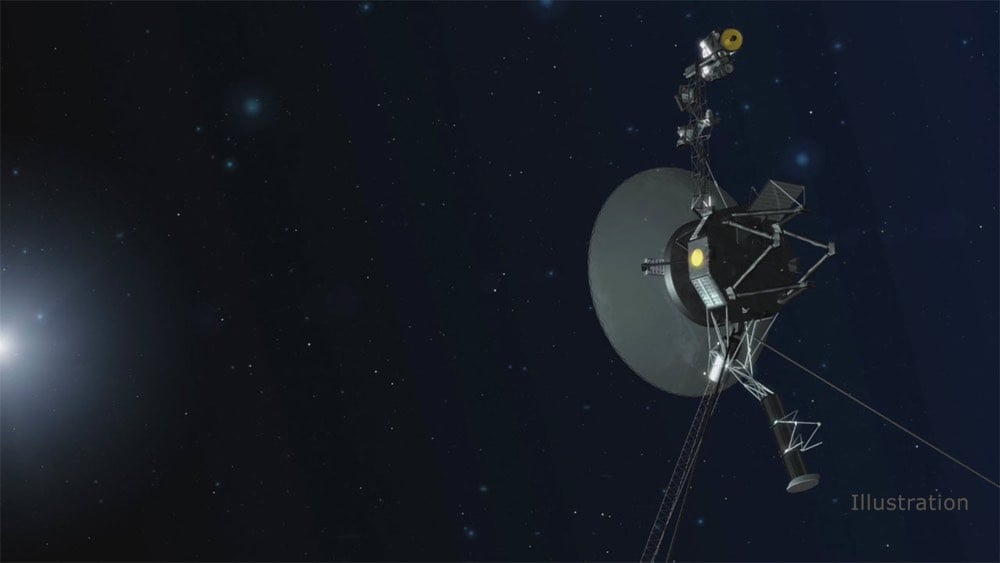
The last time that the four trajectory thrusters on the Voyager 1 probe were fired, Jimmy Carter was still President of the United States. But with the main attitude control thrusters deteriorating from trying to keep the probe oriented correctly, the team thought they could keep the mission going using the trajectory thrusters. So they fired them up.
On Tuesday, Nov. 28, 2017, Voyager engineers fired up the four TCM thrusters for the first time in 37 years and tested their ability to orient the spacecraft using 10-millisecond pulses. The team waited eagerly as the test results traveled through space, taking 19 hours and 35 minutes to reach an antenna in Goldstone, California, that is part of NASA’s Deep Space Network.
Lo and behold, on Wednesday, Nov. 29, they learned the TCM thrusters worked perfectly — and just as well as the attitude control thrusters.
Voyager 1 was launched in 1977, is currently more than 13 billion miles from Earth, and is still functional and doing science. Incredible.

Socials & More