


Over the weekend, the NY Times reported on a super secret US government program that investigated possible UFOs (with video footage!) and no one really cared. Ten years ago, this would have been headline news for days.

Advertise here with Carbon Ads
This site is made possible by member support. 💞
Big thanks to Arcustech for hosting the site and offering amazing tech support.
When you buy through links on kottke.org, I may earn an affiliate commission. Thanks for supporting the site!
kottke.org. home of fine hypertext products since 1998.
Beloved by 86.47% of the web.
Entries for December 2017
The Rates of Traffic Flow on Different Kinds of 4-Way Intersections
This is an animation of traffic flows simulated on 30 different kinds of four-way junctions, from two roads intersecting with no traffic lights or signs to complex stacked interchanges that feature very few interactions between individual cars. It was recorded in a game called Cities: Skylines, a more realistic take on SimCity.
The developer’s goal was to create a game engine capable of simulating the daily routines of nearly a million unique citizens, while presenting this to the player in a simple way, allowing the player to easily understand various problems in their city’s design. This includes realistic traffic congestion, and the effects of congestion on city services and districts.
I don’t know how accurate the observed rates of flow are — where my transportation engineers at? — but it’s super interesting to watch the various patterns get increasingly complex and efficient, and how the addition of dedicated turn lanes, roundabouts, overpasses, and slip lanes affect the flow. Be on the lookout for the turbo roundabout, the diverging windmill (which, coincidentally, is the name of my signature dance move), and the incredibly complex pinavia,1 which can handle almost five times the traffic flow compared to a simple intersection with no lights.
The pinavia interchange is apparently patented, which is a fascinating thing in its own right. ↩
Endlessly zooming art
DeepDream is, well, I can’t improve upon Wikipedia’s definition:
DeepDream is a computer vision program created by Google engineer Alexander Mordvintsev which uses a convolutional neural network to find and enhance patterns in images via algorithmic pareidolia, thus creating a dream-like hallucinogenic appearance in the deliberately over-processed images.
The freaky images took the web by storm a couple of years ago after Google open-sourced the code, allowing people to create their own DeepDreamed imagery.
In the video above, Mordvintsev showcases a DeepDream-ish new use for image generation via neural network: endlessly zooming into artworks to find different artworks hidden amongst the brushstrokes, creating a fractal of art history.
Bonus activity: after staring at the video for four minutes straight, look at something else and watch it spin and twist weirdly for a moment before your vision readjusts. (via prosthetic knowledge)
All 147 Michael Jackson songs, ranked from worst to best. Go on, get your arguing overcoat on and dive in.
Dancing on Roller Skates with James Brown’s Style
For the latest installment of the Dance In The Real World series, the NY Times visited a Chicago roller rink where people skate in a JB Style, named after the performer James Brown. I wanted to watch about 10 more minutes of that…and then go roller skating. See also Dancing on Skates.
Other videos in the Dance In The Real World series include stilt-dancing in Trinadad and the new vogueing scene in NYC. And they’re the perfect snackable size…I watched all five of them just now.
Deliverance from Mount Everest

I meant to get an early start to the day this morning, but then I got stuck in bed for 30 minutes reading this completely engrossing story by John Branch about the recovery of the bodies of two Indian climbers near the summit of Everest.
Mount Everest occupies a rare spot in the collective imagination — a misty mix of wonder, reverence and trepidation. Hundreds of people successfully and safely reach the summit most years and return home with inspirational tales of conquest and perseverance. Other stories detail the occasional tragedies that leave a few people dead in a typical year. Those disaster stories are now their own genre in books and film.
Where most of those stories end is where this one begins, long after hope is gone — the quiet, desperate and dangerous pursuit, usually at the insistence of a distraught family far away, to bring the dead home. The only search is for some semblance of closure.
That was why the Sherpas with their oxygen masks and ice axes had come this far, this high, more than a year later.
The four Indian climbers, from a vibrant climbing culture in West Bengal, were like so many others attempting Everest. They saw the mountain as the ultimate conquest, a bucket-list item that would bring personal satisfaction and prestige. They dreamed of it for years and made it the focus of their training. As motivation, they surrounded themselves with photographs of the mountain, from their Facebook pages to the walls of their homes.
In other ways, however, they were different. Climbing Everest is an expensive endeavor, something to be both bought and earned. Many climbers are middle-aged Westerners — doctors, lawyers and other professionals — with the kind of wealth that the group from India could not fathom. Some spend $100,000 to ensure the best guides, service and safety.
These four climbers measured monthly salaries in the hundreds of dollars. They borrowed money and sold off possessions simply for a chance. They cut costs and corners, because otherwise Everest was completely out of reach.
Personally, I’ll never understand people who take such risks with their lives.1 Maybe that’s why I’m so interested in reading articles like these…I get to put myself into that mindset for a little while, to awaken the small part of myself that might be open to doing something I normally wouldn’t for reasons I would typically dismiss. (via @DavidGrann)
Although, if offered a one-way trip to Mars, I would be sorely tempted, so perhaps I’m being more than a little hypocritical in this regard.↩
Unlocking the Commons: Or, the Psychoeconomics of Patronage
Nieman Journalism Lab is running its annual predictions for the next year in journalism. I wound up pitching something about audio platforms that is weirdly optimistic about Spotify? but for a hot minute, I tried to talk Jason (and he tried to talk me) into writing something about the new patron economy.
It was too late to pitch it as a prediction, but I couldn’t get it out of my head. So I do what I do, which is to write as much of it down as I can. In the end, I couldn’t think of a better place to run it than right here at Kottke.org.
Here’s the picture as generally agreed upon: ads are still alive and well, but the collapse and consolidation of the ad market means ads alone can’t support media companies any more, whether they’re big like the New York Times or small like Kottke.org.
There’s a puritanical argument that says ads have failed media, they bring out media’s worse impulses, and might be inherently bad. The only way to break with the ad model is to break with it completely, and sell media like a product. Make readers pay for content. If they don’t pay for it, don’t give it to them. Only when media companies are wholly accountable to their subscribers can you fix what’s wrong with media. Big companies need paywalls: little ones need exclusive subscribers.
Kottke.org, obviously, does not work this way. It has ads, although those are a very small part of the site and a shrinking part of the revenue. It has members, but very, very little is directed only to them: right now, subscribers to the newsletters get some behind-the-scenes stuff and a few early previews and experiments. Stuff that only real fans even want. The site, the tweets, the RSS feed, and everything else the site’s produced or ever will produce is available to everyone, whether they’re a member or not.
I call this “unlocking the commons,” and it’s the same approach I’ve taken with my Patreon and newsletter. Fans support the person and the work. But it’s not a transaction, a fee for service. It’s a contribution that benefits everyone. Free-riders aren’t just welcome; free-riding is the point.
This, I think, is key to understanding the psychology of patronage. Normally, if you buy a product — let’s say you’re buying a book. Books aren’t perfect commodities, but they’re still commodities. As a shopper, you’re trying to get as much value for your book as you can for your money. If I can get the book cheaper and faster from retailer A(mazon) than retailer B(arnes & Noble), most of the time, that’s what I’m going to do.
If I’m skeptical of A, and prefer to support B or C(ity bookstore of my choice), I’m not strictly speaking in a purchasing relationship any more, but something closer to a patronage one. I don’t just want my money to buy an object; I want it to support institutions and individuals I like, and I want it to support the common good.
This is one of the weird things about patronage. As a consumer, your first thought is to your own benefit. As a patron, it’s to the good of your beneficiary. Likewise, as an artisan supported by patronage, you tend to think more about what’s best for your patrons and audience than you do yourself.
For instance, when Patreon recently changed its fee structure, I thought about it on two levels. First, it seemed really bad for patrons, slightly less bad for beneficiaries, and clearly helped out Patreon more than either group. As a customer of Patreon — they’re the ones I give my money to — I felt like I was being ripped off. I was being asked for more money without getting more in return. But as a patron, my first thought was, does this help the people I pledge money to each month? And as a beneficiary, I thought, how does this affect the people who pledge money to me?
In both cases, I wanted what was best for that other person. I wanted them to be getting the full value of the transaction. The only time it was about me was when I thought about my relationship with Patreon — which is completely different.
Please note that this is not fuzzy-headed idealism or just sentiment: this is as concrete and comprehensive as it gets. It’s economic thinking that recognizes that goods don’t just exist to be used up, but are objects of labor produced by and for members of a commonwealth. The truth of the transaction is in the whole.
The most economically powerful thing you can do is to buy something for your own enjoyment that also improves the world. This has always been the value proposition of journalism and art. It’s a nonexclusive good that’s best enjoyed nonexclusively.
Anyways. This is a prediction for 2018 and beyond. The most powerful and interesting media model will remain raising money from members who don’t just permit but insist that the product be given away for free. The value comes not just what they’re buying, but who they’re buying it from and who gets to enjoy it.
The bigger those two pools get — the bigger the membership, and the bigger the audience — the better it gets for everyone. This is why we need more tools, so more people can try to do it. PBS as a service.
It’s not quite socialized art. Mutualist art, maybe. Proudhon probably would have thought it was pretty cool. So would the Florentines, arch-capitalists as they were. And it might not work. But so far, it’s the only model I’ve found worth trying.
Writing for the smell of it

Earlier this week, I wrote about how literature transforms text into voice and experience — the word made flesh, basically. But the examples I used of “experience” focused, as such discussions often do, on the image: in other words, vision. And it should be obvious that embodied experience is much richer than that. Experience is tactile and spatial, mental and auditory. It’s not photography; it has a taste and a temperature.
Smell might be the most ineffable feature of animal life. Words and food go through the mouth, so language and taste have a more intimate relationship than it does with smell, the seat of breath. The language of taste colonizes other experiences almost as much as vision does. The word “taste” alone testifies to this.
Smell is more delicate, and harder to explain or describe. In conversation, we have words, sure, but mostly communicate smell through grunts or exaggerated faces. Or again, through analogy with taste — with which it’s closely linked.
It’s probably safe to say that the deeper we move into language, especially the more cerebral side of language, the more alienated we become from smell. The world stops being beings among beings, and becomes res extensa.
Still, writers have to try to find a way to square this circle. How do you do it? Do you try to dominate the reader and go all pulpy, immersive, and visceral? Or do you write around it: using smell as a starting point for memory and sensibility, counting on readers to fill in the gaps?
Consider this passage from Helena Fitzgerald and Rachel Syme’s perfume newsletter, The Dry Down:
What we know as “leather” in scent is really an intellectual idea and not a true distillation of anything; it’s the ingenious concept of covering up the smell of dried-out skins with flowers so that these skins can be sold as luxury goods. The real story behind this idea is one of violence and hideous smells: many of the bloody, gut-strewn tanneries of 16th century France were located in close proximity to the Grasse perfume distilleries (where flowers were also sent to their deaths by hot steam or being suffocated in tallow), so close that the air in town became a heady melange of life and death, all mixed up; it must have smelled overwhelming and nauseating and murderous and terrifying (but then, that was the way most of Europe smelled before sewage systems were invented). Legend has it that this intermingling began when Catherine de Medici came over from Italy to rule France in 1547 and asked the Grasse tanners to start scenting their gloves with jasmine to rid them of the putrid scent of the kill; oiled gant then became de rigeur among aristocratic French try-hards…
It was all the rage to pretend that the dead thing you were wearing on your hands arrived to your palace smelling like a rose; and that’s still pretty much where we are with leather. When you close your eyes and think of what a pure leather smells like to you (a S&M dungeon? Frye boots crunching over autumn leaves? A tawny satchel worn down by years of use?), what you must know is that whatever you are imagining is an artificial smell, a clever creation passed down from some genius in post-classical Provence who conjured up a way to give a pushy queen exactly what she desired. That smell of suede, of the inside of a new handbag, that’s always a damn lie. Actual leather smells like rotting, like wretching, like rigor mortis. It’s not pleasant, but then, luxury is about high-stakes deceit, about playing hide-the-damage inside buttery language and astronomical price tags.
Later, Rachel writes about a perfumer she met names Stephen Dirkes:
When we first met, Dirkes brought me real ambergris to smell, waving an antique tin of pungent whale belly under my nose; I will never forget it. He also brought civet and castoreum, true animal secretions, to show me how very close to death we are at all times when we love perfume. These materials don’t smell fresh or vibrant, they smell like the other side of the bell curve, the decline, the decay. Stephen was the first person to tell me about the Grasse tanneries, and I remember he said something like “There is a death drive in these smells,” and that perfume is often an expression of self-loathing as much as it is of self-love. And that’s what leather is to me. You can’t wear it unless deep down, you loathe humanity as much as you love it, unless you acknowledge the gory hidden history of our hedonism, unless you know, in your heart, that opulence is a cover-up job.
Helena, in the same newsletter, writes the following beautiful observation about the smell of books:
What makes old book smell work as a scent that can be worn on the skin is a leather note, and the other smells that mingle in a university library, the kind of place where more hidden corners, more secret hide-outs, reveal themselves the longer you stay - the undercurrent of cooped-up people’s sweat, a hum of anxiety and ambition and want, the waft of the snacks that somebody snuck in, the sudden out-of-place hope when someone cracks a window, the residue of cigarettes clinging to people’s hair and clothes when they come back in from one more smoke break during a marathon study session. It smells like the gummy, self-satisfied leather of old book bindings and the grateful sinking feeling when you flop onto a broken-down Chesterfield sofa. Leather dominates New Sibet, but it is rounded out by notes of ash and carnation, iris and fur and moss, and it comes together to smell like a library not in the romantic Beauty and the Beast sense of a library, but the lived-in, slightly gross, sleep-deprived, buzzing all-too-human and really pretty rank smell of a college library. Old book smell made human is admittedly a little bit gross, in the way that even the fanciest college with the most prestigious pedigree, the most beautiful wrought iron gates and most gracious green quadrangles is still full of college students, and college students are inevitably kind of disgusting. But that human grossness is what’s missing from old book smell, and it’s what makes New Sibet into a wearable expression of old book smell. It smells not just like books but like their context, the people crowding in around them, the bodies sinking time as lived experience into the leather covers of old books through their human smell.
I’m not much of a perfume person. I am, however, a writing and smelling person. And I love the way Helena and Rachel write about smells.
Via Amanda Mae Meyncke, who adds:
This is the thing I’ve told more people about in 2017 than anything else — it is an utter delight. I never cared about perfume at ALL before this, and their writing is so good and so precise, so intelligent and so ACCURATE, that every suggestion they’ve made has smelled exactly like their descriptions — which are a mixture of memory, sense, history and more — and they’ve done the impossible, making this aloof-seeming shit absolutely accessible and delightful.
(This is also a relatively cheap, luxurious, happy-making hobby in the midst of perilous times.)
Why write fiction in 2017? “The feeling I’m talking about stems from the sense that we can never fully share the truth of who we are.”
The pizza metaphor of net neutrality
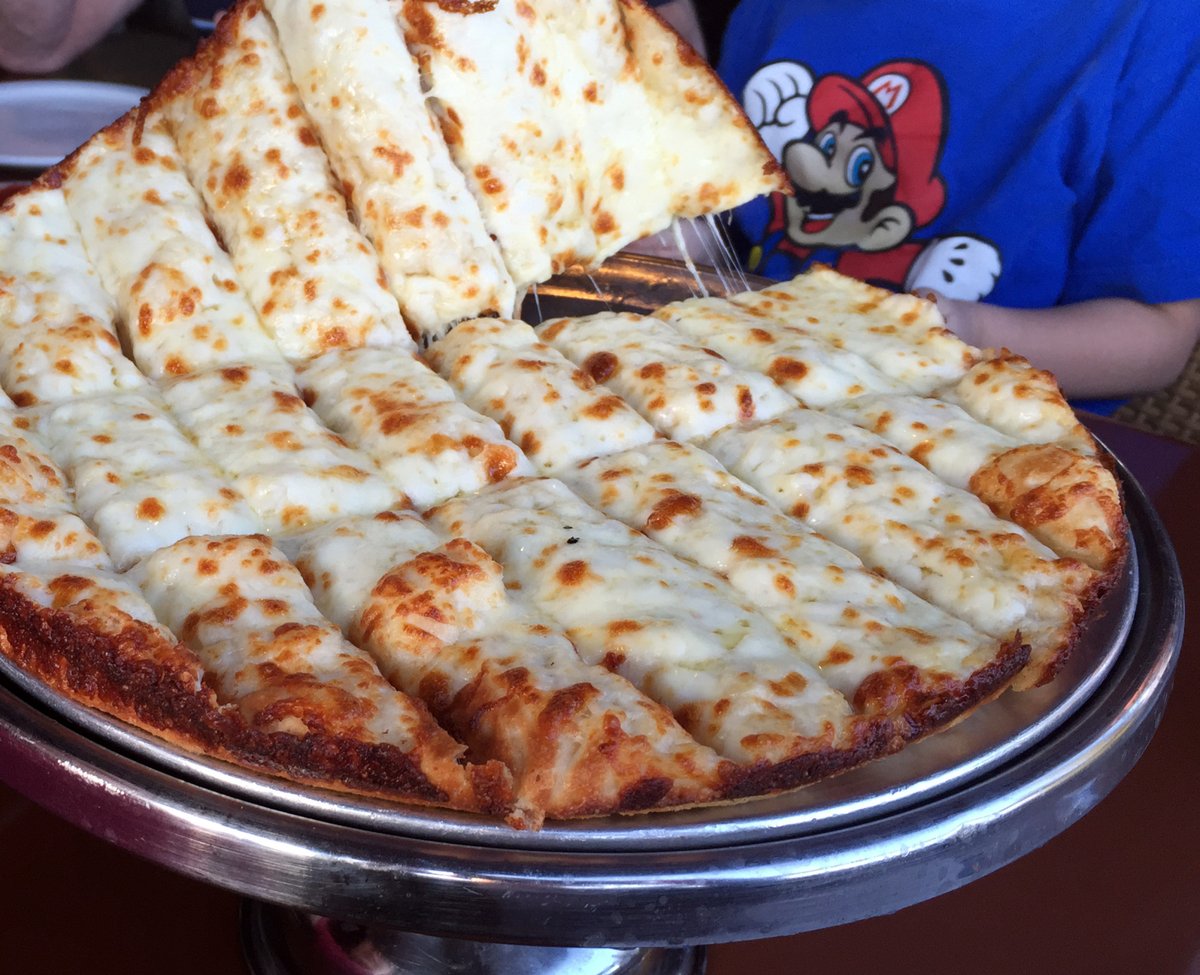
Net neutrality has been explained using pizza at least three times. Jason flagged this dead-to-rights analogy by Craigslist founder Craig Newmark from 2006:
Let’s say you call Joe’s Pizza and the first thing you hear is a message saying you’ll be connected in a minute or two, but if you want, you can be connected to Pizza Hut right away. That’s not fair, right? You called Joe’s and want some Joe’s pizza. Well, that’s how some telecommunications executives want the Internet to operate, with some Web sites easier to access than others. For them, this would be a money-making regime.
Recently, John Bergmayer, senior counsel at Public Knowledge, brought the pizza metaphor back:
Here is a simple metaphor: The telephone system, which has long been regulated to protect the public interest. You probably wouldn’t like it if you tried to order pizza from your favorite local place and were connected to a Papa John’s instead because it had got some special deal. Or if a Verizon telephone only connected to other Verizon phones. Obviously, there are a lot of differences between internet access and the telephone and how they work and how they are built, but the basic principle that essential communication systems ought to be non-discriminatory is the same.
However, the most deliberate and thorough consideration of Internet-as-pizza came before either of these interventions, and it came from the late Supreme Court Justice Antonin Scalia. In a dissent in 2005’s NCTA and FCC v. Brand X Internet Services’s decision, Scalia wrote:
If, for example, I call up a pizzeria and ask whether they offer delivery, both common sense and common “usage,” […] would prevent them from answering: ‘No, we do not offer delivery-but if you order a pizza from us, we’ll bake it for you and then bring it to your house.’ The logical response to this would be something on the order of, ‘so, you do offer delivery.’ But our pizza-man may continue to deny the obvious and explain, paraphrasing the FCC and the Court: ‘No, even though we bring the pizza to your house, we are not actually “offering” you delivery, because the delivery that we provide to our end users is “part and parcel” of our pizzeria-pizza-at-home service and is “integral to its other capabilities.”’… Any reasonable customer would conclude at that point that his interlocutor was either crazy or following some too-clever-by-half legal advice.
For Scalia, delivery is delivery. You buy the access to the internet — plus telephone, or cable, TV, or whatever it is you’re paying for — and you buy the access to the pipe. “It is therefore inevitable that customers will regard the competing cable-modem service as giving them both computing functionality
and the physical pipe by which that functionality comes to their computer —both the pizza and the delivery service that nondelivery pizzerias require to be purchased from the cab company.”
Like so many things, it’s a fiction to avoid regulation:
The Court contends that this analogy is inapposite because one need not have a pizza delivered… whereas one must purchase the cable connection in order to use cable’s ISP functions. But the ISP functions provided by the cable company can be used without cable delivery — by accessing them from an Internet connection other than cable. The merger of the physical connection and Internet functions in cable’s offerings has nothing to do with the “inextricably intertwined” nature of the two (like a car and its carpet), but is an artificial product of the cable company is marketing decision not to offer the two separately, so that the Commission could (by the Declaratory Ruling under review here) exempt it from common-carrier status.
Of course, getting the pizza (or the Internet) delivered to your house is the whole point, as the telecommunications companies understood full well:
The myth that the pizzeria does not offer delivery becomes even more difficult to maintain when the pizzeria advertises quick delivery as one of its advantages over competitors. That, of course, is the case with cable broadband.
Scalia was a first-rate jerk, and often extraordinarily wrong, but was generally solid on tech issues. He understood them, not in a technical way, but in a practical one. He also understood how to reason about them, both from analogy and from principle. He was never bumfuzzled, and was rarely compromised. His conservative successors haven’t proved to have the same qualities.
It’s good to look back at this, though, because it shows that we’ve been in an endless tug of war over net neutrality for more than twenty years. Even in 2014, it looked like the Obama-appointed regulators were as likely to gut net neutrality as reinforce and codify it. The new deregulation of the internet is a loss, but it doesn’t have to be a permanent one, unless we let it.
It also helps us to never forget that the FCC’s Ajit Pai danced with a Pizzagate conspiracy promoter before taking a dump all over the World Wide Web. I can’t say exactly how this ties into the pizza metaphor. But it’s in there somewhere, like a bad topping buried under too much cheese.
(via The Atlantic and Adrienne LaFrance)
Black Thought’s ten-minute freestyle
Warning: this is the best thing you’re going to see today, even if you already saw it yesterday.
In this clip, The Roots’ MC dishes out an album’s worth of rhymes from memory, while hardly stopping to breathe.
For once in his life, Sean Combs may not be exaggerating:
THIS IS THE GREATEST FREESTYLE IN ALL OF HIP HOP HISTORY!!!! @BlackThought https://t.co/IffabCoZcV
— Diddy (@Diddy) December 15, 2017
But as his bandmate Questlove pointed out, Black Thought has been doing this for years:
A Black Thought Freestyle Thread. https://t.co/Cu6kvYcV3p
— Questlove Gomez (@questlove) December 15, 2017
And Genius fulfilled its one true purpose, with fans getting the freestyle transcribed and available the same day.
Update: Aaaaand Genius took the post down, without explanation. So the quoted lyrics you’re about to get are as close to definitive as we have.
What I love about Black Thought’s freestyle is that it does everything hip-hop at its best does. He has the technical virtuosity and improvisation, both of which are first-rate. He toasts, boasts, and roasts. He plays with words, and the words play right back.
But he also tells stories, including this striking one about his mother:
My mother was a working class very lovin’ woman
Who struggled, every dinner could’ve been the last summer
I come home, chasing good-for-nothing half-cousins
And then walk in the crib to the smell of crack cookin’
She was introduced to that substance abuse
On some of the strongest drugs that the government produced
He gets philosophical and abstract. Like, real abstract.
I made the 21-pound for some a new found religion
When money’s put down, it’s only one sound to make
OGs and young lions equally proud to listen
The secret amalgam is an algorithm
Coming from where only kings and crowns permitted
The darkness where archaeologists found
My image in parchment rolled into a scroll
Holding a message for you, it says
“The only thing for sure is taxes, death, and trouble”
The anomaly swore solemnly, high snobiety
Freakonomics of war policy, dichotomy
That’s Heaven and Hades
Tigris and Euphrates
His highness
The apple of the iris to you ladies
As babies, we went from Similac and Enfamil
To the internet and fentanyl
Where all consent was still against the will
He pays homage to rap history:
Maybe I’m the new Rakim
Maybe I’m fat Pharaohe
Undergarments of armor be my intimate apparel
Pre-Kardashian Kanye
My rhyme-play immaculate
Same cadence as D.O.C Pre-accident
Maybe my acumen on par with Kool G Rap and them
And to his own discography:
I hate to say I told y’all, but I told y’all
Things fall apart when the center too weak to hold y’all
I’m just collecting what you owed to my old jawn
You ‘bout to get swooped down on and stoled on
He charms and disarms:
You in the residency of the one they call
King Dada
Ali Baba
The Talented Mr. Trotter
Inside of my right palm, the mark of the stigmata
Big Poppa wig chopper
Emperor Joffrey Joffer
Motherfucka, I’m stronger than the coffee out in Kaffa
All y’all n***as vagina-hop
Remind me of Icona Pop
I step in the booth, I’m a bull inside a China Shop
Mollywopper
Watch another cotton-pickin’ body drop
Every time we rock
Yo they actin’ like it’s Mardi Gras
‘Til the party stop
Skirt off like she that Ferrari drop
So psyched he pumpin’ that Earth, Wind and Fire body I
Cool a product doc
A la Marina, hard-body yacht
You seen another rapper cleaner? Mami, probably not
And sometimes, he just kills it:
How it feel to be the best that did it, I admit it
I’m visiting from planet bring these n***as death in minutes
And y’all know I’m exquisite
Wicked as Wilson Pickett
The sickness I exhibit
I’m too legit to quit it
I don’t fake it ‘till I make it
I take it to the limit, and break it
Never timid, what I’m about, I represent it
Infinite just like Chace is
Been a million places
Conversation is how beautiful my face is
People hating on how sophisticated my taste is
Then I pulled up on these motherfuckers in a spaceship
Even reading this, it’s just too good.
I am a walking affirmation
That imagination
And focus and patience
Get you closer to your aspiration
And just cuz they give you shit
Don’t mean you have to take it
My words capture greatness
Sworn affidavits
Meanwhile, the talented Tariq Trotter himself kept it humble:
That verse was just what I had to say at the moment lol.
— Black Thought (@blackthought) December 14, 2017
How candles are made (from 1963)
From British Pathé, a short video from 1963 on how candles are made.
Oh yes, candles make the whole of humanity into one big understanding family.
Candles! I can’t believe the answer has been staring us in the face this whole time. (via the morning news)
Common Objects Painstakingly Organized into Patterns
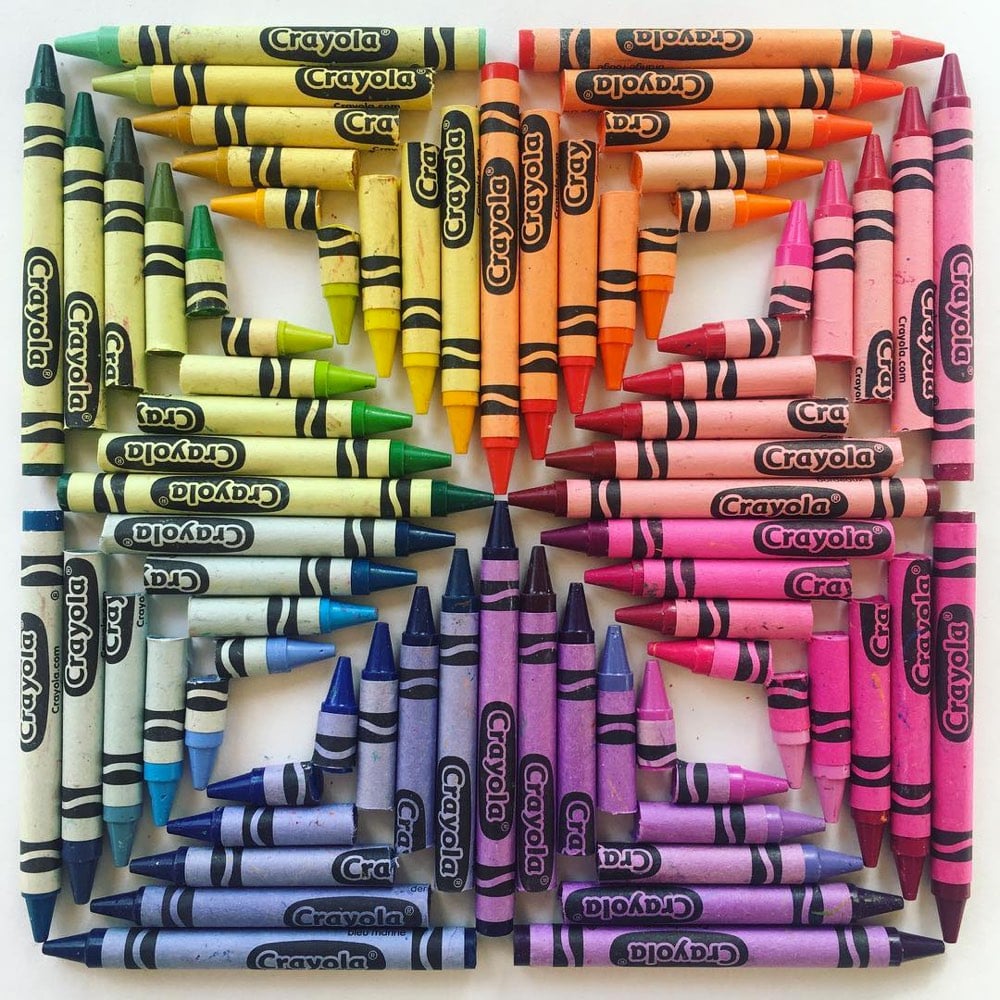
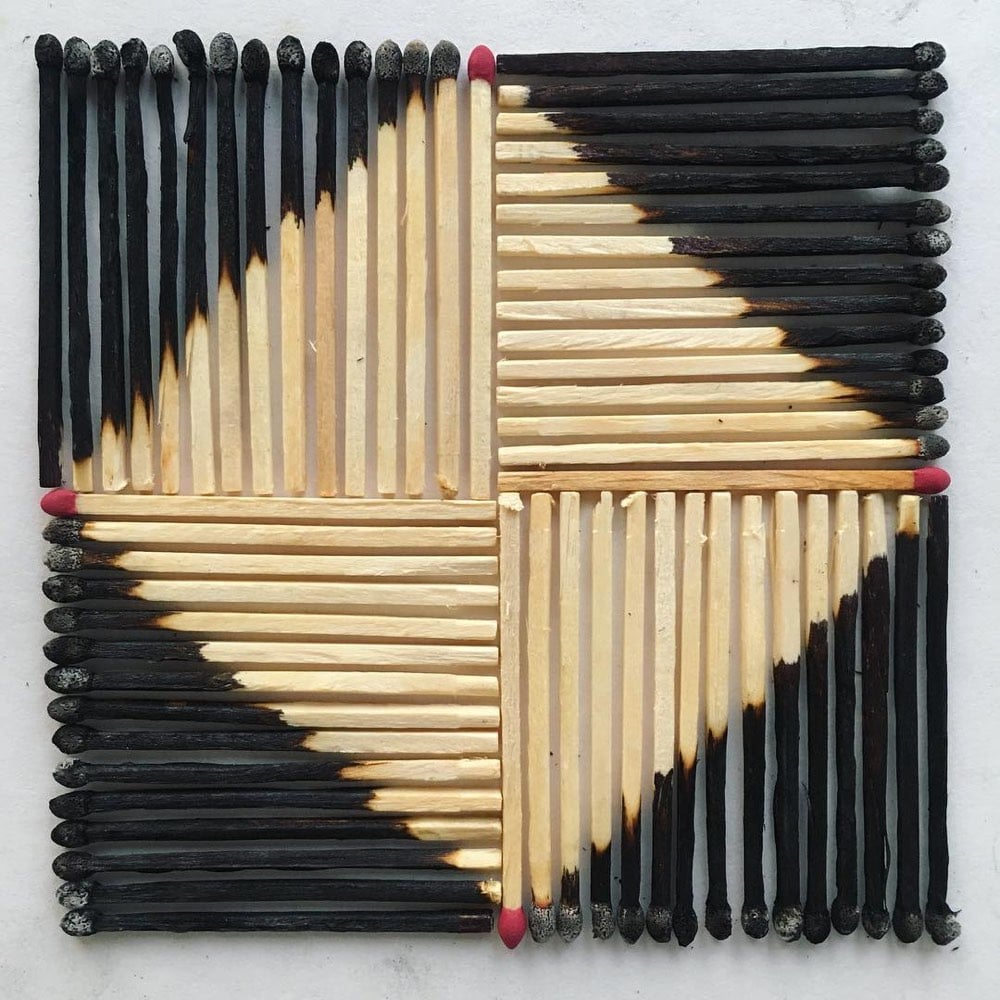
On his Instagram account, Adam Hillman arranges everyday objects into patterns. Prints are available. Related: Always. Be. Knolling. (via colossal)
The Fear Box (with John Boyega & Gwendoline Christie)
Vanity Fair does this thing where they get people to put their hands into a box to touch an unknown object. They call it The Fear Box. The latest installment features John Boyega & Gwendoline Christie from Star Wars: The Last Jedi confronting their fear of snakes, lizards, BB-8s, and plush Chewie toys. If you need a pick-me-up today, this should do the trick.
Philip Seymour Hoffman, addiction, and being “all in”
In the latest issue of Vogue, Mimi O’Donnell reflects on the death of her husband, Philip Seymour Hoffman, his addiction, and their family.
The first time I met Phil, there was instant chemistry between us. It was the spring of 1999, and he was interviewing me to be the costume designer for a play he was directing — his first — for the Labyrinth Theater Company, In Arabia We’d All Be Kings. Even though I’d spent the five years since moving to New York designing costumes for Off-Broadway plays and had just been hired by Saturday Night Live, I was nervous, because I was in awe of his talent. I’d seen him in Boogie Nights and Happiness, and he blew me out of the water with his willingness to make himself so vulnerable and to play fucked-up characters with such honesty and heart.
I remember walking into the interview and anxiously handing Phil my résumé. He studied it for a few moments, then looked up at me and, with complete sincerity and admiration, said, “You have more credits than I do.” I felt myself relax. He wanted to put me at ease and let me know that we would be working together as equals. After the meeting, I called my sister on one of those hilariously giant cell phones of the time, and after I had raved about Phil, she announced, “You’re going to marry him.”
The Fantastic Masculinity of Newt Scamander
In an episode of Pop Culture Detective, Jonathan McIntosh discusses The Fantastic Masculinity of Newt Scamander. Scamander is the hero of the Fantastic Beasts and Where to Find Them movie that takes place in the Wizarding World of Harry Potter.
Many reviews of the film found Scamander to be a weak hero, but McIntosh argues that the character offers a view of masculinity that we don’t often see in movies, “a gentle empathetic version of heroic masculinity”. Scamander is not The Chosen One (like Harry or Luke Skywalker)…he’s a male hero who is emotional and nurturing and whose strengths are vulnerability, sincerity, and sensitivity.
It’s funny, when I was reading Harry Potter with my kids, we talked a lot about the flaws in Harry’s heroism, e.g. how his hotheadedness frequently put him and his friends into danger. But I didn’t notice how much of strong and vulnerable hero Scamander was. I’m gonna have to go back and watch this again.
Drone shots of NYC
Among Humza Deas’ hundreds of shots of NYC on his Instagram are a collection of drone shots of the city taken in the fall.



I know that last one has been filtered to within an inch of its life and I normally don’t cotton to those sorts of shenanigans, but this one makes me feel so fricking autumnal that I’ll allow it.
Sibilant Snakelikes
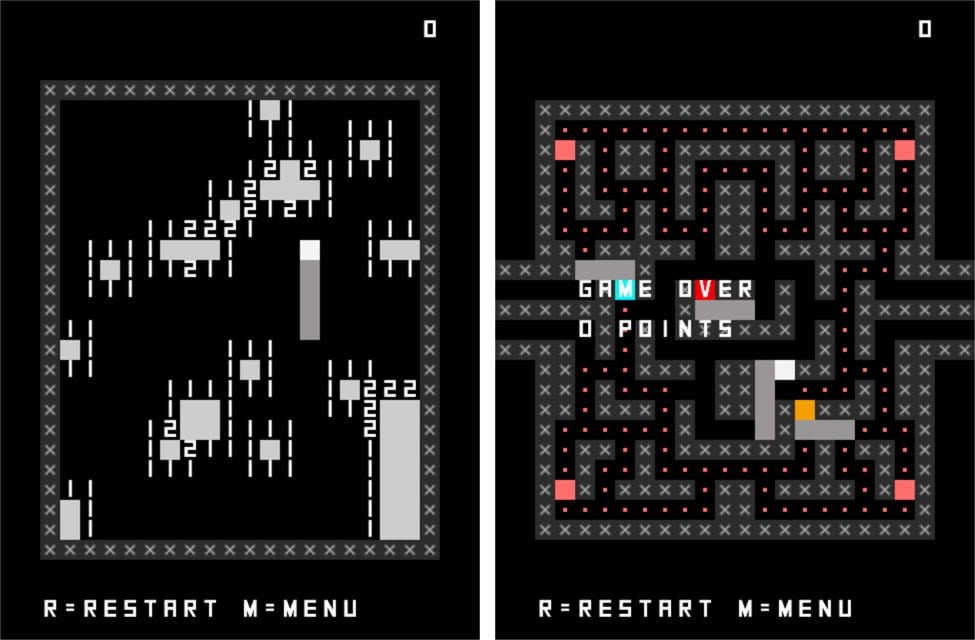
For his new game, Sibilant Snakelikes, Pippin Barr remade several games (Super Mario Bros, Missile Command, Ms Pacman, Minesweeper) using the gameplay mechanics from the classic cellphone game Snake. Says Barr about making the game:
Making the game has been a continuation of my interest in thinking about how the language of videogames works to express ideas. It strikes me that one useful experimental approach to understanding this is to “translate” one game’s expression into the language of another game. In trying to work out how the very simple mechanics and concepts of Snake can convey different sets of ideas (fighting a colossus, eating dots and running away from ghosts, playing soccer) I was forced to grapple fairly deeply with making reasoned design choices. The translation process doesn’t necessarily lead to “good games” and certainly not to games that are evocative in the same way as the originals, but I do think it shows us something about how a game like Snake can communicate more complex ideas without really changing it very much mechanically (there are exceptions to this of course). And then on the flip side it also shows us how moving the source games into the “Snake universe” alters those games and leads to new gameplay possibilities (or impossibilities, for that matter).
The code of the game is available on Github and is free to adapt and share for non-commercial purposes under a Creative Commons license. See also Snakisms, a philosophical take on Snake by Barr.
An interactive map of debt in America

The Urban Institute has built an interactive map for exploring debt in America.
Credit can be a lifeline during emergencies and a bridge to education and homeownership. But debt-which can stem from credit or unpaid bills-often burdens families and communities and exacerbates wealth inequality. This map shows the geography of debt in America at the national, state, and county levels.
I’d love to hear why the “share with any debt in collections” is so relatively low in the Upper Midwest, Minnesota in particular.
Update: Unsurprisingly, health insurance coverage is a significant factor in American debt…and Minnesota has a low rate of medical debt in collections along with a relatively low rate of uninsured. This 2016 press release from MN Department of Health provides some clues as to why the uninsured rate is so comparatively low. (via @yodaui)
The best design books that aren’t specifically about design
The other day, Google Ventures’ Daniel Burka asked his followers for suggestions on the best design books that aren’t about design. Burka offered up How Buildings Learn by Stewart Brand as his selection. Agreed! Here are the responses I found most interesting (some of which actually are about design, more or less):
The Death and Life of Great American Cities by Jane Jacobs, a reminder to put humans at the center of city planning.
Understanding Comics by Scott McCloud. I read this ages ago and still think about it all the time.
The Mezzanine by Nicholson Baker, a book that takes place entirely on an escalator ride.
Creativity, Inc. by Ed Catmull, about leadership, creativity, and storytelling at Pixar.
Read Burka’s summary of the thread at Medium (please clap).
The McDonald’s Quarter Pounder With Cheese Is a Lie. A Delicious Lie.
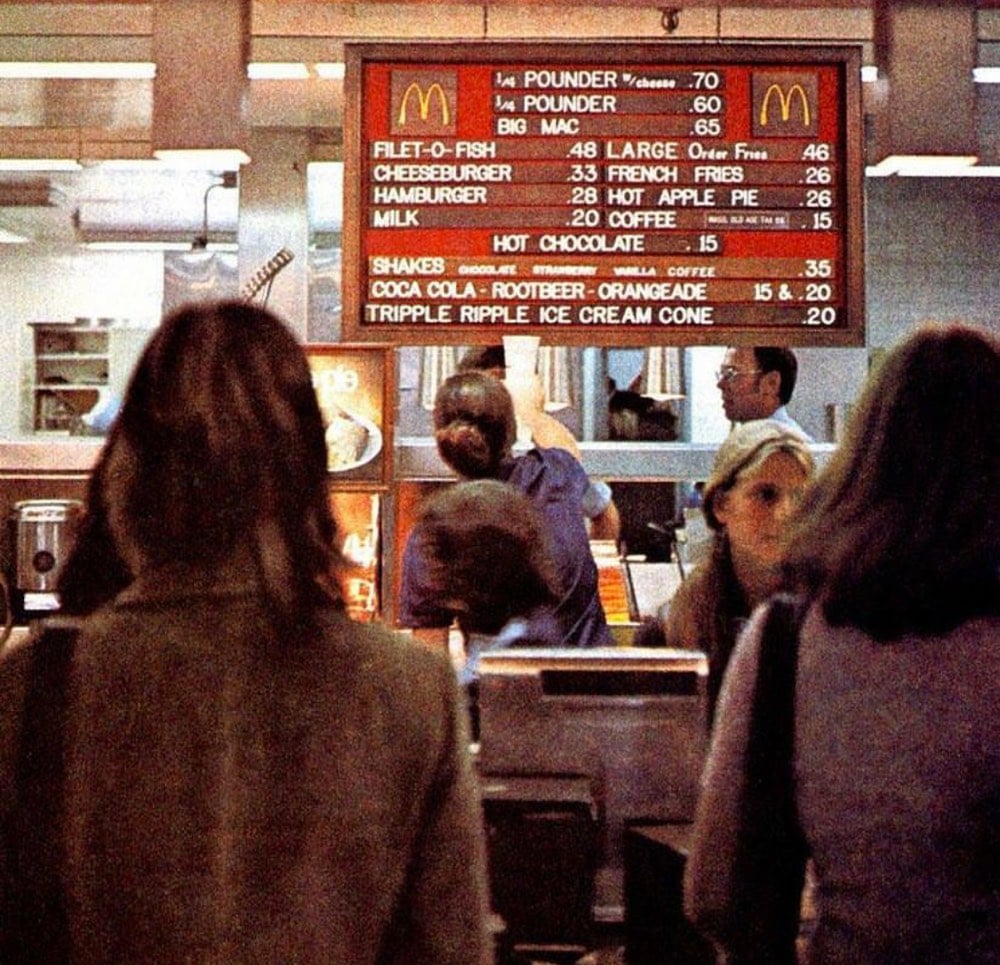
Some facts about the McDonald’s Quarter Pounder with Cheese:
1. As you can see in the photo above, purportedly taken in 1974, there was originally a Quarter Pounder without cheese, which was scrubbed from the menu at some undetermined point (even though you can still order one sans cheese at the counter).
2. The patty on the Quarter Pounder with Cheese does not weigh a quarter of a pound. It weighs 4.25 oz after it was subtly micro-supersized in 2015.
3. The 4.25 oz is actually the pre-cooked weight anyway. The on-bun weight is more like 3 oz.
4. When I’m traveling a significant distance by car, on a trip that requires stopping for food, my go-to meal is a Quarter Pounder with Cheese, fries, and a Coke. Don’t judge.
5. The Quarter Pounder has been discontinued in Japan. No one knows why.
6. In the US, the Quarter Pounder comes with pickles, raw onion, ketchup, and mustard. But in NYC, they omit the mustard. That sound you heard was me slapping my forehead after learning this just now after years of not being able to figure out why my Quarter Pounders sometimes had mustard and sometimes didn’t. (I prefer them without.)
The official death toll from Hurricane Maria in Puerto Rico is 64. The actual number may be more than 1000.
The Not Yorker
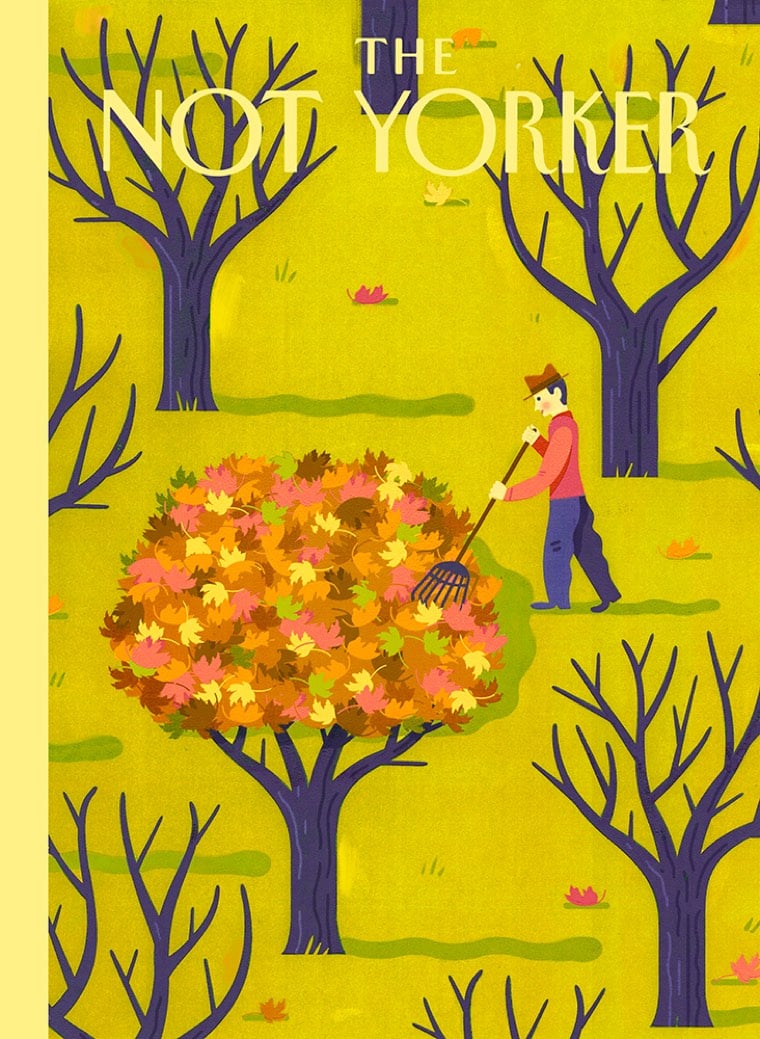
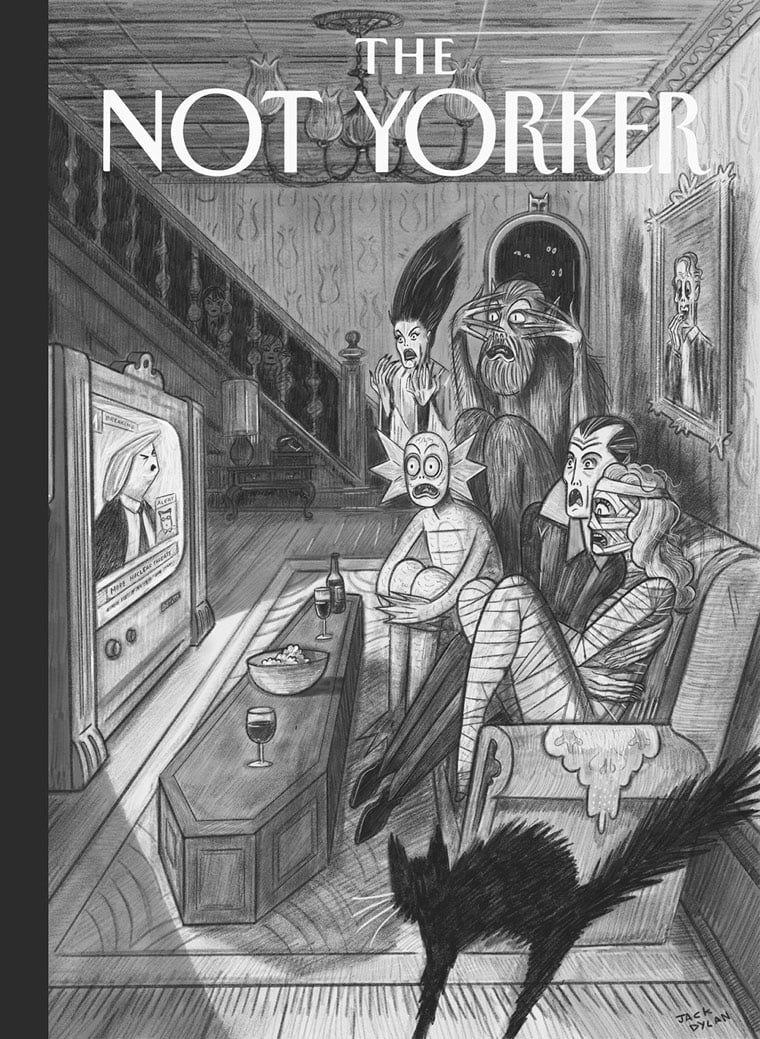
The Not Yorker is a blog collecting cover art rejected by the New Yorker. If you’re an illustrator who’s had a cover rejected, they’re soliciting submissions. (via the morning news)

Socials & More