Entries for August 2017
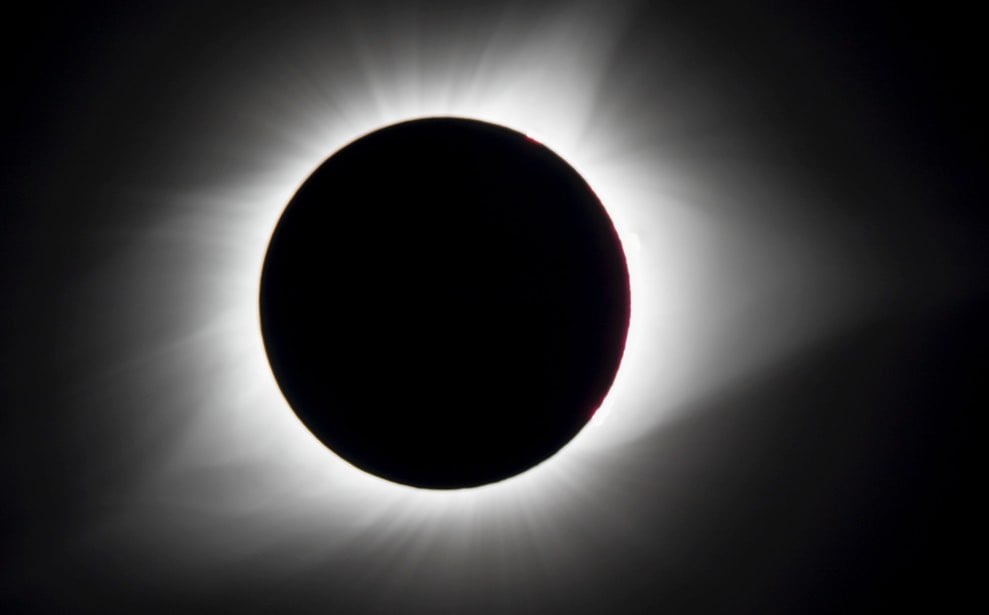
I was not prepared for how incredible the total eclipse was. It was, literally, awesome. Almost a spiritual experience. I also did not anticipate the crazy-ass, reverse storm-chasing car ride we’d need to undertake in order to see it.
I’m not a bucket list sort of person, but ever since seeing a partial eclipse back in college in the 90s (probably this one), I have wanted to witness a total solar eclipse with my own eyes. I started planning for the 2017 event three years ago…the original idea was to go to Oregon, but then some college friends suggested meeting up in Nebraska, which seemed ideal: perhaps less traffic than Oregon, better weather, and more ways to drive in case of poor weather.
Well, two of those things were true. Waking up on Monday, the cloud cover report for Lincoln didn’t look so promising. Rejecting the promise of slightly better skies to the west along I-80, we opted instead to head southeast towards St. Joseph, Missouri where the cloud cover report looked much better. Along the way, thunderstorms started popping up right where we were headed. Committed to our route and trusting this rando internet weather report with religious conviction, we pressed on. We drove through three rainstorms, our car hydroplaning because it was raining so hard, flood warnings popping up on our phones for tiny towns we were about to drive through. Morale was low and the car was pretty quiet for awhile; I Stoically resigned myself to missing the eclipse.
But on the radar, hope. The storms were headed off to the northeast and it appeared as though we might make it past them in time. The Sun appeared briefly through the clouds and from the passenger seat, I stabbed at it shining through the windshield, “There it is! There’s the Sun!” We angled back to the west slightly and, after 3.5 hours in the car, we pulled off the road near the aptly named town of Rayville with 40 minutes until totality, mostly clear skies above us. After our effort, all that was missing was a majestic choral “ahhhhhh” sound as the storm clouds parted to reveal the Sun.
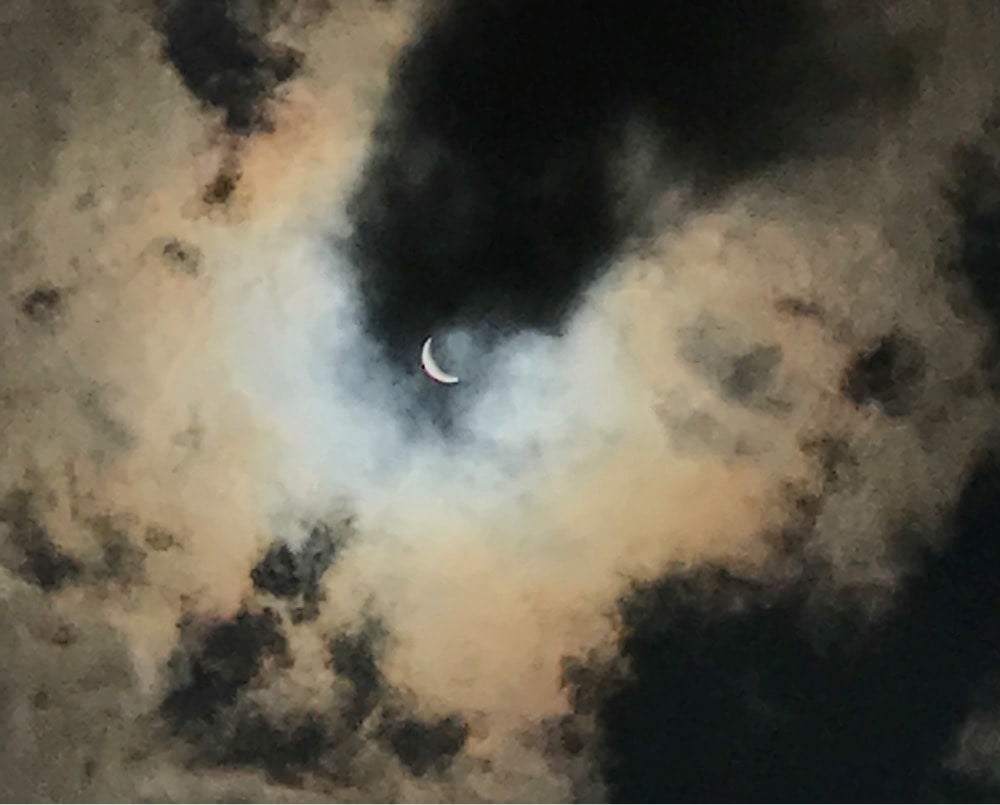
My friend Mouser got his camera set up — he’d brought along the 500mm telephoto lens he uses for birding — and we spent some time looking at the partial eclipse through our glasses, binoculars (outfitted with my homemade solar filter), and phone cameras. I hadn’t seen a partial eclipse since that one back in the 90s, and it was cool seeing the Sun appear as a crescent in the sky. I took this photo through the clouds:
Some more substantial clouds were approaching but not quickly enough to ruin the eclipse. I pumped my fist, incredulous and thrilled that our effort was going to pay off. As totality approached, the sky got darker, our shadows sharpened, insects started making noise, and disoriented birds quieted. The air cooled and it even started to get a little foggy because of the rapid temperature change.
We saw the Baily’s beads and the diamond ring effect. And then…sorry, words are insufficient here. When the Moon finally slipped completely in front of the Sun and the sky went dark, I don’t even know how to describe it. The world stopped and time with it. During totality, Mouser took the photo at the top of the page. I’d seen photos like that before but had assumed that the beautifully wispy corona had been enhanced with filters in Photoshop. But no…that is actually what it looks like in the sky when viewing it with the naked eye (albeit smaller). Hands down, it was the most incredible natural event I’ve ever seen.
After two minutes — or was it several hours? — it was over and we struggled to talk to each other about what we had just seen. We stumbled around, dazed. I felt high, euphoric. Raza Syed put it perfectly:
It was beautiful and dramatic and overwhelming — the most thrillingly disorienting passage of time I’ve experienced since that one time I skydived. It was a complete circadian mindfuck.
After waiting for more than 20 years, I’m so glad I finally got to witness a total solar eclipse in person. What a thing. What a wondrous thing.
Update: Here are some reports from my eclipse-chasing buddies: a photo of Mouser setting up his camera rig, Nina’s sharp shadow at 99% totality, and Mouser’s slightly out-of-focus shot of the Sun at totality (with an account of our travels that day).
As part of a video series on Chinese food in America, Al Jazeera profiles the small population of Chinese-American families that have lived in the Mississippi Delta for more than 100 years.
There’s a rather unknown community of Chinese-Americans who’ve lived in the Mississippi Delta for more than a hundred years. They played an important role in the segregated South in the middle of the 20th century. Join us as we get a taste of Southern Chinese food and learn about the unique history of the Delta Chinese.
Originally coming to the area to pick cotton, many of the Chinese immigrants opened up grocery stores, mostly in the black communities in which they lived. One family owned two stores across the street from each other in the days of segregation: one for serving white customers and the other for serving black customers.
And, oh man, that Southern Chinese food looks absolutely delicious. This NPR story, The Legacy Of The Mississippi Delta Chinese, contains a little more information on the food.
But let’s get back to dinner. As the group gets busy chopping and sauteing in the kitchen, Gilroy heads outside and starts tossing fried rice in a gigantic wok nestled into a super-hot, custom burner stand.
He tosses in some cubed ham: “This is what makes it Southern fried rice!” he says.
Before long, an impressive feast is laid out before us: beef with cauliflower. Whole fish garnished with fried ginger. Spare ribs with carrots and potatoes. Roast pork with a honey-hoisin glaze, and much more. The flavors of their youth.
The last total solar eclipse in the US and Canada took place in February 1979. Here’s Walter Cronkite’s original report on the eclipse for the CBS Evening News. It features druids, a rooster that was supposed to sleep during the eclipse, and interviews with some people who were obviously tripping balls during the celestial event.
See also this 1979 ABC News anchor saying “may the shadow of the moon fall on a world at peace” about the 2017 eclipse. (via @EricHolthaus)
Throughout history, total solar eclipses have been unnerving. To ancient cultures, they signified bad omens, the apocalypse, or that the Sun was being eaten by a sky creature.
There were a tumult, and disorder. All were disquieted, unnerved, frightened. Then there was weeping. The commonfolk raised a cup, lifting their voices, making a great din, calling out shrieking. People of light complexion were slain as sacrifices; captives were killed. All offered their blood.
But even in modern times, a lack of scientific understanding of what happens during a solar eclipse can cause apprehension and panic. Until hearing the same story from two different people in the past week, I had no idea that during solar eclipses, it is routine for schoolchildren to be kept inside until the “danger” has passed. Charles Fulco, a NASA and AAS 2017 U.S. Eclipse Educator, is trying to allay these fears by addressing common eclipse misconceptions.
“The Sun is more dangerous during an eclipse.” This is utter nonsense and for some reason, has persisted into the 21st Century. An eclipsed Sun is no more dangerous than the “everyday” Sun, but for some reason, some districts still keep teachers and students in their rooms with pulled shades, watching the eclipse on a screen, rather than outdoors, safely and under the care of a professional educator. I believe their fear of nature is transferred to the students as well: If the adult says an eclipse is scary and dangerous, than it must be!
Phil Plait agrees:
As I make my final preparations for my eclipse travels (rural western Wyoming, if you’re curious) I’m hearing stories that are making me very unhappy: Some school districts across the country are telling children to stay inside during the eclipse, out of fear they’ll damage their eyes.
Let me be clear: Schools, administrators, teachers, parents: Don’t do this. YOU CAN LET THE KIDS SEE THE ECLIPSE. You just have to be safe about it.
I can appreciate the difficulty of telling 25 first graders there’s something cool happening with the Sun and then trying to get them not to look directly at it, but keeping kids inside is not the answer. For one thing, they’re missing out on a genuine celestial spectacle & learning opportunity and for another, you’re teaching people bad science. A friend, who is one of the smartest people I know, was genuinely concerned for her kids’ safety during the eclipse because when she was a kid, she was kept inside a classroom with the shades drawn because, she was told, it was dangerous for them to be outside. Dangerous to be outside in the sunshine! A clear case of educators doing the exact opposite of what they should be doing.
This video from the Weather Channel is pretty neat and useful: a play-by-play of what to expect during the eclipse, from being able to see Venus in broad daylight to animals possibly acting weird to the 360-degree “sunset” that happens about 2 minutes before totality.
On March 8-9, 2016, a total solar eclipse swept across the Pacific Ocean for more than 5 hours. About a year before the eclipse, Hayden Planetarium astronomer Joe Rao realized Alaska Airlines flight 870 from Anchorage to Honolulu would pass right through the path of totality…but 25 minutes too early. Rao called the airline and convinced them to shift the flight time.
Alaska’s fleet director, Captain Brian Holm, reviewed the proposed flight path and possible in-route changes to optimize for the eclipse. The schedule planning team pushed back the departure time by 25 minutes, to 2 p.m.
On the day of the flight, Dispatch will develop the specific flight plan, to find the most efficient route and account for weather and wind. Maintenance and maintenance control will help make sure the plane is ready to go — they even washed all the windows on the right side of the plane.
Captain Hal Andersen also coordinated with Oceanic Air Traffic Control, to make them aware that the flight might require a few more tactical changes then normal.
“The key to success here is meeting some very tight time constraints — specific latitudes and longitudes over the ocean,” Andersen said. “With the flight management computer, it’s a pretty easy challenge, but it’s something we need to pay very close attention to. We don’t want to be too far ahead or too far behind schedule.”
The video was shot by a very excited Mike Kentrianakis of the American Astronomical Society, who has witnessed 20 solar eclipses during his lifetime.
July 11, 2010. That was the eclipse over Easter Island, the one for which hotel room rates were so high that there was no way Kentrianakis could afford it. Instead, he considered attempting a trip to Argentina, where experts predicted there was a 5 percent chance of clear skies. His wife at the time, Olga, urged him not to go — it’s not worth the expense, she insisted. Reluctantly, Kentrianakis stayed home.
“It was the beginning of the end for us,” Kentrianakis says. There were problems in the marriage before that episode, “but it affected me that I felt that she didn’t really appreciate what I loved.” They were divorced the following year.
Kentrianakis doesn’t like to dwell on this, or the other things he’s given up to chase eclipses. He knows his bosses grumbled about the missed days of work. Friends raise their eyebrows at the extremes to which he goes. He’s unwilling to admit how much he’s spent on his obsession.
“There is a trade-off for everything, for what somebody wants,” he says.
A camera on the Deep Space Climate Observatory satellite captured the eclipse’s shadow as it moved across the Earth:
For this year’s eclipse, Alaska Airlines is doing a special charter flight for astronomy nerds and eclipse chasers. Depending on how this eclipse goes, seeing an eclipse from an airplane might be on my bucket list for next time. (via @coudal)
Back in 2015, Emily Heath wrote for HuffPost:
I saw your truck parked in front of the Rite-Aid, right by the Dunkin Donuts. Two large Confederate flags were attached to the back of it, waving in the wind. The American flag was, incongruously, in the center. And, I have to confess, I don’t get it.
Part of me wanted to ask obvious questions: You know you are in New Hampshire, right? And, you know New Hampshire was not a part of the Confederacy?
I ask this because I’m not so sure you do. Here we are in a northern town, a place that gave her sons up to the Union Army and lost them on the battlefields of the Civil War. A place where locals organized early against slavery and led the charge against it across the country. A place where 150 years ago that flag would have been seen as a symbol of treason.
I live in Vermont. It’s a pretty liberal place; along with Hawaii, Vermont had the lowest statewide level of support for Trump in the 2016 election. But it is also a very white place…the second whitest state in the US as of the last census. Earlier this week, I drove past a house with the Confederate flag hanging on a flagpole in the front yard, right below the American flag. It’s not something you see super-often, but you do see it, along with Blue Lives Matter bumper stickers, Take Back Vermont signs painted on barns, and the perhaps well-intentioned older white couple holding up “We Believe Black Lives Matter Because All Lives Matter” signs on a small town sidewalk after the white supremacist demonstration in Charlottesville. Last year at the Champlain Valley Fair, there were multiple vendors selling Confederate flags, shirts, bandanas, and the like.
I am inclined to agree with Heath on this: the display of the Confederate flag is racist.
I think you believe that the flag brands you as a “rebel” or somehow honors your outlook on life. It doesn’t. It brands you as a racist. You may not think you are one, but flying that flag is a racist act.
I know that right now you are saying, “But I’m not a racist!” “Heritage, not hate!” But this isn’t your heritage. It’s mine. And it is hate. And it is racism. And every time you put that flag on the back of your car, we all go back in time a little. And the past wasn’t so great for many of our neighbors.
(via @chrispiascik)
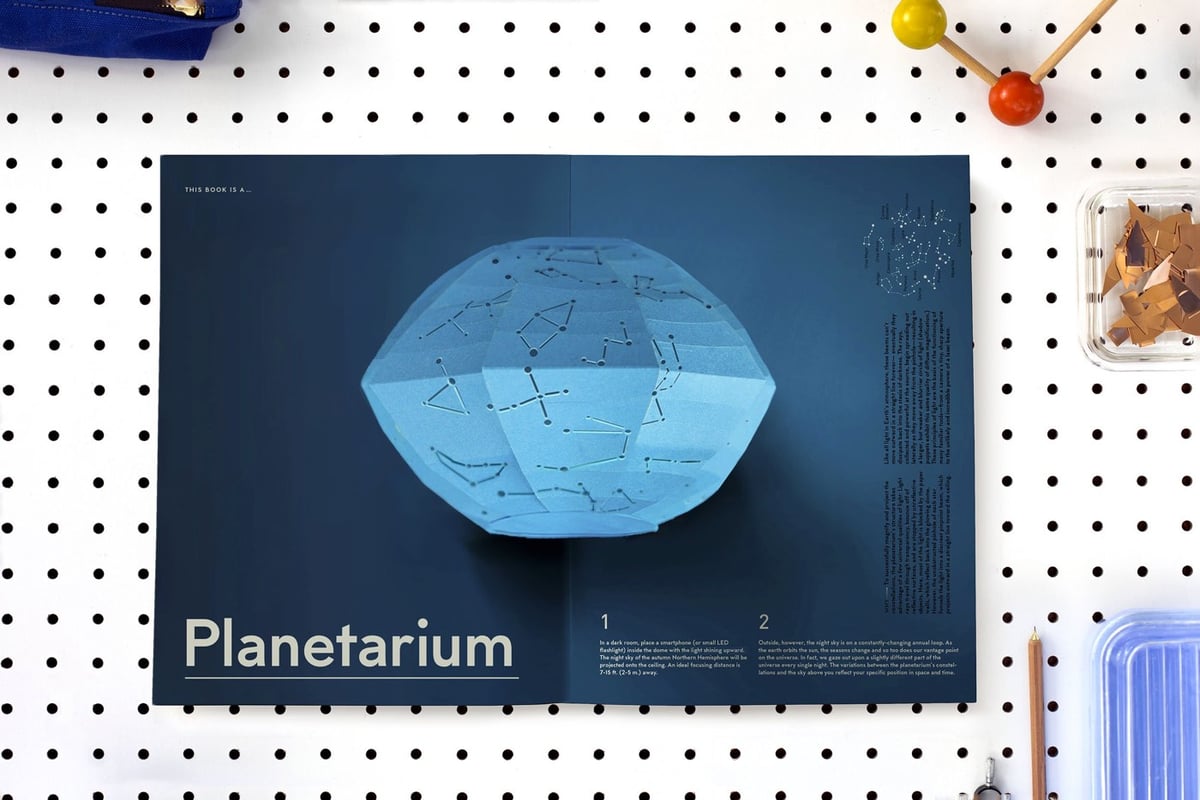

A couple of years ago, I told you about designer Kelli Anderson’s upcoming book, This Book is a Planetarium. It took awhile to get everything just right, but I’m happy to report the book will finally be out in early October.
Defying every expectation of what a book can be, this pop-up extravaganza transforms into six fully functional tools: a real working planetarium projecting the constellations, a musical instrument complete with strings for strumming, a geometric drawing generator, an infinite calendar, a message decoder, and even a speaker that amplifies sound. Artist Kelli Anderson contributes enlightening text alongside each pop-up, explaining the scientific principles at play in her constructions and creating an interactive experience that’s as educational as it is extraordinary.
Here’s a video of Anderson playing with two of the six contraptions. She sent me a preview of the book in the form of the planetarium pop-up page (accompanied by one of these cool cards) and when I cracked it open, I actually squealed. Seriously, this thing is super awesome. We took it and my iPhone flashlight into the darkest room in the house and sure enough, there was the Big Dipper projected onto the ceiling…my kids could barely stop saying “this is so cool”. Really looking forward to seeing the real thing in October.
The Exploratorium in San Francisco has produced a great explainer video about the science of predicting total solar eclipses. Each eclipse belongs to a repeating series of eclipses called a Saros cycle that repeats every 18 years 11 days and 8 hours.
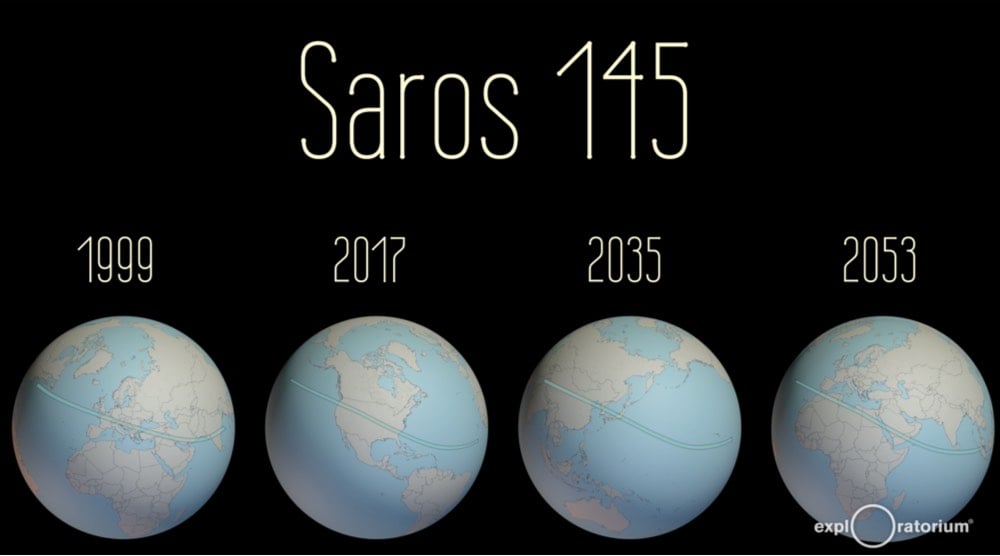
There are now 40 active Saros cycles and the August 2017 eclipse belongs to Saros 145, which produced its first total eclipse in June 1909 and will produce its last total eclipse in September 2648.
In Backing Alt-Right, A.C.L.U. Embraces Role in Defending ‘Groups We Detest’
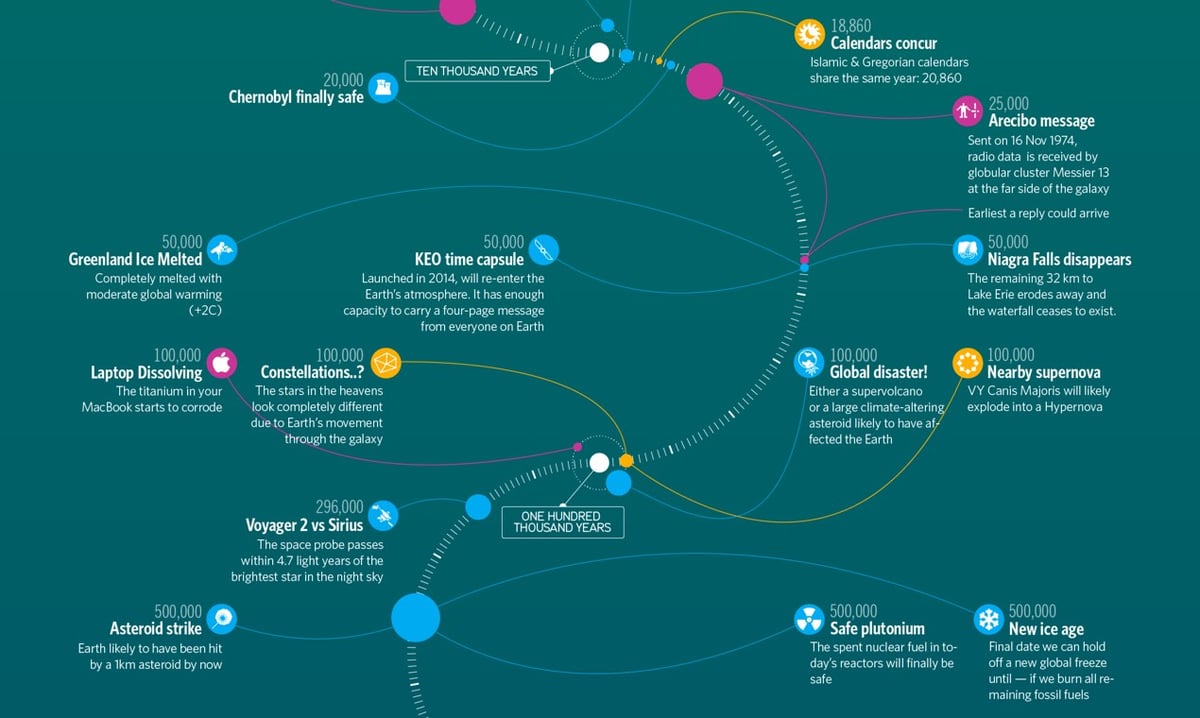
Timeline of the far future is one of my favorite pages on Wikipedia. It details what might happen to humanity, human artifacts, the Earth, the solar system, and the Universe from 10,000 years from now until long past the heat death of the Universe. Information is Beautiful has made a lovely infographic of the timeline.
Reading through the timeline is a glorious way to spend time…here are a few favorites I noticed this time around as well as some from my first post.
August 20, 10,663: “A simultaneous total solar eclipse and transit of Mercury.”
20,000 years: “The Chernobyl Exclusion Zone, the 1,000 sq mi area of Ukraine and Belarus left deserted by the 1986 Chernobyl disaster, becomes safe for human life.”
296,000 years: “Voyager 2 passes within 4.3 light-years of Sirius, the brightest star in the night sky.”
1 million years: “Highest estimated time until the red supergiant star Betelgeuse explodes in a supernova. The explosion is expected to be easily visible in daylight.”
1 million years: “On the Moon, Neil Armstrong’s ‘one small step’ footprint at Tranquility Base will erode by this time, along with those left by all twelve Apollo moonwalkers, due to the accumulated effects of space weathering.”
15.7 million: “Half-life of iodine-129, the most durable long-lived fission product in uranium-derived nuclear waste.”
100 million years: “Future archaeologists should be able to identify an ‘Urban Stratum’ of fossilized great coastal cities, mostly through the remains of underground infrastructure such as building foundations and utility tunnels.”
1 billion years: “Estimated lifespan of the two Voyager Golden Records, before the information stored on them is rendered unrecoverable.”
4 billion years: “Median point by which the Andromeda Galaxy will have collided with the Milky Way, which will thereafter merge to form a galaxy dubbed ‘Milkomeda’.”
7.59 billion years: The Earth and Moon are very likely destroyed by falling into the Sun, just before the Sun reaches the tip of its red giant phase and its maximum radius of 256 times the present-day value. Before the final collision, the Moon possibly spirals below Earth’s Roche limit, breaking into a ring of debris, most of which falls to the Earth’s surface.
100 billion years: “The Universe’s expansion causes all galaxies beyond the Milky Way’s Local Group to disappear beyond the cosmic light horizon, removing them from the observable universe.”

In his 1945 book The Open Society and Its Enemies, political philosopher Karl Popper asserted that tolerance need not be extended to those who are intolerant.
Less well known is the paradox of tolerance: Unlimited tolerance must lead to the disappearance of tolerance. If we extend unlimited tolerance even to those who are intolerant, if we are not prepared to defend a tolerant society against the onslaught of the intolerant, then the tolerant will be destroyed, and tolerance with them. In this formulation, I do not imply, for instance, that we should always suppress the utterance of intolerant philosophies; as long as we can counter them by rational argument and keep them in check by public opinion, suppression would certainly be unwise. But we should claim the right to suppress them if necessary even by force; for it may easily turn out that they are not prepared to meet us on the level of rational argument, but begin by denouncing all argument; they may forbid their followers to listen to rational argument, because it is deceptive, and teach them to answer arguments by the use of their fists or pistols. We should therefore claim, in the name of tolerance, the right not to tolerate the intolerant. We should claim that any movement preaching intolerance places itself outside the law, and we should consider incitement to intolerance and persecution as criminal, in the same way as we should consider incitement to murder, or to kidnapping, or to the revival of the slave trade, as criminal.
The last part bears repeating:
We should therefore claim, in the name of tolerance, the right not to tolerate the intolerant. We should claim that any movement preaching intolerance places itself outside the law, and we should consider incitement to intolerance and persecution as criminal, in the same way as we should consider incitement to murder, or to kidnapping, or to the revival of the slave trade, as criminal.
The photo above was taken by Steve Helber of Charlottesville resident Corey Long pointing an improvised flamethrower at a group of white supremacists this past weekend. Yesha Callahan of The Root interviewed Long about that moment:
“At first it was peaceful protest,” Long said softly as he spoke. “Until someone pointed a gun at my head. Then the same person pointed it at my foot and shot the ground.”
Long said the only weapon he had was a can of spray paint that a white supremacist threw at him earlier, so he took a lighter to the spray paint and turned it into a flame thrower. And a photographer snapped the photo.
But inside every photograph is an untold story. If you look closely at Long’s picture, there’s an elderly white man standing in between Long and his friend. The unknown man was part of the counterprotests, too, but was afraid, and Long and his friends were trying to protect him. Even though, Long says, those who were paid to protect the residents of Charlottesville were doing just the opposite.
At the beginning of each episode of The Wire, a quote from one of the show’s characters is shown on the screen, a epigraph that suggests the theme of the episode. This video shows the characters from each episode saying those opening quotes — Lester: “all the pieces matter”; Omar: “all in the game”; The Greek: “business, always business”; Poot: “world going one way, people another” — for all five seasons.
Videos designed to invoke ASMR (“autonomous sensory meridian response”) in some viewers have grown in popularity in recent years. The videos feature soothing sounds and visuals (gentle whispering, soft scratching, watching a task being diligently performed) that are meant to provoke a response of brain tingling or a state of bliss in some people. In an attempt to ride the wave, Ikea has made a 25-minute advertisement for college dorm furniture that uses common ASMR techniques. I dunno, does cerebral euphoria make people want to buy closet organizers?
James Poniewozik, chief TV critic for the NY Times, wrote about his favorite scene from Freaks and Geeks. Here’s the scene:
I loved this bit:
First, the music. “I’m One” by the Who, from the 1973 album “Quadrophenia.” It builds from mournfulness (“I’m a loser / No chance to win”) to a defiant chorus. And it’s a great example of how “Freaks and Geeks” chose its soundtracks. The episode is set in 1981, but it avoids on-the-nose ’80s-song choices. Paul Feig, the show’s creator, once told me that the thing about the early ’80s in the Midwest was that they were really still the ’70s.
I grew up in the Midwest in the early 80s and though I’ve never really thought about it before, Feig’s observation that they were still really the 70s is spot on. (via @tcarmody)
In a meditative video for the NY Times, Dennis Overbye takes us on a tour of eclipses that happen in our solar system and beyond.
On the 21st day of August, 2017, the moon will slide between the Earth and the sun, painting a swath of darkness across North America. The Great American Solar Eclipse. An exercise in cosmic geometry. A reminder that we live on one sphere among many, all moving to the laws of Kepler, Newton and Einstein.
Humans have many more vantage points from which to observe solar eclipses than when the last solar eclipse occurred in the US in 1979. I had no idea that the Mars rovers had caught partial solar eclipses on Mars…so cool. (via @jossfong)
The prevailing theory of how the Americas were settled has been than human hunters followed big game across the ice-free land bridge between North America and Asia around 13,000 years ago. These are the Clovis people you may have learned about in school. But evidence is mounting that the first humans to settle the Americas came down the Pacific Coast somewhat earlier than that.
The Cedros Island sites add to a small but growing list that supports a once-heretical view of the peopling of the Americas. Whereas archaeologists once thought that the earliest arrivals wandered into the continent through a gap in the ice age glaciers covering Canada, most researchers today think the first inhabitants came by sea. In this view, maritime explorers voyaged by boat out of Beringia — the ancient land now partially submerged under the waters of the Bering Strait — about 16,000 years ago and quickly moved down the Pacific coast, reaching Chile by at least 14,500 years ago.
Part of the problem in confirming this hypothesis is that the rise in sea level that accompanied the melting of the glaciers (a 120-meter rise globally) submerged likely settlement sites, trapping archeological evidence under hundreds of feet of ocean. (via @CharlesCMann)

It’s official: Prince and purple are together forever. The Pantone Color Institute has created “a standardized custom color” to honor Prince.
The (naturally) purple hue, represented by his “Love Symbol #2” was inspired by his custom-made Yamaha purple piano, which was originally scheduled to go on tour with the performer before his untimely passing at the age of 57. The color pays tribute to Prince’s indelible mark on music, art, fashion and culture.
Prince’s association with the color purple was galvanized in 1984 with the release of the film Purple Rain, along with its Academy Award-winning soundtrack featuring the eponymous song. While the spectrum of the color purple will still be used in respect to the “Purple One,” Love Symbol #2, will be the official color across the brand he left behind.
“The color purple was synonymous with who Prince was and will always be. This is an incredible way for his legacy to live on forever,” said Troy Carter, Entertainment Advisor to Prince’s Estate.
Not that many other people have their own custom Pantone color. In early 2016, The NY Post reported that Jay-Z and realty company CEO Sherry Chris had signature Pantone colors, a blue and pink respectively. (via @anildash)
Sure, blockbuster movie trailers are formulaic. But…actually, no buts, they are formulaic and this cheeky short video by the Auralnauts gives away all the secrets to making a really effective engaging exciting unique aggressively bland trailer for a Hollywood blockbuster movie.
Update: It’s a bit dated, but Cracked did a Trailer For Every Oscar-Winning Movie Ever:
(via @lanewinfield)
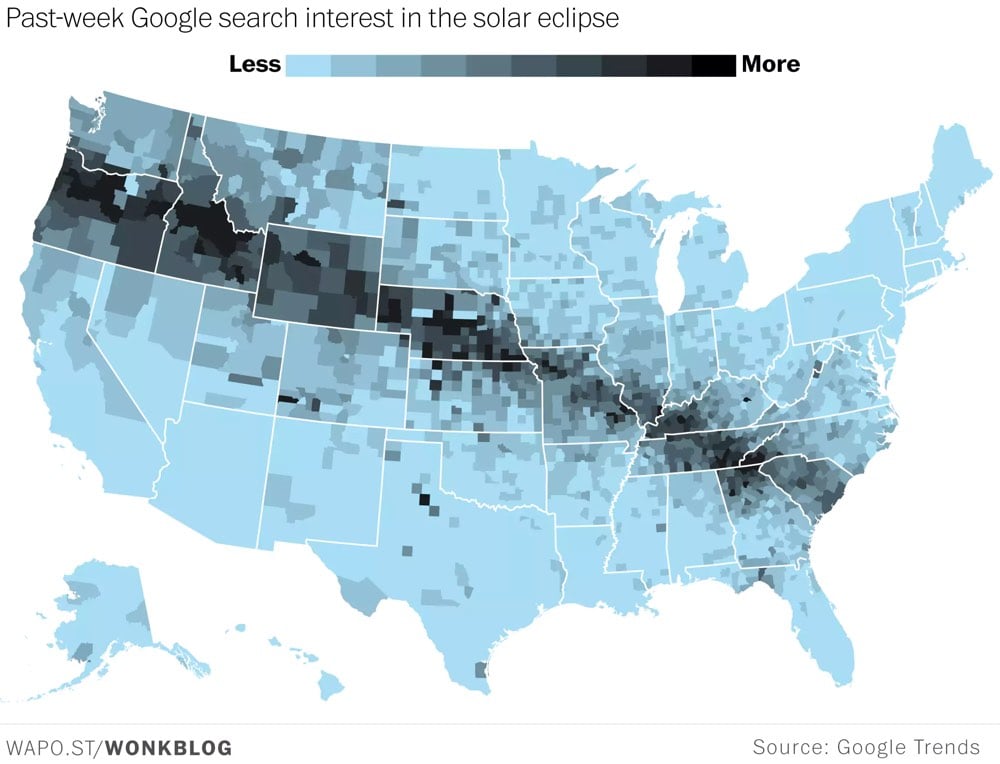
According to Google Trends, search traffic about the upcoming solar eclipse mirrors the path of totality. And according to XKCD, pre-eclipse search traffic for “eclipse” is outpacing pre-election search traffic for “election”.
This is perhaps the best on-the-ground view of what went down in Charlottesville over the weekend. It’s graphic in spots. Prepare to get angry and sad and frustrated and scared.
On Saturday hundreds of white nationalists, alt-righters, and neo-Nazis traveled to Charlottesville, Virginia to participate in the “Unite the Right” rally. By Saturday evening three people were dead — one protester, and two police officers — and many more injured.
“VICE News Tonight” correspondent Elle Reeve went behind the scenes with white nationalist leaders, including Christopher Cantwell, Robert Ray, David Duke, and Matthew Heimbach — as well as counter-protesters. VICE News Tonight also spoke with residents of Charlottesville, members of the Black Lives Matter movement, and the Charlottesville Police.
From the neo-Nazi protests at Emancipation Park to Cantwell’s hideaway outside of Virginia, “VICE News Tonight” provides viewers with exclusive, up close and personal access inside the unrest.
See also Here’s What Really Happened in Charlottesville.
It’s been awhile since I’ve looked in on what the proprietor of the Primitive Technology YouTube channel is up to. Over the past two years, this Australian man has built all sorts of tools, structures, and objects using only what he can find in the forest and has racked up over 330 million views on his silent videos demonstrating how he does it all.
One of his latest projects was building a water-powered hammer (video above).
The trough was positioned under the waterspout to collect water and the tripod adjusted so that the resting point of the hammer was horizontal (so water wouldn’t prematurely spill out of the trough).
The trough filled with water, outweighed the hammer head and tilted the hammer up into the air. The water then emptied out of the trough (now slanting downwards) and the hammer then slammed down onto an anvil stone returning to its original position. The cycle then repeated at the approximate rate of one strike every 10 seconds. The hammer crushes small soft types of stone like sandstone or ochre. I carved a bowl into the anvil stone so that it would collect the powder. I then crushed old pottery (useful as grog for new pots) and charcoal. Practically speaking, this hammer worked ok as a proof of concept but I might adjust it or make a new one with a larger trough and bigger hammer for heavy duty work.
He also made a trap for catching freshwater prawns:
And a pair of sandals:
He’s built up quite a following on Patreon as well, with people contributing over $5700 per video, putting him on a path to be able to make Primitive Technology his full-time job.
I’m currently listening to Philip Glass: Piano Works by Víkingur Ólafsson.
Compare with Glass’s own take on the Études. The NY Times recently interviewed Ólafsson about Glass and other things.
Mr. Olafsson’s version is often more atmospheric. Although the ‘Etude comprises a series of repeated phrases, he doesn’t settle into any patterns. He treats Mr. Glass’s music like a sculpture, worth studying from all angles in search of new interpretations and surprises.
“I came to the conclusion that it’s not a repetition,” Mr. Olafsson said of Mr. Glass’s music. “It’s a rebirth. It’s not treading the same path, but traveling in a spiral. That’s the image I have.”
The Death of Stalin is a satirical film about the political aftermath of Joseph Stalin’s death in 1953. It stars Jeffrey Tambor, Michael Palin (as Vyacheslav Molotov, for whom the Molotov cocktail was named), and Steve Buscemi as Nikita Khrushchev (who, spoiler alert, eventually wins the succession battle for leader of the Soviet Union).

From Robert Macfarlane’s fascinating Twitter account comes this new-to-me term: crown shyness, a phenomenon where the leaves and branches of individual trees don’t touch those of other trees, forming gaps in the canopy.
According to Wikipedia, there are several possible causes of this phenomenon, including the inhibition of the spread of organisms harmful to trees, damage or stunted growth of new shoots caused by the trees knocking into one another in the wind, or stunting of growth because of mutual shading. Whatever the cause, I think we can all agree that the effect looks hella rad. Photo by Dag Peak from Flickr.
See also wolf trees.
David Ma is a food artist and director who recently made a series of four short recipe videos in the style of famous directors. There’s spaghetti and meatballs a la Quentin Tarantino (my favorite):
S’mores in the style of Wes Anderson:
What if Michael Bay made waffles?
And finally, here’s a pancake recipe in the style of Alfonso Cuaron’s Gravity:
Hopefully round 2 of Ma’s project will include the likes of Sofia Coppola, Ava DuVernay, Spike Lee, or Yimou Zhang.
In celebration of the 44th anniversary of the birth of hip hop, Google has replaced its logo with a pair of working turntables and a crate of records to scratch and mix.
On August 11, 1973, an 18-year-old, Jamaican-American DJ who went by the name of Kool Herc threw a back-to-school jam at 1520 Sedgwick Avenue in the Bronx, New York. During his set, he decided to do something different. Instead of playing the songs in full, he played only their instrumental sections, or “breaks” — sections where he noticed the crowd went wild. During these “breaks” his friend Coke La Rock hyped up the crowd with a microphone. And with that, Hip Hop was born.
The introduction and tutorial is hosted by Fab 5 Freddy, host of the groundbreaking Yo! MTV Raps show. You can play with the DJ setup here:
That was super fun…I spent more time than I would like to admit playing with that. See also Tim Carmody’s Spotify playlist, Introduction to Hip-Hop.
The first season of the Netflix series The Crown was a surprise for me. I thought it was going to be pleasant-but-soapy look at the royals a la Downton Abbey (which I love, don’t get me wrong), but the acting and the substance of the script and production elevated it, putting it among the best shows to debut last year. Claire Foy as Queen Elizabeth, in particular, was a revelation; her one-on-one scenes with her sister and with Churchill were some of the best TV I watched last year. From the season 2 trailer, it appears that we’re in for more of the same come December.
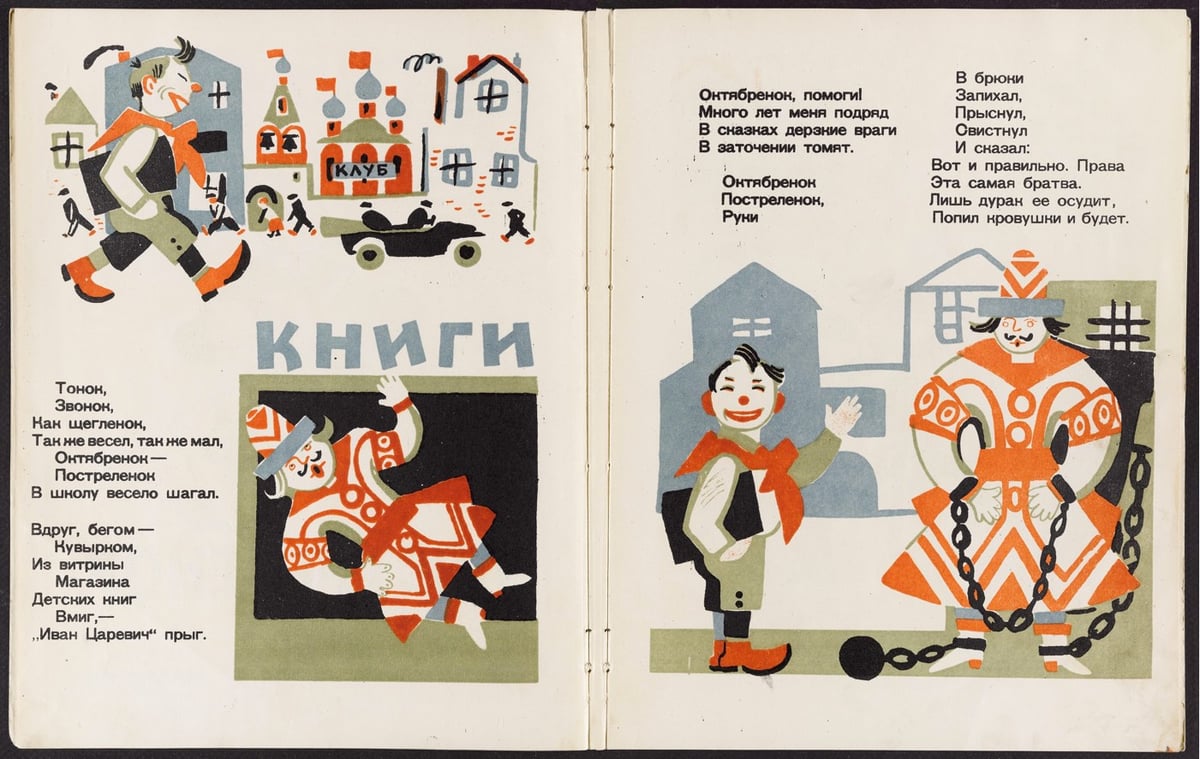
Playing Soviet is an online interactive database created by Princeton of children’s books from the Soviet Union.
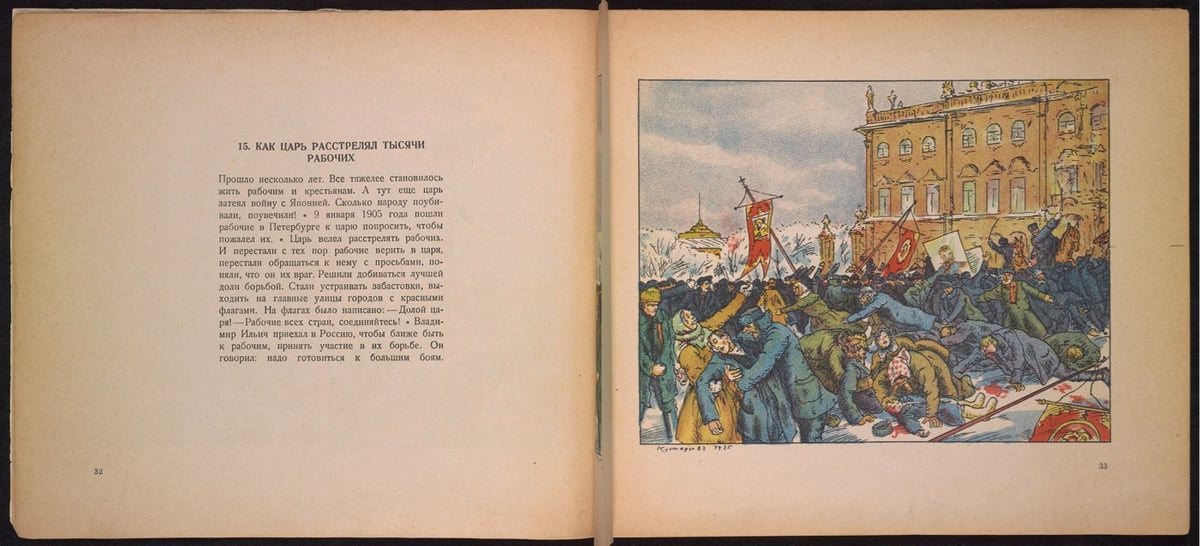
In the selections featured here, the user can see first-hand the mediation of Russia’s accelerated violent political, social and cultural evolution from 1917 to 1953. These conditions saw the proliferation of new styles and techniques in all the graphic arts: the diverse productivity of the Russian avant-garde, photomontage, experimental typography, and socialist realism. As was clear both from the rhetoric of the arbiters of Soviet culture — its writers and government officials — the illustration and look of Soviet children’s books was of tantamount importance as a vehicle for practical and concrete information in the new Soviet regime. Directives for a new kind of children’s literature were founded on the assumption that the “language of images” was immediately comprehensible to the mass reader, far more so than the typed word. Illustrators were raised as equals to the revered Russian author, bringing artists such as Alexander Deineka, El Lissitzky, Vladimir Lebedev, and numerous other graphic designers to the pages of children’s books to create imaginative models for Soviet youth in the new languages of Soviet modernism.
The bottom image is from a book called For Children About Lenin, a 71-page illustrated book about Lenin and the Russian Revolution published 2 years after his death.
Oh, this is a clever bit of TV/film analysis by Evan Puschak: he reconstructs the Loot Train Battle from the most recent episode of Game of Thrones using clips from other movies and TV shows (like 300, Lord of the Rings, Stagecoach, and Apocalypse Now). In doing so, he reveals the structure that many filmed battle scenes follow, from the surprising enemy attack presaged by the distant sound of horses (as in 300) to the quiet mid-chaos reflection by a shocked commander (as in Saving Private Ryan). Everything is a Remix, right?
This reminds me of how the Rogue One production team made a full-length reel of the film for director Gareth Edwards from scenes from other movies so that the timing and pacing could be worked out.
It’s very simple to have a line [in the script] that reads “Krennic’s shuttle descends to the planet”, now that takes maybe 2-3 seconds in other films, but if you look at any other ‘Star Wars’ film you realise that takes 45 seconds or a minute of screen time. So by making the whole film that way — I used a lot of the ‘Star Wars’ films — but also hundreds of other films too, it gave us a good idea of the timing.
For example the sequence of them breaking into the vault I was ripping the big door closing in ‘Wargames’ to work out how long does a vault door take to close.
This fascinating behind-the-scenes look at the battle doesn’t allude to any such storyboarding, but as Puschak notes, battle scenes from dozens of other movies surely weren’t far off in their minds while putting this one together.
In the first in a series of videos, Kurzgesagt tackles one of my favorite scientific subjects: how the sizes of animals governs their behaviors, appearance, and abilities. For instance, because the volume (and therefore mass) of an organism increases according to the cube of the increase in length (e.g. if you double the length/height of a dog, its mass roughly increases by 8 times), when you drop differently sized animals from high up, the outcomes are vastly different (a mouse lands safely, an elephant splatters everywhere).
The bit in the video about how insects can breathe underwater because of the interplay between the surface tension of water and their water-repellant outer layers is fascinating. The effect of scale also comes into play when considering the longevity of NBA big men, how fast animals move, how much animals’ hearts beat, the question of fighting 100 duck-sized horses or 1 horse-sized duck, and shrinking people down to conserve resources.
When humans get smaller, the world and its resources get bigger. We’d live in smaller houses, drive smaller cars that use less gas, eat less food, etc. It wouldn’t even take much to realize gains from a Honey, I Shrunk Humanity scheme: because of scaling laws, a height/weight proportional human maxing out at 3 feet tall would not use half the resources of a 6-foot human but would use somewhere between 1/4 and 1/8 of the resources, depending on whether the resource varied with volume or surface area. Six-inch-tall humans would potentially use 1728 times fewer resources.
See also The Biology of B-Movie Monsters, which is perhaps the most-linked article in the history of kottke.org.
While he’s working, Karl Ove Knausgaard chews gum and lots of it.
From a purely physiological perspective, chewing something without swallowing is pointless. So is smoking cigarettes, but when you smoke, the cigarette releases stimulating and addictive substances, which explains why fully grown adults suck on them. Gum does not produce any such effects. Its pleasure is more closely related to that of the pacifiers that infants suck on, where the sucking reflex first tricks the body into believing that it is working at getting itself some food, then takes over entirely and turns sucking on something into an activity that is valuable in and of itself. It is obvious, then, that there is something infantile about chewing gum.
I would love to see 4-5 paragraphs about him trying the gum from a pack of 1989 Topps baseball cards for the first time. Just thinking about it makes me gag.
And God Created the Millennial Earth. “God said, ‘Let there be light,’ and it was lit AF.”
Newer posts
Older posts

Socials & More