



This site is made possible by member support. 💞
Big thanks to Arcustech for hosting the site and offering amazing tech support.
When you buy through links on kottke.org, I may earn an affiliate commission. Thanks for supporting the site!
kottke.org. home of fine hypertext products since 1998.
Beloved by 86.47% of the web.
Entries for March 2017
The Cessna 172, the world’s most popular small airplane

The Cessna 172 has been in production since 1956 and the design is essentially the same now as it was then.
You might think this was a high-performance car with a little more-than-average leg room — but it’s a plane. The Cessna 172, which first rolled off the production line in 1956, is still in production today. And if any design could claim to be the world’s favourite aircraft, it’s the 172.
More than 43,000 Cessna 172s have been made so far. And while the 172 (also known as the Skyhawk) has undergone a myriad of tweaks and improvements over the past 60-odd years, the aircraft essentially looks much the same as it did when it was first built in the 1950s.
In the past 60 years, Cessna 172s have become a staple of flight training schools across the world. Generations of pilots have taken their first, faltering flights in a Cessna 172, and for good reason — it’s a plane deliberately designed to be easy to fly, and to survive less-than-accomplished landings.
The 172 was so durable, a pair of pilots kept one in the air continuously for more than 64 days.
Refuelling and resupplying the plane with food and water was an even bigger challenge. The Cessna had to fly close to the ground and match the speed of a car carrying supplies for the pilots — the reserve pilot would then lower a bucket so food and water could be put in it and then hoisted back up into the cabin. And twice a day, a fuel tanker drove underneath the Cessna and a hose was raised up to the aircraft. It filled up a belly tank especially installed for the flight, which then transferred fuel into the plane’s normal fuel tanks (and then the belly tank was topped up too). Even driving the resupply vehicles was a challenge — while one person steered, the other matched the speed of Timm and Cook’s Cessna by looking out of the window while keeping their foot on the accelerator. It was a good thing the flight took place in Nevada, with acres of flat, featureless desert outside the city boundaries.
My dad ran a small airline when I was a kid and one of his planes was a 172 built in 1964. I have a lot of fond memories of that 1721 — that was the plane he taught me how to fly when I was 5 or 6 years old, it’s the one he kept when his business folded in the early 80s, and he used it to come get me at college a few times. It was also the plane I last flew in with my dad.
One of the last times I went flying with my dad, before it finally became too expensive for him to keep up his plane, we were flying into a small airport where he still kept a hangar. It was a fine day when we set out but as we neared our destination, the weather turned dark. You could see the storm coming from miles away and we raced it to the airport. The wind had really picked up as we made our first approach to land; I don’t know what the windspeed was, but it was buffeting us around pretty good. About 50 feet off the ground, the wind slammed the plane downwards, dropping a dozen feet in half a second. In a calm voice, my dad said, “we’d better go around and try this again”.
As far as I know, he still has the 172 stashed away in a hangar somewhere. It hasn’t flown in probably 20 years, but I bet if you threw some gas in it and cranked ‘er up, it’d fly just fine. (via @jasonfried)
Maybe other people name their planes, but my dad didn’t. His stable of aircraft included “the 172”, “the 401”, “the Aztek”, and the “Cherokee 6”…those are the ones I remember anyway.↩
If Only 100 People Lived on Earth…
Because many people have trouble with very large numbers, what if you reimagined the billions of humans on Earth as a slightly more manageable number? Say, 100? If 100 people represented the current population of the Earth:
25 people would be 0-14 years old
31 would be Christian
23 would be Muslim
15 would be Hindu
6 would speak Spanish
5 would speak English
54 would be urban dwellers
11 would live on less than $1.90 USD per day
95 live in an area with a mobile-cellular network
And some that are not on that page:
1 person would die every 15 months
2 people would be born every 6 months
1350 people would have died, all-time
This seems like a bargain: $14,600 for penicillin mold that originally belonged to Alexander Fleming
The best medical science images of the year

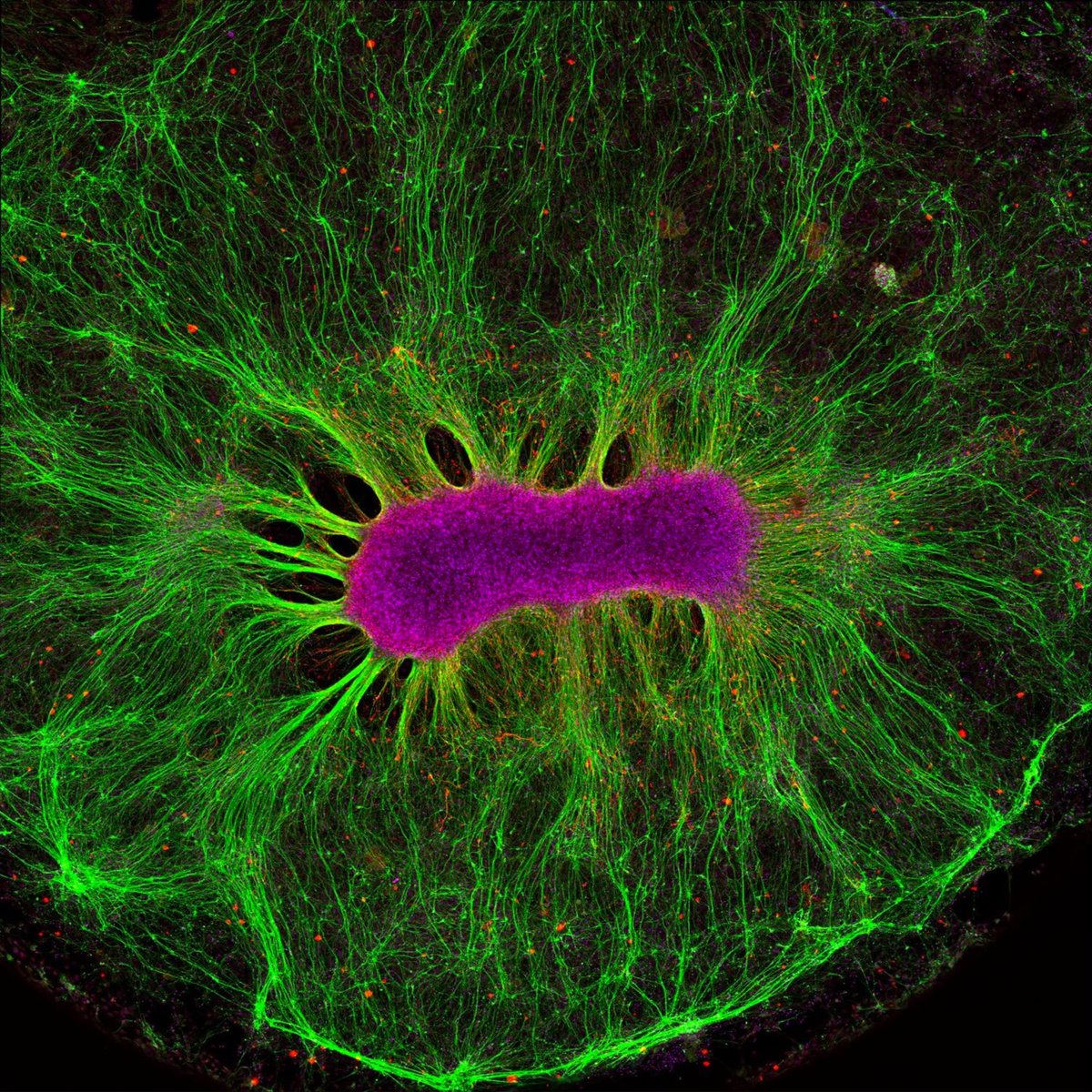

The Wellcome Image Awards 2017 recognize the best images related to healthcare and biomedical science taken during the past year.
The Wellcome Image Awards are Wellcome’s most eye-catching celebration of science, medicine and life. Now in their 20th year, the Awards recognise the creators of informative, striking and technically excellent images that communicate significant aspects of healthcare and biomedical science. Those featured are selected from all of the new images acquired by Wellcome Images during the preceding year. The judges are experts from medical science and science communication.
From top to bottom, there’s Mark R. Smith’s photo of a baby Hawaiian bobtail squid, neural stem cells growing on a synthetic gel photographed by Collin Edington and Iris Lee, and Scott Echols’ image of a pigeon’s blood vessel network. (via digg)
In a scientific first, sickle cell disease in a French teenager has been reversed using gene therapy
A magically levitating helicopter, courtesy of a camera frame rate trick
When you perfectly match a video camera’s frame rate to the rotation of a helicopter’s rotors as it takes off, it looks like it’s magically floating away on the breeze. Here’s an older video of the same effect that I probably posted back in the day. Here’s an explanation of the effect:
Since each frame has to ensure the blade is in the same position as the last it therefore needs to be in sync with the rpm of the rotar blades. Shutter speed then needs to be fast enough to freeze the blade without too much motion blur within each frame.
Here the rotor has five blades, now lets say the rpm of the rotor is 300. That means, per rotation, a blade is in a specific spot on five counts. That gives us an effective rpm of 1500. 1500rpm / 60secs = 25.
Therefore shooting at 25fps will ensure the rotor blades are shot in the same position every frame. Each frame then has to be shot at a fast enough shutter speed to freeze the blade for minimal motion blur.
This is basically the same technique used by John Edmark for his strobe light sculptures.
MIT Technology Review’s 10 Breakthrough Technologies of 2017
From the MIT Technology Review, the 10 Breakthrough Technologies of 2017:
Reversing Paralysis
Self-Driving Trucks
Paying with Your Face
Practical Quantum Computers
The 360-Degree Selfie
Hot Solar Cells
Gene Therapy 2.0
The Cell Atlas
Botnets of Things
Reinforcement Learning
The piece on Hot Solar Cells caught my eye:
Solar panels cover a growing number of rooftops, but even decades after they were first developed, the slabs of silicon remain bulky, expensive, and inefficient. Fundamental limitations prevent these conventional photovoltaics from absorbing more than a fraction of the energy in sunlight.
But a team of MIT scientists has built a different sort of solar energy device that uses inventive engineering and advances in materials science to capture far more of the sun’s energy. The trick is to first turn sunlight into heat and then convert it back into light, but now focused within the spectrum that solar cells can use. While various researchers have been working for years on so-called solar thermophotovoltaics, the MIT device is the first one to absorb more energy than its photovoltaic cell alone, demonstrating that the approach could dramatically increase efficiency.
A neuroscientist explains a concept at five different levels
Wired recently challenged neuroscientist Bobby Kasthuri to explain what a connectome is to people with five different levels of potential understanding: a 5-year-old, a 13-year-old, a college student, a neuroscience grad student, and an expert neuroscientist. His goal: “every person here can leave with understanding it at some level”.
Watching this, I kept thinking of Richard Feynman, who was particularly adept at describing concepts to non-experts without sacrificing truth or even nuance. See him explain fire, rubber bands, how trains go around curves, and magnets.
Snakisms
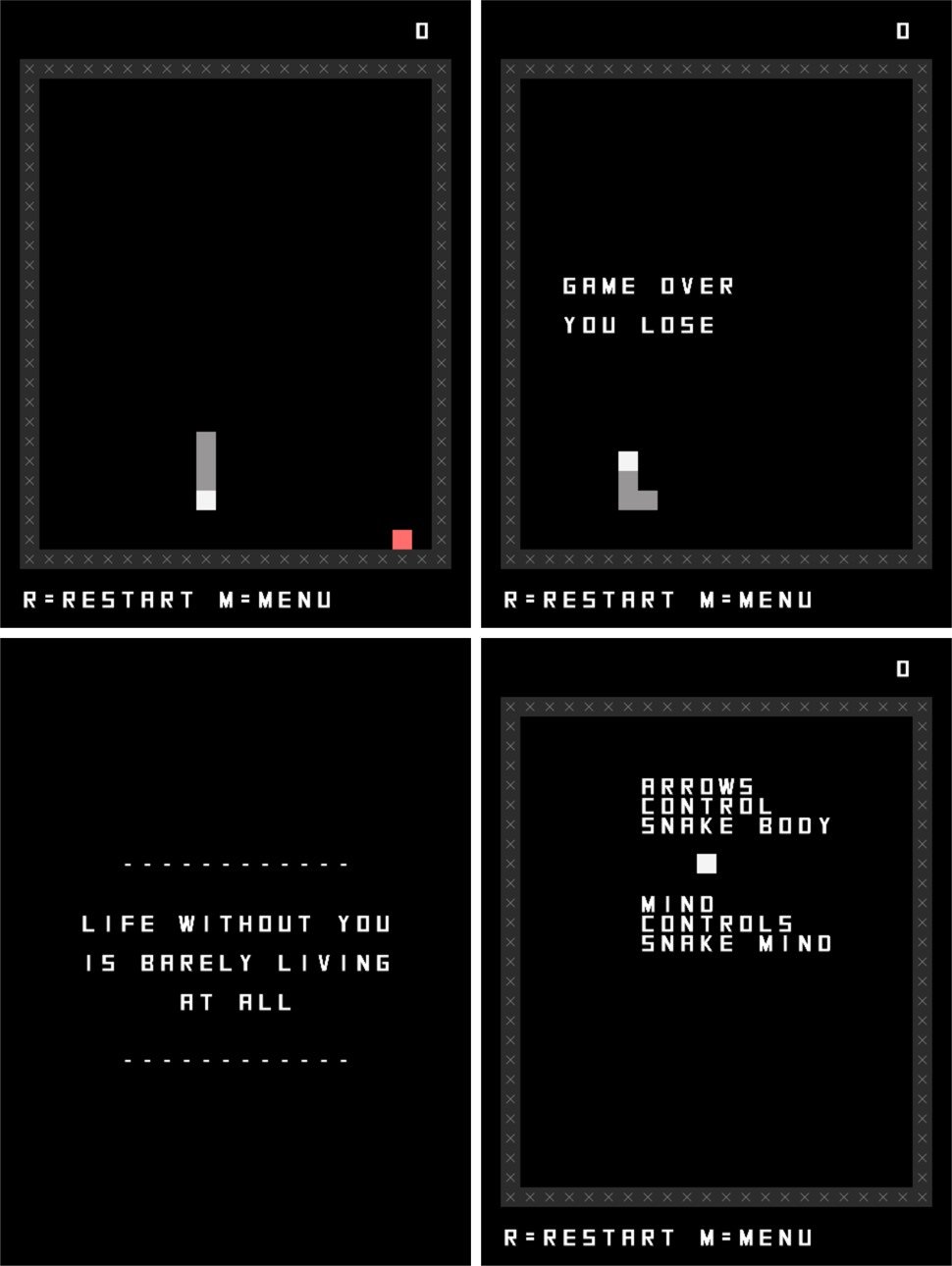
From Pippin Barr, Snakisms is a collection of 21 different variations on the old school cellphone game Snake. Each variation is based on a philosophical -ism like stoicism, capitalism, and determinism. For example, in the asceticism game, you lose as soon as you consume a dot. Clever and funny…I laughed pretty hard at narcissism.
How to succeed in business by Michael Bloomberg
Michael Bloomberg, billionaire business owner of Bloomberg and former three-term mayor of NYC, recently shared some advice with the NY Times on how to succeed in business.
What disturbs me is you talk to kids applying today and they invariably say, “I cured cancer, I brought peace to the Mideast.” Spare me. How about, “My father never existed, my mother is a convicted drug dealer. I worked three shifts at McDonald’s.” That’s the kind of kid I want - with an ethic of taking care of his family - because then he’ll take care of others. Some of us don’t have much prenatal intelligence, but nevertheless go out and try and have a decent chance of surviving. I’m not the smartest guy in the room, but nobody’s going to outwork me.
About half of this advice seems useless to anyone who isn’t already fantastically successful relative to most other people. Being fired from your bond trading firm with a $10 million severance is adversity now? See also survivorship bias.
An appreciation of the Hubble’s Deep Field images
More than 20 years ago, the Hubble Space Telescope took a photo of a patch of seemingly dark sky and, lo, it was filled with hundreds and hundreds of galaxies.
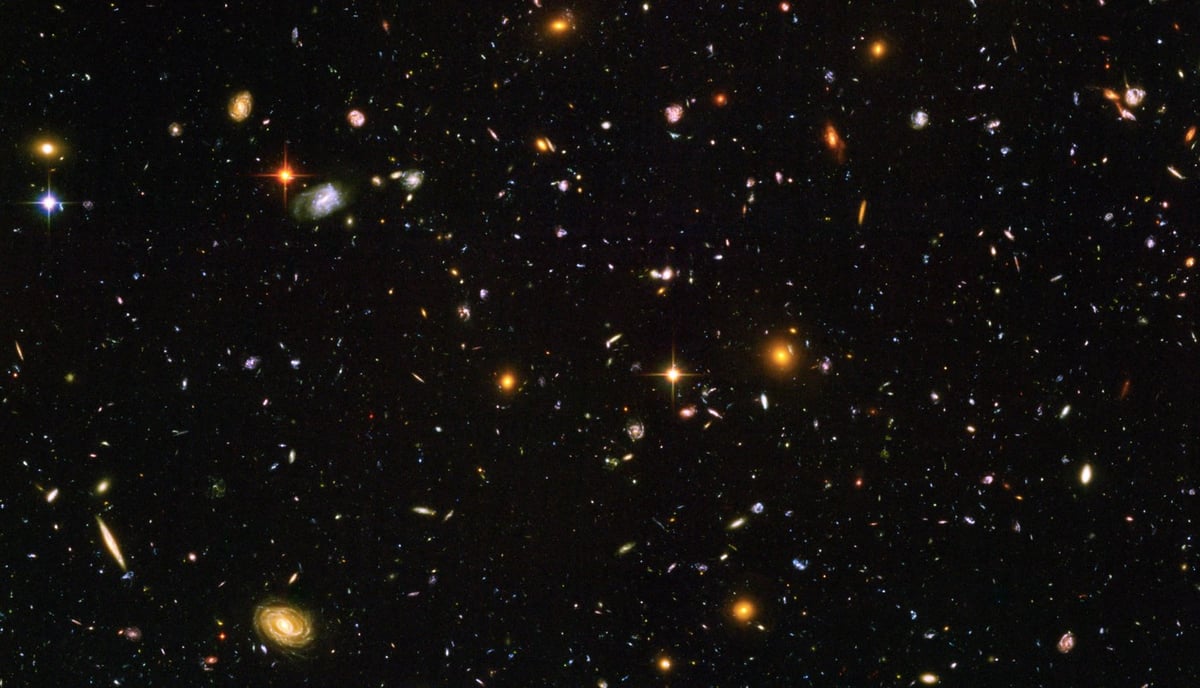
About ten years after that, they looked even deeper into the night sky and observed thousands of galaxies, each containing hundreds of billions of stars. The video above is an appreciation of these Deep Field images and what they taught us about the Universe.
In 1995, scientists pointed the Hubble Telescope at an area of the sky near the Big Dipper. The location was apparently empty, and the whole endeavour was risky — what, if anything, was going to show up? But what came back was nothing short of spectacular: an image of over 1,500 galaxies glimmering in a tiny sliver of the universe. Alex Hofeldt helps us understand the scale of this image.
The Marked Woman: how the Osage Indian murders began
The New Yorker has published an online excerpt of David Grann’s new book about the murders of more than a dozen Osage Indians in the 1920s, Killers of the Flower Moon: The Osage Murders and the Birth of the FBI.
Like their parents, Mollie and her sisters had their names inscribed on the Osage Roll, which meant that they were among the registered members of the tribe. It also meant that they possessed a fortune. In the early eighteen-seventies, the Osage had been driven from their lands in Kansas onto a rocky, presumably worthless reservation in northeastern Oklahoma, only to discover, decades later, that this land was sitting above some of the largest oil deposits in the United States. To obtain that oil, prospectors had to pay the Osage in the form of leases and royalties. In the early twentieth century, each person on the tribal roll began receiving a quarterly check. The amount was initially for only a few dollars, but over time, as more oil was tapped, the dividends grew into the hundreds, then the thousands of dollars. And virtually every year the payments increased, like the prairie creeks that joined to form the wide, muddy Cimarron, until the tribe members had collectively accumulated millions and millions of dollars. (In 1923 alone, the tribe took in more than thirty million dollars, the equivalent today of more than four hundred million dollars.) The Osage were considered the wealthiest people per capita in the world. “Lo and behold!” the New York weekly Outlook exclaimed. “The Indian, instead of starving to death … enjoys a steady income that turns bankers green with envy.”
Fair warning, this piece is tantalizingly short and serves more as a teaser for the book than a stand-alone excerpt, which I don’t mind because I was planning on reading it anyway.
To The Right
To The Right is a collection of left-to-right tracking shots from movies assembled by Candice Drouet. Included are films like Jackie Brown, Fight Club, Little Miss Sunshine, Psycho, The Shining, and The Grand Budapest Hotel.
Papercraft infographic of fire resistant plants

Eleanor Lutz made these nifty models of California plants that can withstand fire damage out of Elmer’s Glue and watercolor paper. She then photographed them burning for this infographic on how some species have adapted to California’s wildfires. Be sure to click through to see the animated version.
George W. Bush’s book of paintings of US military veterans
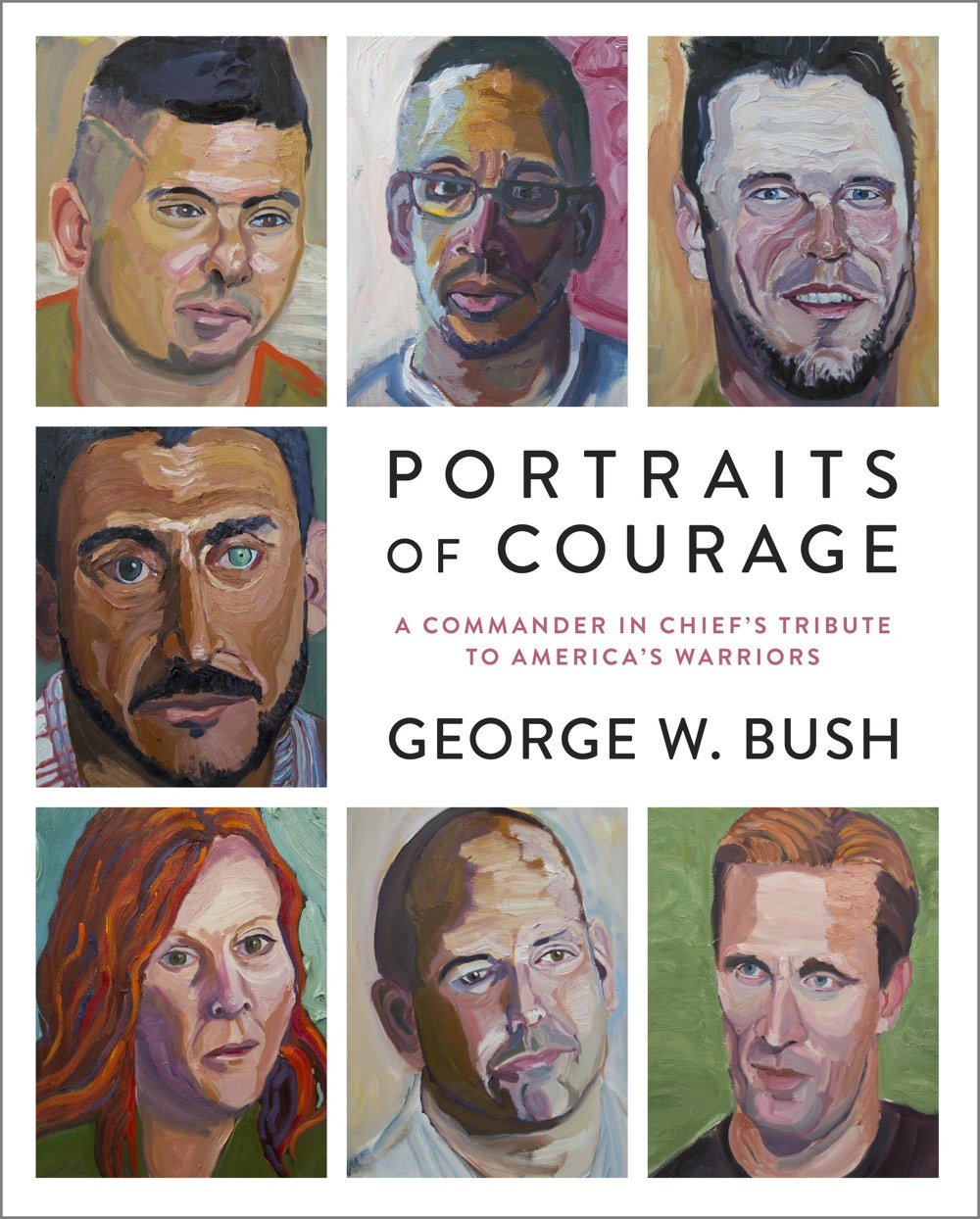
After leaving office in 2009, George W. Bush famously turned his attention to painting. That pursuit has now resulted in a book of portraits of post-9/11 US veterans painted by Bush called Portraits of Courage: A Commander in Chief’s Tribute to America’s Warriors.
Growing out of President Bush’s own outreach and the ongoing work of the George W. Bush Institute’s Military Service Initiative, Portraits of Courage brings together sixty-six full-color portraits and a four-panel mural painted by President Bush of members of the United States military who have served our nation with honor since 9/11 — and whom he has come to know personally.
The author proceeds from the book will be donated to the George W. Bush Presidential Center, “a non-profit organization whose Military Service Initiative works to ensure that post-9/11 veterans and their families make successful transitions to civilian life with a focus on gaining meaningful employment and overcoming the invisible wounds of war”. There’s a certain — I don’t know, let’s call it irony — in Bush honoring those whom he personally caused to be put in the harm’s way in the first place, under false pretenses no less.
OJ: Made in America is about more than just OJ
Ezra Edelman’s fantastic documentary OJ: Made in America won the Oscar for best documentary this year. In a video for Fandor, Joel Bocko explains while the film’s focus is on Simpson, it also explores seven broader themes about contemporary America: sports, the media, Los Angeles, class, domestic abuse, policing, and race.
OJ: Made in America emerges not simply as a brilliant biography, it’s also a stunning social portrait that can stand beside any novel, epic film, or piece of longform journalism.
And in this video for The Atlantic, Edelman explains how, before murdering his ex-wife, Simpson was an advertising pioneer, the first black athlete to become a nationally known product pitchman, appearing in commercials for Hertz, Chevy, and Schick.
One of the most interesting aspects of Edelman’s film is how Simpson’s feelings about being black shifted after his arrest. For most of his life, he distanced himself from the black community, famously declaring “I’m not black, I’m OJ.” He didn’t get involved in the politics of the day or speak out like Muhammed Ali and other prominent black athletes did. He enjoyed preferential treatment by the LAPD, who help him keep his abuse of women under wraps. Black America had nothing to offer a man who enjoyed being rich and famous in white America. But then the trial happened and he hired Johnny Cochran, who made race into the central issue of the case, deftly aligning Simpson with a black community who had endured decades of racism and brutality in LA at the hands of society and the police.
Map of where Germans voted for the Nazis in 1933
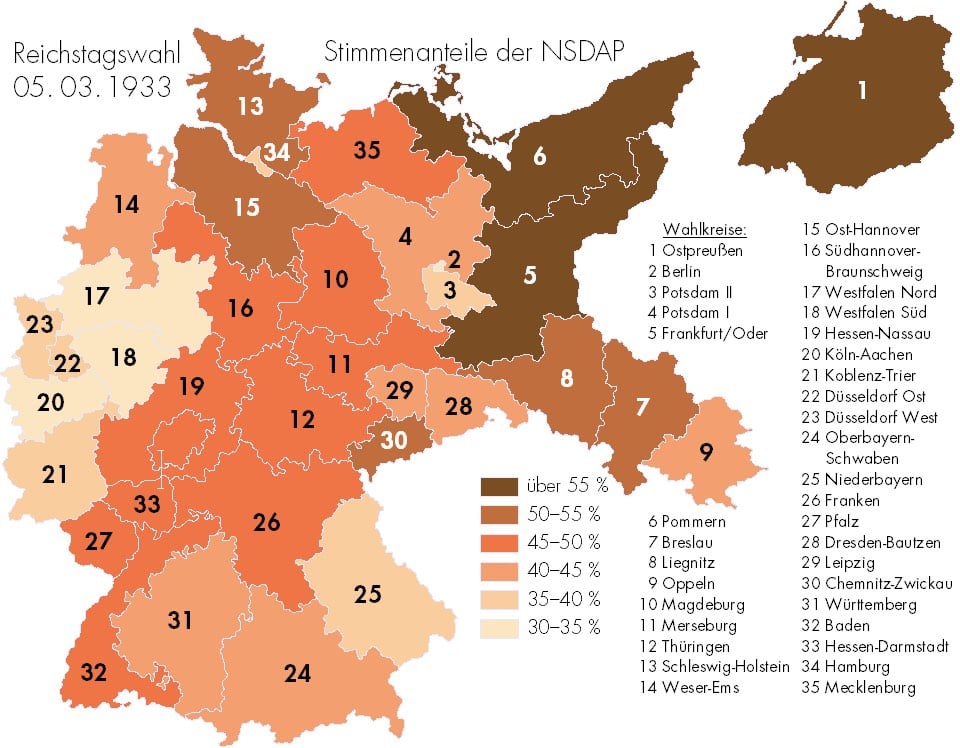
In March 1933, a unified Germany held its last relatively free election before WWII. Hitler had already become Chancellor but he held one last election, seeking a mandate under which to rule. This map shows which areas of Germany supported the Nazi Party most strongly.
However, it’s also important to note that while the Nazis won the most seats in 1933, they did not win a majority of them or the popular vote.
Support varied widely across the country. It was highest in the former Prussian territories in the north-east of Germany (with the exception of Berlin) and much weaker in the west and south of the country, which had, up until 1871, been independent German states.
Across Germany as a whole, the Nazis won 43.91% of the popular vote and got 44.51% of the seats. This made them by far the largest party in the German Reichstag, but still without a clear majority mandate.
I know history doesn’t repeat itself, but this sure is rhyming like Kanye.
The tools ILM built to make Rogue One are super interesting
Every time I watch or read something about how Rogue One was made, I come away more intrigued. And it’s not about how they made the film…it’s about the tools they built to help them make the film. A few weeks ago, I posted about the full-length story reel they made from bits of old movies so that director Gareth Edwards could determine the pacing:
There was no screenplay, there was just a story breakdown at that point, scene by scene. He got me to rip hundreds of movies and basically make ‘Rogue One’ using other films so that they could work out how much dialogue they actually needed in the film.
It’s very simple to have a line [in the script] that reads “Krennic’s shuttle descends to the planet”, now that takes maybe 2-3 seconds in other films, but if you look at any other ‘Star Wars’ film you realise that takes 45 seconds or a minute of screen time. So by making the whole film that way — I used a lot of the ‘Star Wars’ films — but also hundreds of other films too, it gave us a good idea of the timing.
In this video, we see a couple more tools the team used to facilitate the making of the film. The first is a VR video game of sorts that ILM built so that Edwards could move a virtual camera around in a virtual set to find just the right camera angles to capture the action, resulting in a process that was more flexible than traditional storyboarding.
The second tool jumped around a virtual set — a complete digital model of Jedha City — and rendered hundreds of street views from it at random. Then the filmmakers would look through the scenes for interesting shots and found scenes that looked more “natural” than something a digital effects artist might have come up with on purpose — basically massively parallel location scouting.
Both are attempts to introduce more serendipity and possibility into a digital filmmaking process that sometimes feels a little stilted. I think animation studios like Pixar have been using these techniques for years, but it’s interesting to see them applied to live-action films like Rogue One.
Update: The Verge’s Bryan Bishop talked to Edwards and visual effects supervisor John Knoll and came away with more interesting details about how they used technology in filming Rogue One.
Typically, you’d have to storyboard these things, and that means you’re pulling from some default, subconscious idea in your head, probably based on another film you’ve seen, where you feel like it should be this shot. I find you get much better, more unique, shots when you are in a real environment, trying to find something that’s unfolding in front of you. You get inspired because of the light and shapes and things. It was like being in the real world more, and like the way we shot a lot of the rest of the movie.
I think if I ever do a big film again, and there’s a big digital set piece in it, whatever that is, I would definitely want to pre-animate it and then go in with a camera and try and film it like it was real.
Read the whole thing…the bit about the LED screens is fascinating. Prior to the 1980s, aside from some relatively minor editing tricks, effects in movies were mainly done during shooting. More recently, most of the production happens after the cameras stop rolling: extensively green-screened footage of the actors is combined with entire sets and worlds that are completely digital. With Rogue One, they tried to move some of that production back into the shooting phase in order to give the director more control over the scenes and the actors a more immersive environment in which to act. (via @sippey)
Socials & More