

Taschen’s upcoming book of Johannes Vermeer’s complete works looks great

Advertise here with Carbon Ads
This site is made possible by member support. 💞
Big thanks to Arcustech for hosting the site and offering amazing tech support.
When you buy through links on kottke.org, I may earn an affiliate commission. Thanks for supporting the site!
kottke.org. home of fine hypertext products since 1998.
Beloved by 86.47% of the web.
Entries for March 2017
Relive the 1917 Russian Revolution through the voices of the day
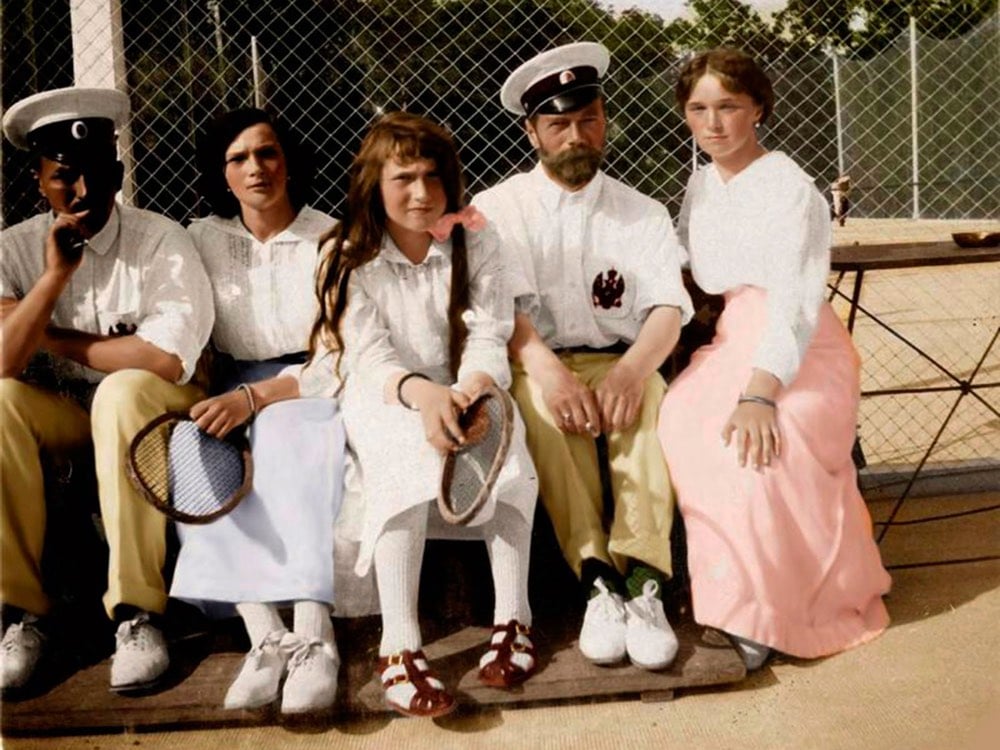
“1917. Free History” is a project that lets you relive the events of the 1917 Russian Revolution from letters, photos, videos, and texts written at the time.
The project consists entirely of primary sources. It includes not a trace of invention. All the texts used are taken from genuine documents written by historical figures: letters, memoirs, diaries and other documents of the period.
“1917. Free History” is a serial, but in the form of a social network. Every day, when you go onto the site, you will find out what happened exactly one hundred years ago: what various people were thinking about and what happened to each of them in this eventful year. You may not fast-forward into the future, but must follow events as they happen in real time.
“1917. Free History” is a way of bringing the past to life and bringing it closer to the present day. It is a way of understanding what the year 1917 was like for those who lived in Russia and in other countries. We have scoured archives and storerooms for texts, photographs and videos, many of which have never seen the light of day before.
For instance, 100 years ago today writer Maxim Gorky wrote:
The events currently unfolding appear grandiose, moving even, but the meaning behind them is not as profound and great as everyone takes it to be. I am trying to remain sceptical, although I am also moved to tears by the sights and songs of the soldiers marching to the State Duma. We can never go back, but we’ll not move much forward. A sparrow’s step maybe. A lot of blood will be spilt — more than has ever been spilt before.
Russian physiologist and Nobel Prize winner Ivan Pavlov wrote:
My assistant came in late today. He tried to explain that the revolution has halted all street transport. I believe that a revolution is no excuse for being late!
The image at the top of the page is Tsar Nicholas II with three of his daughters. Spoiler: he abdicates his throne tomorrow.
See also Who are you in 1917 Russia? (I ended up in the Democratic Right quadrant, just right of center.)
Happy 19th birthday, kottke.org!
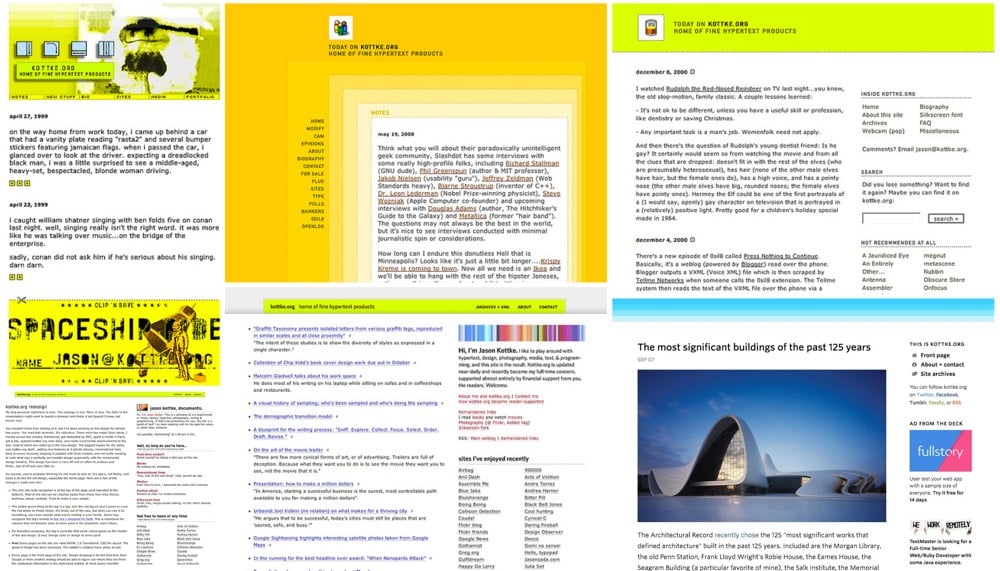
As of today, I’ve been posting and linking to stuff on kottke.org for 19 years. When I started, I was 24 years old, working as a web designer for a small web development shop in Minneapolis. The site started as a offshoot of another site I had at the time, which I worked on in my spare time at home on my Pentium Pro 200 with a 56K modem. I worked at a desk that was really a 70s-style kitchen table I’d bought for $25. I’m sitting at that same table writing this right now. Earlier I was struggling to think of something else that’s been in my life for as long as kottke.org has…I guess this table is it.
Whether you’re a relatively recent reader or you’ve been along for the entire ride, I’d like to thank you for reading the site and for your feedback, gentle typo corrections, encouragement, push-back, and membership support. I’m really glad to be hurtling through space and time with you good people.
See also a retrospective of kottke.org designs I did nine years ago when the site turned 10.
Bowie impersonates other singers like Springsteen, Lou Reed
In a recording session in 1985, David Bowie casually did a number of impressions of other singers in-between takes. Among others, he sang as Lou Reed, Bruce Springsteen, Neil Young, and Iggy Pop. These impersonations were recorded by producer Mark Saunders and were only released after Bowie’s death last year. Sanders recalls that the song Bowie sings appears to have been written quickly that day:
I think that Bowie probably wrote these lyrics quickly for the Springsteen impersonation which is first. I have no memory of us sitting around waiting for him to rewrite so it was probably done very quickly. If so, that’s pretty impressive! The imagery is definitely very Bruce.
The accompanying piece by Saunders is worth a read as well. During one of several sessions with Bowie, Mick Jagger showed up to record their Dancing in the Street cover for Live Aid; they did the whole thing, start to finish, in three hours.
The band was still working on different sections of the song, so there was a lot of stopping and starting, and it was as if Mick was wired to the sound because he could be in the middle of a serious conversation and when the band started playing he’d immediately start dancing and when the band stopped, he would, too. Not a full-blown Mick Jagger-on-stage kinda dance, but an on-the-spot dance that would enable him to continue his serious conversation. I thought this was awesome — like, he’s the real deal; music is in his blood and he just can’t even help himself!
(via @joeeenglish)
How blind people use iPhones with VoiceOver
In a short video and accompanying article, David Pogue profiles a little known but highly useful iOS feature called VoiceOver, which helps visually impaired people do anything and everything on their iPhones.
A few years ago, backstage at a conference, I spotted a blind woman using her phone. The phone was speaking everything her finger touched on the screen, allowing her to tear through her apps. My jaw hit the floor. After years of practice, she had cranked the voice’s speed so high, I couldn’t understand a word it was saying.
And here’s the kicker: She could do all of this with the screen turned off. Her phone’s battery lasted forever.
It’s possible that people using VoiceOver to control their phones are more efficient at many tasks than those who use the default interface.
This was very cool: “If I’m in my office and put my headphones on, I’m hearing the phone call and I’m hearing what VoiceOver is saying, all through the headphones. But the person on the other end cannot hear any of the VoiceOver stuff. You don’t know what I’m reading, what I’m doing. I can do all these complicated things without you hearing it. That’s what’s really incredible. If you and I were working together on a three-way call, and you were to text me, ‘Let’s wrap this up’ or ‘Don’t bring that up on this call’-I would know, but the other guy wouldn’t hear it.
Joe showed me how he takes photos. As he holds up the iPhone, VoiceOver tells him what he’s seeing: “One face. Centered. Focus lock,” and so on. Later, as he’s reviewing his photos in the Camera Roll, VoiceOver once again tells him what he’s looking at: “One face; slightly blurry.”
See also how blind people use Instagram and iPhone: a revolutionary device for the blind.
The Whole Earth Field Guide
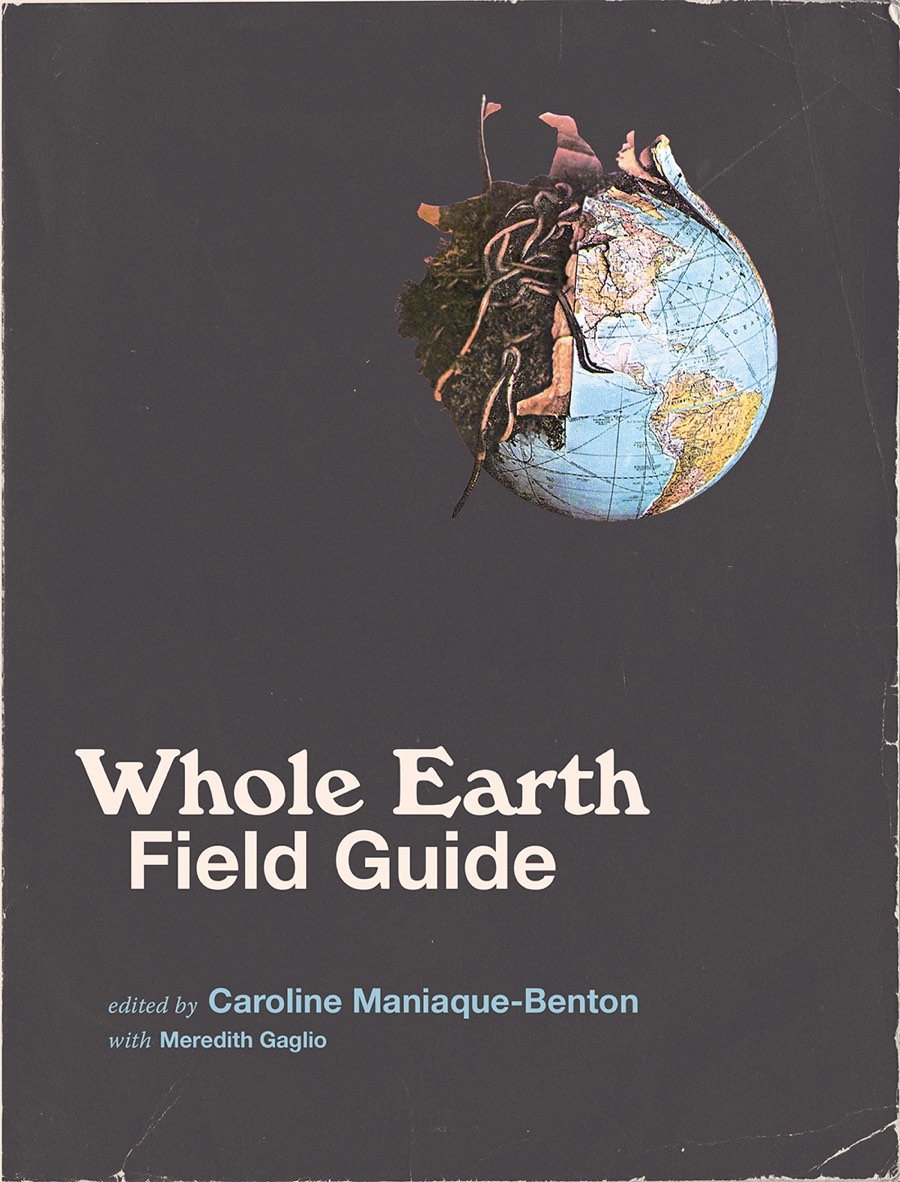
The Whole Earth Catalog was an iconic magazine and product catalog founded by Stewart Brand in the 1960s. The Whole Earth Field Guide, edited by Caroline Maniaque-Benton and released last October, serves both as an introduction to the philosophy behind The Whole Earth Catalog and as an anthology of the writing that appeared in its pages.
This book offers selections from eighty texts from the nearly 1,000 items of “suggested reading” in the Last Whole Earth Catalog.
After an introduction that provides background information on the catalog and its founder, Stewart Brand (interesting fact: Brand got his organizational skills from a stint in the Army), the book presents the texts arranged in nine sections that echo the sections of the Whole Earth Catalog itself. Enlightening juxtapositions abound.
The rove beetle’s ability to mimic army ants independently evolved many times
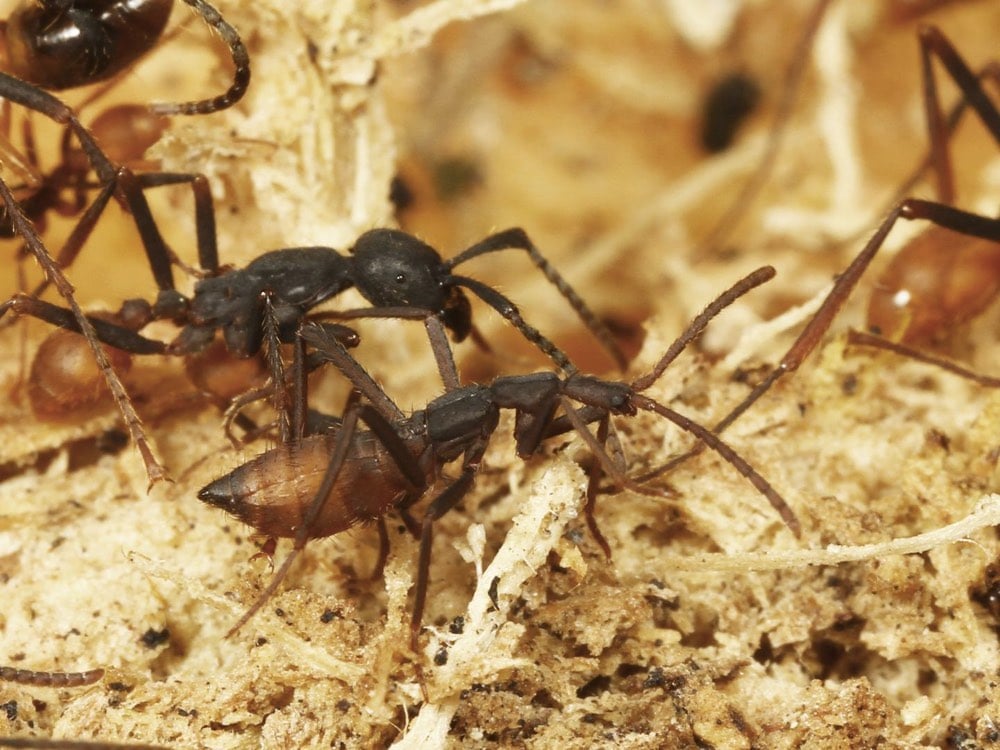
Rove beetles have evolved the ability to look and smell enough like army ants that they can live amongst them. Until it’s dinner time.
The impostors look and smell like army ants, march with the ants, and even groom the ants. But far from being altruistic nest-mates, these creatures are parasitic beetles, engaged in a game of deception. Through dramatic changes in body shape, behavior, and pheromone chemistry, the beetles gain their hostile hosts’ acceptance, duping the ants so they can feast on the colony brood.
As you can see in the photo above, the resemblance is strong…the beetle is in the foreground with the larger headed ant behind.
But that’s not even the most amazing part. A recent discovery has shown that rove beetles have evolved this capability at least a dozen separate times, suggesting that certain evolutionary possibilities are more likely than other in the presence of strong environmental factors and traits.
The ant-mimicking beetles all belong to the Staphylinidae, or rove beetles, but don’t mistake them for close relatives: the last common ancestor of the beetles in the study lived 105 million years ago, at about the time that humans split from mice. “What’s exceptional is that this convergent system is evolutionarily ancient,” says Parker. Although most other convergent systems, such as Darwin’s finches, three-spined stickleback, and African lake cichlid fish, are a few million years old at most, this newly discovered example extends back into the Early Cretaceous.
Given this great age, Parker and his co-author Munetoshi Maruyama of the Kyushu University Museum argue that their finding challenges Stephen J. Gould’s hypothesis that if time could be rewound and evolution allowed to replay again, very different forms of life would emerge. “The tape of life has been extremely predictable whenever rove beetles and army ants have come together,” says Parker. “It begs the question: why has evolution followed this path so many times?”
(via @stewartbrand)
Baby Driver
A heist film featuring a getaway driver named Baby — B. A. B. Y. Baby? — directed by Edgar Wright of Hot Fuzz fame? Take. My. Money. This is like the comedy version of Drive. In making the film, Wright himself was influenced by the “holy trinity” of heist films from the 90s: Point Break, Reservoir Dogs, and Heat.
See also Tony Zhou’s video tribute to Wright: How to Do Visual Comedy.
Update: Well, that was the international trailer (which is good!) and this is the American trailer (which perhaps is not as good).
Is it me or does the American trailer aim about 15 IQ points lower than the other one? (thx, david)
A fan recut Breaking Bad into a 2-hour movie
The events and highly intricate plot lines of Breaking Bad take place over 62 episodes spanning 5 seasons, a true megamovie. Is it possible to edit all that down into a feature-length film that makes any sense? This fan-edit aims to answer that question.
What if Breaking Bad was a movie?
After two years of sleepless nights of endless editing, we bring you the answer to that very question. A study project that became an all-consuming passion.
It’s not a fan-film, hitting the highlights of show in a home-made homage, but rather a re-imagining of the underlying concept itself, lending itself to full feature-length treatment.
An alternative Breaking Bad, to be viewed with fresh eyes.
I haven’t had a chance to watch it yet — perhaps tonight — but am curious if it’s any good.
Update: Aaaaand it got taken down. Fun while it lasted! I’ve updated the embed to this copy on YouTube but that probably won’t last that long either.
Update: If you missed it yesterday before it got taken down, it seems to be back in its original home on Vimeo. *shrug* (Hahaha, it was up for about 10 minutes. Gone again!)
The I.O.U. by F. Scott Fitzgerald
The New Yorker has published a previously unpublished short story by F. Scott Fitzgerald called The I.O.U.
The above is not my real name — the fellow it belongs to gave me his permission to sign it to this story. My real name I shall not divulge. I am a publisher. I accept long novels about young love written by old maids in South Dakota, detective stories concerning wealthy clubmen and female apaches with “wide dark eyes,” essays about the menace of this and that and the color of the moon in Tahiti by college professors and other unemployed. I accept no novels by authors under fifteen years old. All the columnists and communists (I can never get these two words straight) abuse me because they say I want money. I do — I want it terribly. My wife needs it. My children use it all the time. If someone offered me all the money in New York I should not refuse it. I would rather bring out a book that had an advance sale of five hundred thousand copies than have discovered Samuel Butler, Theodore Dreiser, and James Branch Cabell in one year. So would you if you were a publisher.
Where did the story come from and how was it rediscovered?
He wrote “The I.O.U.” in the late spring of 1920, evidently after a specific request from Henry Blackman Sell, the editor of Harper’s Bazaar. Fitzgerald dropped the story off at Ober’s offices in New York, reminding him, “This is the plot that Sell particularly wanted for Harps. Baz and which I promised him. I think it is pretty good.” In July, Ober sent the story on to the Saturday Evening Post, but Fitzgerald asked for it back because he wanted to revise it. Ober returned the manuscript and typescript to Fitzgerald, who set it aside and concentrated instead on his second novel, “The Beautiful and Damned,” telling Ober “there will probably be no more short stories this summer.” Lost in the sparkling shuffle of Fitzgerald’s first fame, the story remained the property of the Trustees of the Fitzgerald Estate until it was rediscovered and sold to Yale University’s Beinecke Library in 2012.
This story, as well as several other previously unpublished stories of Scott’s will appear in a book called I’d Die For You: And Other Lost Stories that comes out in April.
An Epidemic of Middle-aged Male Loneliness
Vivek Murthy, the surgeon general of the United States, has said many times in recent years that the most prevalent health issue in the country is not cancer or heart disease or obesity. It is isolation.
Oh.
Beginning in the 1980s, Schwartz says, study after study started showing that those who were more socially isolated were much more likely to die during a given period than their socially connected neighbors, even after you corrected for age, gender, and lifestyle choices like exercising and eating right. Loneliness has been linked to an increased risk of cardiovascular disease and stroke and the progression of Alzheimer’s. One study found that it can be as much of a long-term risk factor as smoking.
The research doesn’t get any rosier from there. In 2015, a huge study out of Brigham Young University, using data from 3.5 million people collected over 35 years, found that those who fall into the categories of loneliness, isolation, or even simply living on their own see their risk of premature death rise 26 to 32 percent.
Eep!
Flatland II, curved landscape panoramas


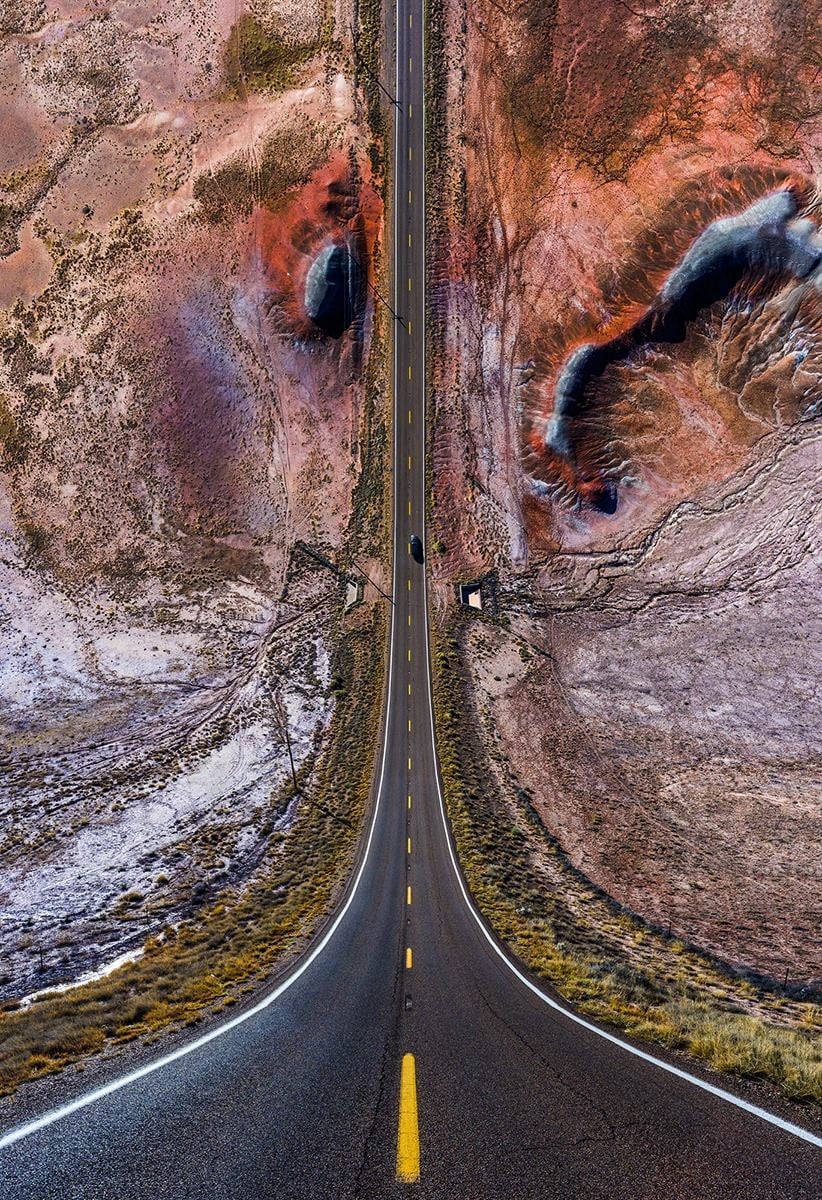
Aydın Büyüktaş has continued his Flatland project with more of these photographic panoramas folded over on themselves. Looks like he’s gotten better at picking good subjects and stitching these together…love these. (via colossal)
Top-notch trolling: Reasons To Vote For Democrats
The #1 bestselling book on Amazon right now is called Reasons To Vote For Democrats: A Comprehensive Guide. It’s by Michael Knowles, costs $8.03, and is filled with 266 blank pages. I have to admit, that’s pretty damn funny.
The most exhaustively researched and coherently argued Democrat Party apologia to date, “Reasons To Vote For Democrats: A Comprehensive Guide” is a political treatise sure to stand the test of time. A must-have addition to any political observer’s coffee table.
The follow-on joke is never as funny as the original, but you can also buy a blank book called Reasons to Vote for Republicans. (via buzzfeed)
Update: We’ve got some prior art, folks. David King published a blank book called Why Trump Deserves Trust, Respect & Admiration back in November 2016 (there’s a Kindle version, LOL). And this copy of All I Know About the Ladies by R.V. Harris looks significantly older than that. (via @alexhern & @typeter)
Update: One more round of prior art: The Wit and Wisdom of Spiro T. Agnew and Everything Men Know About Women. (via @MattyPKing & @EdwardGoodmann)
That Fainting Life
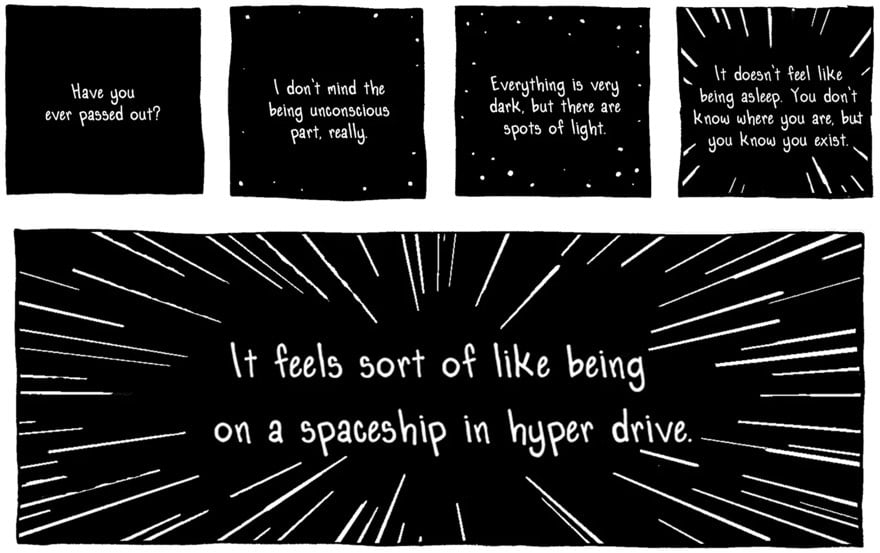
Isabella Rotman drew a comic for The Nib about her life as a hemophobe (someone who faints at the sight of blood).
Once at a former deli job, I passed out onto a pizza oven in response to a coworker’s particularly graphic description of a lawn mower injury. Had the oven been on, I would have suffered some pretty drastic burns.
I’m a fainter, though not at the sight of blood. After fainting a couple of times in high school, a doctor chalked it up to low blood pressure — I am the chillest mofo you know, blood pressure-wise — and urged me not to stand up too quickly after lying down. Just this morning, I did not heed that advice and almost toppled over after getting out of bed and stretching my arms above my head.
But my bigger problem, and what made Rotman’s comic resonate with me, is that medical procedures and doctor’s offices also cause me to faint. This wasn’t always the case. When I was younger, I received allergy shots up to three times a week and had no problem going into the clinic to get my shot…I even looked at the thin needle going into my arm every time. Flu shots, dentist visits, doctor’s appointments? No problem. Then when I was 17, I went to the local clinic for a mandatory physical for college. They did a blood draw, which went smoothly, but right afterwards, as I was sitting in a chair in the hallway, I fainted — probably because of my low blood pressure. Weird, but not a big deal.
Fast forward 12-15 years, during which time (because I was young and healthy and dumb and medical care is expensive) I did not visit a doctor’s office1 and somehow I had developed a phobia of needles going into my skin. I found this out when I went to get a flu shot, watched the needle sink into my arm, and promptly passed the fuck out.2 Since then, any time I’ve had to get a shot or blood drawn, I have fainted (or at least felt like I was going to).
That’s bad enough, but the problem became psychosomatic. Any trip to a doctor’s office will now trigger a faint feeling, even if I’m not the patient. Every time I take my kids to the pediatrician, there’s a possibility I’ll end up on the floor. When my wife was pregnant with our first kid, I nearly fainted at one of her ultrasound appointments and the ultrasound tech plopped me down in a nearby chair and handed me a glucose drink, telling me that becoming a father is a lot to handle for some men. (I think I nodded weakly, not even able to muster a “yeah, it’s not that”.) It’s gotten to the point where even *thinking* about it makes me feel weird. My palms have been sweaty and I’ve felt lightheaded the entire time I’ve been writing this post. The same thing happens when I tell people about it in person. It’s ridiculous and I feel stupid about it, even though it’s a stark reminder how much your subconscious thoughts can affect your body (and how little control we have over ourselves sometimes).
As Rotman did, I have been attempting exposure therapy with some success. When I went in for a physical a few months ago, I told the nurse that I might faint during the blood draw. She had me lay down on the table and just before she came over with the kit, I popped my headphones in and put on some relaxing music (Tycho I think). I broke out in a sweat and the procedure took much longer than it should have — she had to stick me *twice* because she didn’t get enough the first time — but I got through it without passing out. Progress to build on, I hope!
Aside from a trip to the emergency room from — you guessed it! — a fainting incident when I was 24. Came to on the floor of the bathroom having slammed my mouth on the edge of the counter. It was exactly as painful as it sounds and it totally fucked up my grill.↩
And wow, did the nurse look alarmed when I came to a few seconds later. They all look alarmed, even when I tell them ahead of time that I might faint. One of the last times, the nurse said, “I didn’t think you were actually serious.” (That fainting experience was the weirdest one I’ve ever had. According to the nurse, I was out for about 6-8 seconds but had a whole experience in my head that lasted for at least a half hour. I wasn’t near death, but it felt very real and I can definitely see how some people would interpret that as an out-of-body or religious experience.)↩
SXSW As Cool And As Real As It Gets, Reports Marketing Associate. BURRRRRRRRRRRRRNNNNNN
What if Donald Trump and Hillary Clinton had swapped genders?
Maria Guadalupe, an economics and political science professor, and Joe Salvatore, a professor of educational theater, recently put on a pair of performances that restaged the three Presidential debates between Donald Trump and Hillary Clinton. But this time, they had a woman play the Trump role (as “Brenda King”) and a man play the Clinton role (as “Jonathan Gordon”), with each attempting to portray the precise mannerisms, styles, and speech of the respective candidates. How would audiences react to the gender-switched candidates?
Salvatore says he and Guadalupe began the project assuming that the gender inversion would confirm what they’d each suspected watching the real-life debates: that Trump’s aggression — his tendency to interrupt and attack — would never be tolerated in a woman, and that Clinton’s competence and preparedness would seem even more convincing coming from a man.
But the lessons about gender that emerged in rehearsal turned out to be much less tidy. What was Jonathan Gordon smiling about all the time? And didn’t he seem a little stiff, tethered to rehearsed statements at the podium, while Brenda King, plainspoken and confident, freely roamed the stage? Which one would audiences find more likeable?
The audience’s reaction to the performances was surprising.
We heard a lot of “now I understand how this happened” — meaning how Trump won the election. People got upset. There was a guy two rows in front of me who was literally holding his head in his hands, and the person with him was rubbing his back. The simplicity of Trump’s message became easier for people to hear when it was coming from a woman — that was a theme. One person said, “I’m just so struck by how precise Trump’s technique is.” Another — a musical theater composer, actually — said that Trump created “hummable lyrics,” while Clinton talked a lot, and everything she was was true and factual, but there was no “hook” to it. Another theme was about not liking either candidate — you know, “I wouldn’t vote for either one.”
Here’s a clip from one of the rehearsals:
I think it’s important not to take away too much from this experiment (and perhaps the same should be said of televised political debates in general) but after watching that short clip and hearing about the audience’s reaction, I couldn’t help but think of Al Gore. In the lead-up to the election, I’d never thought of Clinton that way — meaning very smart, compassionate, and supremely qualified but ultimately a bit dull and uninspiring a la Gore — but maybe she did lack a critical charisma compared to Trump.
Since the Kennedy/Nixon debates, we’ve known that how candidates handle themselves on television — in debates, interviews, televised speeches, etc. — is critical to the voters’ perceptions of them. Gore, Jimmy Carter, Michael Dukakis, Mitt Romney, Bob Dole, Walter Mondale, John Kerry…they all were bested by more charismatic candidates (Reagan, Obama, Bill Clinton) that were in some cases not as qualified on paper. Even the Bushes (especially Dubya) had an aw shucks-y folksiness that could charm people sympathetic to their message. Perhaps Hillary Clinton belongs on that list as well. (via mr)
Elena Ferrante’s novels to become a TV series
Elena Ferrante’s Neapolitan Novels, a series of four novels set in post-war Naples, will be turned into a 32-part TV miniseries directed and co-written by Italian director Saverio Costanzo.
Mr. Costanzo, best known for “Private” and “Hungry Hearts” (which co-starred Adam Driver), said in a telephone interview that the biggest challenge to adapting the novels for television was how “to convey the same emotions as the books in a cinematographic way.”
He added that he was writing the script with the Italian writers Francesco Piccolo and Laura Paolucci, and that Ms. Ferrante was also expected to contribute to the screenplay. (He expects to communicate with the author via email.)
The series will be filmed in Italy in Italian. The first season will cover the first book, with eight episodes of 50 minutes each. Filming is expected to begin in Naples this year and the first season is expected to air in the fall of 2018.
This could be amazing or it could be terrible. Or I guess it could be mediocre. Or anywhere in between really. [Uh, thanks for that hard-hitting analysis, Jason. -ed] (via @tedgioia)
Teaser trailer for Deadpool 2
I tend not to like superhero movies as a genre — they take themselves far too seriously for something that’s supposed to be fun — but I really enjoyed Deadpool and it looks like Deadpool 2 is going to be more of the same so, yeah, I’ll see that when it comes out.
(This trailer was attached to the front end of Logan, which I also really liked. Yes, the movie took itself very seriously, but it was also a reminder that modern blockbuster movies are stuffed with acting talent and if you give those underutilized actors good material and let them go, good things happen.)
The shortlist for 2017 Sony World Photography Awards
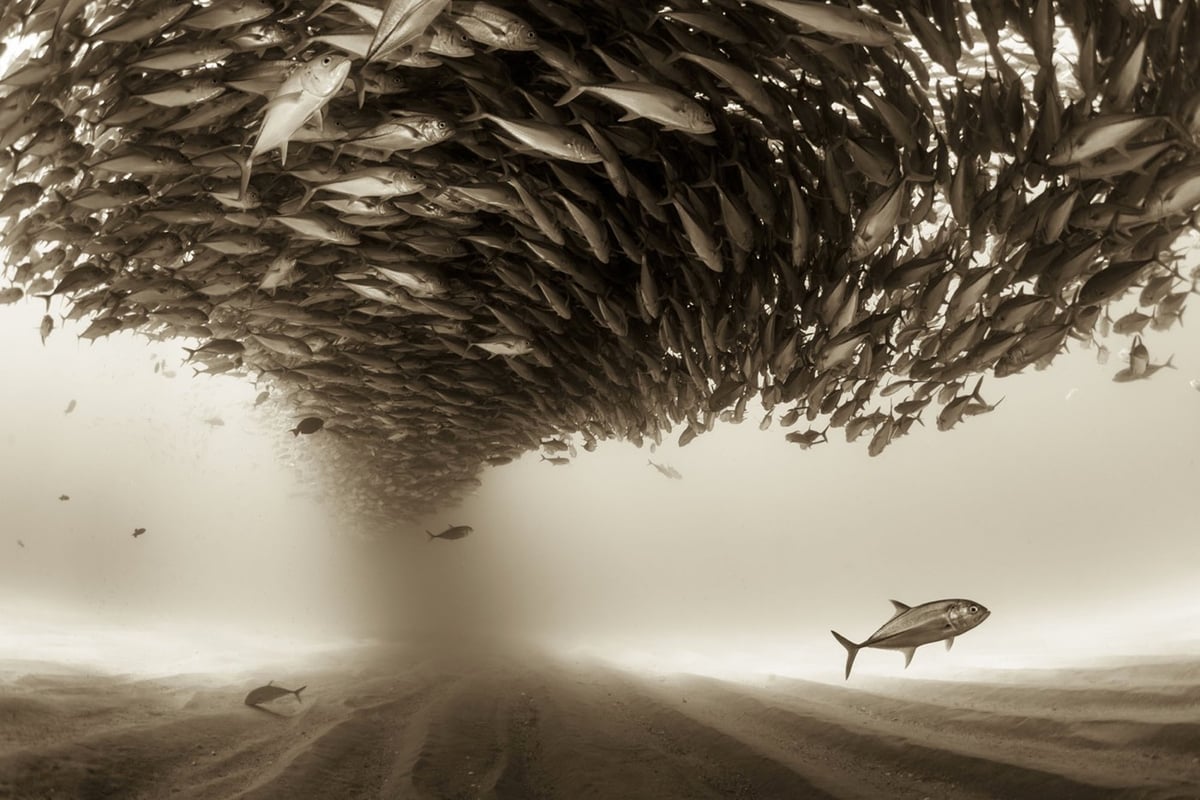
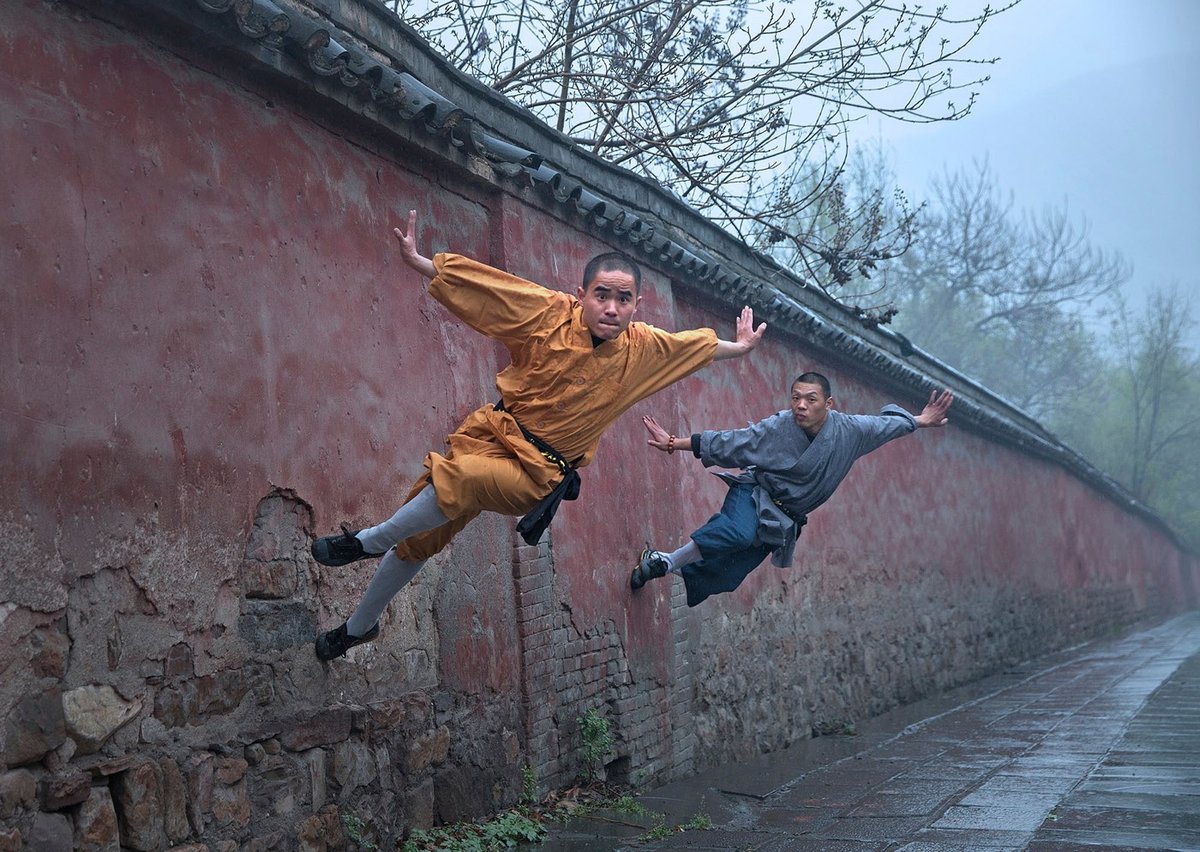

Photographers from more than 60 countries submitted almost 230,000 entries for the World Photography Organization’s 2017 Sony World Photography Awards and they recently announced the top 10 (as well as the commended top 50) photographers in several different categories. Some fantastic work in here.
From top to bottom, a school of fish by Christian Vizl, the Shaolin Wushu school of martial arts by Luo Pin Xi, and a landscape by Tom Jacobi. (via in focus)
Intricately carved fruits & vegetables


A Japanese artist called Gaku carves fruits and vegetables in an amazingly intricate way and posts the results to his Instagram account. He turned what looks like a radish into Baymax from Big Hero 6! (via colossal)
The Goddesses of Venus
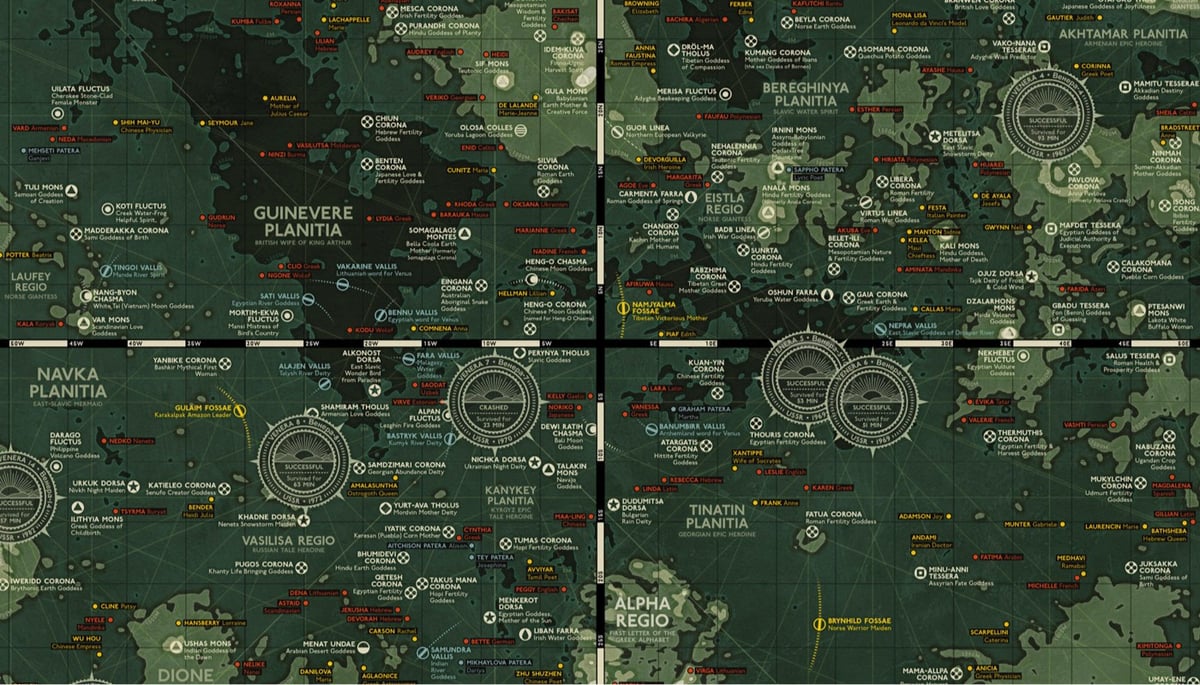
Last year, Eleanor Lutz made a medieval-style map of Mars. As a follow-up, she’s made a topographical map of Venus. The features on Venus are named for female mythological figures & notable women and Lutz provides a small biography for each one on the map. Among those featured on the map are:
Anne Frank
Selu (Cherokee Corn Goddess)
Kali (Hindu Goddess, Mother of Death)
Virginia Woolf
Sedna (Eskimo Whose Fingers Became Seals and Whales)
Ubastet (Egyptian Cat Goddess)
Beatrix Potter
Edith Piaf
Here are the full lists of the craters, mountains, and coronae on Venus.
City of Women NYC subway map

From the New Yorker, Rebecca Solnit on how the world’s places are mostly named after men.
A horde of dead men with live identities haunt New York City and almost every city in the Western world. Their names are on the streets, buildings, parks, squares, colleges, businesses, and banks, and their figures are on the monuments. For example, at Fifty-ninth and Grand Army Plaza, right by the Pulitzer Fountain (for the newspaper magnate Joseph Pulitzer), is a pair of golden figures: General William Tecumseh Sherman on horseback and a woman leading him, who appears to be Victory and also a nameless no one in par-ticular. She is someone else’s victory.
The biggest statue in the city is a woman, who welcomes everyone and is no one: the Statue of Liberty, with that poem by Emma Lazarus at her feet, the one that few remember calls her “Mother of Exiles.” Statues of women are not uncommon, but they’re allegories and nobodies, mothers and muses and props but not Presidents.
For her book Nonstop Metropolis: A New York City Atlas, Solnit and her co-author Joshua Jelly-Schapiro commissioned Molly Roy to make a subway map of NYC that uses only the names of the city’s prominent women for the station names.
It’s a map that reflects the remarkable history of charismatic women who have shaped New York City from the beginning, such as the seventeenth-century Quaker preacher Hannah Feake Bowne, who is routinely written out of history — even the home in Flushing where she held meetings is often called the John Bowne house. Three of the four female Supreme Court justices have come from the city, and quite a bit of the history of American feminism has unfolded here, from Victoria Woodhull to Shirley Chisholm to the Guerrilla Girls.
Whitman, Alabama
Filmmaker Jennifer Crandall has spent the past two years travelling all around Alabama, collecting short video vignettes of people’s lives — “Might we pull out our cameras to capture a few tiny moments from your life?” — and now she’s posting the videos on the Whitman, Alabama site.
I believe in listening and I believe in creating spaces intimate enough for voices to be heard. I believe in Alabama and her people. So I wanted to try to amplify her voices. To do this, a patchwork team of us set out and began to make a 52-part documentary film.
We crisscrossed the state, made acquaintances with strangers and asked: “Might we pull out our cameras to capture a few tiny moments from your life?”
And people said yes! (This still surprises me every time.)
And then we said: “There’s a catch. Can we do it while you read some poetry?”
I have to say, you Alabamians stepped up to the plate. You said, “Yes, I believe that’d still be all right.”
Each of her 52 subjects recites a verse from Walt Whitman’s poem Song of Myself. Why Whitman and not a poem by a southern poet?
I like the idea of cheekily co-opting the work of a dead white Yankee and re-envisioning it through contemporary Southern voices. I think we’ve found a neat way of mixing DNA here by joining these voices with Whitman’s. We’ve taken Whitman up on his offer to be co-creators, co-authors, of “Song of Myself.”
The Sullivan family read verse 16:
Some people just hit you in the heart. I was at Yen Restaurant in Mobile, looking for a hit of comfort food—Vietnamese food — and Cathy, Samantha and Brandon walked in.
Samantha reminded me of myself — half-Asian, half-white, sort of a tomboy. I approached them. Immediately they were open and warm. I asked Cathy if they might want to read for the project.
She said sure. No hesitation. She appreciated art and music. Samantha did, too. Cathy stenciled boats for a living. Samantha wanted to be an illustrator or graphic designer someday.
Sometimes if people think something isn’t going to look good to other people, they won’t let you see it, let alone film it. But Cathy threw open the doors in full welcome.
Spend some time with the project, meet some of your fellow Americans you might not know that well. (via @alainabrowne)
Update: Jia Tolentino interviewed Crandall about the project for the New Yorker.
The first time Crandall read “Song of Myself,” it was 1990, and she was sixteen, standing in a bookstore in McLean, Virginia, having just moved back to the United States. Because of her father’s job, with U.S.A.I.D., she had spent most of her childhood in Bangladesh, Haiti, and Pakistan. “My mom is Chinese, from Vietnam, and my dad’s a white dude from Denver, and at that moment I just felt that I did not understand America,” she said. She pulled a paperback anthology of poetry off the shelf, and Whitman stuck out right away. “Though I wouldn’t have articulated it then, what I responded to was this idea that everyone embodies diversity, not just the country. That many people are negotiating multiple social contracts, the way I’d been doing since I was born.”
John James Audubon’s five mystery birds
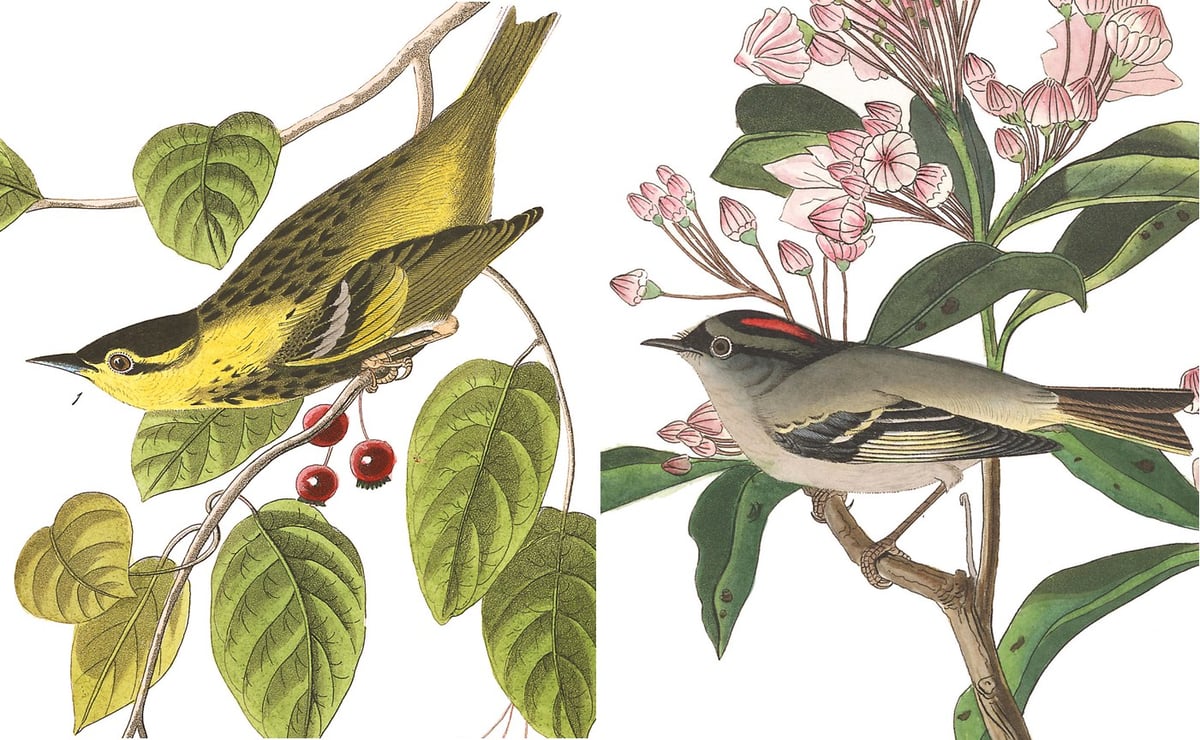
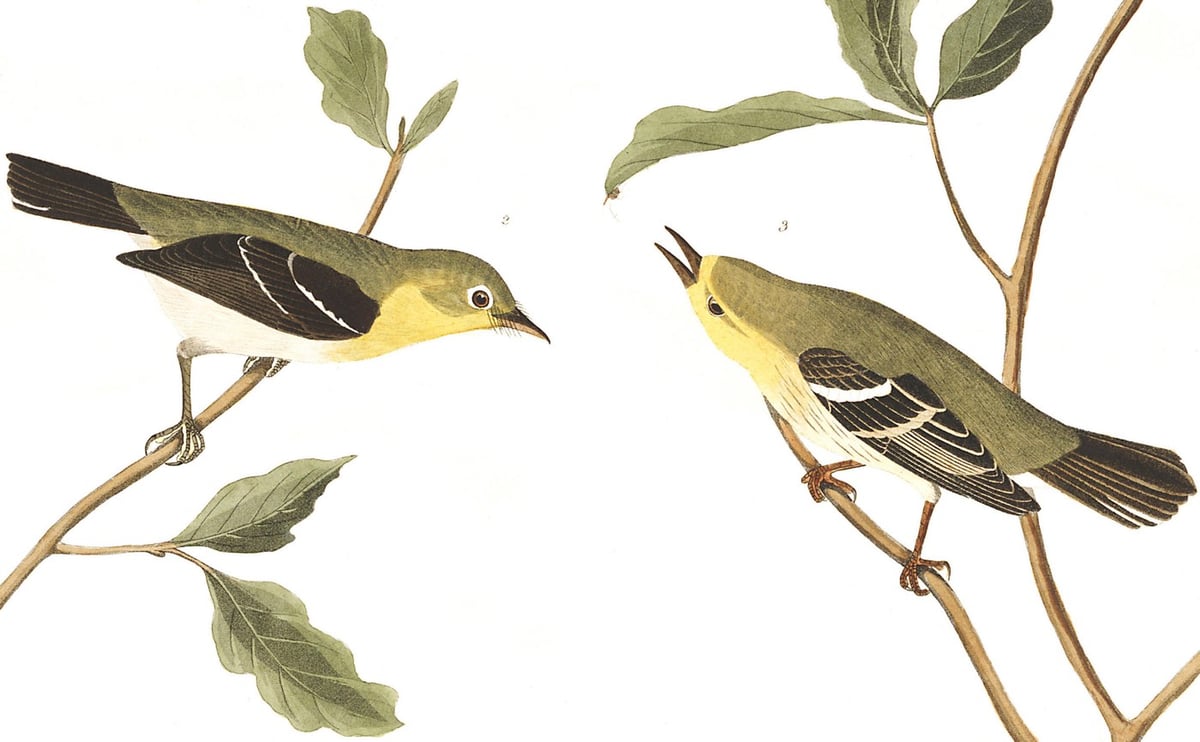
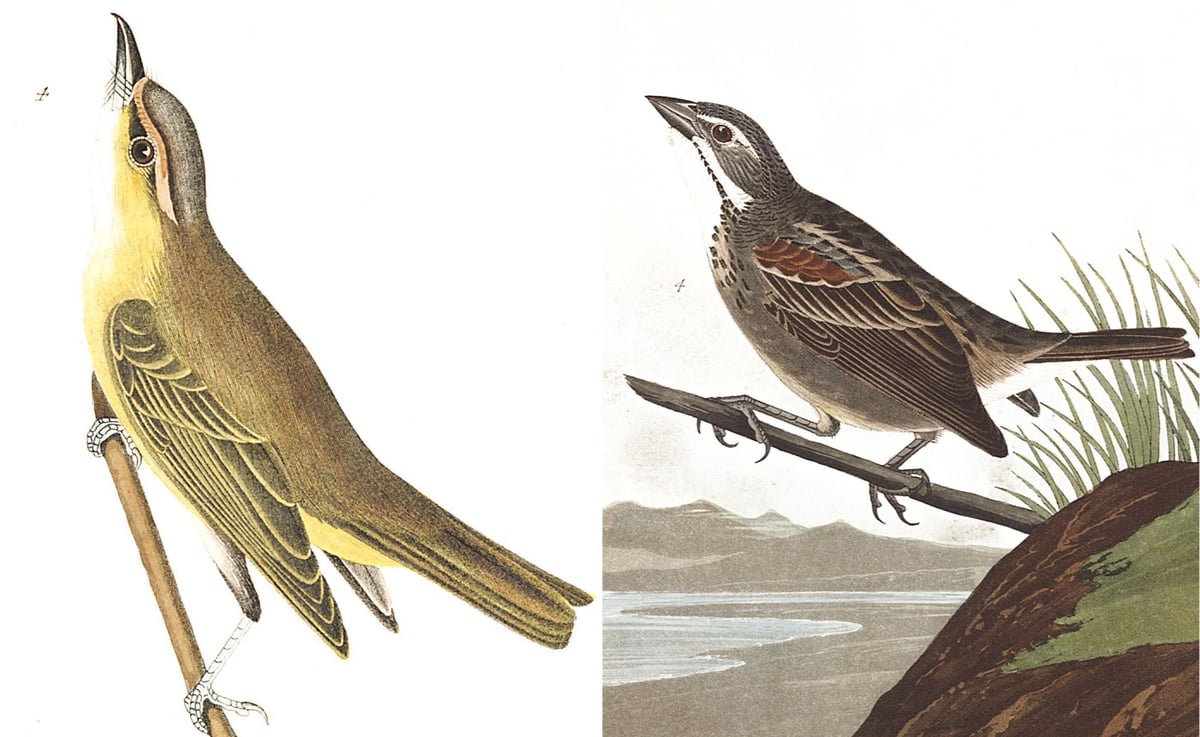
Over a period of thirteen years beginning in the 1820s, John James Audubon painted 435 different species of American birds.1 When he was finished, the illustrations were compiled into The Birds of America, one of the most celebrated books in American naturalism. Curiously however, five of the birds Audubon painted have never been identified: Townsend’s Finch, Cuvier’s Kinglet, Carbonated Swamp Warbler, Small-headed Flycatcher and Blue Mountain Warbler.
These birds have never been positively identified, and no identical specimens have been confirmed since Audubon painted them. Ornithologists have suggested that they might be color mutations, surviving members of species that soon became extinct, or interspecies hybrids that occurred only once.
The specimen that Audubon used to paint Townsend’s Bunting is now in the Smithsonian Museum of Natural History, identified as Townsend’s Dickcissel, but no bird exactly like it has been reported, Dr. Olson, an authority on Audubon’s work, noted in an email. Ornithologists suggest that it is either a mutation of the Dickcissel or a hybrid of Dickcissel and Blue Grosbeak, she said.
And that’s not counting the ones he got wrong for other reasons:
And indeed, there are several birds painted and explained in Birds of America that are not, in fact, actual species. Some are immature birds mistaken for adults of a new species (the mighty “Washington’s Eagle” was, in all likelihood, an immature Bald Eagle). Some were female birds that didn’t look anything like their male partners (“Selby’s Flycatcher” was a female Hooded Warbler).
Audubon also painted six species of bird that have since become extinct: Carolina parakeet, passenger pigeon, Labrador duck, great auk, Eskimo curlew, and pinnated grouse. Here’s his portrait of the passenger pigeon:
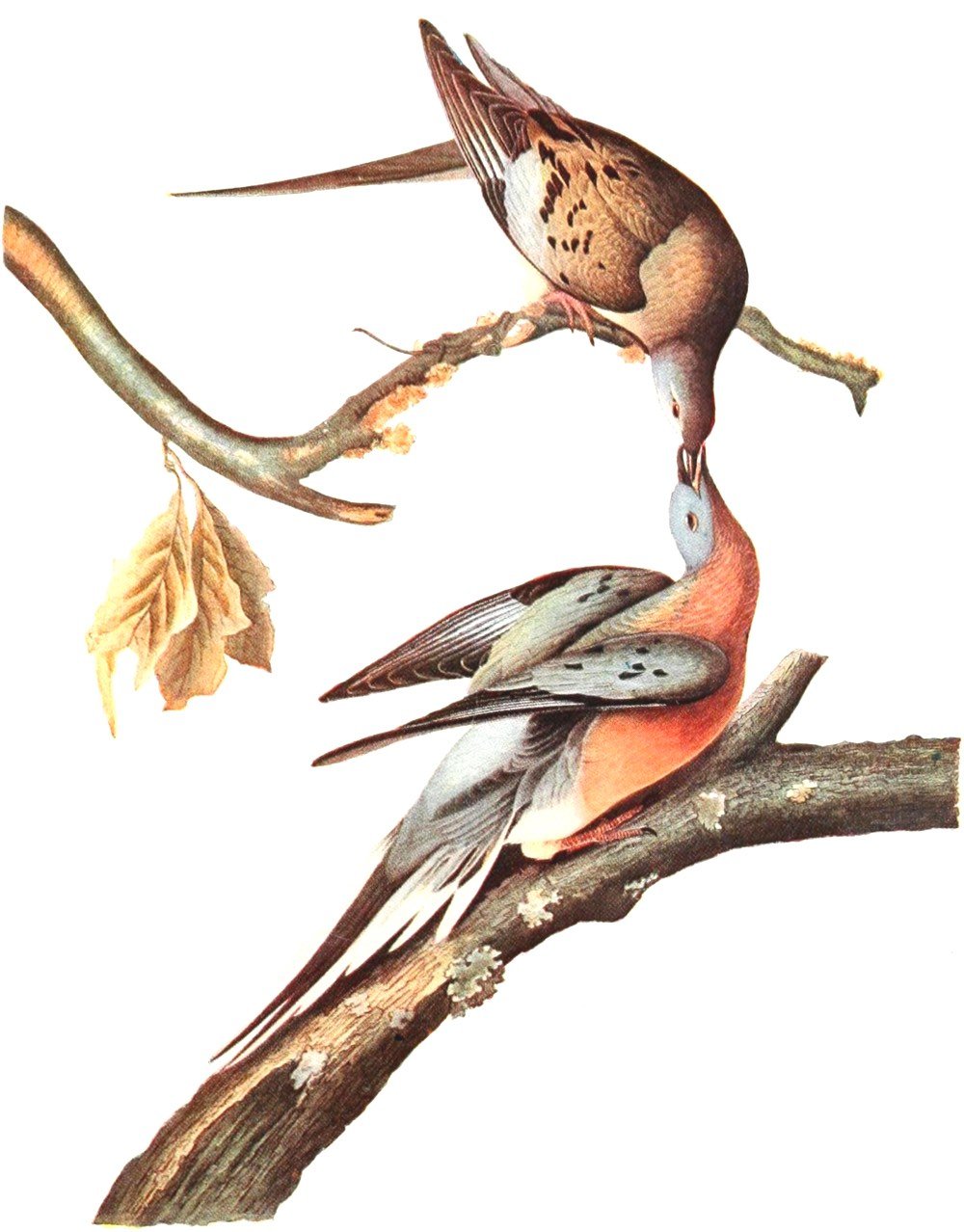
There were an estimated 3 billion passenger pigeons in the world in the early 1800s — about one in every three birds in North America was a passenger pigeon at the time. Their flocks were so large, it took hours and even days for them to pass. Audubon himself observed in 1813:
I dismounted, seated myself on an eminence, and began to mark with my pencil, making a dot for every flock that passed. In a short time finding the task which I had undertaken impracticable, as the birds poured in in countless multitudes, I rose and, counting the dots then put down, found that 163 had been made in twenty-one minutes. I traveled on, and still met more the farther I proceeded. The air was literally filled with Pigeons; the light of noon-day was obscured as by an eclipse; the dung fell in spots, not unlike melting flakes of snow, and the continued buzz of wings had a tendency to lull my senses to repose… I cannot describe to you the extreme beauty of their aerial evolutions, when a hawk chanced to press upon the rear of the flock. At once, like a torrent, and with a noise like thunder, they rushed into a compact mass, pressing upon each other towards the center. In these almost solid masses, they darted forward in undulating and angular lines, descended and swept close over the earth with inconceivable velocity, mounted perpendicularly so as to resemble a vast column, and, when high, were seen wheeling and twisting within their continued lines, which then resembled the coils of a gigantic serpent… Before sunset I reached Louisville, distant from Hardensburgh fifty-five miles. The Pigeons were still passing in undiminished numbers and continued to do so for three days in succession.
100 years later, they were all dead. Which may have had at least one interesting consequence:
But the sad echo of the loss of passenger pigeons still reverberates today because its extinction probably exacerbated the proliferation of Lyme disease. When the passenger pigeons existed in large numbers, they subsisted primarily on acorns. However, since there are no pigeons to eat acorns, the populations of Eastern deer mice — the main reservoir of Lyme disease — exploded far beyond historic levels as they exploited this unexpected food bonanza.
Interesting note: Audubon financed this project through a subscription plan. Each month or two, each subscriber would receive a set of five prints and the proceeds covered the costly printing process and Audubon’s nature travels.↩
Abacus use can boost math skills (and other lessons on learning)
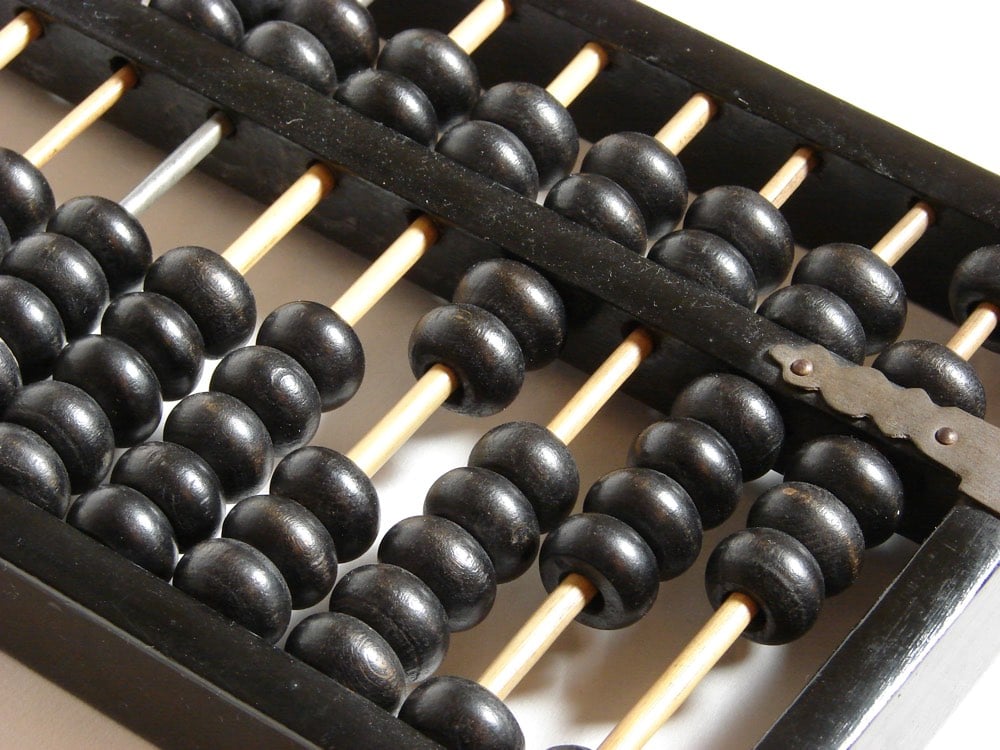
The abacus counting device dates back thousands of years but has, in the past century, been replaced by calculators and computers. But studies show that abacus use can have an effect on how well people learn math. In this excerpt adapted from his new book Learn Better, education researcher Ulrich Boser writes about the abacus and how people learn.
Researchers from Harvard to China have studied the device, showing that abacus students often learn more than students who use more modern approaches.
UC San Diego psychologist David Barner led one of the studies, and he argues that abacus training can significantly boost math skills with effects potentially lasting for decades.
“Based on everything we know about early math education and its long-term effects, I’ll make the prediction that children who thrive with abacus will have higher math scores later in life, perhaps even on the SAT,” Barner told me.
Ignore the hyperbolic “and it changed my life” in the title…this piece is interesting throughout. For example, this passage on the strength of the mind-body connection and the benefits of learning by doing:
When first I watched high school abacus whiz Serena Stevenson, her hand gestures seemed like a pretentious affect, like people who wear polka-dot bow ties. But it turned out that her finger movements weren’t really all that dramatic, and on YouTube, I watched students with even more theatrical gesticulations. What’s more, the hand movements turned out to be at the heart of the practice, and without any arm or finger motions, accuracy can drop by more than half.
Part of the explanation for the power of the gestures goes to the mind-body connection. But just as important is the fact that abacus makes learning a matter of doing. It’s an active, engaging process. As one student told me, abacus is like “intellectual powerlifting.”
Psychologist Rich Mayer has written a lot about this idea, and in study after study he has shown that people gain expertise by actively producing what they know. As he told me: “Learning is a generative activity.”
I’d never heard of the concept of overlearning before:
Everybody from actors learning lines, to musicians learning new songs, to teachers trying to impart key facts to students has observed that learning has to “sink in” in the brain. Prior studies and also the new one, for example, show that when people learn a new task and then learn a similar one soon afterward, the second instance of learning often interferes with and undermines the mastery achieved on the first one.
The new study shows that overlearning prevents against such interference, cementing learning so well and quickly, in fact, that the opposite kind of interference happens instead. For a time, overlearning the first task prevents effective learning of the second task — as if learning becomes locked down for the sake of preserving master of the first task. The underlying mechanism, the researchers discovered, appears to be a temporary shift in the balance of two neurotransmitters that control neural flexibility, or “plasticity,” in the part of the brain where the learning occurred.
“These results suggest that just a short period of overlearning drastically changes a post-training plastic and unstable [learning state] to a hyperstabilized state that is resilient against, and even disrupts, new learning,” wrote the team led by corresponding author Takeo Watanabe, the Fred M. Seed Professor of Cognitive Linguistic and Psychological Sciences at Brown.
So, like, how do you, um, stop using filler words? “Hire a friend to punch you?”
Steve Reich Is Calling
Oh, this is just a little brilliant. Steve Reich is a composer famous for his experimentation with musical looping and phasing. His 1967 piece Piano Phase featured a pair of pianists repetitively performing the same piece at two slightly different tempos, forming a continually evolving musical round. Seth Kranzler took this idea and made a Reich-like piece with two iPhones ringing at slightly different tempos. Here’s a video of the effect in action:
Man, this is nerdy on so many levels and I am here for it.
Update: Here’s a couple more tracks along the same lines: the drum fill from In the Air Tonight and the Amen break.
(via @frank_chimero)
Duke Ellington played Beatles tunes on the Ed Sullivan Show
In 1970, Duke Ellington and his orchestra played a medley of songs by The Beatles on the Ed Sullivan Show. The set list was:
She Loves You
All My Loving
Eleanor Rigby
She’s Leaving Home
Norwegian Wood
Ticket To Ride
See also The Beatles singing I Want to Hold Your Hand on their very first Ed Sullivan appearance, which kicked off the British Invasion in earnest.
Socials & More